

- Industry Size (2026)
- USD 207.4 Mn
- Forecast (2036)
- USD 649.9 Mn
- CAGR (2026 to 2036)
- 12.10%
Neural Interface PLA & PHA Soft Materials Market Forecast and Outlook 2026 to 2036
The global neural interface PLA & PHA soft materials market is projected to grow from USD 207.4 million in 2026 to USD 649.9 million by 2036, with a robust CAGR of 12.10%. This growth is driven by the increasing demand for biocompatible, biodegradable materials used in neural interfaces and brain-computer interfaces (BCIs). PLA (Polylactic Acid) and PHA (Polyhydroxyalkanoates) offer key advantages, such as flexibility, low toxicity, and environmental sustainability, making them ideal for medical implants like neuroprosthetics, prosthetic limbs, and neuromodulation devices.
As the field of neurotechnology expands, particularly in treating neurodegenerative diseases, paralysis, and brain injuries, the need for safe, durable, and sustainable materials like PLA and PHA is increasing. Furthermore, advancements in materials science and improved synthesis processes are enhancing the performance of these biopolymers, fueling their adoption in the rapidly growing neurotechnology sector. The market’s growth reflects a rising focus on patient safety, sustainability, and innovation in medical technology.
Quick Stats for Neural Interface PLA & PHA Soft Materials Market
- Neural Interface PLA & PHA Soft Materials Market Value (2026): USD 207.4 Million
- Neural Interface PLA & PHA Soft Materials Market Forecast Value (2036): USD 649.9 Million
- Neural Interface PLA & PHA Soft Materials Market Forecast CAGR 2026 to 2036: 12.10%
- Leading Interface Type in Neural Interface PLA & PHA Soft Materials Market: Cortical Neural Interfaces
- Key Growth Regions in Neural Interface PLA & PHA Soft Materials Market: Asia Pacific, North America
- Top Key Players in Neural Interface PLA & PHA Soft Materials Market: Evonik Health Care (RESOMER®), Corbion Biomaterials, Danimer Scientific, NatureWorks LLC, PolyFerm Canada
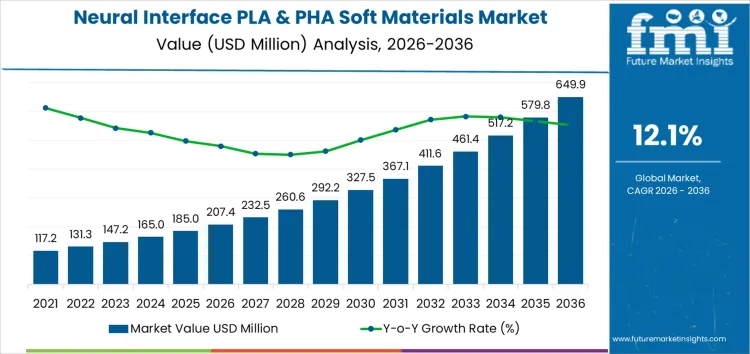
Neural Interface PLA & PHA Soft Materials Market Key Takeaways
| Metric | Value |
|---|---|
| Industry Value (2026) | USD 207.4 Million |
| Forecast Value (2036) | USD 649.9 Million |
| Forecast CAGR 2026 to 2036 | 12.10% |
How Is the Global Neural Interface PLA & PHA Soft Materials Market Advancing?
The global neural interface PLA (Polylactic Acid) and PHA (Polyhydroxyalkanoates) soft materials market is experiencing rapid growth, driven by the increasing demand for biocompatible, biodegradable materials in the field of neural interfaces and brain-computer interfaces (BCIs). PLA and PHA are gaining popularity in medical devices and neurotechnology due to their excellent compatibility with the human body and their environmentally friendly properties. These materials are used to develop neural interfaces that allow for safe, efficient communication between neural tissue and electronic systems, enabling advancements in applications such as prosthetics, neural stimulation, and medical diagnostics.
A major driver for the market’s growth is the rise in neurotechnological research and development, particularly for treatments and rehabilitation in conditions like paralysis, neurodegenerative diseases, and brain injuries. PLA and PHA-based soft materials are crucial in creating flexible, durable, and non-toxic interfaces that can be safely implanted in the human body without causing adverse reactions. The biocompatibility and biodegradability of these materials make them particularly attractive for long-term medical applications, where the potential for tissue integration and gradual degradation within the body is essential.
Technological advancements in the synthesis and processing of PLA and PHA are further contributing to market growth. Researchers are developing new methods to enhance the mechanical properties, conductivity, and flexibility of these biopolymers, making them even more suitable for complex neural interface applications. As the demand for non-invasive neurotechnologies continues to rise, and as the need for sustainable, environmentally friendly materials in medical and electronic devices increases, the neural interface PLA & PHA soft materials market is expected to grow significantly, providing a key solution for the evolving neurotechnology industry.
What Is the Segment-Wise Analysis for the Neural Interface PLA & PHA Soft Materials Market?
The neural interface PLA & PHA soft materials market is segmented by interface type and application. Cortical neural interfaces lead the interface type segment with a 38% share, followed by peripheral nerve interfaces, deep brain interfaces, spinal cord interfaces, and other interface types. Cortical neural interfaces are widely used for direct interaction with the brain’s surface, making them crucial for neuroprosthetics and other neural technologies. In terms of application, neuroprosthetics holds the largest share at 34%, followed by brain-computer interfaces (BCI), neuromodulation devices, neural research & experimental implants, and other applications.
Why Do Cortical Neural Interfaces Lead the Neural Interface PLA & PHA Soft Materials Market?
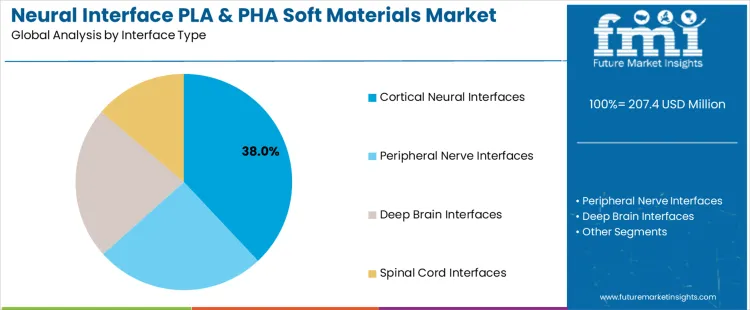
Cortical neural interfaces lead the neural interface PLA & PHA soft materials market with a 38% share due to their critical role in enabling direct communication between the brain and external devices. These interfaces are widely used in applications like neuroprosthetics, where they allow control of prosthetic limbs or assistive devices through thought. The use of PLA and PHA soft materials in cortical interfaces offers advantages such as flexibility, biocompatibility, and biodegradability, which are essential for long-term use in the body. As demand for advanced neural technologies grows, cortical neural interfaces remain a dominant segment, driven by their potential for improving quality of life in patients with neurological conditions.
How Does Neuroprosthetics Contribute to the Neural Interface PLA & PHA Soft Materials Market?
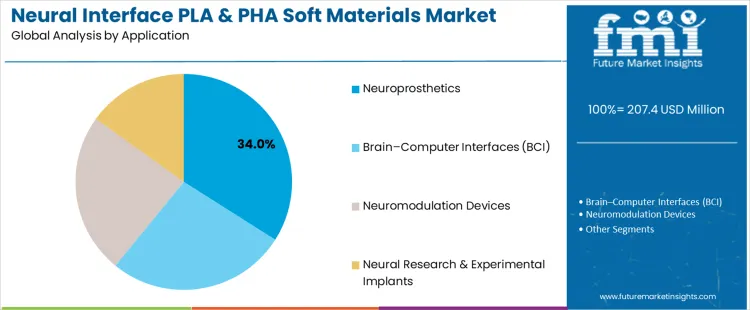
Neuroprosthetics accounts for 34% of the application segment in the neural interface PLA & PHA soft materials market. This application involves the development of devices that replace or enhance the function of a damaged nervous system, such as prosthetic limbs controlled directly by neural signals. The increasing prevalence of neurological disorders, combined with advancements in brain-machine interfaces, is driving the adoption of neural interfaces for neuroprosthetic applications. PLA and PHA soft materials are ideal for use in neuroprosthetics due to their flexibility, strength, and biocompatibility. These materials enhance the functionality and comfort of neuroprosthetic devices, which in turn promotes their growth in the market.
What Are the Key Dynamics for the Neural Interface PLA & PHA Soft Materials Market?
The neural interface PLA & PHA soft materials market is driven by the increasing demand for biocompatible, flexible, and sustainable materials for neural interfaces in medical devices, particularly for brain-computer interfaces (BCIs) and neural prosthetics. Poly lactic acid (PLA) and polyhydroxyalkanoates (PHA) are biodegradable polymers that offer excellent properties for these applications, such as flexibility, low toxicity, and environmental sustainability. As the demand for advanced, patient-friendly neural technologies grows, these soft materials are gaining popularity for their ability to conform to neural tissue, enhancing the performance of neural interfaces while reducing adverse effects.
Why Is the Neural Interface PLA & PHA Soft Materials Market Growing?
The market for neural interface PLA & PHA soft materials is growing due to the increasing focus on developing biocompatible and environmentally friendly materials for neural technologies. PLA and PHA are derived from renewable sources and offer an eco-friendly alternative to traditional synthetic polymers. As the demand for non-invasive or minimally invasive neural implants increases, these soft materials provide the necessary flexibility and biocompatibility to ensure better integration with neural tissues. The market is also driven by advancements in brain-computer interface technologies and the rising prevalence of neurological disorders, which are fueling the need for more effective neural interface materials.
How Are the Key Drivers Shaping the Neural Interface PLA & PHA Soft Materials Market?
Key drivers for the neural interface PLA & PHA soft materials market include the growing focus on sustainability, the rise in neurological disorders, and the demand for advanced neural technologies. PLA and PHA soft materials, with their biodegradability and low toxicity, are gaining traction in the medical field, especially in developing neural interfaces that need to be flexible and long-lasting. As brain-computer interfaces and neural prosthetics become more mainstream, there is increasing emphasis on materials that provide better compatibility with biological tissues. Advancements in the production processes of PLA and PHA are making them more cost-effective for use in medical applications.
What is the Growth Outlook for the Neural Interface PLA & PHA Soft Materials Market by Country?
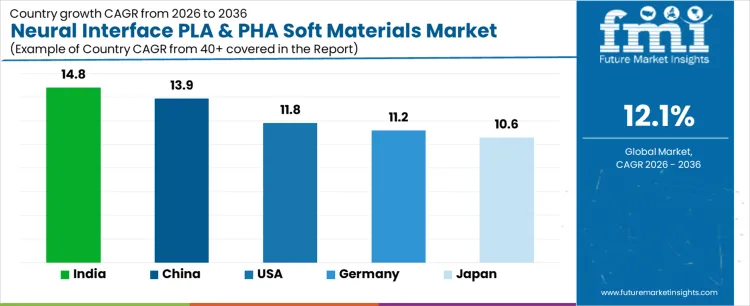
| Country | CAGR (%) |
|---|---|
| India | 14.8% |
| China | 13.9% |
| USA | 11.8% |
| Germany | 11.2% |
| Japan | 10.6% |
The neural interface PLA & PHA soft materials market is growing across key regions, with India leading at 14.8%, driven by a rapidly expanding healthcare and biomedical sector. China follows at 13.9%, supported by advancements in neuroprosthetics and BCI technologies. The USA grows at 11.8%, fueled by the country’s strong investment in neurotechnology innovation and sustainability. Germany’s market expands at 11.2%, backed by its leadership in biomedical research and sustainable medical technologies. Japan grows at 10.6%, driven by its focus on sustainable materials in healthcare and innovation in neuroprosthetics.
What is Driving the Growth of the Neural Interface PLA & PHA Soft Materials Market in India?
India’s neural interface PLA & PHA soft materials market is growing at 14.8%, driven by the country’s expanding healthcare and biomedical research sectors. The increasing demand for advanced materials in neural interfaces, particularly in prosthetics, brain-computer interfaces (BCIs), and neuroprosthetics, is pushing market growth. PLA (polylactic acid) and PHA (polyhydroxyalkanoates) are gaining traction due to their biodegradability, biocompatibility, and sustainability, making them ideal materials for neural interface applications. India’s growing focus on medical technology, coupled with rising government investments in healthcare innovation, is creating a favorable environment for these advanced materials. As the country’s biomedical research and development sector continues to expand, the demand for PLA and PHA-based materials in neural interface applications is expected to continue rising.
How is the Neural Interface PLA & PHA Soft Materials Market Expanding in China?
China’s neural interface PLA & PHA soft materials market is growing at 13.9%, supported by the country’s significant advancements in biomedical research and a rapidly expanding healthcare sector. China is heavily investing in technologies like brain-computer interfaces (BCIs) and neuroprosthetics, which are driving the demand for biodegradable and biocompatible materials like PLA and PHA. These materials are highly sought after due to their environmental sustainability and compatibility with human tissue, making them ideal for neural interfaces. As the Chinese government continues to prioritize healthcare innovation and sustainable technologies, the demand for PLA and PHA materials in neural interface applications is expected to grow, fostering strong market expansion.
How is the Neural Interface PLA & PHA Soft Materials Market Expanding in the USA?
The neural interface PLA & PHA soft materials market in the USA is growing at 11.8%, driven by the increasing adoption of advanced materials in medical and neurotechnology applications. The USA has a strong biomedical research community, with growing interest in brain-computer interfaces (BCIs) and neural prosthetics. PLA and PHA materials are increasingly being used due to their biocompatibility, biodegradability, and ability to interface with neural tissue safely. The USA’s focus on sustainable and eco-friendly solutions in healthcare and medical devices is contributing to the rise in demand for these materials. As the USA continues to invest in neurotechnology innovation, the market for neural interface PLA & PHA soft materials is expected to continue growing, supported by government initiatives and strong research funding.
What is Driving the Growth of the Neural Interface PLA & PHA Soft Materials Market in Germany?
Germany’s neural interface PLA & PHA soft materials market is growing at 11.2%, driven by the country’s leadership in biomedical research and strong emphasis on sustainable medical technologies. Germany is at the forefront of research into neural interfaces, with growing applications in prosthetics, brain-computer interfaces, and neuroprosthetics. PLA and PHA materials are gaining traction due to their biocompatibility, biodegradability, and suitability for use in sensitive medical applications. Germany’s commitment to green technologies and environmental sustainability, coupled with its strong healthcare and medical device manufacturing sectors, is further propelling the adoption of these materials. As Germany continues to advance its neurotechnology and biomedical research, the demand for neural interface PLA & PHA soft materials will continue to grow.
How is the Neural Interface PLA & PHA Soft Materials Market Expanding in Japan?
Japan’s neural interface PLA & PHA soft materials market is growing at 10.6%, driven by the country’s innovation in neurotechnology and focus on sustainable materials in medical applications. Japan is investing heavily in research into brain-computer interfaces and neuroprosthetics, which is creating demand for biocompatible, biodegradable materials like PLA and PHA. These materials are being used in neural interfaces due to their superior safety profile, minimal environmental impact, and ability to facilitate effective communication between neural tissue and electronic devices. Japan’s commitment to eco-friendly solutions in healthcare, along with its strong technological capabilities, ensures continued demand for these materials in neural interface applications.
How Are Companies Competing in the Neural Interface PLA & PHA Soft Materials Market?
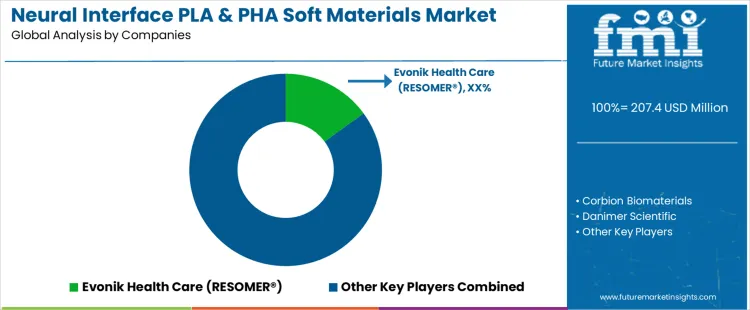
Competition in the neural interface PLA& PHA soft materials market hinges on biocompatibility, controlled degradation, mechanical softness, purity, and process readiness for implantable neural interfaces. Evonik Health Care (RESOMER®) is positioned with well characterized PLA/PHA biomaterials that are widely used in resorbable medical applications. Its product materials emphasize predictable degradation profiles and narrow molecular weight distribution that support soft tissue matching and controlled resorption in neural implants. Corbion Biomaterials competes by offering high purity PLA and tailored copolymers, with collateral focusing on consistent performance under sterilization and long term stability in bioelectronics.
Danimer Scientific and NatureWorks LLC differentiate through bio derived polymer platforms engineered for mechanical flexibility and scalable supply, and their brochures stress renewable feedstock origins and processing adaptability for complex implant geometries. Mechanically tuned PHA grades are showcased for soft interface comfort and minimized inflammatory response. PolyFerm Canada brings custom fermentation derived PHA solutions with product literature highlighting fine control of thermal and mechanical properties that help achieve intimate neural contact without irritation.
Others in the market include specialty polymer developers and niche compounders that deliver bespoke PLA/PHA blends for specific neural device architectures. Materials are described in documentation with emphasis on biocompatibility test data, tailored modulus, and robust manufacturing support. Across vendors, product literature underscores predictable resorption, tissue compliance, and integration with medical fabrication processes as key differentiators that help neural interface designers match material performance to clinical demands.
Key Players in Neural Interface PLA & PHA Soft Materials Market
- Evonik Health Care (RESOMER®)
- Corbion Biomaterials
- Danimer Scientific
- NatureWorks LLC
- PolyFerm Canada
- Others
Scope of Report
| Attributes | Description |
|---|---|
| Quantitative Unit (2026) | USD Million |
| Material Type | PLA (Polylactic Acid), PHA (Polyhydroxyalkanoates), PLA-PHA Blends, Others |
| Interface Type | Cortical Neural Interfaces, Peripheral Nerve Interfaces, Deep Brain Interfaces, Spinal Cord Interfaces |
| Application | Neuroprosthetics, Brain-Computer Interfaces (BCI), Neuromodulation Devices, Neural Research & Experimental Implants |
| Regions Covered | Asia Pacific, Europe, North America, Latin America, Middle East & Africa |
| Countries Covered | China, Japan, South Korea, India, Australia & New Zealand, ASEAN, Germany, United Kingdom, France, Italy, Spain, Nordic, BENELUX, United States, Canada, Mexico, Brazil, Chile, Turkey, South Africa, Other GCC Countries |
| Key Companies Profiled | Evonik Health Care (RESOMER®), Corbion Biomaterials, Danimer Scientific, NatureWorks LLC, PolyFerm Canada, Others |
| Additional Attributes | Dollar sales by material type, interface type, and application; regional CAGR and growth outlook for the neural interface PLA & PHA soft materials market. |
Neural Interface PLA & PHA Soft Materials Market by Key Segments
Material Type
- PLA (Polylactic Acid)
- PHA (Polyhydroxyalkanoates)
- PLA-PHA Blends
- Others
Interface Type
- Cortical Neural Interfaces
- Peripheral Nerve Interfaces
- Deep Brain Interfaces
- Spinal Cord Interfaces
Application
- Neuroprosthetics
- Brain-Computer Interfaces (BCI)
- Neuromodulation Devices
- Neural Research & Experimental Implants
Region
- Asia Pacific
- China
- Japan
- South Korea
- India
- Australia & New Zealand
- ASEAN
- Rest of Asia Pacific
- Europe
- Germany
- United Kingdom
- France
- Italy
- Spain
- Nordic
- BENELUX
- Rest of Europe
- North America
- United States
- Canada
- Mexico
- Latin America
- Brazil
- Chile
- Rest of Latin America
- Middle East & Africa
- Kingdom of Saudi Arabia
- Other GCC Countries
- Turkey
- South Africa
- Other African Union
- Rest of Middle East & Africa
Bibliography
- U.S. Food and Drug Administration (FDA). (2024). Biocompatibility assessment of polymeric materials for neural implant applications: Guidance for Industry and FDA Staff. FDA Center for Devices and Radiological Health (CDRH).
- National Institutes of Health (NIH). (2023). Advances in biodegradable polymers for neural interfaces and regenerative implants. NIH Biomedical Engineering Research Publications.
- European Commission. (2024). Medical Device Regulation (EU) 2024/1107 – Safety and performance requirements for implantable biomaterials and neural interfaces. Publications Office of the European Union.
- International Organization for Standardization (ISO). (2023). ISO 10993-1: Biological evaluation of medical devices – Materials characterization and biocompatibility testing for neural implants. ISO Standards.
- IEEE Engineering in Medicine and Biology Society (IEEE-EMBS). (2024). Soft bioelectronic interfaces using biodegradable polymers for neural applications: Performance and design principles. IEEE Transactions on Neural Systems and Rehabilitation Engineering.
Frequently Asked Questions
How big is the neural interface pla & pha soft materials market in 2026?
The global neural interface pla & pha soft materials market is estimated to be valued at USD 207.4 million in 2026.
What will be the size of neural interface pla & pha soft materials market in 2036?
The market size for the neural interface pla & pha soft materials market is projected to reach USD 649.9 million by 2036.
How much will be the neural interface pla & pha soft materials market growth between 2026 and 2036?
The neural interface pla & pha soft materials market is expected to grow at a 12.1% CAGR between 2026 and 2036.
What are the key product types in the neural interface pla & pha soft materials market?
The key product types in neural interface pla & pha soft materials market are pla (polylactic acid), pha (polyhydroxyalkanoates), pla–pha blends and others.
Which interface type segment to contribute significant share in the neural interface pla & pha soft materials market in 2026?
In terms of interface type, cortical neural interfaces segment to command 38.0% share in the neural interface pla & pha soft materials market in 2026.
Preview the report firsthand - request a free sample
Get SampleGet the brochure for pricing and purchase details.
Get PDFTable of Content
- Executive Summary
- Global Market Outlook
- Demand-side Trends
- Supply-side Trends
- Technology Roadmap Analysis
- Analysis and Recommendations
- Market Overview
- Market Coverage / Taxonomy
- Market Definition / Scope / Limitations
- Market Background
- Market Dynamics
- Drivers
- Restraints
- Opportunity
- Trends
- Scenario Forecast
- Demand in Optimistic Scenario
- Demand in Likely Scenario
- Demand in Conservative Scenario
- Opportunity Map Analysis
- Product Life Cycle Analysis
- Supply Chain Analysis
- Investment Feasibility Matrix
- Value Chain Analysis
- PESTLE and Porter’s Analysis
- Regulatory Landscape
- Regional Parent Market Outlook
- Production and Consumption Statistics
- Import and Export Statistics
- Market Dynamics
- Global Market Analysis 2021 to 2025 and Forecast, 2026 to 2036
- Historical Market Size Value (USD Million) Analysis, 2021 to 2025
- Current and Future Market Size Value (USD Million) Projections, 2026 to 2036
- Y-o-Y Growth Trend Analysis
- Absolute $ Opportunity Analysis
- Global Market Pricing Analysis 2021 to 2025 and Forecast 2026 to 2036
- Global Market Analysis 2021 to 2025 and Forecast 2026 to 2036, By Material Type
- Introduction / Key Findings
- Historical Market Size Value (USD Million) Analysis By Material Type , 2021 to 2025
- Current and Future Market Size Value (USD Million) Analysis and Forecast By Material Type , 2026 to 2036
- PLA (Polylactic Acid)
- PHA (Polyhydroxyalkanoates)
- PLA-PHA Blends
- Others
- PLA (Polylactic Acid)
- Y-o-Y Growth Trend Analysis By Material Type , 2021 to 2025
- Absolute $ Opportunity Analysis By Material Type , 2026 to 2036
- Global Market Analysis 2021 to 2025 and Forecast 2026 to 2036, By Interface Type
- Introduction / Key Findings
- Historical Market Size Value (USD Million) Analysis By Interface Type, 2021 to 2025
- Current and Future Market Size Value (USD Million) Analysis and Forecast By Interface Type, 2026 to 2036
- Cortical Neural Interfaces
- Peripheral Nerve Interfaces
- Deep Brain Interfaces
- Spinal Cord Interfaces
- Cortical Neural Interfaces
- Y-o-Y Growth Trend Analysis By Interface Type, 2021 to 2025
- Absolute $ Opportunity Analysis By Interface Type, 2026 to 2036
- Global Market Analysis 2021 to 2025 and Forecast 2026 to 2036, By Application
- Introduction / Key Findings
- Historical Market Size Value (USD Million) Analysis By Application, 2021 to 2025
- Current and Future Market Size Value (USD Million) Analysis and Forecast By Application, 2026 to 2036
- Neuroprosthetics
- Brain-Computer Interfaces (BCI)
- Neuromodulation Devices
- Neural Research & Experimental Implants
- Neuroprosthetics
- Y-o-Y Growth Trend Analysis By Application, 2021 to 2025
- Absolute $ Opportunity Analysis By Application, 2026 to 2036
- Global Market Analysis 2021 to 2025 and Forecast 2026 to 2036, By Region
- Introduction
- Historical Market Size Value (USD Million) Analysis By Region, 2021 to 2025
- Current Market Size Value (USD Million) Analysis and Forecast By Region, 2026 to 2036
- North America
- Latin America
- Western Europe
- Eastern Europe
- East Asia
- South Asia and Pacific
- Middle East & Africa
- Market Attractiveness Analysis By Region
- North America Market Analysis 2021 to 2025 and Forecast 2026 to 2036, By Country
- Historical Market Size Value (USD Million) Trend Analysis By Market Taxonomy, 2021 to 2025
- Market Size Value (USD Million) Forecast By Market Taxonomy, 2026 to 2036
- By Country
- USA
- Canada
- Mexico
- By Material Type
- By Interface Type
- By Application
- By Country
- Market Attractiveness Analysis
- By Country
- By Material Type
- By Interface Type
- By Application
- Key Takeaways
- Latin America Market Analysis 2021 to 2025 and Forecast 2026 to 2036, By Country
- Historical Market Size Value (USD Million) Trend Analysis By Market Taxonomy, 2021 to 2025
- Market Size Value (USD Million) Forecast By Market Taxonomy, 2026 to 2036
- By Country
- Brazil
- Chile
- Rest of Latin America
- By Material Type
- By Interface Type
- By Application
- By Country
- Market Attractiveness Analysis
- By Country
- By Material Type
- By Interface Type
- By Application
- Key Takeaways
- Western Europe Market Analysis 2021 to 2025 and Forecast 2026 to 2036, By Country
- Historical Market Size Value (USD Million) Trend Analysis By Market Taxonomy, 2021 to 2025
- Market Size Value (USD Million) Forecast By Market Taxonomy, 2026 to 2036
- By Country
- Germany
- UK
- Italy
- Spain
- France
- Nordic
- BENELUX
- Rest of Western Europe
- By Material Type
- By Interface Type
- By Application
- By Country
- Market Attractiveness Analysis
- By Country
- By Material Type
- By Interface Type
- By Application
- Key Takeaways
- Eastern Europe Market Analysis 2021 to 2025 and Forecast 2026 to 2036, By Country
- Historical Market Size Value (USD Million) Trend Analysis By Market Taxonomy, 2021 to 2025
- Market Size Value (USD Million) Forecast By Market Taxonomy, 2026 to 2036
- By Country
- Russia
- Poland
- Hungary
- Balkan & Baltic
- Rest of Eastern Europe
- By Material Type
- By Interface Type
- By Application
- By Country
- Market Attractiveness Analysis
- By Country
- By Material Type
- By Interface Type
- By Application
- Key Takeaways
- East Asia Market Analysis 2021 to 2025 and Forecast 2026 to 2036, By Country
- Historical Market Size Value (USD Million) Trend Analysis By Market Taxonomy, 2021 to 2025
- Market Size Value (USD Million) Forecast By Market Taxonomy, 2026 to 2036
- By Country
- China
- Japan
- South Korea
- By Material Type
- By Interface Type
- By Application
- By Country
- Market Attractiveness Analysis
- By Country
- By Material Type
- By Interface Type
- By Application
- Key Takeaways
- South Asia and Pacific Market Analysis 2021 to 2025 and Forecast 2026 to 2036, By Country
- Historical Market Size Value (USD Million) Trend Analysis By Market Taxonomy, 2021 to 2025
- Market Size Value (USD Million) Forecast By Market Taxonomy, 2026 to 2036
- By Country
- India
- ASEAN
- Australia & New Zealand
- Rest of South Asia and Pacific
- By Material Type
- By Interface Type
- By Application
- By Country
- Market Attractiveness Analysis
- By Country
- By Material Type
- By Interface Type
- By Application
- Key Takeaways
- Middle East & Africa Market Analysis 2021 to 2025 and Forecast 2026 to 2036, By Country
- Historical Market Size Value (USD Million) Trend Analysis By Market Taxonomy, 2021 to 2025
- Market Size Value (USD Million) Forecast By Market Taxonomy, 2026 to 2036
- By Country
- Kingdom of Saudi Arabia
- Other GCC Countries
- Turkiye
- South Africa
- Other African Union
- Rest of Middle East & Africa
- By Material Type
- By Interface Type
- By Application
- By Country
- Market Attractiveness Analysis
- By Country
- By Material Type
- By Interface Type
- By Application
- Key Takeaways
- Key Countries Market Analysis
- USA
- Pricing Analysis
- Market Share Analysis, 2025
- By Material Type
- By Interface Type
- By Application
- Canada
- Pricing Analysis
- Market Share Analysis, 2025
- By Material Type
- By Interface Type
- By Application
- Mexico
- Pricing Analysis
- Market Share Analysis, 2025
- By Material Type
- By Interface Type
- By Application
- Brazil
- Pricing Analysis
- Market Share Analysis, 2025
- By Material Type
- By Interface Type
- By Application
- Chile
- Pricing Analysis
- Market Share Analysis, 2025
- By Material Type
- By Interface Type
- By Application
- Germany
- Pricing Analysis
- Market Share Analysis, 2025
- By Material Type
- By Interface Type
- By Application
- UK
- Pricing Analysis
- Market Share Analysis, 2025
- By Material Type
- By Interface Type
- By Application
- Italy
- Pricing Analysis
- Market Share Analysis, 2025
- By Material Type
- By Interface Type
- By Application
- Spain
- Pricing Analysis
- Market Share Analysis, 2025
- By Material Type
- By Interface Type
- By Application
- France
- Pricing Analysis
- Market Share Analysis, 2025
- By Material Type
- By Interface Type
- By Application
- India
- Pricing Analysis
- Market Share Analysis, 2025
- By Material Type
- By Interface Type
- By Application
- ASEAN
- Pricing Analysis
- Market Share Analysis, 2025
- By Material Type
- By Interface Type
- By Application
- Australia & New Zealand
- Pricing Analysis
- Market Share Analysis, 2025
- By Material Type
- By Interface Type
- By Application
- China
- Pricing Analysis
- Market Share Analysis, 2025
- By Material Type
- By Interface Type
- By Application
- Japan
- Pricing Analysis
- Market Share Analysis, 2025
- By Material Type
- By Interface Type
- By Application
- South Korea
- Pricing Analysis
- Market Share Analysis, 2025
- By Material Type
- By Interface Type
- By Application
- Russia
- Pricing Analysis
- Market Share Analysis, 2025
- By Material Type
- By Interface Type
- By Application
- Poland
- Pricing Analysis
- Market Share Analysis, 2025
- By Material Type
- By Interface Type
- By Application
- Hungary
- Pricing Analysis
- Market Share Analysis, 2025
- By Material Type
- By Interface Type
- By Application
- Kingdom of Saudi Arabia
- Pricing Analysis
- Market Share Analysis, 2025
- By Material Type
- By Interface Type
- By Application
- Turkiye
- Pricing Analysis
- Market Share Analysis, 2025
- By Material Type
- By Interface Type
- By Application
- South Africa
- Pricing Analysis
- Market Share Analysis, 2025
- By Material Type
- By Interface Type
- By Application
- USA
- Market Structure Analysis
- Competition Dashboard
- Competition Benchmarking
- Market Share Analysis of Top Players
- By Regional
- By Material Type
- By Interface Type
- By Application
- Competition Analysis
- Competition Deep Dive
- Evonik Health Care (RESOMER®)
- Overview
- Product Portfolio
- Profitability by Market Segments (Product/Age /Sales Channel/Region)
- Sales Footprint
- Strategy Overview
- Marketing Strategy
- Product Strategy
- Channel Strategy
- Corbion Biomaterials
- Danimer Scientific
- NatureWorks LLC
- PolyFerm Canada
- Others
- Evonik Health Care (RESOMER®)
- Competition Deep Dive
- Assumptions & Acronyms Used
- Research Methodology


