

- Industry Size (2026)
- USD 31.9 Mn
- Forecast (2036)
- USD 41.1 Mn
- CAGR (2026 to 2036)
- 2.6%
Demand for Peripherally Inserted Central Catheter in South Korea Forecast and Outlook 2026 to 2036
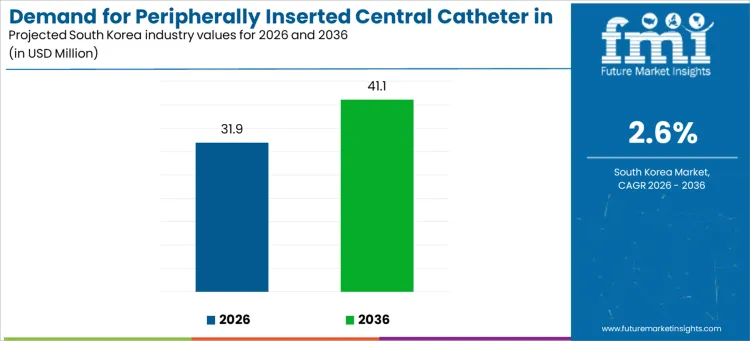
Expenditure on peripherally inserted central catheter solutions in South Korea is estimated to reach USD 31.9 million in 2026. Financial projections indicate a rise to USD 41.1 million by 2036, progressing at a compound annual growth rate of 2.6%. South Korea is witnessing a notable clinical shift toward long-term venous access devices that minimize patient discomfort and reduce the frequency of needle sticks. Medical professionals in tertiary hospitals are increasingly favoring these catheters for patients requiring extended chemotherapy or antibiotic regimens, moving away from traditional central venous catheters which carry higher risks of pneumothorax.
Expansion of this domain is continually supported by the rising incidence of oncological conditions and the subsequent need for reliable chemotherapy delivery systems. Rapid aging of the South Korean population has led to a prevalence of chronic diseases requiring parenteral nutrition and long-term medication, creating a steady baseline demand for durable vascular access points. Innovations in catheter material, particularly the shift towards power-injectable polyurethanes capable of withstanding high-pressure contrast media injections during CT scans, are reshaping product portfolios.
Clinicians are prioritizing devices that offer dual functionality, both therapy delivery and diagnostic imaging support, without the need for multiple access lines. Ultrasound-guided insertion techniques have standardized the placement procedure, improving success rates and safety profiles across both metropolitan and provincial medical centers.
Quick Stats for Demand for Peripherally Inserted Central Catheter in South Korea
- Demand for Peripherally Inserted Central Catheter in South Korea Industry Value (2026): USD 31.9 Million
- Demand for Peripherally Inserted Central Catheter in South Korea Industry Forecast Value (2036): USD 41.1 Million
- Demand for Peripherally Inserted Central Catheter in South Korea Forecast CAGR: 2.6%
- Demand for Peripherally Inserted Central Catheter in South Korea Leading Product: Conventional PICC (43.0%)
- Demand for Peripherally Inserted Central Catheter in South Korea Leading Application: Chemotherapy (36.6%)
- Demand for Peripherally Inserted Central Catheter in South Korea Leading End User: Hospitals (37.0%)
- Demand for Peripherally Inserted Central Catheter in South Korea Key Growth Regions: Jeju, South Gyeongsang, South Jeolla, North Jeolla
- Demand for Peripherally Inserted Central Catheter in South Korea Key Players: Becton, Dickinson and Company (BD), Cardinal Health Inc., AngioDynamics, Inc., Teleflex Incorporated, Vygon Group
Technological adoption is pivoting towards smart technologies that assist in tip location and confirmation, reducing the reliance on post-procedural X-rays. Manufacturers are introducing integrated systems that combine the catheter with ECG-based positioning tech, streamlining the workflow in busy intensive care units and radiology departments. Focus on reducing catheter-related bloodstream infections is driving the industry towards antimicrobial-impregnated catheters and advanced securement devices. Hospitals are implementing strict infection control bundles, necessitating the use of high-quality consumables that comply with rigorous safety standards. Emphasis on patient safety and procedural efficiency ensures that the sector remains resilient, with consistent upgrades in hospital inventories driving value growth through 2036.
Demand for Peripherally Inserted Central Catheter in South Korea Key Takeaways
| Metric | Value |
|---|---|
| Industry Size (2026) | USD 31.9 Million |
| Industry Value (2036) | USD 41.1 Million |
| CAGR (2026 to 2036) | 2.6% |
What Clinical Trends Are Shaping Vascular Access?
A primary catalyst for growth is the increasing sophistication of home healthcare services and outpatient infusion therapy. Patients prefer receiving treatments in the comfort of their homes or at specialized infusion therapy centers rather than prolonged hospital stays. This trend necessitates vascular access devices that are durable, easy to maintain, and resistant to occlusion over weeks or months. Consequently, there is a rising demand for vascular access systems products that feature valve technologies designed to prevent blood reflux and clotting. Additionally, the growing focus on "difficult intravenous access" patients is prompting hospitals to utilize ultrasound-guided PICC placement as a primary strategy, reducing the trauma of repeated failed peripheral sticks.
How is the Sector Structured Across Key Segments?
The sector is segmented to address the specific therapeutic needs of patients ranging from neonates to geriatrics. It is primarily categorized by product, differentiating between standard and pressure-resistant tubes. The lumen segment highlights the complexity of therapy required. The application segment underscores the clinical indication driving usage. Each segment plays a vital role, where conventional catheters drive volume through standard care and power-injected models drive value through versatility in diagnostic imaging.
Why Do Conventional PICCs Maintain Volume Leadership?
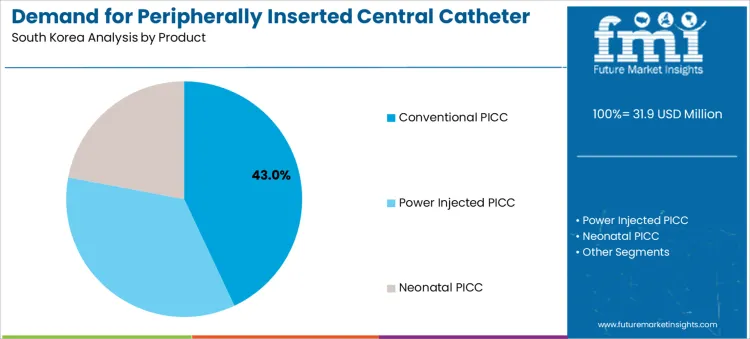
Conventional PICC devices command a 43.0% share of the industry. Prevalence is attributed to their cost-effectiveness and sufficiency for basic antibiotic therapy and hydration protocols where high-pressure injection is not required. Many general wards and long-term care facilities prioritize these standard peripherally inserted central catheters units for their straightforward maintenance and lower procurement costs. While advanced features are desirable, budget constraints of smaller clinics and nursing homes ensure a sustained demand for these reliable, foundational medical devices.
How Does Single Lumen Dominance Reflect Therapy Patterns?
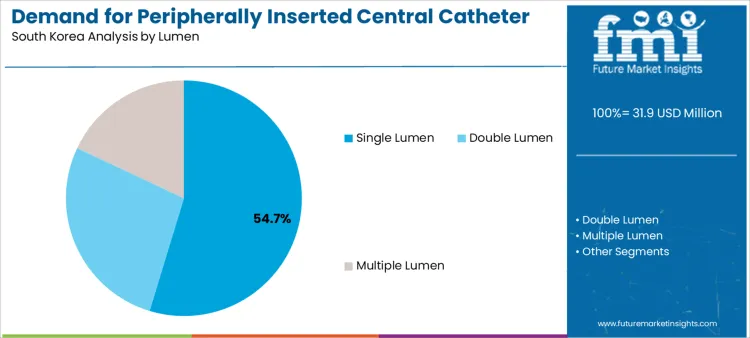
Single Lumen configurations account for 54.7% of the total usage. Most patients requiring a PICC are undergoing a single type of therapy, such as a long course of antibiotics or total parenteral compounding support. Using a single lumen catheter reduces the catheter's outer diameter, minimizing the risk of phlebitis and thrombosis associated with larger, multi-lumen devices. Clinicians in South Korea are highly conservative regarding vein preservation, often choosing the smallest gauge possible to ensure patient comfort and vessel health, reinforcing the dominance of this segment.
Why is Chemotherapy the Primary Application?
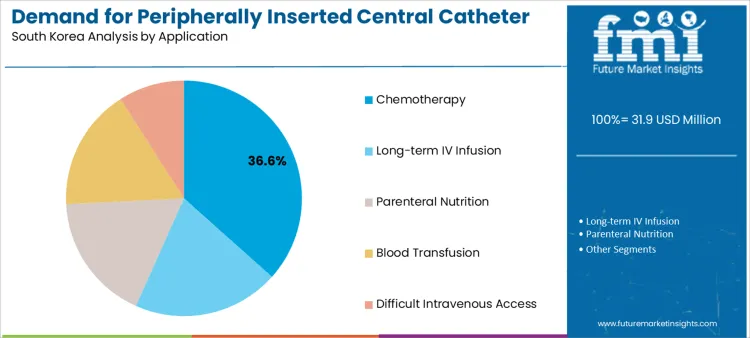
Chemotherapy represents the dominant application segment with 36.6% of the total value. South Korea's robust oncology infrastructure relies heavily on central venous access to administer vesicant drugs that would damage smaller peripheral veins. PICCs offer a safe and stable route for these aggressive medications while allowing patients to maintain a degree of mobility and lifestyle normality. Integration of central venous catheter protocols into standard cancer care pathways ensures that PICC insertion is almost automatic for patients beginning long-term infusion regimens.
Are Hospitals the Sole Major End User?
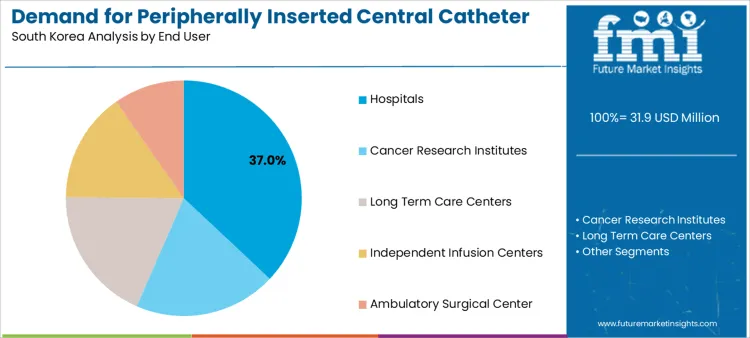
Hospitals hold the largest share at 37.0%, serving as the primary setting for initial catheter insertion due to the availability of sterile environments and imaging support. However, Cancer Research Institutes (21.0%) and Long Term Care Centers (16.0%) are significant contributors. As cancer treatment becomes more specialized, research institutes procure high-end, vascular access catheters specialized for clinical trials and novel drug delivery. Aging population drives demand in nursing facilities where maintaining long-term access for hydration and nutrition is a daily operational necessity.
Will Tip Location Technology Replace X-Rays?
A significant trend is the adoption of real-time tip navigation systems. Traditional placement requires a post-procedural chest X-ray to confirm the tip's position in the superior vena cava, which delays therapy and exposes the patient to radiation. New tip location devices technologies that use ECG or magnetic tracking allow nurses and doctors to confirm placement instantly at the bedside. Innovation significantly improves workflow efficiency, reduces overall procedure costs, and allows for faster initiation of critical therapies, making it a highly attractive investment for high-volume hospitals.
Does Infection Control Impact Material Choice?
The most significant restraint is the risk of catheter-related infections, which can lead to severe complications and increased healthcare costs. In response, there is a growing shift towards catheters incorporating antimicrobial and antithrombogenic materials. Manufacturers are developing catheter solutions with chlorhexidine or silver-impregnated surfaces to prevent bacterial colonization. While these premium devices carry a higher price tag, long-term savings associated with preventing infections are driving their adoption in intensive care units and oncology wards where patients are most vulnerable.
How Can Outpatient Care Unlock New Value?
Emerging field of outpatient parenteral antimicrobial therapy presents a frontier of opportunity. Moving stable infection patients out of the hospital earlier reduces bed occupancy pressure. Suppliers who provide comprehensive iv tubing set kits and patient education materials for home care stand to capture significant revenue. Simplifying the maintenance of PICCs for non-clinical caregivers through intuitive needleless connectors designs and clear instruction allows for the safe expansion of this cost-saving care model.
How is the PICC Landscape Evolving Across South Korea's Regions?
The regional analysis shows a distinct pattern where metropolitan medical hubs drive innovation in complex insertions, while provincial areas focus on geriatric care maintenance. High-growth areas are characterizing their development by establishing specialized geriatric hospitals. As distinct provinces implement local healthcare support programs, the utilization of vascular access tools is becoming tailored to regional demographic health profiles.
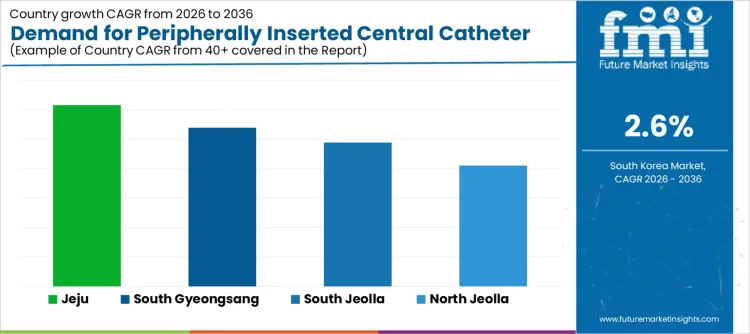
|
Region |
CAGR (2026 to 2036) |
|
Jeju |
3.1% |
|
South Gyeongsang |
2.7% |
|
South Jeolla |
2.4% |
|
North Jeolla |
2.1% |
Why is Medical Infrastructure Driving Demand in Jeju?
Adoption of advanced medical devices in Jeju is projected to expand at a CAGR of 3.1%. As a special self-governing province with a focus on medical tourism and retiree living, Jeju is investing in upgrading its healthcare facilities. Demand is driven by the need to provide high-standard care to both international patients and the local aging population. Clinics on the island are increasingly stocking peripheral intravenous catheter alternatives like PICCs to manage complex cases locally without transferring patients to the mainland.
How is Industrial Healthcare Influencing South Gyeongsang?
Sales of vascular access supplies in South Gyeongsang are likely to reach a CAGR of 2.7%. This region, home to heavy industry and major shipyards, has a robust occupational health infrastructure. Demand is fueled by university hospitals in cities like Busan and Ulsan that handle high volumes of trauma and occupational disease cases requiring long-term IV therapy. Presence of major cancer centers in the region also supports the steady consumption of central venous access device products for chemotherapy.
What Role Does Geriatric Care Play in South Jeolla?
Catheter sector in South Jeolla is anticipated to rise at a CAGR of 2.4%. With one of the highest proportions of elderly residents in the country, the region faces significant demand for chronic disease management. Regional medical centers utilize PICCs extensively for administering heparin anticoagulants and nutritional support to stroke and dementia patients. Government subsidies for rural healthcare modernization facilitate the acquisition of these necessary technologies, ensuring equitable access to standard-of-care treatments.
How is Chronic Care Shaping North Jeolla?
Deployment of infusion devices in North Jeolla is expected to increase at a CAGR of 2.1%. The region is focusing on managing the rising burden of kidney disease and diabetes through community-based health programs. While dialysis catheters are distinct, PICCs are frequently used in this patient population for concurrent therapies. Demand is driven by the distribution of medical resources to secondary hospitals that serve as the primary access points for patients requiring prolonged antibiotic courses or hydration therapy.
What Strategies Define Leadership in Vascular Access?
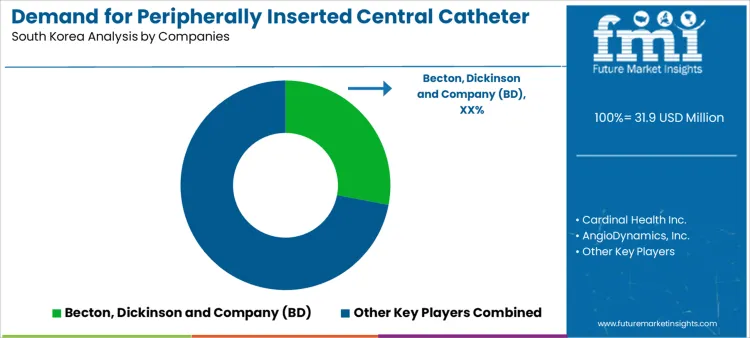
Competitive landscape is firmly anchored by Becton, Dickinson and Company (BD), which commands a dominant 28.0% share of the sector. Strategy focuses on a holistic "vascular access management" approach, bundling catheters with ultrasound systems, tip navigation tech, and dressing kits. By providing an end-to-end solution, they embed themselves deeply into hospital procurement systems. Teleflex Incorporated competes by emphasizing the clinical benefits of their Arrow® brand, known for its chlorhexidine-coated catheters that significantly reduce infection rates, appealing to quality-focused infection control departments.
How Are Innovators Challenging the Status Quo?
Companies like AngioDynamics and Vygon Group are carving out niches by offering specialized products for specific patient groups. AngioDynamics focuses on the "Smart Port" and power-injectable segments, targeting the radiology-oncology interface. Vygon differentiates itself with a strong portfolio in neonatal and pediatric vascular access, offering catheters with extremely small diameters suitable for fragile veins. Segmentation strategy allows smaller players to maintain robust margins by addressing clinical needs that broad-spectrum giants may overlook, such as specific percutaneous vessel closure devices integrations.
Key Companies
- Becton, Dickinson and Company (BD)
- Cardinal Health Inc.
- AngioDynamics, Inc.
- Teleflex Incorporated
- Vygon Group
- B. Braun Melsungen AG
- Cook Medical
- Medtronic
- Boston Scientific Corporation
- Argon Medical Devices
Scope of Report
|
Items |
Values |
|
Quantitative Units |
USD Million |
|
Product |
Conventional PICC, Power Injected PICC, Neonatal PICC |
|
Lumen |
Single Lumen, Double Lumen, Multiple Lumen |
|
Application |
Chemotherapy, Long-term IV Infusion, Parenteral Nutrition, Blood Transfusion, Difficult Intravenous Access1 |
|
End User2 |
Hospitals, Cancer Research Institutes, Long Term Care Centers, Independent Infusion Centers, Ambulatory Surgical Center3 |
|
Regions Covered4 |
Jeju, South Gyeongsang, South Jeolla, North Jeolla5 |
|
Key Compani6es Profiled |
BD, Cardinal Health, AngioDynamics, Teleflex, Vygon, and others. |
Demand for Peripherally Inserted Central Catheter in South Korea by Segments
By Product
- Conventional PICC
- Power Injected PICC
- Neonatal PICC
By Lumen
- Single Lumen
- Double Lumen
- Multiple Lumen
By Application
- Chemotherapy
- Long-term IV Infusion
- Parenteral Nutrition
- Blood Transfusion
- Difficult Intravenous Access
By End User
- Hospitals
- Cancer Research Institutes
- Long Term Care Centers
- Independent Infusion Centers
- Ambulatory Surgical Center
Bibliography
- Ministry of Food and Drug Safety. (2025, May 28). 2024 medical device production and import-export performance statistics. Ministry of Food and Drug Safety, Republic of Korea.
- Ministry of Food and Drug Safety. (2025, April 28). 2024 medical device approval report. Ministry of Food and Drug Safety, Republic of Korea.
- Health Insurance Review and Assessment Service. (2025, December 1). 2024 national health insurance statistical yearbook. Health Insurance Review and Assessment Service and National Health Insurance Service, Republic of Korea.
- Statistics Korea. (2025, September 24). Causes of death statistics results for 2024. Statistics Korea, Republic of Korea.
- Health Insurance Review and Assessment Service. (2026, January 12). National health insurance statistical yearbook information page. Health Insurance Review and Assessment Service, Republic of Korea.
Frequently Asked Questions
How big is the demand for Peripherally Inserted Central Catheter in South Korea in 2026?
The demand for peripherally inserted central catheter in South Korea is estimated to be valued at USD 31.9 million in 2026.
What will be the size of Peripherally Inserted Central Catheter in South Korea in 2036?
The industry size for the peripherally inserted central catheter in South Korea is projected to reach USD 41.1 million by 2036.
How much will be the demand for Peripherally Inserted Central Catheter in South Korea growth between 2026 and 2036?
The demand for peripherally inserted central catheter in South Korea is expected to grow at a 2.6% CAGR between 2026 and 2036.
What are the key product types in the Peripherally Inserted Central Catheter in South Korea?
The key product types in peripherally inserted central catheter in South Korea are conventional PICC, power injected PICC, and neonatal PICC.
Which end user segment is expected to contribute significant share in the Peripherally Inserted Central Catheter in South Korea in 2026?
In terms of end user, the hospitals segment is expected to command 37.0% share in the peripherally inserted central catheter in South Korea in 2026.
Preview the report firsthand - request a free sample
Get SampleGet the brochure for pricing and purchase details.
Get PDFTable of Content
- Executive Summary
- South Korea Market Outlook
- Demand-side Trends
- Supply-side Trends
- Technology Roadmap Analysis
- Analysis and Recommendations
- Market Overview
- Market Coverage / Taxonomy
- Market Definition / Scope / Limitations
- Market Background
- Market Dynamics
- Drivers
- Restraints
- Opportunity
- Trends
- Scenario Forecast
- Demand in Optimistic Scenario
- Demand in Likely Scenario
- Demand in Conservative Scenario
- Opportunity Map Analysis
- Product Life Cycle Analysis
- Supply Chain Analysis
- Investment Feasibility Matrix
- Value Chain Analysis
- PESTLE and Porter’s Analysis
- Regulatory Landscape
- Regional Parent Market Outlook
- Production and Consumption Statistics
- Import and Export Statistics
- Market Dynamics
- South Korea Market Analysis 2021 to 2025 and Forecast, 2026 to 2036
- Historical Market Size Value (USD Million) Analysis, 2021 to 2025
- Current and Future Market Size Value (USD Million) Projections, 2026 to 2036
- Y-o-Y Growth Trend Analysis
- Absolute $ Opportunity Analysis
- South Korea Market Pricing Analysis 2021 to 2025 and Forecast 2026 to 2036
- South Korea Market Analysis 2021 to 2025 and Forecast 2026 to 2036, By Product
- Introduction / Key Findings
- Historical Market Size Value (USD Million) Analysis By Product , 2021 to 2025
- Current and Future Market Size Value (USD Million) Analysis and Forecast By Product , 2026 to 2036
- Conventional PICC
- Power Injected PICC
- Neonatal PICC
- Conventional PICC
- Y-o-Y Growth Trend Analysis By Product , 2021 to 2025
- Absolute $ Opportunity Analysis By Product , 2026 to 2036
- South Korea Market Analysis 2021 to 2025 and Forecast 2026 to 2036, By Lumen
- Introduction / Key Findings
- Historical Market Size Value (USD Million) Analysis By Lumen, 2021 to 2025
- Current and Future Market Size Value (USD Million) Analysis and Forecast By Lumen, 2026 to 2036
- Single Lumen
- Double Lumen
- Multiple Lumen
- Single Lumen
- Y-o-Y Growth Trend Analysis By Lumen, 2021 to 2025
- Absolute $ Opportunity Analysis By Lumen, 2026 to 2036
- South Korea Market Analysis 2021 to 2025 and Forecast 2026 to 2036, By Application
- Introduction / Key Findings
- Historical Market Size Value (USD Million) Analysis By Application, 2021 to 2025
- Current and Future Market Size Value (USD Million) Analysis and Forecast By Application, 2026 to 2036
- Chemotherapy
- Long-term IV Infusion
- Parenteral Nutrition
- Blood Transfusion
- Difficult Intravenous Access
- Chemotherapy
- Y-o-Y Growth Trend Analysis By Application, 2021 to 2025
- Absolute $ Opportunity Analysis By Application, 2026 to 2036
- South Korea Market Analysis 2021 to 2025 and Forecast 2026 to 2036, By End User
- Introduction / Key Findings
- Historical Market Size Value (USD Million) Analysis By End User, 2021 to 2025
- Current and Future Market Size Value (USD Million) Analysis and Forecast By End User, 2026 to 2036
- Hospitals
- Cancer Research Institutes
- Long Term Care Centers
- Independent Infusion Centers
- Ambulatory Surgical Center
- Hospitals
- Y-o-Y Growth Trend Analysis By End User, 2021 to 2025
- Absolute $ Opportunity Analysis By End User, 2026 to 2036
- Market Structure Analysis
- Competition Dashboard
- Competition Benchmarking
- Market Share Analysis of Top Players
- By Regional
- By Product
- By Lumen
- By Application
- By End User
- Competition Analysis
- Competition Deep Dive
- Becton, Dickinson and Company (BD)
- Overview
- Product Portfolio
- Profitability by Market Segments (Product/Age /Sales Channel/Region)
- Sales Footprint
- Strategy Overview
- Marketing Strategy
- Product Strategy
- Channel Strategy
- Cardinal Health Inc.
- AngioDynamics, Inc.
- Teleflex Incorporated
- Vygon Group
- Becton, Dickinson and Company (BD)
- Competition Deep Dive
- Assumptions & Acronyms Used
- Research Methodology


