

- Industry Size (2026)
- USD 83.2 Mn
- Forecast (2036)
- USD 204.4 Mn
- CAGR (2026 to 2036)
- 9.4%
Demand for Regenerative Artificial Skin in South Korea Forecast and Outlook 2026 to 2036
The demand for regenerative artificial skin in South Korea is expected to reach USD 204.4 million by 2036, growing at a CAGR of 9.4% from USD 83.2 million in 2026. Decision-makers should focus on the economic exposure tied to this market's growth, as it is directly influenced by healthcare advancements and regulatory approvals. Prioritization should center around product innovation and securing partnerships with key medical institutions, as these factors will drive adoption in both clinical and consumer markets. Timing is crucial, as early entrants with strong R&D capabilities will benefit from first-mover advantages, while waiting too long could expose companies to heightened competition. The market is poised for steady expansion, but the pace of growth will depend on regulatory changes and the willingness of healthcare providers to integrate new technologies into established treatment protocols. Strategic investments and a long-term view are essential to capitalize on this high-potential market.
Quick Stats for the Demand for Regenerative Artificial Skin in South Korea:
- Regenerative Artificial Skin in South Korea Value (2026): USD 83.2 million
- Regenerative Artificial Skin in South Korea Forecast Value (2036): USD 204.4 million
- Regenerative Artificial Skin in South Korea Forecast CAGR (2026 to 2036): 9.4%
- Regenerative Artificial Skin in South Korea Leading Segment: Burn Care Centers (51.1%)
- Key Growth Regions of Regenerative Artificial Skin in South Korea: Jeju (leading CAGR ~11.3%)
- Top Players of Regenerative Artificial Skin in South Korea: Integra Life Sciences Corporation, Mylan N.V., Johnson & Johnson Services, Inc., Smith & Nephew, Mallinckrodt Plc.
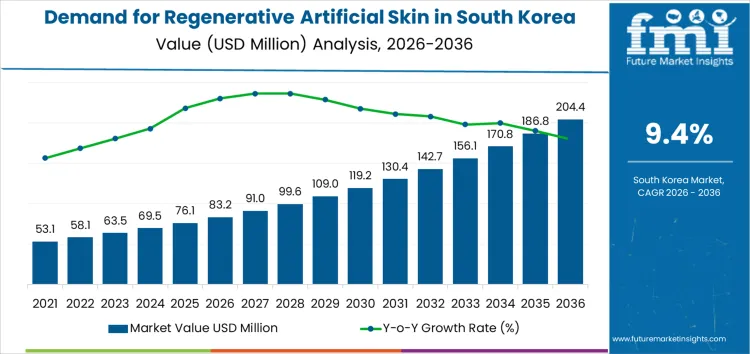
What is the Growth Forecast for the Regenerative Artificial Skin Market in South Korea through 2036?
The regenerative artificial skin market in South Korea is expected to experience robust growth over the forecast period. Starting at USD 83.2 million in 2026, the market is expected to grow to USD 91.0 million in 2027. By 2028, the market will reach USD 99.6 million, followed by USD 109.0 million in 2029. The market will continue its upward trajectory, reaching USD 119.2 million in 2030 and USD 130.4 million in 2031.
As technological advancements in regenerative medicine continue, the market for artificial skin will see consistent growth, reaching USD 142.7 million in 2032 and USD 156.1 million in 2033. By 2034, the market value will reach USD 170.8 million, and the demand will continue to rise, reaching USD 186.8 million in 2035. By 2036, the market is projected to reach USD 204.4 million. The market share erosion or gain analysis indicates a steady gain throughout the forecast period, driven by increased awareness, technological breakthroughs, and growing demand for advanced skin treatments, solidifying regenerative artificial skin as a key component of South Korea’s medical landscape.
Key Takeaways for Demand for Regenerative Artificial Skin in South Korea
| Metric | Value |
|---|---|
| Industry Sales Value (2026) | USD 83.2 million |
| Industry Forecast Value (2036) | USD 204.4 million |
| Industry Forecast CAGR (2026 to 2036) | 9.4% |
Why is the Demand for Regenerative Artificial Skin Growing in South Korea?
Demand for regenerative artificial skin products in South Korea has increased as clinicians and healthcare providers address complex wound care and surgical reconstruction needs more effectively. Acute and chronic wounds, including burns, diabetic ulcers, and trauma related skin loss, create significant treatment challenges that traditional dressings and grafts may not fully resolve. Regenerative artificial skin, including bioengineered dermal matrices and scaffold based products, supports tissue regeneration and reduces healing time, making these solutions relevant in tertiary hospitals and specialised wound care centres. South Korea’s ageing population contributes to higher incidence of chronic wounds and comorbidities that slow natural healing, prompting greater clinical use of advanced skin substitutes.
Healthcare providers have integrated regenerative products into treatment protocols where enhanced vascularisation and reduced scar tissue formation are priorities. Surgical disciplines such as plastic surgery, orthopaedics, and reconstructive trauma also adopt artificial skin to improve outcomes in postoperative recovery. Procurement teams in hospital networks increasingly evaluate regenerative artificial skin products based on clinical evidence, ease of application, and compatibility with existing wound care pathways.
Looking ahead, demand for regenerative artificial skin in South Korea is expected to rise as product innovation and reimbursement policies evolve. Manufacturers focused on biocompatible materials and next generation scaffolds that mimic native skin architecture can differentiate offerings for complex wound indications. Suppliers that provide training, clinical support, and real world outcome data to healthcare providers are better positioned to demonstrate value beyond unit price alone.
Investment in post market surveillance and registries will help hospitals measure long term performance and justify adoption within constrained healthcare budgets. Enhanced collaboration between product developers and clinician researchers can support local evidence generation, which influences procurement preferences. Opportunities also exist for integration of digital planning tools, such as imaging and sizing systems, that streamline product selection and application in clinical workflows. For companies targeting the South Korean market, aligning product development with clinician needs and health system priorities will be central to capturing expanding demand in regenerative wound care.
What Are the Key Segments in Demand for Regenerative Artificial Skin in South Korea?
The demand for regenerative artificial skin in South Korea is shaped by material type and end-user applications. Key material types include engineered skin material, temporary skin material, single-layer material, bi-layered material, and permanent skin material, with engineered skin material leading the market at 31.4%. Burn care centers are the dominant end user, accounting for 51.1% of the demand, followed by hospitals, clinics, and other healthcare providers. As medical advancements in wound healing continue, the demand for advanced artificial skin solutions is expanding.
How Does Material Type Influence the Demand for Regenerative Artificial Skin in South Korea?
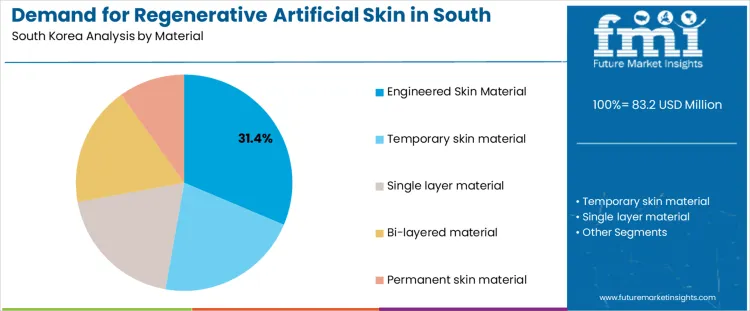
Material type plays a significant role in the growing demand for regenerative artificial skin in South Korea. Engineered skin material, accounting for 31.4% of the market, is highly favored due to its versatility and durability. Engineered materials are designed to mimic the properties of human skin, offering better functionality and support for the healing of severe wounds or burns. These materials are particularly important for burn care, where skin grafting is required to promote faster healing and reduce the risk of infection. Temporary skin materials are also in demand, particularly for short-term wound care or as a temporary cover for severe burns and injuries before more permanent treatments are applied.
The temporary nature of these materials makes them valuable in emergency or acute care settings, where rapid intervention is crucial. Single-layer and bi-layered materials cater to different needs depending on the severity of the injury and the depth of tissue damage. Bi-layered materials are increasingly sought after for their ability to provide more comprehensive coverage and enhanced skin regeneration. These materials support the body's natural healing processes by offering both structural and functional layers. Permanent skin materials, though a smaller segment, provide long-term solutions for chronic wounds or severe burns. The combination of these advanced materials, tailored to specific types of injuries, allows for a comprehensive approach to wound healing in South Korea's healthcare landscape.
What Is the Demand for Regenerative Artificial Skin by End-User in South Korea?
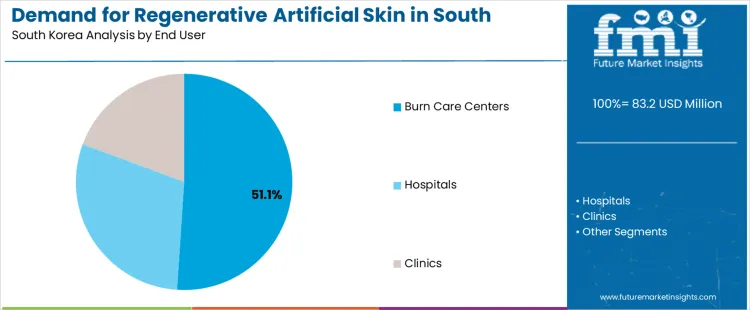
End-user applications are a key driver of the demand for regenerative artificial skin in South Korea, with burn care centers leading the market, representing 51.1% of the demand. Burn care centers rely heavily on regenerative artificial skin materials to treat severe burns and skin injuries. These centers require high-quality, durable materials that can aid in rapid wound healing and reduce the risk of infection and complications. The specialized nature of burn care makes these centers the primary users of artificial skin materials. Hospitals also contribute to the demand, particularly in acute care situations where patients suffer from trauma or burn injuries that require immediate treatment. Hospitals use a variety of artificial skin materials, depending on the injury severity, to provide patients with the best possible healing outcomes.
Clinics, while a smaller segment in comparison, are increasingly adopting regenerative artificial skin for outpatient treatments, particularly in cases of minor burns, chronic wounds, or cosmetic procedures. The ability of these materials to speed up healing and reduce scarring makes them a valuable tool in clinical settings, where patients seek efficient and effective treatment options. As the demand for advanced wound care continues to grow in South Korea, both specialized and general healthcare facilities are increasingly turning to regenerative artificial skin materials to improve patient outcomes. Manufacturers and suppliers need to focus on developing cost-effective, reliable, and high-quality materials to meet the needs of these diverse healthcare sectors.
What are the Key Dynamics in the Demand for Regenerative Artificial Skin in South Korea?
Demand for regenerative artificial skin in South Korea is driven by clinical needs in burn care, chronic wound management, and reconstructive procedures. Hospitals, specialized burn units, and plastic surgery clinics are primary end users that procure these products for therapeutic applications where conventional dressings prove insufficient. An aging population with higher incidence of diabetes and pressure ulcers adds to clinical caseloads. Procurement decisions by healthcare institutions balance clinical performance, cost effectiveness, and reimbursement coverage under national health insurance. Regulatory classification and approval by the Ministry of Food and Drug Safety (MFDS) influence product availability and market entry timelines. Suppliers who align product portfolios with local clinical protocols and hospital formularies benefit from predictable institutional demand.
What are the Drivers of Demand for Regenerative Artificial Skin in South Korea?
Clinical prevalence of severe wounds, including third degree burns, diabetic foot ulcers, and surgical defects, supports consistent utilization of regenerative artificial skin as a therapeutic option. Outcomes expectations for faster healing and reduced scar formation drive interest among clinicians who treat complex wound profiles. South Korea’s comprehensive health insurance framework that subsidizes advanced wound care products influences purchasing decisions by hospitals and specialist centers. Expansion of trauma care facilities and plastic reconstructive services contributes to procedural volume. Technological advances in scaffold materials, biocompatibility, and integration with growth factors enhance therapeutic appeal, prompting clinicians to adopt these solutions over traditional dressings. Educational initiatives and clinical evidence demonstrating comparative effectiveness strengthen confidence in regenerative products.
What are the Restraints on Demand for Regenerative Artificial Skin in South Korea?
Restraints to demand include pricing pressures and budget constraints within hospital procurement cycles. Advanced regenerative products typically carry higher unit costs than standard wound dressings, which can make hospital administrators cautious in volume commitments. Regulatory requirements for device classification and clinical evidence may lengthen time to market for novel products, reducing first mover advantages for some suppliers. Reimbursement levels under national health insurance do not always align with product cost, which can shift cost burden to healthcare providers. Limited awareness among general practitioners and community clinic staff about the indications and benefits of regenerative artificial skin may slow referrals to specialized care where such products are used. Supply chain disruptions affecting raw biomaterials can also impact consistent product availability.
What Key Trends Affect Demand for Regenerative Artificial Skin in South Korea?
A key trend is integration of regenerative artificial skin with digital wound assessment and telemedicine platforms, enabling clinicians to monitor healing remotely and adjust care plans efficiently. Suppliers that offer bundled solutions with data capture capabilities gain traction with hospital systems seeking measurable outcomes. Innovation in biomaterial science, including use of bioactive dressings and scaffold designs that mimic extracellular matrix structures, is expanding product differentiation. Partnerships between medical device firms and clinical research institutions are producing locally validated evidence that supports adoption. Growth in awareness of chronic wound care pathways and multidisciplinary teams that include wound care specialists is creating institutional demand for advanced therapies. Distribution networks that combine direct hospital sales with specialist distributors are improving market reach, particularly into regional healthcare facilities.
What is the Regional Demand Outlook for Regenerative Artificial Skin in South Korea?
The demand for regenerative artificial skin in South Korea is increasing across various regions, driven by advancements in healthcare, the rising prevalence of chronic wounds, and a growing interest in advanced medical treatments. South Gyeongsang, with a projected CAGR of 9.9%, leads the market, driven by the region’s strong healthcare infrastructure and significant investment in medical technologies. North Jeolla, with a growth rate of 7.5%, shows moderate demand, largely driven by the region’s increasing focus on medical research and healthcare development. South Jeolla, with a projected CAGR of 8.9%, is also seeing steady growth in demand for regenerative artificial skin, as the region's medical industry continues to expand. Jeju, with the highest projected demand growth of 11.3%, stands out due to its increasing focus on wellness and advanced healthcare treatments, along with growing tourism that often requires medical care solutions. These regional trends highlight significant opportunities for suppliers of regenerative artificial skin to target the evolving healthcare needs across South Korea.
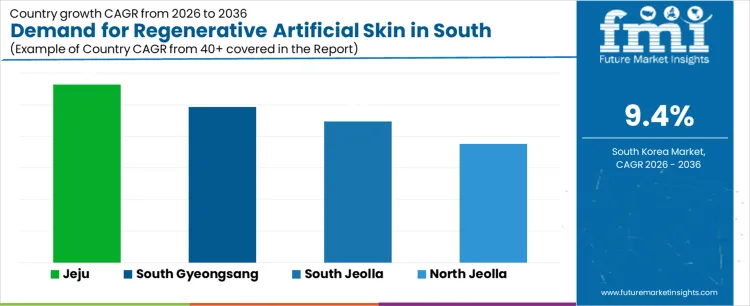
| Region | CAGR (2026 to 2036) |
|---|---|
| South Gyeongsang | 9.9% |
| North Jeolla | 7.5% |
| South Jeolla | 8.9% |
| Jeju | 11.3% |
How Can Manufacturers Target the Market in South Gyeongsang for Regenerative Artificial Skin?
South Gyeongsang, with a projected CAGR of 9.9%, offers a promising market for regenerative artificial skin. The region’s well-established healthcare facilities and strong focus on advanced medical treatments provide a solid foundation for the growth of skin regeneration technologies. Manufacturers looking to enter this market should prioritize the development of high-quality, innovative products that align with the region’s focus on medical excellence. Collaborations with local hospitals, clinics, and research institutions could help establish strong distribution channels and promote awareness of the benefits of regenerative artificial skin for wound care and cosmetic applications. South Gyeongsang’s steady healthcare expansion presents an excellent opportunity for companies to secure a leading position in the market.
What Drives Demand for Regenerative Artificial Skin in North Jeolla?
North Jeolla, with a CAGR of 7.5%, is experiencing a moderate but steady demand for regenerative artificial skin. The region’s growing healthcare infrastructure, along with increased attention to research and medical treatments, is driving demand for innovative skin regeneration solutions. North Jeolla’s demand is also influenced by its expanding focus on medical technology and biotechnology sectors. Manufacturers can capitalize on this growth by offering affordable and accessible regenerative artificial skin products that meet the region’s healthcare needs. Educating both medical professionals and the public on the benefits of regenerative skin treatments for chronic wounds, burns, and post-surgical care could further accelerate adoption in the region.
What is the Growth Outlook for Regenerative Artificial Skin in South Jeolla?
South Jeolla, with a projected CAGR of 8.9%, shows steady growth in the demand for regenerative artificial skin. The region’s expanding medical industry, driven by investments in healthcare infrastructure and research, is fueling the need for advanced medical products, including regenerative skin solutions. South Jeolla’s healthcare system is increasingly focusing on treating chronic wounds, burns, and post-operative care, which will continue to drive the demand for these products. Manufacturers targeting this region should focus on offering cutting-edge, effective skin regeneration solutions that cater to both hospital and outpatient care settings. As healthcare services expand and improve, South Jeolla’s market for regenerative artificial skin will likely grow steadily in the coming years.
Why is Jeju Leading the Demand for Regenerative Artificial Skin?
Jeju, with the highest projected CAGR of 11.3%, is experiencing the most significant growth in the demand for regenerative artificial skin. This growth is largely driven by the region’s increasing focus on wellness tourism, as tourists seeking medical treatments often require advanced wound care solutions. Additionally, Jeju’s aging population and growing interest in cutting-edge healthcare treatments are contributing to the rise in demand for skin regeneration technologies. Manufacturers looking to enter Jeju’s market should prioritize offering regenerative artificial skin products tailored to both tourists and the local population, focusing on high-quality, non-invasive treatments. Jeju’s rapid healthcare development and growing medical tourism industry present considerable opportunities for suppliers of regenerative skin products.
What is the Competitive Landscape for Regenerative Artificial Skin Demand in South Korea?
Demand for regenerative artificial skin products in South Korea is advancing within clinical wound care, burn treatment, and reconstructive surgery practices. Healthcare facilities, specialised burn centres, and plastic surgery units evaluate regenerative skin solutions that support tissue repair while meeting stringent clinical outcomes. Procurement decisions are based on product performance data, ease of application in diverse wound types, and compliance with South Korean medical device regulations. Key considerations include healing rates, reduction in graft rejection, and support for integration with host tissue. Demand is influenced by the prevalence of chronic wounds such as diabetic ulcers, surgical wounds, and trauma cases that benefit from biologically active dressings.
Hospital purchasers, group purchasing organisations, and national health payers analyse cost effectiveness alongside clinical efficacy when selecting regenerative skin products. The metric of interest beyond unit cost is overall treatment success, as measured by reduced healing times and fewer secondary interventions. Digital health records and outcome tracking systems in Korean hospitals also shape purchasing criteria by providing comparative data on product performance across patient cohorts.
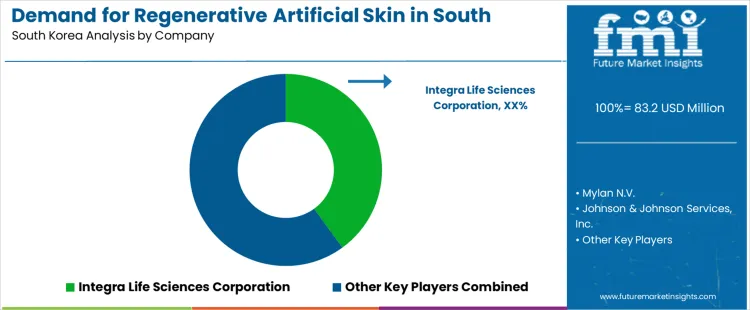
Competition among major suppliers in the regenerative artificial skin segment in South Korea is guided by product innovation, clinical evidence, and detailed technical documentation tailored to institutional buyers. Integra Life Sciences Corporation is recognised as a leading supplier, with product literature emphasising scaffold materials, matrix architecture, and documented clinical outcomes that support clinician confidence and hospital formulary inclusion. Mylan N.V. materials present regenerative skin options with specification sheets on porosity, tensile strength, and handling protocols relevant for surgical teams. Johnson & Johnson Services, Inc. documentation highlights biologically derived matrices with details on application techniques, integration performance, and sterility assurance provided in technical brochures for hospital procurement committees.
Smith & Nephew product literature outlines advanced wound care platforms with compatibility data for varied wound environments and caregiver handling guidelines that assist in clinical decision making. Mallinckrodt Plc. materials describe engineered skin substitutes with analytical data on cellular integration, fluid handling capacity, and storage conditions. Brochures from these companies typically include indications for use, performance metrics, and regulatory compliance information that assist South Korean clinical buyers, wound care specialists, and hospital administrators when comparing regenerative artificial skin offerings against clinical and operational requirements.
Key Players of the Demand for Regenerative Artificial Skin in South Korea
- Integra Life Sciences Corporation
- Mylan N.V.
- Johnson & Johnson Services, Inc.
- Smith & Nephew
- Mallinckrodt Plc.
Scope of the Report
| Items | Values |
|---|---|
| Quantitative Units (2026) | USD Million |
| Material | Engineered Skin Material, Temporary Skin Material, Single Layer Material, Bi-layered Material, Permanent Skin Material |
| End User | Burn Care Centers, Hospitals, Clinics |
| Companies | Integra Life Sciences Corporation, Mylan N.V., Johnson & Johnson Services, Inc., Smith & Nephew, Mallinckrodt Plc. |
| Region Covered | South Korea |
| Provinces Covered | South Gyeongsang, North Jeolla, South Jeolla, Jeju |
| Additional Attributes | Dollar sales by material type and end user. Demand is driven by advancements in bioengineered skin, rising burn incidence, and expanded adoption of multi-layered and permanent skin substitutes in specialized burn centers and hospital settings. |
Key Segments of Demand for Regenerative Artificial Skin in South Korea
Material
- Engineered Skin Material
- Temporary Skin Material
- Single Layer Material
- Bi-layered Material
- Permanent Skin Material
- Other
End User
- Burn Care Centers
- Hospitals
- Clinics
- Other
Provinces
- South Gyeongsang
- North Jeolla
- South Jeolla
- Jeju
Bibliography
- Ministry of Food and Drug Safety. (2025). 2024 medical device approval report. Ministry of Food and Drug Safety.
- Health Insurance Review & Assessment Service. (2025). 2023 national health insurance statistical yearbook. Health Insurance Review & Assessment Service.
- Ministry of the Interior and Safety. (2024). 2024 statistics on the aged. Ministry of the Interior and Safety.
- International Diabetes Federation. (2025). IDF diabetes atlas (11th ed.). International Diabetes Federation.
- Gupta, S., Gabriel, A., & Lantis, J. (2024). Dermal regeneration template in the management and reconstruction of wounds. Plastic and Reconstructive Surgery Global Open, 12(3), e5629.
Frequently Asked Questions
How big is the demand for regenerative artificial skin in south korea in 2026?
The demand for regenerative artificial skin in south korea is estimated to be valued at USD 83.2 million in 2026.
What will be the size of regenerative artificial skin in south korea in 2036?
The market size for the regenerative artificial skin in south korea is projected to reach USD 204.4 million by 2036.
How much will be the demand for regenerative artificial skin in south korea growth between 2026 and 2036?
The demand for regenerative artificial skin in south korea is expected to grow at a 9.4% CAGR between 2026 and 2036.
What are the key product types in the regenerative artificial skin in south korea?
The key product types in regenerative artificial skin in south korea are engineered skin material, temporary skin material, single layer material, bi-layered material and permanent skin material.
Which end user segment is expected to contribute significant share in the regenerative artificial skin in south korea in 2026?
In terms of end user, burn care centers segment is expected to command 51.1% share in the regenerative artificial skin in south korea in 2026.
Preview the report firsthand - request a free sample
Get SampleGet the brochure for pricing and purchase details.
Get PDFTable of Content
- Executive Summary
- South Korea Market Outlook
- Demand-side Trends
- Supply-side Trends
- Technology Roadmap Analysis
- Analysis and Recommendations
- Market Overview
- Market Coverage / Taxonomy
- Market Definition / Scope / Limitations
- Market Background
- Market Dynamics
- Drivers
- Restraints
- Opportunity
- Trends
- Scenario Forecast
- Demand in Optimistic Scenario
- Demand in Likely Scenario
- Demand in Conservative Scenario
- Opportunity Map Analysis
- Product Life Cycle Analysis
- Supply Chain Analysis
- Investment Feasibility Matrix
- Value Chain Analysis
- PESTLE and Porter’s Analysis
- Regulatory Landscape
- Regional Parent Market Outlook
- Production and Consumption Statistics
- Import and Export Statistics
- Market Dynamics
- South Korea Market Analysis 2021 to 2025 and Forecast, 2026 to 2036
- Historical Market Size Value (USD Million) Analysis, 2021 to 2025
- Current and Future Market Size Value (USD Million) Projections, 2026 to 2036
- Y-o-Y Growth Trend Analysis
- Absolute $ Opportunity Analysis
- South Korea Market Pricing Analysis 2021 to 2025 and Forecast 2026 to 2036
- South Korea Market Analysis 2021 to 2025 and Forecast 2026 to 2036, By Material
- Introduction / Key Findings
- Historical Market Size Value (USD Million) Analysis By Material, 2021 to 2025
- Current and Future Market Size Value (USD Million) Analysis and Forecast By Material, 2026 to 2036
- Engineered Skin Material
- Temporary skin material
- Single layer material
- Bi-layered material
- Permanent skin material
- Engineered Skin Material
- Y-o-Y Growth Trend Analysis By Material, 2021 to 2025
- Absolute $ Opportunity Analysis By Material, 2026 to 2036
- South Korea Market Analysis 2021 to 2025 and Forecast 2026 to 2036, By End User
- Introduction / Key Findings
- Historical Market Size Value (USD Million) Analysis By End User, 2021 to 2025
- Current and Future Market Size Value (USD Million) Analysis and Forecast By End User, 2026 to 2036
- Burn Care Centers
- Hospitals
- Clinics
- Burn Care Centers
- Y-o-Y Growth Trend Analysis By End User, 2021 to 2025
- Absolute $ Opportunity Analysis By End User, 2026 to 2036
- Market Structure Analysis
- Competition Dashboard
- Competition Benchmarking
- Market Share Analysis of Top Players
- By Regional
- By Material
- By End User
- Competition Analysis
- Competition Deep Dive
- Integra Life Sciences Corporation
- Overview
- Product Portfolio
- Profitability by Market Segments (Product/Age /Sales Channel/Region)
- Sales Footprint
- Strategy Overview
- Marketing Strategy
- Product Strategy
- Channel Strategy
- Mylan N.V.
- Johnson & Johnson Services, Inc.
- Smith & Nephew
- Mallinckrodt Plc.
- Integra Life Sciences Corporation
- Competition Deep Dive
- Assumptions & Acronyms Used
- Research Methodology


