

- Industry Size (2026)
- USD 1.1 Bn
- Forecast (2036)
- USD 2.1 Bn
- CAGR (2026 to 2036)
- 6.3%
Gemstone Industry Forecast and Outlook in South Korea 2026 to 2036
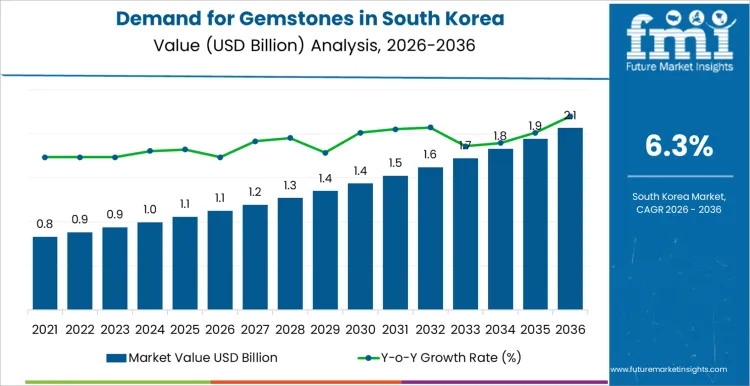
The precious stones arena in South Korea is projected to achieve a valuation of USD 1.1 billion in 2026. This sector is anticipated to reach a size of USD 2.1 billion by 2036, advancing at a 6.3% CAGR. This consistent and notable growth is deeply interwoven with the nation's sophisticated luxury consumption patterns, cultural reverence for symbolism and beauty, and rising disposable income among a broadening consumer base.
Demand is further amplified by a dynamic blend of traditional heritage and contemporary fashion, where gemstones serve as both timeless heirlooms and modern statements of personal style. The evolution of digital retail and targeted marketing directly to consumers is reshaping accessibility and desire within this nuanced landscape.
Underpinning this expansion is a robust economy that supports discretionary spending and an increasing appreciation for unique, high-value assets that convey personal success and aesthetic discernment. The sustained investment in luxury retail infrastructure and international brand presence within major urban centers provides a tangible platform for this growth, facilitating both discovery and purchase for engaged consumers.
Quick Stats for the Gemstones Arena in South Korea
- Gemstones Industry Valuation in South Korea (2026): USD 1.1 billion
- Gemstones Industry Forecast Valuation in South Korea (2036): USD 2.1 billion
- Forecast CAGR: 6.3%
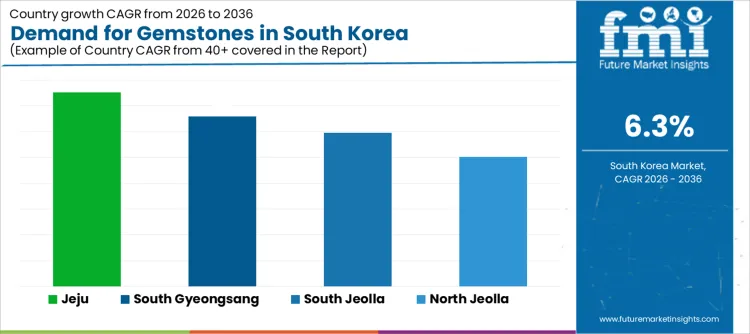
- Leading Regional Growth: Jeju (CAGR 7.5%)
- Leading Stone Type in the Gemstone Landscape of South Korea: Emerald (30.0%)
- Leading Application of Gemstones in South Korea: Jewelry & Ornaments (55.0%)
- Key Industry Participants: Gem Diamonds Limited, Kiran Gems Private Limited, Gemfields Group Limited, PJSC ALROSA, Anglo American plc
Why is South Korea a Culturally Significant Market for Gemstones?
The demand for gemstones in South Korea transcends mere ornamentation, rooted in a deep cultural appreciation for aesthetics, symbolism, and quality that spans generations. Historically, certain stones have been associated with status, protection, and the channeling of positive energy, a sentiment that continues to subconsciously influence modern purchasing decisions and gift-giving customs, particularly for weddings and major life milestones. The contemporary driver is the powerful luxury goods and personal accessories segment, where gemstones are central to branding, perceived value, and the expression of individual identity.
The immense influence of popular culture, including television dramas, film, and celebrity fashion trends, frequently sets styles that drive immediate and widespread consumer interest in specific stones, cuts, and designs, creating waves of demand that ripple rapidly through the retail landscape.
This creates a market that is both tradition-bound and highly responsive to contemporary stimuli. The growing educational outreach by brands and retailers about gemology also empowers consumers, fostering a more discerning clientele that values authenticity and specific characteristics like origin and cut quality.
How is the Gemstones Arena Segmented by Type and Use?
The type of gemstone and its primary application, reflecting the distinct consumer motivations, emotional connections, and purchasing occasions that define this luxury space, meticulously categorizes the precious stones sector. This segmentation reveals a market where emotional value, color symbolism, perceived rarity, and inherent beauty are the principal drivers of choice, often outweighing purely technical specifications.
The clear distinction between stones destined for personal adornment and those acquired for collection or artistic display further highlights the diverse economic and cultural roles these natural treasures fulfill, from wearable sentiment to held investment. Understanding this segmentation is key to comprehending the varied supply chains, marketing strategies, and retail environments that cater to each unique segment within the broader sector.
Which Gemstone Holds the Foremost Position in Consumer Preference?
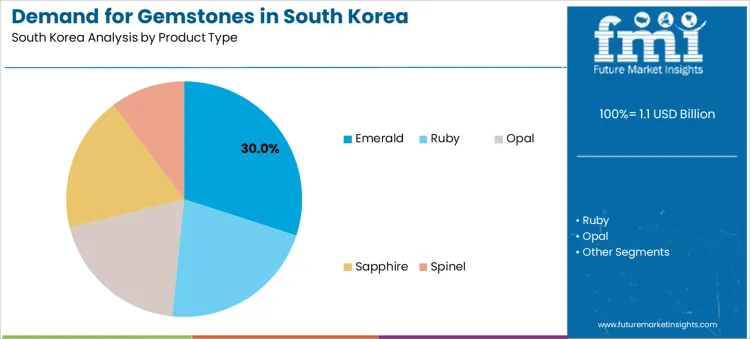
Emeralds command a leading share, estimated at 30.0%. Their enduring and premier popularity is tied to the stone's vivid green hue, which carries deep cultural connotations of harmony, renewal, prosperity, and prestige within East Asian symbolism.
The stone’s relative rarity, particularly in sizes and clarities suitable for fine jewelry, and the complexity of sourcing high-quality specimens from renowned origins like Colombia and Zambia, contribute significantly to its aspirational value and price point.
Rubies and sapphires follow closely, prized for their bold, saturated colors and traditional significance in high-end jewelry, often featured in pieces marking major life events such as engagements and anniversaries. The appeal of these classic corundum varieties remains resilient.
Opals and spinels are gaining traction among niche connoisseurs and designers seeking distinctive beauty, with opals valued for their unique play-of-color and spinels for their brilliant clarity and range of hues, from vibrant reds to soft pinks. The sustained appeal of these classic stones is further contextualized by evolving trends within the colored gemstone investment landscape, which highlights their potential as alternative assets.
Which Application Drives the Core of Market Activity?
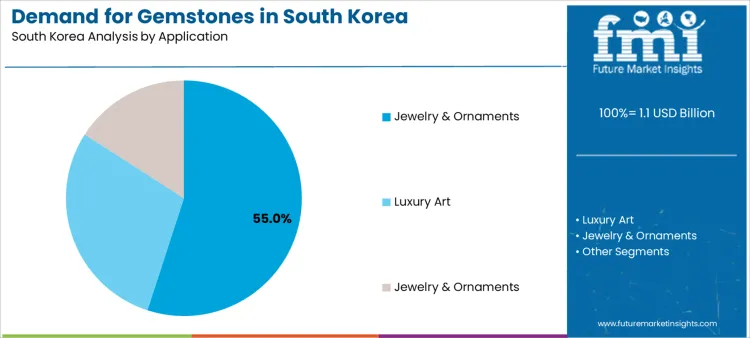
Jewelry and ornaments constitute the overwhelmingly dominant application, holding an estimated 55.0% share. This encompasses a vast spectrum, from bridal sets and engagement rings featuring diamonds and corundums to ceremonial pieces, everyday fashion jewelry, and branded luxury accessories. The drive for personalization and self-expression fuels this segment relentlessly, with consumers increasingly seeking unique, custom-designed pieces that incorporate meaningful stones or celebrate personal narratives.
The secondary, yet financially significant, application in luxury art and collectibles caters to high-net-worth individuals, private collectors, and institutions. In this realm, gems are used in exclusive objets d'art, bespoke decorative items, and commissioned pieces where the stone is the central artistic medium rather than an accessory. This niche, which intersects with ultra-high-net-worth spending patterns, is often explored in parallel discussions on art and collectible assets, where value is derived from craftsmanship, provenance, and singular beauty.
What are the Dynamics, Restraints, Opportunities, and Threats Shaping the Sector?
How are Cultural Shifts and Economic Factors Driving Expansion?
Growth is primarily propelled by increasing affluence and a cultural shift towards celebrating individual milestones with significant material gifts, such as high-quality jewelry. The proliferation of social media and digital marketing allows designers, jewelers, and brands to showcase gemstone jewelry in aspirational lifestyles directly to consumers, fueling desire and accelerating trend cycles.
A growing and influential consumer interest in the provenance, ethical sourcing, and sustainability narrative of stones is also actively shaping brand preferences and purchasing decisions, adding a new layer of criteria beyond the traditional four Cs. The expansion of domestic designer brands that blend international style with local sensibilities is making fine jewelry more relatable and accessible to younger consumers, gradually expanding the market base.
Do High Costs and Authenticity Concerns Restrain Market Confidence?
A significant and perennial restraint is the substantial cost barrier for high-quality, certified stones, which effectively limits the addressable market for premium and investment-grade pieces to a narrower affluent segment.
Pervasive concerns regarding authenticity, the prevalence of advanced synthetic substitutes, and a lack of consistent disclosure about treatments like heating or fracture filling can erode consumer trust and create hesitation, especially in online and non-specialist retail channels.
This challenge underscores the critical importance of certification from reputable laboratories. The need for expert knowledge to accurately assess value and quality presents a barrier for the average consumer, potentially slowing the decision-making process and reinforcing reliance on established brand names over independent stones.
How are New Consumer Behaviors Creating Untapped Potential?
Substantial opportunities exist in the direct-to-consumer digital space, where innovative brands can leverage content to educate consumers, demystify gemology, and offer curated, transparent selections.
Developing collections that thoughtfully blend traditional symbolism with modern, minimalist, and wearable designs can successfully attract younger demographics who value both meaning and contemporary aesthetics.
Transparent and verifiable ethical sourcing and sustainability narratives represent a powerful and growing differentiation strategy, aligning perfectly with the values of a conscientious consumer base and opening new, robust pathways for brand loyalty and premium positioning. The potential to cater to the male consumer segment with gemstone accessories, from cufflinks to rings, remains relatively underexplored and presents a clear avenue for growth.
What External Factors Could Impede Steady Growth?
The sector faces persistent threats from global and domestic economic volatility, which can quickly dampen discretionary spending on non-essential luxury items, making the market somewhat cyclical. Fluctuations in rough stone supply due to geopolitical factors, changes in mining regulations, or environmental challenges in key producing countries can create significant price instability and availability issues downstream.
The accelerating competition from high-quality laboratory-grown gemstones, which offer virtually indistinguishable aesthetics at a substantially lower price point, presents a persistent and strategic challenge to the natural stone value proposition, particularly in entry-level and fashion segments. Navigating this requires a clear communication of the inherent value and rarity of natural stones.
How is the Gemstones Sector Evolving across Key Regions in South Korea?
Growth within South Korea displays distinct regional characteristics, influenced by local economic drivers, demographic profiles, tourism flows, and cultural heritage. The compound annual growth rate varies, reflecting how each province engages with luxury consumption. The following table outlines the projected compound annual growth rate across key provinces from 2026 to 2036:
| Region | CAGR (2026 to 2036) |
|---|---|
| Jeju | 7.5% |
| South Gyeongsang | 6.6% |
| South Jeolla | 6.0% |
| North Jeolla | 5.0% |
What is Catalyzing Exceptional Growth on Jeju Island?
Jeju Island is projected to experience the highest growth rate, with a CAGR of 7.5%. This is intrinsically linked to its dual status as a premier destination for both international luxury tourism and domestic weddings and honeymoons. The concentration of high-end resorts, designer boutiques, exclusive wedding venues, and expansive duty-free shopping complexes creates a powerful ecosystem where commemorative and luxury purchases, including fine jewelry and high-value gemstones, are not just common but are a central part of the experience.
The island’s natural beauty and reputation as a "omantic destination also inspire themes of love and celebration, directly and emotionally boosting demand for gemstones as symbolic gifts and souvenirs of significant moments. The spending patterns of tourists here often reflect a tendency towards higher-value, impulse-driven luxury purchases.
Why Does South Gyeongsang Exhibit Robust Expansion?
South Gyeongsang follows with a strong CAGR of 6.6%. The region’s substantial industrial wealth, major urban centers like Busan and Ulsan, and a high density of affluent households underpin this growth. These cities host a dense network of global luxury retailers, prestigious multi-brand jewelers, and high-end department stores that cater to sophisticated local demand.
Consumer spending in this region is characterized by a pronounced preference for established luxury brands, investment-grade pieces, and larger-carat stones, reflecting a mature understanding of value and a focus on asset acquisition. This behavior mirrors broader affluent consumer spending patterns observed in advanced urban economies, where luxury is both experienced and collected.
What Factors Support Steady Demand in the Jeolla Provinces?
The Jeolla provinces present steady and organic growth trajectories. South Jeolla, with a CAGR of 6.0%, benefits from cultural tourism related to its historic sites, serene landscapes, and a growing local appreciation for artisan crafts and heritage. This appreciation naturally extends to custom and locally-made jewelry, supporting designers who incorporate gemstones into pieces that reflect regional artistry.
North Jeolla, with a projected CAGR of 5.0%, shows more modest but stable growth, driven largely by demand in provincial cities for accessible luxury and gift-giving during traditional holidays, family ceremonies, and celebrations like Jeongwol Daeboreum and Chuseok. The demand here tends to skew towards more traditional designs and commercially available stones, consistent with evolving regional retail and consumer trends that emphasize trust and familiarity.
What Defines the Competitive Landscape of the Gemstones Industry?
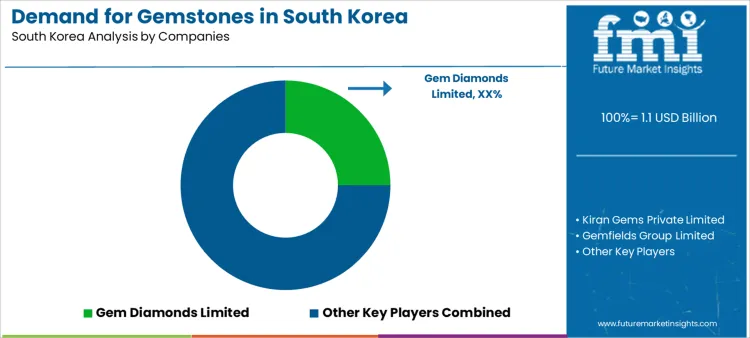
The competitive environment is fundamentally defined by control over provenance, brand heritage and narrative, design innovation, and unwavering supply chain integrity. Key participants range from large-scale mining groups like Gemfields and ALROSA that control access to rough stone supply, to renowned international jewelry houses, agile domestic designers, and specialized traders. Competition centers on securing consistent access to high-quality rough materials, cultivating and showcasing exceptional craftsmanship, and building a compelling narrative of authenticity, rarity, and ethical practice that resonates with consumers.
Success increasingly depends on sophisticated digital consumer engagement, seamless omnichannel experiences, and the ability to tell a stone's story from mine to market. Trust, built through recognized certification, transparency in sourcing, and impeccable after-sales service, remains the ultimate and most defensible competitive moat. The landscape is further shaped by strategic partnerships between miners and jewelers, ensuring exclusive access to exceptional materials for flagship collections.
Key Industry Participants
- Gem Diamonds Limited
- Kiran Gems Private Limited
- Gemfields Group Limited
- PJSC ALROSA
- Anglo American plc (through its De Beers Group subsidiary)
Scope of Report
| Items | Values |
|---|---|
| Quantitative Units | USD Billion |
| Product Type | Emerald; Ruby; Opal; Sapphire; Spinel |
| Application | Jewelry & Ornaments; Luxury Art & Collectibles |
| Regions Covered | South Gyeongsang; North Jeolla; South Jeolla; Jeju |
| Key Companies Profiled | Gem Diamonds Limited; Kiran Gems Private Limited; Gemfields Group Limited; PJSC ALROSA; Anglo American plc |
Gemstones Sector in South Korea by Segment
By Product Type:
- Emerald
- Ruby
- Opal
- Sapphire
- Spinel
By Application:
- Jewelry & Ornaments
- Luxury Art & Collectibles
By Region:
- Jeju
- South Gyeongsang
- South Jeolla
- North Jeolla
Bibliography
- World Jewellery Confederation (CIBJO). (2023). Gemstone Blue Book: Terminology & Classification.
- Korea Customs Service. (2024). Annual Report on Luxury Goods Import Trends and Valuation.
- Seoul National University, Institute of Cultural Heritage. (2023). A Study on Symbolism and Material Culture in Modern South Korea.
- The Gem and Jewellery Export Promotion Council (GJEPC). (2024). Global Coloured Gemstone Report.
- Ministry of Culture, Sports and Tourism (MCST), South Korea. (2023). Survey on National Cultural Consumption and Leisure Activities.
Frequently Asked Questions
How big is the demand for gemstones in south korea in 2026?
The demand for gemstones in south korea is estimated to be valued at USD 1.1 billion in 2026.
What will be the size of gemstones in south korea in 2036?
The market size for the gemstones in south korea is projected to reach USD 2.1 billion by 2036.
How much will be the demand for gemstones in south korea growth between 2026 and 2036?
The demand for gemstones in south korea is expected to grow at a 6.3% CAGR between 2026 and 2036.
What are the key product types in the gemstones in south korea?
The key product types in gemstones in south korea are emerald, ruby, opal, sapphire and spinel.
Which application segment is expected to contribute significant share in the gemstones in south korea in 2026?
In terms of application, jewelry & ornaments segment is expected to command 55.0% share in the gemstones in south korea in 2026.
Preview the report firsthand - request a free sample
Get SampleGet the brochure for pricing and purchase details.
Get PDFTable of Content
- Executive Summary
- South Korea Market Outlook
- Demand-side Trends
- Supply-side Trends
- Technology Roadmap Analysis
- Analysis and Recommendations
- Market Overview
- Market Coverage / Taxonomy
- Market Definition / Scope / Limitations
- Market Background
- Market Dynamics
- Drivers
- Restraints
- Opportunity
- Trends
- Scenario Forecast
- Demand in Optimistic Scenario
- Demand in Likely Scenario
- Demand in Conservative Scenario
- Opportunity Map Analysis
- Product Life Cycle Analysis
- Supply Chain Analysis
- Investment Feasibility Matrix
- Value Chain Analysis
- PESTLE and Porter’s Analysis
- Regulatory Landscape
- Regional Parent Market Outlook
- Production and Consumption Statistics
- Import and Export Statistics
- Market Dynamics
- South Korea Market Analysis 2021 to 2025 and Forecast, 2026 to 2036
- Historical Market Size Value (USD Million) Analysis, 2021 to 2025
- Current and Future Market Size Value (USD Million) Projections, 2026 to 2036
- Y-o-Y Growth Trend Analysis
- Absolute $ Opportunity Analysis
- South Korea Market Pricing Analysis 2021 to 2025 and Forecast 2026 to 2036
- South Korea Market Analysis 2021 to 2025 and Forecast 2026 to 2036, By Product Type
- Introduction / Key Findings
- Historical Market Size Value (USD Million) Analysis By Product Type, 2021 to 2025
- Current and Future Market Size Value (USD Million) Analysis and Forecast By Product Type, 2026 to 2036
- Emerald
- Ruby
- Opal
- Sapphire
- Spinel
- Emerald
- Y-o-Y Growth Trend Analysis By Product Type, 2021 to 2025
- Absolute $ Opportunity Analysis By Product Type, 2026 to 2036
- South Korea Market Analysis 2021 to 2025 and Forecast 2026 to 2036, By Application
- Introduction / Key Findings
- Historical Market Size Value (USD Million) Analysis By Application, 2021 to 2025
- Current and Future Market Size Value (USD Million) Analysis and Forecast By Application, 2026 to 2036
- Jewelry & Ornaments
- Luxury Art
- Jewelry & Ornaments
- Jewelry & Ornaments
- Y-o-Y Growth Trend Analysis By Application, 2021 to 2025
- Absolute $ Opportunity Analysis By Application, 2026 to 2036
- Market Structure Analysis
- Competition Dashboard
- Competition Benchmarking
- Market Share Analysis of Top Players
- By Regional
- By Product Type
- By Application
- Competition Analysis
- Competition Deep Dive
- Gem Diamonds Limited
- Overview
- Product Portfolio
- Profitability by Market Segments (Product/Age /Sales Channel/Region)
- Sales Footprint
- Strategy Overview
- Marketing Strategy
- Product Strategy
- Channel Strategy
- Kiran Gems Private Limited
- Gemfields Group Limited
- PJSC ALROSA
- Anglo American plc
- Gem Diamonds Limited
- Competition Deep Dive
- Assumptions & Acronyms Used
- Research Methodology


