

- Industry Size (2026)
- USD 148.5 Mn
- Forecast (2036)
- USD 238.3 Mn
- CAGR (2026 to 2036)
- 4.8%
Demand for Switchgear in South Korea Forecast and Outlook 2026 to 2036
Expenditure on switchgear infrastructure in South Korea is poised to be valued at USD 148.5 million in 2026. Revenue from the sector is likely to ascend to USD 238.3 million by 2036, progressing at a compound annual growth rate of 4.8%. South Korea's industrial landscape, characterized by heavy manufacturing and advanced semiconductor production, necessitates a robust and reliable power distribution network. Continuous expansion of renewable energy capacity, particularly in solar and offshore wind farms, drives the installation of modern switching devices to manage grid integration effectively. Urbanization and the development of smart cities further fuel the requirement for upgraded electrical substations capable of handling fluctuating power loads with minimal downtime.
Government initiatives aimed at modernizing the aging national grid are playing a pivotal role in industry expansion. Korea Electric Power Corporation (KEPCO) is actively investing in digitalizing transmission and distribution systems to enhance energy efficiency and grid resilience. Stringent safety regulations regarding electrical installations in commercial and residential buildings compel facility managers to replace obsolete equipment with safer, arc-resistant models.
Public focus on energy conservation promotes the adoption of intelligent monitoring systems integrated within switching assemblies. Consequently, both public utilities and private enterprises are channeling capital into securing high-performance electrical protection apparatus to ensure uninterrupted operations and safety compliance.
Quick Stats for Demand for Switchgear in South Korea
- Demand for Switchgear in South Korea Value (2026): USD 148.5 million
- Demand for Switchgear in South Korea Forecast Value (2036): USD 238.3 million
- Demand for Switchgear in South Korea Forecast CAGR: 4.8%
- Leading Component Type Segment for Switchgear Industry in South Korea: Power Distributor Switch Breaker (33.0%)
- Leading Voltage Type Segment for Switchgear Industry in South Korea: Low Voltage (39.2%)
- Leading End User Segment for Switchgear Industry in South Korea: T&D Utilities (39.4%)
- Key Growth Regions for Switchgear Industry in South Korea: Jeju, South Gyeongsang, South Jeolla, North Jeolla
- Switchgear Industry in South Korea Key Players: ABB Ltd., Siemens AG, Schneider Electric SE, General Electric (GE), Eaton Corporation
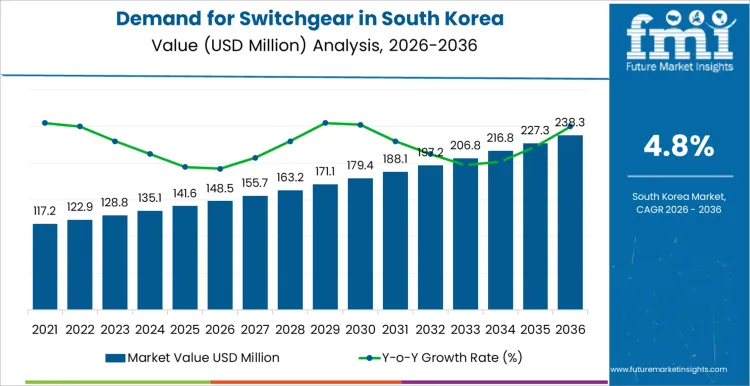
Technological advancements are revolutionizing the sector, with a strong shift towards eco-efficient solutions. Manufacturers are developing gas insulated switchgear that utilizes alternative gases instead of SF6, addressing environmental concerns related to greenhouse emissions. Integration of IoT sensors allows for real-time condition monitoring, enabling predictive maintenance that reduces operational costs for utility providers. Demand for switchgear for data centers is witnessing a surge as South Korea solidifies its position as a digital hub in East Asia. These specialized units are designed to ensure maximum uptime for critical IT infrastructure, reflecting the broader trend of digital transformation across the economy.
Demand for Switchgear in South Korea Key Takeaways
| Metric | Value |
|---|---|
| Industry Size (2026) | USD 148.5 million |
| Industry Value (2036) | USD 238.3 million |
| CAGR (2026 to 2036) | 4.8% |
What Specific Industrial Factors Are Fueling Switchgear Adoption?
Rising energy consumption across energy-intensive industries such as shipbuilding, automotive, and petrochemicals acts as a primary catalyst for equipment procurement. Factories are upgrading their internal power distribution networks to support automated production lines, necessitating reliable ac switchgear systems. Increasing penetration of electric vehicles (EVs) requires robust charging infrastructure, which in turn demands specialized protection equipment to manage high power loads. Investments in utility scale switchgear are essential to connect these new load centers to the main grid. This industrial modernization ensures a consistent demand for advanced switching and protection devices capable of handling complex load profiles.
How is the Sector Structured Across Key Segments?
Structure of this domain is categorized by component function, voltage capacity, insulation medium, installation environment, and end-user application. Component segmentation highlights the critical role of breakers and disconnectors in circuit protection. Voltage classification distinguishes between residential applications and massive industrial or transmission needs. Insulation type reveals a preference for air and gas technologies based on space and safety requirements. End-user data underscores the dominance of utility companies, followed by industrial and commercial sectors. Understanding this segmentation helps manufacturers tailor their product lines, from compact indoor units for skyscrapers to rugged outdoor systems for remote substations.
Why Does the Power Distributor Switch Breaker Category Maintain Dominance?
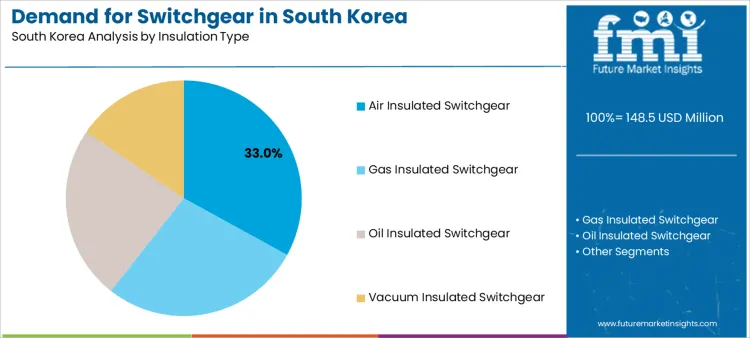
Power Distributor Switch Breakers command a 33.0% share of the industry. These components serve as the fundamental safety mechanism in any electrical circuit, protecting downstream assets from overloads and short circuits. Industrial facilities and commercial buildings prioritize high-quality breakers to prevent costly downtime and equipment damage. Widespread usage of air insulated power distribution component devices in standard distribution boards supports this segment's leadership. Regular maintenance schedules often lead to the replacement of individual breaker units rather than entire switchgear assemblies, creating a steady recurring revenue stream for component suppliers.
How is the Low Voltage Segment Contributing to Sector Growth?
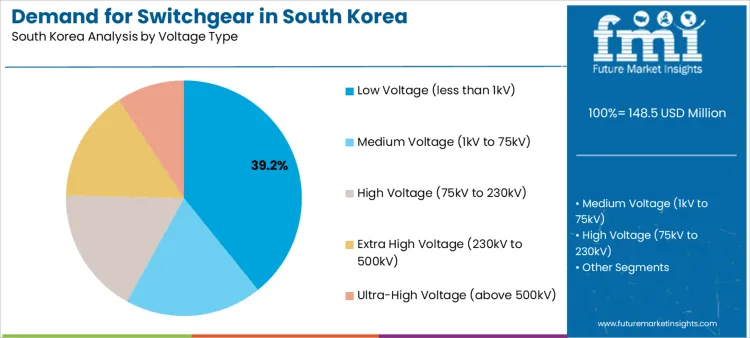
Low Voltage systems (less than 1kV) account for 39.2% of the usage share. Ubiquitous application of low voltage power in residential complexes, commercial offices, and light industrial workshops drives this dominance. Construction of new housing developments and the renovation of existing commercial spaces utilize vacuum insulated low voltage commercial switchgear to ensure safe power distribution to end points. Proliferation of renewable energy sources at the residential level, such as rooftop solar panels, requires specialized low voltage interfacing equipment. Consequently, the sheer volume of connections at this voltage level ensures it remains the largest segment by value.
Why Do T&D Utilities Lead Consumption?
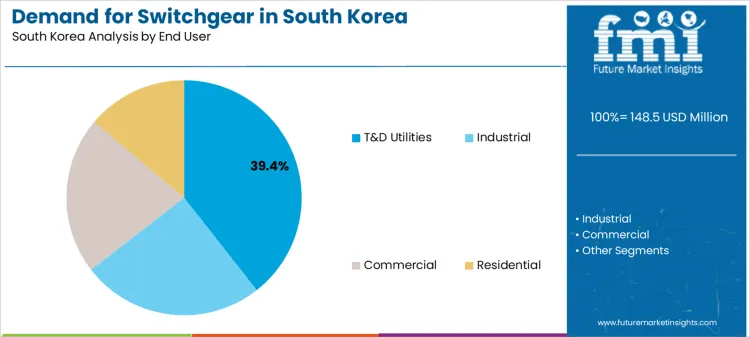
Transmission and Distribution (T&D) Utilities capture a 39.4% share of the sector. KEPCO and other regional power providers are responsible for the entire national grid, necessitating massive procurement of high and extra-high voltage equipment. Expanding the grid to accommodate new renewable generation sites requires the installation of new substations equipped with gas insulated medium voltage switchgear. Modernization projects aimed at creating a smart grid involve replacing legacy infrastructure with intelligent switchgear capable of remote operation. This centralized responsibility for energy delivery positions utilities as the primary driver of large-scale capital expenditure in the industry.
Will the Expansion of Renewable Energy Redefine Future Sales?
Integration of intermittent renewable energy sources poses stability challenges for the grid, necessitating advanced switching solutions. dc switchgear is gaining importance for connecting solar parks and battery storage systems directly to the grid. Offshore wind projects in the Jeolla provinces require specialized, corrosion-resistant switchgear capable of operating in harsh marine environments. As South Korea targets carbon neutrality, the shift towards decentralized generation will force a redesign of distribution networks. This transition offers significant opportunities for vendors providing flexible, smart-grid-ready equipment that can manage bidirectional power flows effectively.
How Do Environmental Regulations Impact Design?
Stringent environmental laws are pushing the industry away from SF6 gas, a potent greenhouse gas traditionally used in insulation. Manufacturers are racing to develop "green" switchgear using eco-efficient gas mixtures or vacuum technology. Adoption of gas insulated switchgear gis bushing components that are compatible with these new dielectric fluids is increasing. Utilities are prioritizing eco-friendly tenders to meet their own sustainability targets. This regulatory pressure is fostering innovation in air insulated switchgear designs that offer comparable performance to gas-insulated models without the environmental footprint, reshaping the product landscape.
Is the Trend Towards Urbanization Affecting Demand?
Rapid urbanization leads to high population density, limiting the space available for electrical infrastructure. This constraint drives demand for compact, indoor residential switchgear and substations that can be installed in basements or integrated into buildings. high voltage commercial switchgear designed with a small footprint is essential for powering high-rise complexes. Underground cabling projects in cities like Seoul require specialized switchgear for subterranean vaults. Therefore, the physical constraints of urban environments are influencing design trends towards miniaturization and modularity, ensuring power reliability without consuming valuable real estate.
How is the Landscape Evolving Across South Korea's Regions?
Regional consumption patterns reflect the diverse industrial and geographic characteristics of the peninsula. Industrial hubs drive demand for heavy-duty equipment, while tourism and residential areas focus on commercial and low-voltage solutions. Government incentives for regional development are boosting infrastructure projects in southern provinces.
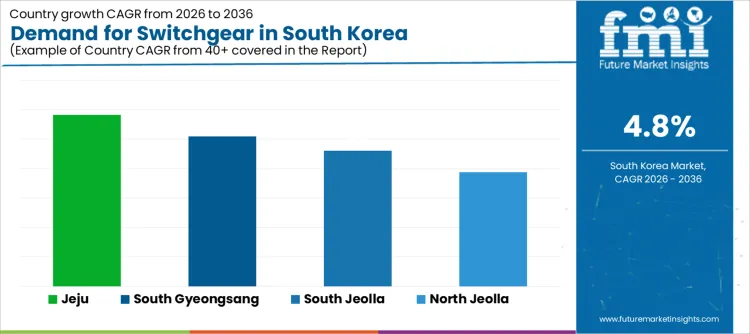
|
Region |
CAGR (2026 to 2036) |
|
Jeju |
5.8% |
|
South Gyeongsang |
5.1% |
|
South Jeolla |
4.6% |
|
North Jeolla |
3.9% |
Why is the Renewable Energy Sector in Jeju Driving Rapid Growth?
Adoption of switchgear in Jeju is projected to expand at a CAGR of 5.8%. Jeju Island is at the forefront of South Korea's "Carbon Free" initiative, leading to massive investments in wind and solar infrastructure. Connecting these renewable assets to the island's grid requires extensive installation of medium voltage residential switchgear and grid-stabilizing equipment. Smart grid pilot projects are ubiquitous here, testing next-generation switching technologies. Demand is further bolstered by the expansion of EV charging networks to support the island's transition to electric mobility, necessitating upgrades to local distribution transformers and protection devices.
How is Industrial Activity in South Gyeongsang Influencing Sales?
Sales of electrical equipment in South Gyeongsang are likely to reach a CAGR of 5.1%. This region is the heartland of Korea's heavy industry, home to major shipyards and machinery plants. These facilities consume enormous amounts of power and require reliable commercial switchgear to ensure continuous operation. Revitalization of the shipbuilding industry is leading to facility upgrades and the procurement of new electrical infrastructure. Industrial parks in the region are adopting smart factory technologies, driving the replacement of analog switchgear with digital, sensor-equipped units for better energy management.
What Specific Factors Drive Demand in South Jeolla?
Expansion in South Jeolla is anticipated to rise at a CAGR of 4.6%. Massive offshore wind farm projects planned off the coast of Sinan are a major driver. These developments require substantial investment in onshore substations and transmission switchgear to deliver power to the mainland. Agricultural sectors in the province are also modernizing, with increasing use of automated farming equipment that requires stable power supplies. Local government efforts to attract data centers to the region to leverage renewable energy availability are creating a new niche for high-specification IT switchgear.
Why is North Jeolla Modernizing its Grid Infrastructure?
Deployment of power distribution assets in North Jeolla is expected to increase at a CAGR of 3.9%. The Saemangeum development project is transforming reclaimed land into a hub for renewable energy and new industries. Construction of solar power complexes in this area necessitates large-scale procurement of solar-compatible switchgear. Urban development in cities like Jeonju is driving demand for commercial switchgear in new business districts. While growth is steady, it reflects a long-term commitment to building a sustainable energy infrastructure capable of supporting future industrial growth.
What Strategic Initiatives Define Market Leadership?
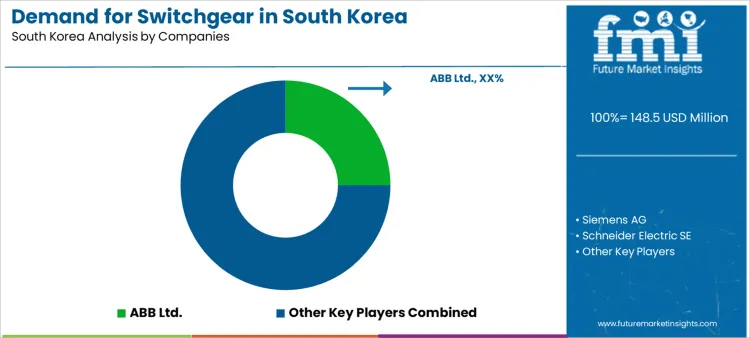
ABB Ltd. commands a dominant position with a 25.0% share, capitalizing on its reputation for high-quality, reliable engineering. Its strategy revolves around offering a complete portfolio of digital switchgear that integrates seamlessly with existing grid management systems. ABB invests heavily in local R&D to customize products for KEPCO's specific technical standards. Competitors like Siemens and Schneider Electric focus on sustainability, promoting their SF6-free product lines to eco-conscious clients. Strategic partnerships with local construction firms allow global players to secure large turnkey contracts for infrastructure projects.
How Are Local Competitors Challenging Global Giants?
Domestic players such as LS Electric and Hyundai Electric are formidable competitors in the mid-range segment. They leverage their deep understanding of local regulations and strong relationships with domestic utilities to capture significant market share. These companies often compete on price and rapid delivery times, which appeals to cost-sensitive industrial clients. To counter global tech leads, local firms are aggressively investing in smart grid technologies and forming alliances with software providers. This localized approach ensures a dynamic competitive landscape where service quality and adaptability are as important as technological specifications.
Key Companies
- ABB Ltd.
- Siemens AG
- Schneider Electric SE
- General Electric (GE)
- Eaton Corporation
Scope of Report
| Items | Values |
|---|---|
| Quantitative Units | USD Million |
| Component Type | Power Distributor Switch Breaker, Switch Disconnector, MCCB, HRC Fuse, Earth Switch |
| Voltage Type | Low Voltage, Medium Voltage, High Voltage, Extra High Voltage, Ultra-High Voltage |
| Insulation Type | Air Insulated, Gas Insulated, Oil Insulated, Vacuum Insulated |
| End User | T&D Utilities, Industrial, Commercial, Residential |
| Regions Covered | Jeju, South Gyeongsang, South Jeolla, North Jeolla |
| Key Companies Profiled | ABB, Siemens, Schneider Electric, GE, Eaton |
Demand for Switchgear in South Korea by Segments
By Component Type
- Power Distributor Switch Breaker
- Switch Disconnector
- MCCB
- HRC Fuse
- Earth Switch
By Voltage Type
- Low Voltage (less than 1kV)
- Medium Voltage (1kV to 75kV)
- High Voltage (75kV to 230kV)
- Extra High Voltage (230kV to 500kV)
- Ultra-High Voltage (above 500kV)
By Construction Type
- Outdoor
- Indoor
- Others
By Insulation Type
- Air Insulated Switchgear
- Gas Insulated Switchgear
- Oil Insulated Switchgear
- Vacuum Insulated Switchgear
By End User
- T&D Utilities
- Industrial
- Commercial
- Residential
Bibliography
- Ministry of Trade, Industry and Energy. (2025, February 21). Announcement of the 11th basic plan for electricity supply and demand (2024-2038) (MOTIE Notice No. 2025-169). Ministry of Trade, Industry and Energy, Republic of Korea.
- Ministry of Trade, Industry and Energy. (2025, March 13). Revised announcement of the 11th basic plan for electricity supply and demand (2024-2038) (MOTIE Notice No. 2025-238). Ministry of Trade, Industry and Energy, Republic of Korea.
- Statistics Korea. (2024, November 28). Monthly industrial statistics, October 2024 (including industrial production indices). Statistics Korea, Republic of Korea.
- Korea Electrical Safety Corporation. (2024). Electricity safety inspection guide for facilities used by many people. Korea Electrical Safety Corporation, Republic of Korea.
Frequently Asked Questions
How big is the demand for Switchgear in South Korea in 2026?
The demand for Switchgear in South Korea is estimated to be valued at USD 148.5 million in 2026.
What will be the size of Switchgear in South Korea in 2036?
The industry size for the Switchgear in South Korea is projected to reach USD 238.3 million by 2036.
How much will be the demand for Switchgear in South Korea growth between 2026 and 2036?
The demand for Switchgear in South Korea is expected to grow at a 4.8% CAGR between 2026 and 2036.
What are the key product types in the Switchgear in South Korea?
The key product types in Switchgear in South Korea are Power Distributor Switch Breaker, Switch Disconnector, and MCCB.
Which end user segment is expected to contribute significant share in the Switchgear in South Korea in 2026?
By end user, T&D Utilities segment is expected to command 39.4% share in the Switchgear in South Korea in 2026.
Preview the report firsthand - request a free sample
Get SampleGet the brochure for pricing and purchase details.
Get PDFTable of Content
- Executive Summary
- South Korea Market Outlook
- Demand-side Trends
- Supply-side Trends
- Technology Roadmap Analysis
- Analysis and Recommendations
- Market Overview
- Market Coverage / Taxonomy
- Market Definition / Scope / Limitations
- Market Background
- Market Dynamics
- Drivers
- Restraints
- Opportunity
- Trends
- Scenario Forecast
- Demand in Optimistic Scenario
- Demand in Likely Scenario
- Demand in Conservative Scenario
- Opportunity Map Analysis
- Product Life Cycle Analysis
- Supply Chain Analysis
- Investment Feasibility Matrix
- Value Chain Analysis
- PESTLE and Porter’s Analysis
- Regulatory Landscape
- Regional Parent Market Outlook
- Production and Consumption Statistics
- Import and Export Statistics
- Market Dynamics
- South Korea Market Analysis 2021 to 2025 and Forecast, 2026 to 2036
- Historical Market Size Value (USD Million) Analysis, 2021 to 2025
- Current and Future Market Size Value (USD Million) Projections, 2026 to 2036
- Y-o-Y Growth Trend Analysis
- Absolute $ Opportunity Analysis
- South Korea Market Pricing Analysis 2021 to 2025 and Forecast 2026 to 2036
- South Korea Market Analysis 2021 to 2025 and Forecast 2026 to 2036, By Component Type
- Introduction / Key Findings
- Historical Market Size Value (USD Million) Analysis By Component Type , 2021 to 2025
- Current and Future Market Size Value (USD Million) Analysis and Forecast By Component Type , 2026 to 2036
- Power Distributor Switch Breaker
- Switch Disconnector
- MCCB
- HRC Fuse
- Earth Switch
- Power Distributor Switch Breaker
- Y-o-Y Growth Trend Analysis By Component Type , 2021 to 2025
- Absolute $ Opportunity Analysis By Component Type , 2026 to 2036
- South Korea Market Analysis 2021 to 2025 and Forecast 2026 to 2036, By Voltage Type
- Introduction / Key Findings
- Historical Market Size Value (USD Million) Analysis By Voltage Type, 2021 to 2025
- Current and Future Market Size Value (USD Million) Analysis and Forecast By Voltage Type, 2026 to 2036
- Low Voltage (less than 1kV)
- Medium Voltage (1kV to 75kV)
- High Voltage (75kV to 230kV)
- Extra High Voltage (230kV to 500kV)
- Ultra-High Voltage (above 500kV)
- Low Voltage (less than 1kV)
- Y-o-Y Growth Trend Analysis By Voltage Type, 2021 to 2025
- Absolute $ Opportunity Analysis By Voltage Type, 2026 to 2036
- South Korea Market Analysis 2021 to 2025 and Forecast 2026 to 2036, By Construction Type
- Introduction / Key Findings
- Historical Market Size Value (USD Million) Analysis By Construction Type, 2021 to 2025
- Current and Future Market Size Value (USD Million) Analysis and Forecast By Construction Type, 2026 to 2036
- Outdoor
- Indoor
- Others
- Outdoor
- Y-o-Y Growth Trend Analysis By Construction Type, 2021 to 2025
- Absolute $ Opportunity Analysis By Construction Type, 2026 to 2036
- South Korea Market Analysis 2021 to 2025 and Forecast 2026 to 2036, By Insulation Type
- Introduction / Key Findings
- Historical Market Size Value (USD Million) Analysis By Insulation Type, 2021 to 2025
- Current and Future Market Size Value (USD Million) Analysis and Forecast By Insulation Type, 2026 to 2036
- Air Insulated Switchgear
- Gas Insulated Switchgear
- Oil Insulated Switchgear
- Vacuum Insulated Switchgear
- Air Insulated Switchgear
- Y-o-Y Growth Trend Analysis By Insulation Type, 2021 to 2025
- Absolute $ Opportunity Analysis By Insulation Type, 2026 to 2036
- South Korea Market Analysis 2021 to 2025 and Forecast 2026 to 2036, By End User
- Introduction / Key Findings
- Historical Market Size Value (USD Million) Analysis By End User, 2021 to 2025
- Current and Future Market Size Value (USD Million) Analysis and Forecast By End User, 2026 to 2036
- T&D Utilities
- Industrial
- Commercial
- Residential
- T&D Utilities
- Y-o-Y Growth Trend Analysis By End User, 2021 to 2025
- Absolute $ Opportunity Analysis By End User, 2026 to 2036
- Market Structure Analysis
- Competition Dashboard
- Competition Benchmarking
- Market Share Analysis of Top Players
- By Regional
- By Component Type
- By Voltage Type
- By Construction Type
- By Insulation Type
- By End User
- Competition Analysis
- Competition Deep Dive
- ABB Ltd.
- Overview
- Product Portfolio
- Profitability by Market Segments (Product/Age /Sales Channel/Region)
- Sales Footprint
- Strategy Overview
- Marketing Strategy
- Product Strategy
- Channel Strategy
- Siemens AG
- Schneider Electric SE
- General Electric (GE)
- Eaton Corporation
- ABB Ltd.
- Competition Deep Dive
- Assumptions & Acronyms Used
- Research Methodology


