

- Industry Size (2026)
- USD 650.0 Mn
- Forecast (2036)
- USD 1186.2 Mn
- CAGR (2026 to 2036)
- 6.2%
Tongue Scraper Market Size, Market Forecast and Outlook By FMI
The tongue scraper market crossed a valuation of USD 612.1 million in 2025 and is projected to surpass USD 650.0 million in 2026, expanding at a CAGR of 6.2% during the forecast period. Sustained demand drives total valuation to USD 1,186.2 million by 2036 as daily oral hygiene routines increasingly extend beyond basic brushing.
Summary of Tongue Scraper Market
- The market is forecast to reach USD 1,186.2 million by 2036.
- The market is expected to grow at a CAGR of 6.2% from 2026 to 2036.
- The market was estimated at USD 612.1 million in 2025.
- The forecast period represents an incremental opportunity of USD 536.2 million.
- Tongue scrapers are specialized oral care tools designed to remove bacteria and debris directly from the tongue, going beyond standard brushing routines.
- Growing medical recommendations for daily tongue cleaning and rising awareness of bad breath management are key demand drivers.
- Stainless steel products are expected to dominate with a 46.0% share in 2026, driven by durability, hygiene, and sustainability advantages over plastic.
- U-shaped designs are projected to hold a 41.0% share in 2026 due to ease of use and strong retail familiarity.
- Adults account for the majority of demand with an expected 82.0% share in 2026, reflecting routine hygiene adoption.
- E-commerce channels are set to capture a 38.0% share in 2026 as premium and specialty brands expand direct-to-consumer sales.
- Mass-market pricing tiers are expected to lead with a 54.0% share in 2026 due to affordability and widespread accessibility.
- India, China, and Brazil are the fastest-growing markets, with India leading at an 8.0% CAGR.
- DrTung’s, Sunstar, Jordan Oral Care, and The Humble Co. are among the key brands operating in the competitive landscape.
Daily oral care routines are creating steadier demand for products that help remove tongue coating and support fresher breath. Retailers increasingly favor tools that fit easily into fast morning hygiene habits, since products that solve this need tend to hold shelf position more effectively. Tongue cleaning is also benefiting from wider consumer attention to breath control across the oral care aisle. Simple formats with low learning barriers often retain users better because they are easier to add to existing brushing routines.
Professional recommendation remains an important trigger for category adoption. Dental practitioners help legitimize manual tongue cleaning tools, especially when consumers already associate bad breath with incomplete oral hygiene. Once the product becomes part of a daily routine, repeat use tends to strengthen and category loyalty usually becomes more stable.
Historical hygiene habits and local wellness practices continue to shape country-level demand patterns. Strong familiarity with tongue cleaning supports a favorable outlook in India, where demand for tongue cleaners is projected to rise at a CAGR of 8.0% during 2026 to 2036. Personal care spending and improving awareness of daily oral hygiene are expected to support 7.2% CAGR for the tongue cleaner market in China over the same period. Brazil is likely to register 6.8% CAGR through 2036, while demand in the United States is anticipated to grow at 5.5%. A CAGR of 5.0% is projected for the United Kingdom during 2026 to 2036, with Germany likely to follow at 4.8% and Japan estimated to post 4.4%. Overall demand remains tied to how easily the product fits into everyday hygiene behavior.
Segmental Analysis
Tongue Scraper Market Analysis by Material
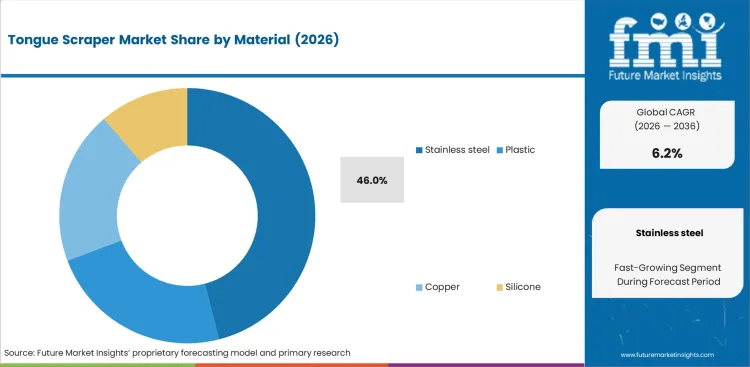
Consumers prioritize tools that survive constant water exposure without rusting or degrading over time. Metal construction easily outlasts cheaper plastic alternatives, which explains why the stainless-steel segment is estimated to account for a projected 46.0% share in 2026 as buyers upgrade their daily habits. Shoppers who regularly use dental floss or other specialized items heavily prefer metal options for their durability and easy sanitization. Brands relying on weak plastics constantly battle negative reviews about breakage, pushing the entire category toward stronger materials.
- Durability Preference: Metal construction resists rust. Everyday consumers gain long-lasting hygiene solutions.
- Sanitization Workflow: Smooth surfaces allow easy boiling. Users avoid bacterial buildup risks common in disposable plastic tools.
- Premium Positioning: Weight signals quality. Brands capture higher retail price points among self care oral hygiene shoppers.
Tongue Scraper Market Analysis by Product Type
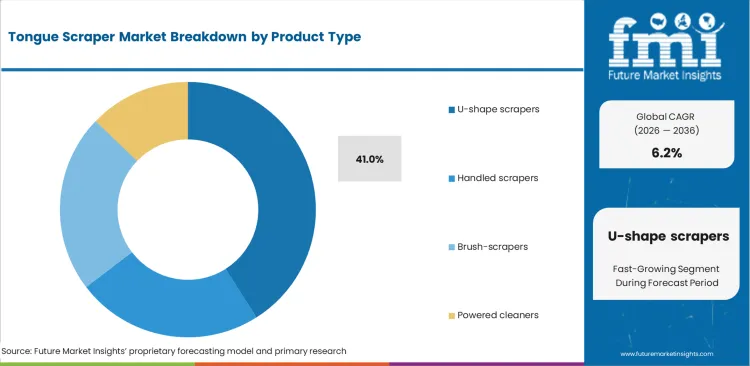
In 2026, U-shape scrapers are anticipated to capture a predicted 41.0% of the market because their wide design requires very little effort to use properly. Two-handed control drastically reduces the gag reflex, a common issue that normally causes people to abandon new oral hygiene routines. Buyers comparing these items alongside interdental cleaning products appreciate how quickly the wide band sweeps the entire surface area. Single-handed designs still sell to frequent travelers, but everyday home users overwhelmingly choose the comfort of a wider grip.
- Reflex Reduction: Two-handed control limits depth pressure. Users avoid uncomfortable morning routines.
- Coverage Efficiency: Wide bands sweep entire surfaces. Consumers save time during morning care.
- Travel Adaptation: Compact single-handed designs fit small bags. Frequent flyers maintain routines easily.
Tongue Scraper Market Analysis by End User
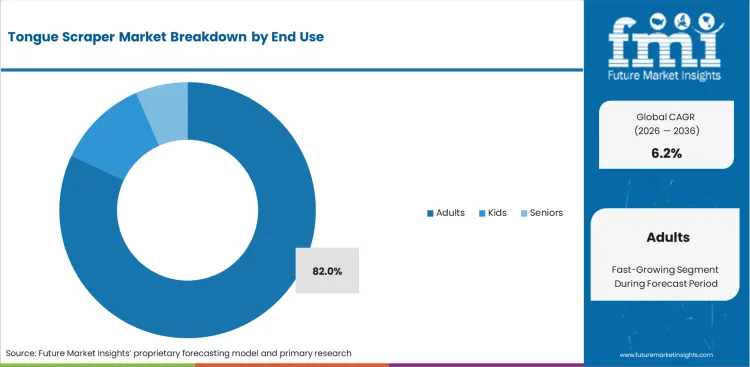
Concern over bad breath continues to shape demand for dedicated tongue-cleaning tools beyond basic brushing routines. Adult buyers often research these products on their own once standard oral care no longer feels sufficient for daily freshness. Higher disposable income supports trial of premium oral-care accessories, especially among consumers building a more complete bathroom routine around preventive care. Purchase behavior remains concentrated among mature users, since children are less often treated as direct buyers for this category. For that reason, the adult segment is estimated to account for 82.0% share in 2026, reflecting stronger self-directed demand and greater interest in confidence-driven oral care purchases.
- Halitosis prevention: Concern around breath freshness is encouraging adults to seek tools beyond regular brushing. Tongue cleaners fit into that need by addressing a specific hygiene concern tied to daily social comfort.
- Routine expansion: Rising spending capacity is allowing consumers to add specialized products to established oral-care habits. Tongue cleaners are increasingly purchased as part of a broader personal-care setup.
- Senior adaptation: Softer materials and gentler edges are likely to support usage among older adults with more sensitive oral tissue. Product comfort remains important for maintaining repeat use in this group.
Tongue Scraper Market Analysis by Distribution Channel
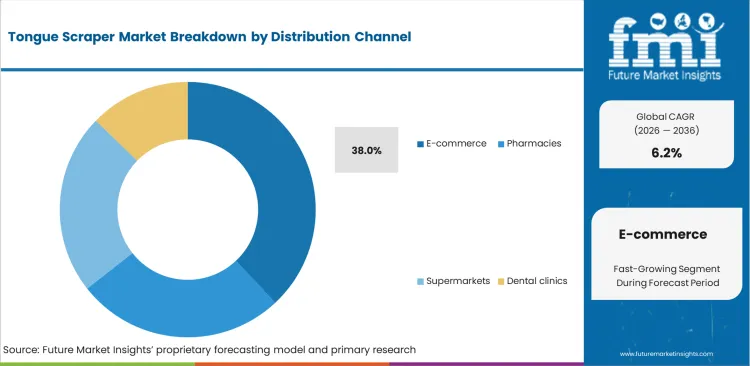
Buying specialized personal care items in physical stores often involves awkward checkout experiences that many shoppers prefer to avoid. Direct shipping removes this social friction completely, helping the e-commerce segment is poised to secure a projected 38.0% share in 2026 through privacy and convenience. Online brands also succeed by bundling these simple tools with toothpaste subscription boxes, effectively guaranteeing repeat business. Physical pharmacies still offer great visibility when placing items near other dental hygiene devices, but digital channels easily win the majority of first-time trial purchases.
- Privacy Purchasing: Online checkouts remove social friction. Consumers buy specialized hygiene tools discreetly.
- Subscription Bundling: Automated shipping pairs scrapers with paste. Brands secure recurring customer revenue.
- Clinical Placement: Pharmacy positioning leverages medical authority. Shoppers trust products placed near medicines.
Tongue Scraper Market Analysis by Price Tier
The mass market category is forecast to command an assessed 54.0% share in 2026 as low entry costs push hesitant shoppers to finally try a new hygiene step. Consumers exploring unfamiliar routines rarely want to spend heavily on their first purchase, making budget-friendly plastic or basic metal designs highly attractive. While wellness enthusiasts gladly pay higher prices for sustainable copper tools, everyday grocery shoppers stick to affordable basics. Trying to force a premium price tag on a simple dental hygiene instrument often blocks the initial trial that brands desperately need to build long-term habits.
- Trial Encouragement: Low cost reduces purchase hesitation. Shoppers experiment with new hygiene routines.
- Wellness Targeting: Copper options appeal to holistic buyers. Brands unlock higher profit margins.
- Sustainability Pricing: Biodegradable plastics command premium tags. Eco-conscious buyers support wholesale tongue scrapers environmental initiatives.
Tongue Scraper Market Drivers, Restraints, and Opportunities
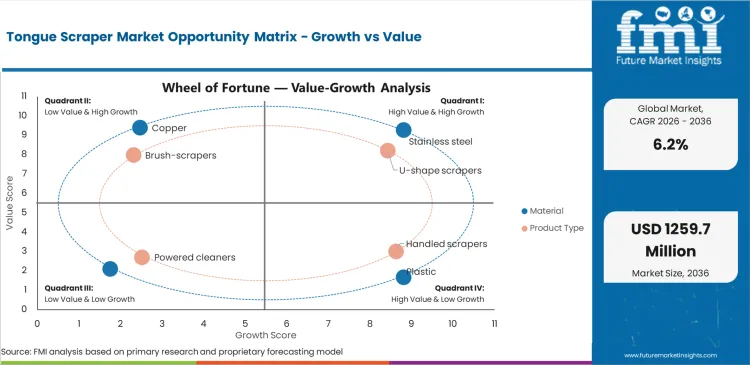
Halitosis awareness directly pushes everyday consumers toward specialized mouth cleaning tools. Dental professionals now routinely instruct their patients to clear bacteria from their entire mouth, rather than just focusing on their teeth. Regular oral irrigator users naturally seek complementary physical scraping devices to complete their daily routines. Rising disposable incomes allow shoppers to easily upgrade their baseline bathroom setups with these extra items. Social media wellness influencers visibly normalize daily tongue cleaning habits, showing millions of followers exactly how to use these items safely. Retailers notice this shift in buyer behavior and actively allocate dedicated shelf space to capture sales from these high-margin accessories. Everyday buyers no longer view these items as odd specialty goods, but rather as standard components of a complete personal hygiene kit. Increased focus on personal appearance translates directly into higher spending on breath management. Shoppers willingly pay premium prices for tools that promise immediate social confidence. Physical stores place these items right next to toothpaste to trigger impulse purchases.
Gag reflex sensitivity strongly deters first-time users from adopting daily scraping habits. Improper usage often causes minor tissue discomfort, leading frustrated buyers to throw the tools away entirely. Many consumers still consider standard toothbrushes completely sufficient for all mouth cleaning needs, refusing to spend money on dedicated accessories. Finding visible space in crowded retail aisles proves extremely difficult for new brands trying to break into the physical market. Shoppers prioritizing expensive water flosser purchases frequently skip manual scraping tools to save money. Reliance on premium disposable electric toothbrushes also delays dedicated scraper adoption, as buyers believe high-powered brushing eliminates the need for extra steps. People simply abandon new hygiene routines if the process adds too much time to their busy mornings.
- Eco-Material Integration: Sustainable materials attract younger demographic groups looking to reduce their bathroom waste footprint. Brands easily capture environmentally conscious shoppers by swapping out cheap plastics for recycled metals or biodegradable handles.
- Subscription Boxes: Bundling specialized tools with monthly toothpaste shipments ensures predictable recurring sales without relying on store visits. Companies build long-term brand loyalty by making replacement cycles completely automatic for the user.
- Pediatric Design: Smaller shapes open up kids categories alongside traditional baby teeth care products on pharmacy shelves. Parents establish early hygiene routines for their children by making the cleaning process colorful and gentle.
Regional Analysis
Regional demand for daily tongue cleaning tools depends heavily on local historical wellness habits and the current adoption of preventive dental routines. Mature markets focus on durable options, while emerging economies show rapid uptake of affordable mass-market designs.
.webp "Top Country Growth Comparison Tongue Scraper Market Cagr (2026 2036)")
| Country | CAGR (2026 to 2036) |
|---|---|
| India | 8.0% |
| China | 7.2% |
| Brazil | 6.8% |
| United States | 5.5% |
| United Kingdom | 5.0% |
| Germany | 4.8% |
| Japan | 4.4% |
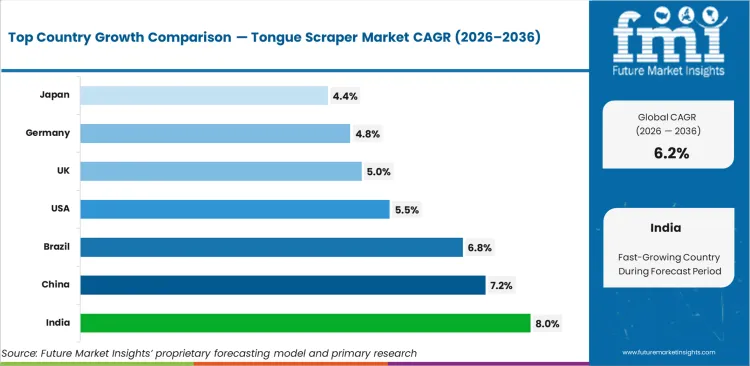
Source: Future Market Insights (FMI) analysis, based on proprietary forecasting model and primary research
Asia-Pacific Tongue Scraper Market Analysis
Deep-rooted traditional wellness practices anchor hygiene habits across local populations. Consumers consistently favor natural and historically proven tools over modern plastic alternatives. Such cultural preference creates a massive baseline of daily users who already understand the value of a clean tongue. Retailers capitalize on this established behavior by making simple scraping implements available in almost every local neighborhood store.
- India: Demand for tongue cleaners in India is estimated to rise at a CAGR of 8.0% during 2026 to 2036. Consumer movement away from traditional oral-cleaning habits is supporting uptake of durable and reusable formats with a more modern appearance. Affordable pricing and wider availability across everyday retail channels are also helping the category reach a broader base of regular users. Growing interest in personal wellness is expected to keep demand steady across urban and semi-urban markets.
- China: Sales of tongue cleaners in China are projected to expand at a CAGR of 7.2% during 2026 to 2036. Urban consumers place strong value on breath freshness and visible grooming, which supports demand for higher-quality product designs. Online retail remains an important route for premium offerings, especially among younger buyers comparing material quality, finish, and product positioning. Category growth is also likely to benefit from rising preference for specialized personal-care tools over basic oral-care routines alone.
- Japan: Tongue cleaner demand in Japan is likely to increase at a CAGR of 4.4% during 2026 to 2036. Product preference in the country is shaped by comfort, softness, and ease of use, especially among older consumers with greater sensitivity concerns. Gentler silicone-edged designs are expected to remain more relevant in this market than harder variants with a firmer scraping feel. Demand is also supported by a consumer base that values low-irritation hygiene tools suited to consistent daily use.
Local markets across this zone heavily dictate global sales volumes. Brands succeed here by respecting historical practices while introducing clinically tested materials to everyday shoppers.
North America and Latin America Tongue Scraper Market Analysis
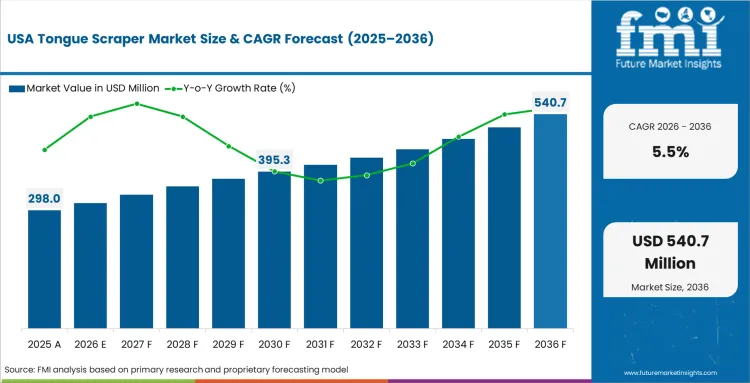
Broader wellness habits are encouraging consumers to move beyond basic brushing and adopt more complete oral-care routines. Tongue cleaning is gaining relevance within this shift as buyers place greater value on breath freshness, gum hygiene, and a more polished daily-care routine. Rising interest in cosmetic dental care is also supporting home-use demand, as consumers increasingly add specialized tools to maintain visible oral cleanliness between clinic visits. Across both markets, tongue cleaners are being positioned less as an occasional add-on and more as a regular part of preventive personal care.
- United States: Demand for tongue cleaners in the United States is projected to expand at a CAGR of 5.5% during 2026 to 2036. Consumer interest remains strongest in premium formats that align with broader preventive-care routines and elevated bathroom product preferences. Metal variants and other durable options are likely to attract attention from buyers seeking longer product life and a more refined daily-use experience. Category growth is also supported by willingness to explore specialized oral-care tools beyond standard brushing products.
- Brazil: Sales of tongue cleaners in Brazil are estimated to rise at a CAGR of 6.8% during 2026 to 2036. Breath freshness and personal presentation remain important purchase influences, especially in a market where appearance-linked grooming habits carry strong daily relevance. Accessible pricing is expected to support wider movement through mass retail channels, helping the category reach a larger consumer base. Continued improvement in at-home oral-care habits is likely to sustain category demand over the forecast period.
FMI’s analysis suggests that demand across these markets is increasingly tied to appearance-led hygiene behavior as much as functional oral care. Category positioning is expected to remain stronger when products are presented as practical daily-care upgrades rather than as narrowly clinical tools. That framing better matches how consumers are integrating tongue cleaning into broader self-care routines.
Europe Market Tongue Scraper Analysis
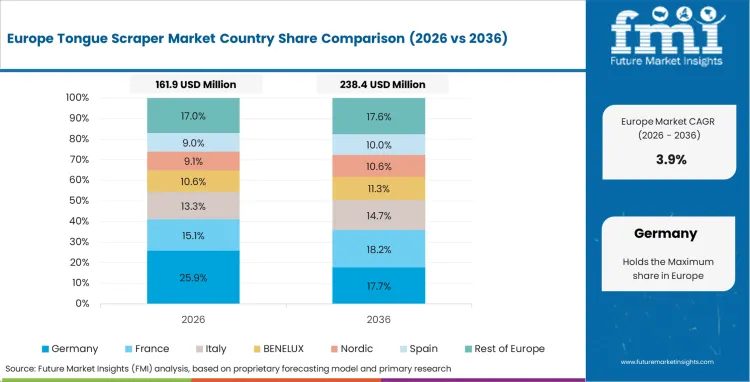
Sustainability-focused buying habits are strengthening demand for reusable tongue-cleaning tools across the region. Consumers increasingly prefer durable oral-care products that reduce bathroom waste while still fitting daily hygiene routines. Material choice has become more important in this shift, with stainless steel and other long-life formats gaining attention from buyers looking for low-disposal alternatives. Category demand is also benefiting from a broader preference for practical personal-care items that align with environmentally conscious household habits.
- United Kingdom: Demand for tongue cleaners in the United Kingdom is projected to expand at a CAGR of 5.0% during 2026 to 2036. Consumer interest remains stronger in long-lasting formats that support waste-conscious personal-care routines without adding frequent replacement needs. Stainless steel variants are likely to remain relevant in this market because durability and reusability carry visible purchase appeal. Category momentum is also supported by buyers who increasingly align oral-care choices with broader low-waste lifestyle habits.
- Germany: Sales of tongue cleaners in Germany are estimated to rise at a CAGR of 4.8% during 2026 to 2036. Product acceptance in this market is shaped by material durability, hygiene confidence, and preference for well-finished designs suited to repeated daily use. Durablhformats are expected to perform better than novelty-led options, especially where purchase decisions lean toward reliability and product quality. Demand is likely to remain steady as consumers continue to favor oral-care tools that balance practical use with lower-disposal consumption habits.
FMI’s analysis suggests that environmental positioning is gaining importance in this category when it is supported by durability, usability, and clear product value. Demand across these markets is less about novelty and more about selecting oral-care tools that fit lasting household routines. That preference is expected to keep reusable formats more visible within regional product demand.
Competitive Aligners for Market Players
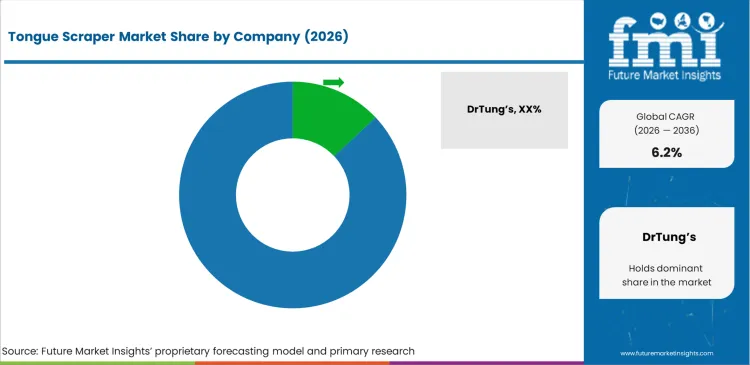
Established oral-care brands benefit from strong consumer familiarity when extending into adjacent hygiene tools such as tongue cleaners. Buyers often show greater comfort with products linked to names already associated with daily brushing routines, which supports brand-led movement in this category. Smaller participants usually compete through product design, focusing on grip, shape, and material differentiation to appeal to more specific usage preferences. Mass retail demand remains centered on simple and affordable formats, since many consumers still treat tongue cleaners as low-cost add-on purchases rather than premium oral-care items.
Brand advantage also tends to strengthen when product trust carries over from broader oral-care purchasing habits. Larger manufacturers often benefit from stronger visibility, wider distribution, and a more established hygiene positioning, which makes market entry harder for smaller participants. Digital-first sellers, by contrast, compete by emphasizing product feel, ease of use, and format comparison against more familiar breath-care alternatives. Shelf presence in physical retail remains concentrated among established suppliers with broader oral-care portfolios, limiting visibility for lesser-known brands.
Retail expansion in this category usually depends on proven repeat demand rather than novelty alone. Smaller suppliers often gain early traction through online channels before wider store placement becomes realistic. Material differentiation can help support this path, especially when copper, stainless steel, or recycled-metal variants appeal to buyers looking for a distinct product proposition. Even so, long-term market presence depends less on niche positioning alone and more on sustained consumer acceptance, product usability, and pricing fit within routine oral-care purchases.
Key Players in Tongue Scraper Market
- DrTung’s
- Sunstar
- Jordan Oral Care
- The Humble Co.
Scope of the Report
| Metric | Value |
|---|---|
| Quantitative Units | USD 650.0 million to USD 1,186.2 million, at a CAGR of 6.2% |
| Market Definition | Category covers specialized tools designed to clear bacteria and debris from tongue surfaces. |
| Segmentation | By Material, By Product Type, By End User, By Distribution Channel, By Price Tier, and Region |
| Regions Covered | North America, Latin America, Europe, East Asia, South Asia, Oceania, Middle East and Africa |
| Countries Covered | United States, United Kingdom, Germany, Japan, China, India, Brazil, Canada, Mexico, France, Italy, Spain, South Africa, Australia |
| Key Companies Profiled | DrTung’s, Sunstar, Jordan Oral Care, The Humble Co. |
| Forecast Period | 2026 to 2036 |
| Approach | Checkout scanning data anchors volume estimates. |
Source: Future Market Insights (FMI) analysis, based on proprietary forecasting model and primary research
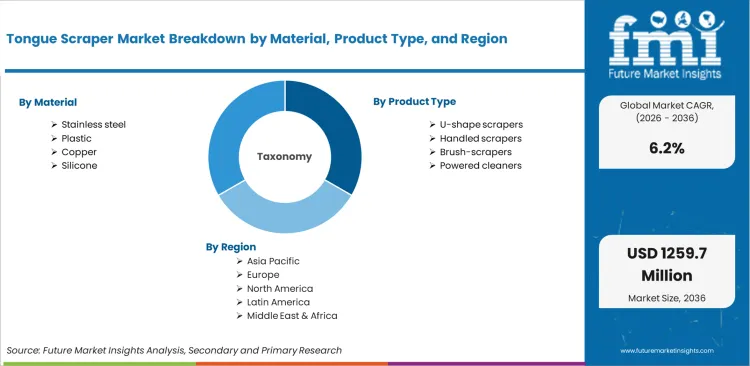
Segments
By Material
- Stainless steel
- Plastic
- Copper
- Silicone
By Product Type
- U-shape scrapers
- Handled scrapers
- Brush-scrapers
- Powered cleaners
By End User
- Adults
- Kids
- Seniors
By Distribution Channel
- E-commerce
- Pharmacies
- Supermarkets
- Dental clinics
By Price Tier
- Mass market
- Premium
- Eco
Regions:
- Asia Pacific
- India
- China
- Japan
- South Korea
- Indonesia
- Australia
- New Zealand
- ASEAN
- Rest of Asia Pacific
- Europe
- Germany
- Italy
- France
- United Kingdom
- Spain
- Benelux
- Nordics
- Central & Eastern Europe
- Rest of Europe
- North America
- United States
- Canada
- Mexico
- Latin America
- Brazil
- Argentina
- Chile
- Rest of Latin America
- Middle East & Africa
- Kingdom of Saudi Arabia
- United Arab Emirates
- South Africa
- Turkey
- Rest of Middle East & Africa
Bibliography
- American Dental Association. (2024). Home oral care.
- Centers for Disease Control and Prevention. (2024). Oral health in healthcare settings to prevent pneumonia toolkit.
- Gopalakrishnan, D. (2024). Is the oral hygiene complete without the tongue cleaning? Journal of Indian Society of Periodontology.
- Mosaico, G., Pinna, M., Grassi, R., Orrù, G., Scribante, A., Maiorani, C., Casu, C., Nardi, G. M., & Butera, A. (2024). Oral health and caries prevention: How tongue hygiene helps maintain balance of microbiota and overall health in pediatric patients. Children, 11(7), 816.
- AlBeshri, S. (2025). Perspectives on tongue coating: Etiology, clinical management, and associated diseases - a narrative review. The Saudi Dental Journal.
- Cho, M. Y., et al. (2025). Short-term effects of oral dissolving film on halitosis and oral pathogenic bacteria compared with tongue cleaner. Frontiers in Microbiology.
This bibliography is provided for reader reference. The full FMI report contains the complete reference list with primary source documentation.
This Report Addresses
- Stainless steel tools dominating material preference.
- U-shape scrapers leading ergonomic choices.
- Adults driving primary consumer demand.
- E-commerce platforms shifting retail dynamics.
- Mass market pricing encouraging trial purchases.
- India anchoring traditional hygiene practices.
- China expanding online sales channels rapidly.
- Dental clinic recommendations shaping consumer habits.
Frequently Asked Questions
What is the size of the tongue scraper market?
Industry size is poised to hit USD 650.0 million in 2026.
How fast is the tongue scraper market growing?
CAGR is predicted to track at an anticipated 6.2% through 2036.
What is the forecast for the tongue scraper market through 2036?
Total valuation forecasted to reach USD 1,186.2 million by 2036.
Why are tongue scrapers becoming popular?
Halitosis awareness and wellness trends drive everyday consumers to adopt specialized cleaning devices.
Which material is best for a tongue scraper?
Stainless steel dominates preference due to high durability and easy sanitization workflows.
Are metal tongue scrapers better than plastic?
Metal options resist rust and avoid microscopic scratching where bacteria hide compared to disposable plastic.
Who are the leading tongue scraper brands?
DrTung’s represent major established competitors dominating retail shelves.
What are tongue scrapers used for?
These manual oral care tools clear bacteria and debris from tongue surfaces to improve breath and hygiene.
Is the tongue scraper market part of oral care?
This category functions as a specialized accessory segment within broader preventive dental care products.
What drives growth in the tongue scraper market?
Dental professional recommendations and rising disposable incomes accelerate daily habit adoption globally.
Which countries are growing fastest for tongue cleaners?
India leads growth due to deep historical ties to traditional Ayurvedic wellness practices.
Compare stainless steel and plastic tongue scraper demand.
Stainless steel captures premium buyers seeking longevity while plastic dominates budget trial purchases in supermarkets.
Give me tongue scraper market segmentation.
Category segments include material type, product shape, end user demographic, distribution channel, and price tier.
Who are the active companies in tongue scraper market?
Sunstar, Jordan Oral Care, and The Humble Co. actively supply global retail channels.
Where do consumers purchase tools most?
Online channels capture significant volume via privacy advantages and targeted subscription models.
Which price tier secures highest volume?
Budget mass market options encourage first-time trial habits effectively for new users.
What accelerates adoption in China?
Online influencers push premium oral care routines aggressively to young urban demographics.
How do pharmacies position these tools?
Clinical placement near medicines builds buyer trust and leverages professional medical authority.
What deters initial consumer trial?
Gag reflex sensitivity and improper usage causing minor discomfort stall widespread product adoption.
How do subscriptions alter sales?
Bundling tools with toothpaste guarantees recurring revenue and builds long-term brand loyalty.
Why do eco-brands charge more?
Biodegradable plastics and sustainable packaging command higher margins from environmentally conscious shoppers.
How does silicone appeal to seniors?
Soft pliable edges protect delicate thinning tissue safely during daily cleaning routines.
What advantages do copper tools offer?
Holistic wellness targeting unlocks premium retail pricing and connects directly to traditional practices.
Why do compact tools sell well?
Travel-friendly single-handed shapes suit frequent flyers maintaining routines on the road.
Preview the report firsthand - request a free sample
Get SampleGet the brochure for pricing and purchase details.
Get PDFTable of Content
- Executive Summary
- Global Market Outlook
- Demand-side Trends
- Supply-side Trends
- Technology Roadmap Analysis
- Analysis and Recommendations
- Market Overview
- Market Coverage / Taxonomy
- Market Definition / Scope / Limitations
- Research Methodology
- Chapter Orientation
- Analytical Lens and Working Hypotheses
- Market Structure, Signals, and Trend Drivers
- Research Design and Evidence Framework
- Desk Research Programme (Secondary Evidence)
- Company Annual and Sustainability Reports
- Peer-reviewed Journals and Academic Literature
- Corporate Websites, Product Literature, and Technical Notes
- Earnings Decks and Investor Briefings
- Statutory Filings and Regulatory Disclosures
- Technical White Papers and Standards Notes
- Trade Journals, Industry Magazines, and Analyst Briefs
- Conference Proceedings, Webinars, and Seminar Materials
- Government Statistics Portals and Public Data Releases
- Press Releases and Reputable Media Coverage
- Specialist Newsletters and Curated Briefings
- Sector Databases and Reference Repositories
- FMI Internal Proprietary Databases and Historical Market Datasets
- Subscription Datasets and Paid Sources
- Social Channels, Communities, and Digital Listening Inputs
- Additional Desk Sources
- Expert Input and Fieldwork (Primary Evidence)
- Primary Modes
- Qualitative Interviews and Expert Elicitation
- Quantitative Surveys and Structured Data Capture
- Blended Approach
- Why Primary Evidence is Used
- Field Techniques
- Stakeholder Universe Engaged
- C-suite Leaders
- Board Members
- Presidents and Vice Presidents
- R&D and Innovation Heads
- Technical Specialists
- Domain Subject-matter Experts
- Scientists
- Physicians and Other Healthcare Professionals
- Governance, Ethics, and Data Stewardship
- Research Ethics
- Data Integrity and Handling
- Stakeholder Universe Engaged
- Tooling, Models, and Reference Databases
- Primary Modes
- Data Engineering and Model Build
- Data Acquisition and Ingestion
- Cleaning, Normalisation, and Verification
- Synthesis, Triangulation, and Analysis
- Quality Assurance and Audit Trail
- Desk Research Programme (Secondary Evidence)
- Market Background
- Market Dynamics
- Drivers
- Restraints
- Opportunity
- Trends
- Scenario Forecast
- Demand in Optimistic Scenario
- Demand in Likely Scenario
- Demand in Conservative Scenario
- Opportunity Map Analysis
- Product Life Cycle Analysis
- Supply Chain Analysis
- Investment Feasibility Matrix
- Value Chain Analysis
- PESTLE and Porter’s Analysis
- Regulatory Landscape
- Regional Parent Market Outlook
- Production and Consumption Statistics
- Import and Export Statistics
- Market Dynamics
- Global Market Analysis 2021 to 2025 and Forecast, 2026 to 2036
- Historical Market Size Value (USD Million) Analysis, 2021 to 2025
- Current and Future Market Size Value (USD Million) Projections, 2026 to 2036
- Y-o-Y Growth Trend Analysis
- Absolute $ Opportunity Analysis
- Global Market Pricing Analysis 2021 to 2025 and Forecast 2026 to 2036
- Global Market Analysis 2021 to 2025 and Forecast 2026 to 2036, By Material
- Introduction / Key Findings
- Historical Market Size Value (USD Million) Analysis By Material , 2021 to 2025
- Current and Future Market Size Value (USD Million) Analysis and Forecast By Material , 2026 to 2036
- Stainless steel
- Plastic
- Copper
- Silicone
- Stainless steel
- Y-o-Y Growth Trend Analysis By Material , 2021 to 2025
- Absolute $ Opportunity Analysis By Material , 2026 to 2036
- Global Market Analysis 2021 to 2025 and Forecast 2026 to 2036, By Product Type
- Introduction / Key Findings
- Historical Market Size Value (USD Million) Analysis By Product Type, 2021 to 2025
- Current and Future Market Size Value (USD Million) Analysis and Forecast By Product Type, 2026 to 2036
- U-shape scrapers
- Handled scrapers
- Brush-scrapers
- Powered cleaners
- U-shape scrapers
- Y-o-Y Growth Trend Analysis By Product Type, 2021 to 2025
- Absolute $ Opportunity Analysis By Product Type, 2026 to 2036
- Global Market Analysis 2021 to 2025 and Forecast 2026 to 2036, By End Use
- Introduction / Key Findings
- Historical Market Size Value (USD Million) Analysis By End Use, 2021 to 2025
- Current and Future Market Size Value (USD Million) Analysis and Forecast By End Use, 2026 to 2036
- Adults
- Kids
- Seniors
- Adults
- Y-o-Y Growth Trend Analysis By End Use, 2021 to 2025
- Absolute $ Opportunity Analysis By End Use, 2026 to 2036
- Global Market Analysis 2021 to 2025 and Forecast 2026 to 2036, By Distribution Channel
- Introduction / Key Findings
- Historical Market Size Value (USD Million) Analysis By Distribution Channel, 2021 to 2025
- Current and Future Market Size Value (USD Million) Analysis and Forecast By Distribution Channel, 2026 to 2036
- E-commerce
- Pharmacies
- Supermarkets
- Dental clinics
- E-commerce
- Y-o-Y Growth Trend Analysis By Distribution Channel, 2021 to 2025
- Absolute $ Opportunity Analysis By Distribution Channel, 2026 to 2036
- Global Market Analysis 2021 to 2025 and Forecast 2026 to 2036, By Region
- Introduction
- Historical Market Size Value (USD Million) Analysis By Region, 2021 to 2025
- Current Market Size Value (USD Million) Analysis and Forecast By Region, 2026 to 2036
- North America
- Latin America
- Western Europe
- Eastern Europe
- East Asia
- South Asia and Pacific
- Middle East & Africa
- Market Attractiveness Analysis By Region
- North America Market Analysis 2021 to 2025 and Forecast 2026 to 2036, By Country
- Historical Market Size Value (USD Million) Trend Analysis By Market Taxonomy, 2021 to 2025
- Market Size Value (USD Million) Forecast By Market Taxonomy, 2026 to 2036
- By Country
- USA
- Canada
- Mexico
- By Material
- By Product Type
- By End Use
- By Distribution Channel
- By Country
- Market Attractiveness Analysis
- By Country
- By Material
- By Product Type
- By End Use
- By Distribution Channel
- Key Takeaways
- Latin America Market Analysis 2021 to 2025 and Forecast 2026 to 2036, By Country
- Historical Market Size Value (USD Million) Trend Analysis By Market Taxonomy, 2021 to 2025
- Market Size Value (USD Million) Forecast By Market Taxonomy, 2026 to 2036
- By Country
- Brazil
- Chile
- Rest of Latin America
- By Material
- By Product Type
- By End Use
- By Distribution Channel
- By Country
- Market Attractiveness Analysis
- By Country
- By Material
- By Product Type
- By End Use
- By Distribution Channel
- Key Takeaways
- Western Europe Market Analysis 2021 to 2025 and Forecast 2026 to 2036, By Country
- Historical Market Size Value (USD Million) Trend Analysis By Market Taxonomy, 2021 to 2025
- Market Size Value (USD Million) Forecast By Market Taxonomy, 2026 to 2036
- By Country
- Germany
- UK
- Italy
- Spain
- France
- Nordic
- BENELUX
- Rest of Western Europe
- By Material
- By Product Type
- By End Use
- By Distribution Channel
- By Country
- Market Attractiveness Analysis
- By Country
- By Material
- By Product Type
- By End Use
- By Distribution Channel
- Key Takeaways
- Eastern Europe Market Analysis 2021 to 2025 and Forecast 2026 to 2036, By Country
- Historical Market Size Value (USD Million) Trend Analysis By Market Taxonomy, 2021 to 2025
- Market Size Value (USD Million) Forecast By Market Taxonomy, 2026 to 2036
- By Country
- Russia
- Poland
- Hungary
- Balkan & Baltic
- Rest of Eastern Europe
- By Material
- By Product Type
- By End Use
- By Distribution Channel
- By Country
- Market Attractiveness Analysis
- By Country
- By Material
- By Product Type
- By End Use
- By Distribution Channel
- Key Takeaways
- East Asia Market Analysis 2021 to 2025 and Forecast 2026 to 2036, By Country
- Historical Market Size Value (USD Million) Trend Analysis By Market Taxonomy, 2021 to 2025
- Market Size Value (USD Million) Forecast By Market Taxonomy, 2026 to 2036
- By Country
- China
- Japan
- South Korea
- By Material
- By Product Type
- By End Use
- By Distribution Channel
- By Country
- Market Attractiveness Analysis
- By Country
- By Material
- By Product Type
- By End Use
- By Distribution Channel
- Key Takeaways
- South Asia and Pacific Market Analysis 2021 to 2025 and Forecast 2026 to 2036, By Country
- Historical Market Size Value (USD Million) Trend Analysis By Market Taxonomy, 2021 to 2025
- Market Size Value (USD Million) Forecast By Market Taxonomy, 2026 to 2036
- By Country
- India
- ASEAN
- Australia & New Zealand
- Rest of South Asia and Pacific
- By Material
- By Product Type
- By End Use
- By Distribution Channel
- By Country
- Market Attractiveness Analysis
- By Country
- By Material
- By Product Type
- By End Use
- By Distribution Channel
- Key Takeaways
- Middle East & Africa Market Analysis 2021 to 2025 and Forecast 2026 to 2036, By Country
- Historical Market Size Value (USD Million) Trend Analysis By Market Taxonomy, 2021 to 2025
- Market Size Value (USD Million) Forecast By Market Taxonomy, 2026 to 2036
- By Country
- Kingdom of Saudi Arabia
- Other GCC Countries
- Turkiye
- South Africa
- Other African Union
- Rest of Middle East & Africa
- By Material
- By Product Type
- By End Use
- By Distribution Channel
- By Country
- Market Attractiveness Analysis
- By Country
- By Material
- By Product Type
- By End Use
- By Distribution Channel
- Key Takeaways
- Key Countries Market Analysis
- USA
- Pricing Analysis
- Market Share Analysis, 2025
- By Material
- By Product Type
- By End Use
- By Distribution Channel
- Canada
- Pricing Analysis
- Market Share Analysis, 2025
- By Material
- By Product Type
- By End Use
- By Distribution Channel
- Mexico
- Pricing Analysis
- Market Share Analysis, 2025
- By Material
- By Product Type
- By End Use
- By Distribution Channel
- Brazil
- Pricing Analysis
- Market Share Analysis, 2025
- By Material
- By Product Type
- By End Use
- By Distribution Channel
- Chile
- Pricing Analysis
- Market Share Analysis, 2025
- By Material
- By Product Type
- By End Use
- By Distribution Channel
- Germany
- Pricing Analysis
- Market Share Analysis, 2025
- By Material
- By Product Type
- By End Use
- By Distribution Channel
- UK
- Pricing Analysis
- Market Share Analysis, 2025
- By Material
- By Product Type
- By End Use
- By Distribution Channel
- Italy
- Pricing Analysis
- Market Share Analysis, 2025
- By Material
- By Product Type
- By End Use
- By Distribution Channel
- Spain
- Pricing Analysis
- Market Share Analysis, 2025
- By Material
- By Product Type
- By End Use
- By Distribution Channel
- France
- Pricing Analysis
- Market Share Analysis, 2025
- By Material
- By Product Type
- By End Use
- By Distribution Channel
- India
- Pricing Analysis
- Market Share Analysis, 2025
- By Material
- By Product Type
- By End Use
- By Distribution Channel
- ASEAN
- Pricing Analysis
- Market Share Analysis, 2025
- By Material
- By Product Type
- By End Use
- By Distribution Channel
- Australia & New Zealand
- Pricing Analysis
- Market Share Analysis, 2025
- By Material
- By Product Type
- By End Use
- By Distribution Channel
- China
- Pricing Analysis
- Market Share Analysis, 2025
- By Material
- By Product Type
- By End Use
- By Distribution Channel
- Japan
- Pricing Analysis
- Market Share Analysis, 2025
- By Material
- By Product Type
- By End Use
- By Distribution Channel
- South Korea
- Pricing Analysis
- Market Share Analysis, 2025
- By Material
- By Product Type
- By End Use
- By Distribution Channel
- Russia
- Pricing Analysis
- Market Share Analysis, 2025
- By Material
- By Product Type
- By End Use
- By Distribution Channel
- Poland
- Pricing Analysis
- Market Share Analysis, 2025
- By Material
- By Product Type
- By End Use
- By Distribution Channel
- Hungary
- Pricing Analysis
- Market Share Analysis, 2025
- By Material
- By Product Type
- By End Use
- By Distribution Channel
- Kingdom of Saudi Arabia
- Pricing Analysis
- Market Share Analysis, 2025
- By Material
- By Product Type
- By End Use
- By Distribution Channel
- Turkiye
- Pricing Analysis
- Market Share Analysis, 2025
- By Material
- By Product Type
- By End Use
- By Distribution Channel
- South Africa
- Pricing Analysis
- Market Share Analysis, 2025
- By Material
- By Product Type
- By End Use
- By Distribution Channel
- USA
- Market Structure Analysis
- Competition Dashboard
- Competition Benchmarking
- Market Share Analysis of Top Players
- By Region
- By Material
- By Product Type
- By End Use
- By Distribution Channel
- Competition Analysis
- Competition Deep Dive
- DrTung’s
- Overview
- Product Portfolio
- Profitability by Market Segments (Product/Age /Sales Channel/Region)
- Sales Footprint
- Strategy Overview
- Marketing Strategy
- Product Strategy
- Channel Strategy
- Sunstar
- Jordan Oral Care
- The Humble Co.
- DrTung’s
- Competition Deep Dive
- Assumptions & Acronyms Used


