

- Industry Size (2026)
- USD 65.1 Bn
- Forecast (2036)
- USD 1.3 Bn
- CAGR (2026 to 2036)
- 4.9%
Tylosin Market Size, Market Forecast and Outlook By FMI
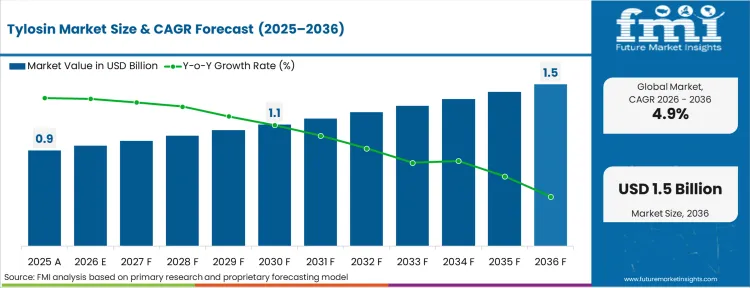
The Tylosin market progressed from USD 0.8 billion in 2025, propelling it to cross USD 0.9 billion in 2026 at a CAGR of 4.9% during the forecast period. Predicting a significant boost in the assessed market value to USD 1.3 billion through 2036, as intensive livestock integrators optimize mortality rates against tightening antimicrobial resistance frameworks.
Integrators are abandoning continuous prophylactic feed inclusion in favor of targeted therapeutic intervention. This shift forces farm managers to balance transient mortality spikes against the commercial risk of failing export residue protocols. Operations delaying this operational pivot face disqualification from tier-one global quick-service restaurant supply chains. Implementing targeted water-soluble macrolides requires a fundamental redesign of farm dosing infrastructure.
Summary of Tylosin Market
- Tylosin Market Definition:
- Tylosin operates as a dedicated veterinary macrolide deployed structurally to maintain commercial viability in high-density livestock farming. The market boundary captures both prophylactic feed integration and acute therapeutic formulations, governed entirely by regional agricultural oversight frameworks rather than human pharmaceutical channels.
- Demand Drivers in the Market:
- Antimicrobial resistance frameworks require feed mill operators to substitute broad-spectrum human antibiotics with dedicated veterinary alternatives.
- Export residue testing protocols compel livestock integrators to shift toward rapid-clearance water-soluble formulations before processing.
- Scale consolidation in emerging markets forces farm managers to implement standardized mortality control protocols across exponentially larger herds.
- Key Segments Analyzed in the FMI Report:
- Tylosin Tartrate: Tylosin Tartrate is expected to hold 55.0% share in 2026, driven by its high aqueous solubility that permits immediate, herd-wide intervention during acute respiratory outbreaks without requiring mill-level feed reformulation.
- Animal Feed Additives: Animal Feed Additives are estimated to account for 60.0% share in 2026, as continuous low-dose integration remains the most labor-efficient delivery mechanism in regions lacking strict veterinary prescription mandates.
- Drug Stores And Retail Pharmacies: This segment is poised to capture 45.0% share in 2026, reflecting the fragmented nature of independent farm operators relying on decentralized local veterinary supply networks.
- India: 7.2% compound growth, driven by the rapid formalization of unorganized poultry operations adopting commercial feed conversion standards.
- Analyst Opinion at FMI:
- Sabyasachi Ghosh, Principal Analyst, Healthcare, at FMI, opines, "The general market timeline assumes regulatory bans immediately collapse procurement volumes. The structural clock runs differently; integrators actually stockpile active pharmaceutical ingredients and shift toward higher-concentration soluble formulations just before enforcement deadlines. This behavior creates a temporary revenue surge that masks the underlying volume contraction occurring at the farm level."
- Strategic Implications / Executive Takeaways:
- Formulation chemists must prioritize degradation profiles to help integrators pass increasingly sensitive export residue audits.
- Distribution networks should transition from bulk premix logistics to cold-chain capable, traceable therapeutic delivery to survive tightening veterinary oversight.
- Active pharmaceutical ingredient manufacturers face a bifurcated market requiring distinct commercial strategies for highly regulated Western zones versus scale-driven Asian sectors.
- Methodology:
- Primary Interviews: Procurement heads at top-tier feed integrators and regulatory compliance officers validated regional adoption rates.
- Data Aggregation: National veterinary medicine directorate filings provided structural baseline volumes.
- Forecasting: Models anchored to shifting regulatory enforcement calendars rather than generic herd growth projections.
- Validation: Independent supply-side API fermentation capacity data confirmed demand-side procurement estimates.
The transition to digital veterinary prescriptions acts as the primary inflection point. Once farm management software integrates directly with oversight bodies, the friction of securing approvals for veterinary antibiotics drops significantly. This digital gating transforms procurement from a bulk commodity purchase to a precise, data-backed medical intervention.
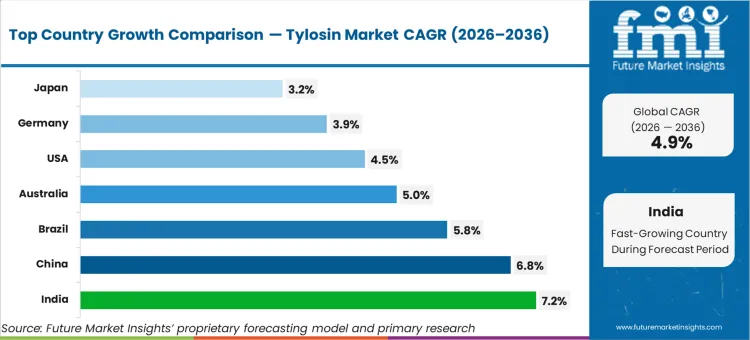
India leads geographic expansion, poised to advance at a CAGR of 7.2%, followed closely by China at 6.8%. Brazil is estimated to track at 5.8%, while Australia and the USA are expected to record 5.0% and 4.5%, respectively. Germany and Japan follow at 3.9% and 3.2%. This divergence reflects the operational gap between markets formalizing their intensive farming infrastructure and those actively suppressing baseline antibiotic volumes through legislative mandates.
Tylosin Market Definition
Tylosin is a macrolide antibiotic produced via fermentation, specifically indicated for veterinary use to combat Gram-positive bacteria and specific mycoplasma strains in livestock. The boundary of this market restricts itself to veterinary formulations deployed in intensive protein production, excluding human-grade macrolides. This specific categorization allows precise animal feed additives share analysis by isolating agricultural procurement from broad pharmaceutical supply chains.
Tylosin Market Inclusions
The scope encompasses all commercial salt forms of the active pharmaceutical ingredient, primarily tartrate and phosphate variations. It includes bulk premixes designed for milling integration, water-soluble powders for acute herd dosing, and injectable formulations for individual clinical treatment. Revenue tracking incorporates medicated feed additives explicitly labeled for growth promotion where legally permitted, alongside strictly therapeutic veterinary drugs.
Tylosin Market Exclusions
The analysis explicitly excludes off-label human antibiotic compounds diverted into agricultural use. It also omits baseline nutritional feed supplements, vitamins, and non-medicated growth promoters that do not rely on antimicrobial mechanisms. These categories are excluded because their procurement cycles, regulatory oversight, and supplier ecosystems function entirely independent of veterinary oversight frameworks.
Tylosin Market Research Methodology
- Primary Research: Farm production managers, veterinary compliance officers, and feed mill procurement directors provided direct intelligence on formulation switching and dosing protocols.
- Desk Research: Regional veterinary directive registries, export residue violation databases, and agricultural compound sales reports anchored the volume baselines.
- Market-Sizing and Forecasting: The baseline anchors strictly to registered veterinary pharmaceutical output volumes cross-referenced against regional intensive livestock herd sizes.
- Data Validation and Update Cycle: Forecasts were triangulated using independent feed production indices and quarterly manufacturer API shipment disclosures.
Segmental Analysis
Tylosin Market Analysis by Type
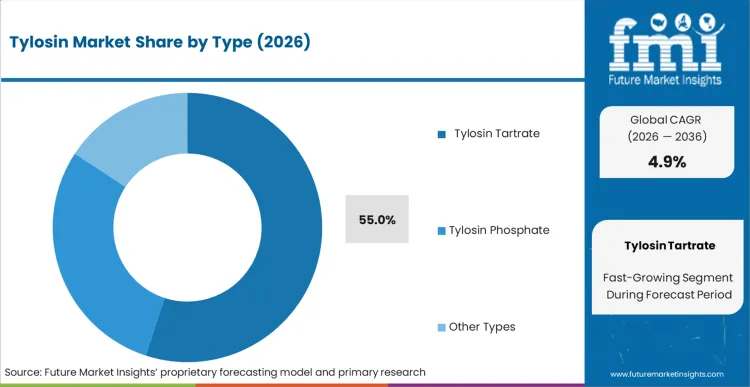
Legacy phosphate premixes fail to deliver the rapid systemic absorption required when a respiratory outbreak hits a high-density broiler house. This operational reality explains why Tylosin Tartrate holds 55.0% share in 2026. Farm operators cannot wait 48 hours for a new batch of medicated feed to be milled, transported, and consumed by sick animals with depressed appetites. According to FMI's estimates, the tartrate salt form solves this bottleneck via drinking water systems, providing immediate therapeutic loading doses. The shift away from continuous feed integration toward acute intervention heavily favors highly soluble animal feed antibiotics. Integrators attempting to manage acute outbreaks with insoluble formulations suffer severe mortality spikes that destroy batch profitability.
- Therapeutic Failure: Insoluble compounds cannot achieve critical blood concentration levels during acute respiratory distress when herd feed intake drops. Farm managers who rely on premixes during outbreaks face compounding mortality losses.
- Residue Persistence: Slower clearance rates associated with continuous low-dose formats complicate compliance with slaughter withdrawal periods. Processors miss export shipping windows when tissue tests detect lingering active ingredients.
- System Clogging: Improperly formulated water lines suffer biofilm buildup and occlusion when insoluble powders are forcefully suspended. Maintenance teams must halt dosing entirely to flush lines, disrupting the therapeutic schedule.
Tylosin Market Analysis by Application
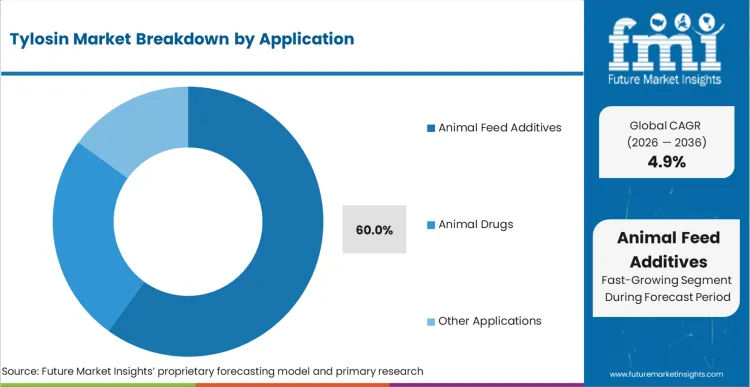
FMI analysts opine that blending the active ingredient at the central mill essentially outsources the dosing labor to the feed manufacturer. This structural advantage makes animal feed additives the default operational standard where strict prescription mandates have not yet materialized. The dominance of Animal Feed Additives, holding 60.0% share in 2026, stems directly from the labor economics of intensive farming in emerging regions. Administering individual injections or constantly managing water line concentrations requires specialized farm labor that thin-margin integrators lack. As regulatory scrutiny tightens, the reliance on automated mill mixing provides a centralized point of audit for compliance officers.
- Dosing Initiation: Farm managers choose mill-integrated additives to guarantee baseline prophylactic coverage without increasing daily barn labor requirements. This limits variance in herd health across widely distributed contract farms.
- Qualification Verification: Feed mills validate exact concentrations through automated mixing logs, satisfying baseline processor audits. Integrators ensure compliance without relying on individual farm hand-mixing accuracy.
- Expansion Scaling: Integrators expand contract farming networks by standardizing the nutritional and prophylactic inputs entirely at the mill. Operators who cannot standardize inputs face unpredictable yield variations that disrupt processing schedules.
Tylosin Market Analysis by Distribution Channel
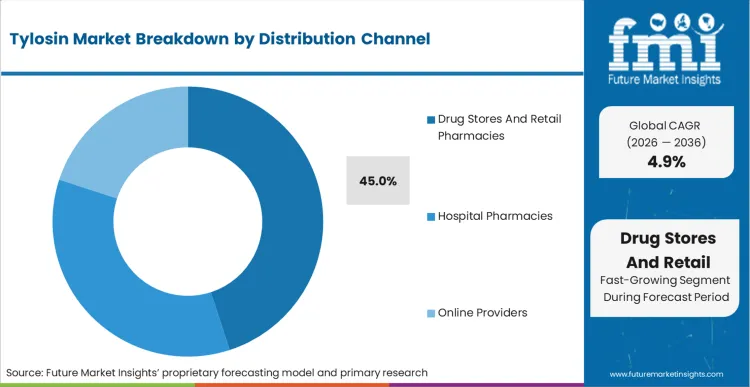
Independent contract growers face a distinct cash flow reality that forces them toward drug stores and retail pharmacies, which account for 45.0% share in 2026. The local network serves as both supplier and informal diagnostic advisor for small-scale operators. Navigating the procurement landscape for animal antimicrobials and antibiotics through centralized corporate channels introduces unacceptable lead times for acute farm-level crises. Unlike massive vertically integrated producers who buy API directly via annual contracts, independent operators purchase inputs on a flock-by-flock basis. Based on FMI's assessment, these localized retail channels provide the essential credit terms and immediate inventory access required when an unexpected bacterial challenge emerges.
- Acquisition Expense: Local pharmacies bundle feed additives with other essential farm inputs, allowing operators to leverage consolidated credit lines. Independents capture immediate supply without massive upfront capital commitments.
- Logistical Overhead: Direct procurement requires minimum order quantities and specialized storage facilities that exceed independent farm capacity. Operators relying on centralized delivery suffer stockouts during unexpected localized outbreaks.
- Lifecycle Parity: Retail networks rotate short-dated inventory effectively across a fragmented buyer base. Purchasing managers who attempt to warehouse their own therapeutic supplies frequently absorb losses from expired pharmaceutical stock.
Tylosin Market Drivers, Restraints, and Opportunities
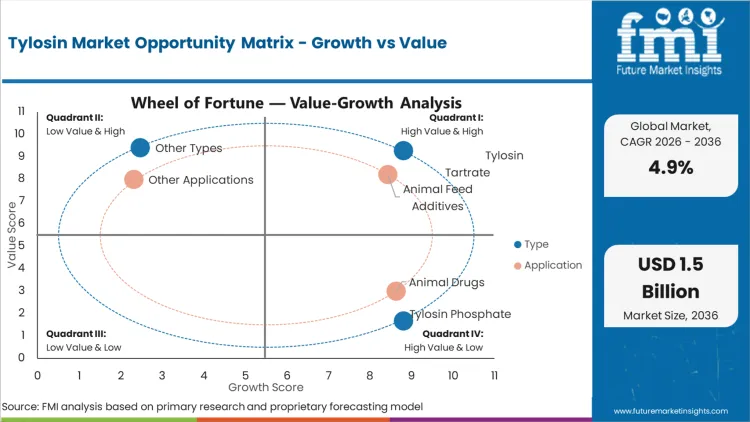
Compliance officers at major processing plants no longer evaluate veterinary inputs based on animal growth rates. They are optimizing entirely for zero-delay export clearance. Because a single flock rejected for tissue residues can erase an integrator's quarterly margin, these officers impose rigid standardizations across their entire contract farming networks. This absolute intolerance for residual detection pulls procurement sharply away from generic, long-lasting agricultural compounds. Instead, buyers mandate specific macrolide salts that carry documented, predictable degradation profiles, guaranteeing the active ingredient clears the animal's system exactly when scheduled.
The heaviest drag on market adoption stems directly from the administrative choke point of mandatory veterinary prescriptions. By demanding a unique clinical authorization for every single medicated batch, oversight bodies essentially break the just-in-time procurement model that modern feed mills rely upon to maintain margins. This administrative friction is not an accidental byproduct of poorly written policy; it operates as an intentional regulatory mechanism engineered specifically to suppress overall antimicrobial volume. The integrated digital prescription networks although are beginning to streamline this paperwork, they remain the exclusive domain of highly capitalized corporate operations. Independent producers, meanwhile, are left stranded in an authorization backlog, critically delaying their access to therapeutic inputs during acute outbreaks.
Opportunities in the Tylosin Market
- Digital Prescription Integration: Cloud-based veterinary authorization platforms automate the compliance paperwork between farms and mills. Specialized software vendors capture immense value by clearing the administrative bottleneck for mid-tier feed manufacturers.
- Residue Optimization: Rapid-clearance formulations allow integrators to maintain therapeutic coverage closer to the processing date. Formulators who can shorten the statutory withdrawal period capture premium pricing from export-focused natural feed additives buyers.
- Water-line Engineering: Specialized dosing equipment prevents biofilm accumulation during tartrate salt administration. Equipment manufacturers who integrate automated flushing protocols directly serve integrators managing acute outbreak responses.
Regional Analysis
The global landscape for Tylosin reveals a stark geographic divide, while Western geographies aggressively suppress baseline volumes through legislative mandates, emerging Asian hubs rely on massive prophylactic scale to secure their booming protein production. This geographical recalibration forces pharmaceutical providers to continuously adapt their regional supply chain strategies. Based on the regional analysis, the Tylosin market is segmented into North America, South America, Asia Pacific, and Europe across 40 plus countries.
.webp "Top Country Growth Comparison Tylosin Market Cagr (2026 2036)")
| Country | CAGR (2026 to 2036) |
|---|---|
| India | 7.2% |
| China | 6.8% |
| Brazil | 5.8% |
| Australia | 5.0% |
| USA | 4.5% |
| Germany | 3.9% |
| Japan | 3.2% |
Source: Future Market Insights (FMI) analysis, based on proprietary forecasting model and primary research
North America and South America Tylosin Market Analysis
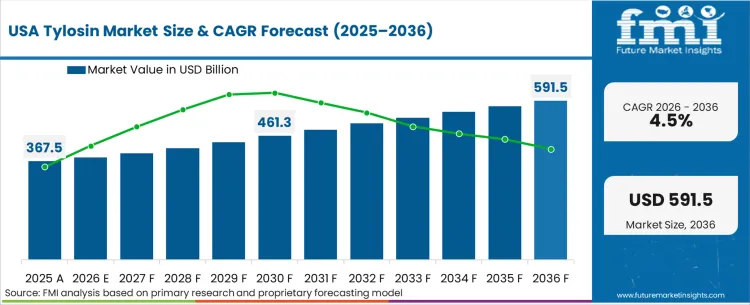
In FMI's view, the enforcement calendar for veterinary directives across the Americas is actively fracturing the commercial landscape into strictly controlled and rapidly realigning zones. Resulting with the procurement priorities to have completely decoupled from baseline nutritional metrics; these compounds are now utilized strictly as managed disease countermeasures. This compliance-led climate elevates the prescribing veterinarian above the nutritionist in the buying hierarchy, forcing stakeholders involved in United States animal healthcare to target clinical decision-makers rather than bulk agricultural buyers.
- USA: The strict execution of Veterinary Feed Directives forces integrators to dismantle legacy continuous-dosing protocols in favor of targeted pulse therapy. To prevent cross-contamination, mill operators must isolate medicated runs, which substantially compounds the operational cost of handling these formulations. Driven by the need for precision, the USA theater is advancing at a projected CAGR of 4.5%. By packaging precise, pre-measured soluble doses that align directly with standard water-line capacities, formulators capture immediate market share and reduce farm-level mixing errors for specialized animal antimicrobials and antibiotics.
- Brazil: Demand in Brazil is forecast to register a CAGR of 5.8%, fueled by procurement directors dictating exact formulation types to thousands of contract farmers to ensure uniform clearance rates. Massive export-oriented processing operations in this hub define their baseline standards based on the residue limits of their strictest international buyers, rather than local laws. This export-led trajectory positions Brazilian buyers as early adopters of high-purity animal antibiotics and antimicrobials, creating a distinct competitive gap against regional neighbors who remain focused purely on domestic consumption.
FMI's report includes extensive analysis of neighboring agricultural hubs modernizing their compliance frameworks. The gradual harmonization of residue testing standards across the broader Mercosur trading bloc steadily eliminates the commercial viability of low-grade, undocumented agricultural pharmaceuticals.
Asia Pacific Tylosin Market Analysis
Across the Asia Pacific, cost models and farm consolidation dynamics dictate the foundational baseline. As unorganized backyard farming rapidly evolves into centralized, high-density operations, the sheer magnitude of volume acquisition redirects the global center of gravity. Integrators focus almost exclusively on securing massive quantities of active ingredients to maintain conversion ratios across exponential bird populations, as per FMI's projection. Mirroring this push for raw scale and operational standardization, the regional trajectory highlights an economics-led climate that prioritizes supply chain reliability and bulk pricing over advanced formulation engineering.
- India: FMI estimates the sector in India to expand at an annual growth rate of 7.2%, as mill managers are compelled to implement uniform mixing protocols across distinct geographic zones to guarantee consistent processing yields. This rapid evolution from fragmented contract networks to massive, vertically integrated poultry operations necessitates standardized prophylactic baseline coverage. In the end, the said trajectory indicates the nation is moving toward a highly centralized procurement model where a handful of massive integrators will dictate the formulation standards for the entire domestic supply chain.
- China: Scale-driven operations function under intense density pressures that require immediate, massive therapeutic interventions at the first sign of respiratory challenges. To execute herd-wide pulse dosing within hours, farm managers rely heavily on highly soluble tartrate formulations. The integration of automated dosing infrastructure eliminates the manual labor bottleneck, allowing Chinese integrators to execute complex pharmaceutical interventions with minimal farm-level staff. China is tracking a projected CAGR of 6.8%, heavily rewarding this process automation.
- Australia: The nation's strict biosecurity protocols and heavily monitored agricultural compound tracking force buyers to maintain rigorous documentation for every gram of active ingredient deployed. Australia is expected to see its sector grow at a compound annual rate of 5.0%, as farm operators navigate a highly formalized channel that strictly prohibits off-label or diverted pharmaceutical use. This regulatory rigor positions Australian producers favorably in premium export markets, given that their fully traceable veterinary usage provides an audited guarantee of residue-free meat products.
- Japan: Over the forecast period, a CAGR of 3.2% is expected for Japan. Stringent domestic consumption standards and heavily formalized milling networks define the Japanese procurement climate. Operations managers source ultra-high purity grades to eliminate any risk of unexpected residue spikes during routine government inspections. Suppliers who provide guaranteed purity certificates and integrate seamlessly with Japanese veterinary antibiotics protocols secure long-term contracts that are virtually immune to minor price fluctuations.
FMI's report includes secondary Asian markets currently formalizing their intensive farming sectors. The data clearly indicates that as foreign direct investment modernizes regional feed milling, procurement immediately pivots from fragmented local distributors to direct corporate API contracts.
Europe Tylosin Market Analysis
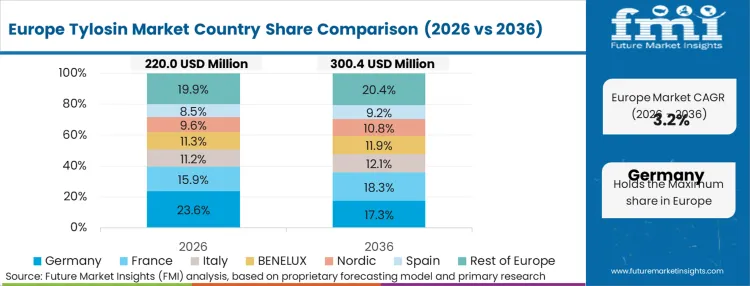
The legislative climate in Europe inherently limits overall volume through aggressive, mandate-driven reduction targets. By penalizing baseline agricultural antibiotic use, European policies compel farm operators to reserve macrolides exclusively for documented clinical emergencies. According to FMI's estimates, this infrastructure-led restriction transforms the supply chain; inventory must sit idle for longer periods, requiring highly stable formulations that survive extended warehousing without degrading. Suppliers operating in this ecosystem are pivoting from volume-based revenue models to high-margin, acute-response delivery systems.
- Germany: German compliance architectures mandate extensive surveillance of veterinary medicine sales, directly linking farm usage data to national reduction targets. Because of this intense scrutiny, German farm managers do not buy these compounds to optimize efficiency; instead, they procure highly specific macrolides and veterinary inputs solely as emergency insurance policies against total flock loss. The German sector is likely to post a CAGR of 3.9%, reflecting a commercial reality where operations directors must continuously justify their procurement volumes to auditing bodies.
FMI's report includes broader European Union member states navigating identical antimicrobial surveillance frameworks. The systemic pattern across these nations reveals a permanent decoupling of agricultural output growth from veterinary pharmaceutical procurement volumes.
Competitive Aligners for Market Players
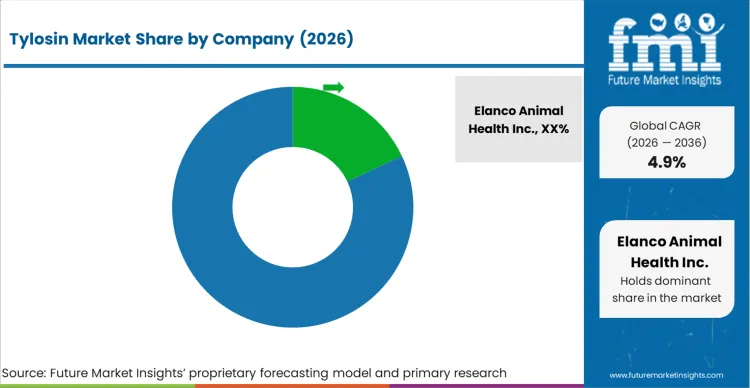
The capacity to ferment high-purity macrolide active pharmaceutical ingredients at a global scale inherently restricts this arena to a concentrated tier of primary manufacturers. Procurement directors at massive poultry integrators do not select their core vendors based on fractional price differences; they evaluate them almost entirely on raw supply chain resilience. When a localized respiratory outbreak hits a high-density facility, it requires an immediate, massive therapeutic intervention, and relying on a supplier with a fragile logistics network risks catastrophic flock mortality. The dominant entities like Zoetis Inc. and Elanco Animal Health Inc., as a result, secure their market positions by physically guaranteeing uninterrupted global delivery across multiple continents. Ceva Santé Animale reinforces this tier by aligning its production output directly with the stringent documentation and residue tracking requirements demanded by top-tier export processing facilities.
The defensive moat protecting these incumbents is built on regulatory capital rather than raw chemical efficacy. Clearing the contradictory approval matrices of North American, European, and Asian agricultural ministries requires a specialized administrative apparatus that regional chemical blenders simply cannot afford. A challenger attempting to replicate the operational footprint of Phibro Animal Health Corporation or Huvepharma AD must first construct a dedicated global compliance team capable of executing simultaneous, cross-border veterinary filings. Beyond administrative hurdles, mastering the specific particle engineering required to produce highly soluble tartrate formulations remains a severe technical barrier. These formulations must remain completely stable without degrading inside automated animal feed antioxidants and continuous-dosing water lines, a manufacturing reality that bulk generic producers consistently fail to achieve.
Large integrated buyers actively attempt to fracture this vendor concentration by qualifying secondary supply sources, yet their ability to diversify is severely capped by rigid export residue limits. This creates a persistent structural tension inside major farming operations: procurement teams are heavily incentivized to source cheaper baseline alternatives, while compliance officers outright refuse to authorize any compound that introduces even a fractional risk of a processing plant rejection. As digital prescription frameworks become the mandatory global standard by 2036, specialized suppliers like Vetoquinol S.A. will capture premium contracts based on how accurately their internal traceability data integrates directly with farm management software. Simultaneously, massive volume producers such as Shandong Lukang Pharmaceutical Co. Ltd. will dictate baseline API pricing across scale-driven Asian hubs, forcing Western competitors to abandon bulk cost strategies and compete entirely on purity guarantees and digital compliance integration.
Key Players in Tylosin Market
- Elanco Animal Health Inc.
- Zoetis Inc.
- Ceva Santé Animale
- Phibro Animal Health Corporation
- Huvepharma AD
- Vetoquinol S.A.
- Shandong Lukang Pharmaceutical Co. Ltd.
Scope of the Report
| Metric | Value |
|---|---|
| Quantitative Units | USD 0.9 billion to USD 1.3 billion, at a CAGR of 4.9% |
| Market Definition | Tylosin is a veterinary-specific macrolide antibiotic utilized in intensive livestock operations. The market captures formulations ranging from prophylactic feed integration to acute therapeutic delivery systems, strictly separated from human pharmaceutical supply channels. |
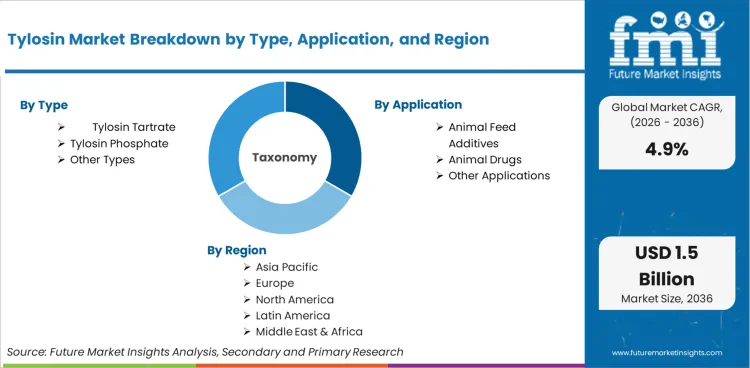
| Type Segmentation | Tylosin Tartrate, Tylosin Phosphate, Other Types |
| Application Segmentation | Animal Feed Additives, Animal Drugs, Other Applications |
| Distribution Channel Segmentation | Drug Stores And Retail Pharmacies, Hospital Pharmacies, Online Providers |
| Regions Covered | North America, South America, Asia Pacific, Europe |
| Countries Covered | USA, China, India, Brazil, Germany, Japan, Australia, and 40 plus countries |
| Key Companies Profiled | Elanco Animal Health Inc., Zoetis Inc., Ceva Santé Animale, Phibro Animal Health Corporation, Huvepharma AD, Vetoquinol S.A., Shandong Lukang Pharmaceutical Co. Ltd. |
| Forecast Period | 2026 to 2036 |
| Approach | Procurement directors and veterinary compliance officers provided intelligence on formulation switching. Independent feed production indices and registered veterinary output volumes anchored the baseline data. Forecasts were cross-validated using API shipment disclosures and regulatory enforcement timelines. |
Source: Future Market Insights (FMI) analysis, based on proprietary forecasting model and primary research
Segments
Type:
- Tylosin Tartrate
- Tylosin Phosphate
- Other Types
Application:
- Animal Feed Additives
- Animal Drugs
- Other Applications
Distribution Channel:
- Drug Stores And Retail Pharmacies
- Hospital Pharmacies
- Online Providers
Region:
- North America
- Europe
- Asia-Pacific
- Rest of the World
- Latin America
- Middle East, and Africa
Bibliography
- Elanco Animal Health Incorporated. (2024, November). Elanco Animal Health Reports Third Quarter 2024 Results. Elanco.
- European Medicines Agency. (2025). European sales and use of antimicrobials for veterinary medicine: Annual surveillance report for 2024.
- World Organisation for Animal Health. (2025). Annual Report on Antimicrobial Agents Intended for Use in Animals.
- California Department of Food and Agriculture. (2025). 2024 Veterinary Feed Directive Summary Report.
- U.S. Food and Drug Administration. (2026, February). New Animal Drugs; Approval of New Animal Drug Applications; Withdrawal of Approval of New Animal Drug Application; Change of Sponsor; Change of Sponsor Address. Federal Register.
- U.S. Department of Agriculture, Food Safety and Inspection Service. (2025). FY 2024 Annual Sampling Summary Report.
- Ministry for Primary Industries. (2025). 2024 Antibiotic Agricultural Compound Sales Analysis.
- Veterinary Medicines Directorate. (2025). Summary of Product Characteristics: Tylan G50 Premix for Medicated Feedingstuff.
- Wang, Y., et al. (2025). Efficient degradation of tylosin by Kurthia gibsonii TYL-A1: performance, pathway, and genomics study. PMC.
This bibliography is provided for reader reference. The full FMI report contains the complete reference list with primary source documentation.
This Report Addresses
- Market intelligence to support strategic decision making across veterinary antibiotics and medicated feed integration platforms.
- Market size estimation and 10-year revenue forecasts from 2026 to 2036, supported by national veterinary medicine directorate filings.
- Growth opportunity mapping across tartrate and phosphate salts with emphasis on the digital prescription integration inflection point.
- Segment and regional revenue forecasts covering rapid-clearance water-soluble formulations across strict European surveillance regimes.
- Competition strategy assessment including global regulatory affairs apparatus capabilities and particle engineering competencies.
- Technology development tracking including automated dosing infrastructure, water-line biofilm prevention, and rapid-clearance formulation profiles.
- Market access analysis covering regional Veterinary Feed Directives and export tissue residue testing protocols.
- Market report delivery in PDF, Excel, PPT, and interactive dashboard formats for executive strategy, feed mill procurement planning, and operational benchmarking use.
Frequently Asked Questions
How large is the Tylosin Market in 2026?
The market reaches USD 0.9 billion in 2026, reflecting the baseline volume needed to sustain intensive livestock operations ahead of strict prescription mandates.
What will it be valued at by 2036?
It is poised to reach USD 1.3 billion by 2036, driven by the premium pricing of high-purity, soluble formulations replacing bulk premixes.
What CAGR is projected?
A 4.9% CAGR is projected, balancing Western volume suppression against scale-driven expansion in emerging Asian hubs.
Which Type segment leads?
Tylosin Tartrate leads with a 55.0% share due to its high solubility, enabling immediate herd-wide water dosing during acute outbreaks.
Which Application segment leads?
Animal Feed Additives capture a 60.0% share because central mill integration efficiently outsources farm-level dosing labor.
Which Distribution Channel segment leads?
Drug Stores And Retail Pharmacies hold a 45.0% share by providing independent growers with immediate inventory and flexible credit during sudden outbreaks.
What drives rapid growth?
Strict export residue protocols compel integrators to adopt premium, rapid-clearance formulations to avoid catastrophic processing plant rejections.
What is the primary restraint?
Mandatory veterinary prescription frameworks create administrative bottlenecks that intentionally disrupt the just-in-time procurement model of modern feed milling.
Which country grows fastest?
India leads at a 7.2% CAGR by rapidly formalizing its unorganized poultry networks, outpacing a heavily capitalized Chinese market.
How do extended producer responsibility and antimicrobial limits affect European procurement?
Aggressive European surveillance eliminates prophylactic baselining, forcing operators to reserve highly specific formulations exclusively for emergency clinical use.
What forces the shift from phosphate premixes to tartrate powders?
Depressed herd appetites during outbreaks make feed-based phosphates ineffective, requiring highly soluble tartrate powders for immediate water-line dosing.
What structural advantage defines the leading API manufacturers?
The capacity to guarantee global supply chain resilience and navigate complex cross-border compliance separates top-tier manufacturers from regional blenders.
Why do independent farmers resist direct corporate API contracts?
Independent farmers lack the capital and storage for direct contracts, relying instead on retail pharmacies to supply short-dated inventory for acute crises.
How does water-line engineering dictate formulation choice?
Integrators mandate highly soluble salts to prevent insoluble powders from causing biofilm buildup and clogging automated water-dosing lines.
What role does software play in this chemical market by 2036?
Cloud-based digital prescription platforms will gatekeep all procurement by automating the compliance paperwork between veterinarians, feed mills, and farms.
Why does Brazil outpace the USA in adoption growth?
Brazil's export-driven integrators rapidly adopt high-purity formulations to meet strict international residue limits, outpacing slower USA regulatory transitions.
How do processing plants enforce formulation standardization?
Processors enforce standardizations through zero-tolerance tissue residue tests at slaughter, where a single failure financially ruins the contract flock.
What hidden costs emerge during acute respiratory outbreaks?
Managing acute outbreaks requires specialized manual labor for water-line dosing, severely spiking farm operating expenses beyond standard mortality losses.
Why do feed mills prefer automated additive blending?
Centralized blending removes farm-level dosing variance and generates automated mixing logs essential for passing rigorous regulatory compliance audits.
How do changing formulation profiles impact market value?
The shift toward premium, highly engineered soluble salts drives revenue expansion even as overall bulk tonnage faces strict regulatory suppression.
Preview the report firsthand - request a free sample
Get SampleGet the brochure for pricing and purchase details.
Get PDFTable of Content
- Executive Summary
- Global Market Outlook
- Demand-side Trends
- Supply-side Trends
- Technology Roadmap Analysis
- Analysis and Recommendations
- Market Overview
- Market Coverage / Taxonomy
- Market Definition / Scope / Limitations
- Research Methodology
- Chapter Orientation
- Analytical Lens and Working Hypotheses
- Market Structure, Signals, and Trend Drivers
- Benchmarking and Cross-market Comparability
- Market Sizing, Forecasting, and Opportunity Mapping
- Research Design and Evidence Framework
- Desk Research Programme (Secondary Evidence)
- Company Annual and Sustainability Reports
- Peer-reviewed Journals and Academic Literature
- Corporate Websites, Product Literature, and Technical Notes
- Earnings Decks and Investor Briefings
- Statutory Filings and Regulatory Disclosures
- Technical White Papers and Standards Notes
- Trade Journals, Industry Magazines, and Analyst Briefs
- Conference Proceedings, Webinars, and Seminar Materials
- Government Statistics Portals and Public Data Releases
- Press Releases and Reputable Media Coverage
- Specialist Newsletters and Curated Briefings
- Sector Databases and Reference Repositories
- FMI Internal Proprietary Databases and Historical Market Datasets
- Subscription Datasets and Paid Sources
- Social Channels, Communities, and Digital Listening Inputs
- Additional Desk Sources
- Expert Input and Fieldwork (Primary Evidence)
- Primary Modes
- Qualitative Interviews and Expert Elicitation
- Quantitative Surveys and Structured Data Capture
- Blended Approach
- Why Primary Evidence is Used
- Field Techniques
- Interviews
- Surveys
- Focus Groups
- Observational and In-context Research
- Social and Community Interactions
- Stakeholder Universe Engaged
- C-suite Leaders
- Board Members
- Presidents and Vice Presidents
- R&D and Innovation Heads
- Technical Specialists
- Domain Subject-matter Experts
- Scientists
- Physicians and Other Healthcare Professionals
- Governance, Ethics, and Data Stewardship
- Research Ethics
- Data Integrity and Handling
- Primary Modes
- Tooling, Models, and Reference Databases
- Desk Research Programme (Secondary Evidence)
- Data Engineering and Model Build
- Data Acquisition and Ingestion
- Cleaning, Normalisation, and Verification
- Synthesis, Triangulation, and Analysis
- Quality Assurance and Audit Trail
- Market Background
- Market Dynamics
- Drivers
- Restraints
- Opportunity
- Trends
- Scenario Forecast
- Demand in Optimistic Scenario
- Demand in Likely Scenario
- Demand in Conservative Scenario
- Opportunity Map Analysis
- Product Life Cycle Analysis
- Supply Chain Analysis
- Investment Feasibility Matrix
- Value Chain Analysis
- PESTLE and Porter’s Analysis
- Regulatory Landscape
- Regional Parent Market Outlook
- Production and Consumption Statistics
- Import and Export Statistics
- Market Dynamics
- Global Market Analysis 2021 to 2025 and Forecast, 2026 to 2036
- Historical Market Size Value (USD Million) Analysis, 2021 to 2025
- Current and Future Market Size Value (USD Million) Projections, 2026 to 2036
- Y-o-Y Growth Trend Analysis
- Absolute $ Opportunity Analysis
- Global Market Pricing Analysis 2021 to 2025 and Forecast 2026 to 2036
- Global Market Analysis 2021 to 2025 and Forecast 2026 to 2036, By Type
- Introduction / Key Findings
- Historical Market Size Value (USD Million) Analysis By Type , 2021 to 2025
- Current and Future Market Size Value (USD Million) Analysis and Forecast By Type , 2026 to 2036
- Tylosin Tartrate
- Tylosin Phosphate
- Other Types
- Tylosin Tartrate
- Y-o-Y Growth Trend Analysis By Type , 2021 to 2025
- Absolute $ Opportunity Analysis By Type , 2026 to 2036
- Global Market Analysis 2021 to 2025 and Forecast 2026 to 2036, By Application
- Introduction / Key Findings
- Historical Market Size Value (USD Million) Analysis By Application, 2021 to 2025
- Current and Future Market Size Value (USD Million) Analysis and Forecast By Application, 2026 to 2036
- Animal Feed Additives
- Animal Drugs
- Other Applications
- Animal Feed Additives
- Y-o-Y Growth Trend Analysis By Application, 2021 to 2025
- Absolute $ Opportunity Analysis By Application, 2026 to 2036
- Global Market Analysis 2021 to 2025 and Forecast 2026 to 2036, By Distribution Channel
- Introduction / Key Findings
- Historical Market Size Value (USD Million) Analysis By Distribution Channel, 2021 to 2025
- Current and Future Market Size Value (USD Million) Analysis and Forecast By Distribution Channel, 2026 to 2036
- Drug Stores And Retail Pharmacies
- Hospital Pharmacies
- Online Providers
- Drug Stores And Retail Pharmacies
- Y-o-Y Growth Trend Analysis By Distribution Channel, 2021 to 2025
- Absolute $ Opportunity Analysis By Distribution Channel, 2026 to 2036
- Global Market Analysis 2021 to 2025 and Forecast 2026 to 2036, By Region
- Introduction
- Historical Market Size Value (USD Million) Analysis By Region, 2021 to 2025
- Current Market Size Value (USD Million) Analysis and Forecast By Region, 2026 to 2036
- North America
- Latin America
- Western Europe
- Eastern Europe
- East Asia
- South Asia and Pacific
- Middle East & Africa
- Market Attractiveness Analysis By Region
- North America Market Analysis 2021 to 2025 and Forecast 2026 to 2036, By Country
- Historical Market Size Value (USD Million) Trend Analysis By Market Taxonomy, 2021 to 2025
- Market Size Value (USD Million) Forecast By Market Taxonomy, 2026 to 2036
- By Country
- USA
- Canada
- Mexico
- By Type
- By Application
- By Distribution Channel
- By Country
- Market Attractiveness Analysis
- By Country
- By Type
- By Application
- By Distribution Channel
- Key Takeaways
- Latin America Market Analysis 2021 to 2025 and Forecast 2026 to 2036, By Country
- Historical Market Size Value (USD Million) Trend Analysis By Market Taxonomy, 2021 to 2025
- Market Size Value (USD Million) Forecast By Market Taxonomy, 2026 to 2036
- By Country
- Brazil
- Chile
- Rest of Latin America
- By Type
- By Application
- By Distribution Channel
- By Country
- Market Attractiveness Analysis
- By Country
- By Type
- By Application
- By Distribution Channel
- Key Takeaways
- Western Europe Market Analysis 2021 to 2025 and Forecast 2026 to 2036, By Country
- Historical Market Size Value (USD Million) Trend Analysis By Market Taxonomy, 2021 to 2025
- Market Size Value (USD Million) Forecast By Market Taxonomy, 2026 to 2036
- By Country
- Germany
- UK
- Italy
- Spain
- France
- Nordic
- BENELUX
- Rest of Western Europe
- By Type
- By Application
- By Distribution Channel
- By Country
- Market Attractiveness Analysis
- By Country
- By Type
- By Application
- By Distribution Channel
- Key Takeaways
- Eastern Europe Market Analysis 2021 to 2025 and Forecast 2026 to 2036, By Country
- Historical Market Size Value (USD Million) Trend Analysis By Market Taxonomy, 2021 to 2025
- Market Size Value (USD Million) Forecast By Market Taxonomy, 2026 to 2036
- By Country
- Russia
- Poland
- Hungary
- Balkan & Baltic
- Rest of Eastern Europe
- By Type
- By Application
- By Distribution Channel
- By Country
- Market Attractiveness Analysis
- By Country
- By Type
- By Application
- By Distribution Channel
- Key Takeaways
- East Asia Market Analysis 2021 to 2025 and Forecast 2026 to 2036, By Country
- Historical Market Size Value (USD Million) Trend Analysis By Market Taxonomy, 2021 to 2025
- Market Size Value (USD Million) Forecast By Market Taxonomy, 2026 to 2036
- By Country
- China
- Japan
- South Korea
- By Type
- By Application
- By Distribution Channel
- By Country
- Market Attractiveness Analysis
- By Country
- By Type
- By Application
- By Distribution Channel
- Key Takeaways
- South Asia and Pacific Market Analysis 2021 to 2025 and Forecast 2026 to 2036, By Country
- Historical Market Size Value (USD Million) Trend Analysis By Market Taxonomy, 2021 to 2025
- Market Size Value (USD Million) Forecast By Market Taxonomy, 2026 to 2036
- By Country
- India
- ASEAN
- Australia & New Zealand
- Rest of South Asia and Pacific
- By Type
- By Application
- By Distribution Channel
- By Country
- Market Attractiveness Analysis
- By Country
- By Type
- By Application
- By Distribution Channel
- Key Takeaways
- Middle East & Africa Market Analysis 2021 to 2025 and Forecast 2026 to 2036, By Country
- Historical Market Size Value (USD Million) Trend Analysis By Market Taxonomy, 2021 to 2025
- Market Size Value (USD Million) Forecast By Market Taxonomy, 2026 to 2036
- By Country
- Kingdom of Saudi Arabia
- Other GCC Countries
- Turkiye
- South Africa
- Other African Union
- Rest of Middle East & Africa
- By Type
- By Application
- By Distribution Channel
- By Country
- Market Attractiveness Analysis
- By Country
- By Type
- By Application
- By Distribution Channel
- Key Takeaways
- Key Countries Market Analysis
- USA
- Pricing Analysis
- Market Share Analysis, 2025
- By Type
- By Application
- By Distribution Channel
- Canada
- Pricing Analysis
- Market Share Analysis, 2025
- By Type
- By Application
- By Distribution Channel
- Mexico
- Pricing Analysis
- Market Share Analysis, 2025
- By Type
- By Application
- By Distribution Channel
- Brazil
- Pricing Analysis
- Market Share Analysis, 2025
- By Type
- By Application
- By Distribution Channel
- Chile
- Pricing Analysis
- Market Share Analysis, 2025
- By Type
- By Application
- By Distribution Channel
- Germany
- Pricing Analysis
- Market Share Analysis, 2025
- By Type
- By Application
- By Distribution Channel
- UK
- Pricing Analysis
- Market Share Analysis, 2025
- By Type
- By Application
- By Distribution Channel
- Italy
- Pricing Analysis
- Market Share Analysis, 2025
- By Type
- By Application
- By Distribution Channel
- Spain
- Pricing Analysis
- Market Share Analysis, 2025
- By Type
- By Application
- By Distribution Channel
- France
- Pricing Analysis
- Market Share Analysis, 2025
- By Type
- By Application
- By Distribution Channel
- India
- Pricing Analysis
- Market Share Analysis, 2025
- By Type
- By Application
- By Distribution Channel
- ASEAN
- Pricing Analysis
- Market Share Analysis, 2025
- By Type
- By Application
- By Distribution Channel
- Australia & New Zealand
- Pricing Analysis
- Market Share Analysis, 2025
- By Type
- By Application
- By Distribution Channel
- China
- Pricing Analysis
- Market Share Analysis, 2025
- By Type
- By Application
- By Distribution Channel
- Japan
- Pricing Analysis
- Market Share Analysis, 2025
- By Type
- By Application
- By Distribution Channel
- South Korea
- Pricing Analysis
- Market Share Analysis, 2025
- By Type
- By Application
- By Distribution Channel
- Russia
- Pricing Analysis
- Market Share Analysis, 2025
- By Type
- By Application
- By Distribution Channel
- Poland
- Pricing Analysis
- Market Share Analysis, 2025
- By Type
- By Application
- By Distribution Channel
- Hungary
- Pricing Analysis
- Market Share Analysis, 2025
- By Type
- By Application
- By Distribution Channel
- Kingdom of Saudi Arabia
- Pricing Analysis
- Market Share Analysis, 2025
- By Type
- By Application
- By Distribution Channel
- Turkiye
- Pricing Analysis
- Market Share Analysis, 2025
- By Type
- By Application
- By Distribution Channel
- South Africa
- Pricing Analysis
- Market Share Analysis, 2025
- By Type
- By Application
- By Distribution Channel
- USA
- Market Structure Analysis
- Competition Dashboard
- Competition Benchmarking
- Market Share Analysis of Top Players
- By Regional
- By Type
- By Application
- By Distribution Channel
- Competition Analysis
- Competition Deep Dive
- Elanco Animal Health Inc.
- Overview
- Product Portfolio
- Profitability by Market Segments (Product/Age /Sales Channel/Region)
- Sales Footprint
- Strategy Overview
- Marketing Strategy
- Product Strategy
- Channel Strategy
- Zoetis Inc.
- Ceva Santé Animale
- Phibro Animal Health Corporation
- Huvepharma AD
- Vetoquinol S.A.
- Shandong Lukang Pharmaceutical Co. Ltd.
- Elanco Animal Health Inc.
- Competition Deep Dive
- Assumptions & Acronyms Used


