

- Industry Size (2026)
- USD 5.66 Bn
- Forecast (2036)
- USD 9.16 Bn
- CAGR (2026 to 2036)
- 4.9%
Animal Antibiotics and Antimicrobials Market Size, Market Forecast and Outlook By FMI
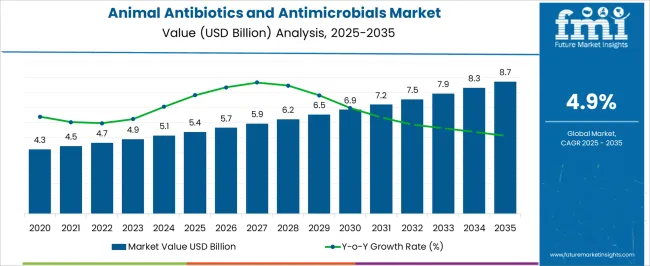
In 2025, the animal antibiotics and antimicrobials market was valued at USD 5.4 billion. Based on Future Market Insights' analysis, demand for animal antibiotics and antimicrobials is estimated to grow to USD 5.66 billion in 2026 and USD 9.16 billion by 2036. FMI projects a CAGR of 4.9% during the forecast period.
An absolute dollar growth of USD 3.50 billion between 2026 and 2036 reflects a structural shift from routine metaphylactic use toward targeted therapeutic interventions guided by diagnostic testing and veterinary oversight. Growth depends on the conversion of commodity antibiotic production to differentiated formulations offering improved bioavailability, reduced withdrawal periods, and enhanced palatability for companion animal applications. According to FMI, pharmaceutical manufacturers are capturing value not from tonnage alone but from regulatory compliance support, residue testing services, and stewardship program integration that accompany product sales.
Summary of the Animal Antibiotics and Antimicrobials Market
- Market Definition
- The market comprises antibacterial pharmaceutical products used in food-producing and companion animals for disease prevention and treatment, delivered through multiple routes and encompassing diverse drug classes with varying spectra of activity and regulatory status.
- Demand Drivers
- Expansion of intensive livestock production systems where disease transmission risk and economic consequences of outbreaks necessitate proactive veterinary intervention.
- Rising global demand for animal protein requiring efficient production with minimal disease-related losses, particularly in emerging economies with rapidly growing middle classes.
- Increasing companion animal ownership and humanization of pets driving demand for advanced veterinary pharmaceuticals comparable to human medicine standards.
- Key Segments Analyzed
- Animal Type: Food-producing animals lead, accounting for 61.2% share in 2025 due to the scale of livestock operations and economic imperative of disease prevention.
- Mode of Delivery: Injections dominate at 45.7% share, reflecting rapid bioavailability and precision dosing for acute infections.
- Product: Tetracyclines lead at 38.9% share, driven by broad-spectrum activity, cost-effectiveness, and established safety profiles.
- Geography: Asia Pacific leads growth through livestock sector expansion; North America leads value through premium pricing and advanced formulations.
- Analyst Opinion at FMI
- Sabyasachi Ghosh, Principal Consultant for Healthcare at Future Market Insights, observes: “In this updated analysis, we see the animal antibiotics market navigating a fundamental tension between rising protein demand and antimicrobial resistance concerns. The 61.2% share held by food-producing animals reflects the scale of this challenge billions of animals requiring health management, yet under regulatory frameworks that increasingly restrict antibiotic use. The industry response has been a pivot toward precision diagnostics, species-specific formulations, and stewardship programs that document responsible use. Companies that succeed will be those that help producers maintain animal health while satisfying regulators, consumers, and retailers demanding antibiotic stewardship.”
- Strategic Implications / Executive Takeaways
- Develop companion diagnostic platforms that enable targeted antibiotic therapy based on pathogen identification and susceptibility testing, reducing empiric use and supporting stewardship claims.
- Invest in formulation science to improve palatability, reduce injection site reactions, and enable combination products that simplify treatment regimens.
- Expand technical service programs that help livestock producers implement antimicrobial stewardship protocols, building long-term relationships beyond product supply.
- Methodology
- Built on primary interviews with veterinary pharmaceutical manufacturers and livestock producers.
- Benchmarked against livestock population data and antimicrobial consumption surveillance reports.
- Validated using shipment audit data and internal peer review as per FMI modelling standards.
The World Organisation for Animal Health has reported that 75 countries have specific regulations governing antimicrobial use in livestock, with many implementing bans on growth promotion uses. This regulatory evolution has fundamentally restructured the market, creating demand for veterinary prescription models and diagnostic-guided treatment protocols that ensure responsible use while maintaining animal health and productivity.
China leads global expansion with a projected CAGR of 6.6%, supported by consolidation of livestock production into large-scale integrated operations, government initiatives to modernize veterinary infrastructure, and increasing adoption of Western-style animal health management practices. India follows at 6.1% CAGR, driven by expanding dairy and poultry sectors, rising awareness of zoonotic disease prevention, and government programs to improve veterinary service delivery in rural areas. Germany grows at 5.6% CAGR on the back of stringent antibiotic reduction targets, strong veterinary oversight, and early adoption of precision livestock farming technologies.
Mature markets such as the United States and the United Kingdom generate comparatively slower expansion where demand is shaped primarily by product substitution toward premium formulations and stewardship-compliant products rather than volume growth. The U.S. market shows a 4.2% CAGR supported by large-scale animal agriculture and continued need for therapeutic interventions, while the UK at 4.7% CAGR demonstrates steady demand through National Health Service-aligned veterinary prescribing protocols.
Animal Antibiotics and Antimicrobials Market Definition
The animal antibiotics and antimicrobials market covers the global supply of pharmaceutical products used to prevent and treat bacterial infections in food-producing animals including cattle, swine, poultry, and aquaculture species, as well as companion animals such as dogs, cats, and horses. These products encompass multiple drug classes including tetracyclines, penicillins, macrolides, fluoroquinolones, and others, delivered through various routes including injection, oral solution, oral powder, and feed premix. They are used across veterinary practices, livestock operations, and aquaculture facilities to maintain animal health, prevent disease outbreaks, and ensure food safety and security.
Market Inclusions
The report includes global and regional market size estimates in value terms, with a forecast period from 2026 to 2036. It provides segmentation by Animal Type, Mode of Delivery, Product, and Region. The analysis incorporates manufacturing technology trends, formulation science advancements, regulatory compliance requirements, and antimicrobial resistance surveillance data. Regional demand dynamics, country level growth rates, and competitive positioning are also evaluated as per FMI methodology.
Market Exclusions
The scope excludes vaccines and immunological products that stimulate active immunity rather than providing direct antimicrobial activity. It also excludes antifungal and antiviral products when sold separately from antibacterial agents. Medicated feed additives used exclusively for growth promotion in jurisdictions where such uses remain permitted are not considered due to their distinct regulatory and market positioning. Over-the-counter antibiotic sales in markets without veterinary prescription requirements are excluded from market size calculations due to data reliability concerns.
Research Methodology
- Primary Research: Interviews were conducted with veterinary pharmaceutical manufacturers, livestock producers, companion animal practitioners, and regulatory affairs consultants.
- Desk Research: Public company filings, antimicrobial resistance surveillance reports, veterinary drug registration databases, and animal health industry association publications were reviewed.
- Market Sizing and Forecasting: A hybrid top down and bottom up model was constructed, reconstructing demand from livestock population data, disease incidence estimates, and per animal pharmaceutical consumption patterns.
- Data Validation and Update Cycle: Outputs were subjected to variance testing against production shipment data, trade flow benchmarking under relevant HS codes, and structured internal review prior to publication.
Animal Antibiotics and Antimicrobials Market Drivers, Restraints, and Opportunities
The market has historically functioned as a volume-driven commodity business where antibiotics were incorporated into feed for growth promotion and disease prevention with minimal veterinary oversight. Its baseline scale is anchored in the fundamental requirement to maintain health in intensive livestock production systems where disease transmission risk is amplified by animal density.
FMI analysts observe a fundamental restructuring of the market as regulatory frameworks worldwide restrict metaphylactic use and mandate veterinary oversight. This has bifurcated the market into commodity products facing volume declines in regulated markets and premium products serving therapeutic applications with documented efficacy and stewardship compatibility.
- WOAH antimicrobial use regulations: The World Organisation for Animal Health has reported that 75 countries have specific regulations governing antimicrobial use in livestock, with many implementing bans on growth promotion uses. This regulatory evolution has fundamentally restructured the market, creating demand for veterinary prescription models and diagnostic-guided treatment protocols that ensure responsible use while maintaining animal health and productivity.
- European Union veterinary medicinal product regulation: The EU's 2022 implementation of Regulation 2019/6 eliminated metaphylactic use of antimicrobials and restricted prophylactic use to exceptional circumstances. This regulatory framework has become a model for other regions, with Latin American and Asian countries adopting similar approaches that favor therapeutic use over routine prevention.
- U.S. FDA Guidance 263 implementation: The U.S. Food and Drug Administration's completion of Guidance 263 transitioned remaining over-the-counter medically important antimicrobials to prescription status, completing the phase-out of growth promotion uses initiated under Guidance 213. This has standardized veterinary oversight across all medically important antimicrobials in food-producing animals.
- China's antimicrobial reduction initiative: China's Ministry of Agriculture and Rural Affairs has implemented a National Action Plan to Reduce Antimicrobial Resistance, including targets for reducing antibiotic use in livestock production and enhancing veterinary oversight. These initiatives create demand for alternative health management approaches while supporting growth of products compatible with stewardship programs.
Segmental Analysis
Animal Antibiotics and Antimicrobials Market Analysis by Mode of Delivery
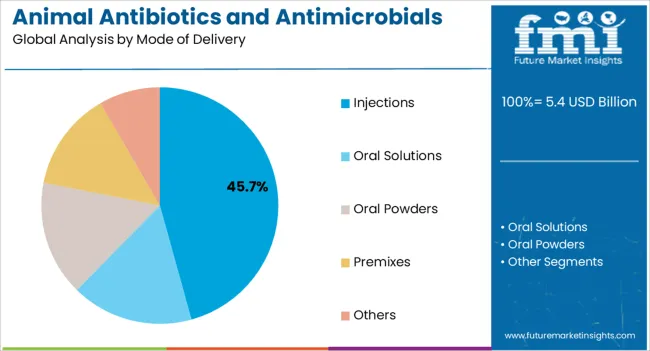
Injections account for 45.7% of the animal antibiotics and antimicrobials market, reflecting the critical role of parenteral administration in treating acute infections where rapid therapeutic effect is essential.
This dominance is reinforced by the precision dosing achievable with injectable formulations, the ability to treat individual animals rather than groups, and the suitability for valuable food-producing and companion animals where individualized care is economically justified.
- Long-acting formulation development: Pharmaceutical manufacturers have developed long-acting injectable formulations that maintain therapeutic concentrations for extended periods, reducing handling stress and labor requirements. These formulations command premium pricing while improving treatment compliance.
- Combination product innovation: Injectable combination products incorporating multiple antimicrobial classes or combining antimicrobials with anti-inflammatory agents simplify treatment regimens and address polymicrobial infections common in respiratory disease complexes.
- Oral delivery alternatives: Oral solutions, powders, and premises collectively represent the volume segment of the market, enabling group medication through water or feed. These routes are essential for disease prevention and metaphylaxis where individual animal handling is impractical.
- Palatability enhancement: Oral formulations for companion animals have benefited from palatability enhancement technologies that improve acceptance, ensuring treatment completion and therapeutic success.
Animal Antibiotics and Antimicrobials Market Analysis by Product
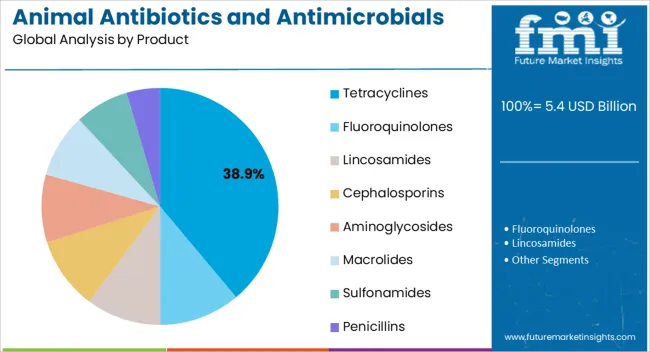
Tetracyclines lead the product segment with 38.9% market share, reflecting their broad-spectrum activity against Gram-positive and Gram-negative bacteria, established safety profiles, and cost-effectiveness that makes them accessible across all production systems. Tetracyclines remain essential for respiratory disease control in cattle and swine, enteric infection management, and as first-line therapy for numerous conditions pending diagnostic confirmation.
- Generic competition impact: Patent expirations on major tetracycline formulations have created robust generic markets that maintain product availability at accessible price points while reducing margins for originator companies.
- Next-generation tetracycline development: Pharmaceutical companies have developed next-generation tetracyclines with improved activity against resistant organisms, providing therapeutic options for challenging infections while commanding premium pricing.
- Fluoroquinolone positioning: Fluoroquinolones maintain an important niche for treating infections where resistance to older classes limits therapeutic options. Regulatory restrictions on fluoroquinolone use in food-producing animals have concentrated their application in companion animal medicine.
- Macrolide specialization: Macrolide antibiotics have become essential for respiratory disease control in cattle and swine, with specialized formulations developed for these indications based on tissue distribution and persistence profiles.
- Penicillin and amoxicillin volume: Penicillins and amoxicillin maintain substantial volume through broad-spectrum activity and safety, with formulations optimized for both food-producing and companion animal applications.
Animal Antibiotics and Antimicrobials Market Analysis by Animal Type
Based on FMI's animal antibiotics and antimicrobials market report, demand for food-producing animal applications remains the leading category, capturing 61.2% of the market share.
The scale of global livestock production sustains this dominance, with billions of animals requiring health management across cattle, swine, poultry, and aquaculture sectors. The economic imperative of disease prevention in intensive production systems where outbreaks can result in catastrophic losses drives sustained demand despite regulatory restrictions.
- Poultry sector expansion: Global poultry production continues to expand as the most efficient converter of feed to protein, with broiler production concentrated in large-scale integrated operations requiring comprehensive health management programs including antibiotic interventions when necessary.
- Swine industry restructuring: African swine fever outbreaks across Asia and Europe have fundamentally restructured swine production, with repopulated herds managed under enhanced biosecurity and health protocols that include strategic antibiotic use for disease control.
- Aquaculture growth: Aquaculture has become the fastest-growing animal protein sector, with disease management in intensive fish and shrimp production requiring antibiotic interventions that meet both efficacy and environmental safety standards.
- Companion animal premiumization: While smaller in volume, companion animal applications represent the premium segment of the market, with pet owners willing to invest in advanced pharmaceutical products comparable to human medicine standards. This segment drives innovation in palatable formulations and novel drug classes.
Regional Analysis
The animal antibiotics and antimicrobials market is segmented geographically across North America, Europe, Asia Pacific, Latin America, and Middle East and Africa. Growth dynamics differ based on livestock production intensity, regulatory framework maturity, veterinary infrastructure development, and antimicrobial resistance awareness.
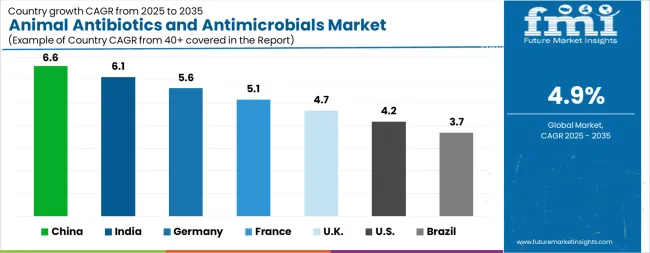
| Country | CAGR 2026 to 2036 |
|---|---|
| China | 6.6% |
| India | 6.1% |
| Germany | 5.6% |
| France | 5.1% |
| United Kingdom | 4.7% |
| United States | 4.2% |
| Brazil | 3.7% |
Source: Future Market Insights analysis, based on proprietary forecasting model and primary research
North America Market Analysis
North America represents a mature but innovative regional market characterized by large-scale livestock production, strong veterinary infrastructure, and progressive antimicrobial stewardship frameworks. The region's market is shaped by FDA oversight of medically important antimicrobials and retailer-led antibiotic use policies.
- United States: The United States animal antibiotics and antimicrobials market is forecasted to advance at 4.2% CAGR through 2036. Growth is driven by sustained demand for therapeutic interventions in large-scale cattle feedlots, swine production facilities, and poultry operations, balanced against declining volumes from growth promotion use elimination. The FDA's completion of Guidance 263 has standardized veterinary oversight requirements, creating demand for veterinary services and diagnostic support that accompany pharmaceutical sales.
USA livestock producers have adapted to regulatory changes through enhanced biosecurity, vaccination programs, and precision antibiotic use guided by diagnostic testing. These adaptations maintain animal health while reducing overall antibiotic consumption, shifting market value from volume to premium therapeutic products. - Canada: The Canadian market operates under harmonized regulatory frameworks with the U.S., including prescription status for all medically important antimicrobials. Canadian livestock production concentrated in cattle, swine, and poultry sectors generates sustained demand for therapeutic interventions managed through veterinary oversight.
Europe Market Analysis
Europe functions as the global leader in antimicrobial stewardship policy, with regulatory frameworks that have eliminated growth promotion uses and restricted prophylactic applications. The region's market is characterized by declining antibiotic volumes but stable or increasing value through premium product adoption.
- Germany: Germany leads the European market with projected 5.6% CAGR through 2036, supported by the country's large-scale livestock production, strong veterinary infrastructure, and early adoption of antibiotic reduction targets. German producers have achieved substantial reductions in antibiotic use through enhanced management practices while maintaining productivity, creating demand for diagnostic services and precision treatment protocols.
The German antibiotic minimization concept implemented in 2014 requires regular benchmarking of antibiotic use, creating incentives for producers to adopt products and practices that minimize treatment frequency while ensuring animal health. This regulatory environment favors premium formulations with demonstrated efficacy. - France: France demonstrates 5.1% CAGR through 2036, reflecting the country's significant livestock sector and national antibiotic reduction initiatives. The French Ecoantibio plan has achieved substantial reductions in antibiotic use while supporting innovation in alternatives and precision treatment approaches.
- United Kingdom: The United Kingdom market grows at 4.7% CAGR, shaped by the Veterinary Medicines Directorate's oversight of antimicrobial use and retailer-led antibiotic policies. UK livestock producers have reduced antibiotic use substantially while maintaining productivity, creating demand for diagnostic services and targeted therapeutic products.
Asia Pacific Market Analysis
Asia Pacific represents the fastest-growing regional market for animal antibiotics and antimicrobials, driven by rapid expansion of livestock production, increasing protein demand from growing middle classes, and modernization of veterinary infrastructure.
- China: China leads Asia Pacific growth with projected 6.6% CAGR through 2036, supported by consolidation of livestock production into large-scale integrated operations, government initiatives to modernize veterinary infrastructure, and increasing adoption of Western-style animal health management practices. China's National Action Plan to Reduce Antimicrobial Resistance has established targets for antibiotic reduction while supporting development of veterinary services and diagnostic capacity.
Chinese livestock producers are transitioning from traditional extensive production to modern intensive systems requiring comprehensive health management programs. This transition creates demand for veterinary pharmaceuticals while regulatory evolution shapes product preferences toward stewardship-compliant formulations. - India: India demonstrates 6.1% CAGR through 2036, driven by expanding dairy and poultry sectors serving growing domestic demand, rising awareness of zoonotic disease prevention, and government programs to improve veterinary service delivery in rural areas. India's livestock sector remains fragmented but is gradually consolidating, creating opportunities for organized veterinary pharmaceutical distribution.
- Japan: Japan maintains a mature market with steady growth supported by advanced veterinary infrastructure and rigorous regulatory oversight. Japanese livestock production, while smaller in scale than regional neighbors, maintains high health standards through comprehensive veterinary programs.
Competitive Aligners for Market Players
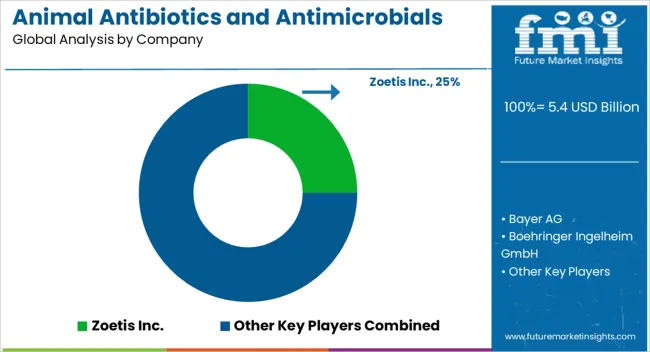
The animal antibiotics and antimicrobials market is consolidated with Zoetis Inc., Boehringer Ingelheim, Elanco Animal Health, and Merck & Co., Inc. representing the largest global players. These companies maintain comprehensive product portfolios spanning multiple drug classes and delivery formats, supported by extensive technical service organizations.
The competitive landscape has been shaped by strategic divestitures and acquisitions as companies focus on animal health portfolios. Elanco Animal Health's acquisition of Bayer's animal health business in 2020 created a strengthened competitor with expanded product range and geographic reach.
Buyer behavior in this market reflects the influence of veterinary professionals, livestock producer economics, and regulatory requirements. Large-scale producers make purchasing decisions based on product efficacy, technical support, and compatibility with stewardship programs, while companion animal practitioners emphasize safety and palatability.
Recent Developments
- Elanco Animal Health Portfolio Expansion: Elanco has expanded its companion animal product portfolio through development of novel formulations and strategic acquisitions targeting the premium pet health segment.
- Zoetis Diagnostic Integration: Zoetis has integrated diagnostic capabilities with pharmaceutical sales, offering producers comprehensive health management solutions combining testing and treatment.
- Boehringer Ingelheim Research Investment: Boehringer Ingelheim has maintained research investment in novel antimicrobial classes and alternatives including vaccines and immune modulators.
Key Players in the Animal Antibiotics and Antimicrobials Market
- Zoetis Inc.
- Bayer AG
- Boehringer Ingelheim GmbH
- Ceva Santé Animale
- Dechra Pharmaceuticals PLC
- Eli Lilly and Company
- Merck & Co., Inc.
- Elanco Animal Health
Scope of Report
| Metric | Value |
|---|---|
| Quantitative Units | USD 5.66 billion 2026 to USD 9.16 billion 2036 at a CAGR of 4.9% |
| Market Definition | The animal antibiotics and antimicrobials market comprises the global supply of antibacterial pharmaceutical products used in food-producing and companion animals for disease prevention and treatment, delivered through multiple routes and encompassing diverse drug classes with varying spectra of activity and regulatory status. |
| Animal Type Segmentation | Food-Producing Animals, Companion Animals |
| Mode of Delivery Segmentation | Injections, Oral Solutions, Oral Powders, Premixes, Others |
| Product Segmentation | Tetracyclines, Fluoroquinolones, Lincosamides, Cephalosporins, Aminoglycosides, Macrolides, Sulfonamides, Penicillins |
| Region Segmentation | North America, Europe, Asia Pacific, Latin America, Middle East and Africa |
| Countries Covered | United States, Canada, Germany, United Kingdom, France, Italy, Spain, China, India, Japan, South Korea, Brazil and 40 plus countries |
| Key Companies Profiled | Zoetis Inc., Bayer AG, Boehringer Ingelheim GmbH, Ceva Santé Animale, Dechra Pharmaceuticals PLC, Eli Lilly and Company, Merck & Co., Inc., Elanco Animal Health |
| Forecast Period | 2026 to 2036 |
| Approach | Hybrid top down and bottom up market modeling validated through primary interviews with veterinary pharmaceutical manufacturers, livestock producers, and regulatory affairs consultants supported by trade benchmarking and livestock population analysis |
Animal Antibiotics and Antimicrobials Market Analysis by Segments
Animal Type
- Food-Producing Animals
- Companion Animals
Mode of Delivery
- Injections
- Oral Solutions
- Oral Powders
- Premixes
- Others
Product
- Tetracyclines
- Fluoroquinolones
- Lincosamides
- Cephalosporins
- Aminoglycosides
- Macrolides
- Sulfonamides
- Penicillins
Region
- North America (USA, Canada, Mexico)
- Latin America (Brazil, Chile, Rest of Latin America)
- Western Europe (Germany, UK, Italy, Spain, France, Nordic, BENELUX, Rest of Western Europe)
- Eastern Europe (Russia, Poland, Hungary, Balkan and Baltic, Rest of Eastern Europe)
- East Asia (China, Japan, South Korea)
- South Asia and Pacific (India, ASEAN, Australia and New Zealand, Rest of South Asia and Pacific)
- Middle East and Africa (Kingdom of Saudi Arabia, Other GCC Countries, Turkiye, South Africa, Other African Union, Rest of Middle East and Africa)
Bibliography
- [1] World Organisation for Animal Health. (2024). Annual Report on Antimicrobial Agents Intended for Use in Animals. Paris: WOAH.
- [2] European Commission. (2022). Regulation (EU) 2019/6 on Veterinary Medicinal Products Implementation Report. Brussels: EC.
- [3] U.S. Food and Drug Administration. (2023). Guidance for Industry 263 Implementation Status Report. Silver Spring, MD: FDA.
- [4] Ministry of Agriculture and Rural Affairs, People's Republic of China. (2024). National Action Plan to Reduce Antimicrobial Resistance in Animal Agriculture. Beijing: MARA.
- [5] Zoetis Inc. (2024). Annual Report 2024: Animal Health Business Performance. Parsippany, NJ: Zoetis.
- [6] Elanco Animal Health. (2024). Sustainability Report 2024: Antimicrobial Stewardship Progress. Greenfield, IN: Elanco.
- [7] World Health Organization. (2024). Global Antimicrobial Resistance Surveillance System Report. Geneva: WHO.
- [8] Food and Agriculture Organization. (2025). Livestock Production and Health Statistics. Rome: FAO.
- [9] European Medicines Agency. (2024). European Surveillance of Veterinary Antimicrobial Consumption Report. Amsterdam: EMA.
- [10] Centers for Disease Control and Prevention. (2024). Antibiotic Resistance Threats in the United States. Atlanta: CDC.
This Report Addresses
- Market intelligence to enable structured strategic decision making across veterinary pharmaceutical manufacturers, livestock producers, and animal health investors.
- Market size estimation and 10 year revenue forecasts from 2026 to 2036 including validated CAGR and absolute dollar opportunity sizing.
- Growth opportunity mapping across Animal Type, Mode of Delivery, Product, and regional demand pockets with emphasis on stewardship-compliant formulations and precision treatment approaches.
- Segment and regional forecasting covering food-producing and companion animal applications alongside demand trajectories across injection, oral, and premix delivery formats.
- Competition strategy assessment including formulation innovation, diagnostic integration, and technical service capability shaping producer and veterinary preferences.
- Product and compliance tracking focused on bioavailability enhancement, withdrawal period optimization, and regulatory dossier development.
- Regulatory impact analysis covering WOAH antimicrobial use guidelines, FDA oversight frameworks, and national antibiotic reduction initiatives influencing market access and product positioning.
- Report delivery in PDF, Excel, and presentation ready formats to support executive planning, product development alignment, and market entry strategy development.
Frequently Asked Questions
How large is the demand for animal antibiotics and antimicrobials in the global market in 2026?
Demand for animal antibiotics and antimicrobials is estimated to be valued at USD 5.66 billion in 2026.
What will be the market size of animal antibiotics and antimicrobials in the global market by 2036?
Market size for animal antibiotics and antimicrobials is projected to reach USD 9.16 billion by 2036.
What is the expected demand growth for animal antibiotics and antimicrobials between 2026 and 2036?
Demand for animal antibiotics and antimicrobials is expected to grow at a 4.9% CAGR between 2026 and 2036.
Which animal type segment is poised to lead global sales?
Food-producing animals are expected to remain the leading animal type segment, anchored by the scale of livestock operations and economic imperative of disease prevention, holding 61.2% share in 2025.
Which mode of delivery segment dominates the animal antibiotics and antimicrobials market?
Injections dominate at 45.7% share in 2025, reflecting rapid bioavailability and precision dosing for acute infections in both food-producing and companion animals.
Which product segment leads the animal antibiotics and antimicrobials market?
Tetracyclines lead at 38.9% share in 2025, driven by broad-spectrum activity, cost-effectiveness, and established safety profiles across multiple species.
What is driving demand in China?
Consolidation of livestock production into large-scale integrated operations, government initiatives to modernize veterinary infrastructure, and adoption of Western-style animal health management practices are driving demand in China.
What is China's growth outlook in this report?
China is projected to expand at a 6.6% CAGR during 2026 to 2036.
What is driving demand in India?
Expanding dairy and poultry sectors serving growing domestic demand, rising awareness of zoonotic disease prevention, and government programs to improve veterinary service delivery in rural areas are driving demand in India.
What is India's growth outlook in this report?
India is projected to expand at a 6.1% CAGR during 2026 to 2036.
What is driving demand in Germany?
Large-scale livestock production, strong veterinary infrastructure, early adoption of antibiotic reduction targets, and regulatory frameworks favoring precision treatment protocols are driving demand in Germany.
What is Germany's growth outlook in this report?
Germany is projected to expand at a 5.6% CAGR during 2026 to 2036.
Does the report cover the United Kingdom in its regional analysis?
Yes, the United Kingdom is included within Europe under the regional coverage framework.
What is the United Kingdom's growth outlook in this report?
The United Kingdom is projected to expand at a 4.7% CAGR during 2026 to 2036.
What is driving demand in the United States?
Large-scale cattle feedlots, swine production facilities, poultry operations, and transition to veterinary oversight models following FDA Guidance 263 implementation are driving demand in the United States.
What is the United States growth outlook in this report?
The United States is projected to expand at a 4.2% CAGR during 2026 to 2036.
Does the report cover France in its regional analysis?
Yes, France is included within Europe under the regional coverage framework.
What is France's growth outlook in this report?
France is projected to expand at a 5.1% CAGR during 2026 to 2036.
Does the report cover Brazil in its regional analysis?
Yes, Brazil is included within Latin America and is covered in the country wise assessment.
What is Brazil's growth outlook in this report?
Brazil is projected to expand at a 3.7% CAGR during 2026 to 2036.
What are animal antibiotics and antimicrobials and what are they mainly used for?
Animal antibiotics and antimicrobials are pharmaceutical products used to prevent and treat bacterial infections in food-producing animals including cattle, swine, poultry, and aquaculture species, as well as companion animals such as dogs, cats, and horses. They are mainly used to maintain animal health, prevent disease outbreaks, and ensure food safety and security.
What does the animal antibiotics and antimicrobials market mean in this report?
It refers to the global supply of antibacterial pharmaceutical products for animals by animal type, mode of delivery, product, and region, measured in value terms at the manufacturer shipment layer.
What is included in the scope of this animal antibiotics and antimicrobials market report?
Scope includes market sizing and forecasting for 2026 to 2036, segmentation by animal type, mode of delivery, product, and region, along with competitive assessment, regulatory impact analysis, and country wise outlook.
What is excluded from the scope of this report?
The scope excludes vaccines and immunological products, antifungal and antiviral products when sold separately, medicated feed additives for growth promotion in jurisdictions where permitted, and over-the-counter sales without prescription.
How are regulatory developments shaping the animal antibiotics and antimicrobials market?
Regulatory developments including WOAH antimicrobial use guidelines, EU veterinary medicinal product regulations, FDA oversight frameworks, and national antibiotic reduction initiatives are shifting competitive advantage from volume-driven commodity sales to stewardship-compliant formulations supported by diagnostic integration and technical service capabilities.
Preview the report firsthand - request a free sample
Get SampleGet the brochure for pricing and purchase details.
Get PDFTable of Content
- Executive Summary
- Global Market Outlook
- Demand-side Trends
- Supply-side Trends
- Technology Roadmap Analysis
- Analysis and Recommendations
- Market Overview
- Market Coverage / Taxonomy
- Market Definition / Scope / Limitations
- Research Methodology
- Chapter Orientation
- Analytical Lens and Working Hypotheses
- Market Structure, Signals, and Trend Drivers
- Benchmarking and Cross-market Comparability
- Market Sizing, Forecasting, and Opportunity Mapping
- Research Design and Evidence Framework
- Desk Research Programme (Secondary Evidence)
- Company Annual and Sustainability Reports
- Peer-reviewed Journals and Academic Literature
- Corporate Websites, Product Literature, and Technical Notes
- Earnings Decks and Investor Briefings
- Statutory Filings and Regulatory Disclosures
- Technical White Papers and Standards Notes
- Trade Journals, Industry Magazines, and Analyst Briefs
- Conference Proceedings, Webinars, and Seminar Materials
- Government Statistics Portals and Public Data Releases
- Press Releases and Reputable Media Coverage
- Specialist Newsletters and Curated Briefings
- Sector Databases and Reference Repositories
- FMI Internal Proprietary Databases and Historical Market Datasets
- Subscription Datasets and Paid Sources
- Social Channels, Communities, and Digital Listening Inputs
- Additional Desk Sources
- Expert Input and Fieldwork (Primary Evidence)
- Primary Modes
- Qualitative Interviews and Expert Elicitation
- Quantitative Surveys and Structured Data Capture
- Blended Approach
- Why Primary Evidence is Used
- Field Techniques
- Interviews
- Surveys
- Focus Groups
- Observational and In-context Research
- Social and Community Interactions
- Stakeholder Universe Engaged
- C-suite Leaders
- Board Members
- Presidents and Vice Presidents
- R&D and Innovation Heads
- Technical Specialists
- Domain Subject-matter Experts
- Scientists
- Physicians and Other Healthcare Professionals
- Governance, Ethics, and Data Stewardship
- Research Ethics
- Data Integrity and Handling
- Primary Modes
- Tooling, Models, and Reference Databases
- Desk Research Programme (Secondary Evidence)
- Data Engineering and Model Build
- Data Acquisition and Ingestion
- Cleaning, Normalisation, and Verification
- Synthesis, Triangulation, and Analysis
- Quality Assurance and Audit Trail
- Market Background
- Market Dynamics
- Drivers
- Restraints
- Opportunity
- Trends
- Scenario Forecast
- Demand in Optimistic Scenario
- Demand in Likely Scenario
- Demand in Conservative Scenario
- Opportunity Map Analysis
- Product Life Cycle Analysis
- Supply Chain Analysis
- Investment Feasibility Matrix
- Value Chain Analysis
- PESTLE and Porter’s Analysis
- Regulatory Landscape
- Regional Parent Market Outlook
- Production and Consumption Statistics
- Import and Export Statistics
- Market Dynamics
- Global Market Analysis 2021 to 2025 and Forecast, 2026 to 2036
- Historical Market Size Value (USD Million) Analysis, 2021 to 2025
- Current and Future Market Size Value (USD Million) Projections, 2026 to 2036
- Y-o-Y Growth Trend Analysis
- Absolute $ Opportunity Analysis
- Global Market Pricing Analysis 2021 to 2025 and Forecast 2026 to 2036
- Global Market Analysis 2021 to 2025 and Forecast 2026 to 2036, By Mode of Delivery
- Introduction / Key Findings
- Historical Market Size Value (USD Million) Analysis By Mode of Delivery , 2021 to 2025
- Current and Future Market Size Value (USD Million) Analysis and Forecast By Mode of Delivery , 2026 to 2036
- Injections
- Oral Solutions
- Oral Powders
- Premixes
- Injections
- Y-o-Y Growth Trend Analysis By Mode of Delivery , 2021 to 2025
- Absolute $ Opportunity Analysis By Mode of Delivery , 2026 to 2036
- Global Market Analysis 2021 to 2025 and Forecast 2026 to 2036, By Product
- Introduction / Key Findings
- Historical Market Size Value (USD Million) Analysis By Product, 2021 to 2025
- Current and Future Market Size Value (USD Million) Analysis and Forecast By Product, 2026 to 2036
- Tetracycline
- Fluoroquinolones
- Lincosamides
- Cephalosporins
- Tetracycline
- Y-o-Y Growth Trend Analysis By Product, 2021 to 2025
- Absolute $ Opportunity Analysis By Product, 2026 to 2036
- Global Market Analysis 2021 to 2025 and Forecast 2026 to 2036, By Region
- Introduction
- Historical Market Size Value (USD Million) Analysis By Region, 2021 to 2025
- Current Market Size Value (USD Million) Analysis and Forecast By Region, 2026 to 2036
- North America
- Latin America
- Western Europe
- Eastern Europe
- East Asia
- South Asia and Pacific
- Middle East & Africa
- Market Attractiveness Analysis By Region
- North America Market Analysis 2021 to 2025 and Forecast 2026 to 2036, By Country
- Historical Market Size Value (USD Million) Trend Analysis By Market Taxonomy, 2021 to 2025
- Market Size Value (USD Million) Forecast By Market Taxonomy, 2026 to 2036
- By Country
- USA
- Canada
- Mexico
- By Mode of Delivery
- By Product
- By Country
- Market Attractiveness Analysis
- By Country
- By Mode of Delivery
- By Product
- Key Takeaways
- Latin America Market Analysis 2021 to 2025 and Forecast 2026 to 2036, By Country
- Historical Market Size Value (USD Million) Trend Analysis By Market Taxonomy, 2021 to 2025
- Market Size Value (USD Million) Forecast By Market Taxonomy, 2026 to 2036
- By Country
- Brazil
- Chile
- Rest of Latin America
- By Mode of Delivery
- By Product
- By Country
- Market Attractiveness Analysis
- By Country
- By Mode of Delivery
- By Product
- Key Takeaways
- Western Europe Market Analysis 2021 to 2025 and Forecast 2026 to 2036, By Country
- Historical Market Size Value (USD Million) Trend Analysis By Market Taxonomy, 2021 to 2025
- Market Size Value (USD Million) Forecast By Market Taxonomy, 2026 to 2036
- By Country
- Germany
- UK
- Italy
- Spain
- France
- Nordic
- BENELUX
- Rest of Western Europe
- By Mode of Delivery
- By Product
- By Country
- Market Attractiveness Analysis
- By Country
- By Mode of Delivery
- By Product
- Key Takeaways
- Eastern Europe Market Analysis 2021 to 2025 and Forecast 2026 to 2036, By Country
- Historical Market Size Value (USD Million) Trend Analysis By Market Taxonomy, 2021 to 2025
- Market Size Value (USD Million) Forecast By Market Taxonomy, 2026 to 2036
- By Country
- Russia
- Poland
- Hungary
- Balkan & Baltic
- Rest of Eastern Europe
- By Mode of Delivery
- By Product
- By Country
- Market Attractiveness Analysis
- By Country
- By Mode of Delivery
- By Product
- Key Takeaways
- East Asia Market Analysis 2021 to 2025 and Forecast 2026 to 2036, By Country
- Historical Market Size Value (USD Million) Trend Analysis By Market Taxonomy, 2021 to 2025
- Market Size Value (USD Million) Forecast By Market Taxonomy, 2026 to 2036
- By Country
- China
- Japan
- South Korea
- By Mode of Delivery
- By Product
- By Country
- Market Attractiveness Analysis
- By Country
- By Mode of Delivery
- By Product
- Key Takeaways
- South Asia and Pacific Market Analysis 2021 to 2025 and Forecast 2026 to 2036, By Country
- Historical Market Size Value (USD Million) Trend Analysis By Market Taxonomy, 2021 to 2025
- Market Size Value (USD Million) Forecast By Market Taxonomy, 2026 to 2036
- By Country
- India
- ASEAN
- Australia & New Zealand
- Rest of South Asia and Pacific
- By Mode of Delivery
- By Product
- By Country
- Market Attractiveness Analysis
- By Country
- By Mode of Delivery
- By Product
- Key Takeaways
- Middle East & Africa Market Analysis 2021 to 2025 and Forecast 2026 to 2036, By Country
- Historical Market Size Value (USD Million) Trend Analysis By Market Taxonomy, 2021 to 2025
- Market Size Value (USD Million) Forecast By Market Taxonomy, 2026 to 2036
- By Country
- Kingdom of Saudi Arabia
- Other GCC Countries
- Turkiye
- South Africa
- Other African Union
- Rest of Middle East & Africa
- By Mode of Delivery
- By Product
- By Country
- Market Attractiveness Analysis
- By Country
- By Mode of Delivery
- By Product
- Key Takeaways
- Key Countries Market Analysis
- USA
- Pricing Analysis
- Market Share Analysis, 2025
- By Mode of Delivery
- By Product
- Canada
- Pricing Analysis
- Market Share Analysis, 2025
- By Mode of Delivery
- By Product
- Mexico
- Pricing Analysis
- Market Share Analysis, 2025
- By Mode of Delivery
- By Product
- Brazil
- Pricing Analysis
- Market Share Analysis, 2025
- By Mode of Delivery
- By Product
- Chile
- Pricing Analysis
- Market Share Analysis, 2025
- By Mode of Delivery
- By Product
- Germany
- Pricing Analysis
- Market Share Analysis, 2025
- By Mode of Delivery
- By Product
- UK
- Pricing Analysis
- Market Share Analysis, 2025
- By Mode of Delivery
- By Product
- Italy
- Pricing Analysis
- Market Share Analysis, 2025
- By Mode of Delivery
- By Product
- Spain
- Pricing Analysis
- Market Share Analysis, 2025
- By Mode of Delivery
- By Product
- France
- Pricing Analysis
- Market Share Analysis, 2025
- By Mode of Delivery
- By Product
- India
- Pricing Analysis
- Market Share Analysis, 2025
- By Mode of Delivery
- By Product
- ASEAN
- Pricing Analysis
- Market Share Analysis, 2025
- By Mode of Delivery
- By Product
- Australia & New Zealand
- Pricing Analysis
- Market Share Analysis, 2025
- By Mode of Delivery
- By Product
- China
- Pricing Analysis
- Market Share Analysis, 2025
- By Mode of Delivery
- By Product
- Japan
- Pricing Analysis
- Market Share Analysis, 2025
- By Mode of Delivery
- By Product
- South Korea
- Pricing Analysis
- Market Share Analysis, 2025
- By Mode of Delivery
- By Product
- Russia
- Pricing Analysis
- Market Share Analysis, 2025
- By Mode of Delivery
- By Product
- Poland
- Pricing Analysis
- Market Share Analysis, 2025
- By Mode of Delivery
- By Product
- Hungary
- Pricing Analysis
- Market Share Analysis, 2025
- By Mode of Delivery
- By Product
- Kingdom of Saudi Arabia
- Pricing Analysis
- Market Share Analysis, 2025
- By Mode of Delivery
- By Product
- Turkiye
- Pricing Analysis
- Market Share Analysis, 2025
- By Mode of Delivery
- By Product
- South Africa
- Pricing Analysis
- Market Share Analysis, 2025
- By Mode of Delivery
- By Product
- USA
- Market Structure Analysis
- Competition Dashboard
- Competition Benchmarking
- Market Share Analysis of Top Players
- By Regional
- By Mode of Delivery
- By Product
- Competition Analysis
- Competition Deep Dive
- Zoetis Inc
- Overview
- Product Portfolio
- Profitability by Market Segments (Product/Age /Sales Channel/Region)
- Sales Footprint
- Strategy Overview
- Marketing Strategy
- Product Strategy
- Channel Strategy
- Bayer AG
- Boehringer Ingelheim GmbH
- Ceva Santé Animale
- Dechra Pharmaceuticals PLC
- Eli Lilly and Company
- Zoetis Inc
- Competition Deep Dive
- Assumptions & Acronyms Used


