

- CAGR (2025 to 2035)
- 3.2%
USA Alpaca Fiber Market Size and Share Forecast Outlook From 2025 to 2035
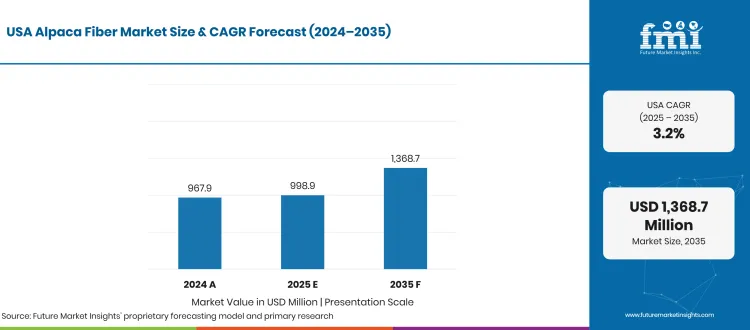
The USA alpaca fiber market is expected to expand at a CAGR of 3.2% from 2025 to 2035 and is likely to touch a size of approximately USD 1,368.7 million by the end of 2035. Growth comes from the increased adoption rates in the luxury apparel segment, expansion in the terrain of eco-friendly textiles, and technological advancement in processing techniques which improve fiber quality and yield.
| Attribute | Details |
|---|---|
| Anticipated Forecast Value (2035) | USD 1,368.7 Million |
| Value CAGR (2025 to 2035) | 3.2% |
USA Alpaca Fiber Market Introduction
The USA Alpaca Fiber Market is on the rise due to growing demand for sustainable and high-quality natural fibers in the textile industry. Soft, lightweight, thermally insulating, and durable, alpaca fiber is in great demand for luxury garments, home furnishings, and accessories. Extracted from alpacas of the Huacaya and Suri breeds, the fiber is highly versatile and eco-friendly.
Market driving factors: This market is fueled by growing consumer preference for sustainable fashion, in addition to raising awareness of animal-friendly production methods. Moreover, alpaca farming and fiber processing have been on an increase in the USA lately, as it boosts the economy of the nation and also keeps imports under check.
Top USA Alpaca Fiber Market Dynamics and Industry Trends
Rising Demand for Sustainable and Natural Textiles
Alpaca fiber is aligned with the growing demand for sustainable and eco-friendly materials:
- Eco-Friendly Practices: Alpaca farming has a low environmental footprint, as alpacas require minimal resources and produce fiber that is naturally biodegradable.
- Sustainable Fashion: Brands and designers are incorporating alpaca fiber into collections to meet consumer demand for ethical and sustainable fashion.
Growth in Luxury and High-Performance Apparel
The unique properties of alpaca fiber make it ideal for premium and functional clothing:
- Thermal Insulation: Alpaca fiber provides excellent warmth, making it suitable for winter wear.
- Lightweight and Soft Texture: Preferred in luxury scarves, sweaters, and blankets.
- Moisture-Wicking and Hypoallergenic: Ideal for performance wear and sensitive skin products.
Expansion in Home Furnishings
Alpaca fiber is increasingly used in home textiles due to its durability and aesthetic appeal:
- Blankets and Throws: Popular for their softness and warmth.
- Rugs and Upholstery: Valued for their natural sheen and resilience.
Increasing Focus on Domestic Alpaca Farming
The USA is witnessing a rise in alpaca farming to meet growing demand:
- Local Production: Domestic farms are focusing on sustainable practices and high-quality fiber production.
- Support for Small Farms: Programs and initiatives encourage small-scale alpaca farming, contributing to rural economies.
Technological Advancements in Fiber Processing
Innovations in processing techniques are improving the quality and scalability of alpaca fiber production:
- Dehairing Technology: Enhances the softness and uniformity of the fiber.
- Blending Techniques: Allows for the creation of unique fiber blends with wool, silk, or synthetic fibers.
Top Segments Studied in the USA Alpaca Fiber Market Report
By Fiber Type
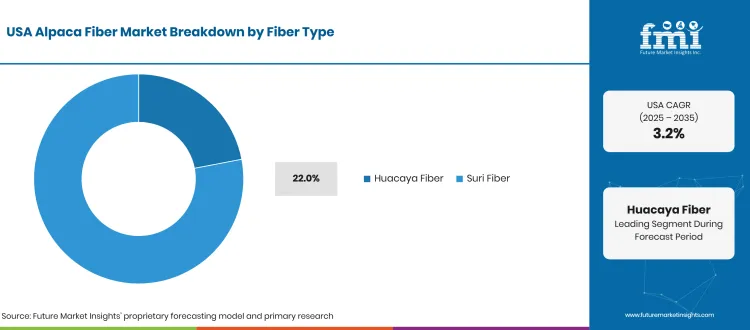
- Huacaya Fiber (70% Market Share): Known for its softness, warmth, and crimp, widely used in knitwear and woven garments.
- Suri Fiber (30% Market Share): Valued for its silky texture and luster, commonly used in luxury garments and home textiles.
By Application
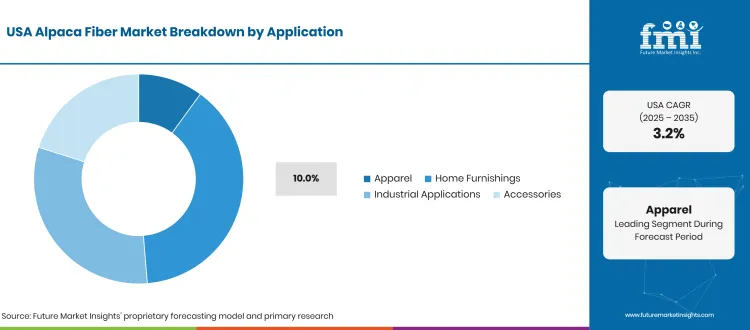
- Apparel (50% Market Share): The largest segment, driven by demand for luxury sweaters, coats, scarves, and socks.
- Home Furnishings (25% Market Share): Includes blankets, throws, rugs, and upholstery products.
- Industrial Applications (15% Market Share): Used in insulation and other functional textiles.
- Accessories (10% Market Share): Includes hats, gloves, and bags.
By Distribution Channel
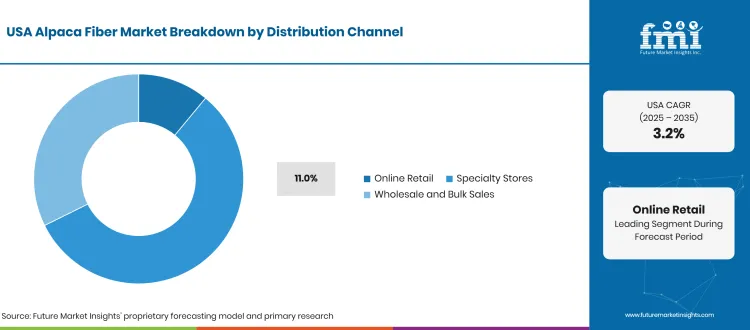
- Online Retail (40% Market Share): Growing rapidly due to consumer preference for e-commerce platforms.
- Specialty Stores (35% Market Share): Popular for curated collections of high-quality alpaca products.
- Wholesale and Bulk Sales (25% Market Share): Includes sales to designers, brands, and textile manufacturers.
Industry-Wide Growth and Trends in USA Alpaca Fiber Market
| Segment | Apparel |
|---|---|
| CAGR (2025 to 2035) | 6.5% |
| Key Drivers | Rising demand for sustainable, high-performance garments. |
| Segment | Home Furnishings |
|---|---|
| CAGR (2025 to 2035) | 5.8% |
| Key Drivers | Popularity of soft, durable, and aesthetically pleasing textiles. |
| Segment | Online Retail |
|---|---|
| CAGR (2025 to 2035) | 7.0% |
| Key Drivers | Increasing consumer preference for convenience and variety. |
Key USA Alpaca Fiber Market Players and Concentration
The USA alpaca fiber market is fragmented, with both small-scale farms and established textile brands contributing to the industry. Key players focus on sustainability, innovation, and collaborations to expand market reach.
Key Players
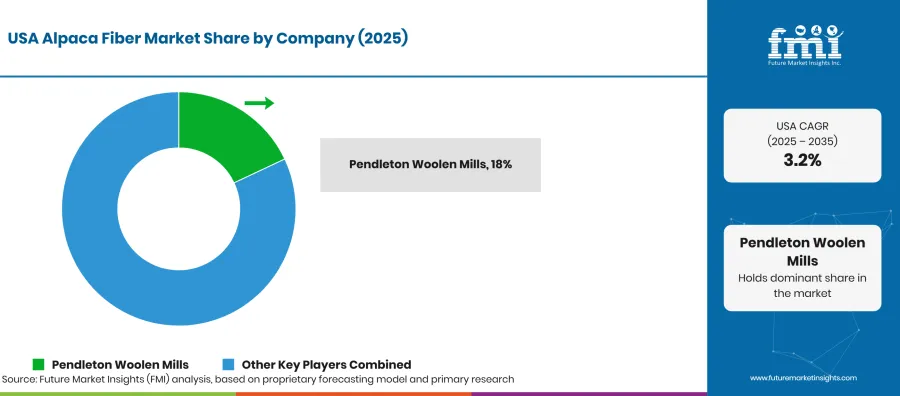
- Pendleton Woolen Mills: Incorporates alpaca fiber in premium blankets and apparel.
- Patagonia: Known for sustainable outdoor wear featuring alpaca blends.
- Peruvian Connection: A luxury brand specializing in alpaca-based fashion.
- USAlpaca: Focuses on domestic alpaca fiber production and marketing.
Small-Scale Producers
Numerous small farms across the USA contribute to local fiber production, offering unique, hand-processed, and artisan alpaca products.
Industry Updates in USA Alpaca Fiber Market
| Date | Key Development |
|---|---|
| February 2025 | Patagonia launched a new collection featuring alpaca fiber blends for winter wear. |
| June 2025 | USAlpaca announced the opening of a new processing facility to enhance domestic production. |
| August 2025 | Pendleton Woolen Mills introduced a line of alpaca fiber blankets emphasizing sustainability. |
Future Outlook for USA Alpaca Fiber Market
Expansion in Sustainable Fashion
The increasing focus on eco-friendly materials will drive the adoption of alpaca fiber in premium and mid-range fashion.
Growth in Domestic Alpaca Farming
Support for local alpaca farmers and improvements in processing infrastructure will enhance domestic supply and reduce reliance on imports.
Technological Advancements
Innovations in fiber processing and blending will open new avenues for alpaca fiber applications, including industrial textiles and insulation.
Rising Demand for Customization
Consumers’ growing interest in unique, artisan-crafted products will boost demand for custom alpaca textiles and accessories.
International Trade Opportunities
Export opportunities to regions with high demand for sustainable and luxury textiles will contribute to market growth.
USA Alpaca Fiber Market Share Analysis Segmentation
By Fiber Type:
- Huacaya Fiber
- Suri Fiber
By Application:
- Apparel
- Home Furnishings
- Industrial Applications
- Accessories
By Distribution Channel:
- Online Retail
- Specialty Stores
- Wholesale and Bulk Sales
Frequently Asked Questions
What is the projected size of the USA alpaca fiber market by 2035?
The market is expected to reach USD 1,368.7 million, growing at a CAGR of 3.2%.
Which fiber type dominates the USA alpaca fiber market?
Huacaya fiber holds the largest share, driven by its softness, warmth, and versatility.
What trends are shaping the USA alpaca fiber market?
Key trends include the rising demand for sustainable fashion, expansion in home furnishings, and technological advancements in fiber processing.
Who are the major players in the USA alpaca fiber market?
Major players include Pendleton Woolen Mills, Patagonia, Peruvian Connection, and USAlpaca.
How does the market align with sustainability goals?
Alpaca fiber aligns with sustainability goals through its low environmental impact, biodegradability, and use in eco-friendly textiles.
Preview the report firsthand - request a free sample
Get SampleGet the brochure for pricing and purchase details.
Get PDFTable of Content
- Introduction
- Market Outlook
- Key Trends
- Segment Analysis
- Industry-Wise Growth and Trends
- Market Concentration
- Industry Updates
- Future Outlook
- Frequently Asked Questions (FAQs)


