

- Industry Size (2025)
- USD 2.6 Bn
- Forecast (2035)
- USD 4.1 Bn
- CAGR (2025 to 2035)
- 4.4%
Demand for Tea Packaging in USA 2025 to 2035
The demand for tea packaging in the USA is valued at USD 2.6 billion in 2025 and is forecasted to reach USD 4.1 billion by 2035, reflecting a CAGR of 4.4%. Demand is driven by rising consumption of functional, herbal, and ready-to-brew tea products supported by wellness preferences and premiumisation trends. Brand owners prioritize packaging that preserves flavour, aroma, and product freshness, while retailers emphasize compact formats that enhance shelf utilization and logistical efficiency. Sustainability requirements continue to influence sourcing, recyclability, and reduced material weight across packaging formats.
Tea bags represent the leading packaging category due to their convenience, portion accuracy, and compatibility with automated filling, sealing, and dispensing systems. Heat-sealed filter paper, biodegradable mesh, and aluminium-lined outer packs remain widely used to protect volatile natural compounds from moisture and oxygen exposure. Value-added developments include compostable tea bags and resealable pouch systems for freshness retention.
Quick Stats for USA Tea Packaging Demand
- USA Tea Packaging Sales Value (2025): USD 2.6 billion
- USA Tea Packaging Forecast Value (2035): USD 4.1 billion
- USA Tea Packaging Forecast CAGR (2025-2035): 4.4%
- Leading Category in USA Tea Packaging Demand: Tea Bags
- Key Growth Regions in USA Tea Packaging Demand: West USA, South USA, Northeast USA
- Top Players in USA Tea Packaging Demand: FPC Flexible Packaging Corporation, Cascades Inc., Sonoco Products Company, Huhtamaki Americas, WestRock Company
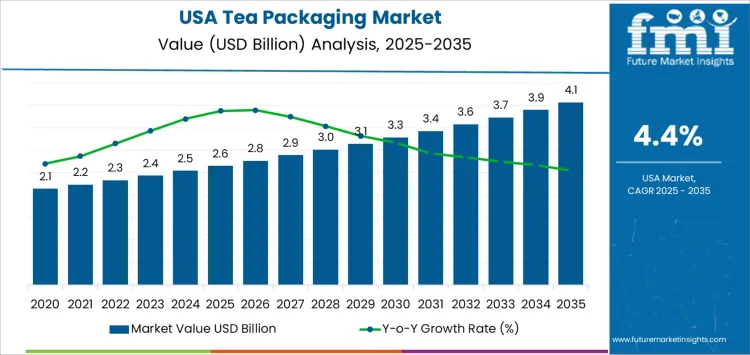
What is the Growth Forecast for Tea Packaging Industry in USA through 2035?
Demand is concentrated in the West, South, and Northeast, where large consumer bases, diversified retail networks, and higher penetration of premium packaged beverages contribute to wider product availability. Key suppliers include FPC Flexible Packaging Corporation, Cascades Inc., Sonoco Products Company, Huhtamaki Americas, and WestRock Company. Their focus areas include barrier enhancement, lighter packaging structures, and efficient forming and sealing integration for high-volume tea production lines.
Early stage growth for demand for tea packaging in the United States is supported by rising consumption of premium and specialty tea products. Brands introduce differentiated formats such as pyramid bags, compostable sachets, and resealable pouches, which drives packaging upgrades. Retail expansion through online channels increases the need for durable and visually distinctive materials that preserve aroma and freshness during shipment. These factors strengthen growth at the beginning of the forecast period.
In the later stage, growth continues but with a more moderate slope as packaging modernization reaches higher penetration. Established brands shift toward incremental enhancements like recyclability, reduced material weight, and clearer sustainability labeling. Volume growth aligns more closely with consumption patterns rather than major changes in package configuration. Private-label offerings and cost efficiency efforts introduce competitive pressures that limit strong acceleration. The curve indicates a transition from innovation-driven expansion early in the timeline to steadier replacement and compliance-driven improvements later. Demand maintains a positive trend as tea consumption remains diversified across wellness, functional ingredients, and convenience formats.
USA Tea Packaging Key Takeaways
| Metric | Value |
|---|---|
| USA Tea Packaging Sales Value (2025) | USD 2.6 billion |
| USA Tea Packaging Forecast Value (2035) | USD 4.1 billion |
| USA Tea Packaging Forecast CAGR (2025-2035) | 4.4% |
Why is the Demand for Tea Packaging in the USA Growing?
Demand for tea packaging in the USA is increasing because consumers purchase a wider range of teas including herbal blends, functional wellness teas and premium loose leaf products. Packaging plays a key role in preserving aroma, flavor and moisture stability, which is important for products containing delicate botanicals. Growth in specialty stores and online tea subscriptions encourages brands to invest in packaging that ensures product quality during shipping and storage.
Convenience formats such as single serve sachets and ready to brew pouches support on the go consumption for busy households and office workers. Resealable pouches and rigid containers are preferred for loose leaf tea because they maintain freshness when opened repeatedly. Sustainability goals across retail chains influence adoption of recyclable and biodegradable packaging materials that reduce environmental impact.
Gift oriented purchases also contribute to packaging demand, since visually appealing cartons and tins improve presentation for seasonal and premium offerings. Constraints include cost considerations for high barrier materials and competition with minimal packaging approaches used by bulk retailers. Some consumers evaluate packaging choices based on environmental claims, which requires careful labeling and material selection. Brands may choose smaller packaging runs until demand patterns stabilize for new blends or formats.
Which Product Types and Packaging Formats Lead Demand for Tea Packaging in the USA?
Demand for tea packaging in the United States reflects strong interest in convenience formats used for both hot and ready-to-drink consumption. Packaging decisions support freshness, portion control, and on-the-go use. Sustainability messaging influences labeling, material selection, and waste-reduction strategies. Growth in specialty tea varieties also drives premium visual design and moisture-barrier requirements across retail channels.
By Product Type, Tea Bags Hold the Largest Share
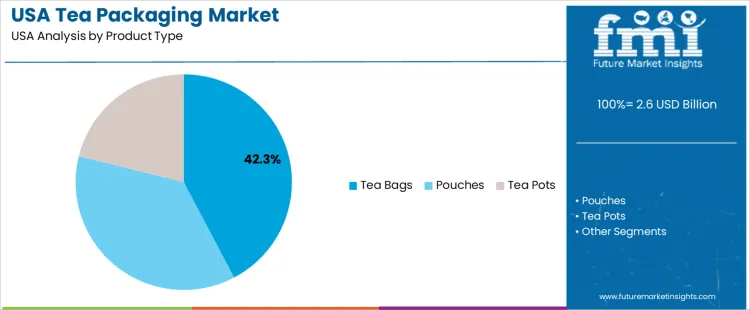
Tea bags account for 42.3%, reflecting their dominance in household and foodservice consumption due to portion consistency, fast brewing, and easy waste disposal. Their wide presence across supermarkets, club stores, and online subscriptions reinforces strong penetration in daily-use beverages. Demand also increases with wellness-focused herbal and functional blends that rely on individually wrapped sachets for aroma and ingredient protection. Pouches and teapots remain important segments but mainly serve loose-leaf premium assortments and gifting varieties. Tea bags align well with consumer expectations for affordability, convenience, and compact storage, supporting continuous use across diverse USA demographics from office environments to single-serve residential preparation.
Key Points:
- Tea bags dominate due to household penetration and convenience
- Portion control supports consistent brewing strength
- Functional and herbal blends expand usage occasions
By Packaging Type, Flexible Packaging Leads Demand
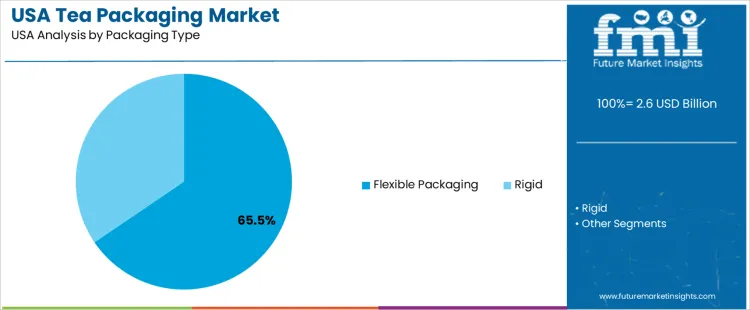
Flexible packaging holds 65.5%, driven by superior moisture, light, and oxygen protection required for maintaining leaf integrity and aroma retention. The format supports space efficiency during transport and shelf storage while enabling resealable closures that preserve freshness after opening. Flexible pouches, wraps, and sachets also offer strong branding surfaces for premium herbal and flavored teas. Rigid packaging continues in gifting and high-end loose-leaf categories but carries higher material weight and storage costs. Flexible forms align with USA distribution efficiency, sustainability goals through downgauged materials, and e-commerce compatibility where protective cushioning reduces product loss.
Key Points:
- Flexible packs lead due to barrier performance and resealability
- Cost and logistics advantages strengthen retail distribution
- Premium teas still use rigid packaging for shelf appeal
What are the Drivers, Restraints, and Key Trends of the Demand for Tea Packaging in the USA?
Growth of premium and flavored tea consumption, increased expansion of ready-to-drink formats and rising e-commerce distribution are driving demand.
In the United States, tea brands invest in packaging that maintains aroma and freshness as consumer interest expands into herbal, wellness and global-origin teas. Ready-to-drink bottles, cans and chilled teas in grocery and convenience channels generate large-volume packaging demand to support single-serve consumption away from home. Loose-leaf and specialty tea brands strengthen packaging for online sales where protection from vibration and temperature swings is essential during parcel delivery. Retailers emphasize visually appealing packaging to differentiate private-label teas in crowded beverage aisles. These product and distribution dynamics support steady procurement of flexible pouches, cartons and rigid containers designed for freshness retention.
High sustainability expectations, competition from lower-cost coffee packaging and variability in supply-chain materials restrain demand.
Shoppers increasingly expect recyclable or compostable materials, which raises packaging cost when brands convert from mixed laminates to monomaterial barriers. Coffee holds a larger share of the hot beverage category, and retail shelf-space competition forces tea brands to manage costs while preserving quality presentation. Resin and paper supply fluctuations influence lead times for flexible and paper-based packaging, challenging inventory planning. Smaller emerging brands may delay premium packaging upgrades if price-sensitive buyers prefer economical options. These cost and competitive pressures create selective adoption of advanced formats.
Shift toward monomaterial recyclable structures, increased focus on portion-ready pack designs and rising use of digital printing for customization define key trends.
Tea packaging manufacturers supply monomaterial films and paper-forward structures to align with USA retailer recycling guidelines. Single-serve sachets and stick packs expand with workplace and travel consumption, supporting freshness and portion control. Digital printing enables rapid design changes and limited-edition seasonal blends targeted at loyal buyers. QR-enabled packaging improves storytelling about sourcing regions and wellness ingredients, enhancing consumer trust. These developments indicate consistent, brand-differentiation-driven demand for tea packaging within the United States beverage industry.
Analysis of the Demand for Tea Packaging in the USA by Region
Demand for tea packaging in the United States is influenced by rising premium tea consumption, sustainable-pack formats, and broader adoption of functional teas. Growth links to packaging formats such as stand-up pouches, pyramid sachets, compostable films, and value-size cartons used by both specialty and mainstream retailers.
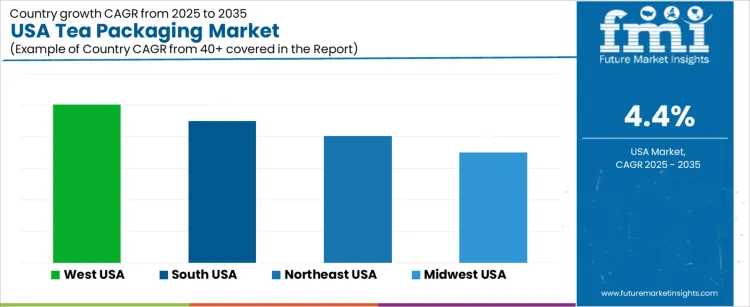
Private-label expansions and e-commerce tea subscriptions contribute to procurement volume. West USA leads at 5.0% CAGR, followed by South USA at 4.5%, Northeast USA at 4.0%, and Midwest USA at 3.5%. Distribution infrastructure, sustainability regulations, and product-differentiation needs shape regional packaging decisions.
| Region | CAGR (2025-2035) |
|---|---|
| West USA | 5.0% |
| South USA | 4.5% |
| Northeast USA | 4.0% |
| Midwest USA | 3.5% |
How is the West USA driving demand for tea packaging?
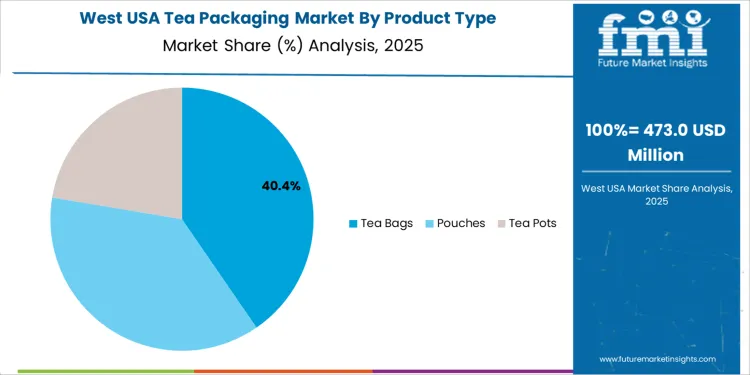
West USA demonstrates a 5.0% CAGR, driven by strong specialty-tea consumption across California, Washington, and Oregon. Consumer trends favor loose-leaf and functional herbal teas, requiring moisture-resistant pouches with high-barrier laminations. Sustainability commitments in progressive states encourage adoption of compostable films, recyclable mono-material structures, and reduced-plastic formats.
E-commerce channels serving wellness-focused consumers use lightweight packaging with enhanced sealing performance for shipping stability. Packaging suppliers located near West Coast ports benefit from streamlined material imports, including biodegradable laminates. Retailers request high-quality graphics and resealable closures to maintain aroma preservation. Procurement teams evaluate packaging integrity when used in automated filling lines for pyramid sachets and premium blends.
- Sustainability mandates accelerating recyclable-pack development
- Specialty tea retail supporting premium packaging formats
- High-barrier designs protecting flavor and freshness
- Import-linked material supply improving responsiveness
How is the South USA shaping tea-packaging procurement?
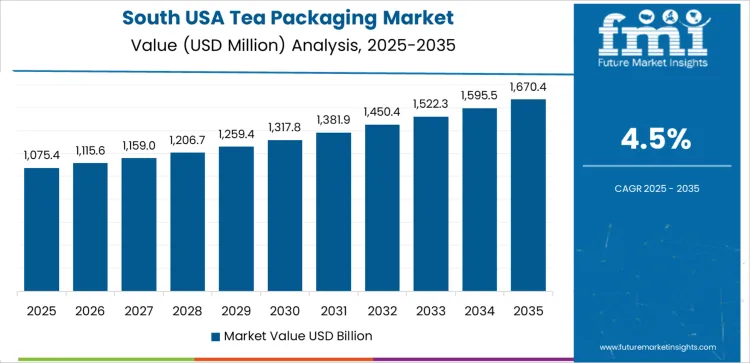
South USA grows at 4.5% CAGR, aligned with expanding retail of ready-to-brew teas and increasing bottled tea production in warm-climate regions like Texas and Florida. Volume growth for iced-tea and family-size products supports procurement of larger-format pouches and robust folding cartons suited for warehouse-club distribution. Food-service operators add tea-packaging demand through self-serve refill stations requiring durable bag-in-box and sachet supply formats.
Converters located near Gulf Coast resin centers ensure stable raw-material access supporting cost-efficient procurement. Buyers monitor seal-strength reliability for transport in heat-exposed logistics environments. Private-label programs from large retail chains accelerate SKU variations and drive competitive sourcing.
- Heat-driven beverage demand influencing packaging scale
- Food-service adoption raising bulk-format requirements
- Resin-rich supply hubs supporting material continuity
- Club-store distribution encouraging larger pack sizes
How is the Northeast USA influencing product-specification trends?
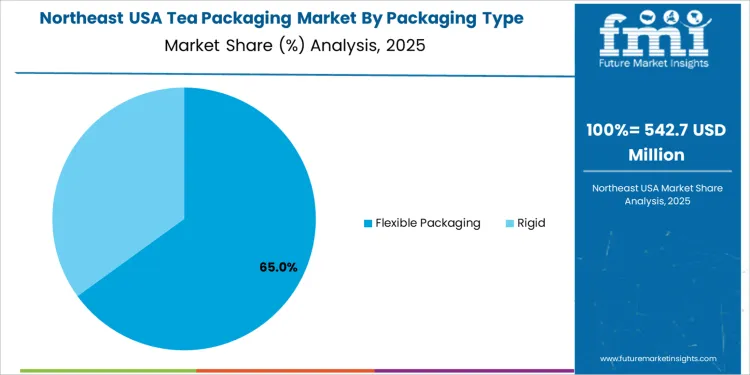
Northeast USA records 4.0% CAGR, supported by urban consumption habits in New York, New Jersey, and Massachusetts. Premium teas sold in boutique outlets and health-focused specialty stores fuel demand for decorative cartons and foil-lined pouches with advanced aroma-retention performance. Dense distribution environments favor compact packaging formats optimized for shelf efficiency. Packaging vendors emphasize traceable and compliant materials aligned with regional sustainability rules.
Seasonal tourism boosts demand spikes for functional and wellness tea assortments packaged in gift-ready configurations. Procurement teams in this region prioritize printing accuracy, tactile finishes, and compliance with food-contact regulations essential for retail approval.
- Decorative and premium-segment packaging scaling
- Shelf-efficiency standards in high-density retail
- Traceability and compliance shaping material choices
- Seasonal demand encouraging promotional pack runs
How is the Midwest USA contributing to overall stability?
Midwest USA posts 3.5% CAGR, driven by consistent demand for conventional black-tea and value-pack products in states such as Illinois, Ohio, and Michigan. Price-sensitive procurement supports standardized paperboard cartons and basic protective films where barrier performance meets baseline storage needs. Centralized logistics infrastructure enables efficient distribution of national tea brands, maintaining predictable volumes.
Manufacturing contractors in this region supply packaging for bulk and private-label tea SKUs, requiring reliability across high-speed filling lines. Sustainability transitions progress gradually, with adoption tied to cost justification and compatibility with existing equipment.
- Value-focused packaging guiding material selection
- Central transport networks enabling supply consistency
- High-volume contract packaging sustaining operational stability
- Gradual recyclability improvements based on feasibility
What does the competitive landscape for tea-packaging demand in the United States look like?
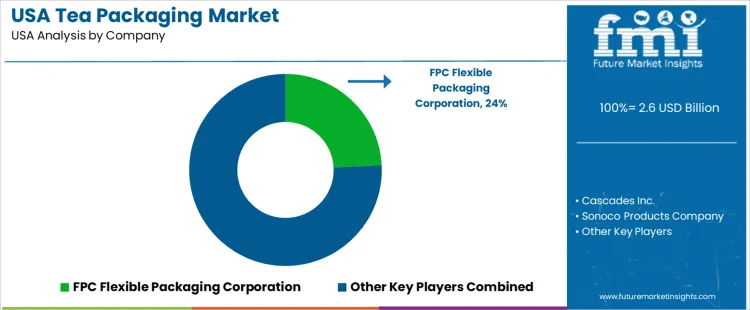
Tea packaging demand in the United States is shaped by grocery retailers, specialty-tea brands, subscription tea services, and large blended-tea producers. Packaging must ensure freshness, moisture barrier, ambient storage stability, and convenient reseal for consumer use. Demand for tea packaging is tied to growing interest in specialty, organic, and ready-to-steep tea products; procurement criteria prioritise packaging material quality, barrier performance, printing clarity, and reliable supply volumes for seasonal and year-round blends.
FPC Flexible Packaging Corporation holds an estimated 24.2% share. Its flexible pouch and composite-bag solutions suit both mass-market and specialty-tea producers, offering dependable moisture barriers and resealable closures. Cascades Inc. supports demand through multilayer laminate packaging used by natural-food and organic producers needing strong shelf-life protection.
Sonoco Plastics & Paper Division (part of Sonoco Products) contributes rigid tin and paper-composite tins that appeal to premium tea brands aiming for shelf visibility and extended freshness. Huhtamaki Americas supplies heat-seal foil pouches and resealable stand-up bags used by subscription and wholesale tea roasters for efficient packaging. WestRock Company supports demand in paperboard-based cartons and inner-bag systems used by large volume producers needing scalable packaging solutions for multi-pack tea boxes. Competitive positioning in the United States depends on material barrier quality, reseal design, print surface quality, scalability, and compliance with food-safety standards, as producers balance shelf-life, consumer convenience, and cost-effective packaging solutions.
Key Players in USA Tea Packaging Demand
- FPC Flexible Packaging Corporation
- Cascades Inc.
- Sonoco Products Company
- Huhtamaki Americas
- WestRock Company
Scope of the Report
| Items | Values |
|---|---|
| Quantitative Units | USD billion |
| Product Type | Tea Bags, Pouches, Tea Pots |
| Packaging Type | Flexible Packaging, Rigid |
| Regions Covered | West USA, South USA, Northeast USA, Midwest USA |
| Key Companies Profiled | FPC Flexible Packaging Corporation, Cascades Inc., Sonoco Products Company, Huhtamaki Americas, WestRock Company |
| Additional Attributes | Dollar sales by product type and packaging type; regional consumption trends in retail tea formats; demand shift toward flexible packaging for lightweight, resealable formats; sustainability preference in recyclable paper tea bags and molded fiber tea pots; influence of specialty and herbal tea demand; packaging differentiation strategies for aroma retention and premium positioning across USA tea brands. |
USA Tea Packaging Demand by Segments
Product Type:
- Tea Bags
- Pouches
- Tea Pots
Packaging Type:
- Flexible Packaging
- Rigid
Region:
- West USA
- South USA
- Northeast USA
- Midwest USA
Frequently Asked Questions
How big is the demand for tea packaging in USA in 2025?
The demand for tea packaging in USA is estimated to be valued at USD 2.6 billion in 2025.
What will be the size of tea packaging in USA in 2035?
The market size for the tea packaging in USA is projected to reach USD 4.1 billion by 2035.
How much will be the demand for tea packaging in USA growth between 2025 and 2035?
The demand for tea packaging in USA is expected to grow at a 4.4% CAGR between 2025 and 2035.
What are the key product types in the tea packaging in USA?
The key product types in tea packaging in USA are tea bags, pouches and tea pots.
Which packaging type segment is expected to contribute significant share in the tea packaging in USA in 2025?
In terms of packaging type, flexible packaging segment is expected to command 65.5% share in the tea packaging in USA in 2025.
Preview the report firsthand - request a free sample
Get SampleGet the brochure for pricing and purchase details.
Get PDFTable of Content
- Executive Summary
- USA Market Outlook
- Demand-side Trends
- Supply-side Trends
- Technology Roadmap Analysis
- Analysis and Recommendations
- Market Overview
- Market Coverage / Taxonomy
- Market Definition / Scope / Limitations
- Market Background
- Market Dynamics
- Drivers
- Restraints
- Opportunity
- Trends
- Scenario Forecast
- Demand in Optimistic Scenario
- Demand in Likely Scenario
- Demand in Conservative Scenario
- Opportunity Map Analysis
- Product Life Cycle Analysis
- Supply Chain Analysis
- Investment Feasibility Matrix
- Value Chain Analysis
- PESTLE and Porter’s Analysis
- Regulatory Landscape
- Regional Parent Market Outlook
- Production and Consumption Statistics
- Import and Export Statistics
- Market Dynamics
- USA Market Analysis 2020 to 2024 and Forecast, 2025 to 2035
- Historical Market Size Value (USD Million) Analysis, 2020 to 2024
- Current and Future Market Size Value (USD Million) Projections, 2025 to 2035
- Y-o-Y Growth Trend Analysis
- Absolute $ Opportunity Analysis
- USA Market Pricing Analysis 2020 to 2024 and Forecast 2025 to 2035
- USA Market Analysis 2020 to 2024 and Forecast 2025 to 2035, By Product Type
- Introduction / Key Findings
- Historical Market Size Value (USD Million) Analysis By Product Type , 2020 to 2024
- Current and Future Market Size Value (USD Million) Analysis and Forecast By Product Type , 2025 to 2035
- Tea Bags
- Pouches
- Tea Pots
- Y-o-Y Growth Trend Analysis By Product Type , 2020 to 2024
- Absolute $ Opportunity Analysis By Product Type , 2025 to 2035
- USA Market Analysis 2020 to 2024 and Forecast 2025 to 2035, By Packaging Type
- Introduction / Key Findings
- Historical Market Size Value (USD Million) Analysis By Packaging Type, 2020 to 2024
- Current and Future Market Size Value (USD Million) Analysis and Forecast By Packaging Type, 2025 to 2035
- Flexible Packaging
- Rigid
- Y-o-Y Growth Trend Analysis By Packaging Type, 2020 to 2024
- Absolute $ Opportunity Analysis By Packaging Type, 2025 to 2035
- Market Structure Analysis
- Competition Dashboard
- Competition Benchmarking
- Market Share Analysis of Top Players
- By Regional
- By Product Type
- By Packaging Type
- Competition Analysis
- Competition Deep Dive
- FPC Flexible Packaging Corporation
- Overview
- Product Portfolio
- Profitability by Market Segments (Product/Age /Sales Channel/Region)
- Sales Footprint
- Strategy Overview
- Marketing Strategy
- Product Strategy
- Channel Strategy
- Cascades Inc.
- Sonoco Products Company
- Huhtamaki Americas
- WestRock Company
- FPC Flexible Packaging Corporation
- Competition Deep Dive
- Assumptions & Acronyms Used
- Research Methodology


