

- Industry Size (2025)
- USD 2.7 Bn
- Forecast (2035)
- USD 4.1 Bn
- CAGR (2025 to 2035)
- 4.2%
Demand for Uncomplicated Urinary Tract Infection Treatment in USA 2025 to 2035
The demand for uncomplicated urinary tract infection treatment in the USA is valued at USD 2.7 billion in 2025 and is projected to reach USD 4.1 billion by 2035, registering a CAGR of 4.2%. Growth reflects consistent case volumes among women and older adults, expanding access to outpatient care, and continued physician preference for short-duration oral therapies. Telehealth platforms and retail clinics increase diagnosis rates by offering rapid interventions, especially for recurrent or mild infections.
Sulfonamides remain the leading drug class due to clinical familiarity, broad availability in generic form, and prescriber comfort based on long-standing treatment protocols. These drugs provide cost-effective coverage against common uropathogens such as Escherichia coli, though antimicrobial stewardship initiatives continue shaping prescription choices. Development of resistance to first-line therapies encourages ongoing surveillance and selective adoption of newer agents when needed.
Quick Stats for USA Uncomplicated Urinary Tract Infection Treatment Demand
- USA Uncomplicated Urinary Tract Infection Treatment Sales Value (2025): USD 2.7 billion
- USA Uncomplicated Urinary Tract Infection Treatment Forecast Value (2035): USD 4.1 billion
- USA Uncomplicated Urinary Tract Infection Treatment Forecast CAGR (2025 to 2035): 4.2%
- Leading Drug Class in USA Uncomplicated Urinary Tract Infection Treatment Demand: Sulfonamides
- Key Growth Regions in USA Uncomplicated Urinary Tract Infection Treatment Demand: West USA, South USA, Northeast USA
- Top Players in USA Uncomplicated Urinary Tract Infection Treatment Demand: Pfizer Inc., Merck & Co., Inc., AbbVie Inc., F. Hoffmann-La Roche Ltd., Johnson & Johnson
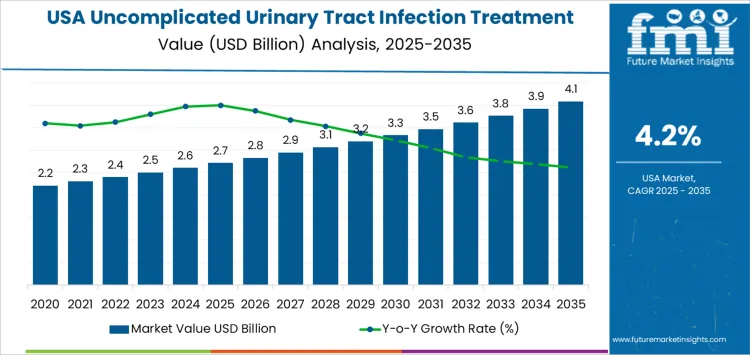
What is the Growth Forecast for Uncomplicated Urinary Tract Infection Treatment Industry in USA through 2035?
Demand concentration is highest in the West, South, and Northeast, where large urban populations and outpatient treatment infrastructure support high diagnosis and dispensing volumes. Growth in these regions also correlates with insurance coverage trends, preventive women’s health programs, and rising awareness of early symptom management among at-risk groups. Key suppliers include Pfizer Inc., Merck & Co., Inc., AbbVie Inc., F. Hoffmann-La Roche Ltd., and Johnson & Johnson. Strategies center on maintaining stable supply chains, supporting antibiotic stewardship education, and evaluating incremental improvements to formulations and patient adherence tools, including single-dose and shorter-course regimens.
Demand for uncomplicated urinary tract infection treatment in the United States aligns closely with a stable and predictable patient base because incidence trends remain consistent among adult women, especially in primary care settings. The industry includes long-established generic antibiotics that dominate prescribing patterns. Extensive availability in retail pharmacies and telehealth-enabled rapid prescription access contribute to broad treatment coverage. These factors indicate that fundamental demand is already near saturation for first-line therapies.
Growth prospects are moderated by antimicrobial stewardship policies that restrict overprescribing. Rising resistance to legacy antibiotics such as trimethoprim-sulfamethoxazole and fluoroquinolones limits expansion of some high-volume categories. Physicians increasingly shift toward narrow-spectrum alternatives, leading to demand redistribution without a significant increase in total therapeutic volume.
Innovation opportunities exist in differentiated offerings, including patient-friendly formulations, rapid diagnostic integration, and non-antibiotic adjuncts. These niches remain undersaturated, especially where preventive benefits reduce recurrence. They contribute smaller incremental gains compared with large generic segments. The category reflects a late-cycle profile with steady but constrained growth influenced by clinical guidelines, resistance management, and high availability of established treatments across the US healthcare system.
USA Uncomplicated Urinary Tract Infection Treatment Key Takeaways
| Metric | Value |
|---|---|
| USA Uncomplicated Urinary Tract Infection Treatment Sales Value (2025) | USD 2.7 billion |
| USA Uncomplicated Urinary Tract Infection Treatment Forecast Value (2035) | USD 4.1 billion |
| USA Uncomplicated Urinary Tract Infection Treatment Forecast CAGR (2025-2035) | 4.2% |
Why is the Demand for Uncomplicated Urinary Tract Infection Treatment in the USA Growing?
Demand for uncomplicated urinary tract infection (UTI) treatment in the USA is increasing because UTIs remain among the most common bacterial infections affecting women, older adults and people with recurrent urinary issues. Many patients seek effective, fast-acting treatments that relieve symptoms while avoiding complications or repeated infections. Primary care clinics, urgent care centres and telemedicine providers all contribute to increased access to diagnosis and treatment.
Rising use of telehealth services allows individuals to obtain prescriptions quickly following remote consultations, which supports timely antibiotic or symptomatic therapy and reduces progression to more severe infection. Outpatient care infrastructure and awareness campaigns promote early detection, leading to higher volume of uncomplicated UTI cases managed outside hospital settings.
Pharmacies and retail health clinics provide standardized treatment protocols and over-the-counter supportive care products such as pain relief and urinary comfort formulations, which strengthens initial demand and repeat visits. Constraints include growing concern over antibiotic resistance, which encourages physicians to adhere to strict prescribing guidelines. Some patients may experience recurrent infections requiring further diagnostic workup. Patients with comorbidities or complicated UTI risk may need specialist referral, which creates a boundary on standard treatment demand.
Which Drug Classes and Distribution Channels Lead Demand for Uncomplicated Urinary Tract Infection (UTI) Treatment in the USA?
Demand for uncomplicated UTI treatment in the United States is driven by high prevalence among women, recurrence rates, and accessibility of outpatient care. Treatment choices rely on antibiotic effectiveness, resistance trends, and patient allergy profiles. Prescribers emphasize short-course therapy, low resistance risk, and compatibility with telehealth-based prescriptions. Retail accessibility, adherence, and clinical guidelines from infectious disease associations shape prescribing patterns across USA healthcare settings.
By Drug Class, Sulfonamides Hold the Largest Share
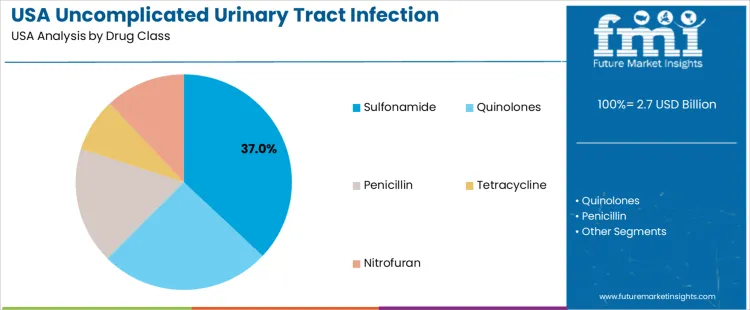
Sulfonamides account for 37.0%, supported by broad use as first-line therapy against common uropathogens, affordable pricing, and high prescription volume in outpatient settings. Quinolones hold 25.5%, prescribed in recurrent or complicated resistance-driven cases, though usage faces stewardship scrutiny due to safety concerns. Penicillin-based antibiotics represent 17.5%, often used when culture results indicate susceptibility and for patients with lower resistance risks. Nitrofuran drugs hold 12.0%, preferred for localized bladder infections and lower systemic exposure. Tetracyclines account for 8.0%, typically reserved for alternative therapy scenarios. Drug selection aligns with antimicrobial stewardship protocols, resistance monitoring, and minimal treatment duration for faster symptom relief.
Key Points:
- Sulfonamides dominate due to suitability as first-line outpatient therapy
- Quinolones remain key in resistant infection cases
- Localized agents like nitrofuran reduce unnecessary systemic exposure
By Distribution Channel, Gynecology & Urology Clinics Lead Demand
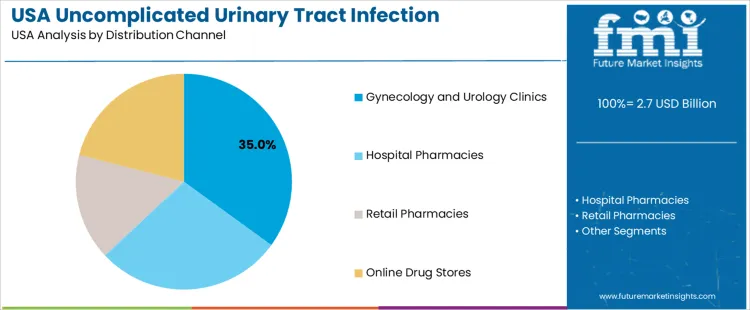
Gynecology and urology clinics hold 35.0%, reflecting specialized patient evaluation and frequent testing for recurrent infections. Hospital pharmacies represent 28.0%, managing acute and emergency cases needing monitored care. Online drug stores account for 21.0%, supported by teleconsultation and home delivery usage in uncomplicated episodes. Retail pharmacies hold 16.0%, supplying over-the-counter supportive medication and prescription fulfillment. Channel selection reflects USA patient preferences for rapid access, clinical guidance in recurrent cases, and ongoing shift toward digital prescription fulfillment.
Key Points:
- Clinics lead demand due to specialized diagnostic capabilities
- Online ordering expands access for remote or quick-treatment scenarios
- Hospital dispensing focuses on urgent and monitored treatment needs
What are the Drivers, Restraints, and Key Trends of the Demand for Uncomplicated Urinary Tract Infection Treatment in the USA?
Increased outpatient care utilization, high recurrence rates among women and rapid access to primary and retail clinics drive demand.
In the United States, uncomplicated urinary tract infections are among the most common bacterial infections treated in outpatient settings, especially among women of reproductive and post-menopausal age groups. Frequent recurrences lead to repeat treatment needs through primary care clinics, urgent care centers and telehealth platforms that provide antibiotic prescriptions with short consultation times.
Retail health clinics inside pharmacies and supermarkets expand access to test-and-treat services, enabling treatment during evenings and weekends without scheduling delays. University campuses and workplaces support quick care to reduce absenteeism, reinforcing demand for reliable UTI treatment options. Pharmacies support over-the-counter symptom-relief purchases that accompany antibiotic-based therapy and improve patient comfort during recovery.
Growing antimicrobial resistance concerns, cost of diagnostic confirmation and self-medication delays restrain demand.
Clinicians increase caution in prescribing broad-spectrum antibiotics because resistance patterns challenge effective treatment and require more targeted diagnostic testing. Insurance coverage variability for point-of-care urine testing can create out-of-pocket costs that discourage timely care in budget-sensitive households. Some patients delay clinic visits by trying home remedies or symptom-relief products first, which can lead to more complicated cases requiring stronger therapies. Efforts to reduce unnecessary antibiotic use also influence prescribing behavior, particularly when symptoms are mild or self-limiting. These factors create variability in treatment demand and influence the type of therapy selected across outpatient settings.
Shift toward stewardship-aligned prescribing, increased telehealth and home-testing adoption and rising interest in non-antibiotic adjunct options define key trends.
Healthcare providers expand antibiotic stewardship programs to ensure that first-line therapies match local resistance profiles and avoid unnecessary exposure. Telehealth platforms offer virtual consultations with prescription pickup at neighborhood pharmacies, improving convenience for working adults and caregivers. Home sample-collection kits and digital symptom-assessment tools help patients seek earlier intervention.
Interest grows in supportive products such as D-mannose, cranberry extracts and probiotic formulations for reducing recurrence risk and improving urinary health. In-network clinics within retail pharmacies continue to attract patients seeking fast diagnosis and immediate prescriptions. These developments indicate steady demand for uncomplicated urinary tract infection treatment across the United States driven by accessibility, recurrence patterns and evolving care delivery models.
Analysis of the Demand for Uncomplicated Urinary Tract Infection (UTI) Treatment in the USA by Region
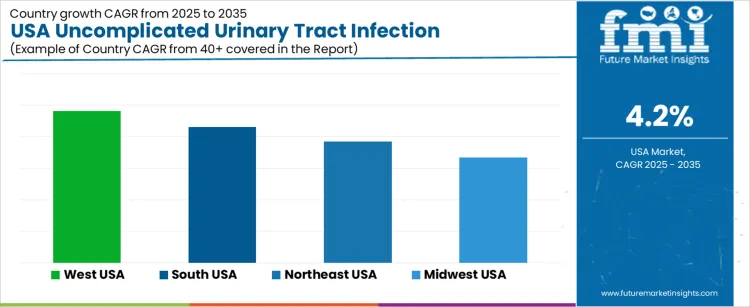
Demand for uncomplicated UTI treatment in the United States is rising due to increased diagnostic awareness, higher UTI incidence among aging populations, and expanded telemedicine adoption for rapid prescription access. Outpatient clinics and retail pharmacies remain central to treatment delivery, while e-pharmacy platforms accelerate prescription fulfillment. Growth also links to antibiotic stewardship efforts influencing product rotation, preventive supplement usage, and faster diagnostic testing adoption. West USA leads with 4.8% CAGR, followed by South USA (4.3%), Northeast USA (3.8%), and Midwest USA (3.3%). Reimbursement environments, healthcare accessibility, and consumer adoption of digital care pathways shape regional differences.
| Region | CAGR (2025-2035) |
|---|---|
| West USA | 4.8% |
| South USA | 4.3% |
| Northeast USA | 3.8% |
| Midwest USA | 3.3% |
How is the West USA driving demand for UTI treatment?
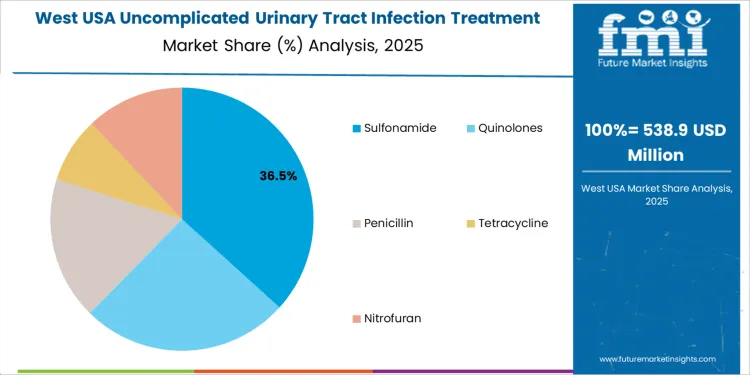
West USA grows at 4.8% CAGR, supported by strong integration of digital health services enabling rapid clinician consultations and prescription approvals across California, Washington, and Colorado. Retail clinics and urgent-care centers provide accessible treatment pathways for working professionals and students. Preventive behavioral-health communication programs increase early testing, supporting pharmacy-dispensed antibiotics and urinary health supplements.
Consumers in wellness-driven cities increasingly purchase D-mannose, cranberry extracts, and probiotic formulations designed to reduce recurrence. Hospitals standardize stewardship programs that require targeted prescribing aligned with local bacterial-resistance data, shaping pharmaceutical inventory decisions. Insurance coverage supports outpatient treatment affordability, while data-driven practice guidelines improve care continuity.
- Telehealth accelerating timely treatment access
- Retail clinics strengthening rapid diagnosis support
- Preventive supplement usage lowering recurrence risk
- Stewardship guidelines informing procurement and prescribing
How is the South USA shaping demand expansion?
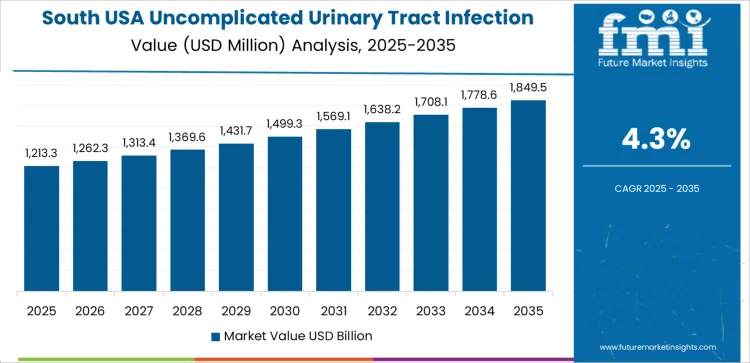
The South USA grows at 4.3% CAGR, influenced by higher UTI prevalence among senior populations and women in warmer-climate states such as Texas and Florida. Primary-care networks emphasize UTI management as part of chronic-condition monitoring for diabetic and mobility-limited patients. Pharmacies expand point-of-care testing to reduce clinical burden and provide same-day medication access. Demand includes supportive hydration products and urinary alkalizers used to relieve discomfort during early-stage infection episodes. Healthcare providers promote adherence to antibiotic regimens to limit progression and resistance. Distribution networks through major logistics hubs enable stable pharmaceutical supply to suburban care centers.
- Chronic-care monitoring increasing testing and treatment
- Pharmacy-based rapid testing boosting accessibility
- Supportive symptom-relief options aiding early management
- Efficient pharma distribution sustaining product availability
How is the Northeast USA maintaining treatment utilization?
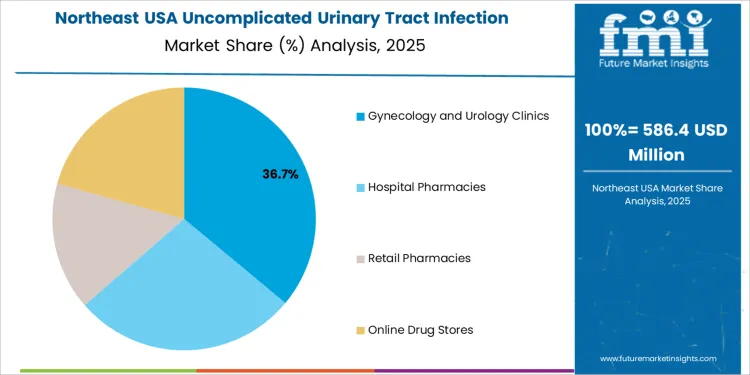
Northeast USA expands at 3.8% CAGR, driven by dense healthcare ecosystems in New York, New Jersey, and Massachusetts. Academic hospital networks use advanced rapid-diagnostic testing that shortens treatment turnaround and refines antibiotic selection. Urban consumers rely on teleconsultations and home-sample kits to improve care convenience during peak infection seasons. Preventive care campaigns target students living in shared housing where infection incidence is elevated. Private insurers track resistance-pattern data to guide formulary decisions, encouraging use of narrow-spectrum agents where clinically viable. Retail pharmacies integrate digital reminders to strengthen compliance with full therapeutic course completion.
- Diagnostic precision supporting stewardship compliance
- Digital convenience improving treatment adherence
- Student-population exposure increasing testing volume
- Insurer oversight shaping antibiotic selection trends
How is the Midwest USA contributing to sustained demand?
Midwest USA grows at 3.3% CAGR, supported by steady utilization across primary-care practices and pharmacy dispensing channels in Illinois, Ohio, and Michigan. Workers in physically demanding industries rely on local care networks for fast symptom management that reduces missed workdays. Senior-care facilities incorporate recurrent UTI prevention strategies including hydration and probiotic supplementation. Buyers favor trusted generic antibiotics aligned with resistance-control objectives. Cold-season infection spikes maintain consistent pharmaceutical replenishment cycles. Distribution networks connected to major transportation corridors ensure inventory continuity in suburban and rural clinics where specialist access is limited.
- Generic-focused purchasing sustaining affordability
- Senior-care protocols prioritizing prevention
- Occupational needs supporting timely treatment
- Reliable logistics enabling rural care access
How is competitive positioning structured among suppliers of treatments for uncomplicated urinary tract infections in the United States?
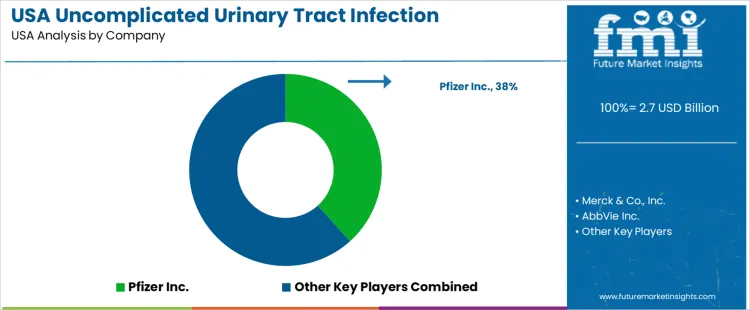
Competitive dynamics in the USA uncomplicated urinary tract infection (UTI) treatment category are driven by antibiotic efficacy, resistance profiles, prescribing guidelines, generic availability, and insurance coverage. Industry players with well-established antibiotic portfolios and broad physician familiarity secure advantage in this frequently treated condition. Pfizer Inc. is estimated to hold 38.3% share, supported by long-standing brand-name antibiotics and an extensive distribution network that ensures consistent supply across retail and hospital pharmacies. Its lead position reflects wide physician trust and coverage under major insurance formularies.
Merck & Co., Inc. competes strongly via antibiotics and supportive drug regimens used in outpatient and community-care settings. Its presence is maintained through older but reliable therapies still referenced in clinical guidelines. AbbVie Inc. participates predominantly via specialty antibiotics and drugs used when first-line agents face resistance or in recurrent UTI cases, appealing to urology-focused clinics and hospital infectious-disease programs. F. Hoffmann-La Roche Ltd. contributes through niche antibiotic offerings and access programs that serve patients requiring branded alternatives when generics are contraindicated.
Johnson & Johnson (via its antibiotic and consumer-health subdivisions) remains relevant through legacy therapies and combination-therapy support, particularly in populations with complicating factors such as diabetes or recurrent infections. Competitive strength depends on antibiotic resistance tracking, prescription-rate flexibility, cost-effectiveness of generics, and coverage under public and private insurers. Companies that combine reliable antibiotic efficacy with supply-chain stability and support for antimicrobial stewardship sustain the strongest positions in UTI treatment demand in the United States.
Key Players in USA Uncomplicated Urinary Tract Infection Treatment Demand
- Pfizer Inc.
- Merck & Co., Inc.
- AbbVie Inc.
- F.Hoffmann-La Roche Ltd.
- Johnson & Johnson
Scope of the Report
| Items | Values |
|---|---|
| Quantitative Units | USD billion |
| Drug Class | Sulfonamide, Quinolones, Penicillin, Tetracycline, Nitrofuran |
| Distribution Channel | Gynecology and Urology Clinics, Hospital Pharmacies, Retail Pharmacies, Online Drug Stores |
| Regions Covered | West USA, South USA, Northeast USA, Midwest USA |
| Key Companies Profiled | Pfizer Inc., Merck & Co., Inc., AbbVie Inc., F. Hoffmann-La Roche Ltd., Johnson & Johnson |
| Additional Attributes | Dollar sales by drug class and distribution channels; shift toward oral short-course nitrofurantoin and trimethoprim-sulfamethoxazole regimens; regional adoption trends influenced by antibiotic stewardship programs; preference for prescription fulfillment from retail and online channels; growing resistance research shaping quinolone utilization; vendor availability in branded and generic antibiotic portfolios. |
USA Uncomplicated Urinary Tract Infection Treatment Demand by Segments
Drug Class:
- Sulfonamide
- Quinolones
- Penicillin
- Tetracycline
- Nitrofuran
Distribution Channel:
- Gynecology and Urology Clinics
- Hospital Pharmacies
- Retail Pharmacies
- Online Drug Stores
Region:
- West USA
- South USA
- Northeast USA
- Midwest USA
Frequently Asked Questions
How big is the demand for uncomplicated urinary tract infection treatment in USA in 2025?
The demand for uncomplicated urinary tract infection treatment in USA is estimated to be valued at USD 2.7 billion in 2025.
What will be the size of uncomplicated urinary tract infection treatment in USA in 2035?
The market size for the uncomplicated urinary tract infection treatment in USA is projected to reach USD 4.1 billion by 2035.
How much will be the demand for uncomplicated urinary tract infection treatment in USA growth between 2025 and 2035?
The demand for uncomplicated urinary tract infection treatment in USA is expected to grow at a 4.2% CAGR between 2025 and 2035.
What are the key product types in the uncomplicated urinary tract infection treatment in USA?
The key product types in uncomplicated urinary tract infection treatment in USA are sulfonamide, quinolones, penicillin, tetracycline and nitrofuran.
Which distribution channel segment is expected to contribute significant share in the uncomplicated urinary tract infection treatment in USA in 2025?
In terms of distribution channel, gynecology and urology clinics segment is expected to command 35.0% share in the uncomplicated urinary tract infection treatment in USA in 2025.
Preview the report firsthand - request a free sample
Get SampleGet the brochure for pricing and purchase details.
Get PDFTable of Content
- Executive Summary
- USA Market Outlook
- Demand-side Trends
- Supply-side Trends
- Technology Roadmap Analysis
- Analysis and Recommendations
- Market Overview
- Market Coverage / Taxonomy
- Market Definition / Scope / Limitations
- Market Background
- Market Dynamics
- Drivers
- Restraints
- Opportunity
- Trends
- Scenario Forecast
- Demand in Optimistic Scenario
- Demand in Likely Scenario
- Demand in Conservative Scenario
- Opportunity Map Analysis
- Product Life Cycle Analysis
- Supply Chain Analysis
- Investment Feasibility Matrix
- Value Chain Analysis
- PESTLE and Porter’s Analysis
- Regulatory Landscape
- Regional Parent Market Outlook
- Production and Consumption Statistics
- Import and Export Statistics
- Market Dynamics
- USA Market Analysis 2020 to 2024 and Forecast, 2025 to 2035
- Historical Market Size Value (USD Million) Analysis, 2020 to 2024
- Current and Future Market Size Value (USD Million) Projections, 2025 to 2035
- Y-o-Y Growth Trend Analysis
- Absolute $ Opportunity Analysis
- USA Market Pricing Analysis 2020 to 2024 and Forecast 2025 to 2035
- USA Market Analysis 2020 to 2024 and Forecast 2025 to 2035, By Drug Class
- Introduction / Key Findings
- Historical Market Size Value (USD Million) Analysis By Drug Class , 2020 to 2024
- Current and Future Market Size Value (USD Million) Analysis and Forecast By Drug Class , 2025 to 2035
- Sulfonamide
- Quinolones
- Penicillin
- Tetracycline
- Nitrofuran
- Y-o-Y Growth Trend Analysis By Drug Class , 2020 to 2024
- Absolute $ Opportunity Analysis By Drug Class , 2025 to 2035
- USA Market Analysis 2020 to 2024 and Forecast 2025 to 2035, By Distribution Channel
- Introduction / Key Findings
- Historical Market Size Value (USD Million) Analysis By Distribution Channel, 2020 to 2024
- Current and Future Market Size Value (USD Million) Analysis and Forecast By Distribution Channel, 2025 to 2035
- Gynecology and Urology Clinics
- Hospital Pharmacies
- Retail Pharmacies
- Online Drug Stores
- Y-o-Y Growth Trend Analysis By Distribution Channel, 2020 to 2024
- Absolute $ Opportunity Analysis By Distribution Channel, 2025 to 2035
- Market Structure Analysis
- Competition Dashboard
- Competition Benchmarking
- Market Share Analysis of Top Players
- By Regional
- By Drug Class
- By Distribution Channel
- Competition Analysis
- Competition Deep Dive
- Pfizer Inc.
- Overview
- Product Portfolio
- Profitability by Market Segments (Product/Age /Sales Channel/Region)
- Sales Footprint
- Strategy Overview
- Marketing Strategy
- Product Strategy
- Channel Strategy
- Merck & Co., Inc.
- AbbVie Inc.
- F.Hoffmann-La Roche Ltd.
- Johnson & Johnson
- Pfizer Inc.
- Competition Deep Dive
- Assumptions & Acronyms Used
- Research Methodology


