

- Industry Size (2025)
- USD 1.5 Bn
- Forecast (2035)
- USD 2.8 Bn
- CAGR (2025 to 2035)
- 6.4%
Waste-Fibre Trays Market Size and Share Forecast Outlook 2025 to 2035
The waste-fibre trays market is likely to grow from USD 1.5 billion in 2025 to USD 2.8 billion by 2035, representing a CAGR of 6.4%. Growth is fuelled by increasing adoption of post-consumer recycled fibers and government mandates for eco-friendly packaging. Waste-fibre trays are widely used for the protection of perishable food and electronic components due to their durability and biodegradability. Between 2025 and 2030, circular packaging systems and energy-efficient pulp molding technologies will drive scalability. Asia-Pacific will remain the manufacturing hub, while Europe leads in sustainability certifications and design optimization.
Quick Stats for Waste-Fibre Trays Market
- Market Value (2025): USD 1.5 billion
- Market Forecast Value (2035): USD 2.8 billion
- Market Forecast CAGR: 6.4%
- Leading Material (2025): Recycled Paper Pulp - 38.2%
- Key Growth Region: Asia-Pacific (led by South Korea at 7.2% CAGR)
- Top Companies: HuhtamäkiOyj, Brødrene Hartmann, Cirkla Inc, ThermoFibre, BIONOVA Packaging, Aumsons Packaging, Boora Pulp Packers, Hotpack Global, Ecolution Packaging, Fibreform Containers
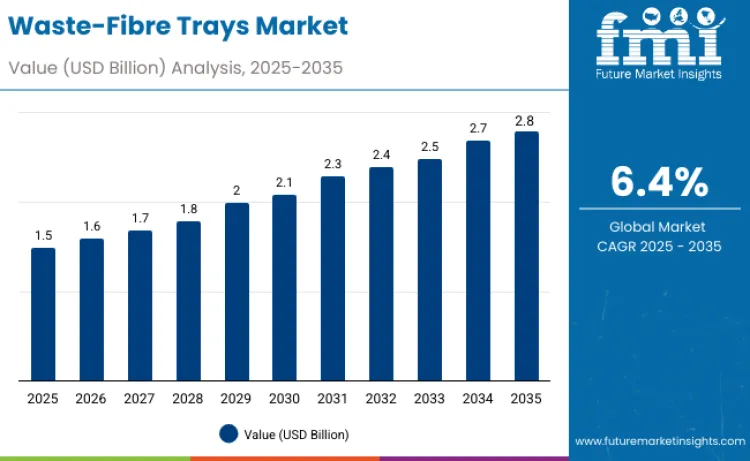
| Metric | Value |
|---|---|
| Industry Size (2025E) | USD 1.5 billion |
| Industry Value (2035F) | USD 2.8 billion |
| CAGR (2025 to 2035) | 6.4% |
Between 2020 and 2024, rising demand for compostable molded packaging materials transformed global supply chains. Manufacturers adopted recycled pulp processing technologies to align with extended producer responsibility (EPR) regulations. By 2035, the market will reach USD 2.8 billion, driven by advancements in thermoformed fiber trays and innovations in surface-barrier coatings. Asia-Pacific will lead in large-scale production, while Europe will maintain dominance in regulatory compliance and sustainable packaging innovation.
Why is the Waste-Fibre Trays Market Growing?
The market is driven by increasing awareness of sustainable packaging, government support for recycling programs, and consumer preference for biodegradable materials. Fibre-based trays offer excellent cushioning, temperature resistance, and recyclability, making them suitable for food, retail, and electronics sectors.
What is the Segmental Overview for the Waste-Fibre Trays Market?
The market is segmented by material, tray type, application, and region. Materials include recycled paper pulp, agricultural residue fiber, corrugated waste fiber, and mixed cellulose composites. Tray types comprise food and produce trays, industrial component trays, electronics trays, and consumer goods trays. Applications span food packaging, industrial packaging, electronics protection, and retail packaging. Geographically, the market covers North America, Europe, Asia-Pacific, Latin America, and the Middle East & Africa.
Recycled Paper Pulp Leads Material Type with Circular and Cost-Efficient Benefits
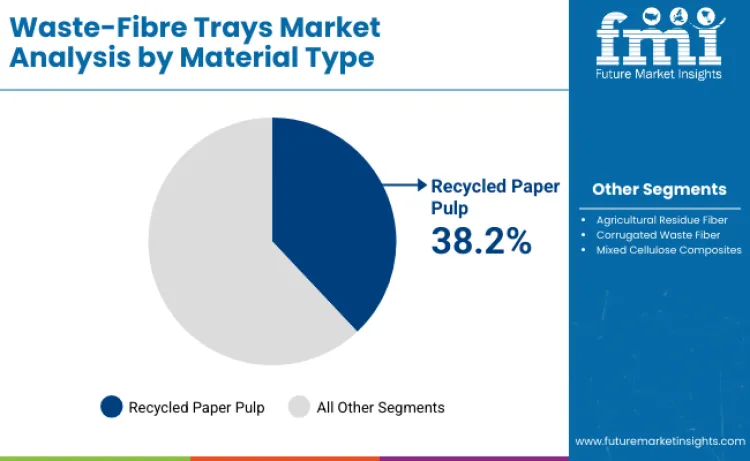
Recycled paper pulp is projected to hold 38.2% of the market in 2025, supported by its abundant supply, cost-effectiveness, and alignment with global sustainability goals. The material delivers strong rigidity and cushioning performance, making it suitable for both food and consumer packaging trays.
Its compatibility with existing molding technologies enables large-scale production with minimal environmental impact. As brands prioritize circular economy initiatives, recycled pulp offers a balance between strength, recyclability, and affordability, cementing its position as the leading material choice in molded tray manufacturing.
Why do Food and Produce Trays Dominate Tray Type?
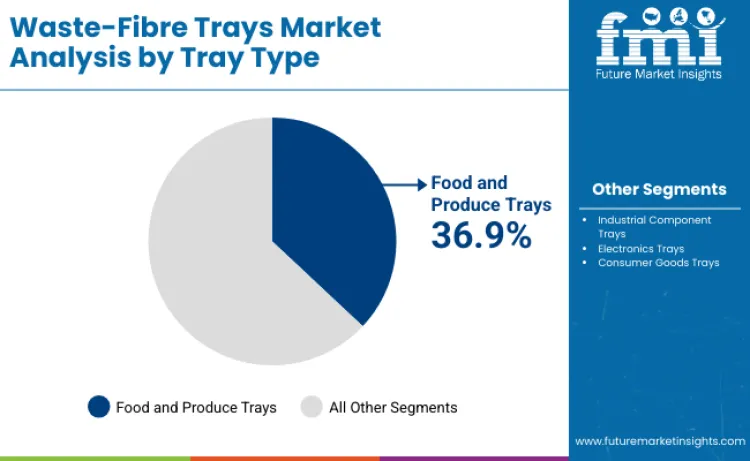
Food and produce trays are forecast to capture 36.9% of the market in 2025, driven by retail and logistics demand for compostable, biodegradable packaging formats. These trays provide stable support for fruits, vegetables, and ready-to-eat items during transport and display.
Enhanced moisture resistance and custom cavity designs improve freshness retention and visual appeal. Their growing use in supermarkets and meal-kit deliveries underscores the market shift toward fiber-based tray solutions. As compostable packaging becomes a retail norm, food and produce trays maintain category leadership.
Why do Food Packaging Lead Application Segment?
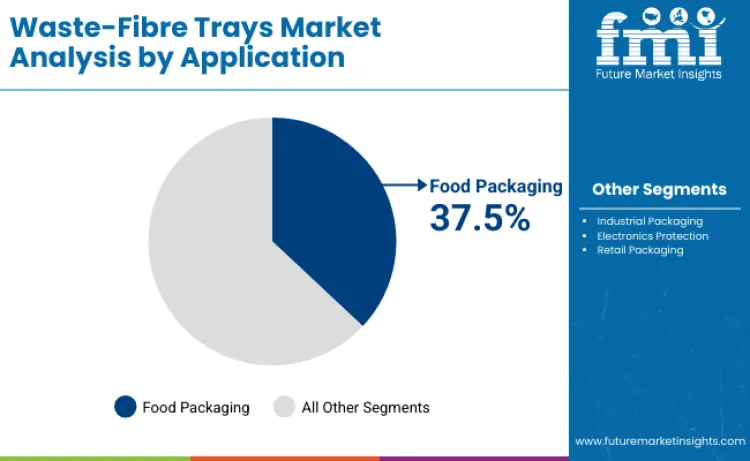
Food packaging is expected to represent 37.5% of the market in 2025, driven by global efforts to replace plastic trays with renewable alternatives. Recycled paper pulp trays ensure product protection, lightweight handling, and strong shelf appeal in fresh and packaged food categories.
They support extended shelf life through moisture management coatings and reduce landfill contribution through recyclability. With corporate sustainability programs emphasizing carbon reduction, paper pulp trays continue to dominate eco-friendly packaging transitions across the food industry.
What are the Key Drivers, Restraints, Opportunities, and Trends?
The market is driven by the increasing adoption of recycled fiber packaging and the enforcement of stringent environmental regulations across major economies. Growing corporate sustainability initiatives and consumer preference for eco-friendly materials are accelerating demand. Recycled fiber packaging offers cost efficiency, reduced carbon footprint, and compatibility with existing recycling infrastructure, making it a preferred sustainable alternative.
Growth is restrained by fluctuating raw material quality due to inconsistent waste collection and sorting systems. Water-intensive pulp processing methods raise environmental concerns and operating costs, particularly in regions with resource scarcity. Additionally, maintaining structural strength and appearance uniformity in recycled fiber products remains a key technical challenge for manufacturers.
Expanding automation in molded pulp manufacturing and the adoption of recyclable coating technologies are opening new avenues for efficiency and scalability. The development of advanced de-inking systems and improved fiber recovery processes can further enhance quality and reduce waste. These innovations present opportunities for manufacturers to achieve high-performance recycled packaging suited for food, electronics, and retail applications. Hybrid fiber composites are emerging as a major trend, combining recycled pulp with natural fibers for enhanced durability. The introduction of barrier-lined trays is improving moisture and grease resistance, supporting broader use in food packaging. Circular packaging models, emphasizing closed-loop material recovery and reuse, are becoming central to industry sustainability strategies, defining the future of the recycled fiber packaging market.
Analysis of Waste-Fibre Trays Market by Key Countries
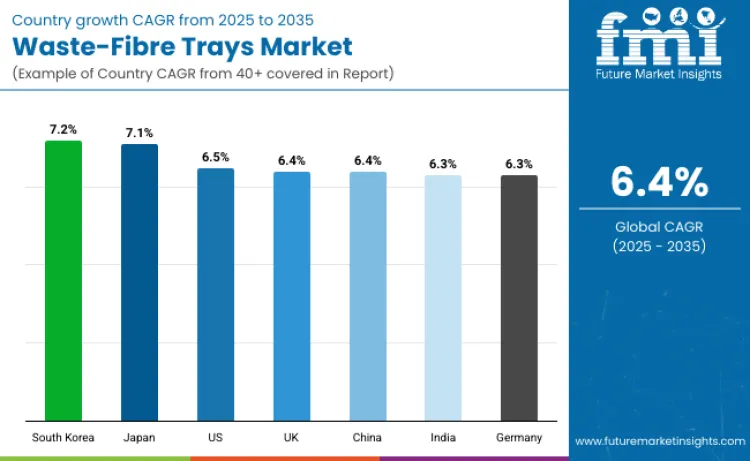
The global wastefiber trays market is expanding as sustainability mandates and fiber-based packaging replace conventional plastics. Asia-Pacific dominates production owing to cost-efficient fiber sourcing, rising consumption in food packaging, and the establishment of large-scale molding facilities. North America’s focus lies in recycled content mandates and automation in pulp molding systems, while Europe advances through green labeling standards and strict environmental compliance. The market continues to evolve with increased investments in recyclable materials and compostable barrier technologies.
What is the Sales Outlook for Waste-Fibre Trays Market in the United States?
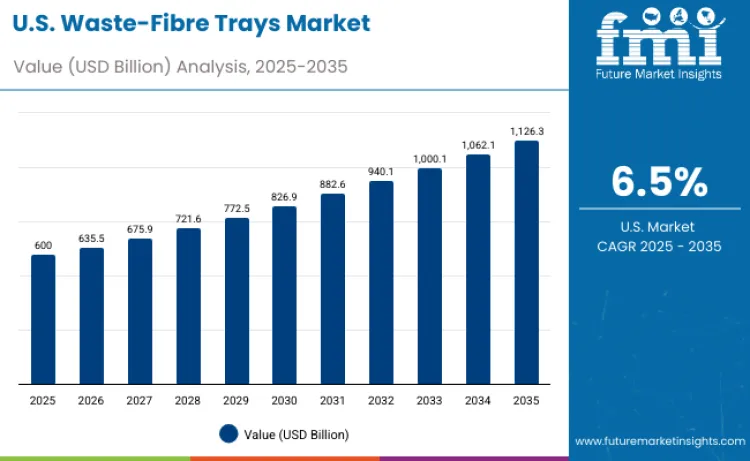
The USA will grow at 6.5% CAGR, driven by surging demand for fiber-based takeaway and retail packaging. Automation in molding lines is improving efficiency across quick-service and retail sectors. The rise of sustainability-focused brands continues to strengthen the market for recyclable molded trays.
- Rising demand for fiber-based takeaway packaging.
- Integration of automated molding systems.
- Growth in sustainable retail product packaging.
How is the Germany Growth Outlook?
Germany will expand at 6.3% CAGR, guided by EU sustainability directives promoting eco-friendly packaging alternatives. Local manufacturers are broadening their recycled molded tray portfolios to meet green compliance standards. Adoption is particularly strong in fresh produce, meat, and bakery packaging.
- EU directives drive adoption of eco-friendly packaging.
- Local manufacturers expand recycled tray portfolios.
- High adoption across fresh produce and meat sectors.
What is the Expansion Outlook in the United Kingdom?
The UK will grow at 6.4% CAGR, supported by widespread substitution of plastic with paper-fiber trays. Retail chains are implementing compostable tray programs to meet sustainability pledges. Continuous innovation in barrier coating technologies enhances tray functionality for foodservice use.
- Transition from plastic to paper-fiber food trays.
- Retailers implement compostable tray initiatives.
- Innovation in home-compostable barrier coatings.
What is the Sales Outlook in China?
China will grow at 6.4% CAGR, bolstered by major investments in recycled fiber infrastructure and automated production capacity. Government recycling initiatives are encouraging large-scale output, while exports of low-cost molded trays continue to rise across international markets.
- Large-scale investment in recycled fiber infrastructure.
- Government recycling mandates stimulate production.
- Rising exports of molded trays to global markets.
What is the Growth Outlook in India?
India will grow at 6.3% CAGR, supported by the expansion of food delivery platforms and sustainable retail packaging. Increased utilization of agricultural residue fiber is reducing costs and improving circularity. Growth of small and medium-scale molded pulp facilities boosts regional availability.
- Strong growth in food delivery and retail packaging.
- Increased use of agricultural residue fiber.
- Expansion of small-scale molded pulp facilities.
What is the Growth Outlook for the Market in Japan?
Japan will grow at 7.1% CAGR, emphasizing premium molded pulp packaging for electronics and high-end food sectors. Technological advances in water-efficient processing and fiber quality refinement enhance sustainability. Partnerships with food brands drive the adoption of eco-luxury tray formats.
- Focus on high-quality molded pulp packaging for electronics.
- Investment in advanced water-efficient processing lines.
- Partnerships with sustainable food brands.
What is the Expansion Outlook in South Korea?
South Korea will lead with 7.2% CAGR, leveraging advancements in fiber treatment technologies to improve tray durability and finish. Strong export growth in fiber-tray machinery supports regional manufacturing expansion. The foodservice packaging industry remains the primary driver of adoption.
- Advanced fiber treatment technologies enhance strength.
- Export of fiber-tray machinery increases.
- Growth driven by foodservice packaging.
What is the Competitive Landscape in the Market?
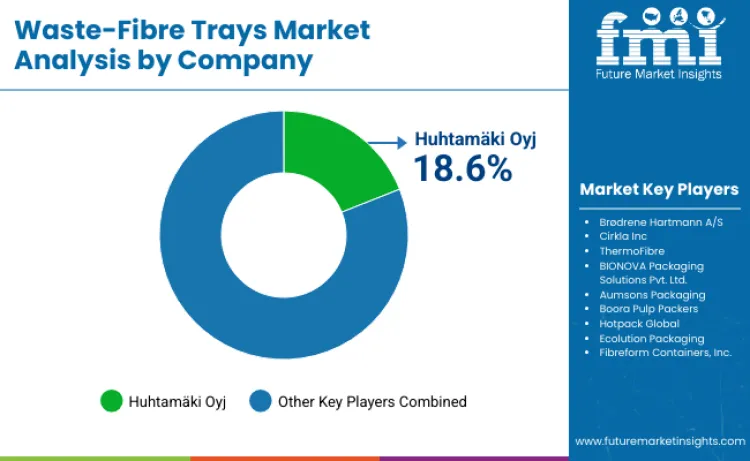
The market is moderately consolidated, with leading companies such as HuhtamäkiOyj, Brødrene Hartmann, Cirkla Inc, ThermoFibre, BIONOVA Packaging, Aumsons Packaging, Boora Pulp Packers, Hotpack Global, Ecolution Packaging, and Fibreform Containers. Key players focus on recycled material optimization, automation, and compostable coating technologies.
Key Companies
- HuhtamäkiOyj
- Brødrene Hartmann A/S
- CirklaInc
- ThermoFibre
- BIONOVA Packaging Solutions Pvt. Ltd.
- Aumsons Packaging
- Boora Pulp Packers
- Hotpack Global
- Ecolution Packaging
- Fibreform Containers, Inc.
Scope of the Report
| Item | Value |
|---|---|
| Quantitative Units | USD 1.5 Billion (2025) |
| By Material | Recycled Paper Pulp, Agricultural Residue Fiber, Corrugated Waste Fiber, Mixed Cellulose Composites |
| By Tray Type | Food & Produce, Industrial Component, Electronics, Consumer Goods |
| By Application | Food Packaging, Industrial, Electronics Protection, Retail Packaging |
| Key Companies Profiled | Huhtamäki Oyj, Brødrene Hartmann, Cirkla Inc, ThermoFibre, BIONOVA Packaging, Aumsons Packaging, Boora Pulp Packers, Hotpack Global, Ecolution Packaging, and Fibreform Containers |
| Additional Attributes | Market driven by circular economy models, recycled pulp innovations, and eco-packaging mandates |
Key Segmentation
By Material:
- Recycled Paper Pulp
- Agricultural Residue Fiber
- Corrugated Waste Fiber
- Mixed Cellulose Composites
By Tray Type:
- Food and Produce Trays
- Industrial Component Trays
- Electronics Trays
- Consumer Goods Trays
By Application:
- Food Packaging
- Industrial Packaging
- Electronics Protection
- Retail Packaging
By Region:
- North America
- Europe
- Asia-Pacific
- Latin America
- Middle East & Africa
Frequently Asked Questions
What is the market size of the Waste-Fibre Trays Market in 2025?
The market is valued at USD 1.5 billion in 2025, driven by growing adoption of recycled and molded pulp trays.
What will be the market size by 2035?
The market will reach USD 2.8 billion by 2035, supported by global sustainability targets and packaging reforms.
What is the CAGR for 2025-2035?
The market is expected to grow at a CAGR of 6.4% throughout the forecast period.
Which material leads the market in 2025?
Recycled Paper Pulp dominates with a 38.2% share, owing to its recyclability and low cost.
Which application segment dominates the market?
Food Packaging leads with a 37.5% share, supported by eco-conscious retail and QSR packaging trends.
Preview the report firsthand - request a free sample
Get SampleGet the brochure for pricing and purchase details.
Get PDFTable of Content
- Executive Summary
- Industry Introduction, including Taxonomy and Market Definition
- Waste-fibre Trays Market Trends and Success Factors, including Macro-economic Factors, Market Dynamics, and Recent Industry Developments
- Global Market Demand Analysis 2020 to 2024 and Forecast 2025 to 2035, including Historical Analysis and Future Projections
- Pricing Analysis
- Global Market Analysis 2020 to 2024 and Forecast 2025 to 2035
- Material
- Tray Type
- Application
- Global Market Analysis 2020 to 2024 and Forecast 2025 to 2035, By Material
- Recycled Paper Pulp
- Agricultural Residue Fiber
- Corrugated Waste Fiber
- Mixed Cellulose Composites
- Global Market Analysis 2020 to 2024 and Forecast 2025 to 2035, By Tray Type
- Food and Produce Trays
- Industrial Component Trays
- Electronics Trays
- Consumer Goods Trays
- Global Market Analysis 2020 to 2024 and Forecast 2025 to 2035, By Application
- Food Packaging
- Industrial Packaging
- Electronics Protection
- Retail Packaging
- Global Market Analysis 2020 to 2024 and Forecast 2025 to 2035, By Region
- North America
- Latin America
- Europe
- East Asia
- South Asia
- Middle East & Africa
- North America Sales Analysis 2020 to 2024 and Forecast 2025 to 2035, by Key Segments and Countries
- Latin America Sales Analysis 2020 to 2024 and Forecast 2025 to 2035, by Key Segments and Countries
- Europe Sales Analysis 2020 to 2024 and Forecast 2025 to 2035, by Key Segments and Countries
- East Asia Sales Analysis 2020 to 2024 and Forecast 2025 to 2035, by Key Segments and Countries
- South Asia Sales Analysis 2020 to 2024 and Forecast 2025 to 2035, by Key Segments and Countries
- Middle East & Africa Sales Analysis 2020 to 2024 and Forecast 2025 to 2035, by Key Segments and Countries
- Sales Forecast 2025 to 2035 by Material, Tray Type, Application and for Countries
- Competition Outlook, including Market Structure Analysis, Company Share Analysis by Key Players, and Competition Dashboard
- Company Profile
- Huhtamäki Oyj
- Brødrene Hartmann A/S
- Cirkla Inc
- ThermoFibre
- BIONOVA Packaging Solutions Pvt. Ltd.
- Aumsons Packaging
- Boora Pulp Packers
- Hotpack Global
- Ecolution Packaging
- Fibreform Containers, Inc.


