


- E-commerce is important for probiotic strains because finished probiotic products increasingly depend on shelf-stable powders, capsules, sachets, gummies, and ambient delivery formats.
- Dietary supplements lead application demand, making online education, subscription replenishment, and direct-to-consumer wellness positioning highly relevant.
- Freeze-dried probiotic strains support online distribution by improving shelf stability, dosing precision, and manufacturing compatibility.
- Heat-stable and spore-forming probiotics expand e-commerce potential because they reduce refrigeration dependence and support ambient shipping.
- Consumers may discover probiotics online, but repeat purchase depends on trust, strain identity, dosage clarity, reviews, and perceived digestive or immune benefit.
- The biggest misconception is that e-commerce affects only finished probiotic brands. In reality, digital channels influence which strain formats manufacturers prefer.
The advent of e-commerce is changing probiotic consumption, but not in a straightforward retail channel way. The probiotic strains themselves are business-to-business ingredients; however, the rise of e-commerce supplement purchases, direct-to-consumer brands, subscriptions, and functional foods delivery influences upstream probiotic strains. Online brands require probiotics to survive the logistics process without compromising credibility.
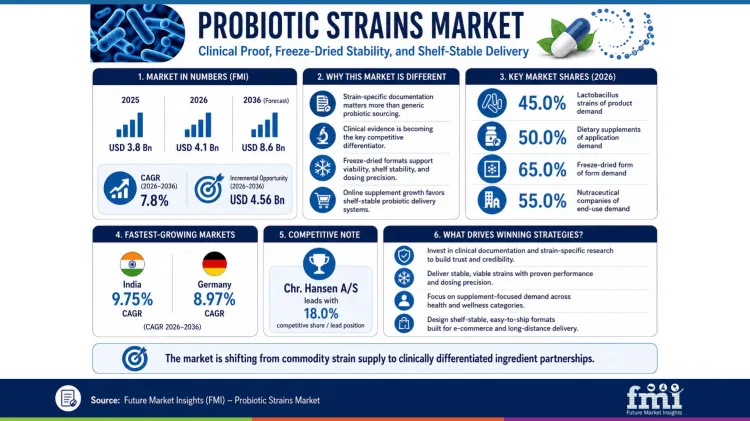
FMI’s Probiotic Strains Market preview shows that dietary supplements lead application demand with 50.0% share in 2026. This makes e-commerce highly relevant because probiotic supplements are commonly researched, compared, reviewed, and reordered online. Consumers want to understand gut health, immune support, strain names, CFU levels, dosage, and format differences before buying.
The Dietary Supplements Market supports the broader online behavior. Supplement shoppers often use digital channels to compare brands, claims, clinical support, ingredient quality, user reviews, and subscription pricing. Probiotic products fit this behavior especially well because they are recurring-use products. Once consumers trust a product, they often reorder monthly.
The freeze-dried form represents 65.0% of the total form demand in FMI’s Probiotic Strains Market Snapshot. This is important from the perspective of e-commerce as the probiotic strains freeze-dried form is easier to use in developing probiotics in capsule form, sachets, stick pack form, powders, among others.
The Probiotic Ingredients Market is relevant because strain suppliers must support finished brands with formats that fit digital selling. Online probiotic products need clear dosage, stable shelf life, and consumer-friendly delivery. If a strain cannot remain viable during storage and shipping, the online product promise becomes weak.
The Heat-Stable Probiotics Market shows the next stage of this shift. FMI states that heat-stable probiotics are moving from refrigeration-dependent delivery toward thermotolerant Bacillus species that enable ambient storage, baked goods, hot beverages, and ambient e-commerce channels. This is important because e-commerce favors products that do not need cold packs, temperature monitoring, or refrigerated delivery.
Subscription-based probiotics are also possible with shelf-stable probiotics. Monthly probiotics through a direct-to-consumer probiotic company will be possible if it is a shelf-stable probiotic. Problems with cold chain products include high costs, risks in the process of delivery, problems with melted ice packs, consumer skepticism about the product, and geographical limitations.
The Functional Food Ingredients Market is useful because probiotic strains are moving into bars, beverages, gummies, powders, cereals, and functional snacks. E-commerce can help these formats reach niche health audiences before broad retail rollout. However, each format places different stress on probiotic viability.
The other significant demand pull factor is online learning. The consumers may not understand the difference between Lactobacillus, Bifidobacterium, Bacillus, CFU count, strain specificity, prebiotics, postbiotics, and synbiotics. The online channels help brands make these distinctions clear. This is good for the suppliers who offer credible strain information since the brand can convert the information into trust.
The Lactobacillus genus accounts for 45.0% of the total demand for products in 2026. This provides an established base for online brands. On the other hand, the Lactobacillus line of products may suffer from stability problems during ambient distribution according to strain, form, packaging, and storage.
The Prebiotic Ingredients Market is relevant because synbiotic products are becoming common in online wellness. A probiotic plus prebiotic product can be easier to position around digestive balance. But combining live strains with fibers or other ingredients can also create formulation challenges, including moisture sensitivity and stability interactions.
However, E-commerce will ensure more transparency, as shoppers can check information like CFUs, strains, reviews, clinical evidence, and pricing at once. It could mean advantage for science-backed products and trouble for generics. A probiotics product labeled with “proprietary blend” only could be viewed with suspicion by well-informed customers.
The Nutraceutical Ingredients Market supports the idea that ingredient credibility is becoming part of brand differentiation. Online supplement brands often highlight branded strains, clinical support, vegan capsules, shelf-stable delivery, delayed-release formats, and third-party testing. This pulls ingredient suppliers into the consumer marketing chain.
The CAGR of India at 9.75% is yet another reason why e-commerce has importance. In rapidly developing wellness markets, online mediums can introduce consumers to probiotic supplements even before the penetration of specialist retailers has reached its full potential. In Germany, with its CAGR of 8.97%, a market that emphasizes quality and evidence, there is an increased probability for consumers to focus on strain information.
The key problem is misinformation. Probiotic marketing via the Internet can cause oversimplification, exaggerated benefits, or false assumptions about how probiotics work. It brings about reputational risk to suppliers and manufacturers. Effective Internet growth needs strain identification, truthful language regarding benefits, and stability assurance.
The misconception to avoid is that e-commerce only affects finished probiotic supplement brands. In reality, e-commerce changes upstream strain demand because manufacturers prefer ingredients that support shelf-stable, easy-to-ship, repeat-purchase formats.
Bottom line: E-commerce expands probiotic strain demand by rewarding shelf-stable delivery, clear documentation, and repeat wellness purchasing. The winners will be strain suppliers and brands that make probiotic benefits credible, stable, and easy to replenish online.
FMI Related Links
- Probiotic Strains Market: Primary link for supplement share, freeze-dried form share, Lactobacillus share, and country growth
- Heat-Stable Probiotics Market: Use when discussing ambient shipping, shelf-stable formats, and cold-chain reduction
- Dietary Supplements Market: Use when discussing online supplement purchase and replenishment
- Probiotic Ingredients Market: Use when discussing probiotic formats and ingredient selection
- Functional Food Ingredients Market: Use when discussing probiotic use in bars, beverages, powders, and functional foods
- Prebiotic Ingredients Market: Use when discussing synbiotic positioning and gut-health formulations
- Nutraceutical Ingredients Market: Use when discussing clinically positioned online wellness brands

