


- The private label risk in bubble tea is largely due to retail-ready and packaged versions and not shop-made versions.
- Retail is the top selling channel according to FMI's Bubble Tea Market preview, indicating that the segment has moved beyond specialty beverage stands.
- Packaged bubble tea can be mainstreamed using the channels of supermarkets, convenience stores, refrigerated shelves, clubs and even online retail.
- Bubble tea texture of tapioca pearls and quality of tea base form the main barriers to packaged bubble tea consumption.
- The specialist stands are safe as long as they protect their product in terms of freshness, customization, texture and social beverage experience.
- The largest misconception about bubble tea is that it is shielded from any form of retail competition since it is made in the store. This is the case until shelf life and topping stability improve.
Bubble tea first gained traction as a specialty-shop beverage. However, the industry is taking bubble tea past the counter. Packaged forms of this drink such as retail pack, cold cup, do-it-yourself kit, shelf-stable, and grocery store versions are increasingly being used by customers that may not frequent specialty drink shops.
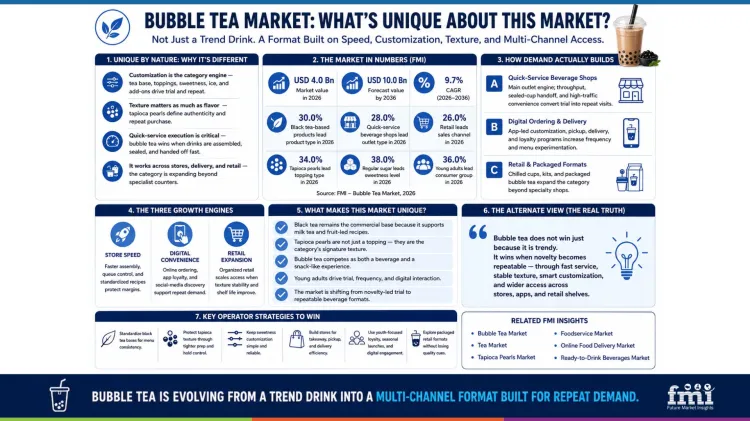
FMI's Bubble Tea Market preview identifies retail as the leading sales channel with 26.0% share in 2026. That is a major signal. Bubble tea is not only a quick-service shop category. It is also becoming a retail-ready beverage category where supermarkets, convenience chains, club stores, and online retailers can participate.
The private label threat begins when bubble tea becomes easier to package. Suppliers can help retailers improve shelf life, topping stability, packaging robustness, taste uniformity, and cold-chain handling. Such packaged beverages may not fully substitute beverages made on the spot at shops, but they can serve different consumption occasions.
The Ready-to-Drink Beverages Market is relevant because packaged bubble tea must behave like an RTD beverage while preserving a texture-based experience. This is difficult. Bubble tea is not only tea and sugar. It includes pearls, boba, jellies, milk, fruit flavors, syrups, and sometimes plant-based ingredients. The more complex the drink, the harder it is to commercialize in packaged form.
Tapioca pearls are the central challenge. FMI identifies tapioca pearls as the leading topping type with 34.0% share in 2026. This share shows that consumers still associate bubble tea with chewy texture. The Tapioca Pearls Market is relevant because pearls must remain pleasant during storage and consumption. If packaged pearls are too hard, too soft, or inconsistent, the retail product will disappoint consumers familiar with fresh shop-prepared drinks.
Black tea-based products also matter. FMI identifies black tea-based products as the leading product type with 30.0% share in 2026. The Tea Market supports the idea that tea-base quality must remain strong even in packaged formats. Retail products that rely too heavily on sugar or flavoring while losing tea character may struggle to build repeat purchase.
There are many valid reasons why retailers should venture into this category. First, bubble tea appeals to younger consumers, stands out visually, feels snack-like, and carries a premium image versus standard bottled drinks. Second, bubble tea has potential placement options such as chilled beverage shelves, convenience grab and go, Asian foods section, dessert beverage line, online grocery shopping as well as store-exclusive lines of products.
The Ready-to-Drink Beverages Market provides broader context because retailers are constantly looking for differentiated non-alcoholic beverages that can command higher value. Bubble tea can offer novelty, indulgence, and customization-inspired appeal even when sold as a packaged product.
Specialty tea stores continue to maintain their strengths because they provide freshly prepared beverages, extensive customization, better topping consistency, tailored sweetness levels, a social experience, and limited-time product innovation. According to FMI, quick-service beverage stores lead the channel types with 28.0% share, reaffirming the importance of the store-based channel.
The Foodservice Market is useful when comparing store-prepared and packaged bubble tea. Foodservice outlets can defend premium pricing when they deliver a fresher, more customizable, and more experiential drink. Retail products win when consumers value convenience, price, storage, and at-home consumption.
Private labeling poses the greatest threat in standard flavors such as regular milk tea, black tea milk tea, brown sugar milk tea, fruit tea, and plain tapioca pearl drinks because these products are easier to explain and market. Premium specialty stores may fare better with cheese foam, seasonal fruit, layered drinks, fresh fruit, and customized combinations.
Regular sugar's 38.0% sweetness-level share also matters. Retail packaged bubble tea must balance sweetness carefully. Too much sugar may limit repeat purchase among health-conscious consumers. Too little sweetness may fail to match the expected bubble tea profile. Retailers will need multiple sweetness tiers or clearer positioning to serve both indulgent and lighter occasions.
The risks associated with the private label will rise as manufacturers refine their techniques for packaging textures, cup design, straws, shelf life, and cold chain management. Once the retailers can offer adequate textures in affordable price segments, casual consumers will switch occasions from specialized outlets.
It is a common myth that bubble tea faces no retail competition because it is freshly prepared. Freshness is an advantage, but not every consumption occasion requires a fresh-made drink. Packaged bubble tea can win convenience-led occasions.
Bottom line: Private label and retail packaged bubble tea will not replace specialist tea shops, but they can expand the category and pressure casual occasions. Store-led brands must defend freshness, customization, and topping quality while exploring retail formats carefully.

