


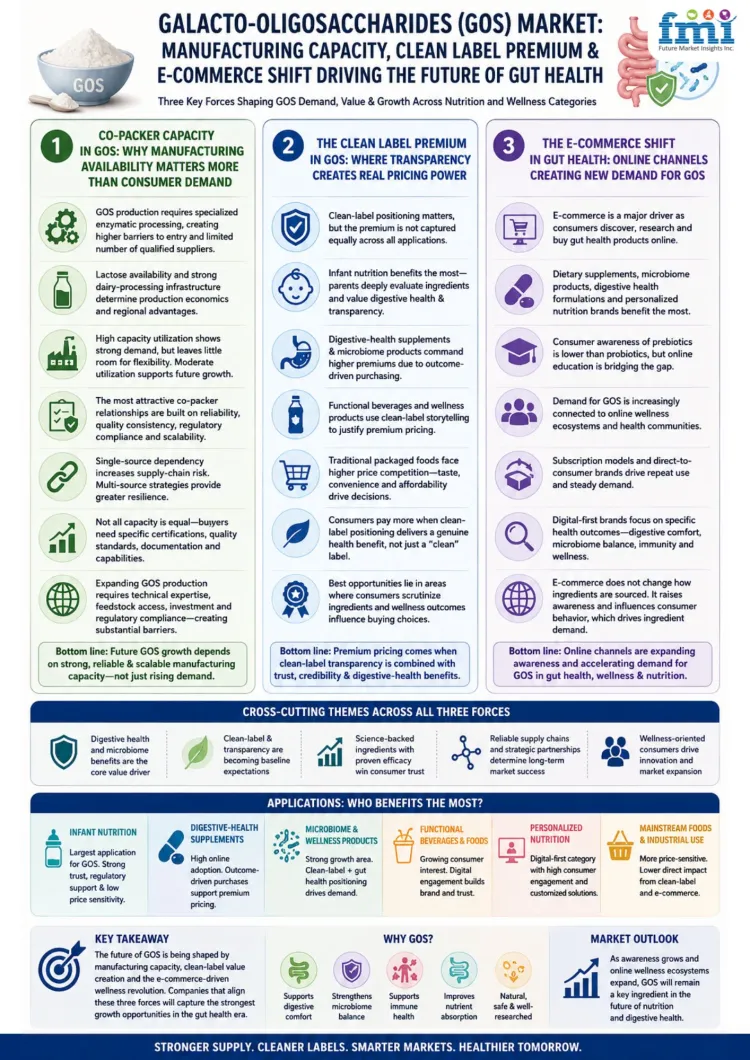
- E-commerce is becoming an important driver for GOS because people are increasingly discovering, researching, and buying gut health products online.
- Dietary supplements, microbiome products, digestive health formulations, and personalized nutrition brands are benefiting the most, rather than traditional packaged food manufacturers.
- Consumer awareness of prebiotics is lower than that of probiotics, but online education helps bridge that gap.
- Demand for GOS is increasingly connected to online wellness ecosystems where consumers seek digestive health solutions.
- Products focused on gut health, immunity, microbiome balance, and digestive comfort are benefiting the most from online sales.
- Infant nutrition remains the largest use for GOS, but adult wellness products are showing notable growth.
- A common misconception is that e-commerce changes how ingredients are sourced. It doesn’t. E-commerce changes consumer demand, which influences ingredient demand.
The effect of e-commerce on the Galacto-Oligosaccharide (GOS) market is often overlooked because GOS itself is not a consumer product. People do not visit online marketplaces to compare GOS specifications or look for ingredient suppliers. Instead, they buy digestive health supplements, functional nutrition products, microbiome formulations, and wellness solutions that contain GOS. This difference is important because the impact of e-commerce is indirect but increasingly significant.
The shift starts with how consumers find health products. In the past, digestive health products were bought at pharmacies, supermarkets, specialty stores, or through healthcare recommendations. Today, consumers encounter gut health information on social media, wellness blogs, podcasts, healthcare influencers, nutrition communities, and direct-to-consumer health brands.
This results in a larger audience actively looking for solutions to support digestive wellness and microbiome health.
This growing consumer interest creates a positive environment for prebiotic ingredients like GOS. Unlike many niche ingredients, GOS benefits from wider awareness of digestive health. Consumers may not specifically search for GOS, but they increasingly look for products that contain prebiotics or support gut health.
As digital commerce expands awareness of these products, ingredient demand grows.
One key development is the shift of gut health from a niche topic to a mainstream wellness category. Digestive wellness is no longer just seen as a solution for gastrointestinal issues. Consumers now link gut health to immunity, overall wellness, nutrient absorption, and lifestyle improvement.
This broader view increases the potential market for products with prebiotic ingredients.
The supplement category is currently the most impacted by this trend. Unlike regular food products, supplements rely heavily on consumer research and education. Buyers compare ingredients, evaluate claims, read reviews, and look into scientific evidence before buying.
These behaviors naturally align with online channels, making e-commerce a strong driver of supplement demand.
This matters because many digestive health supplements use prebiotic ingredients as a key functional part. As supplement sales move to digital platforms, the visibility of prebiotic ingredients increases. The rise of subscription-based wellness products further supports this trend by encouraging repeat purchases and steady consumption patterns.
The growth of direct-to-consumer nutrition brands has sped up this process. Traditional food companies often market broad product ranges and promote benefits through mass marketing. Digital-first wellness brands operate differently. They focus on specific consumer results like digestive comfort, microbiome balance, immune support, or daily wellness.
Their marketing strategies center on education, content creation, and direct engagement with consumers.
This approach fosters an environment where prebiotic ingredients become a part of the consumer discussion. While probiotics have traditionally received more attention, digital education is helping consumers understand the connection between probiotics and prebiotics.
As awareness rises, products with prebiotic ingredients gain more credibility and relevance.
The influence of e-commerce is not uniform across the GOS market. Certain uses are much more exposed than others.
Dietary supplements represent the highest exposure. Consumers actively seek digestive health solutions, compare formulations, and buy products online. Subscription programs and repeat purchases create a strong replenishment cycle, making this category especially attractive for brands using GOS.
Personalized nutrition products are also very exposed. Many personalized nutrition companies operate entirely online. Consumers complete health assessments online, receive tailored recommendations, and purchase products directly through digital platforms. Digestive health consistently ranks high among consumer interests, creating opportunities for formulations with prebiotics.
Functional nutrition products benefit as well from strong online engagement. Powders, drink mixes, wellness shots, and specialized nutrition products are often marketed through digital channels. Their success usually depends on educating consumers about specific health outcomes, making digital commerce an effective sales model.
Functional foods have a more moderate impact. While consumers increasingly come across functional foods online, buying decisions often happen in traditional retail settings. Digital channels may influence awareness, but physical stores remain key transaction points.
At the other end of the spectrum are industrial food ingredients and large-scale food manufacturing applications. Procurement teams do not source ingredients through consumer-facing e-commerce channels. Their decisions rely on technical specifications, regulatory needs, pricing structures, and supplier relationships.
As a result, these applications only experience indirect exposure to online sales.
This distinction points out an important reality within the GOS market. E-commerce primarily creates demand rather than fulfilling it. Consumer interest in health outcomes drives demand. Product manufacturers respond by adjusting formulations and introducing new products.
Ingredient suppliers ultimately benefit from these downstream changes.
Another important factor is the growing overlap between digestive health marketing and clean label expectations. Consumers interested in wellness products often look for ingredients seen as natural, transparent, and backed by science.
This trend favors established prebiotic ingredients with solid application histories.
Digital commerce enhances this effect since product information is more accessible online. Consumers can review ingredient lists, compare formulations, read educational materials, and assess product claims before making a purchase.
Products that effectively communicate both digestive health benefits and ingredient transparency tend to be better positioned to attract engaged online consumers.
The rising popularity of microbiome-focused products supports this trend. In recent years, microbiome science has gained more attention from researchers, healthcare professionals, and wellness brands. Although consumers may not fully grasp the underlying science, awareness of the gut health connection to overall wellness continues to grow.
As a result, product manufacturers are launching more formulations that emphasize digestive wellness and microbiome support. Many of these products rely on prebiotic ingredients to enhance their value proposition.
This creates an indirect but meaningful path for GOS demand growth.
The most promising opportunities appear in categories where consumer education directly influences buying behavior. Supplements, personalized nutrition, and wellness formulations fit this description as consumers actively seek information before making choices.
The more consumers learn about digestive health, the more likely they are to adopt products aimed at prebiotic functionality.
Traditional food categories face a different challenge. While claims about digestive health can help with product differentiation, buying decisions are often influenced by taste, convenience, and price.
Therefore, the link between online education and ingredient demand is less direct.
The rise of subscription-based health models might be a key development for the future GOS market. Subscription services encourage consistent consumption patterns and create predictable demand for wellness products.
For ingredient suppliers, this can mean more stable long-term demand compared to categories with occasional purchases.
The practical takeaway is that companies in the GOS value chain should closely monitor digital wellness ecosystems. The best future growth opportunities are likely to come from areas where consumer awareness, education, and engagement play a crucial role in purchasing decisions.
Not all GOS applications will benefit equally. Infant nutrition remains a key market supported by regulatory approvals, scientific validation, and established brand trust. However, dietary supplements, microbiome products, personalized nutrition offerings, and digestive health formulations are becoming more influenced by e-commerce.
The biggest winners are likely to be manufacturers who can connect prebiotic functionality with consumer health priorities. Products that promote digestive wellness, microbiome balance, and overall health improvement are well positioned to capitalize on growing online engagement.
The misconception is that e-commerce itself drives ingredient demand. In reality, e-commerce raises awareness, educates, and improves product accessibility. These elements influence consumer behavior, which ultimately drives demand throughout the value chain.
Bottom line: e-commerce is not changing how GOS is bought. It is changing how consumers discover and choose products that contain GOS. As online wellness ecosystems grow, digestive health supplements, personalized nutrition products, and microbiome-focused formulas are likely to become increasingly important in driving future GOS demand.
FMI Report Links
- Galacto-Oligosaccharides (GOS) Market: Primary link for market value, production capacity, application trends, and introduction and conclusion sections
- Pet Prebiotics Market: Use when discussing broader demand expansion, gut health trends, and functional nutrition
- Functional Food Ingredients Market: Use when discussing manufacturing scalability, ingredient innovation, and value-added food formulations
- Dairy Ingredients Market: Use when discussing lactose feedstock, dairy-processing infrastructure, and ingredient manufacturing
- Nutraceutical Ingredients Market: Use when discussing supplement manufacturing, quality standards, and health-focused ingredient applications

