


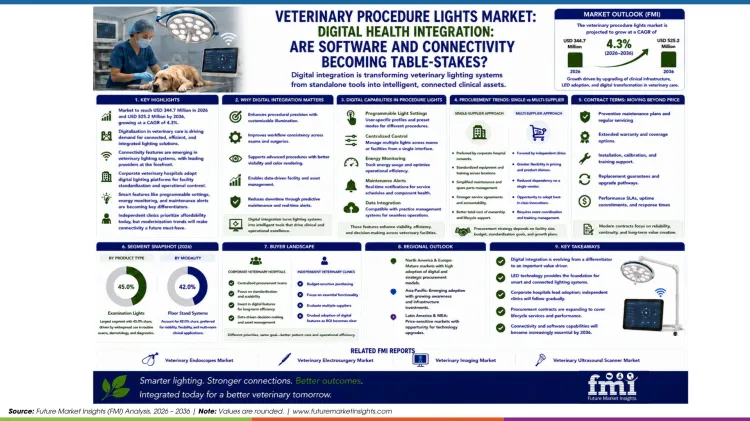
- The veterinary procedure lights market is estimated to grow from USD 344.7 Million in 2026 to USD 525.2 Million by 2036, at a CAGR of 4.3% with the upgrading of clinical infrastructure of veterinary facilities.
- Growing digitization in veterinary care is driving a requirement for equipment ecosystems that improve workflow efficiency, provide centralized control and assure greater procedural consistency.
- Connectivity capabilities are in their infancy in veterinary lighting systems but leading providers are increasingly looking at integrated technologies that improve operational oversight.
- Corporate veterinary hospitals are more likely to incorporate digitally enabled lighting platforms as part of broader facility standardization.
- Smart lighting technologies with programmable light intensity, energy monitoring and maintenance alerts are gradually becoming differentiation factors in procurement decisions.
- Independent veterinary clinics still appreciate affordability, but longer term trends of modernization indicate that connectivity capabilities may shift from optional features to competitive must-haves.
The veterinary procedure lights market is moving into a phase where the digital transformation of animal healthcare is affecting the performance expectations of clinical equipment. Procedure lights have traditionally been a stand-alone device, designed specifically for lighting purposes. But wider trends in health connectivity are starting to change procurement priorities.
The veterinary lighting market is anticipated to increase from USD 344.7 million in 2026 to USD 525.2 million by 2036, driven by continued investment in veterinary infrastructure and an increasing trend in advanced lighting technologies.
Previously, veterinary lighting systems competed mainly on brightness, maneuverability and durability. But the increasing use of digital practice management systems, integrated operating environments and data-driven facility operations are gradually broadening the criteria for equipment purchases.
In mature veterinary markets, large hospital networks are looking more and more at technologies to help them standardize workflows across multiple locations. This shift has sparked interest in equipment with programmable settings, user-specific preferences and simplified monitoring capabilities.
Intelligent control systems for procedure lights can help to achieve a better consistency during examinations and surgical interventions. Clinicians can adjust lighting conditions to procedural requirements using preset illumination modes, customizable intensity profiles and touch screen interfaces.
Such capabilities are particularly relevant as veterinary practices are performing ever more sophisticated interventions.
Emergency procedures, orthopedic surgery, ophthalmic treatment and specialty care applications require highly controlled illumination environments. These new clinical demands are supported by advanced LED systems with better color rendering and precise intensity tuning.
The conversation about integration doesn't stop at the clinical functionality.
Operational efficiency is getting more focus at facility administrators. Smart lighting systems can help to cut unplanned downtime and maximize equipment utilization by monitoring component performance, tracking usage patterns and identifying preventive maintenance needs.
These features fit within a broader effort to improve the management of resources across veterinary organizations.
The first adopters are likely to be corporate veterinary groups.
Centralized procurement teams tend to focus on equipment platforms that allow for enterprise-wide standardization. Technologies that support consistent training, minimize maintenance variability, and streamline asset management are more likely to be considered during purchasing evaluations.
Independent practices are a different animal.
Budget constraints tend to steer investment toward basic functionality, rather than more connectivity. For many smaller clinics, reliability and cost are still the biggest drivers of purchasing. But as digital technologies spread, the scope for incremental uptake should increase.
The ongoing shift from halogen to LED lighting provides an important foundation for future integration opportunities.
LED platforms are already very advantageous in terms of energy efficiency, lifespan of operation and quality of illumination. As manufacturers continue to grow their product portfolios, software-enabled functionality may be increasingly coupled with those traditional benefits.
That leaves manufacturers with a big strategic decision.
By marketing digital capabilities as valuable workflow improvements, rather than gratuitous complexity, companies can improve their competitive positioning. The operational value can be measured in terms of maintenance planning, customization of procedures, and energy optimisation.
Meanwhile, excessive technological sophistication without clear clinical relevance risks limiting adoption among cost-conscious buyers.
The misunderstanding to avoid is that veterinary facilities will instantly require highly connected operating environments similar to those seen in advanced human healthcare settings.
In fact, it’s likely to be slow and steady adoption.
The first use cases for connectivity will likely be in premium vet hospitals and consolidated practice networks, before it moves into broader market segments. The speed of this transition will depend on demonstrated improvements in efficiency, usability and economic return.
The bottom line is that software and connectivity are not yet universal needs in the veterinary procedure lights market. Still, as veterinary healthcare is digitally transformed, it is more likely that smart lighting capabilities will shift from being a premium differentiator to an essential component of modern veterinary infrastructure.

