

- Market Size (2026)
- USD 1.6 Bn
- Forecast (2036)
- USD 10.4 Bn
- CAGR (2026 to 2036)
- 20.6%
How big is AI Voice Agents Healthcare Market in 2026?
USD 1.6 billion in 2026 and USD 10.4 billion by 2036 at a 20.6% CAGR.
Demand for AI voice agents in healthcare is projected to expand at 20.6% CAGR between 2026 and 2036, increasing valuation from USD 1.6 billion in 2026 to USD 10.4 billion by 2036. Growing interest in healthcare AI is being driven by its potential to reduce administrative workloads and improve clinical workflow efficiency. The American Medical Association reported in February 2025 that 57% of physicians identified administrative-burden automation as healthcare AI’s largest opportunity. That workload creates a measurable budget case for clinical documentation workflows across hospital and physician networks. Commercial approval depends on accurate record posting and clear clinician review for uncertain outputs during production use. Platforms that reduce note completion time without creating hidden correction work can support wider deployment across specialties.
United States health systems can test voice automation across many specialties through large electronic record programs. Abridge announced in October 2025 that Northwell Health planned a systemwide ambient documentation deployment across 28 hospitals and more than 1,000 outpatient facilities. United Kingdom implementations follow national assurance rules and Japanese hospitals apply local-language and medical-information security checks. National assurance and security differences make verified healthcare NLP performance more useful than one universal accuracy claim across countries. Each implementation must connect speech output with the correct record and a defined escalation route. Regional support then determines whether a successful pilot can become dependable service across several sites.
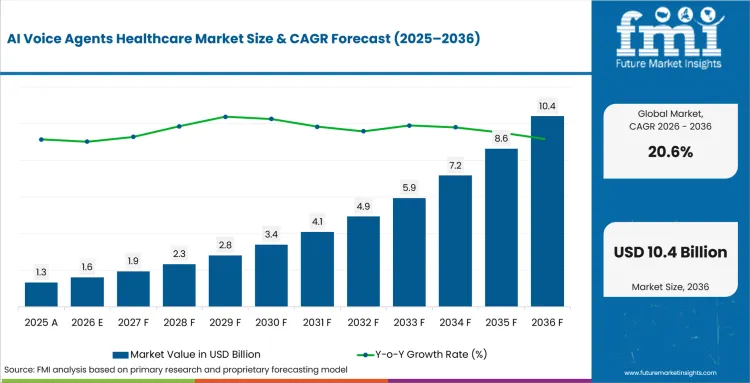
Key Takeaways of AI Voice Agents Healthcare Market
- Documentation burden and patient access workloads support demand by creating measurable delays across clinical and administrative healthcare teams.
- By product type, clinical voice assistants are estimated to hold 33.0% in 2026 owing to integrated documentation and task execution across routine encounters.
- In 2026, clinical documentation is expected to lead the application category with 31.0% share supported by measurable reductions in manual note preparation.
- Hospitals are set to lead the end-user category with 38.0% share in 2026, due to concentrated record and patient contact workloads.
- Clinical errors and weak record integration remain material barriers that require governance beyond accurate speech transcription throughout enterprise deployment.
- Microsoft and Suki AI compete with Abridge and DeepScribe in clinical documentation whereas Hyro and SoundHound AI focus on patient access alongside Orbita and Amazon Web Services.
Analyst Perspective
"Healthcare organizations fund AI voice agents for two reasons: clinicians close notes with fewer edits and patients receive faster answers to routine calls. Documentation agents must place accurate drafts in the correct record and preserve a clear clinician review step. Patient access agents must transfer sensitive requests to trained staff without losing caller context or delaying urgent care. Contracts expand through repeatable gains across specialties and service channels rather than impressive demonstrations without operating evidence."
- Anurag Sharma, Principal Analyst, Future Market Insights
How is the AI Voice Agents Healthcare Market segmented?
The AI Voice Agents Healthcare industry is segmented by product type, application, end user, deployment, technology, and region.
The segmentation framework separates the voice product from the workflow, purchasing organization, delivery model, technology, and regional environment. Product type distinguishes clinician-facing assistants from patient engagement agents and administrative voice tools across healthcare operations. Application separates documentation and communication from revenue-cycle tasks, telehealth services, and care-coordination work across clinical settings. End user identifies the organization that approves deployment and carries clinical accountability across the implemented voice workflow. Deployment compares cloud-based and hybrid delivery with on-premises models that retain infrastructure inside the healthcare organization. Technology distinguishes NLP and automatic speech recognition from generative AI, speech analytics, and voice biometrics. Regional analysis compares record systems and assurance routes alongside language requirements and local support capacity. The category structure prevents conversational AI solutions from being treated as one interchangeable healthcare offer during evaluation.
What supports the position of Clinical Voice Assistants within the product type category?
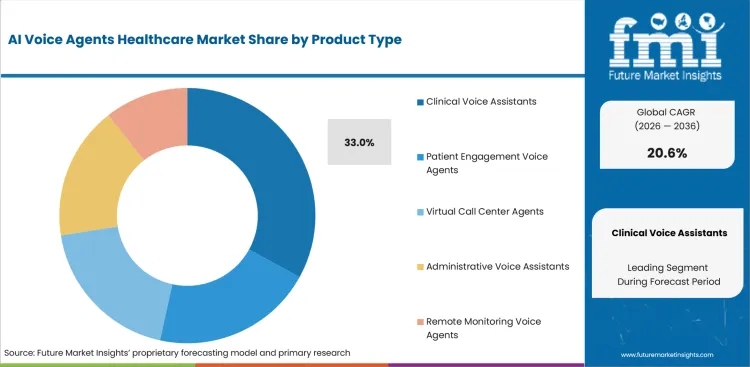
Clinical voice assistants place documentation and routine task support inside a clinician’s normal work sequence. Hospitals prefer one interface that combines note creation with routine task support across repeated encounters. Microsoft introduced Dragon Copilot in March 2025 as a unified assistant for clinical documentation and workflow automation. The launch combined multilingual note creation with information retrieval and conversational task support across one clinician-facing interface. Broader workflow coverage creates a clearer enterprise role than standalone transcription but requires controlled record posting and named clinical review.
- Clinical voice assistants are set to lead the product type category with 33.0% share in 2026 due to integrated documentation and task execution. One interface can combine dictation and ambient notes with information retrieval across repeated encounters every working day. The position depends on dependable record integration and clinician review rather than a long feature list during demonstrations.
- Clinical voice assistants are drawing demand from specialties with high documentation volume and stable encounter patterns. Pilot teams measure clinician edit rates and record-posting accuracy across representative cases during routine clinical practice. Expansion becomes harder if health systems cannot assign responsibility for incorrect summaries or unsupported details during production use.
Why does clinical documentation lead the application category?
Clinical documentation targets a recurring workload with measurable completion time and established review standards across routine encounters. Suki announced an enterprise-wide Rush rollout across 28 clinical specialties and care settings in March 2025. The program connected ambient documentation and AI-assisted dictation with the existing Epic record workflow across participating departments. Health systems can evaluate editing effort and documentation improvement without creating a separate patient process. Specialty templates and clinician review remain important adoption conditions across every implemented department and encounter type.
- By application, clinical documentation is estimated to hold 31.0% in 2026 owing to its direct connection with encounter completion. Health systems can compare note-closing time and editing effort against established performance across several clinical specialties. The position weakens if generated records require extensive correction or omit clinical context during routine review.
- Medical groups are increasingly purchasing clinical documentation tools for specialties with steady visit volumes and defined note structures. Training programs focus on reviewing generated drafts and correcting unsupported details prior to final record submission. Wider use becomes defensible once administrators observe consistent performance across several specialties rather than isolated enthusiasm in one department.
How do hospitals shape demand within the end user category?
Hospitals manage large documentation volumes and patient access operations across many connected clinical and administrative departments. Enterprise purchasing requires repeatable performance across specialties and care sites under shared technology governance and clinical accountability. Abridge announced its Duke Health partnership in January 2025 with availability for 5,000 clinicians across more than 150 clinics. The deployment linked ambient documentation with formal record controls and clinician review across the participating health system. Many hospitals also connect patient access agents with patient engagement platforms across established service channels.
- Based on the end-user category, hospitals are projected to account for 38.0% in 2026 due to concentrated documentation and patient contact workloads. Enterprise contracts can cover several clinical departments under shared governance and record controls across participating hospital networks. The position reflects purchasing scale but does not remove department-level validation or implementation support requirements.
- Hospitals are expected to favor voice agents that pass clinical safety and security review across representative departments. Technology teams test identity controls and record integration under normal workloads across several production environments. Access expands once specialty leaders confirm usable time savings without extra correction work for clinicians or unresolved handoffs for patients.
What keeps cloud-based deployment ahead within the deployment category?
Cloud-based delivery adds managed speech recognition systems without requiring each health system to maintain complete model infrastructure. Amazon Web Services added a behavioral-health GIRPP template to HealthScribe for structured documentation workflows in February 2025. The update showed how managed services can distribute specialty documentation formats through one interface across customer organizations. Centralized updates can shorten deployment across customer sites, although data location and service availability remain central approval questions.
- By deployment, cloud-based delivery is forecast to represent 64.0% in 2026 driven by scalable processing and centralized service updates. Health systems can launch one defined voice workflow without buying dedicated model infrastructure or specialized server capacity. The position depends on secure interfaces and dependable service continuity across connected clinical record and contact systems.
- Cloud-based delivery adoption is gaining momentum in health systems that need staged deployment across several sites. Security teams can limit initial data exposure as administrators test latency and support response under normal healthcare workloads. Expansion requires explicit platform responsibilities for outages and model changes across every production voice workflow and service environment.
Which buying mechanism supports natural language processing within the technology category?
Natural language processing converts speech transcripts into structured clinical or administrative content for downstream use. Clinical informatics teams require summaries and coded fields that remain traceable to source conversations throughout record review. DeepScribe and Pearl Health announced a January 2025 partnership covering more than 3,500 primary care providers. The arrangement linked ambient note generation with point-of-care information inside value-based care workflows rather than standalone speech analytics. Commercial value depends on accurate specialty terminology and preserved clinical context across representative patient encounters and documentation workflows.
- Natural language processing is likely to capture 36.0% share in 2026 attributable to its role in structuring spoken information for clinical and administrative workflows. The technology supports summaries and coded fields that enter downstream systems, although dependable performance requires terminology handling across specialties and varied patient language patterns during routine use.
- Natural language processing is drawing attention from clinical informatics teams that can compare generated fields with source conversations. Reviewers document recurring terminology and context errors across representative encounters within each implemented clinical workflow. The process gives technology teams a practical basis for correcting terminology errors without expanding review work across unrelated cases. Adoption broadens as review standards become specific enough for routine audits and focused model improvement across clinical departments.
What are the drivers, restraints, and opportunities in the AI Voice Agents Healthcare Market?
Documentation and patient access backlogs support demand; clinical errors and weak record integration restrain adoption; narrow governed workflows offer the clearest expansion route.
- Driver: Documentation and patient access backlogs create measurable work that voice agents can address inside established healthcare workflows.
- Restraint: Clinical errors and weak record integration return correction work to clinicians and increase governance requirements.
- Opportunity: Narrow governed deployments establish dependable performance prior to health systems extending voice agents into additional departments and workflows.
Documentation and patient access backlogs create work that health systems can measure through unfinished notes and unanswered calls. Canada Health Infoway launched its AI Scribe Program in June 2025 with up to 10,000 funded one-year licenses for eligible primary care clinicians. The program gives healthcare virtual assistants a defined route into routine documentation rather than a separate innovation project. Health systems can compare time saved with clinician editing across regular use and expand purchasing once those results remain consistent across specialties and care locations.
Accurate-sounding output can omit clinical details or place information in the wrong part of a patient record. Those errors return correction work to clinicians and increase safety review across production healthcare deployments. NHS England updated its ambient-scribing guidance in April 2026 and identified output errors, integration failures, and missing critical information as hazards. The guidance requires clinician review and ongoing monitoring throughout the operating life of every deployed ambient-scribing system. Contracts slow if error responsibility remains unclear between the healthcare organization and the technology provider during production use.
Patient access creates a practical expansion route through appointment scheduling and routine service questions that already follow defined escalation rules. SoundHound AI announced its Allina Health deployment of the Alli voice agent in May 2025. The agent integrates with electronic medical records and manages appointment calls through existing patient service operations. Health systems can automate repeat requests while preserving trained staff for sensitive or complex cases. Commercial expansion depends on fast transfer and accurate caller identification across everyday patient access interactions.
Which country CAGRs are profiled in the AI Voice Agents Healthcare Market?
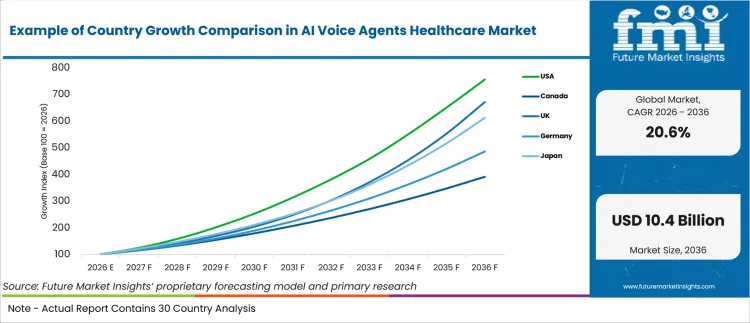
| Country | CAGR |
|---|---|
| Australia | 23.9% |
| USA | 22.4% |
| UK | 21.0% |
| Japan | 19.9% |
| Germany | 17.1% |
| Singapore | 16.0% |
| Canada | 14.6% |
How do country-level CAGRs compare in the AI Voice Agents Healthcare Market?
The country rates span 9.3 percentage points between Australia and Canada, which shows a wide difference in forecast pace. Australia and the USA form an upper cluster separated by 1.5 points, with the UK sitting 1.4 points below the USA. Japan follows another 1.1 points lower, and Germany creates a 2.8-point internal break in the comparison. Singapore remains 1.1 points below Germany and 1.4 points above Canada within the lower forecast group. The spacing reflects different electronic medical records environments and national assurance routes rather than one common deployment pathway.
- Australia combines dispersed care networks with a national review of healthcare AI regulation across urban and regional facilities. Remote implementation capacity supports adoption, but uneven service coverage can delay expansion outside larger health networks.
- Large United States health systems can standardize voice platforms across specialties through shared electronic records and technology teams. Fragmented contracting and legal exposure can lengthen expansion decisions across independent networks and regional health systems.
- National assurance frameworks give the United Kingdom a shared route for ambient voice technology across NHS care settings. Local NHS bodies retain clinical safety and purchasing responsibility throughout implementation and routine production use.
- Medical-information security requirements and local-language accuracy shape Japanese implementation across hospitals and connected clinical systems. Domestic technical support remains necessary for dependable hospital use across specialty terminology and established record environments.
- Widespread electronic patient record access gives Germany a defined integration route through practice software and shared infrastructure. Interoperability testing and terminology validation remain necessary across clinical settings throughout implementation and routine documentation use.
- Centralized public infrastructure supports coordinated Singapore deployment across hospitals and community care institutions through shared technology teams. Multilingual performance and strict security review narrow the qualified provider field during implementation and subsequent expansion.
- A national AI scribe evaluation gives Canada shared evidence for clinician-facing tools across primary care settings. Provincial record differences and service distances complicate consistent implementation support across remote and urban healthcare organizations.
Comparable CAGR rates can produce different commercial entry conditions across countries with similar headline growth. Platform companies should assess record integration and local support capacity prior to assigning resources across national healthcare systems. The full report provides country-level CAGR analysis across North America, Latin America, Europe, East Asia, South Asia, Oceania and the Middle East and Africa.
Country-wise Analysis
- Australian healthcare organizations operate across large service distances and varied digital maturity between urban and regional facilities. Adoption of healthcare voice agents in Australia is estimated to expand at 23.9% CAGR through 2036, supported by national attention to responsible healthcare AI. The Australian Department of Health published its final legislation and regulation review in July 2025. The report established a national policy context for hospitals evaluating clinical voice systems and related software. Cloud delivery supports remote implementation across dispersed sites without maintaining complete model infrastructure at every location. Regional consent processes and uneven technical support remain material frictions outside larger health networks during implementation. Commercial plans need regional service coverage and documented clinician review responsibilities across every supported implementation area.
- United States health systems purchase voice technology through enterprise record programs and specialty-led clinical evaluations. Abridge reported in February 2026 that more than one-third of about 6,000 UCHealth clinicians used its ambient system. Healthcare voice agent demand in the United States is forecast to rise at 22.4% CAGR over the forecast period, supported by active enterprise deployments. Large networks can standardize integration and training across several locations through shared technology teams and formal governance. Fragmented contracting and legal exposure remain material frictions across independent health systems and regional networks. Platform companies need accountable record-posting controls and specialty performance evidence prior to broader enterprise expansion.
- United Kingdom providers operate through nationally defined digital assurance frameworks and formal clinical safety requirements. The United Kingdom healthcare voice agent sector is projected to record 21.0% CAGR during the assessment period, supported by national assurance and regional purchasing routes. NHS England Midlands reported in July 2026 that one regional agreement covered 1,239 GP practices and more than 70,000 clinicians across 15 trusts. Regional scale gives voice platforms a defined route into primary and acute care across participating healthcare organizations. Local NHS bodies retain responsibility for consent and clinical safety throughout implementation and routine production use. Commercial entry requires approved integration routes and dependable support suited to NHS record environments and care settings.
- Japanese healthcare providers require reliable local-language processing and controlled handling of medical information across hospital records. Japan’s Ministry of Health published version 7.0 of its medical information system security guidelines in June 2026. In Japan, healthcare voice agent demand is predicted to advance at 19.9% CAGR through 2036 due to record modernization and security requirements. The guidance gives platform developers a current framework for documenting system controls during local evaluation. Specialty terminology and integration with established hospital systems create material implementation friction across several clinical departments. Commercial entry requires local technical partners and sustained language validation across hospitals and other clinical settings.
- German healthcare providers are integrating electronic patient records into routine clinical and pharmacy workflows across connected care settings. By 2036, Germany’s healthcare voice agent market is projected to grow at 17.1% CAGR supported by broader electronic record use. Gematik reported in September 2025 that more than 93,000 facilities opened at least one electronic patient record during the previous week. National record adoption gives voice systems a defined route through practice software and shared digital infrastructure. Interoperability testing and compliance documentation remain material local frictions across production healthcare environments during implementation. Commercial plans need dependable software integration and validated German-language terminology across routine documentation workflows and care settings.
- Singapore combines centralized public healthcare technology with multilingual communication requirements across hospitals and community care institutions. The Ministry of Health reported in November 2025 that doctors used ambient scribing across four local languages. Shared infrastructure enables controlled implementation across several public organizations through coordinated technology teams and governance groups. Singapore’s healthcare voice agent outlook is anticipated to advance at 16.0% CAGR over the assessment period, supported by coordinated public deployment. A smaller domestic provider base and demanding security review create commercial friction during implementation and scaling. Successful platform operators need local integration support and consistent multilingual performance across clinical conversations and service channels.
- Canadian primary care operates through provincial systems and a broad geography that complicates implementation support across remote communities. A national evaluation gives healthcare organizations shared evidence for clinician-facing tools across primary care settings. Canada Health Infoway published a June 2026 report covering an independent six-month evaluation of AI scribes in primary care. Canada’s healthcare voice agent market is estimated to post 14.6% CAGR over the forecast period, influenced by national evidence development for clinician-facing scribes. Provincial record differences and remote support distances remain material frictions across distributed healthcare practices and support models. Commercial plans should include regional integration partners and clear service response commitments across provincial healthcare environments.
Who are the notable companies in the AI Voice Agents Healthcare Market?
Microsoft, Suki AI, Abridge, DeepScribe, Hyro, Orbita, Amazon Web Services, and SoundHound AI are notable companies shaping this market.
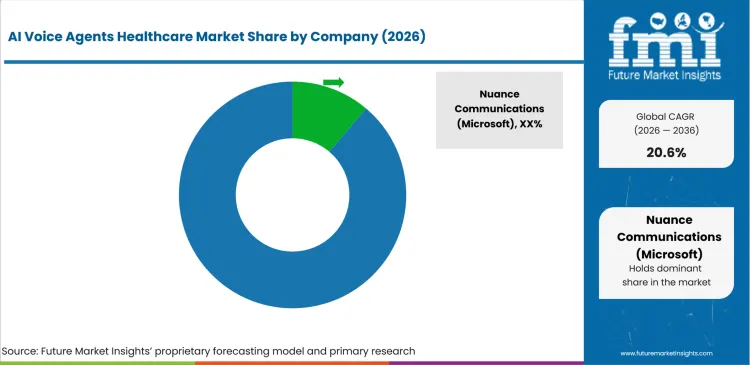
The competitive outlook combines ambient documentation platforms with patient access agents and cloud infrastructure services. Microsoft and specialist platforms compete through clinical workflow depth and record integration across enterprise deployments. Hyro announced a Tampa General Hospital partnership in November 2025 for scheduling and related administrative interactions. The project integrated with Epic and several telephony platforms, showing how patient access agents enter established healthcare contact centers. Orbita and SoundHound AI focus on patient communication and navigation through voice interfaces across healthcare service operations. Commercial differentiation depends on supported workflows and implementation accountability rather than a broad artificial intelligence claim.
- Microsoft and Suki AI compete with Abridge and DeepScribe across clinician-facing documentation and enterprise record integration. Their positions depend on specialty coverage and measurable editing performance across routine encounters under shared governance and support models. Health systems compare those results before adding further departments or regional care locations across the enterprise.
- Hyro and Orbita compete with SoundHound AI through conversational patient access agents for scheduling and service requests. Their deployments require reliable identity handling and prompt transfer of complex cases to trained healthcare teams. Health systems evaluate transfer accuracy and service continuity before extending automated access across additional departments.
- Amazon Web Services provides managed speech and healthcare agent services for application builders and enterprise deployments. Its position depends on cloud governance and integration choices that each health organization validates prior to production use. Application teams must confirm deployment support and operating boundaries across each selected clinical or administrative workflow.
Competitive Benchmarking: AI Voice Agents Healthcare Market
| Company | Conversational Voice Platform | Healthcare Workflow Specialization | Integration and Governance | Geographic Reach |
|---|---|---|---|---|
| Microsoft | High | High | High | Multi-country |
| Suki AI | High | High | High | United States |
| Abridge | Medium | High | High | United States |
| DeepScribe | Medium | High | High | United States |
| Hyro | High | High | High | United States |
| Orbita | High | High | Medium | United States |
| Amazon Web Services | High | Medium | High | United States |
| SoundHound AI | High | High | Medium | United States |
Key Developments in the AI Voice Agents Healthcare Market
- In October 2025, Suki AI launched a nursing consortium with several health systems and partnered with AvaSure to develop ambient documentation for nursing workflows. The initiative extended voice documentation beyond physician encounters and created a distinct evaluation route for nursing records. Participating organizations can test common forms and flowsheets across Epic, MEDITECH, and Oracle Health and preserve review requirements for frontline nurses.
- In March 2026, Amazon Web Services introduced Amazon Connect Health with five healthcare agents for patient verification, appointment management, patient insights, ambient documentation, and medical coding. The launch connected patient access functions with existing contact centers and clinician-facing applications across established healthcare workflows. Healthcare organizations received a managed route for testing routine voice tasks with safety guardrails and staff escalation inside existing systems.
- In April 2025, DeepScribe announced that CARTI Cancer Center selected its ambient operating system across 18 locations. The deployment brought oncology-specific documentation and clinical intelligence into established CARTI workflows across the regional cancer network. The multi-site implementation gives clinical leaders a practical setting for comparing note quality and adoption across complex cancer care encounters without separating the ambient platform from specialty records.
- In February 2025, Abridge announced an enterprise agreement with Inova covering more than 1,000 clinicians. The systemwide deployment connected ambient documentation with Inova’s electronic medical record and established clinical workflows across the regional network. Inova can compare documentation performance across specialties and care locations under one governance model, and clinicians retain responsibility for reviewing generated notes prior to record completion.
Key Players in the AI Voice Agents Healthcare Market
Clinical Documentation Platforms
- Microsoft
- Suki AI
- Abridge
- DeepScribe
Patient Access and Engagement Platforms
- Hyro
- Orbita
- SoundHound AI
Cloud Infrastructure Provider
- Amazon Web Services
AI Voice Agents Healthcare Market - Report Scope
| Coverage field | Report scope |
|---|---|
| Market breakdown | Product Type, Application, End User, Deployment, Technology, and Region. |
| Market Definition | Speech-enabled artificial intelligence systems used for clinical documentation, patient access, scheduling, communication, and healthcare administrative workflows. |
| Regions Covered | North America, Latin America, Western Europe, Eastern Europe, East Asia, South Asia and Pacific, and Middle East and Africa. |
| Countries Covered | Australia, USA, UK, Japan, Germany, Singapore, and Canada. |
| Key Companies Profiled | Microsoft, Suki AI, Abridge, DeepScribe, Hyro, Orbita, Amazon Web Services, and SoundHound AI. |
| Forecast Period | 2026 to 2036. |
| Approach | Hybrid bottom-up and top-down market sizing supported by primary interviews and official desk research. |
AI Voice Agents Healthcare Market - Research Methodology
| Method | Approach |
|---|---|
| Primary Research | FMI analysts gathered input from manufacturers, service providers, technology developers, distributors, end users, procurement teams, and subject-matter experts. Interviews examined purchasing decisions, product or service evaluation, adoption barriers, approval requirements, pricing considerations, and expectations for technical or commercial support. Respondents were also asked what evidence is required before a trial, pilot, or initial order develops into regular purchasing. |
| Desk Research | Desk research covered government statistics, regulatory publications, trade data, industry associations, technical literature, standards, company filings, product information, and official corporate announcements. Sources were reviewed for relevance, publication date, geographic coverage, and consistency with the defined market scope. Claims relating to performance, applications, approvals, capacity, investment, and commercial activity were retained only when supported by credible public evidence. |
| Market Sizing and Forecasting | The market model combined the baseline value with historical performance, segment structure, pricing and volume indicators, adoption levels, company participation, and country-level demand conditions. Forecast assumptions considered economic activity, investment trends, regulatory developments, technology adoption, purchasing cycles, supply availability, and barriers to wider market use. Segment and regional estimates were reconciled before the final market total was calculated. |
| Data Validation | Estimates were checked against multiple independent indicators, including public data, company activity, trade patterns, industry developments, and findings from primary interviews. Validation also tested whether products, services, applications, and company revenues fell within the defined market boundaries. Adjacent categories, unsupported claims, overlapping revenues, and activities without direct market relevance were excluded to reduce double counting and maintain consistency across segments and countries. |
AI Voice Agents Healthcare Market by Segments
AI Voice Agents Healthcare Market segmented by Product Type:
- Clinical Voice Assistants
- Patient Engagement Voice Agents
- Virtual Call Center Agents
- Administrative Voice Assistants
- Remote Monitoring Voice Agents
AI Voice Agents Healthcare Market segmented by Application:
- Clinical Documentation
- Patient Communication
- Revenue Cycle Management
- Telehealth Services
- Care Coordination
AI Voice Agents Healthcare Market segmented by End User:
- Hospitals
- Healthcare Providers
- Diagnostic Centers
- Health Insurance Companies
- Telehealth Providers
AI Voice Agents Healthcare Market segmented by Deployment:
- Cloud-Based
- Hybrid
- On-Premises
AI Voice Agents Healthcare Market segmented by Technology:
- Natural Language Processing (NLP)
- Automatic Speech Recognition (ASR)
- Generative AI
- Speech Analytics
- Voice Biometrics
AI Voice Agents Healthcare Market by Region:
- North America
- United States
- Canada
- Latin America
- Brazil
- Mexico
- Argentina
- Chile
- Western Europe
- Germany
- France
- United Kingdom
- Italy
- Spain
- Benelux
- Nordics
- Eastern Europe
- Poland
- Czech Republic
- Romania
- Hungary
- East Asia
- China
- Japan
- South Korea
- South Asia and Pacific
- India
- ASEAN
- Australia and New Zealand
- Middle East and Africa
- GCC Countries
- South Africa
- Türkiye
- Israel
Research Sources and Bibliography
- American Medical Association. (2025, February 12)
- Abridge. (2025, October 14)
- Microsoft. (2025, March 3).
- Suki AI. (2025, March 3).
- Abridge. (2025, January 9).
- Amazon Web Services. (2025, February 12).
- DeepScribe. (2025, January 14).
- Canada Health Infoway. (2025, June 10).
- NHS England. (2026, April 24).
- SoundHound AI. (2025, May 29).
- Australian Government Department of Health, Disability and Ageing. (2025, July 23).
- Abridge. (2026, February 24).
- NHS England Midlands. (2026, July 15).
- Ministry of Health, Labour and Welfare. (2026, June).
- Gematik. (2025, September 30)
- Ministry of Health Singapore. (2025, November 28).
- Canada Health Infoway. (2026, June 23).
- Hyro. (2025, November 25).
- Orbita Team. (2025, April 17)
- Amazon Web Services. (2026, March 5).
- DeepScribe. (2025, April 15).
- Abridge. (2025, February 26)
This bibliography is provided for reader reference and is not exhaustive. The full report contains the complete reference list and detailed citations.
This Report Answers
- How large is the AI Voice Agents Healthcare market in 2026 and 2036?
- Which operational pressures support investment in healthcare voice agents?
- Why do clinical voice assistants account for a significant product type share in 2026?
- How does clinical documentation influence adoption across healthcare organizations?
- Why does cloud-based deployment represent the largest deployment share in 2026?
- How do country growth rates differ across Australia, the USA, the UK, Japan, Germany, Singapore, and Canada?
- Which companies provide clinical documentation or patient access voice platforms?
- What limits reliable deployment across clinical records and patient contact workflows?
- How should health systems evaluate expansion beyond an initial voice agent pilot?
Frequently Asked Questions
How big is the AI Voice Agents Healthcare Market in 2026?
The AI voice agents healthcare market is valued at USD 1.6 billion in 2026 and is forecast to reach USD 10.4 billion by 2036. Growth is supported by growing interest in reducing administrative workloads, with 57% of physicians identifying administrative-burden automation as healthcare AI's largest opportunity across clinical documentation and patient access workflows.
What is the CAGR of the AI Voice Agents Healthcare Market from 2026 to 2036?
The AI voice agents healthcare market grows at a CAGR of 20.6% between 2026 and 2036, supported by health systems adopting clinical voice assistants and patient access agents once those platforms demonstrate accurate record posting, dependable specialty terminology, and clearly assigned clinician review steps across enterprise deployments.
Which product type leads the AI Voice Agents Healthcare Market?
Clinical voice assistants account for 33.0% of the AI voice agents healthcare market by product type in 2026, driven by integrated documentation and task execution across routine encounters where one interface combines ambient note creation with information retrieval and dependable record integration throughout daily clinical workflows.
How much will the AI Voice Agents Healthcare Market add between 2026 and 2036?
The AI voice agents healthcare market is set to add USD 8.8 billion between 2026 and 2036, growing from USD 1.6 billion to USD 10.4 billion as clinical documentation platforms, patient access agents, and cloud-based ambient scribing systems enter funded enterprise healthcare pathways across a widening base of hospital and physician network programs worldwide.
Who are the leading companies in the AI Voice Agents Healthcare Market?
Five companies lead the AI voice agents healthcare market, including Microsoft, Suki AI, Abridge, DeepScribe, and Hyro, competing through unified clinician-facing documentation platforms, ambient note generation, enterprise record integration, oncology-specific workflows, and conversational patient access agents across hospital and health system programs worldwide.
Preview the report firsthand - request a free sample
Get SampleGet the brochure for pricing and purchase details.
Get PDFTable of Content
- Key Takeaways
- Market Size and CAGR
- Top Growth Driver
- Fastest Growing Segment
- Leading Region
- Key Companies
- Emerging Opportunities
- Executive Summary
- Global Market Outlook
- Demand-side Trends
- Supply-side Trends
- Technology Roadmap Analysis
- Analysis and Recommendations
- Analyst Perspective (What is happening? Why now? What should investors know?)
- Key Questions Answered
- How large is the market?
- What is the CAGR?
- What are key trends?
- Which region dominates?
- Who are the leaders?
- Market Overview
- Market Coverage / Taxonomy
- Market Definition / Scope / Limitations
- Research Methodology
- Chapter Orientation
- Analytical Lens and Working Hypotheses
- Market Structure, Signals, and Trend Drivers
- Benchmarking and Cross-market Comparability
- Market Sizing, Forecasting, and Opportunity Mapping
- Research Design and Evidence Framework
- Desk Research Programme (Secondary Evidence)
- Expert Input and Fieldwork (Primary Evidence)
- Tooling, Models, and Reference Databases
- Data Engineering and Model Build
- Quality Assurance and Audit Trail
- Market Background
- Market Dynamics (Drivers, Restraints, Opportunity, Trends)
- Scenario Forecast (Optimistic, Likely, Conservative)
- Impact Analysis
- AI Impact
- Sustainability Impact
- Regulatory Impact
- Technology Impact
- Consumer / Buyer Analysis
- Purchase Drivers
- Adoption Barriers
- Buyer Journey
- Opportunity Map Analysis
- Product Life Cycle Analysis
- Supply Chain Analysis
- Investment Feasibility Matrix
- Value Chain Analysis
- PESTLE and Porter's Analysis
- Regulatory Landscape
- Regional Parent Market Outlook
- Production and Consumption Statistics
- Import and Export Statistics
- Global Market Analysis and Forecast, 2021 to 2036
- Historical Market Size Value (USD Billion) Analysis, 2021 to 2025
- Current and Future Market Size Value (USD Billion) Projections, 2026 to 2036
- Y-o-Y Growth Trend Analysis
- Absolute $ Opportunity Analysis
- Global Market Pricing Analysis, 2021 to 2036
- Global Market Analysis and Forecast, By Product Type, 2021 to 2036
- Introduction / Key Findings
- Historical Market Size Value (USD Billion) Analysis By Product Type, 2021 to 2025
- Current and Future Market Size Value (USD Billion) Analysis and Forecast By Product Type, 2026 to 2036
- Clinical Voice Assistants
- Ambient Clinical Documentation
- Physician Voice Assistants
- Patient Engagement Voice Agents
- Appointment Scheduling Agents
- Medication Reminder Agents
- Virtual Call Center Agents
- Inbound Voice Agents
- Outbound Voice Agents
- Administrative Voice Assistants
- Billing Support Agents
- Insurance Verification Agents
- Remote Monitoring Voice Agents
- Chronic Care Monitoring
- Post-Discharge Follow-up
- Clinical Voice Assistants
- Y-o-Y Growth Trend Analysis By Product Type, 2021 to 2025
- Absolute $ Opportunity Analysis By Product Type, 2026 to 2036
- Global Market Analysis and Forecast, By Application, 2021 to 2036
- Introduction / Key Findings
- Historical Market Size Value (USD Billion) Analysis By Application, 2021 to 2025
- Current and Future Market Size Value (USD Billion) Analysis and Forecast By Application, 2026 to 2036
- Clinical Documentation
- Automated Medical Transcription
- EHR Documentation
- Patient Communication
- Appointment Management
- Patient Query Resolution
- Revenue Cycle Management
- Insurance Verification
- Payment Follow-up
- Telehealth Services
- Virtual Consultation Support
- Remote Patient Assistance
- Care Coordination
- Post-Treatment Follow-up
- Care Navigation
- Clinical Documentation
- Y-o-Y Growth Trend Analysis By Application, 2021 to 2025
- Absolute $ Opportunity Analysis By Application, 2026 to 2036
- Global Market Analysis and Forecast, By End User, 2021 to 2036
- Introduction / Key Findings
- Historical Market Size Value (USD Billion) Analysis By End User, 2021 to 2025
- Current and Future Market Size Value (USD Billion) Analysis and Forecast By End User, 2026 to 2036
- Hospitals
- Public Hospitals
- Private Hospitals
- Healthcare Providers
- Primary Care Clinics
- Specialty Clinics
- Diagnostic Centers
- Imaging Centers
- Pathology Laboratories
- Health Insurance Companies
- Public Insurers
- Private Insurers
- Telehealth Providers
- Virtual Care Providers
- Digital Health Platforms
- Hospitals
- Y-o-Y Growth Trend Analysis By End User, 2021 to 2025
- Absolute $ Opportunity Analysis By End User, 2026 to 2036
- Global Market Analysis and Forecast, By Deployment, 2021 to 2036
- Introduction / Key Findings
- Historical Market Size Value (USD Billion) Analysis By Deployment, 2021 to 2025
- Current and Future Market Size Value (USD Billion) Analysis and Forecast By Deployment, 2026 to 2036
- Cloud-Based
- Public Cloud
- Private Cloud
- Hybrid
- Cloud-Integrated Systems
- Edge-Enabled Hybrid
- On-Premises
- Local Data Centers
- Private Hospital Infrastructure
- Cloud-Based
- Y-o-Y Growth Trend Analysis By Deployment, 2021 to 2025
- Absolute $ Opportunity Analysis By Deployment, 2026 to 2036
- Global Market Analysis and Forecast, By Technology, 2021 to 2036
- Introduction / Key Findings
- Historical Market Size Value (USD Billion) Analysis By Technology, 2021 to 2025
- Current and Future Market Size Value (USD Billion) Analysis and Forecast By Technology, 2026 to 2036
- Natural Language Processing (NLP)
- Medical NLP
- Conversational NLP
- Automatic Speech Recognition (ASR)
- Real-Time Speech Recognition
- Multilingual ASR
- Generative AI
- Large Language Models
- Clinical AI Assistants
- Speech Analytics
- Sentiment Analysis
- Conversation Intelligence
- Voice Biometrics
- Speaker Authentication
- Voice Identity Verification
- Natural Language Processing (NLP)
- Y-o-Y Growth Trend Analysis By Technology, 2021 to 2025
- Absolute $ Opportunity Analysis By Technology, 2026 to 2036
- Global Market Analysis and Forecast, By Region, 2021 to 2036
- Introduction
- Historical Market Size Value (USD Billion) Analysis By Region, 2021 to 2025
- Current Market Size Value (USD Billion) Analysis and Forecast By Region, 2026 to 2036
- North America
- Latin America
- Western Europe
- Eastern Europe
- East Asia
- South Asia and Pacific
- Middle East & Africa
- Market Attractiveness Analysis By Region
- North America Market Analysis and Forecast, By Country, 2021 to 2036
- Historical Market Size Value (USD Billion) Trend Analysis By Market Taxonomy, 2021 to 2025
- Market Size Value (USD Billion) Forecast By Market Taxonomy, 2026 to 2036
- By Country
- USA
- Canada
- By Product Type
- By Application
- By End User
- By Deployment
- By Technology
- By Country
- Market Attractiveness Analysis
- By Country
- By Product Type
- By Application
- By End User
- By Deployment
- By Technology
- Key Takeaways
- Latin America Market Analysis and Forecast, By Country
- Historical Market Size Value (USD Billion) Trend Analysis By Market Taxonomy, 2021 to 2025
- Market Size Value (USD Billion) Forecast By Market Taxonomy, 2026 to 2036
- By Country
- Brazil
- Mexico
- Chile
- Rest of Latin America
- By Product Type
- By Application
- By End User
- By Deployment
- By Technology
- By Country
- Market Attractiveness Analysis
- By Country
- By Product Type
- By Application
- By End User
- By Deployment
- By Technology
- Key Takeaways
- Western Europe Market Analysis and Forecast, By Country
- Historical Market Size Value (USD Billion) Trend Analysis By Market Taxonomy, 2021 to 2025
- Market Size Value (USD Billion) Forecast By Market Taxonomy, 2026 to 2036
- By Country
- Germany
- UK
- Italy
- Spain
- France
- Nordic
- BENELUX
- Rest of Western Europe
- By Product Type
- By Application
- By End User
- By Deployment
- By Technology
- By Country
- Market Attractiveness Analysis
- By Country
- By Product Type
- By Application
- By End User
- By Deployment
- By Technology
- Key Takeaways
- Eastern Europe Market Analysis and Forecast, By Country
- Historical Market Size Value (USD Billion) Trend Analysis By Market Taxonomy, 2021 to 2025
- Market Size Value (USD Billion) Forecast By Market Taxonomy, 2026 to 2036
- By Country
- Russia
- Poland
- Hungary
- Balkan & Baltic
- Rest of Eastern Europe
- By Product Type
- By Application
- By End User
- By Deployment
- By Technology
- By Country
- Market Attractiveness Analysis
- By Country
- By Product Type
- By Application
- By End User
- By Deployment
- By Technology
- Key Takeaways
- East Asia Market Analysis and Forecast, By Country
- Historical Market Size Value (USD Billion) Trend Analysis By Market Taxonomy, 2021 to 2025
- Market Size Value (USD Billion) Forecast By Market Taxonomy, 2026 to 2036
- By Country
- China
- Japan
- South Korea
- By Product Type
- By Application
- By End User
- By Deployment
- By Technology
- By Country
- Market Attractiveness Analysis
- By Country
- By Product Type
- By Application
- By End User
- By Deployment
- By Technology
- Key Takeaways
- South Asia and Pacific Market Analysis and Forecast, By Country
- Historical Market Size Value (USD Billion) Trend Analysis By Market Taxonomy, 2021 to 2025
- Market Size Value (USD Billion) Forecast By Market Taxonomy, 2026 to 2036
- By Country
- India
- ASEAN
- Australia & New Zealand
- Rest of South Asia and Pacific
- By Product Type
- By Application
- By End User
- By Deployment
- By Technology
- By Country
- Market Attractiveness Analysis
- By Country
- By Product Type
- By Application
- By End User
- By Deployment
- By Technology
- Key Takeaways
- Middle East & Africa Market Analysis and Forecast, By Country
- Historical Market Size Value (USD Billion) Trend Analysis By Market Taxonomy, 2021 to 2025
- Market Size Value (USD Billion) Forecast By Market Taxonomy, 2026 to 2036
- By Country
- Kingdom of Saudi Arabia
- Other GCC Countries
- Türkiye
- South Africa
- Other African Union
- Rest of Middle East & Africa
- By Product Type
- By Application
- By End User
- By Deployment
- By Technology
- By Country
- Market Attractiveness Analysis
- By Country
- By Product Type
- By Application
- By End User
- By Deployment
- By Technology
- Key Takeaways
- Key Countries Market Analysis
- USA
- Pricing Analysis
- Market Share Analysis, 2025
- By Product Type
- By Application
- By End User
- By Deployment
- By Technology
- Canada
- Pricing Analysis
- Market Share Analysis, 2025
- By Product Type
- By Application
- By End User
- By Deployment
- By Technology
- Mexico
- Pricing Analysis
- Market Share Analysis, 2025
- By Product Type
- By Application
- By End User
- By Deployment
- By Technology
- Brazil
- Pricing Analysis
- Market Share Analysis, 2025
- By Product Type
- By Application
- By End User
- By Deployment
- By Technology
- Chile
- Pricing Analysis
- Market Share Analysis, 2025
- By Product Type
- By Application
- By End User
- By Deployment
- By Technology
- Germany
- Pricing Analysis
- Market Share Analysis, 2025
- By Product Type
- By Application
- By End User
- By Deployment
- By Technology
- UK
- Pricing Analysis
- Market Share Analysis, 2025
- By Product Type
- By Application
- By End User
- By Deployment
- By Technology
- Italy
- Pricing Analysis
- Market Share Analysis, 2025
- By Product Type
- By Application
- By End User
- By Deployment
- By Technology
- Spain
- Pricing Analysis
- Market Share Analysis, 2025
- By Product Type
- By Application
- By End User
- By Deployment
- By Technology
- France
- Pricing Analysis
- Market Share Analysis, 2025
- By Product Type
- By Application
- By End User
- By Deployment
- By Technology
- India
- Pricing Analysis
- Market Share Analysis, 2025
- By Product Type
- By Application
- By End User
- By Deployment
- By Technology
- ASEAN
- Pricing Analysis
- Market Share Analysis, 2025
- By Product Type
- By Application
- By End User
- By Deployment
- By Technology
- Australia & New Zealand
- Pricing Analysis
- Market Share Analysis, 2025
- By Product Type
- By Application
- By End User
- By Deployment
- By Technology
- China
- Pricing Analysis
- Market Share Analysis, 2025
- By Product Type
- By Application
- By End User
- By Deployment
- By Technology
- Japan
- Pricing Analysis
- Market Share Analysis, 2025
- By Product Type
- By Application
- By End User
- By Deployment
- By Technology
- South Korea
- Pricing Analysis
- Market Share Analysis, 2025
- By Product Type
- By Application
- By End User
- By Deployment
- By Technology
- Russia
- Pricing Analysis
- Market Share Analysis, 2025
- By Product Type
- By Application
- By End User
- By Deployment
- By Technology
- Poland
- Pricing Analysis
- Market Share Analysis, 2025
- By Product Type
- By Application
- By End User
- By Deployment
- By Technology
- Hungary
- Pricing Analysis
- Market Share Analysis, 2025
- By Product Type
- By Application
- By End User
- By Deployment
- By Technology
- Kingdom of Saudi Arabia
- Pricing Analysis
- Market Share Analysis, 2025
- By Product Type
- By Application
- By End User
- By Deployment
- By Technology
- Türkiye
- Pricing Analysis
- Market Share Analysis, 2025
- By Product Type
- By Application
- By End User
- By Deployment
- By Technology
- South Africa
- Pricing Analysis
- Market Share Analysis, 2025
- By Product Type
- By Application
- By End User
- By Deployment
- By Technology
- USA
- Market Structure Analysis
- Competition Dashboard
- Competition Benchmarking
- Market Share Analysis of Top Players
- By Regional
- By Product Type
- By Application
- By End User
- By Deployment
- By Technology
- Emerging Startups
- Innovation Benchmarking
- Competition Analysis
- Competition Deep Dive
- Nuance Communications (Microsoft)
- Overview
- Product Portfolio
- Profitability by Market Segments
- Sales Footprint
- Strategy Overview
- Marketing Strategy
- Product Strategy
- Channel Strategy
- Suki AI
- Abridge
- DeepScribe
- Hyro
- Orbita
- Amazon Web Services
- Google Cloud
- NVIDIA
- SoundHound AI
- Nuance Communications (Microsoft)
- Case Studies
- Success Stories
- Recent Developments
- Competition Deep Dive
- Assumptions & Acronyms Used


