

- Market Size (2026)
- USD 20.2 Mn
- Forecast (2036)
- USD 51.9 Mn
- CAGR (2026 to 2036)
- 9.9%
How big is Alternan Biopolymer Coatings Market in 2026?
Starting from USD 18.4 million in 2025, the global alternan biopolymer coatings market valuation advanced to USD 20.2 million in 2026, with projections pointing toward USD 51.9 million by 2036 at a CAGR of 9.9%.
Frequent harvest disruptions across Sahelian Acacia senegal belts and statutory bans on fluorinated greaseproof paper treatments are forcing food and packaging procurement teams to qualify domestically synthesized hydrocolloid coatings. Rather than relying on imported tree exudates or high-viscosity native starches that clog spray nozzles, formulators are turning to sucrose-derived enzymatic alpha-glucans. For instance, an October 2025 study in Food Chemistry confirmed that alternating alpha-(1->6) and alpha-(1->3) glycosidic linkages prevent chain aggregation in water and give alternan low solution viscosity with gum-arabic-like film formation [1]. Because of this Newtonian spray behavior, confectionery panners and paperboard mills can substitute alternan dispersions directly into gum arabic glazing and barrier lines without retrofitting drying tunnels. Within enzymatic synthesis route, Recombinant Alternansucrase (Leuconostoc mesenteroides) from Sucrose commands a projected 68.4% share in 2026, supported by high-titer Escherichia coli and Bacillus enzyme expression. Driven by these formulation switches, global alternan biopolymer coatings market value progresses from USD 18.4 million in 2025 to USD 20.2 million in 2026 and is forecast to reach USD 51.9 million by 2036, advancing at a 9.9% CAGR to add USD 31.7 million in annual market value. However, ultrafiltration membrane fouling during co-product fructose removal still elevates purification costs and restrains adoption in low-margin commodity boxboard.
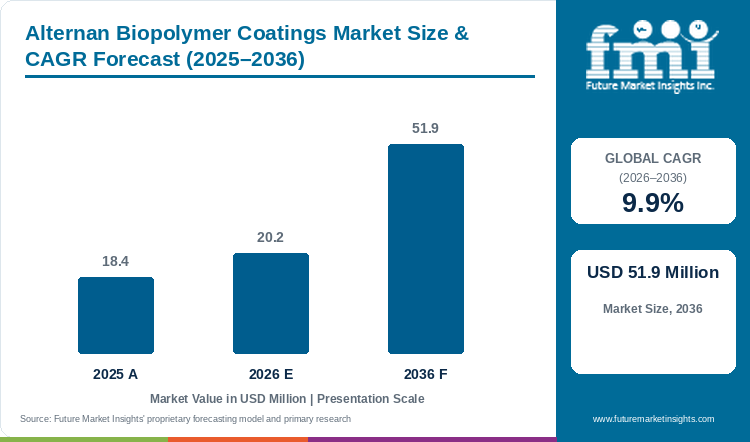
Key Market Trends & Insights
- By enzymatic synthesis route: Recombinant Alternansucrase (Leuconostoc mesenteroides) from Sucrose is projected to capture 68.4% in 2026 because cloned glucansucrases eliminate wild-type dextran co-synthesis.
- By molecular weight & rheology grade: Low-Viscosity High-Solids (30-50 wt%) Spray Coating Grade is estimated to command 57.5% in 2026 owing to rapid drying kinetics that cut panning drum energy consumption by 25%.
- By coating & encapsulation function: Gum-Arabic Replacement Film-Forming Glaze is expected to concentrate 46.2% in 2026 attributable to stable domestic sucrose feedstocks that replace Sahelian acacia gum.
- By end-use sector: Panned Confectionery, Nut & Cereal Gloss Coatings are anticipated to generate 44.8% in 2026 linked to transparent lipid-oxidation barriers that prevent roasted nut rancidity.
Regional Highlights
- Top national expansion: South Korea is projected to lead national growth at an 11.2% CAGR through 2036 under enzymatic alpha-glucan probiotic encapsulation and functional confectionery glazing.
- Broader country progression: Mexico is expected to expand at a 10.7% CAGR ahead of Japan at 9.5% and the USA at 9.4%, while Germany is forecast to progress at a 9.2% annual rate.
Market Size & Forecast
Table 1: Market Size and Forecast for the Alternan Biopolymer Coatings Market (USD million and CAGR percentage), 2025 to 2036
| Metric | Value |
|---|---|
| 2025 Market Size | USD 18.4 million |
| Estimated Market Size in 2026 | USD 20.2 million |
| Projected Market Size by 2036 | USD 51.9 million |
| CAGR, 2026 to 2036 | 9.9% |
| Added Revenue, 2026 to 2036 | USD 31.7 million |
Conventional starch and xanthan gum barrier coatings thicken sharply above 15 wt% solids, which forces paper mills and snack panners to evaporate large volumes of water in gas-fired drying hoods. Alternan overcomes this thermal bottleneck because its alternating linkage geometry resists intermolecular gelation and sprays cleanly at 40 wt% solids. As a matter of fact, enzyme engineers reported in Preparative Biochemistry & Biotechnology in July 2026 that a 161 kDa recombinant glucansucrase expressed in Escherichia coli BL21(DE3) achieved 300.19 U/mg specific activity and synthesized 59.23 g/L exopolysaccharide in vitro, outperforming wild-type yields by 18.79% [2]. Higher cell-free enzyme productivity lowers unit biocatalyst costs and allows converters to deploy PFAS-free barrier coatings for food paper across high-speed size presses.
Enzymatic Sucrose Bioconversion and Coating Tonnage Sizing
Table 2: Enzymatic Reactor Output and Coating Volume Sizing for the Alternan Biopolymer Coatings Market (USD million and operational ranges), 2025 to 2036
| Metric | 2025 | 2026 | 2036 |
|---|---|---|---|
| Market size (USD million) | 18.4 | 20.2 | 51.9 |
| Purified alternan biopolymer demand (metric tons) | 1,650 to 1,820 | 1,830 to 2,020 | 5,100 to 5,650 |
| Sucrose substrate processed (metric tons) | 3,600 to 4,000 | 4,000 to 4,450 | 11,000 to 12,200 |
| Average coating grade price per kilogram (USD) | 10.1 to 11.2 | 10.0 to 11.0 | 9.2 to 10.2 |
Operational note: Stoichiometric sucrose conversion reflects glucosyl moiety transfer via EC 2.4.1.140 alternansucrase yielding roughly 0.45 to 0.48 kilograms of purified alternan plus recoverable D-fructose per kilogram of sucrose.
Every kilogram of sucrose cleaved by alternansucrase yields roughly 0.46 kilograms of alternan along with an equal weight of liberated D-fructose. Chromatographic separation and sale of that crystalline fructose byproduct offsets nearly a quarter of the raw sugar feedstock cost. Integrated sugar biorefiners use this dual-product credit to narrow the price gap against polylactic acid and modified starch dispersions on specialty coating lines.
Panning Drum & Paper Coater Line Economics
Table 3: Spray Solids Efficiency and Line Spending Indicators for the Alternan Biopolymer Coatings Market (USD and percentages), 2025 to 2036
| Metric | 2025 | 2026 | 2036 |
|---|---|---|---|
| Commercial panning & paper lines using alternan (units) | 145 | 162 | 415 |
| Annual alternan spend per production line (USD thousand) | 126.9 | 124.7 | 125.1 |
| Maximum sprayable solids concentration (wt%) | 38.0% to 42.0% | 40.0% to 45.0% | 45.0% to 50.0% |
| Drying cycle time reduction vs. standard gum (%) | 18.0% to 22.0% | 20.0% to 24.0% | 24.0% to 28.0% |
Table 4: Confectionery & Paper Coating Facility Indicators for the Alternan Biopolymer Coatings Market (USD and percentages), 2026
| Metric | Value | Institutional Reference Basis |
|---|---|---|
| Market size, 2026 | USD 20.2 million | 2026 global revenue baseline |
| Industrial confectionery & barrier-paper plants | 1,850 facilities | Global food panning & specialty paper registry |
| Average alternan spend per facility | USD 10,918.9 | Annualized biopolymer coating expenditure |
| Confectionery, nut & cereal gloss revenue, 2026 | USD 9.0 million | 44.8% end-use sector allocation |
When confectionery panners spray high-molecular-weight gums at elevated solids, fibrous cobwebbing ruins dragee surface gloss and forces line stoppages. Low-viscosity alternan eliminates nozzle stringing at 40 wt% solids while forming a tight oxygen barrier around roasted nut centers. To extend this film-forming advantage into oil-in-water beverage emulsions, formulators incorporate octenyl succinic anhydride-modified alternan into biodegradable microencapsulation technology slurries that lock in volatile citrus and mint oils.
Analyst Perspective
"Substitution of imported Acacia senegal gum and fluorinated paper sizing requires a biopolymer that sprays cleanly at 40% solids without stringing or foaming. Enzymatic alternan suppliers that integrate fructose side-stream recovery with octenyl succinic anhydride hydrophobization will win multi-year supply contracts across confectionery panners and quick-service foodservice paper mills."
- Nikhil Kaitwade, Principal Consultant, Future Market Insights.
How is the alternan biopolymer coatings market segmented?
The alternan biopolymer coatings market is segmented by enzymatic synthesis route, molecular weight & rheology grade, coating & encapsulation function, and end-use sector. In 2026, Recombinant Alternansucrase (Leuconostoc mesenteroides) from Sucrose is projected at 68.4%, Low-Viscosity High-Solids (30-50 wt%) Spray Coating Grade at 57.5%, Gum-Arabic Replacement Film-Forming Glaze at 46.2%, and Panned Confectionery, Nut & Cereal Gloss Coatings at 44.8%.
By enzymatic synthesis route: Recombinant Alternansucrase (Leuconostoc mesenteroides) from Sucrose, Cell-Free Immobilized Glucosyltransferase Reactors, Engineered Mutant Glucansucrase Cascade Systems, and others.
By molecular weight & rheology grade: Low-Viscosity High-Solids (30-50 wt%) Spray Coating Grade, Sonicated Nanoparticle Emulsion Stabilizer Grade, Octenyl Succinic Anhydride (OSA) Modified Hydrophobic Alternan, and others.
By coating & encapsulation function: Gum-Arabic Replacement Film-Forming Glaze, High-Gloss Oxygen & Grease Barrier Dispersion, Flavor Oil & Fat-Soluble Vitamin Microencapsulation Shell, and others.
By end-use sector: Panned Confectionery, Nut & Cereal Gloss Coatings, Greaseproof Foodservice Paper Wraps, Beverage Clouding & Flavor Emulsion Capsules, and others.
Why does Recombinant Alternansucrase (Leuconostoc mesenteroides) from Sucrose lead the enzymatic synthesis route category?
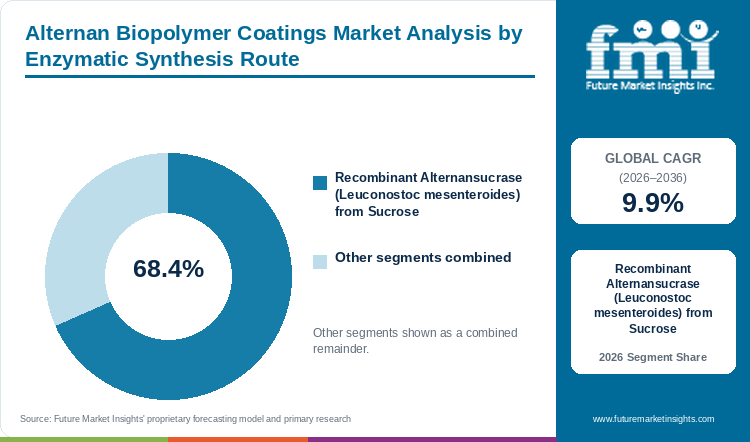
Recombinant Alternansucrase (Leuconostoc mesenteroides) from Sucrose is projected to capture 68.4% of enzymatic synthesis route demand in 2026, supported by dextran-free transglucosylation from refined sucrose.
Table 5: Enzymatic Synthesis Route Share for the Alternan Biopolymer Coatings Market (percentage share), 2026
| Enzymatic Synthesis Route | Share (2026) |
|---|---|
| Recombinant Alternansucrase (Leuconostoc mesenteroides) from Sucrose | 68.4% |
| Other Segments Combined | 31.6%* |
| Total | 100.0% |
*Calculated as the balance remaining after deducting the leading segment's reported share from 100.0%.
Table 6: Enzymatic Synthesis Route Leadership and Market Growth for the Alternan Biopolymer Coatings Market (segment and CAGR percentage), 2026 to 2036
| Metric | Value |
|---|---|
| Global CAGR (2026 to 2036) | 9.9% |
| Leading Segment | Recombinant Alternansucrase (Leuconostoc mesenteroides) from Sucrose |
Wild-type Leuconostoc mesenteroides NRRL B-1355 co-secretes dextransucrase and alternansucrase, forcing expensive fractional ethanol precipitation to strip out slimy linear dextran. Heterologous expression of cloned alternansucrase eliminates dextran co-synthesis while supplying consistent batch viscosity to the bioplastic and biopolymer sector.
- Recombinant Alternansucrase (Leuconostoc mesenteroides) from Sucrose is projected to secure 68.4% of enzymatic synthesis route revenue in 2026 by enabling single-step aqueous sucrose polymerization.
- For instance, International Flavors & Fragrances reported USD 601 million in second-quarter Health & Biosciences sales in August 2026 with 5% comparable currency-neutral growth led by Grain Processing and Food Biosciences enzyme platforms [3].
Why does Low-Viscosity High-Solids (30-50 wt%) Spray Coating Grade define the largest molecular weight & rheology grade segment?
Low-Viscosity High-Solids (30-50 wt%) Spray Coating Grade is estimated to secure 57.5% of the molecular weight & rheology grade category in 2026, driven by Newtonian spray atomization that cuts drying tunnel energy loads.
Starch and cellulose ether coatings gel above 15 wt% solids, forcing paper mills and confectionery panners to evaporate large volumes of water in gas-fired drying hoods. High-speed rod coaters producing edible films and coatings run controlled-molecular-weight alternan dispersions at 35 to 45 wt% solids without nozzle stringing.
- Within the molecular weight & rheology grade category, Low-Viscosity High-Solids (30-50 wt%) Spray Coating Grade commands an estimated 57.5% share in 2026 owing to 25% shorter drum drying cycles.
- As a matter of fact, enzyme researchers at Nanjing Tech University reported in the Journal of Agricultural and Food Chemistry in November 2025 that recombinant Leuconostoc glucansucrase engineering controls branching efficiency at 74% on T3 glucans with thermal stability up to 287.65 degrees Celsius [4].
What keeps Gum-Arabic Replacement Film-Forming Glaze ahead by coating & encapsulation function?
Gum-Arabic Replacement Film-Forming Glaze is expected to command 46.2% of coating & encapsulation function volume in 2026, reflecting procurement diversification away from Sahelian acacia harvests.
Sudanese conflict and Sahelian droughts repeatedly disrupt Acacia senegal shipments and trigger severe spot price volatility for beverage and confectionery buyers. Enzymatic alternan matches acacia gum's cold-water solubility and neutral sensory profile while drawing on domestic beet and cane sucrose.
- Gum-Arabic Replacement Film-Forming Glaze holds an expected 46.2% share of coating & encapsulation function sales in 2026 because domestic sugar biorefineries guarantee fixed multi-year contract pricing.
- To illustrate why carrier selection governs shelf stability, an October 2025 encapsulation trial in Scientific Reports demonstrated that optimizing carbohydrate wall ratios in freeze-dried microcapsules directly controlled moisture uptake and antioxidant retention [5].
Why do Panned Confectionery, Nut & Cereal Gloss Coatings lead the end-use sector category?
Panned Confectionery, Nut & Cereal Gloss Coatings are anticipated to generate 44.8% of end-use sector revenue in 2026, owing to transparent oxygen-barrier adhesion on roasted nuts and chocolate dragees.
Roasted almonds and hazelnuts as well as extruded cereal clusters develop hexanal rancidity and fat bloom unless sealed with an oxygen-blocking pre-coat prior to chocolate panning. Multinational snack plants therefore adopt aqueous alternan glazes to replace ethanol-based shellac and animal gelatin without volatile organic compound emissions.
- In 2026, Panned Confectionery, Nut & Cereal Gloss Coatings represent an anticipated 44.8% of end-use sector demand through vegan and allergen-free gloss finishing across nut and dragee lines.
- Evidence of this thermal and oxygen barrier came in February 2025 when researchers at Sejong University and Purdue University showed in the International Journal of Biological Macromolecules that alpha-glucan-coated porous starch granules preserved 96.5% Lactobacillus rhamnosus GG viability at 65 degrees Celsius and 63.9% Bifidobacterium longum survival under 48-hour oxygen stress [7].
What are the drivers, restraints, and opportunities in the alternan biopolymer coatings market?
In the alternan biopolymer coatings market, gum arabic supply substitution and PFAS-free foodservice paper regulations drive adoption whereas fructose separation membrane costs restrain bulk commodity pricing and immobilized continuous enzyme reactors create scalable margin opportunities.
- Driver: Geopolitical disruptions in Sahelian gum arabic harvesting and regulatory bans on fluorinated greaseproof paper coatings compel formulators to adopt sucrose-derived enzymatic alpha-glucans.
- Restraint: Downstream ultrafiltration and chromatography required to remove liberated D-fructose and leucrose from alternansucrase reaction broths elevate capital intensity.
- Opportunity: Covalent immobilization of engineered alternansucrase on porous biopolymer carriers enables continuous multi-cycle reactor operation and hydrophobic OSA-esterified paper dispersions.
Growth Analysis and Future Potential: Acacia Gum Substitution and PFAS-Free Paper Sizing
State prohibitions on per- and polyfluoroalkyl substances in California and New York along with European Union Packaging and Packaging Waste Regulation limits are forcing quick-service restaurant wrap converters to qualify aqueous biopolymer grease barriers. Beverage and confectionery buyers simultaneously seek domestic enzymatic alternatives to imported acacia gum and carrageenan texturizers. To explain why enzymatic synthesis scales predictably on refined sugar, February 2025 molecular docking and kinetic studies indexed on PubMed Central confirmed the high catalytic specificity of glucansucrase active-site residues ASP477 and GLN960 during sucrose conversion [6]. Ingredient majors consequently site enzymatic alpha-glucan reactors directly adjacent to cane and beet sugar refineries to guarantee year-round delivery.
Risk Assessment of the Alternan Biopolymer Coatings Market: Fructose Diafiltration and Grafting Costs
Every glucosyl unit transferred onto an alternan chain releases one mole of free D-fructose, creating high osmotic pressure and leucrose disaccharide byproducts that must be stripped by ultrafiltration. Membrane diafiltration units foul when broth viscosity rises, keeping purified alternan prices between USD 10.0 and USD 11.0 per kilogram compared with lower-cost native starches in the packaging barrier films sector. Native unmodified alternan also lacks hydrophobic tail groups, requiring chemical esterification to stabilize non-polar citrus oil emulsions.
Commercial Opportunity Analysis: Immobilized Glucansucrase Beads and Carotenoid Microcapsules
Reduction of the unit production cost of enzymatic alpha-glucans requires recovering and reusing expensive glucansucrase biocatalysts across multiple sucrose reaction batches. For instance, bioprocess engineers reported in 3 Biotech in December 2025 that immobilizing Bacillus subtilis EGY1 glucansucrase on activated pectin-egg white protein beads achieved a 93.87% immobilization yield and 94.95% efficiency while retaining over 50% activity across four reuse cycles up to 75 degrees Celsius [8]. Continuous operation of these immobilized enzyme columns cuts biocatalyst cost per metric ton of alternan by up to 30%. Downstream, food technologists in the Journal of Food Science and Technology proved in April 2025 that biopolymer microencapsulation of peach-palm carotenoids preserved bioactive stability in high-fat lipid matrices [9], opening high-margin encapsulation niches with chitosan and modified gums.
Alternan Biopolymer Coatings Market by Country (2026 to 2036)
South Korea leads the five evaluated country markets at an 11.2% CAGR from 2026 to 2036, followed by Mexico at 10.7% and Japan at 9.5%, while the USA at 9.4% and Germany at 9.2% anchor bulk foodservice paperboard and confectionery glazing demand. East Asia enzymatic bioprocessing and Mexico cane-sugar confectionery exports drive the fastest percentage gains, whereas paper mills in North America and Germany absorb the largest single-contract coating volumes.
Table 7: Country CAGR and Primary Growth Levers for the Alternan Biopolymer Coatings Market (CAGR percentage and operational drivers), 2026 to 2036
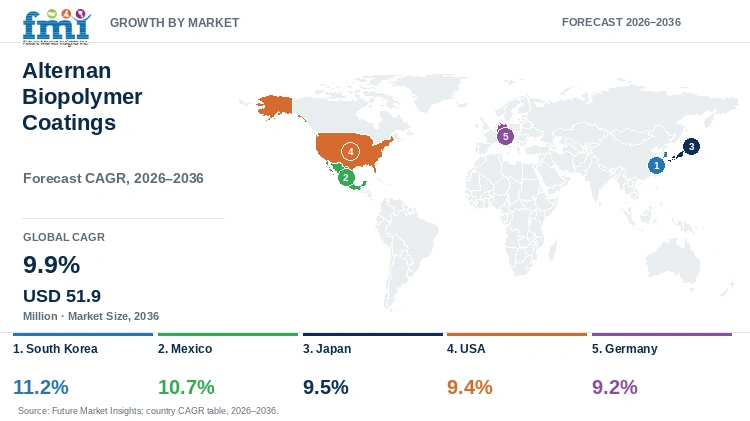
| Country | CAGR (2026 to 2036) | Primary Growth Lever |
|---|---|---|
| South Korea | 11.2% | Enzymatic alpha-glucan encapsulation R&D and functional confectionery export glazing |
| Mexico | 10.7% | Domestic cane-sucrose feedstock abundance and panned confectionery export manufacturing |
| Japan | 9.5% | Industrial glucansucrase bioprocessing and gum-arabic replacement in beverage and snack coatings |
| USA | 9.4% | State-level PFAS food-paper bans and commercial Nuvolve alpha-glucan coating scale-up |
| Germany | 9.2% | Beet-sucrose biopolymer valorization and EU PPWR recyclable paperboard barrier dispersion demand |
Source: Future Market Insights analysis
South Korea Alternan Biopolymer Coatings Market Outlook (2026 to 2036)
Because South Korea imports its raw cane sugar feedstocks, domestic biopolymer formulators cannot compete on low-margin commodity paperboard sizing and instead target high-value functional food and probiotic export coatings. National demand for alternan biopolymer coatings in South Korea is projected to expand at a leading 11.2% CAGR through 2036, driven by health-supplement and confectionery exporters adopting oxygen-barrier glucan shells. To validate this microencapsulation advantage, food bioprocessing teams at Sejong University demonstrated in the International Journal of Biological Macromolecules in February 2025 that alpha-glucan-coated porous starch granules protected probiotic strains against 65-degree heat shock and 48-hour ambient oxygen exposure [7]. Through this thermal and oxidative protection, contract manufacturers in Gyeonggi Province can ship shelf-stable probiotic dragees across humid Asian routes without refrigerated freight.
Key takeaway: In South Korea, functional probiotic microencapsulation and confectionery export glazes are projected to drive the fastest national growth through 2036.
Mexico Alternan Biopolymer Coatings Market Outlook (2026 to 2036)
Abundant domestic sugarcane refining across Veracruz and Jalisco pairs with duty-free cross-border confectionery export plants to expand demand in Mexico at a 10.7% CAGR between 2026 and 2036. Panned dragee and chocolate-coated nut factories in Monterrey and Guadalajara are substituting enzymatic alternan glazes for imported Acacia senegal gum to lock in predictable multi-year raw material costs. To support functional confectionery lines, researchers in the International Journal of Biological Macromolecules validated fast-dissolving alpha-glucan carrier films in January 2025 capable of preserving 92.6% viable probiotic cells with 15-second oral disintegration [12]. Even with low-cost local cane sugar, confectionery panners in Mexico still import concentrated recombinant enzyme preparations from biotechnology suppliers in the USA, exposing processors to currency fluctuations.
Key takeaway: In Mexico, low-cost domestic cane sucrose and cross-border panned snack exports are expected to fuel rapid substitution of acacia gum with enzymatic alternan glazes.
Japan Alternan Biopolymer Coatings Market Outlook (2026 to 2036)
Food and beverage formulators in Japan have long sought domestic enzymatic replacements for imported acacia gum to stabilize citrus flavor emulsions and glaze arare rice crackers without moisture tackiness. To highlight this commercial focus, NAGASE Group announced its participation in FI India 2026 in August 2026 to showcase its functional confectionery and nutraceutical saccharide ingredient solutions developed across Japan [10]. Supported by domestic enzymatic saccharide engineering, alternan biopolymer coatings sales in Japan are forecast to progress at a 9.5% CAGR from 2026 to 2036 across beverage and snack channels. However, stringent food-additive purity monographs in Japan require suppliers to strip trace fermentation proteins via activated-carbon and ion-exchange columns, which raises unit processing costs for plants in Osaka and Tokyo.
Key takeaway: In Japan, foundational enzymatic saccharide engineering and domestic beverage emulsion demand are forecast to sustain steady high-purity grade adoption.
USA Alternan Biopolymer Coatings Market Outlook (2026 to 2036)
State prohibitions on fluorinated food-contact substances in California and New York are forcing quick-service restaurant chains in the USA to replace fluorochemical grease barriers on burger wraps and moulded fiber bowls. To demonstrate the commercial scale of this transition, Ingredion highlighted at its September 2025 Investor Day how state PFAS bans drove foodservice customers to adopt 100% PFAS-free plant-based barrier coatings on paper-mill size presses [11], while International Flavors & Fragrances reported 5% comparable currency-neutral growth in Health & Biosciences in August 2026 [3]. Large domestic sucrose and corn-syrup biorefineries allow enzyme suppliers in the Midwest to deliver high-solids glucan slurries directly to integrated paperboard mills. Alternan biopolymer coatings sales in the USA are consequently anticipated to advance at a 9.4% CAGR through 2036, enabled by paper converters and confectionery panners qualifying enzymatic glucan dispersions, though capital-intensive size-press trials still lengthen mill onboarding.
Key takeaway: In the USA, state PFAS bans on fast-food paper wraps and domestic enzymatic biomaterial reactors are anticipated to anchor large-scale converter contracts.
Germany Alternan Biopolymer Coatings Market Outlook (2026 to 2036)
Integrated sugar-beet biorefineries in North Rhine-Westphalia and Lower Saxony provide enzyme formulators in Germany with captive sucrose feedstocks for alpha-glucan polymerization. Expenditure on alternan biopolymer coatings in Germany is predicted to rise at a 9.2% CAGR from 2026 to 2036, reinforced by specialty paper mills replacing polyethylene extrusion layers with repulpable aqueous biopolymer dispersions under European Union packaging rules. In line with low-energy biorefinery targets, November 2025 studies in the Journal of Agricultural and Food Chemistry confirmed that engineered Leuconostoc glucansucrases synthesize thermally stable alpha-glucans at mild pH 5.5 and 30 degrees Celsius [4]. While ambient-temperature enzymatic synthesis lowers reactor power needs in Germany, elevated industrial gas prices still pressure paper mills to demand 45 wt% solids dispersions that minimize tunnel drying energy.
Key takeaway: In Germany, captive beet-sucrose integration and strict paper-recycling standards are predicted to support long-term dispersion contracts across European mills.
Full report country CAGRs cover: North America; Latin America; Western Europe; Eastern Europe; East Asia; South Asia and Pacific; Middle East and Africa.
Who are the notable companies in the alternan biopolymer coatings market?
Cargill, Incorporated, International Flavors & Fragrances Inc. (IFF - Nuvolve Alpha-Glucan Platform), Ingredion Incorporated, Tate & Lyle PLC, Südzucker AG, and Nagase Viita Co., Ltd. are the notable companies in the alternan biopolymer coatings market.
Market competition unites enzymatic biomaterials pioneers and multinational hydrocolloid processors with European sugar-beet biorefiners. Enzymatic specialists engineer proprietary glucansucrase enzymes to convert sucrose into tailored alpha-glucan dispersions for paper coatings and glazes, whereas global hydrocolloid majors pair octenyl succinic anhydride-modified biopolymers with clean-label gums to replace acacia gum.
- Enzymatic Alpha-Glucan & Saccharide Pioneers: International Flavors & Fragrances Inc. (IFF - Nuvolve Alpha-Glucan Platform) and Nagase Viita Co., Ltd. lead in glucosyltransferase biocatalysis and low-viscosity alpha-glucan film formers.
- Global Hydrocolloid & Encapsulation Platforms: Cargill and Ingredion Incorporated supply OSA-modified biopolymers and PFAS-free paper barrier coatings with Tate & Lyle PLC.
- Integrated Sucrose & Functional Carbohydrate Refiners: Südzucker AG (via its BENEO functional ingredients division) valorizes beet sucrose into enzymatic disaccharides, prebiotic glucans, and confectionery glazing substrates.
Competitive Benchmarking: Alternan Biopolymer Coatings Market
Table 8: Competitive Benchmarking for the Alternan Biopolymer Coatings Market (qualitative capability ratings), 2026
| Company | Enzymatic Alpha-Glucan Synthesis | High-Solids Spray & Encapsulation Depth | Paper & Confectionery Access | Geographic Reach |
|---|---|---|---|---|
| Cargill, Incorporated | High | High | High | High |
| International Flavors & Fragrances Inc. (IFF - Nuvolve Alpha-Glucan Platform) | High | High | High | High |
| Ingredion Incorporated | Medium | High | High | High |
| Tate & Lyle PLC | Medium | High | High | High |
| Südzucker AG | High | Medium | Medium | Medium |
| Nagase Viita Co., Ltd. | High | High | Medium | Medium |
Scoring basis: Capability ratings assess patented alternansucrase and glucansucrase enzyme portfolios as well as spray-coating rheology at 30 to 50 wt% solids. Scores also reflect commercial distribution into confectionery panning and PFAS-free food paper mills.
Key Developments in the Alternan Biopolymer Coatings Market
- In August 2026, Ingredion Incorporated reported second-quarter 2026 results highlighting its ninth consecutive quarter of net sales volume growth in Texture & Healthful Solutions and shareholder approval of its all-cash offer to acquire Tate & Lyle [14].
- In September 2026, Cargill showcased tailored functional systems and confectionery coating co-development capabilities at Foodist Istanbul 2026, supported by its INFUSE Application Center in Bursa [13].
- In June 2026, BENEO (part of Südzucker Group) launched its Sweets Box collection of beet-derived low-hygroscopicity confectionery concepts to improve shelf life and visual gloss stability [15].
Key Players in the Alternan Biopolymer Coatings Market
Enzymatic Alpha-Glucan & Saccharide Pioneers
- International Flavors & Fragrances Inc. (IFF - Nuvolve Alpha-Glucan Platform)
- Nagase Viita Co., Ltd.
Global Hydrocolloid & Encapsulation Platforms
- Cargill, Incorporated
- Ingredion Incorporated
- Tate & Lyle PLC
Integrated Sucrose & Functional Carbohydrate Refiners
- Südzucker AG
Alternan Biopolymer Coatings Market - Report Scope
Table 9: Report Scope for the Alternan Biopolymer Coatings Market (coverage fields and definitions), 2026 to 2036
| Coverage field | Report scope |
|---|---|
| Market breakdown | Enzymatic Synthesis Route; Molecular Weight & Rheology Grade; Coating & Encapsulation Function; End-Use Sector |
| Quantitative Units | USD Million |
| Market Definition | Includes commercial supplier revenue from enzymatically synthesized alternan alpha-(1->6)/alpha-(1->3) glucan resins, sonicated nanoparticle dispersions, and OSA-modified alternan grades used in confectionery glazes, greaseproof food paper coatings, and flavor/vitamin microencapsulation. Category Scope Note: Excludes unbranched clinical blood-volume dextran, raw unrefined beet/cane sucrose, and synthetic styrene-butadiene paper latexes. |
| Regions Covered | North America; Latin America; Western Europe; Eastern Europe; East Asia; South Asia and Pacific; Middle East and Africa |
| Countries Covered | South Korea, Mexico, Japan, USA, Germany, and additional countries in the full report |
| Key Companies Covered | Cargill, Incorporated, International Flavors & Fragrances Inc. (IFF - Nuvolve Alpha-Glucan Platform), Ingredion Incorporated, Tate & Lyle PLC, Südzucker AG, Nagase Viita Co., Ltd. |
| Forecast Period | 2026 to 2036 |
| Approach | Primary and secondary research with top-down and bottom-up market triangulation. |
Alternan Biopolymer Coatings Market - Research Methodology
Table 10: Research Methodology for the Alternan Biopolymer Coatings Market (research methods and approach), 2026 edition
| Method | Approach |
|---|---|
| Primary Research | Structured interviews with industrial enzyme fermentation engineers, confectionery panning R&D directors, specialty food-paper coating superintendents, and flavor spray-drying formulators to verify solids loading and per-kilogram pricing. |
| Secondary Research | Evaluation of corporate biomaterial technical briefs, PubMed and PMC enzymatic glucansucrase studies, patent filings on alternansucrase truncation, and regional PFAS food-contact regulatory dockets. |
| Market Sizing and Forecasting | Top-down specialty food coating and paper barrier budgets reconciled against bottom-up enzymatic sucrose conversion capacity and spray-coating tonnage from 2026 to 2036. |
| Country Forecasting Model | Econometric country models weight domestic sucrose refining capacity, panned confectionery output, and statutory fluorochemical paper phase-out enforcement across five national markets. |
| Operational Benchmark Traceability | Reactor stoichiometry and line throughput metrics in Tables 2, 3, and 4 trace to Food Chemistry and International Journal of Biological Macromolecules datasets, Preparative Biochemistry & Biotechnology enzyme kinetics, and industrial coater registries. |
| Data Triangulation and Validation | Supplier turnover is cross-checked against commercial glucansucrase reactor capacity and converter dispersion purchases while excluding commodity native starch sizing. |
Alternan Biopolymer Coatings Market by Segments
Alternan Biopolymer Coatings Market segmented by Enzymatic Synthesis Route:
- Recombinant Alternansucrase (Leuconostoc mesenteroides) from Sucrose
- Cell-Free Immobilized Glucosyltransferase Reactors
- Engineered Mutant Glucansucrase Cascade Systems
- Others
Alternan Biopolymer Coatings Market segmented by Molecular Weight & Rheology Grade:
- Low-Viscosity High-Solids (30-50 wt%) Spray Coating Grade
- Sonicated Nanoparticle Emulsion Stabilizer Grade
- Octenyl Succinic Anhydride (OSA) Modified Hydrophobic Alternan
- Others
Alternan Biopolymer Coatings Market segmented by Coating & Encapsulation Function:
- Gum-Arabic Replacement Film-Forming Glaze
- High-Gloss Oxygen & Grease Barrier Dispersion
- Flavor Oil & Fat-Soluble Vitamin Microencapsulation Shell
- Others
Alternan Biopolymer Coatings Market segmented by End-Use Sector:
- Panned Confectionery, Nut & Cereal Gloss Coatings
- Greaseproof Foodservice Paper Wraps
- Beverage Clouding & Flavor Emulsion Capsules
- Others
Alternan Biopolymer Coatings Market by Region
- North America
- United States
- Canada
- Latin America
- Brazil
- Mexico
- Argentina
- Chile
- Western Europe
- Germany
- France
- United Kingdom
- Italy
- Spain
- Benelux
- Nordics
- Eastern Europe
- Poland
- Czech Republic
- Romania
- Hungary
- East Asia
- China
- Japan
- South Korea
- South Asia and Pacific
- India
- ASEAN
- Australia and New Zealand
- Middle East and Africa
- GCC Countries
- South Africa
- Türkiye
- Israel
Research Sources and Bibliography
- [1] Liu, Y., Qin, J., Khan, I. M., Xiao, H., Miao, M., & Chen, G. (2025, October 30). Alternan as a glucan with miscellaneous applications: Properties, preparation, and health efficacies. Food Chemistry, 490, 145140 (PubMed PMID 40532351; DOI 10.1016/j.foodchem.2025.145140).
- [2] Wang, J., Jiang, G., Gao, G., Du, R., & Zhao, D. (2026, July 19). Gene expression, enzyme purification and physicochemical characterization of Weissella confusa P2 glucansucrase. Preparative Biochemistry & Biotechnology, 1-9 (PubMed PMID 42472686; DOI 10.1080/10826068.2026.2706603).
- [3] International Flavors & Fragrances Inc. (2026, August 4). IFF Reports Second Quarter 2026 Results; Announces Use of Proceeds Plan for Food Ingredients Divestiture. IFF Investor Relations News Releases.
- [4] Jiang, Z., Ma, L., Yang, J., Wu, H., Ma, J., & Wu, B. (2025, November 19). Characterization of a Novel Mutansucrase (MUT-I) from Leuconostoc pseudomesenteroides G29: Enzymatic Properties and Product Analysis. Journal of Agricultural and Food Chemistry, 73(48), 30777-30790 (PubMed PMID 41258707; DOI 10.1021/acs.jafc.5c03636).
- [5] Kurniati, D., Rabani, K. A., Yarlina, V. P., Huda, S., & Saputra, R. A. (2025, October 14). Impact of maltodextrin and gum Arabic ratio on freeze dried microencapsulated extract of microgreen kangkong (Ipomoea reptans Poir). Scientific Reports, 15(1), 35916 (PubMed PMID 41087409; PMCID PMC12521470; DOI 10.1038/s41598-025-19707-y).
- [6] Kocabay, S., Alagöz, M. A., & Akkaya, B. (2025, February 24). Inhibitory effects of carvacrol on glucansucrase from Streptococcus mutans and salivary α-amylase: in silico and in vitro studies. Turkish Journal of Biology, 49(1), 92-101 (PubMed PMID 40104578; PMCID PMC11913353; DOI 10.55730/1300-0152.2727).
- [7] Kwon, T.-E., Kim, D.-M., Seo, D.-H., Hamaker, B. R., & Yoo, S.-H. (2025, February 6). Increased survival rate of selected probiotics under environmental stresses through encapsulation in α-glucan-coated porous starch granules. International Journal of Biological Macromolecules, 304(Pt 1), 140754 (PubMed PMID 39922356; DOI 10.1016/j.ijbiomac.2025.140754).
- [8] Ismail, S. A., Wahba, M. I., Nour, S. A., Gamal, A. A., Ezzat, A., & Hashem, A. M. (2025, December 8). Bacillus subtilis EGY1 glucansucrase: optimization, characterization and immobilization using activated carrier of pectin-egg white protein beads. 3 Biotech, 16(1), 16 (PubMed PMID 41376881; PMCID PMC12686235; DOI 10.1007/s13205-025-04609-7).
- [9] de Souza, L. R., Santos, I. A., Pereira, E. P., Vilas Boas, E. V. B., Botrel, D. A., Carvalho, E. E. N., & Damiani, C. (2025, April 19). Microencapsulation of carotenoids from peach palm byproducts (Bactris gasipaes Kunth): physicochemical characterization, bioactives, volatile profile, stability evaluation and application in margarine. Journal of Food Science and Technology, 63(7), 1297-1310 (PubMed PMID 42328151; DOI 10.1007/s13197-025-06283-2).
- [10] NAGASE & CO., LTD. (2026, August 12). Exhibiting at FI India 2026. NAGASE Group Official News Releases.
- [11] Ingredion Incorporated. (2025, September 18). Ingredion 2025 Investor Day - Ingredion Incorporated. Ingredion Investor Relations Presentation.
- [12] Feng, K., Liu, C., Zhang, S., Wu, J., Eleuteri, A. M., & Bai, Y. (2025, January 20). Insights into the formation of pullulan nanofilm and its feasibility as probiotic-resided oral fast dissolving carrier. International Journal of Biological Macromolecules, 299, 140091 (PubMed PMID 39842598; DOI 10.1016/j.ijbiomac.2025.140091).
- [13] Cargill, Incorporated. (2026, September 7). Cargill helps food manufacturers accelerate product development processes with tailored functional systems. Cargill Official Newsroom.
- [14] Ingredion Incorporated. (2026, August 4). Ingredion Incorporated Reports Second Quarter 2026 Results. Ingredion Investor Relations News Releases.
- [15] BENEO GmbH (Südzucker Group). (2026, June 25). BENEO launches collection of inspirational sugar-free confectionery concepts to boost category innovation. BENEO Official Press Releases.
- [16] Shrestha, B. B., Mitra, J., & George, S. (2025, December 8). Functionality Enhancement of Pullulan‐Based Composites for Food Packaging Applications. Comprehensive Reviews in Food Science and Food Safety, 25(1), e70349 (PubMed PMID 41355549; PMCID PMC12683483; DOI 10.1111/1541-4337.70349).
- [17] Kowalczyk, D., Gieroba, B., Niedźwiadek, K., Krysa, M., Sroka-Bartnicka, A., Waśko, A., Ozimek, E., Ściegienna, A., Basiura-Cembala, M., Kazimierczak, W., & Wiater, A. (2025, April 3). Evaluation of Film-Forming Properties of α-1,3-Glucan Obtained from Wild Mushroom Fomitopsis betulina. Molecules, 30(7), 1619 (PMCID PMC11990605; DOI 10.3390/molecules30071619).
- [18] Tate & Lyle PLC. (2025, November 6). Tate & Lyle PLC: Results for the six months to 30 September 2025. Tate & Lyle Official Press Releases.
- [19] Ingredion Incorporated. (2026, May 5). Ingredion Incorporated Reports First Quarter 2026 Results. Ingredion Investor Relations News Releases.
- [20] BENEO GmbH (Südzucker Group). (2025, December 2). BENEO helps producers improve nutritional profiles for weight management. BENEO Official Press Releases.
- [21] Karimi Sani, I., Hassani, B., Rasul, N. H., Mansouri, E., Eghbaljoo, H., Kaveh, M., Hassani, D., Alizadeh Sani, M., Khezerlou, A., Gholizadeh, H., Salamat Mamakani, Z., & Jafari, S. M. (2025, October 10). Antioxidant packaging films: application for sustainable food protection. Current Research in Food Science, 11, 101222 (PubMed PMID 41140572; PMCID PMC12547824; DOI 10.1016/j.crfs.2025.101222).
This bibliography is provided for reader reference and is not exhaustive. The full report contains the complete reference list and detailed citations.
This Report Answers
- How large is the alternan biopolymer coatings market in 2026 and what is forecast for 2036?
- Which gum arabic substitution and PFAS-free paper regulations support demand for alternan biopolymer coatings?
- Why does Recombinant Alternansucrase (Leuconostoc mesenteroides) from Sucrose lead the enzymatic synthesis route category?
- Why does Low-Viscosity High-Solids (30-50 wt%) Spray Coating Grade lead the molecular weight & rheology grade category globally?
- How do national growth rates compare across key country markets through 2036?
- Which leading companies supply relevant enzymatic alpha-glucan and hydrocolloid coating categories today?
- What limits adoption or supplier switching in the alternan biopolymer coatings market?
- What should buyers evaluate before purchasing an alternan biopolymer coating?
Frequently Asked Questions
How big is the alternan biopolymer coatings market in 2026, and what is forecast for 2036?
Global alternan biopolymer coatings revenue is estimated to reach USD 20.2 million in 2026 from USD 18.4 million in 2025. Sales are forecast to hit USD 51.9 million by 2036 through confectionery panners and paper mills replacing gum arabic and fluorochemicals.
What is the CAGR for the alternan biopolymer coatings market from 2026 to 2036?
The global market is projected to record a 9.9% compound annual growth rate between 2026 and 2036, representing USD 31.7 million in added annual revenue across confectionery and foodservice paper sectors.
Which enzymatic synthesis route segment leads the alternan biopolymer coatings market?
Recombinant Alternansucrase (Leuconostoc mesenteroides) from Sucrose is projected to capture 68.4% of enzymatic synthesis route demand in 2026, driven by dextran-free enzymatic conversion of refined cane and beet sucrose.
Which molecular weight & rheology grade segment leads the alternan biopolymer coatings market?
Low-Viscosity High-Solids (30-50 wt%) Spray Coating Grade is estimated to secure 57.5% of the molecular weight & rheology grade category in 2026 owing to clog-free atomization and 25% faster drying in rotary panning drums.
Which country has a notable growth outlook during the assessment period?
South Korea is projected to lead national growth at an 11.2% CAGR through 2036, supported by enzymatic alpha-glucan probiotic encapsulation and functional confectionery glazing.
Who are the key players in the market?
Cargill and International Flavors & Fragrances Inc. (IFF Nuvolve Alpha-Glucan Platform) anchor global commercial supply with Ingredion Incorporated and Tate & Lyle PLC, while Südzucker AG and Nagase Viita Co. expand regional specialty grades.
Preview the report firsthand - request a free sample
Get SampleGet the brochure for pricing and purchase details.
Get PDFTable of Content
- Key Takeaways
- Market Size and CAGR
- Top Growth Driver
- Fastest Growing Segment
- Leading Region
- Key Companies
- Emerging Opportunities
- Executive Summary
- Global Market Outlook
- Demand-side Trends
- Supply-side Trends
- Technology Roadmap Analysis
- Analysis and Recommendations
- Analyst Perspective (What is happening? Why now? What should investors know?)
- Key Questions Answered
- How large is the market?
- What is the CAGR?
- What are key trends?
- Which region dominates?
- Who are the leaders?
- Market Overview
- Market Coverage / Taxonomy
- Market Definition / Scope / Limitations
- Research Methodology
- Chapter Orientation
- Analytical Lens and Working Hypotheses
- Market Structure, Signals, and Trend Drivers
- Benchmarking and Cross-market Comparability
- Market Sizing, Forecasting, and Opportunity Mapping
- Research Design and Evidence Framework
- Desk Research Programme (Secondary Evidence)
- Expert Input and Fieldwork (Primary Evidence)
- Tooling, Models, and Reference Databases
- Data Engineering and Model Build
- Quality Assurance and Audit Trail
- Market Background
- Market Dynamics (Drivers, Restraints, Opportunity, Trends)
- Scenario Forecast (Optimistic, Likely, Conservative)
- Impact Analysis
- AI Impact
- Sustainability Impact
- Regulatory Impact
- Technology Impact
- Consumer / Buyer Analysis
- Purchase Drivers
- Adoption Barriers
- Buyer Journey
- Opportunity Map Analysis
- Product Life Cycle Analysis
- Supply Chain Analysis
- Investment Feasibility Matrix
- Value Chain Analysis
- PESTLE and Porter's Analysis
- Regulatory Landscape
- Regional Parent Market Outlook
- Production and Consumption Statistics
- Import and Export Statistics
- Global Market Analysis and Forecast, 2021 to 2036
- Historical Market Size Value (USD Million) Analysis, 2021 to 2025
- Current and Future Market Size Value (USD Million) Projections, 2026 to 2036
- Y-o-Y Growth Trend Analysis
- Absolute $ Opportunity Analysis
- Global Market Pricing Analysis, 2021 to 2036
- Global Market Analysis and Forecast, By Enzymatic Synthesis Route, 2021 to 2036
- Introduction / Key Findings
- Historical Market Size Value (USD Million) Analysis By Enzymatic Synthesis Route, 2021 to 2025
- Current and Future Market Size Value (USD Million) Analysis and Forecast By Enzymatic Synthesis Route, 2026 to 2036
- Recombinant Alternansucrase (Leuconostoc mesenteroides) from Sucrose
- Cell-Free Immobilized Glucosyltransferase Reactors
- Engineered Mutant Glucansucrase Cascade Systems
- Others
- Y-o-Y Growth Trend Analysis By Enzymatic Synthesis Route, 2021 to 2025
- Absolute $ Opportunity Analysis By Enzymatic Synthesis Route, 2026 to 2036
- Global Market Analysis and Forecast, By Molecular Weight & Rheology Grade, 2021 to 2036
- Introduction / Key Findings
- Historical Market Size Value (USD Million) Analysis By Molecular Weight & Rheology Grade, 2021 to 2025
- Current and Future Market Size Value (USD Million) Analysis and Forecast By Molecular Weight & Rheology Grade, 2026 to 2036
- Low-Viscosity High-Solids (30-50 wt%) Spray Coating Grade
- Sonicated Nanoparticle Emulsion Stabilizer Grade
- Octenyl Succinic Anhydride (OSA) Modified Hydrophobic Alternan
- Others
- Y-o-Y Growth Trend Analysis By Molecular Weight & Rheology Grade, 2021 to 2025
- Absolute $ Opportunity Analysis By Molecular Weight & Rheology Grade, 2026 to 2036
- Global Market Analysis and Forecast, By Coating & Encapsulation Function, 2021 to 2036
- Introduction / Key Findings
- Historical Market Size Value (USD Million) Analysis By Coating & Encapsulation Function, 2021 to 2025
- Current and Future Market Size Value (USD Million) Analysis and Forecast By Coating & Encapsulation Function, 2026 to 2036
- Gum-Arabic Replacement Film-Forming Glaze
- High-Gloss Oxygen & Grease Barrier Dispersion
- Flavor Oil & Fat-Soluble Vitamin Microencapsulation Shell
- Others
- Y-o-Y Growth Trend Analysis By Coating & Encapsulation Function, 2021 to 2025
- Absolute $ Opportunity Analysis By Coating & Encapsulation Function, 2026 to 2036
- Global Market Analysis and Forecast, By End-Use Sector, 2021 to 2036
- Introduction / Key Findings
- Historical Market Size Value (USD Million) Analysis By End-Use Sector, 2021 to 2025
- Current and Future Market Size Value (USD Million) Analysis and Forecast By End-Use Sector, 2026 to 2036
- Panned Confectionery, Nut & Cereal Gloss Coatings
- Greaseproof Foodservice Paper Wraps
- Beverage Clouding & Flavor Emulsion Capsules
- Others
- Y-o-Y Growth Trend Analysis By End-Use Sector, 2021 to 2025
- Absolute $ Opportunity Analysis By End-Use Sector, 2026 to 2036
- Global Market Analysis and Forecast, By Region, 2021 to 2036
- Introduction
- Historical Market Size Value (USD Million) Analysis By Region, 2021 to 2025
- Current Market Size Value (USD Million) Analysis and Forecast By Region, 2026 to 2036
- North America
- Latin America
- Western Europe
- Eastern Europe
- East Asia
- South Asia and Pacific
- Middle East and Africa
- Market Attractiveness Analysis By Region
- North America Market Analysis and Forecast, By Country, 2021 to 2036
- Historical Market Size Value (USD Million) Trend Analysis By Market Taxonomy, 2021 to 2025
- Market Size Value (USD Million) Forecast By Market Taxonomy, 2026 to 2036
- By Country
- United States
- Canada
- By Enzymatic Synthesis Route
- By Molecular Weight & Rheology Grade
- By Coating & Encapsulation Function
- By End-Use Sector
- By Country
- Market Attractiveness Analysis
- By Country
- By Enzymatic Synthesis Route
- By Molecular Weight & Rheology Grade
- By Coating & Encapsulation Function
- By End-Use Sector
- Key Takeaways
- Latin America Market Analysis and Forecast, By Country
- Historical Market Size Value (USD Million) Trend Analysis By Market Taxonomy, 2021 to 2025
- Market Size Value (USD Million) Forecast By Market Taxonomy, 2026 to 2036
- By Country
- Brazil
- Mexico
- Argentina
- Chile
- By Enzymatic Synthesis Route
- By Molecular Weight & Rheology Grade
- By Coating & Encapsulation Function
- By End-Use Sector
- By Country
- Market Attractiveness Analysis
- By Country
- By Enzymatic Synthesis Route
- By Molecular Weight & Rheology Grade
- By Coating & Encapsulation Function
- By End-Use Sector
- Key Takeaways
- Western Europe Market Analysis and Forecast, By Country
- Historical Market Size Value (USD Million) Trend Analysis By Market Taxonomy, 2021 to 2025
- Market Size Value (USD Million) Forecast By Market Taxonomy, 2026 to 2036
- By Country
- Germany
- France
- United Kingdom
- Italy
- Spain
- Benelux
- Nordics
- By Enzymatic Synthesis Route
- By Molecular Weight & Rheology Grade
- By Coating & Encapsulation Function
- By End-Use Sector
- By Country
- Market Attractiveness Analysis
- By Country
- By Enzymatic Synthesis Route
- By Molecular Weight & Rheology Grade
- By Coating & Encapsulation Function
- By End-Use Sector
- Key Takeaways
- Eastern Europe Market Analysis and Forecast, By Country
- Historical Market Size Value (USD Million) Trend Analysis By Market Taxonomy, 2021 to 2025
- Market Size Value (USD Million) Forecast By Market Taxonomy, 2026 to 2036
- By Country
- Poland
- Czech Republic
- Romania
- Hungary
- By Enzymatic Synthesis Route
- By Molecular Weight & Rheology Grade
- By Coating & Encapsulation Function
- By End-Use Sector
- By Country
- Market Attractiveness Analysis
- By Country
- By Enzymatic Synthesis Route
- By Molecular Weight & Rheology Grade
- By Coating & Encapsulation Function
- By End-Use Sector
- Key Takeaways
- East Asia Market Analysis and Forecast, By Country
- Historical Market Size Value (USD Million) Trend Analysis By Market Taxonomy, 2021 to 2025
- Market Size Value (USD Million) Forecast By Market Taxonomy, 2026 to 2036
- By Country
- China
- Japan
- South Korea
- By Enzymatic Synthesis Route
- By Molecular Weight & Rheology Grade
- By Coating & Encapsulation Function
- By End-Use Sector
- By Country
- Market Attractiveness Analysis
- By Country
- By Enzymatic Synthesis Route
- By Molecular Weight & Rheology Grade
- By Coating & Encapsulation Function
- By End-Use Sector
- Key Takeaways
- South Asia and Pacific Market Analysis and Forecast, By Country
- Historical Market Size Value (USD Million) Trend Analysis By Market Taxonomy, 2021 to 2025
- Market Size Value (USD Million) Forecast By Market Taxonomy, 2026 to 2036
- By Country
- India
- ASEAN
- Australia and New Zealand
- By Enzymatic Synthesis Route
- By Molecular Weight & Rheology Grade
- By Coating & Encapsulation Function
- By End-Use Sector
- By Country
- Market Attractiveness Analysis
- By Country
- By Enzymatic Synthesis Route
- By Molecular Weight & Rheology Grade
- By Coating & Encapsulation Function
- By End-Use Sector
- Key Takeaways
- Middle East and Africa Market Analysis and Forecast, By Country
- Historical Market Size Value (USD Million) Trend Analysis By Market Taxonomy, 2021 to 2025
- Market Size Value (USD Million) Forecast By Market Taxonomy, 2026 to 2036
- By Country
- GCC Countries
- South Africa
- Türkiye
- Israel
- By Enzymatic Synthesis Route
- By Molecular Weight & Rheology Grade
- By Coating & Encapsulation Function
- By End-Use Sector
- By Country
- Market Attractiveness Analysis
- By Country
- By Enzymatic Synthesis Route
- By Molecular Weight & Rheology Grade
- By Coating & Encapsulation Function
- By End-Use Sector
- Key Takeaways
- Key Countries Market Analysis
- United States
- Pricing Analysis
- Market Share Analysis, 2025
- By Enzymatic Synthesis Route
- By Molecular Weight & Rheology Grade
- By Coating & Encapsulation Function
- By End-Use Sector
- Canada
- Pricing Analysis
- Market Share Analysis, 2025
- By Enzymatic Synthesis Route
- By Molecular Weight & Rheology Grade
- By Coating & Encapsulation Function
- By End-Use Sector
- Mexico
- Pricing Analysis
- Market Share Analysis, 2025
- By Enzymatic Synthesis Route
- By Molecular Weight & Rheology Grade
- By Coating & Encapsulation Function
- By End-Use Sector
- Brazil
- Pricing Analysis
- Market Share Analysis, 2025
- By Enzymatic Synthesis Route
- By Molecular Weight & Rheology Grade
- By Coating & Encapsulation Function
- By End-Use Sector
- Chile
- Pricing Analysis
- Market Share Analysis, 2025
- By Enzymatic Synthesis Route
- By Molecular Weight & Rheology Grade
- By Coating & Encapsulation Function
- By End-Use Sector
- Germany
- Pricing Analysis
- Market Share Analysis, 2025
- By Enzymatic Synthesis Route
- By Molecular Weight & Rheology Grade
- By Coating & Encapsulation Function
- By End-Use Sector
- United Kingdom
- Pricing Analysis
- Market Share Analysis, 2025
- By Enzymatic Synthesis Route
- By Molecular Weight & Rheology Grade
- By Coating & Encapsulation Function
- By End-Use Sector
- Italy
- Pricing Analysis
- Market Share Analysis, 2025
- By Enzymatic Synthesis Route
- By Molecular Weight & Rheology Grade
- By Coating & Encapsulation Function
- By End-Use Sector
- Spain
- Pricing Analysis
- Market Share Analysis, 2025
- By Enzymatic Synthesis Route
- By Molecular Weight & Rheology Grade
- By Coating & Encapsulation Function
- By End-Use Sector
- France
- Pricing Analysis
- Market Share Analysis, 2025
- By Enzymatic Synthesis Route
- By Molecular Weight & Rheology Grade
- By Coating & Encapsulation Function
- By End-Use Sector
- India
- Pricing Analysis
- Market Share Analysis, 2025
- By Enzymatic Synthesis Route
- By Molecular Weight & Rheology Grade
- By Coating & Encapsulation Function
- By End-Use Sector
- ASEAN
- Pricing Analysis
- Market Share Analysis, 2025
- By Enzymatic Synthesis Route
- By Molecular Weight & Rheology Grade
- By Coating & Encapsulation Function
- By End-Use Sector
- Australia and New Zealand
- Pricing Analysis
- Market Share Analysis, 2025
- By Enzymatic Synthesis Route
- By Molecular Weight & Rheology Grade
- By Coating & Encapsulation Function
- By End-Use Sector
- China
- Pricing Analysis
- Market Share Analysis, 2025
- By Enzymatic Synthesis Route
- By Molecular Weight & Rheology Grade
- By Coating & Encapsulation Function
- By End-Use Sector
- Japan
- Pricing Analysis
- Market Share Analysis, 2025
- By Enzymatic Synthesis Route
- By Molecular Weight & Rheology Grade
- By Coating & Encapsulation Function
- By End-Use Sector
- South Korea
- Pricing Analysis
- Market Share Analysis, 2025
- By Enzymatic Synthesis Route
- By Molecular Weight & Rheology Grade
- By Coating & Encapsulation Function
- By End-Use Sector
- Poland
- Pricing Analysis
- Market Share Analysis, 2025
- By Enzymatic Synthesis Route
- By Molecular Weight & Rheology Grade
- By Coating & Encapsulation Function
- By End-Use Sector
- Hungary
- Pricing Analysis
- Market Share Analysis, 2025
- By Enzymatic Synthesis Route
- By Molecular Weight & Rheology Grade
- By Coating & Encapsulation Function
- By End-Use Sector
- Türkiye
- Pricing Analysis
- Market Share Analysis, 2025
- By Enzymatic Synthesis Route
- By Molecular Weight & Rheology Grade
- By Coating & Encapsulation Function
- By End-Use Sector
- South Africa
- Pricing Analysis
- Market Share Analysis, 2025
- By Enzymatic Synthesis Route
- By Molecular Weight & Rheology Grade
- By Coating & Encapsulation Function
- By End-Use Sector
- United States
- Market Structure Analysis
- Competition Dashboard
- Competition Benchmarking
- Market Share Analysis of Top Players
- By Regional
- By Enzymatic Synthesis Route
- By Molecular Weight & Rheology Grade
- By Coating & Encapsulation Function
- By End-Use Sector
- Emerging Startups
- Innovation Benchmarking
- Competition Analysis
- Competition Deep Dive
- Cargill, Incorporated
- Overview
- Product Portfolio
- Profitability by Market Segments
- Sales Footprint
- Strategy Overview
- Marketing Strategy
- Product Strategy
- Channel Strategy
- International Flavors & Fragrances Inc. (IFF - Nuvolve Alpha-Glucan Platform)
- Ingredion Incorporated
- Tate & Lyle PLC
- Südzucker AG
- Nagase Viita Co., Ltd.
- Cargill, Incorporated
- Case Studies
- Success Stories
- Recent Developments
- Competition Deep Dive
- Assumptions & Acronyms Used


