

- Industry Size (2026)
- USD 4.0 Bn
- Forecast (2036)
- USD 8.2 Bn
- CAGR (2026 to 2036)
- 7.7%
Animal Feed Probiotic Market Size, Market Forecast and Outlook By FMI
The animal feed probiotic market is expected to expand from USD 4.0 billion in 2026 to USD 8.2 billion by 2036. The market is anticipated to register a 7.7% CAGR during the forecast period. Bacteria are likely to lead with 75.3% share, and livestock is projected to account for 57.3% share of the animal type segment in 2026.
Summary of the Animal Feed Probiotic Market
- Demand and Growth Drivers
- Antimicrobial resistance concerns are expected to increase interest in probiotic feed programs across large livestock production systems.
- Feed cost pressure is likely to push producers toward microbial additives that improve nutrient use from standard rations.
- Retail demand for non-medicated animal production is anticipated to lift probiotic adoption across meat supply chains.
- Product and Segment View
- Bacteria are expected to lead the source segment as spore-forming strains handle feed processing stress effectively.
- Livestock is likely to stay the main animal type segment as poultry and swine systems need daily gut health management.
- Liquid formats are anticipated to gain preference as post-pellet application protects sensitive strains from heat damage.
- Geography and Competitive Outlook
- Brazil is expected to lead country-level expansion as export meat producers align with residue-free supply requirements.
- Japan is likely to record strong uptake as premium animal production favors precise microbial feed programs.
- Companies with strong strain validation and application expertise are anticipated to strengthen their position in feed probiotics.
- Analyst Opinion
- Nandini Roy Choudhury, Principal consultant for Food and Beverage at FMI, suggests, “The animal feed probiotic market is expected to move toward suppliers able to prove strain survival through processing and storage. Bacterial formulations with strong viability profiles are likely to gain preference as integrators seek reliable gut health outcomes across livestock systems.”
- Animal Feed Probiotic Market Value Analysis
- The animal feed probiotic market is moving from optional feed enhancement toward a routine production input.
- Demand is likely to rise as livestock integrators replace medicated feed practices with verified microbial interventions.
- Adoption is expected to improve as liquid post-pellet systems help protect live cultures during feed production.
- Spending is anticipated to strengthen as export meat producers prioritize consistent animal health and residue compliance.
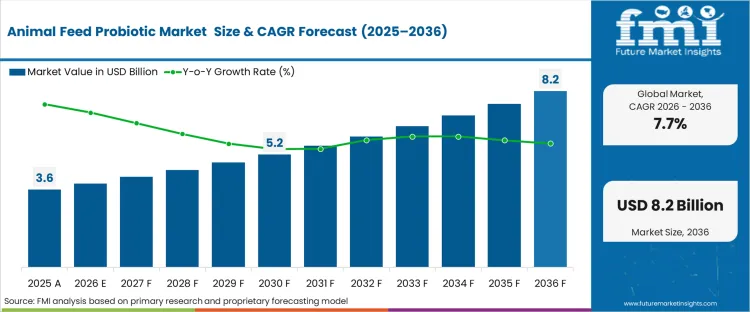
| Metric | Value |
|---|---|
| Market Size (2026) | USD 4.0 billion |
| Market Size (2036) | USD 8.2 billion |
| CAGR (2026-2036) | 7.7% |
| Leading Source (2026) | Bacteria |
| Bacteria Share (2026) | 75.3% |
| Leading Animal Type (2026) | Livestock |
| Livestock Share (2026) | 57.3% |
| Leading Form (2026) | Liquid Formats |
| Liquid Formats Share (2026) | 57.8% |
| Fastest-Growing Country | Brazil |
| Brazil CAGR | 8.1% |
Brazil is expected to expand at an annual growth rate of 8.1%, followed closely by Japan which is projected to witness growth at a CAGR of 7.6%. Demand for microbial interventions in India is estimated to expand at a CAGR of 5.9%, while the U.S. is poised to expand at 5.8%. The UK is forecast to register a CAGR of 5.2%, and Germany tracks at 2.6%. The wide divergence across these regions stems from how domestic procurement systems balance immediate feed conversion ratio priorities against localized regulatory pressures on continuous medication practices.
Value Chain Analysis and Margin Structure in Animal Feed Probiotic Market by FMI
The value chain in animal feed probiotics shows a familiar pattern, margins expand as the product moves closer to the end customer. Raw material suppliers and upstream processing participants tend to operate in a narrower margin band, largely because this stage is exposed to input cost swings, fermentation economics, and scale-driven pricing pressure. Profitability improves at the processing and formulation stage, where technical know-how, strain stability, and application-specific blending begin to matter more. The widest margin capture appears downstream, particularly at the end-user and retail interface, where branding, formulation premiums, channel access, and customer relationships carry greater weight than bulk production alone. Another notable feature is the degree of backward integration in the market. Several large animal feed probiotics producers maintain in-house labs and production capabilities for microbial strains, which helps protect margins, secure supply, and reduce reliance on external inputs. In practical terms, this means competitive advantage is shaped less by raw material access alone and more by control over formulation, validation, and route-to-market.
Animal Feed Probiotic Market Key Takeaways
| Metric | Details |
|---|---|
| Industry Size (2026) | USD 4.0 Billion |
| Industry Value (2036) | USD 8.2 Billion |
| CAGR (2026-2036) | 7.70% |
Source: Future Market Insights (FMI) analysis, based on proprietary forecasting model and primary research
Animal Feed Probiotic Market Definition
This sector, often researched as the direct-fed microbials market, encompasses live microbial feed supplements that beneficially affect the host animal by improving its intestinal microbial balance. This space is functionally distinct from generic feed commodities because its value is defined by verifiable survivability through the feed manufacturing process and subsequent colonization efficacy within specific animal gastrointestinal tracts. It is structurally bound by the need for strain-level qualification rather than bulk ingredient sourcing.
Animal Feed Probiotic Market Inclusions
The broader animal nutrition probiotics market includes viable bacterial strains such as Bacillus, Lactobacillus, and Enterococcus, alongside non-bacterial cultures like specific yeast strains engineered for animal nutrition. It covers both liquid and dry formulations designed for direct mixing, top-dressing, or post-pellet application. The scope specifically incorporates probiotic ingredients formulated for livestock, companion animals, and specialized aquaculture diets.
Animal Feed Probiotic Market Exclusions
The market explicitly excludes inert prebiotic fibers, non-viable microbial cell fragments, and standard digestive enzymes. These are excluded because they do not rely on the structural challenge of maintaining live cell viability through the feed supply chain. Standard nutritional yeasts without documented probiotic health claims are also excluded, as their procurement is driven by macro-protein economics rather than targeted microbiome manipulation.
Animal Feed Probiotic Market Research Methodology
- Primary Research: Nutrition directors, chief veterinarians, and procurement heads at top-tier commercial feed integrators and livestock production facilities.
- Desk Research: Strain registration databases, regional feed additive regulatory filings, and efficacy dossiers submitted to food safety authorities.
- Market-Sizing and Forecasting: Baseline volume anchors to annual commercial feed tonnage produced globally, segmented by target species and regional inclusion rates.
- Data Validation and Update Cycle: Forecasts are triangulated against quarterly earnings reports from leading fermentation companies and independent agricultural commodity flow data.
Segmental Analysis
Animal Feed Probiotic Market Analysis by Source
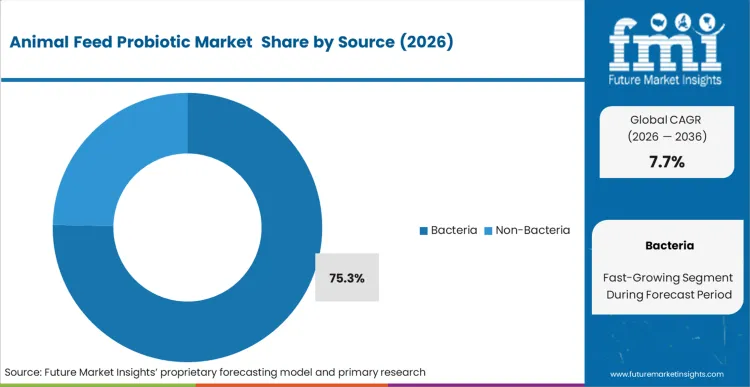
The bacteria sub-segment holds 75.3% of this market in 2026 comes down to a fundamental milling reality, spore-forming strains are the only biologicals that consistently survive the aggressive conditioning temperatures required in modern commercial feed production. According to FMI's estimates, mills utilizing high-shear extrusion cannot afford the viability losses associated with more fragile cultures. Formulators select bacillus probiotics for animal feed because they eliminate the need to calculate costly overages to compensate for thermal destruction, ensuring robust probiotic survival during pelleting. This reliability allows nutritionists to guarantee targeted colony-forming units at the time of animal consumption. Operations that attempt to substitute these with less stable microbial profiles frequently encounter inconsistent herd performance and disrupted poultry feed conversion metrics.
- Thermal Stability Threshold: Spore-forming bacterial variants survive standard pelleting conditions exceeding 85°C. Formulators utilize heat stable animal feed probiotics to integrate active cultures into standard dry feed lines without investing in secondary application equipment.
- Pathogen Competitive Exclusion: Specific bacterial cultures aggressively colonize the hindgut, outcompeting opportunistic pathogens for adhesion sites. Production managers who deploy these strains observe measurable reductions in enteritis incidence across high-density flocks.
- Metabolic Byproduct Generation: Certain Bacillus strains produce localized enzymes and organic acids during germination. This enzymatic activity allows chief nutritionists to optimize the energy extraction from complex carbohydrate substrates in the base diet.
Animal Feed Probiotic Market Analysis by Animal Type
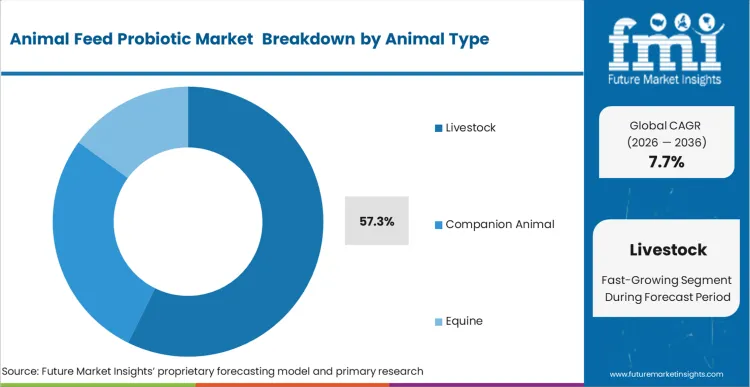
Livestock integration represents the dominant consumption node because fractional improvements in feed conversion directly influence profitability in high-volume, low-margin meat production. Microbial optimization plays an important role in helping producers offset the removal of traditional growth promoters across poultry and swine systems. As a result, Livestock accounts for a 57.3% share in 2026. FMI analysis suggests that farm managers are moving from disease treatment toward structured herd microbiome management to prevent subclinical issues. This proactive feed strategy helps reduce veterinary intervention costs while improving the days-to-market cycle. Producers that delay this transition may struggle to compete with integrators using optimized biological feed efficiency programs.
- Feed Conversion Prioritization: Livestock integrators measure success strictly through feed-to-weight ratios. Nutritionists validate that feed probiotics improve feed conversion ratio by tracking cumulative flock performance improvements over successive grow-out cycles.
- High-density Stress Mitigation: Confined livestock operations generate continuous environmental stress that disrupts natural gut flora. Facility managers use targeted probiotics to stabilize intestinal barriers, minimizing production drops during critical growth phases.
- Carcass Yield Optimization: Consistent microbiome support reduces the energy the animal diverts to immune response. Processing plant directors observe higher uniformity and improved carcass weights from herds raised on stable microbial diets.
Animal Feed Probiotic Market Analysis by Form
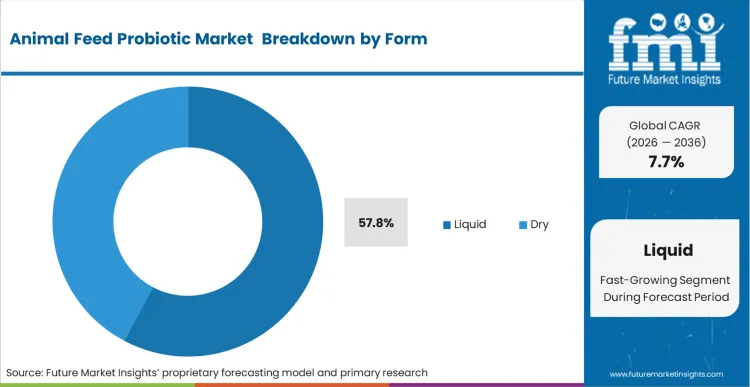
Liquid formulations capture a leading 57.8% share in 2026 precisely because they solve the primary bottleneck of commercial feed medication, thermal degradation during processing. As per FMI's projection, modern feed mills are increasingly retrofitting their lines with post-pellet liquid spray systems to bypass the hostile pelleting environment entirely. This operational maneuver allows buyers to utilize highly sensitive, non-spore-forming strains, such as specific yeast probiotics animal feed formulations, that would otherwise perish in a dry mix. The precision application of liquid suspensions ensures even distribution across the final feed batch, eliminating localized dosing inconsistencies. Mill operators clinging to legacy dry-mix systems for temperature-sensitive animal nutrition chemicals face severe limitations in the variety of biologicals they can successfully deploy.
- Post-pellet Integration: Liquid biologicals are applied directly to the cooled feed surface at the end of the manufacturing line. Mill operators secure exact dosage rates while preserving the viability of sensitive vegetative strains.
- Homogeneous Distribution: Automated spray nozzles ensure uniform coating across the feed mass. Quality assurance directors verify consistent intake, preventing uneven herd development caused by localized probiotic concentration in the bunk.
- Handling Infrastructure Requirements: Liquid delivery requires specialized temperature-controlled bulk storage and agitation systems at the mill. Procurement teams must calculate these equipment capital expenditures into their total microbial program costs.
Animal Feed Probiotic Market Drivers, Restraints, and Opportunities
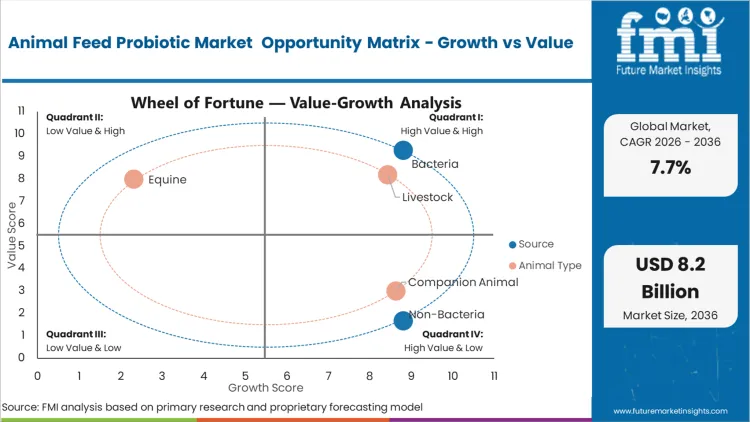
The structural pressure from international retail meat buyers to eliminate antibiotic residues forces chief veterinarians at major integrators to fundamentally alter their prophylactic strategies. When evaluating probiotics vs antibiotics in animal feed, production leaders can no longer rely on low-dose antimicrobials to mask sub-optimal gut health or poor facility sanitation. Instead, they are compelled to implement verified microbial interventions that actively crowd out pathogens before clinical signs appear. The commercial stakes of delaying this shift are immediate, non-compliant flocks are routinely excluded from premium United States animal feed additives export channels, restricting producers to lower-margin domestic markets and disrupting long-term supply agreements.
The primary organizational friction slowing adoption is the complex intersection of live-strain shelf life and unpredictable commercial feed logistics. Unlike inert chemical additives, live biologicals experience continuous degradation when exposed to fluctuating ambient humidity and temperature during transport and storage. Formulators attempt to solve this by engineering robust encapsulated spores, but these solutions often command a premium that disrupts standard operating budgets. Until regional distribution networks establish reliable cold-chain or climate-controlled holding protocols for feed inputs, mills will struggle to guarantee the required colony-forming units upon delivery to the farm.
Opportunities in the Animal Feed Probiotic Market
- Strain-specific Encapsulation Engineering: The persistent degradation of vegetative cells during feed pelleting enables a highly specialized niche for protective coating technologies. Biochemical engineers who master thermo-tolerant matrices capture exclusive supply contracts with major milling operations seeking the best probiotic for poultry feed.
- Real-time Viability Diagnostic Integration: Quality assurance teams lack the ability to instantly verify live cell counts on the milling floor. Diagnostic technology providers who develop rapid, on-site microbial quantification tools allow mills to release treated batches immediately, clearing a major operational bottleneck.
- Species-specific Microbiome Mapping: Generic probiotic blends are losing efficacy against targeted Europe animal feed additives requirements. Vendors who sequence and patent host-specific bacterial strains secure long-term formulation partnerships by delivering superior pathogen exclusion in specialized genetic livestock lines.
Regional Analysis
Based on the regional analysis, the Animal Feed Probiotic market is segmented into North America, Latin America, Europe, East Asia, South Asia, and other regions across 40 plus countries.
.webp "Top Country Growth Comparison Animal Feed Probiotic Market Cagr (2026 2036)")
| Country | CAGR (2026 to 2036) |
|---|---|
| Brazil | 8.1% |
| Japan | 7.6% |
| India | 5.9% |
| U.S. | 5.8% |
| UK | 5.2% |
| Germany | 2.6% |
Source: Future Market Insights (FMI) analysis, based on proprietary forecasting model and primary research
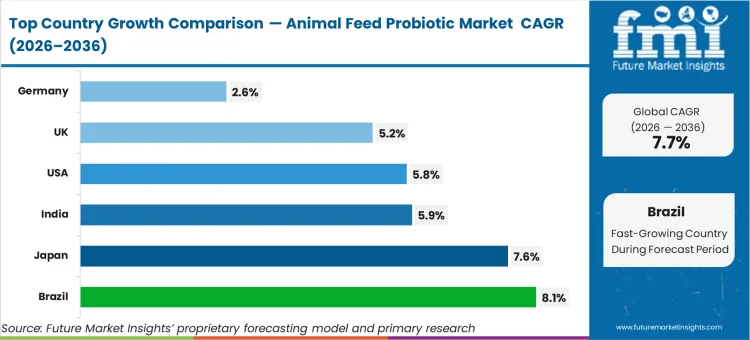
Latin America Animal Feed Probiotic Market Analysis
Brazil's immense scale as a global poultry and beef exporter strictly dictates its adoption patterns, forcing integrators to rapidly align with the stringent residue requirements of their primary demand for animal feed additives in EU buyers. Rather than waiting for domestic regulation to mandate changes, procurement heads at massive cooperative networks proactively switch to microbial gut health management to maintain their export qualification status. Based on FMI's assessment, this economic necessity creates a highly consolidated buyer environment where a few dominant integrators dictate formulation standards across the entire supply chain.
- Brazil: Brazil's hyper-concentrated export meat sector requires massive, continuous volumes of verified feed interventions to secure international trade compliance. Procurement directors at these tier-1 integrators prioritize reliable bulk supply of thermally stable spores over niche custom blends. Demand is set to grow at an 8.1% compound rate. Operations that lock in long-term supply agreements with primary fermentation facilities achieve a structural cost advantage in global meat pricing.
Asia Pacific Animal Feed Probiotic Market Analysis
Infrastructure readiness, varying regulatory timelines, and the rapid modernization of intensive farming operations shape the structural trajectory across this massive agricultural region. As livestock production aggressively shifts from fragmented backyard farm networks to high-density commercial facilities, the rising incidence of rapid-transmission enteric diseases forces facility managers to adopt systemic Asean animal feed additives protocols. FMI analysts opine that the adoption curve here is governed by a constant balancing act between upfront additive costs and the critical need to maintain basic flock survivability against extreme raw material volatility. The speed at which local mills can upgrade their legacy mixing and pelleting equipment to handle sensitive biologicals directly influences procurement trajectories in neighboring high-volume hubs, shaping the China animal feed probiotic market and broader regional shifts.
- Japan: Japan's highly sophisticated domestic meat grading systems require exceptional feed conversion efficiency and pristine, completely verifiable animal health records from birth to processing. Rather than relying on bulk interventions, feed formulators in the country operate under intense pressure to extract maximum nutritional value using precision, targeted microbial strains that align perfectly with specific livestock genetics. The sector in Japan is forecast to register a CAGR of 7.6% over the forecast period. This specific trajectory positions Japanese procurement directors at the absolute forefront of premium, species-specific formulation demand, securing long-term contracts for advanced encapsulated biologicals that volume-driven adjacent markets simply cannot justify.
- India: Inconsistent agricultural commodity supply chains in India force commercial feed mills to fundamentally alter their formulation strategies, relying heavily on microbial interventions to improve the baseline digestibility of substandard grain inputs. When facing elevated mycotoxin loads, nutritionists must deploy aggressive, enzyme-producing probiotic strains simply to salvage basic feed conversion ratios during poor harvest seasons, acting as a primary driver for the India animal feed probiotic market. India is expected to see this sector grow at a compound annual rate of 5.9%. By fully integrating these robust biologicals into standard daily rations, local integrators successfully decouple their core operational profitability from the region's extreme and unpredictable seasonal grain quality fluctuations.
North America Animal Feed Probiotic Market Analysis
The structural dynamic in North America is driven by mature, highly consolidated livestock integration networks that have largely moved past initial antibiotic replacement. Buyers here are focused on maximizing the ROI of probiotics in poultry feed by layering targeted microbial strains to address specific operational stressors, such as heat stress or high-density weaning challenges. The scale of commercial milling in this region forces vendors to provide extensive, verifiable thermotolerance data before any strain can be approved for regional procurement.
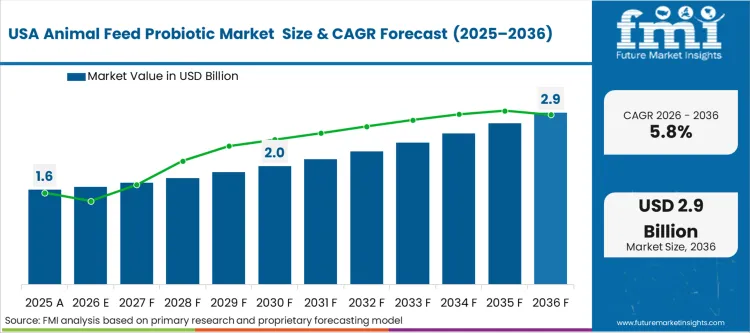
- USA: The massive scale of USA broiler and swine integration means any change to base feed formulations carries enormous financial risk. Consequently, USA formulators operate under strict qualification standards, requiring multi-flock field trial data before scaling new biologicals across their networks. The USA is poised to expand at 5.8%. Integrators who successfully implement precision, liquid-applied post-pellet systems open significant operational bottlenecks, allowing them to utilize a wider array of sensitive vegetative strains.
Europe Animal Feed Probiotic Market Analysis
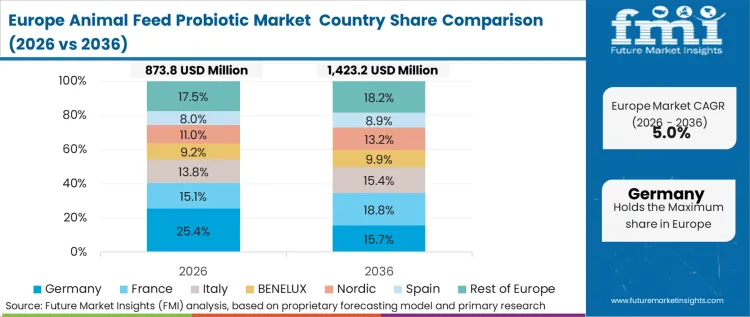
Europe’s trajectory is dictated by the world's most aggressive and mature antimicrobial reduction frameworks, creating an environment where baseline microbial intervention is essentially mandatory for commercial viability. FMI analysts observe that the regulatory calendar here no longer drives initial adoption; rather, it forces continuous optimization. The focus for European buyers has shifted toward hyper-specialized pathogen exclusion strategies and rigorous environmental sustainability tracking at the farm level.
- UK: Post-Brexit agricultural procurement realignments force UK integrators to maintain pristine flock health records to secure both domestic retail contracts and specialized export pathways. The market for animal feed probiotics in the UK is forecast to register a CAGR of 5.2%. Formulators in the UK are increasingly demanding multi-strain biologicals that can simultaneously optimize gut health while reducing overall ammonia emissions in high-density facilities.
- Germany: Germany's advanced livestock sector faces intense pressure from domestic retail networks pushing strict animal welfare and completely non-medicated rearing standards. Because the baseline transition to alternative growth promoters occurred years ago, the current growth rate tracks a mature replacement cycle rather than new adoption. Germany tracks at a 2.6% CAGR. Feed mills that fail to provide fully transparent, verifiable microbial intervention data face immediate exclusion from tier-1 grocery supply chains.
FMI's report includes extensive data across the broader Middle East and Africa regions, where emerging regulatory frameworks are beginning to shift procurement strategies away from legacy prophylactic systems.
Competitive Aligners for Market Players
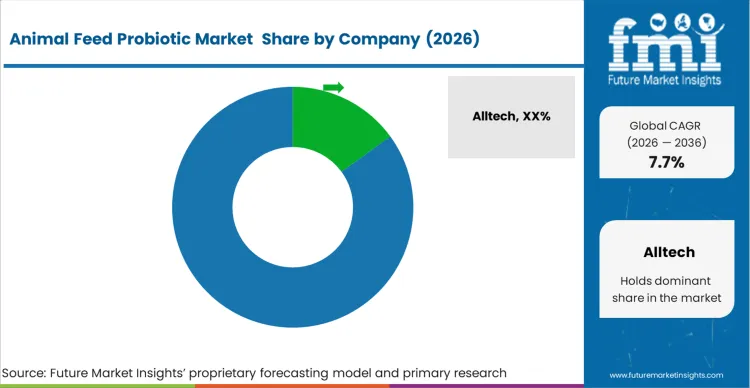
The animal feed probiotic market shows a competitive structure led by diversified animal nutrition and biosolutions companies that compete on strain performance, species-specific formulation, field validation, and technical support rather than on price alone. Alltech and Novus International retain relevance through livestock-focused nutrition portfolios and on-farm advisory depth, while Evonik continues to build share through targeted probiotic and gut-health solutions.
The competitive set has also evolved structurally, Chr. Hansen is now part of Novonesis, and the former DuPont animal nutrition platform is now represented through IFF. As a result, competition is increasingly defined by integrated gut-health platforms, broader feed additive portfolios, and the ability to deliver measurable productivity outcomes across poultry, swine, and ruminant production systems.
Key Players in Animal Feed Probiotic Market
- Alltech
- IFF
- Novonesis
- Evonik Industries AG
- Novus International, Inc.
Scope of the Report
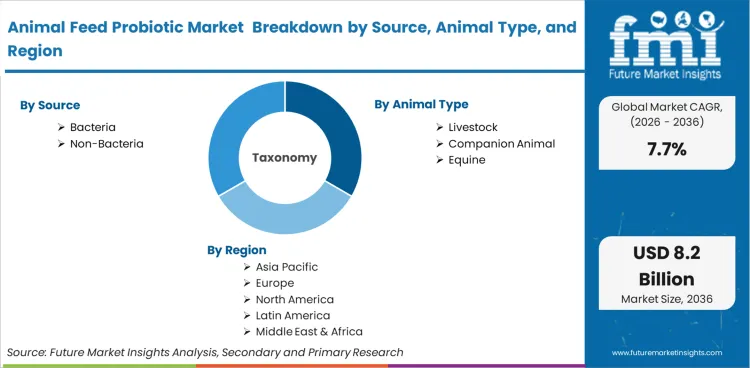
| Metric | Value |
|---|---|
| Market Definition | This market tracks live microbial supplements integrated into animal diets to optimize gut health and feed efficiency. It is structurally defined by the technical capability of microbial strains to survive feed processing conditions and deliver verified benefits to specific species. |
| Source Segmentation | Bacteria, Non-Bacteria |
| Animal Type Segmentation | Livestock, Companion Animal, Equine, Swine, Aquaculture |
| Form Segmentation | Liquid, Dry |
| Regions Covered | North America, Latin America, Europe, East Asia, South Asia, Middle East and Africa |
| Countries Covered | Brazil, Japan, India, U.S., UK, Germany, and 40 plus countries |
| Key Companies Profiled | Alltech, IFF, Novonesis, Evonik Industries AG, Novus International, Inc. |
| Forecast Period | 2026 to 2036 |
| Approach | Primary interviews were conducted with top-tier commercial feed integrators. The baseline was anchored to commercial feed production volumes. Forecasts were cross-validated against industrial fermentation capacity data. |
Source: Future Market Insights (FMI) analysis, based on proprietary forecasting model and primary research
Animal Feed Probiotic Market Analysis by Segments
Source:
- Bacteria
- Non-Bacteria
Animal Type:
- Livestock
- Companion Animal
- Equine
- Swine
- Aquaculture
Form:
- Liquid
- Dry
Region:
- Asia Pacific
- India
- China
- Japan
- South Korea
- Indonesia
- Australia & New Zealand
- ASEAN
- Rest of Asia Pacific
- Europe
- Germany
- Italy
- France
- United Kingdom
- Spain
- Benelux
- Nordics
- Central & Eastern Europe
- Rest of Europe
- North America
- United States
- Canada
- Mexico
- Latin America
- Brazil
- Argentina
- Chile
- Rest of Latin America
- Middle East & Africa
- Kingdom of Saudi Arabia
- United Arab Emirates
- South Africa
- Turkey
- Rest of Middle East & Africa
Bibliography
- World Organization for Animal Health, & World Bank. (2024). Forecasting the fallout from AMR: Economic impacts of antimicrobial resistance in food-producing animals. A report from the EcoAMR series.
- European Food Safety Authority. (2025). Safety and efficacy of a feed additive consisting of viable cells of Lactobacillus acidophilus CNCM I-3231, Ligilactobacillus salivarius CNCM I-3233, Lactiplantibacillus plantarum CNCM I-3232, Lacticaseibacillus rhamnosus CNCM I-4427, and Bifidobacterium animalis subsp. lactis CNCM I-3993 (FlorEquilibre® Chien) for dogs (Wamine SAS).
- U.S. Department of Agriculture, Economic Research Service. (2025, March 11). The Growing Demand for Animal Products and Feed in India: Future Prospects for Production, Trade, and Technology Innovation.
- U.S. Department of Agriculture, Foreign Agricultural Service. (2025, January 8). China: Feed additives and ingredients catalogs updates. U.S. Department of Agriculture.
- Trinchera, M., et al. (2025). Antimicrobials in Livestock Farming and Resistance: Public Health Implications
This bibliography is provided for reader reference. The full FMI report contains the complete reference list with primary source documentation.
This Report Addresses
- Market intelligence to support strategic decision making across microbial strain deployment and commercial feed integration
- Market size estimation and 10-year revenue forecasts from 2026 to 2036, supported by verifiable commercial feed production volumes
- Growth opportunity mapping across specific feed forms with emphasis on post-pellet liquid application systems
- Segment and regional revenue forecasts covering bacterial inclusion rates across strict antimicrobial resistance frameworks
- Competition strategy assessment including proprietary strain libraries, verified thermotolerance data sets, and global fermentation capabilities
- Technology development tracking including specific thermal encapsulation techniques and real-time viability diagnostics
- Market access analysis covering regional strain approvals and international export meat residue qualification standards
- Market report delivery in PDF, Excel, PPT, and interactive dashboard formats for executive strategy, global feed formulation planning, and operational benchmarking use
Frequently Asked Questions
What is the animal feed probiotic market size in 2026?
The market reaches USD 4.0 Billion in 2026, signaling the rapid operational shift integrators are making toward biological interventions ahead of looming regulatory deadlines.
How fast is the animal feed probiotic market growing?
It is projected to achieve a valuation of USD 8.2 billion by 2036. This scale reflects the universal integration of microbial protocols into base commercial feed formulations globally.
What CAGR is projected?
The 7.7% CAGR reflects the speed at which commercial mills are upgrading their application infrastructure, not just a spike in awareness. The rate is fundamentally gated by capital expenditure cycles for specialized liquid delivery and cold-storage handling equipment.
Which Source segment leads?
Bacteria leads the source segment because specific spore-forming variants can reliably survive aggressive feed pelleting conditions. Formulators depend on this thermal stability to guarantee targeted colony-forming units without applying costly formulation overages.
Which Animal Type segment leads?
The livestock segment holds the majority share as massive poultry and swine integrators transition away from prophylactic antibiotics. These high-volume operations require continuous microbial optimization to maintain strict feed conversion ratios at scale.
Which Form segment leads?
Liquid formats dominate because they are applied post-pellet, completely bypassing the destructive heat of the extrusion process. This application method allows mills to utilize highly sensitive biological strains that would normally perish in standard dry mixtures.
What are the animal feed probiotic market trends driving rapid growth?
Strict procurement requirements from tier-1 retail meat buyers force chief veterinarians to verify completely antibiotic-free production chains. This commercial pressure cascades down to the feed mill, compelling immediate adoption of proven pathogen exclusion microbial strains.
What is the primary restraint?
The complex logistics of live-strain shelf life directly clash with unpredictable commercial feed holding times. Until distribution networks establish rigorous temperature-controlled handling protocols, guaranteeing viability at the farm gate remains a significant operational hurdle.
Which country grows fastest?
Brazil's 8.1% compound rate outpaces Japan's 7.6% because Brazil's massive, hyper-concentrated export meat sector must instantaneously align with the strictest international residue standards. Japanese buyers prioritize precision efficiency, but Brazilian integrators must secure bulk compliance to maintain global trade access.
How do antimicrobial frameworks reshape this market?
Looming restrictions on standard feed medications force integrators to fundamentally redesign their herd health timelines. They are shifting from reactive, low-cost chemical treatments to proactive, preventative microbial seeding strategies from the day of hatching.
Why is thermal encapsulation critical for dry formats?
Without advanced thermo-tolerant coatings, vegetative microbial cells are obliterated during the steam conditioning phase of milling. Encapsulation engineers are essentially providing the protective barrier that allows modern biologicals to function in legacy feed manufacturing infrastructure.
How do large integrators manage supplier lock-in?
Commercial feed mills intentionally validate secondary biological strains from alternative fermentation companies. This persistent parallel qualification process prevents any single biological provider from dictating aggressive price terms, ensuring long-term formulation flexibility.
Who are the top animal feed probiotic companies and what advantage do they possess?
Established leaders like Alltech and Novonesis control multi-year proprietary strain libraries backed by extensive safety and efficacy dossiers. This documentation allows them to instantly clear regional regulatory hurdles that stall newer entrants for years.
Why are yeast strains evaluated differently than bacteria?
Yeast cultures are frequently procured to alter rumen fermentation dynamics or act as mycotoxin binders, rather than solely for competitive pathogen exclusion. Their qualification relies more on gas production metrics than raw colony-forming unit survivability.
How does feed quality volatility in South Asia influence adoption?
Inconsistent grain harvests force formulators in the region to rely heavily on biological interventions to stabilize the nutritional baseline. Robust probiotic strains help extract maximum energy from sub-optimal carbohydrate sources, decoupling farm profitability from raw material swings.
What limits the adoption of these products in smaller mills?
Independent milling operations lack the capital budget for precise post-pellet spray systems or climate-controlled ingredient storage. They are forced to rely on highly stable, but less specialized, dry spore formats that can withstand their basic extrusion equipment.
How does aquaculture demand differ from livestock?
Aquaculture diets require specialized extrusion profiles that float or sink, imposing unique pressure and temperature profiles on the included biologicals. Strains selected for these applications must survive aquatic dispersion while actively colonizing the unique intestinal morphology of farmed fish species.
What makes the companion animal segment distinct?
Pet food manufacturers prioritize specific health claims, such as reduced stool odor or improved coat condition, over raw feed conversion efficiency. The high retail margins in this space allow formulators to utilize expensive, hyper-specialized microbial variants.
How do changing retail specifications impact feed formulators?
Major grocery chains are updating their sourcing manuals to explicitly require transparent, non-medicated animal rearing practices. This forces formulators to replace cheap, legacy growth promoters with more complex, verifiable biological feed protocols to maintain vendor approval.
Why is post-pellet application gaining traction globally?
It entirely eliminates the primary cause of biological failure in commercial feed: the heat of the pellet die. By retrofitting lines with liquid sprayers, mills can drastically expand their formulation toolkit to include highly effective but fragile vegetative microbial strains.
Preview the report firsthand - request a free sample
Get SampleGet the brochure for pricing and purchase details.
Get PDFTable of Content
- Executive Summary
- Global Market Outlook
- Demand-side Trends
- Supply-side Trends
- Technology Roadmap Analysis
- Analysis and Recommendations
- Market Overview
- Market Coverage / Taxonomy
- Market Definition / Scope / Limitations
- Research Methodology
- Chapter Orientation
- Analytical Lens and Working Hypotheses
- Market Structure, Signals, and Trend Drivers
- Benchmarking and Cross-market Comparability
- Market Sizing, Forecasting, and Opportunity Mapping
- Research Design and Evidence Framework
- Desk Research Programme (Secondary Evidence)
- Company Annual and Sustainability Reports
- Peer-reviewed Journals and Academic Literature
- Corporate Websites, Product Literature, and Technical Notes
- Earnings Decks and Investor Briefings
- Statutory Filings and Regulatory Disclosures
- Technical White Papers and Standards Notes
- Trade Journals, Industry Magazines, and Analyst Briefs
- Conference Proceedings, Webinars, and Seminar Materials
- Government Statistics Portals and Public Data Releases
- Press Releases and Reputable Media Coverage
- Specialist Newsletters and Curated Briefings
- Sector Databases and Reference Repositories
- FMI Internal Proprietary Databases and Historical Market Datasets
- Subscription Datasets and Paid Sources
- Social Channels, Communities, and Digital Listening Inputs
- Additional Desk Sources
- Expert Input and Fieldwork (Primary Evidence)
- Primary Modes
- Qualitative Interviews and Expert Elicitation
- Quantitative Surveys and Structured Data Capture
- Blended Approach
- Why Primary Evidence is Used
- Field Techniques
- Interviews
- Surveys
- Focus Groups
- Observational and In-context Research
- Social and Community Interactions
- Stakeholder Universe Engaged
- C-suite Leaders
- Board Members
- Presidents and Vice Presidents
- R&D and Innovation Heads
- Technical Specialists
- Domain Subject-matter Experts
- Scientists
- Physicians and Other Healthcare Professionals
- Governance, Ethics, and Data Stewardship
- Research Ethics
- Data Integrity and Handling
- Primary Modes
- Tooling, Models, and Reference Databases
- Desk Research Programme (Secondary Evidence)
- Data Engineering and Model Build
- Data Acquisition and Ingestion
- Cleaning, Normalisation, and Verification
- Synthesis, Triangulation, and Analysis
- Quality Assurance and Audit Trail
- Market Background
- Market Dynamics
- Drivers
- Restraints
- Opportunity
- Trends
- Scenario Forecast
- Demand in Optimistic Scenario
- Demand in Likely Scenario
- Demand in Conservative Scenario
- Opportunity Map Analysis
- Product Life Cycle Analysis
- Supply Chain Analysis
- Investment Feasibility Matrix
- Value Chain Analysis
- PESTLE and Porter’s Analysis
- Regulatory Landscape
- Regional Parent Market Outlook
- Production and Consumption Statistics
- Import and Export Statistics
- Market Dynamics
- Global Market Analysis 2021 to 2025 and Forecast, 2026 to 2036
- Historical Market Size Value (USD Billion) Analysis, 2021 to 2025
- Current and Future Market Size Value (USD Billion) Projections, 2026 to 2036
- Y-o-Y Growth Trend Analysis
- Absolute $ Opportunity Analysis
- Global Market Pricing Analysis 2021 to 2025 and Forecast 2026 to 2036
- Global Market Analysis 2021 to 2025 and Forecast 2026 to 2036, By Source
- Introduction / Key Findings
- Historical Market Size Value (USD Billion) Analysis By Source , 2021 to 2025
- Current and Future Market Size Value (USD Billion) Analysis and Forecast By Source , 2026 to 2036
- Bacteria
- Non-Bacteria
- Bacteria
- Y-o-Y Growth Trend Analysis By Source , 2021 to 2025
- Absolute $ Opportunity Analysis By Source , 2026 to 2036
- Global Market Analysis 2021 to 2025 and Forecast 2026 to 2036, By Animal Type
- Introduction / Key Findings
- Historical Market Size Value (USD Billion) Analysis By Animal Type, 2021 to 2025
- Current and Future Market Size Value (USD Billion) Analysis and Forecast By Animal Type, 2026 to 2036
- Livestock
- Companion Animal
- Equine
- Livestock
- Y-o-Y Growth Trend Analysis By Animal Type, 2021 to 2025
- Absolute $ Opportunity Analysis By Animal Type, 2026 to 2036
- Global Market Analysis 2021 to 2025 and Forecast 2026 to 2036, By Form
- Introduction / Key Findings
- Historical Market Size Value (USD Billion) Analysis By Form, 2021 to 2025
- Current and Future Market Size Value (USD Billion) Analysis and Forecast By Form, 2026 to 2036
- Liquid
- Dry
- Liquid
- Y-o-Y Growth Trend Analysis By Form, 2021 to 2025
- Absolute $ Opportunity Analysis By Form, 2026 to 2036
- Global Market Analysis 2021 to 2025 and Forecast 2026 to 2036, By Region
- Introduction
- Historical Market Size Value (USD Billion) Analysis By Region, 2021 to 2025
- Current Market Size Value (USD Billion) Analysis and Forecast By Region, 2026 to 2036
- North America
- Latin America
- Western Europe
- Eastern Europe
- East Asia
- South Asia and Pacific
- Middle East & Africa
- Market Attractiveness Analysis By Region
- North America Market Analysis 2021 to 2025 and Forecast 2026 to 2036, By Country
- Historical Market Size Value (USD Billion) Trend Analysis By Market Taxonomy, 2021 to 2025
- Market Size Value (USD Billion) Forecast By Market Taxonomy, 2026 to 2036
- By Country
- USA
- Canada
- Mexico
- By Source
- By Animal Type
- By Form
- By Country
- Market Attractiveness Analysis
- By Country
- By Source
- By Animal Type
- By Form
- Key Takeaways
- Latin America Market Analysis 2021 to 2025 and Forecast 2026 to 2036, By Country
- Historical Market Size Value (USD Billion) Trend Analysis By Market Taxonomy, 2021 to 2025
- Market Size Value (USD Billion) Forecast By Market Taxonomy, 2026 to 2036
- By Country
- Brazil
- Chile
- Rest of Latin America
- By Source
- By Animal Type
- By Form
- By Country
- Market Attractiveness Analysis
- By Country
- By Source
- By Animal Type
- By Form
- Key Takeaways
- Western Europe Market Analysis 2021 to 2025 and Forecast 2026 to 2036, By Country
- Historical Market Size Value (USD Billion) Trend Analysis By Market Taxonomy, 2021 to 2025
- Market Size Value (USD Billion) Forecast By Market Taxonomy, 2026 to 2036
- By Country
- Germany
- UK
- Italy
- Spain
- France
- Nordic
- BENELUX
- Rest of Western Europe
- By Source
- By Animal Type
- By Form
- By Country
- Market Attractiveness Analysis
- By Country
- By Source
- By Animal Type
- By Form
- Key Takeaways
- Eastern Europe Market Analysis 2021 to 2025 and Forecast 2026 to 2036, By Country
- Historical Market Size Value (USD Billion) Trend Analysis By Market Taxonomy, 2021 to 2025
- Market Size Value (USD Billion) Forecast By Market Taxonomy, 2026 to 2036
- By Country
- Russia
- Poland
- Hungary
- Balkan & Baltic
- Rest of Eastern Europe
- By Source
- By Animal Type
- By Form
- By Country
- Market Attractiveness Analysis
- By Country
- By Source
- By Animal Type
- By Form
- Key Takeaways
- East Asia Market Analysis 2021 to 2025 and Forecast 2026 to 2036, By Country
- Historical Market Size Value (USD Billion) Trend Analysis By Market Taxonomy, 2021 to 2025
- Market Size Value (USD Billion) Forecast By Market Taxonomy, 2026 to 2036
- By Country
- China
- Japan
- South Korea
- By Source
- By Animal Type
- By Form
- By Country
- Market Attractiveness Analysis
- By Country
- By Source
- By Animal Type
- By Form
- Key Takeaways
- South Asia and Pacific Market Analysis 2021 to 2025 and Forecast 2026 to 2036, By Country
- Historical Market Size Value (USD Billion) Trend Analysis By Market Taxonomy, 2021 to 2025
- Market Size Value (USD Billion) Forecast By Market Taxonomy, 2026 to 2036
- By Country
- India
- ASEAN
- Australia & New Zealand
- Rest of South Asia and Pacific
- By Source
- By Animal Type
- By Form
- By Country
- Market Attractiveness Analysis
- By Country
- By Source
- By Animal Type
- By Form
- Key Takeaways
- Middle East & Africa Market Analysis 2021 to 2025 and Forecast 2026 to 2036, By Country
- Historical Market Size Value (USD Billion) Trend Analysis By Market Taxonomy, 2021 to 2025
- Market Size Value (USD Billion) Forecast By Market Taxonomy, 2026 to 2036
- By Country
- Kingdom of Saudi Arabia
- Other GCC Countries
- Turkiye
- South Africa
- Other African Union
- Rest of Middle East & Africa
- By Source
- By Animal Type
- By Form
- By Country
- Market Attractiveness Analysis
- By Country
- By Source
- By Animal Type
- By Form
- Key Takeaways
- Key Countries Market Analysis
- USA
- Pricing Analysis
- Market Share Analysis, 2025
- By Source
- By Animal Type
- By Form
- Canada
- Pricing Analysis
- Market Share Analysis, 2025
- By Source
- By Animal Type
- By Form
- Mexico
- Pricing Analysis
- Market Share Analysis, 2025
- By Source
- By Animal Type
- By Form
- Brazil
- Pricing Analysis
- Market Share Analysis, 2025
- By Source
- By Animal Type
- By Form
- Chile
- Pricing Analysis
- Market Share Analysis, 2025
- By Source
- By Animal Type
- By Form
- Germany
- Pricing Analysis
- Market Share Analysis, 2025
- By Source
- By Animal Type
- By Form
- UK
- Pricing Analysis
- Market Share Analysis, 2025
- By Source
- By Animal Type
- By Form
- Italy
- Pricing Analysis
- Market Share Analysis, 2025
- By Source
- By Animal Type
- By Form
- Spain
- Pricing Analysis
- Market Share Analysis, 2025
- By Source
- By Animal Type
- By Form
- France
- Pricing Analysis
- Market Share Analysis, 2025
- By Source
- By Animal Type
- By Form
- India
- Pricing Analysis
- Market Share Analysis, 2025
- By Source
- By Animal Type
- By Form
- ASEAN
- Pricing Analysis
- Market Share Analysis, 2025
- By Source
- By Animal Type
- By Form
- Australia & New Zealand
- Pricing Analysis
- Market Share Analysis, 2025
- By Source
- By Animal Type
- By Form
- China
- Pricing Analysis
- Market Share Analysis, 2025
- By Source
- By Animal Type
- By Form
- Japan
- Pricing Analysis
- Market Share Analysis, 2025
- By Source
- By Animal Type
- By Form
- South Korea
- Pricing Analysis
- Market Share Analysis, 2025
- By Source
- By Animal Type
- By Form
- Russia
- Pricing Analysis
- Market Share Analysis, 2025
- By Source
- By Animal Type
- By Form
- Poland
- Pricing Analysis
- Market Share Analysis, 2025
- By Source
- By Animal Type
- By Form
- Hungary
- Pricing Analysis
- Market Share Analysis, 2025
- By Source
- By Animal Type
- By Form
- Kingdom of Saudi Arabia
- Pricing Analysis
- Market Share Analysis, 2025
- By Source
- By Animal Type
- By Form
- Turkiye
- Pricing Analysis
- Market Share Analysis, 2025
- By Source
- By Animal Type
- By Form
- South Africa
- Pricing Analysis
- Market Share Analysis, 2025
- By Source
- By Animal Type
- By Form
- USA
- Market Structure Analysis
- Competition Dashboard
- Competition Benchmarking
- Market Share Analysis of Top Players
- By Regional
- By Source
- By Animal Type
- By Form
- Competition Analysis
- Competition Deep Dive
- Alltech
- Overview
- Product Portfolio
- Profitability by Market Segments (Product/Age /Sales Channel/Region)
- Sales Footprint
- Strategy Overview
- Marketing Strategy
- Product Strategy
- Channel Strategy
- IFF
- Novonesis
- Evonik Industries AG
- Novus International, Inc.
- Alltech
- Competition Deep Dive
- Assumptions & Acronyms Used


