

- Market Size (2026)
- USD 420.60 Mn
- Forecast (2036)
- USD 1402.70 Mn
- CAGR (2026 to 2036)
- 12.8%
How big is the Arena Seat Sensors Market in 2026?
USD 420.60 million in 2026 and USD 1,402.70 million by 2036 at a 12.8% CAGR.
The arena seat sensors industry value is expected to grow from USD 372.87 million in 2025 to USD 1,402.70 million by 2036 at 12.8% CAGR, led by venues shifting seat-level signals into crowd and maintenance workflows. Wireless is expected to hold 56.0% share in 2026, influenced by lower-disruption retrofits in fixed seating bowls. Venue integrators are projected to secure 48.0% share in 2026, reflected by installation and live-event support needs.
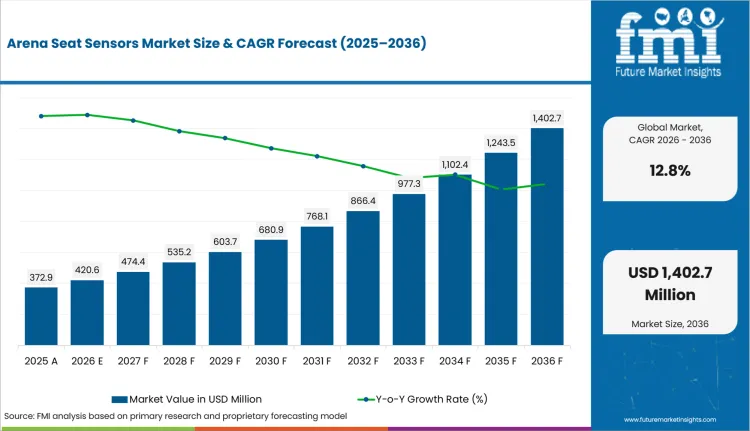
| Metric | Value |
|---|---|
| 2026 Market Size | USD 420.60 million |
| 2036 Market Size | USD 1,402.70 million |
| Forecast CAGR | 12.8% from 2026 to 2036 |
| Leading Connectivity | Wireless |
| Wireless Share in 2026 | 56.0% |
| Leading Sales Channel | Venue Integrators |
| Venue Integrators Share in 2026 | 48.0% |
| Leading CAGR Country | India |
| India CAGR | 14.6% by 2036 |
Summary of the Arena Seat Sensors Market
| Market Signal | Commercial Impact |
|---|---|
| Demand and Growth Drivers | Arena seat sensor demand is increasing as venue operators adopt real-time occupancy monitoring to improve event operations and guest experiences.
|
| Product and Segment View | Wireless systems, venue integrators, and seat occupancy analytics lead the market.
|
| Geography and Growth Outlook | India and China are expected to remain the fastest-growing markets for arena seat sensors.
|
| Competitive Landscape | Competition is focused on occupancy intelligence, platform integration, and smart building technologies.
|
| Analyst Perspective | Arena seat sensors are evolving into an essential operational intelligence platform for modern venues.
— Sudip Saha, Principal Consultant, Technology, Future Market Insights |
Venue automation planning is strengthening around seated-presence proof and crowd safety decisions. Adjacent smart stadium planning supports arena seat sensor buying as venues compare crowd and service dashboards. Sport England’s Active Places platform covers around 41,000 sports sites and 115,000 sports facilities, showing the size of structured facility data used for venue planning in England.
International Paralympic Committee reported more than 2 million Paris 2024 Paralympic tickets sold by August 2024, showing large event attendance pressure across accessible venue environments. Cisco Spaces reports that occupancy monitoring can receive telemetry from 4 signal groups including Wi-Fi and wired sensors, strengthening the operating case for sensor-connected venue dashboards.Arena seat sensors demand is forecast to expand through 2036, supported by venue digitization and service-led seat analytics.
Which factors support expansion in the Arena Seat Sensors Market?
Seat-bowl data, premium service timing, and camera-free occupancy workflows support market value across sports and entertainment venues.
- Market value rises as ticket scans cannot confirm seated presence or seat sharing inside active venues.
- Wireless systems support adoption as venues can automate selected sections before extending sensors across larger seating bowls.
- Premium hospitality teams influence steady demand through service alerts that help protect suite and VIP experience quality.
- Maintenance teams promote demand for vibration and tamper sensors suited to post-event inspection and seat repair prioritization.
Why is the Arena Seat Sensors Market growing?
High-attendance events increase demand for seat-level evidence as operators need better staff deployment and service timing.
Arena buyers spend more on occupancy and pressure sensors as ticketing records alone cannot confirm real-time seat use. Fan Engagement adoption also supports seat-level analytics as venues connect service timing with live visitor behavior. FIFA reported 556,369 cumulative spectators after the first 16 FIFA Club World Cup 2025 matches in the United States, averaging 34,773 spectators per match. Large crowds of that size make no-show mapping and high-value section monitoring more useful during live events. Suppliers able to link sensors and dashboards gain stronger acceptance in venue technology planning.
How is the Arena Seat Sensors Market segmented?
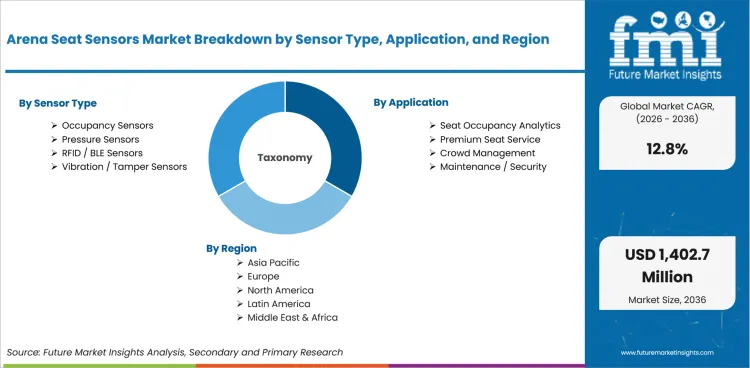
Arena Seat Sensors Market is segmented by sensor type, application, venue type, connectivity, and sales channel.
- Occupancy sensors are projected to account for 42.0% share in 2026, influenced by direct seated-presence detection across general and premium rows.
- Seat occupancy analytics is expected to hold 38.0% share in 2026, shaped by operator need for live views of no-shows and seating-zone use.
- Indoor arenas are anticipated to account for 34.0% share in 2026, led by repeat event calendars across basketball and entertainment shows.
- Wireless is projected to hold 56.0% share in 2026, guided by retrofit demand across venues avoiding complex under-seat cabling.
- Venue Integrators are expected to represent 48.0% share in 2026, supported by buyer preference for one partner handling sensors and event support.
Why do occupancy sensors dominate the Arena Seat Sensors Market by sensor type?
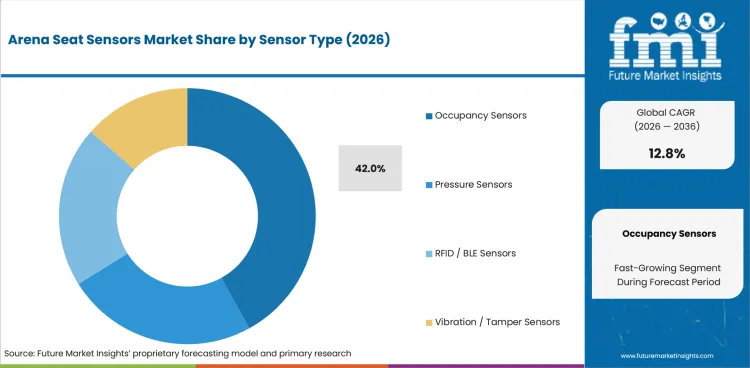
- Occupancy sensors are projected to account for 42.0% share in 2026, driven by direct yes-or-no seat status needed for dashboards without personal identity capture.
- Pressure sensors gain demand as VIP blocks and maintenance teams need stronger confirmation of weight-based activity and post-event wear.
Which application leads the Arena Seat Sensors Market?
- Seat occupancy analytics is expected to hold 38.0% share in 2026, shaped by operations teams needing live section views for staffing and crowd planning.
- Crowd management remains active as safety teams connect seat-bowl occupancy data with concourses and staff deployment tools. Sports analytics dashboards create a parallel benchmark for operators asking seat data to support live decisions.
Which venue type leads the Arena Seat Sensors Market?
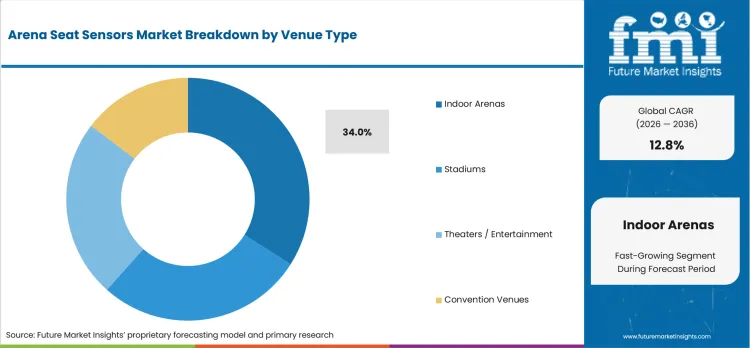
- Indoor arenas are anticipated to account for 34.0% share in 2026, led by dense seating and controlled environments suited to sensor trials.
- Stadiums gain use as football and multipurpose venues evaluate sensors for crowd routing and high-value sections.
Which connectivity mode leads the Arena Seat Sensors Market?
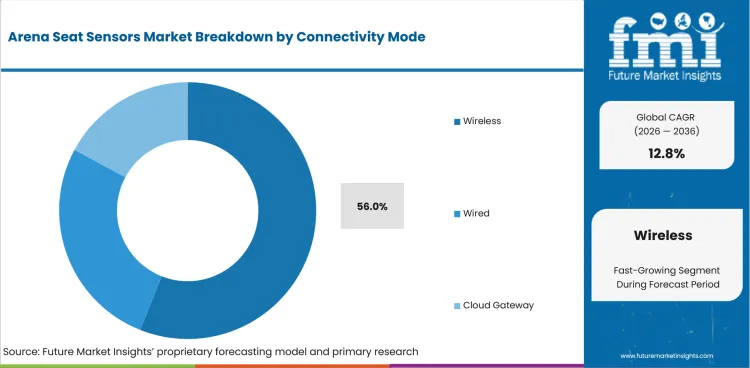
- Wireless is projected to hold 56.0% share in 2026, reflected by venue owner preference for lower-disruption retrofits during short off-season windows.
- Wired systems remain active in new builds and VIP sections needing managed cabling and low maintenance intervention.
Which sales channel leads the Arena Seat Sensors Market?
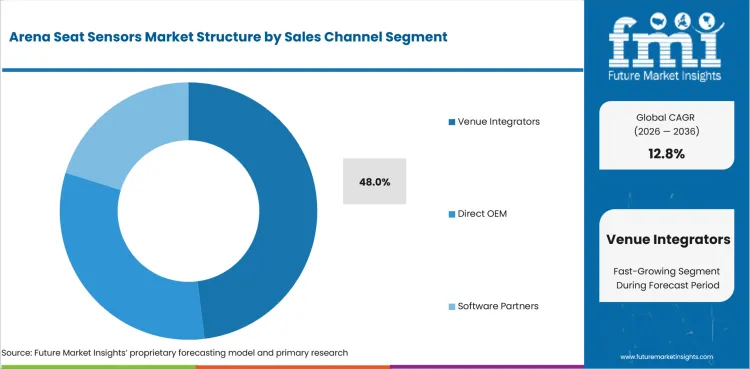
- Venue integrators are expected to represent 48.0% share in 2026, guided by buyer preference for installation and support accountability.
- Direct OEM remains active across new seating projects and venue refurbishments needing sensor-ready seats and factory-tested hardware assemblies.
What are the drivers, restraints, and opportunities in the Arena Seat Sensors Market?
Industrial venue automation and service-led sensing programs are shaping arena seat sensor buying decisions.
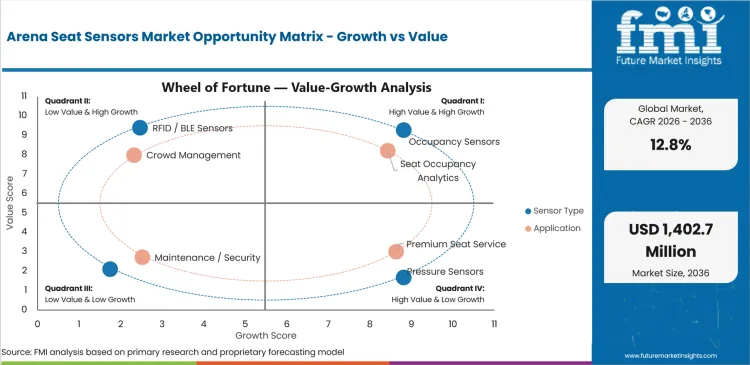
- Driver: Seat-bowl visibility gaps require sensor-linked evidence before sold seats can be converted into operational insight.
- Restraint: Battery service and false readings can limit uptime across large fixed-seat installations.
- Opportunity: Privacy-safe sensor networks can improve renewal rates as buyers request camera-free seating data.
Seat-Bowl Evidence Strengthens Sensor Demand
Ticketing data creates a sales record, while seat sensors create a live operating signal for venue teams. Sport England’s facility platform covers around 115,000 sports facilities across 41,000 sites, showing how structured venue data already supports planning in managed sports environments. Arena seat sensor suppliers gain demand as owners move from post-event attendance review toward section-level operational data used during events. Buyers will prioritize sensors that feed venue dashboards without complex manual reconciliation.
Service Access Burden Limits Large Retrofits
Seat sensor retrofits require work below seats and around live-event operating areas, so installation safety and maintenance planning can affect payback. USA Bureau of Labor Statistics reported a 12.0 total-recordable-case incidence rate per 100 full-time workers for spectator sports in 2024, showing why live venue environments require careful maintenance timing and worker-safety controls. Buyers may restrict large rollouts until suppliers prove safer battery access and predictable service routes. Sensor vendors that simplify maintenance can reduce hesitation across older seating bowls.
Camera-Free Occupancy Creates Expansion
Privacy-safe sensing creates a clearer opening as venues look for data without video monitoring in every row. Cisco Spaces states that occupancy monitoring can receive telemetry from Wi-Fi and wired sensors, creating a 4-input pathway for live density monitoring. Arena seat sensor suppliers can use similar integration thinking to connect seat blocks and concourses. Camera-free systems can gain stronger acceptance in family sections and accessibility areas.
Which countries are growing in the Arena Seat Sensors Market?
India 14.6% CAGR, China 14.0% CAGR, South Korea 13.5% CAGR, United States 13.2% CAGR, Japan 12.7% CAGR, France 12.4% CAGR, United Kingdom 12.1% CAGR, and Germany 11.8% CAGR through 2036.
.webp "Top Country Growth Comparison Arena Seat Sensors Market Cagr (2026 2036)")
| Country | CAGR |
|---|---|
| India | 14.6% |
| China | 14.0% |
| South Korea | 13.5% |
| United States | 13.2% |
| Japan | 12.7% |
| France | 12.4% |
| United Kingdom | 12.1% |
| Germany | 11.8% |
Source: Future Market Insights, 2026.
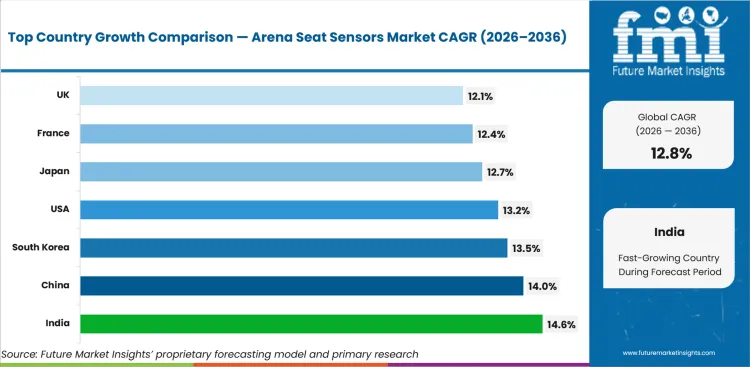
How do country-level CAGRs compare in the Arena Seat Sensors Market?
India leads country expansion while Germany records the most cautious pace among profiled markets.
- India is forecast to record 14.6% CAGR by 2036 due to multipurpose arenas and new venue fit-outs.
- China is expected to expand at 14.0% CAGR from 2026 to 2036, led by sports venue scale and smart facility programs.
- South Korea is projected to grow at 13.5% CAGR through 2036 as mobile-first venue services support sensor-linked workflows.
- United States is estimated to rise at 13.2% CAGR by 2036, reflected by expensive seating and major-event readiness.
- Japan is expected to advance at 12.7% CAGR over the forecast period due to sports operators prioritizing fan flow and service quality.
- France is forecast to grow at 12.4% CAGR by 2036, backed by major-event experience and multipurpose venue operations.
- United Kingdom is projected to post 12.1% CAGR by 2036, guided by regulated ground safety and local authority planning.
- Germany is expected to record 11.8% CAGR by 2036, driven by ticket utilization and disciplined facility technology buying.
How fast is the Arena Seat Sensors Market growing in India?
A 14.6% CAGR through 2036 reflects cricket venues and new venue fit-outs.
Country Market Snapshot Table
| Parameter | Value |
|---|---|
| Market Size in 2025 (Value) | USD 28.2 million |
| Market Size in 2026 (Value) | USD 32.4 million |
| Market Forecast in 2036 (Value) | USD 126.5 million |
| CAGR (2026 to 2036) | 14.6% |
| Years Considered | 2021 to 2036 |
| Base Year | 2025 |
| Forecast Period | 2026 to 2036 |
| Units Considered | Value (USD million) |
| Leading Sub-Region | Mumbai, Delhi NCR, Bengaluru, Hyderabad, Ahmedabad, and Chennai venue corridors |
India Arena Seat Sensors Market Outlook
- India arena seat sensor demand is led by convention spaces and expensive seating blocks. Buyers need systems supporting crowd visibility and event staff coordination across large seating areas.
- Indian operators are expected to start with VIP blocks and selected high-density sections before moving toward wider seat-bowl coverage. Local integration and wireless deployment are likely to remain central to supplier selection.
Key Growth Drivers
- Sports infrastructure budgets create room for connected venue upgrades, supported by India’s Ministry of Youth Affairs and Sports receiving ₹3,794 crore for FY 2025-26, a 17% rise from revised FY 2024-25 allocation.
- Sports infrastructure approvals widen the base for sensor-ready venues, as the Khelo India programme had sanctioned 344 projects worth ₹3,158.15 crore by March 2026, with ₹2,730.95 crore released.
- Cricket premium seating promotes early demand for occupied-seat alerts as service teams need better timing across hospitality blocks.
- Private venue operators gain scope as premium events need seat-level service data and controlled crowd movement.
Key Restraints
- Cost pressure can restrict adoption to VIP blocks before general seating budgets allow larger rollouts.
- Local service networks must support battery replacement and calibration across busy event periods.
- Project execution gaps can slow sensor-ready fit-outs, reflected by Khelo India tracker data listing Rajamahendravaram Arena-2 at 0% financial progress after 8 January 2026 approval.
What makes India unique
India stands apart through public sports infrastructure outlays and new-build opportunities allowing sensors to be included during venue design.
Key Companies
- Tata Elxsi
- Aurionpro Solutions
- Matrix Comsec
- Sparsh CCTV
- Godrej Security Solutions
- Voltas Building Solutions
- Prama India
- Netweb Technologies
Sales & Marketing Channels
- Venue construction consultants
- State venue tenders
- Sports franchise owners
- System integrator networks
- Ticketing and access-control partners
- Event management companies
Country Segment Breakdown Table
| Segment | Sub-Segments |
|---|---|
| By Sensor Type | Occupancy Sensors · Pressure Sensors · RFID / BLE Sensors · Vibration / Tamper Sensors |
| By Application | Seat Occupancy Analytics · Premium Seat Service · Crowd Management · Maintenance / Security |
| By Venue Type | Indoor Arenas · Stadiums · Theaters / Entertainment · Convention Venues |
| By Connectivity | Wireless · Wired · Cloud Gateway |
| By Sales Channel | Venue Integrators · Direct OEM · Software Partners |
| Key Sub-Regions Covered, Venue Corridors | Mumbai · Delhi NCR · Bengaluru · Hyderabad · Ahmedabad · Chennai |
Frequently Asked Questions
How fast is India Arena Seat Sensors Market growing?
India records the leading country pace at 14.6% CAGR, supported by public sports funding and new multipurpose venue projects.
Who leads India Arena Seat Sensors Market?
Tata Elxsi, Matrix Comsec, and Aurionpro Solutions lead local participation through venue integration and connected infrastructure support.
What is driving adoption in India Arena Seat Sensors Market?
Sanctioned sports infrastructure and high-end event operations are moving Indian buyers toward wireless seat-sensing systems.
What is the Arena Seat Sensors Market outlook in China?
A 14.0% CAGR through 2036 reflects sports venue scale and smart facility programs.
Country Market Snapshot Table
| Parameter | Value |
|---|---|
| Market Size in 2025 (Value) | USD 53.5 million |
| Market Size in 2026 (Value) | USD 61.0 million |
| Market Forecast in 2036 (Value) | USD 226.3 million |
| CAGR (2026 to 2036) | 14.0% |
| Years Considered | 2021 to 2036 |
| Base Year | 2025 |
| Forecast Period | 2026 to 2036 |
| Units Considered | Value (USD million) |
| Leading Sub-Region | Guangdong, Yangtze River Delta, Beijing-Tianjin-Hebei, and Chengdu-Chongqing venue corridors |
China Arena Seat Sensors Market Outlook
- China arena seat sensor demand draws support from public sports infrastructure and large multipurpose halls. Buyers need sensor platforms that can align with public facility systems, local cloud rules, and domestic integrator requirements.
- Chinese operators are expected to favor local integration partners and smart building platforms that can connect seat signals with security, ticketing, and facility controls. Public tenders and approved supplier lists will influence purchasing routes.
Key Growth Drivers
- Public sports venue scale creates a wide addressable base, supported by official data stating that China had more than 4.84 million sports venues in 2024.
- Sports service activity supports digital venue demand, reflected by National Bureau of Statistics having reported sports service industry value addition of 1.1548 trillion yuan in 2024.
- Smart city and facility programs favor integrated sensor platforms connecting seating data with security and operations systems.
- Major ball-game venues need seat utilization data to improve staffing and post-event maintenance planning.
Key Restraints
- Local data rules can limit cloud-based venue analytics if suppliers cannot localize storage and platform controls.
- Public purchasing routes can favor domestic integrators and approved sensor suppliers over foreign device sellers.
- Service-industry mix signals value concentration, as sports services accounted for 72.0% of sports industry value added in 2024, leaving hardware suppliers dependent on platform and service partnerships.
What makes China unique
China differs from other markets through large public venue volume and domestic smart-facility programs across dense urban corridors.
Key Companies
- Hikvision
- Dahua Technology
- Yeastar
- Milesight
- Tuya Smart
- MOKO Smart
- Quectel
- Kingdee Smart Venue Solutions
Sales & Marketing Channels
- Public venue tenders
- Local smart building integrators
- Sports bureau purchasing routes
- Cloud platform partners
- Facility automation distributors
- Stadium security contractors
Country Segment Breakdown Table
| Segment | Sub-Segments |
|---|---|
| By Sensor Type | Occupancy Sensors · Pressure Sensors · RFID / BLE Sensors · Vibration / Tamper Sensors |
| By Application | Seat Occupancy Analytics · Premium Seat Service · Crowd Management · Maintenance / Security |
| By Venue Type | Indoor Arenas · Stadiums · Theaters / Entertainment · Convention Venues |
| By Connectivity | Wireless · Wired · Cloud Gateway |
| By Sales Channel | Venue Integrators · Direct OEM · Software Partners |
| Key Sub-Regions Covered, Venue Corridors | Guangdong · Yangtze River Delta · Beijing-Tianjin-Hebei · Chengdu-Chongqing · Shenzhen · Shanghai |
Frequently Asked Questions
How fast is China Arena Seat Sensors Market growing?
China is expected to expand at 14.0% CAGR, supported by public sports venue scale and smart-facility deployment.
Who leads China Arena Seat Sensors Market?
Hikvision, Dahua Technology, and Milesight lead local participation through security systems, IoT sensors, and facility integration.
What is driving adoption in China Arena Seat Sensors Market?
Large sports venue counts and local integrator access are moving buyers toward seat-level sensing.
What is the Arena Seat Sensors Market outlook in South Korea?
A 13.5% CAGR through 2036 reflects mobile-first venue services and connected fan operations.
Country Market Snapshot Table
| Parameter | Value |
|---|---|
| Market Size in 2025 (Value) | USD 19.8 million |
| Market Size in 2026 (Value) | USD 22.5 million |
| Market Forecast in 2036 (Value) | USD 79.9 million |
| CAGR (2026 to 2036) | 13.5% |
| Years Considered | 2021 to 2036 |
| Base Year | 2025 |
| Forecast Period | 2026 to 2036 |
| Units Considered | Value (USD million) |
| Leading Sub-Region | Seoul Capital Area and Busan-Daegu sports venue corridors |
South Korea Arena Seat Sensors Market Outlook
- South Korea arena seat sensor demand benefits from connected mobile engagement and urban sports venues. Buyers need systems connecting with telecom infrastructure and event operations platforms.
- Korean operators are expected to evaluate seat sensors through smart venue and mobile service channels. Early adoption will likely focus on Seoul-area venues and high-density event blocks.
Key Growth Drivers
- Large football crowds influence demand for section-level seat data, supported by FC Seoul recording more than 500,000 spectators at Seoul World Cup Stadium during 2024.
- Sports participation supports venue-service investment, shown by South Korea’s 2025 national sports participation rate having reached 62.9%, up 2.2 percentage points year on year.
- Telecom-integrator channels support seat-linked fan services and wayfinding across connected venues.
- Baseball and football venue schedules create repeat measurement opportunities for occupancy and maintenance sensors.
Key Restraints
- Camera analytics may receive first budget preference in venues already using video systems for security.
- Seat-level hardware needs service planning to avoid downtime during packed match and concert calendars.
- Venue concentration can restrict repeat rollouts outside major hubs, since Seoul Metropolitan Government lists Gocheok Sky Dome capacity at 18,076 seats for sports and cultural events.
What makes South Korea unique
South Korea has a distinct advantage from telecom maturity and compact metropolitan venue networks.
Key Companies
- Samsung SDS
- LG CNS
- SK Shieldus
- KT Enterprise
- Lotte Innovate
- Hanwha Vision
- Suprema
- IDIS
Sales & Marketing Channels
- Telecom-integrator partnerships
- Stadium technology teams
- Security system integrators
- Mobile app partners
- Event operations contractors
- Smart city technology routes
Country Segment Breakdown Table
| Segment | Sub-Segments |
|---|---|
| By Sensor Type | Occupancy Sensors · Pressure Sensors · RFID / BLE Sensors · Vibration / Tamper Sensors |
| By Application | Seat Occupancy Analytics · Premium Seat Service · Crowd Management · Maintenance / Security |
| By Venue Type | Indoor Arenas · Stadiums · Theaters / Entertainment · Convention Venues |
| By Connectivity | Wireless · Wired · Cloud Gateway |
| By Sales Channel | Venue Integrators · Direct OEM · Software Partners |
| Key Sub-Regions Covered, Venue Corridors | Seoul · Gyeonggi · Busan · Daegu · Incheon · Gwangju |
Frequently Asked Questions
How fast is South Korea Arena Seat Sensors Market growing?
South Korea shows 13.5% CAGR, supported by mobile-first fan services and digitally established venue operations.
Who leads South Korea Arena Seat Sensors Market?
Samsung SDS, LG CNS, KT Enterprise, and Hanwha Vision lead local participation through connectivity and security integration.
What is driving adoption in South Korea Arena Seat Sensors Market?
Football attendance and premium fan service priorities are moving operators toward seat-linked sensing.
How is the Arena Seat Sensors Market performing in the United States?
A 13.2% CAGR through 2036 reflects major-event readiness and integrator-led venue upgrades.
Country Market Snapshot Table
| Parameter | Value |
|---|---|
| Market Size in 2025 (Value) | USD 101.5 million |
| Market Size in 2026 (Value) | USD 114.9 million |
| Market Forecast in 2036 (Value) | USD 397.0 million |
| CAGR (2026 to 2036) | 13.2% |
| Years Considered | 2021 to 2036 |
| Base Year | 2025 |
| Forecast Period | 2026 to 2036 |
| Units Considered | Value (USD million) |
| Leading Sub-Region | New York, Los Angeles, Dallas, Atlanta, Miami, Chicago, and Las Vegas venue corridors |
United States Arena Seat Sensors Market Outlook
- United States arena seat sensor demand is guided by established sports venues and large multipurpose seating bowls. Buyers need sensor data that connects with ticketing and building automation platforms.
- USA operators are expected to favor enterprise-grade dashboards and integrator-led deployments. Major-event readiness will keep demand active across football and entertainment venues.
Key Growth Drivers
- Major-event crowds create a clear seat-data need, led by FIFA reporting 556,369 spectators after 16 FIFA Club World Cup 2025 matches in the United States.
- Venue revenue scale supports investment in dashboards and sensor workflows, shown by Census Bureau quarterly services data listing spectator sports taxable revenue at USD 17,102 million in Q1 2026.
- Expensive suites in NFL and concert venues promote early payback for occupied-seat service alerts.
- Integrator channels support multi-venue rollouts for operators needing standard software and support models.
Key Restraints
- Retrofit labor and venue access windows can raise installation costs across older multipurpose arenas.
- Privacy review can delay systems that combine seat signals with fan identity or app-level data.
- Worker-safety planning adds rollout complexity, as spectator sports recorded a 12.0 total-recordable-case injury incidence rate per 100 full-time workers in 2024.
What makes the United States unique
United States demand differs through major-event pipelines and multi-use seating bowls supporting repeated sensor use.
Key Companies
- Cisco
- Zebra Technologies
- Johnson Controls
- Honeywell Building Automation
- Aramark Sports + Entertainment Technology Partners
- Daktronics
- Stadium 1 Software
- VenueNext
Sales & Marketing Channels
- Direct enterprise sales to venue owners
- Sports venue integrators
- Ticketing platform partnerships
- Premium hospitality operators
- Security and facility management consultants
- Building automation contractors
Country Segment Breakdown Table
| Segment | Sub-Segments |
|---|---|
| By Sensor Type | Occupancy Sensors · Pressure Sensors · RFID / BLE Sensors · Vibration / Tamper Sensors |
| By Application | Seat Occupancy Analytics · Premium Seat Service · Crowd Management · Maintenance / Security |
| By Venue Type | Indoor Arenas · Stadiums · Theaters / Entertainment · Convention Venues |
| By Connectivity | Wireless · Wired · Cloud Gateway |
| By Sales Channel | Venue Integrators · Direct OEM · Software Partners |
| Key Sub-Regions Covered, Venue Corridors | New York · Los Angeles · Dallas · Atlanta · Miami · Chicago · Las Vegas |
Frequently Asked Questions
How fast is the United States Arena Seat Sensors Market growing?
United States demand is expected to rise at 13.2% CAGR, supported by major-event volumes and premium arena spending.
Who leads the United States Arena Seat Sensors Market?
Cisco, Zebra Technologies, Johnson Controls, and Honeywell Building Automation lead local participation through occupancy platforms and building controls.
What is driving adoption in the United States Arena Seat Sensors Market?
Spectator sports revenue scale, and venue-security workflows are moving USA buyers toward integrated seat-sensing systems.
What is the Arena Seat Sensors Market outlook in Japan?
A 12.7% CAGR through 2036 reflects fan service quality and dense venue schedules.
Country Market Snapshot Table
| Parameter | Value |
|---|---|
| Market Size in 2025 (Value) | USD 31.0 million |
| Market Size in 2026 (Value) | USD 35.0 million |
| Market Forecast in 2036 (Value) | USD 116.0 million |
| CAGR (2026 to 2036) | 12.7% |
| Years Considered | 2021 to 2036 |
| Base Year | 2025 |
| Forecast Period | 2026 to 2036 |
| Units Considered | Value (USD million) |
| Leading Sub-Region | Tokyo, Osaka, Yokohama, Nagoya, Saitama, and Fukuoka venue corridors |
Japan Arena Seat Sensors Market Outlook
- Japan arena seat sensor demand is guided by football and baseball venues and compact hardware preferences. Buyers need unobtrusive systems being able to improve staff timing without disrupting the fan experience.
- Japanese operators are expected to prioritize new stadiums and venues hosting frequent sports or entertainment schedules. Small device footprints and after-sales service will decide supplier acceptance.
Key Growth Drivers
- Football attendance supports venue analytics, as J.LEAGUE reported 12,540,265 total attendance for official matches in 2024.
- J.LEAGUE fan engagement data reported 14.4% year-on-year attendance increase in 2024, supporting investment in fan-flow and service tools.
- Baseball venues offer frequent events and repeat measurement opportunities for occupancy and service alerts.
- Hospitality seating can use occupied-seat alerts for faster guest service across premium blocks.
Key Restraints
- Older venues may face wiring and mounting limits that require phased wireless retrofits.
- Buyers may avoid hardware that disrupts seating aesthetics or increases staff workload.
- Service expectations remain demanding, since J.LEAGUE attendance surpassed 11,000,000 for the previous record cycle, raising operational pressure but also buyer caution around reliability.
What makes Japan unique
Japan gains a distinct market profile from compact device needs and strong venue-quality discipline.
Key Companies
- NEC
- Panasonic Connect
- Fujitsu
- Hitachi Building Systems
- Omron Social Solutions
- Toshiba Infrastructure Systems
- Azbil
- Glory
Sales & Marketing Channels
- Stadium operators
- Sports club technology teams
- Japanese system integrators
- Seat and fixture OEM partners
- Venue service contractors
- Building automation dealers
Country Segment Breakdown Table
| Segment | Sub-Segments |
|---|---|
| By Sensor Type | Occupancy Sensors · Pressure Sensors · RFID / BLE Sensors · Vibration / Tamper Sensors |
| By Application | Seat Occupancy Analytics · Premium Seat Service · Crowd Management · Maintenance / Security |
| By Venue Type | Indoor Arenas · Stadiums · Theaters / Entertainment · Convention Venues |
| By Connectivity | Wireless · Wired · Cloud Gateway |
| By Sales Channel | Venue Integrators · Direct OEM · Software Partners |
| Key Sub-Regions Covered, Venue Corridors | Tokyo · Osaka · Yokohama · Nagoya · Saitama · Fukuoka |
Frequently Asked Questions
How fast is Japan Arena Seat Sensors Market growing?
Japan is expected to advance at 12.7% CAGR, helped by fan service quality and high attendance across football venues.
Who leads Japan Arena Seat Sensors Market?
NEC, Panasonic Connect, Fujitsu, and Omron Social Solutions lead local participation led by smart venue and sensor integration.
What is driving adoption in Japan Arena Seat Sensors Market?
Football attendance recovery and compact hardware preferences are supporting demand for occupancy systems.
What is the Arena Seat Sensors Market outlook in France?
A 12.4% CAGR through 2036 reflects major-event experience and multipurpose venue operations.
Country Market Snapshot Table
| Parameter | Value |
|---|---|
| Market Size in 2025 (Value) | USD 21.2 million |
| Market Size in 2026 (Value) | USD 23.8 million |
| Market Forecast in 2036 (Value) | USD 76.6 million |
| CAGR (2026 to 2036) | 12.4% |
| Years Considered | 2021 to 2036 |
| Base Year | 2025 |
| Forecast Period | 2026 to 2036 |
| Units Considered | Value (USD million) |
| Leading Sub-Region | Paris, Lyon, Marseille, Lille, Bordeaux, and Nice venue corridors |
France Arena Seat Sensors Market Outlook
- France arena seat sensor demand follows Olympic venue experience and public-private venue operations. Buyers need systems connecting crowd planning and event safety without adding heavy operating complexity.
- French operators are expected to assess sensors through tender readiness and integration with access control. Adoption is likely to favor multipurpose venues hosting sports and recurring public events.
Key Growth Drivers
- Major-event attendance experience supports sensor interest, as International Paralympic Committee reported more than 2 million Paris 2024 Paralympic tickets sold before opening.
- Olympic ticket demand also strengthened venue data awareness, as Paris 2024 Olympic ticket sales exceeded 9.5 million through official Games channels.
- Multipurpose arenas need repeatable data across concerts and public events.
- Premium hospitality blocks create a measurable service case for occupied-seat alerts.
Key Restraints
- Public purchasing cycles can delay sensor installations across municipal or publicly supported venues.
- Event-specific funding may not extend to long-term maintenance budgets after major tournaments.
- Paralympic sales accelerated late, with 1 million tickets sold in only 1 month before opening, showing how demand spikes can pressure short planning windows for venue technology teams.
What makes France unique
France has a distinct demand base from recent mega-event operations and multipurpose public venue planning.
Key Companies
- Schneider Electric
- Thales
- Idemia
- Bodet Software
- Lacroix Group
- Spie France
- Equans France
- Bouygues Energies & Services
Sales & Marketing Channels
- Public venue tenders
- Arena operators
- Sports federation purchasing teams
- Event technology integrators
- Facility services contractors
- Access control partners
Country Segment Breakdown Table
| Segment | Sub-Segments |
|---|---|
| By Sensor Type | Occupancy Sensors · Pressure Sensors · RFID / BLE Sensors · Vibration / Tamper Sensors |
| By Application | Seat Occupancy Analytics · Premium Seat Service · Crowd Management · Maintenance / Security |
| By Venue Type | Indoor Arenas · Stadiums · Theaters / Entertainment · Convention Venues |
| By Connectivity | Wireless · Wired · Cloud Gateway |
| By Sales Channel | Venue Integrators · Direct OEM · Software Partners |
| Key Sub-Regions Covered, Venue Corridors | Paris · Lyon · Marseille · Lille · Bordeaux · Nice |
Frequently Asked Questions
How fast is France Arena Seat Sensors Market growing?
France is expected to grow at 12.4% CAGR, supported by Olympic venue learning and multi-event seating operations.
Who leads France Arena Seat Sensors Market?
Schneider Electric, Thales, Idemia, and Spie France lead local participation based on building controls and venue integration.
What is driving adoption in France Arena Seat Sensors Market?
Crowd planning requirements and hospitality service workflows are moving French operators toward seat-level sensing.
What is the Arena Seat Sensors Market outlook in the United Kingdom?
A 12.1% CAGR through 2036 reflects regulated ground safety and local authority planning.
Country Market Snapshot Table
| Parameter | Value |
|---|---|
| Market Size in 2025 (Value) | USD 24.6 million |
| Market Size in 2026 (Value) | USD 27.6 million |
| Market Forecast in 2036 (Value) | USD 86.4 million |
| CAGR (2026 to 2036) | 12.1% |
| Years Considered | 2021 to 2036 |
| Base Year | 2025 |
| Forecast Period | 2026 to 2036 |
| Units Considered | Value (USD million) |
| Leading Sub-Region | London, Manchester, Birmingham, Liverpool, Glasgow, and Leeds venue corridors |
United Kingdom Arena Seat Sensors Market Outlook
- United Kingdom arena seat sensor demand is connected to local authority oversight and safety-led venue planning. Buyers need occupancy signals supporting operating assurance without creating surveillance concerns.
- UK operators are expected to favor systems that can support licensed ground safety, premium seating, and facilities planning. Integrator-led trials in selected sections are expected to remain a practical purchase route.
Key Growth Drivers
- Facility data culture supports digital venue planning, reflected by Sport England’s Active Places database covering around 41,000 sports sites and 115,000 sports facilities.
- Safety governance creates adoption support, influenced by Sports Grounds Safety Authority reportedly having completed 212 matchday inspections and attended 236 Safety Advisory Group meetings in 2024-25.
- Football grounds need better information on seated areas and safe movement during matchdays.
- UK arenas use expensive seating and hospitality to protect service quality during concerts and live sport.
Key Restraints
- Club and local authority budgets can slow full-seat retrofits outside premium and safety-priority areas.
- Privacy expectations limit identity-linked sensing in general seating areas.
- Regulatory scrutiny can lengthen pilots, as Sports Grounds Safety Authority oversaw more than 150,000 licensed safe-standing seats in 2024-25.
What makes United Kingdom unique
United Kingdom demand reflects strong ground-safety oversight and venue planning culture across football grounds and arenas.
Key Companies
- Wavestore
- Synectics
- Johnson Controls UK
- CUK Group
- Telent
- Tripleplay
- SmartSpace Software
- Frontline Security Solutions
Sales & Marketing Channels
- Club technology departments
- Stadium safety consultants
- Local authority purchasing teams
- Venue integrators
- Facilities management contractors
- Security technology partners
Country Segment Breakdown Table
| Segment | Sub-Segments |
|---|---|
| By Sensor Type | Occupancy Sensors · Pressure Sensors · RFID / BLE Sensors · Vibration / Tamper Sensors |
| By Application | Seat Occupancy Analytics · Premium Seat Service · Crowd Management · Maintenance / Security |
| By Venue Type | Indoor Arenas · Stadiums · Theaters / Entertainment · Convention Venues |
| By Connectivity | Wireless · Wired · Cloud Gateway |
| By Sales Channel | Venue Integrators · Direct OEM · Software Partners |
| Key Sub-Regions Covered, Venue Corridors | London · Manchester · Birmingham · Liverpool · Glasgow · Leeds |
Frequently Asked Questions
How fast is United Kingdom Arena Seat Sensors Market growing?
United Kingdom demand is projected at 12.1% CAGR, supported by licensed-ground safety programs and facility data use.
Who leads United Kingdom Arena Seat Sensors Market?
Synectics, Wavestore, Telent, and SmartSpace Software lead local participation led by security and space analytics support.
What is driving adoption in United Kingdom Arena Seat Sensors Market?
Matchday inspection discipline and safe-standing oversight are moving operators toward occupancy sensing.
What is the Arena Seat Sensors Market outlook in Germany?
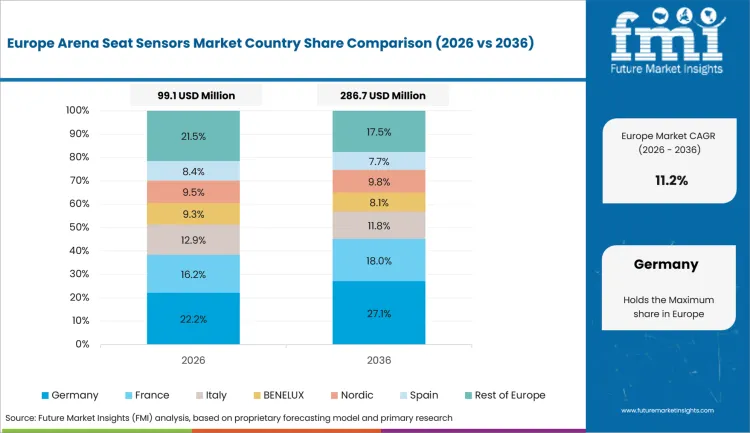
An 11.8% CAGR through 2036 reflects ticket utilization and disciplined facility technology buying.
Country Market Snapshot Table
| Parameter | Value |
|---|---|
| Market Size in 2025 (Value) | USD 26.0 million |
| Market Size in 2026 (Value) | USD 29.1 million |
| Market Forecast in 2036 (Value) | USD 88.7 million |
| CAGR (2026 to 2036) | 11.8% |
| Years Considered | 2021 to 2036 |
| Base Year | 2025 |
| Forecast Period | 2026 to 2036 |
| Units Considered | Value (USD million) |
| Leading Sub-Region | Munich, Dortmund, Berlin, Hamburg, Frankfurt, Stuttgart, and Cologne venue corridors |
Germany Arena Seat Sensors Market Outlook
- Germany arena seat sensor demand is influenced by high football attendance, engineering-led buying, and strong building automation competence. Buyers need durable systems that connect seat signals with facility controls and safety planning.
- German operators are expected to demand documented reliability and clear service responsibilities. Adoption may move more slowly than in faster-building markets, with expensive venues and packed stadiums propelling steady demand.
Key Growth Drivers
- Football attendance creates strong data need, due to German professional football having sold 20,983,964 tickets in 2024/25 across Bundesliga and Bundesliga 2.
- Stadium utilization supports section analytics, with Bundesliga average attendance reaching 95.9% of stadium capacity in 2024/25.
- Engineering-led buying favors tested sensors and documented integration with facility controls.
- Arena operators can use seat data to improve cleaning and maintenance cycles after high-attendance events.
Key Restraints
- Cost-benefit review can delay full-stadium rollouts unless pilots prove section-level value.
- Data protection expectations require privacy-safe design and careful use of identity-linked information.
- Ticket pricing discipline can limit technology budgets, since average Bundesliga ticket price reached €28.78 in 2024/25, only slightly above the previous season.
What makes Germany unique
Germany has a distinct position from durable engineering standards and strict facility-system qualification.
Key Companies
- Siemens
- Bosch Building Technologies
- Wanzl Access Solutions
- Gantner Electronic Germany
- Dallmeier Electronic
- secunet Security Networks
- Beeware
- Funkwerk Security Solutions
Sales & Marketing Channels
- Stadium engineering consultants
- Building automation integrators
- Club purchasing teams
- Facility management contractors
- Safety and operations advisers
- Security technology dealers
Country Segment Breakdown Table
| Segment | Sub-Segments |
|---|---|
| By Sensor Type | Occupancy Sensors · Pressure Sensors · RFID / BLE Sensors · Vibration / Tamper Sensors |
| By Application | Seat Occupancy Analytics · Premium Seat Service · Crowd Management · Maintenance / Security |
| By Venue Type | Indoor Arenas · Stadiums · Theaters / Entertainment · Convention Venues |
| By Connectivity | Wireless · Wired · Cloud Gateway |
| By Sales Channel | Venue Integrators · Direct OEM · Software Partners |
| Key Sub-Regions Covered, Venue Corridors | Munich · Dortmund · Berlin · Hamburg · Frankfurt · Stuttgart · Cologne |
Frequently Asked Questions
How fast is Germany Arena Seat Sensors Market growing?
Germany is expected to record 11.8% CAGR, supported by packed stadiums and engineering-led facility upgrades.
Who leads Germany Arena Seat Sensors Market?
Siemens, Bosch Building Technologies, and Gantner Electronic Germany lead local participation through building automation and venue technology.
What is driving adoption in Germany Arena Seat Sensors Market?
Ticket utilization and maintenance planning are moving German venues toward seat-level sensing.
Who are the leading companies in the Arena Seat Sensors Market?
Cisco, Siemens, HID Global, Zebra Technologies, Honeywell, Johnson Controls, Schneider Electric, Bosch, Legrand, and Advantech.
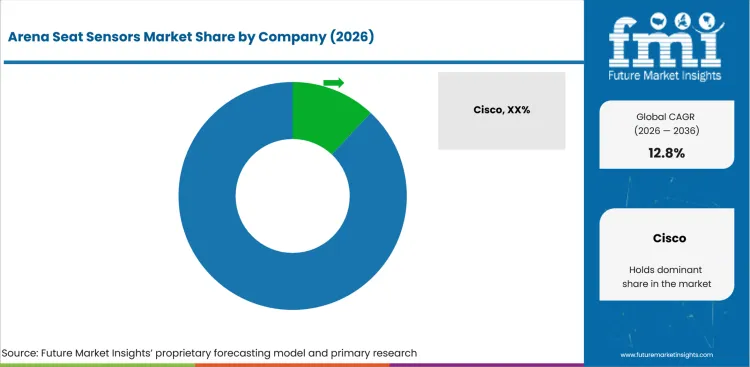
- Established building technology companies hold an advantage led by dashboards and service teams.
- Location technology suppliers gain stronger acceptance by combining RFID and analytics.
- Regional integrators acquire country markets through installation access and local event support.
- Service-ready suppliers improve renewal chances depending on calibration support and dashboard troubleshooting.
Arena seat sensor companies compete by combining device accuracy and event workflow support. Cisco has a strong position led by occupancy platforms and venue connectivity. Stadium security systems provide an adjacent buyer context as venues align seating data with safety workflows. Siemens competes due to Building X occupancy applications and building automation integration. HID Global and Zebra Technologies hold value across RFID and location-system infrastructure.
Manufacturing and technical service depth have become stronger competitive separators as venue owners move beyond simple sensor purchases. Honeywell, Johnson Controls, Schneider Electric, Bosch, Legrand, and Advantech compete across IoT devices and facility dashboards. Buyers compare supplier performance depending on dashboard compatibility and privacy controls.
Smaller and regional suppliers are likely to profit based on local venue knowledge and faster field support. India along with China, and South Korea create opportunities for suppliers operating local integration centers and trained technician networks. United States and Europe create stronger demand for systems suited to older arena retrofits and premium seating pilots. Companies proving lower service burden across changing event schedules should gain more durable venue relationships.
How do top Arena Seat Sensors companies compare?
Cisco and Siemens score on platform integration while HID Global and Zebra Technologies lead through RFID and location infrastructure.
| Company | Relevance to Market Title | Sensor Portfolio Depth | Venue Service Strength | Automation Support | Channel Reach | Geographic Footprint |
|---|---|---|---|---|---|---|
| Cisco | Very High | Strong | Strong | Very Strong | Very Strong | Global |
| Siemens | Very High | Strong | Very Strong | Very Strong | Very Strong | Global |
| HID Global | Very High | Very Strong | Strong | Strong | Strong | Global |
| Zebra Technologies | Very High | Very Strong | Strong | Strong | Strong | Global |
| Honeywell | High | Strong | Very Strong | Very Strong | Very Strong | Global |
| Johnson Controls | High | Strong | Very Strong | Very Strong | Very Strong | Global |
| Schneider Electric | High | Strong | Strong | Very Strong | Very Strong | Global |
| Bosch | High | Moderate | Strong | Strong | Strong | Global |
| Legrand | Moderate to High | Moderate | Moderate | Strong | Strong | Global |
| Advantech | High | Strong | Moderate | Strong | Strong | Global |
Source: Future Market Insights competitive analysis, 2026.
Who are the key players in the Arena Seat Sensors Market?
Cisco, Siemens and HID Global are listed with Zebra Technologies and Honeywell among other suppliers.
Key global companies leading the Arena Seat Sensors Market include:
- Cisco
- Siemens
- HID Global
- Zebra Technologies
- Honeywell
- Johnson Controls
- Schneider Electric
- Bosch
- Legrand
- Advantech
Key Developments in Arena Seat Sensors Market
- In January 2024, Zebra Technologies introduced the FXR90 ultra-rugged fixed RFID reader for demanding RFID environments.
- In March 2024, Schneider Electric published EcoStruxure Building-IoT Room Occupancy Sensor specification details.
- In 2025, Siemens documented Building X Occupancy Application data integration across existing infrastructure and new IoT devices.
Key Players in the Arena Seat Sensors Market
Venue Connectivity and Occupancy Platforms
- Cisco
- Siemens
RFID, BLE, and Location Infrastructure Suppliers
- HID Global
- Zebra Technologies
Building Controls and Facility Automation Companies
- Honeywell
- Johnson Controls
- Schneider Electric
- Bosch
- Legrand
- Advantech
Venue Integration and Local Service Suppliers
- Regional stadium integrators
- Security system installers
- Building automation contractors
- Ticketing and access-control partners
Arena Seat Sensors Market - Scope & Definition
| Attribute | Detail |
|---|---|
| Market Definition | Hardware and software systems used to detect whether a venue seat is occupied, disturbed, pressure-loaded, or linked to a tagged device during sports and entertainment events |
| Functions Covered | Seat occupancy detection, pressure sensing, RFID / BLE identification, vibration alerts, tamper alerts, gateway connectivity, dashboard reporting, event operations alerts, and maintenance notifications |
| Applications Covered | Seat occupancy analytics, premium seat service, crowd management, maintenance, security, no-show mapping, hospitality timing, cleaning prioritization, and post-event inspection |
| End-Use Industries | Sports arenas, stadiums, theaters, entertainment venues, convention venues, multipurpose halls, esports venues, concert venues, and premium hospitality seating zones |
| Grades Covered | Standard occupancy sensors, pressure-enabled sensors, RFID / BLE units, vibration / tamper sensors, wireless sensor nodes, wired seat sensors, and cloud-gateway systems |
| Inclusions | All commercially deployed arena seat sensor hardware, gateways, software dashboards, analytics subscriptions, integration services, and venue support programs across selected segments and countries |
| Exclusions | Automotive seat sensors, aircraft passenger sensors, office hot-desk sensors, generic ticketing software, CCTV-only crowd counting, turnstile-only attendance systems, and building automation sensors not tied to arena seating use |
Arena Seat Sensors Market - Research Methodology
| Method | Description |
|---|---|
| Primary Research | FMI analyst interviews with venue operators, sports franchise technology teams, stadium consultants, seat manufacturers, system integrators, facility managers, and event operations teams across selected markets |
| Desk Research | Review of venue safety guidance, official attendance data, company product documentation, occupancy platforms, RFID / BLE systems, building automation material, country-level sports infrastructure evidence, and Event Management Software Market adoption signals |
| Market Sizing & Forecasting | Bottom-up equipment revenue approach using venue count, seating density, sensor penetration, average system pricing, installation support share, channel structure, and software attach rate |
| Data Validation | Cross-verification using company portfolios, venue technology documentation, official sports facility data, government statistics, system integrator checks, and country-level venue automation signals |
Arena Seat Sensors Market - Report Scope
| Parameter | Details |
|---|---|
| Forecast period | 2026 to 2036 |
| Historical period | 2021 to 2025 |
| Quantitative unit | Revenue in USD million |
| By sensor type | Occupancy Sensors, Pressure Sensors, RFID / BLE Sensors, Vibration / Tamper Sensors |
| By application | Seat Occupancy Analytics, Premium Seat Service, Crowd Management, Maintenance / Security |
| By venue type | Indoor Arenas, Stadiums, Theaters / Entertainment, Convention Venues |
| By connectivity | Wireless, Wired, Cloud Gateway |
| By sales channel | Venue Integrators, Direct OEM, Software Partners |
| Regions covered | North America, Latin America, Europe, East Asia, South Asia and Pacific, Middle East and Africa |
| Countries covered | United States, United Kingdom, Germany, France, Japan, China, South Korea, India |
| Key companies profiled | Cisco, Siemens, HID Global, Zebra Technologies, Honeywell, Johnson Controls, Schneider Electric, Bosch, Legrand, Advantech |
| Approach | Bottom-up equipment revenue approach using venue count, seating density, sensor penetration, average system pricing, software attach rates, installation support share, and country-level venue automation exposure |
Source: Future Market Insights competitive analysis, 2026.
Arena Seat Sensors Market Breakdown by Sensor Type, Application, Venue Type, Connectivity, Sales Channel, and Region
Arena Seat Sensors Market Segmented by Sensor Type
- Occupancy Sensors
- Pressure Sensors
- RFID / BLE Sensors
- Vibration / Tamper Sensors
Arena Seat Sensors Market Segmented by Application
- Seat Occupancy Analytics
- Premium Seat Service
- Crowd Management
- Maintenance / Security
Arena Seat Sensors Market Segmented by Venue Type
- Indoor Arenas
- Stadiums
- Theaters / Entertainment
- Convention Venues
Arena Seat Sensors Market Segmented by Connectivity
- Wireless
- Wired
- Cloud Gateway
Arena Seat Sensors Market Segmented by Sales Channel
- Venue Integrators
- Direct OEM
- Software Partners
Arena Seat Sensors Market by Region
- North America
- Latin America
- Europe
- East Asia
- South Asia and Pacific
- Middle East and Africa
Research Sources and Bibliography
- Advantech. (2026). LoRaWAN industrial facility monitoring solution. Advantech.
- Bundesliga. (2025, July 17). German professional football sets ticket record in 2024/25. Bundesliga.
- Cisco. (2026, June 4). Cisco Spaces live occupancy app configuration guide. Cisco.
- Cisco Spaces. (2026). Density and occupancy monitoring. Cisco Spaces.
- Fédération Internationale de Football Association. (2025, June 19). By the numbers: The first round of the FIFA Club World Cup 2025. FIFA.
- HID Global. (2026). Real-time location systems: Beacons and gateways. HID Global.
- International Paralympic Committee. (2024, August 28). Paris 2024: More than two million Paralympics tickets sold. International Paralympic Committee.
- J.LEAGUE. (2024). Attendance for the 2024 season. Japan Professional Football League.
- J.LEAGUE. (2024). 2024 season to-C marketing strategy. Japan Professional Football League.
- K League. (2024, December 11). 2024 K League 1 season recap. Korea Professional Football League.
- Ministry of Culture, Sports and Tourism, Republic of Korea. (2026, January 23). National sports participation rate reaches 62.9% in 2025. Ministry of Culture, Sports and Tourism.
- Ministry of Youth Affairs and Sports. (2025, April 23). India’s sporting transformation. Press Information Bureau.
- Ministry of Youth Affairs and Sports. (2026, March 27). Khelo India Tribal Games. Press Information Bureau.
- Ministry of Youth Affairs and Sports. (2026). Sports infrastructure under Khelo India Scheme. Khelo India.
- National Bureau of Statistics of China. (2026, January 1). Announcement on total scale and value-added data of the national sports industry in 2024. National Bureau of Statistics of China.
- Schneider Electric. (2024, March 5). EcoStruxure Building-IoT Room Occupancy Sensor specification sheet. Schneider Electric.
- Seoul Metropolitan Government. (2026). Sports facilities: Gocheok Skydome. Seoul Metropolitan Government.
- Siemens. (2025, June 25). Building X Occupancy Application data sheet. Siemens.
- Sport England. (2026). Active Places Power. Sport England.
- Sports Grounds Safety Authority. (2025, June 18). Annual report and accounts 2024-25. Sports Grounds Safety Authority.
- State Council of the People’s Republic of China. (2025, March 19). China’s per capita sports venue area reaches 3 sq m in 2024. State Council of the People’s Republic of China.
- USA Bureau of Labor Statistics. (2026, January 22). Incidence rates of nonfatal occupational injuries and illnesses by industry and case types, 2024. USA Bureau of Labor Statistics.
- USA Census Bureau. (2026, June 11). Quarterly selected services estimates, first quarter 2026. USA Census Bureau.
- Zebra Technologies. (2024, January 11). Zebra Technologies unveils new solutions at NRF 2024 advancing the modern store. Zebra Technologies.
This bibliography is provided for reader reference and is not exhaustive. The full report contains the complete reference list and detailed citations.
This Report Answers
- Market size estimates for 2026 and forecasts through 2036 for the Arena Seat Sensors Market.
- Insights across regional and country-level venue automation markets.
- Analysis of demand drivers and purchasing behavior.
- Evaluation of sensor types, applications, venue types, connectivity formats, and sales channels.
- Assessment of venue digitization and seat-bowl data requirements.
- Identification of opportunities across occupancy sensors and service-led venue integration.
- Evaluation of venue integrator models and direct OEM channels.
- Country-level analysis covering India, China, South Korea, United States, Japan, France, United Kingdom, and Germany.
- Assessment of competition, including leading occupancy and building automation suppliers.
- Analysis of venue-level decision drivers and service criteria.
- Regional outlooks across North America, Europe, East Asia, South Asia and Pacific, Latin America, and Middle East and Africa.
- Delivery of market data, forecasts, and supporting analysis in report-ready format.
Frequently Asked Questions
What is the growth prospect for arena seat sensors?
Demand for arena seat sensors is expected to rise at a considerable pace as venues automate seat-level occupancy checks and improve live-event decisions.
Which companies are expected to shape the arena seat sensors market?
Cisco, Siemens, HID Global, Zebra Technologies, Honeywell, Johnson Controls, Schneider Electric, Bosch, Legrand, and Advantech are expected to shape market competition due to platform portfolios and integration support.
Why are venue technology companies investing in arena seat sensors?
Venue technology companies are investing in arena seat sensors to support operators managing crowd movement and post-event maintenance.
Why are venue integrator sales channels important in the arena seat sensors market?
Venue integrator sales channels support installation and troubleshooting across dashboards and event operations systems.
Which sensor formats are gaining attention in arena seat sensors?
Occupancy sensors and RFID / BLE sensors are gaining attention as venues target real-time seat use and tagged-zone workflows.
How does venue automation influence arena seat sensor demand?
Venue automation influences demand through shorter staff response times and better integration between access control and operations dashboards.
Why is connectivity important for arena seat sensors?
Connectivity is important since wireless, wired, and cloud gateway designs affect retrofit disruption and dashboard response speed.
What role do Venue Integrators play in arena seat sensor adoption?
Venue integrators support adoption by combining dashboard setup and event-season service planning.
Preview the report firsthand - request a free sample
Get SampleGet the brochure for pricing and purchase details.
Get PDFTable of Content
- Key Takeaways
- Market Size and CAGR
- Top Growth Driver
- Fastest Growing Segment
- Leading Region
- Key Companies
- Emerging Opportunities
- Executive Summary
- Global Market Outlook
- Demand-side Trends
- Supply-side Trends
- Technology Roadmap Analysis
- Analysis and Recommendations
- Analyst Perspective (What is happening? Why now? What should investors know?)
- Key Questions Answered
- How large is the market?
- What is the CAGR?
- What are key trends?
- Which region dominates?
- Who are the leaders?
- Market Overview
- Market Coverage / Taxonomy
- Market Definition / Scope / Limitations
- Research Methodology
- Chapter Orientation
- Analytical Lens and Working Hypotheses
- Market Structure, Signals, and Trend Drivers
- Benchmarking and Cross-market Comparability
- Market Sizing, Forecasting, and Opportunity Mapping
- Research Design and Evidence Framework
- Desk Research Programme (Secondary Evidence)
- Expert Input and Fieldwork (Primary Evidence)
- Tooling, Models, and Reference Databases
- Data Engineering and Model Build
- Quality Assurance and Audit Trail
- Market Background
- Market Dynamics (Drivers, Restraints, Opportunity, Trends)
- Scenario Forecast (Optimistic, Likely, Conservative)
- Impact Analysis
- AI Impact
- Sustainability Impact
- Regulatory Impact
- Technology Impact
- Consumer / Buyer Analysis
- Purchase Drivers
- Adoption Barriers
- Buyer Journey
- Opportunity Map Analysis
- Product Life Cycle Analysis
- Supply Chain Analysis
- Investment Feasibility Matrix
- Value Chain Analysis
- PESTLE and Porter's Analysis
- Regulatory Landscape
- Regional Parent Market Outlook
- Production and Consumption Statistics
- Import and Export Statistics
- Global Market Analysis and Forecast, 2021 to 2036
- Historical Market Size Value (USD Million) & Volume (Unit) Analysis, 2021 to 2025
- Current and Future Market Size Value (USD Million) & Volume (Unit) Projections, 2026 to 2036
- Y-o-Y Growth Trend Analysis
- Absolute $ Opportunity Analysis
- Global Market Pricing Analysis, 2021 to 2036
- Global Market Analysis and Forecast, By Sensor Type, 2021 to 2036
- Introduction / Key Findings
- Historical Market Size Value (USD Million) & Volume (Unit) Analysis By Sensor Type, 2021 to 2025
- Current and Future Market Size Value (USD Million) & Volume (Unit) Analysis and Forecast By Sensor Type, 2026 to 2036
- Occupancy Sensors
- Pressure Sensors
- RFID / BLE Sensors
- Vibration / Tamper Sensors
- Occupancy Sensors
- Y-o-Y Growth Trend Analysis By Sensor Type, 2021 to 2025
- Absolute $ Opportunity Analysis By Sensor Type, 2026 to 2036
- Global Market Analysis and Forecast, By Application, 2021 to 2036
- Introduction / Key Findings
- Historical Market Size Value (USD Million) & Volume (Unit) Analysis By Application, 2021 to 2025
- Current and Future Market Size Value (USD Million) & Volume (Unit) Analysis and Forecast By Application, 2026 to 2036
- Seat Occupancy Analytics
- Premium Seat Service
- Crowd Management
- Maintenance / Security
- Seat Occupancy Analytics
- Y-o-Y Growth Trend Analysis By Application, 2021 to 2025
- Absolute $ Opportunity Analysis By Application, 2026 to 2036
- Global Market Analysis and Forecast, By Venue Type, 2021 to 2036
- Introduction / Key Findings
- Historical Market Size Value (USD Million) & Volume (Unit) Analysis By Venue Type, 2021 to 2025
- Current and Future Market Size Value (USD Million) & Volume (Unit) Analysis and Forecast By Venue Type, 2026 to 2036
- Indoor Arenas
- Stadiums
- Theaters / Entertainment
- Convention Venues
- Indoor Arenas
- Y-o-Y Growth Trend Analysis By Venue Type, 2021 to 2025
- Absolute $ Opportunity Analysis By Venue Type, 2026 to 2036
- Global Market Analysis and Forecast, By Connectivity Mode, 2021 to 2036
- Introduction / Key Findings
- Historical Market Size Value (USD Million) & Volume (Unit) Analysis By Connectivity Mode, 2021 to 2025
- Current and Future Market Size Value (USD Million) & Volume (Unit) Analysis and Forecast By Connectivity Mode, 2026 to 2036
- Wireless
- Wired
- Cloud Gateway
- Wireless
- Y-o-Y Growth Trend Analysis By Connectivity Mode, 2021 to 2025
- Absolute $ Opportunity Analysis By Connectivity Mode, 2026 to 2036
- Global Market Analysis and Forecast, By Sales Channel, 2021 to 2036
- Introduction / Key Findings
- Historical Market Size Value (USD Million) & Volume (Unit) Analysis By Sales Channel, 2021 to 2025
- Current and Future Market Size Value (USD Million) & Volume (Unit) Analysis and Forecast By Sales Channel, 2026 to 2036
- Venue Integrators
- Direct OEM
- Software Partners
- Venue Integrators
- Y-o-Y Growth Trend Analysis By Sales Channel, 2021 to 2025
- Absolute $ Opportunity Analysis By Sales Channel, 2026 to 2036
- Global Market Analysis and Forecast, By Region, 2021 to 2036
- Introduction
- Historical Market Size Value (USD Million) & Volume (Unit) Analysis By Region, 2021 to 2025
- Current Market Size Value (USD Million) & Volume (Unit) Analysis and Forecast By Region, 2026 to 2036
- North America
- Latin America
- Western Europe
- Eastern Europe
- East Asia
- South Asia and Pacific
- Middle East & Africa
- Market Attractiveness Analysis By Region
- North America Market Analysis and Forecast, By Country, 2021 to 2036
- Historical Market Size Value (USD Million) & Volume (Unit) Trend Analysis By Market Taxonomy, 2021 to 2025
- Market Size Value (USD Million) & Volume (Unit) Forecast By Market Taxonomy, 2026 to 2036
- By Country
- USA
- Canada
- Mexico
- By Sensor Type
- By Application
- By Venue Type
- By Connectivity Mode
- By Sales Channel
- By Country
- Market Attractiveness Analysis
- By Country
- By Sensor Type
- By Application
- By Venue Type
- By Connectivity Mode
- By Sales Channel
- Key Takeaways
- Latin America Market Analysis and Forecast, By Country
- Historical Market Size Value (USD Million) & Volume (Unit) Trend Analysis By Market Taxonomy, 2021 to 2025
- Market Size Value (USD Million) & Volume (Unit) Forecast By Market Taxonomy, 2026 to 2036
- By Country
- Brazil
- Chile
- Rest of Latin America
- By Sensor Type
- By Application
- By Venue Type
- By Connectivity Mode
- By Sales Channel
- By Country
- Market Attractiveness Analysis
- By Country
- By Sensor Type
- By Application
- By Venue Type
- By Connectivity Mode
- By Sales Channel
- Key Takeaways
- Western Europe Market Analysis and Forecast, By Country
- Historical Market Size Value (USD Million) & Volume (Unit) Trend Analysis By Market Taxonomy, 2021 to 2025
- Market Size Value (USD Million) & Volume (Unit) Forecast By Market Taxonomy, 2026 to 2036
- By Country
- Germany
- UK
- Italy
- Spain
- France
- Nordic
- BENELUX
- Rest of Western Europe
- By Sensor Type
- By Application
- By Venue Type
- By Connectivity Mode
- By Sales Channel
- By Country
- Market Attractiveness Analysis
- By Country
- By Sensor Type
- By Application
- By Venue Type
- By Connectivity Mode
- By Sales Channel
- Key Takeaways
- Eastern Europe Market Analysis and Forecast, By Country
- Historical Market Size Value (USD Million) & Volume (Unit) Trend Analysis By Market Taxonomy, 2021 to 2025
- Market Size Value (USD Million) & Volume (Unit) Forecast By Market Taxonomy, 2026 to 2036
- By Country
- Russia
- Poland
- Hungary
- Balkan & Baltic
- Rest of Eastern Europe
- By Sensor Type
- By Application
- By Venue Type
- By Connectivity Mode
- By Sales Channel
- By Country
- Market Attractiveness Analysis
- By Country
- By Sensor Type
- By Application
- By Venue Type
- By Connectivity Mode
- By Sales Channel
- Key Takeaways
- East Asia Market Analysis and Forecast, By Country
- Historical Market Size Value (USD Million) & Volume (Unit) Trend Analysis By Market Taxonomy, 2021 to 2025
- Market Size Value (USD Million) & Volume (Unit) Forecast By Market Taxonomy, 2026 to 2036
- By Country
- China
- Japan
- South Korea
- By Sensor Type
- By Application
- By Venue Type
- By Connectivity Mode
- By Sales Channel
- By Country
- Market Attractiveness Analysis
- By Country
- By Sensor Type
- By Application
- By Venue Type
- By Connectivity Mode
- By Sales Channel
- Key Takeaways
- South Asia and Pacific Market Analysis and Forecast, By Country
- Historical Market Size Value (USD Million) & Volume (Unit) Trend Analysis By Market Taxonomy, 2021 to 2025
- Market Size Value (USD Million) & Volume (Unit) Forecast By Market Taxonomy, 2026 to 2036
- By Country
- India
- ASEAN
- Australia & New Zealand
- Rest of South Asia and Pacific
- By Sensor Type
- By Application
- By Venue Type
- By Connectivity Mode
- By Sales Channel
- By Country
- Market Attractiveness Analysis
- By Country
- By Sensor Type
- By Application
- By Venue Type
- By Connectivity Mode
- By Sales Channel
- Key Takeaways
- Middle East & Africa Market Analysis and Forecast, By Country
- Historical Market Size Value (USD Million) & Volume (Unit) Trend Analysis By Market Taxonomy, 2021 to 2025
- Market Size Value (USD Million) & Volume (Unit) Forecast By Market Taxonomy, 2026 to 2036
- By Country
- Kingdom of Saudi Arabia
- Other GCC Countries
- Türkiye
- South Africa
- Other African Union
- Rest of Middle East & Africa
- By Sensor Type
- By Application
- By Venue Type
- By Connectivity Mode
- By Sales Channel
- By Country
- Market Attractiveness Analysis
- By Country
- By Sensor Type
- By Application
- By Venue Type
- By Connectivity Mode
- By Sales Channel
- Key Takeaways
- Key Countries Market Analysis
- USA
- Pricing Analysis
- Market Share Analysis, 2025
- By Sensor Type
- By Application
- By Venue Type
- By Connectivity Mode
- By Sales Channel
- Canada
- Pricing Analysis
- Market Share Analysis, 2025
- By Sensor Type
- By Application
- By Venue Type
- By Connectivity Mode
- By Sales Channel
- Mexico
- Pricing Analysis
- Market Share Analysis, 2025
- By Sensor Type
- By Application
- By Venue Type
- By Connectivity Mode
- By Sales Channel
- Brazil
- Pricing Analysis
- Market Share Analysis, 2025
- By Sensor Type
- By Application
- By Venue Type
- By Connectivity Mode
- By Sales Channel
- Chile
- Pricing Analysis
- Market Share Analysis, 2025
- By Sensor Type
- By Application
- By Venue Type
- By Connectivity Mode
- By Sales Channel
- Germany
- Pricing Analysis
- Market Share Analysis, 2025
- By Sensor Type
- By Application
- By Venue Type
- By Connectivity Mode
- By Sales Channel
- UK
- Pricing Analysis
- Market Share Analysis, 2025
- By Sensor Type
- By Application
- By Venue Type
- By Connectivity Mode
- By Sales Channel
- Italy
- Pricing Analysis
- Market Share Analysis, 2025
- By Sensor Type
- By Application
- By Venue Type
- By Connectivity Mode
- By Sales Channel
- Spain
- Pricing Analysis
- Market Share Analysis, 2025
- By Sensor Type
- By Application
- By Venue Type
- By Connectivity Mode
- By Sales Channel
- France
- Pricing Analysis
- Market Share Analysis, 2025
- By Sensor Type
- By Application
- By Venue Type
- By Connectivity Mode
- By Sales Channel
- India
- Pricing Analysis
- Market Share Analysis, 2025
- By Sensor Type
- By Application
- By Venue Type
- By Connectivity Mode
- By Sales Channel
- ASEAN
- Pricing Analysis
- Market Share Analysis, 2025
- By Sensor Type
- By Application
- By Venue Type
- By Connectivity Mode
- By Sales Channel
- Australia & New Zealand
- Pricing Analysis
- Market Share Analysis, 2025
- By Sensor Type
- By Application
- By Venue Type
- By Connectivity Mode
- By Sales Channel
- China
- Pricing Analysis
- Market Share Analysis, 2025
- By Sensor Type
- By Application
- By Venue Type
- By Connectivity Mode
- By Sales Channel
- Japan
- Pricing Analysis
- Market Share Analysis, 2025
- By Sensor Type
- By Application
- By Venue Type
- By Connectivity Mode
- By Sales Channel
- South Korea
- Pricing Analysis
- Market Share Analysis, 2025
- By Sensor Type
- By Application
- By Venue Type
- By Connectivity Mode
- By Sales Channel
- Russia
- Pricing Analysis
- Market Share Analysis, 2025
- By Sensor Type
- By Application
- By Venue Type
- By Connectivity Mode
- By Sales Channel
- Poland
- Pricing Analysis
- Market Share Analysis, 2025
- By Sensor Type
- By Application
- By Venue Type
- By Connectivity Mode
- By Sales Channel
- Hungary
- Pricing Analysis
- Market Share Analysis, 2025
- By Sensor Type
- By Application
- By Venue Type
- By Connectivity Mode
- By Sales Channel
- Kingdom of Saudi Arabia
- Pricing Analysis
- Market Share Analysis, 2025
- By Sensor Type
- By Application
- By Venue Type
- By Connectivity Mode
- By Sales Channel
- Türkiye
- Pricing Analysis
- Market Share Analysis, 2025
- By Sensor Type
- By Application
- By Venue Type
- By Connectivity Mode
- By Sales Channel
- South Africa
- Pricing Analysis
- Market Share Analysis, 2025
- By Sensor Type
- By Application
- By Venue Type
- By Connectivity Mode
- By Sales Channel
- USA
- Market Structure Analysis
- Competition Dashboard
- Competition Benchmarking
- Market Share Analysis of Top Players
- By Regional
- By Sensor Type
- By Application
- By Venue Type
- By Connectivity Mode
- By Sales Channel
- Emerging Startups
- Innovation Benchmarking
- Competition Analysis
- Competition Deep Dive
- Cisco
- Overview
- Product Portfolio
- Profitability by Market Segments (Product/Region/Sales Channel)
- Sales Footprint
- Strategy Overview
- Marketing Strategy
- Product Strategy
- Channel Strategy
- Siemens
- HID Global
- Zebra Technologies
- Honeywell
- Johnson Controls
- Schneider Electric
- Bosch
- Legrand
- Cisco
- Case Studies
- Success Stories
- Recent Developments
- Competition Deep Dive
- Assumptions & Acronyms Used


