

- Market Size (2026)
- USD 1.9 Bn
- Forecast (2036)
- USD 5.7 Bn
- CAGR (2026 to 2036)
- 11.6%
How big is the Cholangiocarcinoma Market in 2026?
USD 1.9 billion in 2026 and USD 5.7 billion by 2036 at an 11.6% CAGR.
Sales in the cholangiocarcinoma market are projected to grow at 11.6% CAGR through 2036, driving valuation to USD 5.7 billion by 2036 from USD 1.9 billion in 2026. Specialist biliary tract treatment pathways connect pathology with surgery and systemic care across coordinated referral networks. Molecular eligibility directs specialist spending toward targeted oncology biologics that require reliable testing ahead of later treatment decisions.
Commercial demand depends on identifying patients during the limited interval available for treatment selection and referral. The American Cancer Society estimated about 8,000 United States bile duct cancer diagnoses annually in October 2024. Classification can place intrahepatic cases with liver cancers, so specialist companion diagnostics and liver cancer diagnostics remain essential for accurate pathway planning.
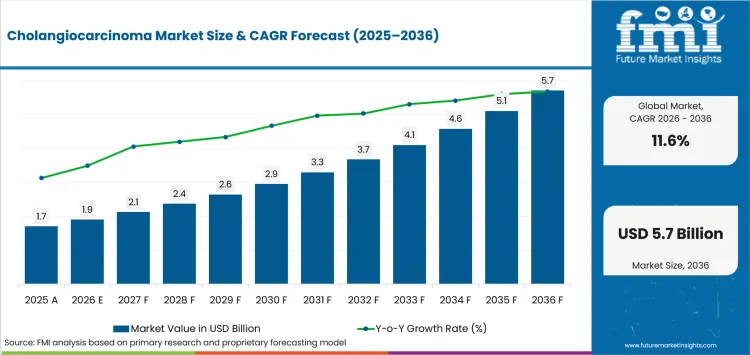
Key Takeaways of Cholangiocarcinoma Market
- Specialist diagnosis and molecular profiling connect eligible patients with surgery or systemic medicines across coordinated oncology pathways.
- Targeted therapy is projected to represent 38.0% by treatment type in 2026 owing to approved FGFR2 and IDH1 routes.
- Intrahepatic cholangiocarcinoma is estimated to account for 46.0% by application in 2026 driven by systemic treatment needs.
- Hospitals are forecast to capture 41.0% by end-user in 2026 attributable to multidisciplinary diagnosis and treatment administration.
- Late diagnosis and small mutation-defined populations restrict eligibility through narrow biomarker groups and uneven testing access.
- Some key players includes Incyte Corporation, Merck & Co., Inc., AstraZeneca PLC, F. Hoffmann-La Roche Ltd., Servier Pharmaceuticals LLC, Taiho Pharmaceutical Co., Ltd., Jazz Pharmaceuticals plc and Partner Therapeutics, Inc.
Analyst Perspective
"Commercial uptake depends on preserving biopsy material for complete molecular classification before treatment sequencing begins. Hospitals that return FGFR2, IDH1, HER2 and NRG1 results promptly can direct scarce eligible cases without repeating biopsy."
- Anurag Sharma, Principal Consultant, Future Market Insights
How is the Cholangiocarcinoma Market segmented?
The cholangiocarcinoma industry is segmented by treatment type, application, end user, distribution channel, drug class and region.
The cholangiocarcinoma market taxonomy covers treatment type, application, end user, distribution channel, drug class and region. Treatment type includes targeted therapy, chemotherapy, immunotherapy and surgery, while applications distinguish anatomical and disease-stage settings. End users and dispensing channels track care delivery, while drug classes separate targeted agents, cytotoxic chemotherapy, checkpoint inhibitors and anti-angiogenic medicines.
Why does targeted therapy lead within the treatment type category?
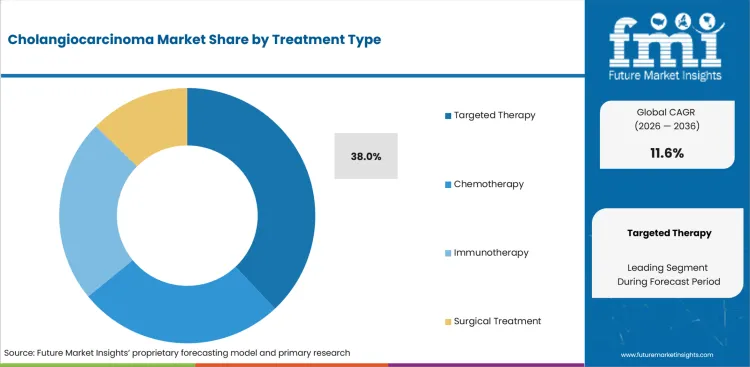
Targeted therapy converts confirmed FGFR2 or IDH1 alterations into later-line treatment choices, so cancer diagnostics must preserve tissue and return actionable results during the limited sequencing window for advanced disease.
- By treatment type, targeted therapy is estimated to hold 38.0% in 2026 owing to approved FGFR2 and IDH1 pathways that connect molecular results with specialist medicines.
- Specialist teams compare molecular status with previous treatment through advanced cancer diagnostics before assigning a targeted medicine. Low alteration prevalence limits eligible volume, yet accurate results prevent ineffective sequencing and support appropriate trial referral.
Why does intrahepatic cholangiocarcinoma lead within the application category?
Intrahepatic disease spans resectable and advanced settings that require different treatment routes across hepatobiliary centers. Molecular oncology testing carries greater treatment relevance in this subtype as several actionable alterations influence later systemic selection.
- The application category is forecast to be led by intrahepatic cholangiocarcinoma at 46.0% share in 2026 due to prolonged treatment needs across unresectable and recurrent disease.
- Hepatobiliary teams combine imaging and biopsy review with genomic findings to choose surgery or systemic care, although inadequate tissue can delay confirmation and narrow the referral window for complex advanced cases.
Why do hospitals lead within the end user category?
Hospitals combine biopsy, hepatobiliary surgery and medical oncology inside one referral pathway while integrated tissue diagnostics support specialist molecular review for patients whose confirmed alterations change treatment selection.
- In 2026, hospitals are expected to lead the end user category with 41.0% share because one institution can manage diagnosis through treatment administration and complication care.
- Tertiary centers administer infusions and manage biliary obstruction through teams that monitor complex treatment cycles. Referral distance and limited pathology capacity can extend turnaround beyond the useful selection window for eligible patients.
Why do hospital pharmacies lead within the distribution channel category?
Hospital pharmacies align dispensing with oncology orders and laboratory results across inpatient and outpatient care. Their workflow connects in vitro testing with infusion schedules and specialist oral medicines across monitored treatment cycles.
- Hospital pharmacies are projected to hold 43.0% share in 2026 owing to protocol-based dispensing across specialist hospital oncology services that supervise administration and toxicity monitoring.
- Pharmacy teams verify sequencing and supportive medicines through oncology biomarker programs, whereas external dispensing is less suitable for regimens requiring close laboratory review and coordinated administration within hospitals.
What are the drivers, restraints and opportunities in the Cholangiocarcinoma Market?
Approved systemic routes broaden treatment choice while late diagnosis narrows eligibility and routine sequencing improves referral into alteration-directed care.
- Driver: Approved immunotherapy combinations and alteration-directed medicines expand treatment choices through defined clinical pathways for advanced disease.
- Restraint: Late diagnosis and narrow biomarker populations reduce eligible volume as uneven testing access delays treatment selection across regional networks.
- Opportunity: Routine sequencing identifies eligible patients earlier and shortens the interval between pathology review and specialist treatment selection.
First-line chemoimmunotherapy broadens systemic eligibility through defined protocols, whereas FGFR2 and IDH1 medicines serve smaller alteration-defined groups requiring confirmed molecular results.
Late diagnosis reduces treatment choice, and limited tissue plus uneven reimbursement can delay testing or authorization across dispersed referral networks.
Routine sequencing supports earlier referral by preserving biopsy material and returning actionable results during the interval available for specialist treatment selection.
Which country CAGRs are profiled in the Cholangiocarcinoma Market?
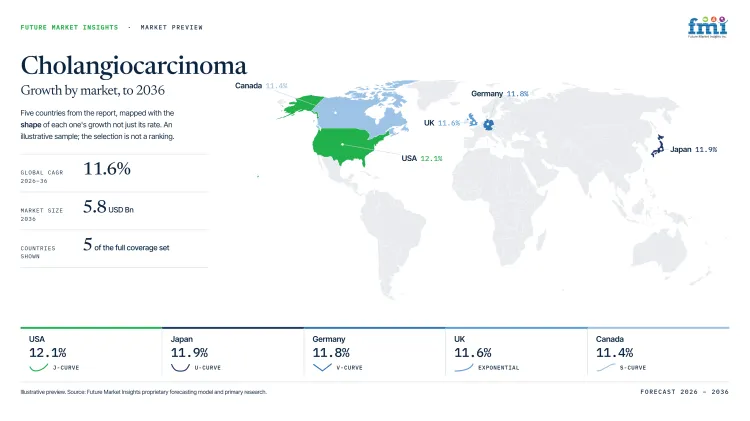
| Country | CAGR |
|---|---|
| USA | 12.1% |
| Japan | 11.9% |
| Germany | 11.8% |
| UK | 11.6% |
| Canada | 11.4% |
How do country-level CAGRs compare in the Cholangiocarcinoma Market?
The profiled country CAGRs span 0.7 percentage point across five established oncology systems with different access structures. Testing capacity and reimbursement routes differ, so similar rates do not represent equal current market size.
- The USA exceeds Japan by 0.2 percentage point through broader specialist capacity and approved systemic routes.
- Japan exceeds Germany by 0.1 percentage point as metropolitan cancer networks concentrate molecular testing and treatment.
- Germany exceeds the UK by 0.2 percentage point through formal benefit assessment and regional molecular review.
- The UK exceeds Canada by 0.2 percentage point under nationally commissioned testing and coordinated referral criteria.
- Canada completes the profiled range as provincial funding and authorization procedures shape treatment timing regionally.
Comparable CAGRs produce different entry conditions as testing access and reimbursement pathways vary across national health systems. The full report covers North America, Latin America, Europe, East Asia, South Asia and Pacific, and the Middle East and Africa.
Country-wise Analysis
- United States cancer centers combine hepatobiliary surgery with molecular pathology across referral networks that support biopsy review and treatment selection for metropolitan patients plus regional communities located far from specialist laboratories and tertiary hospitals. Adoption of cholangiocarcinoma treatment in the United States is estimated to expand at 12.1% CAGR through 2036, supported by broad oncology capacity and several approved systemic routes across major treatment centers nationwide. The American Cancer Society reported 3% five-year relative survival for distant intrahepatic disease in July 2025 which reinforces prompt referral although payer authorization and long travel burdens can delay molecular review for eligible patients.
- Japan relies on university hospitals and metropolitan cancer centers that coordinate molecular testing with specialty pharmacy distribution through scheduled referral routes serving prefectures with fewer pathology laboratories and hepatobiliary treatment resources across regional communities. Japan’s national registry updated a 29-participant multicenter biliary tract cancer study in July 2026 which confirms active domestic research capacity although advanced testing and trial enrollment remain concentrated within major urban institutions nationwide. Japan is estimated to post 11.9% CAGR over the forecast period, reinforced by organized oncology networks despite longer specimen transport and limited specialist capacity outside metropolitan treatment centers across many regional prefectures nationwide.
- Germany links university cancer centers with statutory benefit assessment and regional molecular tumor boards that guide treatment selection across federal states with different contracting timelines and laboratory capacity for referred patients and oncology services. The Federal Joint Committee published an ivosidenib reassessment for previously treated IDH1-R132-mutated disease in June 2026 which clarified evidence requirements although local agreements can delay routine reimbursement across regional hospitals and statutory insurance systems. Germany’s cholangiocarcinoma market outlook is anticipated to advance at 11.8% CAGR over the assessment period, shaped by structured review despite uneven molecular testing access across regional hospitals and specialist referral networks throughout the country.
- United Kingdom treatment pathways connect NHS cancer centers with commissioned genomic laboratories through defined specimen routes that support specialist referral across cancer alliances with different testing turnaround times and laboratory capacity for eligible patients. Cholangiocarcinoma demand in the United Kingdom is forecast to rise at 11.6% CAGR over the forecast period, influenced by national eligibility criteria and coordinated treatment pathways across specialist cancer centers and regional services. NHS England updated version 16.0 of its non-central nervous system cancer genomic directory in July 2026 which maintains current testing specifications although local implementation determines timely access to actionable results for eligible patients.
- Canada uses provincial cancer agencies and academic centers to connect centralized molecular laboratories with reimbursement decisions across long referral routes serving urban communities with limited specialist access outside major cities and regional oncology hubs. The Canadian Cancer Society reported 1,060 intrahepatic bile duct cancer diagnoses from 2023 excluding Nova Scotia in May 2026 which defines measurable demand although treatment access varies among provincial systems and regional networks. Cholangiocarcinoma sales in Canada are forecast to expand at 11.4% CAGR by 2036, aided by national review pathways despite provincial funding differences and long travel distances outside major oncology centers and laboratories nationwide.
Who are the notable companies in the Cholangiocarcinoma Market?
Incyte Corporation, Merck & Co., Inc., AstraZeneca PLC, F. Hoffmann-La Roche Ltd., Servier Pharmaceuticals LLC, Taiho Pharmaceutical Co., Ltd., Jazz Pharmaceuticals plc and Partner Therapeutics, Inc. are the notable companies serving this market.
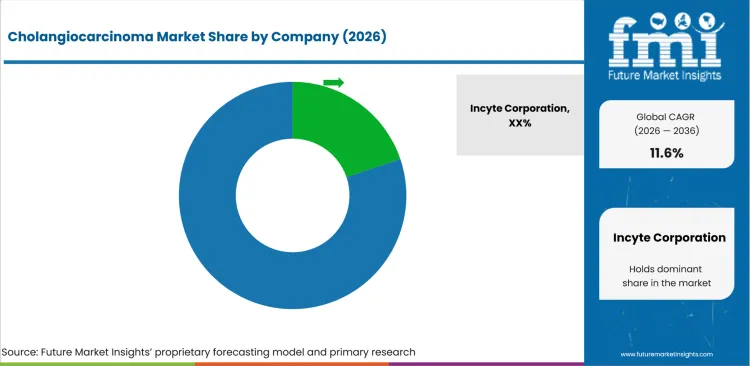
Competition is concentrated around two broad first-line immunotherapies and several smaller alteration-defined treatment routes serving narrower patient groups. Entry depends on an exact-market label plus reliable testing access and specialist distribution rather than general oncology scale.
- Incyte Corporation supplies pemigatinib for FGFR2-rearranged disease, and Servier Pharmaceuticals LLC supplies ivosidenib for IDH1-mutated disease. Taiho Pharmaceutical Co., Ltd. adds a separate FGFR2 inhibitor for previously treated intrahepatic cholangiocarcinoma in advanced disease.
- Merck & Co., Inc. and AstraZeneca PLC compete through approved first-line chemoimmunotherapy regimens for unresectable or metastatic biliary tract cancer. Their labels serve advanced disease pathways without requiring a selected molecular alteration for treatment eligibility.
- F. Hoffmann-La Roche Ltd. supports HER2 testing linked to Ziihera, and Jazz Pharmaceuticals plc supplies the matched therapy. Partner Therapeutics, Inc. covers NRG1-fusion cholangiocarcinoma through a separate later-line label for patients whose disease progressed following systemic therapy.
Competitive Benchmarking: Cholangiocarcinoma Market
| Company | Market-Stage Position | Biomarker-Selected Coverage | First-Line Advanced Disease | Geographic Reach |
|---|---|---|---|---|
| Incyte Corporation | High | High | Medium | United States |
| Merck & Co., Inc. | High | Low | High | Europe |
| AstraZeneca PLC | High | Low | High | United States |
| F. Hoffmann-La Roche Ltd. | High | High | Low | United States and Europe |
| Servier Pharmaceuticals LLC | High | High | Medium | United States and Germany |
| Taiho Pharmaceutical Co., Ltd. | High | High | Low | United States |
| Jazz Pharmaceuticals plc | High | High | Medium | United States and Europe |
| Partner Therapeutics, Inc. | High | High | Low | United States |
Key Developments in the Cholangiocarcinoma Market
- In May 2026, Servier maintained recruitment for a 52-participant first-line study combining ivosidenib with durvalumab and gemcitabine plus cisplatin in IDH1-mutated cholangiocarcinoma.
- In September 2025, Roche received CE IVDR approval for its HER2 (4B5) companion diagnostic to identify previously treated HER2-positive biliary tract cancer patients eligible for Ziihera.
- In April 2025, Taiho Oncology announced real-world treatment data from cholangiocarcinoma patients receiving FGFR inhibitors including futibatinib for presentation at the ASCO Annual Meeting.
Key Players in the Cholangiocarcinoma Market
FGFR2 and IDH1 Therapy Developers
- Incyte Corporation
- Servier Pharmaceuticals LLC
- Taiho Pharmaceutical Co., Ltd.
First-Line Immunotherapy Companies
- Merck & Co., Inc.
- AstraZeneca PLC
HER2 and Fusion-Directed Companies
- F. Hoffmann-La Roche Ltd.
- Jazz Pharmaceuticals plc
- Partner Therapeutics, Inc.
Cholangiocarcinoma Market - Report Scope
| Coverage field | Report scope |
|---|---|
| Market breakdown | By treatment type, application, end user, distribution channel, drug class and region. |
| Quantitative Units | Revenue USD billion and CAGR in %. |
| Market Definition | Commercial therapies, treatment procedures and dispensing channels used in cholangiocarcinoma care across approved clinical applications and regional supply routes. |
| Regions Covered | North America, Latin America, Western Europe, Eastern Europe, East Asia, South Asia and Pacific, and Middle East and Africa. |
| Countries Covered | USA, Japan, Germany, UK, Canada, and 20+ countries included in the full report. |
| Key Companies Profiled | Incyte Corporation, Merck & Co., Inc., AstraZeneca PLC, F. Hoffmann-La Roche Ltd., Servier Pharmaceuticals LLC, Taiho Pharmaceutical Co., Ltd., Jazz Pharmaceuticals plc and Partner Therapeutics, Inc. |
| Forecast Period | 2026 to 2036. |
| Approach | Primary and secondary research with market triangulation. |
Cholangiocarcinoma Market - Research Methodology
| Method | Approach |
|---|---|
| Primary Research | FMI analysts gathered input from manufacturers, service providers, technology developers, distributors, end users, procurement teams, and subject-matter experts. Interviews examined purchasing decisions, product or service evaluation, adoption barriers, approval requirements, pricing considerations, and expectations for technical or commercial support. Respondents were also asked what evidence is required before a trial, pilot, or initial order develops into regular purchasing. |
| Desk Research | Desk research covered government statistics, regulatory publications, trade data, industry associations, technical literature, standards, company filings, product information, and official corporate announcements. Sources were reviewed for relevance, publication date, geographic coverage, and consistency with the defined market scope. Claims relating to performance, applications, approvals, capacity, investment, and commercial activity were retained only when supported by credible public evidence. |
| Market Sizing and Forecasting | The market model combined the baseline value with historical performance, segment structure, pricing and volume indicators, adoption levels, company participation, and country-level demand conditions. Forecast assumptions considered economic activity, investment trends, regulatory developments, technology adoption, purchasing cycles, supply availability, and barriers to wider market use. Segment and regional estimates were reconciled before the final market total was calculated. |
| Data Validation | Estimates were checked against multiple independent indicators, including public data, company activity, trade patterns, industry developments, and findings from primary interviews. Validation also tested whether products, services, applications, and company revenues fell within the defined market boundaries. Adjacent categories, unsupported claims, overlapping revenues, and activities without direct market relevance were excluded to reduce double counting and maintain consistency across segments and countries. |
Cholangiocarcinoma Market by Segments
Cholangiocarcinoma Market segmented by Treatment Type:
- Targeted Therapy
- FGFR Inhibitors
- IDH1 Inhibitors
- Chemotherapy
- Gemcitabine-Based Chemotherapy
- Fluoropyrimidine-Based Chemotherapy
- Immunotherapy
- PD-1 Inhibitors
- PD-L1 Inhibitors
- Surgical Treatment
- Curative Resection
- Liver Transplantation
Cholangiocarcinoma Market segmented by Application:
- Intrahepatic Cholangiocarcinoma
- Early-Stage Disease
- Advanced Disease
- Extrahepatic Cholangiocarcinoma
- Perihilar Cholangiocarcinoma
- Distal Cholangiocarcinoma
- Metastatic Cholangiocarcinoma
- First-Line Treatment
- Second-Line Treatment
- Recurrent Cholangiocarcinoma
- Local Recurrence
- Distant Recurrence
Cholangiocarcinoma Market segmented by End User:
- Hospitals
- Tertiary Care Hospitals
- Cancer Specialty Hospitals
- Cancer Centers
- Comprehensive Cancer Centers
- Ambulatory Cancer Centers
- Specialty Clinics
- Oncology Clinics
- Gastroenterology Clinics
- Academic & Research Institutes
- University Hospitals
- Cancer Research Institutes
Cholangiocarcinoma Market segmented by Distribution Channel:
- Hospital Pharmacies
- Inpatient Pharmacies
- Outpatient Hospital Pharmacies
- Retail Pharmacies
- Chain Pharmacies
- Independent Pharmacies
- Specialty Pharmacies
- Oncology Specialty Pharmacies
- Biologic Drug Pharmacies
- Online Pharmacies
- E-Pharmacy Platforms
- Home Delivery Services
Cholangiocarcinoma Market segmented by Drug Class:
- Targeted Therapies
- FGFR Inhibitors
- IDH1 Inhibitors
- Cytotoxic Chemotherapy
- Antimetabolites
- Platinum-Based Agents
- Immune Checkpoint Inhibitors
- PD-1 Inhibitors
- PD-L1 Inhibitors
- Anti-Angiogenic Agents
- VEGF Inhibitors
- Multikinase Inhibitors
Cholangiocarcinoma Market by Region:
- North America
- United States
- Canada
- Mexico
- Latin America
- Brazil
- Chile
- Rest of Latin America
- Western Europe
- Germany
- United Kingdom
- Italy
- Spain
- France
- Nordics
- Benelux
- Rest of Western Europe
- Eastern Europe
- Russia
- Poland
- Hungary
- Balkan and Baltic States
- Rest of Eastern Europe
- East Asia
- China
- Japan
- South Korea
- South Asia and Pacific
- India
- ASEAN
- Australia and New Zealand
- Rest of South Asia and Pacific
- Middle East and Africa
- Kingdom of Saudi Arabia
- Other GCC Countries
- Türkiye
- South Africa
- Other African Union Countries
- Rest of Middle East and Africa
Research Sources and Bibliography
- American Cancer Society. (2024, October 11). Key statistics for bile duct cancer.
- American Cancer Society. (2025, July 2). Survival rates for bile duct cancer.
- National Institute of Public Health. (2026, July 29). A prospective, multicenter, phase II trial of platinum re-introduction with gemcitabine after gemcitabine and cisplatin with durvalumab (MEDI4736) in patients with biliary tract cancer (JON2306-B: PRIDE study).
- Gemeinsamer Bundesausschuss. (2026, June 1). Nutzenbewertungsverfahren zum Wirkstoff Ivosidenib (Neubewertung Orphan > 30 Mio: Cholangiokarzinom mit IDH1-R132-Mutation, nach mind. 1 Vortherapie).
- NHS England. (2026, July 16). National genomic test directory.
- Canadian Cancer Society. (2026, May). Biliary tract cancer statistics.
- Incyte Corporation. (2020, April 17). FDA Approves Incyte’s Pemazyre™ (pemigatinib) as First Targeted Treatment for Adults with Previously Treated, Unresectable Locally Advanced or Metastatic Cholangiocarcinoma.
- Merck & Co., Inc. (2023, December 13). European Commission Approves Merck’s KEYTRUDA® (pembrolizumab) Plus Chemotherapy for New First-Line Indications in Advanced HER2-Negative Gastric or GEJ Adenocarcinoma in Tumors Expressing PD-L1 (CPS ≥1) and Advanced Biliary Tract Cancer.
- USA Food and Drug Administration. (2025). IMFINZI (durvalumab) injection, for intravenous use: Highlights of prescribing information.
- ClinicalTrials.gov. (2026, May 11). Ivosidenib plus durvalumab and gemcitabine/cisplatin as first-line therapy in participants with locally advanced or metastatic cholangiocarcinoma with an IDH1 mutation.
- USA Food and Drug Administration. (2022, September 30). Drug Trials Snapshot: LYTGOBI.
- Taiho Oncology, Inc. (2025, April 23). Taiho Oncology to share data in five presentations, including two oral presentations, at the 2025 American Society of Clinical Oncology Annual Meeting.
- Roche Diagnostics. (2025, September 5). Roche receives CE IVDR approval for HER2 (4B5) companion diagnostic test to identify HER2-ultralow breast cancer and biliary tract cancer patients.
- Bekaii-Saab, T. S., et al. (2026, June 1). Pemigatinib for Unresectable or Metastatic Cholangiocarcinoma With Fibroblast Growth Factor Receptor-2 Rearrangement: Results From the Phase III FIGHT-302 Trial.
- USA Food and Drug Administration. (2026, May 8). FDA approves zenocutuzumab-zbco for advanced, unresectable or metastatic cholangiocarcinoma.
- European Medicines Agency. (2025, July 3). Ziihera.
- USA Food and Drug Administration. (2024, November 20). FDA grants accelerated approval to zanidatamab-hrii for previously treated unresectable or metastatic HER2-positive biliary tract cancer.
- USA Food and Drug Administration. (2021, August 25). Search Orphan Drug Designations and Approvals.
- ClinicalTrials.gov. (2026, May 11). Efficacy and safety of zanidatamab with standard-of-care therapy against standard-of-care therapy for advanced HER2-positive biliary tract cancer.
This bibliography is provided for reader reference and is not exhaustive. The full report contains the complete reference list and detailed citations.
This Report Answers
- How large is the cholangiocarcinoma market across the 2026-2036 forecast period?
- Which clinical conditions support cholangiocarcinoma treatment demand across specialist centers?
- Which treatment type holds the largest approved 2026 share?
- How does intrahepatic disease shape application-level treatment demand?
- Why do hospitals and hospital pharmacies hold substantial shares?
- How do growth rates differ across the five profiled oncology systems?
- Which companies provide immunotherapy, targeted medicines and companion diagnostics?
- What limits treatment adoption across biomarker-defined cholangiocarcinoma groups?
Frequently Asked Questions
How big is the cholangiocarcinoma market in 2026?
In 2026 the cholangiocarcinoma market is valued at USD 1.9 billion across specialist treatment pathways. Molecular profiling supports the projected increase to USD 5.7 billion by 2036 across regional oncology systems globally.
What is the CAGR of the cholangiocarcinoma market from 2026 to 2036?
The cholangiocarcinoma market is projected to expand at 11.6% CAGR between 2026 and 2036 globally. Forecast demand depends on diagnosis and biomarker testing that connect eligible patients with appropriate approved systemic medicines.
Which treatment type is projected to account for 38.0% of the cholangiocarcinoma market?
Targeted therapy is projected to account for 38.0% of treatment-type demand across the cholangiocarcinoma market in 2026. FGFR2 and IDH1 medicines support this position despite narrow alteration-defined populations and clinical testing requirements.
Which application holds the largest approved 2026 share?
Intrahepatic cholangiocarcinoma is estimated to hold 46.0% of application demand within this market in 2026. Sustained systemic treatment needs and actionable alterations support its position across advanced and recurrent specialist disease pathways.
Why do hospitals and hospital pharmacies hold substantial shares?
Hospitals hold 41.0% of end-user demand during 2026 through coordinated specialist oncology care pathways nationwide. Hospital pharmacies hold 43.0% as laboratory results govern monitored dispensing across specialist hospital oncology services and networks.
How do growth rates differ across the profiled countries?
The profiled country CAGRs span 0.7 percentage point across five established oncology systems in total. Entry conditions differ as genomic testing capacity and reimbursement procedures vary materially across national specialist treatment pathways.
Which companies are active in the cholangiocarcinoma market?
Key players define cholangiocarcinoma competition in this market through immunotherapy, mutation-directed medicines and companion diagnostics. Their positions depend on label scope and biomarker coverage across established regional specialist oncology treatment systems and networks.
What limits wider cholangiocarcinoma treatment adoption?
Late diagnosis and small biomarker-defined populations restrict treatment in this market across specialist oncology pathways. Limited tissue quality and uneven testing access can delay molecular confirmation despite current approved systemic treatment routes.
Preview the report firsthand - request a free sample
Get SampleGet the brochure for pricing and purchase details.
Get PDFTable of Content
- Key Takeaways
- Market Size and CAGR
- Top Growth Driver
- Fastest Growing Segment
- Leading Region
- Key Companies
- Emerging Opportunities
- Executive Summary
- Global Market Outlook
- Demand-side Trends
- Supply-side Trends
- Technology Roadmap Analysis
- Analysis and Recommendations
- Analyst Perspective (What is happening? Why now? What should investors know?)
- Key Questions Answered
- How large is the market?
- What is the CAGR?
- What are key trends?
- Which region dominates?
- Who are the leaders?
- Market Overview
- Market Coverage / Taxonomy
- Market Definition / Scope / Limitations
- Research Methodology
- Chapter Orientation
- Analytical Lens and Working Hypotheses
- Market Structure, Signals, and Trend Drivers
- Benchmarking and Cross-market Comparability
- Market Sizing, Forecasting, and Opportunity Mapping
- Research Design and Evidence Framework
- Desk Research Programme (Secondary Evidence)
- Expert Input and Fieldwork (Primary Evidence)
- Tooling, Models, and Reference Databases
- Data Engineering and Model Build
- Quality Assurance and Audit Trail
- Market Background
- Market Dynamics (Drivers, Restraints, Opportunity, Trends)
- Scenario Forecast (Optimistic, Likely, Conservative)
- Impact Analysis
- AI Impact
- Sustainability Impact
- Regulatory Impact
- Technology Impact
- Consumer / Buyer Analysis
- Purchase Drivers
- Adoption Barriers
- Buyer Journey
- Opportunity Map Analysis
- Product Life Cycle Analysis
- Supply Chain Analysis
- Investment Feasibility Matrix
- Value Chain Analysis
- PESTLE and Porter's Analysis
- Regulatory Landscape
- Regional Parent Market Outlook
- Production and Consumption Statistics
- Import and Export Statistics
- Global Market Analysis and Forecast, 2021 to 2036
- Historical Market Size Value (USD Billion) Analysis, 2021 to 2025
- Current and Future Market Size Value (USD Billion) Projections, 2026 to 2036
- Y-o-Y Growth Trend Analysis
- Absolute $ Opportunity Analysis
- Global Market Pricing Analysis, 2021 to 2036
- Global Market Analysis and Forecast, By Treatment Type, 2021 to 2036
- Introduction / Key Findings
- Historical Market Size Value (USD Billion) Analysis By Treatment Type, 2021 to 2025
- Current and Future Market Size Value (USD Billion) Analysis and Forecast By Treatment Type, 2026 to 2036
- Targeted Therapy
- FGFR Inhibitors
- IDH1 Inhibitors
- Chemotherapy
- Gemcitabine-Based Chemotherapy
- Fluoropyrimidine-Based Chemotherapy
- Immunotherapy
- PD-1 Inhibitors
- PD-L1 Inhibitors
- Surgical Treatment
- Curative Resection
- Liver Transplantation
- Targeted Therapy
- Y-o-Y Growth Trend Analysis By Treatment Type, 2021 to 2025
- Absolute $ Opportunity Analysis By Treatment Type, 2026 to 2036
- Global Market Analysis and Forecast, By Application, 2021 to 2036
- Introduction / Key Findings
- Historical Market Size Value (USD Billion) Analysis By Application, 2021 to 2025
- Current and Future Market Size Value (USD Billion) Analysis and Forecast By Application, 2026 to 2036
- Intrahepatic Cholangiocarcinoma
- Early-Stage Disease
- Advanced Disease
- Extrahepatic Cholangiocarcinoma
- Perihilar Cholangiocarcinoma
- Distal Cholangiocarcinoma
- Metastatic Cholangiocarcinoma
- First-Line Treatment
- Second-Line Treatment
- Recurrent Cholangiocarcinoma
- Local Recurrence
- Distant Recurrence
- Intrahepatic Cholangiocarcinoma
- Y-o-Y Growth Trend Analysis By Application, 2021 to 2025
- Absolute $ Opportunity Analysis By Application, 2026 to 2036
- Global Market Analysis and Forecast, By End User, 2021 to 2036
- Introduction / Key Findings
- Historical Market Size Value (USD Billion) Analysis By End User, 2021 to 2025
- Current and Future Market Size Value (USD Billion) Analysis and Forecast By End User, 2026 to 2036
- Hospitals
- Tertiary Care Hospitals
- Cancer Specialty Hospitals
- Cancer Centers
- Comprehensive Cancer Centers
- Ambulatory Cancer Centers
- Specialty Clinics
- Oncology Clinics
- Gastroenterology Clinics
- Academic & Research Institutes
- University Hospitals
- Cancer Research Institutes
- Hospitals
- Y-o-Y Growth Trend Analysis By End User, 2021 to 2025
- Absolute $ Opportunity Analysis By End User, 2026 to 2036
- Global Market Analysis and Forecast, By Distribution Channel, 2021 to 2036
- Introduction / Key Findings
- Historical Market Size Value (USD Billion) Analysis By Distribution Channel, 2021 to 2025
- Current and Future Market Size Value (USD Billion) Analysis and Forecast By Distribution Channel, 2026 to 2036
- Hospital Pharmacies
- Inpatient Pharmacies
- Outpatient Hospital Pharmacies
- Retail Pharmacies
- Chain Pharmacies
- Independent Pharmacies
- Specialty Pharmacies
- Oncology Specialty Pharmacies
- Biologic Drug Pharmacies
- Online Pharmacies
- E-Pharmacy Platforms
- Home Delivery Services
- Hospital Pharmacies
- Y-o-Y Growth Trend Analysis By Distribution Channel, 2021 to 2025
- Absolute $ Opportunity Analysis By Distribution Channel, 2026 to 2036
- Global Market Analysis and Forecast, By Drug Class, 2021 to 2036
- Introduction / Key Findings
- Historical Market Size Value (USD Billion) Analysis By Drug Class, 2021 to 2025
- Current and Future Market Size Value (USD Billion) Analysis and Forecast By Drug Class, 2026 to 2036
- Targeted Therapies
- FGFR Inhibitors
- IDH1 Inhibitors
- Cytotoxic Chemotherapy
- Antimetabolites
- Platinum-Based Agents
- Immune Checkpoint Inhibitors
- PD-1 Inhibitors
- PD-L1 Inhibitors
- Anti-Angiogenic Agents
- VEGF Inhibitors
- Multikinase Inhibitors
- Targeted Therapies
- Y-o-Y Growth Trend Analysis By Drug Class, 2021 to 2025
- Absolute $ Opportunity Analysis By Drug Class, 2026 to 2036
- Global Market Analysis and Forecast, By Region, 2021 to 2036
- Introduction
- Historical Market Size Value (USD Billion) Analysis By Region, 2021 to 2025
- Current Market Size Value (USD Billion) Analysis and Forecast By Region, 2026 to 2036
- North America
- Latin America
- Western Europe
- Eastern Europe
- East Asia
- South Asia and Pacific
- Middle East & Africa
- Market Attractiveness Analysis By Region
- North America Market Analysis and Forecast, By Country, 2021 to 2036
- Historical Market Size Value (USD Billion) Trend Analysis By Market Taxonomy, 2021 to 2025
- Market Size Value (USD Billion) Forecast By Market Taxonomy, 2026 to 2036
- By Country
- USA
- Canada
- By Treatment Type
- By Application
- By End User
- By Distribution Channel
- By Drug Class
- By Country
- Market Attractiveness Analysis
- By Country
- By Treatment Type
- By Application
- By End User
- By Distribution Channel
- By Drug Class
- Key Takeaways
- Latin America Market Analysis and Forecast, By Country
- Historical Market Size Value (USD Billion) Trend Analysis By Market Taxonomy, 2021 to 2025
- Market Size Value (USD Billion) Forecast By Market Taxonomy, 2026 to 2036
- By Country
- Brazil
- Mexico
- Chile
- Rest of Latin America
- By Treatment Type
- By Application
- By End User
- By Distribution Channel
- By Drug Class
- By Country
- Market Attractiveness Analysis
- By Country
- By Treatment Type
- By Application
- By End User
- By Distribution Channel
- By Drug Class
- Key Takeaways
- Western Europe Market Analysis and Forecast, By Country
- Historical Market Size Value (USD Billion) Trend Analysis By Market Taxonomy, 2021 to 2025
- Market Size Value (USD Billion) Forecast By Market Taxonomy, 2026 to 2036
- By Country
- Germany
- UK
- Italy
- Spain
- France
- Nordic
- BENELUX
- Rest of Western Europe
- By Treatment Type
- By Application
- By End User
- By Distribution Channel
- By Drug Class
- By Country
- Market Attractiveness Analysis
- By Country
- By Treatment Type
- By Application
- By End User
- By Distribution Channel
- By Drug Class
- Key Takeaways
- Eastern Europe Market Analysis and Forecast, By Country
- Historical Market Size Value (USD Billion) Trend Analysis By Market Taxonomy, 2021 to 2025
- Market Size Value (USD Billion) Forecast By Market Taxonomy, 2026 to 2036
- By Country
- Russia
- Poland
- Hungary
- Balkan & Baltic
- Rest of Eastern Europe
- By Treatment Type
- By Application
- By End User
- By Distribution Channel
- By Drug Class
- By Country
- Market Attractiveness Analysis
- By Country
- By Treatment Type
- By Application
- By End User
- By Distribution Channel
- By Drug Class
- Key Takeaways
- East Asia Market Analysis and Forecast, By Country
- Historical Market Size Value (USD Billion) Trend Analysis By Market Taxonomy, 2021 to 2025
- Market Size Value (USD Billion) Forecast By Market Taxonomy, 2026 to 2036
- By Country
- China
- Japan
- South Korea
- By Treatment Type
- By Application
- By End User
- By Distribution Channel
- By Drug Class
- By Country
- Market Attractiveness Analysis
- By Country
- By Treatment Type
- By Application
- By End User
- By Distribution Channel
- By Drug Class
- Key Takeaways
- South Asia and Pacific Market Analysis and Forecast, By Country
- Historical Market Size Value (USD Billion) Trend Analysis By Market Taxonomy, 2021 to 2025
- Market Size Value (USD Billion) Forecast By Market Taxonomy, 2026 to 2036
- By Country
- India
- ASEAN
- Australia & New Zealand
- Rest of South Asia and Pacific
- By Treatment Type
- By Application
- By End User
- By Distribution Channel
- By Drug Class
- By Country
- Market Attractiveness Analysis
- By Country
- By Treatment Type
- By Application
- By End User
- By Distribution Channel
- By Drug Class
- Key Takeaways
- Middle East & Africa Market Analysis and Forecast, By Country
- Historical Market Size Value (USD Billion) Trend Analysis By Market Taxonomy, 2021 to 2025
- Market Size Value (USD Billion) Forecast By Market Taxonomy, 2026 to 2036
- By Country
- Kingdom of Saudi Arabia
- Other GCC Countries
- Türkiye
- South Africa
- Other African Union
- Rest of Middle East & Africa
- By Treatment Type
- By Application
- By End User
- By Distribution Channel
- By Drug Class
- By Country
- Market Attractiveness Analysis
- By Country
- By Treatment Type
- By Application
- By End User
- By Distribution Channel
- By Drug Class
- Key Takeaways
- Key Countries Market Analysis
- USA
- Pricing Analysis
- Market Share Analysis, 2025
- By Treatment Type
- By Application
- By End User
- By Distribution Channel
- By Drug Class
- Canada
- Pricing Analysis
- Market Share Analysis, 2025
- By Treatment Type
- By Application
- By End User
- By Distribution Channel
- By Drug Class
- Mexico
- Pricing Analysis
- Market Share Analysis, 2025
- By Treatment Type
- By Application
- By End User
- By Distribution Channel
- By Drug Class
- Brazil
- Pricing Analysis
- Market Share Analysis, 2025
- By Treatment Type
- By Application
- By End User
- By Distribution Channel
- By Drug Class
- Chile
- Pricing Analysis
- Market Share Analysis, 2025
- By Treatment Type
- By Application
- By End User
- By Distribution Channel
- By Drug Class
- Germany
- Pricing Analysis
- Market Share Analysis, 2025
- By Treatment Type
- By Application
- By End User
- By Distribution Channel
- By Drug Class
- UK
- Pricing Analysis
- Market Share Analysis, 2025
- By Treatment Type
- By Application
- By End User
- By Distribution Channel
- By Drug Class
- Italy
- Pricing Analysis
- Market Share Analysis, 2025
- By Treatment Type
- By Application
- By End User
- By Distribution Channel
- By Drug Class
- Spain
- Pricing Analysis
- Market Share Analysis, 2025
- By Treatment Type
- By Application
- By End User
- By Distribution Channel
- By Drug Class
- France
- Pricing Analysis
- Market Share Analysis, 2025
- By Treatment Type
- By Application
- By End User
- By Distribution Channel
- By Drug Class
- India
- Pricing Analysis
- Market Share Analysis, 2025
- By Treatment Type
- By Application
- By End User
- By Distribution Channel
- By Drug Class
- ASEAN
- Pricing Analysis
- Market Share Analysis, 2025
- By Treatment Type
- By Application
- By End User
- By Distribution Channel
- By Drug Class
- Australia & New Zealand
- Pricing Analysis
- Market Share Analysis, 2025
- By Treatment Type
- By Application
- By End User
- By Distribution Channel
- By Drug Class
- China
- Pricing Analysis
- Market Share Analysis, 2025
- By Treatment Type
- By Application
- By End User
- By Distribution Channel
- By Drug Class
- Japan
- Pricing Analysis
- Market Share Analysis, 2025
- By Treatment Type
- By Application
- By End User
- By Distribution Channel
- By Drug Class
- South Korea
- Pricing Analysis
- Market Share Analysis, 2025
- By Treatment Type
- By Application
- By End User
- By Distribution Channel
- By Drug Class
- Russia
- Pricing Analysis
- Market Share Analysis, 2025
- By Treatment Type
- By Application
- By End User
- By Distribution Channel
- By Drug Class
- Poland
- Pricing Analysis
- Market Share Analysis, 2025
- By Treatment Type
- By Application
- By End User
- By Distribution Channel
- By Drug Class
- Hungary
- Pricing Analysis
- Market Share Analysis, 2025
- By Treatment Type
- By Application
- By End User
- By Distribution Channel
- By Drug Class
- Kingdom of Saudi Arabia
- Pricing Analysis
- Market Share Analysis, 2025
- By Treatment Type
- By Application
- By End User
- By Distribution Channel
- By Drug Class
- Türkiye
- Pricing Analysis
- Market Share Analysis, 2025
- By Treatment Type
- By Application
- By End User
- By Distribution Channel
- By Drug Class
- South Africa
- Pricing Analysis
- Market Share Analysis, 2025
- By Treatment Type
- By Application
- By End User
- By Distribution Channel
- By Drug Class
- USA
- Market Structure Analysis
- Competition Dashboard
- Competition Benchmarking
- Market Share Analysis of Top Players
- By Regional
- By Treatment Type
- By Application
- By End User
- By Distribution Channel
- By Drug Class
- Emerging Startups
- Innovation Benchmarking
- Competition Analysis
- Competition Deep Dive
- Incyte Corporation
- Overview
- Product Portfolio
- Profitability by Market Segments
- Sales Footprint
- Strategy Overview
- Marketing Strategy
- Product Strategy
- Channel Strategy
- Merck & Co., Inc.
- AstraZeneca PLC
- F. Hoffmann-La Roche Ltd.
- Eli Lilly and Company
- Bristol Myers Squibb
- Servier Pharmaceuticals LLC
- Novartis AG
- Taiho Pharmaceutical Co., Ltd.
- BeiGene Ltd.
- Incyte Corporation
- Case Studies
- Success Stories
- Recent Developments
- Competition Deep Dive
- Assumptions & Acronyms Used


