

- Market Size (2026)
- USD 192.5 Mn
- Forecast (2036)
- USD 472.7 Mn
- CAGR (2026 to 2036)
- 9.4%
How big is Compostable Bakery Wraps Market in 2026?
USD 192.5 million in 2026 and USD 472.7 million by 2036 at a 9.4% CAGR.
Demand for compostable bakery wraps is projected to expand at 9.4% CAGR between 2026 and 2036, increasing valuation from USD 192.5 million to USD 472.7 million. Waste-separation requirements are prompting foodservice and bakery operators to review packaging formats alongside disposal and collection practices. England’s March 2025 Simpler Recycling rules require covered workplaces to separate food waste from dry recyclables and residual waste. The changes have increased attention on how packaging materials fit within approved collection and treatment routes. Compostable bakery wraps are more likely to secure adoption when they deliver reliable grease resistance while remaining compatible with the intended end-of-life management system.
End-of-life infrastructure is becoming an important differentiator between national markets because compostable packaging only delivers value when a collection and processing route exists after use. The USA EPA reported in March 2025 that its updated Excess Food Opportunities Map identified more than 15,000 potential food recipients and over 200 communities with source-separated organics programs. The breadth of available organics infrastructure can improve opportunities for compostable packaging adoption across foodservice and bakery applications. Local acceptance policies still determine whether certified materials enter established collection streams and secure repeat purchasing. Japan follows a different model, placing greater emphasis on material qualification and verification of collection pathways before wider commercial adoption occurs.
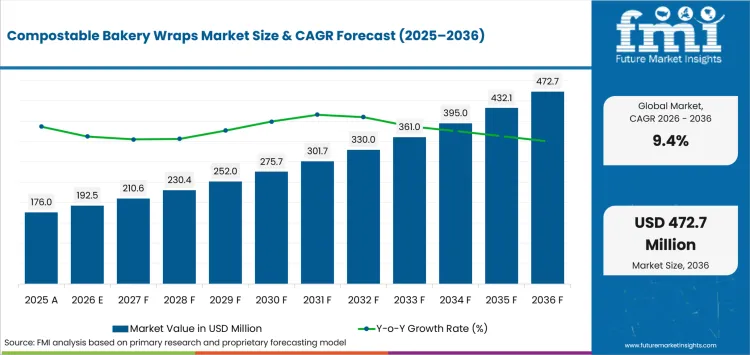
Key Takeaways of Compostable Bakery Wraps Market
- Bakery operators increase adoption as certified wraps match grease performance with collection routes across service locations.
- Based on product type, certified compostable paper wraps are projected to account for 36.0% in 2026 due to familiar bakery handling.
- By material, paper-fiber is estimated to hold 46.0% in 2026 owing to stiffness and reliable printability during rapid handling.
- In 2026, industrial compostable is expected to lead certification with 52.0% share because commercial standards provide documented qualification.
- Uneven composter acceptance can delay rollout even for a technically qualified wrap with compostability certification.
- Active suppliers include Vegware (Novolex), Futamura, Ahlstrom, TIPA, Nordic Paper, Metsä Tissue, BIOPAP and delfort.
Analyst Perspective
"Bakery groups should qualify compostable wraps against the grease load and collection route used at each service location. Repeat volume depends on one specification surviving printing plus hand wrapping and composter acceptance without becoming a costly composite."
- Nandini Roy Choudhury, Principal Consultant, Future Market Insights
How is the Compostable Bakery Wraps Market segmented?
The compostable bakery wraps market is segmented by product type, material, certification, application, end use, sales channel and region.
Product types include certified compostable paper wraps, cellulose window wraps, PLA-coated wraps, unbleached natural wraps and others. Materials comprise paper-fiber, regenerated cellulose, PLA, bagasse and others. Certification covers industrial compostable, home compostable and uncertified formats. Applications include pastries, bread, sandwiches and snacks, cakes and others. End uses comprise in-store bakeries, foodservice cafes, households and commercial bakeries. Sales channels cover direct OEM supply, packaging distributors, e-commerce and others.
What supports pastries within the application category?
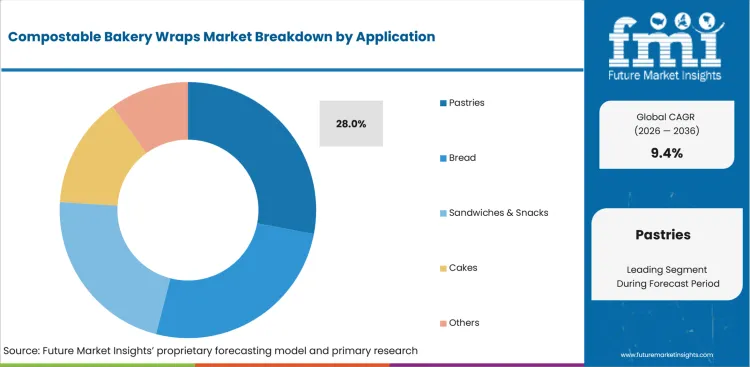
Pastries place a concentrated grease load on a small wrap and expose barrier failure immediately on shelves or customer hands. Delicate surfaces and filled products also require fast folding and clean release during short service cycles that shape baking and cooking paper selection.
- Pastries are likely to capture 28.0% share in 2026 attributable to frequent wrap use and visible grease exposure during display and service.
- delfort launched thinbarrier 303 in June 2025 for food applications from minus 18°C to plus 38°C, confirming that bakery-adjacent barrier papers must retain protection across changing storage and service temperatures.
What makes certified compostable paper wraps central to the product type category?
Certified compostable paper wraps fit bakery counters that already use paper folding and printing routines but need documented end-of-life claims. Ahlstrom received Australian and New Zealand home-compostability certification for Sulpack in April 2025, giving grease-prone food applications a qualified parchment route without changing the greaseproof paper sheets handling model.
- By product type, certified compostable paper wraps are forecast to represent 36.0% in 2026 driven by familiar folding and print control during routine bakery service.
- Bakery chains can qualify the same wrap around product-contact needs and disposal instructions while keeping staff routines close to existing paper handling.
How does paper-fiber shape selection within the material category?
Paper-fiber provides the body of the wrap and keeps folds stable around pastries or bread during counter service. Its commercial fit depends on adding grease resistance without turning the structure into a difficult composite or disrupting existing flexible packaging paper equipment during high-frequency bakery and foodservice production shifts.
- Paper-fiber is projected to hold 46.0% share in 2026 owing to stiffness and printable surfaces that suit rapid counter wrapping.
- Nordic Paper reported five mills and customers in more than 80 countries in March 2025, giving food-packaging converters broad access to natural greaseproof grades for baking and wrapping programs.
Why does industrial compostable lead the certification category?
Industrial compostability gives bakery groups a repeatable qualification route for wraps intended to enter controlled organics treatment. Futamura reported in April 2026 that NatureFlex films used with BIOPAP meet EN 13432 and ASTM D6400, linking certified end-of-life performance with cellulose film packaging structures that manage grease across branded and private-label bakery format programs.
- In 2026, industrial compostable is expected to lead certification with 52.0% share because commercial standards give multi-site accounts a documented approval basis.
- Local collection remains a separate test since the customer’s contracted composter may reject a certified material that falls outside its accepted feedstock list.
What are the drivers, restraints and opportunities in the Compostable Bakery Wraps Market?
Collection rules raise interest in certified wraps, but inconsistent facility acceptance restrains conversion while high-barrier compostable structures widen viable bakery applications.
- Driver: Verified organics collection routes give bakery operators a practical reason to replace incumbent food-soiled wraps with certified compostable formats.
- Restraint: Facility acceptance remains local, so certification alone cannot guarantee that a food-soiled wrap reaches an approved composting process.
- Opportunity: Higher-barrier compostable structures can address greasy or moisture-sensitive bakery products that previously relied on conventional multilayer packaging.
Collection Routes Convert Claims into Purchase Conditions
Organics collection becomes a purchase condition once a bakery can place food residue and a qualified wrap into the same contracted stream. Vegware and Food4Soil launched a Northwest England collection partnership in January 2025 that sends used Vegware packaging to local treatment, giving participating foodservice sites a defined route. Bakery groups can convert compostable plastic packaging trials into repeat orders if that route is available across multiple locations.
Facility Acceptance Limits Multi-Site Rollout
Facility acceptance remains a material limit for a wrap that already carries recognized compostability certification. The USA Composting Council reported in May 2025 that its survey represented more than 263 facilities across 40 states, yet operating practices and accepted feedstocks varied across respondents. Multi-site bakery groups therefore need facility-level confirmation for a single disposal instruction across a national estate.
Barrier Performance Expands Addressable Bakery Uses
High-barrier compostable films expand the foods that can use a compostable wrap without giving up moisture or oil protection. TIPA launched 312MET Premium in February 2025 for oily dry foods, adding a home-compostable high-barrier structure intended for standard converting and packing equipment. Bakery brands can apply similar qualification work to barrier coated papers and films used for greasy pastries or filled snacks at sites with verified composting access.
Which country CAGRs are profiled in the Compostable Bakery Wraps Market?
| Country | CAGR |
|---|---|
| Brazil | 9.9% |
| United Kingdom | 9.5% |
| Germany | 9.2% |
| United States | 8.7% |
| Japan | 7.9% |
How do country-level CAGRs compare in the Compostable Bakery Wraps Market?
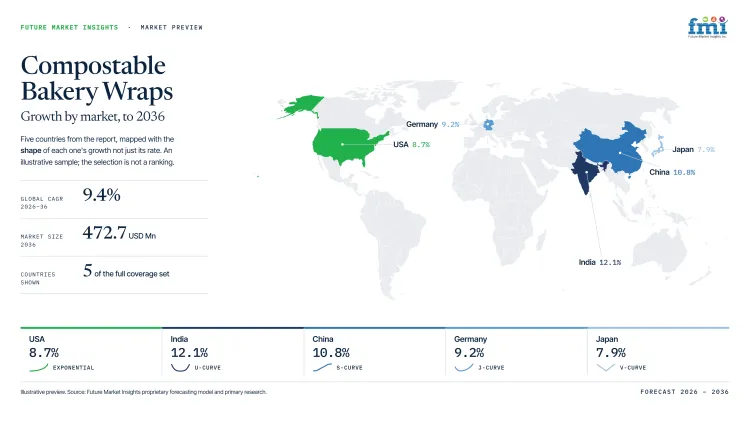
The five-country set forms a middle band across the United Kingdom, Germany and the United States. Brazil separates above that cluster while Japan forms a lower transition point. The 2.0-percentage-point spread reflects different packaging rules and organics routes without measuring market size, so similar forecast rates can hide qualification conditions.
- Brazil’s converter build-out lowers trial friction but national composting access remains uneven.
- UK producer-responsibility reporting makes material classification a cost variable in bakery specifications.
- Germany’s contamination thresholds narrow organics routes and reward precise fiber-rich disposal instructions.
- USA adoption depends on local haulers and composters because fragmented municipal acceptance limits consistent rollout.
- Japan’s biodegradability criteria strengthen documentation but do not resolve local collection routes.
Comparable CAGRs produce different qualification costs and national rollout speeds.
The full report provides country-level CAGR analysis across North America, Latin America, Europe, East Asia, South Asia, Oceania and the Middle East and Africa.
Country-wise Analysis
- Brazilian packaging developers are adding local compostable capacity for supermarket and foodservice accounts, yet organics collection for bakery wraps remains uneven across major cities and distributor territories serving national bakery chains today. Finep reported in July 2025 that Melhoramentos’ Biona factory was designed for 60-80 million compostable packages annually, giving food brands a domestic route for qualified fiber-based packaging and shorter converter supply chains. The Brazil compostable bakery wraps sector is projected to record 9.9% CAGR during the assessment period, supported by local converting access but limited by processor acceptance and account-level unit economics that differ across municipal waste systems.
- United Kingdom bakery groups now classify wrap materials against producer-responsibility data and separated food-waste contracts, making material choice part of multi-site approval across supermarket and foodservice estates served by different regional contractors. Defra reported in April 2026 that 2024 producer data included 1.88 million tonnes of paper and card packaging, giving packaging teams a national benchmark for material classification and producer-responsibility reporting. The UK compostable bakery wraps outlook is anticipated to advance at 9.5% CAGR over the assessment period, supported by tighter classification but limited by the need for written waste-route confirmation as national chains standardize one wrap across locations.
- German bakery packaging enters a biowaste system with strict contamination controls, so certified formats need disposal instructions that match municipal collection practice across commercial food-waste contracts and regional retail estates serving national bakery chains. The Federal Environment Ministry stated in April 2025 that biowaste entering treatment could contain no more than 0.5% plastics from May 1, giving bakery groups a measurable threshold for contamination control. Compostable bakery wraps demand in Germany is forecast to rise at 9.2% CAGR over the forecast period, shaped by fiber-rich format scrutiny but limited by local acceptance that companies must document to scale repeat supply.
- USA bakery and venue accounts increasingly link compostable packaging to contracted organics collection, making local service coverage a qualification condition across stadium and supermarket foodservice programs where food residue complicates conventional recycling. Novolex reported in May 2025 that Eco-Products became a Zero Waste Partner of the San Francisco Giants and supplies compostable foodservice packaging at Oracle Park, giving large accounts a documented closed-loop deployment model for future expansion. In the United States, compostable bakery wraps demand is predicted to advance at 8.7% CAGR through 2036 despite fragmented municipal acceptance requiring city-specific disposal instructions and hauler coordination across national account networks.
- Japanese food-packaging programs rely on defined material claims and controlled specifications, making documented biodegradability performance part of bakery and convenience-store qualification for grease-resistant wraps used around ready-to-eat products today. The Ministry of the Environment’s January 2025 biodegradability-label criteria require organic components present at 1% or more to show at least 60% biodegradation under specified test conditions, giving material teams a defined qualification threshold. Japan is estimated to post 7.9% CAGR over the forecast period, supported by documentation discipline but limited by the separate need for accepted collection routes and precise disposal wording as certified wraps progress toward routine purchases nationally.
Who are the notable companies in the Compostable Bakery Wraps Market?
Vegware (Novolex), Futamura, Ahlstrom, TIPA, Nordic Paper, Metsä Tissue, BIOPAP and delfort are the notable companies serving this market.
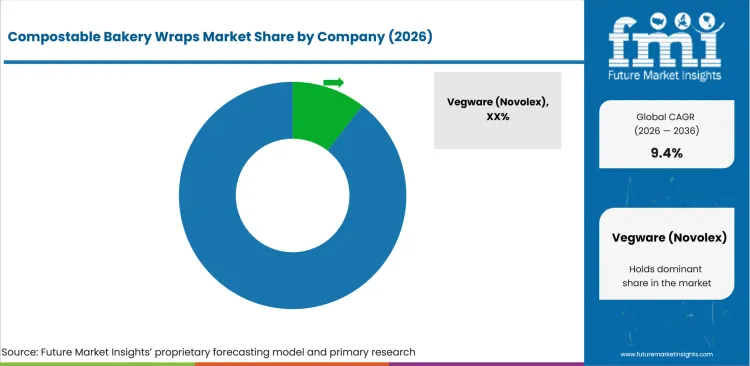
Competition spans certified films and grease-resistant fiber substrates across distinct commercial wrap systems. Companies serving food grade packaging accounts compete on compostability documentation plus barrier performance and application testing during approval.
- Vegware (Novolex), Futamura, TIPA and BIOPAP provide certified compostable systems for flexible or foodservice applications.
- Ahlstrom, Nordic Paper, Metsä Tissue and delfort supply grease-resistant fiber or barrier-paper capability for bakery converting programs.
Competitive Benchmarking: Compostable Bakery Wraps Market
| Company | End-of-Life Qualification | Grease and Heat Barrier Fit | Wrap Conversion and Channel Access | Geographic Reach |
|---|---|---|---|---|
| Vegware (Novolex) | High | Medium | High | UK, Europe and North America |
| Futamura | High | High | Medium | Europe, North America and Asia-Pacific |
| Ahlstrom | High | High | Medium | Europe, North America and Asia-Pacific |
| TIPA | High | High | High | Europe, North America and Asia-Pacific |
| BIOPAP | High | High | Medium | Europe and international foodservice markets |
| Nordic Paper | Medium | High | Medium | Europe, North America and global converter markets |
| Metsä Tissue | Medium | High | High | Europe and international food-paper markets |
| delfort | Medium | High | Medium | Europe, North America and Asia |
Key Developments in the Compostable Bakery Wraps Market
- In September 2025, Vegware partnered with Forest Green Rovers and Grundon to supply compostable foodservice packaging alongside matchday collection systems. The arrangement connects packaging qualification with controlled bins and verified composting for a high-volume venue.
- In September 2025, TIPA launched four high-barrier compostable film and laminate formats for moisture-sensitive food packaging. Paper and transparent print-layer options support conventional machinery while extending compostable structures into applications with stronger barrier requirements.
- In July 2025, Futamura announced a new energy-recovery project at its Wigton cellulose-film manufacturing site. Once operational the asset is expected to generate 15% of site energy requirements and support the production base for certified NatureFlex films.
Key Players in the Compostable Bakery Wraps Market
Certified Compostable Systems and Flexible Platforms
- Vegware (Novolex)
- Futamura
- TIPA
Compostable Foodservice and Fiber Platforms
- BIOPAP
- Ahlstrom
- Nordic Paper
Greaseproof and Barrier Paper Specialists
- Metsä Tissue
- delfort
Compostable Bakery Wraps Market - Report Scope
| Coverage field | Report scope |
|---|---|
| Market breakdown | By product type, material, certification, application, end use, sales channel and region. |
| Quantitative Units | Revenue in USD million and CAGR in %. |
| Market Definition | Revenue from compostable bakery wrap products sold within the stated product-type, material, certification, application, end-use and sales-channel boundaries. |
| Regions Covered | North America, Latin America, Europe, East Asia, South Asia and Pacific, and Middle East and Africa. |
| Countries Covered | Brazil, United Kingdom, Germany, United States, Japan, and 20+ countries included in the full report. |
| Key Companies Profiled | Vegware (Novolex), Futamura, Ahlstrom, TIPA, Nordic Paper, Metsä Tissue, BIOPAP and delfort. |
| Forecast Period | 2026 to 2036. |
| Approach | Primary and secondary research with market triangulation. |
Compostable Bakery Wraps Market - Research Methodology
| Method | Approach |
|---|---|
| Primary Research | FMI analysts gathered input from manufacturers, service providers, technology developers, distributors, end users, procurement teams, and subject-matter experts. Interviews examined purchasing decisions, product or service evaluation, adoption barriers, approval requirements, pricing considerations, and expectations for technical or commercial support. Respondents were also asked what evidence is required before a trial, pilot, or initial order develops into regular purchasing. |
| Desk Research | Desk research covered government statistics, regulatory publications, trade data, industry associations, technical literature, standards, company filings, product information, and official corporate announcements. Sources were reviewed for relevance, publication date, geographic coverage, and consistency with the defined market scope. Claims relating to performance, applications, approvals, capacity, investment, and commercial activity were retained only when supported by credible public evidence. |
| Market Sizing and Forecasting | The market model combined the baseline value with historical performance, segment structure, pricing and volume indicators, adoption levels, company participation, and country-level demand conditions. Forecast assumptions considered economic activity, investment trends, regulatory developments, technology adoption, purchasing cycles, supply availability, and barriers to wider market use. Segment and regional estimates were reconciled before the final market total was calculated. |
| Data Validation | Estimates were checked against multiple independent indicators, including public data, company activity, trade patterns, industry developments, and findings from primary interviews. Validation also tested whether products, services, applications, and company revenues fell within the defined market boundaries. Adjacent categories, unsupported claims, overlapping revenues, and activities without direct market relevance were excluded to reduce double counting and maintain consistency across segments and countries. |
Compostable Bakery Wraps Market by Segments
Compostable Bakery Wraps Market segmented by Product Type:
- Certified Compostable Paper Wraps
- Cellulose Window Wraps
- PLA-Coated Wraps
- Unbleached Natural Wraps
- Others
Compostable Bakery Wraps Market segmented by Material:
- Paper - Fiber
- Regenerated Cellulose
- PLA
- Bagasse
- Others
Compostable Bakery Wraps Market segmented by Certification:
- Industrial Compostable
- Home Compostable
- Uncertified
Compostable Bakery Wraps Market segmented by Application:
- Pastries
- Bread
- Sandwiches & Snacks
- Cakes
- Others
Compostable Bakery Wraps Market segmented by End Use:
- In-Store Bakeries
- Foodservice Cafes
- Household
- Commercial Bakeries
Compostable Bakery Wraps Market segmented by Sales Channel:
- Direct - OEM Supply
- Packaging Distributors
- Online - E-commerce
- Others
Compostable Bakery Wraps Market by Region:
- North America
- United States
- Canada
- Latin America
- Brazil
- Mexico
- Chile
- Rest of Latin America
- Western Europe
- Germany
- United Kingdom
- Italy
- Spain
- France
- Nordics
- Benelux
- Rest of Western Europe
- Eastern Europe
- Russia
- Poland
- Hungary
- Balkan and Baltic States
- Rest of Eastern Europe
- East Asia
- China
- Japan
- South Korea
- South Asia and Pacific
- India
- ASEAN
- Australia and New Zealand
- Rest of South Asia and Pacific
- Middle East and Africa
- Kingdom of Saudi Arabia
- Other GCC Countries
- Türkiye
- South Africa
- Other African Union Countries
- Rest of Middle East and Africa
Research Sources and Bibliography
- Department for Environment, Food & Rural Affairs. (2025, March 31). New rules simplifying recycling for workplaces in England come into force.
- USA Environmental Protection Agency. (2025, March). Frequent Questions about the USA EPA Excess Food Opportunities Map.
- Ahlstrom. (2025, April 7). Ahlstrom receives home compostable certification in Australia and New Zealand for Sulpack® Flexible packaging.
- Nordic Paper. (2025, March 21). Nordic Paper’s annual report and sustainability report 2024.
- Futamura. (2026, April 24). Futamura and Biopap Advance Compostable Food Service Solutions.
- delfort. (2025, June 17). new barrier paper for varying temperatures: thinbarrier 303 protects food from frozen to tropical.
- Vegware. (2025, January 20). New Vegware and Food4Soil composting partnership.
- USA Composting Council. (2025, May 19). Compost producers participated in USCC's second triennial survey.
- TIPA. (2025, February 12). TIPA Unveils Advanced Home Compostable High-Barrier Film for Sustainable Snack Packaging.
- Finep. (2025, July 8). Finep apoia pesquisa pioneira em embalagens compostáveis em nova fábrica da Melhoramentos.
- Department for Environment, Food & Rural Affairs. (2026, April 20). Local authority payments and material base fees: breakdown of costs and tonnages.
- Federal Ministry for the Environment, Climate Action, Nature Conservation and Nuclear Safety. (2025, April 22). Weniger Kunststoffe im Bioabfall ab Mai 2025.
- Novolex. (2025, May 29). Eco-Products Named an Official Zero Waste Partner of the San Francisco Giants.
- Ministry of the Environment, Japan. (2025, January).
- Metsä Tissue. (2025, June 18). Metsä Tissue’s greaseproof paper business licenses SAGA consumer business to Fredman Group.
- Vegware. (2025, September 26). Closing the loop on matchdays.
- TIPA. (2025, September 22). TIPA® Compostable Packaging Launches Breakthrough High-Barrier Solutions for Flexible Packaging.
- Futamura. (2025, July 2). £15 million investment announcement at Futamura.
- Ahlstrom. (2025, May 21). Ahlstrom inaugurates new parchmentizer at the Saint-Séverin plant, strengthening customer partnerships and local commitment.
- TIPA. (2025, October 20). TIPA® Acquires SEALPAP®: Delivering Full-Service Sustainable Packaging for a Circular Future.
- Ahlstrom. (2026, June 17). Ahlstrom renews CMA-W compostability certification for GVP food-grade portfolio.
- Futamura. (2025, May 15). Groundbreaking innovation for liquid sachet packaging.
- BIOPAP. (2026, February 2). BIOPAP® at Intergastra 2026 - Shaping the Future of Compostable Catering & Foodservice Packaging.
- Metsä Tissue. (2025, December 1). Greaseproof papers that bring peace of mind.
- delfort. (2025, September 15). see what’s inside: transparent and heat-sealable paper for food and non-food.
- Vegware. (2026, February 2). Introducing Eco-Products: now available in the UK.
- Nordic Paper. (2025, January 16). Nordic Paper enters into new financing agreement after change of controlling owner.
This bibliography is provided for reader reference and is not exhaustive. The full report contains the complete reference list and detailed citations
This Report Answers
- How does the 2026 valuation compare with 2036?
- Which operating rules are changing bakery wrap specifications?
- Why do certified paper wraps lead product type?
- How does paper-fiber affect converter qualification?
- Why does industrial compostable lead certification demand?
- What makes pastries a frequent wrap application?
- How do country growth routes differ commercially?
- Which suppliers combine certification with barrier performance?
Frequently Asked Questions
How big is the Compostable Bakery Wraps Market in 2026?
The compostable bakery wraps market is valued at USD 192.5 million in 2026 and is projected to reach USD 472.7 million by 2036. Growth is driven by increasing adoption of certified compostable packaging solutions that provide grease resistance while supporting sustainability goals.
What is the CAGR of the Compostable Bakery Wraps Market from 2026 to 2036?
The compostable bakery wraps market is projected to grow at a CAGR of 9.4% between 2026 and 2036. Expansion is supported by evolving packaging regulations, compostability requirements, and growing demand for sustainable bakery packaging.
Which product type is projected to account for 36.0% of the Compostable Bakery Wraps Market?
Certified compostable paper wraps are projected to account for 36.0% of the market in 2026. Their leading share is supported by familiar handling, folding, and printing characteristics that simplify adoption across bakery operations.
How much will the Compostable Bakery Wraps Market add between 2026 and 2036?
The compostable bakery wraps market is expected to add USD 280.2 million in value between 2026 and 2036. Growth reflects increasing qualification and adoption of compostable fiber- and film-based packaging formats across bakery applications.
Which companies are active in the Compostable Bakery Wraps Market?
Key companies operating in the market include Vegware (Novolex), Futamura, Ahlstrom, TIPA, Nordic Paper, Metsä Tissue, BIOPAP, and delfort. These companies provide certified compostable packaging solutions and grease-resistant paper materials for bakery packaging applications.
Preview the report firsthand - request a free sample
Get SampleGet the brochure for pricing and purchase details.
Get PDFTable of Content
- Key Takeaways
- Market Size and CAGR
- Top Growth Driver
- Fastest Growing Segment
- Leading Region
- Key Companies
- Emerging Opportunities
- Executive Summary
- Global Market Outlook
- Demand-side Trends
- Supply-side Trends
- Technology Roadmap Analysis
- Analysis and Recommendations
- Analyst Perspective (What is happening? Why now? What should investors know?)
- Key Questions Answered
- How large is the market?
- What is the CAGR?
- What are key trends?
- Which region dominates?
- Who are the leaders?
- Market Overview
- Market Coverage / Taxonomy
- Market Definition / Scope / Limitations
- Research Methodology
- Chapter Orientation
- Analytical Lens and Working Hypotheses
- Market Structure, Signals, and Trend Drivers
- Benchmarking and Cross-market Comparability
- Market Sizing, Forecasting, and Opportunity Mapping
- Research Design and Evidence Framework
- Desk Research Programme (Secondary Evidence)
- Expert Input and Fieldwork (Primary Evidence)
- Tooling, Models, and Reference Databases
- Data Engineering and Model Build
- Quality Assurance and Audit Trail
- Market Background
- Market Dynamics (Drivers, Restraints, Opportunity, Trends)
- Scenario Forecast (Optimistic, Likely, Conservative)
- Impact Analysis
- AI Impact
- Sustainability Impact
- Regulatory Impact
- Technology Impact
- Consumer / Buyer Analysis
- Purchase Drivers
- Adoption Barriers
- Buyer Journey
- Opportunity Map Analysis
- Product Life Cycle Analysis
- Supply Chain Analysis
- Investment Feasibility Matrix
- Value Chain Analysis
- PESTLE and Porter's Analysis
- Regulatory Landscape
- Regional Parent Market Outlook
- Production and Consumption Statistics
- Import and Export Statistics
- Global Market Analysis and Forecast, 2021 to 2036
- Historical Market Size Value (USD Million) Analysis, 2021 to 2025
- Current and Future Market Size Value (USD Million) Projections, 2026 to 2036
- Y-o-Y Growth Trend Analysis
- Absolute $ Opportunity Analysis
- Global Market Pricing Analysis, 2021 to 2036
- Global Market Analysis and Forecast, By Product Type, 2021 to 2036
- Introduction / Key Findings
- Historical Market Size Value (USD Million) Analysis By Product Type, 2021 to 2025
- Current and Future Market Size Value (USD Million) Analysis and Forecast By Product Type, 2026 to 2036
- Certified Compostable Paper Wraps
- Cellulose Window Wraps
- PLA-Coated Wraps
- Unbleached Natural Wraps
- Others
- Certified Compostable Paper Wraps
- Y-o-Y Growth Trend Analysis By Product Type, 2021 to 2025
- Absolute $ Opportunity Analysis By Product Type, 2026 to 2036
- Global Market Analysis and Forecast, By Material, 2021 to 2036
- Introduction / Key Findings
- Historical Market Size Value (USD Million) Analysis By Material, 2021 to 2025
- Current and Future Market Size Value (USD Million) Analysis and Forecast By Material, 2026 to 2036
- Paper - Fiber
- Regenerated Cellulose
- PLA
- Bagasse
- Others
- Paper - Fiber
- Y-o-Y Growth Trend Analysis By Material, 2021 to 2025
- Absolute $ Opportunity Analysis By Material, 2026 to 2036
- Global Market Analysis and Forecast, By Certification, 2021 to 2036
- Introduction / Key Findings
- Historical Market Size Value (USD Million) Analysis By Certification, 2021 to 2025
- Current and Future Market Size Value (USD Million) Analysis and Forecast By Certification, 2026 to 2036
- Industrial Compostable
- Home Compostable
- Uncertified
- Industrial Compostable
- Y-o-Y Growth Trend Analysis By Certification, 2021 to 2025
- Absolute $ Opportunity Analysis By Certification, 2026 to 2036
- Global Market Analysis and Forecast, By Application, 2021 to 2036
- Introduction / Key Findings
- Historical Market Size Value (USD Million) Analysis By Application, 2021 to 2025
- Current and Future Market Size Value (USD Million) Analysis and Forecast By Application, 2026 to 2036
- Pastries
- Bread
- Sandwiches & Snacks
- Cakes
- Others
- Pastries
- Y-o-Y Growth Trend Analysis By Application, 2021 to 2025
- Absolute $ Opportunity Analysis By Application, 2026 to 2036
- Global Market Analysis and Forecast, By End Use, 2021 to 2036
- Introduction / Key Findings
- Historical Market Size Value (USD Million) Analysis By End Use, 2021 to 2025
- Current and Future Market Size Value (USD Million) Analysis and Forecast By End Use, 2026 to 2036
- In-Store Bakeries
- Foodservice Cafes
- Household
- Commercial Bakeries
- In-Store Bakeries
- Y-o-Y Growth Trend Analysis By End Use, 2021 to 2025
- Absolute $ Opportunity Analysis By End Use, 2026 to 2036
- Global Market Analysis and Forecast, By Sales Channel
- Introduction / Key Findings
- Historical Market Size Value (USD Million) Analysis By Sales Channel, 2021 to 2025
- Current and Future Market Size Value (USD Million) Analysis and Forecast By Sales Channel, 2026 to 2036
- Direct - OEM Supply
- Packaging Distributors
- Online - E-commerce
- Others
- Direct - OEM Supply
- Y-o-Y Growth Trend Analysis By Sales Channel, 2021 to 2025
- Absolute $ Opportunity Analysis By Sales Channel, 2026 to 2036
- Global Market Analysis and Forecast, By Region, 2021 to 2036
- Introduction
- Historical Market Size Value (USD Million) Analysis By Region, 2021 to 2025
- Current Market Size Value (USD Million) Analysis and Forecast By Region, 2026 to 2036
- North America
- Latin America
- Western Europe
- Eastern Europe
- East Asia
- South Asia and Pacific
- Middle East & Africa
- Market Attractiveness Analysis By Region
- North America Market Analysis and Forecast, By Country, 2021 to 2036
- Historical Market Size Value (USD Million) Trend Analysis By Market Taxonomy, 2021 to 2025
- Market Size Value (USD Million) Forecast By Market Taxonomy, 2026 to 2036
- By Country
- USA
- Canada
- By Product Type
- By Material
- By Certification
- By Application
- By End Use
- By Sales Channel
- By Country
- Market Attractiveness Analysis
- By Country
- By Product Type
- By Material
- By Certification
- By Application
- By End Use
- By Sales Channel
- Key Takeaways
- Latin America Market Analysis and Forecast, By Country
- Historical Market Size Value (USD Million) Trend Analysis By Market Taxonomy, 2021 to 2025
- Market Size Value (USD Million) Forecast By Market Taxonomy, 2026 to 2036
- By Country
- Brazil
- Mexico
- Chile
- Rest of Latin America
- By Product Type
- By Material
- By Certification
- By Application
- By End Use
- By Sales Channel
- By Country
- Market Attractiveness Analysis
- By Country
- By Product Type
- By Material
- By Certification
- By Application
- By End Use
- By Sales Channel
- Key Takeaways
- Western Europe Market Analysis and Forecast, By Country
- Historical Market Size Value (USD Million) Trend Analysis By Market Taxonomy, 2021 to 2025
- Market Size Value (USD Million) Forecast By Market Taxonomy, 2026 to 2036
- By Country
- Germany
- UK
- Italy
- Spain
- France
- Nordic
- BENELUX
- Rest of Western Europe
- By Product Type
- By Material
- By Certification
- By Application
- By End Use
- By Sales Channel
- By Country
- Market Attractiveness Analysis
- By Country
- By Product Type
- By Material
- By Certification
- By Application
- By End Use
- By Sales Channel
- Key Takeaways
- Eastern Europe Market Analysis and Forecast, By Country
- Historical Market Size Value (USD Million) Trend Analysis By Market Taxonomy, 2021 to 2025
- Market Size Value (USD Million) Forecast By Market Taxonomy, 2026 to 2036
- By Country
- Russia
- Poland
- Hungary
- Balkan & Baltic
- Rest of Eastern Europe
- By Product Type
- By Material
- By Certification
- By Application
- By End Use
- By Sales Channel
- By Country
- Market Attractiveness Analysis
- By Country
- By Product Type
- By Material
- By Certification
- By Application
- By End Use
- By Sales Channel
- Key Takeaways
- East Asia Market Analysis and Forecast, By Country
- Historical Market Size Value (USD Million) Trend Analysis By Market Taxonomy, 2021 to 2025
- Market Size Value (USD Million) Forecast By Market Taxonomy, 2026 to 2036
- By Country
- China
- Japan
- South Korea
- By Product Type
- By Material
- By Certification
- By Application
- By End Use
- By Sales Channel
- By Country
- Market Attractiveness Analysis
- By Country
- By Product Type
- By Material
- By Certification
- By Application
- By End Use
- By Sales Channel
- Key Takeaways
- South Asia and Pacific Market Analysis and Forecast, By Country
- Historical Market Size Value (USD Million) Trend Analysis By Market Taxonomy, 2021 to 2025
- Market Size Value (USD Million) Forecast By Market Taxonomy, 2026 to 2036
- By Country
- India
- ASEAN
- Australia & New Zealand
- Rest of South Asia and Pacific
- By Product Type
- By Material
- By Certification
- By Application
- By End Use
- By Sales Channel
- By Country
- Market Attractiveness Analysis
- By Country
- By Product Type
- By Material
- By Certification
- By Application
- By End Use
- By Sales Channel
- Key Takeaways
- Middle East & Africa Market Analysis and Forecast, By Country
- Historical Market Size Value (USD Million) Trend Analysis By Market Taxonomy, 2021 to 2025
- Market Size Value (USD Million) Forecast By Market Taxonomy, 2026 to 2036
- By Country
- Kingdom of Saudi Arabia
- Other GCC Countries
- Türkiye
- South Africa
- Other African Union
- Rest of Middle East & Africa
- By Product Type
- By Material
- By Certification
- By Application
- By End Use
- By Sales Channel
- By Country
- Market Attractiveness Analysis
- By Country
- By Product Type
- By Material
- By Certification
- By Application
- By End Use
- By Sales Channel
- Key Takeaways
- Key Countries Market Analysis
- USA
- Pricing Analysis
- Market Share Analysis, 2025
- By Product Type
- By Material
- By Certification
- By Application
- By End Use
- By Sales Channel
- Canada
- Pricing Analysis
- Market Share Analysis, 2025
- By Product Type
- By Material
- By Certification
- By Application
- By End Use
- By Sales Channel
- Mexico
- Pricing Analysis
- Market Share Analysis, 2025
- By Product Type
- By Material
- By Certification
- By Application
- By End Use
- By Sales Channel
- Brazil
- Pricing Analysis
- Market Share Analysis, 2025
- By Product Type
- By Material
- By Certification
- By Application
- By End Use
- By Sales Channel
- Chile
- Pricing Analysis
- Market Share Analysis, 2025
- By Product Type
- By Material
- By Certification
- By Application
- By End Use
- By Sales Channel
- Germany
- Pricing Analysis
- Market Share Analysis, 2025
- By Product Type
- By Material
- By Certification
- By Application
- By End Use
- By Sales Channel
- UK
- Pricing Analysis
- Market Share Analysis, 2025
- By Product Type
- By Material
- By Certification
- By Application
- By End Use
- By Sales Channel
- Italy
- Pricing Analysis
- Market Share Analysis, 2025
- By Product Type
- By Material
- By Certification
- By Application
- By End Use
- By Sales Channel
- Spain
- Pricing Analysis
- Market Share Analysis, 2025
- By Product Type
- By Material
- By Certification
- By Application
- By End Use
- By Sales Channel
- France
- Pricing Analysis
- Market Share Analysis, 2025
- By Product Type
- By Material
- By Certification
- By Application
- By End Use
- By Sales Channel
- India
- Pricing Analysis
- Market Share Analysis, 2025
- By Product Type
- By Material
- By Certification
- By Application
- By End Use
- By Sales Channel
- ASEAN
- Pricing Analysis
- Market Share Analysis, 2025
- By Product Type
- By Material
- By Certification
- By Application
- By End Use
- By Sales Channel
- Australia & New Zealand
- Pricing Analysis
- Market Share Analysis, 2025
- By Product Type
- By Material
- By Certification
- By Application
- By End Use
- By Sales Channel
- China
- Pricing Analysis
- Market Share Analysis, 2025
- By Product Type
- By Material
- By Certification
- By Application
- By End Use
- By Sales Channel
- Japan
- Pricing Analysis
- Market Share Analysis, 2025
- By Product Type
- By Material
- By Certification
- By Application
- By End Use
- By Sales Channel
- South Korea
- Pricing Analysis
- Market Share Analysis, 2025
- By Product Type
- By Material
- By Certification
- By Application
- By End Use
- By Sales Channel
- Russia
- Pricing Analysis
- Market Share Analysis, 2025
- By Product Type
- By Material
- By Certification
- By Application
- By End Use
- By Sales Channel
- Poland
- Pricing Analysis
- Market Share Analysis, 2025
- By Product Type
- By Material
- By Certification
- By Application
- By End Use
- By Sales Channel
- Hungary
- Pricing Analysis
- Market Share Analysis, 2025
- By Product Type
- By Material
- By Certification
- By Application
- By End Use
- By Sales Channel
- Kingdom of Saudi Arabia
- Pricing Analysis
- Market Share Analysis, 2025
- By Product Type
- By Material
- By Certification
- By Application
- By End Use
- By Sales Channel
- Türkiye
- Pricing Analysis
- Market Share Analysis, 2025
- By Product Type
- By Material
- By Certification
- By Application
- By End Use
- By Sales Channel
- South Africa
- Pricing Analysis
- Market Share Analysis, 2025
- By Product Type
- By Material
- By Certification
- By Application
- By End Use
- By Sales Channel
- USA
- Market Structure Analysis
- Competition Dashboard
- Competition Benchmarking
- Market Share Analysis of Top Players
- By Regional
- By Product Type
- By Material
- By Certification
- By Application
- By End Use
- By Sales Channel
- Emerging Startups
- Innovation Benchmarking
- Competition Analysis
- Competition Deep Dive
- Vegware (Novolex)
- Overview
- Product Portfolio
- Profitability by Market Segments
- Sales Footprint
- Strategy Overview
- Marketing Strategy
- Product Strategy
- Channel Strategy
- Futamura
- If You Care
- Nordic Paper
- Ahlstrom
- TIPA
- Seaman Paper
- McNairn Packaging
- Metsa Group
- Delfort
- Vegware (Novolex)
- Case Studies
- Success Stories
- Recent Developments
- Competition Deep Dive
- Assumptions & Acronyms Used


