

- Industry Size (2026)
- USD 1.0 Bn
- Forecast (2036)
- USD 3.2 Bn
- CAGR (2026 to 2036)
- 11.8%
Driveline Lubricants for EVs Market Forecast and Outlook 2026 to 2036
The driveline lubricants for EVs market is projected to grow from USD 1 billion in 2026 to USD 3.2 billion by 2036, at a CAGR of 11.8%. Growth is fueled by the accelerating adoption of electric vehicles, which require specialized lubricants to manage higher torque densities and thermal loads in EV drivetrains. Synthetic and low-viscosity formulations are increasingly preferred for efficiency and reduced energy loss, while advanced additives enhance gear protection and reduce wear in EV transmissions.
Key end users include passenger EV manufacturers, commercial electric fleets, and off-highway EV platforms. OEMs and aftermarket service providers are both expanding usage of EV-specific lubricants to ensure reliability and maximize drivetrain lifespan. Rising EV production globally, coupled with supportive regulations on emissions reduction and vehicle efficiency, is driving demand. Leading suppliers, including Mobil, Shell, TotalEnergies, Fuchs, Chevron, and Castrol, are investing in formulations tailored for electric driveline applications.
Quick Stats of the Driveline Lubricants for EVs Market:
- Driveline Lubricants for EVs Market Value (2026): USD 1.0 billion
- Driveline Lubricants for EVs Market Forecast Value (2036): USD 3.2 billion
- Driveline Lubricants for EVs Market Forecast CAGR (2026 to 2036): 11.8%
- Leading Product Type in the Market: E-Axle Gear Oils (40%)
- Key Growth Regions in the Market: China, Brazil, Germany, UK, USA
- Top Players in the Market: Shell, ExxonMobil, TotalEnergies, BP (Castrol), Chevron, FUCHS, Valvoline, PetroChina, Sinopec, Idemitsu Kosan
What is the Growth Forecast for the Driveline Lubricants for EVs Market through 2036?
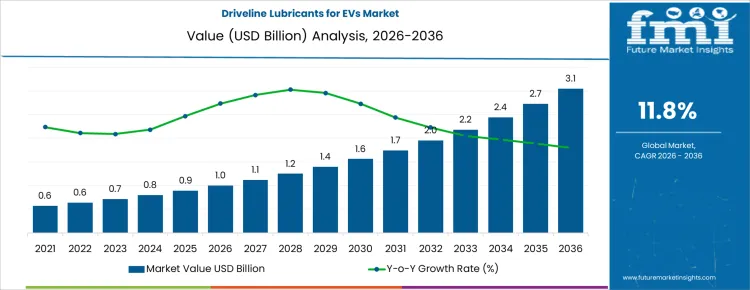
From 2026 to 2031, the driveline lubricants for EVs market grows from USD 1.0 billion to approximately USD 1.8 billion, representing the early adoption curve. Growth during this phase is driven by rising EV production, regulatory incentives for electric mobility, and increasing demand for high-performance lubricants that ensure efficiency, thermal stability, and drivetrain longevity. Year-on-year value additions increase from USD 0.1 billion in 2026 to USD 0.2 billion in 2031, concentrated in passenger EVs, light commercial vehicles, and premium EV segments in North America, Europe, and China. Uptake is influenced by OEM qualification cycles, performance validation, and integration into multi-speed and single-speed EV transmissions.
Between 2031 and 2036, the market expands from roughly USD 1.8 billion to USD 3.2 billion, illustrating the late adoption curve characterized by broad commercialization. Annual increments rise to USD 0.28-0.34 billion, driven by higher EV penetration across mass-market passenger vehicles, commercial fleets, and multi-regional production. Growth is reinforced by repeat procurement, portfolio-wide deployment, and integration of driveline lubricants as a standard maintenance and production specification in EV drivetrains. Early growth relied on selective OEM adoption, while later expansion is fueled by scale deployment, global EV supply chain expansion, and widespread market penetration.
Driveline Lubricants for EVs Market Key Takeaways
| Metric | Value |
|---|---|
| Market Value (2026) | USD 1.0 billion |
| Forecast Value (2036) | USD 3.2 billion |
| Forecast CAGR (2026-2036) | 11.8% |
What Is Driving the Demand for Driveline Lubricants for EVs?
Early demand for driveline lubricants in electric vehicles (EVs) developed from performance needs distinct from traditional internal combustion drivetrains. Conventional automotive driveline oils were designed to manage gear contact patterns and shear forces associated with combustion engine torque delivery. Early EV driveline systems introduced higher torque at lower speeds and unique thermal profiles that challenged standard lubricant formulations. Initial use of specialised EV driveline lubricants emerged as original equipment manufacturers (OEMs) and lubricant producers identified wear, noise, and efficiency limitations in early electric gear applications. Historical demand was driven by targeted mitigation of gear scuffing, noise, and thermal degradation in early EV models rather than broad market specification across all EV classes.
Future demand for EV driveline lubricants is expected to be shaped by broader adoption of electric propulsion across vehicle segments, regulatory efficiency requirements, and battery range optimisation rather than early corrective use alone. As EV production scales across passenger, commercial, and industrial vehicles, manufacturers are specifying lubricants that deliver low friction, high thermal stability, and long service life to support efficiency and drivetrain longevity. Demand growth will reflect formalised lubricant standards tailored to electric gear architectures, integration with vehicle energy management systems, and extended maintenance intervals. Unlike historical use tied to specific model performance fixes, future adoption will be embedded in vehicle design specifications and supply chain requirements as electric powertrains become mainstream.
What Factors Are Affecting the Demand for Driveline Lubricants for EVs Market in Terms of Product Type and Base Oil?
Demand for driveline lubricants for EVs is segmented by product type and base oil across electrified powertrain architectures. E axle gear oils account for about 40% of total demand, making them the leading product type. E transmission fluids, integrated e thermal fluids, and other driveline fluids represent additional categories without disclosed share splits. These products differ in load bearing requirements, electrical compatibility, and thermal management roles. Base oil selection reflects viscosity stability, oxidation resistance, and dielectric behavior. PAO based formulations account for about 36% of demand, followed by Group III, ester based, and glycol or other base oils. Together, these segments explain demand formation shaped by drivetrain integration, operating temperatures, and efficiency targets rather than vehicle production volume alone.
What Drives Demand by Product Type in the Driveline Lubricants for EVs Market?
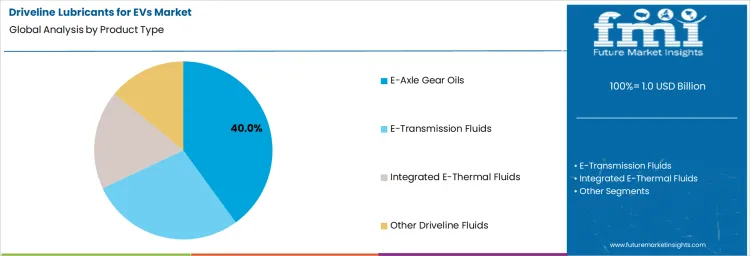
E axle gear oils lead demand with a 40% share due to concentrated torque loads and high rotational speeds within compact drive units. These lubricants must manage wear, noise, and thermal stress while maintaining electrical compatibility. E transmission fluids are used where multi speed or reduction gear systems are employed. Integrated e thermal fluids serve combined lubrication and cooling functions within tightly packaged systems. Other driveline fluids address auxiliary components and niche architectures. Product type selection reflects drivetrain layout and power density rather than legacy lubricant categories. Demand therefore aligns with EV platform design choices and durability targets.
Product driven demand remains stable because lubricant specifications are validated during vehicle development. E axle formulations are locked to specific gear and bearing designs. Transmission and thermal fluids are selected based on system integration constraints. Manufacturers avoid mid cycle formulation changes due to qualification requirements. This constrains rapid shifts between product types. Product type segmentation therefore reflects platform specific lubrication needs rather than short term changes in EV adoption rates.
How Does Base Oil Selection Shape Demand for Driveline Lubricants for EVs Market?
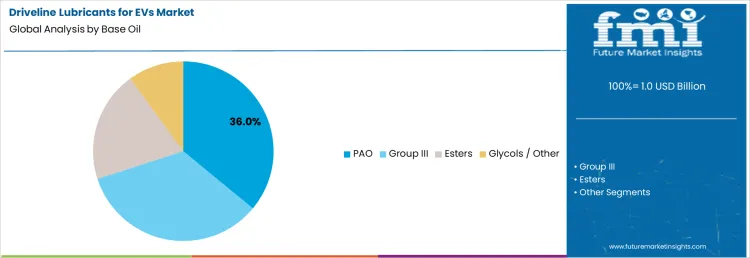
PAO base oils account for about 36% of total demand, making them the leading base oil category. Their dominance reflects thermal stability, low volatility, and consistent viscosity across wide temperature ranges. Group III base oils are used where cost control and performance balance are required. Ester base oils provide polarity and lubricity benefits in high stress applications. Glycol and other base oils support specialized cooling or dielectric functions. Base oil selection depends on efficiency targets, material compatibility, and service life expectations. Demand follows performance reliability rather than base oil origin.
PAO based formulations maintain leadership due to predictable behavior under EV operating conditions. Group III oils remain relevant in value oriented platforms. Esters are applied selectively to enhance film strength. Glycol systems remain limited to integrated thermal applications. OEMs avoid altering base oil strategies once systems are validated. This stabilizes demand distribution. Base oil segmentation therefore reinforces reliance on proven synthetic platforms within EV driveline lubrication systems.
How Are Driveline Lubricants for EVs Being Applied Across Electric Vehicle Powertrains?
Use appears in electric vehicles where gear sets, reduction drives, and differential systems require specialized lubrication to handle high torque at low speeds while maintaining efficiency. EV manufacturers integrate tailored lubricants to reduce friction, prevent wear, and ensure thermal stability in sealed gearboxes. Commercial fleets and passenger EVs adopt these lubricants to extend drivetrain life and maintain performance under varied driving conditions. These applications reflect operational and mechanical priorities rather than traditional engine protection concerns, with adoption driven by efficiency, component longevity, and noise reduction.
What Operational and Material Conditions Support Adoption of Driveline Lubricants for EVs?
Selection aligns with powertrain systems that experience high load, continuous torque, and elevated temperatures. Formulations are designed to maintain viscosity, protect against micro-pitting, and reduce energy losses in electric drive units. Automotive engineers optimize additives for compatibility with seals, bearings, and gear materials. Manufacturers rely on lubricants that meet OEM specifications for torque efficiency, NVH (noise, vibration, harshness), and long drain intervals. These conditions emerge from operational reliability, drivetrain protection, and performance efficiency requirements in structured EV manufacturing and maintenance workflows.
Which Practical Considerations Limit Wider Use of Driveline Lubricants for EVs?
Cost per liter can be higher than conventional transmission fluids, affecting adoption in lower-priced EV segments. Compatibility with diverse EV designs and gear materials must be verified. Long-term stability under high torque and temperature cycling requires validation. Limited availability in aftermarket service channels may constrain replacement options. OEM certification and warranty compliance influence adoption in new and existing vehicles. These factors lead to selective deployment where drivetrain efficiency, component protection, and regulatory alignment justify incremental cost and specialized formulation management.
What is the Demand for Driveline Lubricants for EVs by Country?
| Country | CAGR (%) |
|---|---|
| USA | 11.2% |
| Germany | 11.6% |
| China | 13.5% |
| UK | 11.4% |
| Brazil | 12.6% |
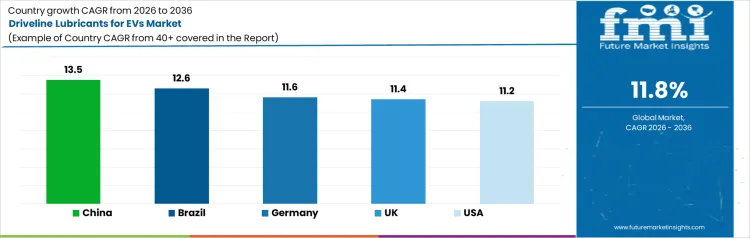
The demand for driveline lubricants for EVs varies across countries, driven by electric vehicle adoption, automotive manufacturing growth, and technological advancements in EV drivetrains. China leads with a 13.5% CAGR, supported by large scale EV production, government incentives, and expanding domestic and export markets. Brazil follows at 12.6%, driven by growing EV adoption and the development of supporting infrastructure. Germany grows at 11.6%, reflecting strong automotive manufacturing and transition to electric drivetrains. The UK records 11.4%, shaped by EV incentives and fleet electrification. The USA posts 11.2%, supported by increasing EV sales and adoption of specialized driveline lubricants to enhance performance and durability.
How Is EV Driveline Lubrication Driving Growth in the United States?
In the United States, revenue from the Driveline Lubricants for EVs Market is expanding at a CAGR of 11.2% through 2035, driven by adoption of high-performance lubricants to reduce friction, enhance efficiency, and extend component life in electric vehicle drivetrains. Manufacturers are integrating specialized lubricants in motors, gearboxes, and differential systems for passenger cars, commercial EVs, and industrial electric vehicles. Demand is concentrated in automotive OEMs, EV service providers, and fleet operators. Domestic suppliers provide advanced lubricants compatible with high-torque, high-speed electric drivetrains. Growing EV adoption, performance requirements, and recurring maintenance schedules are sustaining predictable procurement nationwide.
- EV motors, gearboxes, and differentials drive lubricant adoption
- Additives reduce friction, enhance efficiency, and extend component life
- Domestic suppliers provide high-performance, EV-compatible lubricants
- Recurring maintenance schedules sustain predictable procurement
How Are Automotive Electrification Standards Supporting Growth in Germany?
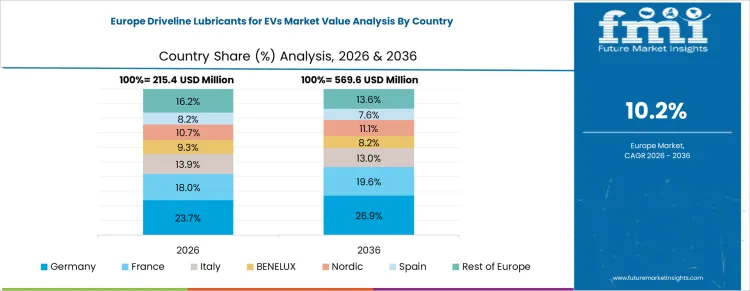
Germany continues to record steady growth in the Driveline Lubricants for EVs Market at a CAGR of 11.6% through 2035, supported by extensive EV adoption and strict automotive performance standards. Manufacturers are integrating specialized lubricants to improve drivetrain efficiency, reduce wear, and maintain thermal stability in electric vehicles. Demand is concentrated in passenger EVs, commercial electric fleets, and industrial electric vehicles. Domestic suppliers provide high-quality lubricants engineered for high-speed, high-torque electric drivetrains. Compliance with EV performance standards and recurring maintenance are sustaining measured adoption nationwide.
- Passenger EVs, commercial fleets, and industrial EVs drive lubricant adoption
- Lubricants improve efficiency, reduce wear, and maintain thermal stability
- Domestic suppliers provide high-quality EV-compatible lubricants
- Recurring maintenance cycles sustain predictable procurement
How Is Electric Vehicle Expansion Accelerating Adoption in China?
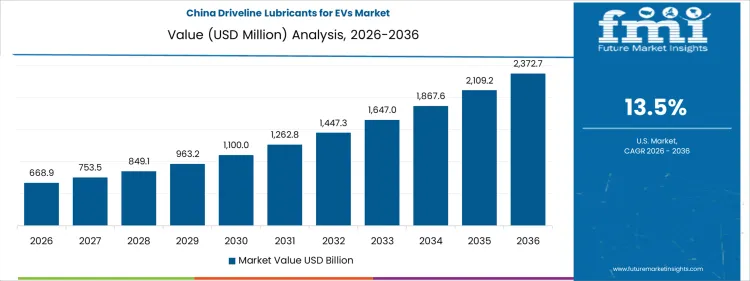
In China, revenue from the Driveline Lubricants for EVs Market is growing at a CAGR of 13.5% through 2035, driven by rapid growth in passenger and commercial electric vehicle adoption. Manufacturers are integrating specialized driveline lubricants to reduce friction, improve energy efficiency, and enhance reliability of motors and gearboxes. Demand is strong across EV OEMs, fleet operators, and industrial electric vehicles. Domestic suppliers are scaling production of high-performance lubricants compatible with high-torque and high-speed drivetrains. High EV sales volumes and structured maintenance programs are sustaining rapid adoption nationwide.
- Passenger and commercial EVs drive adoption of driveline lubricants
- Lubricants reduce friction, improve efficiency, and enhance drivetrain reliability
- Domestic suppliers scale high-performance, EV-compatible lubricants
- High EV sales and maintenance programs sustain consistent adoption
How Is Organized Automotive Electrification Supporting Growth in the United Kingdom?
In the United Kingdom, revenue from the Driveline Lubricants for EVs Market is expanding at a CAGR of 11.4% through 2035, supported by growth in electric vehicle adoption and organized automotive manufacturing. Manufacturers are integrating lubricants in motors, gearboxes, and differential systems to improve efficiency, reduce wear, and maintain thermal stability. Demand is concentrated in passenger EVs, commercial fleets, and industrial vehicles. Domestic suppliers provide high-quality, high-performance lubricants compatible with electric drivetrains. EV adoption, regulatory standards, and recurring maintenance cycles are sustaining predictable procurement nationwide.
- Passenger EVs, commercial fleets, and industrial vehicles anchor lubricant demand
- Lubricants enhance efficiency, reduce wear, and maintain thermal stability
- Domestic suppliers provide high-performance EV-compatible lubricants
- Recurring maintenance cycles sustain predictable procurement
How Is EV Growth Driving Adoption in Brazil?
Brazil is seeing strong growth in the Driveline Lubricants for EVs Market at a CAGR of 12.6% through 2035, supported by increasing adoption of electric vehicles in passenger, commercial, and industrial applications. Manufacturers are integrating specialized driveline lubricants to improve efficiency, reduce friction, and enhance durability of motors, gearboxes, and differential systems. Demand is concentrated in EV fleets, automotive OEMs, and industrial electric vehicles. Domestic suppliers are expanding production of high-performance lubricants compatible with high-torque electric drivetrains. Growth in EV adoption, performance requirements, and recurring maintenance schedules are sustaining robust procurement nationwide.
- Passenger, commercial, and industrial EVs drive lubricants adoption
- Lubricants reduce friction, improve efficiency, and enhance durability
- Domestic suppliers expand production of high-performance, EV-compatible lubricants
- Recurring maintenance cycles sustain robust procurement
Which Companies Are Shaping Competition In The Driveline Lubricants For EVs Market Through OEM Alignment And Fluid Performance Requirements?
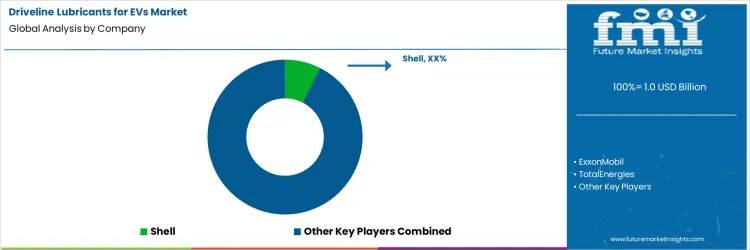
Competition in the Driveline Lubricants for EVs Market is shaped by how fluids interact with electric motors, gears, and power electronics rather than traditional engine protection needs. Shell, ExxonMobil, TotalEnergies, BP through Castrol, and Chevron influence this space through dedicated e fluid development programs aligned with global OEM platforms. These companies work closely with vehicle manufacturers during drivetrain design to ensure compatibility with copper windings, insulation materials, and thermal management systems. Product selection depends on electrical conductivity control, oxidation stability, and long term fluid behavior under continuous load. Adoption is driven by OEM approvals and platform specific validation, making early design stage collaboration a decisive competitive factor.
Regional oil companies and specialist lubricant producers add structural depth to the market. FUCHS and Valvoline support EV driveline applications through niche formulations adapted to specific transmission architectures and regional OEM requirements. Idemitsu Kosan holds a strong position in Japan through close alignment with domestic automakers and early EV drivetrain programs. PetroChina and Sinopec participate through fluids developed for Chinese EV platforms, where localized standards and rapid model turnover influence formulation priorities. Competitive positioning reflects testing capability, co-development depth, and manufacturing consistency rather than brand visibility. Market entry remains constrained by long qualification cycles, proprietary OEM specifications, and the need for sustained performance validation under real driving conditions.
Key Players in the Driveline Lubricants for EVs Market
- Shell
- ExxonMobil
- TotalEnergies
- BP (Castrol)
- Chevron
- FUCHS
- Valvoline
- PetroChina
- Sinopec
- Idemitsu Kosan
Scope of the Report
| Items | Values |
|---|---|
| Quantitative Units (2026) | USD million |
| Product Type | E-Axle Gear Oils; E-Transmission Fluids; Integrated E-Thermal Fluids; Other Driveline Fluids |
| Base Oil | PAO; Group III; Esters; Glycols / Other |
| Vehicle Class | Passenger BEVs; Passenger PHEVs; Light Commercial EVs; Heavy-Duty / Other EVs |
| Channel | OEM Factory Fill; Aftermarket; Fleet / Service Contracts; Dealer Service |
| Region | Asia Pacific; Europe; North America; Latin America; Middle East & Africa |
| Countries Covered | China; Japan; South Korea; India; Australia & New Zealand; ASEAN; Rest of Asia Pacific; Germany; United Kingdom; France; Italy; Spain; Nordic; BENELUX; Rest of Europe; United States; Canada; Mexico; Brazil; Chile; Rest of Latin America; Kingdom of Saudi Arabia; Other GCC Countries; Turkey; South Africa; Other African Union; Rest of Middle East & Africa |
| Key Companies Profiled | Shell; ExxonMobil; TotalEnergies; BP (Castrol); Chevron; FUCHS; Valvoline; PetroChina; Sinopec; Idemitsu Kosan |
| Additional Attributes | Dollar by sales across product type, base oil, and vehicle class; E-axle gear oils lead demand due to high torque and rotational speed requirements; PAO base oils dominate for thermal stability, low volatility, and viscosity consistency; Product selection depends on EV drivetrain layout, efficiency targets, and electrical compatibility; Vehicle class segmentation reflects passenger, light commercial, and heavy-duty EVs with different performance requirements; OEM factory fill and fleet channels drive early adoption, while aftermarket expands as service networks mature; Demand formation shaped by EV production growth, OEM qualification cycles, drivetrain validation, and recurring maintenance; Adoption influenced by thermal management, noise reduction, and component longevity rather than traditional engine protection. |
Driveline Lubricants for EVs Market Segmentation
Product Type:
- E-Axle Gear Oils
- E-Transmission Fluids
- Integrated E-Thermal Fluids
- Other Driveline Fluids
Base Oil:
- PAO
- Group III
- Esters
- Glycols / Other
Vehicle Class:
- Passenger BEVs
- Passenger PHEVs
- Light Commercial EVs
- Heavy-Duty / Other EVs
Channel:
- OEM Factory Fill
- Aftermarket
- Fleet / Service Contracts
- Dealer Service
Region
- Asia Pacific
- China
- Japan
- South Korea
- India
- Australia & New Zealand
- ASEAN
- Rest of Asia Pacific
- Europe
- Germany
- United Kingdom
- France
- Italy
- Spain
- Nordic
- BENELUX
- Rest of Europe
- North America
- United States
- Canada
- Mexico
- Latin America
- Brazil
- Chile
- Rest of Latin America
- Middle East & Africa
- Kingdom of Saudi Arabia
- Other GCC Countries
- Turkey
- South Africa
- Other African Union
- Rest of Middle East & Africa
Frequently Asked Questions
How big is the driveline lubricants for evs market in 2026?
The global driveline lubricants for evs market is estimated to be valued at USD 1.0 billion in 2026.
What will be the size of driveline lubricants for evs market in 2036?
The market size for the driveline lubricants for evs market is projected to reach USD 3.1 billion by 2036.
How much will be the driveline lubricants for evs market growth between 2026 and 2036?
The driveline lubricants for evs market is expected to grow at a 11.8% CAGR between 2026 and 2036.
What are the key product types in the driveline lubricants for evs market?
The key product types in driveline lubricants for evs market are e-axle gear oils, e-transmission fluids, integrated e-thermal fluids and other driveline fluids.
Which base oil segment to contribute significant share in the driveline lubricants for evs market in 2026?
In terms of base oil, pao segment to command 36.0% share in the driveline lubricants for evs market in 2026.
Preview the report firsthand - request a free sample
Get SampleGet the brochure for pricing and purchase details.
Get PDFTable of Content
- Executive Summary
- Global Market Outlook
- Demand-side Trends
- Supply-side Trends
- Technology Roadmap Analysis
- Analysis and Recommendations
- Market Overview
- Market Coverage / Taxonomy
- Market Definition / Scope / Limitations
- Market Background
- Market Dynamics
- Drivers
- Restraints
- Opportunity
- Trends
- Scenario Forecast
- Demand in Optimistic Scenario
- Demand in Likely Scenario
- Demand in Conservative Scenario
- Opportunity Map Analysis
- Product Life Cycle Analysis
- Supply Chain Analysis
- Investment Feasibility Matrix
- Value Chain Analysis
- PESTLE and Porter’s Analysis
- Regulatory Landscape
- Regional Parent Market Outlook
- Production and Consumption Statistics
- Import and Export Statistics
- Market Dynamics
- Global Market Analysis 2021 to 2025 and Forecast, 2026 to 2036
- Historical Market Size Value (USD Million) Analysis, 2021 to 2025
- Current and Future Market Size Value (USD Million) Projections, 2026 to 2036
- Y-o-Y Growth Trend Analysis
- Absolute $ Opportunity Analysis
- Global Market Pricing Analysis 2021 to 2025 and Forecast 2026 to 2036
- Global Market Analysis 2021 to 2025 and Forecast 2026 to 2036, By Product Type
- Introduction / Key Findings
- Historical Market Size Value (USD Million) Analysis By Product Type , 2021 to 2025
- Current and Future Market Size Value (USD Million) Analysis and Forecast By Product Type , 2026 to 2036
- E-Axle Gear Oils
- E-Transmission Fluids
- Integrated E-Thermal Fluids
- Other Driveline Fluids
- Y-o-Y Growth Trend Analysis By Product Type , 2021 to 2025
- Absolute $ Opportunity Analysis By Product Type , 2026 to 2036
- Global Market Analysis 2021 to 2025 and Forecast 2026 to 2036, By Base Oil
- Introduction / Key Findings
- Historical Market Size Value (USD Million) Analysis By Base Oil, 2021 to 2025
- Current and Future Market Size Value (USD Million) Analysis and Forecast By Base Oil, 2026 to 2036
- PAO
- Group III
- Esters
- Glycols / Other
- Y-o-Y Growth Trend Analysis By Base Oil, 2021 to 2025
- Absolute $ Opportunity Analysis By Base Oil, 2026 to 2036
- Global Market Analysis 2021 to 2025 and Forecast 2026 to 2036, By Vehicle Class
- Introduction / Key Findings
- Historical Market Size Value (USD Million) Analysis By Vehicle Class, 2021 to 2025
- Current and Future Market Size Value (USD Million) Analysis and Forecast By Vehicle Class, 2026 to 2036
- Passenger BEVs
- Passenger PHEVs
- Light Commercial EVs
- Heavy-Duty / Other EVs
- Y-o-Y Growth Trend Analysis By Vehicle Class, 2021 to 2025
- Absolute $ Opportunity Analysis By Vehicle Class, 2026 to 2036
- Global Market Analysis 2021 to 2025 and Forecast 2026 to 2036, By Channel
- Introduction / Key Findings
- Historical Market Size Value (USD Million) Analysis By Channel, 2021 to 2025
- Current and Future Market Size Value (USD Million) Analysis and Forecast By Channel, 2026 to 2036
- OEM Factory Fill
- Aftermarket
- Fleet / Service Contracts
- Dealer Service
- Y-o-Y Growth Trend Analysis By Channel, 2021 to 2025
- Absolute $ Opportunity Analysis By Channel, 2026 to 2036
- Global Market Analysis 2021 to 2025 and Forecast 2026 to 2036, By Region
- Introduction
- Historical Market Size Value (USD Million) Analysis By Region, 2021 to 2025
- Current Market Size Value (USD Million) Analysis and Forecast By Region, 2026 to 2036
- North America
- Latin America
- Western Europe
- Eastern Europe
- East Asia
- South Asia and Pacific
- Middle East & Africa
- Market Attractiveness Analysis By Region
- North America Market Analysis 2021 to 2025 and Forecast 2026 to 2036, By Country
- Historical Market Size Value (USD Million) Trend Analysis By Market Taxonomy, 2021 to 2025
- Market Size Value (USD Million) Forecast By Market Taxonomy, 2026 to 2036
- By Country
- USA
- Canada
- Mexico
- By Product Type
- By Base Oil
- By Vehicle Class
- By Channel
- By Country
- Market Attractiveness Analysis
- By Country
- By Product Type
- By Base Oil
- By Vehicle Class
- By Channel
- Key Takeaways
- Latin America Market Analysis 2021 to 2025 and Forecast 2026 to 2036, By Country
- Historical Market Size Value (USD Million) Trend Analysis By Market Taxonomy, 2021 to 2025
- Market Size Value (USD Million) Forecast By Market Taxonomy, 2026 to 2036
- By Country
- Brazil
- Chile
- Rest of Latin America
- By Product Type
- By Base Oil
- By Vehicle Class
- By Channel
- By Country
- Market Attractiveness Analysis
- By Country
- By Product Type
- By Base Oil
- By Vehicle Class
- By Channel
- Key Takeaways
- Western Europe Market Analysis 2021 to 2025 and Forecast 2026 to 2036, By Country
- Historical Market Size Value (USD Million) Trend Analysis By Market Taxonomy, 2021 to 2025
- Market Size Value (USD Million) Forecast By Market Taxonomy, 2026 to 2036
- By Country
- Germany
- UK
- Italy
- Spain
- France
- Nordic
- BENELUX
- Rest of Western Europe
- By Product Type
- By Base Oil
- By Vehicle Class
- By Channel
- By Country
- Market Attractiveness Analysis
- By Country
- By Product Type
- By Base Oil
- By Vehicle Class
- By Channel
- Key Takeaways
- Eastern Europe Market Analysis 2021 to 2025 and Forecast 2026 to 2036, By Country
- Historical Market Size Value (USD Million) Trend Analysis By Market Taxonomy, 2021 to 2025
- Market Size Value (USD Million) Forecast By Market Taxonomy, 2026 to 2036
- By Country
- Russia
- Poland
- Hungary
- Balkan & Baltic
- Rest of Eastern Europe
- By Product Type
- By Base Oil
- By Vehicle Class
- By Channel
- By Country
- Market Attractiveness Analysis
- By Country
- By Product Type
- By Base Oil
- By Vehicle Class
- By Channel
- Key Takeaways
- East Asia Market Analysis 2021 to 2025 and Forecast 2026 to 2036, By Country
- Historical Market Size Value (USD Million) Trend Analysis By Market Taxonomy, 2021 to 2025
- Market Size Value (USD Million) Forecast By Market Taxonomy, 2026 to 2036
- By Country
- China
- Japan
- South Korea
- By Product Type
- By Base Oil
- By Vehicle Class
- By Channel
- By Country
- Market Attractiveness Analysis
- By Country
- By Product Type
- By Base Oil
- By Vehicle Class
- By Channel
- Key Takeaways
- South Asia and Pacific Market Analysis 2021 to 2025 and Forecast 2026 to 2036, By Country
- Historical Market Size Value (USD Million) Trend Analysis By Market Taxonomy, 2021 to 2025
- Market Size Value (USD Million) Forecast By Market Taxonomy, 2026 to 2036
- By Country
- India
- ASEAN
- Australia & New Zealand
- Rest of South Asia and Pacific
- By Product Type
- By Base Oil
- By Vehicle Class
- By Channel
- By Country
- Market Attractiveness Analysis
- By Country
- By Product Type
- By Base Oil
- By Vehicle Class
- By Channel
- Key Takeaways
- Middle East & Africa Market Analysis 2021 to 2025 and Forecast 2026 to 2036, By Country
- Historical Market Size Value (USD Million) Trend Analysis By Market Taxonomy, 2021 to 2025
- Market Size Value (USD Million) Forecast By Market Taxonomy, 2026 to 2036
- By Country
- Kingdom of Saudi Arabia
- Other GCC Countries
- Turkiye
- South Africa
- Other African Union
- Rest of Middle East & Africa
- By Product Type
- By Base Oil
- By Vehicle Class
- By Channel
- By Country
- Market Attractiveness Analysis
- By Country
- By Product Type
- By Base Oil
- By Vehicle Class
- By Channel
- Key Takeaways
- Key Countries Market Analysis
- USA
- Pricing Analysis
- Market Share Analysis, 2025
- By Product Type
- By Base Oil
- By Vehicle Class
- By Channel
- Canada
- Pricing Analysis
- Market Share Analysis, 2025
- By Product Type
- By Base Oil
- By Vehicle Class
- By Channel
- Mexico
- Pricing Analysis
- Market Share Analysis, 2025
- By Product Type
- By Base Oil
- By Vehicle Class
- By Channel
- Brazil
- Pricing Analysis
- Market Share Analysis, 2025
- By Product Type
- By Base Oil
- By Vehicle Class
- By Channel
- Chile
- Pricing Analysis
- Market Share Analysis, 2025
- By Product Type
- By Base Oil
- By Vehicle Class
- By Channel
- Germany
- Pricing Analysis
- Market Share Analysis, 2025
- By Product Type
- By Base Oil
- By Vehicle Class
- By Channel
- UK
- Pricing Analysis
- Market Share Analysis, 2025
- By Product Type
- By Base Oil
- By Vehicle Class
- By Channel
- Italy
- Pricing Analysis
- Market Share Analysis, 2025
- By Product Type
- By Base Oil
- By Vehicle Class
- By Channel
- Spain
- Pricing Analysis
- Market Share Analysis, 2025
- By Product Type
- By Base Oil
- By Vehicle Class
- By Channel
- France
- Pricing Analysis
- Market Share Analysis, 2025
- By Product Type
- By Base Oil
- By Vehicle Class
- By Channel
- India
- Pricing Analysis
- Market Share Analysis, 2025
- By Product Type
- By Base Oil
- By Vehicle Class
- By Channel
- ASEAN
- Pricing Analysis
- Market Share Analysis, 2025
- By Product Type
- By Base Oil
- By Vehicle Class
- By Channel
- Australia & New Zealand
- Pricing Analysis
- Market Share Analysis, 2025
- By Product Type
- By Base Oil
- By Vehicle Class
- By Channel
- China
- Pricing Analysis
- Market Share Analysis, 2025
- By Product Type
- By Base Oil
- By Vehicle Class
- By Channel
- Japan
- Pricing Analysis
- Market Share Analysis, 2025
- By Product Type
- By Base Oil
- By Vehicle Class
- By Channel
- South Korea
- Pricing Analysis
- Market Share Analysis, 2025
- By Product Type
- By Base Oil
- By Vehicle Class
- By Channel
- Russia
- Pricing Analysis
- Market Share Analysis, 2025
- By Product Type
- By Base Oil
- By Vehicle Class
- By Channel
- Poland
- Pricing Analysis
- Market Share Analysis, 2025
- By Product Type
- By Base Oil
- By Vehicle Class
- By Channel
- Hungary
- Pricing Analysis
- Market Share Analysis, 2025
- By Product Type
- By Base Oil
- By Vehicle Class
- By Channel
- Kingdom of Saudi Arabia
- Pricing Analysis
- Market Share Analysis, 2025
- By Product Type
- By Base Oil
- By Vehicle Class
- By Channel
- Turkiye
- Pricing Analysis
- Market Share Analysis, 2025
- By Product Type
- By Base Oil
- By Vehicle Class
- By Channel
- South Africa
- Pricing Analysis
- Market Share Analysis, 2025
- By Product Type
- By Base Oil
- By Vehicle Class
- By Channel
- USA
- Market Structure Analysis
- Competition Dashboard
- Competition Benchmarking
- Market Share Analysis of Top Players
- By Regional
- By Product Type
- By Base Oil
- By Vehicle Class
- By Channel
- Competition Analysis
- Competition Deep Dive
- Shell
- Overview
- Product Portfolio
- Profitability by Market Segments (Product/Age /Sales Channel/Region)
- Sales Footprint
- Strategy Overview
- Marketing Strategy
- Product Strategy
- Channel Strategy
- ExxonMobil
- TotalEnergies
- BP (Castrol)
- Chevron
- FUCHS
- Valvoline
- PetroChina
- Sinopec
- Idemitsu Kosan
- Shell
- Competition Deep Dive
- Assumptions & Acronyms Used
- Research Methodology


