

- Industry Size (2025)
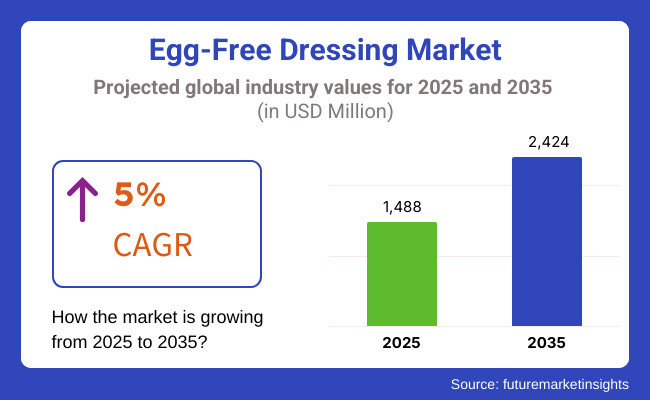
- USD 1488 Mn
- Forecast (2035)
- USD 2424 Mn
- CAGR (2025 to 2035)
- 5%
Egg-Free Dressing Market Outlook 2025 to 2035
The worldwide egg-free dressing economy is predicted to grow considerably as a consequence of the growing want for plant-based and allergenic meals as effectively as a rise in the adoption of vegan diets, and growing client cognition of health-conscious eating. With consumers increasingly opting for cholesterol-free, dairy-free, and egg-free products, egg-free mayonnaise and salad dressings are also trending.
The clean-label and plant-based food movements are with us now and food manufacturers are finding inventive formulations that use ingredients like aquafaba, soy protein, and pea starch to achieve the texture, foaming ability and emulsification of traditional egg-based dressings. In addition, growth of retail and foodservice channels and consumers' inclination towards sustainable and ethical food choices are some other factors further accelerating the market demand.
The market is projected to register a CAGR of 5% between 2025 and 2035 owing to food technological advancements, rising flexitarian & vegan lifestyles, as well as growing accessibility of egg-free dressings across regular grocery stores & restaurants.
Regional Market Trends
North America
The egg-free dressing market in North America is the most lucrative and will be further determined by the high demand for plant-based products and the increasing availability of such products, particularly in retail chains and foodservice outlets. The USA (United States) is still a predominant market, where renowned food brands are diversifying their portfolio to meet with the demand of changing dietary trends for plant-based and egg-free variants.
Europe
Europe has a consistent market growth driven by the increasing uptake of plant-based diets and stringent laws governing the labeling, quality and sustainability of food. On the domestic front, there is a growing consumer appetite for vegan-friendly condiments in Germany, the UK and France, as health-conscious consumers desire cholesterol-free and dairy-free options.
Asia-Pacific
They anticipate that the Asia-Pacific area will be the fastest-growing market driven by rapid urbanization, changing dietary habits, and an increase in awareness about food allergies. Emerging economies like China, India, and Japan are observing increasing demand for eggless dressings in both at-home cuisine and the foodservice sector. Additionally, the presence of international plant-based brands in the region is further driving the growth of market.
Challenges and Opportunities
Challenges
Taste and Texture Replication, Consumer Skepticism, and Regulatory Compliance
Egg-less dressings have the daunting task of recreating the creamy texture, emulsification and taste of traditional egg-based dressings, a problem that continues to vex food formulators. This lack of mouthfeel can have a detrimental effect on consumer acceptance of many plant-based and synthetic emulsifiers. Some consumers are also wary of the taste and ingredients of egg-free products, which is why they face slower adoption. Market expansion is further complicated by regulatory barriers, such as clean-label preferences, allergen disclosures, and plant-based certification standards.
Opportunities
Increase of plant-based and allergence-free diets, sustainability issues, and clean-label innovations
The eggless dressing market is expanding with an increasing number of consumers opting for plant-based, vegan and allergen-friendly diets. There is growing demand for alternative formulations, driven both by sustainability concerns around egg production including carbon emissions and ethical sourcing. New ingredients for plant-based emulsifiers like aquafaba, pea protein and modified starches are enhancing texture and stability. The increasing demand for clean-label and organic food products is also inspiring manufacturers to create more natural, preservative-free egg-free dressings.
Market Shifts: A Comparative Analysis 2020 to 2024 vs. 2025 to 2035
| Market Shift | 2020 to 2024 Trends |
|---|---|
| Regulatory Landscape | Focus on plant-based food labeling and allergen declarations. |
| Consumer Trends | Growing demand for vegan condiments and allergen-free food options. |
| Industry Adoption | Early adoption in vegan-friendly restaurants and specialty grocery stores. |
| Supply Chain and Sourcing | Dependence on soy-based and synthetic emulsifiers. |
| Market Competition | Dominated by plant-based food brands and specialty dressing manufacturers. |
| Market Growth Drivers | Rising interest in veganism, allergen-free diets, and sustainability concerns. |
| Sustainability and Environmental Impact | Moderate focus on reducing carbon footprint and ethical sourcing. |
| Integration of Smart Technologies | AI-assisted formulation of plant-based emulsifiers. |
| Advancements in Egg-Free Dressing Technology | Development of soy-based and modified starch dressings. |
| Market Shift | 2025 to 2035 Projections |
|---|---|
| Regulatory Landscape | Stricter regulations for sustainable sourcing, transparency in emulsifier use, and clean-label compliance. |
| Consumer Trends | Expansion in functional dressings with health benefits, personalized nutrition, and eco-friendly packaging. |
| Industry Adoption | Widespread use in mainstream foodservice, retail expansion, and hybrid plant-based dressing formulations. |
| Supply Chain and Sourcing | Shift toward natural emulsifiers such as aquafaba, pea protein, and sunflower lecithin. |
| Market Competition | Entry of mainstream condiment producers, AI-driven formulation companies, and sustainability-focused startups. |
| Market Growth Drivers | Accelerated by clean-label movement, demand for organic ingredients, and advances in alternative protein emulsification. |
| Sustainability and Environmental Impact | Large-scale adoption of carbon-neutral ingredients, regenerative agriculture sourcing, and waste-free manufacturing. |
| Integration of Smart Technologies | Expansion into blockchain-based ingredient sourcing, AI-driven sensory analysis, and automated quality control. |
| Advancements in Egg-Free Dressing Technology | Evolution toward bioengineered plant emulsifiers, precision fermentation-based dressings, and AI-optimized ingredient combinations. |
Country-Wise Outlook
United States
The USA egg-free dressing market is growing owing to the rising demand for plant-based condiments, allergen-free food products, and clean-label ingredients. Huge food producers are placing bets on plant-based formulations to cater for changing consumer demand.
| Country | CAGR (2025 to 2035) |
|---|---|
| USA | 5.2% |
United Kingdom
We are witnessing strong growth in the UK market, fueled by the growing prevalence of plant-based diets, supportive regulation of sustainable food labeling and increasing consumer demand for allergen-free alternatives.
| Country | CAGR (2025 to 2035) |
|---|---|
| UK | 4.9% |
European Union
The European egg-free dressing market is being driven by stringent sustainability regulations, growth in flexitarian diets, and increasing demand for organic and non-GMO food products. New product formulations are being driven by the EU’s clean-label initiatives.
| Country | CAGR (2025 to 2035) |
|---|---|
| EU | 5.0% |
Japan
Egg-free dressings are a burgeoning market in Japan as demand for low-allergen foods surges, new innovations in functional dressings flood the market and health-oriented consumers take greater interest in plant-based alternatives.
| Country | CAGR (2025 to 2035) |
|---|---|
| Japan | 5.0% |
South Korea
The emergence of South Korea as one of the key markets for egg-free dressings can be attributed to factors such as technological advancements in plant-based food, government initiatives to encourage sustainable eating and increased consumer awareness of allergen-free and vegan-friendly condiments.
| Country | CAGR (2025 to 2035) |
|---|---|
| South Korea | 5.1% |
Segmentation Outlook – Egg-Free Dressing Market
Ranch Dressing and Vinaigrettes Drive Market Growth as Consumers Seek Healthier and Allergen-Free Alternatives
Segments like ranch dressing and vinaigrettes account for the bulk of the egg-free dressing market as food manufacturers innovate to meet rising consumer demand for allergen-free, plant-based and clean-label condiments. Now, this is a huge segment and front, as it grows product portfolios of vegan, health-specific, and dietary-restricted consumers, allowing for mass adoption in food service and the home.
Ranch Dressing Leads Market Demand as Consumers Shift Toward Plant-Based Alternatives
Ranch dressing is one of the most popular condiments in the world, leading food manufacturers to create eggless versions suitable for health-conscious and vegan eaters. Unlike traditional ranch dressings, which require egg-based emulsifiers, egg-free alternatives depend on plant-based stabilizers like pea protein, potato starch and aquafaba to retain creaminess and consistency.
The growth of the market is attributable to the increasing consumption of allergen-free and vegan ranch dressings prepared using plant-based oils and natural stabilizers. According to Data from heavyweight global foods giant, the 2023 AHAR report revealed that over 65% of consumers who are looking for plant-based condiments are keen on egg-free ranch dressing because of its creamy texture and all-purpose use.
Market growth has been bolstered by the availability of clean-label ranch dressings that include formulations labeled non-GMO, organic and reduced calorie, ensuring greater appeal with health-conscious consumers.
Plus the incorporation of functional ingredients like probiotics, oils rich in omega-3s and superfood-infused mixes have driven uptake further because that means differentiation in the crowded egg-free dressing space.
Shelf-stable formulations are anticipated to drive the market growth even higher, with innovations in emulsification technologies and the ability to deliver freshness without the use of synthetic preservatives leading to better stability products and an extended retail shelf life.
Although quail egg-free ranch dressing offers several benefits over traditional dressings, such as its simpler allergen-free formulation, healthier choice ingredient profiles or sustainability, challenges remain, including (in some consumers) taste perception drafts, sourcing difficulties for egg alternatives, and competition from dairy-based dressings.
But advances in precision fermentation, AI-powered texture enhancement and plant-based emulsification are increasing consumer acceptance and promising further growth in the egg-free ranch dressing market.
Consumers Seek Lighter, More Versatile Dressing Choices, Setting the Stage for Vinaigrettes to Expand
As a result of this shift, vinaigrettes became widely embraced in the marketplace, especially by health-conscious consumers, and food manufacturers set out to provide lighter, oil-based options that did not include eggs, but still delivered on taste and performance. Instead of using emulsifying egg yolks like conventional vinaigrettes, the eggless kind relies on natural stabilizers like mustard, citrus fiber, and plant-based gums to keep things thick and suspended.
Market adoption has been fueled by the increasing popularity of healthy plant based, and Mediterranean inspired dressings using cold-pressed oils, infused herbs and natural acidifiers. Data shows that the majority at over 55% of all consumers lean towards vinaigrettes because of their health benefits and because they can be used in a wide variety of salads, marinades or cooking applications.
Market growth for gourmet and functional vinaigrettes has been fueled by the drive for superfood-infused blends, fermented flavors and immune-booster ingredients, ensuring premium positioning and point-of-differentiation in the marketplace.
Adoption has accelerated due to AI-based formulation that automates ingredient optimization to ensure texture stability in addition to balanced flavor profiles within egg-free vinaigrette variants for improved consistency.
While the vinaigrette segment has benefits, such as health perception, clean-label formulation, and versatility, it also has obstacles, including ingredient separation over time, lack of creaminess relative to traditional dressings, and fluctuations in consumer taste preferences. Natural emulsification, enzyme enhancement stability, AI-driven sensory analysis are all innovations that will help performers so you can expect continued market expansion for egg-free vinaigrettes.
Food Service and Household Applications Drive Market Growth as Egg-Free Dressings Gain Widespread Adoption
The food service and household application segments are key growth drivers in the market as egg-free dressings continue to gain popularity in restaurants, quick-service chains, as well as home kitchens.
Demand for allergen-free, sustainable dressings leads food service adoption of sustainable dressings over restaurant and QSR.
Egg-free dressings is finding huge adoption in food service segment and is emerging as the largest consumer among all consumers including restaurants, QSRs (Quick Service Restaurants) and catering services are increasingly offering allergen-friendly and vegan-friendly menu options. Egg-free formulations are an inclusive option for a variety of consumers, unlike traditional dressings that might use eggs.
With consumers moving towards flexitarian and vegan diets, menu options made with egg-free ranch dressings, vinaigrettes, and specialty sauces are witnessing a steep rise in demand, propelling the market adoption across food establishments. Research shows egg-free dressings utilized by more than 60% of fast-casual and health-conscious restaurant chains in order to increase menu inclusivity.
A broadening of food service operations with sustainability metrics in mind, including biodegradable packaging, ethically sourced plant-based ingredients, and carbon-neutral dressing production, has buoyed market growth (and ensured better alignment with eco-conscious consumer penchant).
Additionally, AI-powered inventory management with automated demand forecasting along with the use of integrated supply chain optimization technology for egg-free dressing sourcing has driven adoption, so ensuring consistency in food service applications and cost effectiveness.
The food service segment, while benefitting from increased allergen-free compliance, dietary inclusivity, and sustainability, does face hurdles associated with price sensitivity around bulk purchases, and the constraint of perishability with fresh ingredients, and ensuring the same taste profiles across its outlets. That said, improvements in extended-shelf-life processing, AI-fueled flavor standardization, and improved supply chain logistics are enhancing scalability, which keeps food service egg-free dressing growth very much alive.
Households Continue to Adopt New Konjac-Based Products, as Consumers Seek Healthier, Clean-Label Options
Egg-free dressings are seeing strong adoption among household consumers, as health-conscious individuals are looking for cleaner label condiments, screen potential allergens and avoid artificial additives. Eggless formulations provide flexibility for flexitarian, vegan, and lactose-intolerant consumers without sacrificing flavor or texture compared to conventional dressings.
The growing demand for homemade, plant-based meals that include eggless dressings for salads, marinades, and dips has propelled market adoption. According to studies, more than half of health-focused shoppers intentionally look for plant-based and egg-free dressing options for their grocery purchases.
Growing ego-free dressings, including small-age production of premium and artisanal products, organic and specialty flavors infusions, have driven market growth, allowing more alternative consumers to access these products.
The adoption particularly gained momentum due to the interlinked digital retail developments such as AI-powered personalized recommendations, subscription-based dressing delivery services, and e-commerce expansion, which provide consumers at home with easier access to clothing and accessories.
While plant-based nutrition and transparency preference work as a positive health claim for the household segment, the competition with conventional mayonnaise-based dressings, ingredient cost fluctuations, and varied home-made food applications become main limitations for this growing segment. Nonetheless, innovations in natural preservation techniques, AI-driven recipe customization, and sustainable packaging solutions will enhance product shelf life and ease of use, driving ongoing expansion in the household egg-free dressing market.
Competitive Outlook
Market drivers for egg-free dressing include increased demand for plant-based and allergen-sensitive condiments, growth of vegan and flexitarian consumer habits, and improved food formulations for better texture and taste. Key innovators in the space are focused on AI-driven ingredient optimization, clean-label formulations, and sustainable plant-based emulsifiers. Top players encompass plant-based food producers, condiment manufacturers, and ingredient suppliers reshaping dairy- and egg-free dressing substitutes.
Market Share Analysis by Key Players & Egg-Free Dressing Manufacturers
| Company Name | Estimated Market Share (%) |
|---|---|
| Unilever (Hellmann’s Vegan) | 18-22% |
| Follow Your Heart (Earth Island) | 14-18% |
| Just Mayo (Eat Just, Inc.) | 12-16% |
| Kraft Heinz Company | 8-12% |
| Dr. Oetker | 6-10% |
| Other Egg-Free Dressing Brands (combined) | 30-40% |
Key Company & Egg-Free Dressing Solutions
| Company Name | Key Offerings/Activities |
|---|---|
| Unilever (Hellmann’s Vegan) | Develops plant-based, AI-optimized egg-free mayonnaise with clean-label emulsifiers for taste and texture enhancement. |
| Follow Your Heart (Earth Island) | Specializes in organic, soy-based, and allergen-free eggless dressings with AI-powered formulation improvements. |
| Just Mayo (Eat Just, Inc.) | Provides AI-driven plant-based mayo alternatives using pea protein emulsification for superior creaminess. |
| Kraft Heinz Company | Focuses on hybrid plant-based dressings, leveraging AI-enhanced ingredient structuring for mainstream consumer adoption. |
| Dr. Oetker | Offers functional, egg-free dressing formulations with AI-optimized thickening agents for clean-label applications. |
Key Market Insights
Unilever (Hellmann’s Vegan) (18-22%)
Unilever leads the egg-free dressing market with its AI-optimized plant-based mayonnaise, focusing on taste, stability, and clean-label formulations to meet growing demand.
Follow Your Heart (Earth Island) (14-18%)
Follow Your Heart specializes in organic and soy-based egg-free dressings, leveraging AI-driven ingredient optimization to enhance texture and stability.
Just Mayo (Eat Just, Inc.) (12-16%)
Just Mayo utilizes pea protein emulsification and AI-powered formulation to create plant-based mayo alternatives that replicate traditional egg-based mayonnaise.
Kraft Heinz Company (8-12%)
Kraft Heinz integrates AI-driven food engineering techniques to develop hybrid plant-based dressings, catering to flexitarian consumers.
Dr. Oetker (6-10%)
Dr. Oetker focuses on functional, egg-free dressing formulations, using AI-optimized thickening agents to maintain creaminess and stability in plant-based products.
Other Key Players (30-40% Combined)
Several plant-based condiment brands, ingredient suppliers, and food innovators contribute to next-generation egg-free dressing advancements, AI-driven texture optimization, and sustainable emulsifier alternatives. Key contributors include:
- Sir Kensington’s (Unilever) (Premium plant-based mayo with clean-label ingredients)
- Primal Kitchen (Avocado oil-based egg-free dressings with functional ingredient optimization)
- Good Karma Foods (Flaxseed-based dairy- and egg-free dressing solutions)
- Hampton Creek (Eat Just, Inc.) (AI-enhanced emulsification techniques for superior plant-based mayonnaise)
- Tessemae’s All Natural (Organic and AI-powered plant-based dressings for clean eating)
Key Segmentation
By Type:
- Ranch Dressing
- Vinaigrettes
- Caesar Dressing
- Blue Cheese Dressing
- Thousand Island Dressing
By Application:
- Food Service
- Household
- Industrial
By Packaging:
- Bulk
- Jars
- Tubs
- Retail
- Bottles
- Stand-up Pouches
- Tins/Cans
By Distribution Channel:
- B2B
- B2C
- Store-based Retailing
- Hypermarkets/Supermarkets
- Convenience Stores
- Mass Grocery Retailers
- Online Retailing
- Store-based Retailing
By Region:
- North America
- Latin America
- Western Europe
- Eastern Europe
- East Asia
- South Asia Pacific
- Middle East and Africa
Frequently Asked Questions
What was the overall size of the egg-free dressing market in 2025?
The overall market size for the egg-free dressing market was USD 1,488 Million in 2025.
How big is the egg-free dressing market expected to be in 2035?
The egg-free dressing market is expected to reach USD 2,424 Million in 2035.
What will drive the demand for the egg-free dressing market during the forecast period?
The demand for egg-free dressings is expected to rise due to the increasing adoption of plant-based and vegan diets, rising demand for allergen-free and clean-label food products, and innovations in plant-based emulsifiers. Additionally, the growing popularity of sustainable and health-conscious food choices is expected to further drive market growth.
List the top 5 countries contributing to the egg-free dressing market.
The top 5 countries driving the development of the egg-free dressing market are the USA, Canada, Germany, UK, and Australia.
Which segment in the type is expected to lead in the egg-free dressing market?
Ranch Dressing and Vinaigrettes are expected to command a significant share over the assessment period, driven by their widespread use in salads, sandwiches, and dips, along with the growing demand for flavorful and health-conscious condiment alternatives.
Preview the report firsthand - request a free sample
Get SampleGet the brochure for pricing and purchase details.
Get PDFTable of Content
- Executive Summary
- Industry Introduction, including Taxonomy and Market Definition
- Market Trends and Success Factors, including Macro-economic Factors, Market Dynamics, and Recent Industry Developments
- Global Market Demand Analysis 2020 to 2024 and Forecast 2025 to 2035, including Historical Analysis and Future Projections
- Pricing Analysis
- Global Market Analysis 2020 to 2024 and Forecast 2025 to 2035
- Type
- Application
- Packaging
- Distribution channel
- Global Market Analysis 2020 to 2024 and Forecast 2025 to 2035, By Type
- Ranch Dressing
- Vinaigrettes
- Caesar Dressing
- Blue Cheese Dressing
- Thousand Island Dressing
- Global Market Analysis 2020 to 2024 and Forecast 2025 to 2035, By Application
- Food Service
- Household
- Industrial
- Global Market Analysis 2020 to 2024 and Forecast 2025 to 2035, By Packaging
- Bulk
- Jars
- Tubs
- Retail
- Bottles
- Stand-up Pouches
- Tins/Cans
- Bulk
- Global Market Analysis 2020 to 2024 and Forecast 2025 to 2035, By Distribution channel
- B2B
- B2C
- Store-based Retailing
- Hypermarkets/Supermarkets
- Convenience Stores
- Mass Grocery Retailers
- Online Retailing
- Store-based Retailing
- Global Market Analysis 2020 to 2024 and Forecast 2025 to 2035, By Region
- North America
- Latin America
- Western Europe
- Eastern Europe
- East Asia
- South Asia Pacific
- Middle East and Africa
- North America Sales Analysis 2020 to 2024 and Forecast 2025 to 2035, by Key Segments and Countries
- Latin America Sales Analysis 2020 to 2024 and Forecast 2025 to 2035, by Key Segments and Countries
- Western Europe Sales Analysis 2020 to 2024 and Forecast 2025 to 2035, by Key Segments and Countries
- Eastern Europe Sales Analysis 2020 to 2024 and Forecast 2025 to 2035, by Key Segments and Countries
- East Asia Sales Analysis 2020 to 2024 and Forecast 2025 to 2035, by Key Segments and Countries
- South Asia Pacific Sales Analysis 2020 to 2024 and Forecast 2025 to 2035, by Key Segments and Countries
- Middle East and Africa Sales Analysis 2020 to 2024 and Forecast 2025 to 2035, by Key Segments and Countries
- Sales Forecast 2025 to 2035 by Type, Application, Packaging, and Distribution channel for 30 Countries
- Competition Outlook, including Market Structure Analysis, Company Share Analysis by Key Players, and Competition Dashboard
- Company Profile
- Dr. Oetker
- Kraft Heinz
- McCormick
- Unilever
- American Garden
- Annie's Homegrown
- Cibona
- Duke’s
- Hidden Valley
- Ken's Foods


