

- Market Size (2026)
- USD 18.4 Bn
- Forecast (2036)
- USD 36.9 Bn
- CAGR (2026 to 2036)
- 7.2%
How big is Healthcare Creditor Insurance Market in 2026?
USD 18.4 billion in 2026 and USD 36.9 billion by 2036 at a 7.2% CAGR.
Demand for healthcare creditor insurance is projected to expand at 7.2% CAGR between 2026 and 2036, increasing valuation from USD 18.4 billion in 2026 to USD 36.9 billion by 2036. Loan-linked distribution supports growth by placing optional coverage beside a defined repayment obligation through bank and digital lending journeys. Embedded finance channels can show premium cost and benefit limits inside the application without combining insurance consent with credit approval. Insurtech platforms can also carry eligibility details and claim documents across each lender partnership through one consistent service route. The National Association of Insurance Commissioners identifies credit life and credit disability insurance as optional products tied to a specific debt. This boundary links revenue to covered repayments and accepted claims rather than household protection or unrelated health benefits.
Repayment protection becomes relevant if an income shock threatens scheduled installments across an active consumer loan account. Securian Financial reported in June 2026 that 50% of borrowers with active loans could sustain payments for three months or less following income loss. The same study found that 22% had purchased payment protection, although 77% considered these products useful financial security. The gap reflects uncertainty about cost and coverage rather than a lack of concern about repayment risk. Risk management teams should compare accepted claims with cancellations across each partner channel and loan type. Financial analytics can also track settlement timing and recurring document requests across active lender programs. Clear explanations therefore determine whether digital access produces useful coverage or simply raises attachment volume.
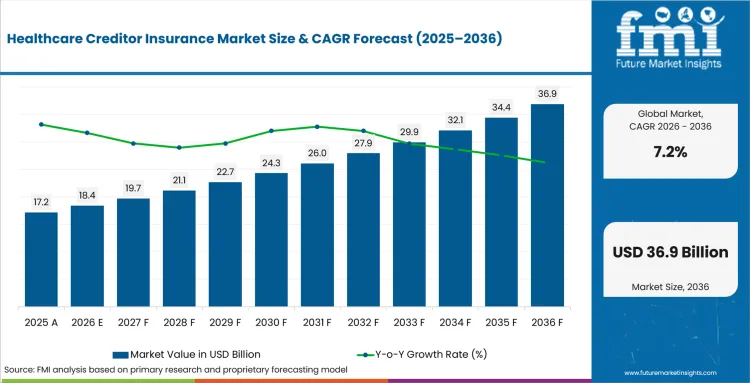
Key Takeaways of Healthcare Creditor Insurance Market
- Demand is projected to rise as banks and digital lenders place optional repayment protection beside defined consumer debts.
- Credit life insurance is estimated to account for 34.0% share in 2026 owing to direct settlement of outstanding balances following covered deaths.
- Personal loan protection is anticipated to represent 31.0% share in 2026 driven by disability and unemployment benefits aligned with unsecured repayment schedules.
- Individual consumers are forecast to capture 44.0% of end user demand in 2026 due to borrower-level enrollment and direct premium responsibility.
- Restrictive exclusions and weak consent records reduce customer value by increasing rejected claims and cancellations across lender-managed sales and service routes.
- Competition includes BNP Paribas Cardif and CNP Assurances alongside AXA Partners and TruStage across established lender partnerships. Assurant and Securian Financial add embedded capabilities as Manulife and Chubb Limited provide regional creditor coverage.
Analyst Perspective
“Healthcare creditor insurance earns trust through simple terms that connect each covered event with a specific loan payment or balance. A credible program also gives borrowers a clear refusal and cancellation route and requires lenders to track accepted claims instead of attachment volume. Growth is expected to favor insurers that combine fair eligibility with dependable settlement across digital and branch lending journeys.”
- Rahul Pandita, Principal Analyst, Future Market Insights
How is the Healthcare Creditor Insurance Market segmented?
The Healthcare Creditor Insurance industry is segmented by Product Type, Application, End User, Distribution Channel, Coverage Type, and Region.
The healthcare creditor insurance industry is segmented by product type, application, end user, distribution channel, coverage type, and region. Product type covers credit life, credit disability, critical illness cover, hospital cash, and comprehensive creditor insurance. Application compares personal loans, mortgages, healthcare financing, credit cards, auto finance, and other scheduled debts. End user analysis distinguishes individuals, lenders, employers, and healthcare providers by responsibility for coverage decisions. Distribution analysis compares insurer sales, banks, brokers, digital platforms, and employer programs by consent control. Coverage type separates death, disability, critical illness, hospitalization, and combined benefits by the insured event. Regional analysis compares underwriting access, consent rules, claims service, and lending practices across national systems. AI in fintech supports enrollment and document handling without replacing medical eligibility controls or voluntary consent.
Which buying mechanism supports credit life insurance in the product type category?
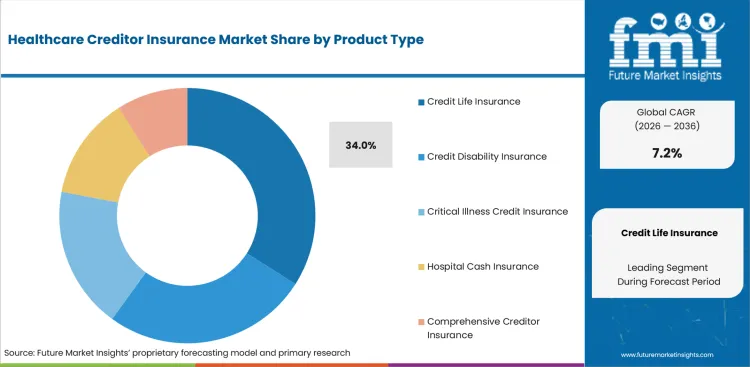
Credit life insurance settles or reduces the remaining loan balance following a covered borrower death. Embedded lending requires balance data and beneficiary instructions to remain synchronized throughout the repayment term. BNP Paribas Cardif announced in October 2025 that its expanded Cetelem borrower insurance included death protection inside a revolving-credit journey. The launch connects a changing credit balance with a defined benefit through one partner-managed process. Lender and insurer systems must exchange current balances so claim payments match the obligation at the insured event.
- In 2026, credit life insurance is expected to lead product type with 34.0% share because a covered death can reduce the outstanding debt through one settlement. The position benefits from simpler verification than recurring disability claims and remains credible if insured benefits decline with the balance and cancellation rights remain available.
- Mortgage lenders and consumer-finance companies use credit life insurance across loans with defined amortization schedules. Adoption weakens if level premiums continue as the covered balance declines through regular payments so insurers need declining-benefit pricing and annual summaries. Annual summaries should show the remaining debt beside cumulative premiums and available cancellation rights through the full repayment schedule.
What supports the position of personal loan protection within the application category?
Personal loan protection addresses installments that continue during disability or involuntary unemployment across unsecured borrowing. Digital origination places the coverage decision beside the repayment schedule and lets applicants compare premium cost with the benefit period. In May 2026, VIVA Finance partnered with Walnut and Securian Financial to offer optional protection inside its mobile loan journey. The program combines disability and involuntary unemployment benefits through one enrollment step within the application. Open banking data can support affordability checks but cannot replace transparent consent or benefit periods that match short loan terms.
- Personal loan protection is projected to hold 31.0% share in 2026 owing to recurring payment risk across unsecured loan schedules. The position reflects frequent borrower contact through banks and digital lenders rather than equal value for every applicant. Product teams should compare benefit duration with average loan terms so temporary coverage remains relevant throughout repayment.
- Digital lenders adopt personal loan protection to reduce missed installments during verified disability or involuntary unemployment. Claims administration requires employment records and medical documents that borrowers can obtain through familiar service channels. Adoption improves if waiting periods and exclusions are explained during enrollment and claim requirements remain accessible through the same lending interface.
Why do individual consumers lead the end user category?
Individual consumers decide whether the premium and benefit justify optional coverage on a specific debt. Medical history determines underwriting access to mortgage-linked protection for borrowers with prior diagnoses or recent treatment. CNP Assurances reported in June 2025 that its breast-cancer initiative had granted several hundred term creditor policies under standard conditions without added premiums or exclusions. The initiative widened insurance access for eligible borrowers across real estate and professional loans through policy terms. Commercial insurance comparisons provide limited guidance for this category due to different benefit purposes and customer decisions.
- Based on end user, individual consumers are projected to account for 44.0% share in 2026 due to borrower-level enrollment through lender channels. The position measures covered borrowers rather than the institutional influence of banks that arrange group programs. Digital records should preserve the exact coverage choice and premium disclosure presented during each enrollment journey.
- Borrowers consider repayment protection near large obligations such as mortgages or medical financing with fixed installment schedules. Clear premium totals and plain exclusions help customers judge whether the benefit remains useful through repayment. Adoption slows if loan approval appears tied to coverage acceptance or cancellation requires a separate manual process outside normal account service.
How does direct sales shape demand in the distribution channel category?
Direct sales gives insurers greater control over coverage explanations and consent under one accountable branch or digital process. Standard screens can present eligibility rules and cancellation rights consistently across branches and digital channels. The Financial Conduct Authority updated ICOBS 5.1 in July 2026 and requires reasonable steps to confirm eligibility for policy benefits. The rule integrates eligibility review into the sales journey and reduces later claim disputes over ineligible applicants. Gap insurance offers an adjacent distribution comparison but creditor coverage adds medical eligibility and repayment-benefit disclosure.
- Direct sales is set to lead the distribution channel category with 35.0% share in 2026 due to stronger control over consent and servicing. The channel supports consistent training and complaint monitoring across several lender relationships and permits rapid wording changes following reviews of confusing exclusions. Insurers can apply the same eligibility explanation across branch and digital journeys without changing the underlying consent record.
- Insurers use direct channels to present coverage choices through standard screens and separate accept or decline actions. The model preserves consent evidence across each transaction and supports consistent claim guidance during account service. Adoption weakens if staff incentives reward attachment volume without considering cancellations and accepted claims across the same sales route.
What keeps death coverage ahead within coverage type?
Death coverage links a defined insured event with settlement of an outstanding loan balance through one claim payment. The benefit can protect a household from inherited debt and reduce default exposure for the lender. Securian Financial announced an October 2025 partnership with Custodia Financial for retirement loan protection covering death and disability alongside job loss. The program applies protection to 401(k) loans through an established plan route and reinsurance capacity supports risk transfer. Medical underwriting and age limits continue to shape access for older applicants entering these programs.
- Within coverage type, death coverage is likely to capture 33.0% share in 2026 attributable to its direct debt-settlement purpose. The position also reflects simpler benefit verification than recurring disability claims that need continuing medical and employment evidence. Portfolio administration benefits from one settlement event rather than repeated monthly reviews across the same account.
- Mortgage lenders and banks adopt death coverage through group policies that align insured benefits with outstanding balances. Critical illness riders can improve relevance across long repayment periods but increase underwriting complexity for applicants. Local claim support remains necessary to explain age limits and collect medical evidence without shifting administrative work to bereaved households.
What are the drivers, restraints, and opportunities in the Healthcare Creditor Insurance Market?
Consumer credit growth expands eligible balances while weak disclosure limits trust and digital claims create the strongest path toward transparent borrower outcomes.
- Driver: Consumer lending expands the pool of active balances that can receive optional protection against covered health and income disruptions.
- Restraint: Confusing eligibility and restrictive exclusions reduce customer value through rejected claims and repeated cancellations across lender programs.
- Opportunity: Embedded enrollment and digital claims can improve consent records and document flow across established lending journeys.
Consumer lending enlarges the pool of balances that can receive optional protection against covered health and income events. Banks can offer borrower insurance through existing origination and account-service routes without building a separate insurance channel. SUSEP reported in March 2026 that borrower-insurance revenue in Brazil increased 20.05% year over year during January. The reported growth occurred inside credit relationships and confirms paid demand for borrower coverage in a regulated market. Insurers should compare premium growth with accepted claims and cancellations so distribution reflects customer value rather than attachment volume.
Customer mistrust materially restrains optional loan protection and weak claim outcomes can discourage later enrollment across lender programs. Confusing eligibility and broad exclusions can turn a low-cost offer into rejected claims and repeated complaints. The Financial Conduct Authority stated in April 2025 that PPI was often mis-sold and frequently delivered poor value. The documented history continues to shape customer expectations and supervisory attention across United Kingdom lending channels. Insurers need plain benefit tests and complaint monitoring so newer products avoid earlier payment-protection failures.
Digital distribution offers a significant opportunity to improve enrollment and claims within the loan journey. A modular platform can present cost and covered events through one optional decision inside the lender interface. Securian Financial launched FlexTech in March 2026 to embed payment protection through application programming interfaces covering disability and unemployment alongside critical illness and death. Insurers can use the same integration to preserve consent records and route claim documents across several lender partnerships. Commercial value depends on fewer incomplete claims and clearer customer choices rather than faster attachment alone.
Which country CAGRs are profiled in the Healthcare Creditor Insurance Market?
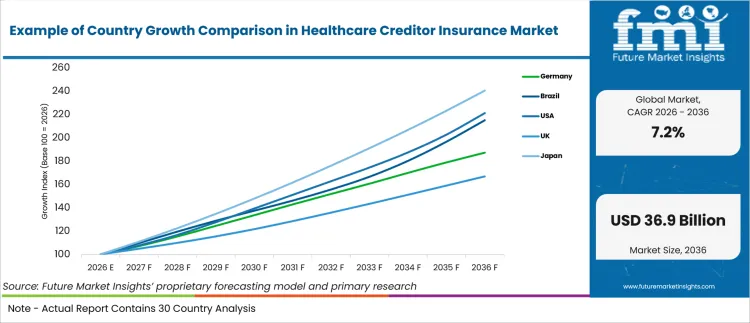
| Country | CAGR |
|---|---|
| Japan | 9.2% |
| Canada | 8.8% |
| USA | 8.2% |
| Brazil | 8.0% |
| Germany | 6.5% |
| Australia | 6.1% |
| UK | 5.2% |
How do country-level CAGRs compare in the Healthcare Creditor Insurance Market?
The 4.0-point spread reflects different operating routes rather than one uniform growth pattern across healthcare creditor insurance. Japan and Canada use established mortgage and bank channels with distinct underwriting and consent requirements. The USA and Brazil combine broad consumer-credit exposure with fragmented oversight or uneven product understanding. Germany and the United Kingdom give greater weight to sale timing and customer-value controls that protect optional decision-making. Australia separates the credit decision from the later insurance offer through a national deferred-sales rule. Comparable rates therefore produce different claim quality and distribution economics across the profiled markets and national lending channels.
- Japan combines mortgage-linked group credit life with defined debt settlement through the national housing-finance system. Medical declarations and age limits create stronger access constraints than lender reach for applicants with prior conditions or later entry ages.
- Canada combines mature bank distribution with express consent for optional loan insurance across regulated institutions. Medical questionnaires and bilingual documentation add operating complexity across provincial journeys that rely on different service and complaint routes.
- The USA offers broad exposure through mortgages and personal credit but state oversight fragments product filing and servicing. Federal medical-information rules also require a clear separation between insurance underwriting decisions and ordinary credit eligibility assessments.
- Brazil supports borrower insurance through bank and retail credit relationships across several covered health and income events. Income volatility and uneven product understanding raise the importance of plain disclosures and accessible claim routes.
- Germany separates residual debt insurance from the original consumer-loan agreement through a mandatory waiting period. Compliant follow-up journeys must preserve voluntary consent through a later contact that remains independent from immediate point-of-sale enrollment.
- Australia combines a national deferred-sales rule with public guidance on benefit limits and claim conditions. Regional service distances make digital document collection and complaint escalation essential for lender programs serving customers outside major cities.
- The United Kingdom remains shaped by product-value controls and persistent sensitivity following widespread payment-protection mis-selling. Insurers need needs-based screening and transparent cancellation through every regulated lending channel that offers optional repayment protection.
Comparable CAGRs can produce different commercial outcomes as consent design and claims administration shape whether borrowers receive useful protection. Insurers should compare accepted claims and cancellations beside forecast momentum during national expansion planning across each country. The full report provides country-level CAGR analysis across North America and Latin America alongside Europe and Asia Pacific plus the Middle East and Africa.
Country-wise Analysis
- Japan operates mortgage-linked group credit life through lenders and the Japan Housing Finance Agency under a defined debt-settlement framework. Japan is estimated to post 9.2% CAGR over the forecast period, supported by established housing-loan protection. The agency's April 2025 group credit life brochure states that insured death or qualifying disability removes the remaining Flat 35 repayment obligation. Medical declarations and age limits create material access friction for applicants with prior diagnoses or later entry ages. Local underwriting teams and lender-integrated claim routes support adoption by matching the benefit with the verified mortgage balance. Commercial plans should explain major-disease options without presenting every rider as automatic coverage for all borrowers entering the mortgage program. Service teams must collect medical documents without shifting unnecessary administrative work to bereaved households during claims.
- Canada requires separate express consent for optional insurance sold beside a loan or credit product through federally regulated institutions. Credit or loan insurance sales in Canada are forecast to expand at 8.8% CAGR by 2036, supported by mature bank and credit-union distribution. The Financial Consumer Agency of Canada stated in October 2025 that the product remains optional and can cover disability or critical illness alongside death. Medical questionnaires and bilingual documents create operating friction across provincial journeys that use different service and complaint routes. Clear cancellation processes and dependable remote claim support help insurers serve communities located far from major service centers. Successful programs should show total premium cost beside the changing loan balance throughout the complete repayment period. Partner governance should compare accepted claims and cancellations across provinces so local process differences remain commercially visible.
- United States insurers must separate medical-information controls from ordinary credit eligibility decisions across loan underwriting and service. The USA healthcare creditor insurance sector is projected to record 8.2% CAGR during the assessment period, influenced by broad consumer-credit exposure. The Consumer Financial Protection Bureau updated its Regulation V page in February 2026 following a court decision that vacated the 2025 medical-debt rule. State insurance oversight adds filing and disclosure variation across products distributed by national lenders and digital finance companies. Compliant digital consent and standardized benefit explanations support adoption across branch and online channels serving different borrower groups. Complaint exposure and inconsistent state requirements create material friction for insurers seeking nationwide operating scale. Expansion should begin with partners that report accepted claims and cancellations at product level across every active state program.
- Brazil distributes borrower insurance through banks and retailers that already manage loans and installment accounts. In Brazil healthcare creditor insurance demand is predicted to advance at 8.0% CAGR through 2036, reinforced by established credit channels. The National Social Security Institute published a December 2025 commitment requiring Banco Inter to correct borrower-insurance procedures tied to payroll loans. The action established direct regulatory oversight of optional coverage contracted through an existing credit relationship. Bank and retail networks support adoption but income volatility and uneven product understanding create material local friction. Insurers should use concise Portuguese disclosures and remote document collection across regions with different service access. Distribution reviews should test consistent explanations of waiting periods and excluded events across every customer group.
- Germany requires a waiting period between a general consumer loan and residual debt insurance under the current national framework. Adoption of healthcare creditor insurance in Germany is estimated to expand at 6.5% CAGR through 2036, shaped by established lending channels. Federal rules effective from January 2025 require the insurance declaration at least one week following the credit contract. A creditor insurance agreement signed too early becomes legally void under the national separation rule. The waiting period supports deliberate consent but interrupts immediate enrollment during the original lending discussion. Insurers need a compliant follow-up journey and documented customer contact for the later coverage decision. Commercial teams should measure completed enrollments separately from loan approvals and avoid incentives tied to immediate attachment.
- Australia applies a four-day deferred-sales period between credit approval and any consumer credit insurance offer. Australia's healthcare creditor insurance outlook is anticipated to advance at 6.1% CAGR over the assessment period, supported by a clearly separated purchase decision. MoneySmart stated in July 2026 that providers must wait four days prior to selling cover for personal loans and mortgages or credit cards. The deferred period supports voluntary consent but removes immediate enrollment from the original lending discussion. Regional service distances and different lender systems create material friction for claims and complaints outside major cities. Digital claim access and visible escalation routes support adoption across dispersed customers who lack nearby branch service. Product governance should test benefit value across non-advised distribution and renewal routes throughout each partner program.
- United Kingdom distributors operate under conduct rules that require useful cover and understandable communication across regulated insurance journeys. By 2036 healthcare creditor insurance in the United Kingdom is projected to grow at 5.2% CAGR, linked to stricter product-value controls. The Financial Conduct Authority opened CP26/22 in June 2026 following insurance-rule changes that took effect during December 2025. Historical PPI mis-selling continues to shape customer trust and supervisory attention across payment-protection distribution channels. Needs-based screening and transparent cancellation support adoption across branch and digital routes that preserve optional customer choice. Broad exclusions and weak benefit ratios create material friction for products offered beside consumer credit. Partner contracts should connect sales incentives with accepted claims and demonstrated customer value rather than attachment rates.
Who are the notable companies in the Healthcare Creditor Insurance Market?
BNP Paribas Cardif, CNP Assurances, AXA Partners, TruStage, Assurant, Inc., Securian Financial, Manulife, and Chubb Limited are the notable companies shaping this market.
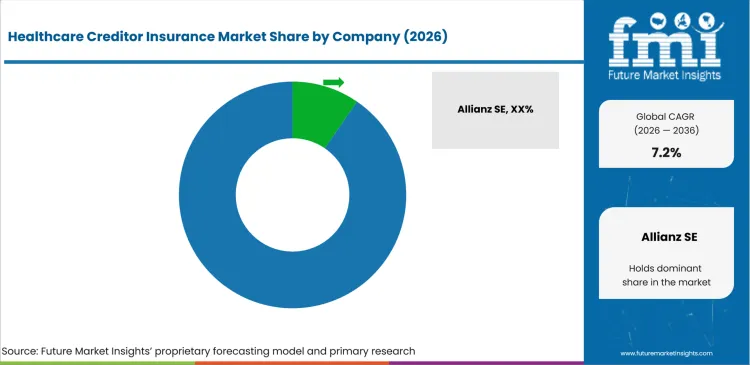
The competitive landscape is moderately concentrated around insurers that already manage creditor products through bank and finance-company partnerships. Large partnership insurers compete through multi-event coverage and product designs configured for different loan types across regulated markets. Digital specialists compete through embedded consent and claim functions that fit inside existing bank and finance-company account journeys. New entrants face high barriers as actuarial pricing and local insurance licensing must operate with lender data and conduct controls. Technology firms can enter through enrollment or claims infrastructure but generally need an established underwriter. Durable differentiation depends on useful benefits and dependable settlement rather than attachment volume across partner channels.
- Broad creditor-protection specialists include BNP Paribas Cardif and CNP Assurances alongside AXA Partners through multi-cover loan protection and established financial-institution relationships. Their advantage rests on product breadth and partner governance but medical exclusions can limit customer value across mortgage and consumer-loan programs.
- Embedded distribution competitors include TruStage and Assurant alongside Securian Financial through platforms that place protection inside lending or payment journeys. Their strongest advantage is consistent consent and claim visibility across partner systems but automated enrollment requires close monitoring of cancellations and accepted benefits.
- Manulife and Chubb operate creditor coverage through financial institutions and selected digital partnerships across defined regional markets. Their position depends on local product terms and service depth across each partner network and product route. Geographic presence does not guarantee consistent medical eligibility or claim support across every lending channel.
Competitive Benchmarking: Healthcare Creditor Insurance Market
| Company | Creditor Protection Breadth | Embedded Partner Capability | Claims and Servicing | Geographic Reach |
|---|---|---|---|---|
| BNP Paribas Cardif | High | High | Medium | Global |
| CNP Assurances | High | High | Medium | Europe and Latin America |
| AXA Partners | High | High | High | Europe and Latin America |
| TruStage | Medium | High | High | North America |
| Assurant, Inc. | High | High | High | North America and Puerto Rico |
| Securian Financial | Medium | High | High | North America |
| Manulife | High | Medium | Medium | North America and Asia |
| Chubb Limited | High | High | Medium | Canada and selected digital markets |
Key Developments in the Healthcare Creditor Insurance Market
- In August 2025, TruStage introduced a digital purchase process that lets credit-union borrowers select payment protection inside the loan application through real-time pricing and eligibility checks. The selected protection then transfers into loan documents through the same system without separate branch data entry or repeated customer questions. TruStage expected the process to reach more than 300 participating credit unions by the end of 2025. The rollout expands embedded access and preserves a distinct borrower decision inside the lending journey.
- In May 2025, CNP Assurances removed additional premiums and coverage reductions for eligible men with prostate or testicular cancer across term creditor insurance. Major partners apply the revised underwriting to mortgage and professional-loan applications without the five-year waiting period under France's right-to-be-forgotten framework. The change widens underwriting access through established lender networks with eligibility remaining tied to stated treatment and age conditions.
- In November 2025, Manulife Philippines expanded group credit life insurance for the Social Security System pension loan program to surviving-spouse pensioners. The extension added about 1.2 million eligible surviving spouses beside retirement pensioners across the national program. The arrangement connects debt settlement with a public pension loan route that serves older borrowers through a nationwide administrative system. National administration must coordinate eligibility records and claim settlement across a geographically dispersed member population.
- In January 2026, Securian Financial launched the My Coverage portal for credit insurance and debt-protection claims across its financial-institution programs. Customers can submit documents and review claim status through secure digital access during the complete process. Securian states that complete claims receive review within seven to ten calendar days following receipt of required documents. The portal gives lender partnerships measurable service expectations and preserves the eligibility terms established during customer enrollment.
Healthcare Creditor Insurance Market - Report Scope
| Coverage field | Report scope |
|---|---|
| Market breakdown | Product Type, Application, End User, Distribution Channel, Coverage Type, and Region. |
| Quantitative Units | Revenue in USD Billion and CAGR in %. |
| Market Definition | Optional insurance that repays or services consumer debt following covered death, disability, critical illness, hospitalization, unemployment, or another insured health-related income disruption. |
| Regions Covered | North America, Latin America, Europe, East Asia, South Asia, Oceania, and Middle East and Africa. |
| Countries Covered | Japan, Canada, USA, Brazil, Germany, Australia, and UK. |
| Key Companies Profiled | BNP Paribas Cardif, CNP Assurances, AXA Partners, TruStage, Assurant, Inc., Securian Financial, Manulife, and Chubb Limited. |
| Forecast Period | 2026 to 2036. |
| Approach | Hybrid bottom-up and top-down market sizing supported by primary interviews and official desk research. |
Healthcare Creditor Insurance Market - Research Methodology
| Method | Approach |
|---|---|
| Primary Research | FMI analysts gathered input from manufacturers, service providers, technology developers, distributors, end users, procurement teams, and subject-matter experts. Interviews examined purchasing decisions, product or service evaluation, adoption barriers, approval requirements, pricing considerations, and expectations for technical or commercial support. Respondents were also asked what evidence is required before a trial, pilot, or initial order develops into regular purchasing. |
| Desk Research | Desk research covered government statistics, regulatory publications, trade data, industry associations, technical literature, standards, company filings, product information, and official corporate announcements. Sources were reviewed for relevance, publication date, geographic coverage, and consistency with the defined market scope. Claims relating to performance, applications, approvals, capacity, investment, and commercial activity were retained only when supported by credible public evidence. |
| Market Sizing and Forecasting | The market model combined the baseline value with historical performance, segment structure, pricing and volume indicators, adoption levels, company participation, and country-level demand conditions. Forecast assumptions considered economic activity, investment trends, regulatory developments, technology adoption, purchasing cycles, supply availability, and barriers to wider market use. Segment and regional estimates were reconciled before the final market total was calculated. |
| Data Validation | Estimates were checked against multiple independent indicators, including public data, company activity, trade patterns, industry developments, and findings from primary interviews. Validation also tested whether products, services, applications, and company revenues fell within the defined market boundaries. Adjacent categories, unsupported claims, overlapping revenues, and activities without direct market relevance were excluded to reduce double counting and maintain consistency across segments and countries. |
Healthcare Creditor Insurance Market by Segments
Healthcare Creditor Insurance Market segmented by Product Type:
- Credit Life Insurance
- Individual Credit Life Insurance
- Group Credit Life Insurance
- Credit Disability Insurance
- Short-Term Disability Coverage
- Long-Term Disability Coverage
- Critical Illness Credit Insurance
- Cancer Coverage
- Heart Attack & Stroke Coverage
- Hospital Cash Insurance
- Daily Hospital Cash Benefits
- Intensive Care Benefits
- Comprehensive Creditor Insurance
- Multi-Benefit Coverage
- Customized Protection Plans
Healthcare Creditor Insurance Market segmented by Application:
- Personal Loan Protection
- Unsecured Personal Loans
- Secured Personal Loans
- Mortgage Protection
- Home Loan Protection
- Home Equity Loan Protection
- Healthcare Financing
- Medical Procedure Financing
- Hospital Payment Plans
- Credit Card Payment Protection
- Medical Credit Cards
- Healthcare Expense Cards
- Consumer Healthcare Loans
- Dental Financing
- Vision Care Financing
Healthcare Creditor Insurance Market segmented by End User:
- Individual Consumers
- Salaried Individuals
- Self-Employed Individuals
- Banks & Financial Institutions
- Commercial Banks
- Credit Unions
- Insurance Companies
- Life Insurance Providers
- Health Insurance Providers
- Healthcare Providers
- Hospitals
- Specialty Clinics
- Non-Banking Financial Companies
- Consumer Finance Companies
- Digital Lending Platforms
Healthcare Creditor Insurance Market segmented by Distribution Channel:
- Direct Sales
- Insurance Company Branches
- Direct Financial Advisors
- Bancassurance
- Commercial Banks
- Credit Unions
- Insurance Brokers & Agents
- Independent Brokers
- Captive Agents
- Digital Platforms
- Online Insurance Portals
- Mobile Insurance Apps
- Healthcare Financing Partners
- Hospital Finance Desks
- Medical Lending Partners
Healthcare Creditor Insurance Market segmented by Coverage Type:
- Death Coverage
- Natural Death
- Accidental Death
- Disability Coverage
- Temporary Disability
- Permanent Disability
- Critical Illness Coverage
- Specified Illness Coverage
- Major Disease Coverage
- Involuntary Unemployment Coverage
- Job Loss Protection
- Income Protection
- Combined Coverage Plans
- Comprehensive Protection
- Premium Protection Plans
Healthcare Creditor Insurance Market by Region:
- North America
- USA
- Canada
- Latin America
- Brazil
- Mexico
- Argentina
- Europe
- Germany
- UK
- France
- Italy
- Spain
- East Asia
- Japan
- China
- South Korea
- South Asia and Pacific
- Australia
- India
- ASEAN
- Middle East and Africa
- GCC Countries
- South Africa
- Israel
Research Sources and Bibliography
- National Association of Insurance Commissioners. (2008, November 1). Credit insurance.
- Securian Financial. (2026, June 22). Securian Financial study finds many Americans living on the financial edge as economic pressures push borrowers into “financial defense” mode.
- BNP Paribas Cardif. (2025, October 30). BNP Paribas Personal Finance en partenariat avec BNP Paribas Cardif lance une nouvelle assurance emprunteur plus complète et plus inclusive pour son crédit renouvelable.
- Securian Financial. (2026, May 20). VIVA Finance partners with Walnut and Securian Financial to bring embedded loan protection to borrowers.
- CNP Assurances. (2025, June 12). CNP Assurances wins the Argus d’Or award for having facilitated access to term creditor insurance after breast cancer.
- Financial Conduct Authority. (2026, July 27). ICOBS 5.1 General.
- Securian Financial. (2025, October 24). Securian Financial joins forces with Custodia Financial for Retirement Loan Protection program.
- Superintendência de Seguros Privados. (2026, March 17). Setor supervisionado inicia 2026 estável e com crescimento nos seguros de pessoas.
- Financial Conduct Authority. (2025, April 23). PPI complaints.
- Securian Financial. (2026, March 25). Securian Financial launches FlexTech™ to make embedded protection simple, fast and convenient.
- Japan Housing Finance Agency. (2025, April). 新機構団体信用生命保険制度の概要.
- Financial Consumer Agency of Canada. (2025, October 16). Credit or loan insurance.
- Consumer Financial Protection Bureau. (2026, February 24). Consumer Reporting (Regulation V).
- Instituto Nacional do Seguro Social. (2025, December 1). Termo de Compromisso - Banco Inter S.A.
- Federal Government of Germany. (2025, January 3). Gesetzliche Neuregelungen im Januar 2025.
- MoneySmart. (2026, July 23). Consumer credit insurance.
- Financial Conduct Authority. (2026, June 26). CP26/22: Simplifying the insurance rules.
- BNP Paribas Cardif. (n.d.). Our value proposition. Retrieved July 29, 2026.
- CNP Assurances. (n.d.). Proposer de l’assurance emprunteur. Retrieved July 29, 2026.
- AXA Partners. (n.d.). Credit & Lifestyle Protection. Retrieved July 29, 2026.
- AXA Partners. (n.d.). Credit and Lifestyle Protection: Claims and Documents. Retrieved July 29, 2026.
- TruStage. (n.d.). Personalized Credit Insurance protection. Retrieved July 29, 2026.
- TruStage. (n.d.). Customizable Debt Protection program for your members. Retrieved July 29, 2026.
- TruStage. (n.d.). File a TruStage claim. Retrieved July 29, 2026.
- Assurant, Inc. (n.d.). Welcome - Inclusive card benefits and optional credit insurance. Retrieved July 29, 2026.
- Assurant, Inc. (n.d.). Check claim status - optional credit insurance claims. Retrieved July 29, 2026.
- Securian Financial. (n.d.). Payment Protection. Retrieved July 29, 2026.
- Manulife. (n.d.). Creditor Insurance - Certificates and Product Summaries. Retrieved July 29, 2026.
- Chubb. (n.d.). Creditor Insurance in Canada - Chubb Accident & Health. Retrieved July 29, 2026.
- Chubb Studio. (n.d.). Chubb Studio Connect. Retrieved July 29, 2026.
- TruStage. (2025, August 5). TruStage modernizes credit union lending protection.
- CNP Assurances. (2025, May 23). CNP Assurances removes barriers to term creditor insurance for men with prostate and testicular cancer.
- Manulife Philippines. (2025, November 20). Social Security System and Manulife Philippines strengthen financial security for SSS retiree and surviving spouse pensioners who availed of the SSS Pension Loan Program with group credit life insurance.
- Securian Financial. (2026, January 6). Securian Financial launches My Coverage digital portal for credit insurance and debt protection claims.
- BNP Paribas Cardif. (n.d.). Who we are. Retrieved July 29, 2026.
This bibliography is provided for reader reference and is not exhaustive. The full report contains the complete reference list and detailed citations
This Report Answers
- How large is the Healthcare Creditor Insurance Market in 2026 and what valuation is projected for 2036?
- Which product types and health-related events fall within the defined Healthcare Creditor Insurance Market boundary?
- Why is Credit Life Insurance expected to account for the largest Product Type share during 2026?
- How do consent requirements and medical eligibility rules influence loan-protection conversion across major countries?
- Which countries occupy the upper forecast range and what local frictions shape commercial entry decisions?
- How do direct sales and embedded distribution models change disclosure and claims responsibilities for insurers?
- Which current companies provide creditor-protection products or loan-linked claims capabilities across active lender partnerships?
- What recent company developments are changing underwriting access and digital claims administration?
- Which operating measures should lenders use to evaluate customer value and insurer performance?
Frequently Asked Questions
How big is the Healthcare Creditor Insurance Market in 2026?
The healthcare creditor insurance market is valued at USD 18.4 billion in 2026 and is forecast to reach USD 36.9 billion by 2036. Growth is supported by loan-linked distribution that places optional repayment protection beside defined consumer debts across bank and digital lending channels.
What is the CAGR of the Healthcare Creditor Insurance Market from 2026 to 2036?
The healthcare creditor insurance market grows at a CAGR of 7.2% between 2026 and 2036, supported by embedded finance channels that place premium cost and benefit limits inside loan applications, letting insurtech platforms carry eligibility and claims data across multiple lender partnerships.
Which product type leads the Healthcare Creditor Insurance Market?
Credit life insurance accounts for 34.0% of the healthcare creditor insurance market by product type in 2026, driven by its ability to settle or reduce an outstanding loan balance through one claim following a covered borrower death, requiring simpler verification than recurring disability claims.
How much will the Healthcare Creditor Insurance Market add between 2026 and 2036?
The healthcare creditor insurance market is set to add USD 18.5 billion between 2026 and 2036, growing from USD 18.4 billion to USD 36.9 billion as embedded enrollment and digital claims processing expand across a widening base of bank and digital lender partnerships.
Who are the leading companies in the Healthcare Creditor Insurance Market?
Eight companies lead the healthcare creditor insurance market, including BNP Paribas Cardif, CNP Assurances, AXA Partners, TruStage, Assurant, Securian Financial, Manulife, and Chubb Limited, competing through multi-event creditor coverage, embedded distribution platforms, and claims administration across established bank and digital lending partnerships worldwide.
Preview the report firsthand - request a free sample
Get SampleGet the brochure for pricing and purchase details.
Get PDFTable of Content
- Key Takeaways
- Market Size and CAGR
- Top Growth Driver
- Fastest Growing Segment
- Leading Region
- Key Companies
- Emerging Opportunities
- Executive Summary
- Global Market Outlook
- Demand-side Trends
- Supply-side Trends
- Technology Roadmap Analysis
- Analysis and Recommendations
- Analyst Perspective (What is happening? Why now? What should investors know?)
- Key Questions Answered
- How large is the market?
- What is the CAGR?
- What are key trends?
- Which region dominates?
- Who are the leaders?
- Market Overview
- Market Coverage / Taxonomy
- Market Definition / Scope / Limitations
- Research Methodology
- Chapter Orientation
- Analytical Lens and Working Hypotheses
- Market Structure, Signals, and Trend Drivers
- Benchmarking and Cross-market Comparability
- Market Sizing, Forecasting, and Opportunity Mapping
- Research Design and Evidence Framework
- Desk Research Programme (Secondary Evidence)
- Expert Input and Fieldwork (Primary Evidence)
- Tooling, Models, and Reference Databases
- Data Engineering and Model Build
- Quality Assurance and Audit Trail
- Market Background
- Market Dynamics (Drivers, Restraints, Opportunity, Trends)
- Scenario Forecast (Optimistic, Likely, Conservative)
- Impact Analysis
- AI Impact
- Sustainability Impact
- Regulatory Impact
- Technology Impact
- Consumer / Buyer Analysis
- Purchase Drivers
- Adoption Barriers
- Buyer Journey
- Opportunity Map Analysis
- Product Life Cycle Analysis
- Supply Chain Analysis
- Investment Feasibility Matrix
- Value Chain Analysis
- PESTLE and Porter's Analysis
- Regulatory Landscape
- Regional Parent Market Outlook
- Production and Consumption Statistics
- Import and Export Statistics
- Global Market Analysis and Forecast, 2021 to 2036
- Historical Market Size Value (USD Billion) Analysis, 2021 to 2025
- Current and Future Market Size Value (USD Billion) Projections, 2026 to 2036
- Y-o-Y Growth Trend Analysis
- Absolute $ Opportunity Analysis
- Global Market Pricing Analysis, 2021 to 2036
- Global Market Analysis and Forecast, By Product Type, 2021 to 2036
- Introduction / Key Findings
- Historical Market Size Value (USD Billion) Analysis By Product Type, 2021 to 2025
- Current and Future Market Size Value (USD Billion) Analysis and Forecast By Product Type, 2026 to 2036
- Credit Life Insurance
- Individual Credit Life Insurance
- Group Credit Life Insurance
- Credit Disability Insurance
- Short-Term Disability Coverage
- Long-Term Disability Coverage
- Critical Illness Credit Insurance
- Cancer Coverage
- Heart Attack & Stroke Coverage
- Hospital Cash Insurance
- Daily Hospital Cash Benefits
- Intensive Care Benefits
- Comprehensive Creditor Insurance
- Multi-Benefit Coverage
- Customized Protection Plans
- Credit Life Insurance
- Y-o-Y Growth Trend Analysis By Product Type, 2021 to 2025
- Absolute $ Opportunity Analysis By Product Type, 2026 to 2036
- Global Market Analysis and Forecast, By Application, 2021 to 2036
- Introduction / Key Findings
- Historical Market Size Value (USD Billion) Analysis By Application, 2021 to 2025
- Current and Future Market Size Value (USD Billion) Analysis and Forecast By Application, 2026 to 2036
- Personal Loan Protection
- Unsecured Personal Loans
- Secured Personal Loans
- Mortgage Protection
- Home Loan Protection
- Home Equity Loan Protection
- Healthcare Financing
- Medical Procedure Financing
- Hospital Payment Plans
- Credit Card Payment Protection
- Medical Credit Cards
- Healthcare Expense Cards
- Consumer Healthcare Loans
- Dental Financing
- Vision Care Financing
- Personal Loan Protection
- Y-o-Y Growth Trend Analysis By Application, 2021 to 2025
- Absolute $ Opportunity Analysis By Application, 2026 to 2036
- Global Market Analysis and Forecast, By End User, 2021 to 2036
- Introduction / Key Findings
- Historical Market Size Value (USD Billion) Analysis By End User, 2021 to 2025
- Current and Future Market Size Value (USD Billion) Analysis and Forecast By End User, 2026 to 2036
- Individual Consumers
- Salaried Individuals
- Self-Employed Individuals
- Banks & Financial Institutions
- Commercial Banks
- Credit Unions
- Insurance Companies
- Life Insurance Providers
- Health Insurance Providers
- Healthcare Providers
- Hospitals
- Specialty Clinics
- Non-Banking Financial Companies
- Consumer Finance Companies
- Digital Lending Platforms
- Individual Consumers
- Y-o-Y Growth Trend Analysis By End User, 2021 to 2025
- Absolute $ Opportunity Analysis By End User, 2026 to 2036
- Global Market Analysis and Forecast, By Distribution Channel, 2021 to 2036
- Introduction / Key Findings
- Historical Market Size Value (USD Billion) Analysis By Distribution Channel, 2021 to 2025
- Current and Future Market Size Value (USD Billion) Analysis and Forecast By Distribution Channel, 2026 to 2036
- Direct Sales
- Insurance Company Branches
- Direct Financial Advisors
- Bancassurance
- Commercial Banks
- Credit Unions
- Insurance Brokers & Agents
- Independent Brokers
- Captive Agents
- Digital Platforms
- Online Insurance Portals
- Mobile Insurance Apps
- Healthcare Financing Partners
- Hospital Finance Desks
- Medical Lending Partners
- Direct Sales
- Y-o-Y Growth Trend Analysis By Distribution Channel, 2021 to 2025
- Absolute $ Opportunity Analysis By Distribution Channel, 2026 to 2036
- Global Market Analysis and Forecast, By Coverage Type, 2021 to 2036
- Introduction / Key Findings
- Historical Market Size Value (USD Billion) Analysis By Coverage Type, 2021 to 2025
- Current and Future Market Size Value (USD Billion) Analysis and Forecast By Coverage Type, 2026 to 2036
- Death Coverage
- Natural Death
- Accidental Death
- Disability Coverage
- Temporary Disability
- Permanent Disability
- Critical Illness Coverage
- Specified Illness Coverage
- Major Disease Coverage
- Involuntary Unemployment Coverage
- Job Loss Protection
- Income Protection
- Combined Coverage Plans
- Comprehensive Protection
- Premium Protection Plans
- Death Coverage
- Y-o-Y Growth Trend Analysis By Coverage Type, 2021 to 2025
- Absolute $ Opportunity Analysis By Coverage Type, 2026 to 2036
- Global Market Analysis and Forecast, By Region, 2021 to 2036
- Introduction
- Historical Market Size Value (USD Billion) Analysis By Region, 2021 to 2025
- Current Market Size Value (USD Billion) Analysis and Forecast By Region, 2026 to 2036
- North America
- Latin America
- Western Europe
- Eastern Europe
- East Asia
- South Asia and Pacific
- Middle East & Africa
- Market Attractiveness Analysis By Region
- North America Market Analysis and Forecast, By Country, 2021 to 2036
- Historical Market Size Value (USD Billion) Trend Analysis By Market Taxonomy, 2021 to 2025
- Market Size Value (USD Billion) Forecast By Market Taxonomy, 2026 to 2036
- By Country
- USA
- Canada
- By Product Type
- By Application
- By End User
- By Distribution Channel
- By Coverage Type
- By Country
- Market Attractiveness Analysis
- By Country
- By Product Type
- By Application
- By End User
- By Distribution Channel
- By Coverage Type
- Key Takeaways
- Latin America Market Analysis and Forecast, By Country
- Historical Market Size Value (USD Billion) Trend Analysis By Market Taxonomy, 2021 to 2025
- Market Size Value (USD Billion) Forecast By Market Taxonomy, 2026 to 2036
- By Country
- Brazil
- Mexico
- Chile
- Rest of Latin America
- By Product Type
- By Application
- By End User
- By Distribution Channel
- By Coverage Type
- By Country
- Market Attractiveness Analysis
- By Country
- By Product Type
- By Application
- By End User
- By Distribution Channel
- By Coverage Type
- Key Takeaways
- Western Europe Market Analysis and Forecast, By Country
- Historical Market Size Value (USD Billion) Trend Analysis By Market Taxonomy, 2021 to 2025
- Market Size Value (USD Billion) Forecast By Market Taxonomy, 2026 to 2036
- By Country
- Germany
- UK
- Italy
- Spain
- France
- Nordic
- BENELUX
- Rest of Western Europe
- By Product Type
- By Application
- By End User
- By Distribution Channel
- By Coverage Type
- By Country
- Market Attractiveness Analysis
- By Country
- By Product Type
- By Application
- By End User
- By Distribution Channel
- By Coverage Type
- Key Takeaways
- Eastern Europe Market Analysis and Forecast, By Country
- Historical Market Size Value (USD Billion) Trend Analysis By Market Taxonomy, 2021 to 2025
- Market Size Value (USD Billion) Forecast By Market Taxonomy, 2026 to 2036
- By Country
- Russia
- Poland
- Hungary
- Balkan & Baltic
- Rest of Eastern Europe
- By Product Type
- By Application
- By End User
- By Distribution Channel
- By Coverage Type
- By Country
- Market Attractiveness Analysis
- By Country
- By Product Type
- By Application
- By End User
- By Distribution Channel
- By Coverage Type
- Key Takeaways
- East Asia Market Analysis and Forecast, By Country
- Historical Market Size Value (USD Billion) Trend Analysis By Market Taxonomy, 2021 to 2025
- Market Size Value (USD Billion) Forecast By Market Taxonomy, 2026 to 2036
- By Country
- China
- Japan
- South Korea
- By Product Type
- By Application
- By End User
- By Distribution Channel
- By Coverage Type
- By Country
- Market Attractiveness Analysis
- By Country
- By Product Type
- By Application
- By End User
- By Distribution Channel
- By Coverage Type
- Key Takeaways
- South Asia and Pacific Market Analysis and Forecast, By Country
- Historical Market Size Value (USD Billion) Trend Analysis By Market Taxonomy, 2021 to 2025
- Market Size Value (USD Billion) Forecast By Market Taxonomy, 2026 to 2036
- By Country
- India
- ASEAN
- Australia & New Zealand
- Rest of South Asia and Pacific
- By Product Type
- By Application
- By End User
- By Distribution Channel
- By Coverage Type
- By Country
- Market Attractiveness Analysis
- By Country
- By Product Type
- By Application
- By End User
- By Distribution Channel
- By Coverage Type
- Key Takeaways
- Middle East & Africa Market Analysis and Forecast, By Country
- Historical Market Size Value (USD Billion) Trend Analysis By Market Taxonomy, 2021 to 2025
- Market Size Value (USD Billion) Forecast By Market Taxonomy, 2026 to 2036
- By Country
- Kingdom of Saudi Arabia
- Other GCC Countries
- Türkiye
- South Africa
- Other African Union
- Rest of Middle East & Africa
- By Product Type
- By Application
- By End User
- By Distribution Channel
- By Coverage Type
- By Country
- Market Attractiveness Analysis
- By Country
- By Product Type
- By Application
- By End User
- By Distribution Channel
- By Coverage Type
- Key Takeaways
- Key Countries Market Analysis
- USA
- Pricing Analysis
- Market Share Analysis, 2025
- By Product Type
- By Application
- By End User
- By Distribution Channel
- By Coverage Type
- Canada
- Pricing Analysis
- Market Share Analysis, 2025
- By Product Type
- By Application
- By End User
- By Distribution Channel
- By Coverage Type
- Mexico
- Pricing Analysis
- Market Share Analysis, 2025
- By Product Type
- By Application
- By End User
- By Distribution Channel
- By Coverage Type
- Brazil
- Pricing Analysis
- Market Share Analysis, 2025
- By Product Type
- By Application
- By End User
- By Distribution Channel
- By Coverage Type
- Chile
- Pricing Analysis
- Market Share Analysis, 2025
- By Product Type
- By Application
- By End User
- By Distribution Channel
- By Coverage Type
- Germany
- Pricing Analysis
- Market Share Analysis, 2025
- By Product Type
- By Application
- By End User
- By Distribution Channel
- By Coverage Type
- UK
- Pricing Analysis
- Market Share Analysis, 2025
- By Product Type
- By Application
- By End User
- By Distribution Channel
- By Coverage Type
- Italy
- Pricing Analysis
- Market Share Analysis, 2025
- By Product Type
- By Application
- By End User
- By Distribution Channel
- By Coverage Type
- Spain
- Pricing Analysis
- Market Share Analysis, 2025
- By Product Type
- By Application
- By End User
- By Distribution Channel
- By Coverage Type
- France
- Pricing Analysis
- Market Share Analysis, 2025
- By Product Type
- By Application
- By End User
- By Distribution Channel
- By Coverage Type
- India
- Pricing Analysis
- Market Share Analysis, 2025
- By Product Type
- By Application
- By End User
- By Distribution Channel
- By Coverage Type
- ASEAN
- Pricing Analysis
- Market Share Analysis, 2025
- By Product Type
- By Application
- By End User
- By Distribution Channel
- By Coverage Type
- Australia & New Zealand
- Pricing Analysis
- Market Share Analysis, 2025
- By Product Type
- By Application
- By End User
- By Distribution Channel
- By Coverage Type
- China
- Pricing Analysis
- Market Share Analysis, 2025
- By Product Type
- By Application
- By End User
- By Distribution Channel
- By Coverage Type
- Japan
- Pricing Analysis
- Market Share Analysis, 2025
- By Product Type
- By Application
- By End User
- By Distribution Channel
- By Coverage Type
- South Korea
- Pricing Analysis
- Market Share Analysis, 2025
- By Product Type
- By Application
- By End User
- By Distribution Channel
- By Coverage Type
- Russia
- Pricing Analysis
- Market Share Analysis, 2025
- By Product Type
- By Application
- By End User
- By Distribution Channel
- By Coverage Type
- Poland
- Pricing Analysis
- Market Share Analysis, 2025
- By Product Type
- By Application
- By End User
- By Distribution Channel
- By Coverage Type
- Hungary
- Pricing Analysis
- Market Share Analysis, 2025
- By Product Type
- By Application
- By End User
- By Distribution Channel
- By Coverage Type
- Kingdom of Saudi Arabia
- Pricing Analysis
- Market Share Analysis, 2025
- By Product Type
- By Application
- By End User
- By Distribution Channel
- By Coverage Type
- Türkiye
- Pricing Analysis
- Market Share Analysis, 2025
- By Product Type
- By Application
- By End User
- By Distribution Channel
- By Coverage Type
- South Africa
- Pricing Analysis
- Market Share Analysis, 2025
- By Product Type
- By Application
- By End User
- By Distribution Channel
- By Coverage Type
- USA
- Market Structure Analysis
- Competition Dashboard
- Competition Benchmarking
- Market Share Analysis of Top Players
- By Regional
- By Product Type
- By Application
- By End User
- By Distribution Channel
- By Coverage Type
- Emerging Startups
- Innovation Benchmarking
- Competition Analysis
- Competition Deep Dive
- Allianz SE
- Overview
- Product Portfolio
- Profitability by Market Segments
- Sales Footprint
- Strategy Overview
- Marketing Strategy
- Product Strategy
- Channel Strategy
- AXA SA
- MetLife Inc.
- Aflac Incorporated
- Zurich Insurance Group
- Cigna Healthcare
- Chubb Limited
- Manulife Financial
- Sun Life Financial
- Munich Re
- Allianz SE
- Case Studies
- Success Stories
- Recent Developments
- Competition Deep Dive
- Assumptions & Acronyms Used


