

- Market Size (2026)
- USD 1860.7 Mn
- Forecast (2036)
- USD 3626.2 Mn
- CAGR (2026 to 2036)
- 6.9%
How big is the high torque drilling motors market in 2026?
USD 1,860.7 million in 2026 and USD 3,626.2 million by 2036 at a 6.9% CAGR.
The high torque drilling motors market was valued at USD 1,740.6 million in 2025. It is expected to grow from USD 1,860.7 million in 2026 to USD 3,626.2 million in 2036 at a CAGR of 6.9%. Buyers are specifying stronger downhole motor assemblies for long lateral drilling and deep HPHT wells. Positive displacement motors are forecast to represent 68.0% share in 2026 with stable torque delivery at controlled bit speed. High torque tools are expected to secure 54.0% share in 2026 through their fit with curve building and horizontal sections.
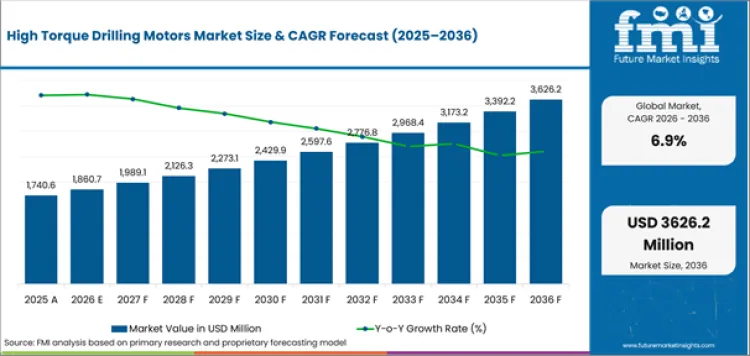
| Metric | Value |
|---|---|
| 2026 Market Size | USD 1,860.7 million |
| 2036 Market Size | USD 3,626.2 million |
| Forecast CAGR (2026-2036) | 6.9% |
| Leading Motor Type | Positive Displacement Motors |
| Positive Displacement Motors Share (2026) | 68.0% |
| Leading Torque Class | High Torque |
| High Torque Share (2026) | 54.0% |
| Fastest-growing Country | China |
| China CAGR by 2036 | 7.8% |
Summary of the High Torque Drilling Motors Market
| Market Signal | Commercial Impact |
|---|---|
| Demand and Growth Drivers | Demand for high torque drilling motors is increasing as operators expand horizontal drilling, HPHT wells, and geothermal projects that require reliable torque delivery under demanding downhole conditions.
|
| Product and Segment View | Positive displacement motors, high torque tools, directional drilling, onshore operations, and rental & service channels lead their respective market segments.
|
| Geography and Growth Outlook | Asia continues to strengthen drilling activity while North America maintains steady demand through unconventional resource development.
|
| Competitive Landscape | Competition increasingly focuses on drilling performance, service capability, and equipment reliability.
|
| Analyst Perspective | High torque drilling motors are becoming a strategic productivity asset as drilling operators prioritize operational reliability, reduced non-productive time, and efficient well construction.
- Nikhil Kaitwade, Principal Analyst at Future Market Insights |
Horizontal well activity is the main operating signal for motor demand. The U.S. Energy Information Administration stated in November 2025 that horizontal wells produced 94% of Lower 48 onshore oil in December 2024. This keeps motor durability central to shale economics. Suppliers that can combine motor power sections with directional drilling service programs are better placed to defend rental share. Tool selection is now a systems decision. Operators compare motor torque and elastomer life before approving rental programs. Bearing design and field redress speed affect acceptance in harsh wells. This creates pull-through for drilling tools demand across bit-motor packages and bottomhole assembly planning.
Which factors support expansion in the high torque drilling motors market?
Longer lateral sections and premium downhole service packages support market value across oilfield and geothermal drilling applications.
- Market value comes from rental service revenue tied to motor redress and field support.
- Supplier pricing reflects torque class and elastomer life. Bearing design and verified run history affect premium rates.
- Revenue improves with operator use of high torque motor packages that reduce motor stalls and wellbore delays.
- Buyer trust rises with supplier records by basin and well type. Mud system evidence improves technical acceptance.
Why is the high torque drilling motors market growing?
Operators are drilling longer and more technical wells that need stable torque transfer from motor power sections to the bit.
Growth outlook has become more structured with oilfield service firms bundling motor tools inside oil and gas field services. Baker Hughes secured a major Petrobras well construction services contract in February 2024. The scope included drilling services and drill bits. Wireline and cementing were part of the related work. This reinforces a buying model in which motors are purchased within full well construction packages.
HPHT and geothermal wells create a separate performance requirement. Motor seals and bearings face higher thermal stress in these jobs. Elastomers carry added mechanical load. Suppliers that can match motor configuration with bit choice and drilling fluid behavior can reduce failure risk during demanding runs.
How is the high torque drilling motors market segmented?
The high torque drilling motors industry is segmented by motor type, torque class, application, end use, and sales mix.
- Positive Displacement Motors are projected to secure 68.0% share in 2026 through mud-driven torque delivery in directional drilling.
- High Torque tools are anticipated to hold 54.0% share in 2026 with broad fit across curve and lateral drilling.
- Directional Drilling is expected to capture 44.0% share in 2026 through build-rate control and planned well placement.
- Onshore is forecast to represent 66.0% share in 2026 with repeated shale and tight reservoir drilling programs.
- Rental and Service is projected to account for 62.0% share in 2026 through inspection-backed tool availability.
Which motor type category holds a notable share in the high torque drilling motors market?
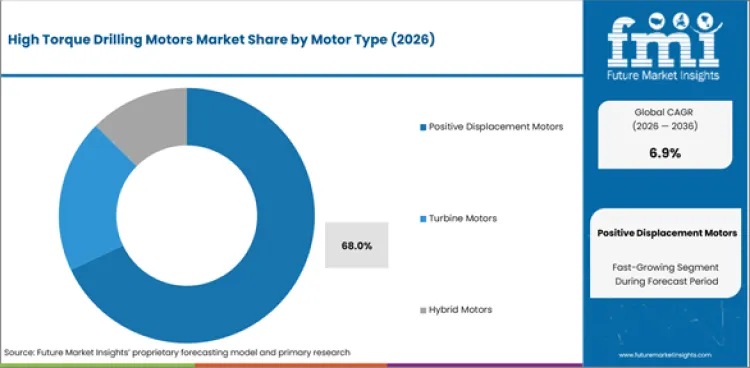
- Positive Displacement Motors are projected to account for 68.0% share in 2026 through reliable mud-driven torque at low speed.
- Turbine and hybrid motors remain useful for selected wells that need higher speed or specialized drilling behavior.
How does the torque class segment perform in the high torque drilling motors market?
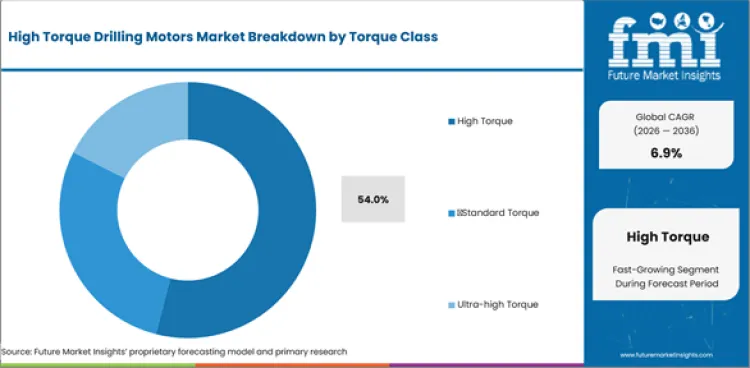
- High Torque tools are forecast to hold 54.0% share in 2026 through their role in curve and lateral drilling.
- Ultra-high Torque tools gain attention in HPHT wells that need reinforced bearings and higher torque reserve.
What drives demand across application choices in the high torque drilling motors market?
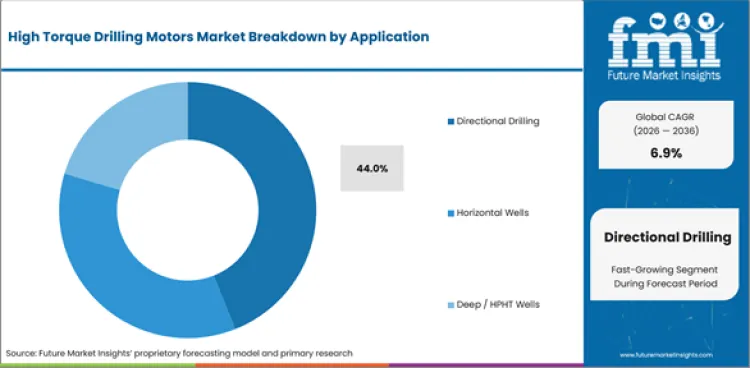
- Directional Drilling is expected to represent 44.0% share in 2026 through planned wellbore placement and build-rate control.
- Horizontal Wells remain a close demand pool with long lateral sections raising motor load exposure.
Which end-use segment shows a prominent position in the high torque drilling motors market?
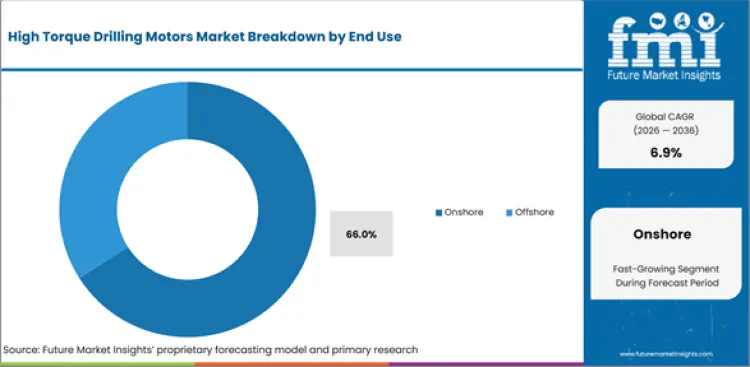
- Onshore is projected to account for 66.0% share in 2026 with shale and tight reservoir programs supporting repeated use.
- Offshore demand carries premium value through costly trip time and schedule risk from tool failure.
How are buyers selecting across sales mix options in the high torque drilling motors market?
- Rental and Service is estimated to hold 62.0% share in 2026 through maintenance-backed access and redress support.
- Direct Sale remains more common among national oil companies and large contractors that can manage tool upkeep.
What market forces shape the high torque drilling motors market?
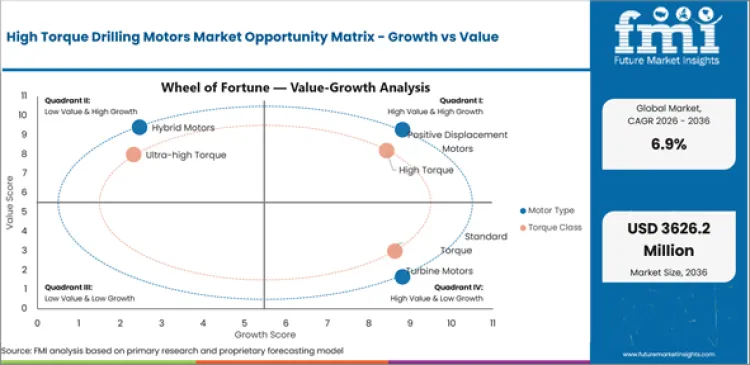
Lateral drilling and HPHT wells support demand. Rental bottlenecks and price pressure restrict premium tool adoption.
- Driver: Longer laterals increase the need for durable torque delivery and predictable motor response under load.
- Restraint: Rental fleet pressure can limit availability of premium tools during concentrated drilling campaigns.
- Opportunity: Geothermal and automated well construction programs create new demand for high-temperature motor configurations.
Lateral Torque Demand
Lateral drilling is expected to remain the main demand anchor for high torque motors. EIA reported in November 2025 that production from wells online before 2024 fell by 4.3 million barrels per day in 2024. New well activity must offset that decline. Operators therefore need motor packages that maintain bit rotation through high-contact sections.
HPHT Motor Stress
Deep and high-pressure wells are anticipated to raise the value of stronger motor systems. Motor sizing is often checked alongside onshore drilling fluids compatibility. Mud chemistry affects stator life. NOV states that its motor technology portfolio covers ultra-high torque and high-power drilling applications. This shifts buyer preference toward premium assemblies with documented service history.
Rental Fleet Bottlenecks
Rental fleets can restrain demand during concentrated drilling activity in the same basin. Directional providers also combine motors with rotary steerable systems to meet build-rate and well placement needs. Suppliers with repair hubs and disciplined inventory planning can reduce downtime between runs.
Which countries are growing fastest in the high torque drilling motors market?
China records 7.8% CAGR through 2036. India follows at 7.2% CAGR and the United States records 6.8% CAGR. South Korea reaches 5.9% CAGR. The United Kingdom records 5.2% CAGR and Japan reaches 5.1% CAGR. Germany records 4.6% CAGR and France reaches 4.5% CAGR.
.webp "Top Country Growth Comparison High Torque Drilling Motors Market Cagr (2026 2036)")
| Country | CAGR |
|---|---|
| China | 7.8% |
| India | 7.2% |
| United States | 6.8% |
| South Korea | 5.9% |
| United Kingdom | 5.2% |
| Japan | 5.1% |
| Germany | 4.6% |
| France | 4.5% |
Source: Future Market Insights, 2026.
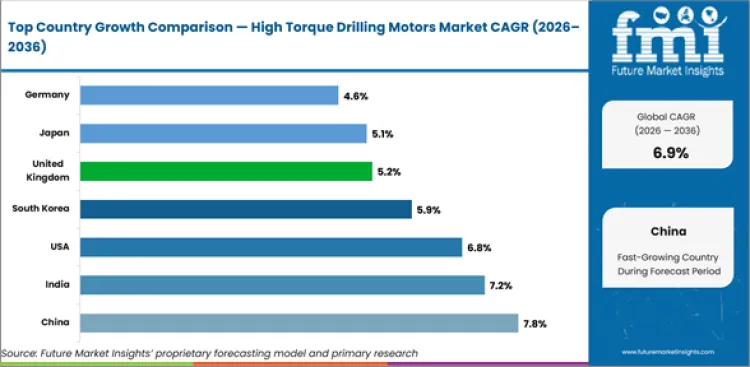
How do country-level CAGRs compare in the high torque drilling motors market?
China records the most notable country outlook. France shows the most cautious profile among selected markets.
- China is forecast to record 7.8% CAGR by 2036 with domestic oil security and ultra-deep drilling programs shaping demand.
- India is projected to grow at 7.2% CAGR through 2036 with frontier exploration and mature-field redevelopment supporting motor use.
- The United States is expected to expand at 6.8% CAGR by 2036 with shale lateral intensity keeping rental cycles active.
- South Korea is estimated to rise at 5.9% CAGR through 2036 with offshore exploration creating option-led demand.
- The United Kingdom is projected to post 5.2% CAGR by 2036 with mature-field sidetracks and interventions supporting premium tools.
- Japan is forecast to record 5.1% CAGR by 2036 with geothermal and selected offshore work requiring heat-tolerant tools.
- Germany is expected to expand at 4.6% CAGR by 2036 with deep geothermal projects supporting specialist use.
- France is projected to grow at 4.5% CAGR by 2036 with geothermal heat plans creating selective drilling demand.
How fast is the high torque drilling motors market growing in China?
A 7.8% CAGR through 2036 is tied to offshore activity and ultra-deep drilling programs.
Country Market Snapshot Table
| Parameter | Value |
|---|---|
| Market Size in 2025 (Value) | USD 302.4 million |
| Market Size in 2026 (Value) | USD 326.0 million |
| Market Forecast in 2036 (Value) | USD 690.9 million |
| CAGR (2026 to 2036) | 7.8% |
| Years Considered | 2021 to 2036 |
| Base Year | 2025 |
| Forecast Period | 2026 to 2036 |
| Units Considered | Value (USD million) |
| Leading Sub-Region | Bohai, Ordos, Xinjiang, and Sichuan basin programs |
China High Torque Drilling Motors Market Outlook
China demand is shaped by domestic energy security and difficult well construction. Buyers need motors that can handle deep wells and tight reservoirs. Extended-reach offshore sections add further load requirements.
National oil companies influence tender access and qualification. Suppliers with in-country service reach can support basin-specific motor sizing and redress schedules.
Key Growth Drivers
- Domestic oil security supports high torque motor demand. EIA reported China produced over 4.2 million barrels per day of crude and condensates in 2024.
- Offshore drilling keeps complex well demand active. CNOOC stated in February 2025 that the Luda 5-2 North project in central Bohai planned 29 development wells.
- Ultra-deep exploration raises torque and bearing requirements for longer downhole runs.
- Large national tenders favor suppliers with basin data and local service teams.
Key Restraints
- Import competition can pressure tool margins. EIA reported China imported 11.1 million barrels per day of crude oil in 2024.
- Tender access can be difficult for suppliers without Chinese service infrastructure.
- Local motor suppliers can compress pricing for imported tools in standard torque jobs.
What makes China unique
China is distinct through the combined influence of offshore and ultra-deep well programs. Unconventional drilling adds a further demand layer.
Key Companies
- CNPC
- Sinopec Oilfield Service Corporation
- CNOOC EnerTech
- Jereh Group
- Honghua Group
Sales & Marketing Channels
- National oil company tenders
- Basin-level rental support
- Local service alliances
- Direct technical qualification
- Integrated well construction contracts
Country Segment Breakdown Table
| Segment | Sub-Segments |
|---|---|
| By Motor Type | Positive Displacement Motors · Turbine Motors · Hybrid Motors |
| By Torque Class | Standard Torque · High Torque · Ultra-high Torque |
| By Application | Directional Drilling · Horizontal Wells · Deep / HPHT Wells · Other |
| By End Use | Onshore · Offshore |
| By Sales Mix | Rental / Service · Direct Sale |
| Key Sub-Regions Covered, Basin Programs | Bohai · Ordos · Xinjiang · Sichuan · Tarim · South China Sea |
Frequently Asked Questions
How fast is China high torque drilling motors market growing?
China is projected to grow at 7.8% CAGR from 2026 to 2036.
Who leads China high torque drilling motors market?
CNPC, Sinopec Oilfield Service Corporation, CNOOC EnerTech, Jereh Group, and Honghua Group.
What is driving adoption in China high torque drilling motors market?
Demand is shaped by china demand is shaped by domestic energy security and difficult well construction.
How fast is the high torque drilling motors market growing in India?
A 7.2% CAGR through 2036 follows offshore recovery and frontier exploration programs.
Country Market Snapshot Table
| Parameter | Value |
|---|---|
| Market Size in 2025 (Value) | USD 104.5 million |
| Market Size in 2026 (Value) | USD 112.0 million |
| Market Forecast in 2036 (Value) | USD 224.5 million |
| CAGR (2026 to 2036) | 7.2% |
| Years Considered | 2021 to 2036 |
| Base Year | 2025 |
| Forecast Period | 2026 to 2036 |
| Units Considered | Value (USD million) |
| Leading Sub-Region | Mumbai High, KG Basin, Cambay, and frontier offshore basins |
India High Torque Drilling Motors Market Outlook
India demand is tied to offshore recovery and frontier exploration. Buyers use high torque motors for sidetracks and infill wells. Deeper appraisal wells add another demand setting.
Public tenders and technical service contracts shape supplier access. Adjacent oilwell completion tools demand can rise after appraisal wells move into production planning.
Key Growth Drivers
- Drilling activity supports repeat tool qualification. PIB reported 741 wells drilled in FY 2023-24 in January 2025.
- Open acreage policy supports future drilling. PIB stated OALP Round-X offered 25 blocks in April 2025.
- Mature-field redevelopment creates demand for sidetrack-capable motor packages.
- National oil company tenders support repeat qualification for approved suppliers.
Key Restraints
- Frontier offshore work can remain slow before discoveries convert into programs. PIB stated national oil companies planned four offshore stratigraphic wells in July 2025.
- Tender price pressure can limit uptake of premium ultra-high torque tools.
- Offshore logistics and customs timing can delay specialist motor availability.
What makes India unique
India combines mature-field recovery demand with frontier offshore exploration under import-reduction pressure.
Key Companies
- ONGC
- Oil India Limited
- Jindal Drilling & Industries Limited
- Deep Industries Limited
- Asian Energy Services Limited
Sales & Marketing Channels
- National oil company tenders
- Integrated well service contracts
- Offshore drilling contractor packages
- Direct technical trials
- Regional distributor and repair support
Country Segment Breakdown Table
| Segment | Sub-Segments |
|---|---|
| By Motor Type | Positive Displacement Motors · Turbine Motors · Hybrid Motors |
| By Torque Class | Standard Torque · High Torque · Ultra-high Torque |
| By Application | Directional Drilling · Horizontal Wells · Deep / HPHT Wells · Other |
| By End Use | Onshore · Offshore |
| By Sales Mix | Rental / Service · Direct Sale |
| Key Sub-Regions Covered, Exploration and Redevelopment Areas | Mumbai High · KG Basin · Cambay · Rajasthan · Assam · Andaman-Nicobar |
Frequently Asked Questions
How fast is India high torque drilling motors market growing?
India is projected to grow at 7.2% CAGR from 2026 to 2036.
Who leads India high torque drilling motors market?
ONGC, Oil India Limited, Jindal Drilling & Industries Limited, Deep Industries Limited, and Asian Energy Services Limited.
What is driving adoption in India high torque drilling motors market?
Demand is shaped by india demand is tied to offshore recovery and frontier exploration.
How fast is the high torque drilling motors market growing in United States?
A 6.8% CAGR through 2036 is tied to shale laterals and dense basin service coverage.
Country Market Snapshot Table
| Parameter | Value |
|---|---|
| Market Size in 2025 (Value) | USD 529.0 million |
| Market Size in 2026 (Value) | USD 565.0 million |
| Market Forecast in 2036 (Value) | USD 1090.8 million |
| CAGR (2026 to 2036) | 6.8% |
| Years Considered | 2021 to 2036 |
| Base Year | 2025 |
| Forecast Period | 2026 to 2036 |
| Units Considered | Value (USD million) |
| Leading Sub-Region | Permian, Eagle Ford, Bakken, Haynesville, and Gulf Coast service hubs |
United States High Torque Drilling Motors Market Outlook
United States demand is tied to shale well replacement and lateral productivity. Operators use motors to keep drilling speed steady. Vibration control and bit-load management shape tool selection.
Buyers compare motor packages against footage drilled per run and redress cost. Suppliers with local repair shops gain share during fast rig movement between pads.
Key Growth Drivers
- Horizontal well intensity supports torque-rated tools. EIA reported horizontal wells produced 94% of Lower 48 onshore oil in December 2024.
- Active rig monitoring supports rental planning. Baker Hughes reported 563 U.S. rigs for the week ended June 18, 2026.
- Permian pad drilling keeps repeat motor redress schedules active across land programs.
- Shale operators favor positive displacement tools that protect bit rotation across abrasive lateral intervals.
Key Restraints
- Price swings narrow premium rental tolerance. Dallas Fed survey evidence points to breakeven pressure in 2025 energy plans.
- Operators can switch rental vendors if field performance does not reduce trip time.
- Redress quality varies by basin during periods of high drilling activity.
What makes United States unique
The United States is distinct through the commercial weight of basin service density.
Key Companies
- Baker Hughes
- SLB
- Halliburton
- NOV
- Weatherford
Sales & Marketing Channels
- Direct enterprise sales to shale operators
- Rental tool agreements
- Basin repair and redress centers
- Rig contractor partnerships
- Distributor support
Country Segment Breakdown Table
| Segment | Sub-Segments |
|---|---|
| By Motor Type | Positive Displacement Motors · Turbine Motors · Hybrid Motors |
| By Torque Class | Standard Torque · High Torque · Ultra-high Torque |
| By Application | Directional Drilling · Horizontal Wells · Deep / HPHT Wells · Other |
| By End Use | Onshore · Offshore |
| By Sales Mix | Rental / Service · Direct Sale |
| Key Sub-Regions Covered, Shale and Service Corridors | Permian · Eagle Ford · Bakken · Haynesville · Gulf Coast · Midcontinent |
Frequently Asked Questions
How fast is United States high torque drilling motors market growing?
United States is projected to grow at 6.8% CAGR from 2026 to 2036.
Who leads United States high torque drilling motors market?
Baker Hughes, SLB, Halliburton, NOV, and Weatherford.
What is driving adoption in United States high torque drilling motors market?
Demand is shaped by united states demand is tied to shale well replacement and lateral productivity.
How fast is the high torque drilling motors market growing in South Korea?
A 5.9% CAGR through 2036 reflects option-led offshore exploration demand.
Country Market Snapshot Table
| Parameter | Value |
|---|---|
| Market Size in 2025 (Value) | USD 60.4 million |
| Market Size in 2026 (Value) | USD 64.0 million |
| Market Forecast in 2036 (Value) | USD 113.5 million |
| CAGR (2026 to 2036) | 5.9% |
| Years Considered | 2021 to 2036 |
| Base Year | 2025 |
| Forecast Period | 2026 to 2036 |
| Units Considered | Value (USD million) |
| Leading Sub-Region | East Sea, Pohang offshore, and imported service routes |
South Korea High Torque Drilling Motors Market Outlook
South Korea demand is option-led and tied to frontier offshore exploration. The country is not a large recurring oilfield motor market today.
Buyers focus on reliability and offshore readiness. A successful exploration program would create stronger rental needs for high-specification tools.
Key Growth Drivers
- East Sea exploration creates high-specification tool demand. MOTIE granted final approval for the Blue Whale drilling plan in November 2024.
- Frontier drilling can open formal qualification routes. MOTIE identified Block 8 in the final drilling approval.
- Deepwater wells favor proven motor assemblies and integrated drilling support.
- Imported service programs remain important with domestic motor inventory still limited.
Key Restraints
- Import dependence narrows local motor inventory. EIA states that South Korea relies on imports for almost 98% of fossil fuel consumption.
- Limited domestic oil production reduces local motor repair and inventory depth.
- Project timing can shift quickly before commercial resources are confirmed.
What makes South Korea unique
South Korea is distinct through its discovery-led offshore demand profile.
Key Companies
- Korea National Oil Corporation
- SK Earthon
- POSCO International
- HD Hyundai Heavy Industries
- Samsung E&A
Sales & Marketing Channels
- KNOC exploration tenders
- Offshore drilling contractor packages
- Technical service alliances
- Project operator qualification
- Imported rental tool programs
Country Segment Breakdown Table
| Segment | Sub-Segments |
|---|---|
| By Motor Type | Positive Displacement Motors · Turbine Motors · Hybrid Motors |
| By Torque Class | Standard Torque · High Torque · Ultra-high Torque |
| By Application | Directional Drilling · Horizontal Wells · Deep / HPHT Wells · Other |
| By End Use | Onshore · Offshore |
| By Sales Mix | Rental / Service · Direct Sale |
| Key Sub-Regions Covered, Offshore Exploration Areas | East Sea · Pohang offshore · Ulsan · Busan · Geoje · Seoul procurement offices |
Frequently Asked Questions
How fast is South Korea high torque drilling motors market growing?
South Korea is projected to grow at 5.9% CAGR from 2026 to 2036.
Who leads South Korea high torque drilling motors market?
Korea National Oil Corporation, SK Earthon, POSCO International, HD Hyundai Heavy Industries, and Samsung E&A.
What is driving adoption in South Korea high torque drilling motors market?
Demand is shaped by south korea demand is option-led and tied to frontier offshore exploration.
How fast is the high torque drilling motors market growing in United Kingdom?
A 5.2% CAGR through 2036 follows mature-basin work and offshore service needs.
Country Market Snapshot Table
| Parameter | Value |
|---|---|
| Market Size in 2025 (Value) | USD 137.8 million |
| Market Size in 2026 (Value) | USD 145.0 million |
| Market Forecast in 2036 (Value) | USD 240.7 million |
| CAGR (2026 to 2036) | 5.2% |
| Years Considered | 2021 to 2036 |
| Base Year | 2025 |
| Forecast Period | 2026 to 2036 |
| Units Considered | Value (USD million) |
| Leading Sub-Region | Aberdeen, Central North Sea, West of Shetland, and Southern North Sea |
United Kingdom High Torque Drilling Motors Market Outlook
United Kingdom demand is shaped by mature basin economics. Buyers use high torque motors with downhole tractors for sidetracks and development wells that must protect rig time.
Service assurance carries more weight than lowest day rate. Aberdeen-based support remains important for inspection and logistics. Offshore mobilization still needs local service coordination.
Key Growth Drivers
- Development drilling supports motor packages. NSTA reported operators drilled 42 development wells in 2024.
- Intervention activity sustains specialist downhole demand. NSTA Wells Insights reported 37.5 million boe from interventions in 2024.
- Aberdeen service networks support offshore tool logistics and quick mobilization.
- North Sea operators favor integrated packages covering drilling and measurement. Field support remains part of supplier selection.
Key Restraints
- Basin decline limits new drilling volume. NSTA forecast 44 development wells in total from 2025 to 2027.
- Offshore logistics raise tool cost and limit tolerance for motor reliability issues.
- Policy uncertainty can delay long-cycle new drilling decisions.
What makes United Kingdom unique
The United Kingdom is distinct through high-value motor demand from fewer offshore wells.
Key Companies
- Helmerich & Payne / KCA Deutag
- Odfjell Technology
- Expro Group
- Hunting
- Well-Safe Solutions
Sales & Marketing Channels
- Offshore service tenders
- Integrated well construction contracts
- Aberdeen rental and repair networks
- Operator framework agreements
- Rig contractor technical qualification
Country Segment Breakdown Table
| Segment | Sub-Segments |
|---|---|
| By Motor Type | Positive Displacement Motors · Turbine Motors · Hybrid Motors |
| By Torque Class | Standard Torque · High Torque · Ultra-high Torque |
| By Application | Directional Drilling · Horizontal Wells · Deep / HPHT Wells · Other |
| By End Use | Onshore · Offshore |
| By Sales Mix | Rental / Service · Direct Sale |
| Key Sub-Regions Covered, UKCS Service Corridors | Aberdeen · Central North Sea · West of Shetland · Southern North Sea · East Irish Sea · Shetland |
Frequently Asked Questions
How fast is United Kingdom high torque drilling motors market growing?
United Kingdom is projected to grow at 5.2% CAGR from 2026 to 2036.
Who leads United Kingdom high torque drilling motors market?
Helmerich & Payne / KCA Deutag, Odfjell Technology, Expro Group, Hunting, and Well-Safe Solutions.
What is driving adoption in United Kingdom high torque drilling motors market?
Demand is shaped by united kingdom demand is shaped by mature basin economics.
How fast is the high torque drilling motors market growing in Japan?
A 5.1% CAGR through 2036 signals geothermal drilling and energy security programs.
Country Market Snapshot Table
| Parameter | Value |
|---|---|
| Market Size in 2025 (Value) | USD 81.8 million |
| Market Size in 2026 (Value) | USD 86.0 million |
| Market Forecast in 2036 (Value) | USD 141.4 million |
| CAGR (2026 to 2036) | 5.1% |
| Years Considered | 2021 to 2036 |
| Base Year | 2025 |
| Forecast Period | 2026 to 2036 |
| Units Considered | Value (USD million) |
| Leading Sub-Region | Hokkaido, Tohoku, Kyushu, and selected offshore resource areas |
Japan High Torque Drilling Motors Market Outlook
Japan demand is selective and tied to geothermal drilling and energy security programs. The country favors high-temperature performance and precise drilling control.
Procurement behavior is conservative and evidence-led. Suppliers need proven tools before field use in geothermal and offshore settings.
Key Growth Drivers
- Geothermal additions support heat-tolerant tool demand. REN21 reported three geothermal power units were added in Japan in 2024.
- New geothermal capacity creates downhole heat requirements. REN21 reported Japan added 22.5 MW in 2024.
- National resource programs support exploration and subsurface technology work.
- Offshore energy security activity can require imported specialist drilling tools.
Key Restraints
- Community concerns can slow geothermal well approvals. Japan energy policy sources identify hot spring issues among recurring project barriers.
- Limited domestic oilfield drilling reduces repeated rental demand.
- Technical qualification cycles can delay supplier approvals before field deployment.
What makes Japan unique
Japan is distinct through public trust and technical proof shaping drilling equipment acceptance.
Key Companies
- INPEX
- Japan Drilling Co.
- JAPEX
- ENEOS Xplora
- ENEOS Drilling Limited
Sales & Marketing Channels
- Government-backed resource programs
- Geothermal developer qualification routes
- Japanese technical partner sales
- Offshore project tenders
- Specialist engineering consultants
Country Segment Breakdown Table
| Segment | Sub-Segments |
|---|---|
| By Motor Type | Positive Displacement Motors · Turbine Motors · Hybrid Motors |
| By Torque Class | Standard Torque · High Torque · Ultra-high Torque |
| By Application | Directional Drilling · Horizontal Wells · Deep / HPHT Wells · Other |
| By End Use | Onshore · Offshore |
| By Sales Mix | Rental / Service · Direct Sale |
| Key Sub-Regions Covered, Geothermal and Offshore Areas | Hokkaido · Tohoku · Kyushu · Niigata · Akita · Tokyo procurement offices |
Frequently Asked Questions
How fast is Japan high torque drilling motors market growing?
Japan is projected to grow at 5.1% CAGR from 2026 to 2036.
Who leads Japan high torque drilling motors market?
INPEX, Japan Drilling Co., JAPEX, ENEOS Xplora, and ENEOS Drilling Limited.
What is driving adoption in Japan high torque drilling motors market?
Demand is shaped by japan demand is selective and tied to geothermal drilling and energy security programs.
How fast is the high torque drilling motors market growing in Germany?
A 4.6% CAGR through 2036 points to geothermal-adjacent demand for engineered drilling packages.
Country Market Snapshot Table
| Parameter | Value |
|---|---|
| Market Size in 2025 (Value) | USD 86.0 million |
| Market Size in 2026 (Value) | USD 90.0 million |
| Market Forecast in 2036 (Value) | USD 141.1 million |
| CAGR (2026 to 2036) | 4.6% |
| Years Considered | 2021 to 2036 |
| Base Year | 2025 |
| Forecast Period | 2026 to 2036 |
| Units Considered | Value (USD million) |
| Leading Sub-Region | Bavaria, Upper Rhine, North Rhine-Westphalia, and municipal heat corridors |
Germany High Torque Drilling Motors Market Outlook
Germany is a selective demand market for high torque drilling motors. Oilfield use is limited compared with the United States and China.
Demand is more project-based than fleet-based. Adjacent drilling polymers demand can move with geothermal drilling fluids and borehole control requirements.
Key Growth Drivers
- Deep geothermal projects create high-temperature drilling requirements. D-EITI reported 42 deep geothermal plants in operation in January 2025.
- Permitting reform supports subsurface heat projects. The Federal Ministry reported Bundestag approval of the Geothermal Energy Acceleration Act on 4 December 2025.
- Bavaria and the Upper Rhine region provide subsurface heat project activity.
- Oilfield service firms can transfer HPHT drilling knowledge into geothermal wells.
Key Restraints
- Limited electricity output shows early project scale. D-EITI reported 214 GWh of gross electricity from deep geothermal in 2024.
- Local approval risk can delay geothermal drilling schedules and tool bookings.
- Small oil and gas output limits repeated oilfield motor demand.
What makes Germany unique
Germany is distinct in its geothermal-adjacent demand for engineered drilling packages.
Key Companies
- Herrenknecht Vertical
- Daldrup & Söhne
- DrillTec GUT
- H. Anger's Söhne
- Geothermie Neubrandenburg
Sales & Marketing Channels
- Specialist geothermal drilling contractors
- Engineering procurement partners
- Direct sales to subsurface project owners
- European service hubs
- Municipal heat project tenders
Country Segment Breakdown Table
| Segment | Sub-Segments |
|---|---|
| By Motor Type | Positive Displacement Motors · Turbine Motors · Hybrid Motors |
| By Torque Class | Standard Torque · High Torque · Ultra-high Torque |
| By Application | Directional Drilling · Horizontal Wells · Deep / HPHT Wells · Other |
| By End Use | Onshore · Offshore |
| By Sales Mix | Rental / Service · Direct Sale |
| Key Sub-Regions Covered, Geothermal Project Areas | Bavaria · Upper Rhine · Munich · North Rhine-Westphalia · Lower Saxony · Hamburg |
Frequently Asked Questions
How fast is Germany high torque drilling motors market growing?
Germany is projected to grow at 4.6% CAGR from 2026 to 2036.
Who leads Germany high torque drilling motors market?
Herrenknecht Vertical, Daldrup & Söhne, DrillTec GUT, H. Anger's Söhne, and Geothermie Neubrandenburg.
What is driving adoption in Germany high torque drilling motors market?
Demand is shaped by germany is a selective demand market for high torque drilling motors.
How fast is the high torque drilling motors market growing in France?
A 4.5% CAGR through 2036 follows project-driven geothermal and offshore service demand.
Country Market Snapshot Table
| Parameter | Value |
|---|---|
| Market Size in 2025 (Value) | USD 70.8 million |
| Market Size in 2026 (Value) | USD 74.0 million |
| Market Forecast in 2036 (Value) | USD 114.9 million |
| CAGR (2026 to 2036) | 4.5% |
| Years Considered | 2021 to 2036 |
| Base Year | 2025 |
| Forecast Period | 2026 to 2036 |
| Units Considered | Value (USD million) |
| Leading Sub-Region | Paris Basin, Alsace, Aquitaine, and public heat-network corridors |
France High Torque Drilling Motors Market Outlook
France is a project-driven market for high torque drilling motors. Geothermal heat plans and selected sidetracks create narrow but technical demand.
Buyers put high weight on drilling risk management and public acceptance. Suppliers should position around controlled drilling and documented field support.
Key Growth Drivers
- Deep geothermal planning supports drilling demand. A UK Government annex cited France’s aim to increase deep geothermal schemes by 40% by 2030.
- Heat policy creates subsurface drilling routes. Public planning references use 2030 as the geothermal acceleration target.
- Paris Basin heat networks support demand for reliable well construction services.
- European contractors can supply motors through shared regional fleets.
Key Restraints
- Permitting and community review can delay drilling starts. French geothermal policy discussions continue to reference 2030 project targets.
- Limited hydrocarbon drilling reduces local inventory depth for specialist motors.
- Water-resource scrutiny can raise qualification demands for geothermal drilling contractors.
What makes France unique
France is distinct through buying decisions tied to public heat projects.
Key Companies
- Vallourec
- ES-Géothermie
- Arverne Group
- CFG Géothermal
- Lithium de France
Sales & Marketing Channels
- Public heat project tenders
- Geothermal engineering contractors
- European oilfield rental fleets
- Direct developer qualification
- Drilling assembly distributors
Country Segment Breakdown Table
| Segment | Sub-Segments |
|---|---|
| By Motor Type | Positive Displacement Motors · Turbine Motors · Hybrid Motors |
| By Torque Class | Standard Torque · High Torque · Ultra-high Torque |
| By Application | Directional Drilling · Horizontal Wells · Deep / HPHT Wells · Other |
| By End Use | Onshore · Offshore |
| By Sales Mix | Rental / Service · Direct Sale |
| Key Sub-Regions Covered, Geothermal and Heat Network Areas | Paris Basin · Alsace · Aquitaine · Grand Est · Ile-de-France · Nouvelle-Aquitaine |
Frequently Asked Questions
How fast is France high torque drilling motors market growing?
France is projected to grow at 4.5% CAGR from 2026 to 2036.
Who leads France high torque drilling motors market?
Vallourec, ES-Géothermie, Arverne Group, CFG Géothermal, and Lithium de France.
What is driving adoption in France high torque drilling motors market?
Demand is shaped by france is a project-driven market for high torque drilling motors.
Who are the leading companies in the high torque drilling motors market?
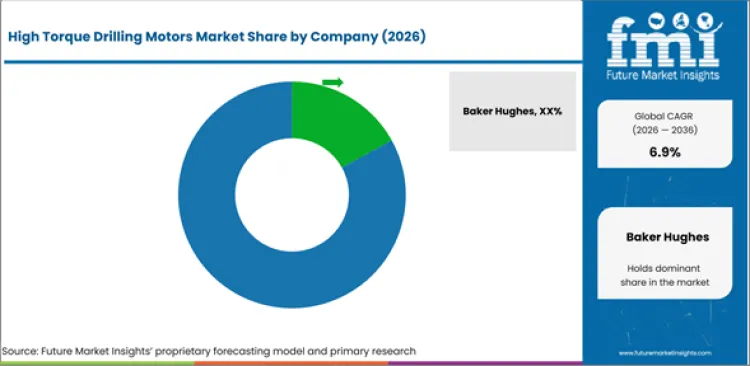
Baker Hughes, SLB, Halliburton, NOV, Weatherford, BICO Drilling Tools, APS Technology, and Cougar Drilling Solutions are profiled in the market.
- Competition is based on torque power section depth and proven field performance in lateral wells.
- Rental redress networks separate larger suppliers from smaller firms during active drilling cycles.
- Directional integration matters in packages that bundle motors with measurement and steering services.
- Specialist suppliers compete through custom mud motor assemblies and faster regional repair support.
Integrated service companies compete by combining motors with drilling services and rig-side engineering. Baker Hughes and SLB bring broad well construction portfolios. Halliburton and Weatherford add directional drilling coverage. NOV adds motor technology depth. Buyers give these suppliers more consideration for well plans that require bit-design fit.
Contract evidence shows how motor demand is packaged inside larger well construction awards. Weatherford won a five-year Bapco Upstream contract in June 2024 for directional drilling services. NOV reported a five-year North Sea relationship in October 2024 for downhole broadband and automation technology. These examples show that drilling motor access is often packaged inside service-led contracts.
Specialist suppliers can still win regional jobs that need customization and quick redress. BICO Drilling Tools, APS Technology, and Cougar Drilling Solutions are positioned well in land programs that value repair speed. Large offshore tenders favor vendors with digital oilfield solutions and integrated field coverage.
How do top high torque drilling motors companies compare?
Integrated suppliers lead on service coverage. Specialists compete on custom motor assembly and redress speed.
| Company | Power Section | Redress Network | Steering Fit | Channel Reach | Footprint |
|---|---|---|---|---|---|
| Baker Hughes | Very Strong | Very Strong | Very Strong | Very Strong | Global |
| SLB | Very Strong | Very Strong | Very Strong | Very Strong | Global |
| Halliburton | Very Strong | Strong | Very Strong | Very Strong | Global |
| NOV | Strong | Moderate | Very Strong | Strong | Global |
| Weatherford | Strong | Strong | Strong | Strong | Global |
| Cougar Drilling Solutions | Strong | Strong | Moderate | Moderate | North America |
| BICO Drilling Tools | Moderate | Strong | Moderate | Moderate | North America |
| APS Technology | Moderate | Low to Moderate | Strong | Moderate | Global |
Source: Future Market Insights competitive analysis, 2026.
Who are the key players in the high torque drilling motors market?
Baker Hughes, SLB, Halliburton, NOV, and Weatherford are listed with specialist motor and rental firms.
Key global companies leading the high torque drilling motors market include:
- Baker Hughes
- SLB
- Halliburton
- NOV
- Weatherford
Key Developments in High Torque Drilling Motors Market
- In May 2026, Baker Hughes expanded its integrated well construction contract with Petrobras. The scope supports deepwater drilling technologies and field service packages.
- In March 2025, SLB won a Woodside Energy contract for the Trion ultra-deepwater development. The program covers 18 wells over a three-year timeframe.
- In April 2026, Halliburton acquired Sekal AS from Sumitomo Corporation. The acquisition strengthens automated drilling services and digital well construction capability.
Key Players in the High Torque Drilling Motors Market
Integrated Well Construction Leaders
- Baker Hughes
- SLB
- Halliburton
- NOV
- Weatherford
Specialist Motor and Rental Firms
- BICO Drilling Tools
- APS Technology
- Cougar Drilling Solutions
High Torque Drilling Motors Market - Report Scope
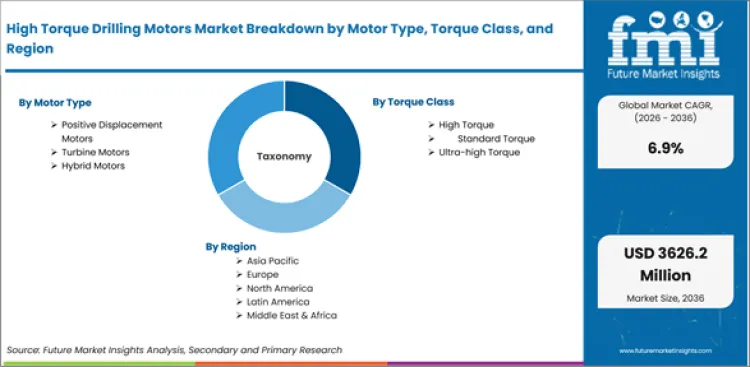
| Parameter | Details |
|---|---|
| Forecast period | 2026 to 2036 |
| Historical period | 2021 to 2025 |
| Quantitative unit | Revenue in USD million |
| By motor type | Positive displacement motors, turbine motors, hybrid motors |
| By torque class | Standard torque, high torque, ultra-high torque |
| By application | Directional drilling, horizontal wells, deep / HPHT wells, other applications |
| By end use | Onshore, offshore |
| By sales mix | Rental / service, direct sale |
| Regions covered | North America, Latin America, Europe, East Asia, South Asia and Pacific, Middle East and Africa |
| Countries covered | China, India, United States, South Korea, United Kingdom, Japan, Germany, France |
| Key companies profiled | Baker Hughes, SLB, Halliburton, NOV, Weatherford, Cougar Drilling Solutions, BICO Drilling Tools, APS Technology |
| Approach | Bottom-up and top-down methodology using well activity, torque class penetration, rental behavior, and verified supplier portfolios |
Source: Future Market Insights, 2026.
High Torque Drilling Motors Market - Scope & Definition
| Attribute | Detail |
|---|---|
| Market Definition | Downhole drilling motors that convert drilling fluid energy into bit rotation for directional, horizontal, and deep well construction. |
| Functions Covered | Torque delivery, bit rotation, build-rate control, well placement support, high-temperature drilling support, and drilling efficiency improvement. |
| Applications Covered | Directional drilling, horizontal wells, deep and HPHT wells, sidetracks, offshore wells, geothermal wells, and selected workover drilling operations. |
| End-Use Industries | Oil and gas exploration and production, drilling contractors, directional drilling service firms, geothermal drilling operators, and oilfield equipment rental companies. |
| Grades Covered | Standard torque, high torque, and ultra-high torque motor configurations across positive displacement, turbine, and hybrid motor types. |
| Inclusions | Motor assemblies, power sections, bearing assemblies, rental and service channels, direct sales, field support, inspection, and redress activity tied to drilling motors. |
| Exclusions | Surface rig motors, electric top drives, mud pumps, drill bits sold without motor assemblies, mining-only drill motors, and general industrial motors. |
High Torque Drilling Motors Market - Research Methodology
| Method | Description |
|---|---|
| Primary Research | FMI analyst interviews with operators, directional drilling providers, rig contractors, rental tool companies, and oilfield service distributors across major drilling markets. |
| Desk Research | Review of official well activity data, energy agency releases, regulator publications, company product information, contract disclosures, and drilling service references. |
| Market Sizing & Forecasting | Hybrid sizing approach using motor rental revenue, direct tool sales, well counts, horizontal drilling intensity, torque class penetration, and country drilling mix. |
| Data Validation | Cross-verification using company portfolios, country drilling evidence, field service behavior, rental channel signals, and adjacent drilling tools demand. |
High Torque Drilling Motors Market Breakdown by Motor Type, Torque Class, Application, End Use, Sales Mix, and Region
High Torque Drilling Motors Market Segmented by Motor Type:
- Positive Displacement Motors
- Turbine Motors
- Hybrid Motors
High Torque Drilling Motors Market Segmented by Torque Class:
- Standard Torque
- High Torque
- Ultra-high Torque
High Torque Drilling Motors Market Segmented by Application:
- Directional Drilling
- Horizontal Wells
- Deep / HPHT Wells
- Other Applications
High Torque Drilling Motors Market Segmented by End Use:
- Onshore
- Offshore
High Torque Drilling Motors Market Segmented by Sales Mix:
- Rental / Service
- Direct Sale
High Torque Drilling Motors Market by Region:
- North America
- Latin America
- Europe
- East Asia
- South Asia and Pacific
- Middle East and Africa
Research Sources and Bibliography
- U.S. Energy Information Administration. (2025, November 5). Rapid declines from horizontal wells require more drilling to sustain output.
- Baker Hughes. (2026, June 18). Rig count overview and summary count.
- North Sea Transition Authority. (2025, October 28). Keep wells in good shape to sustain production and support suppliers, operators told.
- North Sea Transition Authority. (2025). Wells insights report.
- German Extractive Industries Transparency Initiative. (2025, January). Deep geothermal energy.
- Federal Ministry for Economic Affairs and Energy. (2025, December 11). Geothermal energy - expansion accelerated.
- Government of the United Kingdom. (2024, November 28). Future of the subsurface: Geothermal energy generation in the UK annex.
- Association Française des Professionnels de la Géothermie. (2025, February 18). Sector study 2024 - Deep geothermal energy.
- REN21. (2025, June). Renewables 2025 global status report.
- Japan-Germany Energy Partnership. (2025, April 17). The status quo of geothermal energy in Japan and Germany.
- U.S. Energy Information Administration. (2025, May 3). China country analysis brief.
- CNOOC Limited. (2025, February 20). CNOOC Limited brings on-stream Luda 5-2 North Oilfield Phase II Development Project.
- Ministry of Trade, Industry and Energy. (2024, November 27). East Sea Blue Whale gas drilling plan granted final approval.
- U.S. Energy Information Administration. (2026). South Korea country overview.
- International Energy Agency. (2025, November 25). Korea: Countries and regions.
- Press Information Bureau, Government of India. (2025, January 7). Year End Review 2024- Ministry of Petroleum and Natural Gas.
- Press Information Bureau, Government of India. (2025, April 15). Shri Hardeep S Puri at OALP IX and Special DSF Bid Round signing ceremony.
- Press Information Bureau, Government of India. (2025, July 29). India witnesses renewed spurt in oil and gas exploration.
- Baker Hughes. (2024, February 21). Baker Hughes secures major multi-year well construction services contract with Petrobras.
- Baker Hughes. (2026, May 26). Baker Hughes extends and expands integrated well construction contract with Petrobras.
- Weatherford. (2024, June 6). Weatherford awarded drilling services contract from Bapco Energies.
- SLB. (2025, March 31). SLB awarded major drilling contract by Woodside Energy for ultra-deepwater Trion development.
- Halliburton. (2026, April 2). Halliburton acquires Sekal AS from Sumitomo Corporation to accelerate drilling automation services.
- NOV. (2024, October 24). NOV reports third quarter 2024 results.
The bibliography is provided for reader reference and uses primary government, regulatory, official company, or official industry publications.
This Report Answers
- What is the current and future revenue size of the High Torque Drilling Motors Market from 2026 to 2036?
- What CAGR is expected for high torque drilling motors during the forecast period from 2026 to 2036?
- Which motor type is projected to lead demand in the High Torque Drilling Motors Market in 2026?
- Which torque class is expected to account for a notable share of market demand in 2026?
- What drilling applications create the clearest need for high torque motor assemblies?
- How do horizontal wells and HPHT wells change buyer specifications for drilling motors?
- Which selected countries are expected to show a notable growth outlook for high torque drilling motor demand?
- Which companies are most relevant in high torque drilling motors and related drilling services?
- What products and applications are included within the High Torque Drilling Motors Market scope?
- How does FMI size and forecast high torque drilling motor demand across regions and segments?
Frequently Asked Questions
What is the global market demand for High Torque Drilling Motors Market in 2026?
In 2026, the global High Torque Drilling Motors Market is expected to be worth USD 1860.7 million with rental demand leading access.
What is the expected value of the High Torque Drilling Motors Market by 2036?
The High Torque Drilling Motors Market is projected to reach USD 3626.2 million by 2036 with horizontal and deep wells supporting demand.
What CAGR is forecast for the High Torque Drilling Motors Market from 2026 to 2036?
The High Torque Drilling Motors Market is forecast to expand at a 6.9% CAGR between 2026 and 2036.
Which motor type is expected to lead the High Torque Drilling Motors Market in 2026?
Positive Displacement Motors are projected to account for 68.0% share in 2026 through strong torque delivery in directional wells.
Which application is expected to hold a notable share in 2026?
Directional Drilling is projected to account for 44.0% share in 2026. Planned well placement remains the core motor use case.
Which country is expected to grow fastest in the High Torque Drilling Motors Market?
China is expected to record a 7.8% CAGR through 2036 with deep and offshore drilling programs shaping demand.
What does the High Torque Drilling Motors Market include?
The market covers positive displacement motors and turbine motors. Hybrid downhole motors are also included for directional and deep HPHT wells.
How does FMI forecast the High Torque Drilling Motors Market?
FMI uses well activity and torque class mix for forecasting. The model also checks rental use and country drilling evidence. Supplier portfolios and end-use demand are used for validation.
Which high torque drilling motor is preferred for horizontal wells?
Positive displacement motors are usually preferred for horizontal wells. They deliver high bit torque at controlled speeds during lateral drilling.
How much does a high torque drilling motor cost to rent?
Rental cost varies by torque class and location. Buyers compare the daily rental rate with service scope and expected rig-time savings.
What is the difference between high torque and ultra-high torque drilling motors?
High torque motors suit many curve and lateral sections. Ultra-high torque motors use stronger assemblies for harsher HPHT or large-diameter drilling.
How long does a high torque drilling motor last downhole?
Run life depends on mud chemistry and temperature. Weight-on-bit and formation abrasiveness are checked before suppliers are approved.
Preview the report firsthand - request a free sample
Get SampleGet the brochure for pricing and purchase details.
Get PDFTable of Content
- Key Takeaways
- Market Size and CAGR
- Top Growth Driver
- Fastest Growing Segment
- Leading Region
- Key Companies
- Emerging Opportunities
- Executive Summary
- Global Market Outlook
- Demand-side Trends
- Supply-side Trends
- Technology Roadmap Analysis
- Analysis and Recommendations
- Analyst Perspective (What is happening? Why now? What should investors know?)
- Key Questions Answered
- How large is the market?
- What is the CAGR?
- What are key trends?
- Which region dominates?
- Who are the leaders?
- Market Overview
- Market Coverage / Taxonomy
- Market Definition / Scope / Limitations
- Research Methodology
- Chapter Orientation
- Analytical Lens and Working Hypotheses
- Market Structure, Signals, and Trend Drivers
- Benchmarking and Cross-market Comparability
- Market Sizing, Forecasting, and Opportunity Mapping
- Research Design and Evidence Framework
- Desk Research Programme (Secondary Evidence)
- Expert Input and Fieldwork (Primary Evidence)
- Tooling, Models, and Reference Databases
- Data Engineering and Model Build
- Quality Assurance and Audit Trail
- Market Background
- Market Dynamics (Drivers, Restraints, Opportunity, Trends)
- Scenario Forecast (Optimistic, Likely, Conservative)
- Impact Analysis
- AI Impact
- Sustainability Impact
- Regulatory Impact
- Technology Impact
- Consumer / Buyer Analysis
- Purchase Drivers
- Adoption Barriers
- Buyer Journey
- Opportunity Map Analysis
- Product Life Cycle Analysis
- Supply Chain Analysis
- Investment Feasibility Matrix
- Value Chain Analysis
- PESTLE and Porter's Analysis
- Regulatory Landscape
- Regional Parent Market Outlook
- Production and Consumption Statistics
- Import and Export Statistics
- Global Market Analysis and Forecast, 2021 to 2036
- Historical Market Size Value (USD Million) & Volume (Unit) Analysis, 2021 to 2025
- Current and Future Market Size Value (USD Million) & Volume (Unit) Projections, 2026 to 2036
- Y-o-Y Growth Trend Analysis
- Absolute $ Opportunity Analysis
- Global Market Pricing Analysis, 2021 to 2036
- Global Market Analysis and Forecast, By Motor Type, 2021 to 2036
- Introduction / Key Findings
- Historical Market Size Value (USD Million) & Volume (Unit) Analysis By Motor Type, 2021 to 2025
- Current and Future Market Size Value (USD Million) & Volume (Unit) Analysis and Forecast By Motor Type, 2026 to 2036
- Positive Displacement Motors
- Turbine Motors
- Hybrid Motors
- Positive Displacement Motors
- Y-o-Y Growth Trend Analysis By Motor Type, 2021 to 2025
- Absolute $ Opportunity Analysis By Motor Type, 2026 to 2036
- Global Market Analysis and Forecast, By Torque Class, 2021 to 2036
- Introduction / Key Findings
- Historical Market Size Value (USD Million) & Volume (Unit) Analysis By Torque Class, 2021 to 2025
- Current and Future Market Size Value (USD Million) & Volume (Unit) Analysis and Forecast By Torque Class, 2026 to 2036
- High Torque
- Standard Torque
- Ultra-high Torque
- High Torque
- Y-o-Y Growth Trend Analysis By Torque Class, 2021 to 2025
- Absolute $ Opportunity Analysis By Torque Class, 2026 to 2036
- Global Market Analysis and Forecast, By Application, 2021 to 2036
- Introduction / Key Findings
- Historical Market Size Value (USD Million) & Volume (Unit) Analysis By Application, 2021 to 2025
- Current and Future Market Size Value (USD Million) & Volume (Unit) Analysis and Forecast By Application, 2026 to 2036
- Directional Drilling
- Horizontal Wells
- Deep / HPHT Wells
- Directional Drilling
- Y-o-Y Growth Trend Analysis By Application, 2021 to 2025
- Absolute $ Opportunity Analysis By Application, 2026 to 2036
- Global Market Analysis and Forecast, By End Use, 2021 to 2036
- Introduction / Key Findings
- Historical Market Size Value (USD Million) & Volume (Unit) Analysis By End Use, 2021 to 2025
- Current and Future Market Size Value (USD Million) & Volume (Unit) Analysis and Forecast By End Use, 2026 to 2036
- Onshore
- Offshore
- Onshore
- Y-o-Y Growth Trend Analysis By End Use, 2021 to 2025
- Absolute $ Opportunity Analysis By End Use, 2026 to 2036
- Global Market Analysis and Forecast, By Sales Mix, 2021 to 2036
- Introduction / Key Findings
- Historical Market Size Value (USD Million) & Volume (Unit) Analysis By Sales Mix, 2021 to 2025
- Current and Future Market Size Value (USD Million) & Volume (Unit) Analysis and Forecast By Sales Mix, 2026 to 2036
- Rental and Service
- Direct Sale
- Rental and Service
- Y-o-Y Growth Trend Analysis By Sales Mix, 2021 to 2025
- Absolute $ Opportunity Analysis By Sales Mix, 2026 to 2036
- Global Market Analysis and Forecast, By Region, 2021 to 2036
- Introduction
- Historical Market Size Value (USD Million) & Volume (Unit) Analysis By Region, 2021 to 2025
- Current Market Size Value (USD Million) & Volume (Unit) Analysis and Forecast By Region, 2026 to 2036
- North America
- Latin America
- Western Europe
- Eastern Europe
- East Asia
- South Asia and Pacific
- Middle East & Africa
- Market Attractiveness Analysis By Region
- North America Market Analysis and Forecast, By Country, 2021 to 2036
- Historical Market Size Value (USD Million) & Volume (Unit) Trend Analysis By Market Taxonomy, 2021 to 2025
- Market Size Value (USD Million) & Volume (Unit) Forecast By Market Taxonomy, 2026 to 2036
- By Country
- USA
- Canada
- Mexico
- By Motor Type
- By Torque Class
- By Application
- By End Use
- By Sales Mix
- By Country
- Market Attractiveness Analysis
- By Country
- By Motor Type
- By Torque Class
- By Application
- By End Use
- By Sales Mix
- Key Takeaways
- Latin America Market Analysis and Forecast, By Country
- Historical Market Size Value (USD Million) & Volume (Unit) Trend Analysis By Market Taxonomy, 2021 to 2025
- Market Size Value (USD Million) & Volume (Unit) Forecast By Market Taxonomy, 2026 to 2036
- By Country
- Brazil
- Chile
- Rest of Latin America
- By Motor Type
- By Torque Class
- By Application
- By End Use
- By Sales Mix
- By Country
- Market Attractiveness Analysis
- By Country
- By Motor Type
- By Torque Class
- By Application
- By End Use
- By Sales Mix
- Key Takeaways
- Western Europe Market Analysis and Forecast, By Country
- Historical Market Size Value (USD Million) & Volume (Unit) Trend Analysis By Market Taxonomy, 2021 to 2025
- Market Size Value (USD Million) & Volume (Unit) Forecast By Market Taxonomy, 2026 to 2036
- By Country
- Germany
- UK
- Italy
- Spain
- France
- Nordic
- BENELUX
- Rest of Western Europe
- By Motor Type
- By Torque Class
- By Application
- By End Use
- By Sales Mix
- By Country
- Market Attractiveness Analysis
- By Country
- By Motor Type
- By Torque Class
- By Application
- By End Use
- By Sales Mix
- Key Takeaways
- Eastern Europe Market Analysis and Forecast, By Country
- Historical Market Size Value (USD Million) & Volume (Unit) Trend Analysis By Market Taxonomy, 2021 to 2025
- Market Size Value (USD Million) & Volume (Unit) Forecast By Market Taxonomy, 2026 to 2036
- By Country
- Russia
- Poland
- Hungary
- Balkan & Baltic
- Rest of Eastern Europe
- By Motor Type
- By Torque Class
- By Application
- By End Use
- By Sales Mix
- By Country
- Market Attractiveness Analysis
- By Country
- By Motor Type
- By Torque Class
- By Application
- By End Use
- By Sales Mix
- Key Takeaways
- East Asia Market Analysis and Forecast, By Country
- Historical Market Size Value (USD Million) & Volume (Unit) Trend Analysis By Market Taxonomy, 2021 to 2025
- Market Size Value (USD Million) & Volume (Unit) Forecast By Market Taxonomy, 2026 to 2036
- By Country
- China
- Japan
- South Korea
- By Motor Type
- By Torque Class
- By Application
- By End Use
- By Sales Mix
- By Country
- Market Attractiveness Analysis
- By Country
- By Motor Type
- By Torque Class
- By Application
- By End Use
- By Sales Mix
- Key Takeaways
- South Asia and Pacific Market Analysis and Forecast, By Country
- Historical Market Size Value (USD Million) & Volume (Unit) Trend Analysis By Market Taxonomy, 2021 to 2025
- Market Size Value (USD Million) & Volume (Unit) Forecast By Market Taxonomy, 2026 to 2036
- By Country
- India
- ASEAN
- Australia & New Zealand
- Rest of South Asia and Pacific
- By Motor Type
- By Torque Class
- By Application
- By End Use
- By Sales Mix
- By Country
- Market Attractiveness Analysis
- By Country
- By Motor Type
- By Torque Class
- By Application
- By End Use
- By Sales Mix
- Key Takeaways
- Middle East & Africa Market Analysis and Forecast, By Country
- Historical Market Size Value (USD Million) & Volume (Unit) Trend Analysis By Market Taxonomy, 2021 to 2025
- Market Size Value (USD Million) & Volume (Unit) Forecast By Market Taxonomy, 2026 to 2036
- By Country
- Kingdom of Saudi Arabia
- Other GCC Countries
- Türkiye
- South Africa
- Other African Union
- Rest of Middle East & Africa
- By Motor Type
- By Torque Class
- By Application
- By End Use
- By Sales Mix
- By Country
- Market Attractiveness Analysis
- By Country
- By Motor Type
- By Torque Class
- By Application
- By End Use
- By Sales Mix
- Key Takeaways
- Key Countries Market Analysis
- USA
- Pricing Analysis
- Market Share Analysis, 2025
- By Motor Type
- By Torque Class
- By Application
- By End Use
- By Sales Mix
- Canada
- Pricing Analysis
- Market Share Analysis, 2025
- By Motor Type
- By Torque Class
- By Application
- By End Use
- By Sales Mix
- Mexico
- Pricing Analysis
- Market Share Analysis, 2025
- By Motor Type
- By Torque Class
- By Application
- By End Use
- By Sales Mix
- Brazil
- Pricing Analysis
- Market Share Analysis, 2025
- By Motor Type
- By Torque Class
- By Application
- By End Use
- By Sales Mix
- Chile
- Pricing Analysis
- Market Share Analysis, 2025
- By Motor Type
- By Torque Class
- By Application
- By End Use
- By Sales Mix
- Germany
- Pricing Analysis
- Market Share Analysis, 2025
- By Motor Type
- By Torque Class
- By Application
- By End Use
- By Sales Mix
- UK
- Pricing Analysis
- Market Share Analysis, 2025
- By Motor Type
- By Torque Class
- By Application
- By End Use
- By Sales Mix
- Italy
- Pricing Analysis
- Market Share Analysis, 2025
- By Motor Type
- By Torque Class
- By Application
- By End Use
- By Sales Mix
- Spain
- Pricing Analysis
- Market Share Analysis, 2025
- By Motor Type
- By Torque Class
- By Application
- By End Use
- By Sales Mix
- France
- Pricing Analysis
- Market Share Analysis, 2025
- By Motor Type
- By Torque Class
- By Application
- By End Use
- By Sales Mix
- India
- Pricing Analysis
- Market Share Analysis, 2025
- By Motor Type
- By Torque Class
- By Application
- By End Use
- By Sales Mix
- ASEAN
- Pricing Analysis
- Market Share Analysis, 2025
- By Motor Type
- By Torque Class
- By Application
- By End Use
- By Sales Mix
- Australia & New Zealand
- Pricing Analysis
- Market Share Analysis, 2025
- By Motor Type
- By Torque Class
- By Application
- By End Use
- By Sales Mix
- China
- Pricing Analysis
- Market Share Analysis, 2025
- By Motor Type
- By Torque Class
- By Application
- By End Use
- By Sales Mix
- Japan
- Pricing Analysis
- Market Share Analysis, 2025
- By Motor Type
- By Torque Class
- By Application
- By End Use
- By Sales Mix
- South Korea
- Pricing Analysis
- Market Share Analysis, 2025
- By Motor Type
- By Torque Class
- By Application
- By End Use
- By Sales Mix
- Russia
- Pricing Analysis
- Market Share Analysis, 2025
- By Motor Type
- By Torque Class
- By Application
- By End Use
- By Sales Mix
- Poland
- Pricing Analysis
- Market Share Analysis, 2025
- By Motor Type
- By Torque Class
- By Application
- By End Use
- By Sales Mix
- Hungary
- Pricing Analysis
- Market Share Analysis, 2025
- By Motor Type
- By Torque Class
- By Application
- By End Use
- By Sales Mix
- Kingdom of Saudi Arabia
- Pricing Analysis
- Market Share Analysis, 2025
- By Motor Type
- By Torque Class
- By Application
- By End Use
- By Sales Mix
- Türkiye
- Pricing Analysis
- Market Share Analysis, 2025
- By Motor Type
- By Torque Class
- By Application
- By End Use
- By Sales Mix
- South Africa
- Pricing Analysis
- Market Share Analysis, 2025
- By Motor Type
- By Torque Class
- By Application
- By End Use
- By Sales Mix
- USA
- Market Structure Analysis
- Competition Dashboard
- Competition Benchmarking
- Market Share Analysis of Top Players
- By Regional
- By Motor Type
- By Torque Class
- By Application
- By End Use
- By Sales Mix
- Emerging Startups
- Innovation Benchmarking
- Competition Analysis
- Competition Deep Dive
- Baker Hughes
- Overview
- Product Portfolio
- Profitability by Market Segments (Product/Region/Sales Channel)
- Sales Footprint
- Strategy Overview
- Marketing Strategy
- Product Strategy
- Channel Strategy
- SLB
- Halliburton
- NOV
- Weatherford
- Baker Hughes
- Case Studies
- Success Stories
- Recent Developments
- Competition Deep Dive
- Assumptions & Acronyms Used


