

- Market Size (2026)
- USD 1.8 Bn
- Forecast (2036)
- USD 8.2 Bn
- CAGR (2026 to 2036)
- 16.4%
How big is the Human Microbiome Market in 2026?
USD 1.8 billion in 2026 and USD 8.2 billion by 2036 at a 16.4% CAGR.
Demand in the human microbiome market is projected to expand at a 16.4% CAGR between 2026 and 2036, increasing valuation from USD 1.8 billion to USD 8.2 billion. Growth depends on converting microbial associations into products with measurable composition and clinical effect. NIST released RM 8048 in March 2025 to help laboratories compare metagenomic and metabolomic results. Comparable measurements reduce repeated method development and strengthen evidence used across microbiome therapeutics, diagnostics and contract research.
Country forecasts separate research depth from commercial delivery, and Japan's projected CAGR of 16.3% exceeds Germany's 15.2% CAGR as national cohort data support patient stratification. NIBN JMD reported 2,273 samples from 2,068 participants in February 2026, giving local developers a defined evidence base for molecular diagnostics and biomarker design. Germany has coded clinical procedures but less centralized product supply, so the rates describe forecast pace and not the current market size.
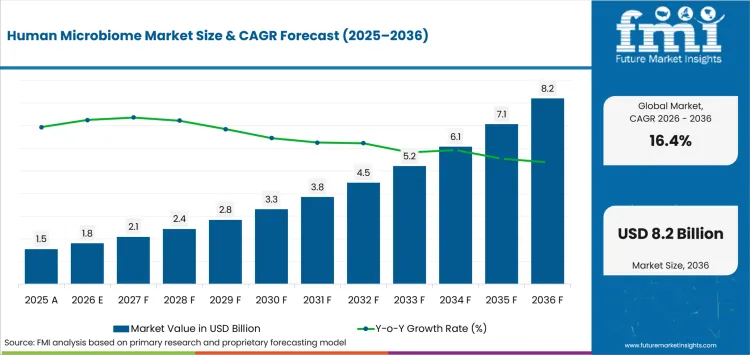
Key Takeaways of Human Microbiome Market
- Regulated microbiota products and late-stage clinical programs convert measured microbial functions into treatment decisions that support commercial demand.
- Microbiome therapeutics are projected to account for 46.0% share in 2026 as treatment formats generate direct clinical revenue.
- Gastrointestinal disorders are estimated at 39.0% of application demand in 2026 because recurrent infection provides a defined treatment endpoint.
- Sequencing technologies are forecast to represent 41.0% by technology in 2026 as sponsors require reproducible strain identification and response measurement.
- Biological variability slows adoption because donor-derived and defined bacterial products require consistent identity, potency and contamination controls across released batches.
- Seres Therapeutics, Inc., Ferring Pharmaceuticals, Vedanta Biosciences, MaaT Pharma, Enterome SA, Microbiotica Ltd., BiomeBank and Nestlé Health Science are some key players.
Analyst Perspective
“A microbiome program becomes commercially credible once sponsors connect product composition with a reproducible biological response and a clinical endpoint. Strong developers control strain or donor inputs, identify patients likely to respond and maintain those controls without making manufacturing economics unworkable.”
- Anurag Sharma, Principal Consultant, Future Market Insights
How is the Human Microbiome Market segmented?
The human microbiome market is segmented by product, application, technology, end user, sample type and region.
Product includes microbiome therapeutics, diagnostics, research tools and services, while application covers gastrointestinal, metabolic, oncology, neurological and immune disorders. Technology includes sequencing, culture methods and bioinformatics or artificial intelligence, and end users comprise product sponsors, research institutes and contract research organizations. Sample types cover gut, oral, skin and other microbiomes, with regional analysis following the standard FMI country taxonomy.
Why do microbiome therapeutics lead demand within the product category?
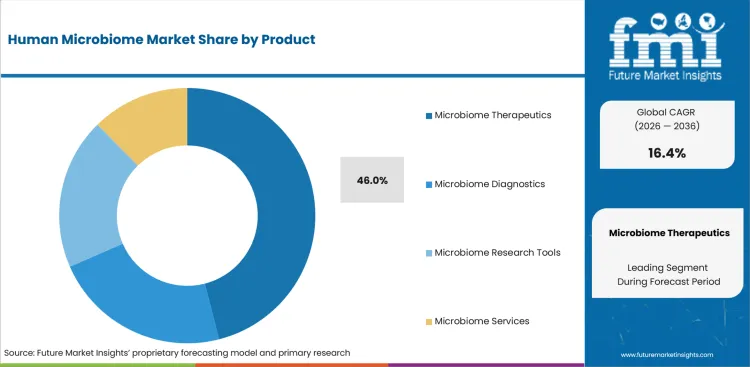
Therapeutics convert microbial composition into a treatment claim tied to a controlled dose and a measurable clinical endpoint. Approved products establish development expectations for microbial therapeutic products across donor-derived and defined bacterial formats.
- By product, microbiome therapeutics are estimated to hold 46.0% in 2026 owing to direct treatment revenue across live biotherapeutics, fecal microbiota-based therapeutics and engineered microbial therapeutics.
- Commercial scale requires donor or strain identity, potency testing and storage controls that protect viable composition until administration. Diagnostics and research services generate earlier revenue, but they do not carry the same treatment value per patient.
Why do gastrointestinal disorders lead demand within the application category?
Gastrointestinal programs have a direct intervention route because the gut can be sampled repeatedly and recurrence can be measured following treatment. Related bacteriophage therapeutics face the same requirement for indication-specific clinical evidence rather than broad biological association.
- In 2026, gastrointestinal disorders are expected to lead application demand with 39.0% share because recurrent C. difficile infection provides a defined recurrence-prevention endpoint.
- Metabolic, oncology and immune programs must separate the microbiome product effect from diet, concurrent therapy and background variation. That evidence burden lengthens trials and raises the value of patient-selection markers tied to clinical response.
Why do sequencing technologies lead demand within the technology category?
Sequencing establishes which organisms are present and whether treatment changes the intended microbial community. Whole-genome methods improve microbial identification at strain level, while metatranscriptomics adds functional information that requires aligned sampling and analysis across sites.
- By technology, sequencing technologies are forecast to represent 41.0% in 2026 driven by strain identification, product characterization and longitudinal response measurement across clinical programs.
- Laboratories compare platforms by resolution, throughput and reproducibility rather than read volume alone. Culture methods remain essential for viable strain isolation, and bioinformatics must convert sequence data into decisions that sponsors can validate across clinical cohorts.
Why do pharmaceutical and biotechnology companies lead demand within the end user category?
Pharmaceutical and biotechnology companies decide whether a microbial signal becomes a medicine, diagnostic marker or discontinued program. Outsourced laboratories can provide sequencing and automated microbial detection, but sponsors retain accountability for manufacturing controls, submissions and clinical endpoints.
- Pharmaceutical and biotechnology companies are set to lead the end user category with 44.0% share in 2026 due to direct responsibility for product quality and clinical evidence.
- Academic institutes expand discovery and cohort evidence, while contract research organizations provide specialist methods and multicenter execution. Sponsor demand rises when external partners reproduce methods, preserve chain of custody and return data suitable for regulatory review.
What are the drivers, restraints and opportunities in the Human Microbiome Market?
Approved treatment pathways expand commercial demand, while biological variability raises release and trial costs. Defined strains, reference controls and patient-selection models provide the clearest route to better conversion.
- Driver: Approved microbiota products give sponsors a proven route from clinical evidence to specialist treatment revenue.
- Restraint: Donor screening, strain consistency and analytical variation can delay batch release or weaken comparisons across clinical sites.
- Opportunity: Defined consortia and multi-omics can narrow enrollment to patients with measurable biological response.
Approved Products Establish a Commercial Treatment Route
Regulatory approval changes funding and launch decisions because sponsors can compare new programs with an established treatment route. Ferring reported in October 2025 that more than 5,000 patients had received REBYOTA, alongside an announcement that it was reducing commercial efforts and exploring strategic options for the product. Clinical diagnostic services remain relevant because treatment centers need eligibility checks, outcome tracking and evidence for payer discussions.
Biological Variation Raises Development and Release Costs
Donor-derived products require pathogen screening and documented chain of custody across collection, processing and administration. Defined probiotic strains reduce donor variability but add identity, ratio and potency requirements across each batch. Different extraction or sequencing methods can force sponsors to repeat analyses or narrow claims.
Patient Selection Improves Trial Efficiency
Developers of oral microbiome products combine microbial profiles with metabolomic and clinical measures during enrollment. Separate dental oral microbiome reference ranges remain necessary because saliva and plaque represent different communities from fecal samples. Revenue is available in companion assays, trial services and defined products that reduce enrollment noise.
Which country CAGRs are profiled in the Human Microbiome Market?
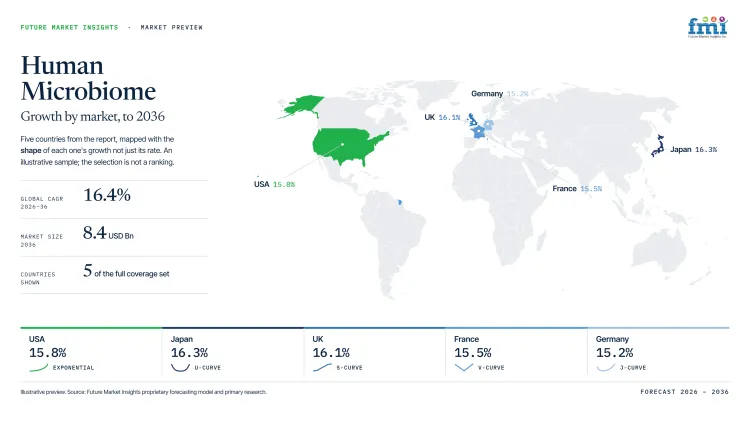
| Country | CAGR |
|---|---|
| Japan | 16.3% |
| United Kingdom | 16.1% |
| USA | 15.8% |
| France | 15.5% |
| Germany | 15.2% |
How do country-level CAGRs compare in the Human Microbiome Market?
The country forecasts are tightly grouped across the human microbiome market, with only 1.1 percentage points separating Japan and Germany. Japan, the UK and the USA form a closely aligned group, while France and Germany follow within a narrow range. The limited spread suggests that microbiome research, therapeutic development and precision health applications are advancing at a similar pace across major biotechnology markets.
- Japan benefits from strong microbiome research and growing interest in microbiome-based healthcare solutions.
- The UK supports growth through active biotechnology innovation and microbiome-focused clinical research.
- The USA reflects strong demand driven by microbiome therapeutics development and precision medicine initiatives.
- France continues to expand through increasing investment in life sciences and microbiome applications.
- Germany maintains steady growth through established biotechnology capabilities and translational research efforts.
Comparable CAGRs may still reflect different market conditions because research funding, clinical trial activity, regulatory pathways and commercialization strategies vary across countries. The full report provides country-level CAGR analysis across North America, Latin America, Europe, East Asia, South Asia, Oceania and the Middle East and Africa.
Country-wise Analysis
- Japan combines public cohort resources with PMDA guidance for FMT product quality, giving developers local evidence and an early framework for donor-derived products across hospitals and domestic research programs. Adoption of human microbiome products in Japan is estimated to expand at 16.3% CAGR through 2036, supported by PMDA's October 2025 guidance on donor eligibility and starting materials plus manufacturing controls for variable biological inputs. Cohort data can improve biomarker design and patient selection, but developers must also validate pathogen testing, lot comparability, storage conditions and documented cold-chain handling before local evidence supports clinical scale-up, approval planning and dependable commercial release.
- United Kingdom hospital specialists can deliver intestinal microbiota within a medicines framework that supports regulated services, clinical trials and nationally coordinated research programs across national hospital and research networks. The United Kingdom's human microbiome outlook is anticipated to advance at 16.1% CAGR over the assessment period, shaped by the March 2026 government review of substances of human origin and future legislative alignment. Medicinal-product treatment clarifies sponsor duties for manufacturing, pharmacovigilance and clinical governance, but unresolved cross-border rules and limited evidence outside selected indications can extend authorization planning, increase compliance costs and delay routine purchasing before wider service coverage develops.
- The USA combines approved microbiota products with specialist treatment centers and active FDA enforcement against direct-to-patient fecal material sold through online and clinic-linked channels without an approved application. In the USA, human microbiome demand is predicted to advance at 15.8% CAGR through 2036, influenced by biologics pathways and growing clinical experience in recurrent C. difficile infection across multiple indications. Regulatory precedent supports manufacturing investment and controlled distribution nationally, but the March 2025 MG Infusions warning letter confirms that weak donor screening, unsupported claims and unsupervised shipping can block access before specialist programs expand beyond approved or investigational use commercially.
- France places therapeutic stool collection, preparation and importation within a formal public-health code that assigns responsibilities across clinical services, collection sites, importers and pharmaceutical operations handling variable biological material. Human microbiome sales in France are forecast to expand at 15.5% CAGR by 2036, supported by the May 2026 authorization route for domestic collection and imported material. National controls improve traceability and qualified supply planning, but donor testing, transport documentation and import approval can lengthen lead times when domestic material cannot reliably cover documented patient demand across regional hospital networks or urgent clinical programs with validated donors and complete records.
- Germany records FMT delivery within its 2026 hospital procedure classification, giving treatment centers a consistent way to document colonoscopic and alternative administration routes plus patient-specific records across regional services. The German human microbiome sector is projected to record 15.2% CAGR during the assessment period, influenced by specialist clinical capacity and coded service delivery across specialist centers and hospital pharmacies. Procedure coding can support reimbursement records and hospital planning consistently, but decentralized preparation, donor screening and case-specific controls make national standardization difficult without centralized manufacturing, broader approved-product access and clearer responsibility for collection, transport and release decisions at scale nationwide.
Who are the notable companies in the Human Microbiome Market?
Seres Therapeutics, Inc., Ferring Pharmaceuticals, Vedanta Biosciences, MaaT Pharma, Enterome SA, Microbiotica Ltd., BiomeBank and Nestlé Health Science are the notable companies serving this market.
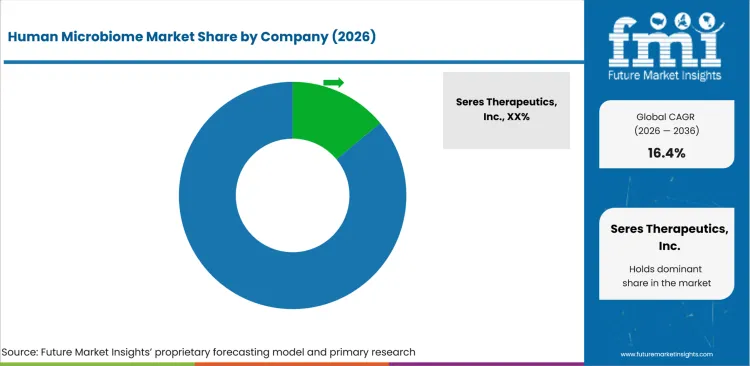
The competitive outlook is concentrated around a small number of approved or late-stage therapeutic platforms, while discovery companies compete in narrower oncology and biomarker applications. Entry requires controlled biological material and clinically attributable outcomes plus manufacturing records that regulators can review across batches. These requirements exclude general laboratory service companies that cannot support controlled product release or formal regulatory review.
- Ferring Pharmaceuticals and Nestlé Health Science hold commercial positions through REBYOTA and VOWST, while Seres Therapeutics retains a live-biotherapeutic pipeline after the completed VOWST asset sale.
- Vedanta Biosciences, MaaT Pharma and Microbiotica develop defined or pooled microbial products across recurrent infection, graft-versus-host disease, inflammatory bowel disease and oncology.
- Enterome converts microbial antigen discovery into synthetic peptide immunotherapies, while BiomeBank combines regulated donor-derived treatment with GMP production and strain discovery.
Competitive Benchmarking: Human Microbiome Market
| Company | Regulatory or Clinical Maturity | Controlled Product Evidence | Data or Discovery Capability | Geographic Reach |
|---|---|---|---|---|
| Seres Therapeutics, Inc. | Medium | High | High | USA clinical programs |
| Ferring Pharmaceuticals | High | High | Medium | USA commercial route and global operations |
| Vedanta Biosciences | High | High | High | Multinational Phase 3 program |
| MaaT Pharma | High | High | Medium | Europe with active EMA re-examination |
| Enterome SA | Medium | Medium | High | Europe and USA oncology programs |
| Microbiotica Ltd. | Medium | High | High | United Kingdom and European trials |
| BiomeBank | High | High | Medium | Australia with international partnerships |
| Nestlé Health Science | High | High | Medium | USA commercialization and global rights |
Key Developments in the Human Microbiome Market
- In July 2026, Enterome SA reported Phase 2 analyses linking EO2463-induced CD8 T-cell expansion with longer progression-free survival in indolent non-Hodgkin lymphoma. The company presented the induced immune response as a potential predictive biomarker for clinical benefit.
- In July 2026, Seres Therapeutics, Inc. reported that 12 of 15 SER-155 recipients achieved an immunosuppressive-free clinical response by Day 15 in immune checkpoint inhibitor-related enterocolitis. The same update reported no drug-related serious adverse events across the small investigator-sponsored cohort studied.
- In May 2026, Microbiotica Ltd. reported that its 41-patient MELODY-1 Phase 1b trial met all primary and secondary objectives for MB097 with pembrolizumab in advanced melanoma. The nine-strain product engrafted after dosing and produced no MB097-related serious adverse events.
Key Players in the Human Microbiome Market
Approved Microbiota Product Platforms
- Ferring Pharmaceuticals
- BiomeBank
- Nestlé Health Science
Defined Live Biotherapeutic Developers
- Seres Therapeutics, Inc.
- Vedanta Biosciences
- MaaT Pharma
Precision Microbiome and Immuno-oncology Platforms
- Enterome SA
- Microbiotica Ltd.
Human Microbiome Market - Report Scope
| Coverage field | Report scope |
|---|---|
| Market breakdown | By product, application, technology, end user, sample type and region. |
| Quantitative Units | Revenue in USD billion snd CAGR in %. |
| Market Definition | Commercial human microbiome therapeutics, diagnostics, research tools, analytical services and related sequencing or data technologies used across human health applications. |
| Regions Covered | North America, Latin America, Western Europe, Eastern Europe, East Asia, South Asia and Pacific and Middle East and Africa. |
| Countries Covered | Japan, United Kingdom, USA, France, Germany and 20+ countries included in the full report. |
| Key Companies Profiled | Seres Therapeutics, Inc., Ferring Pharmaceuticals, Vedanta Biosciences, MaaT Pharma, Enterome SA, Microbiotica Ltd., BiomeBank and Nestlé Health Science. |
| Forecast Period | 2026 to 2036. |
| Approach | Primary and secondary research with market triangulation. |
Human Microbiome Market - Research Methodology
| Method | Approach |
|---|---|
| Primary Research | FMI analysts gathered input from manufacturers, service providers, technology developers, distributors, end users, procurement teams, and subject-matter experts. Interviews examined purchasing decisions, product or service evaluation, adoption barriers, approval requirements, pricing considerations, and expectations for technical or commercial support. Respondents were also asked what evidence is required before a trial, pilot, or initial order develops into regular purchasing. |
| Desk Research | Desk research covered government statistics, regulatory publications, trade data, industry associations, technical literature, standards, company filings, product information, and official corporate announcements. Sources were reviewed for relevance, publication date, geographic coverage, and consistency with the defined market scope. Claims relating to performance, applications, approvals, capacity, investment, and commercial activity were retained only when supported by credible public evidence. |
| Market Sizing and Forecasting | The market model combined the baseline value with historical performance, segment structure, pricing and volume indicators, adoption levels, company participation, and country-level demand conditions. Forecast assumptions considered economic activity, investment trends, regulatory developments, technology adoption, purchasing cycles, supply availability, and barriers to wider market use. Segment and regional estimates were reconciled before the final market total was calculated. |
| Data Validation | Estimates were checked against multiple independent indicators, including public data, company activity, trade patterns, industry developments, and findings from primary interviews. Validation also tested whether products, services, applications, and company revenues fell within the defined market boundaries. Adjacent categories, unsupported claims, overlapping revenues, and activities without direct market relevance were excluded to reduce double counting and maintain consistency across segments and countries. |
Human Microbiome Market by Segments
Human Microbiome Market segmented by Product:
- Microbiome Therapeutics
- Live Biotherapeutic Products
- Fecal Microbiota-based Therapeutics
- Engineered Microbial Therapeutics
- Microbiome Diagnostics
- Microbiome Sequencing Kits
- Biomarker Detection Assays
- Metagenomic Analysis Solutions
- Microbiome Research Tools
- DNA Extraction Kits
- Microbial Culture Media
- Bioinformatics Software
- Microbiome Services
- Sequencing Services
- Data Analysis Services
- Contract Research Services
Human Microbiome Market segmented by Application:
- Gastrointestinal Disorders
- Clostridioides difficile Infection
- Inflammatory Bowel Disease
- Irritable Bowel Syndrome
- Metabolic Disorders
- Obesity
- Type 2 Diabetes
- Non-alcoholic Fatty Liver Disease
- Oncology
- Cancer Immunotherapy
- Treatment Response Monitoring
- Microbiome-based Biomarkers
- Neurological & Immune Disorders
- Autism Spectrum Disorders
- Multiple Sclerosis
- Autoimmune Diseases
Human Microbiome Market segmented by Technology:
- Sequencing Technologies
- 16S rRNA Sequencing
- Whole Genome Shotgun Sequencing
- Metatranscriptomics
- Culture-based Technologies
- Anaerobic Microbial Culture
- High-throughput Culturing
- Functional Microbial Screening
- Bioinformatics & Artificial Intelligence
- Microbiome Data Analytics
- Predictive Modeling
- Artificial Intelligence-based Microbial Analysis
Human Microbiome Market segmented by End User:
- Pharmaceutical & Biotechnology Companies
- Pharmaceutical Companies
- Biotechnology Companies
- Microbiome Therapeutics Developers
- Academic & Research Institutes
- Universities
- Medical Research Institutes
- Contract Research Organizations
- Preclinical Research Services
- Clinical Research Services
- Bioinformatics Service Providers
Human Microbiome Market segmented by Sample Type:
- Gut Microbiome
- Fecal Samples
- Intestinal Biopsy Samples
- Gastrointestinal Microbial Analysis
- Oral Microbiome
- Saliva Samples
- Dental Plaque Samples
- Oral Swabs
- Skin & Other Microbiomes
- Skin Swabs
- Vaginal Microbiome Samples
- Respiratory Microbiome Samples
Human Microbiome Market by Region:
- North America
- United States
- Canada
- Mexico
- Latin America
- Brazil
- Chile
- Rest of Latin America
- Western Europe
- Germany
- United Kingdom
- Italy
- Spain
- France
- Nordics
- Benelux
- Rest of Western Europe
- Eastern Europe
- Russia
- Poland
- Hungary
- Balkan and Baltic States
- Rest of Eastern Europe
- East Asia
- China
- Japan
- South Korea
- South Asia and Pacific
- India
- ASEAN
- Australia and New Zealand
- Rest of South Asia and Pacific
- Middle East and Africa
- Kingdom of Saudi Arabia
- Other GCC Countries
- Türkiye
- South Africa
- Other African Union Countries
- Rest of Middle East and Africa
Research Sources and Bibliography
- National Institute of Standards and Technology. (2025, March 17). NIST Releases Reference Material to Aid Gut Microbiome Research.
- National Institutes of Biomedical Innovation, Health and Nutrition. (2026, February 5). NIBN JMD (Japan Microbiome Database) | New healthy society with the gut microbiome database.
- Ferring Pharmaceuticals. (2025, October 29). Ferring Pharmaceuticals to explore strategic options for Rebyota®.
- Pharmaceuticals and Medical Devices Agency. (2025, October 31). Quality of Fecal Microbiota Transplantation (FMT) Products at the Initial Development Stage (Early Consideration).
- Department of Health and Social Care. (2026, March 25). Substances of human origin (SoHO): review of UK legislation - call for evidence document.
- USA Food and Drug Administration. (2025, March 10). MG Infusions - 696890 - 03/10/2025.
- Légifrance. (2026, May 5). Titre III : Autres produits et substances pharmaceutiques réglementés (Articles R5131-1 à D513-11-12).
- Federal Institute for Drugs and Medical Devices. (2026). OPS Version 2026: 8-129 Applikation einer Spenderstuhlsuspension.
- Seres Therapeutics, Inc. (2024, September 30). Seres Therapeutics Announces Completion of VOWST™ Asset Sale to Société des Produits Nestlé S.A.
- Vedanta Biosciences. (2026, April 2). Vedanta Biosciences Announces the Phase 3 RESTORATiVE303 Study of VE303 for the Prevention of Recurrent C. difficile Infection Will Continue as Planned Following Protocol-Specified Interim Analysis.
- European Medicines Agency. (2026, June 26; updated July 16). Xervyteg.
- Enterome SA. (2026, July 21). Enterome Phase 2 data show EO2463-induced CD8 T-cell expansion correlates with progression-free survival in patients with indolent non-Hodgkin lymphoma in the watch-and-wait setting.
- Seres Therapeutics, Inc. (2026, July 8). Seres Therapeutics Announces Early Clinical Data Showing Potential for SER-155 in Immune Checkpoint Inhibitor-Related Enterocolitis.
- Microbiotica Ltd. (2026, May 18). Microbiotica Announces Positive Results from its Phase 1b Trial (MELODY-1) of MB097, a Precision Microbiome Co-Therapy in Advanced Melanoma.
- BiomeBank. (2026, April 17). Blackmores Group partners with innovative Australian gut health company BiomeBank.
This bibliography is provided for reader reference and is not exhaustive. The full report contains the complete reference list and detailed citations
This Report Answers
- How large is the human microbiome market in 2026 and 2036?
- Which measurement and manufacturing conditions convert microbiome research into commercial products?
- Why do microbiome therapeutics hold 46.0% of product demand in 2026?
- Why do gastrointestinal disorders provide the clearest regulated clinical route?
- How do sequencing, culture and bioinformatics affect product evidence?
- How do regulatory routes differ across the five profiled countries?
- Which companies combine commercial products, defined consortia and microbiome-derived immunotherapies?
- What limits reproducibility and commercial scale across human microbiome programs?
Frequently Asked Questions
How big is the Human Microbiome Market in 2026?
The human microbiome market is estimated at USD 1.8 billion in 2026. Growth is supported by rising investment in microbiome therapeutics, diagnostics, and research technologies across healthcare applications.
What is the CAGR of the Human Microbiome Market from 2026 to 2036?
The human microbiome market is projected to grow at a CAGR of 16.4% between 2026 and 2036. Expansion is driven by advances in microbiome-based therapies, sequencing technologies, and clinical research.
Which product segment is projected to account for 46.0% of the Human Microbiome Market?
Microbiome therapeutics are projected to account for 46.0% of the market in 2026. Their leading share reflects growing clinical adoption and the development of targeted microbiome-based treatment approaches.
How much value is the Human Microbiome Market projected to add between 2026 and 2036?
The human microbiome market is expected to add USD 6.58 billion in value between 2026 and 2036. Growth will be supported by the commercialization of approved therapies, diagnostics, and microbiome research services.
Which companies are active in the Human Microbiome Market?
Key companies operating in the market include Seres Therapeutics, Ferring Pharmaceuticals, Vedanta Biosciences, MaaT Pharma, Enterome SA, Microbiotica Ltd., BiomeBank, and Nestlé Health Science. These companies are focused on microbiome therapeutics, diagnostics, and advanced microbiome research platforms.
Preview the report firsthand - request a free sample
Get SampleGet the brochure for pricing and purchase details.
Get PDFTable of Content
- Key Takeaways
- Market Size and CAGR
- Top Growth Driver
- Fastest Growing Segment
- Leading Region
- Key Companies
- Emerging Opportunities
- Executive Summary
- Global Market Outlook
- Demand-side Trends
- Supply-side Trends
- Technology Roadmap Analysis
- Analysis and Recommendations
- Analyst Perspective (What is happening? Why now? What should investors know?)
- Key Questions Answered
- How large is the market?
- What is the CAGR?
- What are key trends?
- Which region dominates?
- Who are the leaders?
- Market Overview
- Market Coverage / Taxonomy
- Market Definition / Scope / Limitations
- Research Methodology
- Chapter Orientation
- Analytical Lens and Working Hypotheses
- Market Structure, Signals, and Trend Drivers
- Benchmarking and Cross-market Comparability
- Market Sizing, Forecasting, and Opportunity Mapping
- Research Design and Evidence Framework
- Desk Research Programme (Secondary Evidence)
- Expert Input and Fieldwork (Primary Evidence)
- Tooling, Models, and Reference Databases
- Data Engineering and Model Build
- Quality Assurance and Audit Trail
- Market Background
- Market Dynamics (Drivers, Restraints, Opportunity, Trends)
- Scenario Forecast (Optimistic, Likely, Conservative)
- Impact Analysis
- AI Impact
- Sustainability Impact
- Regulatory Impact
- Technology Impact
- Consumer / Buyer Analysis
- Purchase Drivers
- Adoption Barriers
- Buyer Journey
- Opportunity Map Analysis
- Product Life Cycle Analysis
- Supply Chain Analysis
- Investment Feasibility Matrix
- Value Chain Analysis
- PESTLE and Porter's Analysis
- Regulatory Landscape
- Regional Parent Market Outlook
- Production and Consumption Statistics
- Import and Export Statistics
- Global Market Analysis and Forecast, 2021 to 2036
- Historical Market Size Value (USD Billion) Analysis, 2021 to 2025
- Current and Future Market Size Value (USD Billion) Projections, 2026 to 2036
- Y-o-Y Growth Trend Analysis
- Absolute $ Opportunity Analysis
- Global Market Pricing Analysis, 2021 to 2036
- Global Market Analysis and Forecast, By Product, 2021 to 2036
- Introduction / Key Findings
- Historical Market Size Value (USD Billion) Analysis By Product, 2021 to 2025
- Current and Future Market Size Value (USD Billion) Analysis and Forecast By Product, 2026 to 2036
- Microbiome Therapeutics
- Live Biotherapeutic Products
- Fecal Microbiota-based Therapeutics
- Engineered Microbial Therapeutics
- Microbiome Diagnostics
- Microbiome Sequencing Kits
- Biomarker Detection Assays
- Metagenomic Analysis Solutions
- Microbiome Research Tools
- DNA Extraction Kits
- Microbial Culture Media
- Bioinformatics Software
- Microbiome Services
- Sequencing Services
- Data Analysis Services
- Contract Research Services
- Microbiome Therapeutics
- Y-o-Y Growth Trend Analysis By Product, 2021 to 2025
- Absolute $ Opportunity Analysis By Product, 2026 to 2036
- Global Market Analysis and Forecast, By Application, 2021 to 2036
- Introduction / Key Findings
- Historical Market Size Value (USD Billion) Analysis By Application, 2021 to 2025
- Current and Future Market Size Value (USD Billion) Analysis and Forecast By Application, 2026 to 2036
- Gastrointestinal Disorders
- Clostridioides difficile Infection
- Inflammatory Bowel Disease
- Irritable Bowel Syndrome
- Metabolic Disorders
- Obesity
- Type 2 Diabetes
- Non-alcoholic Fatty Liver Disease
- Oncology
- Cancer Immunotherapy
- Treatment Response Monitoring
- Microbiome-based Biomarkers
- Neurological & Immune Disorders
- Autism Spectrum Disorders
- Multiple Sclerosis
- Autoimmune Diseases
- Gastrointestinal Disorders
- Y-o-Y Growth Trend Analysis By Application, 2021 to 2025
- Absolute $ Opportunity Analysis By Application, 2026 to 2036
- Global Market Analysis and Forecast, By Technology, 2021 to 2036
- Introduction / Key Findings
- Historical Market Size Value (USD Billion) Analysis By Technology, 2021 to 2025
- Current and Future Market Size Value (USD Billion) Analysis and Forecast By Technology, 2026 to 2036
- Sequencing Technologies
- 16S rRNA Sequencing
- Whole Genome Shotgun Sequencing
- Metatranscriptomics
- Culture-based Technologies
- Anaerobic Microbial Culture
- High-throughput Culturing
- Functional Microbial Screening
- Bioinformatics & Artificial Intelligence
- Microbiome Data Analytics
- Predictive Modeling
- Artificial Intelligence-based Microbial Analysis
- Sequencing Technologies
- Y-o-Y Growth Trend Analysis By Technology, 2021 to 2025
- Absolute $ Opportunity Analysis By Technology, 2026 to 2036
- Global Market Analysis and Forecast, By End User, 2021 to 2036
- Introduction / Key Findings
- Historical Market Size Value (USD Billion) Analysis By End User, 2021 to 2025
- Current and Future Market Size Value (USD Billion) Analysis and Forecast By End User, 2026 to 2036
- Pharmaceutical & Biotechnology Companies
- Pharmaceutical Companies
- Biotechnology Companies
- Microbiome Therapeutics Developers
- Academic & Research Institutes
- Universities
- Government Research Organizations
- Medical Research Institutes
- Contract Research Organizations
- Preclinical Research Services
- Clinical Research Services
- Bioinformatics Service Providers
- Pharmaceutical & Biotechnology Companies
- Y-o-Y Growth Trend Analysis By End User, 2021 to 2025
- Absolute $ Opportunity Analysis By End User, 2026 to 2036
- Global Market Analysis and Forecast, By Sample Type, 2021 to 2036
- Introduction / Key Findings
- Historical Market Size Value (USD Billion) Analysis By Sample Type, 2021 to 2025
- Current and Future Market Size Value (USD Billion) Analysis and Forecast By Sample Type, 2026 to 2036
- Gut Microbiome
- Fecal Samples
- Intestinal Biopsy Samples
- Gastrointestinal Microbial Analysis
- Oral Microbiome
- Saliva Samples
- Dental Plaque Samples
- Oral Swab Samples
- Skin & Other Microbiomes
- Skin Swabs
- Vaginal Microbiome Samples
- Respiratory Microbiome Samples
- Gut Microbiome
- Y-o-Y Growth Trend Analysis By Sample Type, 2021 to 2025
- Absolute $ Opportunity Analysis By Sample Type, 2026 to 2036
- Global Market Analysis and Forecast, By Region, 2021 to 2036
- Introduction
- Historical Market Size Value (USD Billion) Analysis By Region, 2021 to 2025
- Current Market Size Value (USD Billion) Analysis and Forecast By Region, 2026 to 2036
- North America
- Latin America
- Western Europe
- Eastern Europe
- East Asia
- South Asia and Pacific
- Middle East & Africa
- Market Attractiveness Analysis By Region
- North America Market Analysis and Forecast, By Country, 2021 to 2036
- Historical Market Size Value (USD Billion) Trend Analysis By Market Taxonomy, 2021 to 2025
- Market Size Value (USD Billion) Forecast By Market Taxonomy, 2026 to 2036
- By Country
- USA
- Canada
- By Product
- By Application
- By Technology
- By End User
- By Sample Type
- By Country
- Market Attractiveness Analysis
- By Country
- By Product
- By Application
- By Technology
- By End User
- By Sample Type
- Key Takeaways
- Latin America Market Analysis and Forecast, By Country
- Historical Market Size Value (USD Billion) Trend Analysis By Market Taxonomy, 2021 to 2025
- Market Size Value (USD Billion) Forecast By Market Taxonomy, 2026 to 2036
- By Country
- Brazil
- Mexico
- Chile
- Rest of Latin America
- By Product
- By Application
- By Technology
- By End User
- By Sample Type
- By Country
- Market Attractiveness Analysis
- By Country
- By Product
- By Application
- By Technology
- By End User
- By Sample Type
- Key Takeaways
- Western Europe Market Analysis and Forecast, By Country
- Historical Market Size Value (USD Billion) Trend Analysis By Market Taxonomy, 2021 to 2025
- Market Size Value (USD Billion) Forecast By Market Taxonomy, 2026 to 2036
- By Country
- Germany
- UK
- Italy
- Spain
- France
- Nordic
- BENELUX
- Rest of Western Europe
- By Product
- By Application
- By Technology
- By End User
- By Sample Type
- By Country
- Market Attractiveness Analysis
- By Country
- By Product
- By Application
- By Technology
- By End User
- By Sample Type
- Key Takeaways
- Eastern Europe Market Analysis and Forecast, By Country
- Historical Market Size Value (USD Billion) Trend Analysis By Market Taxonomy, 2021 to 2025
- Market Size Value (USD Billion) Forecast By Market Taxonomy, 2026 to 2036
- By Country
- Russia
- Poland
- Hungary
- Balkan & Baltic
- Rest of Eastern Europe
- By Product
- By Application
- By Technology
- By End User
- By Sample Type
- By Country
- Market Attractiveness Analysis
- By Country
- By Product
- By Application
- By Technology
- By End User
- By Sample Type
- Key Takeaways
- East Asia Market Analysis and Forecast, By Country
- Historical Market Size Value (USD Billion) Trend Analysis By Market Taxonomy, 2021 to 2025
- Market Size Value (USD Billion) Forecast By Market Taxonomy, 2026 to 2036
- By Country
- China
- Japan
- South Korea
- By Product
- By Application
- By Technology
- By End User
- By Sample Type
- By Country
- Market Attractiveness Analysis
- By Country
- By Product
- By Application
- By Technology
- By End User
- By Sample Type
- Key Takeaways
- South Asia and Pacific Market Analysis and Forecast, By Country
- Historical Market Size Value (USD Billion) Trend Analysis By Market Taxonomy, 2021 to 2025
- Market Size Value (USD Billion) Forecast By Market Taxonomy, 2026 to 2036
- By Country
- India
- ASEAN
- Australia & New Zealand
- Rest of South Asia and Pacific
- By Product
- By Application
- By Technology
- By End User
- By Sample Type
- By Country
- Market Attractiveness Analysis
- By Country
- By Product
- By Application
- By Technology
- By End User
- By Sample Type
- Key Takeaways
- Middle East & Africa Market Analysis and Forecast, By Country
- Historical Market Size Value (USD Billion) Trend Analysis By Market Taxonomy, 2021 to 2025
- Market Size Value (USD Billion) Forecast By Market Taxonomy, 2026 to 2036
- By Country
- Kingdom of Saudi Arabia
- Other GCC Countries
- Türkiye
- South Africa
- Other African Union
- Rest of Middle East & Africa
- By Product
- By Application
- By Technology
- By End User
- By Sample Type
- By Country
- Market Attractiveness Analysis
- By Country
- By Product
- By Application
- By Technology
- By End User
- By Sample Type
- Key Takeaways
- Key Countries Market Analysis
- USA
- Pricing Analysis
- Market Share Analysis, 2025
- By Product
- By Application
- By Technology
- By End User
- By Sample Type
- Canada
- Pricing Analysis
- Market Share Analysis, 2025
- By Product
- By Application
- By Technology
- By End User
- By Sample Type
- Mexico
- Pricing Analysis
- Market Share Analysis, 2025
- By Product
- By Application
- By Technology
- By End User
- By Sample Type
- Brazil
- Pricing Analysis
- Market Share Analysis, 2025
- By Product
- By Application
- By Technology
- By End User
- By Sample Type
- Chile
- Pricing Analysis
- Market Share Analysis, 2025
- By Product
- By Application
- By Technology
- By End User
- By Sample Type
- Germany
- Pricing Analysis
- Market Share Analysis, 2025
- By Product
- By Application
- By Technology
- By End User
- By Sample Type
- UK
- Pricing Analysis
- Market Share Analysis, 2025
- By Product
- By Application
- By Technology
- By End User
- By Sample Type
- Italy
- Pricing Analysis
- Market Share Analysis, 2025
- By Product
- By Application
- By Technology
- By End User
- By Sample Type
- Spain
- Pricing Analysis
- Market Share Analysis, 2025
- By Product
- By Application
- By Technology
- By End User
- By Sample Type
- France
- Pricing Analysis
- Market Share Analysis, 2025
- By Product
- By Application
- By Technology
- By End User
- By Sample Type
- India
- Pricing Analysis
- Market Share Analysis, 2025
- By Product
- By Application
- By Technology
- By End User
- By Sample Type
- ASEAN
- Pricing Analysis
- Market Share Analysis, 2025
- By Product
- By Application
- By Technology
- By End User
- By Sample Type
- Australia & New Zealand
- Pricing Analysis
- Market Share Analysis, 2025
- By Product
- By Application
- By Technology
- By End User
- By Sample Type
- China
- Pricing Analysis
- Market Share Analysis, 2025
- By Product
- By Application
- By Technology
- By End User
- By Sample Type
- Japan
- Pricing Analysis
- Market Share Analysis, 2025
- By Product
- By Application
- By Technology
- By End User
- By Sample Type
- South Korea
- Pricing Analysis
- Market Share Analysis, 2025
- By Product
- By Application
- By Technology
- By End User
- By Sample Type
- Russia
- Pricing Analysis
- Market Share Analysis, 2025
- By Product
- By Application
- By Technology
- By End User
- By Sample Type
- Poland
- Pricing Analysis
- Market Share Analysis, 2025
- By Product
- By Application
- By Technology
- By End User
- By Sample Type
- Hungary
- Pricing Analysis
- Market Share Analysis, 2025
- By Product
- By Application
- By Technology
- By End User
- By Sample Type
- Kingdom of Saudi Arabia
- Pricing Analysis
- Market Share Analysis, 2025
- By Product
- By Application
- By Technology
- By End User
- By Sample Type
- Türkiye
- Pricing Analysis
- Market Share Analysis, 2025
- By Product
- By Application
- By Technology
- By End User
- By Sample Type
- South Africa
- Pricing Analysis
- Market Share Analysis, 2025
- By Product
- By Application
- By Technology
- By End User
- By Sample Type
- USA
- Market Structure Analysis
- Competition Dashboard
- Competition Benchmarking
- Market Share Analysis of Top Players
- By Regional
- By Product
- By Application
- By Technology
- By End User
- By Sample Type
- Emerging Startups
- Innovation Benchmarking
- Competition Analysis
- Competition Deep Dive
- Seres Therapeutics, Inc.
- Overview
- Product Portfolio
- Profitability by Market Segments
- Sales Footprint
- Strategy Overview
- Marketing Strategy
- Product Strategy
- Channel Strategy
- Ferring Pharmaceuticals
- Vedanta Biosciences
- Second Genome, Inc.
- Pendulum Therapeutics
- Enterome SA
- BiomeBank
- MaaT Pharma
- Microbiotica Ltd.
- Rebiotix Inc.
- Seres Therapeutics, Inc.
- Case Studies
- Success Stories
- Recent Developments
- Competition Deep Dive
- Assumptions & Acronyms Used


