

- Industry Size (2026)
- USD 8.70 Mn
- Forecast (2036)
- USD 20.23 Mn
- CAGR (2026 to 2036)
- 8.80%
Demand for Aloe Vera Drinks in Japan Size, Market Forecast and Outlook By FMI
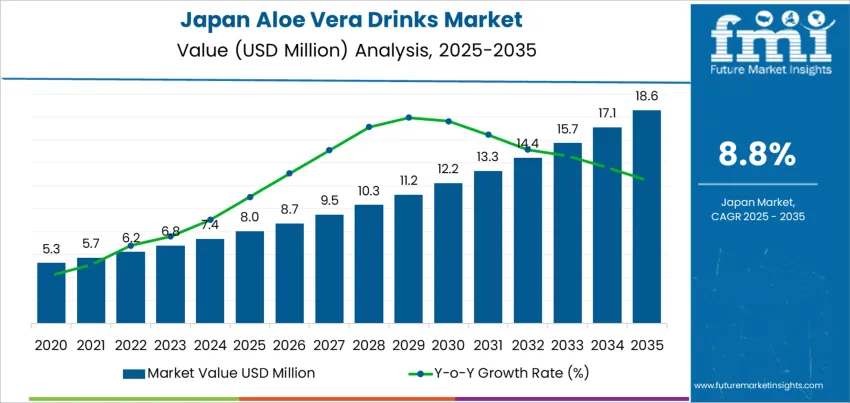
The demand for aloe vera drinks in japan was valued at USD 8.0 million in 2025, projected to reach USD 8.70 million in 2026, and is forecast to expand to USD 20.23 million by 2036 at a 8.80% CAGR. FMI projects that the absolute dollar growth of USD 11.53 million over the forecast period captures a category shaped by steady demand patterns and measurable formulation or consumption pipeline commitments.
Summary of Demand for Aloe Vera Drinks in Japan
- Market Overview
- The market is valued at USD 8.0 million in 2025 and is projected to reach USD 20.23 million by 2036.
- The industry is expected to grow at a 8.80% CAGR from 2026 to 2036, creating an incremental opportunity of USD 11.53 million.
- The market is a functional beverage niche within Japan where health-positioning, flavor innovation suited to local palate preferences, and drug store distribution expansion define the growth trajectory.
- Demand and Growth Drivers
- Demand is rising as Japanese consumers increasingly seek plant-based, low-calorie functional beverages that combine hydration with digestive and skin-health benefits.
- Flavor innovation incorporating Japanese palate preferences (yuzu, peach, grape, lychee) is expanding the consumer base beyond traditional health-food buyers.
- Distribution channel diversification toward drug stores and online retail is improving product accessibility and driving trial among younger consumer demographics.
- Among key regions, Kyushu & Okinawa at 11%, Kanto at 10.1%, Kansai at 8.9%, Chubu at 7.8%, Tohoku at 6.8%, Rest of Japan at 6.5%.
- Product and Segment View
- The market covers ready-to-drink aloe vera beverages in flavored and unflavored formats, positioned as functional hydration products with perceived health benefits.
- Distribution spans hypermarkets and supermarkets, drug stores, online retail, and other channels across Japan.
- Scope includes packaged aloe vera drinks for retail sale in Japan; excludes raw gel ingredients, dietary supplements, cosmetic applications, and export volumes.
- Hypermarket & Supermarket leads by Distribution Channel with 45.0% share in 2026.
- Flavored commands the largest Product share in 2026.
- Geography and Competitive Outlook
- Kyushu & Okinawa and Kanto are the fastest-growing regions, driven by subtropical hydration demand and metropolitan health-conscious consumer concentration respectively.
- Distribution is shifting toward drug stores and online channels, reducing historical dependence on supermarket shelf placement for category growth.
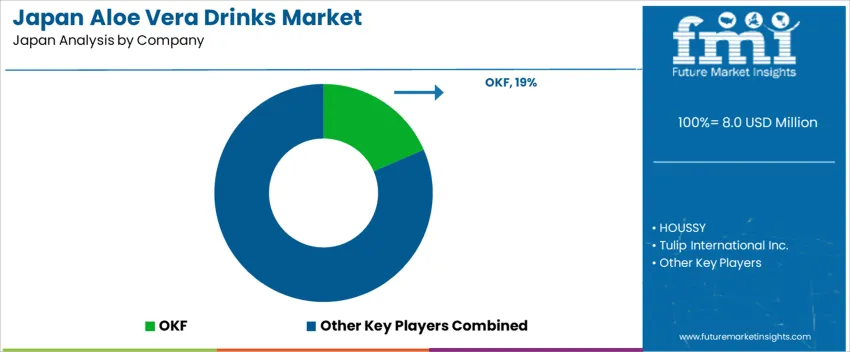
- Competition is shaped by product quality, distribution reach, and category expertise, with OKF holding approximately 19% market share.
- Key companies profiled include OKF, HOUSSY, Tulip International Inc., LOTTE, Forever Living.com, LLC.
- Analyst Opinion at FMI
- FMI opines that aloe vera drinks in Japan occupy a stable functional beverage niche where health-positioning, flavor innovation, and distribution channel diversification toward drug stores and e-commerce will sustain steady growth without the volatility associated with trend-driven beverage categories.
- Strategic Implications / Executive Takeaways
- Brands must invest in flavor localization and packaging format innovation suited to Japanese convenience store and drug store shelf requirements.
- Distributors should expand online retail presence as e-commerce penetration for functional beverages accelerates among health-conscious younger demographics.
- Manufacturers should evaluate seasonal promotional strategies, as hydration beverage consumption in Japan shows meaningful summer-weighted demand patterns.
Demand for Aloe Vera Drinks in Japan Key Takeaways
| Metric | Details |
|---|---|
| Industry Size (2026) | USD 8.70 million |
| Industry Value (2036) | USD 20.23 million |
| CAGR (2026-2036) | 8.80% |
Source: Future Market Insights, 2026
As per FMI, the aloe vera drinks category in Japan is benefiting from sustained consumer interest in functional beverages that combine hydration with perceived health benefits. Japanese consumers increasingly prefer plant-based, low-calorie drink options that align with wellness-oriented purchasing behaviour. Flavored variants dominate the market as manufacturers develop taste profiles suited to Japanese palate preferences, incorporating yuzu, grape, peach, and lychee flavor combinations. Distribution is shifting toward drug store and online channels as health-positioned beverages gain shelf space outside traditional supermarket aisles. FMI analysts note that the incremental opportunity of USD 11.53 million through 2036 reflects a mature but steadily expanding functional beverage niche within the broader Japanese RTD category.
Based on FMI's report, regional growth within Japan reflects prefectural demographic patterns and distribution infrastructure. Kyushu & Okinawa leads at 11.0% CAGR, driven by subtropical climate conditions that support year-round hydration beverage consumption and proximity to regional aloe vera cultivation. Kanto follows at 10.1%, supported by the Tokyo metropolitan consumer base and concentration of health-focused retail outlets. Kansai tracks at 8.9% with the Osaka-Kobe-Kyoto corridor providing a dense urban consumer market for functional beverages. Chubu registers 7.8% growth tied to regional health-consciousness trends and expanding drug store distribution. Tohoku grows at 6.8%, with seasonal hydration demand and growing online retail penetration. Rest of Japan expands at 6.5%, reflecting nationwide distribution reach of major aloe vera drink brands.
Demand for Aloe Vera Drinks in Japan Definition
Aloe vera drinks are ready-to-drink beverages formulated with aloe vera gel or juice, available in flavored and unflavored variants. These products are consumed for their perceived digestive health, hydration, and skin-wellness benefits. In Japan, aloe vera drinks are distributed through hypermarkets, supermarkets, drug stores, convenience stores, and online retail channels, targeting health-conscious consumers seeking functional beverage options.
Demand for Aloe Vera Drinks in Japan Inclusions
Market scope covers aloe vera drinks sold as packaged ready-to-drink beverages in Japan across flavored and unflavored product types. The analysis includes market sizes from 2026 to 2036, segmented by product type and distribution channel. Regional breakdown by Japanese prefectural clusters (Kanto, Kansai, Chubu, Kyushu & Okinawa, Tohoku, and Rest of Japan) is included.
Demand for Aloe Vera Drinks in Japan Exclusions
The scope excludes raw aloe vera gel sold as a food ingredient, aloe vera dietary supplements in capsule or tablet form, aloe vera used in cosmetic or topical applications, and aloe vera beverages produced for export from Japan. Foodservice-only aloe vera beverages not available in retail channels are also excluded.
Demand for Aloe Vera Drinks in Japan Research Methodology
- Primary Research: Analysts engaged with industry procurement leads, product development managers, and supply chain directors to map the decision criteria triggering specification changes and supplier qualification cycles.
- Desk Research: Data collection phases aggregated regulatory filings, trade body publications, company annual reports, and peer-reviewed studies to establish baseline demand and supply parameters.
- Market-Sizing and Forecasting: Baseline values derive from a bottom-up aggregation of supply and consumption volumes by product type and region, applying adoption curves and penetration rates to project demand through 2036.
- Data Validation and Update Cycle: Projections are cross-validated against publicly reported revenue disclosures from leading industry participants and verified through primary interview feedback loops.
Why is the Demand for Aloe Vera Drinks in Japan Growing?
The demand for aloe vera drinks in Japan is growing due to the increasing focus on health and wellness among consumers. Aloe vera drinks, known for their hydrating and digestive health benefits, are becoming a popular alternative to traditional sugary beverages. As consumers in Japan become more health-conscious, particularly with a growing interest in functional beverages, aloe vera drinks are gaining popularity as a natural, refreshing option that promotes digestive health and skin hydration.
A major driver of this growth is the rising awareness of the health benefits of aloe vera, which includes supporting hydration, boosting immunity, and aiding digestion. With an increasing focus on natural ingredients and wellness, more Japanese consumers are turning to aloe vera-based products as part of their daily routines. Aloe vera drinks are often marketed as low-calorie, antioxidant-rich beverages, making them an attractive option for health-conscious individuals.
The growing trend of clean-label products, where consumers are seeking products with minimal additives, is contributing to the rise in demand for aloe vera drinks. As more consumers prioritize products with fewer artificial ingredients and preservatives, aloe vera drinks are becoming a popular choice. The expanding availability of aloe vera drinks in both retail and online channels is also making these beverages more accessible to a wider audience. As these trends continue, the demand for aloe vera drinks in Japan is expected to continue growing through 2035.
What is the Segment-Wise Analysis of Demand for Aloe Vera Drinks in Japan?
Demand for aloe vera drinks in Japan is segmented by product type, distribution channel, and region. By product type, demand is divided into flavored and unflavored aloe vera drinks, with flavored aloe vera drinks leading at 55%. The demand is also segmented by distribution channel, including hypermarkets & supermarkets, drug stores, online, and others, with hypermarkets & supermarkets accounting for 45%. Regionally, demand is spread across Kyushu & Okinawa, Kanto, Kansai, Chubu, Tohoku, and the rest of Japan.
Why Do Flavored Aloe Vera Drinks Lead the Demand in Japan?
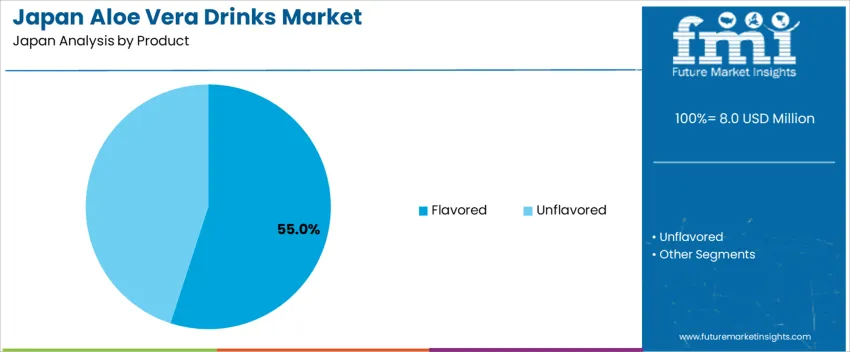
Flavored aloe vera drinks account for 55% of the demand in Japan, driven by their refreshing taste and wide appeal. Flavored options, often infused with fruit juices and other natural ingredients, make aloe vera drinks more palatable and enjoyable for consumers, especially those who may find the taste of unflavored aloe vera too strong or bitter. Flavored aloe vera drinks cater to the growing demand for healthier, natural beverages that also offer functional benefits, such as hydration and digestion support. The increasing interest in health-conscious, plant-based products and the popularity of aloe vera as a versatile wellness ingredient further drive the demand for flavored aloe vera drinks. As consumers continue to seek out healthy, convenient beverages, flavored aloe vera drinks are expected to remain the dominant choice in Japan's aloe vera drink industry.
Why Do Hypermarkets & Supermarkets Lead the Demand for Aloe Vera Drinks in Japan?
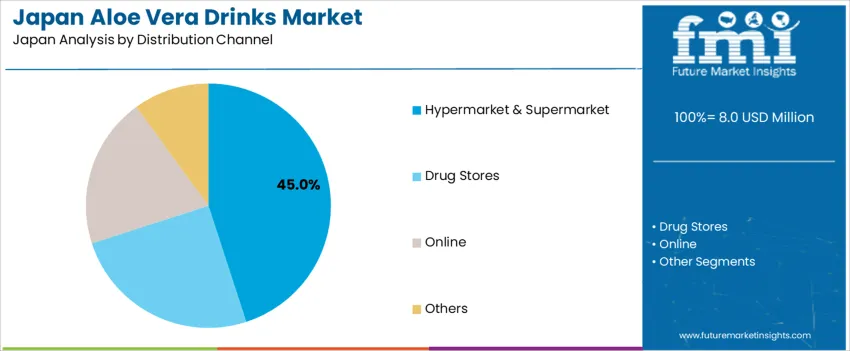
Hypermarkets & supermarkets account for 45% of the demand for aloe vera drinks in Japan, driven by their broad selection, convenience, and accessibility. These retail outlets offer a variety of aloe vera drink options in one location, making it easier for consumers to compare different brands, flavors, and sizes. The popularity of health-oriented and functional beverages in Japan has led to the increased availability of aloe vera drinks in these stores. Supermarkets and hypermarkets are often the first place consumers turn to when purchasing aloe vera drinks, as they combine a wide range of products with the convenience of one-stop shopping. The presence of aloe vera drinks in major retail chains, alongside other health-focused beverages, ensures continued demand, as consumers seek both convenience and variety in their beverage choices. Hypermarkets and supermarkets remain the dominant distribution channel in Japan for aloe vera drinks.
What are the Key Trends, Drivers, and Restraints in Demand for Aloe Vera Drinks in Japan?
Aloe vera drinks are perceived as natural alternatives to sugary sodas, offering benefits like hydration and digestive support. The increasing focus on wellness and plant-based diets drives consumer interest in products that promote health and wellness. Aloe vera’s ability to offer antioxidants and support digestion has made it popular among health-conscious consumers. The trend towards clean-label and less-processed drinks is fueling demand. Challenges such as the high cost of production, due to the complex processing and raw material requirements, limit affordability. Supply chain issues, especially those related to sourcing high-quality aloe vera, also create barriers.
Why is Demand for Aloe Vera Drinks Growing in Japan?
The demand for aloe vera drinks is rising in Japan due to the growing consumer focus on health and wellness. Aloe vera is marketed as a natural, functional beverage with various health benefits, including digestive aid and hydration. These attributes appeal to consumers seeking alternatives to sugary or artificially flavored drinks. As Japan's population becomes more health-conscious, the popularity of functional beverages like aloe vera drinks has grown. The trend toward plant-based products is also contributing to this increase in demand. Aloe vera drinks are considered a clean-label option, as they are perceived to be free from artificial ingredients, attracting consumers seeking healthier, minimally processed options. The rise of convenience-oriented shopping through supermarkets, convenience stores, and online platforms has made aloe vera drinks more accessible to a broader audience. These factors combined have helped fuel sustained growth in the demand for aloe vera drinks in Japan.
How are Technological & Industry Innovations Driving Demand for Aloe Vera Drinks in Japan?
Technological innovations are significantly enhancing the appeal of aloe vera drinks in Japan. Advances in extraction methods have improved the efficiency and quality of aloe vera juice, enhancing its taste and nutritional value. The development of better packaging technologies has increased the shelf-life of aloe vera drinks, making them more convenient for consumers and easier to distribute across long distances. Producers are also diversifying their product offerings, introducing flavored aloe vera drinks and combining aloe vera with other functional ingredients like coconut water or vitamins, further broadening their appeal. Technological improvements in processing have allowed for better preservation of aloe vera’s beneficial properties, helping it reach a larger industry. As consumer demand for health-conscious beverages rises, these innovations have made aloe vera drinks more attractive to a wider range of consumers.
What are the Key Challenges and Risks That Could Limit Aloe Vera Drink Demand in Japan?
One of the primary obstacles is the higher cost of production, which makes aloe vera drinks more expensive than conventional beverages. The price point may limit their appeal, especially among price-sensitive consumers. The raw material for aloe vera drinks relies heavily on imported aloe vera, which can create supply chain issues and result in fluctuations in product availability. These challenges could affect both the consistency of the product and the overall industry supply. The industry faces intense competition from other functional beverages, such as plant-based drinks, herbal teas, and even traditional Japanese beverages, which may limit the potential for aloe vera drinks to capture a larger share of the industry. Consumer skepticism about health claims and unfamiliarity with the product also presents a challenge.
What is the Regional Demand Outlook for Aloe Vera Drinks in Japan?
.webp "Top Country Growth Comparison Japan Aloe Vera Drinks Market Cagr (2026 2036)")
| Region | CAGR (%) |
|---|---|
| Kyushu & Okinawa | 11.0% |
| Kanto | 10.1% |
| Kansai | 8.9% |
| Chubu | 7.8% |
| Tohoku | 6.8% |
| Rest of Japan | 6.5% |
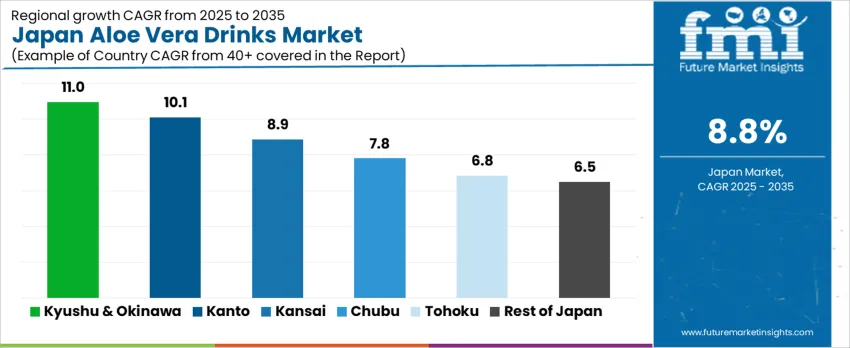
Demand for aloe vera drinks in Japan is growing steadily, with Kyushu & Okinawa leading at an 11.0% CAGR, driven by the region’s warm climate and rising health-consciousness. Kanto follows with a 10.1% CAGR, fueled by urban demand for health-focused beverages. Kansai shows an 8.9% CAGR, supported by its growing focus on wellness and plant-based alternatives. Chubu experiences a 7.8% CAGR, with steady growth driven by increasing awareness of the benefits of aloe vera drinks. Tohoku and the Rest of Japan see moderate growth at 6.8% and 6.5%, respectively, reflecting broader consumer trends toward healthier living. As the trend toward functional beverages continues to rise, aloe vera drinks will see continued growth across Japan.
How is Demand for Aloe Vera Drinks Growing in Kyushu & Okinawa?
Kyushu & Okinawa leads the demand for aloe vera drinks, growing at an 11.0% CAGR. The region’s warm climate, particularly in Okinawa, plays a key role in driving the popularity of refreshing drinks like aloe vera beverages. Health-conscious consumers increasingly seek natural, hydrating drinks with additional benefits, such as digestive and immune system support. Aloe vera drinks are highly favored for their wellness benefits, which resonate with the region’s rising focus on health. The vibrant tourism industry in Okinawa boosts demand, as visitors seek local products like aloe vera drinks. The region’s preference for plant-based and natural beverages further supports this trend. With the growing wellness movement and health-focused lifestyle, demand for aloe vera drinks in Kyushu & Okinawa is expected to remain strong, particularly as consumers continue to prioritize functional beverages that offer both refreshment and health benefits.
Why is Demand for Aloe Vera Drinks Rising in Kanto?
Kanto is experiencing steady demand for aloe vera drinks, with a 10.1% CAGR. The region’s large urban population, particularly in Tokyo, is a significant driver of this trend. Consumers are increasingly focused on health and wellness, seeking beverages that provide hydration and added health benefits, such as improved digestion and immune support. Aloe vera drinks, known for these benefits, are becoming increasingly popular among health-conscious individuals. Kanto’s growing focus on plant-based and natural products has also contributed to the demand for aloe vera drinks, which align with these preferences. The increasing availability of aloe vera drinks in supermarkets, convenience stores, and cafes has made them more accessible to a wider audience. As more consumers prioritize functional beverages that support overall well-being, demand for aloe vera drinks in Kanto is expected to continue its steady rise, driven by urban health trends and consumer preferences for natural, wellness-focused products.
How is Demand for Aloe Vera Drinks Expanding in Kansai?
Kansai is seeing steady demand for aloe vera drinks, growing at an 8.9% CAGR. The region’s health-conscious population, particularly in cities like Osaka and Kyoto, is increasingly seeking natural, functional beverages that align with wellness trends. Aloe vera drinks, known for their digestive and hydration benefits, are becoming a popular choice among consumers who prioritize health. Kansai’s active lifestyle and rising awareness of the importance of nutrition and hydration are key factors contributing to the demand for aloe vera drinks. The growing availability of these drinks in retail outlets such as supermarkets and health food stores makes them easily accessible. As more people in Kansai embrace healthy lifestyles and move towards natural alternatives to sugary beverages, the demand for aloe vera drinks is expected to continue growing steadily, supported by the region’s focus on wellness and sustainable living.
Why is Demand for Aloe Vera Drinks Growing in Chubu?
Chubu is experiencing steady demand for aloe vera drinks, with a 7.8% CAGR. The region’s growing interest in health and wellness, coupled with increasing awareness of the benefits of plant-based and functional products, is driving the rise in demand for aloe vera drinks. Consumers in Chubu are increasingly turning to healthier beverage alternatives, and aloe vera drinks, known for their skin health, digestive, and hydrating properties, are gaining traction. The region’s growing retail presence, including supermarkets and convenience stores, has made aloe vera drinks more accessible. As consumers continue to prioritize health and sustainability, the demand for aloe vera drinks in Chubu is expected to rise steadily. The increasing focus on eco-friendly, natural products aligns with the region’s health-conscious lifestyle, and as awareness of the benefits of aloe vera grows, its popularity is likely to continue to expand in this region.
How is Demand for Aloe Vera Drinks Expanding in Tohoku?
Tohoku is seeing moderate demand for aloe vera drinks, with a 6.8% CAGR. While the region's industry for aloe vera drinks is smaller compared to more urbanized areas, there is steady growth as consumer preferences shift toward healthier beverage options. Tohoku’s consumers are becoming more aware of the health benefits of aloe vera, including its digestive and immune-boosting properties. The rising focus on wellness and functional foods in Tohoku, coupled with increasing access to health-conscious beverages, is driving demand. As more consumers in rural areas adopt healthier lifestyles, aloe vera drinks are becoming a popular choice for hydration and wellness. While growth is slower compared to urban regions, Tohoku’s increasing interest in natural products and functional beverages ensures steady demand for aloe vera drinks. The region’s growing focus on self-care and wellness will likely continue to support this upward trend.
Why is Demand for Aloe Vera Drinks Steady in the Rest of Japan?
The Rest of Japan is experiencing steady demand for aloe vera drinks, growing at a 6.5% CAGR. While demand is smaller compared to major urban regions, there is consistent growth as awareness of health and wellness continues to rise across these areas. Consumers are becoming more interested in natural and functional beverages, and aloe vera drinks, with their benefits for digestion, hydration, and skin health, are gaining popularity. Access to health-conscious beverages in rural and suburban areas is improving, making aloe vera drinks more widely available. As people in the Rest of Japan embrace healthier living trends and focus on wellness, demand for aloe vera drinks will continue to rise steadily. The growing awareness of functional food products and the increasing availability of aloe vera drinks in retail outlets further support this gradual but consistent demand across rural and suburban regions.
What is Driving the Demand for Aloe Vera Drinks in Japan and Who Are the Key Players Shaping the Industry?
The demand for aloe vera drinks in Japan is steadily increasing, driven by growing consumer interest in natural and functional beverages that offer a range of health benefits. Aloe vera is well-known for its digestive, skin, and overall wellness benefits, making it a popular ingredient in health-focused drinks. With Japan's strong emphasis on longevity and health, aloe vera drinks are becoming a common choice among consumers looking to support their well-being with plant-based and natural products. The increasing focus on hydration and functional beverages that offer additional health benefits is helping to drive the industry's growth, as aloe vera drinks are seen as a refreshing and health-promoting option.
Key players shaping the aloe vera drinks industry in Japan include OKF, HOUSSY, Tulip International Inc., LOTTE, and Forever Living.com, LLC. OKF leads the industry with an impressive 18.5% share, thanks to its extensive range of aloe vera-based drinks that cater to diverse consumer preferences. These companies focus on developing high-quality, flavorful beverages that combine aloe vera with other functional ingredients to enhance the overall health benefits. Through strong marketing strategies and widespread distribution networks, they continue to capture the attention of health-conscious consumers in Japan.
The growth of the aloe vera drinks industry is also supported by increasing consumer awareness of the importance of wellness and healthy lifestyles. As interest in plant-based products and functional beverages grows, aloe vera drinks are positioned to thrive in this evolving industry. Consumers are looking for beverages that not only taste good but also provide tangible health benefits, making aloe vera a key ingredient in the expanding category of functional drinks. As the demand for natural health products rises, the aloe vera drinks industry is expected to experience continued growth.
Key Players in Japan Aloe Vera Drinks Demand
- OKF
- HOUSSY
- Tulip International Inc.
- LOTTE
- Forever Living.com, LLC
Scope of the Report
| Metric | Value |
|---|---|
| Quantitative Units | USD 8.70 million to USD 20.23 million, at a CAGR of 8.80% |
| Market Definition | Aloe vera drinks are ready-to-drink beverages formulated with aloe vera gel or juice, available in flavored and unflavored variants. These products are consumed for their perceived digestive health, hydration, and skin-wellness benefits. In Japan, aloe vera drinks are distributed through hypermarkets, supermarkets, drug stores, convenience stores, and online retail channels, targeting health-conscious consumers seeking functional beverage options. |
| Product Segmentation | Flavored, Unflavored |
| Distribution Channel Segmentation | Hypermarket & Supermarket, Drug Stores, Online, Others |
| Regions Covered | North America, Latin America, Europe, East Asia, South Asia, Oceania, Middle East & Africa |
| Countries / Regions Covered | Kyushu & Okinawa, Kanto, Kansai, Chubu, Tohoku, Rest of Japan, and 40 plus countries |
| Key Companies Profiled | OKF, HOUSSY, Tulip International Inc., LOTTE, Forever Living.com, LLC |
| Forecast Period | 2026 to 2036 |
| Approach | Forecasting models apply a bottom-up methodology and cross-validate projections against publicly available industry data and primary research. |
Japan Aloe Vera Drinks Demand by Key Segments
Product:
- Flavored
- Unflavored
Distribution Channel:
- Hypermarket & Supermarket
- Drug Stores
- Online
- Others
Region:
- Kyushu & Okinawa
- Kanto
- Kansai
- Chubu
- Tohoku
- Rest of Japan
Bibliography
- 1. Ministry of Health, Labour and Welfare, Japan. (2024). National Health and Nutrition Survey 2023. MHLW.
- 2. Japan External Trade Organization. (2024). Japan Beverage Market Report 2024. JETRO.
- 3. Food Safety Commission of Japan. (2024). Risk Assessment of Aloe Vera in Food Products. FSC.
- 4. Consumer Affairs Agency, Government of Japan. (2024). Functional Food Claims Notification System Annual Report. CAA.
- 5. Ministry of Agriculture, Forestry and Fisheries, Japan. (2024). Japan Agricultural Trade Statistics 2024. MAFF.
This bibliography is provided for reader reference. The full Future Market Insights report contains the complete reference list with primary research documentation.
Frequently Asked Questions
How large is the Aloe Vera Drinks in Japan category in 2026?
The demand for aloe vera drinks in japan is estimated at USD 8.70 million in 2026.
What will be the market size by 2036?
The market is projected to reach USD 20.23 million by 2036.
What is the expected growth rate between 2026 and 2036?
The market is expected to grow at a CAGR of 8.80% between 2026 and 2036.
Which Distribution Channel is poised to lead by 2026?
Hypermarket & Supermarket accounts for 45.0% share in 2026.
Which Product leads by 2026?
Flavored commands the leading Product share in 2026.
What is driving demand in Kyushu & Okinawa?
Kyushu & Okinawa leads regional growth at 11.0% CAGR, driven by subtropical climate supporting year-round hydration beverage demand and proximity to regional cultivation. Kyushu & Okinawa is projected to grow at a CAGR of 11% during 2026 to 2036.
What does this market cover?
Aloe vera drinks are ready-to-drink beverages formulated with aloe vera gel or juice, available in flavored and unflavored variants. These products are consumed for their perceived digestive health, hydration, and skin-wellness benefits.
How does FMI build and validate the forecast?
Forecasting models apply a bottom-up methodology and cross-validate projections against publicly reported industry revenue and primary research data.
Preview the report firsthand - request a free sample
Get SampleGet the brochure for pricing and purchase details.
Get PDFTable of Content
- Executive Summary
- Japan Market Outlook
- Demand-side Trends
- Supply-side Trends
- Technology Roadmap Analysis
- Analysis and Recommendations
- Market Overview
- Market Coverage / Taxonomy
- Market Definition / Scope / Limitations
- Research Methodology
- Chapter Orientation
- Analytical Lens and Working Hypotheses
- Market Structure, Signals, and Trend Drivers
- Benchmarking and Cross-market Comparability
- Market Sizing, Forecasting, and Opportunity Mapping
- Research Design and Evidence Framework
- Desk Research Programme (Secondary Evidence)
- Company Annual and Sustainability Reports
- Peer-reviewed Journals and Academic Literature
- Corporate Websites, Product Literature, and Technical Notes
- Earnings Decks and Investor Briefings
- Statutory Filings and Regulatory Disclosures
- Technical White Papers and Standards Notes
- Trade Journals, Industry Magazines, and Analyst Briefs
- Conference Proceedings, Webinars, and Seminar Materials
- Government Statistics Portals and Public Data Releases
- Press Releases and Reputable Media Coverage
- Specialist Newsletters and Curated Briefings
- Sector Databases and Reference Repositories
- FMI Internal Proprietary Databases and Historical Market Datasets
- Subscription Datasets and Paid Sources
- Social Channels, Communities, and Digital Listening Inputs
- Additional Desk Sources
- Expert Input and Fieldwork (Primary Evidence)
- Primary Modes
- Qualitative Interviews and Expert Elicitation
- Quantitative Surveys and Structured Data Capture
- Blended Approach
- Why Primary Evidence is Used
- Field Techniques
- Interviews
- Surveys
- Focus Groups
- Observational and In-context Research
- Social and Community Interactions
- Stakeholder Universe Engaged
- C-suite Leaders
- Board Members
- Presidents and Vice Presidents
- R&D and Innovation Heads
- Technical Specialists
- Domain Subject-matter Experts
- Scientists
- Physicians and Other Healthcare Professionals
- Governance, Ethics, and Data Stewardship
- Research Ethics
- Data Integrity and Handling
- Primary Modes
- Tooling, Models, and Reference Databases
- Desk Research Programme (Secondary Evidence)
- Data Engineering and Model Build
- Data Acquisition and Ingestion
- Cleaning, Normalisation, and Verification
- Synthesis, Triangulation, and Analysis
- Quality Assurance and Audit Trail
- Market Background
- Market Dynamics
- Drivers
- Restraints
- Opportunity
- Trends
- Scenario Forecast
- Demand in Optimistic Scenario
- Demand in Likely Scenario
- Demand in Conservative Scenario
- Opportunity Map Analysis
- Product Life Cycle Analysis
- Supply Chain Analysis
- Investment Feasibility Matrix
- Value Chain Analysis
- PESTLE and Porter’s Analysis
- Regulatory Landscape
- Regional Parent Market Outlook
- Production and Consumption Statistics
- Import and Export Statistics
- Market Dynamics
- Japan Market Analysis 2021 to 2025 and Forecast, 2026 to 2036
- Historical Market Size Value (USD Million) Analysis, 2021 to 2025
- Current and Future Market Size Value (USD Million) Projections, 2026 to 2036
- Y-o-Y Growth Trend Analysis
- Absolute $ Opportunity Analysis
- Japan Market Pricing Analysis 2021 to 2025 and Forecast 2026 to 2036
- Japan Market Analysis 2021 to 2025 and Forecast 2026 to 2036, By Product
- Introduction / Key Findings
- Historical Market Size Value (USD Million) Analysis By Product , 2021 to 2025
- Current and Future Market Size Value (USD Million) Analysis and Forecast By Product , 2026 to 2036
- Flavored
- Unflavored
- Flavored
- Y-o-Y Growth Trend Analysis By Product , 2021 to 2025
- Absolute $ Opportunity Analysis By Product , 2026 to 2036
- Japan Market Analysis 2021 to 2025 and Forecast 2026 to 2036, By Distribution Channel
- Introduction / Key Findings
- Historical Market Size Value (USD Million) Analysis By Distribution Channel, 2021 to 2025
- Current and Future Market Size Value (USD Million) Analysis and Forecast By Distribution Channel, 2026 to 2036
- Hypermarket & Supermarket
- Drug Stores
- Online
- Others
- Hypermarket & Supermarket
- Y-o-Y Growth Trend Analysis By Distribution Channel, 2021 to 2025
- Absolute $ Opportunity Analysis By Distribution Channel, 2026 to 2036
- Japan Market Analysis 2021 to 2025 and Forecast 2026 to 2036, By Region
- Introduction
- Historical Market Size Value (USD Million) Analysis By Region, 2021 to 2025
- Current Market Size Value (USD Million) Analysis and Forecast By Region, 2026 to 2036
- Kyushu & Okinawa
- Kanto
- Kinki
- Chubu
- Tohoku
- Rest of Japan
- Market Attractiveness Analysis By Region
- Kyushu & Okinawa Market Analysis 2021 to 2025 and Forecast 2026 to 2036, By Country
- Historical Market Size Value (USD Million) Trend Analysis By Market Taxonomy, 2021 to 2025
- Market Size Value (USD Million) Forecast By Market Taxonomy, 2026 to 2036
- By Country
- By Product
- By Distribution Channel
- By Country
- Market Attractiveness Analysis
- By Country
- By Product
- By Distribution Channel
- Key Takeaways
- Kanto Market Analysis 2021 to 2025 and Forecast 2026 to 2036, By Country
- Historical Market Size Value (USD Million) Trend Analysis By Market Taxonomy, 2021 to 2025
- Market Size Value (USD Million) Forecast By Market Taxonomy, 2026 to 2036
- By Country
- By Product
- By Distribution Channel
- By Country
- Market Attractiveness Analysis
- By Country
- By Product
- By Distribution Channel
- Key Takeaways
- Kinki Market Analysis 2021 to 2025 and Forecast 2026 to 2036, By Country
- Historical Market Size Value (USD Million) Trend Analysis By Market Taxonomy, 2021 to 2025
- Market Size Value (USD Million) Forecast By Market Taxonomy, 2026 to 2036
- By Country
- By Product
- By Distribution Channel
- By Country
- Market Attractiveness Analysis
- By Country
- By Product
- By Distribution Channel
- Key Takeaways
- Chubu Market Analysis 2021 to 2025 and Forecast 2026 to 2036, By Country
- Historical Market Size Value (USD Million) Trend Analysis By Market Taxonomy, 2021 to 2025
- Market Size Value (USD Million) Forecast By Market Taxonomy, 2026 to 2036
- By Country
- By Product
- By Distribution Channel
- By Country
- Market Attractiveness Analysis
- By Country
- By Product
- By Distribution Channel
- Key Takeaways
- Tohoku Market Analysis 2021 to 2025 and Forecast 2026 to 2036, By Country
- Historical Market Size Value (USD Million) Trend Analysis By Market Taxonomy, 2021 to 2025
- Market Size Value (USD Million) Forecast By Market Taxonomy, 2026 to 2036
- By Country
- By Product
- By Distribution Channel
- By Country
- Market Attractiveness Analysis
- By Country
- By Product
- By Distribution Channel
- Key Takeaways
- Rest of Japan Market Analysis 2021 to 2025 and Forecast 2026 to 2036, By Country
- Historical Market Size Value (USD Million) Trend Analysis By Market Taxonomy, 2021 to 2025
- Market Size Value (USD Million) Forecast By Market Taxonomy, 2026 to 2036
- By Country
- By Product
- By Distribution Channel
- By Country
- Market Attractiveness Analysis
- By Country
- By Product
- By Distribution Channel
- Key Takeaways
- Key Countries Market Analysis
- Kyushu & Okinawa
- Pricing Analysis
- Market Share Analysis, 2025
- By Product
- By Distribution Channel
- Kanto
- Pricing Analysis
- Market Share Analysis, 2025
- By Product
- By Distribution Channel
- Kinki
- Pricing Analysis
- Market Share Analysis, 2025
- By Product
- By Distribution Channel
- Chubu
- Pricing Analysis
- Market Share Analysis, 2025
- By Product
- By Distribution Channel
- Tohoku
- Pricing Analysis
- Market Share Analysis, 2025
- By Product
- By Distribution Channel
- Rest of Japan
- Pricing Analysis
- Market Share Analysis, 2025
- By Product
- By Distribution Channel
- Kyushu & Okinawa
- Market Structure Analysis
- Competition Dashboard
- Competition Benchmarking
- Market Share Analysis of Top Players
- By Regional
- By Product
- By Distribution Channel
- Competition Analysis
- Competition Deep Dive
- OKF
- Overview
- Product Portfolio
- Profitability by Market Segments (Product/Age /Sales Channel/Region)
- Sales Footprint
- Strategy Overview
- Marketing Strategy
- Product Strategy
- Channel Strategy
- HOUSSY
- Tulip International Inc.
- LOTTE
- Forever Living.com, LLC
- OKF
- Competition Deep Dive
- Assumptions & Acronyms Used


