

- Industry Size (2025)
- USD 1320.8 Mn
- Forecast (2035)
- USD 1936.4 Mn
- CAGR (2025 to 2035)
- 3.9%
Demand for Automotive Washer System in Japan Forecast and Outlook 2025 to 2035
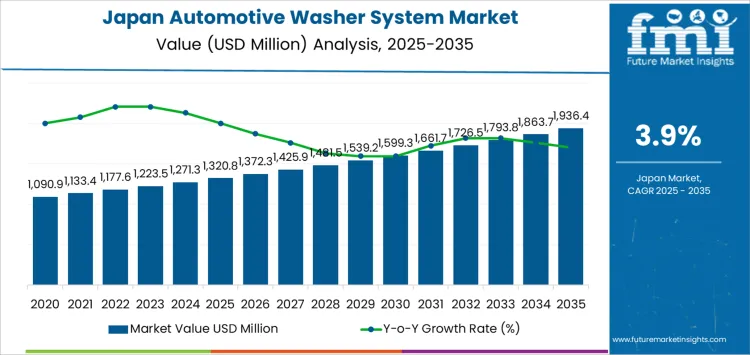
Demand for automotive washer system in Japan is valued at USD 1,320.8 million in 2025 and is projected to reach USD 1,936.4 million by 2035, reflecting a CAGR of 3.9%. Historical path from 2020 to 2025 shows expansion from USD 1,090.9 million to USD 1,320.8 million, supported by steady passenger car production and routine component replacement. Electrical systems account for the largest share of technology due to integration with driver-assist features and electronic controls.
Passenger cars represent the dominant vehicle type as washer systems remain standard across mass market models. Pumps and windshield wipers account for the largest share of component costs due to continuous wear and replacement needs. Early phase demand reflects OEM installation volumes and regulated visibility standards rather than discretionary aftermarket upgrades.
Quick Stats of the Demand for Automotive Washer System in Japan
- Demand for Automotive Washer System in Japan Value (2025): USD 1,320.8 million
- Demand for Automotive Washer System in Japan Forecast Value (2035): USD 1,936.4 million
- Demand for Automotive Washer System in Japan Forecast CAGR (2025 to 2035): 3.9%
- Demand for Automotive Washer System in Japan Leading Technology: Electrical (65%)
- Demand for Automotive Washer System in Japan Key Growth Regions: Kyushu & Okinawa, Kanto, Kansai
- Demand for Automotive Washer System in Japan Top Players: Mitsubishi Electric Corporation, Denso, Mitsuba, Kautex Textron, SHW AG, Continental AG, Magna International
What is the Growth Forecast for Automotive Washer System in Japan through 2035?
From 2026 onward, demand rises from USD 1,372.3 million to USD 1,599.3 million by 2030, then advances to USD 1,936.4 million by 2035 through consistent annual gains. Light commercial vehicles contribute stable incremental demand linked to urban logistics use. Heavy commercial vehicle adoption remains moderate due to longer fleet replacement cycles. Nozzles, hoses, and connectors register steady shipment growth aligned with maintenance requirements.
Electrical washer systems gain further share as sensor-assisted cleaning becomes more common in higher trim passenger vehicles. After 2030, replacement demand becomes the primary driver as installed systems reach mid-cycle renewal stages. Annual value additions remain within a narrow range, indicating limited volatility.
Between 2025 and 2030, demand for automotive washer systems in Japan is projected to rise from USD 1,320.8 million to USD 1,599.3 million, creating an absolute increase of USD 278.5 million and representing about 45.3% of total decade growth. This phase reflects steady vehicle production recovery, rising installation of multi nozzle cleaning systems, and tighter visibility standards for driver assistance sensors. Replacement demand from aging passenger vehicle fleets supports baseline volumes. Historical growth depended on conventional windshield washer demand, while near term performance is shaped by sensor cleaning integration, higher adoption in electric vehicles, and consistent original equipment installation across domestic vehicle platforms.
From 2030 to 2035, demand is forecast to expand from USD 1,599.3 million to USD 1,936.4 million, adding USD 337.1 million and accounting for nearly 54.7% of total ten-year expansion. This stage reflects deeper penetration of automated washer systems across advanced driver assistance platforms, cameras, and light detection sensors. Export oriented vehicle production supports volume stability. Earlier growth relied on standard washer replacement cycles, while future expansion is guided by higher system complexity per vehicle, broader use in autonomous ready platforms, stricter component performance standards, and wider deployment across commercial and logistics vehicle fleets operating under high visibility requirements.
Automotive Washer System Industry in Japan Key Takeaways
| Metric | Value |
|---|---|
| Industry Value (2025) | USD 1,320.8 million |
| Forecast Value (2035) | USD 1,936.4 million |
| Forecast CAGR (2025 to 2035) | 3.9% |
What Is Driving Demand for Automotive Washer Systems in Japan Across Historical and Future Growth Cycles?
Demand for automotive washer systems in Japan increased as vehicle ownership and production rose in the domestic auto market. Growth in passenger cars and commercial vehicles required windshield and headlight washer components as standard safety features. Manufacturers and suppliers focused on robust pump, nozzle, reservoir, and hose assemblies to meet quality standards in typical driving conditions. Demand drew on stable regulatory requirements for clear visibility and routine maintenance needs tied to Japan’s climate and road conditions. Systems tended to remain largely mechanical, and replacement cycles followed regular vehicle service intervals. Market demand tracked production volumes and domestic aftermarket maintenance habits.
Future demand in Japan appears tied to rising adoption of advanced washer technologies in EVs, hybrid vehicles, and luxury models. Automakers and suppliers pursue sensor-based washer nozzles, heated fluid delivery, and smart cleaning systems to support visibility under heavy rain, winter conditions, and complex traffic environments. Use of washer systems may expand beyond windshields to include headlamp and camera-lens cleaning, aligning with greater reliance on ADAS and autonomous driving support. Demand also may rise for aftermarket upgrades and replacement kits as older vehicles remain in use. Growth will depend on regulatory trends, consumer preference for safety and convenience, and continued vehicle turnover across vehicle segments nationwide.
What Is the Demand for Automotive Washer System in Japan by Technology and Component?
Demand for automotive washer system in Japan is shaped by vehicle safety regulations, frequent exposure to rain and road debris, and high standards for windshield visibility. Electrical systems led by technology due to their integration with automated wiper control and driver assistance features. Windshield wipers and nozzles remain the most critical components by functional relevance within the washer system architecture. Procurement is driven by automotive OEMs and Tier 1 component suppliers operating under long-term platform supply contracts. Import reliance remains present for miniature motors and electronic control modules. Substitution pressure exists from compact integrated washer wiper modules. Demand stability is supported by steady vehicle production and continuous model refresh programs.
Why does electrical technology account for 65% of the demand for automotive washer system in Japan by technology?
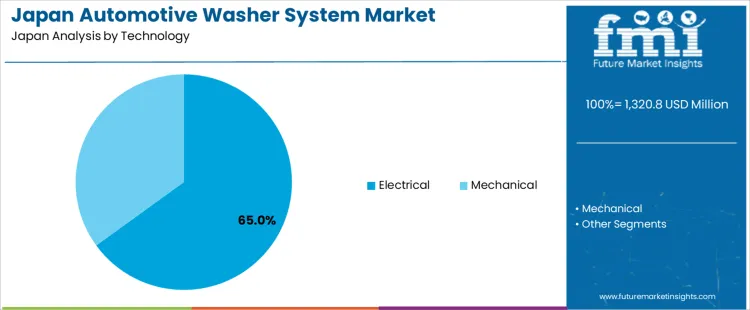
Electrical technology accounts for 65% of the demand for automotive washer system in Japan by technology, reflecting the shift toward electronically controlled wiping and washing systems. Consumption intensity is driven by automatic rain sensing, adaptive wipe speed control, and integration with advanced driver assistance systems. Usage remains stable because electronic control improves visibility consistency under changing weather conditions. Procurement is led by OEM sourcing teams and Tier 1 system integrators supplying full washer modules. Price sensitivity remains moderate because electrical systems improve safety performance. Specification control emphasizes actuator response time, voltage stability, thermal endurance, and software compatibility with vehicle body control units.
Electrical washer systems also generate steady repeat demand through model upgrades and migration from mechanical linkages to drive by wire control. Repeat utilization remains predictable as new platforms standardize electronic control architecture. Buyers favor modular electrical designs that allow platform sharing across multiple vehicle segments. Margin structure remains controlled under annual cost reduction programs. Regulatory exposure centers on vehicle safety performance and electromagnetic compatibility testing. Import reliance persists for micro motors, electronic drivers, and control ICs. Substitution pressure from mechanical systems remains limited to entry level vehicle variants.
Why do windshield wipers represent 25.0% of the demand for automotive washer system in Japan by component?
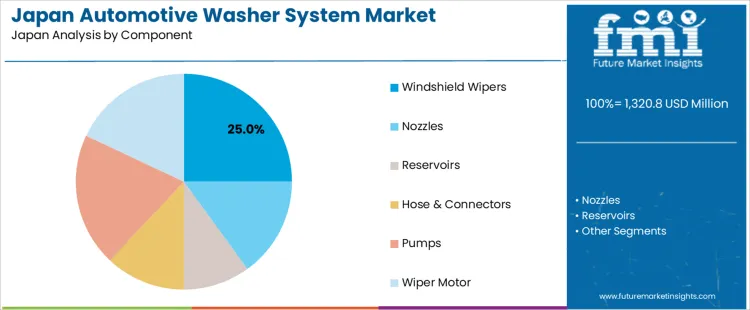
Windshield wipers represent 25.0% of the demand for automotive washer system in Japan by component, reflecting their direct role in maintaining driver visibility during rain, dust exposure, and road splash. Consumption intensity is driven by frequent blade replacement cycles due to ultraviolet exposure and mechanical wear. Usage remains stable because wipers remain a mandatory safety component across all vehicle classes. Procurement is dominated by OEM installed blades and a large aftermarket replacement base. Price sensitivity remains moderate because blade performance directly affects viewing clarity. Specification control emphasizes rubber compound durability, wipe pattern consistency, and noise reduction across varying windshield curvatures.
Windshield wipers also generate the highest recurring replacement demand within the washer system. Repeat utilization remains predictable due to annual or seasonal replacement habits. Buyers favor standardized connector formats to simplify service replacement. Margin structure remains controlled under heavy aftermarket competition. Regulatory exposure centers on vehicle inspection standards and visibility compliance. Import reliance persists for specialty rubber compounds and spring steel frames. Substitution pressure from integrated blade arm designs remains limited to premium vehicle classes.
What Is Driving the Demand for Automotive Washer System in Japan Visibility Safety and Urban Driving Conditions?
Demand for automotive washer system in Japan is shaped by dense traffic conditions, narrow roadways, and strong safety discipline among vehicle owners. Frequent rain, road spray, pollen, and fine dust reduce windshield clarity across seasons. Urban drivers depend on fast windshield cleaning during short reaction windows at crossings and intersections. Advanced driver assistance features rely on clean camera and sensor surfaces, which expands washer use beyond glass alone. Compact car dominance raises demand for integrated front and rear washer systems. Demand links closely to road visibility control, electronic safety support, and routine maintenance culture across daily commuting environments nationwide.
How Are Advanced Driver Assistance Systems Raising Washer System Requirements in Japan?
Japan vehicle fleet shows rising penetration of lane support, collision avoidance, and parking assist systems fitted with cameras and optical sensors. These components require clean surfaces to maintain detection accuracy under rain and road spray conditions. Washer systems now support headlamp cleaning, rear camera rinse, and sensor surface flushing. Precision spray direction and low fluid wastage hold high value. OEMs integrate washer performance into safety certification programs and vehicle performance ratings. This technology linkage raises washer system importance from basic hygiene to functional safety support. Demand grows with electronic safety integration rather than simple windshield maintenance alone across new passenger and commercial models.
Why Do Seasonal Weather Patterns Influence Washer Fluid Consumption and System Design?
Japan seasonal cycles expose vehicles to pollen in spring, heavy rain in summer, leaf debris in autumn, and slush contamination in winter regions. Washer systems must operate across wide temperature ranges with consistent spray pressure. Fluid reservoirs, pump durability, and freeze resistance affect driver confidence across prefectural climates. Coastal areas face salt mist that requires stronger cleaning cycles. Mountain regions demand antifreeze compatibility for early morning operation. These conditions guide system material selection and fluid formulation. Demand connects directly to climate driven usage intensity rather than uniform annual operation rates across geographically diverse driving zones nationwide.
How Do Cost Control, Vehicle Miniaturization, and Maintenance Habits Limit System Complexity?
Automotive washer system demand in Japan faces limits set by compact vehicle design, cost discipline, and routine service behavior. Kei cars and small hatchbacks restrict reservoir size and pump power to preserve engine bay space. Entry models prioritize basic glass cleaning over expanded sensor rinse features. Many owners rely on scheduled maintenance intervals rather than on-demand upgrades. Aftermarket washer upgrades remain limited due to installation complexity. These structural factors slow broad adoption of multi-channel washer configurations despite safety value. Demand remains segmented by vehicle class, usage pattern, and owner service expectations across urban and regional driving populations nationwide.
What is the Demand for Automotive Washer System in Japan by Region?
| Region | CAGR (%) |
|---|---|
| Kyushu & Okinawa | 4.9% |
| Kanto | 4.5% |
| Kansai | 3.9% |
| Chubu | 3.5% |
| Tohoku | 3.0% |
| Rest of Japan | 2.9% |
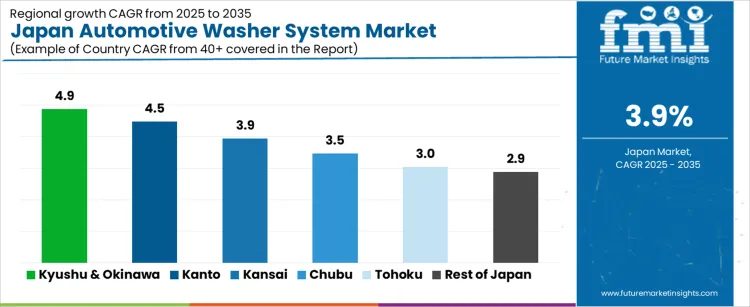
The demand for automotive washer systems in Japan is increasing steadily across vehicle production and aftermarket service regions, led by Kyushu and Okinawa at a 4.9% CAGR. Growth in this region is supported by strong commercial vehicle activity, higher vehicle usage in coastal environments, and steady replacement demand through service networks. Kanto follows at 4.5%, driven by dense passenger vehicle ownership, frequent vehicle inspections, and higher demand for advanced washer functions in premium models.
Kansai records 3.9% growth, reflecting consistent demand from OEM supply chains and urban mobility fleets. Chubu at 3.5% shows moderate uptake linked to core automotive manufacturing activity. Tohoku and the Rest of Japan, at 3.0% and 2.9%, reflect slower growth shaped by lower vehicle density and longer component replacement cycles.
How Is Coastal Driving and Weather Exposure Supporting Automotive Washer System Demand in Kyushu and Okinawa?
Demand for automotive washer system in Kyushu and Okinawa is advancing at a CAGR of 4.9% through 2035, supported by frequent rainfall, coastal dust exposure, and steady private vehicle usage across island road networks. Drivers rely on washer systems for visibility during tropical storms and high humidity conditions. Tourism linked rental fleets also contribute to recurring maintenance demand. Growth reflects stable vehicle parc expansion, rising safety compliance awareness, and consistent replacement demand for washer pumps, nozzles, and fluid delivery lines across passenger vehicles and light commercial fleets.
- Coastal dust exposure increases windshield cleaning frequency
- Rental vehicle fleets sustain maintenance driven demand
- Storm conditions reinforce visibility safety usage
- Spare part replacements guide steady aftermarket sales
Why Is Urban Traffic Density Sustaining Washer System Growth in Kanto?
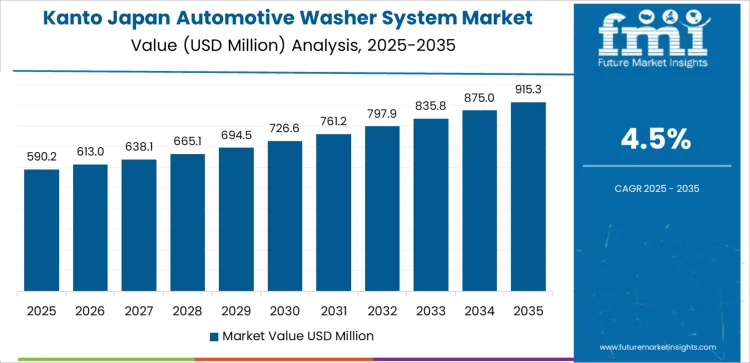
Demand for automotive washer system in Kanto is rising at a CAGR of 4.5% through 2035, driven by dense traffic volumes, high frequency windshield contamination, and large scale passenger car ownership. Urban driving exposes vehicles to smog residue and road spray that require regular washer operation. Service centers record steady replacement cycles for washer motors and spray nozzles. Growth reflects continuous vehicle turnover, strong accident prevention practices, and rising use of advanced washer nozzles in premium passenger vehicle segments.
- Smog residue increases frequent washer activation
- High car ownership sustains steady component demand
- Service garages drive aftermarket replacement volume
- Premium vehicles adopt advanced spray technology
What Is Supporting Stable Automotive Washer System Adoption Across Kansai?
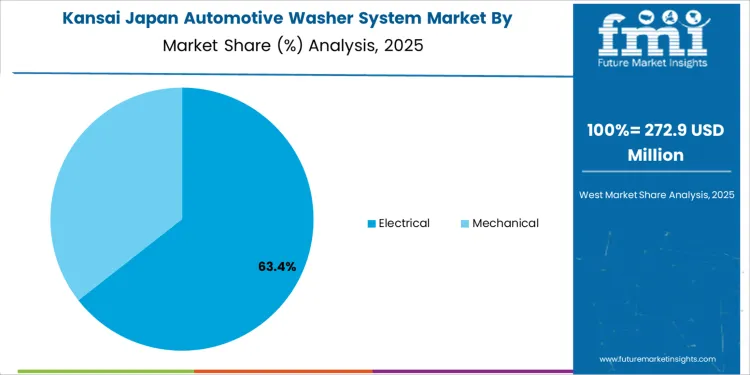
Demand for automotive washer system in Kansai is progressing at a CAGR of 3.9% through 2035, supported by balanced vehicle ownership, steady highway driving exposure, and consistent maintenance practices among private and fleet operators. Kansai shows stable use across compact passenger cars and mid size commercial vehicles. Washer systems remain a standard safety feature with routine fluid replacement and part servicing. Growth reflects controlled vehicle registration growth, stable road usage patterns, and ongoing safety inspection compliance.
- Private car ownership supports base level installation demand
- Highway travel sustains windshield cleaning requirements
- Fleet maintenance programs stabilize component turnover
- Safety inspection norms guide regular system servicing
How Is Manufacturing and Commercial Vehicle Use Shaping Washer System Demand in Chubu?
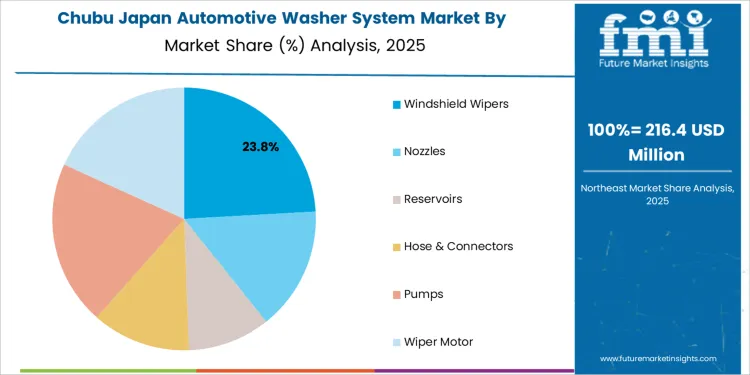
Demand for automotive washer system in Chubu is advancing at a CAGR of 3.5% through 2035, supported by heavy industrial traffic, commercial vehicle operations, and high exposure to road dust near manufacturing zones. Trucks and delivery vans require robust washer systems for long distance travel and visibility maintenance. Chubu also shows steady OEM level integration driven by automotive production clusters. Growth reflects stable freight movement, commercial fleet expansion, and rising adoption of dual nozzle washer systems in logistics vehicles.
- Commercial fleets drive high durability washer demand
- Road dust exposure increases system usage rates
- OEM integration supports baseline production volume
- Logistics vehicle growth reinforces component requirements
Why Is Vehicle Population Structure Moderating Washer System Growth in Tohoku?
Demand for automotive washer system in Tohoku is advancing at a CAGR of 3.0% through 2035, supported by personal vehicle dependence, rural travel patterns, and steady seasonal weather cleaning needs. Snow and road slush increase washer fluid usage during winter months. Vehicle parc growth remains moderate. Growth reflects steady replacement demand for pumps and hoses, stable use in agricultural transport vehicles, and safety driven maintenance practices in colder operating conditions.
- Winter road slush increases washer fluid consumption
- Rural travel sustains consistent visibility maintenance
- Agricultural transport vehicles support basic system demand
- Replacement of pumps and hoses drives aftermarket activity
How Is Local Vehicle Usage Influencing Washer System Demand in Rest of Japan?
Demand for automotive washer system in Rest of Japan is advancing at a CAGR of 2.9% through 2035, supported by small city vehicle ownership, steady commuting patterns, and basic vehicle maintenance routines. These areas show stable demand across entry level passenger cars and utility vehicles. Advanced washer technologies show limited penetration. Growth remains steady and guided by household vehicle servicing habits, gradual fleet renewal, and routine part replacement cycles handled through local auto service workshops.
- Entry level vehicles dominate component demand patterns
- Household servicing routines guide steady replacement flow
- Utility vehicles support consistent washer usage
- Local workshops anchor aftermarket distribution
What Is Driving the Demand for Automotive Washer System in Japan and Which Companies Shape OEM Integration?
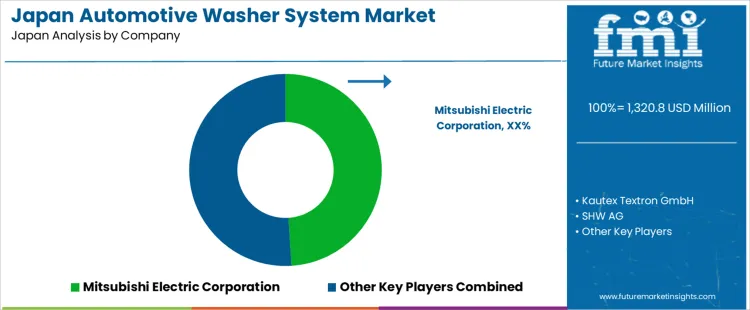
The demand for automotive washer systems in Japan is shaped by high vehicle production volumes, strict visibility standards under all weather conditions, and steady growth in advanced driver assistance features that require clean sensor and camera surfaces. Mitsubishi Electric Corporation holds a central domestic position through washer pumps, control modules, and integrated cleaning systems supplied to major Japanese vehicle OEMs.
Denso supports demand through washer motors, fluid control units, and sensor cleaning integration used in camera based safety platforms. Mitsuba contributes through compact washer motors and reservoir systems used in passenger vehicles and light commercial fleets. These domestic suppliers anchor qualification cycles through deep integration with vehicle platform development and long term supply agreements tied to model life cycles.
Kautex Textron participates through washer fluid reservoirs and multi chamber tank systems supplied to global platforms assembled in Japan. SHW AG supports niche demand through pump and actuator systems used in selected premium vehicle programs. Continental AG contributes through electronically controlled washer modules linked to camera and radar cleaning functions in advanced safety systems.
Magna International participates through full front end module integration where washer systems combine with lighting and sensor protection. System selection in Japan is governed by pump durability, freeze protection, noise control, and packaging efficiency within compact engine bays. Buyer preference favors suppliers with domestic testing facilities, stable mass production yield, and strong integration support during platform validation stages.
Key Players in the Automotive Washer System Industry in Japan
- DoorBird (Bird Home Automation GmbH)
- Samsung Electronics
- ABB Group
- Fermax Electronica
- Legrand
Scope of the Report
| Items | Values |
|---|---|
| Quantitative Units (2025) | USD million |
| Type | Electrical, Mechanical |
| Application | Passenger Cars, LCV, HCV |
| End User | Vehicle OEMs, Tier 1 Component Suppliers, Aftermarket Service Centers, Fleet and Logistics Operators |
| Regions Covered | Kyushu and Okinawa, Kanto, Kansai, Chubu, Tohoku, Rest of Japan |
| Countries Covered | Japan |
| Key Companies Profiled | Mitsubishi Electric Corporation, Denso, Mitsuba, Kautex Textron, SHW AG, Continental AG, Magna International |
| Additional Attributes | Dollar sales by technology and component categories, replacement driven demand for pumps, wipers, nozzles, hoses, and reservoirs, integration of washer systems with ADAS camera and sensor cleaning, regulatory visibility and safety compliance requirements, regional demand linked to vehicle production and parc density, performance specifications for pump durability, freeze protection, noise control, and compact packaging in small engine bays |
Automotive Washer System Industry in Japan Segmentation
Technology:
- Electrical
- Mechanical
Component:
- Windshield Wipers
- Nozzles
- Reservoirs
- Hose & Connectors
- Pumps
- Wiper Motor
Vehicle Type:
- Passenger Cars
- LCV
- HCV
Region
- Kyushu & Okinawa
- Kanto
- Kansai
- Chubu
- Tohoku
- Rest of Japan
Frequently Asked Questions
How big is the demand for automotive washer system in Japan in 2025?
The demand for automotive washer system in Japan is estimated to be valued at USD 1,320.8 million in 2025.
What will be the size of automotive washer system in Japan in 2035?
The market size for the automotive washer system in Japan is projected to reach USD 1,936.4 million by 2035.
How much will be the demand for automotive washer system in Japan growth between 2025 and 2035?
The demand for automotive washer system in Japan is expected to grow at a 3.9% CAGR between 2025 and 2035.
What are the key product types in the automotive washer system in Japan?
The key product types in automotive washer system in Japan are electrical and mechanical.
Which component segment is expected to contribute significant share in the automotive washer system in Japan in 2025?
In terms of component, windshield wipers segment is expected to command 25.0% share in the automotive washer system in Japan in 2025.
Preview the report firsthand - request a free sample
Get SampleGet the brochure for pricing and purchase details.
Get PDFTable of Content
- Executive Summary
- Japan Market Outlook
- Demand-side Trends
- Supply-side Trends
- Technology Roadmap Analysis
- Analysis and Recommendations
- Market Overview
- Market Coverage / Taxonomy
- Market Definition / Scope / Limitations
- Market Background
- Market Dynamics
- Drivers
- Restraints
- Opportunity
- Trends
- Scenario Forecast
- Demand in Optimistic Scenario
- Demand in Likely Scenario
- Demand in Conservative Scenario
- Opportunity Map Analysis
- Product Life Cycle Analysis
- Supply Chain Analysis
- Investment Feasibility Matrix
- Value Chain Analysis
- PESTLE and Porter’s Analysis
- Regulatory Landscape
- Regional Parent Market Outlook
- Production and Consumption Statistics
- Import and Export Statistics
- Market Dynamics
- Japan Market Analysis 2020 to 2024 and Forecast, 2025 to 2035
- Historical Market Size Value (USD Million) Analysis, 2020 to 2024
- Current and Future Market Size Value (USD Million) Projections, 2025 to 2035
- Y-o-Y Growth Trend Analysis
- Absolute $ Opportunity Analysis
- Japan Market Pricing Analysis 2020 to 2024 and Forecast 2025 to 2035
- Japan Market Analysis 2020 to 2024 and Forecast 2025 to 2035, By Technology
- Introduction / Key Findings
- Historical Market Size Value (USD Million) Analysis By Technology , 2020 to 2024
- Current and Future Market Size Value (USD Million) Analysis and Forecast By Technology , 2025 to 2035
- Electrical
- Mechanical
- Y-o-Y Growth Trend Analysis By Technology , 2020 to 2024
- Absolute $ Opportunity Analysis By Technology , 2025 to 2035
- Japan Market Analysis 2020 to 2024 and Forecast 2025 to 2035, By Component
- Introduction / Key Findings
- Historical Market Size Value (USD Million) Analysis By Component, 2020 to 2024
- Current and Future Market Size Value (USD Million) Analysis and Forecast By Component, 2025 to 2035
- Windshield Wipers
- Nozzles
- Reservoirs
- Hose & Connectors
- Pumps
- Wiper Motor
- Y-o-Y Growth Trend Analysis By Component, 2020 to 2024
- Absolute $ Opportunity Analysis By Component, 2025 to 2035
- Japan Market Analysis 2020 to 2024 and Forecast 2025 to 2035, By Vehicle Type
- Introduction / Key Findings
- Historical Market Size Value (USD Million) Analysis By Vehicle Type, 2020 to 2024
- Current and Future Market Size Value (USD Million) Analysis and Forecast By Vehicle Type, 2025 to 2035
- Passenger Cars
- LCV
- HCV
- Y-o-Y Growth Trend Analysis By Vehicle Type, 2020 to 2024
- Absolute $ Opportunity Analysis By Vehicle Type, 2025 to 2035
- Market Structure Analysis
- Competition Dashboard
- Competition Benchmarking
- Market Share Analysis of Top Players
- By Regional
- By Technology
- By Component
- By Vehicle Type
- Competition Analysis
- Competition Deep Dive
- Mitsubishi Electric Corporation
- Overview
- Product Portfolio
- Profitability by Market Segments (Product/Age /Sales Channel/Region)
- Sales Footprint
- Strategy Overview
- Marketing Strategy
- Product Strategy
- Channel Strategy
- Kautex Textron GmbH
- SHW AG
- Continental AG
- Magna International
- Mitsubishi Electric Corporation
- Competition Deep Dive
- Assumptions & Acronyms Used
- Research Methodology


