

- Industry Size (2025)
- USD 48.5 Mn
- Forecast (2035)
- USD 76.3 Mn
- CAGR (2025 to 2035)
- 4.7%
Demand for Aviation Fuel Additives in Japan Forecast and Outlook 2025 to 2035
The demand for aviation fuel additives in Japan is expected to grow from USD 48.5 million in 2025 to USD 76.3 million by 2035, reflecting a compound annual growth rate (CAGR) of 4.7%. Aviation fuel additives are crucial for improving the performance and efficiency of aviation fuels, helping prevent issues such as corrosion, microbial growth, and icing. As the aviation industry continues to recover and expand, the demand for high-quality additives will rise, driven by increased air traffic, improvements in fuel technology, and the need to meet stringent regulatory standards for fuel performance and safety.
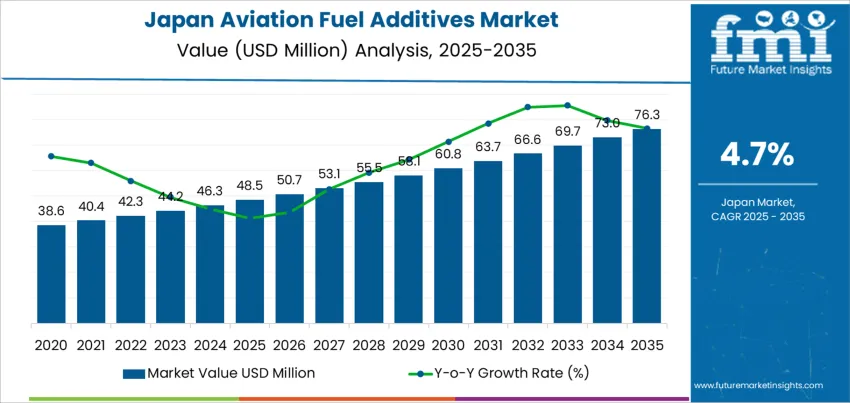
The market will see gradual, steady growth, with demand increasing from USD 48.5 million in 2025 to USD 50.7 million in 2026, and USD 53.1 million in 2027. Over the following years, the demand will continue to rise, reaching USD 58.1 million by 2029 and USD 60.8 million by 2030. By 2035, the demand for aviation fuel additives is forecasted to reach USD 76.3 million, reflecting the ongoing need for these products to ensure the efficiency and safety of aviation operations.
Quick Stats of the Demand for Aviation Fuel Additives in Japan
- Demand for Aviation Fuel Additives in Japan Value (2025): USD 48.5 million
- Demand for Aviation Fuel Additives in Japan Forecast Value (2035): USD 76.3 million
- Demand for Aviation Fuel Additives in Japan Forecast CAGR (2025-2035): 4.7%
- Demand for Aviation Fuel Additives in Japan Application: 55% for Commercial Aircraft
- Demand for Aviation Fuel Additives in Japan Key Growth Regions: Kyushu & Okinawa, Kanto, Kinki, Chubu, Tohoku, Rest of Japan
- Demand for Aviation Fuel Additives in Japan Key Players: BASF SE, Innospec Inc., Shell plc, Chevron Oronite Company LLC
What is the Growth Forecast for the Aviation Fuel Additives Industry in Japan through 2035?
The aviation fuel additives industry in Japan is expected to experience steady growth through 2035. Starting at USD 48.5 million in 2025, the market will gradually increase, reaching USD 50.7 million in 2026 and USD 53.1 million in 2027. By 2029, the demand for aviation fuel additives will grow to USD 58.1 million, followed by USD 60.8 million in 2030. The market will continue to expand, reaching USD 69.7 million by 2032 and USD 73.0 million by 2033. By 2035, the industry is forecasted to reach USD 76.3 million, reflecting a steady increase in demand driven by rising air traffic and ongoing advancements in aviation fuel technology.
The growth momentum analysis reveals consistent, gradual growth across the forecast period. While the rate of growth remains steady, it reflects a sustained demand driven by the aviation industry's recovery and expansion. Each year contributes incrementally to the market’s overall growth, with the momentum continuing at a steady pace. This stable growth pattern reflects the ongoing importance of aviation fuel additives in ensuring fuel efficiency and compliance with safety regulations.
Key Takeaways of Aviation Fuel Additives Industry in Japan
| Metric | Value |
|---|---|
| Industry Sales Value (2025) | USD 48.5 million |
| Industry Forecast Value (2035) | USD 76.3 million |
| Industry Forecast CAGR (2025-2035) | 4.7% |
Why is the Demand for Aviation Fuel Additives in Japan Growing?
The Japanese market for aviation fuel additives is growing as overall fuel consumption in aviation rises. Demand for jet fuel in Japan is expected to remain stable or increase modestly over the next few years, supported by rising air travel demand and domestic/international airline activity. As this demand grows, the need to maintain fuel quality and engine performance becomes more important. Additives such as antioxidants, stability improvers, corrosion inhibitors, cold weather flow enhancers, and anti icing agents help ensure reliable performance of jet fuel under diverse operating conditions. These additives prevent fuel degradation, protect fuel systems, and maintain combustion stability-critical for safety and efficiency in commercial and military aviation. As airlines and fuel providers in Japan handle growing flight volumes, they increasingly rely on additive packages to preserve fuel integrity and minimize maintenance risks.
At the same time efforts to improve environmental performance and adapt to newer fuel types strengthen additive demand. Japan is promoting adoption of more efficient or sustainable aviation fuels. That shift makes performance additives more relevant because alternative fuels or blended fuels may have different chemical properties than traditional jet kerosene. Additive suppliers are responding with advanced formulations that ensure compatibility, stability, and emissions compliance for modern jet engines. Regulatory focus on emissions reduction, fuel quality standards, and safety encourages use of high quality additives. As Japanese aviation continues to modernize and as fuel consumption grows, demand for aviation fuel additives is expected to expand steadily through the next decade.
What Is the Current State of the Demand for Aviation Fuel Additives in Japan in Terms of Additive Type and Application?
The demand for aviation fuel additives in Japan is primarily driven by additive type and application. The leading additive type is corrosion inhibitors, accounting for 28% of the market share, while commercial aircraft is the dominant application, capturing 55% of the demand. Aviation fuel additives play a crucial role in improving fuel performance, preventing corrosion, and enhancing the overall efficiency of aircraft engines. As safety and fuel efficiency remain top priorities in aviation, the demand for these additives continues to grow, particularly in the commercial aviation sector.
How Are Corrosion Inhibitors Leading the Demand for Aviation Fuel Additives in Japan?
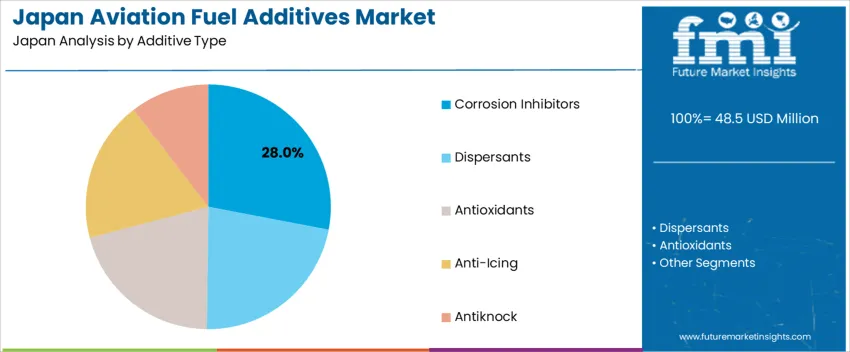
Corrosion inhibitors lead the demand for aviation fuel additives in Japan, holding 28% of the market share. These additives are essential for preventing corrosion in the fuel systems of aircraft, particularly in the presence of moisture, which can lead to metal degradation. Corrosion inhibitors work by forming a protective layer on metal surfaces, reducing the risk of corrosion and extending the life of critical engine components.
The demand for corrosion inhibitors is driven by their ability to ensure the reliability and longevity of aircraft engines, especially given the harsh conditions aircraft are exposed to, including high altitudes, temperature variations, and humidity. Corrosion in fuel systems can lead to costly maintenance and operational disruptions, making corrosion inhibitors a crucial component for preventing such issues. As the aviation industry continues to prioritize safety, reliability, and fuel efficiency, corrosion inhibitors will remain a dominant additive in aviation fuels, particularly in Japan's commercial aviation sector.
How Is Commercial Aircraft Leading the Application Demand for Aviation Fuel Additives in Japan?
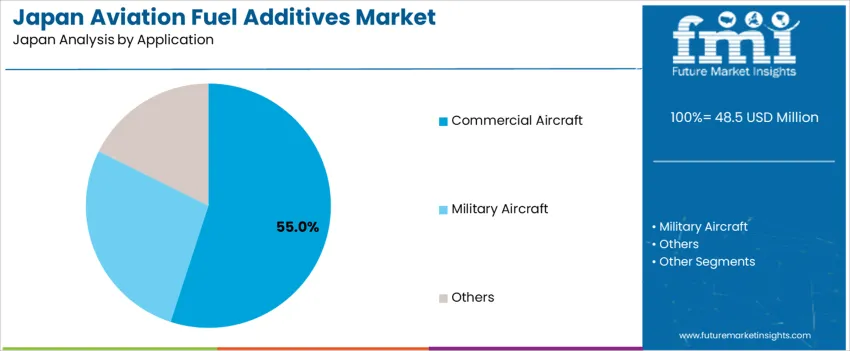
Commercial aircraft is the leading application for aviation fuel additives in Japan, accounting for 55% of the demand. Commercial aircraft, which account for the majority of air traffic, require high-quality fuel additives to ensure optimal engine performance and fuel efficiency. These additives are used to improve the combustion properties of aviation fuel, prevent icing, and protect the fuel system from contaminants and corrosion.
The demand for aviation fuel additives in commercial aircraft is driven by the growing global demand for air travel, where maintaining engine efficiency and reducing fuel consumption are essential for both operational costs and environmental sustainability. As commercial airlines continue to prioritize fuel economy and the longevity of their aircraft, the use of fuel additives to enhance engine performance and fuel reliability is expected to remain strong in Japan. The ongoing expansion of the commercial aviation market ensures that commercial aircraft will continue to lead the demand for aviation fuel additives in the country.
What is the Summary of Demand for Aviation Fuel Additives in Japan?
Demand for aviation fuel additives in Japan is rising as air travel recovers and expands, prompting greater consumption of jet fuel and related support chemicals. Additives are used to preserve fuel quality, prevent icing, inhibit corrosion, stabilise combustion, and maintain fuel system cleanliness in aircraft operating across commercial, cargo, and general aviation. Growth of international tourism and domestic flights supports increasing jet fuel consumption in Japan, which in turn sustains demand for additive treated fuel. As fuel quality standards and emissions regulations tighten, adoption of additive packages that ensure compliance and engine safety becomes more frequent. Overall demand is expected to grow gradually, supported by rising fuel use and evolving additive requirements.
What are the Drivers of Demand for Aviation Fuel Additives in Japan?
One driver is the growth in air travel and expanding flight operations in and out of Japan, which increases jet fuel usage and thus drives need for additives that maintain fuel performance under varying conditions. Additives such as anti icing agents, antioxidants, corrosion inhibitors and metal deactivators are needed to ensure fuel stability, prevent freezing or deposit formation, and protect engine components during flights at high altitude or in variable temperature conditions. Regulatory and industry standards for fuel quality and safety also push operators and refiners to use fuel treated with additives that meet those requirements. The growing interest in alternative or blended aviation fuels in Japan adds another driver, since such fuels often require specialized additive formulations to ensure compatibility and prevent fuel system issues. These factors combine to increase demand for fuel additive formulations tailored to Japanese aviation conditions.
What are the Restraints on Demand for Aviation Fuel Additives in Japan?
One restraint is cost sensitivity: additive treated fuel costs more than untreated fuel, and during periods of economic or price pressure airlines might limit use of non essential or higher cost additive packages to control operating costs. Another restraint arises from regulatory and certification hurdles: new additive formulations-especially those designed for alternative fuels or new jet fuel blends-require rigorous testing and approval before being adopted in aviation fuel supply. This may delay uptake. Further, fluctuations in global oil and fuel prices can affect overall jet fuel demand, which in turn influences additive demand. If fuel consumption drops due to economic slowdown or reduced flight operations, demand for aviation fuel additives may decline correspondingly. Finally, market inertia and conservative practices in aviation fuel procurement may slow adoption of newer additive technologies or specialized additive blends.
What are the Key Trends Influencing Demand for Aviation Fuel Additives in Japan?
A major trend is increasing use of multifunctional additive packages that combine anti icing, antioxidant, corrosion inhibition and deposit control properties in a single formulation, simplifying fuel treatment while covering multiple performance needs. Another trend is rising demand for additive formulations compatible with new or blended jet fuels, as efforts to adopt alternative aviation fuels and more efficient fuel blends gain traction in Japan. Focus on fuel system reliability and engine longevity is also promoting adoption of additives that prevent degradation, microbial growth, and metal ion related deposits under variable operating conditions. As regulatory scrutiny and emission standards tighten, fuel quality control becomes more critical, encouraging standardized use of additive treated fuel. Finally, maintenance and safety practices in military, cargo, and commercial aviation segments are increasingly depending on consistent additive usage to ensure operational reliability and compliance with fuel spec standards.
What is the Regional Demand Outlook for Aviation Fuel Additives in Japan?
The demand for aviation fuel additives in Japan shows steady growth across regions, with Kyushu & Okinawa leading at a CAGR of 5.8%. Kanto follows with a CAGR of 5.3%, supported by the region’s significant aviation industry. The Kinki region shows moderate growth at 4.7%, while Chubu, Tohoku, and the Rest of Japan exhibit slower growth, with respective CAGRs of 4.1%, 3.6%, and 3.4%. These regional differences are influenced by factors such as the density of aviation activity, air traffic, and the growing demand for fuel efficiency and performance in the aviation sector.
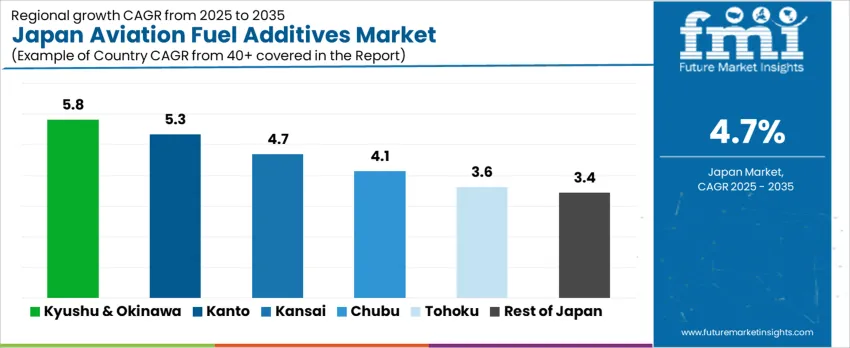
| Region | CAGR (%) |
|---|---|
| Kyushu & Okinawa | 5.8 |
| Kanto | 5.3 |
| Kinki | 4.7 |
| Chubu | 4.1 |
| Tohoku | 3.6 |
| Rest of Japan | 3.4 |
What factors are driving the demand for aviation fuel additives in Kyushu & Okinawa?
The demand for aviation fuel additives in Kyushu & Okinawa is projected to grow at a CAGR of 5.8%, driven by the region’s increasing focus on aviation safety and fuel efficiency. Kyushu & Okinawa are home to significant airports, including Fukuoka and Naha, which handle a large volume of domestic and international air traffic. The rising demand for higher fuel efficiency, better performance, and reduced emissions in aircraft engines is driving the adoption of aviation fuel additives in the region. Additionally, the expanding tourism industry in Okinawa and the growing number of domestic flights in Kyushu contribute to the strong demand for aviation fuel additives. As Japan continues to prioritize environmental sustainability, these additives help improve engine performance and reduce environmental impact, making them increasingly important in the region.
Why is the demand for aviation fuel additives increasing in Kanto?
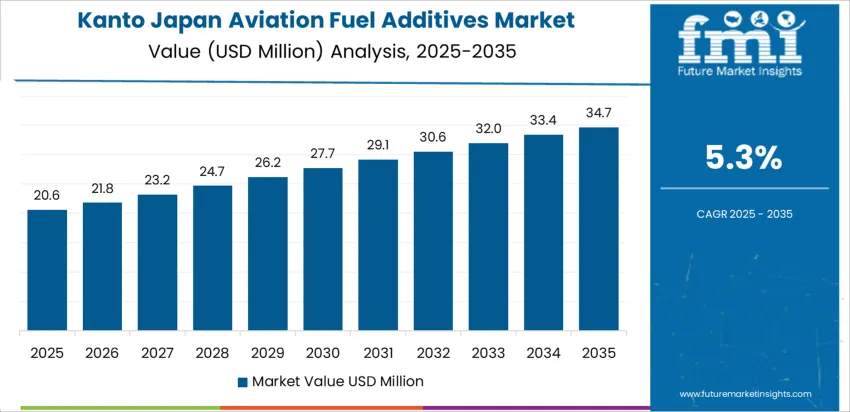
In Kanto, the demand for aviation fuel additives is expected to grow at a CAGR of 5.3%, supported by the region’s major role in Japan’s aviation industry. Kanto is home to Tokyo and Narita International Airport, two of the busiest airports in Japan, which handle significant air traffic. The demand for fuel additives in this region is driven by the need to improve fuel efficiency and reduce carbon emissions from the growing number of flights. With Japan’s commitment to sustainability and reducing the environmental impact of aviation, fuel additives that enhance engine performance and optimize fuel consumption are increasingly used by airlines in the region. As both domestic and international air travel continues to expand, the need for aviation fuel additives in Kanto will continue to rise.
What influences the demand for aviation fuel additives in Kinki?
The demand for aviation fuel additives in the Kinki region is projected to grow at a CAGR of 4.7%, driven by the region’s significant aviation infrastructure and focus on environmental sustainability. Kinki includes Osaka, which is a major aviation hub in Japan, with Kansai International Airport handling a large volume of both international and domestic flights. As air travel increases, so does the demand for fuel additives that improve engine performance and reduce harmful emissions. The Kinki region’s strong emphasis on green technologies and sustainable aviation practices contributes to the growing demand for additives that enhance fuel efficiency. Additionally, the region's role in the manufacturing of aviation-related components and infrastructure development further supports the need for these additives in both commercial and private aviation.
How is the demand for aviation fuel additives growing in Chubu?
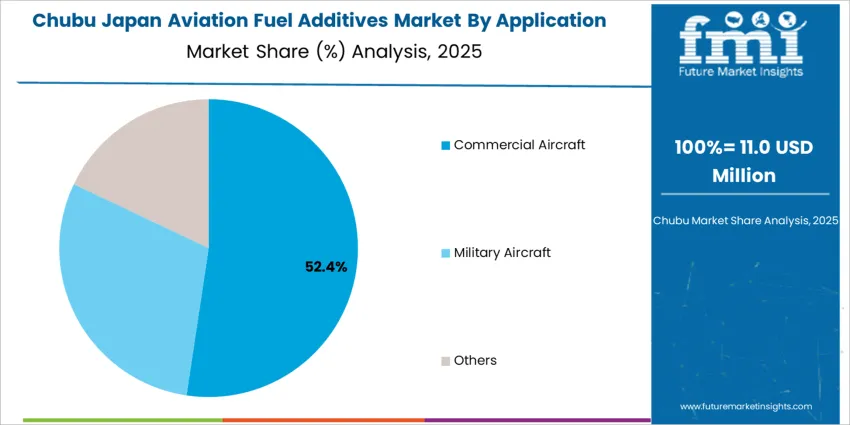
The demand for aviation fuel additives in Chubu is expected to grow at a CAGR of 4.1%, reflecting steady demand in the region’s aviation and industrial sectors. Chubu, home to Nagoya and its international airport, has a growing number of flights and aviation operations that require efficient and sustainable fuel solutions. The region’s demand for aviation fuel additives is driven by the increasing need to improve fuel economy and reduce emissions from aircraft engines. As Chubu continues to develop its infrastructure and enhance its position as a key player in Japan’s aviation industry, the demand for fuel additives is expected to grow steadily. Additionally, the rise in both regional and international flights further contributes to this demand.
What factors are influencing the demand for aviation fuel additives in Tohoku?
In Tohoku, the demand for aviation fuel additives is projected to grow at a CAGR of 3.6%, reflecting moderate growth driven by the region’s aviation sector. Tohoku has fewer large-scale airports compared to other regions like Kanto and Kinki, but it still plays an important role in regional and domestic air travel. The demand for fuel additives is driven by the region’s need to ensure efficient and environmentally friendly operations in its aviation industry. Tohoku's focus on enhancing the sustainability of its aviation sector, particularly with regional airports handling both domestic and international flights, is contributing to the demand for aviation fuel additives. While the growth rate is slower compared to more aviation-intensive regions, Tohoku’s commitment to sustainability ensures a steady increase in demand.
How is the demand for aviation fuel additives evolving in the Rest of Japan?
In the Rest of Japan, the demand for aviation fuel additives is expected to grow at a CAGR of 3.4%, reflecting gradual growth in smaller airports and regional aviation sectors. While this region does not have the same level of aviation activity as more urbanized areas like Kanto and Kinki, the demand for aviation fuel additives is still rising as air travel becomes more widespread and fuel efficiency becomes increasingly important. Regional airports and airlines are increasingly adopting fuel additives to improve fuel efficiency and reduce their carbon footprint, particularly as Japan as a whole focuses on achieving sustainability goals in aviation. The gradual expansion of air travel in the Rest of Japan ensures steady demand for aviation fuel additives, though at a slower pace compared to more aviation-centric regions.
How Are Companies Competing in the Aviation Fuel Additives Industry in Japan?
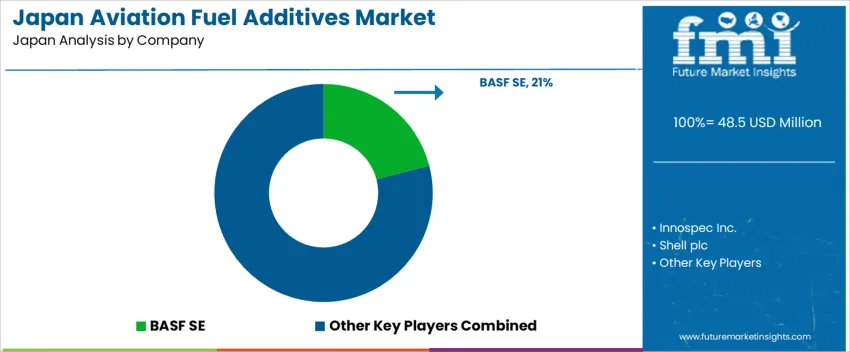
Demand for aviation fuel additives in Japan is rising as airlines and fuel suppliers work to meet performance, safety, and environmental standards for jet fuels. Key players in the market include BASF SE (holding about 21% of the market share), Innospec Inc., Shell plc, and Chevron Oronite Company LLC. These firms supply additive packages that improve fuel performance and stability, essential for aircraft operating in diverse climates and under stringent regulatory requirements.
Competition among these companies focuses on additive performance, regulatory compliance, and versatility in fuel types, including traditional jet fuel and sustainable aviation fuels (SAF). Companies are developing additives that enhance fuel stability, prevent corrosion, improve combustion, and prevent icing in colder conditions. Another important competitive aspect is the ability to offer reliable supply, certification documentation, and technical support to fuel suppliers and airlines. Marketing materials often highlight the effectiveness of these additives in extending engine life, preventing deposits, and meeting fuel quality standards. Companies that align their products with the growing demand for fuel efficiency, safety, and environmental sustainability are positioned to strengthen their presence in Japan’s aviation fuel additives market.
Key Players of the Aviation Fuel Additives Industry in Japan
- BASF SE
- Innospec Inc.
- Shell plc
- Chevron Oronite Company LLC
Scope of the Report
| Items | Details |
|---|---|
| Quantitative Units | USD Million |
| Regions Covered | Japan |
| Additive Type | Corrosion Inhibitors, Dispersants, Antioxidants, Anti-Icing, Antiknock |
| Application | Commercial Aircraft, Military Aircraft, Others |
| Key Companies Profiled | BASF SE, Innospec Inc., Shell plc, Chevron Oronite Company LLC |
| Additional Attributes | The market analysis includes dollar sales by additive type, application, and company categories. It also covers regional demand trends in Japan, driven by the increasing adoption of aviation fuel additives for both commercial and military aircraft. The competitive landscape highlights key manufacturers focusing on innovations in fuel additives to improve engine performance, reduce emissions, and enhance fuel efficiency. Trends in the growing demand for high-performance and environmentally friendly aviation fuel additives are explored, along with advancements in additive formulations for safer and more efficient aircraft operations. |
Key Segments of the Demand for Aviation Fuel Additives in Japan
Additive Type:
- Corrosion Inhibitors
- Dispersants
- Antioxidants
- Anti-Icing
- Antiknock
Application:
- Commercial Aircraft
- Military Aircraft
- Others
Region:
- Kyushu & Okinawa
- Kanto
- Kinki
- Chubu
- Tohoku
- Rest of Japan
Frequently Asked Questions
How big is the demand for aviation fuel additives in Japan in 2025?
The demand for aviation fuel additives in Japan is estimated to be valued at USD 48.5 million in 2025.
What will be the size of aviation fuel additives in Japan in 2035?
The market size for the aviation fuel additives in Japan is projected to reach USD 76.3 million by 2035.
How much will be the demand for aviation fuel additives in Japan growth between 2025 and 2035?
The demand for aviation fuel additives in Japan is expected to grow at a 4.7% CAGR between 2025 and 2035.
What are the key product types in the aviation fuel additives in Japan?
The key product types in aviation fuel additives in Japan are corrosion inhibitors, dispersants, antioxidants, anti-icing and antiknock.
Which application segment is expected to contribute significant share in the aviation fuel additives in Japan in 2025?
In terms of application, commercial aircraft segment is expected to command 55.0% share in the aviation fuel additives in Japan in 2025.
Preview the report firsthand - request a free sample
Get SampleGet the brochure for pricing and purchase details.
Get PDFTable of Content
- Executive Summary
- Japan Market Outlook
- Demand-side Trends
- Supply-side Trends
- Technology Roadmap Analysis
- Analysis and Recommendations
- Market Overview
- Market Coverage / Taxonomy
- Market Definition / Scope / Limitations
- Market Background
- Market Dynamics
- Drivers
- Restraints
- Opportunity
- Trends
- Scenario Forecast
- Demand in Optimistic Scenario
- Demand in Likely Scenario
- Demand in Conservative Scenario
- Opportunity Map Analysis
- Product Life Cycle Analysis
- Supply Chain Analysis
- Investment Feasibility Matrix
- Value Chain Analysis
- PESTLE and Porter’s Analysis
- Regulatory Landscape
- Regional Parent Market Outlook
- Production and Consumption Statistics
- Import and Export Statistics
- Market Dynamics
- Japan Market Analysis 2020 to 2024 and Forecast, 2025 to 2035
- Historical Market Size Value (USD Million) Analysis, 2020 to 2024
- Current and Future Market Size Value (USD Million) Projections, 2025 to 2035
- Y-o-Y Growth Trend Analysis
- Absolute $ Opportunity Analysis
- Japan Market Pricing Analysis 2020 to 2024 and Forecast 2025 to 2035
- Japan Market Analysis 2020 to 2024 and Forecast 2025 to 2035, By Additive Type
- Introduction / Key Findings
- Historical Market Size Value (USD Million) Analysis By Additive Type , 2020 to 2024
- Current and Future Market Size Value (USD Million) Analysis and Forecast By Additive Type , 2025 to 2035
- Corrosion Inhibitors
- Dispersants
- Antioxidants
- Anti-Icing
- Antiknock
- Y-o-Y Growth Trend Analysis By Additive Type , 2020 to 2024
- Absolute $ Opportunity Analysis By Additive Type , 2025 to 2035
- Japan Market Analysis 2020 to 2024 and Forecast 2025 to 2035, By Application
- Introduction / Key Findings
- Historical Market Size Value (USD Million) Analysis By Application, 2020 to 2024
- Current and Future Market Size Value (USD Million) Analysis and Forecast By Application, 2025 to 2035
- Commercial Aircraft
- Military Aircraft
- Others
- Y-o-Y Growth Trend Analysis By Application, 2020 to 2024
- Absolute $ Opportunity Analysis By Application, 2025 to 2035
- Market Structure Analysis
- Competition Dashboard
- Competition Benchmarking
- Market Share Analysis of Top Players
- By Regional
- By Additive Type
- By Application
- Competition Analysis
- Competition Deep Dive
- BASF SE
- Overview
- Product Portfolio
- Profitability by Market Segments (Product/Age /Sales Channel/Region)
- Sales Footprint
- Strategy Overview
- Marketing Strategy
- Product Strategy
- Channel Strategy
- Innospec Inc.
- Shell plc
- Chevron Oronite Company LLC
- BASF SE
- Competition Deep Dive
- Assumptions & Acronyms Used
- Research Methodology


