

- Industry Size (2025)
- USD 27.3 Mn
- Forecast (2035)
- USD 42.0 Mn
- CAGR (2025 to 2035)
- 4.4%
Demand for Bamboo Packaging in Japan 2025 to 2035
The Japan bamboo packaging demand is valued at USD 27.3 million in 2025 and is forecasted to reach USD 42.0 million by 2035, recording a CAGR of 4.4%. Demand is driven by increased focus on sustainable packaging solutions, reduced reliance on plastic materials, and growing adoption of biodegradable food and consumer-goods packaging. Government-led waste-reduction initiatives and stronger environmental criteria in procurement standards also contribute to rising utilization. Virgin pulp remains the leading pulp type due to its strength characteristics, suitability for direct food-contact applications, and ease of conversion into rigid and semi-rigid formats. Packaging producers continue to explore hybrid structures that combine bamboo fibres with paper materials to optimize durability, shelf life, and printing performance.
Kyushu & Okinawa, Kanto, and Kansai show strong adoption linked to established food processing clusters, retail distribution centers, and sustainability-focused consumer segments. Urban hospitality businesses and premium food brands are integrating bamboo-based trays, containers, and wraps into eco-friendly packaging portfolios. Key suppliers include Takagi Industry Co., Ltd., Daiwa Can Company, Sekisui Jushi Corporation, Maruai Co., Ltd., and Kyoshin Co., Ltd. Their development focus includes improved fibre processing, increased recyclability, and scalable production technologies aligned with consumer-goods and food-service applications.
Quick Stats for Japan Bamboo Packaging Demand
- Japan Bamboo Packaging Sales Value (2025): USD 27.3 million
- Japan Bamboo Packaging Forecast Value (2035): USD 42.0 million
- Japan Bamboo Packaging Forecast CAGR (2025–2035): 4.4%
- Leading Pulp Type in Japan Bamboo Packaging Demand: Virgin Pulp
- Key Growth Regions in Japan Bamboo Packaging Demand: Kyushu & Okinawa, Kanto, Kansai
- Top Players in Japan Bamboo Packaging Demand: Takagi Industry Co., Ltd., Daiwa Can Company, Sekisui Jushi Corporation, Maruai Co., Ltd., Kyoshin Co., Ltd.
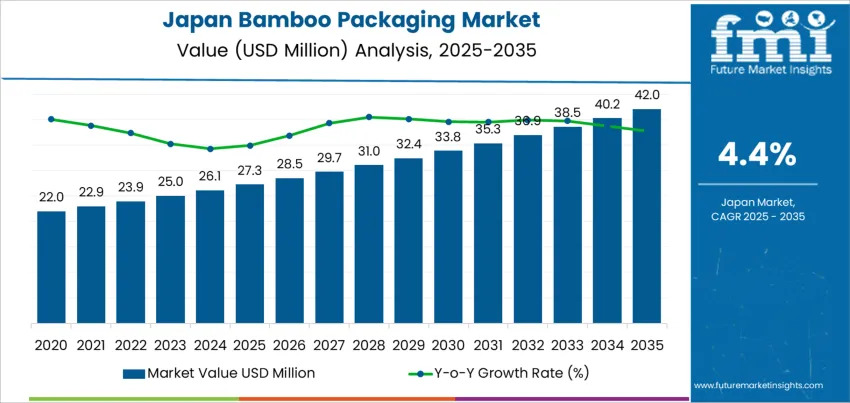
What is the Growth Forecast for Bamboo Packaging Industry in Japan through 2035?
Demand for bamboo packaging in Japan remains below saturation and is still transitioning from niche adoption to broader commercial usage. Early growth stems from sustainability initiatives across foodservice providers, personal care brands, and retailers seeking reduced plastic dependency. These sectors form the primary adoption base, but current market penetration remains selective rather than universal.
Saturation pressure appears where cost sensitivity influences packaging decisions. Bamboo formats typically carry higher unit costs than plastic or paper alternatives, limiting widespread conversion. Functional constraints such as moisture resistance and printability also slow mass adoption in high-volume fast-moving goods. As a result, product rollout is paced by brand positioning and environmental messaging rather than compulsory regulation.
The saturation trajectory reflects a long-term pathway. While environmental awareness prevents stagnation, full penetration levels remain distant due to price and performance considerations. Growth continues with moderate velocity as technological refinements and material-hybrid designs improve usability. The category’s progress depends on balancing sustainability objectives with supply-chain economics, suggesting a steady but non-saturated future in Japan’s packaging portfolio.
Japan Bamboo Packaging Key Takeaways
| Metric | Value |
|---|---|
| Japan Bamboo Packaging Sales Value (2025) | USD 27.3 million |
| Japan Bamboo Packaging Forecast Value (2035) | USD 42.0 million |
| Japan Bamboo Packaging Forecast CAGR (2025-2035) | 4.4% |
Why is the Demand for Bamboo Packaging in Japan Growing?
Demand for bamboo packaging in Japan is increasing because brand owners and retailers seek sustainable materials that reduce dependence on petroleum based plastics while maintaining product protection and visual appeal. Bamboo is viewed positively due to its fast growth, renewability and alignment with traditional Japanese appreciation for natural materials. Foodservice operators and convenience stores adopt bamboo trays, cutlery and containers to support waste reduction targets and respond to consumer interest in ecofriendly dining options. Personal care and gift product manufacturers use bamboo packaging to differentiate premium lines and enhance tactile presentation in department stores and specialty shops.
Growth in e commerce packaging encourages adoption of strong and lightweight protective components made from bamboo fiber that withstand shipping conditions. Municipal initiatives promoting circular economy practices reinforce procurement decisions in both public and private sectors. Constraints include higher production and import costs compared with standard pulp or plastic packaging, as well as limited domestic processing capacity that may restrict large scale supply. Moisture sensitivity in some applications requires coating or liners, which can affect recyclability if materials are mixed. Smaller retailers may introduce bamboo packaging selectively until long term demand stability is confirmed.
Which Pulp Types, Packaging Formats, and End-Use Industries Lead Demand for Bamboo Packaging in Japan?
Demand for bamboo packaging in Japan is increasing due to sustainability commitments, reduced reliance on plastic, and supportive waste-management regulations. Bamboo is valued for rapid renewability, lightweight strength, and a clean aesthetic that supports premium positioning. Adoption grows across retail and foodservice categories emphasizing eco-friendly branding. Manufacturers invest in biodegradable coatings and improved molding technology to expand compatibility with both dry and liquid products. Growth is reinforced by rising consumer awareness of environmentally responsible packaging and preference for products aligned with circular economy goals.
By Pulp Type, Virgin Pulp Holds the Largest Share

Virgin pulp accounts for 58.0%, driven by higher durability, smoother surface finish, and strong acceptance in premium food, beverage, and cosmetic applications where product safety, hygiene, and contamination control remain critical. Virgin fibers also enable precise molding of structural packaging such as trays and takeaway containers. Recycled pulp represents 42.0%, advancing due to sustainability incentives and Japan’s strong fiber recovery infrastructure. However, quality consistency and mechanical strength limitations restrict its use in packaging requiring waterproofing or enhanced shelf presence. Product selection reflects Japan’s balance between sustainability targets and the functional requirements of high-quality consumer packaged goods across food retail, beauty, and e-commerce distribution.
Key Points:
- Virgin pulp preferred for strength, hygiene, and premium design finish
- Recycled pulp aligns with waste reduction and circular packaging targets
- Performance requirements influence material adoption across industries
By Packaging Format, Boxes & Cartons Lead Demand
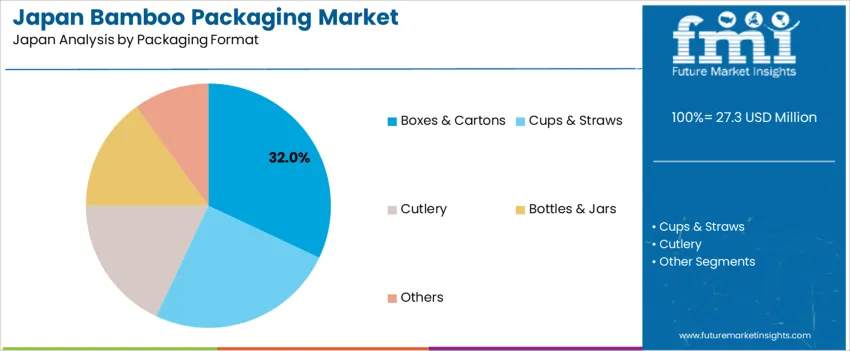
Boxes and cartons hold 32.0%, supported by wide applicability in retail-ready food packaging, takeaway meals, and subscription delivery models. Cups and straws represent 25.0%, benefiting from restrictions on single-use plastics and demand in cafés and quick-service restaurants. Cutlery holds 18.0%, especially in convenience meal solutions as reusable alternatives increase. Bottles and jars represent 15.0%, emerging slowly due to higher cost and structural complexity. Other formats account for 10.0%, including wraps and blister replacements used in niche FMCG categories. Format selection follows Japanese consumer emphasis on biodegradable packaging, compact storage, and modern minimalist branding.
Key Points:
- Cartons dominate foodservice and retail shelf packaging
- Cups and straws gain traction due to plastic reduction policies
- Premium packaging formats like bottles grow with R&D improvements
By End-Use Industry, Foods & Beverages Hold the Largest Share
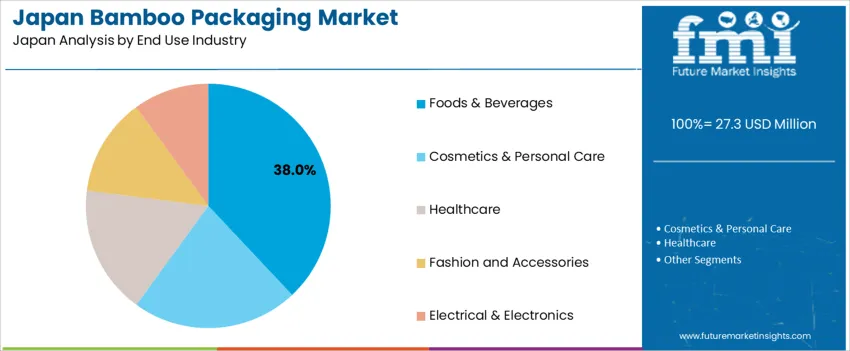
Foods and beverages account for 38.0%, driven by takeaway meal expansion, bento consumption culture, and sustainability expectations in foodservice chains. Cosmetics and personal care represent 22.0%, where bamboo enhances natural brand positioning and shelf visibility. Healthcare holds 17.0%, using bamboo trays and sterile-ready packaging in select categories. The fashion and accessories segment accounts for 13.0%, driven by branded eco-gifting and protective inserts. Electrical and electronics represent 10.0%, applying bamboo molded parts as a recyclable alternative to plastic cushioning. End-use patterns reflect Japan’s shift toward reducing polymer waste, especially in fast-moving consumer categories.
Key Points:
- Foodservice and retail consumption drive primary demand
- Beauty brands adopt bamboo for sustainable, premium aesthetics
- Non-food sectors rise with circular packaging transformation
What are the Drivers, Restraints, and Key Trends of the Demand for Bamboo Packaging in Japan?
Expansion of plastic waste reduction initiatives, increased interest in natural materials and rising demand for premium sustainable packaging are driving demand.
In Japan, bamboo packaging adoption rises as national and municipal programs encourage reduced dependence on single-use plastics in food service and retail. Convenience stores and supermarkets explore bamboo trays and containers for fresh produce and ready meals to align with recycling and composting goals. Gift-oriented food producers and confectionery brands use bamboo packaging to enhance presentation for seasonal events such as New Year and mid-year gifting, supporting strong demand for well-crafted premium formats. Manufacturers highlight bamboo’s domestic cultural connection and rapid resource renewal, gaining approval from consumers who favor eco-aligned purchasing. Regional tourism markets also adopt bamboo-based cutlery and take-out packaging for cafes and traditional food stalls, contributing to niche but visible deployment.
Higher material and processing costs, limited standardization for food safety compliance and slower adoption among cost-sensitive operators restrain demand.
Bamboo packaging often requires specialized forming and coating processes that raise unit costs compared with lightweight plastics or paperboard. Food safety regulations require validated barrier treatments to prevent moisture absorption, adding testing expenses for producers. Smaller restaurants and bento suppliers focus on low-cost packaging to support daily high-volume sales, making premium bamboo solutions less accessible. Disposal practices vary across municipalities, leading to uncertainty among consumers about how to sort bamboo items in household waste streams. These factors create measured uptake across large-scale retail networks.
Shift toward hybrid paper-bamboo structures, increased demand in convenience food categories and rising collaboration with domestic craft producers define key trends.
Producers are developing hybrid packaging that combines bamboo fibers with recyclable paper to improve functional strength while reducing plastic content. Convenience-food chains are testing bamboo lids and trays for ready meals consumed during commuting, supporting durable performance in thermal environments. Collaboration with craft manufacturers in regions such as Kumamoto and Kyoto encourages development of visually appealing designs that highlight local identity. Hotels and ryokan are adopting bamboo amenities to improve sustainability credentials for inbound tourists. These trends indicate gradual but culturally aligned growth for bamboo packaging within Japan’s premium and eco-focused sectors.
Analysis of the Demand for Bamboo Packaging in Japan by Region
Demand for bamboo packaging in Japan reflects transitions toward recyclable materials in food service, personal-care goods, and gift-oriented retail. Growth depends on regional availability of sustainable packaging initiatives, logistics coverage for specialty materials, and tourism-linked sales. Kyushu & Okinawa lead at 5.5% CAGR, followed by Kanto (5.1%), Kansai (4.5%), Chubu (3.9%), Tohoku (3.5%), and the Rest of Japan (3.3%).
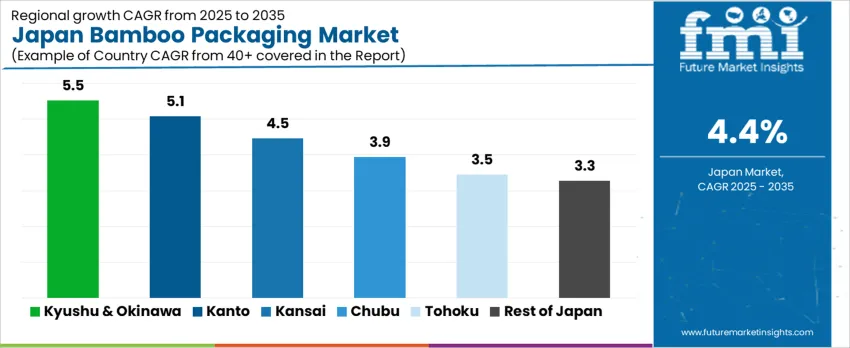
| Region | CAGR (2025-2035) |
|---|---|
| Kyushu & Okinawa | 5.5% |
| Kanto | 5.1% |
| Kansai | 4.5% |
| Chubu | 3.9% |
| Tohoku | 3.5% |
| Rest of Japan | 3.3% |
How are Kyushu & Okinawa influencing demand for bamboo packaging?
Kyushu & Okinawa reach 5.5% CAGR driven by sustainable dining operations, artisanal souvenir markets, and distribution ties with bamboo-growing areas. Food stalls and casual dining venues adopt bamboo trays and cutlery to reduce plastic dependency while meeting waste-sorting expectations across urban centers such as Fukuoka. Tourism exposure remains strong throughout Okinawa, enabling packaged souvenirs like confectionery boxes and premium beverage sets that incorporate bamboo-based wrapping. Retailers evaluate packaging durability in humid coastal environments where moisture resistance ensures maintained form. SMEs favor reliable procurement cycles with regional supply partners capable of consistent sizing and strength. Local governments promote green packaging within public venues, encouraging procurement alignment across vendors. Seasonal festivals expand high-volume use for takeaway food items.
- Tourism markets expanding sustainable packaging use
- Food service adoption reducing single-use plastics
- Humidity-resistant structures supporting product protection
- Regional suppliers enabling inventory continuity
How is Kanto shaping bamboo packaging usage?
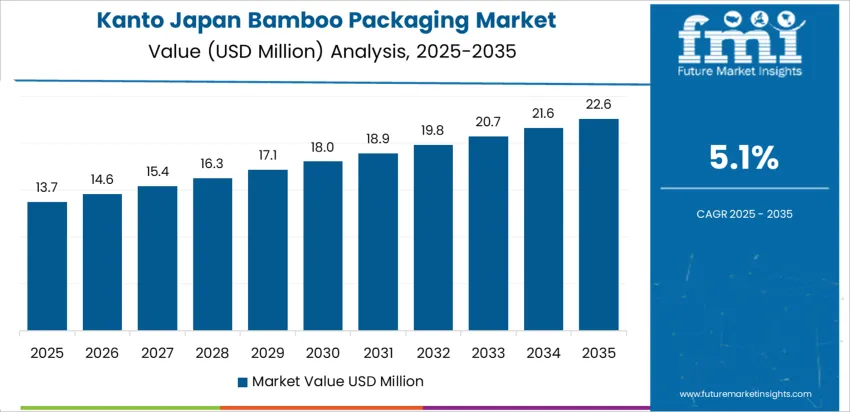
Kanto posts 5.1% CAGR enabled by Tokyo’s retail density and growing sustainability messaging in convenience and supermarket categories. Food brands diversify packaging for ready-to-eat meals aligned with waste-reduction policies in transit-heavy areas. Personal-care companies introduce bamboo packaging for select premium SKUs intended for aesthetics and recyclability. E-commerce fulfillment centers evaluate protective bamboo-based cushioning solutions for fragile goods. Buyers track performance across automated filling lines to ensure compatibility with existing sealing formats. Retailers highlight eco-packaging in end-caps to encourage trial adoption.
- High retail traffic supporting rotation of sustainable options
- Personal-care brands adopting recyclable formats
- Automation compatibility influencing procurement
- Visibility in promotional placements increasing trial rates
How is Kansai reinforcing market growth?
Kansai records 4.5% CAGR linked to dining culture, gift shopping in Kyoto tourist areas, and active packaging substitution trials in Osaka distribution channels. Bamboo packaging appeals to consumers seeking traditional aesthetic alignment in confectionery and craft goods. Restaurants adopt sturdy bamboo trays for dine-in and short-distance takeaway. Vendors evaluate material consistency for smooth stacking and efficient storage. Universities and corporate campuses increase purchasing for catered events using lower-impact tableware. Local logistics partners maintain cold-chain compliance for food items packaged in bamboo when temperature fluctuations require rigidity retention.
- Cultural tourism influencing packaging presentation
- Durable tray usage in active dining environments
- Storage-efficient structures supporting food service
- Procurement aligned with sustainability campaigns
How is Chubu contributing to bamboo packaging demand?
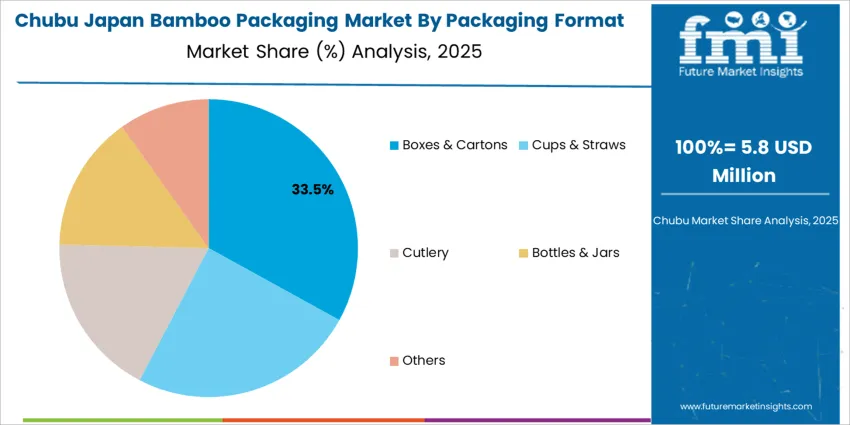
Chubu reaches 3.9% CAGR shaped by procurement in manufacturing-supporting communities, convenience retail, and hospitality. Tourism around Nagoya boosts decorative packaging for sweets and local specialties. Retailers maintain supply for seasonal gift baskets with bamboo-based presentation value. Buyers monitor cost stability across bulk orders to align with standardized product lines. Transport through inland delivery networks requires packaging strength during vibration exposure.
- Gift-sector purchasing supporting decorative formats
- Regional logistics emphasizing durability
- Cost-monitoring influencing brand decisions
- Retail seasonality affecting procurement cycles
How is Tohoku shaping adoption trends?
Tohoku achieves 3.5% CAGR, supported by gradual integration into supermarket packaging and artisanal food products. Household shopping patterns favor affordable adoption when small premium increases are justified by recyclability. Packaging must perform under colder seasonal conditions without brittleness. Retailers expand options slowly to match consumer familiarity.
- Recyclability supporting value-based decisions
- Cold-climate durability reviewed during procurement
- Gradual SKU expansion in retail
- Food-focused adoption leading demand
How is the Rest of Japan maintaining steady use?
The Rest of Japan posts 3.3% CAGR with demand supported by small-format retail, traditional confectionery outlets, and environmentally conscious public venues. Packaging choices emphasize simplicity and brand recognition for consistent consumer comfort. Local distributors supply standard trays and wrappers that integrate into existing workflows without equipment change.
- Local sweets and craft goods driving demand
- Standardized product lines easing integration
- Environmental messaging helping maintain sales
- Routine deliveries supporting availability
What is the competitive landscape of demand for bamboo-based packaging in Japan?
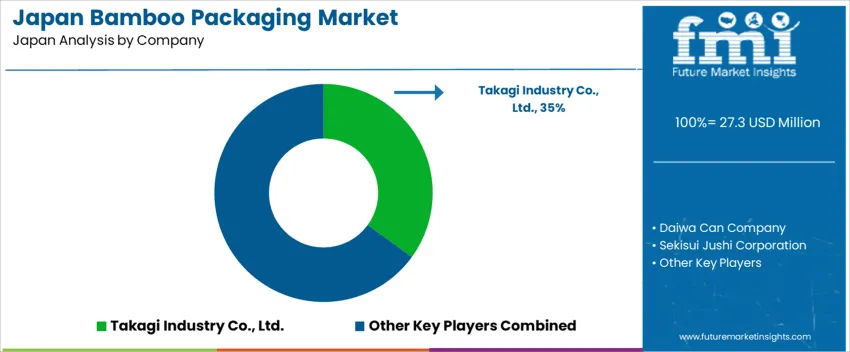
Demand for bamboo-based packaging in Japan reflects a fragmented supplier structure. Many domestic converters operate in food service, retail, and traditional goods channels, supplying trays, bento packaging, and small container formats. The largest share is held by Takagi Industry Co., Ltd., estimated at 30.0%, supported by consistent product quality and retail distribution in convenience and supermarket networks. The company supplies bamboo-derived disposable items with reliable supply continuity and stable performance in food handling environments.
Daiwa Can Company contributes presence through hybrid material packaging that incorporates bamboo fibers alongside paper substrates, supporting beverage and food categories requiring shape stability. Sekisui Jushi Corporation maintains participation with molded packaging solutions where durability and smooth surface finishing are required. Maruai Co., Ltd. is active in luxury-oriented secondary packaging using natural fibers, serving confectionery and gifting applications. Kyoshin Co., Ltd. supports demand in traditional craft-aligned packaging, focusing on bamboo trays and wrappers used in prepared foods.
Competition focuses on material strength, moisture resistance, and alignment with Japan’s recycling and composting specifications. Demand continues as distributors and retailers expand adoption of renewable packaging that satisfies consumer interest in reduced plastic dependency while maintaining handling reliability across cold-chain and quick-service food operations.
Key Players in Japan Bamboo Packaging Demand
- Takagi Industry Co., Ltd.
- Daiwa Can Company
- Sekisui Jushi Corporation
- Maruai Co., Ltd.
- Kyoshin Co., Ltd.
Scope of the Report
| Items | Values |
|---|---|
| Quantitative Units | USD million |
| Pulp Type | Virgin Pulp, Recycled Pulp |
| Packaging Format | Boxes & Cartons, Cups & Straws, Cutlery, Bottles & Jars, Others |
| End Use Industry | Foods & Beverages, Cosmetics & Personal Care, Healthcare, Fashion and Accessories, Electrical & Electronics |
| Regions Covered | Kyushu & Okinawa, Kanto, Kansai, Chubu, Tohoku, Rest of Japan |
| Key Companies Profiled | Takagi Industry Co., Ltd., Daiwa Can Company, Sekisui Jushi Corporation, Maruai Co., Ltd., Kyoshin Co., Ltd. |
| Additional Attributes | Dollar demand by pulp type and packaging formats; share of bamboo-based solutions as a replacement for plastics and paper; adoption trends in disposable foodservice, premium retail packaging, and sustainable e-commerce packaging; influence of Japan’s plastic waste reduction policies and circular economy initiatives; supply chain integration with bamboo cultivation and material processing; growth opportunities in compostable and biodegradable product development. |
Japan Bamboo Packaging Demand by Segments
Pulp Type:
- Virgin Pulp
- Recycled Pulp
Packaging Format:
- Boxes & Cartons
- Cups & Straws
- Cutlery
- Bottles & Jars
- Others
End Use Industry:
- Foods & Beverages
- Cosmetics & Personal Care
- Healthcare
- Fashion and Accessories
- Electrical & Electronics
Region:
- Kyushu & Okinawa
- Kanto
- Kansai
- Chubu
- Tohoku
- Rest of Japan
Frequently Asked Questions
How big is the demand for bamboo packaging in Japan in 2025?
The demand for bamboo packaging in Japan is estimated to be valued at USD 27.3 million in 2025.
What will be the size of bamboo packaging in Japan in 2035?
The market size for the bamboo packaging in Japan is projected to reach USD 42.0 million by 2035.
How much will be the demand for bamboo packaging in Japan growth between 2025 and 2035?
The demand for bamboo packaging in Japan is expected to grow at a 4.4% CAGR between 2025 and 2035.
What are the key product types in the bamboo packaging in Japan?
The key product types in bamboo packaging in Japan are virgin pulp and recycled pulp.
Which packaging format segment is expected to contribute significant share in the bamboo packaging in Japan in 2025?
In terms of packaging format, boxes & cartons segment is expected to command 32.0% share in the bamboo packaging in Japan in 2025.
Preview the report firsthand - request a free sample
Get SampleGet the brochure for pricing and purchase details.
Get PDFTable of Content
- Executive Summary
- Japan Market Outlook
- Demand-side Trends
- Supply-side Trends
- Technology Roadmap Analysis
- Analysis and Recommendations
- Market Overview
- Market Coverage / Taxonomy
- Market Definition / Scope / Limitations
- Market Background
- Market Dynamics
- Drivers
- Restraints
- Opportunity
- Trends
- Scenario Forecast
- Demand in Optimistic Scenario
- Demand in Likely Scenario
- Demand in Conservative Scenario
- Opportunity Map Analysis
- Product Life Cycle Analysis
- Supply Chain Analysis
- Investment Feasibility Matrix
- Value Chain Analysis
- PESTLE and Porter’s Analysis
- Regulatory Landscape
- Regional Parent Market Outlook
- Production and Consumption Statistics
- Import and Export Statistics
- Market Dynamics
- Japan Market Analysis 2020 to 2024 and Forecast, 2025 to 2035
- Historical Market Size Value (USD Million) Analysis, 2020 to 2024
- Current and Future Market Size Value (USD Million) Projections, 2025 to 2035
- Y-o-Y Growth Trend Analysis
- Absolute $ Opportunity Analysis
- Japan Market Pricing Analysis 2020 to 2024 and Forecast 2025 to 2035
- Japan Market Analysis 2020 to 2024 and Forecast 2025 to 2035, By Pulp Type
- Introduction / Key Findings
- Historical Market Size Value (USD Million) Analysis By Pulp Type , 2020 to 2024
- Current and Future Market Size Value (USD Million) Analysis and Forecast By Pulp Type , 2025 to 2035
- Virgin Pulp
- Recycled Pulp
- Y-o-Y Growth Trend Analysis By Pulp Type , 2020 to 2024
- Absolute $ Opportunity Analysis By Pulp Type , 2025 to 2035
- Japan Market Analysis 2020 to 2024 and Forecast 2025 to 2035, By Packaging Format
- Introduction / Key Findings
- Historical Market Size Value (USD Million) Analysis By Packaging Format, 2020 to 2024
- Current and Future Market Size Value (USD Million) Analysis and Forecast By Packaging Format, 2025 to 2035
- Boxes & Cartons
- Cups & Straws
- Cutlery
- Bottles & Jars
- Others
- Y-o-Y Growth Trend Analysis By Packaging Format, 2020 to 2024
- Absolute $ Opportunity Analysis By Packaging Format, 2025 to 2035
- Japan Market Analysis 2020 to 2024 and Forecast 2025 to 2035, By End Use Industry
- Introduction / Key Findings
- Historical Market Size Value (USD Million) Analysis By End Use Industry, 2020 to 2024
- Current and Future Market Size Value (USD Million) Analysis and Forecast By End Use Industry, 2025 to 2035
- Foods & Beverages
- Cosmetics & Personal Care
- Healthcare
- Fashion and Accessories
- Electrical & Electronics
- Y-o-Y Growth Trend Analysis By End Use Industry, 2020 to 2024
- Absolute $ Opportunity Analysis By End Use Industry, 2025 to 2035
- Market Structure Analysis
- Competition Dashboard
- Competition Benchmarking
- Market Share Analysis of Top Players
- By Regional
- By Pulp Type
- By Packaging Format
- By End Use Industry
- Competition Analysis
- Competition Deep Dive
- Takagi Industry Co., Ltd.
- Overview
- Product Portfolio
- Profitability by Market Segments (Product/Age /Sales Channel/Region)
- Sales Footprint
- Strategy Overview
- Marketing Strategy
- Product Strategy
- Channel Strategy
- Daiwa Can Company
- Sekisui Jushi Corporation
- Maruai Co., Ltd.
- Kyoshin Co., Ltd.
- Takagi Industry Co., Ltd.
- Competition Deep Dive
- Assumptions & Acronyms Used
- Research Methodology


