

- Industry Size (2025)
- USD 5.4 Mn
- Forecast (2035)
- USD 7.1 Mn
- CAGR (2025 to 2035)
- 2.7%
Demand for Toy Bag in Japan Forecast and Outlook 2025 to 2035
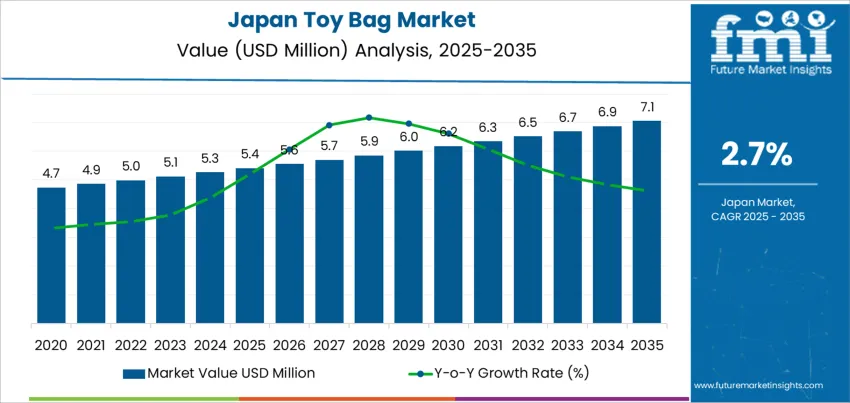
The demand for toy bags in Japan is expected to grow from USD 5.4 million in 2025 to USD 7.1 million by 2035, reflecting a CAGR of 2.7%. Toy bags are widely used to organize and store toys, offering convenience and functionality for households, daycare centers, and retail businesses. As Japan’s consumer base continues to prioritize organization and efficient use of space in their homes, the demand for toy bags is expected to rise steadily. The increasing number of families with young children, coupled with a growing focus on home organization, will further drive demand for this product.
The rise of e-commerce and the expanding range of toy bags available through online retailers will continue to fuel growth. As parents look for practical and aesthetically pleasing storage solutions for toys, toy bags that combine both function and style will become more desirable. Manufacturers are also focusing on creating eco-friendly, durable, and easy-to-clean toy bags to meet the growing demand for sustainable products. With consumers increasingly prioritizing environmentally friendly materials, manufacturers are responding by offering options made from organic cotton, recycled fabrics, and other sustainable materials.
Quick Stats of the Demand for Toy Bag in Japan
- Demand for Toy Bag in Japan Value (2025): USD 5.4 million
- Demand for Toy Bag in Japan Forecast Value (2035): USD 7.1 million
- Demand for Toy Bag in Japan Forecast CAGR (2025-2035): 2.7%
- Demand for Toy Bag in Japan Leading Material Type: Fabric
- Demand for Toy Bag in Japan Key Growth Regions: Kyushu & Okinawa, Kanto, Kansai, Chubu, Tohoku, Rest of Japan
- Demand for Toy Bag in Japan Top Players: Babyjoys, Disney, Kidorable, Naturally KIDS, SUNNYLIFE
What is the Growth Forecast for the Demand for Toy Bag in Japan through 2035?
From 2025 to 2030, demand for toy bags in Japan is expected to grow from USD 5.4 million to USD 6.3 million, adding USD 0.9 million in value. This period will see steady growth driven by the increasing demand for organized storage solutions, particularly in households with young children. As families continue to seek ways to manage clutter, toy bags will become an essential storage item. The rise in eco-conscious consumer behavior will also fuel growth, with sustainable, stylish toy storage options gaining traction. The trend towards minimalist and organized living spaces, especially in urban environments, will further support the demand for practical, space-saving storage solutions like toy bags. Manufacturers will continue to respond by offering products made from eco-friendly materials, ensuring that sustainability remains a key factor in driving demand.
From 2030 to 2035, demand for toy bags is projected to grow from USD 6.3 million to USD 7.1 million, contributing USD 0.8 million in value. While the growth rate will slow during this phase as the industry matures, the demand will remain robust. Continued trends in home organization and the increasing focus on sustainability will sustain steady demand for toy bags. As more families prioritize eco-friendly and functional storage options, toy bags will continue to be favored for their practicality, durability, and environmental benefits. Even with a slower pace, the ongoing popularity of efficient and stylish storage solutions will support the industry’s stable growth through the forecast period.
Demand for Toy Bag in Japan Key Takeaways
| Metric | Value |
|---|---|
| Demand for Toy Bag in Japan Value (2025) | USD 5.4 million |
| Demand for Toy Bag in Japan Forecast Value (2035) | USD 7.1 million |
| Demand for Toy Bag in Japan Forecast CAGR (2025-2035) | 2.7% |
Why is the Demand for Toy Bag in Japan Growing?
The demand for toy bags in Japan is growing due to the increasing need for practical and stylish storage solutions for children’s toys. As the number of families with young children continues to rise, the need for convenient, space-efficient, and durable storage options for toys becomes more essential. Toy bags offer a functional and aesthetically appealing way to organize toys, which is driving their increasing popularity among parents and caregivers in Japan.
A key factor contributing to the growth of this industry is the rising awareness of the importance of decluttering and organizing living spaces, especially in smaller homes and apartments. Toy bags are an effective solution for keeping toys neatly stored, making it easier for children to access their belongings and for parents to maintain a tidy home. The growing focus on functional, multi-purpose products in the consumer goods sector is further driving the demand for toy bags that combine utility with design.
The rise in demand for eco-friendly products is contributing to the popularity of sustainable and reusable toy bags. Many toy bags are now made from environmentally friendly materials such as cotton, jute, or recycled fabrics, appealing to the growing number of environmentally conscious consumers. As Japanese consumers increasingly prioritize sustainability and practicality in their purchases, the demand for toy bags is expected to continue growing steadily through 2035.
What is the Segment-Wise Analysis of Demand for Toy Bags in Japan?
Demand for toy bags in Japan is segmented by material type, sales or distribution channel, bag type, category, and region. By material type, demand is divided into fabric, plastic, paper, metal, and others. The demand is also segmented by sales or distribution channel, including supermarkets and hypermarkets, online retail channels, specialty stores, and other offline sales channels. Bag type demand is divided into tote bags, drawstring bags, duffle bags, and mesh bags. In terms of category, demand is split between boys and girls. Regionally, demand is distributed across Kyushu & Okinawa, Kanto, Kansai, Chubu, Tohoku, and the Rest of Japan.
Why Does Fabric Dominate the Demand for Toy Bags?

Fabric makes up 36% of the demand for toy bags in Japan, largely due to its versatility, durability, and environmental benefits. Fabric toy bags are lightweight, easy to clean, and often come in vibrant, fun designs, which make them appealing to both parents and children. The growing awareness of sustainability among consumers drives the preference for eco-friendly alternatives like fabric over plastic. These bags are not only ideal for storing and organizing toys but can also be repurposed for other uses, such as storing clothes or school supplies. Fabric bags are available in a wide range of sizes, designs, and patterns, allowing them to cater to different needs and preferences, particularly for boys' and girls' toy bags. As sustainability becomes an increasing priority for consumers, fabric continues to lead the industry for toy bags in Japan.
How Do Supermarkets and Hypermarkets Drive the Demand for Toy Bags?
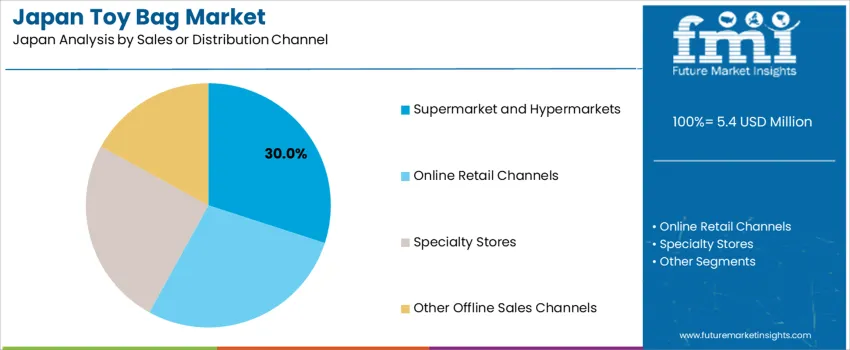
Supermarkets and hypermarkets contribute 30% to the demand for toy bags in Japan, thanks to their accessibility, convenience, and broad customer base. These stores attract parents looking for affordable and practical solutions to store their children's toys. The large-scale nature of supermarkets and hypermarkets means that toy bags are easy to find while shopping for other household items. These stores typically offer a variety of toy bags in different materials, sizes, and designs, catering to the preferences of boys and girls alike. The competitive pricing and frequent promotions in supermarkets and hypermarkets further enhance the appeal of toy bags to consumers. As the demand for convenience continues to rise, supermarkets and hypermarkets will remain a significant channel for the toy bag industry in Japan, ensuring that these stores maintain their dominant position in meeting consumer needs for accessible and functional products.
What are the Key Trends, Drivers, and Restraints in Demand for Toy Bags in Japan?
Demand for toy bags in Japan is rising as families and households seek better ways to store and organize children’s toys amid limited living space and increasing toy ownership. As the number of toys per household increases, parents look for simple, lightweight, and easy-to-use storage options. Toy bags offer a flexible and convenient solution for storing soft toys, plushies, small toys, and accessories, helping maintain tidiness and reducing clutter. The combination of growing toy consumption and a desire for space-efficient storage supports demand. Demand is further supported by the overall strength of Japan’s toys industry and rising consumption of toy-related goods.
Why is Demand for Toy Bags Growing in Japan?
Demand for toy bags in Japan is growing due to urban living conditions and smaller homes that prioritize compact and efficient storage solutions. As families accumulate more toys, especially with the growing variety in the toy industry, there is a practical need for flexible and easy-to-manage storage options. Toy bags meet these needs by offering a simple, lightweight solution to store or carry toys without the need for bulky furniture or permanent storage units. Parents value convenience and cost-efficiency, particularly for smaller, soft toys that require little protection. Consumer preferences are shifting towards storage solutions that are easy to clean, versatile, and adaptable for various spaces in the home, further boosting the appeal of toy bags as a convenient option for parents in Japan.
How are Technological & Industry Innovations Driving Toy Bag Demand in Japan?
Technological innovations in materials and design are making toy bags more attractive and practical for Japanese consumers. Manufacturers are using durable, lightweight fabrics that are easy to wash, making the bags convenient and low-maintenance. New design features, such as drawstrings, handles, and multi-compartment pockets, help organize various types of toys more effectively. Some toy bags are now made from sustainable or eco-friendly materials, appealing to environmentally conscious parents. The broader trend toward compact living and multifunctional household items is influencing the design of versatile storage solutions for children’s needs. These innovations not only enhance the usability and convenience of toy bags but also make them a more appealing and space-efficient alternative to bulky, traditional storage options like furniture-based units.
What are the Key Challenges and Risks That Could Limit Toy Bag Demand in Japan?
Despite the growing demand, there are challenges that could limit the broader adoption of toy bags in Japan. For heavier or larger toys, these bags may not offer adequate storage or protection, pushing families toward sturdier, more protective storage solutions such as toy chests or shelving units. Some consumers may prefer traditional, furniture-based storage options that offer greater durability and better organization, especially for long-term use. Concerns over the quality or durability of cheaper fabric toy bags may reduce their appeal. As families look for more permanent and organized storage solutions, demand could shift away from bags toward more structured storage units. Regional variations in toy consumption, family size, and housing conditions may influence demand, leading to uneven growth across different consumer segments.
What is the Regional Demand Outlook for Toy Bag in Japan?
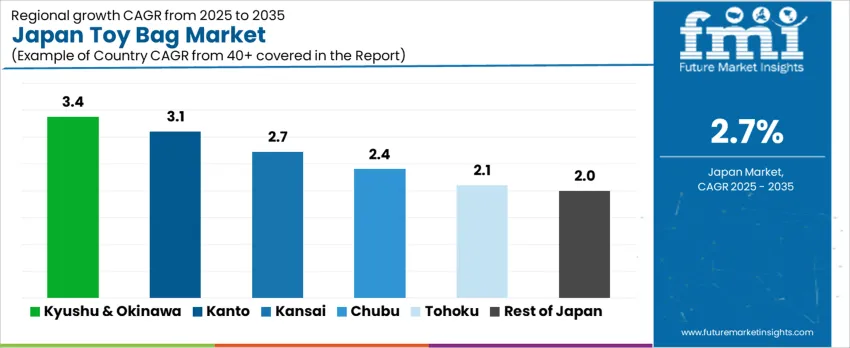
| Region | CAGR (%) |
|---|---|
| Kyushu & Okinawa | 3.4% |
| Kanto | 3.1% |
| Kansai | 2.7% |
| Chubu | 2.4% |
| Tohoku | 2.1% |
| Rest of Japan | 2.0% |
Demand for toy bags in Japan is steadily growing, with Kyushu & Okinawa leading at a 3.4% CAGR, driven by the region’s expanding tourism and retail sectors. Kanto follows with a 3.1% CAGR, supported by the region’s large urban population and growing focus on efficient home organization. Kansai shows a 2.7% CAGR, fueled by its strong retail sector and rising demand for child-focused products. Chubu experiences a 2.4% CAGR, with steady growth driven by young families seeking practical storage solutions. Tohoku sees a 2.1% CAGR, as local industrys increasingly adopt toy bags for home organization. The Rest of Japan shows a 2.0% CAGR, supported by growing interest in eco-friendly and functional products.
How is Demand for Toy Bags Growing in Kyushu & Okinawa?
Kyushu & Okinawa leads the demand for toy bags, with a 3.4% CAGR. This growth is driven by the region’s expanding retail and e-commerce sectors, where toy bags are increasingly popular for both practical storage and as part of children's toy collections. The region’s tourism industry also contributes to demand, as visitors seek souvenirs and products that are easy to pack and transport. The increasing focus on organizing children’s toys and personal items is pushing parents and caregivers toward using toy bags for practical purposes. Kyushu & Okinawa’s emphasis on eco-friendly packaging and materials aligns with the growing demand for sustainable toy bags. As the region’s retail sector continues to expand, driven by both tourism and consumer demand, the industry for toy bags is expected to continue growing at a steady pace.
Why is Demand for Toy Bags Rising in Kanto?
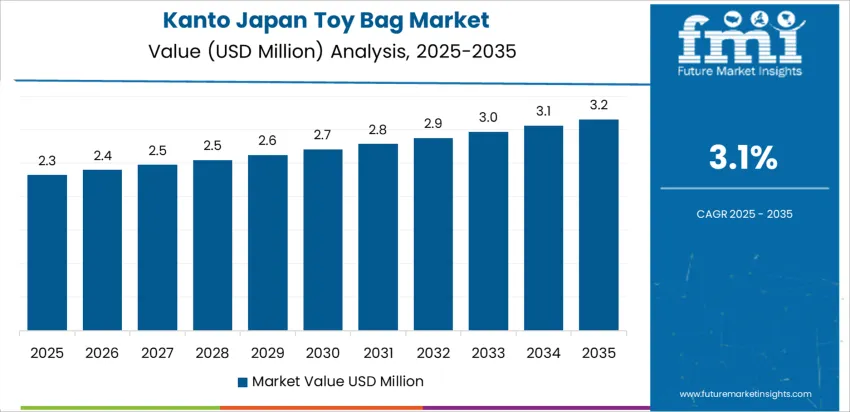
Kanto is experiencing steady demand for toy bags, with a 3.1% CAGR. The region’s large urban population, particularly in Tokyo, drives the demand for toy bags as parents and families look for practical solutions to store and organize children’s toys, clothes, and personal items. As e-commerce and retail stores continue to offer a wide range of toy bags in various designs and materials, consumer awareness and demand are increasing. The rise in compact and multifunctional storage solutions in urban areas also contributes to the popularity of toy bags. Kanto’s focus on sustainable living and eco-friendly products is reflected in the demand for toy bags made from natural or recycled materials. As the urban population grows and more families look for efficient, space-saving storage solutions, demand for toy bags in Kanto is expected to remain strong.
How is Demand for Toy Bags Expanding in Kansai?
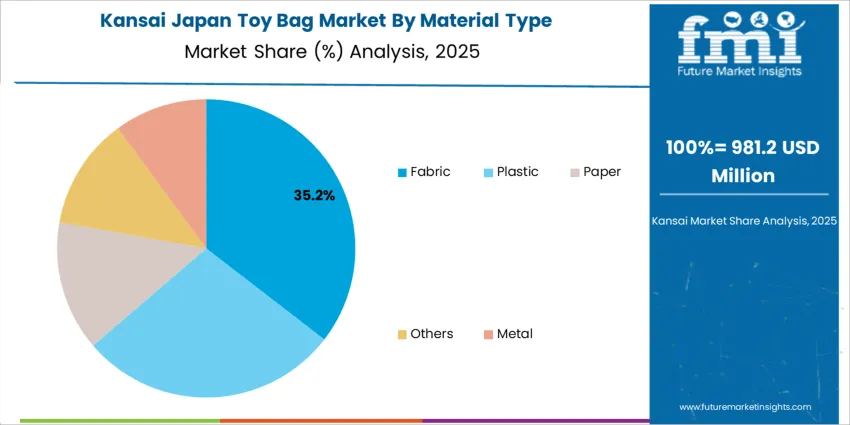
Kansai is seeing steady demand for toy bags, with a 2.7% CAGR. The region’s growing focus on family and child-oriented products contributes to the demand for practical, attractive, and functional toy bags. In cities like Osaka and Kyoto, parents and caregivers are increasingly using toy bags to store and organize children’s belongings. The convenience of having portable and easily accessible storage solutions drives their popularity in households and daycares. Kansai’s strong retail sector and growing e-commerce industry offer a wide variety of toy bags, which further fuels demand. As consumer interest in eco-friendly products continues to rise, there is a growing preference for toy bags made from sustainable materials. With the region’s continued focus on improving family-focused products and services, the demand for toy bags is expected to grow steadily, supported by both urban and suburban demand.
Why is Demand for Toy Bags Growing in Chubu?
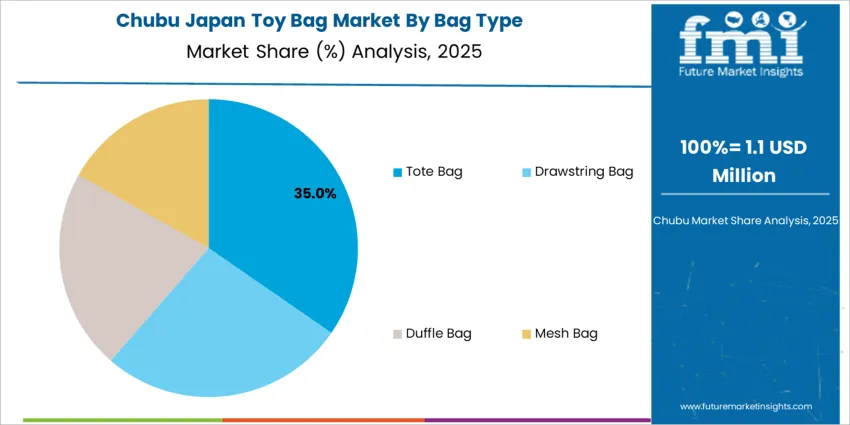
Chubu is experiencing steady demand for toy bags, with a 2.4% CAGR. The region’s increasing focus on family products and storage solutions contributes to the growing popularity of toy bags. Cities like Nagoya, with a high concentration of young families, are seeing rising demand for practical and stylish toy storage options. As e-commerce and retail stores offer a wide range of designs, Chubu’s consumers are becoming more aware of the availability and functionality of toy bags. The region’s emphasis on sustainability and eco-friendly alternatives has led to the growing adoption of toy bags made from environmentally friendly materials. As the demand for home organization and child-focused products continues to rise in Chubu, the industry for toy bags is expected to grow steadily, supported by both local retailers and online platforms.
How is Demand for Toy Bags Expanding in Tohoku?
Tohoku is seeing moderate demand for toy bags, with a 2.1% CAGR. Although the region's industry is smaller compared to more urbanized areas, there is steady growth driven by increasing demand for practical and affordable storage solutions for children’s toys. With the growing focus on family-oriented products and the rise in consumer awareness of home organization, toy bags are becoming more popular in households, especially among young families. The increase in e-commerce and local retail options in Tohoku is also contributing to the steady demand for toy bags. While the growth rate is slower compared to other regions, the demand for toy bags is expected to rise steadily as more families seek out functional and attractive storage solutions for their children’s belongings.
Why is Demand for Toy Bags Steady in the Rest of Japan?
The Rest of Japan is experiencing steady demand for toy bags, with a 2.0% CAGR. While demand is more moderate compared to major urban regions, the increasing focus on family products and efficient home organization is driving demand for toy bags. Local retailers and small businesses are beginning to cater to the needs of families by offering affordable, durable toy bags in various sizes and designs. The growing interest in sustainable living and eco-friendly products also contributes to the rise in popularity of toy bags made from natural and recyclable materials. As local communities continue to grow and more families seek out practical and functional storage solutions, the industry for toy bags in the Rest of Japan is expected to grow steadily, driven by consumer interest in organization and eco-friendly products.
What is the Competitive Landscape of Toy Bag Demand in Japan?
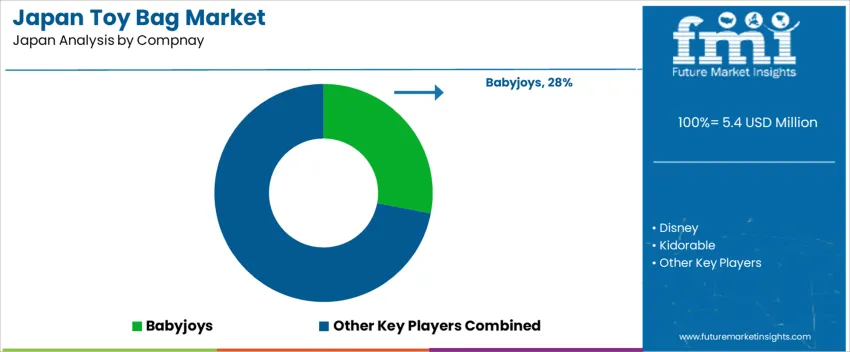
The demand for toy bags in Japan is growing as parents look for practical, durable, and aesthetically pleasing ways to organize children's toys. These bags not only help keep playthings tidy but also support the increasing trend of stylish and functional accessories for kids. With a focus on multifunctional storage that complements home décor, toy bags are gaining popularity in the Japanese industry. As families increasingly prioritize organization and convenience, the demand for high-quality, well-designed toy bags is expected to rise.
Leading companies in the toy bag industry in Japan include Babyjoys, Disney, Kidorable, Naturally KIDS, and SUNNYLIFE. Babyjoys holds a significant industry share of 28.0%, offering a range of durable and practical toy bags designed for children. Disney is another key player, offering bags featuring beloved characters, which are particularly appealing to both children and parents. Kidorable specializes in colorful and fun designs, making their toy bags a popular choice for kids. Naturally KIDS focuses on eco-friendly, sustainable toy bags, catering to environmentally conscious parents. SUNNYLIFE provides stylish and versatile toy bags, combining functionality with playful design for a variety of uses.
Competition in the toy bag industry is driven by product design, sustainability, and brand appeal. Companies differentiate by offering unique, attractive, and practical designs while ensuring durability and ease of use. The growing trend for eco-friendly products has spurred demand for sustainable materials, which is influencing brand strategies. The popularity of licensed characters, such as those from Disney, enhances brand appeal, driving consumer preference. The ability to combine style, functionality, and environmental responsibility is key to staying competitive in this industry.
Key Players in Japan Toy Bag Demand
- Babyjoys
- Disney
- Kidorable
- Naturally KIDS
- SUNNYLIFE
Scope of Report
| Items | Values |
|---|---|
| Quantitative Units (2025) | USD million |
| Material Type | Fabric, Plastic, Paper, Others, Metal |
| Bag Type | Tote Bag, Drawstring Bag, Duffle Bag, Mesh Bag |
| Category | Boys, Girls |
| Sales or Distribution Channel | Supermarket and Hypermarkets, Online Retail Channels, Specialty Stores, Other Offline Sales Channels |
| Region | Kyushu & Okinawa, Kanto, Kansai, Chubu, Tohoku, Rest of Japan |
| Countries Covered | Japan |
| Key Companies Profiled | Babyjoys, Disney, Kidorable, Naturally KIDS, SUNNYLIFE |
| Additional Attributes | Dollar sales by material type, bag type, category, and sales channel; regional CAGR and adoption trends; demand trends in toy bags; growth in e-commerce and specialty retail sectors; vendor offerings including bags for boys and girls; regulatory influences and industry standards |
Japan Toy Bag Demand by Key Segments
Material Type:
- Fabric
- Plastic
- Paper
- Others
- Metal
Bag Type:
- Tote Bag
- Drawstring Bag
- Duffle Bag
- Mesh Bag
Category:
- Boys
- Girls
Sales or Distribution Channel:
- Supermarket and Hypermarkets
- Online Retail Channels
- Specialty Stores
- Other Offline Sales Channels
Region:
- Kyushu & Okinawa
- Kanto
- Kansai
- Chubu
- Tohoku
- Rest of Japan
Frequently Asked Questions
How big is the demand for toy bag in Japan in 2025?
The demand for toy bag in Japan is estimated to be valued at USD 5.4 million in 2025.
What will be the size of toy bag in Japan in 2035?
The market size for the toy bag in Japan is projected to reach USD 7.1 million by 2035.
How much will be the demand for toy bag in Japan growth between 2025 and 2035?
The demand for toy bag in Japan is expected to grow at a 2.7% CAGR between 2025 and 2035.
What are the key product types in the toy bag in Japan?
The key product types in toy bag in Japan are fabric, plastic, paper, others and metal.
Which bag type segment is expected to contribute significant share in the toy bag in Japan in 2025?
In terms of bag type, tote bag segment is expected to command 34.0% share in the toy bag in Japan in 2025.
Preview the report firsthand - request a free sample
Get SampleGet the brochure for pricing and purchase details.
Get PDFTable of Content
- Executive Summary
- Japan Market Outlook
- Demand-side Trends
- Supply-side Trends
- Technology Roadmap Analysis
- Analysis and Recommendations
- Market Overview
- Market Coverage / Taxonomy
- Market Definition / Scope / Limitations
- Market Background
- Market Dynamics
- Drivers
- Restraints
- Opportunity
- Trends
- Scenario Forecast
- Demand in Optimistic Scenario
- Demand in Likely Scenario
- Demand in Conservative Scenario
- Opportunity Map Analysis
- Product Life Cycle Analysis
- Supply Chain Analysis
- Investment Feasibility Matrix
- Value Chain Analysis
- PESTLE and Porter’s Analysis
- Regulatory Landscape
- Regional Parent Market Outlook
- Production and Consumption Statistics
- Import and Export Statistics
- Market Dynamics
- Japan Market Analysis 2020 to 2024 and Forecast, 2025 to 2035
- Historical Market Size Value (USD Million) Analysis, 2020 to 2024
- Current and Future Market Size Value (USD Million) Projections, 2025 to 2035
- Y-o-Y Growth Trend Analysis
- Absolute $ Opportunity Analysis
- Japan Market Pricing Analysis 2020 to 2024 and Forecast 2025 to 2035
- Japan Market Analysis 2020 to 2024 and Forecast 2025 to 2035, By Material Type
- Introduction / Key Findings
- Historical Market Size Value (USD Million) Analysis By Material Type , 2020 to 2024
- Current and Future Market Size Value (USD Million) Analysis and Forecast By Material Type , 2025 to 2035
- Fabric
- Plastic
- Paper
- Others
- Metal
- Y-o-Y Growth Trend Analysis By Material Type , 2020 to 2024
- Absolute $ Opportunity Analysis By Material Type , 2025 to 2035
- Japan Market Analysis 2020 to 2024 and Forecast 2025 to 2035, By Bag Type
- Introduction / Key Findings
- Historical Market Size Value (USD Million) Analysis By Bag Type, 2020 to 2024
- Current and Future Market Size Value (USD Million) Analysis and Forecast By Bag Type, 2025 to 2035
- Tote Bag
- Drawstring Bag
- Duffle Bag
- Mesh Bag
- Y-o-Y Growth Trend Analysis By Bag Type, 2020 to 2024
- Absolute $ Opportunity Analysis By Bag Type, 2025 to 2035
- Japan Market Analysis 2020 to 2024 and Forecast 2025 to 2035, By Category
- Introduction / Key Findings
- Historical Market Size Value (USD Million) Analysis By Category, 2020 to 2024
- Current and Future Market Size Value (USD Million) Analysis and Forecast By Category, 2025 to 2035
- Boys
- Girls
- Y-o-Y Growth Trend Analysis By Category, 2020 to 2024
- Absolute $ Opportunity Analysis By Category, 2025 to 2035
- Japan Market Analysis 2020 to 2024 and Forecast 2025 to 2035, By Sales or Distribution Channel
- Introduction / Key Findings
- Historical Market Size Value (USD Million) Analysis By Sales or Distribution Channel, 2020 to 2024
- Current and Future Market Size Value (USD Million) Analysis and Forecast By Sales or Distribution Channel, 2025 to 2035
- Supermarket and Hypermarkets
- Online Retail Channels
- Specialty Stores
- Other Offline Sales Channels
- Y-o-Y Growth Trend Analysis By Sales or Distribution Channel, 2020 to 2024
- Absolute $ Opportunity Analysis By Sales or Distribution Channel, 2025 to 2035
- Market Structure Analysis
- Competition Dashboard
- Competition Benchmarking
- Market Share Analysis of Top Players
- By Regional
- By Material Type
- By Bag Type
- By Category
- By Sales or Distribution Channel
- Competition Analysis
- Competition Deep Dive
- Babyjoys
- Overview
- Product Portfolio
- Profitability by Market Segments (Product/Age /Sales Channel/Region)
- Sales Footprint
- Strategy Overview
- Marketing Strategy
- Product Strategy
- Channel Strategy
- Disney
- Kidorable
- Naturally KIDS
- SUNNYLIFE
- Babyjoys
- Competition Deep Dive
- Assumptions & Acronyms Used
- Research Methodology


