

- Industry Size (2026)
- USD 6.16 Bn
- Forecast (2036)
- USD 12.35 Bn
- CAGR (2026 to 2036)
- 7.2%
Lymphoproliferative Disorder Treatment Market Size, Market Forecast and Outlook By FMI
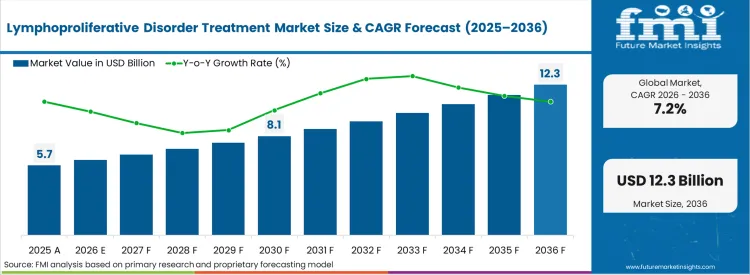
The lymphoproliferative disorder treatment market was valued at USD 5.75 billion in 2025, projected to reach USD 6.16 billion in 2026, and is forecast to expand to USD 12.35 billion by 2036 at a 7.2% CAGR.
Summary of Lymphoproliferative Disorder Treatment Market
- Market Overview
- The lymphoproliferative disorder treatment market is valued at USD 5.75 billion in 2025 and is projected to reach USD 12.35 billion by 2036.
- The industry is expected to grow at a 7.2% CAGR from 2026 to 2036, creating an incremental opportunity of USD 6.19 billion.
- The market is a specialty pharmaceutical category where demand tracks disease incidence, treatment protocol evolution, reimbursement coverage expansion, and the regulatory approval pipeline for targeted therapies and biologics.
- Demand and Growth Drivers
- Demand is driven by rising global incidence of leukemia, lymphomas, and myeloma combined with expanding treatment access in emerging markets.
- Immunomodulatory agents maintain the leading drug class share due to established efficacy in myeloma and lymphoma as first-line and maintenance therapy.
- Targeted therapy approvals including kinase inhibitors and biologics are expanding the treatment armamentarium and driving higher per-patient expenditure.
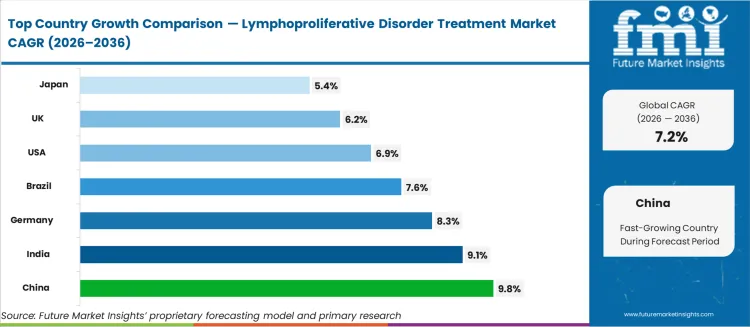
- Among key countries, China at 9.79%, India at 9.06%, Germany at 8.34%, Brazil at 7.61%, USA at 6.89%, UK at 6.16%, Japan at 5.44%.
- Product and Segment View
- The market covers pharmaceutical treatments for lymphoproliferative disorders including immunomodulatory agents, corticosteroids, cytotoxic agents, biologics, and kinase inhibitors.
- These therapies serve leukemia, lymphoma, and myeloma patient populations through hospital pharmacy, retail pharmacy, online pharmacy, and drug store distribution channels.
- Immunomodulatory Agents lead by Drug Class with 40% share in 2026, driven by established multi-line efficacy in myeloma and lymphoma treatment protocols.
- Leukemia leads by Application with 45% share in 2026.
- The scope includes pharmaceutical treatment revenue for lymphoproliferative disorders, excluding diagnostic testing, surgical intervention, radiation therapy, and stem cell transplantation procedure costs.
- Geography and Competitive Outlook
- China and India are the fastest-growing markets due to expanding health insurance coverage and growing oncology specialty infrastructure.
- USA and Germany sustain demand through comprehensive reimbursement for novel targeted therapies and established treatment center networks.
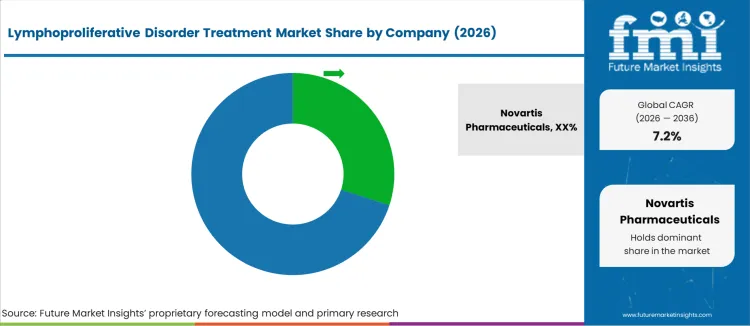
- Competition is shaped by clinical trial data, regulatory approval breadth, reimbursement status, and biosimilar competition, with key players including Novartis Pharmaceuticals, Janssen Pharmaceuticals, Inc., Merck & Co., Celgene Corporation, Genentech, Inc., AbbVie Inc., Kite Pharma Inc..
- Analyst Opinion at FMI
- Sabyasachi Ghosh, Principal Consultant at Future Market Insights, opines: 'As per FMI analysis, the lymphoproliferative disorder treatment market is entering a phase where specification precision, regulatory compliance, and lifecycle economics define procurement decisions. Organizations that delay standardization risk exclusion from major procurement cycles where qualification thresholds tighten progressively.'
- Strategic Implications / Executive Takeaways
- Pharmaceutical companies must invest in combination therapy clinical trials to establish differentiated treatment protocols that extend progression-free survival in competitive hematologic oncology indications.
- Market access teams should engage early with national health technology assessment bodies to secure reimbursement pathways before product launch in high-growth emerging markets.
- Biosimilar developers must establish manufacturing quality and clinical interchangeability data to capture the cost-sensitive hospital pharmacy segment as originator biologics face patent expiry.
Lymphoproliferative Disorder Treatment Market Key Takeaways
| Metric | Details |
|---|---|
| Industry Size (2026) | USD 6.16 billion |
| Industry Value (2036) | USD 12.35 billion |
| CAGR (2026-2036) | 7.2% |
Source: Future Market Insights, 2026
Demand is driven by the rising global incidence of lymphoproliferative disorders including leukemia, lymphomas, and myeloma, combined with expanding treatment access and the introduction of targeted therapy regimens. Immunomodulatory agents maintain the leading drug class share at 40.0% due to their established efficacy in multiple myeloma and certain lymphoma subtypes as both first-line and maintenance therapies. Leukemia anchors the largest application share at 45.0%, reflecting the higher treatment intensity and longer therapy durations associated with acute and chronic leukemia management protocols. Parenteral administration holds a 70.0% share driven by the intravenous delivery requirements of biologics, cytotoxic agents, and many targeted therapy regimens that require clinical setting infusion.
All major markets reflect oncology treatment access and pharmaceutical reimbursement maturity. China leads at 9.79% CAGR as expanding national health insurance coverage widens access to targeted lymphoproliferative therapies at provincial cancer centers. India follows at 9.06% driven by growing oncology specialty infrastructure and biosimilar availability that improves treatment affordability. Germany maintains 8.34% growth anchored by comprehensive statutory health insurance reimbursement for novel kinase inhibitors and biologics. Brazil at 7.61% and USA at 6.89% sustain demand through oncology center expansion and new targeted therapy approvals. UK at 6.16% and Japan at 5.44% reflect steady growth driven by NICE and PMDA treatment pathway updates.
Lymphoproliferative Disorder Treatment Market Definition
Lymphoproliferative Disorder Treatment Market encompasses pharmaceutical therapies used to treat lymphoproliferative disorders including leukemia, lymphomas, and myeloma. Drug classes include immunomodulatory agents, corticosteroids, cytotoxic agents, biologics, and kinase inhibitors delivered through parenteral and oral administration routes. Market growth tracks disease incidence, treatment protocol evolution, regulatory approvals, and reimbursement coverage expansion.
Lymphoproliferative Disorder Treatment Market Inclusions
Market scope includes immunomodulatory agents, corticosteroids, cytotoxic agents, biologics, and kinase inhibitors for leukemia, lymphoma, and myeloma through hospital, retail, online, and drug store pharmacy channels. Coverage spans global and regional market sizes, the 2026 to 2036 forecast period, and segment breakdowns by drug class, application, administration route, distribution channel, and region.
Lymphoproliferative Disorder Treatment Market Exclusions
The scope excludes diagnostic testing revenue, surgical intervention costs, radiation therapy, stem cell transplantation procedure costs, and supportive care medications not specific to lymphoproliferative disorder treatment.
Lymphoproliferative Disorder Treatment Market Research Methodology
- Primary Research: Analysts conducted structured interviews with procurement directors, industry specialists, and end-use operators to map decision gates and specification requirements in the lymphoproliferative disorder treatment market.
- Desk Research: Data collection aggregated regulatory filings, industry standards, trade association reports, and publicly available corporate disclosures relevant to the lymphoproliferative disorder treatment sector.
- Market-Sizing and Forecasting: Baseline values derive from a bottom-up aggregation of procurement volumes and revenue data, applying region-specific adoption curves to project future demand trajectories.
- Data Validation and Update Cycle: Projections are tested against publicly reported expenditure guidance and procurement records from major end-use operators and industry participants.
Development of Lymphoproliferative Disorder Treatment Market in North America
North America is a prominent market for the development of Lymphoproliferative Disorder Treatment. The United States is the largest market for lymphoproliferative disorder treatment in North America, driven by factors such as the large and aging population, high incidence of lymphoproliferative disorders, and high levels of investment in research and development in the field. The country is home to some of the world's leading pharmaceutical and biotechnology companies, which are actively engaged in the development of new and improved treatments for these disorders.
Canada is also an important market for lymphoproliferative disorder treatment in North America, driven by factors such as the country's strong healthcare system and high levels of investment in research and development in the field. In recent years, Canada has made significant investments in the development of new and improved treatments for these disorders, which has helped to drive growth in the market.
The lymphocyte is a type of white blood cell present in the body which multiplies when faced with infection. Lymphoproliferative disorders occur when there is an uncontrolled production of lymphocytes.
According to the Leukemia and Lymphoma Society, more than 80,000 cases of leukaemia and lymphoma were observed in the USA in 2019. Individuals with a compromised immune system are more susceptible to come across lymphoproliferative disorder.
The outbreak of novel coronavirus has caused a disturbance in almost all the industries. It has been observed that people with lymphoproliferative disorders are expected to get delayed diagnosis and treatment of disease. Short-term significant decline of treatment adoption across the globe during Covid-19 pandemic is projected to impact negatively on the growth of the lymphoproliferative disorders treatment market.
Lymphoproliferative Disorders Treatment Market: Drivers and Restraints
.webp "Top Country Growth Comparison Lymphoproliferative Disorder Treatment Market Cagr (2026 2036)")
Rising prevalence of lymphoproliferative disorders is fueling the growth of the lymphoproliferative disorders treatment market. Growing demand of effective and advanced therapies have led to grow lymphoproliferative disorders treatment market.
Increasing focus on research and development (R&D) is boosting lymphoproliferative disorders treatment market and attracting investments from industry players like Amgen and Agios Pharmaceuticals Inc. However, strict norms for regulatory approval and poor access to healthcare in developing regions are expected to hamper the lymphoproliferative disorders treatment market growth in the future.
Lymphoproliferative Disorder Treatment Market: Overview
Immuno-modulators drug typically used to enhance the performance of the immune system is the highest revenue-generating in lymphoproliferative disorders treatment market.
By route of administration, parenteral route of administration holds the largest share of lymphoproliferative disorders treatment market. Lymphoma application is the highest revenue-generating followed by leukemia in lymphoproliferative disorders treatment market.
Hospital pharmacies will continue to generate the highest revenue share for lymphoproliferative disorders treatment market followed by a retail pharmacies.
Lymphoproliferative Disorder Treatment Market: Region-wise Outlook
North America and Europe are expected to dominate the global lymphoproliferative disorders treatment market, due to the increasing development and launch of new therapeutics and rising demand for therapies.
In addition, increase in prevalence and advancement in technology are expected to increase the growth of the lymphoproliferative disorders treatment market in these regions.Increase in awareness in the developing region like Asia-Pacific is expected to push the global lymphoproliferative disorders treatment market growth over the forecast period.
However, higher unmet clinical needs and poor treatment access in the region such as the Latin America and Middle East and Africa restrict the growth of lymphoproliferative disorders treatment market.
Lymphoproliferative Disorder Treatment Market: Key Market Participants
Major players in lymphoproliferative disorders treatment market include -
- Novartis Pharmaceuticals
- Janssen Pharmaceuticals, Inc.
- Merck & Co.
- Celgene Corporation
- Genentech, Inc.
- AbbVie Inc.
- Kite Pharma Inc.
- AstraZeneca
- Pfizer Inc.
- Takeda Pharmaceuticals Company Limited
- Spectrum Pharmaceuticals Inc.
- Sanofi
- Amgen Inc
- Teva Pharmaceuticals Industries Ltd.
- Bristol Myers Squibb Company
- Bayer AG and others.
The research report on lymphoproliferative disorders treatment market presents a comprehensive assessment of the market and contains thoughtful insights, facts, historical data, and statistically supported and industry-validated market data.
It also contains projections using a suitable set of assumptions and methodologies. The research report on lymphoproliferative disorders treatment market provides analysis and information according to market segments such as drug class, route of administration, application, and region.
The report covers exhaust analysis on
- Market Segments
- Market Dynamics
- Market Size
- Supply & Demand
- Current Trends/Issues/Challenges
- Competition & Companies involved
- Technology
- Value Chain
Scope of the Report
| Metric | Value |
|---|---|
| Quantitative Units | USD 6.16 billion to USD 12.35 billion, at a CAGR of 7.2% |
| Market Definition | Lymphoproliferative disorder treatment covers pharmaceutical therapies including immunomodulatory agents, biologics, and kinase inhibitors used to treat leukemia, lymphomas, and myeloma. |
| Segmentation | Drug Class: Immunomodulatory Agents, Corticosteroids, Cytotoxic Agents, Biologics, Kinase inhibitors; Application: Leukemia, Lymphomas, Myeloma; Administration: Parenteral, Oral; Distribution channel: Hospital pharmacy, Retail pharmacy, Online pharmacy, Drug stores |
| Regions Covered | North America, Latin America, Europe, East Asia, South Asia, Oceania, Middle East & Africa |
| Countries Covered | China, India, Germany, Brazil, USA, UK, Japan, and 40 plus countries |
| Key Companies Profiled | Novartis Pharmaceuticals, Janssen Pharmaceuticals, Inc., Merck & Co., Celgene Corporation, Genentech, Inc., AbbVie Inc., Kite Pharma Inc., AstraZeneca |
| Forecast Period | 2026 to 2036 |
| Approach | Forecasting models apply a bottom-up methodology starting with regional activity metrics and cross-validate projections against industry data and corporate disclosures. |
Lymphoproliferative Disorder Treatment Market: Segmentation
By Drug Class:
- Corticosteroids
- Cytotoxic Agents
- Biologics
- Immunomodulatory Agents
- Kinase inhibitors
By Administration:
- Oral
- Parenteral
By Application:
- Leukemia
- Lymphomas
- Myeloma
By Distribution channel:
- Hospital pharmacy
- Retail pharmacy
- Online pharmacy
- Drug stores
Bibliography
- 1. World Health Organization. (2024). Global Cancer Observatory: Lymphoproliferative Disorder Incidence Update. WHO/IARC.
- 2. European Medicines Agency. (2025). Oncology Medicines Evaluation: Lymphoma and Leukemia Therapies. EMA.
- 3. United States Food and Drug Administration. (2025). Oncology Center of Excellence: Hematologic Malignancy Approvals. FDA.
- 4. Organisation for Economic Co-operation and Development. (2024). Health at a Glance: Cancer Care and Pharmaceutical Expenditure. OECD.
- 5. National Institutes of Health. (2025). National Cancer Institute: Lymphoproliferative Disorder Treatment Guidelines. NIH/NCI.
This bibliography is provided for reader reference. The full Future Market Insights report contains the complete reference list with primary research documentation.
Frequently Asked Questions
How large is the demand for Lymphoproliferative Disorder Treatment in the global market in 2026?
Demand for Lymphoproliferative Disorder Treatment in the global market is estimated to be valued at USD 6.16 billion in 2026.
What will be the market size of Lymphoproliferative Disorder Treatment in the global market by 2036?
Market size for Lymphoproliferative Disorder Treatment is projected to reach USD 12.35 billion by 2036.
What is the expected demand growth for Lymphoproliferative Disorder Treatment between 2026 and 2036?
Demand for Lymphoproliferative Disorder Treatment is expected to grow at a CAGR of 7.2% between 2026 and 2036.
Which Drug Class is poised to lead global sales by 2026?
Immunomodulatory Agents accounts for 40% share in 2026 based on FMI analysis.
How is the role of Leukemia in driving Lymphoproliferative Disorder Treatment adoption in 2026?
Leukemia represents 45% of segment share in 2026 as per FMI's lymphoproliferative disorder treatment market report.
What is the fastest-growing country market in this report?
China is projected to grow at a CAGR of 9.79% during 2026 to 2036.
What is Lymphoproliferative Disorder Treatment and what is it mainly used for?
Lymphoproliferative disorder treatment covers pharmaceutical therapies including immunomodulatory agents, biologics, and kinase inhibitors used to treat leukemia, lymphomas, and myeloma.
What is included in the scope of this Lymphoproliferative Disorder Treatment report?
The market covers immunomodulatory agents, corticosteroids, cytotoxic agents, biologics, and kinase inhibitors for leukemia, lymphoma, and myeloma through hospital, retail, and online pharmacy channels.
Preview the report firsthand - request a free sample
Get SampleGet the brochure for pricing and purchase details.
Get PDFTable of Content
- Executive Summary
- Global Market Outlook
- Demand-side Trends
- Supply-side Trends
- Technology Roadmap Analysis
- Analysis and Recommendations
- Market Overview
- Market Coverage / Taxonomy
- Market Definition / Scope / Limitations
- Research Methodology
- Chapter Orientation
- Analytical Lens and Working Hypotheses
- Market Structure, Signals, and Trend Drivers
- Benchmarking and Cross-market Comparability
- Market Sizing, Forecasting, and Opportunity Mapping
- Research Design and Evidence Framework
- Desk Research Programme (Secondary Evidence)
- Company Annual and Sustainability Reports
- Peer-reviewed Journals and Academic Literature
- Corporate Websites, Product Literature, and Technical Notes
- Earnings Decks and Investor Briefings
- Statutory Filings and Regulatory Disclosures
- Technical White Papers and Standards Notes
- Trade Journals, Industry Magazines, and Analyst Briefs
- Conference Proceedings, Webinars, and Seminar Materials
- Government Statistics Portals and Public Data Releases
- Press Releases and Reputable Media Coverage
- Specialist Newsletters and Curated Briefings
- Sector Databases and Reference Repositories
- FMI Internal Proprietary Databases and Historical Market Datasets
- Subscription Datasets and Paid Sources
- Social Channels, Communities, and Digital Listening Inputs
- Additional Desk Sources
- Expert Input and Fieldwork (Primary Evidence)
- Primary Modes
- Qualitative Interviews and Expert Elicitation
- Quantitative Surveys and Structured Data Capture
- Blended Approach
- Why Primary Evidence is Used
- Field Techniques
- Interviews
- Surveys
- Focus Groups
- Observational and In-context Research
- Social and Community Interactions
- Stakeholder Universe Engaged
- C-suite Leaders
- Board Members
- Presidents and Vice Presidents
- R&D and Innovation Heads
- Technical Specialists
- Domain Subject-matter Experts
- Scientists
- Physicians and Other Healthcare Professionals
- Governance, Ethics, and Data Stewardship
- Research Ethics
- Data Integrity and Handling
- Primary Modes
- Tooling, Models, and Reference Databases
- Desk Research Programme (Secondary Evidence)
- Data Engineering and Model Build
- Data Acquisition and Ingestion
- Cleaning, Normalisation, and Verification
- Synthesis, Triangulation, and Analysis
- Quality Assurance and Audit Trail
- Market Background
- Market Dynamics
- Drivers
- Restraints
- Opportunity
- Trends
- Scenario Forecast
- Demand in Optimistic Scenario
- Demand in Likely Scenario
- Demand in Conservative Scenario
- Opportunity Map Analysis
- Product Life Cycle Analysis
- Supply Chain Analysis
- Investment Feasibility Matrix
- Value Chain Analysis
- PESTLE and Porter’s Analysis
- Regulatory Landscape
- Regional Parent Market Outlook
- Production and Consumption Statistics
- Import and Export Statistics
- Market Dynamics
- Global Market Analysis 2021 to 2025 and Forecast, 2026 to 2036
- Historical Market Size Value (USD Million) Analysis, 2021 to 2025
- Current and Future Market Size Value (USD Million) Projections, 2026 to 2036
- Y-o-Y Growth Trend Analysis
- Absolute $ Opportunity Analysis
- Global Market Pricing Analysis 2021 to 2025 and Forecast 2026 to 2036
- Global Market Analysis 2021 to 2025 and Forecast 2026 to 2036, By Drug Class
- Introduction / Key Findings
- Historical Market Size Value (USD Million) Analysis By Drug Class , 2021 to 2025
- Current and Future Market Size Value (USD Million) Analysis and Forecast By Drug Class , 2026 to 2036
- Immunomodulatory Agents
- Corticosteroids
- Cytotoxic Agents
- Biologics
- Kinase inhibitors
- Immunomodulatory Agents
- Y-o-Y Growth Trend Analysis By Drug Class , 2021 to 2025
- Absolute $ Opportunity Analysis By Drug Class , 2026 to 2036
- Global Market Analysis 2021 to 2025 and Forecast 2026 to 2036, By Application
- Introduction / Key Findings
- Historical Market Size Value (USD Million) Analysis By Application, 2021 to 2025
- Current and Future Market Size Value (USD Million) Analysis and Forecast By Application, 2026 to 2036
- Leukemia
- Lymphomas
- Myeloma
- Leukemia
- Y-o-Y Growth Trend Analysis By Application, 2021 to 2025
- Absolute $ Opportunity Analysis By Application, 2026 to 2036
- Global Market Analysis 2021 to 2025 and Forecast 2026 to 2036, By Administration
- Introduction / Key Findings
- Historical Market Size Value (USD Million) Analysis By Administration, 2021 to 2025
- Current and Future Market Size Value (USD Million) Analysis and Forecast By Administration, 2026 to 2036
- Parenteral
- Oral
- Parenteral
- Y-o-Y Growth Trend Analysis By Administration, 2021 to 2025
- Absolute $ Opportunity Analysis By Administration, 2026 to 2036
- Global Market Analysis 2021 to 2025 and Forecast 2026 to 2036, By Distribution channel
- Introduction / Key Findings
- Historical Market Size Value (USD Million) Analysis By Distribution channel, 2021 to 2025
- Current and Future Market Size Value (USD Million) Analysis and Forecast By Distribution channel, 2026 to 2036
- Hospital pharmacy
- Retail pharmacy
- Online pharmacy
- Drug stores
- Hospital pharmacy
- Y-o-Y Growth Trend Analysis By Distribution channel, 2021 to 2025
- Absolute $ Opportunity Analysis By Distribution channel, 2026 to 2036
- Global Market Analysis 2021 to 2025 and Forecast 2026 to 2036, By Region
- Introduction
- Historical Market Size Value (USD Million) Analysis By Region, 2021 to 2025
- Current Market Size Value (USD Million) Analysis and Forecast By Region, 2026 to 2036
- North America
- Latin America
- Western Europe
- Eastern Europe
- East Asia
- South Asia and Pacific
- Middle East & Africa
- Market Attractiveness Analysis By Region
- North America Market Analysis 2021 to 2025 and Forecast 2026 to 2036, By Country
- Historical Market Size Value (USD Million) Trend Analysis By Market Taxonomy, 2021 to 2025
- Market Size Value (USD Million) Forecast By Market Taxonomy, 2026 to 2036
- By Country
- USA
- Canada
- Mexico
- By Drug Class
- By Application
- By Administration
- By Distribution channel
- By Country
- Market Attractiveness Analysis
- By Country
- By Drug Class
- By Application
- By Administration
- By Distribution channel
- Key Takeaways
- Latin America Market Analysis 2021 to 2025 and Forecast 2026 to 2036, By Country
- Historical Market Size Value (USD Million) Trend Analysis By Market Taxonomy, 2021 to 2025
- Market Size Value (USD Million) Forecast By Market Taxonomy, 2026 to 2036
- By Country
- Brazil
- Chile
- Rest of Latin America
- By Drug Class
- By Application
- By Administration
- By Distribution channel
- By Country
- Market Attractiveness Analysis
- By Country
- By Drug Class
- By Application
- By Administration
- By Distribution channel
- Key Takeaways
- Western Europe Market Analysis 2021 to 2025 and Forecast 2026 to 2036, By Country
- Historical Market Size Value (USD Million) Trend Analysis By Market Taxonomy, 2021 to 2025
- Market Size Value (USD Million) Forecast By Market Taxonomy, 2026 to 2036
- By Country
- Germany
- UK
- Italy
- Spain
- France
- Nordic
- BENELUX
- Rest of Western Europe
- By Drug Class
- By Application
- By Administration
- By Distribution channel
- By Country
- Market Attractiveness Analysis
- By Country
- By Drug Class
- By Application
- By Administration
- By Distribution channel
- Key Takeaways
- Eastern Europe Market Analysis 2021 to 2025 and Forecast 2026 to 2036, By Country
- Historical Market Size Value (USD Million) Trend Analysis By Market Taxonomy, 2021 to 2025
- Market Size Value (USD Million) Forecast By Market Taxonomy, 2026 to 2036
- By Country
- Russia
- Poland
- Hungary
- Balkan & Baltic
- Rest of Eastern Europe
- By Drug Class
- By Application
- By Administration
- By Distribution channel
- By Country
- Market Attractiveness Analysis
- By Country
- By Drug Class
- By Application
- By Administration
- By Distribution channel
- Key Takeaways
- East Asia Market Analysis 2021 to 2025 and Forecast 2026 to 2036, By Country
- Historical Market Size Value (USD Million) Trend Analysis By Market Taxonomy, 2021 to 2025
- Market Size Value (USD Million) Forecast By Market Taxonomy, 2026 to 2036
- By Country
- China
- Japan
- South Korea
- By Drug Class
- By Application
- By Administration
- By Distribution channel
- By Country
- Market Attractiveness Analysis
- By Country
- By Drug Class
- By Application
- By Administration
- By Distribution channel
- Key Takeaways
- South Asia and Pacific Market Analysis 2021 to 2025 and Forecast 2026 to 2036, By Country
- Historical Market Size Value (USD Million) Trend Analysis By Market Taxonomy, 2021 to 2025
- Market Size Value (USD Million) Forecast By Market Taxonomy, 2026 to 2036
- By Country
- India
- ASEAN
- Australia & New Zealand
- Rest of South Asia and Pacific
- By Drug Class
- By Application
- By Administration
- By Distribution channel
- By Country
- Market Attractiveness Analysis
- By Country
- By Drug Class
- By Application
- By Administration
- By Distribution channel
- Key Takeaways
- Middle East & Africa Market Analysis 2021 to 2025 and Forecast 2026 to 2036, By Country
- Historical Market Size Value (USD Million) Trend Analysis By Market Taxonomy, 2021 to 2025
- Market Size Value (USD Million) Forecast By Market Taxonomy, 2026 to 2036
- By Country
- Kingdom of Saudi Arabia
- Other GCC Countries
- Turkiye
- South Africa
- Other African Union
- Rest of Middle East & Africa
- By Drug Class
- By Application
- By Administration
- By Distribution channel
- By Country
- Market Attractiveness Analysis
- By Country
- By Drug Class
- By Application
- By Administration
- By Distribution channel
- Key Takeaways
- Key Countries Market Analysis
- USA
- Pricing Analysis
- Market Share Analysis, 2025
- By Drug Class
- By Application
- By Administration
- By Distribution channel
- Canada
- Pricing Analysis
- Market Share Analysis, 2025
- By Drug Class
- By Application
- By Administration
- By Distribution channel
- Mexico
- Pricing Analysis
- Market Share Analysis, 2025
- By Drug Class
- By Application
- By Administration
- By Distribution channel
- Brazil
- Pricing Analysis
- Market Share Analysis, 2025
- By Drug Class
- By Application
- By Administration
- By Distribution channel
- Chile
- Pricing Analysis
- Market Share Analysis, 2025
- By Drug Class
- By Application
- By Administration
- By Distribution channel
- Germany
- Pricing Analysis
- Market Share Analysis, 2025
- By Drug Class
- By Application
- By Administration
- By Distribution channel
- UK
- Pricing Analysis
- Market Share Analysis, 2025
- By Drug Class
- By Application
- By Administration
- By Distribution channel
- Italy
- Pricing Analysis
- Market Share Analysis, 2025
- By Drug Class
- By Application
- By Administration
- By Distribution channel
- Spain
- Pricing Analysis
- Market Share Analysis, 2025
- By Drug Class
- By Application
- By Administration
- By Distribution channel
- France
- Pricing Analysis
- Market Share Analysis, 2025
- By Drug Class
- By Application
- By Administration
- By Distribution channel
- India
- Pricing Analysis
- Market Share Analysis, 2025
- By Drug Class
- By Application
- By Administration
- By Distribution channel
- ASEAN
- Pricing Analysis
- Market Share Analysis, 2025
- By Drug Class
- By Application
- By Administration
- By Distribution channel
- Australia & New Zealand
- Pricing Analysis
- Market Share Analysis, 2025
- By Drug Class
- By Application
- By Administration
- By Distribution channel
- China
- Pricing Analysis
- Market Share Analysis, 2025
- By Drug Class
- By Application
- By Administration
- By Distribution channel
- Japan
- Pricing Analysis
- Market Share Analysis, 2025
- By Drug Class
- By Application
- By Administration
- By Distribution channel
- South Korea
- Pricing Analysis
- Market Share Analysis, 2025
- By Drug Class
- By Application
- By Administration
- By Distribution channel
- Russia
- Pricing Analysis
- Market Share Analysis, 2025
- By Drug Class
- By Application
- By Administration
- By Distribution channel
- Poland
- Pricing Analysis
- Market Share Analysis, 2025
- By Drug Class
- By Application
- By Administration
- By Distribution channel
- Hungary
- Pricing Analysis
- Market Share Analysis, 2025
- By Drug Class
- By Application
- By Administration
- By Distribution channel
- Kingdom of Saudi Arabia
- Pricing Analysis
- Market Share Analysis, 2025
- By Drug Class
- By Application
- By Administration
- By Distribution channel
- Turkiye
- Pricing Analysis
- Market Share Analysis, 2025
- By Drug Class
- By Application
- By Administration
- By Distribution channel
- South Africa
- Pricing Analysis
- Market Share Analysis, 2025
- By Drug Class
- By Application
- By Administration
- By Distribution channel
- USA
- Market Structure Analysis
- Competition Dashboard
- Competition Benchmarking
- Market Share Analysis of Top Players
- By Regional
- By Drug Class
- By Application
- By Administration
- By Distribution channel
- Competition Analysis
- Competition Deep Dive
- Novartis Pharmaceuticals
- Overview
- Product Portfolio
- Profitability by Market Segments (Product/Age /Sales Channel/Region)
- Sales Footprint
- Strategy Overview
- Marketing Strategy
- Product Strategy
- Channel Strategy
- Janssen Pharmaceuticals, Inc.
- Merck & Co.
- Celgene Corporation
- Genentech, Inc.
- AbbVie Inc.
- Kite Pharma Inc.
- AstraZeneca
- Pfizer Inc.
- Takeda Pharmaceuticals Company Limited
- Spectrum Pharmaceuticals Inc.
- Sanofi
- Amgen Inc
- Teva Pharmaceuticals Industries Ltd.
- Bristol Myers Squibb Company
- Bayer AG and others.
- Novartis Pharmaceuticals
- Competition Deep Dive
- Assumptions & Acronyms Used


