

- Industry Size (2026)
- USD 3872.6 Mn
- Forecast (2036)
- USD 6014.0 Mn
- CAGR (2026 to 2036)
- 4.5%
Micronutrient Powders Market Size, Market Forecast and Outlook By FMI
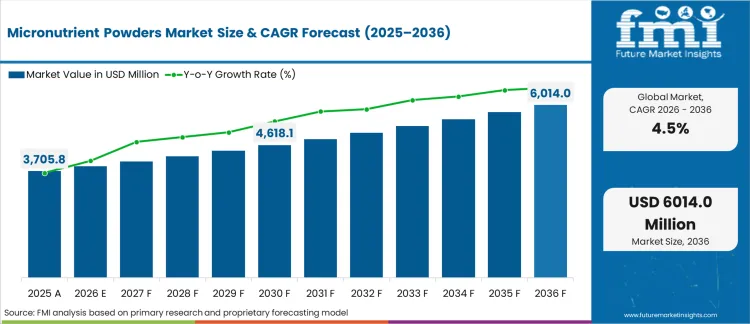
The Micronutrient Powders market was valued at USD 3702.9 million in 2025, projected to reach USD 3872.6 million in 2026, and is forecast to expand to USD 6014.0 million by 2036 at a 4.5% CAGR. Micronutrient powders, multi-ingredient supplement blends in powder delivery format, serve as the primary vehicle for targeted nutritional intervention across infant feeding, maternal health, geriatric supplementation, and general wellness categories. Accelerating global awareness of micronutrient deficiency disease burdens, combined with expanding e-commerce and direct-to-consumer supplement distribution channels, is generating durable volume demand across the forecast horizon.
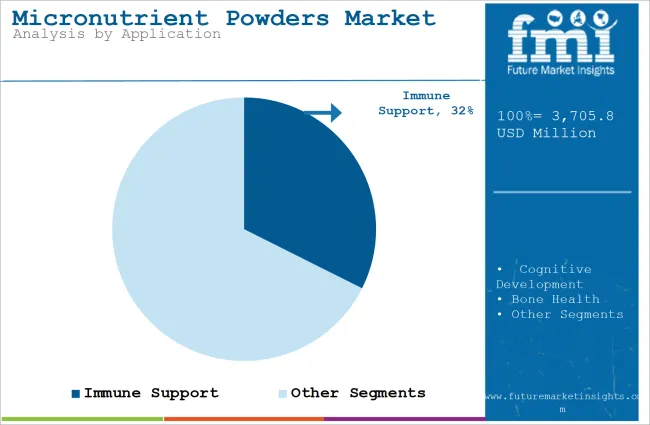
Absolute dollar growth of USD 2141.4 million across the forecast period reflects an expanding consumer base rather than purely a product innovation cycle. FMI is of the opinion that the geriatric consumer demographic will generate the fastest growth rate within the Consumer Demographic segment through 2036, as ageing population structures in Japan, Germany, and North America increase the addressable market for age-targeted micronutrient formulations beyond what current product line configurations are positioned to serve. The Immune Support application category, commanding 32.4% of application segment demand in 2026, benefits from lasting behavioural changes in consumer supplementation practice established during the 2020 to 2022 period.
Summary of Micronutrient Powders Market
- Micronutrient Powders Market Definition
- The Micronutrient Powders market covers commercially formulated multi-ingredient supplement blends in powder delivery format designed for targeted nutritional intervention across infant, maternal, adult, and geriatric consumer categories.
- Demand Drivers in the Market
- WHO-documented micronutrient deficiency prevalence across Asia, Africa, and Latin America underpins government procurement demand for micronutrient powder programmes targeting maternal and infant nutrition gaps.
- Sustained consumer supplement adoption in post-pandemic markets, particularly for immune support and cognitive health applications, maintains category volume momentum in North America and Western Europe.
- Ageing population demographic trends in Japan, Germany, and the United States create defined growth in geriatric-targeted bone health, cognitive support, and general wellness micronutrient formulations.
- Key Segments Analyzed in the FMI Report
- Vitamins ingredient segment holds 29.7% of Ingredient demand in 2026, reflecting the broadest application utility across immune support, energy metabolism, and cognitive health formulation categories.
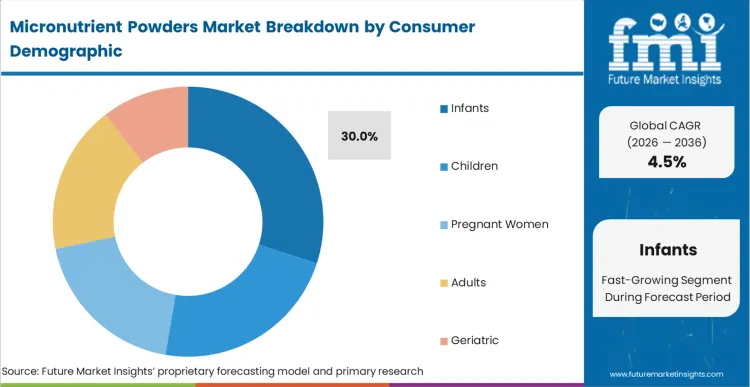
- Infants account for 30.0% of Consumer Demographic demand in 2026, driven by clinically supported micronutrient supplementation protocols for complementary feeding periods across regulated markets.
- Immune Support application commands 32.4% of Application segment demand in 2026, maintaining the highest single-application share as consumer health prioritisation patterns persist.
- Analyst Opinion at FMI
- Nandini Roy Choudhury, Principal Consultant for Food & BeverageOpinion is bifurcated between government procurement-driven volume demand in developing markets and premium consumer wellness demand in mature markets. Manufacturers positioned to serve both tiers through separate product lines, with the compliance infrastructure to meet public procurement specifications and the marketing capabilities to compete in retail supplement categories, will access a disproportionate share of the USD 2141.4 million absolute growth pool available across the forecast period.
- Strategic Implications / Executive Takeaways
- Supplement manufacturers targeting India and Brazil should develop WHO and UNICEF tender-compliant micronutrient powder formulations alongside consumer retail product lines to participate in government maternal and infant nutrition programme procurement.
- Ingredient suppliers should prioritise capacity investment in vitamin D, B-complex, and zinc production to serve both immune support application growth and geriatric formulation demand, which converge on similar micronutrient profiles.
- E-commerce channel operators should develop subscription-based supplement delivery models targeting geriatric consumers in Japan and Germany, where high per-capita supplement spend and low price sensitivity create defensible margin positions.
Micronutrient Powders Market Key Takeaways
| Metric | Details |
|---|---|
| Industry Size (2026) | USD 3872.6 Million |
| Industry Value (2036) | USD 6014.0 Million |
| CAGR (2026-2036) | 4.5% |
| Source | Future Market Insights, 2026 |
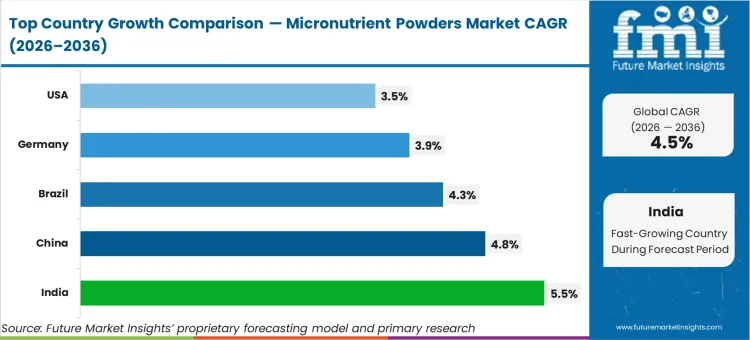
Based on FMI analysis, India records the fastest country-level CAGR at 5.5% through 2036, driven by government-supported maternal and infant nutrition programmes, rising disposable income, and expanding organised retail supplement distribution. China follows at 4.8%, combining a large geriatric population with growing middle-class supplement adoption. Brazil advances at 4.3%, supported by expanding pharmacy and health store channel penetration. Germany registers 3.9% growth, anchored by pharmaceutical-grade supplement manufacturing standards and health insurance-supported supplementation protocols. The United States, the largest absolute value market, grows at a 3.5% CAGR reflecting market maturity and competitive pricing pressure across the supplement category.
Micronutrient Powders Market Definition
The Micronutrient Powders market encompasses commercially formulated powdered supplement blends containing two or more micronutrients, including vitamins, minerals, amino acids, botanicals, fibers, and omega fatty acids, designed for direct consumption or dissolution in beverages. Products span pharmaceutical-grade clinical formulations, consumer wellness powders, and medical nutrition products across infant, paediatric, adult, and geriatric demographic categories.
Micronutrient Powders Market Inclusions
Market scope covers global and regional revenue estimates for micronutrient powder products across all ingredient types, demographic targets, and application categories. The forecast period spans 2026 to 2036 with country-level CAGR breakdowns across seven regions. Pricing dynamics, channel mix analysis, and ingredient trend adoption curves are incorporated as analytical dimensions.
Micronutrient Powders Market Exclusions
Single-ingredient supplement powders containing only one micronutrient are excluded from market sizing. Tablet and capsule dosage forms, liquid supplement formats, and gummy delivery systems fall outside the defined scope. Medical food products requiring prescription or clinical supervision, and clinical-use parenteral micronutrient solutions, are excluded from the consumer market valuation.
Micronutrient Powders Market Research Methodology
- Primary Research: Primary Research: FMI analysts conducted interviews with product development managers at supplement manufacturers, category buyers at pharmacy and health food retail chains, and registered dietitians across the United States, Germany, India, and China.
- Desk Research: Desk Research: WHO micronutrient deficiency prevalence data, national public health nutrition programme reports, FDA dietary supplement labelling regulations, EFSA nutrient reference value guidelines, and FSSAI supplement regulations in India were reviewed.
- Market-Sizing and Forecasting: Market-Sizing and Forecasting: A bottom-up model aggregates retail sales volume data by product category and demographic segment, cross-referenced against production capacity data from major ingredient suppliers.
- Data Validation and Update Cycle: Data Validation and Update Cycle: Projections were validated against national nutrition survey data published by WHO, UNICEF, and national health ministries, as well as distributor sell-through data from primary research.
Key Industry Highlights
Personalized Micronutrient Powders Unlocking Optimal Health through Customization
The desire for a custom approach to nutrition is bringing a major shift in the sector for micronutrients. Consumers are turning to more personalized products and services to better cater to their health needs with the rising capability in genetic testing and personal health evaluation.
DSM is one of those companies that are leading the way. For instance, DSM is offering ingredients using unique micronutrient formulations based on the genetics of the consumer.
According to DSM, its MixMe™ micronutrient powder can be customized to help make up a certain deficiency that was discovered by DNA testing so that the consumer will be able to get the best out of the product.
Nutrigenomics is another company that employs genetic testing to recommend diets to people in addition to dietary supplementation with personalized micronutrients. This addresses the rising trend in consumers wishing to buy specific supplements of nutrition that would aid general health.
Immunity-Boosting Micronutrients Fortifying Health in Uncertain Times
Since the focus on immune health became a trend, the number of customers purchasing micronutrient supplements that boost immunity has exponentially increased.
Supplementing with powders enriched in vitamin C, vitamin D, and zinc has proven to be helpful because these vitamins and minerals are known to promote the capacities of the immune system. For example, BASF has provided micronutrient supplements aimed at immune support.
Their products are aimed at enhancing the body's natural mechanisms considering the growing consumer appetite for protective and easy-to-use immunity boosters.
Likewise, Engage Global’s Micro Daily Original is another example that covers scientifically validated dietary supplement products that have several micronutrients to strengthen immunity. This product also addresses consumers who are health-conscious and are on the lookout for effective ways of boosting their immune systems.
Empowering Consumers through Education and Targeted Micronutrient Solutions
Manufacturers are making substantial efforts in medical outreach programs to create awareness of micronutrient-rich powders. For instance, DSM advocates for consumer outreach campaigns on the usefulness of micronutrients for the health of an individual.
Such programs enable consumers to learn about the negative impacts of a lack of micronutrients and hence opt for fortified products. Besides that, there is also an analysis of targeted populations that have specific needs in terms of the products' nutrition.
Hexagon Nutrition has formulated children's nutrition products and nutrition for pregnant women and aged consumers. For instance, they have PentaSure Junior which is ideal for nourishing and growing children, and their PentaSure 2.0 which takes care of older generations’ nutrition. There is a continual shift of focus of the consumers towards nutritional solutions which are more focused on improving specific areas or conditions within the body.
2021 to 2026 Global Micronutrient Powders Sales Analysis Compared to Demand Forecasts for 2026 to 2036
Global sales increased at a CAGR of 3.8% from 2021 to 2026. For the next ten years (2025 to 2035), projections are that expenditure on such products will rise at 4.5% CAGR.
The business ecosystem is likely to perform exceedingly well from 2025 to 2035 owing to the increased emphasis on preventative care. Healthier choices are now being made by consumers, who want products that discourage their vulnerability to chronic illnesses and deficiencies.
This trend is increasing the need for such powders that are claimed to have an increasing effect on brain function and energy levels. Also, technological progress in product formulation is of key importance. Innovita Nutrition and other similar companies are using platform technologies to make bioavailable micronutrient-rich powders. For example, their encapsulation technologies protect the nutrients so they can be properly absorbed by the body, thus improving effectiveness.
The health interest of millennials and Gen Z has heightened and contributed to the growth of the sector, and this seems to be a huge factor. These groups are more educated about diet and are ready to spend and buy the products useful for their well-being.
One more example is Hexagon Nutrition which has grown according to this trend and provides micronutrient-rich powders to meet the needs of these younger buyers such as mental and physical performance-enhancing products. Furthermore, the development of digital health platforms is enabling consumers easier access to tailored nutrition and products.
Firms like DSM are embedding their micronutrient supplements into health-oriented digital platforms and offering their clients customized recommendations for their well-being.
Moreover, the expansion of plant-based foods is also aiding the growth. With vegetarian and vegan diets becoming increasingly popular, there is a greater need for powders to compensate for the high nutrition of the diet. Suppliers are developing plant-based formulations for micronutrients that will be effective and suitable for this segment.
The business landscape appears to be headed towards tremendous growth, accompanied by an enhanced emphasis on preventive health care, advancing technology, a growing health-conscious young population, increased penetration of digital health, and increased interest in plant-based diets.
Market Concentration
The business landscape is characterized by an industry structure, where MNCs and private firms exist. MNCs such as DSM and BASF are strong players because of their high investment in research and development, their broad distribution across the countries, and their excellent purchasing power.
They maximize their scale of economies by combining new technologies and improved designs of products. For instance, the MixMe™ micronutrient powder from DSM is a product of careful research that allows the company to tailor its offerings to meet specific nutrient gaps. In the same way, BASF’s focus is on the development of bioavailable micromineral powders of high quality for the world.
In contrast, the Hexagon Nutrition and Sprinkles Global Health Initiative are examples of private enterprises that widen the industry through their flexibility and their focus on specific segments.
Such companies would typically prosper by providing products suited for certain age groups. For instance, Hexagon Nutrition has a series of micronutrient-rich powders that take care of children, women who are pregnant, and the elderly with their unique needs.
Sprinkles Global Health Initiative tries to develop low-cost and easy-to-get micronutrients for the people who tend to be left out and works with Non-Governmental Organizations and Governments to make sure that these underserved individuals can access extended solutions.
The unique nature of these private companies, regarding their flexibility and the ease of coming up with new ideas, makes them able to easily cope with the changes in the business ecosystem and the needs of the consumers thus enhancing growth and competition in the business landscape.
Country-wise Insights
The following table shows the estimated growth rates of the top three territories. China and India are set to exhibit high consumption, recording CAGRs of 4.8% and 5.5%, respectively, through 2035.
.webp "Top Country Growth Comparison Micronutrient Powders Market Cagr (2026 2036)")
| Country | CAGR, 2026 to 2036 |
|---|---|
| USA | 3.5% |
| Germany | 3.9% |
| Brazil | 4.3% |
| China | 4.8% |
| India | 5.5% |
The Surging Demand in the United States Driven by Health Consciousness, Technological Advancements, and Improved Accessibility
In the USA, the growth of the micronutrient-rich powders sector is fuelled by the changes in health awareness stemming from changes in technology. With time, consumers are realizing the role of micronutrients in warding off chronic diseases and maintaining overall good health. It has been reinforced by public health campaigns and social media where micronutrient supplementation is highly advocated.
Additionally, as it relates to product formulation and delivery, technology has also advanced tremendously. Businesses are generating cutting-edge powders that are highly bioavailable and easy to integrate into nutrition regimes. On the other hand, the ability to shop online has also enabled consumers to have access to several micronutrient supplements, hence increasing the demand.
A cycle of heightened health awareness, and increased ease of access, coupled with technological innovations is evident to be pushing the USA business ecosystem forward.
Chinese Sector is Transforming Through Health Awareness, E-commerce Expansion, and the Fusion of Modern Science with Traditional Chinese Medicine
The sales growth in China is benefiting from rising health consciousness and the proliferation of e-commerce as well. There is growing health consciousness among Chinese consumers which increases the demand for several kinds of nutritional supplements.
This is reinforced by government programs aimed at enhancing the public’s health and nutrition. Consumers have also been able to access a wider variety of micronutrient supplements due to e-commerce sites such as Alibaba and JD.com. Additionally, the sector is also expanding due to the ascendancy of traditional Chinese medicine (TCM).
The manufacturers are using principles of TCM in the products they formulate to seek consumers who want modern products with a wider appeal to their health. The combination of contemporary science and traditions appears to be a salient feature of business in China.
The Combination of Government Interventions, and Innovative Product Strategies Promoting Consumption in India
The expansion in India is boosted by a high level of health awareness and encouraging government policies and initiatives. More and more Indian consumers are becoming highly aware of their health and are looking for products that will increase their nutritional level.
It is more pronounced in urban populations who are exposed to lifestyle diseases. This demand is being exploited by companies by providing various solutions to the prevailing health challenges. The need of the hour is the government initiatives.
Initiatives such as the Integrated Child Development Services program or the National Nutrition Mission (Poshan Abhiyaan) aim to popularize micronutrient supplements to alleviate malnutrition among children and expectant mothers. These initiatives have increased the rate of consumption of fortified food and dietary supplements. In addition, private companies and government agencies work together to ensure that there is enough supply and access to these products thereby enhancing growth.
Category-Wise Insights
Vitamin-Fortified Powders Addressing Deficiencies and Promoting Holistic Health
| Segment | Vitamins (By Ingredients) |
|---|---|
| Value Share (2026) | 29.7% |
Targeted vitamin supplementation, as seen in the products of Hexagon Nutrition and Amway, has seen growing consumer demand. Enriched with combinations of vitamin A, B, C, or D complex, the products help consumers who are willing to focus on any new deficiencies.
The widespread adoption of these powders has also been aided by the convenience and ease of incorporation into daily routines. Other contributing factors include the increase in the prevalence of lifestyle-based diseases and the recognition of the importance of micronutrient supplementation.
In response to this, brands such as Nestle and Bayer are introducing vitamin-packed powders focused on treating conditions like anemia or encouraging bone density. The combination of all these factors has moved the vitamin segment to be the most powerful area of the micronutrient supplements sector within the scope of its strategic advertisement and distribution channels.
Rising Consumption of Micronutrients for Immune Resilience Propelling Sales
| Segment | Immune Support (By Application) |
|---|---|
| Value Share (2026) | 32.4% |
The immune support emerges as one of the dominating segments. Nutritionals Support by Glanbia and DSM Nutritional Products is targeting the general public's growing knowledge of the need to enhance the immune system. As people become more health-conscious, the demand for products combining several essential vitamins, minerals, and antioxidants is on the rise to strengthen the body's immunity.
The advent of COVID-19 brought about an even greater demand for such products as consumers make efforts to stay healthy. According to Amway and Herbalife in response to the demand, a line of immune-boosting micronutrient-rich powders has been developed based on science and sound advertisement.
The ease of use, and flexibility of these products, plus the ability to be easily integrated into daily schedules have put the immune support segment at the forefront of the business ecosystem.
Competition Outlook
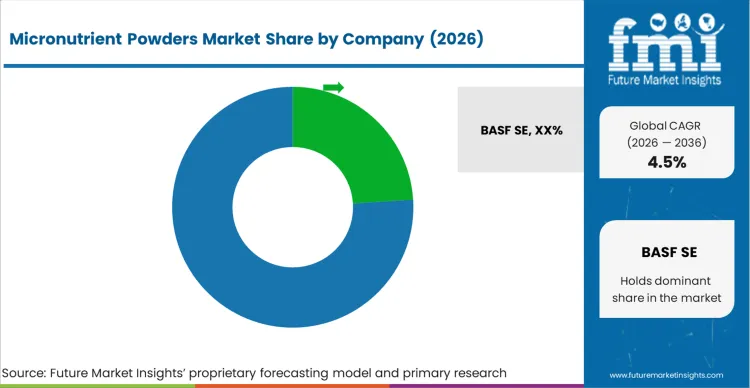
The competitive landscape is quite fierce and is dominated by companies like DSM, Innovita Nutrition, and Orgain. These companies have put into motion certain strategies to increase their sales. One such strategy is to design new formulations to address other health issues such as cognitive function and digestive health.
This also allows them to differentiate themselves in the mix of overcrowded competition. Manufacturers are also putting in significant resources towards research and development to enhance the bioavailability and taste of the products. This is particularly important as it aims to make the products appealing to consumers.
Companies tend to strike joint ventures and cooperations that make it possible to penetrate new sales channels and geography. For example, different health organizations have been working with DSM to promote the use of micronutrient powders as a solution to malnutrition.
These campaigns are supported by their advertising strategy which involves highlighting the convenience and health features of these powders with the help of health professionals who endorse the powders.
For instance:
- UNICEF has extended many of its essential agreements about the supply award of multiple micronutrient powders (MNPs) through September 2021. Moreover, a new tender was presented by UNICEF coordinated with the supply of MNP in undernutrition.
- In 2024, Children under two years of age were provided with micronutrient powder for breastfeeding infants in Cuba by France and WFP. The aim was to improve nutrition and children's health in Cuba.
Leading Brands
- BASF SE
- Innovita Nutrition
- GNC
- iHerb, LLC
- The Vitamin Shoppe
- USANA Health Sciences
- Amway
- Herbalife Nutrition
- Nature's Bounty
- NOW Foods
- Garden of Life
- Others
Scope of the Report
| Metric | Value |
|---|---|
| Quantitative Units | USD 3872.6 Million to USD 6014.0 Million, at a CAGR of 4.5% |
| Market Definition | Multi-ingredient supplement blends in powder delivery format for targeted nutritional intervention across infant, maternal, adult, and geriatric demographic categories. |
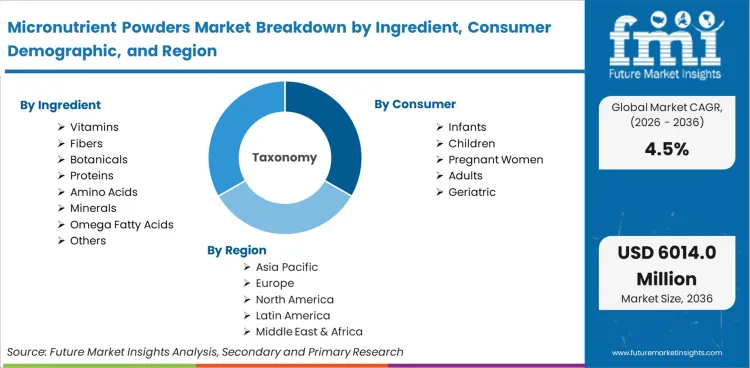
| Ingredient Segmentation | Vitamins, Fibers, Botanicals, Proteins, Amino Acids, Minerals, Omega Fatty Acids, Others |
| Consumer Demographic | Infants, Children, Pregnant Women, Adults, Geriatric |
| Application Segmentation | Immune Support, Cognitive Development, Bone Health, Energy and Vitality, Digestive Health, Others |
| Regions Covered | North America, Latin America, Europe, East Asia, South Asia, Oceania, Middle East & Africa |
| Countries Covered | USA, Germany, Brazil, China, India, and 40 plus countries |
| Key Companies Profiled | BASF SE, Innovita Nutrition, GNC, iHerb LLC, The Vitamin Shoppe, USANA Health Sciences, Amway, Herbalife Nutrition, Nature's Bounty, NOW Foods, Garden of Life |
| Forecast Period | 2026 to 2036 |
| Approach | Bottom-up aggregation of retail sales volumes by product category and demographic segment, cross-referenced against ingredient supplier capacity data |
Key Segments of the Report
By Ingredient:
As per ingredient, the industry has been categorized into Vitamins, Fibers, Botanicals, Proteins, Amino Acids, Minerals, Omega Fatty Acids, and Others.
By Consumer Demographic:
This segment is further categorized into Infants, Children, Pregnant Women, Adults, and Geriatric.
By Application:
This segment is further categorized into Immune Support, Cognitive Development, Bone Health, Energy and Vitality, Digestive Health, and Others.
By Region:
Industry analysis has been carried out in key countries of North America, Latin America, Western Europe, Eastern Europe, Balkans & Baltic, Russia & Belarus, Central Asia, East Asia, South Asia & Pacific, and the Middle East & Africa.
Bibliography
- World Health Organization. (2024). Micronutrient Deficiencies: Global Prevalence and Intervention Targets. WHO Department of Nutrition for Health and Development.
- UNICEF. (2024). Multiple Micronutrient Supplementation in Pregnancy: Evidence and Programme Guidance. UNICEF Nutrition Section.
- European Food Safety Authority. (2024). Dietary Reference Values for Vitamins and Minerals. EFSA Panel on Nutrition.
- Food Safety and Standards Authority of India. (2024). Food Safety and Standards (Health Supplements, Nutraceuticals) Regulations. FSSAI.
- United States Food and Drug Administration. (2024). Dietary Supplement Labeling Guide. FDA Center for Food Safety and Applied Nutrition.
- Food and Agriculture Organization of the United Nations. (2024). Dietary Supplement Market and Regulatory Overview. FAO Food and Nutrition Division.
- This bibliography is provided for reader reference. The full FMI report contains the complete reference list with primary research documentation.
Frequently Asked Questions
How large is the Micronutrient Powders market in 2026?
The Micronutrient Powders market is estimated at USD 3872.6 million in 2026.
What will the Micronutrient Powders market reach by 2036?
The Micronutrient Powders market is projected to reach USD 6014.0 million by 2036.
What CAGR is expected for the Micronutrient Powders market?
The Micronutrient Powders market is expected to grow at a CAGR of 4.5% from 2026 to 2036.
Which Ingredient segment leads the Micronutrient Powders market?
Vitamins holds 29.7% of Ingredient demand in 2026, reflecting broad application utility across immune support, energy metabolism, and cognitive health formulations.
Which Application segment is largest in 2026?
Immune Support commands 32.4% of Application segment demand in 2026, maintaining the highest single-application share following sustained consumer health supplement adoption.
Which Consumer Demographic generates the highest demand in 2026?
Infants account for 30.0% of Consumer Demographic demand in 2026, supported by clinically validated micronutrient supplementation protocols for complementary feeding periods.
Which country is growing fastest in the Micronutrient Powders market?
India is projected to grow at a 5.5% CAGR through 2036, driven by government-supported maternal and infant nutrition programmes and expanding supplement retail distribution.
What is excluded from this report?
Single-ingredient powders, tablet and capsule dosage forms, liquid supplement formats, gummy products, and parenteral clinical nutrition solutions fall outside the defined market scope.
How does FMI build this forecast?
FMI applies a bottom-up model aggregating retail sales volume data by product category and demographic segment, cross-referenced against major ingredient supplier capacity data and national nutrition survey benchmarks.
Preview the report firsthand - request a free sample
Get SampleGet the brochure for pricing and purchase details.
Get PDFTable of Content
- Executive Summary
- Global Market Outlook
- Demand-side Trends
- Supply-side Trends
- Technology Roadmap Analysis
- Analysis and Recommendations
- Market Overview
- Market Coverage / Taxonomy
- Market Definition / Scope / Limitations
- Research Methodology
- Chapter Orientation
- Analytical Lens and Working Hypotheses
- Market Structure, Signals, and Trend Drivers
- Benchmarking and Cross-market Comparability
- Market Sizing, Forecasting, and Opportunity Mapping
- Research Design and Evidence Framework
- Desk Research Programme (Secondary Evidence)
- Company Annual and Sustainability Reports
- Peer-reviewed Journals and Academic Literature
- Corporate Websites, Product Literature, and Technical Notes
- Earnings Decks and Investor Briefings
- Statutory Filings and Regulatory Disclosures
- Technical White Papers and Standards Notes
- Trade Journals, Industry Magazines, and Analyst Briefs
- Conference Proceedings, Webinars, and Seminar Materials
- Government Statistics Portals and Public Data Releases
- Press Releases and Reputable Media Coverage
- Specialist Newsletters and Curated Briefings
- Primary Modes
- Qualitative Interviews and Expert Elicitation
- Quantitative Surveys and Structured Data Capture
- Blended Approach
- Why Primary Evidence is Used
- Field Techniques
- Interviews
- Surveys
- Focus Groups
- Observational and In-context Research
- Social and Community Interactions
- Stakeholder Universe Engaged
- C-suite Leaders
- Board Members
- Presidents and Vice Presidents
- R&D and Innovation Heads
- Technical Specialists
- Domain Subject-matter Experts
- Scientists
- Physicians and Other Healthcare Professionals
- Governance, Ethics, and Data Stewardship
- Research Ethics
- Data Integrity and Handling
- Tooling, Models, and Reference Databases
- Desk Research Programme (Secondary Evidence)
- Data Engineering and Model Build
- Data Acquisition and Ingestion
- Cleaning, Normalisation, and Verification
- Synthesis, Triangulation, and Analysis
- Quality Assurance and Audit Trail
- Market Background
- Market Dynamics
- Drivers
- Restraints
- Opportunity
- Trends
- Scenario Forecast
- Demand in Optimistic Scenario
- Demand in Likely Scenario
- Demand in Conservative Scenario
- Opportunity Map Analysis
- Product Life Cycle Analysis
- Supply Chain Analysis
- Investment Feasibility Matrix
- Value Chain Analysis
- PESTLE and Porter’s Analysis
- Regulatory Landscape
- Regional Parent Market Outlook
- Production and Consumption Statistics
- Import and Export Statistics
- Market Dynamics
- Global Market Analysis 2021 to 2025 and Forecast, 2026 to 2036
- Historical Market Size Value (USD Million) Analysis, 2021 to 2025
- Current and Future Market Size Value (USD Million) Projections, 2026 to 2036
- Y-o-Y Growth Trend Analysis
- Absolute $ Opportunity Analysis
- Global Market Pricing Analysis 2021 to 2025 and Forecast 2026 to 2036
- Global Market Analysis 2021 to 2025 and Forecast 2026 to 2036, By Ingredient
- Introduction / Key Findings
- Historical Market Size Value (USD Million) Analysis By Ingredient , 2021 to 2025
- Current and Future Market Size Value (USD Million) Analysis and Forecast By Ingredient , 2026 to 2036
- Vitamins
- Fibers
- Botanicals
- Proteins
- Amino Acids
- Minerals
- Omega Fatty Acids
- Others
- Vitamins
- Y-o-Y Growth Trend Analysis By Ingredient , 2021 to 2025
- Absolute $ Opportunity Analysis By Ingredient , 2026 to 2036
- Global Market Analysis 2021 to 2025 and Forecast 2026 to 2036, By Consumer Demographic
- Introduction / Key Findings
- Historical Market Size Value (USD Million) Analysis By Consumer Demographic, 2021 to 2025
- Current and Future Market Size Value (USD Million) Analysis and Forecast By Consumer Demographic, 2026 to 2036
- Infants
- Children
- Pregnant Women
- Adults
- Geriatric
- Infants
- Y-o-Y Growth Trend Analysis By Consumer Demographic, 2021 to 2025
- Absolute $ Opportunity Analysis By Consumer Demographic, 2026 to 2036
- Global Market Analysis 2021 to 2025 and Forecast 2026 to 2036, By Application
- Introduction / Key Findings
- Historical Market Size Value (USD Million) Analysis By Application, 2021 to 2025
- Current and Future Market Size Value (USD Million) Analysis and Forecast By Application, 2026 to 2036
- Immune Support
- Cognitive Development
- Bone Health
- Energy and Vitality
- Digestive Health
- Others
- Immune Support
- Y-o-Y Growth Trend Analysis By Application, 2021 to 2025
- Absolute $ Opportunity Analysis By Application, 2026 to 2036
- Global Market Analysis 2021 to 2025 and Forecast 2026 to 2036, By Region
- Introduction
- Historical Market Size Value (USD Million) Analysis By Region, 2021 to 2025
- Current Market Size Value (USD Million) Analysis and Forecast By Region, 2026 to 2036
- North America
- Latin America
- Western Europe
- Eastern Europe
- East Asia
- South Asia and Pacific
- Middle East & Africa
- Market Attractiveness Analysis By Region
- North America Market Analysis 2021 to 2025 and Forecast 2026 to 2036, By Country
- Historical Market Size Value (USD Million) Trend Analysis By Market Taxonomy, 2021 to 2025
- Market Size Value (USD Million) Forecast By Market Taxonomy, 2026 to 2036
- By Country
- USA
- Canada
- Mexico
- By Ingredient
- By Consumer Demographic
- By Application
- By Country
- Market Attractiveness Analysis
- By Country
- By Ingredient
- By Consumer Demographic
- By Application
- Key Takeaways
- Latin America Market Analysis 2021 to 2025 and Forecast 2026 to 2036, By Country
- Historical Market Size Value (USD Million) Trend Analysis By Market Taxonomy, 2021 to 2025
- Market Size Value (USD Million) Forecast By Market Taxonomy, 2026 to 2036
- By Country
- Brazil
- Chile
- Rest of Latin America
- By Ingredient
- By Consumer Demographic
- By Application
- By Country
- Market Attractiveness Analysis
- By Country
- By Ingredient
- By Consumer Demographic
- By Application
- Key Takeaways
- Western Europe Market Analysis 2021 to 2025 and Forecast 2026 to 2036, By Country
- Historical Market Size Value (USD Million) Trend Analysis By Market Taxonomy, 2021 to 2025
- Market Size Value (USD Million) Forecast By Market Taxonomy, 2026 to 2036
- By Country
- Germany
- UK
- Italy
- Spain
- France
- Nordic
- BENELUX
- Rest of Western Europe
- By Ingredient
- By Consumer Demographic
- By Application
- By Country
- Market Attractiveness Analysis
- By Country
- By Ingredient
- By Consumer Demographic
- By Application
- Key Takeaways
- Eastern Europe Market Analysis 2021 to 2025 and Forecast 2026 to 2036, By Country
- Historical Market Size Value (USD Million) Trend Analysis By Market Taxonomy, 2021 to 2025
- Market Size Value (USD Million) Forecast By Market Taxonomy, 2026 to 2036
- By Country
- Russia
- Poland
- Hungary
- Balkan & Baltic
- Rest of Eastern Europe
- By Ingredient
- By Consumer Demographic
- By Application
- By Country
- Market Attractiveness Analysis
- By Country
- By Ingredient
- By Consumer Demographic
- By Application
- Key Takeaways
- East Asia Market Analysis 2021 to 2025 and Forecast 2026 to 2036, By Country
- Historical Market Size Value (USD Million) Trend Analysis By Market Taxonomy, 2021 to 2025
- Market Size Value (USD Million) Forecast By Market Taxonomy, 2026 to 2036
- By Country
- China
- Japan
- South Korea
- By Ingredient
- By Consumer Demographic
- By Application
- By Country
- Market Attractiveness Analysis
- By Country
- By Ingredient
- By Consumer Demographic
- By Application
- Key Takeaways
- South Asia and Pacific Market Analysis 2021 to 2025 and Forecast 2026 to 2036, By Country
- Historical Market Size Value (USD Million) Trend Analysis By Market Taxonomy, 2021 to 2025
- Market Size Value (USD Million) Forecast By Market Taxonomy, 2026 to 2036
- By Country
- India
- ASEAN
- Australia & New Zealand
- Rest of South Asia and Pacific
- By Ingredient
- By Consumer Demographic
- By Application
- By Country
- Market Attractiveness Analysis
- By Country
- By Ingredient
- By Consumer Demographic
- By Application
- Key Takeaways
- Middle East & Africa Market Analysis 2021 to 2025 and Forecast 2026 to 2036, By Country
- Historical Market Size Value (USD Million) Trend Analysis By Market Taxonomy, 2021 to 2025
- Market Size Value (USD Million) Forecast By Market Taxonomy, 2026 to 2036
- By Country
- Kingdom of Saudi Arabia
- Other GCC Countries
- Turkiye
- South Africa
- Other African Union
- Rest of Middle East & Africa
- By Ingredient
- By Consumer Demographic
- By Application
- By Country
- Market Attractiveness Analysis
- By Country
- By Ingredient
- By Consumer Demographic
- By Application
- Key Takeaways
- Key Countries Market Analysis
- USA
- Pricing Analysis
- Market Share Analysis, 2025
- By Ingredient
- By Consumer Demographic
- By Application
- Canada
- Pricing Analysis
- Market Share Analysis, 2025
- By Ingredient
- By Consumer Demographic
- By Application
- Mexico
- Pricing Analysis
- Market Share Analysis, 2025
- By Ingredient
- By Consumer Demographic
- By Application
- Brazil
- Pricing Analysis
- Market Share Analysis, 2025
- By Ingredient
- By Consumer Demographic
- By Application
- Chile
- Pricing Analysis
- Market Share Analysis, 2025
- By Ingredient
- By Consumer Demographic
- By Application
- Germany
- Pricing Analysis
- Market Share Analysis, 2025
- By Ingredient
- By Consumer Demographic
- By Application
- UK
- Pricing Analysis
- Market Share Analysis, 2025
- By Ingredient
- By Consumer Demographic
- By Application
- Italy
- Pricing Analysis
- Market Share Analysis, 2025
- By Ingredient
- By Consumer Demographic
- By Application
- Spain
- Pricing Analysis
- Market Share Analysis, 2025
- By Ingredient
- By Consumer Demographic
- By Application
- France
- Pricing Analysis
- Market Share Analysis, 2025
- By Ingredient
- By Consumer Demographic
- By Application
- India
- Pricing Analysis
- Market Share Analysis, 2025
- By Ingredient
- By Consumer Demographic
- By Application
- ASEAN
- Pricing Analysis
- Market Share Analysis, 2025
- By Ingredient
- By Consumer Demographic
- By Application
- Australia & New Zealand
- Pricing Analysis
- Market Share Analysis, 2025
- By Ingredient
- By Consumer Demographic
- By Application
- China
- Pricing Analysis
- Market Share Analysis, 2025
- By Ingredient
- By Consumer Demographic
- By Application
- Japan
- Pricing Analysis
- Market Share Analysis, 2025
- By Ingredient
- By Consumer Demographic
- By Application
- South Korea
- Pricing Analysis
- Market Share Analysis, 2025
- By Ingredient
- By Consumer Demographic
- By Application
- Russia
- Pricing Analysis
- Market Share Analysis, 2025
- By Ingredient
- By Consumer Demographic
- By Application
- Poland
- Pricing Analysis
- Market Share Analysis, 2025
- By Ingredient
- By Consumer Demographic
- By Application
- Hungary
- Pricing Analysis
- Market Share Analysis, 2025
- By Ingredient
- By Consumer Demographic
- By Application
- Kingdom of Saudi Arabia
- Pricing Analysis
- Market Share Analysis, 2025
- By Ingredient
- By Consumer Demographic
- By Application
- Turkiye
- Pricing Analysis
- Market Share Analysis, 2025
- By Ingredient
- By Consumer Demographic
- By Application
- South Africa
- Pricing Analysis
- Market Share Analysis, 2025
- By Ingredient
- By Consumer Demographic
- By Application
- USA
- Market Structure Analysis
- Competition Dashboard
- Competition Benchmarking
- Market Share Analysis of Top Players
- By Regional
- By Ingredient
- By Consumer Demographic
- By Application
- Competition Analysis
- Competition Deep Dive
- BASF SE
- Overview
- Product Portfolio
- Profitability by Market Segments (Product/Age /Sales Channel/Region)
- Sales Footprint
- Strategy Overview
- Marketing Strategy
- Product Strategy
- Channel Strategy
- Innovita Nutrition
- GNC
- iHerb, LLC
- The Vitamin Shoppe
- USANA Health Sciences
- Amway
- Herbalife Nutrition
- Nature's Bounty
- NOW Foods
- Garden of Life
- Others
- BASF SE
- Competition Deep Dive
- Assumptions & Acronyms Used


