

- Industry Size (2026)
- USD 1.1 Bn
- Forecast (2036)
- USD 3.8 Bn
- CAGR (2026 to 2036)
- 12.80%
Municipal Deposit Return Scheme Reverse Vending Machine Fleets Market Forecast and Outlook 2026 to 2036
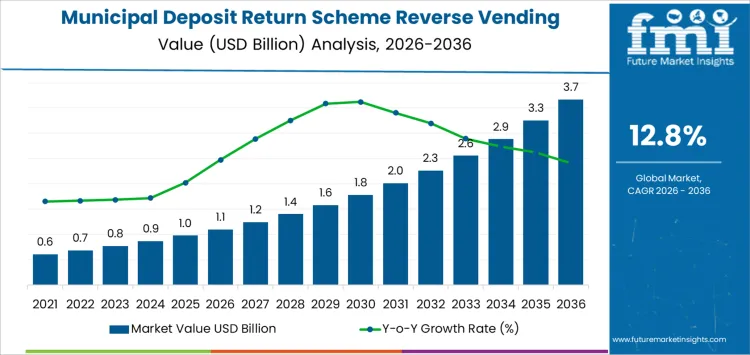
The municipal deposit return scheme (DRS) reverse vending machine fleets market is expected to grow from USD 1.1 billion in 2026 to USD 3.8 billion by 2036, reflecting a compound annual growth rate (CAGR) of 12.8%. As municipalities worldwide focus on improving recycling rates and reducing litter, deposit return schemes that incentivize consumers to return bottles and cans for refunds are gaining traction. Reverse vending machines (RVMs) play a key role in this process by automating the collection of recyclable containers, making it easier for consumers to participate in the recycling system.
The growth of the market is driven by increasing global demand for sustainability and waste reduction, as well as the rising adoption of circular economy principles. Governments are implementing stricter regulations on recycling, and deposit return schemes are being expanded across various regions to enhance recycling rates and reduce plastic pollution. As technology improves, reverse vending machines are becoming more efficient, allowing municipalities to handle larger volumes of recyclable materials and ensure higher return rates.
Quick Stats for Municipal Deposit Return Scheme Reverse Vending Machine Fleets Market
- Municipal Deposit Return Scheme Reverse Vending Machine Fleets Market Value (2026): USD 1.1 billion
- Municipal Deposit Return Scheme Reverse Vending Machine Fleets Market Forecast Value (2036): USD 3.8 billion
- Municipal Deposit Return Scheme Reverse Vending Machine Fleets Market Global Forecast CAGR (2026 to 2036): 12.80%
- Top Container Type Supported in Municipal Deposit Return Scheme Reverse Vending Machine Fleets Market: PET Bottles (48%)
- Key Growth Regions in Municipal Deposit Return Scheme Reverse Vending Machine Fleets Market: India, China, USA, Germany, UK
- Top Players in Municipal Deposit Return Scheme Reverse Vending Machine Fleets Market: Tomra Systems ASA, Evreka, Envipco, RecycleTech, Der Grüne Punkt
What is the Growth Forecast for the Municipal Deposit Return Scheme Reverse Vending Machine Fleets Market through 2036?
The 10-year growth comparison for the municipal deposit return scheme reverse vending machine fleets market indicates consistent and strong growth over the forecast period. Starting at USD 1.1 billion in 2026, the market grows gradually to USD 1.2 billion in 2027 and USD 1.3 billion in 2028. These early stages reflect the continued rollout of deposit return schemes in municipalities, with reverse vending machine fleets being introduced to increase consumer participation in recycling programs.
From 2028 to 2030, the market sees more significant growth, reaching USD 1.4 billion in 2029 and USD 1.6 billion in 2030, driven by expanding infrastructure and rising adoption by cities and towns. The growing commitment to circular economies and increasing regulatory pressures to reduce waste will further drive demand during this period. By 2035, the market is expected to reach USD 3.3 billion, with the final value of USD 3.8 billion expected in 2036. This reflects an acceleration in the adoption of reverse vending machine fleets, as municipalities scale up their efforts to meet recycling targets and reduce environmental impact. The 10-year growth comparison highlights the ongoing demand for more efficient and automated recycling solutions that support sustainability initiatives on a larger scale.
Municipal Deposit Return Scheme Reverse Vending Machine Fleets Market Key Takeaways
| Metric | Value |
|---|---|
| Industry Sales Value (2026) | USD 1.1 billion |
| Industry Forecast Value (2036) | USD 3.8 billion |
| Industry Forecast CAGR (2026 to 2036) | 12.8% |
What Is Driving the Demand for Municipal Deposit Return Scheme Reverse Vending Machine Fleets Globally?
The global demand for reverse vending machine (RVM) fleets under municipal deposit return schemes is driven by expanding policy mandates and rising efforts to increase recycling rates. Deposit return schemes require consumers to return beverage containers, such as plastic bottles and aluminium cans, in exchange for a refund. Reverse vending machines provide the infrastructure to collect, sort, and process these containers efficiently at scale. Governments in Europe, North America, and parts of Asia are introducing or expanding deposit return laws to reduce litter, cut landfill waste, and improve recycling quality. Retailers and municipalities are deploying RVM fleets at supermarkets, transit hubs, and community centres to support these programmes, creating visible and convenient return points that encourage consumer participation. As recycling regulations tighten and extended producer responsibility frameworks place greater accountability on brands and retailers, RVM fleets become essential to meet collection targets and achieve higher rates of material recovery.
Future demand for municipal deposit return scheme reverse vending machine fleets is expected to grow as more jurisdictions implement or expand deposit return policies and as current systems scale. Continued attention to reducing waste, increasing circularity of materials, and meeting ambitious recycling benchmarks will sustain investment in RVM infrastructure. Technological improvements in machine recognition, sorting accuracy, and automation will improve throughput and user experience, which can increase container return rates. Integration of digital incentives, mobile interfaces, and loyalty programmes may also enhance consumer engagement and make schemes more effective. The pace of adoption will depend on how quickly governments formalise deposit return regulations, the willingness of retailers to host machines, and the development of efficient logistics for collected materials. As global focus on packaging waste intensifies and recycling goals become more stringent, demand for reverse vending machine fleets to support deposit return schemes is expected to expand steadily across regions.
What Are the Key Segments in Municipal Deposit Return Scheme Reverse Vending Machine Fleets Market?
The municipal deposit return scheme (DRS) reverse vending machine (RVM) fleets market is segmented by machine type and container type supported. Reverse vending kiosks (retail & mall locations) lead the machine type segment with 45% of the market share, providing convenient recycling options at high-traffic locations. PET bottles dominate the container type supported segment, accounting for 48%, reflecting their widespread use in the beverage industry. The market is expanding as municipalities and retailers increasingly focus on sustainability and waste reduction through deposit return schemes.
Which Machine Type Drives Municipal Deposit Return Scheme Reverse Vending Machine Fleets Market Demand Globally?
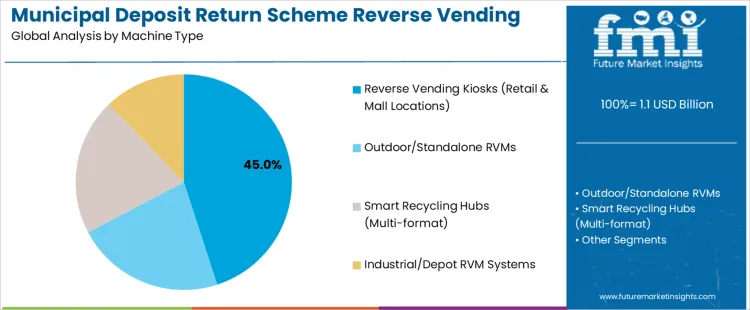
Reverse vending kiosks (retail & mall locations) account for 45% of the market share. These kiosks are commonly located in retail and mall environments, providing easy access for consumers to return empty beverage containers for recycling. The demand for reverse vending kiosks is driven by their ability to engage a large number of consumers in sustainable recycling practices at high-traffic locations. By offering incentives such as deposits or coupons in exchange for returned containers, these kiosks help improve recycling rates and encourage consumer participation in municipal deposit return schemes. Retail and mall locations are ideal spots for RVM installations due to the large volume of shoppers and the convenience of recycling in a familiar setting. As governments and municipalities push for more effective waste management solutions, reverse vending kiosks continue to be an essential part of the infrastructure for supporting DRS programs. Other machine types, such as outdoor/standalone RVMs and smart recycling hubs, contribute to the market but remain smaller in comparison due to the broad reach and accessibility of kiosks in commercial settings.
Which Container Type Supported Drives Municipal Deposit Return Scheme Reverse Vending Machine Fleets Market Demand Globally?
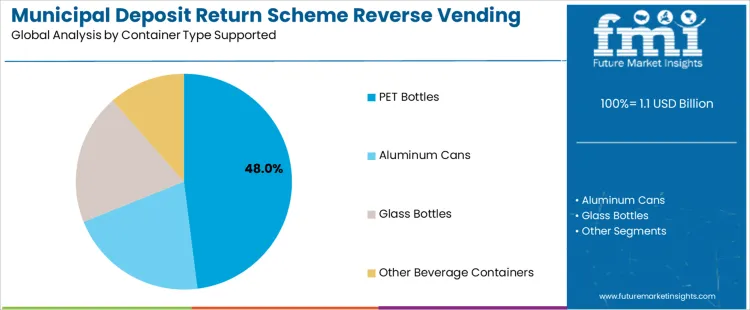
PET bottles dominate the container type supported segment, holding 48% of the market share. PET bottles are widely used in the beverage industry for soft drinks, water, and other beverages, making them the primary container type returned through reverse vending machines. Their popularity in consumer packaging makes them a key target for recycling programs aimed at reducing plastic waste. PET bottles are also easier to handle and transport through RVM systems, which drives their prominence in municipal deposit return schemes. The focus on PET bottles is further fueled by the environmental push to reduce plastic pollution, with RVMs serving as an effective tool in collecting and recycling these containers. While other container types such as aluminum cans and glass bottles are also supported, PET bottles represent the largest segment due to their widespread use and the significant environmental impact of plastic waste. The increasing consumer awareness about recycling and the environmental benefits of reusing PET materials is expected to continue driving the dominance of PET bottles in the reverse vending machine market.
What are the Key Dynamics of the Global Municipal Deposit Return Scheme Reverse Vending Machine Fleets Market?
The global municipal deposit return scheme reverse vending machine fleets market is expanding as cities and governments implement return schemes that collect empty beverage containers through automated devices. These fleets support collection, sorting, and compaction of bottles and cans from households and public spaces. Operators, recycling organisations and municipalities deploy machines to improve recovery rates, reduce litter and increase circularity of packaging materials. Growth reflects stronger policy frameworks for deposit schemes, rising consumer participation in return programs and investment in infrastructure that supports efficient container return logistics worldwide.
What are the Key Drivers for the Global Municipal Deposit Return Scheme Reverse Vending Machine Fleets Market?
A key driver is the adoption of deposit return schemes by governments seeking higher recycling rates and reduced waste in municipal streams. These schemes offer deposit refunds when consumers return containers, encouraging use of reverse vending machines as convenient collection points. Urbanisation and increasing beverage consumption add urgency to build accessible, reliable fleets that increase participation. Technology advancements in machine scanning, recognition and sorting enhance efficiency and reduce manual effort. Partnerships among public authorities, brand owners and recycling firms help scale deployment programs and align incentives to recover high volumes of reusable and recyclable packaging.
What are the Restraints for the Global Municipal Deposit Return Scheme Reverse Vending Machine Fleets Market?
One restraint is the substantial upfront investment required to deploy and maintain a wide network of reverse vending machines. Municipalities and operators must allocate budget for machines, site preparation and integration with existing waste systems. Site selection and logistics planning can be complex, especially in regions with limited space or low foot traffic. Participation depends on consumer understanding and convenience, and low engagement can reduce machine utilisation and economic viability. Coordination among stakeholders, data systems for tracking returns and harmonising scheme rules across jurisdictions also represent operational challenges that can slow expansion in some markets.
What is the Key Trends in the Global Municipal Deposit Return Scheme Reverse Vending Machine Fleets Market?
A key trend is integration of digital technologies that improve user experience and operational data. Machines with mobile connectivity, real time status monitoring and virtual wallets allow consumers to track returns and receive refunds without cash handling. Fleet operators are adopting predictive maintenance and analytics to optimise uptime and routing of service teams. Collaboration among municipalities, retailers and waste managers is leading to shared networks that increase accessibility of return points. Standardised interfaces and cross scheme interoperability are emerging to support regional expansion. Efforts to link reverse vending fleets with reuse and refill initiatives are influencing design and service planning for next generation collection systems.
What is the Country-Wise Outlook for Municipal Deposit Return Scheme Reverse Vending Machine Fleets?
The Municipal Deposit Return Scheme Reverse Vending Machine Fleets market is experiencing significant growth, driven by the rising need for efficient waste management and recycling solutions. Countries like India, China, and the USA are leading this growth, propelled by increasing regulatory pressures to improve recycling rates and reduce waste. Reverse vending machines (RVMs), which allow consumers to return used containers for a deposit refund, are a key component of municipal deposit return schemes. As these systems become more widespread, the market for RVM fleets is expected to expand, supporting recycling efforts and contributing to the circular economy.
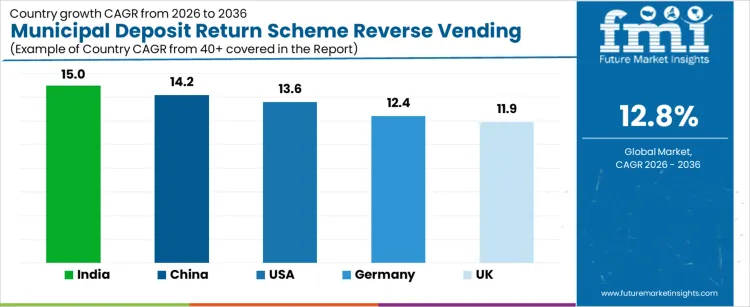
| Country | CAGR (2026 to 2036) |
|---|---|
| India | 15% |
| China | 14.2% |
| USA | 13.6% |
| Germany | 12.4% |
| UK | 11.9% |
What is Driving the Growth of Municipal Deposit Return Scheme Reverse Vending Machine Fleets in India?
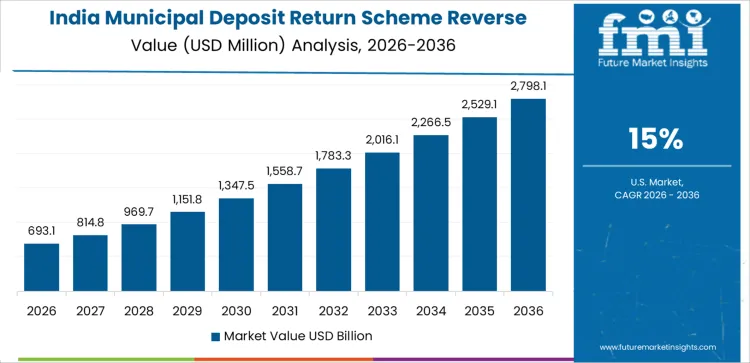
India’s Municipal Deposit Return Scheme Reverse Vending Machine Fleets market is projected to grow at a CAGR of 15%. The growing focus on waste management, urbanization, and the expansion of the retail sector are key drivers of this growth. With India’s increasing population and consumer spending, the demand for efficient recycling systems is rising. The Indian government’s growing focus on sustainability and waste reduction, combined with the expansion of deposit return schemes, is pushing for the adoption of reverse vending machines. These machines offer an effective solution for boosting recycling rates and reducing litter, contributing to the strong growth of the market in India.
What is Contributing to the Growth of Municipal Deposit Return Scheme Reverse Vending Machine Fleets in China?
China’s Municipal Deposit Return Scheme Reverse Vending Machine Fleets market is expected to grow at a CAGR of 14.2%. As China faces significant challenges related to waste management and pollution, the government has increasingly turned to advanced recycling systems. The adoption of municipal deposit return schemes, powered by reverse vending machines, is a key part of China’s strategy to improve recycling rates and reduce plastic waste. The expanding consumer base, rapid urbanization, and government initiatives supporting sustainable waste management are all contributing to the market’s growth. As China continues to push for greater environmental sustainability, the market for reverse vending machine fleets is expected to grow steadily.
What is Driving the Municipal Deposit Return Scheme Reverse Vending Machine Fleets Market Growth in the USA?
The USA’s Municipal Deposit Return Scheme Reverse Vending Machine Fleets market is projected to grow at a CAGR of 13.6%. The growing emphasis on reducing waste and improving recycling infrastructure, driven by environmental regulations and consumer demand for sustainable solutions, is fueling this market. Reverse vending machines play a crucial role in deposit return schemes, enabling consumers to return used containers for a refund. As states and local governments continue to implement deposit return systems to combat plastic pollution and improve recycling rates, the demand for reverse vending machine fleets is expected to rise, driving market growth across the USA.
What is Influencing the Growth of Municipal Deposit Return Scheme Reverse Vending Machine Fleets in Germany?
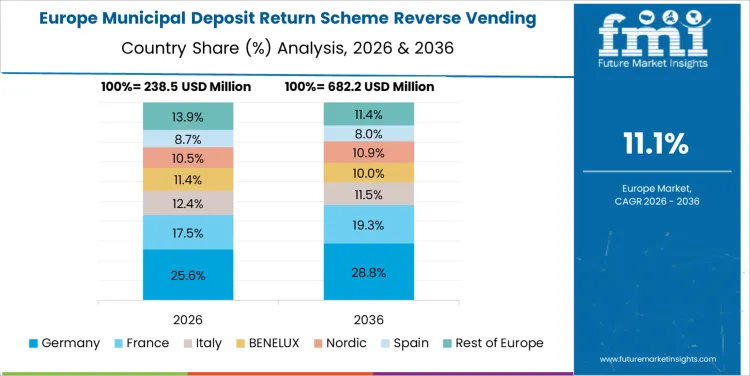
Germany’s Municipal Deposit Return Scheme Reverse Vending Machine Fleets market is expected to grow at a CAGR of 12.4%. As one of the leading countries in recycling and waste management, Germany is at the forefront of adopting innovative solutions like reverse vending machines in its deposit return schemes. The country’s long-standing commitment to sustainability, coupled with its robust recycling infrastructure, supports the growing demand for reverse vending machine fleets. Germany’s recycling rate is among the highest globally, and the expansion of deposit return systems is expected to continue driving the market for reverse vending machines, ensuring that the country remains a leader in circular economy initiatives.
What is Contributing to the Growth of Municipal Deposit Return Scheme Reverse Vending Machine Fleets in the UK?
The UK’s Municipal Deposit Return Scheme Reverse Vending Machine Fleets market is projected to grow at a CAGR of 11.9%. The UK is increasingly focused on improving its waste management systems and recycling rates, driven by both consumer demand for sustainable practices and regulatory pressure. The introduction of municipal deposit return schemes, which include reverse vending machines for convenient container returns, is gaining traction as a solution to reduce plastic waste. The government’s focus on enhancing recycling programs, along with a growing awareness of the environmental impact of single-use plastics, is expected to fuel the growth of reverse vending machine fleets in the UK.
What is the Competitive Landscape for the Municipal Deposit Return Scheme Reverse Vending Machine Fleets Market?
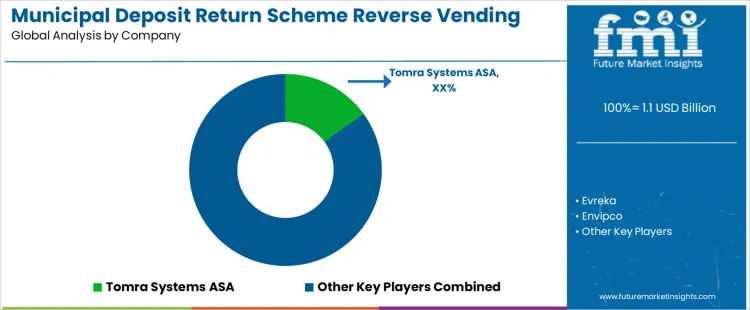
Global demand for municipal deposit return scheme (DRS) reverse vending machine (RVM) fleets is growing as governments, regulators and waste managers work to increase recycling rates and reduce litter from beverage containers. Deposit return schemes require consumers to return bottles and cans in exchange for a refund, creating a reliable flow of clean, sorted recyclables. Reverse vending machines serve as the physical infrastructure that accepts, sorts and stores returned containers, making participation easy for the public and efficient for program operators.
Rising concern over plastic pollution, stronger recycling mandates in Europe, North America and parts of Asia Pacific, and growing corporate commitments to circular economy targets all support investment in larger and more sophisticated RVM fleets. Retailer participation and public awareness campaigns further strengthen deployment of machines at supermarkets, transit hubs and high traffic urban locations. As deposit return schemes expand or launch in new regions, demand for reliable, scalable RVM fleets continues to rise.
On the supply side, a focused group of technology and service providers competes to support this expanding market. Tomra Systems ASA is recognised as a leading player with extensive experience in reverse vending technology, broad deployment footprint and strong global brand recognition. Other competitors include Evreka, which offers software and hardware solutions for waste collection and reverse vending data management; Envipco, a long standing provider of RVM hardware and service networks; RecycleTech, which brings flexible solutions for small and large collection sites; and Der Grüne Punkt, which integrates recycling infrastructure with broader material recovery systems.
Competition among these firms centres on machine reliability, speed and accuracy of container recognition, ease of integration with existing deposit systems, maintenance support and data analytics. Providers that combine robust technology, scalable fleet management, strong service networks and the ability to customise solutions for local regulatory requirements are best positioned to capture growth as municipal deposit return schemes expand worldwide.
Key Players of the Municipal Deposit Return Scheme Reverse Vending Machine Fleets Market
- Tomra Systems ASA
- Evreka
- Envipco
- RecycleTech
- Der Grüne Punkt
Scope of the Report
| Items | Values |
|---|---|
| Quantitative Units (2026) | USD Billion |
| Machine Type | Reverse Vending Kiosks (Retail & Mall Locations), Outdoor/Standalone RVMs, Smart Recycling Hubs (Multi-format), Industrial/Depot RVM Systems |
| Container Type Supported | PET Bottles, Aluminum Cans, Glass Bottles, Other Beverage Containers |
| Companies | Tomra Systems ASA, Evreka, Envipco, RecycleTech, Der Grüne Punkt |
| Regions Covered | North America, Latin America, Western Europe, Eastern Europe, South Asia and Pacific, East Asia, Middle East & Africa |
| Countries Covered | United States, Canada, Mexico, Brazil, Argentina, Germany, France, United Kingdom, Italy, Spain, Netherlands, China, India, Japan, South Korea, ANZ, GCC Countries, South Africa |
| Additional Attributes | Dollar by sales by machine type, container type supported, and region. Includes market trends in deposit return schemes, performance in various machine types, cost-effectiveness, sustainability practices, regulatory compliance, market share and competitive positioning of key companies, and the role of reverse vending machines in enhancing recycling efficiency, reducing contamination, and supporting municipal waste reduction and circular economy efforts. |
Key Segments in the Municipal Deposit Return Scheme Reverse Vending Machine Fleets Market
By Machine Type:
- Reverse Vending Kiosks (Retail & Mall Locations)
- Outdoor/Standalone RVMs
- Smart Recycling Hubs (Multi format)
- Industrial/Depot RVM Systems
By Container Type Supported:
- PET Bottles
- Aluminum Cans
- Glass Bottles
- Other Beverage Containers
By Region:
- Asia Pacific
- China
- India
- Japan
- South Korea
- ASEAN
- Rest of Asia Pacific
- Europe
- Germany
- United Kingdom
- France
- Italy
- Spain
- Nordic
- BENELUX
- Rest of Europe
- North America
- United States
- Canada
- Mexico
- Latin America
- Brazil
- Chile
- Rest of Latin America
- Middle East & Africa
- Kingdom of Saudi Arabia
- Other GCC Countries
- Turkey
- South Africa
- Other African Union
- Rest of Middle East & Africa
Frequently Asked Questions
How big is the municipal deposit return scheme reverse vending machine fleets market in 2026?
The global municipal deposit return scheme reverse vending machine fleets market is estimated to be valued at USD 1.1 billion in 2026.
What will be the size of municipal deposit return scheme reverse vending machine fleets market in 2036?
The market size for the municipal deposit return scheme reverse vending machine fleets market is projected to reach USD 3.7 billion by 2036.
How much will be the municipal deposit return scheme reverse vending machine fleets market growth between 2026 and 2036?
The municipal deposit return scheme reverse vending machine fleets market is expected to grow at a 12.8% CAGR between 2026 and 2036.
What are the key product types in the municipal deposit return scheme reverse vending machine fleets market?
The key product types in municipal deposit return scheme reverse vending machine fleets market are reverse vending kiosks (retail & mall locations), outdoor/standalone rvms, smart recycling hubs (multi‑format) and industrial/depot rvm systems.
Which container type supported segment to contribute significant share in the municipal deposit return scheme reverse vending machine fleets market in 2026?
In terms of container type supported, pet bottles segment to command 48.0% share in the municipal deposit return scheme reverse vending machine fleets market in 2026.
Preview the report firsthand - request a free sample
Get SampleGet the brochure for pricing and purchase details.
Get PDFTable of Content
- Executive Summary
- Global Market Outlook
- Demand-side Trends
- Supply-side Trends
- Technology Roadmap Analysis
- Analysis and Recommendations
- Market Overview
- Market Coverage / Taxonomy
- Market Definition / Scope / Limitations
- Market Background
- Market Dynamics
- Drivers
- Restraints
- Opportunity
- Trends
- Scenario Forecast
- Demand in Optimistic Scenario
- Demand in Likely Scenario
- Demand in Conservative Scenario
- Opportunity Map Analysis
- Product Life Cycle Analysis
- Supply Chain Analysis
- Investment Feasibility Matrix
- Value Chain Analysis
- PESTLE and Porter’s Analysis
- Regulatory Landscape
- Regional Parent Market Outlook
- Production and Consumption Statistics
- Import and Export Statistics
- Market Dynamics
- Global Market Analysis 2021 to 2025 and Forecast, 2026 to 2036
- Historical Market Size Value (USD Million) Analysis, 2021 to 2025
- Current and Future Market Size Value (USD Million) Projections, 2026 to 2036
- Y-o-Y Growth Trend Analysis
- Absolute $ Opportunity Analysis
- Global Market Pricing Analysis 2021 to 2025 and Forecast 2026 to 2036
- Global Market Analysis 2021 to 2025 and Forecast 2026 to 2036, By Machine Type
- Introduction / Key Findings
- Historical Market Size Value (USD Million) Analysis By Machine Type , 2021 to 2025
- Current and Future Market Size Value (USD Million) Analysis and Forecast By Machine Type , 2026 to 2036
- Reverse Vending Kiosks (Retail & Mall Locations)
- Outdoor/Standalone RVMs
- Smart Recycling Hubs (Multi‑format)
- Industrial/Depot RVM Systems
- Y-o-Y Growth Trend Analysis By Machine Type , 2021 to 2025
- Absolute $ Opportunity Analysis By Machine Type , 2026 to 2036
- Global Market Analysis 2021 to 2025 and Forecast 2026 to 2036, By Container Type Supported
- Introduction / Key Findings
- Historical Market Size Value (USD Million) Analysis By Container Type Supported, 2021 to 2025
- Current and Future Market Size Value (USD Million) Analysis and Forecast By Container Type Supported, 2026 to 2036
- PET Bottles
- Aluminum Cans
- Glass Bottles
- Other Beverage Containers
- Y-o-Y Growth Trend Analysis By Container Type Supported, 2021 to 2025
- Absolute $ Opportunity Analysis By Container Type Supported, 2026 to 2036
- Global Market Analysis 2021 to 2025 and Forecast 2026 to 2036, By Region
- Introduction
- Historical Market Size Value (USD Million) Analysis By Region, 2021 to 2025
- Current Market Size Value (USD Million) Analysis and Forecast By Region, 2026 to 2036
- North America
- Latin America
- Western Europe
- Eastern Europe
- East Asia
- South Asia and Pacific
- Middle East & Africa
- Market Attractiveness Analysis By Region
- North America Market Analysis 2021 to 2025 and Forecast 2026 to 2036, By Country
- Historical Market Size Value (USD Million) Trend Analysis By Market Taxonomy, 2021 to 2025
- Market Size Value (USD Million) Forecast By Market Taxonomy, 2026 to 2036
- By Country
- USA
- Canada
- Mexico
- By Machine Type
- By Container Type Supported
- By Country
- Market Attractiveness Analysis
- By Country
- By Machine Type
- By Container Type Supported
- Key Takeaways
- Latin America Market Analysis 2021 to 2025 and Forecast 2026 to 2036, By Country
- Historical Market Size Value (USD Million) Trend Analysis By Market Taxonomy, 2021 to 2025
- Market Size Value (USD Million) Forecast By Market Taxonomy, 2026 to 2036
- By Country
- Brazil
- Chile
- Rest of Latin America
- By Machine Type
- By Container Type Supported
- By Country
- Market Attractiveness Analysis
- By Country
- By Machine Type
- By Container Type Supported
- Key Takeaways
- Western Europe Market Analysis 2021 to 2025 and Forecast 2026 to 2036, By Country
- Historical Market Size Value (USD Million) Trend Analysis By Market Taxonomy, 2021 to 2025
- Market Size Value (USD Million) Forecast By Market Taxonomy, 2026 to 2036
- By Country
- Germany
- UK
- Italy
- Spain
- France
- Nordic
- BENELUX
- Rest of Western Europe
- By Machine Type
- By Container Type Supported
- By Country
- Market Attractiveness Analysis
- By Country
- By Machine Type
- By Container Type Supported
- Key Takeaways
- Eastern Europe Market Analysis 2021 to 2025 and Forecast 2026 to 2036, By Country
- Historical Market Size Value (USD Million) Trend Analysis By Market Taxonomy, 2021 to 2025
- Market Size Value (USD Million) Forecast By Market Taxonomy, 2026 to 2036
- By Country
- Russia
- Poland
- Hungary
- Balkan & Baltic
- Rest of Eastern Europe
- By Machine Type
- By Container Type Supported
- By Country
- Market Attractiveness Analysis
- By Country
- By Machine Type
- By Container Type Supported
- Key Takeaways
- East Asia Market Analysis 2021 to 2025 and Forecast 2026 to 2036, By Country
- Historical Market Size Value (USD Million) Trend Analysis By Market Taxonomy, 2021 to 2025
- Market Size Value (USD Million) Forecast By Market Taxonomy, 2026 to 2036
- By Country
- China
- Japan
- South Korea
- By Machine Type
- By Container Type Supported
- By Country
- Market Attractiveness Analysis
- By Country
- By Machine Type
- By Container Type Supported
- Key Takeaways
- South Asia and Pacific Market Analysis 2021 to 2025 and Forecast 2026 to 2036, By Country
- Historical Market Size Value (USD Million) Trend Analysis By Market Taxonomy, 2021 to 2025
- Market Size Value (USD Million) Forecast By Market Taxonomy, 2026 to 2036
- By Country
- India
- ASEAN
- Australia & New Zealand
- Rest of South Asia and Pacific
- By Machine Type
- By Container Type Supported
- By Country
- Market Attractiveness Analysis
- By Country
- By Machine Type
- By Container Type Supported
- Key Takeaways
- Middle East & Africa Market Analysis 2021 to 2025 and Forecast 2026 to 2036, By Country
- Historical Market Size Value (USD Million) Trend Analysis By Market Taxonomy, 2021 to 2025
- Market Size Value (USD Million) Forecast By Market Taxonomy, 2026 to 2036
- By Country
- Kingdom of Saudi Arabia
- Other GCC Countries
- Turkiye
- South Africa
- Other African Union
- Rest of Middle East & Africa
- By Machine Type
- By Container Type Supported
- By Country
- Market Attractiveness Analysis
- By Country
- By Machine Type
- By Container Type Supported
- Key Takeaways
- Key Countries Market Analysis
- USA
- Pricing Analysis
- Market Share Analysis, 2025
- By Machine Type
- By Container Type Supported
- Canada
- Pricing Analysis
- Market Share Analysis, 2025
- By Machine Type
- By Container Type Supported
- Mexico
- Pricing Analysis
- Market Share Analysis, 2025
- By Machine Type
- By Container Type Supported
- Brazil
- Pricing Analysis
- Market Share Analysis, 2025
- By Machine Type
- By Container Type Supported
- Chile
- Pricing Analysis
- Market Share Analysis, 2025
- By Machine Type
- By Container Type Supported
- Germany
- Pricing Analysis
- Market Share Analysis, 2025
- By Machine Type
- By Container Type Supported
- UK
- Pricing Analysis
- Market Share Analysis, 2025
- By Machine Type
- By Container Type Supported
- Italy
- Pricing Analysis
- Market Share Analysis, 2025
- By Machine Type
- By Container Type Supported
- Spain
- Pricing Analysis
- Market Share Analysis, 2025
- By Machine Type
- By Container Type Supported
- France
- Pricing Analysis
- Market Share Analysis, 2025
- By Machine Type
- By Container Type Supported
- India
- Pricing Analysis
- Market Share Analysis, 2025
- By Machine Type
- By Container Type Supported
- ASEAN
- Pricing Analysis
- Market Share Analysis, 2025
- By Machine Type
- By Container Type Supported
- Australia & New Zealand
- Pricing Analysis
- Market Share Analysis, 2025
- By Machine Type
- By Container Type Supported
- China
- Pricing Analysis
- Market Share Analysis, 2025
- By Machine Type
- By Container Type Supported
- Japan
- Pricing Analysis
- Market Share Analysis, 2025
- By Machine Type
- By Container Type Supported
- South Korea
- Pricing Analysis
- Market Share Analysis, 2025
- By Machine Type
- By Container Type Supported
- Russia
- Pricing Analysis
- Market Share Analysis, 2025
- By Machine Type
- By Container Type Supported
- Poland
- Pricing Analysis
- Market Share Analysis, 2025
- By Machine Type
- By Container Type Supported
- Hungary
- Pricing Analysis
- Market Share Analysis, 2025
- By Machine Type
- By Container Type Supported
- Kingdom of Saudi Arabia
- Pricing Analysis
- Market Share Analysis, 2025
- By Machine Type
- By Container Type Supported
- Turkiye
- Pricing Analysis
- Market Share Analysis, 2025
- By Machine Type
- By Container Type Supported
- South Africa
- Pricing Analysis
- Market Share Analysis, 2025
- By Machine Type
- By Container Type Supported
- USA
- Market Structure Analysis
- Competition Dashboard
- Competition Benchmarking
- Market Share Analysis of Top Players
- By Regional
- By Machine Type
- By Container Type Supported
- Competition Analysis
- Competition Deep Dive
- Tomra Systems ASA
- Overview
- Product Portfolio
- Profitability by Market Segments (Product/Age /Sales Channel/Region)
- Sales Footprint
- Strategy Overview
- Marketing Strategy
- Product Strategy
- Channel Strategy
- Evreka
- Envipco
- RecycleTech
- Der Grüne Punkt
- Tomra Systems ASA
- Competition Deep Dive
- Assumptions & Acronyms Used
- Research Methodology


