

- Industry Size (2026)
- USD 515.0 Mn
- Forecast (2036)
- USD 1650.0 Mn
- CAGR (2026 to 2036)
- 12.4%
Paper-Based Cosmetic Blister Packaging Market Size, Market Forecast and Outlook By FMI
The paper-based cosmetic blister packaging market crossed a valuation of USD 450.0 million in 2025. Industry is expected to surpass USD 515.0 million in 2026 at a CAGR of 12.4% during the forecast. Demand outlook carries the market valuation to USD 1650.0 million through 2036 as stringent European and North American retail mandates banning single-use plastics force global beauty conglomerates to overhaul their secondary retail enclosures.
The transition from transparent PVC shells to opaque, fiber-based structural enclosures forces a fundamental redesign of visual merchandising strategies. Cosmetic merchandisers who previously relied on plastic clarity to showcase color palettes must now invest in high-fidelity soy-ink printing on structural paperboard. Brands that delay this transition lose prime shelf placements at major beauty retailers mandating zero-plastic endcaps. This structural shift penalizes legacy vendors dependent on thermoformed plastic while rewarding agile converters mastering water-based barrier coatings to produce seamless eco-friendly cosmetic packaging.
Summary of Paper-Based Cosmetic Blister Packaging Market
- Paper-Based Cosmetic Blister Packaging Market Definition:
- Paper-Based Cosmetic Blister Packaging encompasses secondary retail enclosures constructed entirely from cellulosic fibers, designed to display and protect beauty items while ensuring complete compatibility with standard municipal paper recycling streams.
- Demand Drivers in the Market:
- European taxation frameworks targeting mixed-material waste force retail category managers to delist cosmetic SKUs packaged in traditional plastic clamshells.
- Sustainability-focused beauty packaging trends compel cosmetic brand owners to redesign structural displays using molded pulp cavities.
- Stringent eco-modulation fees applied to extended producer responsibility schemes push procurement leads to specify single-material paper structures.
- Key Segments Analyzed in the FMI Report:
- Solid Bleached Sulfate (SBS): 45.0% share in 2026, reflecting the massive demand for premium printing surfaces in high-visibility cosmetic aisles.
- Color Cosmetics: 38.0% share in 2026, as brands replace clear plastic domes with structurally engineered color cosmetics packaging.
- Germany: 15.0% compound growth driven by national legislation penalizing non-recyclable retail display packaging.
- Analyst Opinion at FMI:
- Ismail Sutaria, Principal Consultant for Packaging at Future Market Insights, opines, “In our updated Paper-Based Cosmetic Blister Packaging Market evaluation, my team and I have identified plastic elimination without compromising shelf visibility as the central innovation challenge. Cosmetic brands rely heavily on transparent blister formats to highlight product aesthetics and build purchase confidence. Paper-based blister structures must therefore balance rigidity, product protection, and partial transparency while maintaining recyclability credentials. The next phase of adoption will favor converters capable of engineering fiber-based cavities and barrier coatings that deliver premium presentation without reverting to conventional plastic components.”
- Strategic Implications / Executive Takeaways:
- Material converters must secure third-party repulpability certification to qualify for impending mass-market retail retooling contracts.
- Contract packaging directors should phase out thermal plastic sealing dependency and mandate specialized fiber-bonding technology in all new equipment procurement specifications.
- Graphic designers must develop specialized structural engineering competencies to prove product security and visibility guarantees during the shelf-testing phase.
- Methodology:
- Primary Research: FMI conducted detailed technical interviews with principal packaging engineers, retail category directors, and material scientists across 40 countries to validate conversion timelines.
- Desk Research: Analysts aggregated public standards documentation from the Forest Stewardship Council, corporate sustainability launch sheets, and national waste management grant programs.
- Market-Sizing and Forecasting: The model applies a bottom-up methodology starting with global installed base metrics for retail blisters and projecting the conversion rate to fiber standards.
- Data Validation and Update Cycle: Segment forecasts undergo cross-validation against quarterly paperboard shipment volumes reflecting broader cosmetic packaging consumption rates.
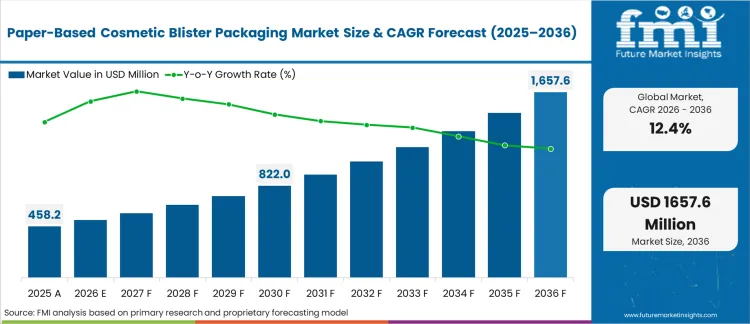
The decisive inflection point for widespread fiber blister adoption materializes when secondary packaging lines abandon thermal sealing and fully integrate specialized ultrasonic or water-based adhesive platens. This transition is pushing packaging teams to reassess line compatibility, material handling, and sealing performance across high-volume beauty formats. The shift is gradually redefining procurement priorities, as brand owners seek formats that align with evolving retail packaging expectations without disrupting merchandising consistency.
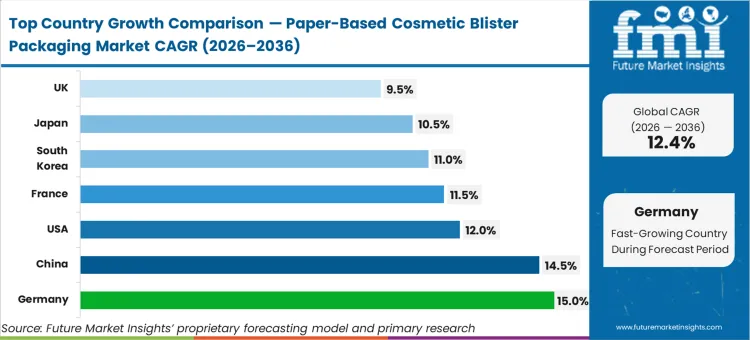
Germany advances at a 15.0% rate, supported by aggressive national packaging waste legislation. China records a 14.5% rate as export-focused contract packaging services align with Western ecological standards. The USA tracks at 12.0% as major retail chains enforce stringent supplier sustainability scorecards. France expands at a 11.5% trajectory anchored by luxury skincare transitions. South Korea grows at 11.0%, Japan follows at 10.5%, and the UK posts a 9.5% pace. This geographic dispersion reflects a coordinated global regulatory assault on mixed-material waste streams.
Paper-Based Cosmetic Blister Packaging Market Key Takeaways
| Metric | Details |
|---|---|
| Industry Size (2026) | USD 515.0 million |
| Industry Value (2036) | USD 1650.0 million |
| CAGR (2026 to 2036) | 12.4% |
Source: Future Market Insights (FMI) analysis, based on proprietary forecasting model and primary research
Paper-Based Cosmetic Blister Packaging Market Definition
Paper-Based Cosmetic Blister Packaging represents the secondary retail enclosure designed specifically to secure, display, and protect cosmetic items using exclusively cellulosic fiber materials. The structural format relies on a rigid paperboard backing card bonded to a formed paper or pulp front cavity, eliminating conventional thermoformed plastics while maintaining retail pegboard compatibility and tamper evidence.
Paper-Based Cosmetic Blister Packaging Market Inclusions
The market scope includes solid bleached sulfate backing cards, paper blister packaging front shells, molded pulp cavities, and trapped blister configurations utilizing dual paperboard layers. Specialty coatings formulated from water-based dispersions or biopolymers that maintain repulpability standards fall within the boundaries. Heat-sealable adhesive systems designed specifically for fiber-to-fiber bonding are fully incorporated.
Paper-Based Cosmetic Blister Packaging Market Exclusions
Standard thermoformed PVC or PET blisters bonded to paperboard cards are excluded. Standard pharmaceutical blister packaging designed for medication compliance falls outside the defined parameters. Flexible paper pouches, corrugated shipping cartons, and primary cosmetic containers like glass jars or lipstick tubes are explicitly omitted from the valuation.
Paper-Based Cosmetic Blister Packaging Market Research Methodology
- Primary Research: Analysts engaged with packaging procurement directors, retail compliance officers, and contract packaging engineers to map the specific decision gates triggering material upgrades.
- Desk Research: The data collection phase aggregated compliance roadmaps from the Sustainable Packaging Coalition, European retail consortium mandates, and major beauty brand ecological guidelines.
- Market-Sizing and Forecasting: The baseline value derives from a bottom-up aggregation of fiber-based blister shipments, applying region-specific regulatory curves to project the future adoption velocity.
- Data Validation and Update Cycle: Projections are rigorously tested against publicly reported capital expenditure guidance from the leading secondary packaging converters and cosmetic conglomerates.
Segmental Analysis
Paper-Based Cosmetic Blister Packaging Market Analysis by Material
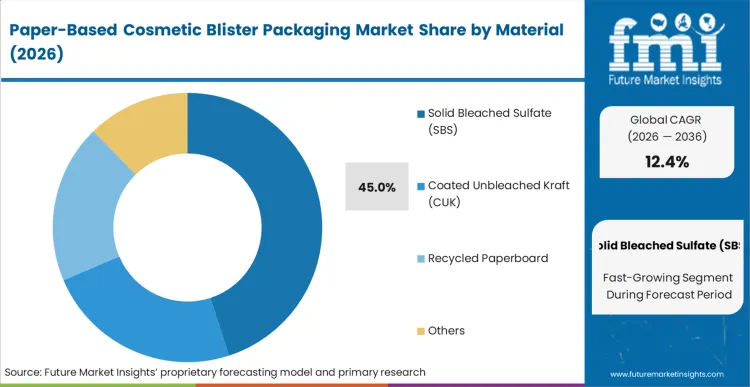
Solid Bleached Sulfate commands a dominant 45.0% share in 2026, capturing the high-end requirement for pristine white surfaces that support complex branding graphics. According to FMI's estimates, material converters deploying this specific substrate establish the foundation for premium retail shelf appeal. This virgin fiber integration eliminates the grey undertones typically associated with standard recycled paperboard options. Packaging engineers specifying these materials streamline their graphic approval processes and significantly reduce overall design rejection rates. Material suppliers unable to supply certified bright-white boards risk immediate exclusion from the next wave of prestige brand RFPs. Brand managers facing strict visual merchandising standards must select SBS to achieve accurate brand color reproduction.
- Repulpability Certification: Standardized testing protocols demand rigorous third-party verification to guarantee seamless processing within municipal recycling infrastructure.
- Surface Smoothness: Calendared finishes natively handle precise metallic foiling, shifting the decorative burden away from complex plastic laminations.
- Structural Rigidity: Eliminating weak short-fiber content ensures the physical pegboard hanger resists tearing in constrained retail environments.
Paper-Based Cosmetic Blister Packaging Market Analysis by Cosmetic Type
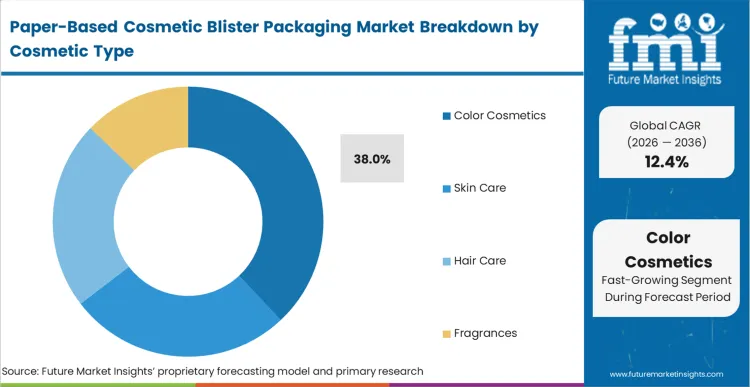
With legacy plastic domes proving incompatible with modern eco-mandates, packaging procurement directors execute full-scale material replacement programs. Color Cosmetics represents a 38.0% share in 2026 as brands replace transparent barriers with structurally engineered die-cut windows. Cosmetic merchandisers designing these displays establish rigid physical protection for delicate powder compacts and lipsticks. The incorporation of formed molded fiber packaging eliminates the need for expensive secondary foam inserts. Marketing directors leading these initiatives realize measurable improvements in consumer brand perception. Suppliers failing to demonstrate seamless integration with automated cartoning machinery lose priority status in critical retail upgrade cycles. Contract packagers facing high-volume holiday fulfillment requirements must secure reliable molded pulp supply chains to protect intricate fragrance packaging solutions.
- Die-cut Visibility: Precision cutting technology allows consumers to verify cosmetic shades without compromising the structural integrity of the paperboard enclosure.
- Cavity Nesting: Custom-formed backing shapes handle precise component retention, preventing delicate primary containers from shifting during transit.
- Drop Resistance: Engineered fiber crush zones protect fragile pressed powders from shattering upon retail floor impact.
Paper-Based Cosmetic Blister Packaging Market Analysis by Blister Type
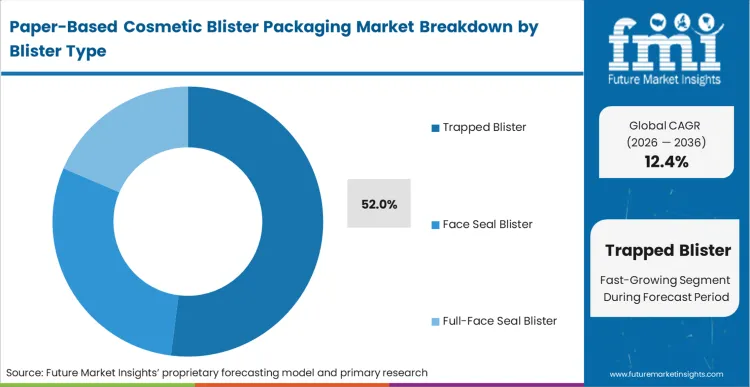
Every packaging specification lead bidding on retail fulfillment contracts now faces strict adherence criteria for single-stream recyclability. Modern trapped blister packaging captures a 52.0% market share in 2026 by sandwiching the formed cavity between two flat paperboard cards. FMI's analysis indicates that this dual-layer construction provides exceptional tamper evidence and maximizes printable real estate. Facilities operating without this structural approach face systemic product theft as single-layer glued cards easily delaminate under pressure. Securing a trapped configuration guarantees that high-value retail items remain intact until final consumer purchase. Vendors embedding sophisticated security tagging directly within the trapped layers gain a significant commercial advantage. Loss prevention managers mandating secure closures must deploy trapped formats to minimize retail shrinkage.
- Adhesive distribution: Continuous pattern-applied gluing algorithms compensate for inherent board warping across large retail display cards.
- Tamper indication: Deliberate fiber-tear sealing mechanisms allow retail clerks to reconstruct exact theft sequences across geographically distributed store locations.
- Billboard expansion: Utilizing both front and back facing cards executes superior marketing communication based on a shared graphic canvas.
Paper-Based Cosmetic Blister Packaging Market Analysis by Distribution Channel
A prior failure to protect fragile cosmetic items during parcel delivery created the specific demand for robust paperboard enclosures in digital retail. E-commerce platforms force brand owners to specify packaging capable of surviving complex logistics networks, securing substantial growth for fiber-based structures. Transitioning to a unified corrugated-blister hybrid simplifies fulfillment topology and enables direct integration with automated e-commerce packaging sorting systems. Facilities that fail to modernize their core structural layers risk elevated return rates and reduced overall profit margins. As per FMI’s assessment, e-commerce is projected to hold 41.0% share of the distribution channel segment in 2026, supported by growing online beauty purchases and stricter transit protection requirements. Fulfillment center managers are prioritizing packaging formats that resist crushing under variable shipping loads and help preserve product quality through delivery.
- Top-load Resilience: Critical structural shoulders receive guaranteed compression resistance while standard flat areas utilize remaining board strength without causing collapse.
- Automated Sorting: Flat geometric profiles accelerate the extraction of barcode data for predictive logistics platforms.
- Unboxing Velocity: Standardized tear-strip models reduce the physical effort previously required to open rigid plastic clamshells.
Paper-Based Cosmetic Blister Packaging Market Drivers, Restraints, and Opportunities
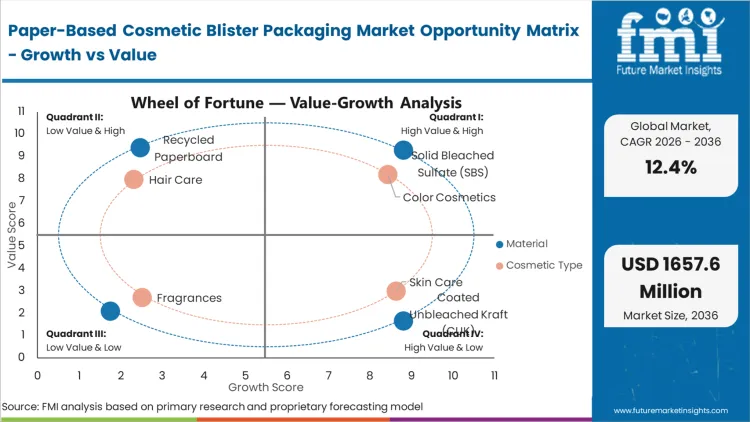
The convergence of European eco-modulation fees and North American retailer mandates forces packaging specification leads to extract all single-use plastics directly from the cosmetic aisle. This regulatory requirement renders fragmented, mixed-material blisters economically unviable. Brand managers upgrading legacy product lines face a strict binary choice between paying prohibitive plastic-free packaging taxes or overhauling the base structural design. Transitioning to a unified fiber backbone simplifies material sourcing and enables direct compliance with global sustainability targets. Cosmetic brands that fail to modernize their core visual merchandising layers risk immediate delisting from premier retail networks.
The intricate thermal parameters required to optimize water-based adhesive flows create steep learning curves for traditional machine operators. Designing conflict-free sealing schedules across high-speed packaging hardware demands specialized kinetic expertise that most contract manufacturing facilities lack internally. Standardized water-based adhesive requires precise dwell-time calculations to prevent board scorching while ensuring a destructive fiber-tear bond. To mitigate this skill gap, production directors increasingly rely on advanced thermal mapping tools that automate the sealing process and validate equipment settings before commercial runs.
Opportunities in the Paper-Based Cosmetic Blister Packaging Market
- Luxury Finishing Consolidation: Premium material converters enable packaging engineers to run sophisticated cold-foil stamping directly on the uncoated paperboard. This consolidation eliminates dedicated plastic laminations and drastically simplifies recycling streams.
- Inline Shape Forming: Upgraded sustainable cosmetic solutions permit manufacturing teams to deploy inline 3D pulp molding without impacting critical production line speeds. This capability prevents supply chain bottlenecks during peak holiday promotional sequences.
- Smart Tag Integration: Retail loss prevention planners integrating distributed inventory tracking require precise RFID placement. Trapped fiber packaging provides the physical security necessary to balance volatile retail shrinkage inputs across the wide-area network.
Regional Analysis
Based on the regional analysis, the Paper-Based Cosmetic Blister Packaging market is segmented into North America, Latin America, Europe, East Asia, South Asia, Oceania and Middle East & Africa across 40+ countries.
.webp "Top Country Growth Comparison Paper Based Cosmetic Blister Packaging Market Cagr (2026 2036)")
| Country | CAGR (2026 to 2036) |
|---|---|
| Germany | 15.0% |
| China | 14.5% |
| USA | 12.0% |
| France | 11.5% |
| South Korea | 11.0% |
| Japan | 10.5% |
| UK | 9.5% |
Source: Future Market Insights (FMI) analysis, based on proprietary forecasting model and primary research
Europe Paper-Based Cosmetic Blister Packaging Market Analysis
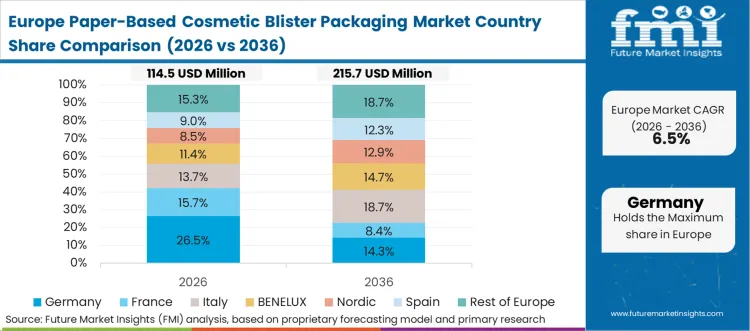
European industrial policy actively penalizes the continued operation of mixed-material waste streams through aggressive eco-modulation taxation structures. Packaging procurement directors redesigning legacy cosmetic lines must integrate verified recyclable materials alongside critical structural security requirements. FMI's research confirms that this dual-purpose regulatory requirement forces the rapid adoption of pure cellulosic packaging to guarantee supply chain stability while transmitting premium brand values.
- Germany: Germany's retail sector enforces strict component qualification through the Verpackungsgesetz (VerpackG) standards for synchronized national recycling. Every new secondary packaging architecture must validate material compliance before receiving authorization for retail shelf integration. The domestic paper converting sector embeds precision repulpable barrier coatings directly into the board to maintain global competitive advantage in skincare packaging sustainability. This continuous qualification constraint anchors Germany's 15.0% compound expansion to 2036. Material suppliers lacking verified repulpability testing records forfeit access to the next generation of full-line cosmetic merchandising contracts.
- France: Luxury cosmetic brands in France operate under stringent anti-waste laws requiring immutable circular economy credentials for all secondary displays. Brand managers must deploy packaging networks capable of guaranteeing critical product protection without any plastic components. The national push toward zero-waste retail triggers a wave of facility upgrades prioritizing unified, secure fiber backbones. France advances at a 11.5% compound rate as these ecological mandates reshape the premium beauty aisle. Contract packagers failing to provide hardware with built-in thermal modification mechanisms face disqualification from major fragrance facility tenders.
- UK: The United Kingdom's plastic packaging tax programs require precise polymer measurement data to balance increasingly volatile compliance inputs. Retail category planners deploying advanced merchandising systems mandate structural architectures capable of plastic-free presentation across distributed geographic assets. The shift toward decentralized waste management forces cosmetic brands to abandon legacy PVC blisters in favor of highly resilient, paper-based networks. The UK's paper-based cosmetic blister packaging market expands at a 9.5% CAGR as these tax liabilities accumulate. Packaging graphic designers unable to demonstrate absolute structural integrity under severe retail load conditions forfeit qualification for national drug store expansion projects.
FMI's report includes extensive coverage of the European packaging landscape. It incorporates detailed analysis of Italy, Spain, the Nordics, and the broader Benelux region. A primary trend shaping these nations is the rapid localization of sustainable material sourcing, forcing contract manufacturers to deploy unified supply chains to satisfy stringent global brand traceability requirements.
Asia Pacific Paper-Based Cosmetic Blister Packaging Market Analysis
Greenfield packaging infrastructure development across the Asia Pacific region accelerates the bypass of legacy PVC constraints. Manufacturing directors constructing new contract packaging facilities specify unified fiber processing machinery in their initial site blueprints. By building native thermal-sealing capabilities into the foundation, regional asset owners establish highly flexible production environments capable of rapid retooling.
- China: China's contract manufacturing sector deploys highly automated, high-speed production lines requiring seamless integration between die-cutting systems and assembly robots. Greenfield facility architects bypass legacy thermal plastic protocols entirely, specifying native paper-sealing platens for all new equipment procurement contracts. The sheer volume of new export-focused construction establishes a massive installed base of luxury cosmetics packaging infrastructure across the eastern industrial corridor. This aggressive modernization strategy drives a 14.5% CAGR for paper-based cosmetic blister packaging in China. Converters unable to demonstrate verified high-speed adhesive capabilities lose access to the most lucrative greenfield export projects in the region.
- South Korea: Stringent clean-beauty standards define South Korea's demand for holistic packaging ecosystems. Plant automation leads mandate zero-plastic architectures to ensure multi-axis robotic transfer systems perform sub-millimeter positioning tasks flawlessly on delicate fiber cavities. The concentration of advanced skincare foundries necessitates continuous investment in ultra-low-friction packaging lines to maximize yield rates. South Korea drives a 11.0% annual expansion rate as this zero-tolerance aesthetic standard becomes the universal procurement baseline. Machinery suppliers targeting the next facility expansion cycle must prove flawless water-based sealing across full production floors before entering the approved vendor list.
- Japan: Japan's domestic cosmetics supply chain operates to retail space optimization tolerances that exceed standard global specifications by orders of magnitude. Merchandising leads must deploy compact fiber networks capable of guaranteeing critical shelf density without any structural failure. The national push toward minimalist retail triggers a wave of packaging upgrades prioritizing thin, secure paper backbones. This mechanism anchors Japan's 10.5% compound trajectory to 2036. Board manufacturers failing to provide high-tensile strength paperface disqualification from major boutique facility tenders.
FMI's report includes thorough investigation of the Asia Pacific packaging framework. The analysis encompasses Taiwan, Indonesia, Australia, and the broader ASEAN region. A prevailing structural condition across these nations is the mandatory compliance with strict export shipping directives, forcing asset owners to specify crush-resistant networks that can reliably transport delicate beauty products alongside standard freight data.
North America Paper-Based Cosmetic Blister Packaging Market Analysis
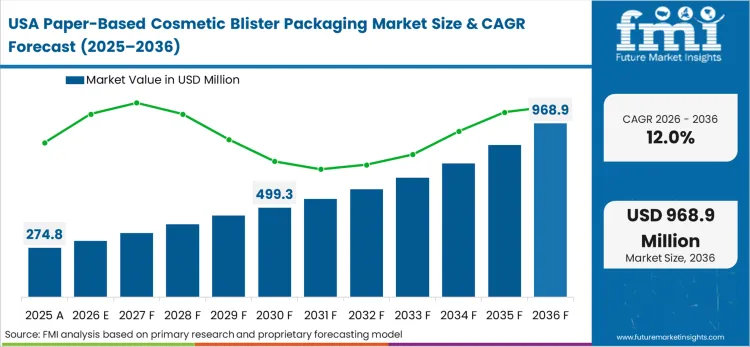
Retail modernization mandates across North America target the systematic eradication of mixed-material merchandising displays. Supply chain directors leading critical infrastructure overhauls face strict directives to unify disparate packaging materials under a single manageable architecture. Implementing a standardized, fiber-based backbone enables facilities to deploy advanced automated sorting algorithms without compromising real-time fulfillment stability.
- USA: The United States mass-market retail sector enforces strict green packaging scorecards across its entire multi-tier supply chain ecosystem. Packaging specification leads replacing aging proprietary plastic systems must deploy converged architectures capable of supporting both real-time machining precision and secure ecological extraction. National retail consortium initiatives actively penalize the retention of vulnerable legacy PVC formats. USA advances at a 12.0% compound rate as discrete manufacturers unify their structural packaging topologies. Hardware vendors lacking documented compliance with rigorous sustainability standards face immediate exclusion from retail-adjacent modernization contracts.
FMI's report includes comprehensive evaluation of the North American sustainable packaging sector. It features specific analysis of the Canadian and Mexican industrial markets. A defining dynamic in these countries involves the integration of cross-border cosmetic supply chains, which requires standardized testing protocols to coordinate just-in-time delivery sequences and maintain synchronized production schedules across multiple facilities.
Competitive Aligners for Market Players
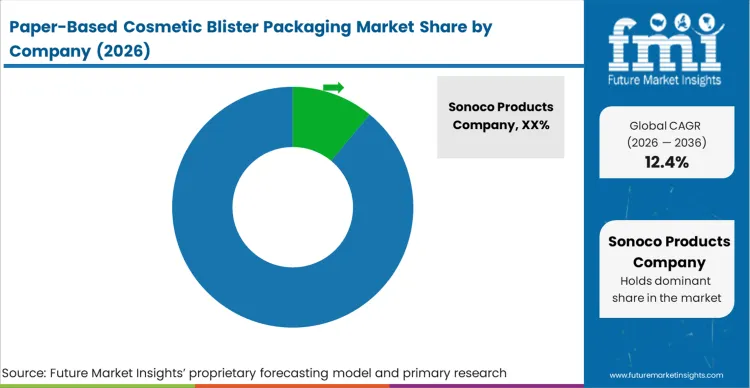
The introduction of standardized repulpability testing profiles under the sustainable packaging coalition is reshaping how industrial buyers evaluate cosmetic packaging networks. Instead of accepting proprietary plastic formulations, procurement teams now demand certified, interoperable fiber boards in all new tenders. This shift has raised the performance bar across the highly consolidated industry, meaning vendors that continue to rely on closed, single-material plastic ecosystems risk being excluded from major modernization programs. Sonoco Products Company, WestRock Company, and Amcor plc dictate the primary competitive variable buyers use to distinguish qualified from unqualified suppliers: the ability to maintain thermal sealing speeds matching legacy PVC rates.
Vendors embedding precision barrier coatings directly into paperboard substrates gain a significant architectural advantage. Companies like Huhtamäki Oyj and Smurfit Kappa Group, which increasingly incorporate repulpable moisture resistance at the mill level, help reduce engineering overhead during cartoning and shrink the physical material footprint. FMI analysts opine that this integrated approach accelerates brownfield migration projects, allowing packaging engineers and brand managers to prioritize retail display packaging platforms that avoid the complexity associated with external plastic laminations. Converters slow to adopt native barrier designs risk losing position during early-stage vendor shortlisting.
Growth of cross-vendor interoperability ecosystems is disrupting long-established market strongholds. With more structural converting layers becoming standardized and open-source, contract packagers designing converged fulfillment architectures can now choose paperboards from multiple suppliers without worrying about adhesive failure or seal drifting. This expanded flexibility empowers cosmetic facility owners to optimize supply chains for performance and sustainability instead of being constrained by rigid thermoformer lock-in. The forecast period indicates a rapid acceleration toward fully commoditized fiber solutions as specialized coating patents expires.
Key Players in Paper-Based Cosmetic Blister Packaging Market
- Sonoco Products Company
- WestRock Company
- Amcor plc
- Huhtamäki Oyj
- Smurfit Kappa Group
- Graphic Packaging International, LLC
- Rengo Co., Ltd.
- Rohrer Corporation
Scope of the Report
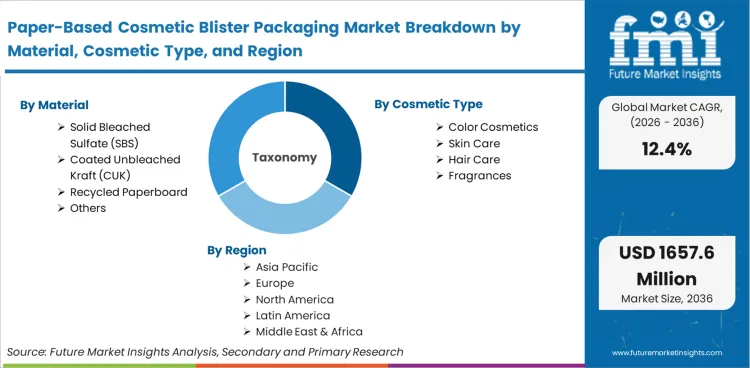
| Metric | Value |
|---|---|
| Quantitative Units | USD 515.0 million to USD 1650.0 million, at a CAGR of 12.4% |
| Market Definition | Paper-Based Cosmetic Blister Packaging encompasses secondary retail enclosures constructed entirely from cellulosic fibers, designed to display and protect beauty items while ensuring complete compatibility with standard municipal paper recycling streams. |
| Material Segmentation | Solid Bleached Sulfate (SBS), Coated Unbleached Kraft (CUK), Recycled Paperboard, Others |
| Cosmetic Type Segmentation | Color Cosmetics, Skin Care, Hair Care, Fragrances |
| Blister Type Segmentation | Face Seal Blister, Trapped Blister, Full-Face Seal Blister |
| Distribution Channel Segmentation | Retail Stores, E-commerce, Specialty Stores |
| Regions Covered | North America, Latin America, Europe, East Asia, South Asia, Oceania, Middle East & Africa |
| Countries Covered | Germany, China, USA, France, South Korea, Japan, UK, and 40 plus countries |
| Key Companies Profiled | Sonoco Products Company, WestRock Company, Amcor plc, Huhtamäki Oyj, Smurfit Kappa Group, Graphic Packaging International, LLC, Rengo Co., Ltd., Rohrer Corporation |
| Forecast Period | 2026 to 2036 |
| Approach | The baseline value derives from a bottom-up aggregation of fiber-based blister shipments, applying region-specific regulatory curves to project future adoption velocity. Segment forecasts undergo cross-validation against quarterly paperboard shipment volumes. |
Source: Future Market Insights (FMI) analysis, based on proprietary forecasting model and primary research
Paper-Based Cosmetic Blister Packaging Market Analysis by Segments
Material:
- Solid Bleached Sulfate (SBS)
- Coated Unbleached Kraft (CUK)
- Recycled Paperboard
- Others
Cosmetic Type:
- Color Cosmetics
- Skin Care
- Hair Care
- Fragrances
Blister Type:
- Face Seal Blister
- Trapped Blister
- Full-Face Seal Blister
Distribution Channel:
- Retail Stores
- E-commerce
- Specialty Stores
Region:
- Asia Pacific
- India
- China
- Japan
- South Korea
- Indonesia
- Australia & New Zealand
- ASEAN
- Rest of Asia Pacific
- Europe
- Germany
- Italy
- France
- United Kingdom
- Spain
- Benelux
- Nordics
- Central & Eastern Europe
- Rest of Europe
- North America
- United States
- Canada
- Mexico
- Latin America
- Brazil
- Argentina
- Chile
- Rest of Latin America
- Middle East & Africa
- Kingdom of Saudi Arabia
- United Arab Emirates
- South Africa
- Turkey
- Rest of Middle East & Africa
Bibliography
- Department for Environment, Food & Rural Affairs. (2026). Year 1 extended producer responsibility for packaging fees update.
- OECD. (2024). Extended producer responsibility: Basic facts and key principles.
- U.S. Environmental Protection Agency. (2025). National overview: Facts and figures on materials, wastes and recycling.
- Department for Environment, Food & Rural Affairs. (2025). Extended producer responsibility for packaging.
- Ministry of the Environment, Japan. (2024). The Basic Environment Plan.
- European Parliament and the Council of the European Union. (2025). Regulation (EU) 2025/40 of 19 December 2024 on packaging and packaging waste, amending Regulation (EU) 2019/1020 and Directive (EU) 2019/904, and repealing Directive 94/62/EC.
This bibliography is provided for reader reference. The full FMI report contains the complete reference list with primary source documentation.
This Report Addresses
- Market sizing for the organized paper-based cosmetic blister packaging layer
- Forecast demand for repulpable barrier capabilities from 2026 to 2036
- Material analysis across Solid Bleached Sulfate (SBS), Coated Unbleached Kraft (CUK), Recycled Paperboard, Others
- Cosmetic Type demand patterns across Color Cosmetics, Skin Care, Hair Care, Fragrances
- Regional growth comparisons shaped by national packaging taxation frameworks
- Competitive positioning factors for global paperboard converting operations
- Revenue opportunities tied to high-speed thermal sealing adaptations
- Strategic implications for contract packaging facility directors
Frequently Asked Questions
How large is the demand for Paper-Based Cosmetic Blister Packaging in the global market in 2026?
Demand for Paper-Based Cosmetic Blister Packaging in the global market is estimated to be valued at USD 515.0 million in 2026.
What will be the market size of Paper-Based Cosmetic Blister Packaging in the global market by 2036?
Market size for Paper-Based Cosmetic Blister Packaging is projected to reach USD 1,650.0 million by 2036.
What is the expected demand growth for Paper-Based Cosmetic Blister Packaging in the global market between 2026 and 2036?
Demand for Paper-Based Cosmetic Blister Packaging is expected to grow at a CAGR of 12.4% between 2026 and 2036.
Which Material is poised to lead global sales by 2026?
Solid Bleached Sulfate (SBS) accounts for 45.0% in 2026 as cosmetic brands prioritize bright white printable surfaces for premium shelf display formats.
How significant is the role of Color Cosmetics in driving Paper-Based Cosmetic Blister Packaging adoption in 2026?
Color Cosmetics represents 38.0% of segment share as brands shift toward fiber-based blister structures with die-cut visibility features.
What is driving demand in Germany?
Germany’s packaging demand is driven by strict packaging waste legislation and strong pressure for recyclable retail display formats.
What compliance standards or regulations are referenced for France?
France’s market is shaped by stringent anti-waste laws and circular economy requirements affecting secondary cosmetic packaging.
What is the China growth outlook in this report?
China is projected to grow at a CAGR of 14.5% during 2026 to 2036.
Why is North America described as a priority region in this report?
North America is a priority region because retail modernization programs are accelerating the replacement of mixed-material cosmetic display packaging.
What type of demand dominates in North America?
Demand heavily focuses on replacing plastic blister formats with fiber-based structures that support retail sustainability targets and automated fulfillment compatibility.
What is South Korea's growth outlook in this report?
South Korea is projected to expand at a CAGR of 11.0% during 2026 to 2036.
Does the report cover USA in its regional analysis?
Yes, USA is included within North America under the regional scope of analysis.
What are the sources referred to for analyzing USA?
Retail sustainability scorecards, packaging modernization mandates, and supplier compliance requirements form the analytical basis.
What is the main demand theme linked to USA in its region coverage?
Major retail chains are enforcing sustainability requirements that push suppliers to adopt paper-based blister packaging formats.
Does the report cover Germany in its regional analysis?
Yes, Germany is included within Europe under the regional coverage framework.
What is the main Germany related demand theme in its region coverage?
Strict recycling compliance standards and national packaging legislation are accelerating the shift toward repulpable cosmetic blister formats.
Which product formats or configurations are strategically important for Asia Pacific supply chains?
High-speed paper-sealing systems, molded fiber cavities, and export-ready fiber blister formats are strategically important across Asia Pacific supply chains.
What is Paper-Based Cosmetic Blister Packaging and what is it mainly used for?
Paper-Based Cosmetic Blister Packaging is a secondary retail enclosure made from cellulosic fiber materials. It is mainly used to secure, protect, and display cosmetic items in retail environments.
What does Paper-Based Cosmetic Blister Packaging mean in this report?
The scope encompasses secondary retail enclosures constructed entirely from cellulosic fibers and designed for compatibility with paper recycling streams.
What is included in the scope of this Paper-Based Cosmetic Blister Packaging report?
The market covers SBS backing cards, paper blister front shells, molded pulp cavities, trapped blister formats, specialty repulpable coatings, and fiber-bonding adhesive systems.
What is excluded from the scope of this report?
Standard PVC or PET blisters bonded to paperboard, pharmaceutical blister packs, flexible paper pouches, corrugated shipping cartons, and primary cosmetic containers are excluded.
What does market forecast mean on this page?
The market forecast represents a model-based projection built on defined material adoption, regulatory, and packaging conversion assumptions for strategic planning purposes.
How does FMI build and validate the Paper-Based Cosmetic Blister Packaging forecast?
The model applies a bottom-up methodology based on fiber-based blister shipments and cross-validates projections against paperboard shipment volumes and converter investment trends.
What does zero reliance on speculative third-party market research mean here?
Primary interviews, verified compliance documentation, and official packaging and sustainability guidelines are used instead of unverified syndicated market estimates.
Preview the report firsthand - request a free sample
Get SampleGet the brochure for pricing and purchase details.
Get PDFTable of Content
- Executive Summary
- Global Market Outlook
- Demand-side Trends
- Supply-side Trends
- Technology Roadmap Analysis
- Analysis and Recommendations
- Market Overview
- Market Coverage / Taxonomy
- Market Definition / Scope / Limitations
- Research Methodology
- Chapter Orientation
- Analytical Lens and Working Hypotheses
- Market Structure, Signals, and Trend Drivers
- Benchmarking and Cross-market Comparability
- Market Sizing, Forecasting, and Opportunity Mapping
- Research Design and Evidence Framework
- Desk Research Programme (Secondary Evidence)
- Company Annual and Sustainability Reports
- Peer-reviewed Journals and Academic Literature
- Corporate Websites, Product Literature, and Technical Notes
- Earnings Decks and Investor Briefings
- Statutory Filings and Regulatory Disclosures
- Technical White Papers and Standards Notes
- Trade Journals, Industry Magazines, and Analyst Briefs
- Conference Proceedings, Webinars, and Seminar Materials
- Government Statistics Portals and Public Data Releases
- Press Releases and Reputable Media Coverage
- Specialist Newsletters and Curated Briefings
- Sector Databases and Reference Repositories
- FMI Internal Proprietary Databases and Historical Market Datasets
- Subscription Datasets and Paid Sources
- Social Channels, Communities, and Digital Listening Inputs
- Additional Desk Sources
- Expert Input and Fieldwork (Primary Evidence)
- Primary Modes
- Qualitative Interviews and Expert Elicitation
- Quantitative Surveys and Structured Data Capture
- Blended Approach
- Why Primary Evidence is Used
- Field Techniques
- Interviews
- Surveys
- Focus Groups
- Observational and In-context Research
- Social and Community Interactions
- Stakeholder Universe Engaged
- C-suite Leaders
- Board Members
- Presidents and Vice Presidents
- R&D and Innovation Heads
- Technical Specialists
- Domain Subject-matter Experts
- Scientists
- Physicians and Other Healthcare Professionals
- Governance, Ethics, and Data Stewardship
- Research Ethics
- Data Integrity and Handling
- Primary Modes
- Tooling, Models, and Reference Databases
- Desk Research Programme (Secondary Evidence)
- Data Engineering and Model Build
- Data Acquisition and Ingestion
- Cleaning, Normalisation, and Verification
- Synthesis, Triangulation, and Analysis
- Quality Assurance and Audit Trail
- Market Background
- Market Dynamics
- Drivers
- Restraints
- Opportunity
- Trends
- Scenario Forecast
- Demand in Optimistic Scenario
- Demand in Likely Scenario
- Demand in Conservative Scenario
- Opportunity Map Analysis
- Product Life Cycle Analysis
- Supply Chain Analysis
- Investment Feasibility Matrix
- Value Chain Analysis
- PESTLE and Porter’s Analysis
- Regulatory Landscape
- Regional Parent Market Outlook
- Production and Consumption Statistics
- Import and Export Statistics
- Market Dynamics
- Global Market Analysis 2021 to 2025 and Forecast, 2026 to 2036
- Historical Market Size Value (USD Million) Analysis, 2021 to 2025
- Current and Future Market Size Value (USD Million) Projections, 2026 to 2036
- Y-o-Y Growth Trend Analysis
- Absolute $ Opportunity Analysis
- Global Market Pricing Analysis 2021 to 2025 and Forecast 2026 to 2036
- Global Market Analysis 2021 to 2025 and Forecast 2026 to 2036, By Material
- Introduction / Key Findings
- Historical Market Size Value (USD Million) Analysis By Material , 2021 to 2025
- Current and Future Market Size Value (USD Million) Analysis and Forecast By Material , 2026 to 2036
- Solid Bleached Sulfate (SBS)
- Coated Unbleached Kraft (CUK)
- Recycled Paperboard
- Others
- Solid Bleached Sulfate (SBS)
- Y-o-Y Growth Trend Analysis By Material , 2021 to 2025
- Absolute $ Opportunity Analysis By Material , 2026 to 2036
- Global Market Analysis 2021 to 2025 and Forecast 2026 to 2036, By Cosmetic Type
- Introduction / Key Findings
- Historical Market Size Value (USD Million) Analysis By Cosmetic Type, 2021 to 2025
- Current and Future Market Size Value (USD Million) Analysis and Forecast By Cosmetic Type, 2026 to 2036
- Color Cosmetics
- Skin Care
- Hair Care
- Fragrances
- Color Cosmetics
- Y-o-Y Growth Trend Analysis By Cosmetic Type, 2021 to 2025
- Absolute $ Opportunity Analysis By Cosmetic Type, 2026 to 2036
- Global Market Analysis 2021 to 2025 and Forecast 2026 to 2036, By Blister Type
- Introduction / Key Findings
- Historical Market Size Value (USD Million) Analysis By Blister Type, 2021 to 2025
- Current and Future Market Size Value (USD Million) Analysis and Forecast By Blister Type, 2026 to 2036
- Trapped Blister
- Face Seal Blister
- Full-Face Seal Blister
- Trapped Blister
- Y-o-Y Growth Trend Analysis By Blister Type, 2021 to 2025
- Absolute $ Opportunity Analysis By Blister Type, 2026 to 2036
- Global Market Analysis 2021 to 2025 and Forecast 2026 to 2036, By Distribution Channel
- Introduction / Key Findings
- Historical Market Size Value (USD Million) Analysis By Distribution Channel, 2021 to 2025
- Current and Future Market Size Value (USD Million) Analysis and Forecast By Distribution Channel, 2026 to 2036
- E-commerce
- Retail Stores
- Specialty Stores
- E-commerce
- Y-o-Y Growth Trend Analysis By Distribution Channel, 2021 to 2025
- Absolute $ Opportunity Analysis By Distribution Channel, 2026 to 2036
- Global Market Analysis 2021 to 2025 and Forecast 2026 to 2036, By Region
- Introduction
- Historical Market Size Value (USD Million) Analysis By Region, 2021 to 2025
- Current Market Size Value (USD Million) Analysis and Forecast By Region, 2026 to 2036
- North America
- Latin America
- Western Europe
- Eastern Europe
- East Asia
- South Asia and Pacific
- Middle East & Africa
- Market Attractiveness Analysis By Region
- North America Market Analysis 2021 to 2025 and Forecast 2026 to 2036, By Country
- Historical Market Size Value (USD Million) Trend Analysis By Market Taxonomy, 2021 to 2025
- Market Size Value (USD Million) Forecast By Market Taxonomy, 2026 to 2036
- By Country
- USA
- Canada
- Mexico
- By Material
- By Cosmetic Type
- By Blister Type
- By Distribution Channel
- By Country
- Market Attractiveness Analysis
- By Country
- By Material
- By Cosmetic Type
- By Blister Type
- By Distribution Channel
- Key Takeaways
- Latin America Market Analysis 2021 to 2025 and Forecast 2026 to 2036, By Country
- Historical Market Size Value (USD Million) Trend Analysis By Market Taxonomy, 2021 to 2025
- Market Size Value (USD Million) Forecast By Market Taxonomy, 2026 to 2036
- By Country
- Brazil
- Chile
- Rest of Latin America
- By Material
- By Cosmetic Type
- By Blister Type
- By Distribution Channel
- By Country
- Market Attractiveness Analysis
- By Country
- By Material
- By Cosmetic Type
- By Blister Type
- By Distribution Channel
- Key Takeaways
- Western Europe Market Analysis 2021 to 2025 and Forecast 2026 to 2036, By Country
- Historical Market Size Value (USD Million) Trend Analysis By Market Taxonomy, 2021 to 2025
- Market Size Value (USD Million) Forecast By Market Taxonomy, 2026 to 2036
- By Country
- Germany
- UK
- Italy
- Spain
- France
- Nordic
- BENELUX
- Rest of Western Europe
- By Material
- By Cosmetic Type
- By Blister Type
- By Distribution Channel
- By Country
- Market Attractiveness Analysis
- By Country
- By Material
- By Cosmetic Type
- By Blister Type
- By Distribution Channel
- Key Takeaways
- Eastern Europe Market Analysis 2021 to 2025 and Forecast 2026 to 2036, By Country
- Historical Market Size Value (USD Million) Trend Analysis By Market Taxonomy, 2021 to 2025
- Market Size Value (USD Million) Forecast By Market Taxonomy, 2026 to 2036
- By Country
- Russia
- Poland
- Hungary
- Balkan & Baltic
- Rest of Eastern Europe
- By Material
- By Cosmetic Type
- By Blister Type
- By Distribution Channel
- By Country
- Market Attractiveness Analysis
- By Country
- By Material
- By Cosmetic Type
- By Blister Type
- By Distribution Channel
- Key Takeaways
- East Asia Market Analysis 2021 to 2025 and Forecast 2026 to 2036, By Country
- Historical Market Size Value (USD Million) Trend Analysis By Market Taxonomy, 2021 to 2025
- Market Size Value (USD Million) Forecast By Market Taxonomy, 2026 to 2036
- By Country
- China
- Japan
- South Korea
- By Material
- By Cosmetic Type
- By Blister Type
- By Distribution Channel
- By Country
- Market Attractiveness Analysis
- By Country
- By Material
- By Cosmetic Type
- By Blister Type
- By Distribution Channel
- Key Takeaways
- South Asia and Pacific Market Analysis 2021 to 2025 and Forecast 2026 to 2036, By Country
- Historical Market Size Value (USD Million) Trend Analysis By Market Taxonomy, 2021 to 2025
- Market Size Value (USD Million) Forecast By Market Taxonomy, 2026 to 2036
- By Country
- India
- ASEAN
- Australia & New Zealand
- Rest of South Asia and Pacific
- By Material
- By Cosmetic Type
- By Blister Type
- By Distribution Channel
- By Country
- Market Attractiveness Analysis
- By Country
- By Material
- By Cosmetic Type
- By Blister Type
- By Distribution Channel
- Key Takeaways
- Middle East & Africa Market Analysis 2021 to 2025 and Forecast 2026 to 2036, By Country
- Historical Market Size Value (USD Million) Trend Analysis By Market Taxonomy, 2021 to 2025
- Market Size Value (USD Million) Forecast By Market Taxonomy, 2026 to 2036
- By Country
- Kingdom of Saudi Arabia
- Other GCC Countries
- Turkiye
- South Africa
- Other African Union
- Rest of Middle East & Africa
- By Material
- By Cosmetic Type
- By Blister Type
- By Distribution Channel
- By Country
- Market Attractiveness Analysis
- By Country
- By Material
- By Cosmetic Type
- By Blister Type
- By Distribution Channel
- Key Takeaways
- Key Countries Market Analysis
- USA
- Pricing Analysis
- Market Share Analysis, 2025
- By Material
- By Cosmetic Type
- By Blister Type
- By Distribution Channel
- Canada
- Pricing Analysis
- Market Share Analysis, 2025
- By Material
- By Cosmetic Type
- By Blister Type
- By Distribution Channel
- Mexico
- Pricing Analysis
- Market Share Analysis, 2025
- By Material
- By Cosmetic Type
- By Blister Type
- By Distribution Channel
- Brazil
- Pricing Analysis
- Market Share Analysis, 2025
- By Material
- By Cosmetic Type
- By Blister Type
- By Distribution Channel
- Chile
- Pricing Analysis
- Market Share Analysis, 2025
- By Material
- By Cosmetic Type
- By Blister Type
- By Distribution Channel
- Germany
- Pricing Analysis
- Market Share Analysis, 2025
- By Material
- By Cosmetic Type
- By Blister Type
- By Distribution Channel
- UK
- Pricing Analysis
- Market Share Analysis, 2025
- By Material
- By Cosmetic Type
- By Blister Type
- By Distribution Channel
- Italy
- Pricing Analysis
- Market Share Analysis, 2025
- By Material
- By Cosmetic Type
- By Blister Type
- By Distribution Channel
- Spain
- Pricing Analysis
- Market Share Analysis, 2025
- By Material
- By Cosmetic Type
- By Blister Type
- By Distribution Channel
- France
- Pricing Analysis
- Market Share Analysis, 2025
- By Material
- By Cosmetic Type
- By Blister Type
- By Distribution Channel
- India
- Pricing Analysis
- Market Share Analysis, 2025
- By Material
- By Cosmetic Type
- By Blister Type
- By Distribution Channel
- ASEAN
- Pricing Analysis
- Market Share Analysis, 2025
- By Material
- By Cosmetic Type
- By Blister Type
- By Distribution Channel
- Australia & New Zealand
- Pricing Analysis
- Market Share Analysis, 2025
- By Material
- By Cosmetic Type
- By Blister Type
- By Distribution Channel
- China
- Pricing Analysis
- Market Share Analysis, 2025
- By Material
- By Cosmetic Type
- By Blister Type
- By Distribution Channel
- Japan
- Pricing Analysis
- Market Share Analysis, 2025
- By Material
- By Cosmetic Type
- By Blister Type
- By Distribution Channel
- South Korea
- Pricing Analysis
- Market Share Analysis, 2025
- By Material
- By Cosmetic Type
- By Blister Type
- By Distribution Channel
- Russia
- Pricing Analysis
- Market Share Analysis, 2025
- By Material
- By Cosmetic Type
- By Blister Type
- By Distribution Channel
- Poland
- Pricing Analysis
- Market Share Analysis, 2025
- By Material
- By Cosmetic Type
- By Blister Type
- By Distribution Channel
- Hungary
- Pricing Analysis
- Market Share Analysis, 2025
- By Material
- By Cosmetic Type
- By Blister Type
- By Distribution Channel
- Kingdom of Saudi Arabia
- Pricing Analysis
- Market Share Analysis, 2025
- By Material
- By Cosmetic Type
- By Blister Type
- By Distribution Channel
- Turkiye
- Pricing Analysis
- Market Share Analysis, 2025
- By Material
- By Cosmetic Type
- By Blister Type
- By Distribution Channel
- South Africa
- Pricing Analysis
- Market Share Analysis, 2025
- By Material
- By Cosmetic Type
- By Blister Type
- By Distribution Channel
- USA
- Market Structure Analysis
- Competition Dashboard
- Competition Benchmarking
- Market Share Analysis of Top Players
- By Regional
- By Material
- By Cosmetic Type
- By Blister Type
- By Distribution Channel
- Competition Analysis
- Competition Deep Dive
- Sonoco Products Company
- Overview
- Product Portfolio
- Profitability by Market Segments (Product/Age /Sales Channel/Region)
- Sales Footprint
- Strategy Overview
- Marketing Strategy
- Product Strategy
- Channel Strategy
- WestRock Company
- Amcor plc
- Huhtamäki Oyj
- Smurfit Kappa Group
- Graphic Packaging International, LLC
- Rengo Co., Ltd.
- Rohrer Corporation
- Sonoco Products Company
- Competition Deep Dive
- Assumptions & Acronyms Used


