

- Industry Size (2026)
- USD 2360.0 Mn
- Forecast (2036)
- USD 6946.5 Mn
- CAGR (2026 to 2036)
- 11.4%
PCR Packaging for Pharma and OTC Market Forecast and Outlook 2026 to 2036
The PCR packaging for pharma and OTC market is forecasted to be valued at USD 2,360.0 million in 2026 and is set to reach USD 6,946.5 million by 2036, expanding at a 11.4% CAGR. Growth reflects accelerating integration of post-consumer recycled polymers into pharmaceutical and consumer health packaging formats that operate under stringent regulatory control. Adoption concentrates in bottles, blisters, and rigid containers where sustainability targets must be met without compromising moisture protection, light shielding, or chemical compatibility with active ingredients. Demand strength increases as pharma and OTC brands align environmental reporting obligations with packaging redesign programs that prioritize recycled content traceability and material qualification.
Market expansion is shaped by the structural shift from pilot-scale PCR usage toward validated, GMP-aligned packaging systems capable of supporting high-speed filling and serialization. Investment flows toward PCR resins processed through closed-loop, contamination-controlled streams suitable for drug-contact applications. Contract packagers and global pharmaceutical suppliers increasingly standardize PCR packaging specifications across multi-country portfolios to simplify compliance and auditing. Supply reliability, batch consistency, and long-term availability of pharma-grade PCR materials influence procurement decisions more than resin price differentials. Growth momentum remains anchored to regulatory acceptance pathways, lifecycle reporting requirements, and the ability of PCR packaging solutions to replicate virgin-material performance across the full product shelf life.
Quick Stats for PCR Packaging for Pharma and OTC Market
- PCR Packaging for Pharma and OTC Market Value (2026): USD 2,360.0 million
- PCR Packaging for Pharma and OTC Market Forecast Value (2036): USD 6,946.5 million
- PCR Packaging for Pharma and OTC Market Forecast CAGR 2026 to 2036: 11.4%
- Leading Packaging Type by Demand Share: Bottles, blisters & jars
- Fastest-Growing Countries: India, China, Brazil, USA, Germany
- Top Players in Global Demand: Amcor Healthcare, Berry Global Healthcare, Gerresheimer, SCHOTT, Shandong Pharmaceutical Glass
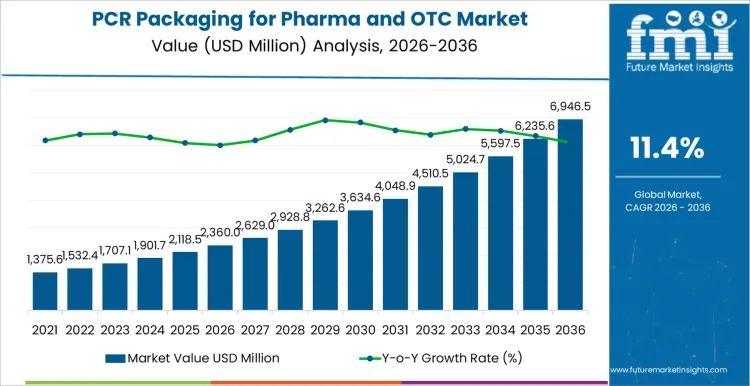
PCR Packaging for Pharma and OTC Market Key Takeaways
| Metric | Value |
|---|---|
| Market Value (2026) | USD 2,360.0 million |
| Market Forecast Value (2036) | USD 6,946.5 million |
| Forecast CAGR 2026 to 2036 | 11.4% |
Why is the Demand for PCR Packaging for Pharma and OTC Market Growing?
The rise in use of post-consumer recycled (PCR) packaging in pharmaceutical and over-the-counter (OTC) products reflects intensified focus on sustainability within highly regulated health sectors. Pharmaceutical brands under pressure to reduce environmental footprint are evaluating PCR bottles, tubes, and blister backing materials that meet strict drug safety and compatibility criteria. PCR content helps companies align with corporate environmental goals while maintaining barrier performance essential for moisture- and light-sensitive APIs (active pharmaceutical ingredients). OTC producers of vitamins, analgesics, and topical treatments require consistent polymer quality to preserve dosage form integrity and avoid extractables or leachables that could interact with formulations.
Packaging engineers specify PCR resins that are traceable, sorted, and purified to meet stringent pharmacopeial acceptance thresholds and maintain tight dimensional tolerance in high-speed filling lines. Regulatory frameworks and buyer expectations in key markets support accelerated adoption of PCR packaging for pharma and OTC products. Regions with mandates on recycled content in consumer packaging extend influence into healthcare sectors where waste reduction is emphasized in procurement policies. Material qualification protocols incorporate accelerated aging and contamination screening to ensure PCR meets stability requirements across product shelf life. Contract manufacturers with multi-product facilities adopt PCR materials to help brand partners achieve sustainability reporting targets while avoiding disruptions in serialization and track-and-trace operations that rely on stable packaging performance.
How Is the PCR Packaging for Pharma and OTC Industry Segmented by Packaging Type, Compliance Technology, and End Use?
Demand for PCR packaging in pharmaceutical and OTC applications is shaped by regulatory scrutiny, patient safety requirements, and sustainability commitments from drug manufacturers. Packaging suppliers focus on contamination control, material traceability, and validation alignment with pharma-grade standards. Selection depends on packaging format sensitivity, sterilization compatibility, and audit readiness. Segmentation by packaging type, compliance technology, and end use explains how recycled materials are adopted across regulated pharmaceutical packaging while maintaining quality, safety, and compliance integrity.
Which Packaging Type Holds the Largest Share in PCR Pharma and OTC Packaging?
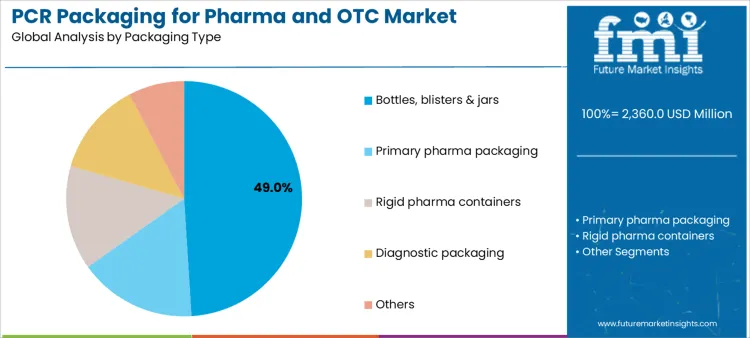
Bottles, blisters, and jars account for 49.0%, reflecting their widespread use in solid oral dosages, liquid medicines, and OTC products. These formats benefit from established validation pathways and predictable material performance. Adoption is strongest where packaging geometry, barrier performance, and patient handling requirements are well defined. Other packaging types, including primary pharma packaging, rigid containers, diagnostic packaging, and specialty formats, support additional use cases without disclosed share values. Packaging-type segmentation highlights concentration in high-volume, standardized formats suited to validated PCR integration.
Key Points:
- Bottles and blisters dominate due to standardized pharma usage.
- Validation familiarity supports faster PCR adoption.
- Secondary formats address specialized handling needs.
How Does Compliance Technology Influence Adoption of PCR in Pharma Packaging?
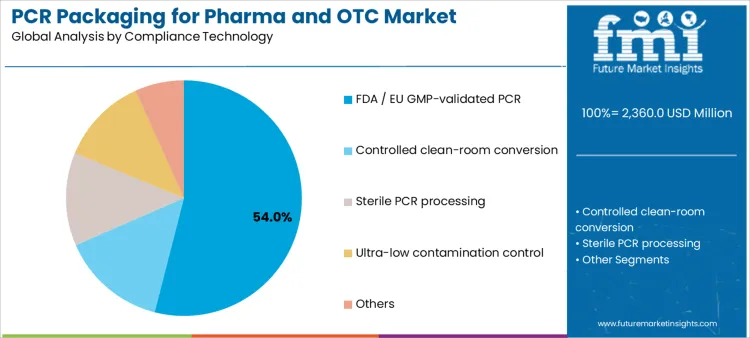
FDA and EU GMP-validated PCR technologies represent 54.0%, underscoring the importance of regulatory acceptance and documented safety controls. These systems emphasize traceability, audit readiness, and consistency across production batches. Controlled clean-room conversion, sterile PCR processing, ultra-low contamination control, and other technologies address varying risk profiles without quantified shares. Compliance-technology segmentation reflects how investment in validation infrastructure enables broader PCR use in sensitive pharmaceutical packaging environments.
Key Points:
- GMP validation is central to pharma PCR adoption.
- Clean-room controls reduce contamination risk.
- Compliance systems support regulatory confidence.
Which End Uses Drive Demand for PCR Packaging in Pharma and OTC Applications?
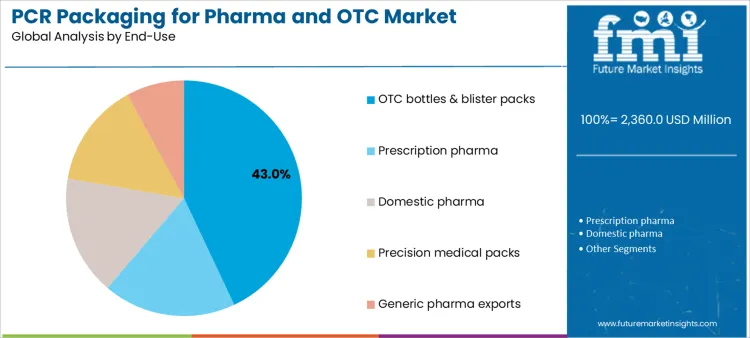
OTC bottles and blister packs represent 43.0%, driven by high unit volumes, retail visibility, and sustainability initiatives from consumer health brands. These products balance regulatory oversight with faster innovation cycles compared to prescription medicines. Other end uses, including prescription pharma, domestic pharmaceutical supply, precision medical packs, and generic pharma exports, contribute to demand without disclosed share values. End-use segmentation shows early PCR adoption concentration in OTC formats where scale, branding, and sustainability messaging align with compliance feasibility.
Key Points:
- OTC formats lead due to volume and sustainability focus.
- Retail exposure accelerates PCR adoption momentum.
- Prescription formats require extended validation cycles.
What are the key dynamics in the PCR packaging for pharma and OTC market?
The demand for PCR packaging in the pharmaceutical and over-the-counter (OTC) market is driven by the need to balance high regulatory standards with growing sustainability goals. Pharmaceutical manufacturers and consumer health companies require PCR materials that meet strict regulatory requirements regarding safety, quality, and traceability. The selection of PCR packaging materials depends on their ability to maintain consistent barrier properties, stability during sterilization, and compatibility with packaging formats used for pills, liquids, and topical products.
How do regulatory and quality standards influence material selection?
Regulatory and safety standards are a key factor in material selection for pharma and OTC packaging. Recycled materials that do not meet the necessary purity or safety standards, such as control of additives or residual chemicals, are often not suitable for use. Packaging for sterile drugs and oral medicines, for instance, must meet strict pharmacopeial guidelines for leachables and extractables. PCR materials must pass rigorous testing to ensure their performance mirrors that of virgin plastics, particularly for sensitive products like blister packs and bottles, where integrity, safety, and barrier properties are critical.
What challenges in supply chain infrastructure and process compatibility affect market uptake?
The uptake of PCR packaging in the pharmaceutical and OTC market is impacted by several challenges. The availability of high-quality recycled plastics that meet the stringent medical-grade criteria is often limited, especially when the feedstock comes from non-industrial sources. Sorting and decontamination processes for PCR materials suitable for pharmaceutical use add complexity and cost. The performance of PCR plastics must be consistent to meet the exacting demands of injection and blow molding processes, which are crucial for producing precise closures and sterile vials. The varying regional regulations governing packaging materials also affect the global adoption of PCR packaging, as differing safety standards may require requalification or adjustments in material formulations for specific markets.
How Is Demand for the PCR Packaging for Pharma and OTC Market Evolving Globally?
Global demand for PCR (Post-Consumer Recycled) packaging for pharmaceutical and over-the-counter (OTC) products is rising as industries focus on sustainability and reducing plastic waste. Growth reflects increasing regulatory pressure, consumer demand for eco-friendly products, and the shift toward circular economy practices. PCR packaging provides an environmentally friendly alternative while maintaining the safety and integrity of pharmaceutical and OTC products. India records 14.8% CAGR, China records 13.6% CAGR, USA records 10.6% CAGR, Germany records 11.0% CAGR, and Japan records 9.8% CAGR. Adoption is driven by sustainability goals, regulatory frameworks, and the increasing use of recycled materials in packaging.
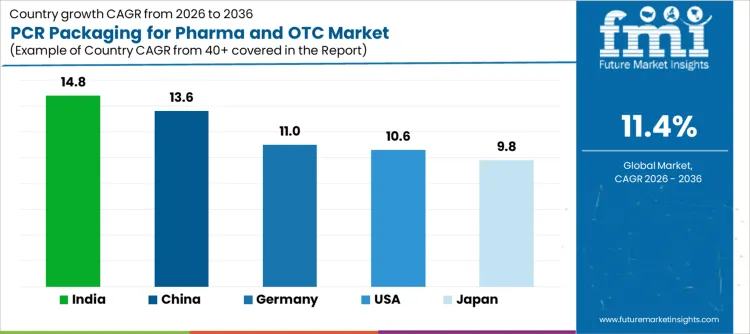
| Country | CAGR (%) |
|---|---|
| India | 14.8% |
| China | 13.6% |
| USA | 10.6% |
| Germany | 11.0% |
| Japan | 9.8% |
What is driving growth of PCR packaging for pharma and OTC demand in India?
Demand for PCR packaging for pharma and OTC products in India is expanding as the pharmaceutical and healthcare sectors embrace sustainability initiatives to meet regulatory requirements and consumer demand for eco-friendly packaging. Growth at 14.8% CAGR reflects increasing adoption of PCR materials in packaging for OTC products, medicines, and supplements. As India focuses on reducing plastic waste and promoting the use of recycled materials, the demand for PCR packaging solutions in the pharma sector continues to rise. Local manufacturers are investing in technology to improve the quality of PCR materials, making them suitable for high-sensitivity pharmaceutical products.
- Regulatory push for sustainable packaging
- Increasing demand for eco-friendly pharma packaging
- Focus on reducing plastic waste
- Local production of high-quality PCR materials
Why is China seeing expansion in PCR packaging for pharma and OTC adoption?
PCR packaging demand for pharma and OTC products in China is rising as the country strengthens its recycling infrastructure and focuses on reducing plastic waste. Growth at 13.6% CAGR reflects China’s push for the adoption of recycled content in packaging, including pharmaceutical products and OTC items. Stringent regulations and government policies on plastic reduction are driving investments in PCR packaging solutions. As the Chinese pharmaceutical and consumer goods sectors embrace sustainability, the use of PCR materials in packaging continues to increase, particularly in the pharmaceutical and healthcare sectors where product integrity and safety are paramount.
- Strong government regulations on plastic waste management
- Increasing adoption of recycled content in packaging
- Government incentives for eco-friendly packaging solutions
- Growing consumer demand for sustainable pharma products
What factors are shaping PCR packaging for pharma and OTC sales in the USA?
Sales of PCR packaging for pharma and OTC products in the USA are increasing as pharmaceutical manufacturers respond to sustainability goals and regulatory pressures. Growth at 10.6% CAGR reflects the increasing use of PCR packaging in OTC products, medicines, and supplements as the USA. market prioritizes eco-friendly packaging solutions. The shift towards sustainable materials is driven by consumer preference for products with reduced environmental impact. Manufacturers in the pharmaceutical and healthcare industries are exploring cost-effective ways to incorporate PCR content into packaging while maintaining product safety and regulatory compliance.
- Government regulations driving eco-friendly packaging adoption
- Consumer preference for sustainable products
- Focus on cost-effective, high-quality PCR materials
- Adoption of circular economy practices in pharmaceutical packaging
How is Germany supporting growth of PCR packaging for pharma and OTC demand?
PCR packaging for pharma and OTC products is gaining traction in Germany as the country leads in sustainability and circular economy practices. Growth at 11.0% CAGR reflects Germany’s strong commitment to reducing plastic waste and improving recycling systems. As the pharmaceutical and healthcare sectors embrace green packaging alternatives, PCR materials are increasingly used to meet both regulatory standards and consumer demand for eco-friendly products. Germany's robust recycling infrastructure and regulations supporting the use of recycled content in packaging further boost demand for PCR packaging in the pharma sector.
- Circular economy initiatives and recycling regulations
- Adoption of eco-friendly packaging in pharma
- Regulatory requirements for reduced plastic waste
- Growing demand for sustainable packaging solutions
What is driving expansion of PCR packaging for pharma and OTC demand in Japan?
Demand for PCR packaging for pharma and OTC products in Japan is increasing as the country focuses on improving its recycling rates and reducing plastic waste. Growth at 9.8% CAGR reflects Japan’s commitment to sustainable packaging solutions, particularly in the pharmaceutical and OTC sectors. The government’s push for greater use of recycled materials, along with consumer demand for eco-friendly products, is encouraging the adoption of PCR packaging in pharma products. Manufacturers are exploring ways to incorporate recycled content into packaging without compromising product quality or safety, driving demand for high-quality PCR packaging materials.
- Government policies promoting recycled content in packaging
- Growing consumer demand for sustainable pharma products
- Investment in recycling technologies and infrastructure
- Focus on maintaining safety and quality in eco-friendly packaging
What is the competitive landscape of demand for the PCR packaging for pharma and OTC market globally?
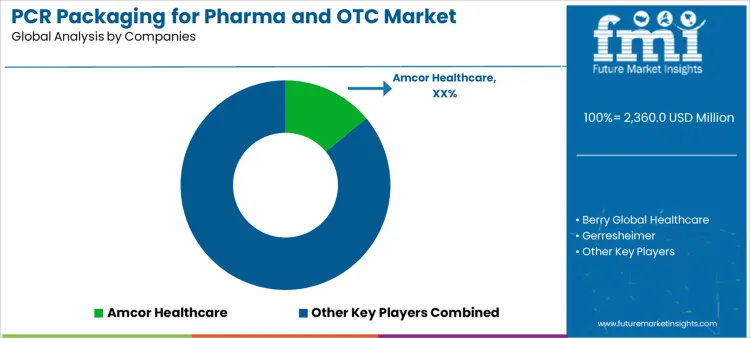
The PCR packaging for pharma and OTC market is driven by increasing demand for sustainable packaging solutions in the pharmaceutical and over-the-counter (OTC) sectors, as well as rising regulatory pressures for recycled content usage. Manufacturers assess packaging strength, moisture and oxygen barrier properties, and compliance with stringent pharmaceutical regulations. Buyer evaluation includes the ability to maintain product integrity, compatibility with sterilization methods, and recyclability without compromising safety or efficacy. Procurement behavior reflects preference for suppliers offering high-quality PCR packaging solutions that meet regulatory requirements while delivering the same performance as virgin materials. The market trend is shifting towards adopting PCR in packaging materials to align with circular economy goals and sustainability initiatives.
Amcor Healthcare leads competitive positioning with its broad range of sustainable packaging solutions, including high-quality PCR content integration while meeting regulatory standards for pharmaceuticals. Berry Global Healthcare competes by offering a wide variety of PCR packaging options designed for both pharma and OTC products, with a focus on robust performance and compliance. Gerresheimer stands out through its specialized glass and plastic packaging solutions that incorporate PCR content while ensuring high-quality standards for the pharmaceutical sector. SCHOTT supports demand with its high-quality pharmaceutical glass packaging, now including sustainable options with PCR materials, and a strong presence in regulated markets. Shandong Pharmaceutical Glass and Nipro provide strong regional competition, focusing on the integration of PCR content into pharmaceutical packaging pharmaceutical packaging while maintaining cost-effectiveness. Toyo Seikan participates with sustainable packaging innovations catering to the OTC market, especially in Asia. Competitive differentiation is driven by packaging performance, regulatory adherence, environmental impact, and ability to scale production while maintaining quality standards.
Key Players in the PCR Packaging for Pharma and OTC Market
- Amcor Healthcare
- Berry Global Healthcare
- Gerresheimer
- SCHOTT
- Shandong Pharmaceutical Glass
- Nipro
- Toyo Seikan
- Others
Scope of the Report
| Items | Values |
|---|---|
| Quantitative Units | USD million |
| Packaging Type | Bottles, blisters & jars; Primary pharma packaging; Rigid pharma containers; Diagnostic packaging; Others |
| Compliance Technology | FDA / EU GMP-validated PCR; Controlled clean-room conversion; Sterile PCR processing; Ultra-low contamination control; Others |
| End-Use | OTC bottles & blister packs; Prescription pharma; Domestic pharma; Precision medical packs; Generic pharma exports |
| Regions Covered | Asia Pacific, Europe, North America, Latin America, Middle East & Africa |
| Countries Covered | India, China, USA, Germany, Japan, and 40+ countries |
| Key Companies Profiled | Amcor Healthcare; Berry Global Healthcare; Gerresheimer; SCHOTT; Shandong Pharmaceutical Glass; Nipro; Toyo Seikan; Others |
| Additional Attributes | Dollar sales by packaging type, compliance technology, and end-use; role of FDA and EU GMP-validated PCR in ensuring safety and quality across pharma packaging; performance of clean-room and sterile PCR processing in maintaining packaging integrity; impact on domestic and export pharmaceutical packaging needs; procurement dynamics shaped by global pharmaceutical packaging regulations and long-term supplier partnerships in the healthcare sector. |
PCR Packaging for Pharma and OTC Market by Segment
Packaging Type:
- Bottles, blisters & jars
- Primary pharma packaging
- Rigid pharma containers
- Diagnostic packaging
- Others
Compliance Technology:
- FDA / EU GMP-validated PCR
- Controlled clean-room conversion
- Sterile PCR processing
- Ultra-low contamination control
- Others
End-Use:
- OTC bottles & blister packs
- Prescription pharma
- Domestic pharma
- Precision medical packs
- Generic pharma exports
Region:
- Asia Pacific
- China
- Japan
- South Korea
- India
- Australia & New Zealand
- ASEAN
- Rest of Asia Pacific
- Europe
- Germany
- United Kingdom
- France
- Italy
- Spain
- Nordic
- BENELUX
- Rest of Europe
- North America
- United States
- Canada
- Mexico
- Latin America
- Brazil
- Chile
- Rest of Latin America
- Middle East & Africa
- Kingdom of Saudi Arabia
- Other GCC Countries
- Turkey
- South Africa
- Other African Union
- Rest of Middle East & Africa
Bibliography
- European Medicines Agency. (2023). Guideline on plastic immediate packaging materials for medicinal products. European Medicines Agency.
- United States Food and Drug Administration. (2024). Use of recycled plastics in food and drug packaging: Chemistry, safety, and regulatory considerations. USA. Department of Health and Human Services.
- European Commission. (2023). Commission Regulation (EU) 2022/1616 on recycled plastic materials and articles intended to come into contact with food (implementation guidance). Publications Office of the European Union.
- World Health Organization. (2023). Good manufacturing practices for pharmaceutical packaging materials. World Health Organization.
- International Organization for Standardization. (2024). ISO 15378:2024 - Primary packaging materials for medicinal products - Particular requirements for the application of ISO 9001, with reference to GMP. ISO.
Frequently Asked Questions
How big is the pcr packaging for pharma and otc market in 2026?
The global pcr packaging for pharma and otc market is estimated to be valued at USD 2,360.0 million in 2026.
What will be the size of pcr packaging for pharma and otc market in 2036?
The market size for the pcr packaging for pharma and otc market is projected to reach USD 6,946.5 million by 2036.
How much will be the pcr packaging for pharma and otc market growth between 2026 and 2036?
The pcr packaging for pharma and otc market is expected to grow at a 11.4% CAGR between 2026 and 2036.
What are the key product types in the pcr packaging for pharma and otc market?
The key product types in pcr packaging for pharma and otc market are bottles, blisters & jars, primary pharma packaging, rigid pharma containers, diagnostic packaging and others.
Which compliance technology segment to contribute significant share in the pcr packaging for pharma and otc market in 2026?
In terms of compliance technology, fda / eu gmp-validated pcr segment to command 54.0% share in the pcr packaging for pharma and otc market in 2026.
Preview the report firsthand - request a free sample
Get SampleGet the brochure for pricing and purchase details.
Get PDFTable of Content
- Executive Summary
- Global Market Outlook
- Demand-side Trends
- Supply-side Trends
- Technology Roadmap Analysis
- Analysis and Recommendations
- Market Overview
- Market Coverage / Taxonomy
- Market Definition / Scope / Limitations
- Market Background
- Market Dynamics
- Drivers
- Restraints
- Opportunity
- Trends
- Scenario Forecast
- Demand in Optimistic Scenario
- Demand in Likely Scenario
- Demand in Conservative Scenario
- Opportunity Map Analysis
- Product Life Cycle Analysis
- Supply Chain Analysis
- Investment Feasibility Matrix
- Value Chain Analysis
- PESTLE and Porter’s Analysis
- Regulatory Landscape
- Regional Parent Market Outlook
- Production and Consumption Statistics
- Import and Export Statistics
- Market Dynamics
- Global Market Analysis 2021 to 2025 and Forecast, 2026 to 2036
- Historical Market Size Value (USD Million) Analysis, 2021 to 2025
- Current and Future Market Size Value (USD Million) Projections, 2026 to 2036
- Y-o-Y Growth Trend Analysis
- Absolute $ Opportunity Analysis
- Global Market Pricing Analysis 2021 to 2025 and Forecast 2026 to 2036
- Global Market Analysis 2021 to 2025 and Forecast 2026 to 2036, By Packaging Type
- Introduction / Key Findings
- Historical Market Size Value (USD Million) Analysis By Packaging Type , 2021 to 2025
- Current and Future Market Size Value (USD Million) Analysis and Forecast By Packaging Type , 2026 to 2036
- Bottles, blisters & jars
- Primary pharma packaging
- Rigid pharma containers
- Diagnostic packaging
- Others
- Bottles, blisters & jars
- Y-o-Y Growth Trend Analysis By Packaging Type , 2021 to 2025
- Absolute $ Opportunity Analysis By Packaging Type , 2026 to 2036
- Global Market Analysis 2021 to 2025 and Forecast 2026 to 2036, By Compliance Technology
- Introduction / Key Findings
- Historical Market Size Value (USD Million) Analysis By Compliance Technology, 2021 to 2025
- Current and Future Market Size Value (USD Million) Analysis and Forecast By Compliance Technology, 2026 to 2036
- FDA / EU GMP-validated PCR
- Controlled clean-room conversion
- Sterile PCR processing
- Ultra-low contamination control
- Others
- FDA / EU GMP-validated PCR
- Y-o-Y Growth Trend Analysis By Compliance Technology, 2021 to 2025
- Absolute $ Opportunity Analysis By Compliance Technology, 2026 to 2036
- Global Market Analysis 2021 to 2025 and Forecast 2026 to 2036, By End-Use
- Introduction / Key Findings
- Historical Market Size Value (USD Million) Analysis By End-Use, 2021 to 2025
- Current and Future Market Size Value (USD Million) Analysis and Forecast By End-Use, 2026 to 2036
- OTC bottles & blister packs
- Prescription pharma
- Domestic pharma
- Precision medical packs
- Generic pharma exports
- OTC bottles & blister packs
- Y-o-Y Growth Trend Analysis By End-Use, 2021 to 2025
- Absolute $ Opportunity Analysis By End-Use, 2026 to 2036
- Global Market Analysis 2021 to 2025 and Forecast 2026 to 2036, By Region
- Introduction
- Historical Market Size Value (USD Million) Analysis By Region, 2021 to 2025
- Current Market Size Value (USD Million) Analysis and Forecast By Region, 2026 to 2036
- North America
- Latin America
- Western Europe
- Eastern Europe
- East Asia
- South Asia and Pacific
- Middle East & Africa
- Market Attractiveness Analysis By Region
- North America Market Analysis 2021 to 2025 and Forecast 2026 to 2036, By Country
- Historical Market Size Value (USD Million) Trend Analysis By Market Taxonomy, 2021 to 2025
- Market Size Value (USD Million) Forecast By Market Taxonomy, 2026 to 2036
- By Country
- USA
- Canada
- Mexico
- By Packaging Type
- By Compliance Technology
- By End-Use
- By Country
- Market Attractiveness Analysis
- By Country
- By Packaging Type
- By Compliance Technology
- By End-Use
- Key Takeaways
- Latin America Market Analysis 2021 to 2025 and Forecast 2026 to 2036, By Country
- Historical Market Size Value (USD Million) Trend Analysis By Market Taxonomy, 2021 to 2025
- Market Size Value (USD Million) Forecast By Market Taxonomy, 2026 to 2036
- By Country
- Brazil
- Chile
- Rest of Latin America
- By Packaging Type
- By Compliance Technology
- By End-Use
- By Country
- Market Attractiveness Analysis
- By Country
- By Packaging Type
- By Compliance Technology
- By End-Use
- Key Takeaways
- Western Europe Market Analysis 2021 to 2025 and Forecast 2026 to 2036, By Country
- Historical Market Size Value (USD Million) Trend Analysis By Market Taxonomy, 2021 to 2025
- Market Size Value (USD Million) Forecast By Market Taxonomy, 2026 to 2036
- By Country
- Germany
- UK
- Italy
- Spain
- France
- Nordic
- BENELUX
- Rest of Western Europe
- By Packaging Type
- By Compliance Technology
- By End-Use
- By Country
- Market Attractiveness Analysis
- By Country
- By Packaging Type
- By Compliance Technology
- By End-Use
- Key Takeaways
- Eastern Europe Market Analysis 2021 to 2025 and Forecast 2026 to 2036, By Country
- Historical Market Size Value (USD Million) Trend Analysis By Market Taxonomy, 2021 to 2025
- Market Size Value (USD Million) Forecast By Market Taxonomy, 2026 to 2036
- By Country
- Russia
- Poland
- Hungary
- Balkan & Baltic
- Rest of Eastern Europe
- By Packaging Type
- By Compliance Technology
- By End-Use
- By Country
- Market Attractiveness Analysis
- By Country
- By Packaging Type
- By Compliance Technology
- By End-Use
- Key Takeaways
- East Asia Market Analysis 2021 to 2025 and Forecast 2026 to 2036, By Country
- Historical Market Size Value (USD Million) Trend Analysis By Market Taxonomy, 2021 to 2025
- Market Size Value (USD Million) Forecast By Market Taxonomy, 2026 to 2036
- By Country
- China
- Japan
- South Korea
- By Packaging Type
- By Compliance Technology
- By End-Use
- By Country
- Market Attractiveness Analysis
- By Country
- By Packaging Type
- By Compliance Technology
- By End-Use
- Key Takeaways
- South Asia and Pacific Market Analysis 2021 to 2025 and Forecast 2026 to 2036, By Country
- Historical Market Size Value (USD Million) Trend Analysis By Market Taxonomy, 2021 to 2025
- Market Size Value (USD Million) Forecast By Market Taxonomy, 2026 to 2036
- By Country
- India
- ASEAN
- Australia & New Zealand
- Rest of South Asia and Pacific
- By Packaging Type
- By Compliance Technology
- By End-Use
- By Country
- Market Attractiveness Analysis
- By Country
- By Packaging Type
- By Compliance Technology
- By End-Use
- Key Takeaways
- Middle East & Africa Market Analysis 2021 to 2025 and Forecast 2026 to 2036, By Country
- Historical Market Size Value (USD Million) Trend Analysis By Market Taxonomy, 2021 to 2025
- Market Size Value (USD Million) Forecast By Market Taxonomy, 2026 to 2036
- By Country
- Kingdom of Saudi Arabia
- Other GCC Countries
- Turkiye
- South Africa
- Other African Union
- Rest of Middle East & Africa
- By Packaging Type
- By Compliance Technology
- By End-Use
- By Country
- Market Attractiveness Analysis
- By Country
- By Packaging Type
- By Compliance Technology
- By End-Use
- Key Takeaways
- Key Countries Market Analysis
- USA
- Pricing Analysis
- Market Share Analysis, 2025
- By Packaging Type
- By Compliance Technology
- By End-Use
- Canada
- Pricing Analysis
- Market Share Analysis, 2025
- By Packaging Type
- By Compliance Technology
- By End-Use
- Mexico
- Pricing Analysis
- Market Share Analysis, 2025
- By Packaging Type
- By Compliance Technology
- By End-Use
- Brazil
- Pricing Analysis
- Market Share Analysis, 2025
- By Packaging Type
- By Compliance Technology
- By End-Use
- Chile
- Pricing Analysis
- Market Share Analysis, 2025
- By Packaging Type
- By Compliance Technology
- By End-Use
- Germany
- Pricing Analysis
- Market Share Analysis, 2025
- By Packaging Type
- By Compliance Technology
- By End-Use
- UK
- Pricing Analysis
- Market Share Analysis, 2025
- By Packaging Type
- By Compliance Technology
- By End-Use
- Italy
- Pricing Analysis
- Market Share Analysis, 2025
- By Packaging Type
- By Compliance Technology
- By End-Use
- Spain
- Pricing Analysis
- Market Share Analysis, 2025
- By Packaging Type
- By Compliance Technology
- By End-Use
- France
- Pricing Analysis
- Market Share Analysis, 2025
- By Packaging Type
- By Compliance Technology
- By End-Use
- India
- Pricing Analysis
- Market Share Analysis, 2025
- By Packaging Type
- By Compliance Technology
- By End-Use
- ASEAN
- Pricing Analysis
- Market Share Analysis, 2025
- By Packaging Type
- By Compliance Technology
- By End-Use
- Australia & New Zealand
- Pricing Analysis
- Market Share Analysis, 2025
- By Packaging Type
- By Compliance Technology
- By End-Use
- China
- Pricing Analysis
- Market Share Analysis, 2025
- By Packaging Type
- By Compliance Technology
- By End-Use
- Japan
- Pricing Analysis
- Market Share Analysis, 2025
- By Packaging Type
- By Compliance Technology
- By End-Use
- South Korea
- Pricing Analysis
- Market Share Analysis, 2025
- By Packaging Type
- By Compliance Technology
- By End-Use
- Russia
- Pricing Analysis
- Market Share Analysis, 2025
- By Packaging Type
- By Compliance Technology
- By End-Use
- Poland
- Pricing Analysis
- Market Share Analysis, 2025
- By Packaging Type
- By Compliance Technology
- By End-Use
- Hungary
- Pricing Analysis
- Market Share Analysis, 2025
- By Packaging Type
- By Compliance Technology
- By End-Use
- Kingdom of Saudi Arabia
- Pricing Analysis
- Market Share Analysis, 2025
- By Packaging Type
- By Compliance Technology
- By End-Use
- Turkiye
- Pricing Analysis
- Market Share Analysis, 2025
- By Packaging Type
- By Compliance Technology
- By End-Use
- South Africa
- Pricing Analysis
- Market Share Analysis, 2025
- By Packaging Type
- By Compliance Technology
- By End-Use
- USA
- Market Structure Analysis
- Competition Dashboard
- Competition Benchmarking
- Market Share Analysis of Top Players
- By Regional
- By Packaging Type
- By Compliance Technology
- By End-Use
- Competition Analysis
- Competition Deep Dive
- Amcor Healthcare
- Overview
- Product Portfolio
- Profitability by Market Segments (Product/Age /Sales Channel/Region)
- Sales Footprint
- Strategy Overview
- Marketing Strategy
- Product Strategy
- Channel Strategy
- Berry Global Healthcare
- Gerresheimer
- SCHOTT
- Shandong Pharmaceutical Glass
- Nipro
- Toyo Seikan
- Others
- Amcor Healthcare
- Competition Deep Dive
- Assumptions & Acronyms Used
- Research Methodology


