

- Industry Size (2026)
- USD 67996.6 Mn
- Forecast (2036)
- USD 232839.8 Mn
- CAGR (2026 to 2036)
- 13.1%
PD-1/PDL-1 Inhibitor Market size, market forecast and outlook By FMI
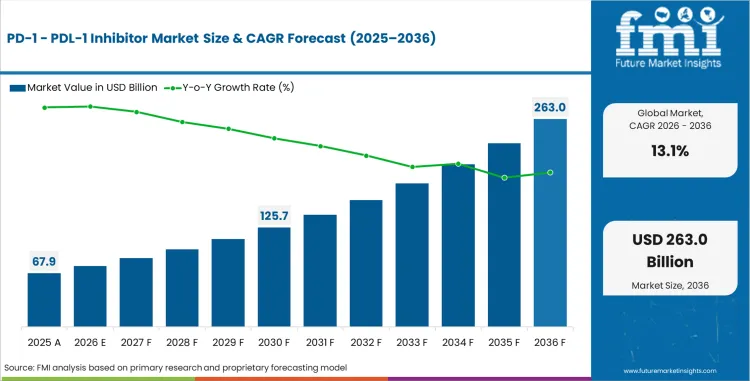
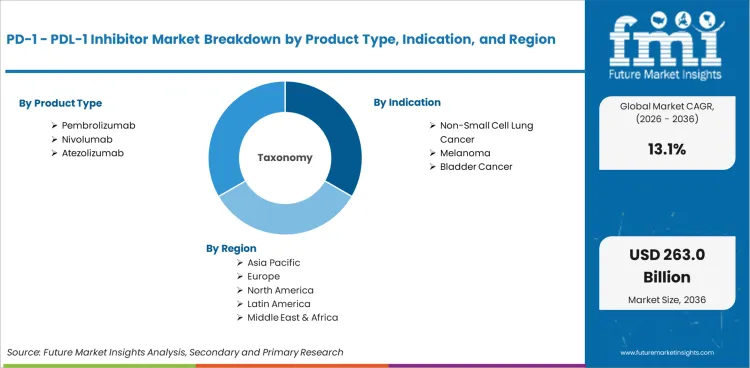
In 2026, the PD-1/PDL-1 Inhibitor market is valued at USD 67,996.6 million. Based on the market outlook, demand is estimated to grow to USD 232,839.8 million by 2036. The market is projected to expand at a CAGR of 13.1% during the forecast period.
Absolute dollar growth of USD 164,843.2 million over the decade points to an oncology category that is still expanding through label breadth, earlier-line movement, and combination therapy adoption rather than simple patient-pool replacement. The revenue build is structurally distinct from a traditional branded oncology market. It is easier to put the clamps on a PD-1 or PD-L1 in monopoly position when big tumors like NSCLC, melanoma, bladder cancer and RCC are up for grabs and growth pumps through example expansion via regimen expansion, adjuvant/perioperative migration, longer treatment in selected populations and more comfort among oncologists with checkpoint blockade across tumor boards/panel-driven care. This pattern is well illustrated by the FDA records and official labels for pembrolizumab and nivolumab, including approvals that cover melanoma, NSCLC, HNSCC, RCC, urothelial carcinoma and Merkel cell carcinoma among others.
Summary of PD-1/PDL-1 Inhibitor Market
- PD-1/PDL-1 Inhibitor Market Definition
- The industry covers immune checkpoint inhibitor therapies targeting PD-1 or PD-L1 and used across major oncology indications through physician-directed, institutionally managed cancer treatment pathways.
- Demand Drivers in the Market
- Extending checkpoint blockade to earlier-line treatments is broadening eligible patient volume beyond late-line metastatic therapy. The migration is illustrated by recent FDA approvals for resectable NSCLC and locally advanced HNSCC.
- Broad commercial demand is maintained, despite dependence on a narrow orphan-oncology base, given large tumor categories such as NSCLC and bladder cancer. FDA approval history for pembrolizumab and nivolumab supports these tumors.
- Suppliers with robust evidence packages and multi-indication portfolios are in a stronger position to secure pathway positions when hospital oncology teams consolidate around a checkpoint regimen.
- Key Segments Analyzed in the FMI Report
- By Product Type: Pembrolizumab leads at 49.1% share in 2026, followed by Nivolumab at 26.1% share.
- By Indication: Non-Small Cell Lung Cancer (NSCLC) leads at 37.2% share in 2026, followed by Bladder Cancer at 23.6% share and Melanoma at 17.2% share.
- By Distribution Channel: Hospital Pharmacies lead at 48.9% share in 2026, followed by Retail Pharmacies at 39.7% share.
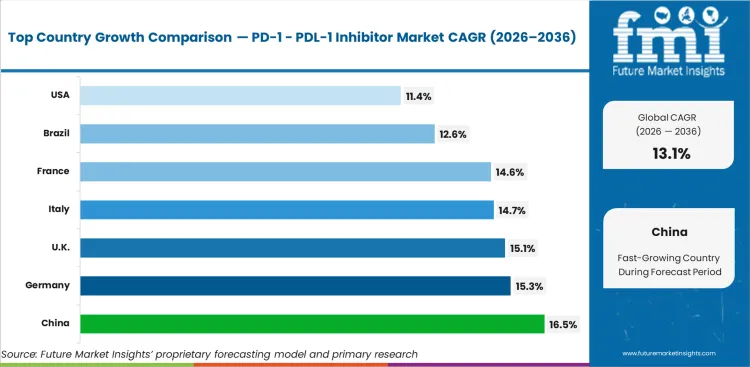
- Geography: China shows the fastest growth at 16.5% CAGR, followed by South Korea at 15.6%, and Japan at 15.3%.
- Analyst Opinion at FMI
- Sabyasachi Ghosh, Principal Consultant at Future Market Insights, opines, “This industry is being shaped by label depth, tumor-board familiarity, and reimbursement-backed pathway adoption. Once a checkpoint inhibitor secures broad use across major tumors, displacement becomes difficult unless a rival demonstrates clear survival, sequencing, or access advantages.”
- Strategic Implications and Executive Takeaways
- Build around indication breadth rather than isolated molecule performance, because oncology accounts favor products that can remain relevant across multiple tumors and lines of therapy.
- Protect hospital access through evidence-led medical engagement and reimbursement readiness, since institutional formulary presence still determines the largest share of treated demand.
- Treat earlier-line and perioperative expansion as the main commercial unlock, because the revenue step-up in checkpoint blockade increasingly comes from moving upstream in care rather than only adding more metastatic use. FDA approvals in resectable NSCLC and locally advanced HNSCC make that progression explicit.
- Methodology
- As per FMI, sizing and splits were reconciled using product-label mapping and indication concentration across melanoma, NSCLC, RCC, HNSCC, bladder cancer, and other checkpoint-relevant tumors.
- Segment shares were validated by linking molecule-level demand to actual commercial breadth, where broader tumor coverage and more entrenched treatment-line positioning translate into larger revenue concentration.
- Sensitivity checks were run across channel mix and indication uptake to confirm revenue movement under realistic scenarios for hospital dispensing, oncology regimen expansion, and country-level immunotherapy adoption.
As Dr. Marjorie Green, senior vice president and head of oncology, global clinical development at Merck Research Laboratories, stated while discussing KEYTRUDA data presented at ESMO 2025, “Our data at ESMO this year affirm the continued impact and potential of KEYTRUDA in certain types of cancer and serve as a testament to the progress we’re making in our rapidly advancing pipeline,” reflecting how major suppliers continue to frame checkpoint inhibitors as long-duration growth engines across both established and newer tumor settings. [1]
China (16.5% CAGR) is expected to lead the tracked markets, followed by South Korea (15.6%), Germany (15.3%), Japan (15.3%), and the UK (15.1%), where oncology infrastructure, broader immunotherapy access, and deeper integration into treatment algorithms continue to widen treated patient pools. France (14.6%) and Italy (14.7%) form the next tier, while Brazil (12.6%) and the USA (11.4%) remain commercially significant because of their large oncology burden and established checkpoint inhibitor use, even though the USA growth rate is being measured against a far more mature installed base.
PD-1/PDL-1 Inhibitor Market Definition
The market covers monoclonal antibody therapies that inhibit programmed cell death protein 1 (PD-1) or programmed death-ligand 1 (PD-L1) and are used in cancer immunotherapy to restore anti-tumor immune response. It includes nivolumab, pembrolizumab, atezolizumab, avelumab, and durvalumab across approved and commercially relevant oncology settings. Revenue is generated through branded checkpoint inhibitor sales delivered primarily in institutional oncology pathways.
Commercial demand spans melanoma, non-small cell lung cancer, renal cell carcinoma, head and neck squamous cell carcinoma, bladder cancer, Merkel cell carcinoma, and a wider group of solid tumors and hematologic settings captured under “others.” This is not a retail-led oncology category. Oncologists, biomarker testing, line-of-therapy positioning, institutional reimbursement, and regulatory label strength control treatment selection.
PD-1/PDL-1 Inhibitor Market Inclusions
Report consist of sizing of the market on a global and regional basis along with market forecast for 2026 to 2036. Segment-level sizing and forecasts across different product types, indication and distribution channel, country-level CAGRs for the top markets. Includes business through approved PD-1/PD-L1 agents, dispensed in institutional oncology settings (i.e., hospitals/pharmacy) and other regulatory routes: revenue generated through each cancer treatment.
The scope additionally illustrates the influence of label breadth, tumor-type coverage, combination regimen role, biomarker-directed, reimbursement access and physician familiarity across oncology practice on product preference. It is clear from company disclosures and official drug information that competition here is not confined to a single tumor type.
PD-1/PDL-1 Inhibitor Market Exclusions
The scope does not consider CTLA-4 inhibitors, CAR-T therapies, antibody-drug conjugates that are obtained through targeted kinase inhibitors, chemotherapy agents, biosimilar spillover outside the defined checkpoint products. It also excludes supportive oncology care drugs that do not belong to the PD-1/PD-L1 inhibitor class. It further excludes non-commercial investigational molecules that have no market-stage revenue relevance to the forecast framework.
This separation matters, because the logic of prescription writing for checkpoint inhibitors is different from that in the larger oncology drug universe. A hospital might have multiple systemic modalities in the same tumor setting, but PD-1/PD-L1 inhibitor selection is decided by evidence for immune checkpoint engagement as well as line-specific label status, biomarker requirements and established protocol placement not merely general oncology purchasing.
PD-1/PDL-1 Inhibitor Market research methodology
- Primary research: Interviews were conducted with medical oncologists, hospital pharmacists, infusion-center administrators, oncology procurement participants, and supplier commercial teams to validate prescribing behavior, formulary concentration, and treatment-pathway positioning.
- Desk research: We benchmarked indication coverage and competitive positioning based on publicly available FDA approvals, product labels listed with the FDA, company annual reports, pipeline disclosures and cancer-agency materials.
- Market-sizing and forecasting: Conducted using a hybrid model of segment shares by product type, indication, distribution channel as input variables and reconciled against labeled tumor coverage, treatment intensity and adoption at country level.
- Data validation and update cycle: Segment splits, CAGR hierarchy, indication weight & dispensary mongering through institutional oncology channels were reviewed for consistency.
Segmental Analysis
PD-1/PDL-1 Inhibitor Market Analysis by Product Type
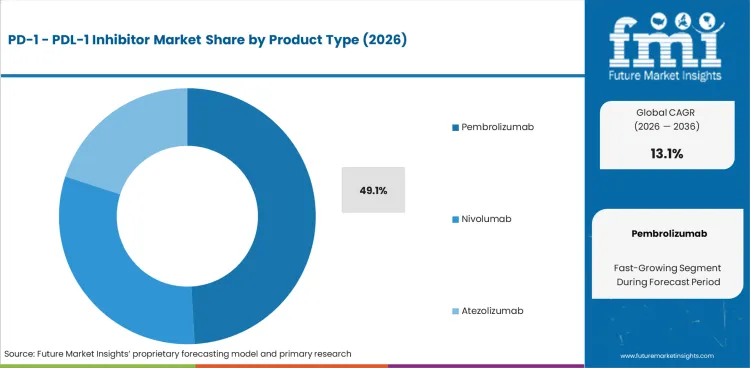
Based on the market outlook, Pembrolizumab is estimated to hold 49.1% share in 2026, followed by Nivolumab at 26.1%. Pembrolizumab leads because it has the broadest and most commercially entrenched indication footprint in the checkpoint inhibitor class. It is not simply a melanoma or NSCLC product anymore. FDA labeling spans melanoma, NSCLC, HNSCC, urothelial carcinoma, RCC, Merkel cell carcinoma, and a wider set of tumors, which gives it repeated exposure across tumor boards, infusion protocols, and reimbursement pathways. Merck’s own oncology communications continue to position KEYTRUDA as a cornerstone asset across both established and newer cancer settings.
- Indication breadth: Pembrolizumab participates across more high-value tumor settings than most competing checkpoint brands, which widens its revenue base. FDA documentation shows labeled use in melanoma, NSCLC, HNSCC, RCC, MCC, and urothelial carcinoma, among others. On February 2026, the Merck received approval for Keytruda for adult patients with platinum-resistant epithelial ovarian, fallopian tube, or primary peritoneal carcinoma from USFDA. [2]
- Entrenched physician familiarity: Once a molecule is repeatedly used across frontline, adjuvant, and metastatic settings, prescriber comfort deepens and switching becomes less automatic.
- Portfolio protection: Stronger breadth at the molecule level helps protect share because hospital pathways are more likely to standardize around one checkpoint inhibitor that covers multiple major tumor settings.
PD-1/PDL-1 Inhibitor Market Analysis by Indication
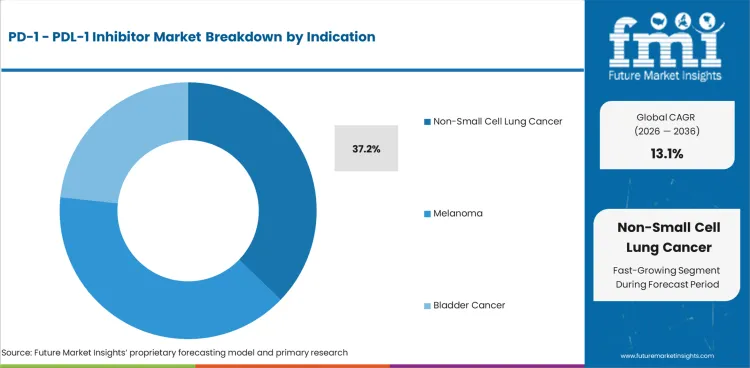
Non-Small Cell Lung Cancer accounts for 37.2% share in 2026, followed by Bladder Cancer at 23.6%. NSCLC leads because it combines a very large treated population with repeated immunotherapy use across metastatic, perioperative, and combination regimens. The checkpoint class has become deeply embedded in lung-cancer management, and recent FDA actions continue to reinforce that role in earlier-stage disease as well as advanced settings. Nivolumab’s 2024 FDA approval in neoadjuvant/adjuvant resectable NSCLC and long-standing pembrolizumab use in metastatic NSCLC both show how this indication remains central to class economics.
- Large addressable pool: NSCLC carries a far larger commercial base than narrower immuno-oncology indications, which keeps it at the center of checkpoint revenue. According to the article published in January 2025, by Indian Journal of Medical Research (ICMR), Incidence for lung cancer from 63,708 cases in 2015 is projected to increase to 81,219 cases (2025). [3]
- Earlier-line movement: Perioperative and resectable-disease approvals widen exposure beyond metastatic treatment alone, increasing duration and reach of use.
- Regimen intensity: NSCLC frequently combines checkpoint inhibitors with chemotherapy or other systemic backbones, which reinforces pathway entrenchment and hospital formulary dependence.
PD-1/PDL-1 Inhibitor Market Drivers, Restraints, and Opportunities
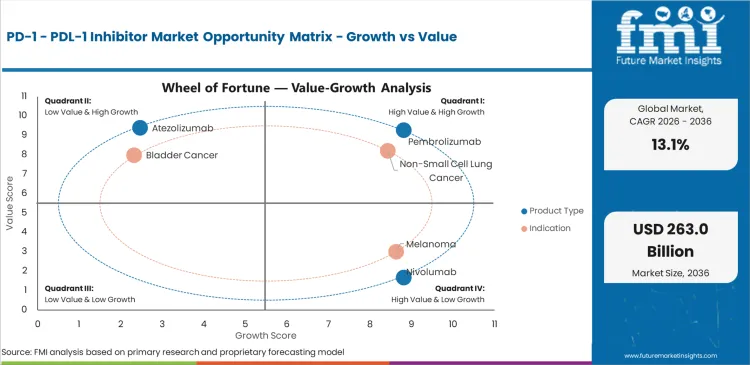
Future Market Insights analysis indicates that the industry benefits from a strong clinical migration toward immunotherapy-backed cancer management, but growth is not detached from treatment architecture. Revenue increases once checkpoint inhibitors enter into larger tumor pools, earlier stages or better defined biomarker or combination settings. Hence, commercial leadership is being constructed via depth and regulatory reach of evidence over minimum promotional thrust. FDA oncology license announcements across 2024-2026 are also suggesting that checkpoint inhibitors will reach new settings in NSCLC, urothelial carcinoma (UC), HNSCC and more.
The primary limitation is not clinical relevance; it is the required complexity of treatment and access. These agents continue to be expensive, highly protocol-driven, and very much dependent on institutional reimbursement, biomarker testing, infusion capacity, and oncologist comfort with sequencing. Competition is sharpening, too, as big incumbents protect pathway position and regional and China-based developers expand into the broader checkpoint area. The strongest opportunity lies in expanding earlier-line use, defending hospital access, and sustaining physician trust through survival data and tumor-specific differentiation rather than broad class-level claims.
- Source of earlier-line volume expansion: Enhancing revenue as checkpoint inhibitors transition from late-stage rescue usage to the adjuvant, neoadjuvant and frontline treatment settings.
- Access and reimbursement restraint: Institution-specific funding, biomarker-linked use, and regimen complexity keep expansion reliant on the readiness of the oncology system (rather than growing prescriptions per se).
- Image Pathway-defense opportunity: Suppliers that achieve wide formulary presence with durable evidence in large tumor categories are better positioned to maintain share as competition intensifies.
Regional Analysis
Based on the regional analysis, the PD-1/PDL-1 inhibitor market is segmented into North America, Latin America, Western Europe, East Asia, and other major oncology geographies across high-value cancer-treatment markets. Regional performance is assessed using country-level demand signals tied to immunotherapy access, oncology infrastructure, regulatory adoption, hospital infusion capacity, and the speed at which checkpoint blockade is incorporated into treatment pathways.
.webp "Top Country Growth Comparison Pd 1 Pdl 1 Inhibitor Market Cagr (2026 2036)")
| Country | CAGR |
|---|---|
| US | 11.4% |
| Brazil | 12.6% |
| Germany | 15.3% |
| UK | 15.1% |
| France | 14.6% |
| Italy | 14.7% |
| China | 16.5% |
| South Korea | 15.6% |
| Japan | 15.3% |
Source: Future Market Insights (FMI) analysis and primary research
North America PD-1/PDL-1 Inhibitor Market Analysis
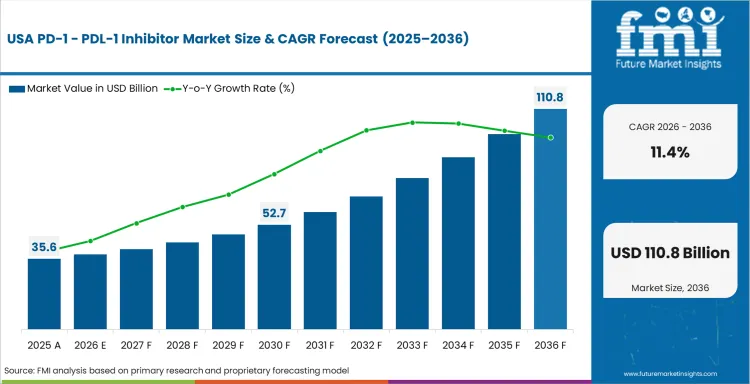
North America holds majority of the value pool because the USA has the deepest checkpoint inhibitor installed base, strong reimbursement mechanics for major oncology regimens, and extensive physician familiarity across lung cancer, melanoma, RCC, and bladder cancer. Growth is slower than in newer access-expansion markets, but this is still where pathway position matters most. Commercial success here depends on maintaining hospital and oncology-network relevance rather than creating awareness from scratch.
- United States: The USA PD-1/PDL-1 inhibitor market is expected to expand at 11.4% CAGR through 2036, supported by entrenched use in major solid tumors, continued earlier-line approvals, and durable hospital oncology demand across large checkpoint-relevant indications. FDA approvals for pembrolizumab and nivolumab in NSCLC, HNSCC, urothelial carcinoma, melanoma, and RCC continue to reinforce the size and strategic importance of this market.
FMI’s report includes a detailed analysis of North America, along with a country-wise assessment that includes the USA, Canada, and Mexico. Readers can also find regional trends, regulations, and market growth based on different segments and countries in the North America region.
East Asia PD-1/PDL-1 Inhibitor Market Analysis
East Asia is where commercial momentum and pipeline ambition are interacting most visibly. China, South Korea, and Japan are not only growth markets for imported checkpoint inhibitors, but also increasingly relevant for regional developer participation and local immuno-oncology competition. Product access, domestic innovation, and expanding oncology treatment infrastructure are all pulling in the same direction. Roche’s pipeline materials continue to frame Tecentriq as a core anti-PD-L1 asset, while Asia-based companies such as BeiGene and Akeso sit inside the broader competitive set active in this market.
- China: China is projected to rise at 16.5% CAGR through 2036, supported by fast expansion of immunotherapy access, rising oncology treatment capacity, and stronger participation from domestic and multinational checkpoint suppliers.
- South Korea: South Korea is expected to grow at 15.6% CAGR through 2036, with momentum coming from advanced cancer-care infrastructure and rapid integration of innovative oncology therapies into specialist practice.
- Japan: Japan is expected to post 15.3% CAGR through 2036, with growth supported by a mature oncology system that continues to absorb checkpoint therapy into large tumor pathways while still allowing room for line-expansion opportunities.
The full report analyzes the PD-1/PDL-1 Inhibitor market across East and South Asia from 2026 to 2036, covering pricing, technology adoption, and growth drivers in China, Japan, India, and adjacent regional markets.
Latin America PD-1/PDL-1 Inhibitor Market Analysis
Latin America remains more selective in access than the USA or Western Europe, yet Brazil stands out as a meaningful growth market because oncology modernization and broader uptake of innovative cancer drugs are widening the treated base. Growth is tied to reimbursement reach, institutional concentration, and the availability of specialist oncology channels that can absorb high-cost immunotherapy.
- Brazil: Brazil is forecast to grow at 12.6% CAGR through 2036, driven by rising use of advanced oncology regimens, gradual widening of immunotherapy access and stronger treatment uptake across high-burden tumor types treated in large cancer centers.
The report consists of a detailed analysis for the market in Brazil, Argentina, and Rest of Latin America. Readers can find detailed information about pricing analysis and regional trends affecting growth in the Latin America region.
Europe PD-1/PDL-1 Inhibitor Market Analysis
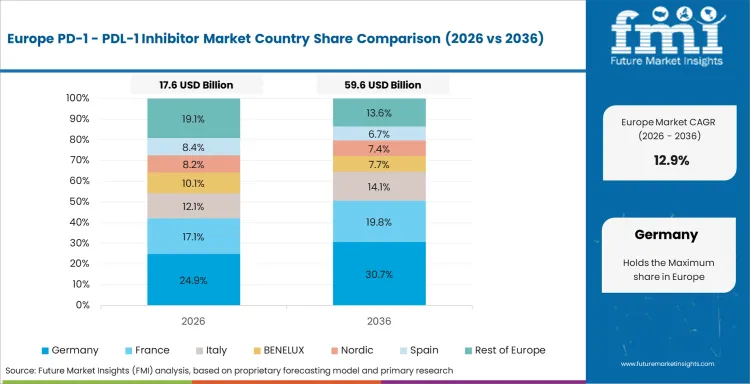
Europe remains commercially important because strong oncology infrastructure, formal treatment pathways, and wide use of immunotherapy in large solid tumors are shaping uptake. Germany, the UK, France, and Italy all show elevated growth in the market outlook, reflecting both treatment expansion and continued pathway deepening. The region is also strategically relevant for supplier milestones. Intuitive device news is irrelevant here, but in oncology AstraZeneca, Roche, BMS, and Merck all continue to treat Europe as a key market for checkpoint growth and line extension.
- Germany: Germany is anticipated to expand at 15.3% CAGR through 2036, supported by strong oncology infrastructure, high immunotherapy readiness, and broad pathway integration across large cancer indications.
- United Kingdom: The UK is projected to rise at 15.1% CAGR through 2036, with growth tied to checkpoint adoption in high-incidence tumors and continued incorporation into earlier-line care.
- France: France is expected to grow at 14.6% CAGR through 2036, reflecting solid institutional oncology access and expanding use of immunotherapy across major treatment pathways.
FMI’s analysis of the PD-1/PDL-1 inhibitor market in Europe consists of country-wise assessment that includes Germany, Italy, France, the United Kingdom, Spain, Nordic countries, Benelux, and Rest of Europe. Readers can know various regulations and latest trends in the regional market.
Competitive aligners for market players
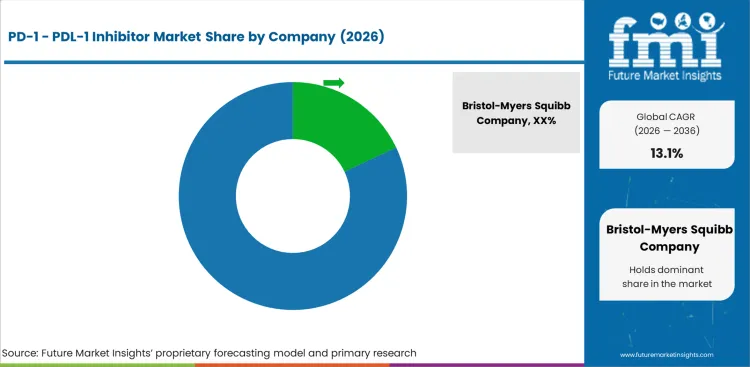
Competition appears broad at first glance, but commercial power is concentrated around a relatively small group of companies that have already secured major tumor positions and built durable hospital-oncology presence. Majority companies focuses on label breadth, survival data, combination regimen relevance, and deep familiarity among oncologists who treat NSCLC, melanoma, RCC, bladder cancer, and HNSCC every week.
Portfolio depth creates structural advantage because oncologists and hospital committees often prefer brands that can stay relevant across multiple tumors and lines rather than molecules with a narrower role. That reduces switching incentives. If one supplier already covers frontline NSCLC, perioperative lung cancer, melanoma, RCC, and selected head and neck or urothelial settings, the commercial relationship becomes much harder to dislodge. This is why pembrolizumab’s lead position in the market is commercially coherent. It reflects not only sales scale, but also repeated clinical visibility across tumor boards, formularies, and national oncology discussions.
Buyer power still matters, especially because hospital pharmacies account for the largest share in the market and because oncology formularies increasingly examine regimen cost, sequencing, biomarker restrictions, and treatment setting. Yet price is only one trigger. In this category, share loss usually comes when a rival secures broader label reach, better positioning in a higher-volume line of therapy, or a clearer survival advantage in a major tumor. Companies named in the current market universe include Bristol-Myers Squibb Company, Eli Lilly and Company, F. Hoffmann-La Roche Ltd., AstraZeneca Plc., Pfizer Inc., Merck KGaA, Sanofi S.A., Amgen Inc., Ono Pharmaceutical Co., Ltd., Glenmark Pharmaceuticals, Akeso Biopharma Co., Ltd., Jiangsu Alphamab Biopharmaceuticals Co., Ltd., BeiGene Ltd., Sino Biopharmaceutical Limited, and Gilead Sciences, Inc.
Recent Developments
The report includes full coverage of key trends from competitive benchmarking. Some of the recent developments covered in the reports:
- In January 2026, Akeso, Inc. presented real-world data at the ASCO GI Symposium showing cadonilimab plus chemotherapy significantly improves survival outcomes in PD-L1-low advanced gastric cancer versus PD-1 regimens. The findings highlight a potential breakthrough in addressing a major unmet need, positioning cadonilimab as a next-generation immunotherapy candidate with broader patient applicability.
- On March 2026, Bristol Myers Squibb Company received clearance form USFDA for their nivolumab (Opdivo) with doxorubicin, vinblastine, and dacarbazine (AVD) for adult and pediatric patients 12 years and older with previously untreated, Stage III or IV classical Hodgkin lymphoma (cHL) [4]
- In June 2025, the FDA approved neoadjuvant and adjuvant pembrolizumab for resectable locally advanced head and neck squamous cell carcinoma, extending checkpoint use further into earlier treatment settings. [5]
Key Players in PD-1/PDL-1 Inhibitor Market
- Bristol-Myers Squibb Company
- Eli Lilly and Company
- F. Hoffmann-La Roche Ltd.
- AstraZeneca Plc.
- Pfizer Inc.
- Merck KGaA
- Sanofi S.A.
- Amgen Inc.
- Ono Pharmaceutical Co., Ltd.
- Glenmark Pharmaceuticals
- Akeso Biopharma Co., Ltd.
- Jiangsu Alphamab Biopharmaceuticals Co., Ltd.
- BeiGene LTD
- Sino Biopharmaceutical Limited
- Gilead Sciences, Inc.
Scope of the Report
| Metric | Value |
|---|---|
| Quantitative units | US$ 15,287.2 million (2026) to US$ 232,839.8 million (2036), at a CAGR of 13.1% |
| Market definition | The market covers monoclonal antibody therapies that inhibit programmed cell death protein 1 (PD-1) or programmed death-ligand 1 (PD-L1) and are used in cancer immunotherapy to restore anti-tumor immune response. It includes nivolumab, pembrolizumab, atezolizumab, avelumab, and durvalumab across approved and commercially relevant oncology settings. Revenue is generated through branded checkpoint inhibitor sales delivered primarily in institutional oncology pathways. Commercial demand spans melanoma, non-small cell lung cancer, renal cell carcinoma, head and neck squamous cell carcinoma, bladder cancer, Merkel cell carcinoma, and a wider group of solid tumors and hematologic settings captured under “others.” |
| Product Type Segmentation | Nivolumab, Pembrolizumab, Atezolizumab, Avelumab & Durvalumab |
| Indication Segmentation | Melanoma, Non-Small Cell Lung Cancer (NSCLC), Renal Cell Carcinoma (RCC), Head and Neck Squamous Cell Cancer (HNSCC), Bladder Cancer, Merkel Cell Carcinoma (MCC) & Others |
| Distribution Channel Coverage | Hospital Pharmacies, Retail Pharmacies, Online Pharmacies |
| Regions covered | North America, Latin America, East Asia, South Asia, Western Europe, Eastern Europe, Middle East and Africa |
| Countries covered | United States, Canada, Mexico, Brazil, Argentina, Germany, France, United Kingdom, Italy, Spain, China, India, Japan, South Korea, Indonesia, Australia and 40 plus countries |
| Key companies profiled | Bristol-Myers Squibb Company, Eli Lilly and Company, F. Hoffmann-La Roche Ltd., AstraZeneca Plc., Pfizer Inc., Merck KGaA, Sanofi S.A., Amgen Inc., Ono Pharmaceutical Co., Ltd., Glenmark Pharmaceuticals, Akeso Biopharma Co., Ltd., Jiangsu Alphamab Biopharmaceuticals Co.,Ltd., BeiGene LTD, Sino Biopharmaceutical Limited, Gilead Sciences, Inc. & Others |
| Forecast period | 2026 to 2036 |
| Approach | A hybrid top-down and bottom-up market modeling approach was used, validated through primary interviews with medical oncologists, hospital pharmacists, cancer center procurement teams, and immuno-oncology manufacturers, and further supported by product portfolio mapping, indication-level treatment assessment, and distribution channel benchmarking, as per FMI. |
PD-1/PDL-1 Inhibitor Market Analysis by Segments
Product Type
- Nivolumab
- Pembrolizumab
- Atezolizumab
- Avelumab
- Durvalumab
Indication
- Melanoma
- Non-Small Cell Lung Cancer (NSCLC)
- Renal Cell Carcinoma (RCC)
- Head and Neck Squamous Cell Cancer (HNSCC)
- Bladder Cancer
- Merkel Cell Carcinoma (MCC)
- Others
End User
- Hospital Pharmacies
- Retail Pharmacies
- Online Pharmacies
Region
- North America
- USA
- Canada
- Mexico
- Latin America
- Brazil
- Argentina
- Rest of Latin America
- East Asia
- China
- Japan
- South Korea
- South Asia & Pacific
- India
- ASEAN Countries
- Australia & New Zealand
- Rest of South Asia
- Western Europe
- Germany
- UK
- France
- Italy
- Spain
- BENELUX
- Nordic Countries
- Rest of Western Europe
- Eastern Europe
- Russia
- Hungary
- Poland
- Rest of Eastern Europe
- Middle East & Africa
- Saudi Arabia
- Türkiye
- South Africa
- Other African Union
- Rest of Middle East & Africa
Bibliography
- [1] Merck. Merck Advances Oncology Innovation, Highlighting Progress in New Tumor Types and Earlier Stages of Disease at ESMO 2025. Merck News Release.
- [2] USA Food and Drug Administration (FDA). FDA Approves Pembrolizumab with Paclitaxel for Platinum-Resistant Epithelial Ovarian, Fallopian Tube, or Primary Peritoneal Carcinoma. FDA.
- [3] Indian Journal of Medical Research. Lung Cancer Screening in India: Preparing for the Future Using Smart Tools & Biomarkers to Identify Highest Risk Individuals. Indian Journal of Medical Research.
- [4] USA Food and Drug Administration (FDA). FDA Approves Nivolumab with Chemotherapy for Previously Untreated Hodgkin Lymphoma. FDA.
- [5] USA Food and Drug Administration (FDA). FDA Approves Neoadjuvant and Adjuvant Pembrolizumab for Resectable Locally Advanced Head and Neck Squamous Cell Carcinoma. FDA.
This bibliography is provided for reader reference and is not exhaustive. The full report contains the complete reference list and detailed citations.
This report addresses
- Market intelligence to support structured strategic decision making across immuno-oncology adoption, product positioning, and oncology care expansion strategies
- Market size estimation and 10-year revenue forecasts from 2026 to 2036 for PD-1/PDL-1 inhibitor demand across core cancer indications
- Growth opportunity mapping across product type, indication, distribution channel, and country-level demand pools
- Segment and regional revenue forecasts aligned to the stated taxonomy and covered geographies
- Competition strategy assessment including portfolio differentiation, indication breadth, clinical evidence depth, and channel coverage benchmarking
- Product and treatment tracking focused on nivolumab, pembrolizumab, atezolizumab, avelumab, durvalumab, and their use across major oncology settings
- Regulatory and oncology practice environment impact analysis covering approval pathways, treatment-line expansion, biomarker-linked use, reimbursement dynamics, and provider-use conditions
- Market report delivery in PDF, Excel, PPT, and interactive dashboard formats for executive and operational use
Frequently Asked Questions
How large is the demand for PD-1/PDL-1 Inhibitor in the global market in 2026?
Demand for PD-1/PDL-1 Inhibitor in the global market is estimated to be valued at US$ 67,996.6 Mn in 2026, as per FMI.
What will be the market size of PD-1/PDL-1 Inhibitor in the global market by 2036?
Market size for PD-1/PDL-1 Inhibitor is projected to reach US$ 232,839.8 Mn by 2036.
What is the expected demand growth for PD-1/PDL-1 Inhibitor in the global market between 2026 and 2036?
Demand for PD-1/PDL-1 Inhibitor in the global market is expected to grow at a CAGR of 13.1% between 2026 and 2036.
Which product type is poised to lead global demand by 2026?
Pembrolizumab is expected to be the dominant product, capturing 29.4% share in 2026.
Which indication is expected to account for the largest share in 2026?
Non-Small Cell Lung Cancer (NSCLC) is expected to hold the highest share at 37.2% in 2026.
Which distribution channel is expected to dominate the mix in 2026?
Hospital Pharmacies is expected to lead material use with 72.6% share in 2026.
Preview the report firsthand - request a free sample
Get SampleGet the brochure for pricing and purchase details.
Get PDFTable of Content
- Executive Summary
- Global Market Outlook
- Demand-side Trends
- Supply-side Trends
- Technology Roadmap Analysis
- Analysis and Recommendations
- Market Overview
- Market Coverage / Taxonomy
- Market Definition / Scope / Limitations
- Research Methodology
- Chapter Orientation
- Analytical Framework
- Market Structure, Signals, and Trend Drivers
- Benchmarking and Cross-market Comparability
- Market Sizing, Forecasting, and Opportunity Mapping
- Research Design and Evidence Framework
- Desk Research Programme (Secondary Evidence)
- Company Annual and Sustainability Reports
- Peer-reviewed Journals and Academic Literature
- Corporate Websites, Product Literature, and Technical Notes
- Earnings Decks and Investor Briefings
- Statutory Filings and Regulatory Disclosures
- Technical White Papers and Standards Notes
- Trade Journals, Industry Magazines, and Analyst Briefs
- Conference Proceedings, Webinars, and Seminar Materials
- Government Statistics Portals and Public Data Releases
- Press Releases and Reputable Media Coverage
- Specialist Newsletters and Curated Briefings
- Sector Databases and Reference Repositories
- FMI Proprietary Databases and Historical Market Data
- Subscription Datasets and Paid Sources
- Social Channels, Communities, and Digital Listening Inputs
- Additional Desk Sources
- Expert Input and Fieldwork (Primary Evidence)
- Primary Modes
- Qualitative Interviews and Expert Elicitation
- Quantitative Surveys and Structured Data Capture
- Blended Approach
- Why Primary Evidence is Used
- Field Techniques
- Interviews
- Surveys
- Focus Groups
- Observational and In-context Research
- Social and Community Interactions
- Stakeholder Universe Engaged
- C-suite Leaders
- Board Members
- Presidents and Vice Presidents
- R&D and Innovation Heads
- Technical Specialists
- Domain Subject-matter Experts
- Scientists
- Physicians and Other Healthcare Professionals
- Governance, Ethics, and Data Stewardship
- Research Ethics
- Data Integrity and Handling
- Primary Modes
- Research Methods and Reference Sources
- Desk Research Programme (Secondary Evidence)
- Market Data Analysis and Forecast Development
- Data Collection
- Data Review and Validation
- Synthesis, Triangulation, and Analysis
- Research Quality and Validation
- Market Background
- Market Dynamics
- Drivers
- Restraints
- Opportunity
- Trends
- Scenario Forecast
- Demand in Optimistic Scenario
- Demand in Likely Scenario
- Demand in Conservative Scenario
- Opportunity Map Analysis
- Product Life Cycle Analysis
- Supply Chain Analysis
- Investment Feasibility Matrix
- Value Chain Analysis
- PESTLE and Porter’s Analysis
- Regulatory Landscape
- Regional Parent Market Outlook
- Production and Consumption Statistics
- Import and Export Statistics
- Market Dynamics
- Global Market Analysis 2021 to 2025 and Forecast, 2026 to 2036
- Historical Market Size Value (USD Million) Analysis, 2021 to 2025
- Current and Future Market Size Value (USD Million) Projections, 2026 to 2036
- Y-o-Y Growth Trend Analysis
- Absolute $ Opportunity Analysis
- Global Market Pricing Analysis 2021 to 2025 and Forecast 2026 to 2036
- Global Market Analysis 2021 to 2025 and Forecast 2026 to 2036, By Product Type
- Introduction / Key Findings
- Historical Market Size Value (USD Million) Analysis By Product Type , 2021 to 2025
- Current and Future Market Size Value (USD Million) Analysis and Forecast By Product Type , 2026 to 2036
- Pembrolizumab
- Nivolumab
- Atezolizumab
- Pembrolizumab
- Y-o-Y Growth Trend Analysis By Product Type , 2021 to 2025
- Absolute $ Opportunity Analysis By Product Type , 2026 to 2036
- Global Market Analysis 2021 to 2025 and Forecast 2026 to 2036, By Indication
- Introduction / Key Findings
- Historical Market Size Value (USD Million) Analysis By Indication, 2021 to 2025
- Current and Future Market Size Value (USD Million) Analysis and Forecast By Indication, 2026 to 2036
- Non-Small Cell Lung Cancer
- Melanoma
- Bladder Cancer
- Non-Small Cell Lung Cancer
- Y-o-Y Growth Trend Analysis By Indication, 2021 to 2025
- Absolute $ Opportunity Analysis By Indication, 2026 to 2036
- Global Market Analysis 2021 to 2025 and Forecast 2026 to 2036, By Region
- Introduction
- Historical Market Size Value (USD Million) Analysis By Region, 2021 to 2025
- Current Market Size Value (USD Million) Analysis and Forecast By Region, 2026 to 2036
- North America
- Latin America
- Western Europe
- Eastern Europe
- East Asia
- South Asia and Pacific
- Middle East & Africa
- Market Attractiveness Analysis By Region
- North America Market Analysis 2021 to 2025 and Forecast 2026 to 2036, By Country
- Historical Market Size Value (USD Million) Trend Analysis By Market Taxonomy, 2021 to 2025
- Market Size Value (USD Million) Forecast By Market Taxonomy, 2026 to 2036
- By Country
- USA
- Canada
- Mexico
- By Product Type
- By Indication
- By Country
- Market Attractiveness Analysis
- By Country
- By Product Type
- By Indication
- Key Takeaways
- Latin America Market Analysis 2021 to 2025 and Forecast 2026 to 2036, By Country
- Historical Market Size Value (USD Million) Trend Analysis By Market Taxonomy, 2021 to 2025
- Market Size Value (USD Million) Forecast By Market Taxonomy, 2026 to 2036
- By Country
- Brazil
- Chile
- Rest of Latin America
- By Product Type
- By Indication
- By Country
- Market Attractiveness Analysis
- By Country
- By Product Type
- By Indication
- Key Takeaways
- Western Europe Market Analysis 2021 to 2025 and Forecast 2026 to 2036, By Country
- Historical Market Size Value (USD Million) Trend Analysis By Market Taxonomy, 2021 to 2025
- Market Size Value (USD Million) Forecast By Market Taxonomy, 2026 to 2036
- By Country
- Germany
- UK
- Italy
- Spain
- France
- Nordic
- BENELUX
- Rest of Western Europe
- By Product Type
- By Indication
- By Country
- Market Attractiveness Analysis
- By Country
- By Product Type
- By Indication
- Key Takeaways
- Eastern Europe Market Analysis 2021 to 2025 and Forecast 2026 to 2036, By Country
- Historical Market Size Value (USD Million) Trend Analysis By Market Taxonomy, 2021 to 2025
- Market Size Value (USD Million) Forecast By Market Taxonomy, 2026 to 2036
- By Country
- Russia
- Poland
- Hungary
- Balkan & Baltic
- Rest of Eastern Europe
- By Product Type
- By Indication
- By Country
- Market Attractiveness Analysis
- By Country
- By Product Type
- By Indication
- Key Takeaways
- East Asia Market Analysis 2021 to 2025 and Forecast 2026 to 2036, By Country
- Historical Market Size Value (USD Million) Trend Analysis By Market Taxonomy, 2021 to 2025
- Market Size Value (USD Million) Forecast By Market Taxonomy, 2026 to 2036
- By Country
- China
- Japan
- South Korea
- By Product Type
- By Indication
- By Country
- Market Attractiveness Analysis
- By Country
- By Product Type
- By Indication
- Key Takeaways
- South Asia and Pacific Market Analysis 2021 to 2025 and Forecast 2026 to 2036, By Country
- Historical Market Size Value (USD Million) Trend Analysis By Market Taxonomy, 2021 to 2025
- Market Size Value (USD Million) Forecast By Market Taxonomy, 2026 to 2036
- By Country
- India
- ASEAN
- Australia & New Zealand
- Rest of South Asia and Pacific
- By Product Type
- By Indication
- By Country
- Market Attractiveness Analysis
- By Country
- By Product Type
- By Indication
- Key Takeaways
- Middle East & Africa Market Analysis 2021 to 2025 and Forecast 2026 to 2036, By Country
- Historical Market Size Value (USD Million) Trend Analysis By Market Taxonomy, 2021 to 2025
- Market Size Value (USD Million) Forecast By Market Taxonomy, 2026 to 2036
- By Country
- Kingdom of Saudi Arabia
- Other GCC Countries
- Turkiye
- South Africa
- Other African Union
- Rest of Middle East & Africa
- By Product Type
- By Indication
- By Country
- Market Attractiveness Analysis
- By Country
- By Product Type
- By Indication
- Key Takeaways
- Key Countries Market Analysis
- USA
- Pricing Analysis
- Market Share Analysis, 2025
- By Product Type
- By Indication
- Canada
- Pricing Analysis
- Market Share Analysis, 2025
- By Product Type
- By Indication
- Mexico
- Pricing Analysis
- Market Share Analysis, 2025
- By Product Type
- By Indication
- Brazil
- Pricing Analysis
- Market Share Analysis, 2025
- By Product Type
- By Indication
- Chile
- Pricing Analysis
- Market Share Analysis, 2025
- By Product Type
- By Indication
- Germany
- Pricing Analysis
- Market Share Analysis, 2025
- By Product Type
- By Indication
- UK
- Pricing Analysis
- Market Share Analysis, 2025
- By Product Type
- By Indication
- Italy
- Pricing Analysis
- Market Share Analysis, 2025
- By Product Type
- By Indication
- Spain
- Pricing Analysis
- Market Share Analysis, 2025
- By Product Type
- By Indication
- France
- Pricing Analysis
- Market Share Analysis, 2025
- By Product Type
- By Indication
- India
- Pricing Analysis
- Market Share Analysis, 2025
- By Product Type
- By Indication
- ASEAN
- Pricing Analysis
- Market Share Analysis, 2025
- By Product Type
- By Indication
- Australia & New Zealand
- Pricing Analysis
- Market Share Analysis, 2025
- By Product Type
- By Indication
- China
- Pricing Analysis
- Market Share Analysis, 2025
- By Product Type
- By Indication
- Japan
- Pricing Analysis
- Market Share Analysis, 2025
- By Product Type
- By Indication
- South Korea
- Pricing Analysis
- Market Share Analysis, 2025
- By Product Type
- By Indication
- Russia
- Pricing Analysis
- Market Share Analysis, 2025
- By Product Type
- By Indication
- Poland
- Pricing Analysis
- Market Share Analysis, 2025
- By Product Type
- By Indication
- Hungary
- Pricing Analysis
- Market Share Analysis, 2025
- By Product Type
- By Indication
- Kingdom of Saudi Arabia
- Pricing Analysis
- Market Share Analysis, 2025
- By Product Type
- By Indication
- Turkiye
- Pricing Analysis
- Market Share Analysis, 2025
- By Product Type
- By Indication
- South Africa
- Pricing Analysis
- Market Share Analysis, 2025
- By Product Type
- By Indication
- USA
- Market Structure Analysis
- Competition Dashboard
- Competition Benchmarking
- Market Share Analysis of Top Players
- By Regional
- By Product Type
- By Indication
- Competition Analysis
- Competition Deep Dive
- Bristol-Myers Squibb Company
- Overview
- Product Portfolio
- Profitability by Market Segments (Product/Age /Sales Channel/Region)
- Sales Footprint
- Strategy Overview
- Marketing Strategy
- Product Strategy
- Channel Strategy
- Eli Lilly and Company
- F. Hoffmann-La Roche Ltd.
- AstraZeneca Plc.
- Pfizer Inc.
- Merck KGaA
- Sanofi S.A.
- Bristol-Myers Squibb Company
- Competition Deep Dive
- Assumptions & Acronyms Used


