

- Market Size (2026)
- USD 269.9 Mn
- Forecast (2036)
- USD 535.9 Mn
- CAGR (2026 to 2036)
- 7.1%
How big is Recyclable Produce Liners Market in 2026?
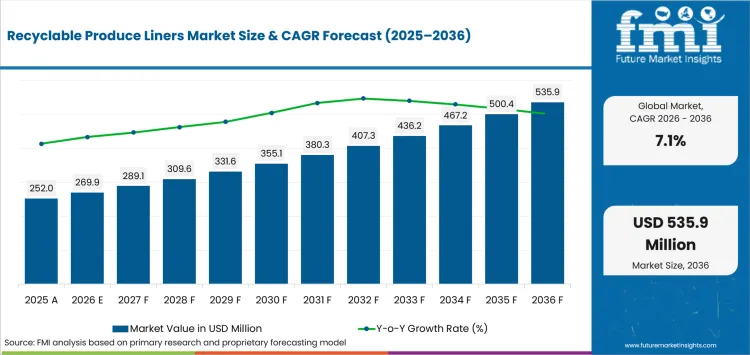
USD 269.9 million in 2026 and USD 535.9 million by 2036 at a 7.1% CAGR.
Demand for recyclable produce liners is projected to expand at 7.1% CAGR between 2026 and 2036, increasing valuation from USD 269.9 million to USD 535.9 million. Produce packers need moisture control without adding a produce packaging component that weakens the recovery claim for the full pack. Regulation (EU) 2025/40 generally applies from August 2026 and establishes recyclability requirements for packaging sold in the European Union. The compliance brings small inserts into the same design review as trays and cartons.
Country conversion paths depend on collection rules and pack-line discipline across each profiled fresh-produce market. Germany offers mature paper recovery, whereas Japan applies more detailed municipal sorting and presentation requirements. Japan’s environment ministry reported in July 2025 that seven local projects tested integrated plastic collection and updated municipal guidance. Produce programs therefore need material-specific recyclable packaging evidence plus local trials covering moisture, residue and pack geometry.
Key Takeaways of Recyclable Produce Liners Market
- Produce packers are increasing liner trials as moisture control and recovery evidence must work inside one qualified pack.
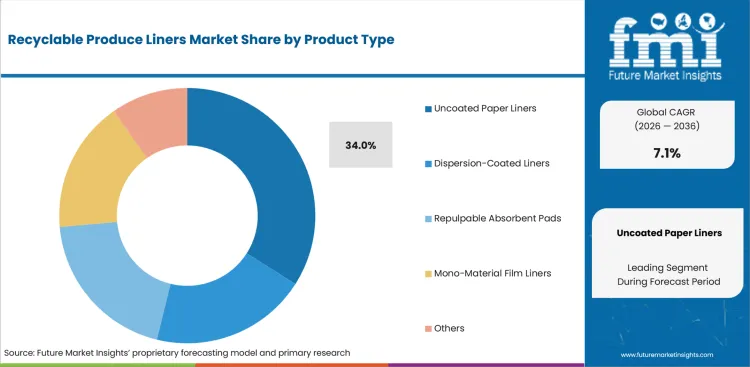
- Uncoated Paper Liners are projected to account for 34.0% by product type in 2026 due to familiar paper conversion.
- Recycled Fiber is estimated to hold 32.0% share in 2026 owing to established collection systems and content targets.
- Moisture Management is anticipated to represent 36.0% share in 2026 because liquid retention protects saleable pack quality.
- Wet strength and food-contact review can extend qualification if coatings or residues weaken the intended recovery route.
- Sirane, Cellcomb, McAirlaid's and Novipax serve absorbency programs, and Cascades, Mondi, Smurfit Westrock and Aptar Active Material Science are some notable players.
Analyst Perspective
"Recyclable produce liners earn repeat orders once absorbency, wet strength and recovery evidence remain valid inside the same pack configuration. Commercial approval should test the liner with the tray, line settings and local collection route before any broad recyclability claim."
- Nandini Roy Choudhury, Principal Consultant, Future Market Insights
How is the Recyclable Produce Liners Market segmented?
The recyclable produce liners market is segmented by product type, material, function, produce type, end use, sales channel and region.
Product type includes uncoated paper, dispersion-coated, repulpable absorbent and mono-material films, and material covers recycled fiber, virgin fiber, mono PE or PP film and airlaid cellulose. Function separates moisture management, cushioning and presentation, and produce type covers fruits, vegetables, berries and leafy greens. End use distinguishes growers, retail and distribution, and sales channels include direct OEM supply, distributors and online routes within paper packaging programs.
Why do Uncoated Paper Liners remain central to Product Type selection?
Uncoated paper suits produce packs that need separation or light cushioning without a complex barrier layer. Converters cut and size sheets for cartons or trays, although wet-strength paper must remain adequate during transport. The format also limits material separation at sites that already handle fiber trays and paper cartons.
- Based on product type, uncoated paper liners are projected to account for 34.0% in 2026 due to conversion and pack assembly.
- In January 2024, Cascades introduced produce baskets made with up to 100% recycled fibers for fresh food programs. The launch confirms that growers use fiber formats combining pack protection with recognized paper collection routes.
Why does Recycled Fiber shape Material selection?
Recycled fiber connects liner selection with paper recovery programs, but furnish quality must suit food-adjacent use. Odor, loose fibers and wet compression can disqualify a sheet even if recycled content meets a packaging target. Converters therefore specify surface finish and intended contact conditions before approving barrier-coated papers for produce programs.
- By material, recycled fiber is estimated to hold 32.0% in 2026 owing to established collection systems and recycled-content goals.
- Converters qualify recycled fiber by checking odor, surface cleanliness and wet compression against the intended food-adjacent use. Odor and compression checks determine whether recycled content survives line trials without shedding fibers or weakening pack appearance.
How does Moisture Management determine Function demand?
Moisture management addresses condensation and produce exudate that can stain packs or accelerate quality loss. Absorbency does not secure approval unless the liner retains liquid under compression and preserves produce ventilation. Temperature changes make retention a separate specification from initial uptake capacity in food packaging film and fiber packs.
- In 2026, moisture management is expected to lead Function with 36.0% share because liquid control protects pack appearance and quality.
- Pack trials compare uptake speed with retained liquid under compression and temperature cycling across chilled distribution conditions. A format that releases moisture during stacking loses its protective role even if laboratory absorption appears high.
Why do Growers & Packers lead End Use demand?
Growers and packers place the liner into the pack and experience poor fit first during seasonal production. Their teams set sheet size, loading method and line speed across seasonal fresh food packaging programs. Retail approval matters, but repeat orders depend on packing and cold-storage performance across multiple formats.
- By end use, growers & packers are forecast to represent 38.0% in 2026 driven by direct control over pack assembly and line validation.
- Growers and packers favor direct trial support that matches liner dimensions with tray geometry and loading speed. Documented chilled-storage performance reduces seasonal restart work and improves repeat-order planning for recurring produce programs.
What are the drivers, restraints and opportunities in the Recyclable Produce Liners Market?
Producer-responsibility rules pull liner reviews forward, but wet performance extends qualification and recoverable material families improve replacement economics.
- Driver: Packaging rules and retailer specifications increase demand for liners that preserve the recovery claim of the complete produce pack.
- Restraint: Wet strength, absorption and food-contact evidence must remain compatible with the intended paper or polymer recovery route.
- Opportunity: Related liner grades can use one recoverable material system with adjusted absorbency and dimensions for distinct produce programs.
Producer-Responsibility Rules Pull Component Reviews Forward
Producer-responsibility rules force packaging teams to review the liner alongside the tray or carton because one incompatible insert can weaken the full recovery claim. Retailers therefore request component-level material declarations during redesign and favor liners that preserve moisture control without adding an unfamiliar layer.
Wet Strength and Food-Contact Review Extend Qualification
Chilled use complicates qualification because paper can soften or shed fibers, while added barriers may reduce repulpability. Film liners require separate migration and sorting evidence for the intended market. Commercial orders usually follow combined testing of absorption and line performance.
Recoverable Liner Families Improve Repeat-Order Economics
Manufacturers can reduce repeat qualification by building several liner grades around one recoverable material system. Shared outer layers and common test methods let packers adjust absorbency or dimensions across berries, whole fruit and fresh-cut packs. Direct technical support limits the need to restart the entire active packaging review for each produce format.
Which country CAGRs are profiled in the Recyclable Produce Liners Market?
| Country | CAGR |
|---|---|
| Brazil | 7.5% |
| United Kingdom | 7.0% |
| Germany | 6.9% |
| United States | 6.5% |
| Japan | 5.7% |
How do country-level CAGRs compare in the Recyclable Produce Liners Market?
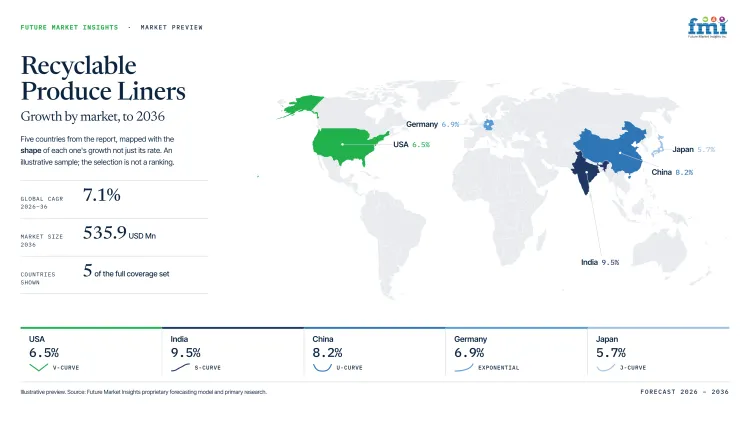
The profiled markets span 1.8 percentage points from Brazil at 7.5% CAGR to Japan at 5.7% CAGR. Shared recovery pressure produces a narrow range because regulation and local collection practice create distinct qualification routes.
- Brazil's position is reinforced by export-oriented produce supply chains, where durability and recovery performance remain important across extended distribution routes.
- In the UK, fee-based recyclability assessments are increasing attention on component design, material selection and documented recovery outcomes.
- Germany places greater emphasis on repulpability evidence, particularly for wet-strength fiber components that may affect sorting and recycling efficiency.
- The USA market operates within a mix of retailer requirements, producer-responsibility programs and differing local recovery capabilities.
- Japan's qualification process remains closely tied to pack precision, with moisture-control formats often subject to extended validation before broader adoption.
Country selection also depends on freshness monitoring that reveals whether a liner protects saleable quality across the route.
Comparable CAGRs can produce distinct market entry conditions across regulation, service access and pack qualification. The full report provides country-level CAGR analysis across North America, Latin America, Europe, East Asia, South Asia and Pacific, and the Middle East and Africa.
Country-wise Analysis
- Brazilian produce exporters and large packhouses rely on liners that maintain cushioning and moisture management across humid domestic networks and long-distance export shipments. This preference supports durable fiber-based and mono-material formats backed by regional converting capacity and dependable seasonal supply. Brazil’s recyclable produce liners outlook is anticipated to advance at 7.5% CAGR over the assessment period, supported by lengthy distribution routes and expanding packaging-recovery obligations within national plastic packaging systems. Brazil’s October 2025 Decree 12.688 established 32.0% recovery and 22.0% recycled-content targets for 2026. Food-contact requirements and uneven collection infrastructure continue to demand clear material documentation across both retail and export produce programs.
- Retailers in the United Kingdom increasingly depend on on-pack recycling guidance and detailed specification reviews when assessing wet liners for chilled produce applications. Materials with documented paper-stream compatibility and validated pack performance remain well positioned. Recyclable produce liner sales in the United Kingdom are forecast to expand at 7.0% CAGR by 2036, supported by fee modulation policies and retailer influence over tray and punnet specifications. PackUK noted in June 2025 that red, amber, and green recyclability classifications would shape 2026 disposal fees. Absorbent inserts require evidence covering residue impacts and component separation across collection systems.
- Germany benefits from mature paper-recovery infrastructure, yet recyclable produce liners must still demonstrate repulpability under chilled storage conditions and extended retailer distribution cycles. Maintaining pack integrity while preserving recyclability remains a key qualification requirement. The German recyclable produce liners sector is projected to record a 6.9% CAGR during the assessment period, aided by established sorting networks and rigorous component documentation standards for wet-use fiber solutions. The German Environment Agency reported in January 2026 that dual systems recycled 5.5 million tonnes in 2024. Even so, food residues and surface treatments continue to necessitate pack-specific testing for grocery and export-oriented produce programs.
- In the United States, major grower-shippers evaluate recyclable liners against retailer-defined performance standards that combine chilled-chain requirements with evolving state packaging regulations. Formats that can be deployed across multiple operations without production-line adjustments generally receive greater commercial interest. Recyclable produce liner demand in the United States is forecast to rise at 6.5% CAGR over the forecast period, shaped by producer-responsibility policies and extensive private-label qualification activity across regional recovery systems. CalRecycle confirmed in May 2026 that SB 54 regulations became effective on May 1 and retained 25% reduction and 65% recycling targets for 2032. Liner specifications must remain flexible enough to accommodate varying collection practices across states and municipalities.
- Japanese produce suppliers place significant emphasis on product presentation and precise tray fit, making packaging changes subject to extensive qualification work during seasonal packing programs. Even minor liner modifications often require verification across automated packing equipment and chilled retail distribution channels. Adoption of recyclable produce liners in Japan is estimated to expand at 5.7% CAGR through 2036, supported by organized municipal collection systems and stringent retailer quality requirements across national grocery chains. Japan’s environment ministry reported in March 2026 that 1,434 municipalities, representing 82.4%, planned plastic-container collection for fiscal 2026. Separate paper and plastic recovery pathways continue to require material-specific disposal evidence alongside consistent moisture-management performance.
Who are the notable companies in the Recyclable Produce Liners Market?
Sirane, Cellcomb, McAirlaid's, Novipax, Cascades, Mondi, Smurfit Westrock and Aptar Active Material Science are the notable companies serving this market.
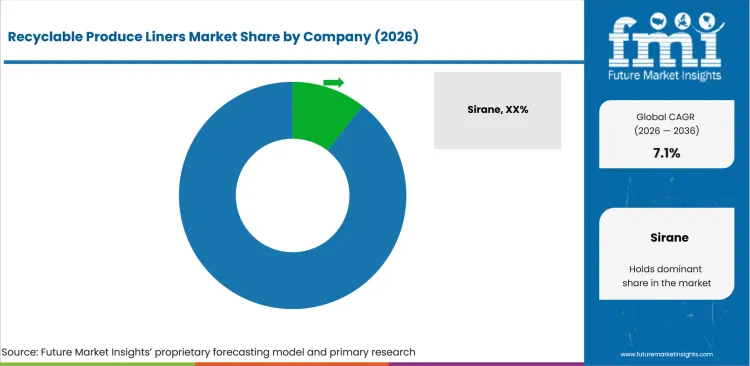
The competition landscape combines absorbent-pad specialists with integrated fiber-packaging groups and active food-protection system providers in current commercial programs. Entry barriers arise from wet-performance evidence, food-contact controls and the ability to fit liners into existing tray or punnet lines. Company scale matters less than documented performance across one defined produce application and compatibility with micro-perforated films or fiber-based pack systems.
- Sirane, Cellcomb, McAirlaid's, Novipax and Aptar Active Material Science compete on absorbency design, produce fit and food-protection integration.
- Cascades, Mondi and Smurfit Westrock connect liner or insert decisions with fiber trays, cartons, converting support and pack-line execution.
Competitive Benchmarking: Recyclable Produce Liners Market
| Company | Moisture-Control Depth | Recovery Evidence | Pack-Line Integration | Geographic Reach |
|---|---|---|---|---|
| Sirane | High | High | High | Europe, North America and Mexico |
| Cellcomb | High | High | Medium | Europe and international food markets |
| McAirlaid's | High | Medium | High | Germany and United States with sales in 70+ countries |
| Novipax | High | Medium | High | United States and wider North America |
| Cascades | Medium | High | High | Canada and United States |
| Mondi | Medium | High | High | Europe and international operations |
| Smurfit Westrock | Medium | High | High | Global |
| Aptar Active Material Science | High | Medium | High | North America and international fresh-cut produce markets |
Key Developments in the Recyclable Produce Liners Market
- In October 2025, Mondi documented a 100% recyclable double-wall corrugated pack developed with Özler Tarım for long-distance produce exports. The flat-stack design raised capacity at the customer’s Adana facility by 15% and reduced collapse-related handling losses.
- In March 2025, Cellcomb confirmed home and garden compost certification for Cellsorb Circular as a second documented disposal route. The cellulose mono-material food pad already held industrial compostability and gained a second documented disposal route for European produce and food programs.
- In January 2025, Smurfit Westrock reported ten WorldStar awards covering a ventilated fruit tray plus a fresh produce speed tray and a fiber fruit-and-vegetable punnet. The results document application-specific design activity across Brazil and the Czech Republic alongside Spanish fresh-produce packing conditions.
Key Players in the Recyclable Produce Liners Market
Absorbency and Freshness-Control Specialists
- Sirane
- Cellcomb
- McAirlaid's
- Novipax
- Aptar Active Material Science
Integrated Fiber Produce-Packaging Platforms
- Cascades
- Mondi
- Smurfit Westrock
Recyclable Produce Liners Market - Report Scope
| Coverage field | Report scope |
|---|---|
| Market breakdown | By product type, material, function, produce type, end use, sales channel and region. |
| Quantitative Units | Revenue in USD million and CAGR in %. |
| Market Definition | Recyclable liners, sheets and absorbent inserts used inside fresh-produce packs to manage moisture, cushioning or presentation while supporting a documented recovery route. |
| Regions Covered | North America, Latin America, Western Europe, Eastern Europe, East Asia, South Asia and Pacific, and Middle East and Africa. |
| Countries Covered | Brazil, United Kingdom, Germany, United States, Japan, and 20+ countries included in the full report. |
| Key Companies Profiled | Sirane, Cellcomb, McAirlaid's, Novipax, Cascades, Mondi, Smurfit Westrock, Aptar Active Material Science. |
| Forecast Period | 2026 to 2036. |
| Approach | Primary and secondary research with market triangulation. |
Recyclable Produce Liners Market - Research Methodology
| Method | Approach |
|---|---|
| Primary Research | FMI analysts gathered input from manufacturers, service providers, technology developers, distributors, end users, procurement teams, and subject-matter experts. Interviews examined purchasing decisions, product or service evaluation, adoption barriers, approval requirements, pricing considerations, and expectations for technical or commercial support. Respondents were also asked what evidence is required before a trial, pilot, or initial order develops into regular purchasing. |
| Desk Research | Desk research covered government statistics, regulatory publications, trade data, industry associations, technical literature, standards, company filings, product information, and official corporate announcements. Sources were reviewed for relevance, publication date, geographic coverage, and consistency with the defined market scope. Claims relating to performance, applications, approvals, capacity, investment, and commercial activity were retained only when supported by credible public evidence. |
| Market Sizing and Forecasting | The market model combined the baseline value with historical performance, segment structure, pricing and volume indicators, adoption levels, company participation, and country-level demand conditions. Forecast assumptions considered economic activity, investment trends, regulatory developments, technology adoption, purchasing cycles, supply availability, and barriers to wider market use. Segment and regional estimates were reconciled before the final market total was calculated. |
| Data Validation | Estimates were checked against multiple independent indicators, including public data, company activity, trade patterns, industry developments, and findings from primary interviews. Validation also tested whether products, services, applications, and company revenues fell within the defined market boundaries. Adjacent categories, unsupported claims, overlapping revenues, and activities without direct market relevance were excluded to reduce double counting and maintain consistency across segments and countries. |
Recyclable Produce Liners Market by Segments
Recyclable Produce Liners Market segmented by Product Type:
- Uncoated Paper Liners
- Dispersion-Coated Liners
- Repulpable Absorbent Pads
- Mono-Material Film Liners
- Others
Recyclable Produce Liners Market segmented by Material:
- Recycled Fiber
- Virgin Fiber
- Mono PE - PP Film
- Airlaid Cellulose
- Others
Recyclable Produce Liners Market segmented by Function:
- Moisture Management
- Protection & Cushioning
- Presentation - Display
- Others
Recyclable Produce Liners Market segmented by Produce Type:
- Fruits
- Vegetables
- Berries
- Leafy Greens
- Others
Recyclable Produce Liners Market segmented by End Use:
- Growers & Packers
- Grocery Retail
- Wholesale & Distribution
- Others
Recyclable Produce Liners Market segmented by Sales Channel:
- Direct - OEM Supply
- Packaging Distributors
- Online - E-commerce
- Others
Recyclable Produce Liners Market by Region:
- North America
- United States
- Canada
- Latin America
- Brazil
- Mexico
- Argentina
- Chile
- Rest of Latin America
- Western Europe
- Germany
- France
- United Kingdom
- Italy
- Spain
- Benelux
- Nordics
- Rest of Western Europe
- Eastern Europe
- Poland
- Czech Republic
- Romania
- Hungary
- Rest of Eastern Europe
- East Asia
- China
- Japan
- South Korea
- South Asia and Pacific
- India
- ASEAN
- Australia and New Zealand
- Rest of South Asia and Pacific
- Middle East and Africa
- GCC Countries
- South Africa
- Türkiye
- Israel
- Rest of Middle East and Africa
Research Sources and Bibliography
- European Parliament and Council of the European Union. (2025, January 22). Regulation (EU) 2025/40 of the European Parliament and of the Council of 19 December 2024 on packaging and packaging waste, amending Regulation (EU) 2019/1020 and Directive (EU) 2019/904, and repealing Directive 94/62/EC (Text with EEA relevance).
- Ministry of the Environment, Government of Japan. (2025, July 10).
- Cascades Inc. (2024, January 31). Cascades is proud to offer even more sustainable alternatives for hard-to-recycle packaging with a brand new line of produce baskets with flaps.
- Cellcomb AB. (2025, March 12). Cellsorb Circular - now certified for your home-and garden compost!
- Mondi plc. (2025, October 2). Reducing food waste with smart packaging: a sustainable success story from Özler Tarım & Mondi.
- Presidency of the Republic, Brazil. (2025, October 21). Decreto nº 12.688, de 21 de outubro de 2025.
- Department for Environment, Food & Rural Affairs. (2025, June 27). Extended Producer Responsibility for Packaging: 2025 base fees.
- German Environment Agency. (2026, January 27). Facts against myths: Packaging waste recycling in Germany is working.
- California Department of Resources Recycling and Recovery. (2026, May 12). Notice of SB 54 Plastic Pollution Prevention and Packaging Producer Responsibility Act Permanent Regulations Final OAL Approval.
- Ministry of the Environment, Government of Japan. (2026, March 31).
- Smurfit Westrock plc. (2025, January 22). Smurfit Westrock showcases innovation expertise at WorldStar 2025.
- Sirane. (2023, March 9). EARTH PACKAGING: World first as absorbent fruit pads approved for recycling.
- McAirlaid's. (n.d.). Locations. Retrieved August 6, 2026.
- Novipax LLC. (n.d.). Company. Retrieved August 6, 2026.
- AptarGroup, Inc. (2024, March 4). Aptar - Food Protection enters exclusive partnership with Halopack to launch recyclable, fiber-based tray system in North America.
- Mondi plc. (2025, November 18). Mondi launches extended corrugated and solid board portfolio for the food packaging industry.
- Cellcomb AB. (2025, June 4). Cellcomb acquires Fatex.
- Cascades Inc. (2025, March 21). Vergers Jean-Yves Boileau & Cascades - Pioneering Sustainable Produce Packaging.
This bibliography is provided for reader reference and is not exhaustive. The full report contains the complete reference list and detailed citations.
This Report Answers
- How large is the recyclable produce liners market in 2026 and 2036?
- Which operating conditions are increasing demand for recyclable produce liners?
- Why do Uncoated Paper Liners account for 34.0% of Product Type demand in 2026?
- How does Recycled Fiber affect material approval and recovery claims?
- Why does Moisture Management represent 36.0% of Function demand in 2026?
- How do the five profiled country CAGRs differ between Brazil and Japan?
- Which companies serve absorbency, fiber-packaging and active food-protection applications?
- Which wet-performance and food-contact requirements can extend qualification?
Frequently Asked Questions
How big is the Recyclable Produce Liners Market in 2026?
The recyclable produce liners market is estimated at USD 269.9 million in value during 2026. Demand is projected to reach USD 535.9 million by 2036 as produce packers combine moisture control with documented recovery routes for liners, trays and cartons.
What is the CAGR of the Recyclable Produce Liners Market from 2026 to 2036?
The recyclable produce liners market is projected to expand at a 7.1% CAGR between 2026 and 2036. Growth is supported by producer-responsibility rules and redesign programs that require functional inserts to match the recovery claim of the complete produce pack.
Which Product Type leads the Recyclable Produce Liners Market?
Uncoated Paper Liners are projected to account for 34.0% of Product Type demand in 2026. Their position reflects familiar paper conversion and straightforward pack assembly, although chilled storage and retail distribution require adequate wet strength and controlled fiber release.
How much incremental opportunity does the Recyclable Produce Liners Market add by 2036?
The recyclable produce liners market is expected to add USD 266.0 million between 2026 and 2036. Revenue conversion depends on reducing produce damage without slowing packing lines or introducing a liner treatment that loses eligibility in the intended local recovery route.
Which companies are active in the Recyclable Produce Liners Market?
Sirane, Cellcomb, McAirlaid's, Novipax, Cascades, Mondi, Smurfit Westrock and Aptar Active Material Science are active in the recyclable produce liners market. Their roles span absorbent pads, fiber pack systems and active food-protection formats across distinct qualification routes and service territories.
Preview the report firsthand - request a free sample
Get SampleGet the brochure for pricing and purchase details.
Get PDFTable of Content
- Key Takeaways
- Market Size and CAGR
- Top Growth Driver
- Fastest Growing Segment
- Leading Region
- Key Companies
- Emerging Opportunities
- Executive Summary
- Global Market Outlook
- Demand-side Trends
- Supply-side Trends
- Technology Roadmap Analysis
- Analysis and Recommendations
- Analyst Perspective (What is happening? Why now? What should investors know?)
- Key Questions Answered
- How large is the market?
- What is the CAGR?
- What are key trends?
- Which region dominates?
- Who are the leaders?
- Market Overview
- Market Coverage / Taxonomy
- Market Definition / Scope / Limitations
- Research Methodology
- Chapter Orientation
- Analytical Lens and Working Hypotheses
- Market Structure, Signals, and Trend Drivers
- Benchmarking and Cross-market Comparability
- Market Sizing, Forecasting, and Opportunity Mapping
- Research Design and Evidence Framework
- Desk Research Programme (Secondary Evidence)
- Expert Input and Fieldwork (Primary Evidence)
- Tooling, Models, and Reference Databases
- Data Engineering and Model Build
- Quality Assurance and Audit Trail
- Market Background
- Market Dynamics (Drivers, Restraints, Opportunity, Trends)
- Scenario Forecast (Optimistic, Likely, Conservative)
- Impact Analysis
- AI Impact
- Sustainability Impact
- Regulatory Impact
- Technology Impact
- Consumer / Buyer Analysis
- Purchase Drivers
- Adoption Barriers
- Buyer Journey
- Opportunity Map Analysis
- Product Life Cycle Analysis
- Supply Chain Analysis
- Investment Feasibility Matrix
- Value Chain Analysis
- PESTLE and Porter's Analysis
- Regulatory Landscape
- Regional Parent Market Outlook
- Production and Consumption Statistics
- Import and Export Statistics
- Global Market Analysis and Forecast, 2021 to 2036
- Historical Market Size Value (USD Million) Analysis, 2021 to 2025
- Current and Future Market Size Value (USD Million) Projections, 2026 to 2036
- Y-o-Y Growth Trend Analysis
- Absolute $ Opportunity Analysis
- Global Market Pricing Analysis, 2021 to 2036
- Global Market Analysis and Forecast, By Product Type, 2021 to 2036
- Introduction / Key Findings
- Historical Market Size Value (USD Million) Analysis By Product Type, 2021 to 2025
- Current and Future Market Size Value (USD Million) Analysis and Forecast By Product Type, 2026 to 2036
- Uncoated Paper Liners
- Dispersion-Coated Liners
- Repulpable Absorbent Pads
- Mono-Material Film Liners
- Others
- Uncoated Paper Liners
- Y-o-Y Growth Trend Analysis By Product Type, 2021 to 2025
- Absolute $ Opportunity Analysis By Product Type, 2026 to 2036
- Global Market Analysis and Forecast, By Material, 2021 to 2036
- Introduction / Key Findings
- Historical Market Size Value (USD Million) Analysis By Material, 2021 to 2025
- Current and Future Market Size Value (USD Million) Analysis and Forecast By Material, 2026 to 2036
- Recycled Fiber
- Virgin Fiber
- Mono PE - PP Film
- Airlaid Cellulose
- Others
- Recycled Fiber
- Y-o-Y Growth Trend Analysis By Material, 2021 to 2025
- Absolute $ Opportunity Analysis By Material, 2026 to 2036
- Global Market Analysis and Forecast, By Function, 2021 to 2036
- Introduction / Key Findings
- Historical Market Size Value (USD Million) Analysis By Function, 2021 to 2025
- Current and Future Market Size Value (USD Million) Analysis and Forecast By Function, 2026 to 2036
- Moisture Management
- Protection & Cushioning
- Presentation - Display
- Others
- Moisture Management
- Y-o-Y Growth Trend Analysis By Function, 2021 to 2025
- Absolute $ Opportunity Analysis By Function, 2026 to 2036
- Global Market Analysis and Forecast, By Produce Type, 2021 to 2036
- Introduction / Key Findings
- Historical Market Size Value (USD Million) Analysis By Produce Type, 2021 to 2025
- Current and Future Market Size Value (USD Million) Analysis and Forecast By Produce Type, 2026 to 2036
- Fruits
- Vegetables
- Berries
- Leafy Greens
- Others
- Fruits
- Y-o-Y Growth Trend Analysis By Produce Type, 2021 to 2025
- Absolute $ Opportunity Analysis By Produce Type, 2026 to 2036
- Global Market Analysis and Forecast, By End Use, 2021 to 2036
- Introduction / Key Findings
- Historical Market Size Value (USD Million) Analysis By End Use, 2021 to 2025
- Current and Future Market Size Value (USD Million) Analysis and Forecast By End Use, 2026 to 2036
- Growers & Packers
- Grocery Retail
- Wholesale & Distribution
- Others
- Growers & Packers
- Y-o-Y Growth Trend Analysis By End Use, 2021 to 2025
- Absolute $ Opportunity Analysis By End Use, 2026 to 2036
- Global Market Analysis and Forecast, By Sales Channel
- Introduction / Key Findings
- Historical Market Size Value (USD Million) Analysis By Sales Channel, 2021 to 2025
- Current and Future Market Size Value (USD Million) Analysis and Forecast By Sales Channel, 2026 to 2036
- Direct - OEM Supply
- Packaging Distributors
- Online - E-commerce
- Others
- Direct - OEM Supply
- Y-o-Y Growth Trend Analysis By Sales Channel, 2021 to 2025
- Absolute $ Opportunity Analysis By Sales Channel, 2026 to 2036
- Global Market Analysis and Forecast, By Region, 2021 to 2036
- Introduction
- Historical Market Size Value (USD Million) Analysis By Region, 2021 to 2025
- Current Market Size Value (USD Million) Analysis and Forecast By Region, 2026 to 2036
- North America
- Latin America
- Western Europe
- Eastern Europe
- East Asia
- South Asia and Pacific
- Middle East & Africa
- Market Attractiveness Analysis By Region
- North America Market Analysis and Forecast, By Country, 2021 to 2036
- Historical Market Size Value (USD Million) Trend Analysis By Market Taxonomy, 2021 to 2025
- Market Size Value (USD Million) Forecast By Market Taxonomy, 2026 to 2036
- By Country
- USA
- Canada
- By Product Type
- By Material
- By Function
- By Produce Type
- By End Use
- By Sales Channel
- By Country
- Market Attractiveness Analysis
- By Country
- By Product Type
- By Material
- By Function
- By Produce Type
- By End Use
- By Sales Channel
- Key Takeaways
- Latin America Market Analysis and Forecast, By Country
- Historical Market Size Value (USD Million) Trend Analysis By Market Taxonomy, 2021 to 2025
- Market Size Value (USD Million) Forecast By Market Taxonomy, 2026 to 2036
- By Country
- Brazil
- Mexico
- Chile
- Rest of Latin America
- By Product Type
- By Material
- By Function
- By Produce Type
- By End Use
- By Sales Channel
- By Country
- Market Attractiveness Analysis
- By Country
- By Product Type
- By Material
- By Function
- By Produce Type
- By End Use
- By Sales Channel
- Key Takeaways
- Western Europe Market Analysis and Forecast, By Country
- Historical Market Size Value (USD Million) Trend Analysis By Market Taxonomy, 2021 to 2025
- Market Size Value (USD Million) Forecast By Market Taxonomy, 2026 to 2036
- By Country
- Germany
- UK
- Italy
- Spain
- France
- Nordic
- BENELUX
- Rest of Western Europe
- By Product Type
- By Material
- By Function
- By Produce Type
- By End Use
- By Sales Channel
- By Country
- Market Attractiveness Analysis
- By Country
- By Product Type
- By Material
- By Function
- By Produce Type
- By End Use
- By Sales Channel
- Key Takeaways
- Eastern Europe Market Analysis and Forecast, By Country
- Historical Market Size Value (USD Million) Trend Analysis By Market Taxonomy, 2021 to 2025
- Market Size Value (USD Million) Forecast By Market Taxonomy, 2026 to 2036
- By Country
- Russia
- Poland
- Hungary
- Balkan & Baltic
- Rest of Eastern Europe
- By Product Type
- By Material
- By Function
- By Produce Type
- By End Use
- By Sales Channel
- By Country
- Market Attractiveness Analysis
- By Country
- By Product Type
- By Material
- By Function
- By Produce Type
- By End Use
- By Sales Channel
- Key Takeaways
- East Asia Market Analysis and Forecast, By Country
- Historical Market Size Value (USD Million) Trend Analysis By Market Taxonomy, 2021 to 2025
- Market Size Value (USD Million) Forecast By Market Taxonomy, 2026 to 2036
- By Country
- China
- Japan
- South Korea
- By Product Type
- By Material
- By Function
- By Produce Type
- By End Use
- By Sales Channel
- By Country
- Market Attractiveness Analysis
- By Country
- By Product Type
- By Material
- By Function
- By Produce Type
- By End Use
- By Sales Channel
- Key Takeaways
- South Asia and Pacific Market Analysis and Forecast, By Country
- Historical Market Size Value (USD Million) Trend Analysis By Market Taxonomy, 2021 to 2025
- Market Size Value (USD Million) Forecast By Market Taxonomy, 2026 to 2036
- By Country
- India
- ASEAN
- Australia & New Zealand
- Rest of South Asia and Pacific
- By Product Type
- By Material
- By Function
- By Produce Type
- By End Use
- By Sales Channel
- By Country
- Market Attractiveness Analysis
- By Country
- By Product Type
- By Material
- By Function
- By Produce Type
- By End Use
- By Sales Channel
- Key Takeaways
- Middle East & Africa Market Analysis and Forecast, By Country
- Historical Market Size Value (USD Million) Trend Analysis By Market Taxonomy, 2021 to 2025
- Market Size Value (USD Million) Forecast By Market Taxonomy, 2026 to 2036
- By Country
- Kingdom of Saudi Arabia
- Other GCC Countries
- Türkiye
- South Africa
- Other African Union
- Rest of Middle East & Africa
- By Product Type
- By Material
- By Function
- By Produce Type
- By End Use
- By Sales Channel
- By Country
- Market Attractiveness Analysis
- By Country
- By Product Type
- By Material
- By Function
- By Produce Type
- By End Use
- By Sales Channel
- Key Takeaways
- Key Countries Market Analysis
- USA
- Pricing Analysis
- Market Share Analysis, 2025
- By Product Type
- By Material
- By Function
- By Produce Type
- By End Use
- By Sales Channel
- Canada
- Pricing Analysis
- Market Share Analysis, 2025
- By Product Type
- By Material
- By Function
- By Produce Type
- By End Use
- By Sales Channel
- Mexico
- Pricing Analysis
- Market Share Analysis, 2025
- By Product Type
- By Material
- By Function
- By Produce Type
- By End Use
- By Sales Channel
- Brazil
- Pricing Analysis
- Market Share Analysis, 2025
- By Product Type
- By Material
- By Function
- By Produce Type
- By End Use
- By Sales Channel
- Chile
- Pricing Analysis
- Market Share Analysis, 2025
- By Product Type
- By Material
- By Function
- By Produce Type
- By End Use
- By Sales Channel
- Germany
- Pricing Analysis
- Market Share Analysis, 2025
- By Product Type
- By Material
- By Function
- By Produce Type
- By End Use
- By Sales Channel
- UK
- Pricing Analysis
- Market Share Analysis, 2025
- By Product Type
- By Material
- By Function
- By Produce Type
- By End Use
- By Sales Channel
- Italy
- Pricing Analysis
- Market Share Analysis, 2025
- By Product Type
- By Material
- By Function
- By Produce Type
- By End Use
- By Sales Channel
- Spain
- Pricing Analysis
- Market Share Analysis, 2025
- By Product Type
- By Material
- By Function
- By Produce Type
- By End Use
- By Sales Channel
- France
- Pricing Analysis
- Market Share Analysis, 2025
- By Product Type
- By Material
- By Function
- By Produce Type
- By End Use
- By Sales Channel
- India
- Pricing Analysis
- Market Share Analysis, 2025
- By Product Type
- By Material
- By Function
- By Produce Type
- By End Use
- By Sales Channel
- ASEAN
- Pricing Analysis
- Market Share Analysis, 2025
- By Product Type
- By Material
- By Function
- By Produce Type
- By End Use
- By Sales Channel
- Australia & New Zealand
- Pricing Analysis
- Market Share Analysis, 2025
- By Product Type
- By Material
- By Function
- By Produce Type
- By End Use
- By Sales Channel
- China
- Pricing Analysis
- Market Share Analysis, 2025
- By Product Type
- By Material
- By Function
- By Produce Type
- By End Use
- By Sales Channel
- Japan
- Pricing Analysis
- Market Share Analysis, 2025
- By Product Type
- By Material
- By Function
- By Produce Type
- By End Use
- By Sales Channel
- South Korea
- Pricing Analysis
- Market Share Analysis, 2025
- By Product Type
- By Material
- By Function
- By Produce Type
- By End Use
- By Sales Channel
- Russia
- Pricing Analysis
- Market Share Analysis, 2025
- By Product Type
- By Material
- By Function
- By Produce Type
- By End Use
- By Sales Channel
- Poland
- Pricing Analysis
- Market Share Analysis, 2025
- By Product Type
- By Material
- By Function
- By Produce Type
- By End Use
- By Sales Channel
- Hungary
- Pricing Analysis
- Market Share Analysis, 2025
- By Product Type
- By Material
- By Function
- By Produce Type
- By End Use
- By Sales Channel
- Kingdom of Saudi Arabia
- Pricing Analysis
- Market Share Analysis, 2025
- By Product Type
- By Material
- By Function
- By Produce Type
- By End Use
- By Sales Channel
- Türkiye
- Pricing Analysis
- Market Share Analysis, 2025
- By Product Type
- By Material
- By Function
- By Produce Type
- By End Use
- By Sales Channel
- South Africa
- Pricing Analysis
- Market Share Analysis, 2025
- By Product Type
- By Material
- By Function
- By Produce Type
- By End Use
- By Sales Channel
- USA
- Market Structure Analysis
- Competition Dashboard
- Competition Benchmarking
- Market Share Analysis of Top Players
- By Regional
- By Product Type
- By Material
- By Function
- By Produce Type
- By End Use
- By Sales Channel
- Emerging Startups
- Innovation Benchmarking
- Competition Analysis
- Competition Deep Dive
- Sirane
- Overview
- Product Portfolio
- Profitability by Market Segments
- Sales Footprint
- Strategy Overview
- Marketing Strategy
- Product Strategy
- Channel Strategy
- Cellcomb
- McAirlaid's
- Cascades
- Novipax
- Mondi
- Smurfit Westrock
- Seaman Paper
- Maxwell Chase Technologies
- Nordic Paper
- Sirane
- Case Studies
- Success Stories
- Recent Developments
- Competition Deep Dive
- Assumptions & Acronyms Used


