

- Market Size (2026)
- USD 1239.3 Mn
- Forecast (2036)
- USD 3214.3 Mn
- CAGR (2026 to 2036)
- 10.0%
How big is Rinvecalinase Alfa Preeclampsia Therapeutics Market in 2026?
USD 1,239.3 million in 2026 and USD 3,214.3 million by 2036 at a 10.0% CAGR.
Demand for rinvecalinase alfa preeclampsia therapeutics is projected to grow at 10.0% CAGR through 2036 and increase valuation from USD 1,239.3 million to USD 3,214.3 million. Commercial spending spans symptom-control medicines and investigational disease-modifying therapies that require maternal-fetal monitoring throughout treatment. Hospitals evaluate injectable drug platforms through controlled dosing and continuous safety surveillance that influence delivery timing during high-risk pregnancies. The World Health Organization's July 2025 global consensus meeting on preeclampsia definition referenced the established estimate that 10 million women develop preeclampsia each year. The same meeting identified divergent definitions across 15 guidelines from 11 organizations, which complicates patient selection and comparable trial endpoints. Developers therefore need protocols that connect vascular response with maternal safety and fetal outcomes across a clearly defined treatment window.
National adoption routes differ through regulator expectations and specialist-center capacity under country-specific authority assigned to hospital pharmacy committees. United States programs require sponsor-led regulatory work and trial sites able to manage high-risk pregnancies under intensive monitoring. In December 2025, DiaMedica reported that FDA meeting minutes requested an additional non-clinical 10-day modified embryo-fetal development and pre- and postnatal development study in a rabbit model. The additional toxicology requirement can determine sponsor development timing even when early clinical signals appear encouraging. United Kingdom pathways can combine centralized clinical guidance with clinical trial services that support multicountry enrollment and evidence generation. Commercial entry therefore depends on country-specific authorization and dependable biologic supply under hospital protocols that define escalation or delivery decisions.
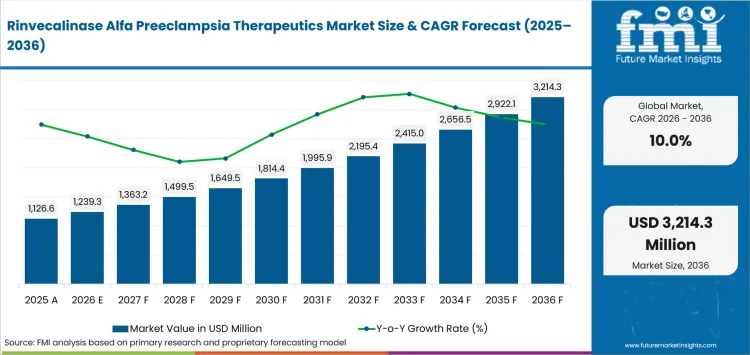
Key Takeaways of the Rinvecalinase Alfa Preeclampsia Therapeutics Market
- Rinvecalinase alfa therapy is projected to hold 33.0% of treatment type demand in 2026, targeting maternal endothelial dysfunction rather than blood-pressure control alone; DiaMedica's July 2025 interim Phase 2 results across 28 participants showed dose-dependent blood-pressure reductions with no placental transfer detected.
- Early-onset preeclampsia is estimated to account for 30.3% of indication demand in 2026, reflecting intensive management requirements within tertiary maternity centers where treatment timing materially affects neonatal outcomes.
- Intravenous administration is forecast to represent 42.3% of route-of-administration demand in 2026, supported by the need for rapid dose control and direct clinical supervision during severe maternal hemodynamic instability.
- Hospitals are expected to hold 31.9% of end-user demand in 2026, combining pharmacy governance, specialist staffing, and emergency delivery capacity that smaller care settings cannot consistently maintain.
- Japan leads country growth at a 12.5% CAGR through 2036, followed by Germany at 10.2% CAGR through specialist centers with formal hospital evidence requirements.
- DiaMedica Therapeutics anchors the investigational segment through its Phase 2 program, while Comanche Biopharma, Pfizer, Baxter, Hikma, and Catalent compete across targeted biologics, acute-care injectables, and drug-substance manufacturing.
Analyst Perspective
"The Rinvecalinase alfa preeclampsia therapeutics market will depend on whether emerging treatment strategies demonstrate meaningful maternal and fetal benefit within a tightly controlled safety framework. Clinical development requires clear patient selection, measurable outcomes, and evidence that supports use in high-risk pregnancy pathways. Companies that align clinical validation, reproductive-safety assessment, manufacturing readiness, and regulatory planning will strengthen development confidence."
Anurag Sharma, Principal Analyst at Future Market Insights
Source: FMI's proprietary forecasting model and primary research
How is the Rinvecalinase Alfa Preeclampsia Therapeutics Market segmented?
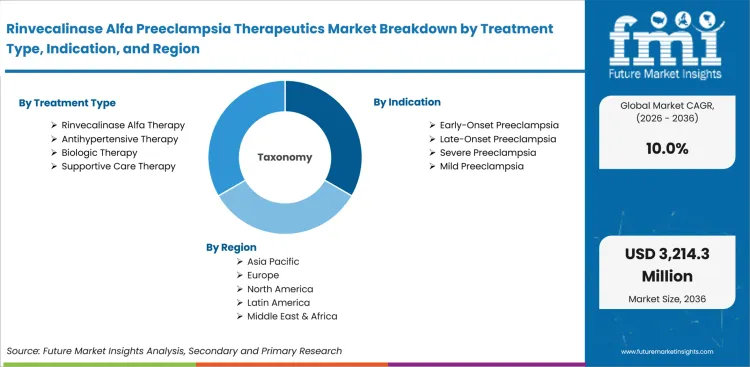
The rinvecalinase alfa preeclampsia therapeutics market is segmented by Treatment Type, Indication, Route of Administration, End User, and Region.
The segmentation framework separates therapeutic strategy from disease timing and administration route while identifying the institution responsible for monitored care. Treatment type distinguishes rinvecalinase alfa therapy from antihypertensive medicines and biologic or supportive approaches used across the care pathway. Indication separates early-onset and late-onset disease from severe or mild presentations according to clinical management intensity. Route of administration compares intravenous delivery with subcutaneous or oral delivery according to supervision needs and dosing practicality. End-user categories distinguish hospitals and maternity centers from specialty clinics or research institutes that purchase or administer therapy.
How does rinvecalinase alfa therapy influence the treatment type category?
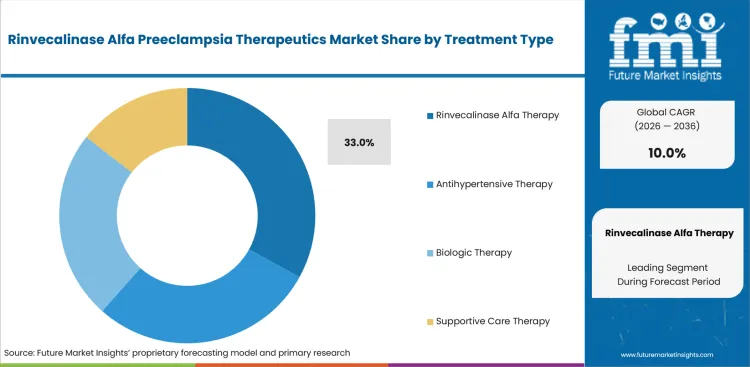
Rinvecalinase alfa therapy addresses endothelial dysfunction rather than relying entirely on blood-pressure control or expedited delivery. The development case requires maternal hemodynamic improvement without clinically meaningful fetal exposure during a vulnerable pregnancy. DiaMedica reported in July 2025 that interim Phase 2 results from 28 participants showed dose-dependent blood-pressure reductions and no placental transfer. The interim findings support recombinant biologic development but larger controlled studies remain necessary before routine hospital use becomes possible.
- Rinvecalinase alfa therapy is projected to account for 33.0% of treatment-type revenue in 2026 and reflects a disease-modifying objective focused on maternal endothelial function. Commercial positioning depends on evidence that vascular improvement can extend safe pregnancy management without weakening maternal or fetal surveillance.
- Maternal-fetal medicine teams require dosing rules that connect blood-pressure response with placental perfusion and delivery thresholds during continuous inpatient surveillance. Adoption also depends on reproductive safety data and reliable clinical supply under protocols that identify likely beneficiaries without delaying emergency obstetric intervention.
What supports the position of early-onset preeclampsia within the indication category?
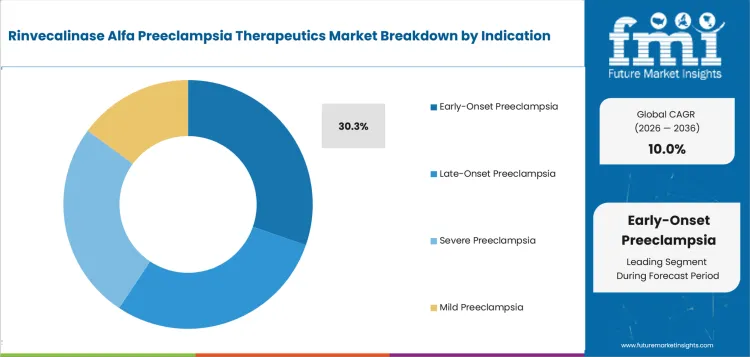
Early-onset preeclampsia creates a narrow clinical window between protecting maternal health and avoiding extreme prematurity. Therapy selection depends on gestational age and organ function alongside fetal condition and hospital capacity for continuous specialist review. Clinical development therefore concentrates on patients whose delivery timing can materially alter neonatal outcomes and hospital resource use. Trial protocols must distinguish treatment effects from changes caused by standard expectant management or urgent delivery.
- Early-onset preeclampsia is estimated to hold 30.3% share within indication in 2026, owing to its intensive management requirements. DiaMedica reported in May 2026 that its Phase 2 investigator-sponsored expansion cohort remained in enrollment with an updated dataset expected during the second quarter. The active program concentrates evidence generation among patients facing serious maternal and neonatal risks during early gestation.
- Tertiary maternity centers assess pregnancy care products alongside neonatal capacity and maternal transfer arrangements during high-risk admissions. Practical therapy value depends on defined monitoring frequency and treatment discontinuation rules that guide enrollment decisions and hospital purchasing under tightly controlled care pathways.
Why does intravenous administration remain important within the route of administration category?
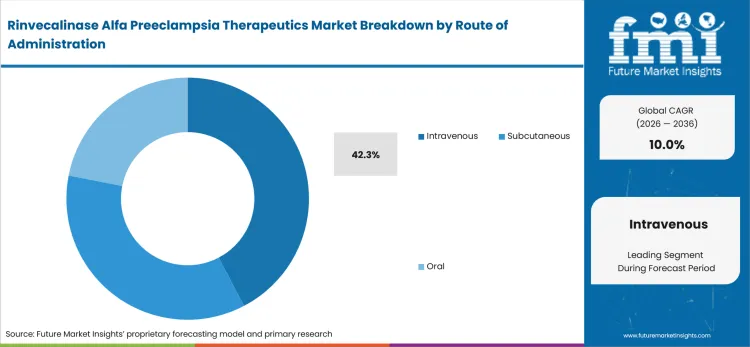
Intravenous administration gives hospital clinicians direct control over treatment timing during severe blood-pressure instability or rapidly changing organ function. The route also supports immediate dose adjustment within monitored settings that already manage small-molecule injectables for acute maternal care. World Health Organization guidance published in 2025 recommends antihypertensive treatment for severe hypertension during pregnancy. Route choice must also reflect clinician experience and medicine cost alongside local availability under the same guidance.
- Intravenous administration is forecast to represent 42.3% of route-of-administration revenue in 2026, supported by monitored acute-care use. Its position reflects rapid clinical action and controlled dosing under specialist supervision rather than convenience for lower-risk patients or outpatient treatment settings.
- Hospital pharmacy and obstetric teams select intravenous therapy according to supply reliability and infusion readiness under established emergency protocols. Commercial uptake weakens if formulation supply or staff training cannot support rapid administration across labor wards and intensive care units during severe maternal deterioration.
How do hospitals shape purchasing within the end user category?
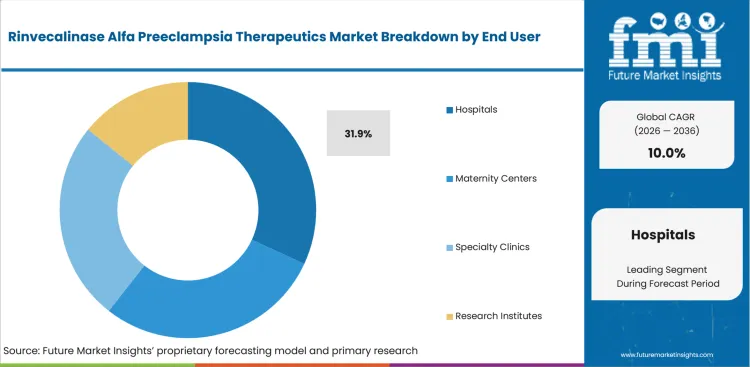
Hospitals coordinate maternal observation and fetal assessment with laboratory testing during one governed high-risk pregnancy pathway. The same pathway integrates antihypertensive treatment and seizure prevention with delivery decisions under specialist oversight. Their purchasing role extends across investigational biologics and generic injectable supply needed for immediate stabilization. Hospital adoption therefore depends on pharmacy governance and neonatal capacity alongside transfer arrangements for patients requiring tertiary care.
- Hospitals are expected to represent 31.9% of end-user revenue in 2026, attributable to their control over high-risk treatment decisions. They combine pharmacy governance with specialist staffing and emergency delivery capacity that smaller care settings cannot consistently maintain during rapidly changing maternal conditions.
- Hospital committees assess therapies through safety monitoring and storage requirements under protocols owned by trained maternal-fetal specialists. World Health Organization guidance published in 2025 describes expectant management as intra-hospital care with close maternal and fetal monitoring. Purchasing becomes defensible once the pathway assigns responsibility for adverse events and urgent delivery decisions.
What are the drivers, restraints, and opportunities in the Rinvecalinase Alfa Preeclampsia Therapeutics Market?
Clinical burden supports treatment demand, regulatory and reproductive-safety requirements constrain disease-modifying therapies, and earlier patient identification creates a practical development opening.
- Driver: Persistent maternal and fetal risk increases demand for therapies that stabilize severe disease and improve treatment decisions before delivery.
- Restraint: Investigational therapies face reproductive toxicology requirements and limited pregnancy trial populations under careful maternal-fetal benefit assessment.
- Opportunity: Earlier risk identification can improve trial selection and direct specialist resources toward patients with a measurable disease mechanism.
Clinical severity creates central demand pressure through maternal and fetal complications associated with delayed blood-pressure control. The World Health Organization reported in December 2025 that preeclampsia affects 3% to 8% of women who give birth worldwide. WHO also stated that magnesium sulfate can reduce eclampsia risk by more than half among women with preeclampsia. Hospital teams therefore require dependable acute medicines and new therapies that improve vascular function without disrupting urgent delivery pathways. Relevant antihypertensive combinations must fit established protocols and preserve clinical responsibility for dose escalation or emergency delivery decisions.
Pregnancy drug development remains constrained by the need to evaluate maternal benefit alongside fetal exposure and developmental risk. Small eligible populations require carefully governed studies that can separate treatment effects from routine changes in pregnancy management. Comanche Biopharma states in its current expanded-access policy that no approved therapy modifies preeclampsia progression and CBP-4888 remains investigational. The company currently excludes expanded-access requests because clinical development and regulatory evaluation remain incomplete worldwide. Developers must generate controlled reproductive-safety and dosing evidence before hospitals consider routine use outside clinical studies.
Earlier biological risk detection creates an opening to enroll better-defined patients while severe symptoms remain absent or limited. Trial sponsors can connect molecular risk signals with specialist review through structured follow-up and predefined escalation rules. Digital maternal monitoring can support that pathway by documenting blood pressure and referral decisions between scheduled hospital assessments. A study published in February 2025 and highlighted by the National Institutes of Health found that a cell-free DNA model achieved 81% sensitivity at 80% specificity for predicting preterm preeclampsia in validation cohorts. Therapy developers can improve trial selection without claiming that screening alone proves treatment adoption within hospitals.
Which country CAGRs are profiled in the Rinvecalinase Alfa Preeclampsia Therapeutics Market?
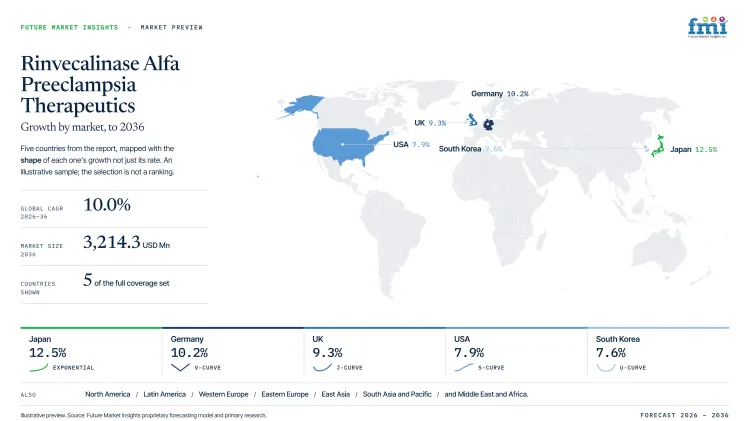
| Country | CAGR |
|---|---|
| USA | 7.9% |
| UK | 9.3% |
| Germany | 10.2% |
| Japan | 12.5% |
| South Korea | 7.6% |
How do country-level CAGRs compare in the Rinvecalinase Alfa Preeclampsia Therapeutics Market?
The country comparison spans 4.9 percentage points between Japan at 12.5% and South Korea at 7.6%. Japan remains separated from Germany by 2.3 points, which creates a distinct upper position within the outlook. Germany and the UK form a measured middle grouping with a separation of one percentage point. The USA and South Korea sit within 0.3 points and therefore share a compressed forecast range. Similar numerical positions do not establish comparable product access or current treatment availability across national hospital systems.
- Japan reflects a forecast profile that depends on specialist-site readiness and a defined national regulatory route for investigational biologics.
- Germany outlook reflects above the UK by one percentage point, while hospital evaluation and evidence requirements remain distinct across both systems.
- The UK is set to record 9.3% CAGR and offers centralized assessment routes that can concentrate early clinical and reimbursement decisions.
- The USA is forecast at 7.9% CAGR and remains close to South Korea despite a larger trial network and different hospital purchasing structure.
- South Korea’s 7.6% CAGR completes the compressed lower pair, with tertiary-center access and sponsor presence shaping practical entry conditions.
Comparable CAGRs can produce different entry economics through trial authorization and hospital funding under distinct specialist training requirements. Commercial plans must therefore separate forecast pace from legal availability and the operational readiness of maternal-fetal centers. The full report provides country-level CAGR analysis across North America, Latin America, Europe, East Asia, South Asia, Oceania and the Middle East and Africa.
Country-wise Analysis
- United States adoption depends on sponsor-led FDA development and maternal-fetal medicine centers capable of managing protocol-intensive pregnancies. The USA market is projected to grow at 7.9% CAGR through 2036, shaped by clinical research capacity and hospital-based acute management. The Centers for Disease Control and Prevention reported 3,606,400 United States births in April 2026 for the 2025 reference year. The same release placed the preterm birth rate at 10.41%, which sustains demand for specialist neonatal coordination. A large care network enables recruitment and referral, yet regulatory clearance and evidence-based reimbursement remain material entry frictions.
- United Kingdom access is organized through NHS maternity pathways and centralized evaluation of medicines entering specialist hospital use. Demand for the rinvecalinase alfa preeclampsia therapeutics market is forecast to rise at 9.3% CAGR over the forecast period, enabled by concentrated clinical governance. Central protocols can support injectable drug delivery across designated centers and simplify multicountry evidence planning under consistent specialist oversight. The Office for National Statistics reported in May 2026 that England and Wales recorded 585,396 live births during 2025. Budget pressure and formal health-technology assessment create friction unless a therapy demonstrates maternal benefit and neonatal consequences within the same care episode.
- Germany combines tertiary obstetric centers with formal hospital pharmacy governance and European regulatory requirements for investigational therapies. The German sector is estimated to post 10.2% CAGR between 2026 and 2036, underpinned by specialist care and regulated clinical development. Destatis reported in July 2026 that 654,241 children were born in Germany during 2025. The established hospital network supports monitored use and multicenter research across severe pregnancy complications requiring coordinated specialist care. Falling birth volume and evidence-based hospital budgeting remain material frictions for treatments that lack clear effects on delivery timing or resource use.
- Japan requires local regulatory planning and in-country safety reporting before an unapproved biologic can enter domestic clinical use. Foreign sponsors also need a qualified in-country representative who can manage trial notifications and adverse-event reporting through local regulatory channels. Adoption of rinvecalinase alfa therapy in Japan is anticipated to expand at 12.5% CAGR through 2036, reflecting specialist quality controls and concentrated tertiary care. The Pharmaceuticals and Medical Devices Agency updated its principal clinical-trial disclosure lists on June 30, 2026 and confirms representative duties for overseas sponsors. Strong regulatory discipline enables structured evaluation, yet absent product authorization and established service arrangements create a substantial entry barrier.
- South Korea concentrates complex maternity care within urban tertiary hospitals supported by dense referral networks and digital clinical records. The South Korean market is predicted to advance at 7.6% CAGR through 2036 and is reinforced by specialist access and coordinated hospital infrastructure. The Ministry of Data and Statistics reported in February 2026 that 254,500 live births occurred during 2025. The total increased 6.8% from 2024 and provides a recent operating baseline for maternity services. Digital coordination supports rapid referrals, while the smaller birth base and unverified local availability constrain sponsor economics and service investment.
Who are the notable companies in the Rinvecalinase Alfa Preeclampsia Therapeutics Market?
DiaMedica Therapeutics, Comanche Biopharma, MirZyme Therapeutics, Catalent, Pfizer, Hikma Pharmaceuticals, Baxter, and Fresenius Kabi are notable companies in this market.
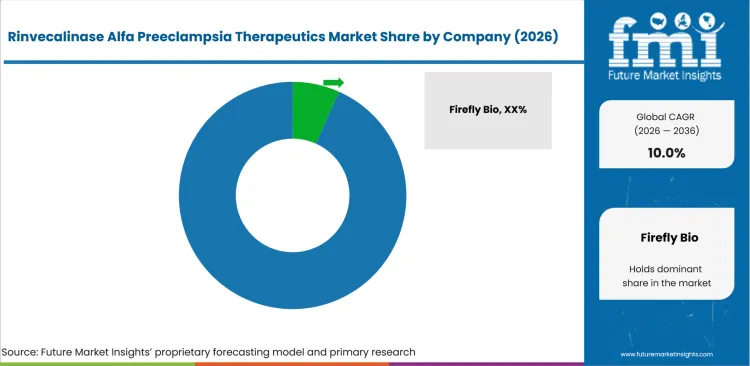
Competition separates disease-modifying developers from companies that supply established hospital medicines or provide biologic manufacturing support. DiaMedica develops rinvecalinase alfa while Comanche advances an investigational siRNA candidate and MirZyme maintains an early-stage therapeutic pipeline. DiaMedica’s 2026 annual filing identifies Catalent as the contract manufacturer and gene-expression technology licensor for DM199 drug substance. Catalent confirmed in February 2025 that it operates under Novo Holdings ownership following the completed acquisition. Pfizer and Baxter provide magnesium sulfate products while Hikma Pharmaceuticals supplies labetalol injection and Fresenius Kabi supports seizure-prevention protocols with magnesium sulfate. Commercial selection therefore depends on clinical stage and acute-care availability alongside biologics contract manufacturing rather than corporate scale.
- DiaMedica Therapeutics and Comanche Biopharma operate clinical programs aimed at modifying disease mechanisms rather than managing symptoms alone. MirZyme Therapeutics remains earlier stage and requires stronger clinical evidence before direct comparison with active Phase 2 programs.
- Pfizer and Baxter supply current magnesium sulfate presentations for hospital use within monitored seizure-prevention protocols during severe preeclampsia. Hikma Pharmaceuticals provides labetalol injection while Fresenius Kabi supplies magnesium sulfate for monitored hospital administration.
- Catalent supports DM199 drug-substance manufacturing through licensed expression technology and contracted production for DiaMedica’s clinical development program. Its role influences development continuity, yet DiaMedica retains responsibility for clinical evidence and regulatory progression.
Competitive Benchmarking: Rinvecalinase Alfa Preeclampsia Therapeutics Market
| Company | Disease-Modifying Pipeline | Acute-Care Portfolio | Development Support | Geographic Reach |
|---|---|---|---|---|
| DiaMedica Therapeutics | High | Low | High | North America and selected trial markets |
| Comanche Biopharma | High | Low | High | United States, Europe, UK, and Australia |
| MirZyme Therapeutics | Medium | Low | Medium | United Kingdom |
| Catalent | Low | Low | High | Global |
| Pfizer | Low | Medium | Medium | Global |
| Hikma Pharmaceuticals | Low | Medium | Medium | United States |
| Baxter | Low | Medium | Medium | United States |
| Fresenius Kabi | Low | Medium | Medium | Canada |
Source basis: Official corporate announcements, regulatory records, legal filings, and current company product information.
Key Developments in the Rinvecalinase Alfa Preeclampsia Therapeutics Market
- In March 2026, DiaMedica Therapeutics: DiaMedica received a Health Canada No Objection Letter for a Phase 2 study of DM199 in early-onset preeclampsia. The authorization enabled trial initiation in Canada and supported a planned multicountry program across Canada, the United States, and the United Kingdom. The authorization shifted rinvecalinase alfa from investigator-sponsored evidence toward sponsor-controlled dose selection across a planned multicountry program.
- In June 2026, DiaMedica Therapeutics: DiaMedica received written FDA feedback on its nonclinical reproductive-toxicity data. The FDA indicated that a previously completed rat reproductive toxicity study may support a US IND application if DiaMedica can demonstrate sufficient evidence of DM199 exposure, enzymatic activity, and pharmacologic effect in rats. DiaMedica planned a rat pharmacokinetic and activity study to address these questions. The update clarified a specific requirement that can influence the timing of a United States investigational new drug application and related sponsor planning resources across the program.
- In April 2025, Comanche Biopharma: The European Medicines Agency granted orphan drug designation to CBP-4888 for sFlt1-mediated preterm preeclampsia in Europe. The designation recognized a life-threatening condition and supported regulatory interaction for a placenta-targeted siRNA candidate under the regional pathway. The designation strengthened Comanche’s European development route but did not establish approval or commercial availability for CBP-4888 in hospital care.
- In January 2025, Comanche Biopharma: The United Kingdom Innovative Licensing and Access Pathway Steering Group awarded an Innovation Passport to CBP-4888. The pathway coordinates regulatory and health-technology guidance for developers pursuing authorization within the United Kingdom. The designation can improve planning efficiency, yet evidence from controlled pregnancy studies remains necessary for authorization and NHS adoption.
Key Players in the Rinvecalinase Alfa Preeclampsia Therapeutics Market
Disease-Modifying Therapy Developers
- DiaMedica Therapeutics
- Comanche Biopharma
- MirZyme Therapeutics
Acute-Care Medicine Providers
- Pfizer
- Hikma Pharmaceuticals
- Baxter
Biologic Manufacturing and Support Providers
- Catalent
- Fresenius Kabi
Rinvecalinase Alfa Preeclampsia Therapeutics Market - Report Scope
| Coverage field | Report scope |
|---|---|
| Market breakdown | Treatment Type, Indication, Route of Administration, End User, and region. |
| Quantitative Units | Revenue in USD Million, CAGR in %. |
| Market Definition | Investigational rinvecalinase alfa and pharmacologic products used to treat or clinically manage preeclampsia through blood-pressure control, seizure prevention, endothelial support, and monitored hospital care. |
| Regions Covered | North America, Latin America, Western Europe, Eastern Europe, East Asia, South Asia and Pacific, and Middle East and Africa. |
| Countries Covered | USA, UK, Germany, Japan, and South Korea. |
| Key Companies Profiled | DiaMedica Therapeutics, Comanche Biopharma, MirZyme Therapeutics, Catalent, Pfizer, Hikma Pharmaceuticals, Baxter, and Fresenius Kabi. |
| Forecast Period | 2026 to 2036. |
| Approach | Hybrid bottom-up and top-down market sizing supported by primary interviews and official desk research. |
Rinvecalinase Alfa Preeclampsia Therapeutics Market - Research Methodology
| Method | Approach |
|---|---|
| Primary Research | FMI analysts gathered input from manufacturers, service providers, technology developers, distributors, end users, sourcing teams, and subject-matter experts. Interviews examined purchasing decisions, product or service evaluation, adoption barriers, approval requirements, pricing considerations, and expectations for technical or commercial support. Respondents were also asked what evidence is required before a trial, pilot, or initial order develops into regular purchasing. |
| Desk Research | Desk research covered government statistics, regulatory publications, trade data, industry associations, technical literature, standards, company filings, product information, and official corporate announcements. Sources were reviewed for relevance, publication date, geographic coverage, and consistency with the defined market scope. Claims relating to performance, applications, approvals, capacity, investment, and commercial activity were retained only when supported by credible public evidence. |
| Market Sizing and Forecasting | The market model combined the baseline value with historical performance, segment structure, pricing and volume indicators, adoption levels, company participation, and country-level demand conditions. Forecast assumptions considered economic activity, investment trends, regulatory developments, technology adoption, purchasing cycles, supply availability, and barriers to wider market use. Segment and regional estimates were reconciled before the final market total was calculated. |
| Data Validation | Estimates were checked against multiple independent indicators, including public data, company activity, trade patterns, industry developments, and findings from primary interviews. Validation also tested whether products, services, applications, and company revenues fell within the defined market boundaries. Adjacent categories, unsupported claims, overlapping revenues, and activities without direct market relevance were excluded to reduce double counting and maintain consistency across segments and countries. |
Rinvecalinase Alfa Preeclampsia Therapeutics Market by Segments
Rinvecalinase Alfa Preeclampsia Therapeutics Market segmented by Treatment Type:
- Rinvecalinase Alfa Therapy
- Antihypertensive Therapy
- Biologic Therapy
- Supportive Care Therapy
Rinvecalinase Alfa Preeclampsia Therapeutics Market segmented by Indication:
- Early-Onset Preeclampsia
- Late-Onset Preeclampsia
- Severe Preeclampsia
- Mild Preeclampsia
Rinvecalinase Alfa Preeclampsia Therapeutics Market segmented by Route of Administration:
- Intravenous
- Subcutaneous
- Oral
Rinvecalinase Alfa Preeclampsia Therapeutics Market segmented by End User:
- Hospitals
- Maternity Centers
- Specialty Clinics
- Research Institutes
Rinvecalinase Alfa Preeclampsia Therapeutics Market by Region:
- North America
- United States
- Canada
- Latin America
- Brazil
- Mexico
- Argentina
- Chile
- Western Europe
- Germany
- France
- United Kingdom
- Italy
- Spain
- Benelux
- Nordics
- Eastern Europe
- Poland
- Czech Republic
- Romania
- Hungary
- East Asia
- China
- Japan
- South Korea
- South Asia and Pacific
- India
- ASEAN
- Australia and New Zealand
- Middle East and Africa
- GCC Countries
- South Africa
- Türkiye
- Israel
Research Sources and Bibliography
- World Health Organization. (2025, July 1). Building consensus towards a global definition of preeclampsia.
- DiaMedica Therapeutics, Inc. (2025, December 18). DiaMedica Therapeutics provides DM199 preeclampsia program update following pre-IND meeting with FDA.
- DiaMedica Therapeutics, Inc. (2025, July 17). DiaMedica Therapeutics reports positive interim Phase 2 results for DM199 in preeclampsia.
- DiaMedica Therapeutics, Inc. (2026, May 6). DiaMedica Therapeutics reports first quarter 2026 financial results and provides business highlights.
- World Health Organization. (2025). WHO recommendations: Drug treatment for severe hypertension in pregnancy.
- World Health Organization. (2025). WHO recommendations: Choice and route of antihypertensive drugs for severe hypertension in pregnancy.
- World Health Organization. (2025). WHO recommendations: Policy of interventionist versus expectant management of severe pre-eclampsia before term.
- World Health Organization. (2025, December 10). Pre-eclampsia.
- Comanche Biopharma. (n.d.). Expanded access policy. Retrieved July 21, 2026.
- National Institutes of Health. (2025, March 11). Predicting preeclampsia.
- Centers for Disease Control and Prevention. (2026, April 9). USA births down 1% in 2025.
- Office for National Statistics. (2026, May 27). Births in England and Wales: 2025.
- Federal Statistical Office of Germany. (2026, July 1). Total fertility rate drops to 1.32 children per woman in 2025.
- Pharmaceuticals and Medical Devices Agency. (2026, June 30). Disclosure of clinical trial information [Japanese].
- Pharmaceuticals and Medical Devices Agency. (n.d.). Frequently asked questions: Clinical trials. Retrieved July 21, 2026.
- Ministry of Data and Statistics. (2026, February 25). Preliminary results of birth and death statistics in 2025.
- Comanche Biopharma. (n.d.). Research & development. Retrieved July 21, 2026.
- MirZyme Therapeutics. (n.d.). Our pipeline. Retrieved July 21, 2026.
- DiaMedica Therapeutics, Inc. (2026, March 30). Annual report for the year ended December 31, 2025.
- Pfizer Inc. (n.d.). Magnesium sulfate. Retrieved July 21, 2026.
- Pfizer Inc. (n.d.). Pfizer company fact sheet. Retrieved July 21, 2026.
- Hikma Pharmaceuticals PLC. (2023, March 22). Hikma launches Labetalol Hydrochloride Injection, USP in prefilled syringe.
- Baxter International Inc. (n.d.). Magnesium sulfate injections. Retrieved July 21, 2026.
- Fresenius Kabi Canada Ltd. (n.d.). Magnesium sulfate injection, USP. Retrieved July 21, 2026.
- Catalent Pharma Solutions. (n.d.). Global biologics CDMO partner. Retrieved July 21, 2026.
- Catalent Pharma Solutions. (n.d.). Our locations. Retrieved July 21, 2026.
- Catalent, Inc. (2025, February 20). Catalent announces new board appointments.
- DiaMedica Therapeutics, Inc. (2026, March 5). DiaMedica Therapeutics receives Health Canada clearance to initiate Phase 2 study of DM199 in preeclampsia.
- DiaMedica Therapeutics, Inc. (2026, June 16). DiaMedica receives FDA feedback on DM199 preeclampsia nonclinical program.
- Comanche Biopharma. (2025, April 8). Comanche Biopharma announces European Medicines Agency has granted orphan drug designation for CBP-4888 in sFlt1-mediated preterm preeclampsia.
- Comanche Biopharma. (2025, January 30). Comanche Biopharma awarded Innovation Passport designation by the UK Innovative Licensing and Access Pathway Steering Group for CBP-4888.
This bibliography is provided for reader reference and is not exhaustive. The full report contains the complete reference list and detailed citations
This Report Answers
- How large is the rinvecalinase alfa preeclampsia therapeutics market in 2026 and 2036?
- Which clinical pressures support spending on preeclampsia therapeutics and monitored hospital care?
- Why does rinvecalinase alfa therapy hold the dominant Treatment Type share in 2026?
- How does early-onset preeclampsia affect clinical development and treatment selection?
- Why does intravenous administration retain a central role in severe maternal hypertension?
- How do country growth rates compare across USA, UK, Germany, Japan, and South Korea?
- Which companies develop disease-modifying candidates or supply acute-care medicines?
- What limits regulatory progress and hospital adoption for investigational pregnancy therapies?
- How can earlier risk identification improve patient selection and clinical evidence generation?
Frequently Asked Questions
How big is the Rinvecalinase Alfa Preeclampsia Therapeutics Market in 2026?
The rinvecalinase alfa preeclampsia therapeutics market is valued at USD 1239.3 million in 2026 and is forecast to reach USD 3214.3 million by 2036.
What is the CAGR of the Rinvecalinase Alfa Preeclampsia Therapeutics Market from 2026 to 2036?
The rinvecalinase alfa preeclampsia therapeutics market is projected to grow at a CAGR of 10.0% between 2026 and 2036, supported by persistent maternal and fetal risk increasing demand for therapies that stabilize severe disease and improve treatment decisions before delivery.
Which route of administration leads the Rinvecalinase Alfa Preeclampsia Therapeutics Market?
Intravenous administration accounts for 42.3% of the rinvecalinase alfa preeclampsia therapeutics market by route of administration in 2026, driven by the need for rapid dose control and direct clinical supervision during severe maternal hemodynamic instability.
Which country is growing fastest in the Rinvecalinase Alfa Preeclampsia Therapeutics Market?
Japan is the fastest-growing country in the rinvecalinase alfa preeclampsia therapeutics market, expanding at a 12.5% CAGR through 2036, ahead of the market average of 10.0%, reflecting specialist quality controls and concentrated tertiary maternity care supporting structured evaluation of investigational biologics.
Who are the leading companies in the Rinvecalinase Alfa Preeclampsia Therapeutics Market?
Leading companies in the rinvecalinase alfa preeclampsia therapeutics market include DiaMedica Therapeutics, Comanche Biopharma, MirZyme Therapeutics, Catalent, Pfizer, Hikma Pharmaceuticals, Baxter, and Fresenius Kabi, competing across disease-modifying therapy development, acute-care injectable supply, and biologic manufacturing and support services.Leading companies in the rinvecalinase alfa preeclampsia therapeutics market include DiaMedica Therapeutics, Comanche Biopharma, MirZyme Therapeutics, Catalent, Pfizer, Hikma Pharmaceuticals, Baxter, and Fresenius Kabi, competing across disease-modifying therapy development, acute-care injectable supply, and biologic manufacturing and support services.
Preview the report firsthand - request a free sample
Get SampleGet the brochure for pricing and purchase details.
Get PDFTable of Content
- Key Takeaways
- Market Size and CAGR
- Top Growth Driver
- Fastest Growing Segment
- Leading Region
- Key Companies
- Emerging Opportunities
- Executive Summary
- Global Market Outlook
- Demand-side Trends
- Supply-side Trends
- Technology Roadmap Analysis
- Analysis and Recommendations
- Analyst Perspective (What is happening? Why now? What should investors know?)
- Key Questions Answered
- How large is the market?
- What is the CAGR?
- What are key trends?
- Which region dominates?
- Who are the leaders?
- Market Overview
- Market Coverage / Taxonomy
- Market Definition / Scope / Limitations
- Research Methodology
- Chapter Orientation
- Analytical Lens and Working Hypotheses
- Market Structure, Signals, and Trend Drivers
- Benchmarking and Cross-market Comparability
- Market Sizing, Forecasting, and Opportunity Mapping
- Research Design and Evidence Framework
- Desk Research Programme (Secondary Evidence)
- Expert Input and Fieldwork (Primary Evidence)
- Tooling, Models, and Reference Databases
- Data Engineering and Model Build
- Quality Assurance and Audit Trail
- Market Background
- Market Dynamics (Drivers, Restraints, Opportunity, Trends)
- Scenario Forecast (Optimistic, Likely, Conservative)
- Impact Analysis
- AI Impact
- Sustainability Impact
- Regulatory Impact
- Technology Impact
- Consumer / Buyer Analysis
- Purchase Drivers
- Adoption Barriers
- Buyer Journey
- Opportunity Map Analysis
- Product Life Cycle Analysis
- Supply Chain Analysis
- Investment Feasibility Matrix
- Value Chain Analysis
- PESTLE and Porter's Analysis
- Regulatory Landscape
- Regional Parent Market Outlook
- Production and Consumption Statistics
- Import and Export Statistics
- Global Market Analysis and Forecast, 2021 to 2036
- Historical Market Size Value (USD Million) Analysis, 2021 to 2025
- Current and Future Market Size Value (USD Million) Projections, 2026 to 2036
- Y-o-Y Growth Trend Analysis
- Absolute $ Opportunity Analysis
- Global Market Pricing Analysis, 2021 to 2036
- Global Market Analysis and Forecast, By Treatment Type, 2021 to 2036
- Introduction / Key Findings
- Historical Market Size Value (USD Million) Analysis By Treatment Type, 2021 to 2025
- Current and Future Market Size Value (USD Million) Analysis and Forecast By Treatment Type, 2026 to 2036
- Rinvecalinase Alfa Therapy
- Antihypertensive Therapy
- Biologic Therapy
- Supportive Care Therapy
- Rinvecalinase Alfa Therapy
- Y-o-Y Growth Trend Analysis By Treatment Type, 2021 to 2025
- Absolute $ Opportunity Analysis By Treatment Type, 2026 to 2036
- Global Market Analysis and Forecast, By Indication, 2021 to 2036
- Introduction / Key Findings
- Historical Market Size Value (USD Million) Analysis By Indication, 2021 to 2025
- Current and Future Market Size Value (USD Million) Analysis and Forecast By Indication, 2026 to 2036
- Early-Onset Preeclampsia
- Late-Onset Preeclampsia
- Severe Preeclampsia
- Mild Preeclampsia
- Early-Onset Preeclampsia
- Y-o-Y Growth Trend Analysis By Indication, 2021 to 2025
- Absolute $ Opportunity Analysis By Indication, 2026 to 2036
- Global Market Analysis and Forecast, By Route of Administration, 2021 to 2036
- Introduction / Key Findings
- Historical Market Size Value (USD Million) Analysis By Route of Administration, 2021 to 2025
- Current and Future Market Size Value (USD Million) Analysis and Forecast By Route of Administration, 2026 to 2036
- Intravenous
- Subcutaneous
- Oral
- Intravenous
- Y-o-Y Growth Trend Analysis By Route of Administration, 2021 to 2025
- Absolute $ Opportunity Analysis By Route of Administration, 2026 to 2036
- Global Market Analysis and Forecast, By End User, 2021 to 2036
- Introduction / Key Findings
- Historical Market Size Value (USD Million) Analysis By End User, 2021 to 2025
- Current and Future Market Size Value (USD Million) Analysis and Forecast By End User, 2026 to 2036
- Hospitals
- Maternity Centers
- Specialty Clinics
- Research Institutes
- Hospitals
- Y-o-Y Growth Trend Analysis By End User, 2021 to 2025
- Absolute $ Opportunity Analysis By End User, 2026 to 2036
- Global Market Analysis and Forecast, By Region, 2021 to 2036
- Introduction
- Historical Market Size Value (USD Million) Analysis By Region, 2021 to 2025
- Current Market Size Value (USD Million) Analysis and Forecast By Region, 2026 to 2036
- North America
- Latin America
- Western Europe
- Eastern Europe
- East Asia
- South Asia and Pacific
- Middle East & Africa
- Market Attractiveness Analysis By Region
- North America Market Analysis and Forecast, By Country, 2021 to 2036
- Historical Market Size Value (USD Million) Trend Analysis By Market Taxonomy, 2021 to 2025
- Market Size Value (USD Million) Forecast By Market Taxonomy, 2026 to 2036
- By Country
- USA
- Canada
- By Treatment Type
- By Indication
- By Route of Administration
- By End User
- By Country
- Market Attractiveness Analysis
- By Country
- By Treatment Type
- By Indication
- By Route of Administration
- By End User
- Key Takeaways
- Latin America Market Analysis and Forecast, By Country
- Historical Market Size Value (USD Million) Trend Analysis By Market Taxonomy, 2021 to 2025
- Market Size Value (USD Million) Forecast By Market Taxonomy, 2026 to 2036
- By Country
- Brazil
- Mexico
- Chile
- Rest of Latin America
- By Treatment Type
- By Indication
- By Route of Administration
- By End User
- By Country
- Market Attractiveness Analysis
- By Country
- By Treatment Type
- By Indication
- By Route of Administration
- By End User
- Key Takeaways
- Western Europe Market Analysis and Forecast, By Country
- Historical Market Size Value (USD Million) Trend Analysis By Market Taxonomy, 2021 to 2025
- Market Size Value (USD Million) Forecast By Market Taxonomy, 2026 to 2036
- By Country
- Germany
- UK
- Italy
- Spain
- France
- Nordic
- BENELUX
- Rest of Western Europe
- By Treatment Type
- By Indication
- By Route of Administration
- By End User
- By Country
- Market Attractiveness Analysis
- By Country
- By Treatment Type
- By Indication
- By Route of Administration
- By End User
- Key Takeaways
- Eastern Europe Market Analysis and Forecast, By Country
- Historical Market Size Value (USD Million) Trend Analysis By Market Taxonomy, 2021 to 2025
- Market Size Value (USD Million) Forecast By Market Taxonomy, 2026 to 2036
- By Country
- Russia
- Poland
- Hungary
- Balkan & Baltic
- Rest of Eastern Europe
- By Treatment Type
- By Indication
- By Route of Administration
- By End User
- By Country
- Market Attractiveness Analysis
- By Country
- By Treatment Type
- By Indication
- By Route of Administration
- By End User
- Key Takeaways
- East Asia Market Analysis and Forecast, By Country
- Historical Market Size Value (USD Million) Trend Analysis By Market Taxonomy, 2021 to 2025
- Market Size Value (USD Million) Forecast By Market Taxonomy, 2026 to 2036
- By Country
- China
- Japan
- South Korea
- By Treatment Type
- By Indication
- By Route of Administration
- By End User
- By Country
- Market Attractiveness Analysis
- By Country
- By Treatment Type
- By Indication
- By Route of Administration
- By End User
- Key Takeaways
- South Asia and Pacific Market Analysis and Forecast, By Country
- Historical Market Size Value (USD Million) Trend Analysis By Market Taxonomy, 2021 to 2025
- Market Size Value (USD Million) Forecast By Market Taxonomy, 2026 to 2036
- By Country
- India
- ASEAN
- Australia & New Zealand
- Rest of South Asia and Pacific
- By Treatment Type
- By Indication
- By Route of Administration
- By End User
- By Country
- Market Attractiveness Analysis
- By Country
- By Treatment Type
- By Indication
- By Route of Administration
- By End User
- Key Takeaways
- Middle East & Africa Market Analysis and Forecast, By Country
- Historical Market Size Value (USD Million) Trend Analysis By Market Taxonomy, 2021 to 2025
- Market Size Value (USD Million) Forecast By Market Taxonomy, 2026 to 2036
- By Country
- Kingdom of Saudi Arabia
- Other GCC Countries
- Türkiye
- South Africa
- Other African Union
- Rest of Middle East & Africa
- By Treatment Type
- By Indication
- By Route of Administration
- By End User
- By Country
- Market Attractiveness Analysis
- By Country
- By Treatment Type
- By Indication
- By Route of Administration
- By End User
- Key Takeaways
- Key Countries Market Analysis
- USA
- Pricing Analysis
- Market Share Analysis, 2025
- By Treatment Type
- By Indication
- By Route of Administration
- By End User
- Canada
- Pricing Analysis
- Market Share Analysis, 2025
- By Treatment Type
- By Indication
- By Route of Administration
- By End User
- Mexico
- Pricing Analysis
- Market Share Analysis, 2025
- By Treatment Type
- By Indication
- By Route of Administration
- By End User
- Brazil
- Pricing Analysis
- Market Share Analysis, 2025
- By Treatment Type
- By Indication
- By Route of Administration
- By End User
- Chile
- Pricing Analysis
- Market Share Analysis, 2025
- By Treatment Type
- By Indication
- By Route of Administration
- By End User
- Germany
- Pricing Analysis
- Market Share Analysis, 2025
- By Treatment Type
- By Indication
- By Route of Administration
- By End User
- UK
- Pricing Analysis
- Market Share Analysis, 2025
- By Treatment Type
- By Indication
- By Route of Administration
- By End User
- Italy
- Pricing Analysis
- Market Share Analysis, 2025
- By Treatment Type
- By Indication
- By Route of Administration
- By End User
- Spain
- Pricing Analysis
- Market Share Analysis, 2025
- By Treatment Type
- By Indication
- By Route of Administration
- By End User
- France
- Pricing Analysis
- Market Share Analysis, 2025
- By Treatment Type
- By Indication
- By Route of Administration
- By End User
- India
- Pricing Analysis
- Market Share Analysis, 2025
- By Treatment Type
- By Indication
- By Route of Administration
- By End User
- ASEAN
- Pricing Analysis
- Market Share Analysis, 2025
- By Treatment Type
- By Indication
- By Route of Administration
- By End User
- Australia & New Zealand
- Pricing Analysis
- Market Share Analysis, 2025
- By Treatment Type
- By Indication
- By Route of Administration
- By End User
- China
- Pricing Analysis
- Market Share Analysis, 2025
- By Treatment Type
- By Indication
- By Route of Administration
- By End User
- Japan
- Pricing Analysis
- Market Share Analysis, 2025
- By Treatment Type
- By Indication
- By Route of Administration
- By End User
- South Korea
- Pricing Analysis
- Market Share Analysis, 2025
- By Treatment Type
- By Indication
- By Route of Administration
- By End User
- Russia
- Pricing Analysis
- Market Share Analysis, 2025
- By Treatment Type
- By Indication
- By Route of Administration
- By End User
- Poland
- Pricing Analysis
- Market Share Analysis, 2025
- By Treatment Type
- By Indication
- By Route of Administration
- By End User
- Hungary
- Pricing Analysis
- Market Share Analysis, 2025
- By Treatment Type
- By Indication
- By Route of Administration
- By End User
- Kingdom of Saudi Arabia
- Pricing Analysis
- Market Share Analysis, 2025
- By Treatment Type
- By Indication
- By Route of Administration
- By End User
- Türkiye
- Pricing Analysis
- Market Share Analysis, 2025
- By Treatment Type
- By Indication
- By Route of Administration
- By End User
- South Africa
- Pricing Analysis
- Market Share Analysis, 2025
- By Treatment Type
- By Indication
- By Route of Administration
- By End User
- USA
- Market Structure Analysis
- Competition Dashboard
- Competition Benchmarking
- Market Share Analysis of Top Players
- By Regional
- By Treatment Type
- By Indication
- By Route of Administration
- By End User
- Emerging Startups
- Innovation Benchmarking
- Competition Analysis
- Competition Deep Dive
- Firefly Bio
- Overview
- Product Portfolio
- Profitability by Market Segments
- Sales Footprint
- Strategy Overview
- Marketing Strategy
- Product Strategy
- Channel Strategy
- Roche
- AstraZeneca
- Merck & Co.
- Pfizer
- Johnson & Johnson
- Bayer
- Novo Nordisk
- Organon
- GSK
- Firefly Bio
- Case Studies
- Success Stories
- Recent Developments
- Competition Deep Dive
- Assumptions & Acronyms Used


