

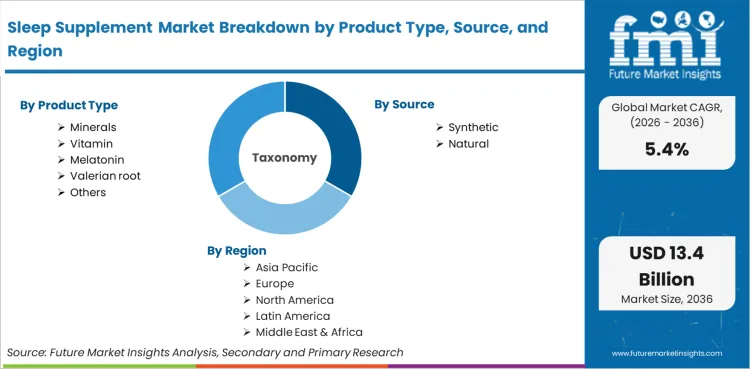
In 2025, the sleep supplement market was valued at USD 7.50 billion. Based on Future Market Insights' analysis, demand for sleep supplement is estimated to grow to USD 7.91 billion in 2026 and USD 13.38 billion by 2036. FMI projects a CAGR of 5.4% during the forecast period.
The incremental expansion of approximately USD 5.47 billion reflects growing consumer awareness of sleep quality as a foundational health determinant alongside escalating clinical evidence for supplement-assisted sleep support driving mainstream retail adoption beyond specialist health food channels. Melatonin commands 36.7% product type share as the most extensively researched and clinically validated sleep supplement active, with expanded non-prescription regulatory status across European and Asia Pacific markets broadening accessible consumer populations. Natural-sourced supplement preference at 58.4% reflects broader consumer clean-label and botanical-origin purchasing behavior migration influencing sleep supplement formulation strategy toward plant-derived melatonin, valerian root, and adaptogenic ingredient systems.
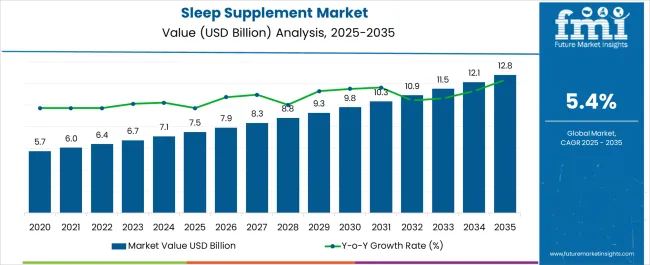
| Metric | Details |
|---|---|
| Industry Size (2026) | USD 7.91 Billion |
| Industry Value (2036) | USD 13.38 Billion |
| CAGR (2026-2036) | 5.4% |
| Source | Future Market Insights, 2026 |
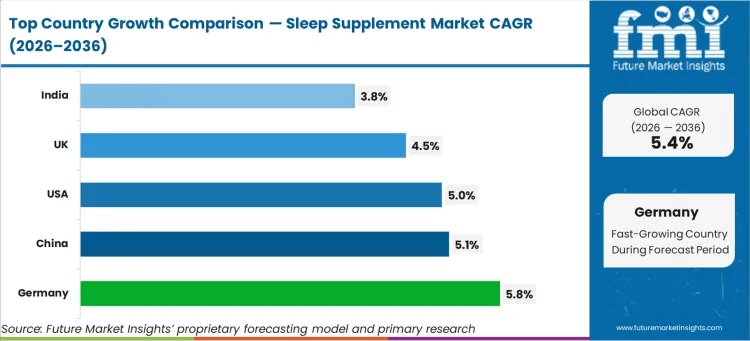
Germany leads growth at 5.8% CAGR following regulatory reclassification enabling broader melatonin supplement availability and growing consumer awareness of sleep hygiene interventions supported by public health guidance. China registers 5.1% CAGR with rapidly expanding functional supplement retail infrastructure and growing urban professional consumer segment prioritizing sleep quality management. The United States maintains 5.0% CAGR as the world's largest established sleep supplement market generating replacement demand and premium product segment expansion. The United Kingdom advances at 4.5% as expanding health and wellness retail channel infrastructure and growing consumer self-care investment drive sleep supplement purchase frequency. India registers 3.8% growth as nascent but rapidly expanding dietary supplement retail market and rising urban stress-related sleep disruption awareness create emerging consumer demand.
The Sleep Supplement Market encompasses dietary supplement products formulated with melatonin, minerals including magnesium and zinc, vitamins including B6 and B12, valerian root extract, passionflower, L-theanine, ashwagandha, and other bioactive ingredients designed to support sleep onset, sleep duration, sleep quality, and circadian rhythm regulation in adults experiencing sleep difficulty.
Market scope includes melatonin tablets, magnesium glycinate capsules, valerian root standardized extracts, combination sleep formulas, and adaptogenic sleep support products sold through pharmacy, health food retail, e-commerce, and direct-to-consumer channels. Both single-ingredient and multi-ingredient sleep formulation formats in tablet, capsule, powder, and liquid dosage forms are incorporated.
Prescription sleep medication including benzodiazepines, z-drugs, and other scheduled pharmaceutical sleep aids are excluded from the dietary supplement market scope. Caffeinated energy products with secondary sleep regulation claims, general multivitamin formulations where sleep support is not a primary label claim, and medical devices including sleep tracking technology fall outside the defined market boundaries.
The sleep supplement market is expanding steadily, supported by rising prevalence of sleep disorders, heightened stress levels, and increasing consumer awareness of natural wellness solutions. Market growth is driven by lifestyle changes, urbanization, and growing demand for over-the-counter products that aid relaxation and improve sleep quality.
Consumers are shifting preference toward supplements backed by clinical validation and natural sourcing, aligning with broader health and wellness trends. Regulatory acceptance of certain sleep-promoting ingredients has further legitimized the market, encouraging innovation and broader adoption.
The current scenario highlights strong demand across both developed and emerging economies, with e-commerce platforms expanding product accessibility. Looking forward, continued investments in research, combined with personalized supplement formulations and clean-label positioning, are expected to reinforce market expansion and sustain strong consumer engagement.
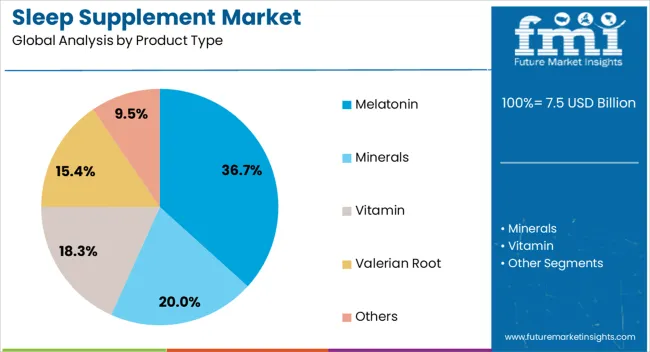
The melatonin segment accounts for approximately 36.7% share in the product type category of the sleep supplement market. Its leadership is supported by strong clinical evidence of effectiveness in regulating circadian rhythm and sleep-wake cycles.
Melatonin supplements have become widely accepted as safe and effective, with rising consumer adoption for jet lag management and insomnia relief. Market penetration has been reinforced by broad availability in diverse dosage formats and affordability compared to prescription sleep aids.
Increasing consumer reliance on non-habit-forming solutions has further strengthened melatonin’s appeal. With continuous product innovation, including sustained-release and combined formulations, this segment is expected to retain a dominant role in shaping market dynamics.
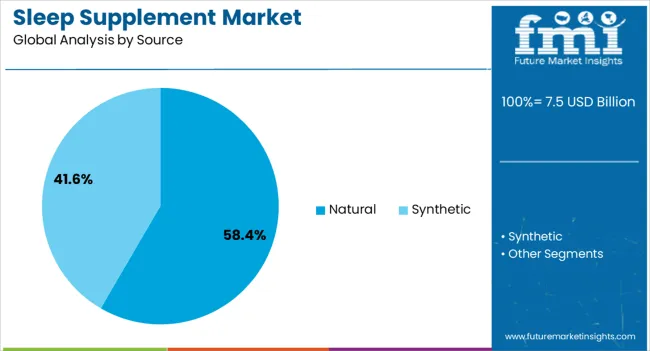
The natural segment dominates the source category with approximately 58.4% share, reflecting consumer preference for herbal and plant-based formulations over synthetic alternatives. Growth in this segment is supported by rising awareness of clean-label products and perceived safety advantages of natural ingredients.
Natural sleep supplements featuring valerian root, chamomile, or passionflower are being widely integrated into dietary routines. The segment benefits from regulatory flexibility in many regions, which has encouraged broader product launches and consumer adoption.
Supported by increasing demand for holistic health solutions and integration into wellness-based lifestyles, the natural segment is expected to remain the leading source in the forecast period.
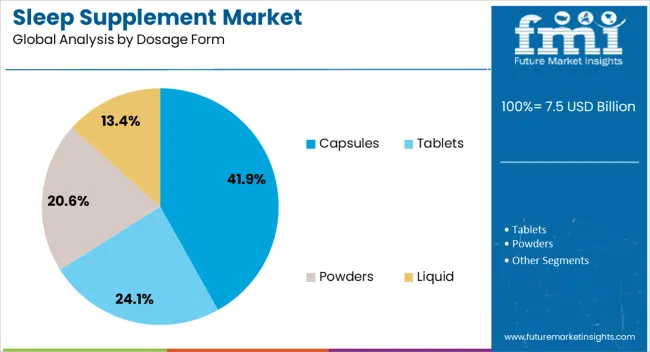
The capsules segment leads the dosage form category, holding approximately 41.9% share of the market. Its prominence is due to ease of consumption, precise dosing, and longer shelf life compared to liquid or gummy alternatives.
Capsules also offer compatibility with a wide range of natural and synthetic ingredients, enabling diverse formulations. Consumer familiarity and convenience in daily supplementation routines have further reinforced demand for this format.
Manufacturers have expanded product portfolios with vegetarian and soft-gel variants, enhancing appeal across demographic segments. With rising preference for portable and consistent dosage formats, the capsules segment is projected to retain its leadership in the market landscape.
The market for sleep supplements expanded at a CAGR of 5.6% during the forecast period. The demand for sleep supplements increased due to the growing concern for health care.
Epidemiologists acknowledge that obtaining enough sleep is important, but many people find it difficult to fall into deep sleep. Numerous physical and psychological factors, such as stress, sadness, and poor lifestyle choices cause insomnia. The underlying medical illnesses and obesity result in sleep apnea or other sleep disorders, contributing to the market’s growth. Sleep deprivation has been linked to an increased risk of obesity, diabetes, high blood pressure, heart disease, stroke, and depression. However, sleeping aid manufacturers focus on all-natural remedies to explore lucrative opportunities in the sleep supplement market.
The growing need for convenience and compliance is a result of consumers’ growing knowledge of the importance of getting a great sleep. The expanding elderly population and the ease of access to a wide array of products are important drivers of market growth.
The market is set to have an attractive growth outlook over the forecast period. Natural sleep aids like melatonin offer fewer negative side effects than many pharmaceutical medicines commonly given for insomnia such as barbiturates, which can lead to regular usage or addiction.
Natural sleep aids are administered to those with mild or recurrent insomnia because they have no negative side effects. However, it is imperative to continue researching the workings, effectiveness, and side effects of several natural sleep aids.
These above-mentioned factors are expected to boost the market for sleep supplements in the future due to the increased demand for natural sleep aids and supplements to treat sleep disorders.
A lack of knowledge of sleep supplement consumption is expected to have side effects impairing sleep quality. Consuming alcohol along with sleep supplements is making sleeping medications more sedating. The combination has the potential to be quite devastating.
Additionally, the consumption of melatonin for good sleep can cause adverse effects. According to a study, consuming an excess of melatonin might cause an upset stomach making it even harder to fall asleep. Extremely high melatonin levels, however, can be overridden by the body, which will interpret them as an error.
Cumulatively, these factors propose a negative effect on the developmental growth of the sleep supplement market.
.webp "Top Country Growth Comparison Sleep Supplement Market Cagr (2026 2036)")
| Countries | CAGR (2026 to 2036) |
|---|---|
| United States | 5% |
| India | 3.8% |
| China | 5.1% |
| Germany | 5.8% |
| United Kingdom | 4.5% |
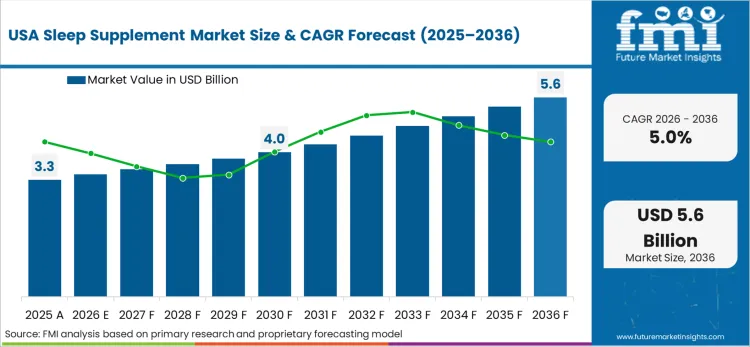
The United States holds a share of 86.3% of the North American Market. The increase in sleep disorder cases among people in the United States is expected to drive the market over the coming years.
Although sleeping should be restful, 35% of Americans find it difficult to get seven or more hours of sleep every night. The lack of sleep has surged the demand for sleep supplements.
India dominates the South Asia region with a total market share of about 44.6% and is expected to grow at a CAGR of 3.8% through 2036.
A lack of sleep can have several negative health effects, including weight gain, diabetes, heart disease, stroke, and memory loss. Workplace productivity may also be impacted. The wellness market in India has grown as lifestyles become busier and more stressful. Additionally, there is an increasing concern to improve an individual’s quality of sleep.
China holds a share of 27.7% of the East Asia market. The country is projected to grow at a CAGR of 5.1% through 2036.
Researchers estimate that around 300 million Chinese people have sleep issues. Young people are especially susceptible to these problems. Nearly half of the people between the ages of 19 and 25 don't go to bed until after midnight.
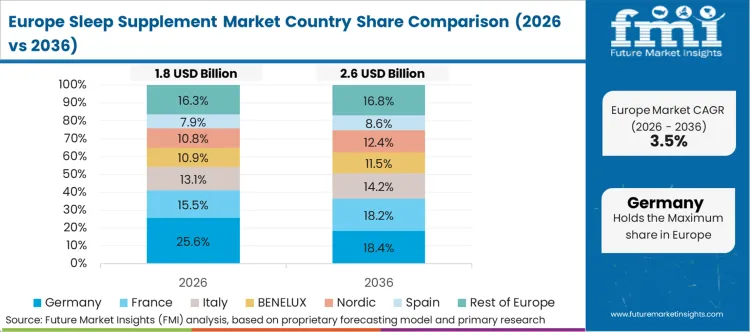
Germany holds a share of 23.5% of the European market with a market valuation of USD 455.3 billion. The market is expected to record a CAGR of 5.8% over the forecast period.
| Top Product Type | Melatonin |
|---|---|
| Market Share in 2026 | 35.8% |
The melatonin segment is expected to hold a market share of about 35.8% in 2026.
Melatonin is a hormone that occurs naturally and is essential for the human body's sleep-wake cycle. Essentially, the "N1 Phase" or "light sleep" controls your body's rhythm based on the light surrounding, signaling to the body that darkness is a trigger for night-time behavior.
Therefore, melatonin pills are stated to be an excellent choice for people who have trouble falling asleep or trouble staying asleep.
| Top Dosage Form | Tablets |
|---|---|
| Market Share in 2026 | 41.8% |
The tablets segment accounted for a market share of 41.8% in 2026. As tablet offers a very efficient delivery method, they are highly preferred form of medication for the majority of pharmaceuticals and nutraceuticals. Several meticulously conducted clinical trials over many years have established the dependability and effectiveness of tablets as the dosage form.
| Top Distribution Channel | Retail Pharmacies |
|---|---|
| Market Share in 2026 | 46.5% |
Retail pharmacies are leading the market by distribution channel, holding a share of 46.5% in 2026. Since these sleep supplements are also available on an OTC basis for health benefits, this segment generates significant revenue among the other distribution channels. The segment is set to grow at a CAGR of 5.4% over the forecast period.
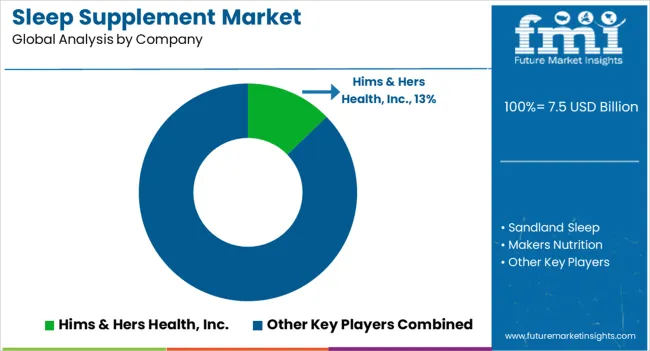
In the highly fragmented sleep supplement market, companies are adopting various strategic methods to meet consumer demand, gain a competitive edge, and expand their customer base.
Key developmental strategies employed by industry players include spending on research and development activities to produce supplements from natural sources with reduced or negligible side effects.
Recent Developments in the Sleep Supplement Market
| Metric | Value |
|---|---|
| Quantitative Units | USD 7.91 Billion to USD 13.38 Billion, at a CAGR of 5.4% |
| Market Definition | The Sleep Supplement Market encompasses dietary supplement products formulated with melatonin, minerals including magnesium and zinc, vitamins including B6 and B12, valerian root extract, passionflower, L-theanine. |
| Product Type Segmentation | Melatonin, Minerals, Vitamin, Valerian Root, Others |
| Source Segmentation | Natural, Synthetic |
| Regions Covered | North America, Latin America, Europe, East Asia, South Asia, Oceania, Middle East & Africa |
| Countries Covered | Germany, China, USA, UK, India, and 40 plus countries |
| Key Companies Profiled | Hims & Hers Health Inc., Sandland Sleep, Makers Nutrition, OLLY, Som Sleep, Nature Made, Kao, Spectrum Lifesciences Pvt. Ltd. |
| Forecast Period | 2026 to 2036 |
| Approach | Forecasting applies a bottom-up methodology combining adult sleep disorder prevalence data with supplement adoption rate assumptions, applying product type share projections across melatonin, mineral, botanical, and combination categories, cross-referenced with retail channel growth trajectory data from health supplement market reporting. |
This bibliography is provided for reader reference. The full FMI report contains the complete reference list with primary research documentation.
How large is the demand for Sleep Supplement Market in the global market in 2026?
Demand for sleep supplement market in the global market is estimated to be valued at USD 7.91 Billion in 2026.
What will be the market size of Sleep Supplement Market in the global market by 2036?
Market size for sleep supplement market is projected to reach USD 13.38 Billion by 2036.
What is the expected demand growth for Sleep Supplement Market between 2026 and 2036?
Demand for sleep supplement market is expected to grow at a CAGR of 5.4% between 2026 and 2036.
What is Sleep Supplement Market and what is it mainly used for?
The Sleep Supplement Market encompasses dietary supplement products formulated with melatonin, minerals including magnesium and zinc, vitamins including B6 and B12, valerian root extract, passionflower, L-theanine, ashwagandha, and other bioactive ingredients designed to support sleep onset, sleep duration, sleep quality, and circadian rhythm regulation in adults experiencing sleep difficulty.
What is included in the scope of this Sleep Supplement Market report?
Market scope includes melatonin tablets, magnesium glycinate capsules, valerian root standardized extracts, combination sleep formulas, and adaptogenic sleep support products sold through pharmacy, health food retail, e-commerce, and direct-to-consumer channels. Both single-ingredient and multi-ingredient sleep formulation formats in tablet, capsule, powder, and liquid dosage forms are incorporated.
What is excluded from the scope of this report?
Prescription sleep medication including benzodiazepines, z-drugs, and other scheduled pharmaceutical sleep aids are excluded from the dietary supplement market scope. Caffeinated energy products with secondary sleep regulation claims, general multivitamin formulations where sleep support is not a primary label claim, and medical devices including sleep tracking technology fall outside the defined market boundaries.
How does FMI build and validate the Sleep Supplement Market forecast?
Forecasting applies a bottom-up methodology combining adult sleep disorder prevalence data with supplement adoption rate assumptions, applying product type share projections across melatonin, mineral, botanical, and combination categories, cross-referenced with retail channel growth trajectory data from health supplement market reporting.
Which Product Type leads the Sleep Supplement Market in 2026?
Melatonin commands 36.7% share in 2026 as the most clinically validated and consumer-recognized sleep supplement active, with expanding regulatory accessibility across European and Asia Pacific markets broadening addressable consumer populations.
Which Source dominates Sleep Supplement Market demand?
Natural-sourced supplements hold 58.4% share in 2026, reflecting broader consumer preference for botanical and plant-derived ingredient origins aligned with clean-label purchasing behavior and perceived safety advantages over synthetic supplement alternatives.
What is driving demand in Germany?
Germany's 5.8% CAGR reflects regulatory changes enabling broader melatonin supplement accessibility, growing consumer adoption of evidence-based sleep hygiene interventions, and expanding health and wellness retail infrastructure supporting supplement purchase occasion frequency.
Full Research Suite comprises of:

Market outlook & trends analysis
Interviews & case studies
Strategic recommendations
Vendor profiles & capabilities analysis
5-year forecasts
8 regions and 60+ country-level data splits
Market segment data splits
12 months of continuous data updates
DELIVERED AS:
PDF EXCEL ONLINE

Sleep Supplement Market

Thank you!
You will receive an email from our Business Development Manager. Please be sure to check your SPAM/JUNK folder too.

