

- Industry Size (2026)
- USD 788.8 Mn
- Forecast (2036)
- USD 1187.9 Mn
- CAGR (2026 to 2036)
- 4.2%
Demand for Nutritive Sweetener in South Korea Forecast and Outlook 2026 to 2036
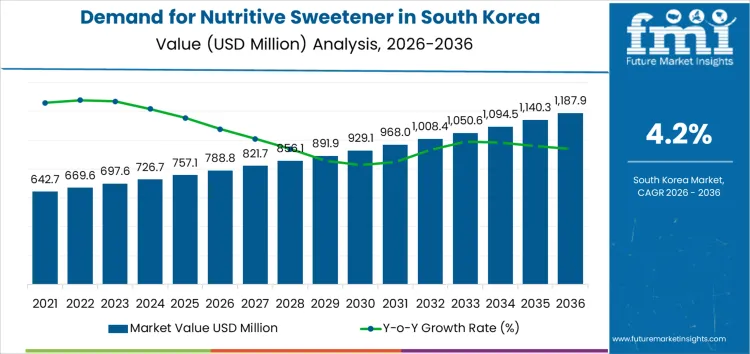
The demand for nutritive sweeteners in South Korea is projected at USD 788.8 million in 2026 and is expected to reach USD 1,187.9 million by 2036, expanding at a 4.2% CAGR. Positioned within the broader food and beverage industry, nutritive sweeteners play a vital role in shaping the formulation of low-calorie and sugar-reduced products. As consumers increasingly seek healthier alternatives, these sweeteners are gaining prominence for their ability to provide sweetness with fewer calories, influencing product development in both traditional food categories and emerging health-focused segments. Competitive weight in this market is heavily influenced by pricing strategies, innovation in formulation, and the ability to meet regulatory standards for food ingredients. While the space is growing, it remains highly competitive, with both local and international players vying for market share. Key to success will be the ability to offer cost-effective, consumer-preferred products that align with shifting consumer expectations for taste, health benefits, and sustainability.
Quick Stats for the Demand for Nutritive Sweetener in South Korea
- Nutritive Sweetener in South Korea Value (2026): USD 788.8 million
- Nutritive Sweetener in South Korea Forecast Value (2036): USD 1,187.9 million
- Nutritive Sweetener in South Korea Forecast CAGR (2026 to 2036): 4.2%
- Nutritive Sweetener in South Korea Leading Segment: Conventional (75%)
- Key Growth Regions of Nutritive Sweetener in South Korea: Jeju (leading CAGR ~5%)
- Top Players of Nutritive Sweetener in South Korea: Tate & Lyle, Cargill Inc., Showa Sangyo, Japan Corn Starch Co., COFCO International
What is the Growth Forecast for the Demand for Nutritive Sweeteners in South Korea through 2036?
The early vs late growth curve comparison for nutritive sweeteners in South Korea shows different dynamics in the initial and later phases of the forecast period. In the early years (2026-2030), growth is expected to be relatively strong as consumers increasingly shift toward healthier sweetening alternatives. This early-stage growth is driven by heightened awareness of health issues like obesity and diabetes, which are pushing demand for lower-calorie and sugar-free alternatives. During this phase, manufacturers will invest in expanding their portfolios of products featuring nutritive sweeteners, leading to rapid market adoption.
However, as the market matures between 2031 and 2036, the growth curve begins to flatten slightly, showing a more gradual increase. By this stage, nutritive sweeteners will be firmly integrated into the mainstream food and beverage industry, and growth will be fueled by continued product innovation and consumer loyalty. While the demand for healthier, sugar-reducing options will remain strong, the growth rate will moderate as the market becomes more saturated with established products. The overall market for nutritive sweeteners in South Korea will reach USD 1,187.9 million by 2036, reflecting steady, sustained growth from both early and later phase contributions.
Key Takeaways for Demand for Nutritive Sweetener in South Korea
| Metric | Value |
|---|---|
| Industry Sales Value (2026) | USD 788.8 million |
| Industry Forecast Value (2036) | USD 1,187.9 million |
| Industry Forecast CAGR (2026 to 2036) | 4.2% |
Why is the Demand for Nutritive Sweeteners Growing in South Korea?
Demand for nutritive sweeteners in South Korea is rising as food and beverage manufacturers respond to evolving consumer tastes and nutritional considerations. Nutritive sweeteners, including sucrose, fructose, and sugar alcohols such as sorbitol and xylitol, provide caloric energy while contributing sweetness in a range of products. South Korean producers of confectionery, bakery goods, beverages, dairy desserts, and processed foods rely on these ingredients to achieve desired taste profiles and texture. Consumer preferences in the country have shown an interest in products that balance sweetness with perceived quality, and formulators use nutritive sweeteners to hit specific flavor targets. In categories such as chewing gum and certain beverages, sugar alcohols are used because they can deliver sweetness with lower glycemic impact than traditional sugars, which aligns with some consumer health interests. Procurement planners prioritize ingredient purity, consistent sweetness intensity, and regulatory compliance when specifying nutritive sweeteners for formulation and labeling purposes.
Demand in South Korea is expected to continue evolving as food companies refine product portfolios around health and wellness trends. Urban lifestyles and busy routines contribute to consumption of convenience foods and ready to drink beverages, sectors where sweetener choice influences product appeal and caloric content. Regulatory and industry guidelines surrounding sugar reduction encourage innovation in formulations, and in contexts where full sugar replacement is neither feasible nor desirable, nutritive sweeteners that offer partial calorie reduction become attractive options. Younger demographics and families with children influence market direction toward products that maintain familiar sweetness while addressing concerns about excess sugar intake. The growth of food service and quick service restaurant channels also sustains use of nutritive sweeteners in syrups, toppings, and prepared desserts. Ingredient technology advances, including refined sugar derivatives and blends that enhance stability and mouthfeel, enable manufacturers to tailor sweetness without compromising product quality. These factors shape ongoing procurement decisions for nutritive sweeteners across food and beverage production in South Korea.
What Shapes the Demand for Nutritive Sweeteners in South Korea?
The demand for nutritive sweeteners in South Korea is driven by two primary factors: product type and nature. Fructose holds the largest market share at 36%, while conventional sweeteners dominate the market with a 75% share. These segments reflect consumer preferences for sweetness, nutritional content, and product formulation. The growing trend of health-consciousness and demand for alternative sweeteners, combined with traditional sugar-based options, plays a crucial role in shaping the overall demand for nutritive sweeteners in South Korea.
Why Does Fructose Lead the Nutritive Sweetener Market?
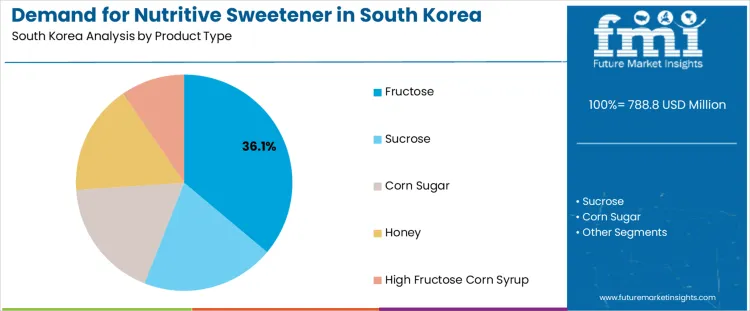
Fructose accounts for 36% of the nutritive sweetener market in South Korea due to its higher sweetness intensity and lower glycemic index compared to other sugars. It is commonly used in the food and beverage industry, especially in processed products such as soft drinks, energy drinks, and confectionery, where sweetness and preservative properties are crucial. Fructose is also favored for its ability to enhance flavor profiles with a smaller amount of sugar, making it an attractive option for manufacturers aiming to reduce overall sugar content while maintaining taste. Additionally, fructose's ability to improve product stability and shelf life makes it a popular choice for use in products like jams, sauces, and syrups. As South Korea continues to embrace healthier eating habits and reduce overall sugar consumption, the demand for fructose, particularly in low-calorie or sugar-reduced products, is expected to remain strong due to its favorable metabolic impact and sweetening efficiency.
Why Do Conventional Nutritive Sweeteners Dominate the Market?
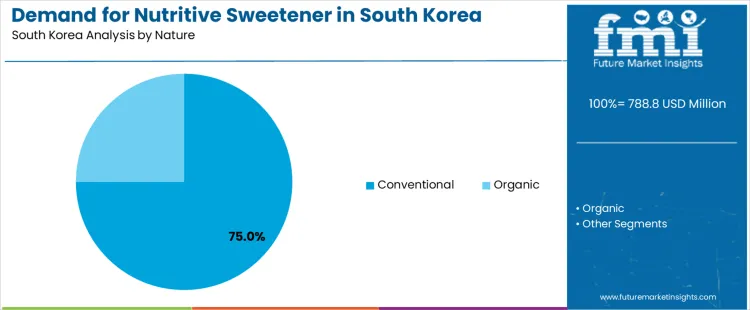
Conventional sweeteners, including sucrose, corn sugar, and high fructose corn syrup (HFCS), dominate the nutritive sweetener market in South Korea, accounting for 75% of the total demand. These sweeteners are widely used across industries due to their cost-effectiveness, accessibility, and versatility in product formulations. Sucrose, derived from sugar cane or sugar beets, is the most common sweetener in everyday products such as beverages, baked goods, dairy, and sauces. It is favored for its well-known taste profile and ease of incorporation into a wide range of foods and drinks. High fructose corn syrup, another key player in the conventional segment, is particularly popular in the beverage industry due to its high sweetness and low cost, making it a staple in sodas and other sugary drinks. As South Korea's food and beverage industry remains reliant on familiar, traditional sweeteners for mass-produced products, conventional sweeteners continue to dominate. Despite increasing interest in organic and alternative sweeteners, conventional sweeteners maintain their position due to consumer familiarity, pricing advantages, and widespread availability in both local and imported products.
What Is the Current Demand for Nutritive Sweetener in South Korea?
Demand for nutritive sweetener in South Korea is tied to its broad use as a caloric sweetening agent in food and beverage production. Nutritive sweeteners such as sucrose, fructose, glucose syrups, and high intensity caloric syrups are incorporated in confectionery, bakery products, dairy drinks, processed foods, and beverages. Procurement levels are shaped by output in packaged foods and beverage segments, where sweetness profiles remain a defining quality attribute. Demand also reflects eating patterns and retail consumption of sweetened products, including ready to drink drinks and snack items. As manufacturers balance taste, formulation costs, and processing requirements, nutritive sweeteners remain integral to product formulations where caloric sugar is preferred or functionally required.
What Factors Are Driving Demand for Nutritive Sweetener in South Korea?
Several drivers influence demand for nutritive sweetener in South Korea. Growth in the processed food and beverage sector underpins volume requirements, as manufacturers rely on caloric sweeteners for taste and functional properties such as texture and browning in baked goods. Expansion of retail channels, including convenience stores and supermarkets, supports diverse product offerings that use nutritive sweeteners. Consumer preference for familiar taste profiles in traditional confections, desserts, and sweet beverages sustains baseline demand. Industrial users in food processing specify nutritive sweeteners for cost efficiency and process stability, particularly where heat and pH conditions require robust performance. Export activity in packaged foods also shapes formulation choices consistent with target market expectations.
What Are the Constraints on Demand for Nutritive Sweetener in South Korea?
Despite ongoing uptake, demand for nutritive sweetener faces constraints in South Korea. Public health initiatives and consumer awareness around sugar reduction and metabolic health concerns have influenced formulation strategies, leading some manufacturers to reduce caloric sugar or reformulate with alternative sweeteners. Regulatory guidelines that recommend limits on added sugars in certain product categories impact formulation decisions and may shift demand toward lower calorie options. Competition from high intensity and non nutritive sweeteners, which deliver sweetness with reduced calories, creates alternative pathways that lessen reliance on traditional nutritive sugars. Price volatility for raw sugar and syrup inputs can also affect procurement costs and influence product pricing strategies, shaping volume demand.
What Trends Are Emerging in South Korea’s Nutritive Sweetener Market?
Emerging trends in South Korea’s nutritive sweetener landscape reflect shifts in formulation approaches and consumer preferences. There is an increasing focus on reformulation and sugar reduction, with some products balancing reduced sugar content with flavor modulation to meet health-oriented guidelines. Manufacturers are also exploring blends that combine nutritive and non nutritive sweeteners to achieve targeted sweetness intensity with fewer calories, addressing both taste and health considerations. Functional beverage developers are incorporating nutritive sweeteners alongside other ingredients to enhance mouthfeel and consumer acceptance. Sustainable sourcing of sugar and syrup inputs is gaining attention in procurement decisions, driven by supplier transparency and environmental standards. Finally, export oriented producers are calibrating sweetener use to align with regulatory and taste preferences in international markets.
What is the Regional Outlook for the Demand for Nutritive Sweeteners in South Korea?
The demand for nutritive sweeteners in South Korea is closely linked to the growth of the food and beverage industry, with rising consumer interest in healthier alternatives to traditional sugar. Regions with strong food manufacturing, agriculture, and retail sectors show higher demand for these sweeteners. Jeju leads in growth due to its expanding tourism-driven foodservice sector and rising health-conscious consumer base. South Gyeongsang and South Jeolla also demonstrate steady demand, particularly driven by food processing, beverage production, and retail. North Jeolla shows more moderate growth, influenced by its industrial food production and agriculture. As South Korea continues to shift towards healthier eating habits, the adoption of nutritive sweeteners is expected to rise steadily across all regions.
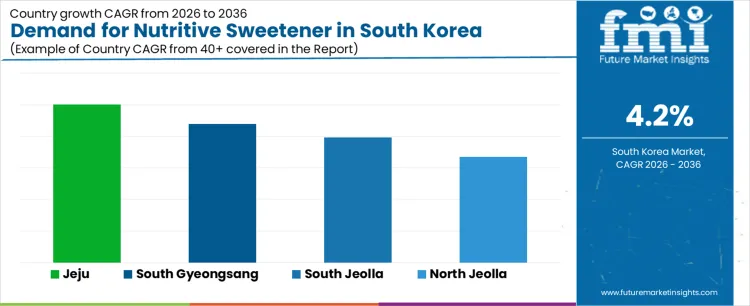
| Province | CAGR (2026-2036) |
|---|---|
| South Gyeongsang | 4.4% |
| North Jeolla | 3.3% |
| South Jeolla | 4.0% |
| Jeju | 5.0% |
What drives the demand for Nutritive Sweeteners in South Gyeongsang?
South Gyeongsang is projected to experience a CAGR of 4.4% in the demand for nutritive sweeteners from 2026 to 2036. The region’s significant food processing and beverage manufacturing industries are major contributors to this demand. As food manufacturers in South Gyeongsang seek to meet consumer demand for healthier, lower-calorie products, the use of nutritive sweeteners becomes essential. The growing popularity of beverages, snacks, and processed foods with reduced sugar content drives the adoption of alternative sweeteners that provide similar taste profiles without the added calories. Additionally, the province’s agricultural base, which includes sugarcane and other crops used in the production of sweeteners, supports local demand for these ingredients. South Gyeongsang's continued focus on innovation in food production and catering to health-conscious consumers ensures steady growth in this market.
What influences the growth of Nutritive Sweetener demand in North Jeolla?
North Jeolla is expected to see a moderate CAGR of 3.3% in the demand for nutritive sweeteners from 2026 to 2036. The region’s industrial base, particularly in food processing and agriculture, contributes to this steady demand. North Jeolla’s agricultural output, including crops such as corn and sugar beets, is vital in supplying raw materials for sweetener production. The food manufacturing industry in the region, especially in the production of processed foods, beverages, and baked goods, is increasingly adopting nutritive sweeteners to meet the demand for low-calorie and functional food products. Additionally, as consumer preferences shift toward healthier options, food producers in North Jeolla are incorporating more alternative sweeteners into their products, supporting the growth of this segment. Although the region's demand growth is steady, ongoing advancements in food technology will continue to drive incremental increases in nutritive sweetener use.
What drives the demand for Nutritive Sweeteners in South Jeolla?
South Jeolla is projected to grow at a CAGR of 4.0% in the demand for nutritive sweeteners from 2026 to 2036. The region’s strong presence in food production, particularly in the agricultural, dairy, and beverage sectors, plays a significant role in driving this demand. As South Jeolla continues to expand its food manufacturing capabilities, particularly for low-calorie and health-oriented products, the use of nutritive sweeteners becomes more prevalent. Nutritional concerns, combined with the region’s increasing focus on producing healthier food options, are key drivers of this trend. The dairy and beverage industries in South Jeolla, which are significant consumers of sweeteners, are particularly focused on using nutritive sweeteners in products such as flavored milk, yogurt, and fruit juices. South Jeolla’s commitment to sustainable food production practices and meeting health-conscious consumer needs further accelerates the demand for these ingredients.
Why is Jeju projected to have the highest demand growth for Nutritive Sweeteners?
Jeju is projected to experience the highest demand growth for nutritive sweeteners, with a CAGR of 5.0% from 2026 to 2036. The island’s expanding tourism and hospitality sector plays a key role in driving this growth, as hotels, restaurants, and cafés increasingly cater to the demand for healthier and lower-calorie food options. As the local population and number of tourists become more health-conscious, there is a rising preference for products that contain reduced sugar or alternative sweeteners. Jeju's focus on sustainable tourism and eco-friendly practices in its foodservice industry encourages the use of healthier ingredients, including nutritive sweeteners. Additionally, Jeju’s food manufacturing sector, particularly in the production of specialty beverages and organic products, is adopting nutritive sweeteners to meet both local and international consumer demand for healthier, naturally sweetened food products. As the region continues to prioritize health and wellness in its tourism and local food production, the demand for nutritive sweeteners is expected to rise significantly.
How are Competitors Differentiating in the Nutritive Sweetener Market in South Korea?
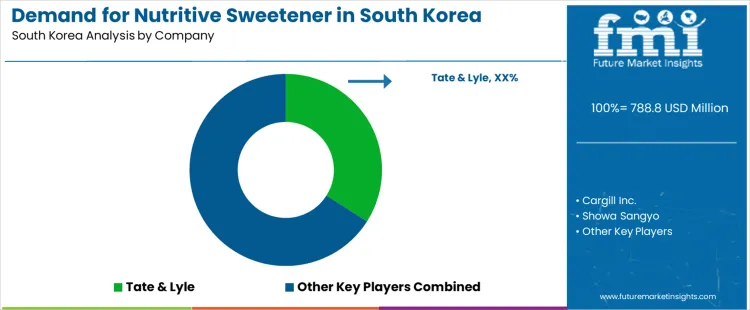
The demand for nutritive sweeteners in South Korea is growing due to an increasing preference for healthier alternatives to traditional sugar in the food and beverage industries. Tate & Lyle, the leading player, stands out by offering a wide range of high-quality nutritive sweeteners, focusing on reducing sugar content while maintaining sweetness, texture, and functionality. Their portfolio includes solutions that cater to both the food service and consumer goods sectors, focusing on delivering clean-label, naturally derived ingredients. Cargill Inc. competes by providing a variety of sweeteners, with an emphasis on corn-based solutions that offer cost-effective options while ensuring functionality and consistency. Their ability to offer customized formulations for different food categories enhances their competitive edge.
Showa Sangyo focuses on producing a broad range of nutritive sweeteners, including those based on glucose, fructose, and maltose, designed for use in both traditional and modern food applications. Their products are aimed at enhancing sweetness profiles while ensuring ease of use in various formulations. Japan Corn Starch Co. specializes in glucose and corn syrup-based sweeteners, catering to the growing demand for affordable and versatile sweeteners that can be used across multiple food and beverage segments. COFCO International offers nutritive sweeteners derived from natural sources, focusing on their health benefits and suitability for sugar reduction. Their products appeal to manufacturers looking for sustainable, plant-based sweetening solutions. These companies use product brochures to emphasize the benefits of their sweeteners, such as their sweetness profiles, functional properties, and compatibility with South Korean consumer health trends, helping manufacturers make informed choices for their product development needs.
Key Players of the Demand for Nutritive Sweetener in South Korea
- Tate & Lyle
- Cargill Inc.
- Showa Sangyo
- Japan Corn Starch Co.
- COFCO International
Scope of the Report
| Items | Values |
|---|---|
| Quantitative Units (2026) | USD Million |
| Product Type | Fructose, Sucrose, Corn Sugar, Honey, High Fructose Corn Syrup |
| Nature | Conventional, Organic |
| End Use | Household/Retail, Food Processing, Bakery, Confectionery, Beverages, Pharmaceuticals |
| Distribution Channel | Direct sales, Indirect sales, Store-based Retailing, Hypermarket/Supermarket, Convenience Store, Discount Store |
| Companies | Tate & Lyle, Cargill Inc., Showa Sangyo, Japan Corn Starch Co., COFCO International |
| Region Covered | South Korea |
| Provinces Covered | South Gyeongsang, North Jeolla, South Jeolla, Jeju |
| Additional Attributes | Dollar sales by product type, nature, end use, and distribution channel. Demand is driven by the growth in food processing, bakery, and beverage sectors, with a rising preference for both conventional and organic sweeteners in retail and foodservice channels. |
Demand for Nutritive Sweetener in South Korea
Product Type
- Fructose
- Sucrose
- Corn Sugar
- Honey
- High Fructose Corn Syrup
- Other
Nature
- Conventional
- Organic
End Use
- Household/ Retail
- Food Processing
- Bakery
- Confectionery
- Beverages
- Pharmaceuticals
- Other
Distribution Channel
- Direct Sales
- Indirect Sales
- Store-based Retailing
- Hypermarket/Supermarket
- Convenience Store
- Discount Store
- Other
Provinces
- South Gyeongsang
- North Jeolla
- South Jeolla
- Jeju
Bibliography
- Korea Food and Drug Administration (KFDA). (2023). Regulations on food fortification and sugar reduction in South Korea. Republic of Korea.
- Korea Agricultural Technology Promotion Agency (KATPA). (2024). Trends in the agricultural use of sweeteners in food products.
- Cargill, Inc. (2023). Sweetener solutions for low-calorie and sugar-reduced foods.
- Tate & Lyle PLC. (2023). Nutritive sweeteners for health and wellness-focused food products.
Frequently Asked Questions
How big is the demand for nutritive sweetener in south korea in 2026?
The demand for nutritive sweetener in south korea is estimated to be valued at USD 788.8 million in 2026.
What will be the size of nutritive sweetener in south korea in 2036?
The market size for the nutritive sweetener in south korea is projected to reach USD 1,187.9 million by 2036.
How much will be the demand for nutritive sweetener in south korea growth between 2026 and 2036?
The demand for nutritive sweetener in south korea is expected to grow at a 4.2% CAGR between 2026 and 2036.
What are the key product types in the nutritive sweetener in south korea?
The key product types in nutritive sweetener in south korea are fructose, sucrose, corn sugar, honey and high fructose corn syrup.
Which nature segment is expected to contribute significant share in the nutritive sweetener in south korea in 2026?
In terms of nature, conventional segment is expected to command 75.0% share in the nutritive sweetener in south korea in 2026.
Preview the report firsthand - request a free sample
Get SampleGet the brochure for pricing and purchase details.
Get PDFTable of Content
- Executive Summary
- South Korea Market Outlook
- Demand-side Trends
- Supply-side Trends
- Technology Roadmap Analysis
- Analysis and Recommendations
- Market Overview
- Market Coverage / Taxonomy
- Market Definition / Scope / Limitations
- Market Background
- Market Dynamics
- Drivers
- Restraints
- Opportunity
- Trends
- Scenario Forecast
- Demand in Optimistic Scenario
- Demand in Likely Scenario
- Demand in Conservative Scenario
- Opportunity Map Analysis
- Product Life Cycle Analysis
- Supply Chain Analysis
- Investment Feasibility Matrix
- Value Chain Analysis
- PESTLE and Porter’s Analysis
- Regulatory Landscape
- Regional Parent Market Outlook
- Production and Consumption Statistics
- Import and Export Statistics
- Market Dynamics
- South Korea Market Analysis 2021 to 2025 and Forecast, 2026 to 2036
- Historical Market Size Value (USD Million) Analysis, 2021 to 2025
- Current and Future Market Size Value (USD Million) Projections, 2026 to 2036
- Y-o-Y Growth Trend Analysis
- Absolute $ Opportunity Analysis
- South Korea Market Pricing Analysis 2021 to 2025 and Forecast 2026 to 2036
- South Korea Market Analysis 2021 to 2025 and Forecast 2026 to 2036, By Product Type
- Introduction / Key Findings
- Historical Market Size Value (USD Million) Analysis By Product Type , 2021 to 2025
- Current and Future Market Size Value (USD Million) Analysis and Forecast By Product Type , 2026 to 2036
- Fructose
- Sucrose
- Corn Sugar
- Honey
- High Fructose Corn Syrup
- Fructose
- Y-o-Y Growth Trend Analysis By Product Type , 2021 to 2025
- Absolute $ Opportunity Analysis By Product Type , 2026 to 2036
- South Korea Market Analysis 2021 to 2025 and Forecast 2026 to 2036, By Nature
- Introduction / Key Findings
- Historical Market Size Value (USD Million) Analysis By Nature, 2021 to 2025
- Current and Future Market Size Value (USD Million) Analysis and Forecast By Nature, 2026 to 2036
- Conventional
- Organic
- Conventional
- Y-o-Y Growth Trend Analysis By Nature, 2021 to 2025
- Absolute $ Opportunity Analysis By Nature, 2026 to 2036
- South Korea Market Analysis 2021 to 2025 and Forecast 2026 to 2036, By End Use
- Introduction / Key Findings
- Historical Market Size Value (USD Million) Analysis By End Use, 2021 to 2025
- Current and Future Market Size Value (USD Million) Analysis and Forecast By End Use, 2026 to 2036
- Household/ Retail
- Food Processing
- Bakery
- Confectionery
- Beverages
- Pharmaceuticals
- Household/ Retail
- Y-o-Y Growth Trend Analysis By End Use, 2021 to 2025
- Absolute $ Opportunity Analysis By End Use, 2026 to 2036
- South Korea Market Analysis 2021 to 2025 and Forecast 2026 to 2036, By Distribution Channel
- Introduction / Key Findings
- Historical Market Size Value (USD Million) Analysis By Distribution Channel, 2021 to 2025
- Current and Future Market Size Value (USD Million) Analysis and Forecast By Distribution Channel, 2026 to 2036
- Direct sales
- Indirect sales
- Store-based Retailing
- Hypermarket/Supermarket
- Convenience Store
- Discount Store
- Direct sales
- Y-o-Y Growth Trend Analysis By Distribution Channel, 2021 to 2025
- Absolute $ Opportunity Analysis By Distribution Channel, 2026 to 2036
- Market Structure Analysis
- Competition Dashboard
- Competition Benchmarking
- Market Share Analysis of Top Players
- By Regional
- By Product Type
- By Nature
- By End Use
- By Distribution Channel
- Competition Analysis
- Competition Deep Dive
- Tate & Lyle
- Overview
- Product Portfolio
- Profitability by Market Segments (Product/Age /Sales Channel/Region)
- Sales Footprint
- Strategy Overview
- Marketing Strategy
- Product Strategy
- Channel Strategy
- Cargill Inc.
- Showa Sangyo
- Japan Corn Starch Co.
- COFCO International
- Tate & Lyle
- Competition Deep Dive
- Assumptions & Acronyms Used
- Research Methodology


