

- Market Size (2026)
- USD 832.8 Mn
- Forecast (2036)
- USD 2160.0 Mn
- CAGR (2026 to 2036)
- 10.0%
How big is the Sterile Single-Use Endoscopy Accessories Market in 2026?
USD 832.8 million in 2026 and USD 2160.0 million by 2036 at a 10.0% CAGR.
Demand for sterile single-use endoscopy accessories is projected to expand at 10.0% CAGR between 2026 and 2036, increasing valuation from USD 832.8 million in 2026 to USD 2160.0 million by 2036. Many accessories enter working channels or contact tissue during diagnostic and therapeutic procedures across busy hospital departments. The FDA reported in March 2025 that improper reprocessing of Olympus's reusable MAJ-891 plug had been associated with 120 injuries and one death. The alert recommended available alternatives and showed how endoscope reprocessing failures can interrupt procedure schedules. Hospitals require validated scope compatibility and familiar handling to convert recurring demand into network-wide purchasing across several procedure rooms.
United States facilities use an FDA clearance pathway that separates accessory review from later hospital formulary decisions. European and Japanese departments often coordinate accessory conversion with installed scope platforms and country-specific registrations. Boston Scientific reported in February 2026 that it had completed its July 2025 acquisition of Anrei Medical, a China-based manufacturer serving minimally invasive gastroenterology. The transaction shows how manufacturers can add regional production and procedure-specific devices instead of relying on one global supply route. Commercial access therefore depends on registrations and distributor training with reliable replenishment across each country. Regions combining compatible scope families with dependable clinical support provide stronger commercial conditions for single-use biopsy devices.
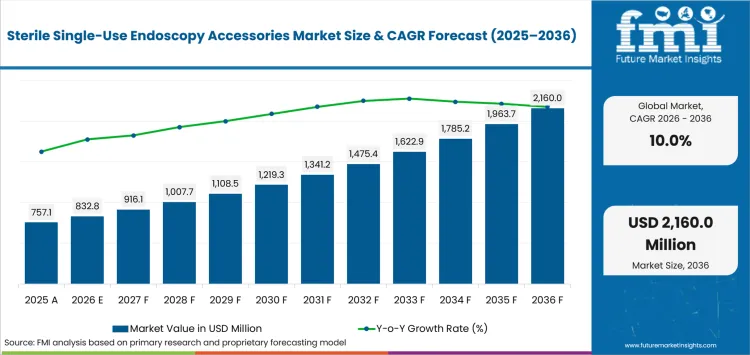
Key Takeaways
- Recurring gastrointestinal and pulmonary procedures support demand across hospitals and ambulatory centers that require sterile tools with predictable availability.
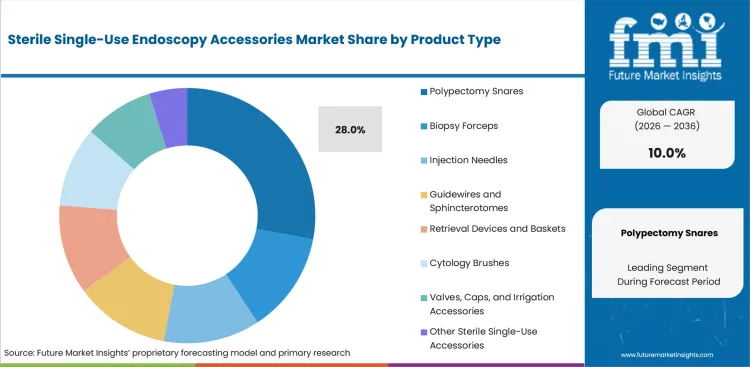
- Polypectomy snares are expected to account for 28.0% of product type demand in 2026, supported by routine removal during colorectal procedures.
- Gastrointestinal endoscopy is projected to capture 64.0% of application demand in 2026, reflecting combined diagnostic and therapeutic use during one procedure.
- Hospitals are estimated to represent 56.0% of end-user demand in 2026, underpinned by concentrated procedure volume and centralized product review.
- Scope compatibility and recall exposure remain material constraints that can disrupt several clinicians and procedure rooms through one failed accessory.
- Boston Scientific and Olympus compete through broad portfolios that cover several diagnostic and therapeutic procedures across major hospital networks. Cook Medical and Micro-Tech Endoscopy offer procedure-specific devices, with STERIS and Fujifilm combining consumables with service and Merit Medical and Hobbs Medical focusing on selected workflows.
Analyst Perspective
“Sterile endoscopy accessories create commercial value when infection control and clinical handling improve together across routine and complex procedures. A disposable tool that changes scope compatibility or physician control can create more disruption than it removes. Hospital networks are therefore likely to favor manufacturers that combine broad procedure coverage with clear labeling, dependable replenishment and rapid recall response across every approved scope family.”
- Anurag Sharma, Principal Analyst, Future Market Insights
How is the sterile single-use endoscopy accessories market segmented?
The sterile single-use endoscopy accessories industry is segmented by product type, care setting, application, end user, and region.
Product type separates polypectomy snares, biopsy forceps, injection needles, guidewires, retrieval tools, brushes and channel-control accessories by procedure function. Care setting distinguishes hospital outpatient departments, ambulatory surgical centers, office-based suites and inpatient rooms through their staffing and stocking patterns. Application divides demand among gastrointestinal, pulmonary, urology, gynecology and ear-nose-throat procedures that require different sterile tools. End user identifies hospitals, ambulatory centers, specialty clinics and diagnostic centers that approve or purchase devices through distinct review systems. Region compares registration pathways and commercial coverage across major healthcare systems with different service requirements. The taxonomy places individual sterile tools within advanced endoscopic technologies and preserves the defined accessory boundary across every category.
What supports polypectomy snares within the product type category?
Cold polypectomy requires a sterile loop that closes predictably around small lesions without adding cautery to routine removal. Cook Medical launched the Cold AcuSnare in March 2026 across the United States and Canada, with direct availability in European markets. Its rotatable handle and several loop configurations address differences in lesion position and physician technique. The launch also broadens contract purchasing across routine polypectomy and hybrid endoscopy workflows, giving hospitals more choice within one accessory portfolio.
- Polypectomy snares are set to lead the product type category with 28.0% share in 2026 due to recurring use during colorectal screening and treatment. Every procedure requires a new loop that provides predictable closure and immediate availability across scheduled clinical sessions. Frequent use across hospitals and ambulatory centers creates a broader recurring order base than accessories reserved for narrower interventions.
- Endoscopy units purchase snare families that provide several loop shapes with hot and cold configurations under one agreement. Physicians retain familiar handles and controlled rotation across routine and technically demanding lesions for consistent tissue capture. Department managers reduce training variation across rooms and maintain alternative designs for difficult anatomy or platform-specific preferences. Portfolio standardization therefore preserves clinical choice across routine and difficult polypectomy cases without creating separate training systems.
Why do hospital outpatient endoscopy departments shape care setting demand?
Hospital outpatient departments combine scheduled procedure volume with pathology handling and immediate access to advanced endoscopy platforms. NHS England reported in July 2026 that its 2024-25 bowel screening program completed 100,778 diagnostic tests and sent 187,952 resected polyps for pathology. Coordinated stocking must cover snares and forceps with traps and valves across several procedure rooms and pathology routes. The outpatient setting therefore links sterile accessories with hospital consumables planning and documented specimen transfer requirements.
- Based on care setting, hospital outpatient endoscopy departments are projected to account for 48.0% in 2026 due to concentrated procedure schedules and direct pathology access. One formulary decision can cover several procedure rooms within the same hospital system and support coordinated clinical training. Coordinated stocking supports diagnostic and therapeutic sessions without separate purchasing plans for every physician or procedure list.
- Clinical managers favor accessory portfolios that support scheduled cases and urgent therapeutic work without creating separate training systems. Reliable local replenishment protects procedure lists during demand peaks and unexpected product changes across several hospital departments. Departments reject conversions that introduce uncertain scope compatibility across installed scope platforms and high-volume procedure rooms. One unsuitable accessory can interrupt several clinicians and rooms during the same operating day across multiple departments.
How does gastrointestinal endoscopy shape demand within the application category?
Gastrointestinal endoscopy often combines diagnosis and treatment during one examination, which increases the number of disposable tools used per case. Olympus launched SecureFlex in October 2025 for endoscopic ultrasound-guided tissue sampling in Europe and Japan. The single-use needle supports sampling of gastrointestinal lesions through an ultrasound endoscope and requires regional registration for wider rollout. Procedure teams therefore assess accessories together with flexible endoscopes and imaging platforms rather than as isolated catalog items.
- The application category is forecast to be led by gastrointestinal endoscopy at 64.0% share in 2026 due to combined screening and treatment workflows. Polypectomy and hemostasis tools often accompany biopsy or retrieval devices during the same clinical session and procedure. Combined diagnostic and therapeutic use creates recurring demand across routine colonoscopy and advanced biliary or ultrasound-guided procedures throughout the year.
- Gastroenterology departments standardize single-use accessories through protocols that specify scope channels and physician handling requirements. Complete device families support recurring orders across diagnostic and therapeutic cases without separate brand decisions for every procedure. Conversion slows if a replacement changes tactile response or visibility across the installed scope fleet. Handling differences can outweigh apparent price savings across busy procedure schedules and several clinical teams.
What makes hospitals central to the end-user category?
Hospitals combine complex procedure schedules with infection-control review and formal product evaluation across several departments. Olympus announced in September 2025 that packaging using DuPont Tyvek with Renewable Attribution would cover more than 100 single-use device categories from 2026. The program includes sampling and therapeutic devices used with gastrointestinal and respiratory endoscopes across several procedure specialties. Hospital review therefore connects sterile packaging and lot traceability with endoscopy visualization systems, regional inventory and clinical training.
- In 2026, hospitals are expected to lead the end-user category with 56.0% share because procedure volume and product review are concentrated within health systems. Network committees can approve the same accessory family across several departments following successful compatibility and handling review. Multi-site contracts then create predictable replenishment across routine diagnostic work and complex therapeutic cases throughout the hospital network.
- Hospital networks prefer manufacturers that provide clinical training and lot traceability with dependable regional inventory across several facilities. Committees often retain multiple approved brands to protect service continuity during recalls or shortages across several procedure rooms. Risk controls limit complete portfolio conversion, but they reward manufacturers that provide clear recall communication and rapid replacement support.
What are the drivers, restraints, and opportunities in the sterile single-use endoscopy accessories market?
Rising procedure volume and infection-control requirements support recurring demand, while compatibility failures and recalls delay portfolio conversion across installed endoscope platforms.
- Driver: Screening and therapeutic procedures increase recurring use of sterile tools across diagnosis and sampling with resection and retrieval.
- Restraint: Compatibility failures and recalls can interrupt procedure schedules and force hospitals to maintain validated backup products.
- Opportunity: Clear accessory classification can simplify market entry for manufacturers that document intended use, risk and parent-device compatibility.
More sensitive screening is one of the driver propelling the demand by sending additional positive FIT results into diagnostic colonoscopy pathways. NHS England announced in January 2026 that its lower threshold was expected to identify about 600 additional bowel cancers and 2,000 more people with high-risk polyps each year. Diagnostic and therapeutic episodes can require biopsy forceps and snares with retrieval devices throughout the same procedure. Manufacturers convert the added procedure load into recurring orders through complete portfolios and dependable inventory across hospital networks.
Device failure creates a restraint by interrupting an entire procedure pathway and forcing urgent inventory changes. The FDA reported in February 2025 that Olympus removed four single-use guide sheath kit models following 26 serious injuries linked to detached tips. Hospital committees therefore examine tensile performance and traceability with sterile packaging during every formal product review. Clinical departments also maintain validated backup products across bronchoscopy workflows and review related endoscope reprocessing devices during infection-control planning.
Clear accessory classification creates a practical opening for manufacturers that document risk and intended use separately from the parent endoscope. The FDA requested public comment in December 2025 on accessories that could qualify for distinct Class I classification. A clearer route could reduce unnecessary regulatory burden without weakening established safety controls across accessory review. Commercial access depends on precise compatibility evidence and regional registration with post-market systems that support hospitals across regulated healthcare markets.
Which country CAGRs are profiled in the sterile single-use endoscopy accessories market?
| Country | CAGR |
|---|---|
| India | 13.5% |
| China | 12.5% |
| United States | 11.5% |
| Japan | 10.5% |
| United Kingdom | 9.5% |
| Germany | 8.5% |
How do country-level CAGRs compare in the sterile single-use endoscopy accessories market?
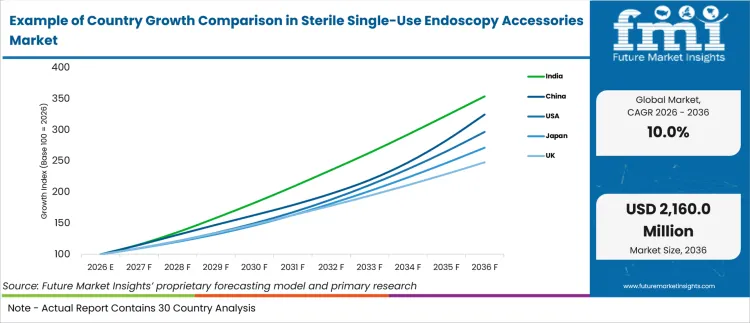
The country forecasts show a clear progression across the sterile single-use endoscopy accessories market, with growth rates declining in fairly consistent intervals rather than forming sharply separated tiers. India and China define the upper end of the comparison, reflecting expanding endoscopy volumes, growing hospital capacity and increasing emphasis on infection prevention. The United States follows as a bridge between the rapidly expanding Asian markets and the more mature healthcare systems of Japan, the United Kingdom and Germany. The remaining countries form a gradual sequence where differences are linked more to replacement cycles and procedural patterns than to fundamentally different demand drivers.
- India benefits from rising investments in healthcare infrastructure and increasing adoption of minimally invasive diagnostic and therapeutic procedures that support demand for sterile single-use accessories.
- China's outlook is supported by expanding endoscopy service capacity and growing emphasis on infection control standards across hospitals and ambulatory care settings.
- The United States reflects sustained demand for disposable endoscopy components as providers prioritize patient safety, workflow efficiency and reduced reprocessing complexity.
- Japan continues to support market expansion through high utilization of endoscopic procedures and ongoing evaluation of technologies that can enhance procedural safety and consistency.
- The United Kingdom's market development is influenced by infection prevention initiatives and efforts to improve operational efficiency within endoscopy services.
- Germany maintains steady momentum as healthcare providers balance stringent clinical quality requirements with increasing interest in single-use solutions for selected endoscopic applications.
Similar CAGRs do not necessarily create identical market conditions for manufacturers and suppliers. Differences in endoscopy procedure volumes, hospital procurement practices, infection control policies and reimbursement structures can significantly influence adoption patterns. Commercial opportunities may vary considerably even among countries exhibiting relatively comparable growth trajectories. The full report provides country-level CAGR analysis across North America, Latin America, Europe, East Asia, South Asia, Oceania and the Middle East and Africa.
Country-wise Analysis
- India's hospital networks require dependable repair and training routes before accessory standardization can extend beyond major metropolitan endoscopy centers. Adoption of sterile single-use endoscopy accessories in India is estimated to expand at 13.5% CAGR through 2036, supported by improving procedure access and infection-control investment. Olympus opened an additional Gurugram repair facility in September 2025 and stated that surgical-scope repair capacity could double within five years. Faster local repair shortens equipment downtime and gives regional hospitals more confidence in accessory compatibility with newer scope fleets. A broader service base supports training and maintenance across expanding hospital networks and regional care settings. Smaller facilities outside major cities face longer service travel and fewer trained endoscopy technicians, which can delay standardization across regional networks.
- Chinese hospitals increasingly combine local equipment production with structured physician training across major urban endoscopy centers. Sterile single-use endoscopy accessory demand in China is forecast to rise at 12.5% CAGR over the forecast period, reinforced by procedure scale and regional manufacturing capacity. Olympus reported in November 2025 that China performs about 59 million gastrointestinal endoscopy procedures each year. The company also operates training centers in Beijing and Shanghai with another center in Guangzhou. Local production and training centers reduce replenishment delays for compatible accessories across tertiary hospital networks. Provincial tender rules differ across regions and specialist coverage thins outside major cities, which complicates adoption across smaller clinical centers.
- United States endoscopy departments operate within a formal device-clearance system and a mature colorectal screening network. The United States' sterile single-use endoscopy accessories outlook is anticipated to advance at 11.5% CAGR over the assessment period, aided by recurring procedure volume and broad distributor coverage. CDC researchers reported in August 2025 that 67.4% of screening-eligible adults were current with colorectal screening during 2023. The screening base supports substantial diagnostic follow-up and therapeutic colonoscopy across hospitals and ambulatory centers nationwide. Multi-site formularies and established clinical training let large health systems standardize validated accessories across several endoscopy departments. Recall exposure and platform-specific compatibility review can preserve backup inventories instead of full conversion to one disposable accessory family.
- Japanese hospitals coordinate accessory purchasing with domestic platform launches and tightly managed service schedules across regional networks. By 2036, Japan is projected to grow at 10.5% CAGR, shaped by established procedure systems and advanced imaging adoption. Olympus announced in October 2025 that sales of its combined NBI+TXI observation mode would begin in Japan during November. Domestic service and training support compatible accessory use across gastroenterology departments and specialist clinical teams. Coordinated platform support and hospital purchasing calendars help clinical teams introduce compatible accessories without disrupting established procedure schedules. New disposable tools must preserve familiar tactile handling or physicians can delay use across routine therapeutic protocols.
- United Kingdom hospitals purchase endoscopy accessories through national frameworks that require registration and dependable local service support. Sterile single-use endoscopy accessory sales in the United Kingdom are forecast to expand at 9.5% CAGR by 2036, influenced by public screening activity and integrated distribution coverage. NHS England expanded bowel cancer screening to people aged 50 in January 2025 and estimated that about 850,000 additional people would become eligible each year. Positive tests create referrals for diagnostic colonoscopy and possible polyp removal across NHS hospital services. National screening expands diagnostic referrals and creates recurring accessory demand across NHS endoscopy services nationwide. Framework renewal schedules and trust-level formulary reviews can extend conversion timelines for new accessory families across public hospital networks.
- German hospitals combine regulated colorectal screening with detailed device documentation and insurer-linked purchasing across regional care networks. The German sterile single-use endoscopy accessories sector is projected to record 8.5% CAGR during the assessment period, linked to established colonoscopy pathways and replacement purchasing. The G-BA expanded equal colorectal screening access to women and men aged 50 in April 2025 and retained two colonoscopies ten years apart. The policy supports a recurring pool of diagnostic and therapeutic procedures across regulated screening routes. Detailed technical review gives validated accessories a defined route into hospital purchasing groups and regional clinical networks. Tender documentation and annual budget schedules can slow new accessory contracts despite stable colonoscopy demand across regulated screening pathways.
Who are the notable companies in the sterile single-use endoscopy accessories market?
Boston Scientific, Olympus, Cook Medical, Micro-Tech Endoscopy, STERIS, Fujifilm, Merit Medical and Hobbs Medical are the notable companies shaping this market.
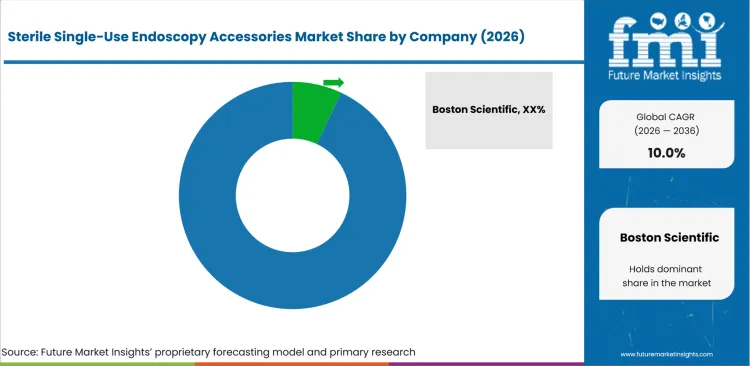
The competitive outlook combines global endoscopy manufacturers with focused specialists across tissue acquisition and polypectomy with retrieval and channel-control devices. Boston Scientific and Olympus pair broad therapeutic portfolios with training and distribution across major hospital networks. Cook Medical and Micro-Tech Endoscopy compete through procedure-specific families that cover resection and biopsy with biliary workflows. STERIS adds infection-prevention support beside endoscopy consumables, and Fujifilm connects accessory supply with imaging-platform service across established hospital accounts. Merit Medical contributes gastroenterology and pulmonary devices, and Hobbs Medical concentrates on specialized sterile tools. Portfolio depth creates greater commercial value through coordinated training and replenishment across advanced workflows such as endoscopic ultrasound needles.
- Boston Scientific and Olympus combine broad therapeutic portfolios with global training and distributor coverage across major hospital networks. Their scale supports multi-site contracts across major health systems, although clinical committees compare handling and compatibility before approving one manufacturer across every procedure category.
- Cook Medical and Micro-Tech Endoscopy compete with STERIS through device families covering resection and retrieval with infection-control workflows across several hospital departments. Their procedure coverage supports coordinated training and replenishment across health systems that prefer fewer product agreements without losing specialist accessory options.
- Fujifilm connects endotherapy accessories with imaging-platform service, and Merit Medical supports gastroenterology and pulmonary procedures through a global commercial network. Hobbs Medical concentrates on focused gastrointestinal accessories and North American manufacturing with specialized technical support. Specialist manufacturers compete through tailored support and reliable inventory rather than portfolio breadth across every procedure category.
Competitive Benchmarking: Sterile Single-Use Endoscopy Accessories Market
| Company | Sterile Accessory Portfolio | Procedure Coverage | Training and Commercial Support | Geographic Reach |
|---|---|---|---|---|
| Boston Scientific | High | High | High | Global |
| Olympus | High | High | High | Global |
| Cook Medical | High | High | High | Global |
| Micro-Tech Endoscopy | High | Medium | Medium | Global |
| STERIS | High | Medium | High | Global |
| Fujifilm | Medium | Medium | High | Global |
| Merit Medical | Medium | Medium | High | Global |
| Hobbs Medical | High | Medium | Low | North America |
Scoring basis: Portfolio High requires at least six verified sterile accessory categories within the defined market boundary and current commercial availability. Portfolio Medium requires three to five verified categories, and Portfolio Low requires one or two verified categories within the market boundary. Procedure Coverage High requires gastrointestinal use together with at least two additional procedure specialties supported by official commercial evidence. Procedure Coverage Medium covers several gastrointestinal workflows or gastrointestinal use with one additional specialty supported by current documentation. Procedure Coverage Low applies to one narrow verified workflow without broader commercial participation across the defined accessory market. Training and Commercial Support High requires direct training and commercial infrastructure across several major regions with active customer support. Support Medium requires direct service in one major region and documented distributor coverage across other commercial territories. Support Low reflects mainly local or distributor-led coverage with limited direct training across the verified operating footprint. Geographic Reach describes verified commercial presence across named regions rather than using another capability score inside the table. Ratings draw on official company disclosures and regulator records reviewed independently against these defined thresholds for every company.
Key Developments in the Sterile Single-Use Endoscopy Accessories Market
- In June 2026, Cook Medical introduced the SureTome SW sphincterotome with DomeTip in the United States and Canada. The sterile device supports cannulation and controlled sphincterotomy during ERCP procedures and works with several guide wires. The launch broadens Cook Medical's biliary accessory portfolio and gives hospital teams another standardized option for procedures that require controlled cutting and reliable wire access with limited additional training.
- In February 2025, Micro-Tech Endoscopy completed its acquisition of a 51% interest in Creo Medical S.L.U. The acquired distribution operation served nearly 5,000 healthcare institutions across the United Kingdom and Spain with coverage in France and other markets. The completed transaction expanded Micro-Tech Endoscopy's Western European commercial network and strengthened distribution capacity for endoscopic consumables and single-use scopes with related sterile accessories.
- In February 2026, Hobbs Medical made the CleanCapture aspiration catheter available for commercial purchase across North American clinical markets. The sterile single-use device shields its collection tip during passage through the endoscope and exposes the tip at the sampling site. The launch adds a specialized gastrointestinal sampling tool that addresses contamination risk and fits endoscopes with instrument channels measuring 2.8 millimeters or larger.
- In December 2025, FUJIFILM Healthcare UK completed its acquisition of Aquilant Endoscopy's British endoscopy business. The transaction transferred endotherapy accessory sales with service and technical personnel into Fujifilm's direct operations. The completed acquisition strengthened maintenance and commercial support for NHS organizations and private providers that purchase endoscopy equipment with compatible therapeutic accessories through coordinated national service arrangements across the United Kingdom.
Key Players in the Sterile Single-Use Endoscopy Accessories Market
Global Portfolio Leaders
- Boston Scientific
- Olympus
- Cook Medical
Established Multispecialty Suppliers
- Micro-Tech Endoscopy
- STERIS
- Fujifilm
Focused Gastrointestinal Suppliers
- Merit Medical
- Hobbs Medical
Sterile Single-Use Endoscopy Accessories Market - Report Scope
| Coverage field | Report scope |
|---|---|
| Market breakdown | Product type, care setting, application, end user, and region. |
| Quantitative Units | USD million and CAGR in %. |
| Market Definition | Revenue from sterile single-use accessories inserted through or attached to endoscopes for tissue acquisition, resection, retrieval, injection, access, fluid control, and related procedures. |
| Regions Covered | North America, Latin America, Europe, East Asia, South Asia and Pacific, and Middle East and Africa. |
| Countries Covered | India, China, United States, Japan, United Kingdom, Germany, and 30+ countries. |
| Key Companies Profiled | Boston Scientific, Olympus, Cook Medical, Micro-Tech Endoscopy, STERIS, Fujifilm, Merit Medical, Hobbs Medical. |
| Forecast Period | 2026 to 2036. |
| Approach | Hybrid bottom-up and top-down market sizing supported by primary interviews and official desk research. |
Sterile Single-Use Endoscopy Accessories Market - Research Methodology
| Method | Approach |
|---|---|
| Primary Research | FMI analysts gathered input from manufacturers, service providers, technology developers, distributors, end users, procurement teams, and subject-matter experts. Interviews examined purchasing decisions, product or service evaluation, adoption barriers, approval requirements, pricing considerations, and expectations for technical or commercial support. Respondents were also asked what evidence is required before a trial, pilot, or initial order develops into regular purchasing. |
| Desk Research | Desk research covered government statistics, regulatory publications, trade data, industry associations, technical literature, standards, company filings, product information, and official corporate announcements. Sources were reviewed for relevance, publication date, geographic coverage, and consistency with the defined market scope. Claims relating to performance, applications, approvals, capacity, investment, and commercial activity were retained only when supported by credible public evidence. |
| Market Sizing and Forecasting | The market model combined the baseline value with historical performance, segment structure, pricing and volume indicators, adoption levels, company participation, and country-level demand conditions. Forecast assumptions considered economic activity, investment trends, regulatory developments, technology adoption, purchasing cycles, supply availability, and barriers to wider market use. Segment and regional estimates were reconciled before the final market total was calculated. |
| Data Validation | Estimates were checked against multiple independent indicators, including public data, company activity, trade patterns, industry developments, and findings from primary interviews. Validation also tested whether products, services, applications, and company revenues fell within the defined market boundaries. Adjacent categories, unsupported claims, overlapping revenues, and activities without direct market relevance were excluded to reduce double counting and maintain consistency across segments and countries. |
Sterile Single-Use Endoscopy Accessories Market by Segments
Sterile Single-Use Endoscopy Accessories Market segmented by Product Type:
- Polypectomy Snares
- Biopsy Forceps
- Injection Needles
- Guidewires and Sphincterotomes
- Retrieval Devices and Baskets
- Cytology Brushes
- Valves, Caps, and Irrigation Accessories
- Other Sterile Single-Use Accessories
Sterile Single-Use Endoscopy Accessories Market segmented by Care Setting:
- Hospital Outpatient Endoscopy Departments
- Ambulatory Surgical Centers
- Office-Based Endoscopy Suites
- Inpatient Procedure Rooms
- Other Care Settings
Sterile Single-Use Endoscopy Accessories Market segmented by Application:
- Gastrointestinal Endoscopy
- Bronchoscopy
- Urology Endoscopy
- Gynecology Endoscopy
- ENT Endoscopy
- Other Applications
Sterile Single-Use Endoscopy Accessories Market segmented by End User:
- Hospitals
- Ambulatory Surgical Centers
- Specialty Endoscopy Clinics
- Diagnostic Centers
- Other Healthcare Providers
Sterile Single-Use Endoscopy Accessories Market by Region:
- North America
- United States
- Canada
- Latin America
- Brazil
- Mexico
- Argentina
- Chile
- Western Europe
- Germany
- France
- United Kingdom
- Italy
- Spain
- Benelux
- Nordics
- Eastern Europe
- Poland
- Czech Republic
- Romania
- Hungary
- East Asia
- China
- Japan
- South Korea
- South Asia and Pacific
- India
- ASEAN
- Australia and New Zealand
- Middle East and Africa
- GCC Countries
- South Africa
- Türkiye
- Israel
Research Sources and Bibliography
- USA Food and Drug Administration. (2025, March 5). Update on alert: Endoscope accessories forceps/irrigation plug issue from Olympus.
- Boston Scientific Corporation. (2026, February 17). Annual report for the fiscal year ended December 31, 2025.
- Cook Medical. (2026, March 9). Cold AcuSnare Polypectomy Snare and Caesar Alligator Rat Tooth Grasping Forceps now available.
- NHS England. (2026, July 11). Bowel cancer screening standards data report 2024-25.
- Olympus Corporation. (2025, October 6). Olympus launches SecureFlex, a single-use fine needle biopsy device.
- Olympus Corporation. (2025, September 30). Olympus commits to advancing sustainable packaging enabled by DuPont Tyvek with Renewable Attribution.
- Sabatino, S. A., Thompson, T. D., Croswell, J. M., Villarroel, M. A., Rodriguez, J. L., Adam, E. E., & Richardson, L. C. (2025, August 14). Use of cancer screening tests, United States, 2023. Preventing Chronic Disease, 22.
- USA Food and Drug Administration. (2025, February 28). Endoscope instrument recall: Olympus removes single use guide sheath kits due to risk for radiopaque guide sheath tip detaching during procedures.
- USA Food and Drug Administration. (2025, December 5). Medical device accessories.
- NHS England. (2026, January 26). NHS to detect and prevent thousands more bowel cancers with more sensitive screening.
- Olympus Medical Systems India. (2025, September 29). Olympus India strengthens service capabilities with the opening of a new repair facility for the surgical business.
- Olympus Corporation. (2025, November 28). Olympus accelerates local production of the EVIS X1 endoscopy system in China.
- USA Food and Drug Administration. (2025, June 20). 510(k) premarket notification K250732: Disposable endoscopy valve set.
- Olympus Corporation. (2025, October 29). Olympus introduces NBI+TXI observation mode to the EVIS X1 endoscopy system CV-1500 video system center.
- NHS England. (2025, January 14). NHS rolls out lifesaving home testing for bowel cancer to people aged over 50.
- Gemeinsamer Bundesausschuss. (2025, April 1). Darmkrebs-Vorsorge: Darmspiegelung jetzt auch für Frauen ab 50 Jahren möglich.
- STERIS plc. (2026, May 29). Annual report for the fiscal year ended March 31, 2026.
- Merit Medical Systems, Inc. (2026, February 24). Annual report for the fiscal year ended December 31, 2025.
- Cook Medical. (2026, June 17). SureTome SW Sphincterotome with DomeTip now available in the US and Canada.
- Micro-Tech Endoscopy. (2025, February 12). Micro-Tech completes strategic acquisition of CME, marking a new milestone in global expansion.
- Hobbs Medical. (2026, February 16). CleanCapture aspiration catheter now available to purchase.
- FUJIFILM Healthcare UK. (2025, December 1). FUJIFILM Healthcare UK completes acquisition of British endoscopy business of Aquilant Endoscopy Limited.
This bibliography is provided for reader reference and is not exhaustive. The full report contains the complete reference list and detailed citations.
This Report Answers
- How large is the sterile single-use endoscopy accessories market in 2026 and 2036?
- Which infection-control pressures support investment in sterile single-use endoscopy accessories?
- Why do polypectomy snares account for a substantial product type share in 2026?
- How does gastrointestinal endoscopy shape application demand across diagnostic and therapeutic procedures?
- Why do hospitals represent a major end-user share in 2026?
- How do country growth rates differ across India, China, the United States, Japan, the United Kingdom, and Germany?
- Which companies supply broad or focused sterile endoscopy accessory portfolios?
- What limits accessory conversion across installed endoscope platforms and procedure protocols?
- How do distribution support and product traceability influence recurring hospital purchasing?
Frequently Asked Questions
What is driving growth in the sterile single-use endoscopy accessories market?
Recurring endoscopy procedures and infection-control requirements increase sterile accessory use across hospital and ambulatory departments. Reliable compatibility and replenishment determine whether health systems expand a portfolio.
Who are the key players in the sterile single-use endoscopy accessories market?
Boston Scientific and Olympus offer broad portfolios across diagnostic and therapeutic procedures in hospitals worldwide. Cook Medical and Micro-Tech Endoscopy offer focused alternatives; STERIS and Fujifilm add service-backed options beside Merit Medical and Hobbs Medical.
What is a notable restraint in the sterile single-use endoscopy accessories market?
Scope compatibility and physician handling preferences can delay conversion across networks using several endoscope platforms. Recalls also require validated backup products and stronger inventory controls.
Why should healthcare executives track the sterile single-use endoscopy accessories market?
Accessories create recurring spending across diagnostic and therapeutic procedure volumes. Standardized portfolios can simplify training and inventory control across several rooms and healthcare locations.
What business problem does the sterile single-use endoscopy accessories market address?
The category reduces infection exposure and workflow burden linked to reusable accessory reprocessing. Sterile tools also provide lot traceability and predictable availability for scheduled procedures.
What should hospital teams evaluate in the sterile single-use endoscopy accessories market?
Hospital teams should compare compatibility and clinical handling across every installed endoscope platform. They should also review replenishment capacity and recall response before wider formulary adoption.
What limits return on investment in the sterile single-use endoscopy accessories market?
Low procedure volume and fragmented brand purchasing can weaken portfolio economics across smaller facilities. Conversion costs also rise if training and backup inventory cover several incompatible scope families.
What supports long-term confidence in the sterile single-use endoscopy accessories market?
Documented clinical performance and dependable regional supply support build confidence during multi-site hospital formulary expansion. Clear compatibility labeling and responsive field support reduce disruption across routine and complex procedures in hospitals.
Preview the report firsthand - request a free sample
Get SampleGet the brochure for pricing and purchase details.
Get PDFTable of Content
- Key Takeaways
- Market Size and CAGR
- Top Growth Driver
- Fastest Growing Segment
- Leading Region
- Key Companies
- Emerging Opportunities
- Executive Summary
- Global Market Outlook
- Demand-side Trends
- Supply-side Trends
- Technology Roadmap Analysis
- Analysis and Recommendations
- Analyst Perspective (What is happening? Why now? What should investors know?)
- Key Questions Answered
- How large is the market?
- What is the CAGR?
- What are key trends?
- Which region dominates?
- Who are the leaders?
- Market Overview
- Market Coverage / Taxonomy
- Market Definition / Scope / Limitations
- Research Methodology
- Chapter Orientation
- Analytical Lens and Working Hypotheses
- Market Structure, Signals, and Trend Drivers
- Benchmarking and Cross-market Comparability
- Market Sizing, Forecasting, and Opportunity Mapping
- Research Design and Evidence Framework
- Desk Research Programme (Secondary Evidence)
- Expert Input and Fieldwork (Primary Evidence)
- Tooling, Models, and Reference Databases
- Data Engineering and Model Build
- Quality Assurance and Audit Trail
- Market Background
- Market Dynamics (Drivers, Restraints, Opportunity, Trends)
- Scenario Forecast (Optimistic, Likely, Conservative)
- Impact Analysis
- AI Impact
- Sustainability Impact
- Regulatory Impact
- Technology Impact
- Consumer / Buyer Analysis
- Purchase Drivers
- Adoption Barriers
- Buyer Journey
- Opportunity Map Analysis
- Product Life Cycle Analysis
- Supply Chain Analysis
- Investment Feasibility Matrix
- Value Chain Analysis
- PESTLE and Porter's Analysis
- Regulatory Landscape
- Regional Parent Market Outlook
- Production and Consumption Statistics
- Import and Export Statistics
- Global Market Analysis and Forecast, 2021 to 2036
- Historical Market Size Value (USD Million) Analysis, 2021 to 2025
- Current and Future Market Size Value (USD Million) Projections, 2026 to 2036
- Y-o-Y Growth Trend Analysis
- Absolute $ Opportunity Analysis
- Global Market Pricing Analysis, 2021 to 2036
- Global Market Analysis and Forecast, By Product Type, 2021 to 2036
- Introduction / Key Findings
- Historical Market Size Value (USD Million) Analysis By Product Type, 2021 to 2025
- Current and Future Market Size Value (USD Million) Analysis and Forecast By Product Type, 2026 to 2036
- Polypectomy Snares
- Biopsy Forceps
- Injection Needles
- Guidewires and Sphincterotomes
- Retrieval Devices and Baskets
- Cytology Brushes
- Valves, Caps, and Irrigation Accessories
- Other Sterile Single-Use Accessories
- Polypectomy Snares
- Y-o-Y Growth Trend Analysis By Product Type, 2021 to 2025
- Absolute $ Opportunity Analysis By Product Type, 2026 to 2036
- Global Market Analysis and Forecast, By Care Setting, 2021 to 2036
- Introduction / Key Findings
- Historical Market Size Value (USD Million) Analysis By Care Setting, 2021 to 2025
- Current and Future Market Size Value (USD Million) Analysis and Forecast By Care Setting, 2026 to 2036
- Hospital Outpatient Endoscopy Departments
- Ambulatory Surgical Centers
- Office-Based Endoscopy Suites
- Inpatient Procedure Rooms
- Other Care Settings
- Hospital Outpatient Endoscopy Departments
- Y-o-Y Growth Trend Analysis By Care Setting, 2021 to 2025
- Absolute $ Opportunity Analysis By Care Setting, 2026 to 2036
- Global Market Analysis and Forecast, By Application, 2021 to 2036
- Introduction / Key Findings
- Historical Market Size Value (USD Million) Analysis By Application, 2021 to 2025
- Current and Future Market Size Value (USD Million) Analysis and Forecast By Application, 2026 to 2036
- Gastrointestinal Endoscopy
- Bronchoscopy
- Urology Endoscopy
- Gynecology Endoscopy
- ENT Endoscopy
- Other Applications
- Gastrointestinal Endoscopy
- Y-o-Y Growth Trend Analysis By Application, 2021 to 2025
- Absolute $ Opportunity Analysis By Application, 2026 to 2036
- Global Market Analysis and Forecast, By End User, 2021 to 2036
- Introduction / Key Findings
- Historical Market Size Value (USD Million) Analysis By End User, 2021 to 2025
- Current and Future Market Size Value (USD Million) Analysis and Forecast By End User, 2026 to 2036
- Hospitals
- Ambulatory Surgical Centers
- Specialty Endoscopy Clinics
- Diagnostic Centers
- Other Healthcare Providers
- Hospitals
- Y-o-Y Growth Trend Analysis By End User, 2021 to 2025
- Absolute $ Opportunity Analysis By End User, 2026 to 2036
- Global Market Analysis and Forecast, By Region, 2021 to 2036
- Introduction
- Historical Market Size Value (USD Million) Analysis By Region, 2021 to 2025
- Current Market Size Value (USD Million) Analysis and Forecast By Region, 2026 to 2036
- North America
- Latin America
- Western Europe
- Eastern Europe
- East Asia
- South Asia and Pacific
- Middle East & Africa
- Market Attractiveness Analysis By Region
- North America Market Analysis and Forecast, By Country, 2021 to 2036
- Historical Market Size Value (USD Million) Trend Analysis By Market Taxonomy, 2021 to 2025
- Market Size Value (USD Million) Forecast By Market Taxonomy, 2026 to 2036
- By Country
- USA
- Canada
- By Product Type
- By Care Setting
- By Application
- By End User
- By Country
- Market Attractiveness Analysis
- By Country
- By Product Type
- By Care Setting
- By Application
- By End User
- Key Takeaways
- Latin America Market Analysis and Forecast, By Country
- Historical Market Size Value (USD Million) Trend Analysis By Market Taxonomy, 2021 to 2025
- Market Size Value (USD Million) Forecast By Market Taxonomy, 2026 to 2036
- By Country
- Brazil
- Mexico
- Chile
- Rest of Latin America
- By Product Type
- By Care Setting
- By Application
- By End User
- By Country
- Market Attractiveness Analysis
- By Country
- By Product Type
- By Care Setting
- By Application
- By End User
- Key Takeaways
- Western Europe Market Analysis and Forecast, By Country
- Historical Market Size Value (USD Million) Trend Analysis By Market Taxonomy, 2021 to 2025
- Market Size Value (USD Million) Forecast By Market Taxonomy, 2026 to 2036
- By Country
- Germany
- UK
- Italy
- Spain
- France
- Nordic
- BENELUX
- Rest of Western Europe
- By Product Type
- By Care Setting
- By Application
- By End User
- By Country
- Market Attractiveness Analysis
- By Country
- By Product Type
- By Care Setting
- By Application
- By End User
- Key Takeaways
- Eastern Europe Market Analysis and Forecast, By Country
- Historical Market Size Value (USD Million) Trend Analysis By Market Taxonomy, 2021 to 2025
- Market Size Value (USD Million) Forecast By Market Taxonomy, 2026 to 2036
- By Country
- Russia
- Poland
- Hungary
- Balkan & Baltic
- Rest of Eastern Europe
- By Product Type
- By Care Setting
- By Application
- By End User
- By Country
- Market Attractiveness Analysis
- By Country
- By Product Type
- By Care Setting
- By Application
- By End User
- Key Takeaways
- East Asia Market Analysis and Forecast, By Country
- Historical Market Size Value (USD Million) Trend Analysis By Market Taxonomy, 2021 to 2025
- Market Size Value (USD Million) Forecast By Market Taxonomy, 2026 to 2036
- By Country
- China
- Japan
- South Korea
- By Product Type
- By Care Setting
- By Application
- By End User
- By Country
- Market Attractiveness Analysis
- By Country
- By Product Type
- By Care Setting
- By Application
- By End User
- Key Takeaways
- South Asia and Pacific Market Analysis and Forecast, By Country
- Historical Market Size Value (USD Million) Trend Analysis By Market Taxonomy, 2021 to 2025
- Market Size Value (USD Million) Forecast By Market Taxonomy, 2026 to 2036
- By Country
- India
- ASEAN
- Australia & New Zealand
- Rest of South Asia and Pacific
- By Product Type
- By Care Setting
- By Application
- By End User
- By Country
- Market Attractiveness Analysis
- By Country
- By Product Type
- By Care Setting
- By Application
- By End User
- Key Takeaways
- Middle East & Africa Market Analysis and Forecast, By Country
- Historical Market Size Value (USD Million) Trend Analysis By Market Taxonomy, 2021 to 2025
- Market Size Value (USD Million) Forecast By Market Taxonomy, 2026 to 2036
- By Country
- Kingdom of Saudi Arabia
- Other GCC Countries
- Türkiye
- South Africa
- Other African Union
- Rest of Middle East & Africa
- By Product Type
- By Care Setting
- By Application
- By End User
- By Country
- Market Attractiveness Analysis
- By Country
- By Product Type
- By Care Setting
- By Application
- By End User
- Key Takeaways
- Key Countries Market Analysis
- USA
- Pricing Analysis
- Market Share Analysis, 2025
- By Product Type
- By Care Setting
- By Application
- By End User
- Canada
- Pricing Analysis
- Market Share Analysis, 2025
- By Product Type
- By Care Setting
- By Application
- By End User
- Mexico
- Pricing Analysis
- Market Share Analysis, 2025
- By Product Type
- By Care Setting
- By Application
- By End User
- Brazil
- Pricing Analysis
- Market Share Analysis, 2025
- By Product Type
- By Care Setting
- By Application
- By End User
- Chile
- Pricing Analysis
- Market Share Analysis, 2025
- By Product Type
- By Care Setting
- By Application
- By End User
- Germany
- Pricing Analysis
- Market Share Analysis, 2025
- By Product Type
- By Care Setting
- By Application
- By End User
- UK
- Pricing Analysis
- Market Share Analysis, 2025
- By Product Type
- By Care Setting
- By Application
- By End User
- Italy
- Pricing Analysis
- Market Share Analysis, 2025
- By Product Type
- By Care Setting
- By Application
- By End User
- Spain
- Pricing Analysis
- Market Share Analysis, 2025
- By Product Type
- By Care Setting
- By Application
- By End User
- France
- Pricing Analysis
- Market Share Analysis, 2025
- By Product Type
- By Care Setting
- By Application
- By End User
- India
- Pricing Analysis
- Market Share Analysis, 2025
- By Product Type
- By Care Setting
- By Application
- By End User
- ASEAN
- Pricing Analysis
- Market Share Analysis, 2025
- By Product Type
- By Care Setting
- By Application
- By End User
- Australia & New Zealand
- Pricing Analysis
- Market Share Analysis, 2025
- By Product Type
- By Care Setting
- By Application
- By End User
- China
- Pricing Analysis
- Market Share Analysis, 2025
- By Product Type
- By Care Setting
- By Application
- By End User
- Japan
- Pricing Analysis
- Market Share Analysis, 2025
- By Product Type
- By Care Setting
- By Application
- By End User
- South Korea
- Pricing Analysis
- Market Share Analysis, 2025
- By Product Type
- By Care Setting
- By Application
- By End User
- Russia
- Pricing Analysis
- Market Share Analysis, 2025
- By Product Type
- By Care Setting
- By Application
- By End User
- Poland
- Pricing Analysis
- Market Share Analysis, 2025
- By Product Type
- By Care Setting
- By Application
- By End User
- Hungary
- Pricing Analysis
- Market Share Analysis, 2025
- By Product Type
- By Care Setting
- By Application
- By End User
- Kingdom of Saudi Arabia
- Pricing Analysis
- Market Share Analysis, 2025
- By Product Type
- By Care Setting
- By Application
- By End User
- Türkiye
- Pricing Analysis
- Market Share Analysis, 2025
- By Product Type
- By Care Setting
- By Application
- By End User
- South Africa
- Pricing Analysis
- Market Share Analysis, 2025
- By Product Type
- By Care Setting
- By Application
- By End User
- USA
- Market Structure Analysis
- Competition Dashboard
- Competition Benchmarking
- Market Share Analysis of Top Players
- By Regional
- By Product Type
- By Care Setting
- By Application
- By End User
- Emerging Startups
- Innovation Benchmarking
- Competition Analysis
- Competition Deep Dive
- Boston Scientific
- Overview
- Product Portfolio
- Profitability by Market Segments
- Sales Footprint
- Strategy Overview
- Marketing Strategy
- Product Strategy
- Channel Strategy
- Olympus
- Cook Medical
- Micro-Tech Endoscopy
- STERIS
- Fujifilm
- Merit Medical
- Hobbs Medical
- Boston Scientific
- Case Studies
- Success Stories
- Recent Developments
- Competition Deep Dive
- Assumptions & Acronyms Used


