

- Industry Size (2026)
- USD 5.08 Bn
- Forecast (2036)
- USD 14.37 Bn
- CAGR (2026 to 2036)
- 10.9%
Medical Tourism Outlook in the UK 2026 to 2036
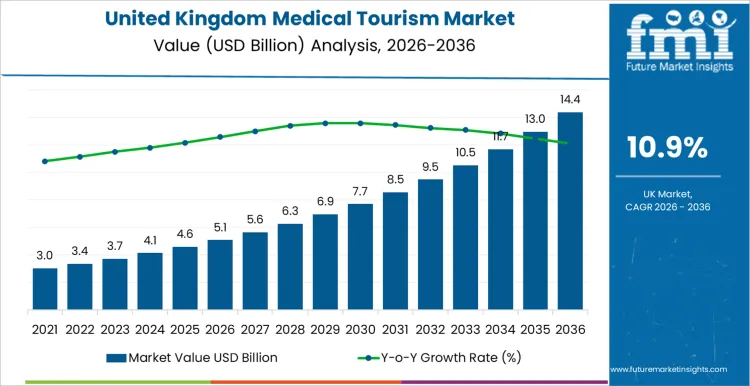
The medical tourism sector in the UK is projected to reach USD 5.08 billion in 2026, rising further to USD 14.37 billion by 2036 at a 10.9% CAGR. This expansion reflects a changing healthcare decision journey for patients who combine treatment access with travel planning. Patient intent is shaped by clinical outcomes, waiting-time sensitivity, cost differences, privacy, and provider reputation.
In the UK context, demand spans both domestic mobility within the country and international inflows where visitors travel to the UK for specific procedures. For healthcare groups and clinic networks, this creates a stronger focus on patient experience design, scheduling efficiency, and service bundles that include consultation, diagnostics, procedure support, post-care coordination, and accommodation guidance.
For stakeholders such as hospital executives, private care operators, and healthcare service enablers, the opportunity sits in repeatable care pathways that reduce friction. Patients judge the journey end-to-end, not only the procedure itself. That includes response speed, transparent pricing, clinical documentation, post-treatment support, and clarity on what happens if recovery needs extra care.
Quick Stats for Medical Tourism Demand in the UK
- Medical Tourism Valuation in the UK (2026): USD 5.08 billion
- Medical Tourism Forecast Valuation in the UK (2036): USD 14.37 billion
- Medical Tourism Forecast CAGR (2026 to 2036): 10.9%
- Leading Regional Growth: England (12.0%)
- Leading Treatment Type: Cosmetic Treatment (43% share)
- Leading Age Group: 46–55 years (41.0% share)
- Leading Tourist Type: Domestic (55.0% share)
- Leading Service Provider: Public (50% share)
- Leading Traveler Type: Independent Traveler (44.0% share)
- Key Companies Profiled: MedRetreat; Healthbase; ApolloHospitals; KPJHealthcareBerhad; KlinikumMedicalLink
Why is the UK a High-Activity Hub for Medical Tourism?
The UK remains a high-activity hub because patient demand is supported by established clinical capability, strong specialist care availability, and broad service coverage across large urban centres. Patients also respond to structured referral systems, predictable quality expectations, and confidence in clinical governance.
International inflows are influenced by travel rules and stay duration options. The UK government confirms that people can apply for a Standard Visitor visa for medical treatment and stay up to 6 months, with an option to apply for a longer stay for treatment duration needs. This supports inbound travel planning where treatment scheduling and recovery windows need defined timelines.
Outbound movement is also relevant. UK residents continue to travel abroad for dental and medical procedures, often arranged privately and packaged with travel logistics. NaTHNaC notes that many travellers self-fund treatment abroad and may use private agencies that bundle flights and accommodation. Travel choices across borders link closely with the outbound medical tourism industry, particularly where cost-driven patient behaviour shapes destination selection.
Service diversification is increasing. Patients are not travelling only for surgery. They are also seeking lifestyle-aligned procedures, recovery-friendly scheduling, discreet service settings, and coordinated rehabilitation. Demand direction aligns naturally with the broader medical tourism industry as healthcare providers refine how treatment access and travel experience are packaged into a single decision.
How is the Medical Tourism Landscape in the UK Segmented?
The scope for medical tourism in the UK is shaped by patient motivation, treatment accessibility, clinical complexity, and the level of support required during travel and recovery.
Why is cosmetic treatment a major driver of medical travel intent in the UK?
Cosmetic treatment accounts for a 43% share, making it the leading treatment type. Patients seeking enhanced appearance outcomes, discreet scheduling, and provider access that matches personal preferences drive this segment. Cosmetic procedures tend to have strong consumer awareness, high social influence, and a clear link to patient confidence and lifestyle goals.
This demand also expands the need for structured post-procedure support, since recovery expectations directly affect satisfaction. Clinical leaders and service partners often align cosmetic care pathways with the product and device intensity seen across cosmetic surgery products, especially in technology-enabled procedures that require dependable equipment, safe protocols, and consistent follow-up journeys.
Dental treatment remains a strong segment for patient mobility due to price gaps, appointment availability, and high repeat treatment patterns across orthodontics, veneers, implants, and aesthetic dentistry. Patient intent in this area aligns with structured care journeys common in dental tourism, where bundled planning and clinic credibility influence conversion.
Why does the 46–55 age group show strong medical travel traction in the UK?
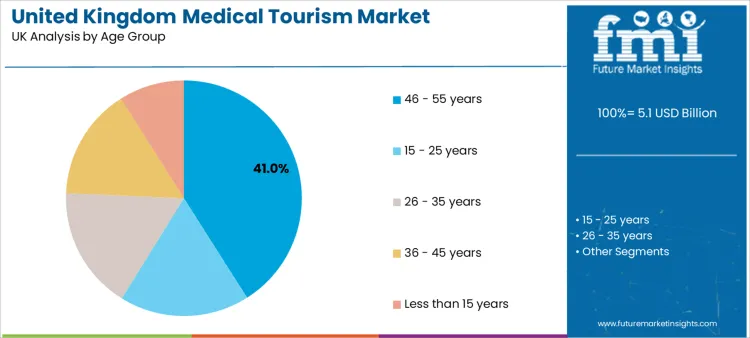
The 46–55 years segment holds a 41.0% share, reflecting a demographic cohort that often has both financial capacity and a strong focus on quality-of-life outcomes. This group is more likely to prioritise health optimisation, appearance refinement, and active lifestyle maintenance. They also tend to seek providers with documented outcomes, clear risk communication, and structured recovery guidance.
This age group frequently considers orthopedic treatment and cardiovascular procedures, where decision-making is based on specialist depth and measurable clinical performance. Care ecosystems linked to advanced diagnostics and procedure planning are supported by areas such as orthopaedic imaging, especially where imaging access improves confidence before surgical decisions.
Why does Domestic Medical Tourism lead patient movement patterns in the UK?
Domestic travel accounts for a 55.0% share, showing that most movement occurs within the UK rather than across borders. Patients often travel domestically to access specialist centres, reduce waiting delays, or choose a preferred provider based on reputation and outcomes. This segment is also shaped by convenience and familiarity, since domestic travellers can navigate language, care coordination, and aftercare follow-up with lower complexity.
Domestic demand strengthens the role of internal referral networks, patient transport coordination, and regional care hubs that can manage both procedure delivery and follow-up therapy support.
How are Public Providers shaping Adoption Patterns and Care Accessibility for Travelling Patients?
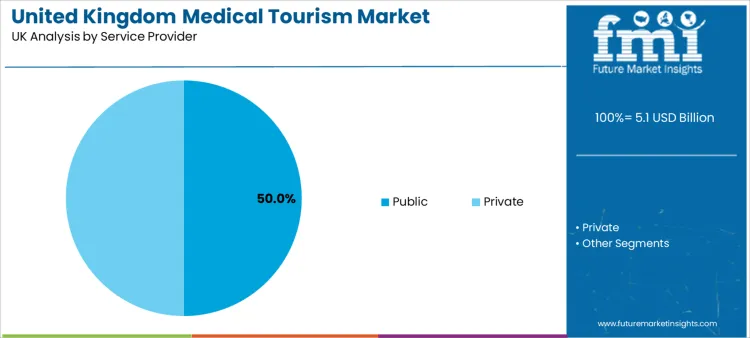
Public service providers hold a 50% share, highlighting their importance in care access and treatment capacity. Public systems remain central in complex case management and specialist pathway support. Patients often evaluate public provider options based on clinical credibility and safety expectations, particularly for cardiovascular and orthopedic procedures.
Provider capability in cardiovascular care is shaped by procedure readiness and the supporting technologies used to deliver consistent outcomes, including the tools and systems outlined in cardiovascular devices.
Private providers remain highly relevant, especially for elective care where patient experience design, speed, privacy, and bundled services shape preference. Private operators also tend to optimise scheduling and support services, improving conversion for patients travelling for defined procedure windows.
Why are Independent Travelers shaping a significant share of medical travel decisions?
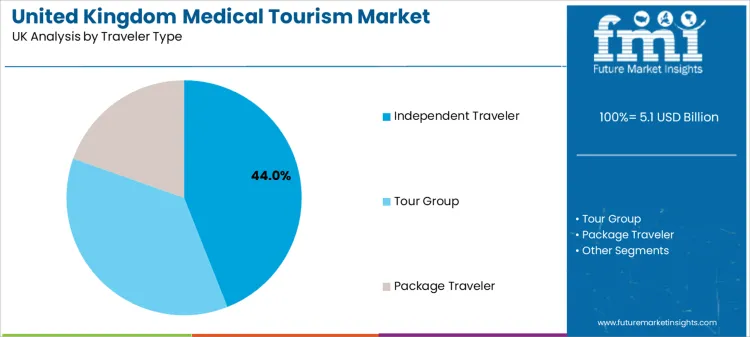
Independent travelers account for a 44.0% share,reflecting a preference for direct decision control. These patients often research providers themselves, compare options across regions, and book care based on speed and reputation. Independent travel is also aligned with transparency expectations. Patients want clear pricing, clear inclusions, and minimal surprises across diagnostics, procedure fees, accommodation guidance, and aftercare.
Tour groups and package travelers still remain relevant where patients want a managed journey that includes transport, lodging, concierge support, and appointment coordination. These models tend to appeal to patients seeking complex treatments or travelling internationally for procedures that require structured recovery windows.
What are the Dynamics, Restraints, Opportunities, and Threats Shaping this Sector?
How are Elective Care Choices and Service Packaging driving Demand?
Demand is driven by a sharper consumer approach to healthcare selection. Patients increasingly assess outcomes, provider reputation, and overall journey efficiency. Elective procedures such as cosmetic and dental treatment draw demand because the patient experience can be planned with clear timelines. Service providers that deliver fast consultation turnaround, streamlined diagnostics, and confident post-care guidance build stronger conversion.
Digital front doors also matter. Patients expect pre-treatment consultation options, clear documentation, and predictable coordination. Providers with strong case management models and clinician-led guidance tend to maintain higher patient trust.
What limits Potential of Medical Tourism in the UK in spite of Strong Demand?
Risk and uncertainty remain major constraints. Treatment away from home creates concerns about complications, fragmented aftercare, and limited access to the original provider during recovery. Professional bodies in the UK caution patients about the risks of cosmetic procedures abroad, including the importance of aftercare and continuity of support.
Recent evidence reviews also highlight the NHS burden from complications after overseas procedures, with BMJ Open reporting substantial cost ranges per patient case for complication treatment. This reinforces why patients, providers, and policymakers focus on safe travel decisions and stronger patient awareness.
Where are Opportunities emerging for Medical Tourism Service Providers and Enablers?
Opportunities are strongest in bundled care pathways where patients can access consultation, treatment, and follow-up support through one coordinated system. Cosmetic and dental packages remain high-potential due to clear patient intent.
Fertility-related travel is another opportunity area because patients often prioritise specialist access and flexible scheduling. Service design in this area often aligns with patient demand patterns linked to infertility treatment, especially where treatment cycles require planned visits and structured clinical oversight.
There is also strong room for hospital groups and private providers to improve inbound patient conversion through multilingual support, international billing readiness, and documentation clarity. Visa timeframes and treatment duration planning support this opportunity for inbound patients.
What threats can reshape demand patterns and service models?
Two threats stand out. The first is reputational risk when outcomes do not match expectations, particularly in highly visible elective procedures. The second is post-care fragmentation, where the absence of clear continuity creates dissatisfaction or clinical complications. Providers mitigate these risks through conservative patient screening, realistic expectation setting, structured follow-up plans, and documented escalation protocols.
How is Medical Tourism Demand Evolving across Key Regions in the UK?
Regional demand is influenced by specialist care density, private clinic concentration, transport accessibility, and the capacity to coordinate patient journeys efficiently.
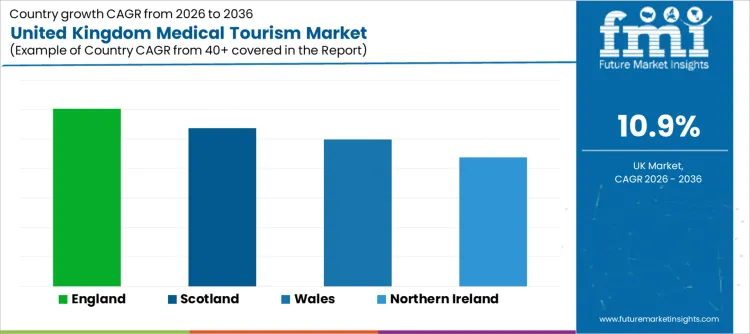
| Region | CAGR (2026-2036) |
|---|---|
| England | 12.0% |
| Scotland | 10.7% |
| Wales | 10.0% |
| Northern Ireland | 8.8% |
Why is England expanding faster through specialist capacity and multi-site private care networks?
England is projected to grow at 12.0%, supported by the concentration of hospitals, specialist clinics, and private care networks across major metropolitan areas. Patients travelling within the UK often prioritise England-based providers for broader choice, faster appointment access, and high procedure availability. Service providers also benefit from stronger transport connectivity, which supports short-stay treatment planning.
How is Scotland building demand through referral strength and outcome-led elective care?
Scotland is forecasted to expand at a 10.7% CAGR, supported by steady demand for elective procedures and specialist consultations. Patients tend to prioritise provider credibility, post-care support, and clarity of treatment scope. Providers that offer structured care coordination and patient guidance can build strong positioning, particularly for dental and orthopedic procedures requiring staged follow-ups.
What is supporting Wales in maintaining steady momentum through accessible elective treatment pathways?
Wales is expected to grow at a CAGR of 10.0%, supported by patient movement linked to treatment access and specialist availability. Facilities that combine service transparency with supportive aftercare pathways can improve patient confidence, especially when procedures require multiple touchpoints such as diagnostics, procedure scheduling, and follow-up consultations.
Why is Northern Ireland progressing through focused treatment categories and value-driven travel decisions?
Northern Ireland is projected to grow at a CAGR of 8.8%, reflecting steady demand where travel planning is often shaped by cost, provider selection, and service convenience. Growth is supported by targeted care pathways and the ability to coordinate travel windows efficiently, particularly for elective treatments where timing predictability matters.
What Defines the Competitive Landscape for Medical Tourism in the UK?
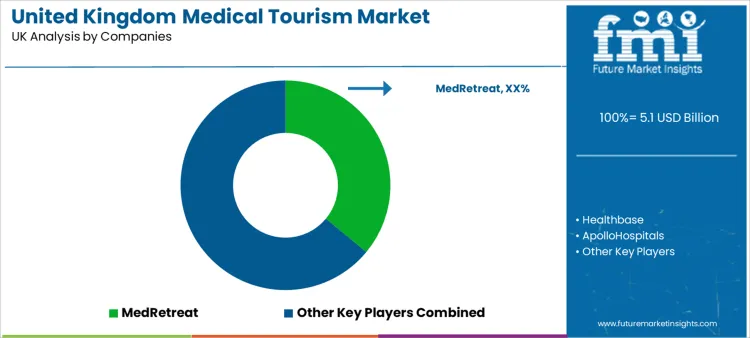
Competition is shaped by clinical credibility, patient experience quality, and coordination discipline. Service providers compete on consultation speed, treatment planning clarity, and the strength of aftercare support. Patients compare providers based on outcomes, trust signals, clinical transparency, and how smoothly the journey works from first enquiry to post-treatment recovery.
Digital readiness plays a major role. Patients expect responsive communication, remote consultation options, and easy access to medical documentation. Providers that invest in multilingual support, payment transparency, and case management workflows are better positioned to win both domestic and international travellers.
Specialist partnerships also influence competition. Providers working with reliable diagnostic networks, rehabilitation support, and complication management protocols reduce perceived patient risk. In elective segments such as cosmetic treatment, strong governance and honest expectation-setting build long-term brand resilience. In complex segments such as cardiovascular and orthopedic care, competition depends on specialist depth, procedure experience, and the reliability of post-care follow-up.
Key Industry Participants
- MedRetreat
- Healthbase
- ApolloHospitals
- KPJHealthcareBerhad
- KlinikumMedicalLink
Scope of Report
| Items | Values |
|---|---|
| Quantitative Units | USD Billion |
| Treatment Type | Cosmetic Treatment; Dental Treatment; Cardiovascular Treatment; Orthopedic Treatment; Infertility Treatment |
| Age Group | Less than 15 years; 15–25 years; 26–35 years; 36–45 years; 46–55 years |
| Tourist Type | Domestic; International |
| Service Provider | Public; Private |
| Traveler Type | Independent Traveler; Tour Group; Package Traveler |
| Regions Covered | England; Scotland; Wales; Northern Ireland |
| Key Companies Profiled | MedRetreat; Healthbase; ApolloHospitals; KPJHealthcareBerhad; KlinikumMedicalLink |
Medical Tourism Industry Outlook in the UK by Key Segments
By Treatment Type:
- Cosmetic Treatment
- Dental Treatment
- Cardiovascular Treatment
- Orthopedic Treatment
- Infertility Treatment
By Age Group:
- Less than 15 years
- 15–25 years
- 26–35 years
- 36–45 years
- 46–55 years
By Tourist Type:
- Domestic
- International
By Service Provider:
- Public
- Private
By Traveler Type:
- Independent Traveler
- Tour Group
- Package Traveler
By Region:
- England
- Scotland
- Wales
- Northern Ireland
Bibliography
- British Association of Aesthetic Plastic Surgeons. (2025). Cosmetic tourism: Patient safety information.
- British Association of Plastic, Reconstructive and Aesthetic Surgeons. (2025). Cosmetic surgery abroad: Patient guidance.
- National Travel Health Network and Centre. (2025). Travelling for treatment (medical tourism): Risk guidance.
- Office for National Statistics. (2023). Visits to and from the UK for the purpose of medical treatment (2021).
- UK Government. (2025). Visit the UK for medical treatment: Visa guidance.
- Yilmaz, A., England, C., & colleagues. (2026). Complications and costs to the UK National Health Service due to postoperative complications of medical tourism: A rapid review. BMJ Open.
Frequently Asked Questions
How big is the demand for medical tourism in uk in 2026?
The demand for medical tourism in uk is estimated to be valued at USD 5.1 billion in 2026.
What will be the size of medical tourism in uk in 2036?
The market size for the medical tourism in uk is projected to reach USD 14.4 billion by 2036.
How much will be the demand for medical tourism in uk growth between 2026 and 2036?
The demand for medical tourism in uk is expected to grow at a 10.9% CAGR between 2026 and 2036.
What are the key product types in the medical tourism in uk?
The key product types in medical tourism in uk are cosmetic treatment, dental treatment, cardiovascular treatment, orthopedic treatment and infertility treatment.
Which age group segment is expected to contribute significant share in the medical tourism in uk in 2026?
In terms of age group, 46 - 55 years segment is expected to command 41.0% share in the medical tourism in uk in 2026.
Preview the report firsthand - request a free sample
Get SampleGet the brochure for pricing and purchase details.
Get PDFTable of Content
- Executive Summary
- Global Market Outlook
- Demand-side Trends
- Supply-side Trends
- Technology Roadmap Analysis
- Analysis and Recommendations
- Market Overview
- Market Coverage / Taxonomy
- Market Definition / Scope / Limitations
- Market Background
- Market Dynamics
- Drivers
- Restraints
- Opportunity
- Trends
- Scenario Forecast
- Demand in Optimistic Scenario
- Demand in Likely Scenario
- Demand in Conservative Scenario
- Opportunity Map Analysis
- Product Life Cycle Analysis
- Supply Chain Analysis
- Investment Feasibility Matrix
- Value Chain Analysis
- PESTLE and Porter’s Analysis
- Regulatory Landscape
- Regional Parent Market Outlook
- Production and Consumption Statistics
- Import and Export Statistics
- Market Dynamics
- Global Market Analysis 2021 to 2025 and Forecast, 2026 to 2036
- Historical Market Size Value (USD Million) Analysis, 2021 to 2025
- Current and Future Market Size Value (USD Million) Projections, 2026 to 2036
- Y-o-Y Growth Trend Analysis
- Absolute $ Opportunity Analysis
- Global Market Pricing Analysis 2021 to 2025 and Forecast 2026 to 2036
- Global Market Analysis 2021 to 2025 and Forecast 2026 to 2036, By Financing Model
- Introduction / Key Findings
- Historical Market Size Value (USD Million) Analysis By Financing Model , 2021 to 2025
- Current and Future Market Size Value (USD Million) Analysis and Forecast By Financing Model , 2026 to 2036
- Venture & growth equity
- Project finance
- State-backed financing
- Corporate venture
- Others
- Venture & growth equity
- Y-o-Y Growth Trend Analysis By Financing Model , 2021 to 2025
- Absolute $ Opportunity Analysis By Financing Model , 2026 to 2036
- Global Market Analysis 2021 to 2025 and Forecast 2026 to 2036, By Target Area
- Introduction / Key Findings
- Historical Market Size Value (USD Million) Analysis By Target Area, 2021 to 2025
- Current and Future Market Size Value (USD Million) Analysis and Forecast By Target Area, 2026 to 2036
- PCR tech & infrastructure
- Recycling plants
- Recycling infrastructure
- PCR polymers
- Others
- PCR tech & infrastructure
- Y-o-Y Growth Trend Analysis By Target Area, 2021 to 2025
- Absolute $ Opportunity Analysis By Target Area, 2026 to 2036
- Global Market Analysis 2021 to 2025 and Forecast 2026 to 2036, By End-Use
- Introduction / Key Findings
- Historical Market Size Value (USD Million) Analysis By End-Use, 2021 to 2025
- Current and Future Market Size Value (USD Million) Analysis and Forecast By End-Use, 2026 to 2036
- Recycling & PCR scale-up
- Circular economy projects
- Industrial PCR expansion
- Advanced materials
- Emerging PCR startups
- Recycling & PCR scale-up
- Y-o-Y Growth Trend Analysis By End-Use, 2021 to 2025
- Absolute $ Opportunity Analysis By End-Use, 2026 to 2036
- Global Market Analysis 2021 to 2025 and Forecast 2026 to 2036, By Region
- Introduction
- Historical Market Size Value (USD Million) Analysis By Region, 2021 to 2025
- Current Market Size Value (USD Million) Analysis and Forecast By Region, 2026 to 2036
- North America
- Latin America
- Western Europe
- Eastern Europe
- East Asia
- South Asia and Pacific
- Middle East & Africa
- Market Attractiveness Analysis By Region
- North America Market Analysis 2021 to 2025 and Forecast 2026 to 2036, By Country
- Historical Market Size Value (USD Million) Trend Analysis By Market Taxonomy, 2021 to 2025
- Market Size Value (USD Million) Forecast By Market Taxonomy, 2026 to 2036
- By Country
- USA
- Canada
- Mexico
- By Financing Model
- By Target Area
- By End-Use
- By Country
- Market Attractiveness Analysis
- By Country
- By Financing Model
- By Target Area
- By End-Use
- Key Takeaways
- Latin America Market Analysis 2021 to 2025 and Forecast 2026 to 2036, By Country
- Historical Market Size Value (USD Million) Trend Analysis By Market Taxonomy, 2021 to 2025
- Market Size Value (USD Million) Forecast By Market Taxonomy, 2026 to 2036
- By Country
- Brazil
- Chile
- Rest of Latin America
- By Financing Model
- By Target Area
- By End-Use
- By Country
- Market Attractiveness Analysis
- By Country
- By Financing Model
- By Target Area
- By End-Use
- Key Takeaways
- Western Europe Market Analysis 2021 to 2025 and Forecast 2026 to 2036, By Country
- Historical Market Size Value (USD Million) Trend Analysis By Market Taxonomy, 2021 to 2025
- Market Size Value (USD Million) Forecast By Market Taxonomy, 2026 to 2036
- By Country
- Germany
- UK
- Italy
- Spain
- France
- Nordic
- BENELUX
- Rest of Western Europe
- By Financing Model
- By Target Area
- By End-Use
- By Country
- Market Attractiveness Analysis
- By Country
- By Financing Model
- By Target Area
- By End-Use
- Key Takeaways
- Eastern Europe Market Analysis 2021 to 2025 and Forecast 2026 to 2036, By Country
- Historical Market Size Value (USD Million) Trend Analysis By Market Taxonomy, 2021 to 2025
- Market Size Value (USD Million) Forecast By Market Taxonomy, 2026 to 2036
- By Country
- Russia
- Poland
- Hungary
- Balkan & Baltic
- Rest of Eastern Europe
- By Financing Model
- By Target Area
- By End-Use
- By Country
- Market Attractiveness Analysis
- By Country
- By Financing Model
- By Target Area
- By End-Use
- Key Takeaways
- East Asia Market Analysis 2021 to 2025 and Forecast 2026 to 2036, By Country
- Historical Market Size Value (USD Million) Trend Analysis By Market Taxonomy, 2021 to 2025
- Market Size Value (USD Million) Forecast By Market Taxonomy, 2026 to 2036
- By Country
- China
- Japan
- South Korea
- By Financing Model
- By Target Area
- By End-Use
- By Country
- Market Attractiveness Analysis
- By Country
- By Financing Model
- By Target Area
- By End-Use
- Key Takeaways
- South Asia and Pacific Market Analysis 2021 to 2025 and Forecast 2026 to 2036, By Country
- Historical Market Size Value (USD Million) Trend Analysis By Market Taxonomy, 2021 to 2025
- Market Size Value (USD Million) Forecast By Market Taxonomy, 2026 to 2036
- By Country
- India
- ASEAN
- Australia & New Zealand
- Rest of South Asia and Pacific
- By Financing Model
- By Target Area
- By End-Use
- By Country
- Market Attractiveness Analysis
- By Country
- By Financing Model
- By Target Area
- By End-Use
- Key Takeaways
- Middle East & Africa Market Analysis 2021 to 2025 and Forecast 2026 to 2036, By Country
- Historical Market Size Value (USD Million) Trend Analysis By Market Taxonomy, 2021 to 2025
- Market Size Value (USD Million) Forecast By Market Taxonomy, 2026 to 2036
- By Country
- Kingdom of Saudi Arabia
- Other GCC Countries
- Turkiye
- South Africa
- Other African Union
- Rest of Middle East & Africa
- By Financing Model
- By Target Area
- By End-Use
- By Country
- Market Attractiveness Analysis
- By Country
- By Financing Model
- By Target Area
- By End-Use
- Key Takeaways
- Key Countries Market Analysis
- USA
- Pricing Analysis
- Market Share Analysis, 2025
- By Financing Model
- By Target Area
- By End-Use
- Canada
- Pricing Analysis
- Market Share Analysis, 2025
- By Financing Model
- By Target Area
- By End-Use
- Mexico
- Pricing Analysis
- Market Share Analysis, 2025
- By Financing Model
- By Target Area
- By End-Use
- Brazil
- Pricing Analysis
- Market Share Analysis, 2025
- By Financing Model
- By Target Area
- By End-Use
- Chile
- Pricing Analysis
- Market Share Analysis, 2025
- By Financing Model
- By Target Area
- By End-Use
- Germany
- Pricing Analysis
- Market Share Analysis, 2025
- By Financing Model
- By Target Area
- By End-Use
- UK
- Pricing Analysis
- Market Share Analysis, 2025
- By Financing Model
- By Target Area
- By End-Use
- Italy
- Pricing Analysis
- Market Share Analysis, 2025
- By Financing Model
- By Target Area
- By End-Use
- Spain
- Pricing Analysis
- Market Share Analysis, 2025
- By Financing Model
- By Target Area
- By End-Use
- France
- Pricing Analysis
- Market Share Analysis, 2025
- By Financing Model
- By Target Area
- By End-Use
- India
- Pricing Analysis
- Market Share Analysis, 2025
- By Financing Model
- By Target Area
- By End-Use
- ASEAN
- Pricing Analysis
- Market Share Analysis, 2025
- By Financing Model
- By Target Area
- By End-Use
- Australia & New Zealand
- Pricing Analysis
- Market Share Analysis, 2025
- By Financing Model
- By Target Area
- By End-Use
- China
- Pricing Analysis
- Market Share Analysis, 2025
- By Financing Model
- By Target Area
- By End-Use
- Japan
- Pricing Analysis
- Market Share Analysis, 2025
- By Financing Model
- By Target Area
- By End-Use
- South Korea
- Pricing Analysis
- Market Share Analysis, 2025
- By Financing Model
- By Target Area
- By End-Use
- Russia
- Pricing Analysis
- Market Share Analysis, 2025
- By Financing Model
- By Target Area
- By End-Use
- Poland
- Pricing Analysis
- Market Share Analysis, 2025
- By Financing Model
- By Target Area
- By End-Use
- Hungary
- Pricing Analysis
- Market Share Analysis, 2025
- By Financing Model
- By Target Area
- By End-Use
- Kingdom of Saudi Arabia
- Pricing Analysis
- Market Share Analysis, 2025
- By Financing Model
- By Target Area
- By End-Use
- Turkiye
- Pricing Analysis
- Market Share Analysis, 2025
- By Financing Model
- By Target Area
- By End-Use
- South Africa
- Pricing Analysis
- Market Share Analysis, 2025
- By Financing Model
- By Target Area
- By End-Use
- USA
- Market Structure Analysis
- Competition Dashboard
- Competition Benchmarking
- Market Share Analysis of Top Players
- By Regional
- By Financing Model
- By Target Area
- By End-Use
- Competition Analysis
- Competition Deep Dive
- Closed Loop Partners
- Overview
- Product Portfolio
- Profitability by Market Segments (Product/Age /Sales Channel/Region)
- Sales Footprint
- Strategy Overview
- Marketing Strategy
- Product Strategy
- Channel Strategy
- Breakthrough Energy Ventures
- European Investment Bank
- KfW
- China Development Bank
- CITIC
- Mitsubishi UFJ Capital
- Others
- Closed Loop Partners
- Competition Deep Dive
- Assumptions & Acronyms Used
- Research Methodology


