

- Market Size (2026)
- USD 11.4 Bn
- Forecast (2036)
- USD 40.7 Bn
- CAGR (2026 to 2036)
- 13.6%
Dental Tourism Market Size, Market Forecast and Outlook By FMI
The dental tourism market was valued at USD 10.0 billion in 2025 across planned treatment travel. The market is set to reach USD 11.4 billion by 2026-end and expand at a CAGR of 13.6% between 2026 and 2036 to reach USD 40.7 billion by 2036. Dental implants will dominate services with a 26.3% share and hospital chains will lead providers with a 47.3% share.
Summary of the Dental Tourism Market
- Demand and Growth Drivers
- High out-of-pocket dental cost in source countries strengthens cross-border care planning for implants and restorations.
- Digital consultations help clinics screen dental records before travel and lower uncertainty for international patients.
- Shorter implant and prosthetic workflows make planned treatment travel easier for patients with limited leave.
- Organized patient desks improve travel planning and clinical schedule discipline for foreign dental patients.
- Product and Segment View
- Dental implants are expected to lead the services segment with 26.3% share in 2026, reflecting high procedure value.
- International travelers are expected to lead traveler demand with 72.4% share in 2026, reflecting cross-border treatment intent.
- Hospital chains are expected to lead provider demand with 47.3% share in 2026, reflecting institutional trust.
- Direct clinic booking is expected to hold 41.8% share in 2026, reflecting online quote comparison before travel.
- Geography and Competitive Outlook
- India is expected to record a CAGR of 18.0% through 2036, with affordable care and English-speaking clinicians.
- Dubai is projected to expand at 17.7% CAGR through 2036, with premium cosmetic dentistry and medical travel branding.
- Mexico at 12.5% CAGR reflects border access and repeat patient movement from the United States.
- Companies combining international patient service with clinical assurance are strengthening their market position across key destinations.
- Analyst Opinion
- Nandini Roy Choudhury, Principal Consultant for the Healthcare domain at FMI, says, “Dental tourism is becoming care planning for patients comparing treatment value with clinical confidence. Patients need implant plans and follow-up guidance before deposits. Destination dental clinics using digital case review and credential proof reduce anxiety, while trip cost shapes packages.”
- Dental Tourism Market Value Analysis
- Dental tourism is shifting from price-led overseas travel into an organized international dental care model.
- Cash payment pressure for implants and cosmetic dentistry is encouraging patients in high-cost countries to compare overseas treatment options.
- Demand for Dental Tourism is benefiting from online case review before travel.
- The market is benefiting from deeper use of medical tourism industry analysis across patient travel planning.
- Treatment savings can narrow quickly once airfare and return visits are added to patient bills.
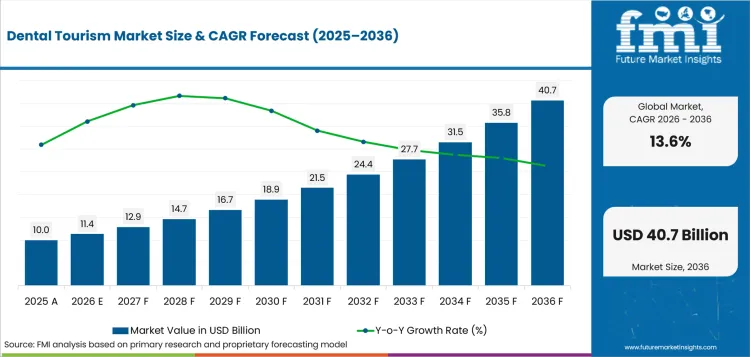
Key Takeaways, Market Size and Forecast
| Metric | Value |
|---|---|
| Market Size (2026) | USD 11.4 Billion |
| Market Size (2036) | USD 40.7 Billion |
| Forecast CAGR | 13.6% from 2026 to 2036 |
| Leading Services | Dental Implants |
| Dental Implants Share In 2026 | 26.3% |
| Leading Traveler Type | International Travelers |
| International Travelers Share In 2026 | 72.4% |
| Faster-Growing Country | India |
| India CAGR | 18.0% through 2036 |
High dental treatment costs are pushing many patients to compare local care with overseas options. CDC’s April 2025 guidance says dental care is the most common type of medical tourism among U.S. residents, mainly due to high dental costs and limited insurance coverage. ADA’s January 2026 analysis adds context by reporting USD 189 billion in U.S. dental spending during 2024. This makes implants and cosmetic dental packages easier for overseas clinics to sell when pricing is clear.
Destination clinics need to explain total treatment cost and follow-up care before patients book. India is strengthening its position through organized dental chains, as Clove Dental reported reaching 500 clinics after opening 12 clinics in one day in May 2024. Dubai is building a more formal health tourism channel, as DHA’s 2024 guide lists 111 DXH healthcare providers approved for health tourists.
Dental Tourism Market Definition
The dental tourism market includes international and domestic travel undertaken for planned dental treatment. Scope includes implants, cosmetic dentistry, orthodontics, endodontics, prosthodontics, periodontics, and oral surgery across destination clinics. Revenue covers clinic fees, patient coordination, and dental travel facilitation across organized provider networks. Routine local dental care and non-dental medical procedures are outside scope.
Dental Tourism Market Inclusions
Market scope encompasses all commercially traded dental tourism services categorized by services, travelers, providers, booking channel, travel arrangement, and region from 2026 to 2036.
Dental Tourism Market Exclusions
Market scope covers all commercially traded dental tourism services categorized by services, including dental implants, cosmetic dentistry, orthodontics, endodontics, prosthodontics, periodontics, oral and maxillofacial surgery, and others; travelers, including international travelers and domestic travelers; providers, including hospital chains, standalone clinics, dental spas, and others; booking channels, including direct clinic booking, facilitators, hospital desks, and online platforms; and travel arrangements, including treatment only, dental vacation, follow-up visit, and emergency travel.
Revenue scope covers 2026 to 2036, with treatment planning supported by dental imaging equipment market outlook across diagnostic review and pre-travel case assessment. The key stakeholders include dental hospitals, destination clinics, dental chains, medical tourism facilitators, travel coordinators, dental laboratories, implant suppliers, insurance partners, accreditation bodies, regulatory agencies, and international patients, with advanced treatment offerings connected to dental lasers market outlook across cosmetic and minimally invasive dental procedures.
Dental Tourism Market Research Methodology
- Primary Research: FMI analysts spoke to destination clinics, hospital chains, patient facilitators, and international patient service teams in important markets.
- Desk Research: Combined data from tourism ministries, oral health authorities, official health travel guidance, and company service portfolios.
- Market sizing and forecasting: Added procedure value, patient movement, provider share, and country-level pricing patterns from the bottom up.
- Data validation: Cross-checked every three months against patient flow data, dental cost signals, and clinic network coverage.
Why is the Dental Tourism Market Growing?
- Patients compare overseas dental treatment as local implant and crown bills expose them to high cash payment.
- Clinics use digital imaging and virtual consultation to reduce uncertainty before international patients travel abroad.
- Hospital chains and branded dental networks attract complex cases needing stronger care coordination for foreign patients.
- International patient desks improve travel and payment support across planned dental treatment trips.
Dental treatment travel expands as patients face higher dental bills in source countries with limited coverage. Dental treatment travel is being reinforced by high oral care cost exposure in the United States. Patients seeking implants or major restorative work often compare overseas treatment packages with domestic quotes before selecting providers. Destination clinics can improve conversion by explaining treatment stages and post-return responsibilities clearly before travel.
Cost pressure affects European source markets with constrained access to affordable private care options. The UK Adult Oral Health Survey published in December 2025 found 30% of adults said cost influenced their past care choice. This signal reflects practical pressure across treatment selection and timing. Clinics using outbound medical tourism industry analysis can target patients seeking clear savings. Strong post-care instructions help reduce concern after patients return home.
Market Segmentation Analysis
- Dental implants are forecast to capture 26.3% of services revenue in 2026 as restoration-led travel carries higher treatment value.
- Cross-border patients are projected to represent 72.4% of the traveler base in 2026, reflecting stronger use of overseas care planning.
- Hospital chains are expected to secure 47.3% provider share in 2026 through international desks and coordinated treatment access.
- Direct clinic booking is forecast to hold 41.8% of booking activity in 2026 as patients compare quotes before travel.
- Treatment-only visits are projected to account for 58.2% of travel arrangements in 2026, driven by care-first trip planning.
The market for dental tourism is divided into groups based on services, travelers, providers, booking channel, travel arrangement, and region. There are dental implants, cosmetic dentistry, orthodontics, endodontics, prosthodontics, periodontics, oral and maxillofacial surgery, and others under services. By travelers, the market includes international travelers and domestic travelers, with procedure planning related to endodontics and orthodontics market outlook across corrective and root canal care.
By providers, the market covers hospital chains, standalone clinics, dental spas, and others. Based on booking channel, it includes direct clinic booking, facilitators, hospital desks, and online platforms. By travel arrangement, the market includes treatment only, dental vacation, follow-up visit, and emergency travel, with destination planning influenced by India Medical Tourism market outlook across organized cross-border care services.
Insights into Dental Tourism Market by Services
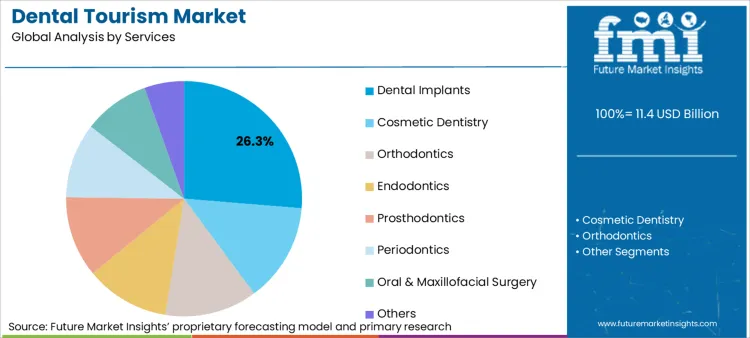
- In 2026, dental implants are expected to 26.3% of the services segment. Implant-focused treatment packages support higher case values across full-mouth restoration and replacement procedures.
- Cosmetic dentistry and orthodontic services address selected patient needs. Their value improves among travelers seeking visible smile correction and shorter treatment timelines.
Insights into Dental Tourism Market by Travelers
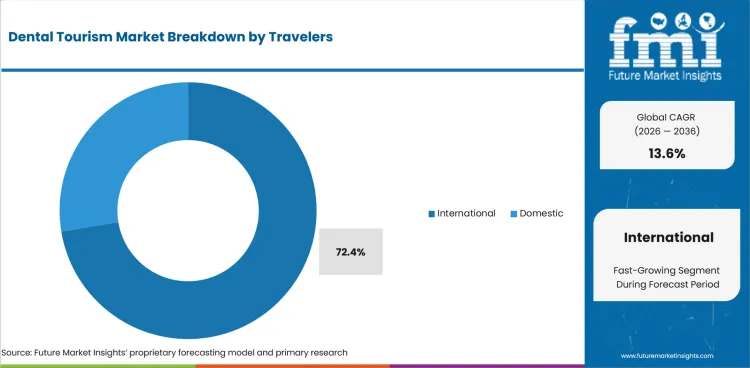
- International travelers are projected to account for 72.4% of the traveler segment in 2026. Cross-border patients form the core demand base as cost comparison and treatment planning guide overseas dental care decisions.
- Domestic dental travelers support clinic volumes in larger destination countries. Their demand improves around metropolitan dental hubs with specialist access and faster appointment scheduling.
Insights into Dental Tourism Market by Providers
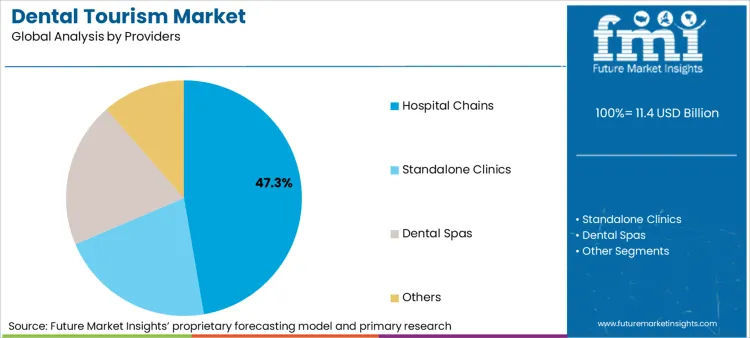
- Hospital chains are forecast to account for 47.3% of provider demand in 2026. International patients prefer organized providers with imaging access and dedicated patient service desks for complex procedures.
- Standalone clinics address cosmetic and routine dental cases. Their value improves in price-sensitive destinations with strong dentist reputation and shorter booking cycles.
Insights into Dental Tourism Market by Booking Channel
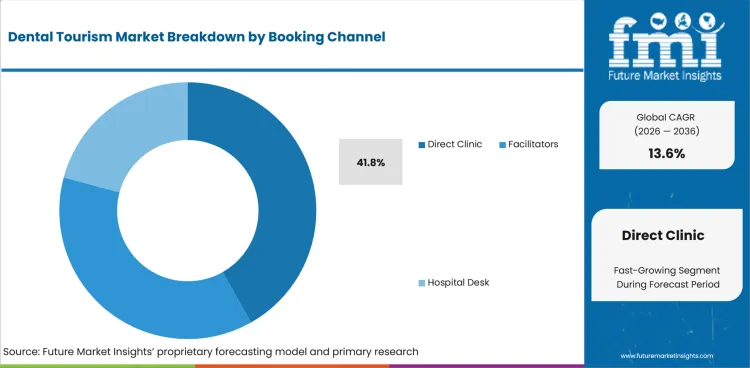
- Direct clinic booking is poised to represent 41.8% of booking channel demand in 2026. Patients prefer direct sourcing for treatment quotes and easier communication with dental teams.
- Facilitator-led bookings support patients needing travel coordination and clinic screening. Their role improves in long-haul markets requiring visa guidance and multi-stage treatment planning.
Insights into Dental Tourism Market by Travel Arrangement
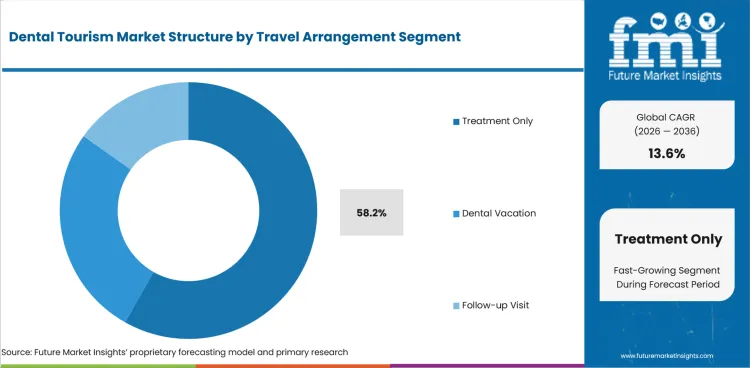
- Treatment-only visits are projected to hold 58.2% share in 2026. Care-first travel dominates as patients prioritize dental procedures over leisure-focused trip planning.
- Dental vacation packages address selected cosmetic care needs. Their value improves in destinations combining short recovery periods with hospitality services and planned follow-up appointments.
Dental Tourism Market Drivers, Restraints and Opportunities
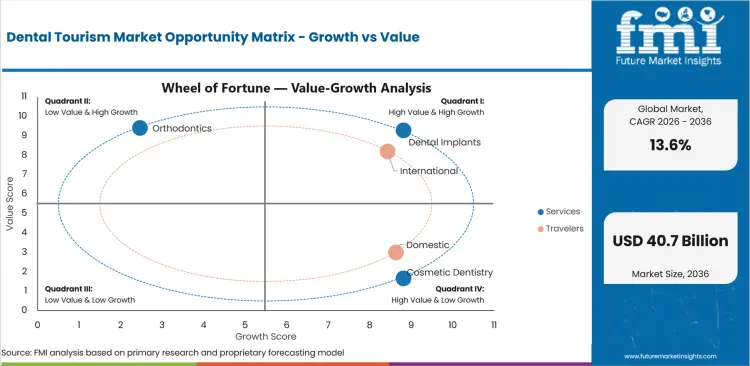
- Driver: High USA dental treatment costs keep overseas implant and crown packages attractive for patients comparing total care expense.
- Restraint: Public dental coverage in Canada can reduce outbound urgency for routine and moderate-cost procedures.
- Opportunity: Transparent bundled pricing creates supplier differentiation for destination clinics serving patients comparing treatment and follow-up costs.
Dental tourism demand is supported by source-market cost pressure across major dental procedures. ADA Health Policy Institute reported in September 2025, consumer dental spending in the United States reached an annualized USD 201 billion. Spending was up 0.4% from the prior month and 4.0% from 12 months earlier. A high domestic benchmark keeps overseas treatment packages relevant for implants and full-mouth restoration. Destination clinics with fixed treatment quotes can improve patient confidence before travel.
Input Cost and Price Benchmark Analysis
The USA dental price equation is being shaped by clinic operating costs as well as patient affordability pressure. ADA Health Policy Institute reported in September 2025, dental equipment and supplies were up 5.0% from the beginning of 2025. Higher input costs can keep domestic procedure pricing firm across restorative and implant care. Overseas clinics gain stronger positioning when they explain package inclusions clearly. Pricing should cover lab work and imaging to avoid margin leakage during treatment planning. It should cover anesthesia and revision visit assumptions to avoid margin leakage risks.
Coverage Change and Canadian Outbound Demand Analysis
Public coverage is changing how Canadian patients compare local care with overseas dental treatment. Health Canada reported in October 2025, over 5.0 million Canadians were covered by the Canadian Dental Care Plan. Close to 2.8 million people had already received care through the plan, with eligible members saving an average of USD 800 per year. This relief can reduce outbound demand for routine dental work. Dental tourism providers targeting Canadians need sharper savings proof for implants and multi-unit prosthetic care.
Analysis of Dental Tourism Market By Key Countries
.webp "Top Country Growth Comparison Dental Tourism Market Cagr (2026 2036)")
| Country | CAGR |
|---|---|
| India | 18.0% |
| Dubai | 17.7% |
| Mexico | 12.5% |
| Colombia | 10.8% |
| Romania | 8.9% |
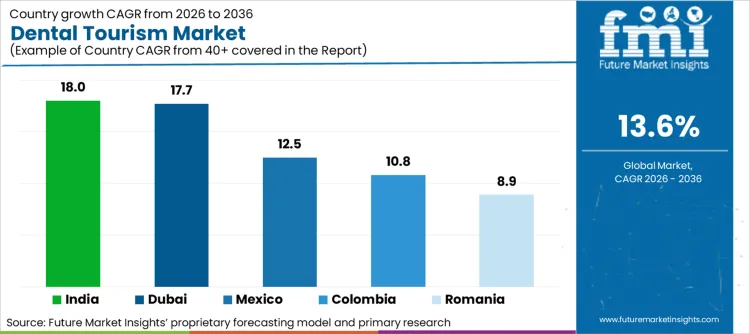
Source: Future Market Insights, 2026.
Demand for dental tourism is forecast to rise at 13.6% CAGR from 2026 to 2036. Country-level analysis covers the major destinations contributing to this forecast, with the key markets listed below.
Demand Outlook for Dental Tourism Market in India
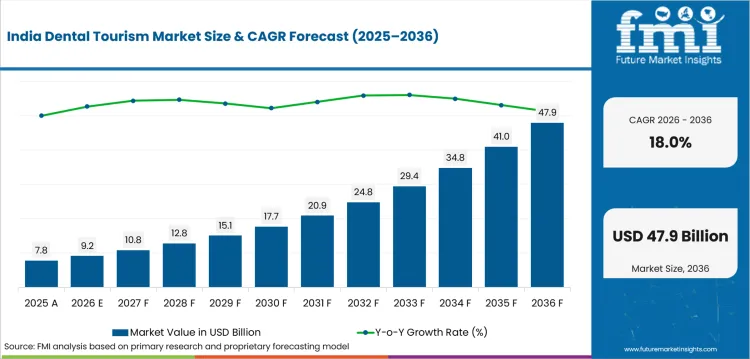
Faster-growing country market - 2026 to 2036
Country Snapshot
| Parameter | Value |
|---|---|
| Market Size in 2025 (Value) | USD 10.0 billion |
| Market Forecast in 2036 (Value) | USD 40.7 billion |
| CAGR (2026-2036) | 18.0% |
| Years Considered | 2021-2036 |
| Base Year | 2025 |
| Forecast Period | 2026-2036 |
| Units Considered | Value (USD Bn) |
| Leading Sub-Region | Delhi NCR |
India Market Outlook
Delhi NCR and Mumbai make India commercially important for dental tourism through hospital networks and branded clinic density. Medical travel activity benefits from national visa facilitation and English-speaking care teams. PIB reported in August 2025 India received 131,856 foreign tourist arrivals for medical purposes up to April 2025. This patient flow favors destination clinics handling complex implants and cosmetic cases. Large providers connect international patient desks with treatment planning and hotel coordination.
Domestic dental chains improve case consistency across major cities. The expansion of organized clinics strengthens demand for dental x-ray systems market outlook across pre-treatment imaging workflows.
Key Growth Drivers
- Delhi NCR clinics benefit from airport access and international patient coordinators serving Middle East and African patients.
- Mumbai and Bengaluru support high-value cosmetic dentistry through English-speaking specialists and private hospital networks.
- Government e-medical visa access improves treatment travel ease for overseas patients seeking planned dental care.
- Organized dental chains reduce patient uncertainty through standard pricing and documented treatment protocols.
Key Restraints
- Follow-up care becomes difficult for patients returning from long-haul source markets after implant surgery.
- Price-sensitive patients may compare clinics only on headline treatment cost and ignore material differences.
- Smaller clinics can face trust barriers without accreditation and transparent dentist credentials.
What makes India unique
India combines affordable treatment depth with large English-speaking clinical capacity, making Delhi NCR and Mumbai central to dental travel planning.
Key Companies
- Apollo Hospitals Enterprise Ltd
- Fortis Healthcare
- Clove Dental
- Dent Ally
- Partha Dental
Sales & Marketing Channels
- Direct clinic inquiries
- International patient desks
- Medical travel facilitators
- Diaspora referrals
- Hospital web portals
Country Segment Breakdown Table
| Segment | Sub-Segments |
|---|---|
| By Services | Dental Implants · Cosmetic Dentistry · Orthodontics · Endodontics · Prosthodontics · Periodontics · Oral Surgery |
| By Travelers | International · Domestic |
| By Providers | Hospital Chains · Standalone Clinics · Dental Spas · Others |
| By Booking Channel | Direct Clinic · Facilitators · Hospital Desk · Online Platforms |
| By Travel Arrangement | Treatment Only · Dental Vacation · Follow-up Visit · Emergency Travel |
| Key Sub-Regions Covered, States / Cities | Delhi NCR, Mumbai, Bengaluru, Chennai, Hyderabad, Kochi, Ahmedabad, Goa |
Market Taxonomy and Sub-Regions Covered
Frequently Asked Questions (Country-Specific)
How fast is India’s dental tourism industry growing?
India is projected to expand at an 18.0% CAGR from 2026 to 2036, ranking first among listed countries.
Who leads the India dental tourism demand?
Apollo Hospitals, Fortis Healthcare, and Clove Dental lead through hospital reach and organized dental care networks.
What is driving industry outlook in India?
Delhi NCR and Mumbai drive demand through affordability, English-speaking clinicians, and international patient services.
Sales Analysis of Dental Tourism Market in Dubai
Premium cosmetic care hub - 2026 to 2036
Country Snapshot
| Parameter | Value |
|---|---|
| Market Size in 2025 (Value) | USD 10.0 billion |
| Market Forecast in 2036 (Value) | USD 40.7 billion |
| CAGR (2026-2036) | 17.7% |
| Years Considered | 2021-2036 |
| Base Year | 2025 |
| Forecast Period | 2026-2036 |
| Units Considered | Value (USD Bn) |
| Leading Sub-Region | Dubai Healthcare City |
Dubai Market Outlook
Dubai Healthcare City and Jumeirah make Dubai a premium dental tourism hub through cosmetic dentistry and luxury hospitality. DHA reported in October 2024 Dubai welcomed over 691,000 international medical tourists in 2023. Their healthcare spending exceeded AED 1.03 billion during the same year. This confirms an active health travel base for dental spas and premium clinics. Patients in Dubai often seek smile design and veneers during planned medical travel.
Luxury travel positioning helps clinics package care around service quality. Dubai connects with dental veneers market outlook as cosmetic dentistry drives premium patient interest.
Key Growth Drivers
- Dubai Healthcare City increases medical travel through licensed facilities and international patient services.
- Jumeirah cosmetic clinics benefit from premium travelers seeking smile design and short-stay care.
- DHA health tourism branding strengthens confidence for international patients comparing Gulf dental destinations.
- High hotel capacity helps patients combine short dental visits with controlled recovery stays.
Key Restraints
- Premium clinic pricing can narrow savings for patients comparing Dubai with India or Mexico.
- Complex implant cases may require repeat travel and careful post-treatment coordination.
- High service expectations raise operating costs across concierge dental care packages.
What makes Dubai unique
Dubai combines premium hospitality with regulated health tourism branding, making cosmetic dentistry central to its dental travel proposition.
Key Companies
- Dubai Dental Hospital
- Liberty Dental Clinic
- Oris Dental Centre
- Dr. Michael’s Dental Clinic
- American Dental Clinic Dubai
Sales & Marketing Channels
- Dubai Health Experience platform
- Direct clinic websites
- Hotel concierge referrals
- Premium facilitator networks
- International patient desks
Country Segment Breakdown Table
| Segment | Sub-Segments |
|---|---|
| By Services | Dental Implants · Cosmetic Dentistry · Orthodontics · Endodontics · Prosthodontics · Periodontics · Oral Surgery |
| By Travelers | International · Domestic |
| By Providers | Hospital Chains · Standalone Clinics · Dental Spas · Others |
| By Booking Channel | Direct Clinic · Facilitators · Hospital Desk · Online Platforms |
| By Travel Arrangement | Treatment Only · Dental Vacation · Follow-up Visit · Emergency Travel |
| Key Sub-Regions Covered, Districts / Zones | Dubai Healthcare City, Jumeirah, Deira, Downtown Dubai, Al Barsha, Dubai Marina, Bur Dubai, Business Bay |
Market Taxonomy and Sub-Regions Covered
Frequently Asked Questions (Country-Specific)
How fast is Dubai’s dental tourism industry growing?
Dubai is projected to expand at a 17.7% CAGR from 2026 to 2036, ranking second among listed destinations.
Who leads the Dubai dental tourism industry?
Dubai Dental Hospital, Liberty Dental Clinic, and Oris Dental Centre lead through premium care and international patient access.
What is driving industry outlook in Dubai?
Dubai Healthcare City and premium cosmetic clinics drive demand through regulated health tourism and luxury patient services.
Demand Analysis of Dental Tourism Market in Mexico
Border dental access market - 2026 to 2036
Country Snapshot
| Parameter | Value |
|---|---|
| Market Size in 2025 (Value) | USD 10.0 billion |
| Market Forecast in 2036 (Value) | USD 40.7 billion |
| CAGR (2026-2036) | 12.5% |
| Years Considered | 2021-2036 |
| Base Year | 2025 |
| Forecast Period | 2026-2036 |
| Units Considered | Value (USD Bn) |
| Leading Sub-Region | Baja California |
Mexico Market Outlook
Baja California and Sonora make Mexico a high-volume dental tourism destination for United States patients. CDC guidance updated in April 2025 names northern border cities and five growing markets for medical travel, including Cancun and Mexico City. This footprint improves dental clinics serving repeat visitors and same-day cross-border patients. Los Algodones and Tijuana are especially important for implants and crowns. Border access keeps travel costs lower for patients already close to Arizona or California.
Mexico benefits from source-country dental cost pressure. Demand for oral bone implant material market outlook is relevant as implant cases often require graft planning.
Key Growth Drivers
- Los Algodones clinics benefit from Arizona access and repeat senior patient flows.
- Tijuana gains from San Diego proximity and short-stay implant or crown visits.
- Cancun clinics attract patients combining dental care with leisure travel.
- Mexico City enhances higher-acuity dentistry through specialist clinics and hospital access.
Key Restraints
- Safety perception in some border areas can reduce conversion for first-time patients.
- Clinic quality variation makes review management and credential proof important for foreign patients.
- Follow-up logistics can strain patients needing multiple implant visits across months.
What makes Mexico unique
Mexico combines border convenience with lower dental treatment prices, making Baja California central to United States outbound dental care.
Key Companies
- Sani Dental Group
- Dentalia
- Supreme Dental
- Washington Dental Clinics
- Cancun Dental Specialists
Sales & Marketing Channels
- Border shuttle referrals
- Direct clinic booking
- United States patient referrals
- Dental facilitator websites
- Spanish-English call centers
Country Segment Breakdown Table
| Segment | Sub-Segments |
|---|---|
| By Services | Dental Implants · Cosmetic Dentistry · Orthodontics · Endodontics · Prosthodontics · Periodontics · Oral Surgery |
| By Travelers | International · Domestic |
| By Providers | Hospital Chains · Standalone Clinics · Dental Spas · Others |
| By Booking Channel | Direct Clinic · Facilitators · Hospital Desk · Online Platforms |
| By Travel Arrangement | Treatment Only · Dental Vacation · Follow-up Visit · Emergency Travel |
| Key Sub-Regions Covered, States / Cities | Baja California, Sonora, Quintana Roo, Mexico City, Jalisco, Yucatán, Nuevo León, Chihuahua |
Market Taxonomy and Sub-Regions Covered
Frequently Asked Questions (Country-Specific)
How fast is Mexico’s dental tourism industry growing?
Mexico is projected to expand at a 12.5% CAGR from 2026 to 2036, reflecting border dental demand.
Who leads the Mexico dental tourism industry?
Sani Dental Group, Dentalia, and Cancun Dental Specialists lead through border access and destination clinic scale.
What is driving industry outlook in Mexico?
Baja California and Sonora drive demand through proximity to United States patients and short-stay dental visits.
Opportunity Analysis of Dental Tourism Market in Colombia
Cosmetic dentistry destination - 2026 to 2036
Country Snapshot
| Parameter | Value |
|---|---|
| Market Size in 2025 (Value) | USD 10.0 billion |
| Market Forecast in 2036 (Value) | USD 40.7 billion |
| CAGR (2026-2036) | 10.8% |
| Years Considered | 2021-2036 |
| Base Year | 2025 |
| Forecast Period | 2026-2036 |
| Units Considered | Value (USD Bn) |
| Leading Sub-Region | Bogotá |
Colombia Market Outlook
Bogotá and Medellín give Colombia a strong position in smile design and cosmetic dentistry. MinCIT reported in January 2025 Colombia received 6,696,835 non-resident visitors in 2024. This tourism base improves access for clinics serving foreign dental patients. United States travelers add an important source-market link for premium cosmetic packages. Clinics offering veneers and implant-supported restorations benefit from direct air connectivity into Bogotá.
Colombia’s dental tourism appeal is leading in aesthetic outcomes and bilingual service. Clinics using zirconia based dental ceramics market outlook comparisons can support premium crown and veneer selection.
Key Growth Drivers
- Bogotá benefits from specialist density and international air links serving North American patients.
- Medellín cosmetic dentistry clinics attract patients seeking veneers and smile design packages.
- Cartagena supports dental vacation demand through tourism appeal and private clinic access.
- Colombia’s visitor record improves the travel base for international dental treatment promotion.
Key Restraints
- Safety perception in some cities can affect first-time patient confidence.
- Premium cosmetic clinics need stronger proof around material quality and dentist credentials.
- Implant treatment timelines can limit single-trip completion for long-haul patients.
What makes Colombia unique
Colombia links cosmetic dentistry reputation with rising visitor flows, making Bogotá and Medellín central to smile design demand.
Key Companies
- Dentinno
- Sonria
- Dentisalud
- OralLaser
- Dental Tourism Colombia
Sales & Marketing Channels
- Direct clinic websites
- Spanish-English patient desks
- Cosmetic dentistry referrals
- Medical travel facilitators
- Destination travel partners
Country Segment Breakdown Table
| Segment | Sub-Segments |
|---|---|
| By Services | Dental Implants · Cosmetic Dentistry · Orthodontics · Endodontics · Prosthodontics · Periodontics · Oral Surgery |
| By Travelers | International · Domestic |
| By Providers | Hospital Chains · Standalone Clinics · Dental Spas · Others |
| By Booking Channel | Direct Clinic · Facilitators · Hospital Desk · Online Platforms |
| By Travel Arrangement | Treatment Only · Dental Vacation · Follow-up Visit · Emergency Travel |
| Key Sub-Regions Covered, Cities / Regions | Bogotá, Medellín, Cartagena, Cali, Barranquilla, Bucaramanga, Pereira, Santa Marta |
Market Taxonomy and Sub-Regions Covered
Frequently Asked Questions (Country-Specific)
How fast is Colombia’s dental tourism industry growing?
Colombia is projected to expand at a 10.8% CAGR from 2026 to 2036, reflecting cosmetic dentistry demand.
Who leads the Colombia dental tourism industry?
Dentinno, Sonria, and Dentisalud lead through city clinic networks and cosmetic dental service portfolios.
What is driving industry outlook in Colombia?
Bogotá and Medellín drive demand through smile design, bilingual care, and international visitor growth.
Future Outlook for Dental Tourism Market in Romania
European price-value market - 2026 to 2036
Country Snapshot
| Parameter | Value |
|---|---|
| Market Size in 2025 (Value) | USD 10.0 billion |
| Market Forecast in 2036 (Value) | USD 40.7 billion |
| CAGR (2026-2036) | 8.9% |
| Years Considered | 2021-2036 |
| Base Year | 2025 |
| Forecast Period | 2026-2036 |
| Units Considered | Value (USD Bn) |
| Leading Sub-Region | Bucharest |
Romania Market Outlook
Bucharest and Cluj-Napoca make Romania relevant for European dental travelers seeking lower treatment bills inside an EU care setting. INS reported in November 2025 arrivals in tourist reception establishments reached 936.8 thousand for the month. This tourism flow supports clinics serving nearby European patients. Romanian clinics compete on price-value balance and EU-aligned professional standards. Patients from Germany, Italy, and the United Kingdom often compare access and travel time before booking.
Romania’s position is stronger in restorative dentistry and short-stay cosmetic care. Demand for dental units market outlook connects with clinic modernization across urban centers.
Key Growth Drivers
- Bucharest clinics benefit from airport access and specialist dental service density.
- Cluj-Napoca attracts European patients through university medical talent and private clinic growth.
- EU mobility enhances easier patient travel from nearby Western European source markets.
- Lower operating cost helps Romanian clinics offer competitive crown and implant pricing.
Key Restraints
- Destination branding is weaker compared with Hungary and Türkiye in dental tourism.
- Smaller clinics need stronger multilingual service for Western European patients.
- Return visits can reduce savings for patients needing staged implant treatment.
What makes Romania unique
Romania offers EU care access with lower procedure pricing, making Bucharest important for European dental travel.
Key Companies
- Dent Estet
- Dr. Leahu Dental Clinics
- Life Dental Spa
- Imperial Dent
- DentalMed
Sales & Marketing Channels
- Direct clinic booking
- European referral networks
- Facilitator partnerships
- Dental clinic websites
- Air travel inquiries
Country Segment Breakdown Table
| Segment | Sub-Segments |
|---|---|
| By Services | Dental Implants · Cosmetic Dentistry · Orthodontics · Endodontics · Prosthodontics · Periodontics · Oral Surgery |
| By Travelers | International · Domestic |
| By Providers | Hospital Chains · Standalone Clinics · Dental Spas · Others |
| By Booking Channel | Direct Clinic · Facilitators · Hospital Desk · Online Platforms |
| By Travel Arrangement | Treatment Only · Dental Vacation · Follow-up Visit · Emergency Travel |
| Key Sub-Regions Covered, Cities / Regions | Bucharest, Cluj-Napoca, Timișoara, Iași, Brașov, Constanța, Oradea, Sibiu |
Market Taxonomy and Sub-Regions Covered
Frequently Asked Questions (Country-Specific)
How fast is Romania’s dental tourism industry growing?
Romania is projected to expand at an 8.9% CAGR from 2026 to 2036, reflecting European price-value demand.
Who leads the Romania dental tourism industry?
Dent Estet, Dr. Leahu Dental Clinics, and Life Dental Spa lead through urban clinic networks and private dentistry scale.
What is driving industry outlook in Romania?
Bucharest and Cluj-Napoca drive demand through EU access, clinic modernization, and lower treatment pricing.
Competitive Landscape and Strategic Positioning
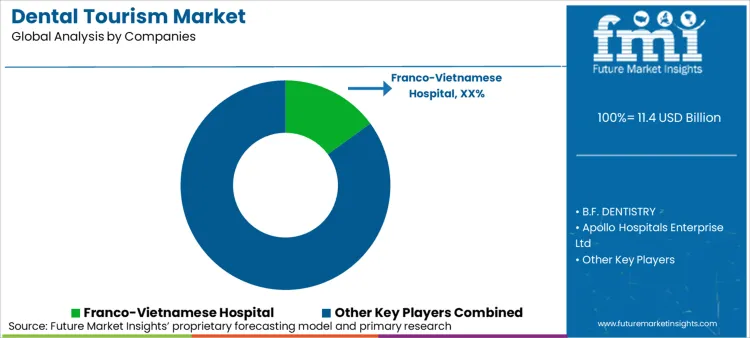
Dental Tourism Market Analysis By Company
- Branded hospital groups and dental chains compete for dental tourists through treatment depth and international patient handling.
- Specialist clinics compete over implant packages and cosmetic dentistry programs aimed at destination patients needing faster care planning.
- Premium destination clinics focus on service comfort and visible outcomes for patients comparing dental care abroad.
Apollo Hospitals Enterprise Ltd and Fortis Healthcare hold high positions through multi-specialty hospital infrastructure and overseas patient desks. Their scale helps foreign patients access dental care with imaging services and coordinated treatment planning.
Clove Dental and Dent Ally compete on branded dental clinic access and standardized care delivery across India. Their network-based approach helps patients compare treatment options before confirming travel and appointment schedules.
Dubai Dental Hospital and Liberty Dental Clinic compete over premium positioning and regulated Dubai healthcare branding. Thantakit International Dental Center strengthens Thailand’s destination appeal through implant care and cosmetic dentistry experience for international patients.
Competitive pressure is shaped by follow-up complexity and uneven clinic quality across destinations. Providers best placed to win are those offering transparent treatment pricing and reliable digital case review before travel.
Patients prefer clinics able to explain treatment plans and material choices without adding travel uncertainty. Broader service portfolios and dependable patient service teams will define stronger competitive positions across international dental cases.
Key Companies in the Dental Tourism Market
Key global companies leading the dental tourism market include:
- Apollo Hospitals Enterprise Ltd, Fortis Healthcare, and Franco-Vietnamese Hospital have strong international patient infrastructure for treatment travel.
- Clove Dental, Dent Ally, and Oris Dental Centre serve patients through branded dental service networks and specialist access.
- Dubai Dental Hospital, Liberty Dental Clinic, B.F. Dentistry, and Thantakit International Dental Center hold specialist positions across destination dentistry.
Competitive Benchmarking: Dental Tourism Market
| Company | International Patient Desk | Implant Case Depth | Travel Coordination |
|---|---|---|---|
| Apollo Hospitals Enterprise Ltd | High | High | Strong |
| Fortis Healthcare | High | Medium | Strong |
| Clove Dental | Medium | High | Strong |
| Dent Ally | Medium | High | Moderate |
| Oris Dental Centre | Medium | Medium | Moderate |
| Dubai Dental Hospital | High | Medium | Strong |
| Liberty Dental Clinic | High | High | Strong |
| B.F. Dentistry | Medium | High | Moderate |
| Thantakit International Dental Center | High | High | Strong |
| Franco-Vietnamese Hospital | High | Medium | Strong |
Source: Future Market Insights, 2026.
Key Developments in Dental Tourism Market
- In September 2025, Lygos Clinic published an official company page on September 2, 2025, explaining why Turkey is preferred for dental treatment by international patients. The clinic highlighted dental tourism benefits such as airport pick-up, hotel accommodation, interpreter support, transfer services, digital X-rays, 3D imaging, implant treatment, zirconium crowns, Hollywood smile design, teeth whitening, and orthodontics.
- In July 2025, Clove Dental updated its official NRI-focused dental treatment page on July 19, 2025, positioning India as a dental care destination for NRIs seeking affordable and high-quality dental treatment. The company stated that its clinics support medical tourism and welcome NRIs as well as foreign citizens. Clove highlighted pre-travel video consultations, treatment planning before arrival, travel-aligned timelines, English-speaking teams, and clinic access across major Indian cities.
Key Players in the Dental Tourism Market
Major Global Players:
- Apollo Hospitals Enterprise Ltd
- Fortis Healthcare
- Franco-Vietnamese Hospital
- Dubai Dental Hospital
- Thantakit International Dental Center
Specialist Players:
- Clove Dental
- Dent Ally
- Oris Dental Centre
- B.F. Dentistry
- Liberty Dental Clinic
Report Scope and Coverage
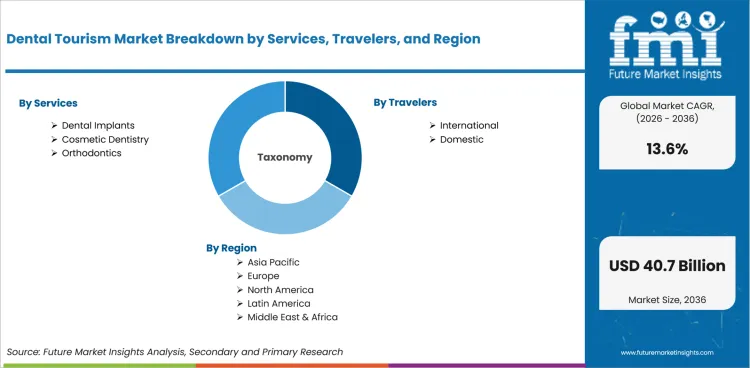
| Report Scope | Details |
|---|---|
| Market size by 2036 | USD 40.7 billion |
| Growth rate | 13.6% CAGR (2026-2036) |
| Forecast period | 2026 to 2036 |
| Base year value (2026) | USD 11.4 billion |
| By services | Dental Implants, Cosmetic Dentistry, Orthodontics, Endodontics, Prosthodontics, Periodontics, Oral & Maxillofacial Surgery, Others |
| By travelers | International Travelers, Domestic Travelers |
| By providers | Hospital Chains, Standalone Clinics, Dental Spas, Others |
| By booking channel | Direct Clinic Booking, Facilitators, Hospital Desk, Online Platforms |
| By travel arrangement | Treatment Only, Dental Vacation, Follow-up Visit, Emergency Travel |
| Regions covered | North America, Latin America, Europe, East Asia, South Asia and Pacific, Middle East and Africa |
| Countries covered | India, Dubai, Mexico, Colombia, Romania, USA, UK, Thailand, Türkiye, and 30 plus countries |
| Key companies profiled | Apollo Hospitals Enterprise Ltd, Fortis Healthcare, Franco-Vietnamese Hospital, Clove Dental, Dent Ally, Oris Dental Centre, Dubai Dental Hospital, Liberty Dental Clinic, B.F. Dentistry, Thantakit International Dental Center |
| Approach | Hybrid bottom-up and top-down methodology starting with verified treatment demand, patient travel patterns, provider mix, and destination-level pricing differences. |
Dental Tourism Market by Segments
Dental Tourism Market Segmented by Services:
- Dental Implants
- Cosmetic Dentistry
- Orthodontics
- Endodontics
- Prosthodontics
- Periodontics
- Oral & Maxillofacial Surgery
- Others
Dental Tourism Market Segmented by Travelers:
- International
- Domestic
Dental Tourism Market Segmented by Providers:
- Hospital Chains
- Standalone Clinics
- Dental Spas
- Others
Dental Tourism Market Segmented by Booking Channel:
- Direct Clinic
- Facilitators
- Hospital Desk
- Online Platforms
Dental Tourism Market Segmented by Travel Arrangement:
- Treatment Only
- Dental Vacation
- Follow-up Visit
- Emergency Travel
Dental Tourism Market by Region:
- North America
- USA
- Canada
- Mexico
- Latin America
- Colombia
- Brazil
- Costa Rica
- Rest of Latin America
- Europe
- Romania
- Hungary
- Türkiye
- Germany
- UK
- Rest of Europe
- East Asia
- China
- Japan
- South Korea
- South Asia and Pacific
- India
- Thailand
- ASEAN
- Australia & New Zealand
- Rest of South Asia and Pacific
- Middle East and Africa
- Dubai
- Saudi Arabia
- South Africa
- Rest of Middle East and Africa
Research Sources and Bibliography
- American Dental Association. (2026, January). National dental expenditures, 2024. ADA Health Policy Institute.
- Centers for Disease Control and Prevention. (2025, April 23). Medical tourism. CDC Yellow Book 2026.
- Press Information Bureau. (2025, August 7). Medical tourism in India. Government of India.
- Dubai Health Authority. (2024, August 19). Dubai welcomes over 691,000 international medical tourists in 2023. Dubai Health Experience.
- UK Health Security Agency. (2025, December 17). Adult Oral Health Survey 2023: Service use and barriers to accessing care. GOV.UK.
- Ministry of Commerce, Industry and Tourism. (2025, January 21). Colombia broke a new tourism record by receiving close to 6.7 million non-resident visitors in 2024. Government of Colombia.
- National Institute of Statistics. (2025, November 30). Tourism in November 2025. INS Romania.
- Clove Dental. (2024, May 3). Clove Dental, India’s largest dental chain opens 12 new clinics in a single day to reach a milestone number of 500 clinics in the country. Clove Dental.
- Dubai Health Authority. (2024, November 8). External Circular-Health Tourism Data Collection and Submission Policy. Government of Dubai.
- American Dental Association. (2026, January). National dental expenditures, 2024. ADA Health Policy Institute.
- Centers for Disease Control and Prevention. (2025, April 23). Medical tourism. CDC Yellow Book 2026.
- Clove Dental. (2024, May 3). Clove Dental, India’s largest dental chain opens 12 new clinics in a single day to reach a milestone number of 500 clinics in the country. Clove Dental.
- Dubai Health Authority. (2024, December). Dubai Health Investment Guide 2024. Dubai Health Authority.
- Government of Canada. (2025, October 2). Canadian Dental Care Plan reaches significant milestones. Health Canada.
- American Dental Association Health Policy Institute. (2026). Q4 2025 State of the USA Dental Economy. American Dental Association.
- Clove Dental. (2025, July 19). Why NRIs prefer getting dental treatments done in India. Clove Dental.
- Lygos Clinic. (2025, September 2). Why is Turkey preferred for dental treatment? Lygos Clinic.
Frequently Asked Questions
What is the global market demand for Dental Tourism in 2026?
In 2026, the global market for dental tourism is expected to be worth USD 11.4 billion.
How big will the market for Dental Tourism be in 2036?
By 2036, the market for dental tourism is expected to be worth USD 40.7 billion.
How much is demand for Dental Tourism expected to expand between 2026 and 2036?
Between 2026 and 2036, demand for dental tourism is expected to expand at a CAGR of 13.6%.
Which services segment is likely to be the leading seller globally by 2026?
Dental implants will be 26.3% of the services segment in 2026.
What is causing demand to rise in India?
The India dental tourism market is projected to record 18.0% CAGR through 2036, supported by affordability and international patient services.
What is causing demand to rise in Dubai?
The Dubai dental tourism market is projected to expand at 17.7% CAGR through 2036, supported by premium cosmetic dentistry and regulated health tourism.
What does this report mean by Dental Tourism Market definition?
The dental tourism market includes planned travel for dental treatment across domestic and international patient routes.
How does FMI make the Dental Tourism forecast and check it?
Forecasting models use a hybrid bottom-up and top-down approach, starting with procedure demand and checking it against patient travel patterns.
Preview the report firsthand - request a free sample
Get SampleGet the brochure for pricing and purchase details.
Get PDFTable of Content
- Executive Summary
- Global Market Outlook
- Demand-side Trends
- Supply-side Trends
- Technology Roadmap Analysis
- Analysis and Recommendations
- Market Overview
- Market Coverage / Taxonomy
- Market Definition / Scope / Limitations
- Research Methodology
- Chapter Orientation
- Analytical Lens and Working Hypotheses
- Market Structure, Signals, and Trend Drivers
- Benchmarking and Cross-market Comparability
- Market Sizing, Forecasting, and Opportunity Mapping
- Research Design and Evidence Framework
- Desk Research Programme (Secondary Evidence)
- Company Annual and Sustainability Reports
- Peer-reviewed Journals and Academic Literature
- Corporate Websites, Product Literature, and Technical Notes
- Earnings Decks and Investor Briefings
- Statutory Filings and Regulatory Disclosures
- Technical White Papers and Standards Notes
- Trade Journals, Industry Magazines, and Analyst Briefs
- Conference Proceedings, Webinars, and Seminar Materials
- Government Statistics Portals and Public Data Releases
- Press Releases and Reputable Media Coverage
- Specialist Newsletters and Curated Briefings
- Sector Databases and Reference Repositories
- FMI Internal Proprietary Databases and Historical Market Datasets
- Subscription Datasets and Paid Sources
- Social Channels, Communities, and Digital Listening Inputs
- Additional Desk Sources
- Expert Input and Fieldwork (Primary Evidence)
- Primary Modes
- Qualitative Interviews and Expert Elicitation
- Quantitative Surveys and Structured Data Capture
- Blended Approach
- Why Primary Evidence is Used
- Field Techniques
- Interviews
- Surveys
- Focus Groups
- Observational and In-context Research
- Social and Community Interactions
- Stakeholder Universe Engaged
- C-suite Leaders
- Board Members
- Presidents and Vice Presidents
- R&D and Innovation Heads
- Technical Specialists
- Domain Subject-matter Experts
- Scientists
- Physicians and Other Healthcare Professionals
- Governance, Ethics, and Data Stewardship
- Research Ethics
- Data Integrity and Handling
- Primary Modes
- Tooling, Models, and Reference Databases
- Desk Research Programme (Secondary Evidence)
- Data Engineering and Model Build
- Data Acquisition and Ingestion
- Cleaning, Normalisation, and Verification
- Synthesis, Triangulation, and Analysis
- Quality Assurance and Audit Trail
- Market Background
- Market Dynamics
- Drivers
- Restraints
- Opportunity
- Trends
- Scenario Forecast
- Demand in Optimistic Scenario
- Demand in Likely Scenario
- Demand in Conservative Scenario
- Opportunity Map Analysis
- Product Life Cycle Analysis
- Supply Chain Analysis
- Investment Feasibility Matrix
- Value Chain Analysis
- PESTLE and Porter’s Analysis
- Regulatory Landscape
- Regional Parent Market Outlook
- Production and Consumption Statistics
- Import and Export Statistics
- Market Dynamics
- Global Market Analysis 2021 to 2025 and Forecast, 2026 to 2036
- Historical Market Size Value (USD Million) Analysis, 2021 to 2025
- Current and Future Market Size Value (USD Million) Projections, 2026 to 2036
- Y to o to Y Growth Trend Analysis
- Absolute $ Opportunity Analysis
- Global Market Pricing Analysis 2021 to 2025 and Forecast 2026 to 2036
- Global Market Analysis 2021 to 2025 and Forecast 2026 to 2036, By Services
- Introduction / Key Findings
- Historical Market Size Value (USD Million) Analysis By Services , 2021 to 2025
- Current and Future Market Size Value (USD Million) Analysis and Forecast By Services , 2026 to 2036
- Dental Implants
- Cosmetic Dentistry
- Orthodontics
- Dental Implants
- Y to o to Y Growth Trend Analysis By Services , 2021 to 2025
- Absolute $ Opportunity Analysis By Services , 2026 to 2036
- Global Market Analysis 2021 to 2025 and Forecast 2026 to 2036, By Travelers
- Introduction / Key Findings
- Historical Market Size Value (USD Million) Analysis By Travelers, 2021 to 2025
- Current and Future Market Size Value (USD Million) Analysis and Forecast By Travelers, 2026 to 2036
- International
- Domestic
- International
- Y to o to Y Growth Trend Analysis By Travelers, 2021 to 2025
- Absolute $ Opportunity Analysis By Travelers, 2026 to 2036
- Global Market Analysis 2021 to 2025 and Forecast 2026 to 2036, By Providers
- Introduction / Key Findings
- Historical Market Size Value (USD Million) Analysis By Providers, 2021 to 2025
- Current and Future Market Size Value (USD Million) Analysis and Forecast By Providers, 2026 to 2036
- Hospital Chains
- Standalone Clinics
- Dental Spas
- Hospital Chains
- Y to o to Y Growth Trend Analysis By Providers, 2021 to 2025
- Absolute $ Opportunity Analysis By Providers, 2026 to 2036
- Global Market Analysis 2021 to 2025 and Forecast 2026 to 2036, By Booking Channel
- Introduction / Key Findings
- Historical Market Size Value (USD Million) Analysis By Booking Channel, 2021 to 2025
- Current and Future Market Size Value (USD Million) Analysis and Forecast By Booking Channel, 2026 to 2036
- Direct Clinic
- Facilitators
- Hospital Desk
- Direct Clinic
- Y to o to Y Growth Trend Analysis By Booking Channel, 2021 to 2025
- Absolute $ Opportunity Analysis By Booking Channel, 2026 to 2036
- Global Market Analysis 2021 to 2025 and Forecast 2026 to 2036, By Travel Arrangement
- Introduction / Key Findings
- Historical Market Size Value (USD Million) Analysis By Travel Arrangement, 2021 to 2025
- Current and Future Market Size Value (USD Million) Analysis and Forecast By Travel Arrangement, 2026 to 2036
- Treatment Only
- Dental Vacation
- Follow-up Visit
- Treatment Only
- Y to o to Y Growth Trend Analysis By Travel Arrangement, 2021 to 2025
- Absolute $ Opportunity Analysis By Travel Arrangement, 2026 to 2036
- Global Market Analysis 2021 to 2025 and Forecast 2026 to 2036, By Region
- Introduction
- Historical Market Size Value (USD Million) Analysis By Region, 2021 to 2025
- Current Market Size Value (USD Million) Analysis and Forecast By Region, 2026 to 2036
- North America
- Latin America
- Western Europe
- Eastern Europe
- East Asia
- South Asia and Pacific
- Middle East & Africa
- Market Attractiveness Analysis By Region
- North America Market Analysis 2021 to 2025 and Forecast 2026 to 2036, By Country
- Historical Market Size Value (USD Million) Trend Analysis By Market Taxonomy, 2021 to 2025
- Market Size Value (USD Million) Forecast By Market Taxonomy, 2026 to 2036
- By Country
- USA
- Canada
- Mexico
- By Services
- By Travelers
- By Providers
- By Booking Channel
- By Travel Arrangement
- By Country
- Market Attractiveness Analysis
- By Country
- By Services
- By Travelers
- By Providers
- By Booking Channel
- By Travel Arrangement
- Key Takeaways
- Latin America Market Analysis 2021 to 2025 and Forecast 2026 to 2036, By Country
- Historical Market Size Value (USD Million) Trend Analysis By Market Taxonomy, 2021 to 2025
- Market Size Value (USD Million) Forecast By Market Taxonomy, 2026 to 2036
- By Country
- Brazil
- Chile
- Rest of Latin America
- By Services
- By Travelers
- By Providers
- By Booking Channel
- By Travel Arrangement
- By Country
- Market Attractiveness Analysis
- By Country
- By Services
- By Travelers
- By Providers
- By Booking Channel
- By Travel Arrangement
- Key Takeaways
- Western Europe Market Analysis 2021 to 2025 and Forecast 2026 to 2036, By Country
- Historical Market Size Value (USD Million) Trend Analysis By Market Taxonomy, 2021 to 2025
- Market Size Value (USD Million) Forecast By Market Taxonomy, 2026 to 2036
- By Country
- Germany
- UK
- Italy
- Spain
- France
- Nordic
- BENELUX
- Rest of Western Europe
- By Services
- By Travelers
- By Providers
- By Booking Channel
- By Travel Arrangement
- By Country
- Market Attractiveness Analysis
- By Country
- By Services
- By Travelers
- By Providers
- By Booking Channel
- By Travel Arrangement
- Key Takeaways
- Eastern Europe Market Analysis 2021 to 2025 and Forecast 2026 to 2036, By Country
- Historical Market Size Value (USD Million) Trend Analysis By Market Taxonomy, 2021 to 2025
- Market Size Value (USD Million) Forecast By Market Taxonomy, 2026 to 2036
- By Country
- Russia
- Poland
- Hungary
- Balkan & Baltic
- Rest of Eastern Europe
- By Services
- By Travelers
- By Providers
- By Booking Channel
- By Travel Arrangement
- By Country
- Market Attractiveness Analysis
- By Country
- By Services
- By Travelers
- By Providers
- By Booking Channel
- By Travel Arrangement
- Key Takeaways
- East Asia Market Analysis 2021 to 2025 and Forecast 2026 to 2036, By Country
- Historical Market Size Value (USD Million) Trend Analysis By Market Taxonomy, 2021 to 2025
- Market Size Value (USD Million) Forecast By Market Taxonomy, 2026 to 2036
- By Country
- China
- Japan
- South Korea
- By Services
- By Travelers
- By Providers
- By Booking Channel
- By Travel Arrangement
- By Country
- Market Attractiveness Analysis
- By Country
- By Services
- By Travelers
- By Providers
- By Booking Channel
- By Travel Arrangement
- Key Takeaways
- South Asia and Pacific Market Analysis 2021 to 2025 and Forecast 2026 to 2036, By Country
- Historical Market Size Value (USD Million) Trend Analysis By Market Taxonomy, 2021 to 2025
- Market Size Value (USD Million) Forecast By Market Taxonomy, 2026 to 2036
- By Country
- India
- ASEAN
- Australia & New Zealand
- Rest of South Asia and Pacific
- By Services
- By Travelers
- By Providers
- By Booking Channel
- By Travel Arrangement
- By Country
- Market Attractiveness Analysis
- By Country
- By Services
- By Travelers
- By Providers
- By Booking Channel
- By Travel Arrangement
- Key Takeaways
- Middle East & Africa Market Analysis 2021 to 2025 and Forecast 2026 to 2036, By Country
- Historical Market Size Value (USD Million) Trend Analysis By Market Taxonomy, 2021 to 2025
- Market Size Value (USD Million) Forecast By Market Taxonomy, 2026 to 2036
- By Country
- Kingdom of Saudi Arabia
- Other GCC Countries
- Turkiye
- South Africa
- Other African Union
- Rest of Middle East & Africa
- By Services
- By Travelers
- By Providers
- By Booking Channel
- By Travel Arrangement
- By Country
- Market Attractiveness Analysis
- By Country
- By Services
- By Travelers
- By Providers
- By Booking Channel
- By Travel Arrangement
- Key Takeaways
- Key Countries Market Analysis
- USA
- Pricing Analysis
- Market Share Analysis, 2025
- By Services
- By Travelers
- By Providers
- By Booking Channel
- By Travel Arrangement
- Canada
- Pricing Analysis
- Market Share Analysis, 2025
- By Services
- By Travelers
- By Providers
- By Booking Channel
- By Travel Arrangement
- Mexico
- Pricing Analysis
- Market Share Analysis, 2025
- By Services
- By Travelers
- By Providers
- By Booking Channel
- By Travel Arrangement
- Brazil
- Pricing Analysis
- Market Share Analysis, 2025
- By Services
- By Travelers
- By Providers
- By Booking Channel
- By Travel Arrangement
- Chile
- Pricing Analysis
- Market Share Analysis, 2025
- By Services
- By Travelers
- By Providers
- By Booking Channel
- By Travel Arrangement
- Germany
- Pricing Analysis
- Market Share Analysis, 2025
- By Services
- By Travelers
- By Providers
- By Booking Channel
- By Travel Arrangement
- UK
- Pricing Analysis
- Market Share Analysis, 2025
- By Services
- By Travelers
- By Providers
- By Booking Channel
- By Travel Arrangement
- Italy
- Pricing Analysis
- Market Share Analysis, 2025
- By Services
- By Travelers
- By Providers
- By Booking Channel
- By Travel Arrangement
- Spain
- Pricing Analysis
- Market Share Analysis, 2025
- By Services
- By Travelers
- By Providers
- By Booking Channel
- By Travel Arrangement
- France
- Pricing Analysis
- Market Share Analysis, 2025
- By Services
- By Travelers
- By Providers
- By Booking Channel
- By Travel Arrangement
- India
- Pricing Analysis
- Market Share Analysis, 2025
- By Services
- By Travelers
- By Providers
- By Booking Channel
- By Travel Arrangement
- ASEAN
- Pricing Analysis
- Market Share Analysis, 2025
- By Services
- By Travelers
- By Providers
- By Booking Channel
- By Travel Arrangement
- Australia & New Zealand
- Pricing Analysis
- Market Share Analysis, 2025
- By Services
- By Travelers
- By Providers
- By Booking Channel
- By Travel Arrangement
- China
- Pricing Analysis
- Market Share Analysis, 2025
- By Services
- By Travelers
- By Providers
- By Booking Channel
- By Travel Arrangement
- Japan
- Pricing Analysis
- Market Share Analysis, 2025
- By Services
- By Travelers
- By Providers
- By Booking Channel
- By Travel Arrangement
- South Korea
- Pricing Analysis
- Market Share Analysis, 2025
- By Services
- By Travelers
- By Providers
- By Booking Channel
- By Travel Arrangement
- Russia
- Pricing Analysis
- Market Share Analysis, 2025
- By Services
- By Travelers
- By Providers
- By Booking Channel
- By Travel Arrangement
- Poland
- Pricing Analysis
- Market Share Analysis, 2025
- By Services
- By Travelers
- By Providers
- By Booking Channel
- By Travel Arrangement
- Hungary
- Pricing Analysis
- Market Share Analysis, 2025
- By Services
- By Travelers
- By Providers
- By Booking Channel
- By Travel Arrangement
- Kingdom of Saudi Arabia
- Pricing Analysis
- Market Share Analysis, 2025
- By Services
- By Travelers
- By Providers
- By Booking Channel
- By Travel Arrangement
- Turkiye
- Pricing Analysis
- Market Share Analysis, 2025
- By Services
- By Travelers
- By Providers
- By Booking Channel
- By Travel Arrangement
- South Africa
- Pricing Analysis
- Market Share Analysis, 2025
- By Services
- By Travelers
- By Providers
- By Booking Channel
- By Travel Arrangement
- USA
- Market Structure Analysis
- Competition Dashboard
- Competition Benchmarking
- Market Share Analysis of Top Players
- By Regional
- By Services
- By Travelers
- By Providers
- By Booking Channel
- By Travel Arrangement
- Competition Analysis
- Competition Deep Dive
- Apollo Hospitals Enterprise Ltd
- Overview
- Product Portfolio
- Profitability by Market Segments (Product/Age /Sales Channel/Region)
- Sales Footprint
- Strategy Overview
- Marketing Strategy
- Product Strategy
- Channel Strategy
- Fortis Healthcare
- Franco-Vietnamese Hospital
- Dubai Dental Hospital
- Thantakit International Dental Center
- Apollo Hospitals Enterprise Ltd
- Competition Deep Dive
- Assumptions & Acronyms Used


