

- Industry Size (2025)
- USD 302.9 Bn
- Forecast (2035)
- USD 452.1 Bn
- CAGR (2025 to 2035)
- 4.1%
USA and Canada Tourism Market Outlook from 2025 to 2035
The USA and Canada Tourism Market is expected to increase from USD 302.9 billion in 2025 to USD 452.1 billion by 2035, at a 4.1% CAGR from 2025 to 2035. USA fits the travel need for all category of tourists - business tourists, healthcare tourists, heritage tourists. On the other hand, Canada attracts international tourists with its natural attractions and wilderness experience.
| Attribute | Key Insights |
|---|---|
| Estimated USA and Canada Tourism Market Size (2024) | USD 292.3 Billion |
| Projected Market Size (2035) | USD 452.1 Billion |
| Value-based CAGR (2025 to 2035) | 4.1% |
| Top Players Share in 2024 | 18% to 22% |
2020 to 2024 USA and Canada Tourism Market Outlook Compared to 2025 to 2035 Forecast
During the period 2020 to 2024, the sales grew at a CAGR of 3.4%, and it is predicted to continue to grow at a CAGR of 4.1% during the forecast period of 2025 to 2035.
Owing to significant focus on infrastructure development to augment tourism, the tourism industry in USA and Canada have been adding revenue through direct as well as indirect suppliers in the industry including hotels, airlines and travel booking agencies. Some of the infrastructure developments boosting tourism sector revenue in USA and Canada are as follows:
Infrastructure Development has Been Attracting Worldwide Tourists to US and Canada
The US and Canada both have been prominent tourist destinations due to their developed infrastructure, advanced healthcare sector, and significant sports engagement. Some of the infrastructural developments that has being supporting the tourism industry in these countries include the following:
Post-Pandemic Infrastructure Investment
The US has invested heavily in tourism infrastructure up-gradation works. For example, LAX Airport was completed with USD 15 billion worth of improvements. New York's LaGuardia Airport was transformed completely with USD 8 billion investment. Canada has also invested with CAD 1.7 billion in tourism infrastructure as part of the Federal Tourism Growth Strategy to improve access to places like Banff National Park and the Bay of Fundy.
Natural Destination Development
With the surge in number of visitors recorded at 4 million at parks such as Yellowstone, the US National Park Service implemented several innovative crowd management systems which includes time-bound entry permits and shuttle services. Similarly, in Canada, Parks Canada diversified its offerings through new glamping experiences in Pacific Rim National Park and better wildlife viewing platforms at Jasper National Park.
Urban Tourism Renaissance
American cities reinvented their tourism appeal through cultural development. Houston's theater district underwent a USD 25 million renovation, while Chicago's Magnificent Mile introduced new experiential retail concepts. Toronto's Waterfront revitalization project, representing over CAD 1.25 billion in investments, transformed the harbor area into a major tourist destination with attractions like the Wave Deck and Sugar Beach.
Technology Integration
Both countries developed advanced tourism management systems. The US Travel Association reported that 78% of major attractions implemented contactless payment systems and virtual queuing. Canada's Tourism Innovation Lab expanded to eight provinces, funding over 100 digital tourism startups focused on personalized travel experiences and augmented reality tours.
Key Dynamics in the USA and Canada Tourism Market
Sustainable Tourism Initiatives are Boosting the Tourism Sector in USA and Canada
The US Tourism Industry established the Sustainable Tourism 2030 framework, with specific targets for reducing carbon emissions in popular destinations. Vancouver became North America's first city to implement a comprehensive tourism sustainability certification program, requiring hotels and tour operators to meet strict environmental standards.
On the other hand, Canada has invested considerably in its sustainable tourism infrastructure. As an example, the Rocky Mountaineer train service, where it has lowered carbon emissions produced by tourism activities by 82% compared to traveling by personal car along a similar route. The SkyTrain network expansion around Vancouver has ensured easy access to natural attractions with environmental standards remaining intact. These initiatives have resulted in 28% growth in tourists with environmental concerns in choosing to visit Canada.
These initiatives have been enriching the tourists’ experience in USA and Canada which is also encouraging them for further visits to these countries.
Marketing Evolution has Led to the Surge in Tourism Revenue in the USA and Canada
In an effort to make targeted marketing initiatives, the USA launched certain targeted marketing initiatives towards emerging markets with a great impact in Southeast Asia resulting in a 35% increase from visitors from that region. Similarly, "For Glowing Hearts" in Canada focused on genuine experiences and earned more than 2 billion social media impressions, boosting numbers from European tourists.
These developments have led to significant tourism growth in both countries.
Tourism Sector is Growing in USA and Canada - yet a Few Challenges Restrain the Industry Growth
Some of the factors are restraining the growth of tourism sector in the USA and Canada. They are as follows:
Labor Market Challenges
The hospitality sector in both USA and Canada have faced persistent staffing shortages. The accommodation and food service industries in the United States reported roughly 1.3 million unfilled positions, which resulted in a diminished service capacity at major tourist destinations. Restaurants in particular popular areas, such as Cape Cod, are operating at 70% capacity. In Canada, Banff National Park's hospitality businesses reported that they were running at 25% below full staff levels, meaning some hotels were forced to close rooms when demand was high.
Infrastructure Limitations
Aging transportation infrastructure is creating bottlenecks at key tourist destinations. USA National Parks like Yellowstone and Yosemite have experienced severe parking shortages, with visitors reporting wait times exceeding three hours during peak seasons. In Canada, limited transportation options to remote attractions have constrained growth, with destinations like Churchill, Manitoba able to accommodate only 60% of potential visitors due to restricted rail and air access.
Pricing Pressures
Tourism costs have increased sharply in both countries. Hotel rates in key USA cities rose by an average of 23% between 2022 and early 2024, with New York City reporting average daily rates above USD 350. In Canadian destinations like Banff and Vancouver, accommodation costs rose by 28%, pushing several mid-range tourists toward alternative destinations.
Regulatory Complexities
Accommodation availability has been affected by short-term rental regulations. Cities such as San Francisco and Toronto have enforced strict licensing requirements, reducing available rental units by around 30%. Restrictions have been especially impactful on family travelers and longer-stay visitors who prefer apartment-style accommodations.
Seasonal Dependency
The tourist industry remains prone to weather fluctuations. Skiing resorts in the two countries also face problems relating to the weather, with certain Colorado resorts only having 20% of expected skiable days. Canadian destinations in winter tourism suffer from shorter seasons, which means ice tourism that is a hallmark of Quebec's Ice Hotel takes a hit during such seasons.
Technology Integration Gaps
Despite investments in digital infrastructure, many rural tourist areas still lack adequate connectivity. In USA National Parks, approximately 35% of popular areas lack reliable cellular coverage, impacting emergency services and visitor experiences. Similarly, Canada's remote tourism destinations have reported connectivity issues affecting payment systems and booking platforms.
Category-wise Insights
Heritage Sites Generating Most Revenue in USA and Canada Tourism Industry
Heritage sites in the United States and Canada have proven some of the finest revenue generation properties through good management and visitor experience.
The Independence National Historical Park in Philadelphia brings about almost USD 365 Million worth of annual economic impact. Due to the exhaustive preservation of original Revolutionary War-time buildings and merger with the more contemporary urban look of Philadelphia, this site brings so much financial revenue. Guided tours alone in the Liberty Bell Center will attract over 2 million per year.
The National Mall in Washington, D.C. generates about USD 1.2 billion in local spending. The Smithsonian museums, including the National Museum of American History and the National Air and Space Museum, generate significant revenue through special exhibitions, IMAX theaters, and museum shops. They have successfully monetized their collections while keeping the admission free.
Colonial Williamsburg makes USD 200 million annually with its immersive historical experience. Its success has been largely contributed by original programming, featuring interactive re-enactments, period dining experiences, and specialized demonstrations of crafts. Their multi-day passes and premium experience packages have generated lots of revenue.
Quebec City's Historic District, a UNESCO World Heritage site, generates over USD 200 million in tourism revenue annually. The district's success comes from its well-preserved architecture, cultural festivals, and integration of historical sites with modern amenities. The famous Château Frontenac hotel serves as an anchor attraction, combining heritage appeal with luxury accommodations.
These factors mean that revenue for the tourism industries through heritage sites in USA and Canada contribute more than 35% revenue to overall tourism sectors of these countries collectively.
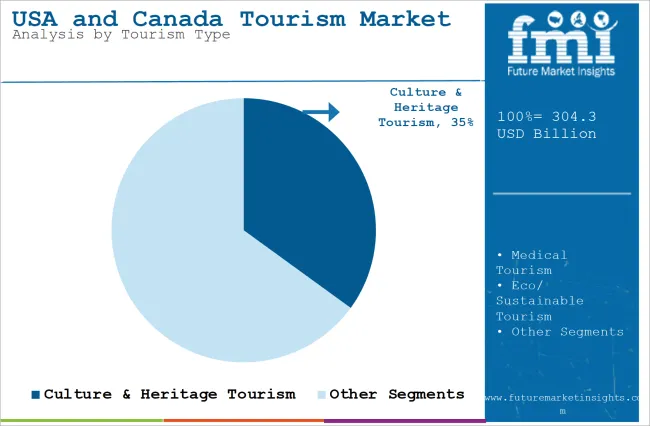
| Segment | Tourism Type (Culture & Heritage Tourism) |
|---|---|
| Value Share (2024) | 35% |
Domestic Tourists Account for Larger Share of USA and Canada Tourism Industry
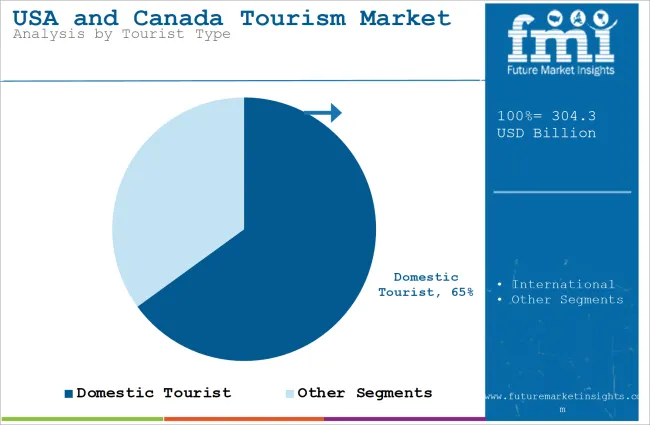
The domestic tourists generate more revenue for the USA and Canada tourism industry as compared to the international tourists. The lower travelling expense and time is the most important factor due to which domestic tourism has higher potential in these countries. Domestic tourism accounted for over 65% revenue to the overall revenue generated in these countries' tourism sector together.
| Segment | Tourist Type (Domestic Tourist) |
|---|---|
| Value Share (2024) | 65% |
Competitive Landscape
- In May 2024, Destination Canada has unveiled its latest tourism strategy, titled 'A World of Opportunity.' This initiative aims to significantly transform the sector and propel Canada into the ranks of the top seven global destinations by the year 2030.
- In December 2023, the USA Travel Association launched the USD 35 million key international marketing campaign targeting the emerging Asian markets. The Campaign promoted sustainable travel experiences in a multi-state sweep of various destinations in this country.
- In March 2023, NYC & Company announced the change in its name to New York City Tourism + Conventions. The new name is part of a full brand revamp that includes a new brand strategy, logo, and overall creative vision. Fred Dixon, the CEO of New York City Tourism + Conventions, said the effort "clears up our purpose and mission."
Leading Players
- Delta Air Lines Inc.
- Alaska Air Group
- American Airlines Group Inc.
- United Airlines Holdings Inc.
- Jetblue Airways Corp.
- Singapore Airlines Ltd.
- United Airlines Holdings Inc.
- Hilton Worldwide Holdings, Inc.
- Marriot International Inc.
- Hyatt Hotels Corp.
- United Airlines Holdings Inc.
- Jetblue Airways Corp.
- Intercontinental Hotels Group Plc
- Accor SA, Choice Hotels International, Inc.
- Park Hotels & Resorts, Inc.
- H World Group Ltd.
- Host Hotels & Resorts Inc.
- Adelman Travel Systems Inc.
- Carlson Wagonlit Travel Inc.
- Direct Travel Inc.
- Omega World Travel Inc.
- New York City Tourism + Conventions
- Orbitz Worldwide Inc.
- Destination Canada
- Fox World Travel Inc.
- Booking Holdings Inc.
- Expedia Group, Inc.
- Jtb Americas Ltd.
- Agoda Holdings, Inc.
- Lastminute.com
USA and Canada Tourism Industry by Category
By Supplier Type:
- Direct Suppliers
- Airlines
- Hotels
- Tour Operators
- Indirect Suppliers
By Tourism Type:
- Culture & Heritage Tourism
- Medical Tourism
- Eco/Sustainable Tourism
- Sports Tourism
- Wellness Tourism
- Others
By Booking Channel:
- Phone Booking
- Online Booking
- In to person Booking
By Tourist Type:
- Domestic
- International
By Age Group:
- Under 15
- 15 to 25
- 26 to 35
- 36 to 45
- 46 to 55
- Above 55
By Demographic:
- Men
- Women
- Children
By Tour Type:
- Independent Travelers
- Tour Groups
- Package Travelers
Frequently Asked Questions
What's the anticipated market value by 2035?
The market is expected to reach USD 452.1 billion by 2035.
What was the historical CAGR of the market?
From 2020 to 2024, the market expanded at 3.4% CAGR.
How are day trip & local gateways trending in USA and Canada?
Day trips and local gateways are mostly preferred by domestic tourists in USA and Canada.
Through which booking channel will the market witness significant revenue by 2035?
Online booking will account for the significant market revenue by 2035.
How will the Forecast Performance of the Market?
The market rose at a CAGR of 4.1% from 2025 to 2035.
What is the Top Trend in the Market?
The involvement of modern technologies to attract tourists is the key trend in USA and Canada Tourism industry.
Preview the report firsthand - request a free sample
Get SampleGet the brochure for pricing and purchase details.
Get PDFTable of Content
- Executive Summary
- Industry Introduction, including Taxonomy and Market Definition
- Tourism Market Trends and Success Factors, including Macro-economic Factors, Market Dynamics, and Recent Industry Developments
- USA and Canada Tourism Market Demand Analysis 2020 to 2024 and Forecast 2025 to 2035, including Historical Analysis and Future Projections
- USA and Canada Tourism Market Analysis 2020 to 2024 and Forecast 2025 to 2035
- Supplier Type
- Tourism Type
- Booking Channel
- Tourist Type
- Age Group
- Demographic
- Tour Type
- USA and Canada Tourism Market Analysis 2020 to 2024 and Forecast 2025 to 2035, By Supplier Type
- Direct Suppliers
- Indirect Suppliers
- USA and Canada Tourism Market Analysis 2020 to 2024 and Forecast 2025 to 2035, By Tourism Type
- Culture & Heritage Tourism
- Medical Tourism
- Eco/ Sustainable Tourism
- Sports Tourism
- Wellness Tourism
- Others
- USA and Canada Tourism Market Analysis 2020 to 2024 and Forecast 2025 to 2035, By Booking Channel
- Phone Booking
- Online Booking
- In-person Booking
- USA and Canada Tourism Market Analysis 2020 to 2024 and Forecast 2025 to 2035, By Tourist Type
- Domestic
- International
- USA and Canada Tourism Market Analysis 2020 to 2024 and Forecast 2025 to 2035, By Age Group
- Under 15
- 15 to 25
- 26 to 35
- 36 to 45
- 46 to 55
- Above 55
- USA and Canada Tourism Market Analysis 2020 to 2024 and Forecast 2025 to 2035, By Demographic
- Men
- Women
- Children
- USA and Canada Tourism Market Analysis 2020 to 2024 and Forecast 2025 to 2035, By Tour Type
- Independent Travelers
- Tour Groups
- Package Travelers
- USA and Canada Tourism Market Analysis 2020 to 2024 and Forecast 2025 to 2035, By Region
- USA
- Canada
- USA Sales Analysis 2020 to 2024 and Forecast 2025 to 2035, by Key Segments and Countries
- Canada Sales Analysis 2020 to 2024 and Forecast 2025 to 2035, by Key Segments and Countries
- Sales Forecast 2025 to 2035 by Supplier Type, Tourism Type, Booking Channel, Tourist Type, Age Group, Demographic, and Tour Type for 30 Countries
- Competition Outlook, including Market Structure Analysis, Company Share Analysis by Key Players, and Competition Dashboard
- Company Profile
- Delta Air Lines Inc.
- Alaska Air Group
- American Airlines Group Inc.
- Value (USD Million)ed Airlines Holdings Inc.
- Direct Travel Inc.
- Omega World Travel Inc.
- New York City Tourism + Conventions
- Orbitz Worldwide Inc.
- Destination Canada
- Fox World Travel Inc.


