

- Market Size (2026)
- USD 2.2 Bn
- Forecast (2036)
- USD 4.3 Bn
- CAGR (2026 to 2036)
- 6.9%
Natural Food Colors Market Size, Market Forecast and Outlook By FMI
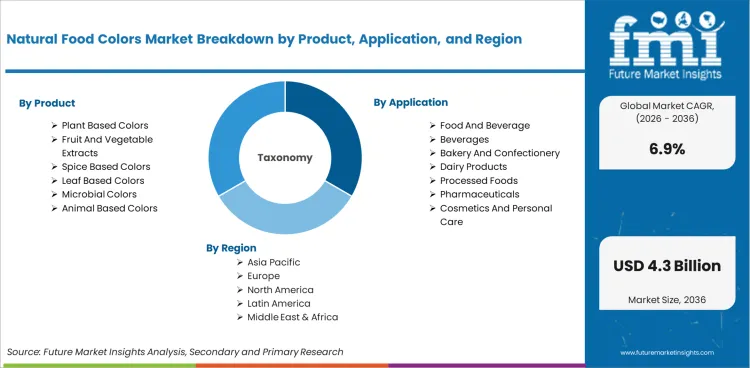
The natural food colors market was valued at USD 2.0 billion in 2025. Industry revenue is projected to reach USD 2.2 billion in 2026 and USD 4.3 billion by 2036 at 6.9% CAGR. Food and beverage are expected to account for 70.0% of application demand in 2026. Food and beverage manufacturers are projected to hold 65.0% by end-use in 2026.
Summary of the Natural Food Colors Market
- Demand and Growth Drivers
- Food and beverage reformulation is driving higher use of natural food colors by 2036 as brands reduce synthetic colorants in packaged products.
- Plant-based colors continue to lead demand due to their wide use in beverages and bakery products.
- Cleaner label positioning supports higher adoption as manufacturers use fruit, vegetable, spice and leaf extracts for familiar ingredient claims.
- Product and Segment View
- Plant based colors are projected to account for 60.0% share in the product segment with fruit and spice extracts suiting label claims.
- Food and beverage are expected to lead application with 70.0% share as drinks and confectionery need stable visual identity.
- Direct sales are anticipated to represent 60.0% share in distribution channel led by major processors preferring technical supply contracts.
- Geography and Competitive Outlook
- India at 8.3% CAGR and China at 8.1% CAGR are expected to move above the global 6.9% CAGR.
- United States at 7.9% CAGR is projected to benefit from synthetic dye phase-out pressure and natural color approvals.
- Oterra and Sensient Technologies are active suppliers as natural color conversion work moves toward application support.
- Analyst Opinion
- Nandini Roy Choudhury, Principal Consultant for Food and Beverages at FMI, says, "Natural food colors are moving from a label choice to a reformulation need for food makers. I see demand following three connected paths. First, beverage and dairy makers require stable shades surviving heat and acidity. Second, snack and confectionery brands need plant-based colors protecting familiar product cues. Third, large manufacturers depend on suppliers able to provide application testing and clean documentation."
- Natural Food Colors Market Value Analysis
- Natural food colors are moving from a clean-label option into a more defined ingredient category for packaged food and beverages.
- Brand reformulation is expanding use as manufacturers replace synthetic colors with fruit and spice-based extracts.
- Plant-based colors hold stronger value because they fit beverage and bakery applications.
- Supplier differentiation is based on shade stability and reliable color performance across processed food systems.
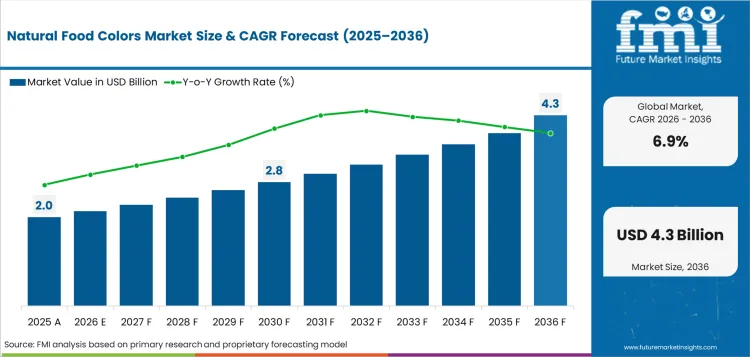
Key Takeaways, Market Size, and Forecast
| Metric | Value |
|---|---|
| Market Size (2025) | USD 2.0 Billion |
| Market Size (2026) | USD 2.2 Billion |
| Market Size (2036) | USD 4.3 Billion |
| CAGR (2026-2036) | 6.9% |
| Leading Application (2026) | Food and Beverage (70.0%) |
| Leading End User (2026) | Food and Beverage Manufacturers (65.0%) |
| Fastest-Growing Countries | India (8.3% CAGR), China (8.1% CAGR) |
Color reformulation is becoming a time-bound operating issue for food manufacturers. FDA stated in January 2025 that it would revoke FD&C Red No. 3 authorization in foods. The food reformulation deadline is January 15, 2027. That creates a direct pull for natural red and pink alternatives. GNT stated in June 2024 that it would showcase plant-based EXBERRY® colors at IFT 2024 through application-led snack formats. Demonstration work matters because color changes also affect flavor expectations and product identity.
Oterra reported in January 2026 that 2024 to 2025 revenue reached EUR 447.1 million and customers covered more than 110 countries. Global reach is commercially important for multinational food brands that need consistent shade supply. Sensient states that it is preparing manufacturing and teams for higher natural color needs. Supplier readiness is likely to influence which color partners win large conversion projects.
Natural Food Colors Market Definition
Sector scope covers food-grade colors derived from plant and microbial sources for finished product formulation. Insect and dairy derived colors are included when sold for food or personal care uses. Included products cover extracts and pigments used in beverages and bakery products. Confectionery and dairy applications are included when color is sold as a finished formulation. Synthetic certified dyes and industrial pigments sit outside this study.
Natural Food Colors Market Inclusions
Market scope covers all commercially traded natural food color products categorized by product type, including plant-based colors, microbial colors and animal-based colors. Application scope includes food and beverage, pharmaceuticals and cosmetics and personal care uses across packaged and processed product formats. Revenue scope covers 2026 to 2036. Participants include natural color manufacturers, botanical extract suppliers, fermentation pigment producers and food and beverage companies. Pharmaceutical firms, cosmetic manufacturers, ingredient distributors, contract manufacturers and regulatory bodies remain included.
Natural Food Colors Market Exclusions
Study scope excludes synthetic FD&C dyes, lake pigments, textile dyes, printing inks, industrial coatings, unprocessed botanical raw crops and non-food colorants sold only for technical uses.
Natural Food Colors Market Research Methodology
- Primary Research: FMI analysts reviewed natural color suppliers and food manufacturers serving beverages and confectionery processors. Ingredient distributors serving dairy processors were included. Interviews focused on shade matching and buyer approval documentation needs.
- Desk Research: Desk review used public food additive rules, official food processing data and company announcements after January 2024. Product scope was checked against botanical extracts, fermentation pigments and application-grade color systems.
- Market Sizing and Forecasting: Forecast work combined supplied market values with product mix, application share and country-level food processing activity. Segment shares were tested against formulation behavior and direct sales reliance among large manufacturers.
- Market Calibration: Country CAGRs reflect food processing scale, regulatory change and supplier activity. Company lists reflect active natural color portfolios and recent public activity.
Why is the Natural Food Colors Market Growing?
- Food makers are moving natural color projects into planned reformulation work as synthetic dye exposure becomes a clearer compliance risk.
- Brand adoption is rising as beverage and confectionery producers require cleaner label colors without weakening shade consistency.
- Supplier selection is moving toward firms supporting stability testing and application work across complex food systems.
Regulatory change is moving natural color projects into formal reformulation plans. FDA revoked authorization for FD&C Red No. 3 in January 2025 and set January 15, 2027 as the food product compliance date. A fixed deadline turns color conversion into a project with validation steps and supplier timelines. Food manufacturers need to test shade stability and flavor impact before commercial replacement.
Application scope is widening as new natural colors enter approved use lists. In May 2025, FDA approved three food color petitions from natural sources covering Galdieria extract blue, butterfly pea flower extract and calcium phosphate. FDA approvals give beverage and confectionery makers more options when replacing synthetic blue or white systems. Natural color suppliers need to prove heat stability and pH performance in each product base.
FDA policy reinforces the shift from synthetic dyes toward natural alternatives. In April 2025, HHS and FDA announced a national transition path away from petroleum-based synthetic dyes in the food supply. European additive review activity keeps color selection based on safety data and approved-use documentation. Food manufacturers should favor firms with application labs rather than sellers offering catalog colors only.
Market Segmentation Analysis
- Plant-based colors are projected to account for 60.0% share in 2026 as fruit and vegetable extracts fit clean labels.
- Food and beverage are expected to hold 70.0% share in 2026 with beverage and dairy plants requiring shade control.
- Food and beverage manufacturers are anticipated to represent 65.0% share in 2026 given their large batch needs.
- Direct sales are projected to lead with a 60.0% share in 2026 since major accounts prefer technical supply links.
- Liquid Colors are estimated to hold 55.0% share in 2026 because liquid dosing suits beverage and dairy lines.
The market is segmented by product, application, end use, distribution channel and formulation. Product segmentation includes plant-based colors, microbial colors and animal-based colors with plant-based colors leading due to broad ingredient familiarity. Application scope covers food and beverage, pharmaceuticals and cosmetics and personal care with food and beverage leading through reformulation pressure. End use includes food and beverage manufacturers, pharmaceutical companies and cosmetic manufacturers with large food makers holding the strongest use base. Distribution channel segmentation covers direct sales, distributors and online platforms with direct sales leading as buyers need technical guidance. Formulation covers liquid colors and powder colors with liquid colors favored for easier dosing.
Insights into the Plant Based Colors Product Segment
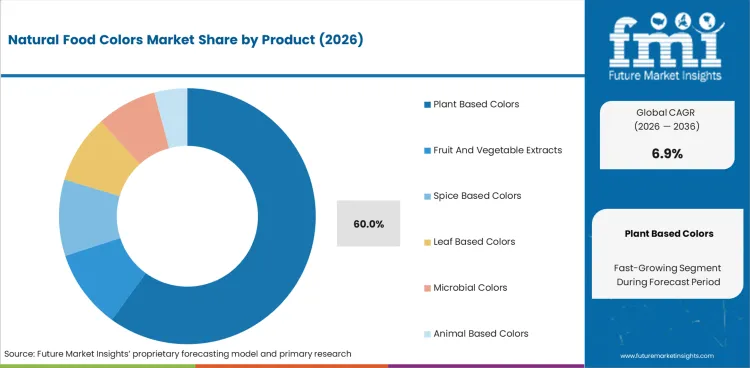
- Plant Based Colors is projected to account for 60.0% share in 2026. Fruit, vegetable and spice extracts give brands a familiar source story.
- Microbial colors are drawing attention in blue and red systems when crop supply or seasonal shade variation makes plant extraction harder to standardize.
Insights into the Food and Beverage Application Segment
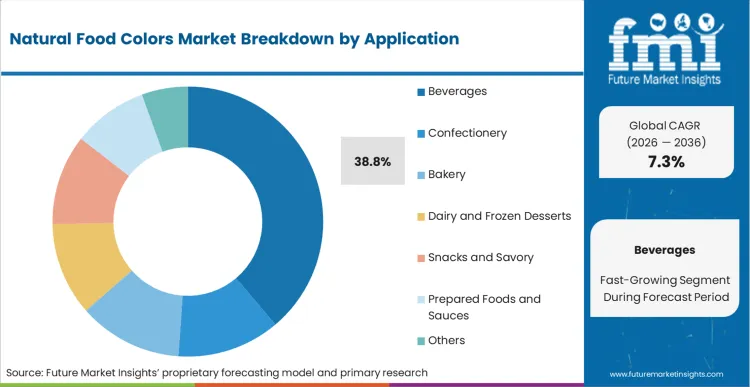
- Food and beverages are projected to account for about 70% of the market in 2026 as beverages and confectionery products need consistent color accuracy.
- Pharmaceutical applications use smaller volumes but stricter files since syrup and capsule coatings need color safety documentation before buyer approval.
Insights into the Food and Beverage Manufacturers End Use Segment
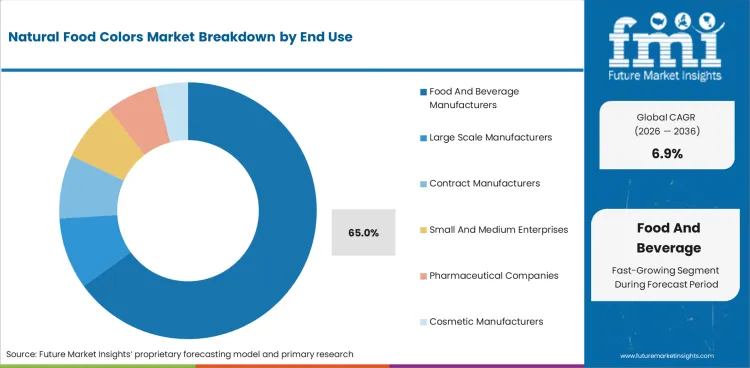
- Food and beverage manufacturers are anticipated to hold 65.0% share in 2026 with large plants buying validated shades for repeated batches.
- Cosmetic manufacturers buy selected natural pigments for lipsticks and creams. Food plants usually require larger volumes and faster shade matching.
Insights into the Direct Sales Distribution Channel Segment
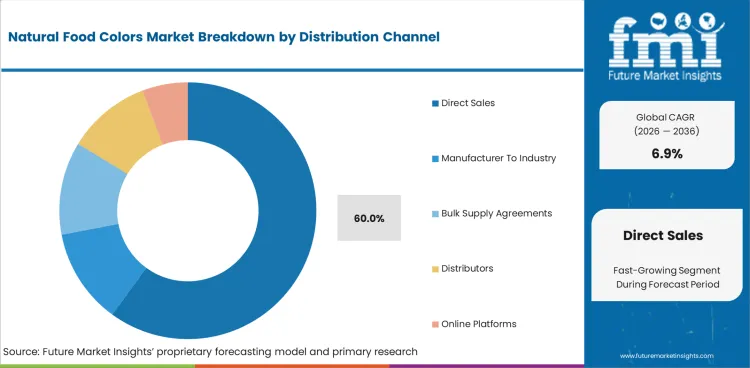
- Direct sales are projected to account for 60.0% share in 2026 as large food brands need fixed supply agreements and shade-matching support. Batch-level color consistency remains part of account approval.
- Ingredient distributors are useful for regional brands purchasing smaller lots. Direct accounts often require trials and certificates before approval.
Insights into the Liquid Colors Formulation Segment
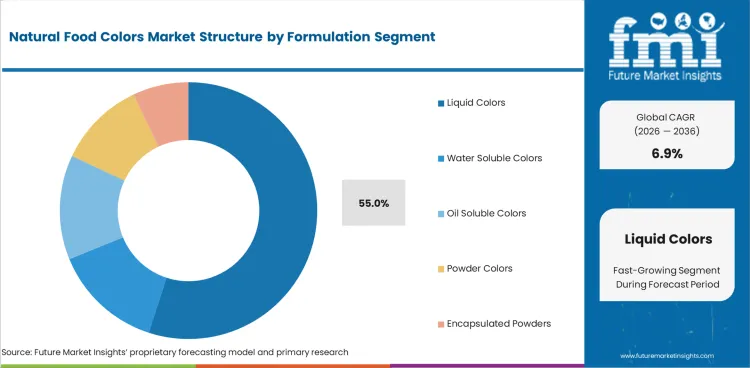
- Liquid Colors are estimated to account for 55.0% share in 2026 reflecting beverage plants preferring pumpable concentrates for dosing.
- Powder colors hold an edge in dry mixes and confectionery coatings because they reduce water load and can extend shelf handling.
Natural Food Colors Market Drivers, Restraints, and Opportunities
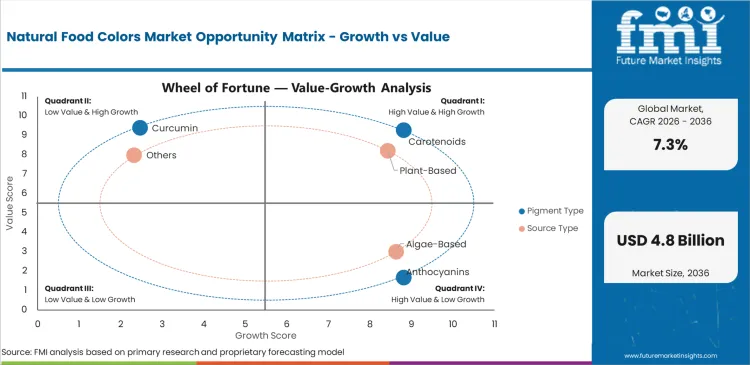
- Synthetic dye phase-out pressure is expected to expand reformulation work across beverages and confectionery. School-facing food lines create a separate conversion lane.
- Color stability remains a restraint as plant pigments can fade under heat, light or acidity during processing.
- Fermentation pigments support shade consistency without crop season limits.
- Direct technical support is expected to influence supplier choice as brands test natural colors in live product bases.
Synthetic dye reformulation is expected to become a larger purchase trigger for natural color suppliers as food makers move from test batches to planned conversion work. HHS and FDA announced a national transition from petrochemical-based dyes toward natural alternatives in April 2025. FDA’s current tracking points to industry work on removing six certified food dyes by the end of 2027. Blue shade availability is likely to improve after FDA approved Galdieria extract blue, expanded butterfly pea flower extract use and calcium phosphate in May 2025. FDA approvals give beverage and confectionery brands more options to replace synthetic blue and white systems. Cost will still affect adoption because natural pigments may need higher use rates or added carriers to match certified dye performance. USDA ERS reported sugar and sweets prices were 8.1% higher in March 2026 than in March 2025. Margin pressure means suppliers must prove shade stability and production fit before brands accept higher cost-in-use. Application labs should improve supplier access as buyers test color performance under heat and acidity. Light exposure creates another test condition.
Supply Risk and Sourcing Dependence Analysis
Natural food color suppliers are expected to face higher sourcing scrutiny through 2036 as reformulation work increases demand for plant pigments. CBI data show natural colorants were Europe’s largest natural additive import category at €761 million in 2024. Developing country share rose from 14.3% in 2020 to 15.5% in 2024, with value at €117.9 million. Paprika, turmeric and annatto supplies from India and Peru show origin exposure. Farm yield risk and origin control needs should push manufacturers toward suppliers with traceable raw materials and documented continuity plans.
Production Capacity and Utilization Analysis
Production capacity is expected to move closer to food application centers as buyers need faster testing and more stable supply. Oterra opened a 155,000 sq. ft. USA headquarters in Wisconsin with application labs, manufacturing and logistics support in December 2024. An additional 40,000 sq. ft. expansion area was reserved for new color products and partner pilot production lines. Public operating-rate data is limited. Capacity use should be assessed through validated footprint, application-lab access and lead-time stability.
Regional Analysis
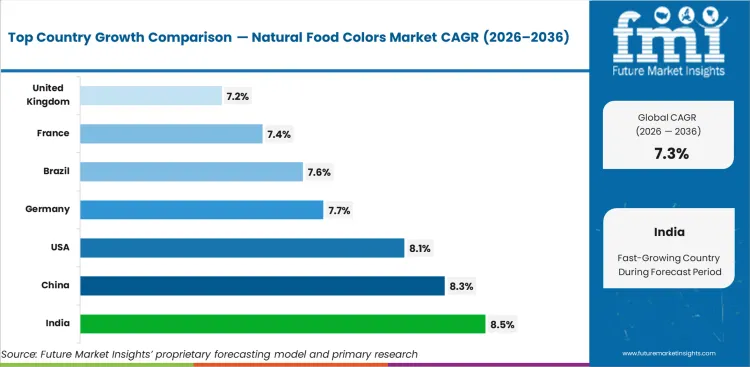
.webp "Top Country Growth Comparison Natural Food Colors Market Cagr (2026 2036)")
| Country | CAGR 2026 to 2036 |
|---|---|
| India | 8.3% |
| China | 8.1% |
| USA | 7.9% |
| Brazil | 7.6% |
| Germany | 7.5% |
| France | 7.2% |
| UK | 6.1% |
Source: Future Market Insights analysis based on natural food color adoption review in 2026.
Analysis of Natural Food Colors Market by Key Countries
- India is expected to record 8.3% CAGR by 2036 as packaged food brands accelerate synthetic dye replacement across beverages and sweets.
- China is projected to follow at 8.1% CAGR by 2036 with beverage producers using plant extracts for cleaner label reformulation.
- USA is expected to advance at 7.9% CAGR by 2036 as dye phase-out pressure pushes larger food processors toward natural alternatives.
- Brazil is forecast to grow at 7.6% CAGR by 2036 as fruit-based beverages and confectionery formats widen natural color use.
- Germany at 7.5% CAGR, France at 7.2% CAGR and UK at 6.1% CAGR are expected to expand under strict additive scrutiny.
Country performance varies by regulatory pressure and packaged food reformulation speed. India leads through broad use of spice and vegetable extracts in food processing. China follows with beverage and snack makers shifting toward recognizable ingredients. USA gains from formal dye replacement plans and retailer clean-label pressure. Brazil benefits from fruit beverage production and confectionery use. Germany and France advance through safety documentation requirements. UK demand expands more slowly as reformulation is already more mature.
Demand Outlook for Natural Food Colors Market in India
Industry demand in India is expected to record 8.3% CAGR by 2036 since food brands reformulate sweets and beverages around plant-based shades. Spice and vegetable extract familiarity gives suppliers a practical route into mainstream product lines. Local blending is important as manufacturers test shade strength across heat-exposed products and dairy systems.
- Traditional sweets create a strong use case for turmeric and beet shades when brands move away from synthetic yellow and red colors.
- Beverage makers need water-soluble colors sustaining shade strength across acidic fruit drinks and shelf-stable packaged products.
- Local ingredient distributors gain share by offering smaller batches and faster support for regional food processors.
Sales Analysis for Natural Food Colors Market in China
Natural food color sales in China are projected to expand at 8.1% CAGR by 2036 as packaged beverage and snack producers adopt plant-based color systems. Buyer interest is firm when labels require simpler ingredient names without losing visual appeal. Fermentation pigments are likely to gain attention when suppliers offer shade consistency beyond crop-season limits.
- Tea drinks and juice products create demand for colors remaining clear and bright across acidic liquid bases.
- Snack manufacturers are testing fruit and vegetable extracts when reformulation must protect familiar product appearance.
- Domestic suppliers can compete better by combining pigment sourcing with application testing for large food accounts.
Opportunity Analysis of Natural Food Colors Market in USA
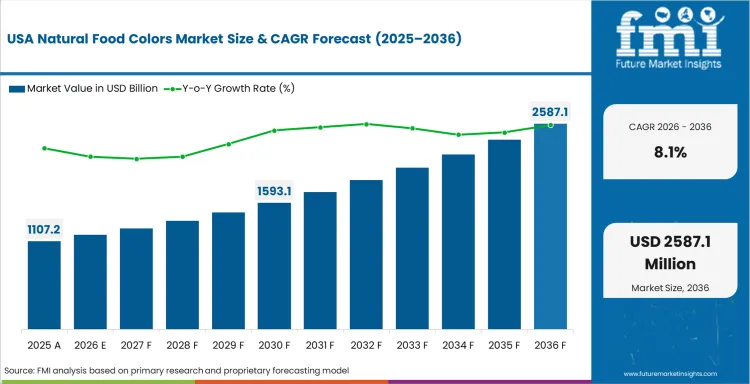
USA demand is expected to advance at 7.9% CAGR by 2036 because food makers are responding to synthetic dye review and retailer clean-label programs. Larger processors are likely to shift from sample testing toward formal reformulation schedules. Supplier advantage is likely to depend on color matching and documentation sustaining brand risk control.
- Red shade replacement creates steady work for beet and anthocyanin systems across candy and bakery products.
- School-facing food lines may shift faster as brands reduce exposure to certified synthetic dye concerns.
- Technical teams need side-by-side trials comparing natural color stability with existing certified dye performance.
Demand Analysis of Natural Food Colors Market in Brazil
Brazilian sector is forecast to grow at 7.6% CAGR by 2036 as fruit beverage and confectionery producers increase natural color adoption. Regional fruit processing provides color suppliers a strong application base. Price sensitivity is expected to keep demand focused on shades delivering reliable dosing without raising cost-in-use sharply.
- Fruit beverage producers use familiar botanical color claims to support cleaner labels in packaged drink lines.
- Confectionery makers require stable red and orange shades tolerating sugar processing and retail storage conditions.
- Cost control favors concentrated liquid colors reducing dosing errors during high-volume production runs.
Future Outlook for Natural Food Colors Market in Germany
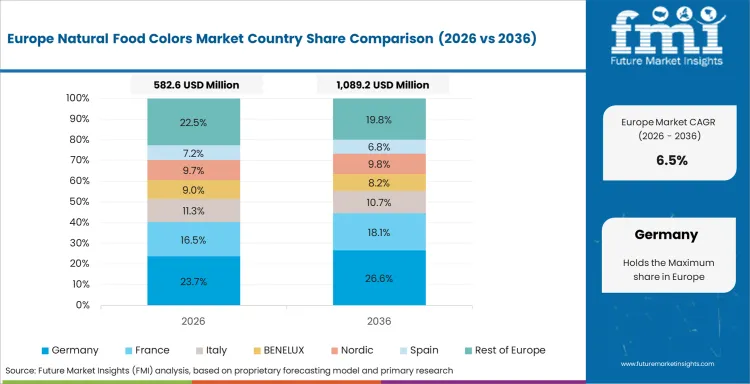
Germany's industry is expected to grow at 7.5% CAGR by 2036, led by additive safety review and clean-label expectations shaping purchase decisions. Food manufacturers are likely to ask for stronger technical files before approving color changes. Natural color suppliers should gain by supporting label review and process validation together.
- Bakery and dairy processors value color systems with clear ingredient origin and consistent shade documentation.
- Retailer brand standards are likely to push suppliers toward stronger traceability for paprika and turmeric inputs.
- Powder colors can serve dry-mix applications for manufacturers requiring storage stability and controlled dosing.
Sales Analysis of Natural Food Colors Market in France
France is projected to rise at 7.2% CAGR by 2036, influenced by premium food brands using natural colors to support simpler ingredient positioning. Reformulation decisions are expected to move carefully because product appearance is aligned to brand identity. Application testing should matter when dairy and confectionery bases react differently to plant pigments.
- Dairy brands require natural colors performing without taste carryover in yogurts and chilled desserts.
- Premium confectionery makers favor botanical shades when visual quality influences higher product positioning.
- Supplier credibility improves when technical files explain color behavior under acidity and light exposure.
Demand Outlook for Natural Food Colors Market in UK
Demand growth for the sector in the UK is expected to post 6.1% CAGR by 2036 as private label ranges and packaged snacks continue clean-label reformulation. Growth is slower than India and China since many brands already use cleaner ingredient claims. Supplier opportunities should focus on cost-effective color systems that protect appearance under retailer price pressure.
- Private label manufacturers need natural colors that support clean-label claims without raising finished product cost sharply.
- Snack producers can use spice-based shades when reformulation must protect flavor neutrality and shelf appearance.
- Distributor support remains useful for smaller food makers that need trial quantities before full-scale color conversion.
Competitive Positioning and Strategic Supplier Strength
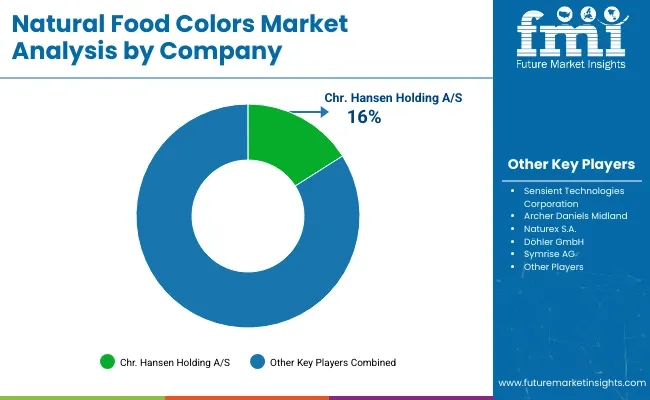
- Oterra is expected to defend legacy Chr. Hansen natural color accounts through global application labs and a stronger USA presence.
- Sensient Technologies is expected to gain conversion work through USA natural color capacity and broad application support.
- GNT Group competes through EXBERRY plant-based colors and a wide portfolio of vegetable and fruit concentrates.
- Döhler uses beverage ingredient depth and fruit-based systems to support natural color projects in drinks and dairy products.
Natural food color competition is shaped by shade matching and regulatory documentation. Supply reliability remains a separate selection test. Buyers are comparing suppliers on their ability to replace synthetic dyes without changing product taste or processing conditions. Oterra opened a color blending and application center in Kerala in February 2025 to support customers in India and Asia Pacific. Sensient started a major expansion at its St. Louis natural color plant in March 2026 as USA dye pressure moved conversion planning closer to production teams. Facility investments show how larger suppliers are preparing for clean-label programs and formal dye replacement work.
Supplier strength is likely to depend on how quickly reformulation work moves from trial batches to full production. Large companies can hold an advantage when application labs shorten testing cycles for beverages and confectionery. GNT expanded its certified organic EXBERRY range with a new vibrant pink shade for food and beverage uses. Doehler North America acquired Premier Juices in March 2025 to strengthen fruit-based products and solutions. Portfolio depth matters as natural colors often need fruit and beta carotene systems working together. Smaller regional players can compete through price and distributor service. Larger accounts are expected to favor suppliers with proven regulatory files and secure supply.
Key Companies in Natural Food Colors Market
Competition spans global natural color specialists and botanical extract suppliers. Ingredient distributors serve food and beverage buyers plus selected pharma accounts. Role-based grouping is more useful than size grouping because suppliers compete through source control, formulation support and channel access.
- Natural color specialists: Oterra and GNT Group compete with Sensient Technologies and ROHA JJT Group through shade systems and application support.
- Ingredient and extract groups: Archer Daniels Midland and Givaudan Naturex compete with Döhler, Symrise and Kalsec through botanical ingredients.
- Regional and specialty suppliers: Aakash Chemicals and Dyestuffs and San-Ei Gen F.F.I. work with Australian Food Ingredient Suppliers and Lycored on selected pigment lines.
Competitive Benchmarking: Natural Food Colors Market
| Company | Plant Extract Range | Application Lab Depth | Regulatory File Support | Footprint |
|---|---|---|---|---|
| Oterra | High | High | High | Global |
| Sensient Technologies | High | High | High | Global |
| GNT Group EXBERRY | High | High | High | Global |
| Döhler | High | High | High | Global |
| Givaudan Naturex | High | High | High | Global |
| Kalsec | Medium | High | High | Global |
| ROHA JJT Group | High | Medium | High | Asia-led global |
| San-Ei Gen F.F.I. | Medium | High | High | Japan and Asia |
Source: Future Market Insights competitive analysis based on public product portfolios and company activity in 2026.
Key Developments in the Natural Food Colors Market
- In February 2025, Oterra inaugurated a color blending and application center in Kochi, Kerala to support India and Asia Pacific customers.
- In May 2025, FDA approved three food colors from natural sources including Galdieria extract blue, butterfly pea flower extract and calcium phosphate.
- In March 2026, Sensient Food Colors began a major expansion at its largest natural color plant in St. Louis, Missouri.
Key Players in the Natural Food Colors Market
Global natural color specialists
- Oterra
- GNT International BV EXBERRY
- Sensient Technologies Corporation
- ROHA JJT Group
- San-Ei Gen F.F.I. Inc.
Ingredient and botanical extract suppliers
- Archer Daniels Midland
- Givaudan Naturex
- Döhler GmbH
- Symrise AG
- Kalsec Inc.
- McCormick & Company
Regional and specialty suppliers
- Aakash Chemicals and Dyestuffs
- Australian Food Ingredient Suppliers
- Lycored
- DDW The Color House by Givaudan
Report Scope and Coverage
| Item | Value |
|---|---|
| Market value in 2025 | USD 2.0 billion |
| Market value in 2026 | USD 2.2 billion |
| Market value in 2036 | USD 4.3 billion |
| CAGR from 2026 to 2036 | 6.9% |
| Quantitative units | USD billion |
| Market definition | Food-grade colors derived from plant, microbial, insect and dairy sources for finished product formulation |
| By product | Plant-based colors, microbial colors, animal-based colors |
| By application | Food and beverage, pharmaceuticals, cosmetics and personal care |
| By end use | Food and beverage manufacturers, pharmaceutical companies, cosmetic manufacturers |
| By distribution channel | Direct sales, distributors, online platforms |
| By formulation | Liquid colors, powder colors, encapsulated powders |
| Regions covered | North America, Latin America, Western Europe, Eastern Europe, East Asia, South Asia and Pacific, Middle East and Africa |
| Countries covered | USA, Germany, France, China, India, Brazil, UK |
| Key companies profiled | Oterra, ADM, Givaudan Naturex, Döhler, Symrise, Kalsec, GNT Group, Sensient Technologies |
| Forecast period | 2026 to 2036 |
| Approach | Bottom-up application review with food processing and regulatory cross-checks |
Source: Future Market Insights analysis, 2026.
Natural Food Colors Market Breakdown by Product, Application, End Use, Distribution Channel, Formulation, and Region
Natural Food Colors Market Segmented by Product
- Plant Based Colors
- Fruit And Vegetable Extracts
- Spice Based Colors
- Leaf Based Colors
- Microbial Colors
- Animal Based Colors
Natural Food Colors Market Segmented by Application
- Food And Beverage
- Beverages
- Bakery And Confectionery
- Dairy Products
- Processed Foods
- Pharmaceuticals
- Cosmetics And Personal Care
Natural Food Colors Market Segmented by End Use
- Food And Beverage Manufacturers
- Large Scale Manufacturers
- Contract Manufacturers
- Small And Medium Enterprises
- Pharmaceutical Companies
- Cosmetic Manufacturers
Natural Food Colors Market Segmented by Distribution Channel
- Direct Sales
- Manufacturer To Industry
- Bulk Supply Agreements
- Distributors
- Online Platforms
Natural Food Colors Market Segmented by Formulation
- Liquid Colors
- Water Soluble Colors
- Oil Soluble Colors
- Powder Colors
- Encapsulated Powders
Natural Food Colors Market Segmented by Region
- North America
- Latin America
- Western Europe
- Eastern Europe
- East Asia
- South Asia and Pacific
- Middle East and Africa
Research Sources and Bibliography
- Oterra. (2024, December 4). Oterra strengthens its USA presence to meet demand for natural colors.
- CBI Ministry of Foreign Affairs. (2026, April 21). What is the demand for natural food additives in the European market?
- USA Food and Drug Administration. (2025, January 15). FDA to revoke authorization for the use of Red No. 3 in food and ingested drugs.
- USA Food and Drug Administration. (2025, April 22). HHS, FDA to phase out petroleum-based synthetic dyes in nation’s food supply.
- USA Food and Drug Administration. (2025, May 9). FDA approves three food colors from natural sources.
- USA Department of Agriculture, Foreign Agricultural Service. (2026, March 27). India: Food processing ingredients annual.
- USA Department of Agriculture, Foreign Agricultural Service. (2026, April 1). China: Food processing ingredients annual.
- USA Department of Agriculture, Foreign Agricultural Service. (2026, March 30). Germany: Food processing ingredients annual.
- USA Department of Agriculture, Foreign Agricultural Service. (2026, April 3). France: Food processing ingredients annual.
- USA Department of Agriculture, Foreign Agricultural Service. (2026, March 31). Brazil: Food processing ingredients annual.
- USA Department of Agriculture, Foreign Agricultural Service. (2026, March 24). United Kingdom: Food processing ingredients annual.
- USA Department of Agriculture, Economic Research Service. (2026, April 24). Food price outlook: Summary findings.
- Oterra. (2025, February 20). New color blending center supports growth of natural alternatives in India, Asia Pacific and Middle East.
- Döhler. (2025, March 28). Döhler North America expands fruit solutions portfolio with Premier Juices acquisition.
- GNT Group. (2025, June 23). GNT expands certified organic EXBERRY color range with new vibrant pink.
- Sensient Food Colors. (2026, March 26). Sensient scales up natural color production to fuel USA shift from synthetic dyes.
This Report Answers
- What is the current and future value of the natural food colors market from 2026 to 2036?
- What CAGR is expected for the natural food colors market during the forecast period?
- Which product segment is projected to lead natural food color demand in 2026?
- Which application segment is expected to hold the highest share in natural food colors?
- What factors are driving natural food color use in food and beverage reformulation?
- How do shade stability tests affect supplier selection for natural food colors?
- Which countries are expected to grow fastest in natural food colors?
- Which companies are positioned across plant-based and fermentation-based natural food colors?
- How does FMI define the natural food color revenue scope?
- What forecasting approach was used to estimate natural food color demand from 2026 to 2036?
Frequently Asked Questions
How large is the natural food colors market in 2026?
The natural food colors market value is projected at USD 2.2 billion in 2026.
What is the natural food colors market forecast for 2036?
The natural food colors market value is forecast to reach USD 4.3 billion by 2036 as reformulation expands across food and beverage uses.
What is the expected CAGR for the natural food colors market?
The industry is expected to expand at 6.9% CAGR from 2026 to 2036 across global application channels.
Which application leads the natural food colors market?
Food and beverage are expected to lead with 70.0% share in 2026 because broad product use supports the segment.
Which country grows fastest in the natural food colors market?
India is projected to record 8.3% CAGR by 2036 as packaged food and beverage processing expands faster than mature countries.
Which formulation leads the natural food colors market?
Liquid colors are expected to hold 55.0% share in 2026 as beverage and dairy plants prefer pumpable color concentrates.
Preview the report firsthand - request a free sample
Get SampleGet the brochure for pricing and purchase details.
Get PDFTable of Content
- Key Takeaways
- Market Size and CAGR
- Top Growth Driver
- Fastest Growing Segment
- Leading Region
- Key Companies
- Emerging Opportunities
- Executive Summary
- Global Market Outlook
- Demand-side Trends
- Supply-side Trends
- Technology Roadmap Analysis
- Analysis and Recommendations
- Analyst Perspective (What is happening? Why now? What should investors know?)
- Key Questions Answered
- How large is the market?
- What is the CAGR?
- What are key trends?
- Which region dominates?
- Who are the leaders?
- Market Overview
- Market Coverage / Taxonomy
- Market Definition / Scope / Limitations
- Research Methodology
- Chapter Orientation
- Analytical Lens and Working Hypotheses
- Market Structure, Signals, and Trend Drivers
- Benchmarking and Cross-market Comparability
- Market Sizing, Forecasting, and Opportunity Mapping
- Research Design and Evidence Framework
- Desk Research Programme (Secondary Evidence)
- Expert Input and Fieldwork (Primary Evidence)
- Tooling, Models, and Reference Databases
- Data Engineering and Model Build
- Quality Assurance and Audit Trail
- Market Background
- Market Dynamics (Drivers, Restraints, Opportunity, Trends)
- Scenario Forecast (Optimistic, Likely, Conservative)
- Impact Analysis
- AI Impact
- Sustainability Impact
- Regulatory Impact
- Technology Impact
- Consumer / Buyer Analysis
- Purchase Drivers
- Adoption Barriers
- Buyer Journey
- Opportunity Map Analysis
- Product Life Cycle Analysis
- Supply Chain Analysis
- Investment Feasibility Matrix
- Value Chain Analysis
- PESTLE and Porter's Analysis
- Regulatory Landscape
- Regional Parent Market Outlook
- Production and Consumption Statistics
- Import and Export Statistics
- Global Market Analysis and Forecast, 2021 to 2036
- Historical Market Size Value (USD Million) Analysis, 2021 to 2025
- Current and Future Market Size Value (USD Million) Projections, 2026 to 2036
- Y-o-Y Growth Trend Analysis
- Absolute $ Opportunity Analysis
- Global Market Pricing Analysis, 2021 to 2036
- Global Market Analysis and Forecast, By Product, 2021 to 2036
- Introduction / Key Findings
- Historical Market Size Value (USD Million) Analysis By Product, 2021 to 2025
- Current and Future Market Size Value (USD Million) Analysis and Forecast By Product, 2026 to 2036
- Plant Based Colors
- Fruit And Vegetable Extracts
- Spice Based Colors
- Leaf Based Colors
- Microbial Colors
- Animal Based Colors
- Plant Based Colors
- Y-o-Y Growth Trend Analysis By Product, 2021 to 2025
- Absolute $ Opportunity Analysis By Product, 2026 to 2036
- Global Market Analysis and Forecast, By Application, 2021 to 2036
- Introduction / Key Findings
- Historical Market Size Value (USD Million) Analysis By Application, 2021 to 2025
- Current and Future Market Size Value (USD Million) Analysis and Forecast By Application, 2026 to 2036
- Food And Beverage
- Beverages
- Bakery And Confectionery
- Dairy Products
- Processed Foods
- Pharmaceuticals
- Cosmetics And Personal Care
- Food And Beverage
- Y-o-Y Growth Trend Analysis By Application, 2021 to 2025
- Absolute $ Opportunity Analysis By Application, 2026 to 2036
- Global Market Analysis and Forecast, By End Use, 2021 to 2036
- Introduction / Key Findings
- Historical Market Size Value (USD Million) Analysis By End Use, 2021 to 2025
- Current and Future Market Size Value (USD Million) Analysis and Forecast By End Use, 2026 to 2036
- Food And Beverage Manufacturers
- Large Scale Manufacturers
- Contract Manufacturers
- Small And Medium Enterprises
- Pharmaceutical Companies
- Cosmetic Manufacturers
- Food And Beverage Manufacturers
- Y-o-Y Growth Trend Analysis By End Use, 2021 to 2025
- Absolute $ Opportunity Analysis By End Use, 2026 to 2036
- Global Market Analysis and Forecast, By Distribution Channel, 2021 to 2036
- Introduction / Key Findings
- Historical Market Size Value (USD Million) Analysis By Distribution Channel, 2021 to 2025
- Current and Future Market Size Value (USD Million) Analysis and Forecast By Distribution Channel, 2026 to 2036
- Direct Sales
- Manufacturer To Industry
- Bulk Supply Agreements
- Distributors
- Online Platforms
- Direct Sales
- Y-o-Y Growth Trend Analysis By Distribution Channel, 2021 to 2025
- Absolute $ Opportunity Analysis By Distribution Channel, 2026 to 2036
- Global Market Analysis and Forecast, By Formulation, 2021 to 2036
- Introduction / Key Findings
- Historical Market Size Value (USD Million) Analysis By Formulation, 2021 to 2025
- Current and Future Market Size Value (USD Million) Analysis and Forecast By Formulation, 2026 to 2036
- Liquid Colors
- Water Soluble Colors
- Oil Soluble Colors
- Powder Colors
- Encapsulated Powders
- Liquid Colors
- Y-o-Y Growth Trend Analysis By Formulation, 2021 to 2025
- Absolute $ Opportunity Analysis By Formulation, 2026 to 2036
- Global Market Analysis and Forecast, By Region, 2021 to 2036
- Introduction
- Historical Market Size Value (USD Million) Analysis By Region, 2021 to 2025
- Current Market Size Value (USD Million) Analysis and Forecast By Region, 2026 to 2036
- North America
- Latin America
- Western Europe
- Eastern Europe
- East Asia
- South Asia and Pacific
- Middle East & Africa
- Market Attractiveness Analysis By Region
- North America Market Analysis and Forecast, By Country, 2021 to 2036
- Historical Market Size Value (USD Million) Trend Analysis By Market Taxonomy, 2021 to 2025
- Market Size Value (USD Million) Forecast By Market Taxonomy, 2026 to 2036
- By Country
- USA
- Canada
- Mexico
- By Product
- By Application
- By End Use
- By Distribution Channel
- By Formulation
- By Country
- Market Attractiveness Analysis
- By Country
- By Product
- By Application
- By End Use
- By Distribution Channel
- By Formulation
- Key Takeaways
- Latin America Market Analysis and Forecast, By Country
- Historical Market Size Value (USD Million) Trend Analysis By Market Taxonomy, 2021 to 2025
- Market Size Value (USD Million) Forecast By Market Taxonomy, 2026 to 2036
- By Country
- Brazil
- Chile
- Rest of Latin America
- By Product
- By Application
- By End Use
- By Distribution Channel
- By Formulation
- By Country
- Market Attractiveness Analysis
- By Country
- By Product
- By Application
- By End Use
- By Distribution Channel
- By Formulation
- Key Takeaways
- Western Europe Market Analysis and Forecast, By Country
- Historical Market Size Value (USD Million) Trend Analysis By Market Taxonomy, 2021 to 2025
- Market Size Value (USD Million) Forecast By Market Taxonomy, 2026 to 2036
- By Country
- Germany
- UK
- Italy
- Spain
- France
- Nordic
- BENELUX
- Rest of Western Europe
- By Product
- By Application
- By End Use
- By Distribution Channel
- By Formulation
- By Country
- Market Attractiveness Analysis
- By Country
- By Product
- By Application
- By End Use
- By Distribution Channel
- By Formulation
- Key Takeaways
- Eastern Europe Market Analysis and Forecast, By Country
- Historical Market Size Value (USD Million) Trend Analysis By Market Taxonomy, 2021 to 2025
- Market Size Value (USD Million) Forecast By Market Taxonomy, 2026 to 2036
- By Country
- Russia
- Poland
- Hungary
- Balkan & Baltic
- Rest of Eastern Europe
- By Product
- By Application
- By End Use
- By Distribution Channel
- By Formulation
- By Country
- Market Attractiveness Analysis
- By Country
- By Product
- By Application
- By End Use
- By Distribution Channel
- By Formulation
- Key Takeaways
- East Asia Market Analysis and Forecast, By Country
- Historical Market Size Value (USD Million) Trend Analysis By Market Taxonomy, 2021 to 2025
- Market Size Value (USD Million) Forecast By Market Taxonomy, 2026 to 2036
- By Country
- China
- Japan
- South Korea
- By Product
- By Application
- By End Use
- By Distribution Channel
- By Formulation
- By Country
- Market Attractiveness Analysis
- By Country
- By Product
- By Application
- By End Use
- By Distribution Channel
- By Formulation
- Key Takeaways
- South Asia and Pacific Market Analysis and Forecast, By Country
- Historical Market Size Value (USD Million) Trend Analysis By Market Taxonomy, 2021 to 2025
- Market Size Value (USD Million) Forecast By Market Taxonomy, 2026 to 2036
- By Country
- India
- ASEAN
- Australia & New Zealand
- Rest of South Asia and Pacific
- By Product
- By Application
- By End Use
- By Distribution Channel
- By Formulation
- By Country
- Market Attractiveness Analysis
- By Country
- By Product
- By Application
- By End Use
- By Distribution Channel
- By Formulation
- Key Takeaways
- Middle East & Africa Market Analysis and Forecast, By Country
- Historical Market Size Value (USD Million) Trend Analysis By Market Taxonomy, 2021 to 2025
- Market Size Value (USD Million) Forecast By Market Taxonomy, 2026 to 2036
- By Country
- Kingdom of Saudi Arabia
- Other GCC Countries
- Türkiye
- South Africa
- Other African Union
- Rest of Middle East & Africa
- By Product
- By Application
- By End Use
- By Distribution Channel
- By Formulation
- By Country
- Market Attractiveness Analysis
- By Country
- By Product
- By Application
- By End Use
- By Distribution Channel
- By Formulation
- Key Takeaways
- Key Countries Market Analysis
- USA
- Pricing Analysis
- Market Share Analysis, 2025
- By Product
- By Application
- By End Use
- By Distribution Channel
- By Formulation
- Canada
- Pricing Analysis
- Market Share Analysis, 2025
- By Product
- By Application
- By End Use
- By Distribution Channel
- By Formulation
- Mexico
- Pricing Analysis
- Market Share Analysis, 2025
- By Product
- By Application
- By End Use
- By Distribution Channel
- By Formulation
- Brazil
- Pricing Analysis
- Market Share Analysis, 2025
- By Product
- By Application
- By End Use
- By Distribution Channel
- By Formulation
- Chile
- Pricing Analysis
- Market Share Analysis, 2025
- By Product
- By Application
- By End Use
- By Distribution Channel
- By Formulation
- Germany
- Pricing Analysis
- Market Share Analysis, 2025
- By Product
- By Application
- By End Use
- By Distribution Channel
- By Formulation
- UK
- Pricing Analysis
- Market Share Analysis, 2025
- By Product
- By Application
- By End Use
- By Distribution Channel
- By Formulation
- Italy
- Pricing Analysis
- Market Share Analysis, 2025
- By Product
- By Application
- By End Use
- By Distribution Channel
- By Formulation
- Spain
- Pricing Analysis
- Market Share Analysis, 2025
- By Product
- By Application
- By End Use
- By Distribution Channel
- By Formulation
- France
- Pricing Analysis
- Market Share Analysis, 2025
- By Product
- By Application
- By End Use
- By Distribution Channel
- By Formulation
- India
- Pricing Analysis
- Market Share Analysis, 2025
- By Product
- By Application
- By End Use
- By Distribution Channel
- By Formulation
- ASEAN
- Pricing Analysis
- Market Share Analysis, 2025
- By Product
- By Application
- By End Use
- By Distribution Channel
- By Formulation
- Australia & New Zealand
- Pricing Analysis
- Market Share Analysis, 2025
- By Product
- By Application
- By End Use
- By Distribution Channel
- By Formulation
- China
- Pricing Analysis
- Market Share Analysis, 2025
- By Product
- By Application
- By End Use
- By Distribution Channel
- By Formulation
- Japan
- Pricing Analysis
- Market Share Analysis, 2025
- By Product
- By Application
- By End Use
- By Distribution Channel
- By Formulation
- South Korea
- Pricing Analysis
- Market Share Analysis, 2025
- By Product
- By Application
- By End Use
- By Distribution Channel
- By Formulation
- Russia
- Pricing Analysis
- Market Share Analysis, 2025
- By Product
- By Application
- By End Use
- By Distribution Channel
- By Formulation
- Poland
- Pricing Analysis
- Market Share Analysis, 2025
- By Product
- By Application
- By End Use
- By Distribution Channel
- By Formulation
- Hungary
- Pricing Analysis
- Market Share Analysis, 2025
- By Product
- By Application
- By End Use
- By Distribution Channel
- By Formulation
- Kingdom of Saudi Arabia
- Pricing Analysis
- Market Share Analysis, 2025
- By Product
- By Application
- By End Use
- By Distribution Channel
- By Formulation
- Türkiye
- Pricing Analysis
- Market Share Analysis, 2025
- By Product
- By Application
- By End Use
- By Distribution Channel
- By Formulation
- South Africa
- Pricing Analysis
- Market Share Analysis, 2025
- By Product
- By Application
- By End Use
- By Distribution Channel
- By Formulation
- USA
- Market Structure Analysis
- Competition Dashboard
- Competition Benchmarking
- Market Share Analysis of Top Players
- By Regional
- By Product
- By Application
- By End Use
- By Distribution Channel
- By Formulation
- Emerging Startups
- Innovation Benchmarking
- Competition Analysis
- Competition Deep Dive
- Oterra
- Overview
- Product Portfolio
- Profitability by Market Segments (Product/Region/Sales Channel)
- Sales Footprint
- Strategy Overview
- Marketing Strategy
- Product Strategy
- Channel Strategy
- GNT International BV EXBERRY
- Sensient Technologies Corporation
- ROHA JJT Group
- San-Ei Gen F.F.I. Inc.
- Oterra
- Case Studies
- Success Stories
- Recent Developments
- Competition Deep Dive
- Assumptions & Acronyms Used


