


- Construction polymer suppliers face margin pressure because PVC, polyethylene, polypropylene, polyurethane, polystyrene, epoxy resins, and related materials remain linked to petrochemical feedstock and energy movements.
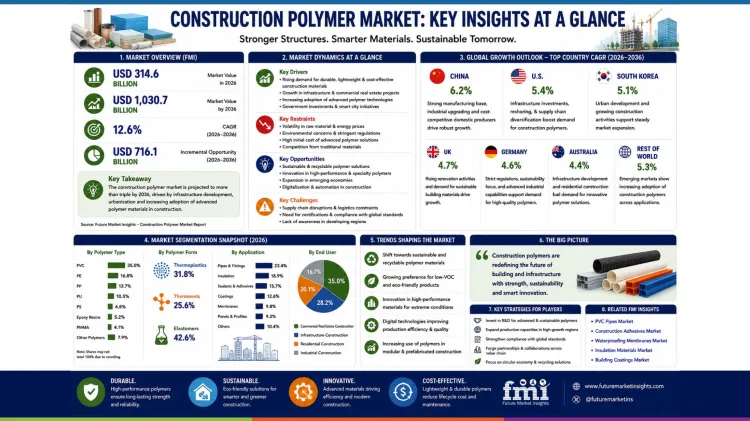
- FMI estimates the construction polymer market at USD 314.6 billion in 2026, reaching USD 1,030.7 billion by 2036 at a 12.6% CAGR.
- PVC leads polymer demand with 35.0% share in 2026, making chlorine, ethylene, energy, compounding, and formulation costs especially relevant to pricing.
- Pass-through is easier in certified, performance-grade, and project-specific products than in commodity-grade materials sold into price-sensitive construction channels.
- Commercial real estate construction holds 35.0% end-user demand, which means large-volume buyers can influence price negotiations and delay full cost recovery.
- The practical observation is that suppliers protect margins best when contracts link raw material movement to pricing, while technical differentiation reduces pure commodity exposure.
Construction polymers sit in a market where demand can be strong and margins can still be uncomfortable. The reason is visible in the value chain. Many polymers used in pipes, membranes, sealants, coatings, insulation, adhesives, panels, profiles, and waterproofing systems are built on petrochemical inputs. When crude oil, natural gas liquids, naphtha, ethylene, propylene, chlorine, isocyanates, styrene, epichlorohydrin, bisphenol A, plasticizers, additives, pigments, and energy costs move, suppliers rarely absorb the impact quietly.
The question is not whether raw material volatility affects construction polymer pricing. It does. The more useful question is how much of that pressure can be passed through to builders, contractors, distributors, infrastructure buyers, and real estate developers before demand or customer loyalty weakens.
The FMI Construction Polymer Market gives the commercial scale. The market was valued at USD 279.4 billion in 2025, is expected to reach USD 314.6 billion by 2026, and is projected at USD 1,030.7 billion by 2036. The implied growth path is strong, with a 12.6% CAGR from 2026 to 2036. PVC is expected to account for 35.0% of polymer type demand in 2026. Commercial real estate construction also holds 35.0% of end-user demand.
Those two 35.0% shares shape the cost pass-through story. PVC is one of the more established construction polymers, used in pipes, profiles, fittings, flooring, membranes, cables, wall systems, and other building products. Commercial real estate is a large-volume buyer group that typically works through contractors, procurement schedules, project budgets, and competitive tenders. A supplier selling PVC-based or other thermoplastic products into this channel cannot simply raise prices whenever feedstock rises. It has to work through contract timing, competitor response, and project cost sensitivity.
The raw material chain is complex. EIA notes that naphtha and other oils refined from crude oil are used as feedstocks in petrochemical crackers that produce basic building blocks for plastics. It also explains that hydrocarbon gas liquids produced in the United States are largely byproducts of natural gas processing and can be used as petrochemical feedstocks. This creates a regional cost difference. A producer linked to natural gas liquids may face a different cost curve than a producer dependent on naphtha or imported intermediates.
For construction polymer suppliers, this matters at the product level. Polyethylene pipes and membranes may respond to ethylene economics. Polypropylene components track propylene and refinery or cracker dynamics. Polystyrene insulation and lightweight materials are exposed to styrene. Polyurethane foams, sealants, and insulation systems are influenced by isocyanates, polyols, and energy. Epoxy resins used in adhesives and coatings can face movements in bisphenol A and epichlorohydrin. PVC is linked to vinyl chloride monomer, chlorine, ethylene, and power-intensive production economics.
Pass-through is strongest when customers accept that cost movements are industry-wide and measurable. A formal price adjustment clause tied to polymer indices, feedstock benchmarks, or energy costs gives suppliers a cleaner recovery mechanism. Long-term infrastructure and commercial projects may allow quarterly or semiannual adjustments. Spot or distributor sales can move faster, and they can also reverse faster when demand softens.
The weaker position sits with suppliers selling standard-grade polymers into crowded channels. FMI notes that margin compression is most pronounced in commodity-grade products where multiple suppliers compete mainly on price. A standard PVC profile, basic pipe grade, low-spec sealant, or commodity insulation component may face strong customer pushback if buyers can switch to another supplier or import alternative.
High-performance and certified products create a different commercial setting. Construction polymers used in waterproofing, structural bonding, fire-rated insulation, weather-resistant coatings, energy-efficient windows, chemical-resistant industrial flooring, or infrastructure repair can carry more technical value. When the polymer is tied to safety, durability, energy performance, or regulatory compliance, price negotiations are still tough, and the supplier has more room to defend margin.
Commercial real estate buyers often negotiate hard because polymer products are one part of a larger project cost stack. Contractors and developers watch steel, cement, labor, land, financing, glass, mechanical systems, and interior materials. A price increase in polymer products may be accepted when it is small relative to the project and clearly linked to raw material inflation. It becomes harder when the increase affects highly visible, frequently purchased products such as piping, insulation boards, flooring, or sealants.
Infrastructure buyers behave differently. Transportation infrastructure, utility infrastructure, facility infrastructure, and industrial construction often value lifecycle performance. A polymer pipe, membrane, coating, or sealant can reduce maintenance cost or improve durability. This gives suppliers a stronger argument for value-based pricing, particularly when products are certified, tested, and tied to project specifications.
A construction polymer supplier has four practical tools to protect margins.
Contract discipline is one. Suppliers need raw material escalation clauses, energy surcharge language, freight adjustment mechanisms, and shorter repricing windows. Without these, rising feedstock costs arrive immediately while selling prices adjust slowly.
Product mix is another. Standard-grade commodity polymer products face the steepest pass-through challenge. High-performance polymers, certified adhesives, specialized coatings, and engineered insulation products create more room for pricing because they are harder to replace during a project.
Regional supply balance is a third tool. FMI notes that logistics costs and lead times for cross-regional shipments add to total procurement cost and can favor regional sourcing where quality standards permit. A local supplier can sometimes defend price through delivery reliability, inventory availability, and lower project delay risk.
Formulation flexibility is the fourth. Construction polymer producers may adjust additives, fillers, recycled inputs, compounding methods, or polymer blends to manage cost. That strategy requires caution. Changes in raw materials or processing can trigger performance or certification concerns. The European Commission Construction Products Regulation framework makes performance documentation important in the EU, and the Commission notes that changes in products, processes, raw materials, or testing may require revised documents.
This is where margin protection becomes more than procurement. Technical teams, regulatory teams, and commercial teams must work together. A cheaper additive that creates testing risk may not protect margin if it triggers project rejection. A substitution that changes fire performance, weathering, adhesion, dimensional stability, or VOC profile can create liabilities far beyond raw material savings.
PVC offers a useful example. It leads the market because of cost, versatility, durability, and established supply chains. In piping and profiles, it can be extremely competitive. PVC buyers also often know market pricing well. Producers may be able to pass through resin cost movements, and downstream converters and distributors may resist higher margins unless value is tied to performance, availability, or certification.
Epoxy resins, polyurethane, and specialized sealants can have better margin protection when products are application-specific. A structural adhesive used in infrastructure repair or a waterproofing system specified for a commercial project may be harder to substitute than a standard polymer profile. These materials are more exposed to formulation cost, and they also have more value-based pricing potential.
The risk for mid-tier suppliers is being caught in the middle. They may lack the feedstock integration of large producers and the technical differentiation of premium suppliers. The FMI market commentary suggests that smaller manufacturers face barriers such as minimum order volumes, quality certification requirements, and multiple regional compliance standards. Raw material volatility can make that position more difficult because buyers demand price competitiveness while suppliers carry higher input risk.
A supplier margin outcome also depends on timing. During strong demand, pass-through improves. During weak construction cycles, customers delay purchases, destock, or ask for price protection. Suppliers may then choose between protecting volume and protecting margin. In a market growing strongly through 2036, that tension will not disappear because growth and volatility can coexist.
A recurring procurement assumption needs adjustment here. Construction polymer buyers sometimes treat cost increases as supplier-driven pricing. In many cases, the source is upstream feedstock, energy, logistics, or compliance cost. Suppliers still need to prove the case with transparent cost logic. A generic raw material increase notice is less persuasive than a formula showing feedstock movement, freight cost, energy exposure, and timing.
The strongest margin protection appears in products that combine three traits, namely specification lock-in, performance consequence, and limited substitution. Basic commodity-grade polymer products rarely have all three. High-performance coatings, adhesives, insulation materials, membranes, and certified infrastructure materials are more likely to qualify.
Construction polymer suppliers can protect margins during raw material volatility, but only partially and unevenly. The companies best positioned are those with feedstock visibility, flexible contracts, regional supply strength, certified products, and enough technical differentiation to avoid pure price comparison. The market is growing, and margin quality will depend on how much of that growth comes from engineered value rather than commodity volume.

