


- The global nanotechnology toothpaste formulations market was valued at USD 520.4 million in 2026 and is expected to reach USD 980.6 million by 2036, growing at a CAGR of 6.5% over the forecast period due to the rising importance of preventive oral healthcare around the world.
- Healthcare providers and payers are placing greater attention on preventive dental care as a way to improve oral health and limit future treatment expenses.
- Interest in advanced toothpaste formulations has increased as value-based healthcare places greater weight on preventive measures and measurable treatment outcomes.
- Products containing nano-hydroxyapatite and other nano-scale ingredients are attracting attention from consumers and dental professionals because of their role in enamel repair and sensitivity management.
- Manufacturers face closer scrutiny regarding product performance, with greater focus placed on clinical evidence and demonstrated long-term benefits.
- Purchasing decisions are increasingly influenced by treatment effectiveness and documented clinical results, resulting in a broader discussion around product value and pricing.
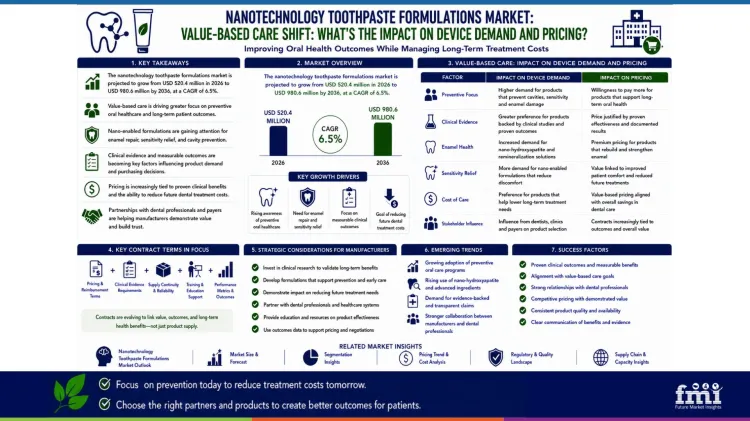
The market for nanotechnology toothpaste formulations has expanded tremendously in the past few years as consumers are looking for more effective solutions to tackle oral health problems such as enamel erosion, dentin hypersensitivity, plaque accumulation, and tooth discoloration. The market is expected to reach USD 980.6 million by 2036 from USD 520.4 million in 2026, at a CAGR of 6.5% during the forecast period. Rising awareness of preventive dentistry and growing adoption of advanced oral care technologies are expected to drive market growth.
The value-based care concept is spreading beyond hospitals and medical devices to preventive healthcare areas like oral care, as healthcare systems focus more and more on improving patient outcomes and managing long-term treatment spend. This shift is creating new options and challenges for the manufacturers operating in the nanotechnology toothpaste formulations market.
Factors that affected toothpaste buying decisions in the past were: brand awareness, taste, whitening benefits and value for money. While these factors remain important, an increasing number of consumers and dental professionals are looking at products based on their ability to deliver measurable health benefits and help reduce future dental interventions.
The value-based care model focuses on prevention, early intervention and improved patient outcomes. In oral healthcare, this translates into a reduction of the incidence of cavities, minimization of the degradation of enamel, reduction of complaints related to sensitivity and support in the maintenance of long-term oral health. The relevance of products supporting these goals is increasing in professional and consumer contexts.
The nano-hydroxyapatite formulations have become one of the most important beneficiaries of this trend. As a biomimetic material that can support the remineralization of enamel, nano-hydroxyapatite is increasingly added to premium toothpaste products for the prevention of early enamel damage. Manufacturers promoting clinically proven remineralization benefits are getting attention of the Dentists as they search for preventive treatment options for their patients.
The demand for products developed to treat tooth sensitivity is also impacted by the trend for preventive oral healthcare. Increased sensitivity is often an early sign of enamel loss and dentin exposure. More and more tools are being positioned as nano-enabled formulations to help prevent more extensive dental procedures in the future with the potential to help reduce discomfort while supporting enamel protection.
Changing value perceptions are also affecting whitening products. The consumer is becoming more discriminating in the evaluation of cosmetic oral care products, and is looking for solutions that provide aesthetic improvements without sacrificing the health of the enamel. There is increasing interest in nano-scale ingredients which allow controlled cleaning and polishing with minimal abrasive damage.
As value-based care principles gain traction, clinical evidence is becoming a key pillar of market competition.
Dental professionals are more and more focused on recommending products backed up by peer-reviewed studies, clinical trials and documented treatment outcomes. Manufacturers who can demonstrate improvements in enamel hardness, reduction in sensitivity, plaque control or cavity prevention are frequently in a better position to justify a premium price.
The increasing focus on evidence-based purchasing is changing product development strategies. Businesses are increasing their expenditures on research programs that focus on quantifying the long-term benefits of oral health and the development of measurable performance metrics. Clinical validation is evolving into a key commercial asset, not just a regulatory requirement.
The implications for pricing dynamics are equally profound.
Premium oral care products were traditionally priced higher mainly due to advanced ingredients and brand positioning. Higher prices increasingly need to be justified in a value based framework with proven clinical outcomes. Both consumers and professional buyers are prepared to pay premium prices for products which clearly contribute to long-term improvement in oral health and reduction of future treatment costs.
At the same time manufacturers are under increasing pressure to demonstrate affordability as well as effectiveness. If the focus on preventive care increases, then products that can provide quantifiable health benefits while being applicable to larger populations may gain competitive benefits.
The emergence of digital health technologies also favors the adoption of value-based oral care. Consequently, consumers are more than ever monitoring health results and requesting customized advice via digital channels, telehealth services, and online dental consultations. The trend leads to greater scrutiny of product performance and a greater demand for science-backed formulations.
Also, insurance carriers and organized dental networks are beginning to look at preventive care strategies to reduce treatment costs in the long run. Consumers usually buy toothpaste products by direct purchase, but recommendations of dental professionals and preventive care programs can have a strong influence on purchasing behavior.
Market segmentation developments can provide further information on changing demand patterns. Sensitivity relief and caries prevention applications are anticipated to be the most beneficial for value-based care initiatives as they are closely aligned with the goals of preventive treatment. Consumers will probably be more interested in products that could help slow the progression of disease and improve long-term oral health outcomes.
Dental clinics are becoming a strong channel for the adoption of premium nanotechnology toothpaste. The interest in providers to find ways to improve patient outcomes between visits is growing and professionally recommended oral care products are playing a larger role as part of larger preventive treatment strategies. Clinician endorsements are also prevalent, which can increase product credibility and justify premium pricing.
Regional markets are expected to be affected differently. In general, developed health care systems such as those in North America, Western Europe, Japan and Australia are more advanced in the uptake of value based care principles. Consumers and health professionals in these regions may therefore place a greater focus on outcome-based choices. At the same time, emerging markets continue to face the challenge of balancing affordability with the increasing demand for preventive healthcare solutions.
The notion that demand for products is generated solely by new ideas is an outdated idea. Technology is important, but manufacturers must show how technological advancement leads to better oral health outcomes, patient satisfaction and long-term value.
The market for nanotechnology toothpaste formulations will be increasingly based on value-based care, impacting product development, buying decisions and competitive positioning. Businesses that can combine scientific breakthroughs with real health outcomes will be in a better position in an increasingly outcome-driven market.
Bottom Line
The move toward value-based care is changing how consumers, dental professionals and healthcare organizations view nanotechnology toothpaste formulations. There is a growing demand for products that show preventive benefits, clinical effectiveness and long-term value for oral health. As outcome-based purchasing gains in importance, manufacturers that can demonstrate strong science and remain competitive on price will be best positioned in the evolving marketplace.

