

- Industry Size (2026)
- USD 520.4 Mn
- Forecast (2036)
- USD 980.6 Mn
- CAGR (2026 to 2036)
- 6.5%
Nanotechnology Toothpaste Formulations Market Size, Market Forecast and Outlook By FMI
In 2026, the nanotechnology toothpaste formulations market was valued at USD 520.4 million. Based on Future Market Insights analysis, demand for nanotechnology toothpaste formulations is estimated to grow to USD 980.6 million by 2036. FMI projects a CAGR of 6.5% during the forecast period.
Absolute dollar growth of USD 460.2 million over the decade points to measured expansion rather than a sharp category reset. As per FMI, demand is expected to be supported by growing consumer preference for premium oral care products that promise better surface repair, whitening, and sensitivity relief, while price sensitivity, claim scrutiny, and uneven dentist endorsement are expected to keep adoption gradual in mass-market channels. "Our mission has always been to make confident, healthy smiles accessible to everyone, inspired by the increasing need for sensitivity relief, enamel repair, and gentle whitening, especially during the holidays, MySmile Nano-Hydroxyapatite Toothpaste is here to transform your oral care routine. Formulated with nano-hydroxyapatite (nHa), an ingredient originally developed by NASA, this toothpaste is clinically proven to remineralize and strengthen enamel, naturally whiten, and reduce sensitivity. It's a dentist-recommended, fluoride-free alternative that will help you achieve a confident and healthy smile!" said Bobby Jacobs, Founder of MySmile. [1]
Summary of Nanotechnology Toothpaste Formulations Market
- Market Definition
- The market covers toothpaste formulations that use nano-scale ingredients to improve targeted oral care performance across sensitivity management, whitening, and caries prevention applications. These products are positioned through retail pharmacy, online and direct-to-consumer channels, and dental clinics, where efficacy claims, ingredient differentiation, and consumer trust play an important role in purchase decisions.
- Demand Drivers in the Market
- Increased consumer interest in specialty oral care products is contributing to demand for toothpaste products that deliver on sensitivity relief, enamel care, and aesthetic enhancement.
- Increased awareness of high-end oral care ingredients is driving interest in nano-enabled products that deliver on surface interaction and delivery, as well as differentiated benefits.
- Presence in retail pharmacies and online accessibility is helping manufacturers build repeat business through convenience and awareness of products and high-end brands.
- Key Segments Analyzed in the FMI Report
- By Nano-ingredient Type: nano-hydroxyapatite leads at 38% share in 2026, followed by nano-calcium carbonate at 25% share.
- By Application: sensitivity relief leads at 40% share in 2026, followed by whitening at 30% share.
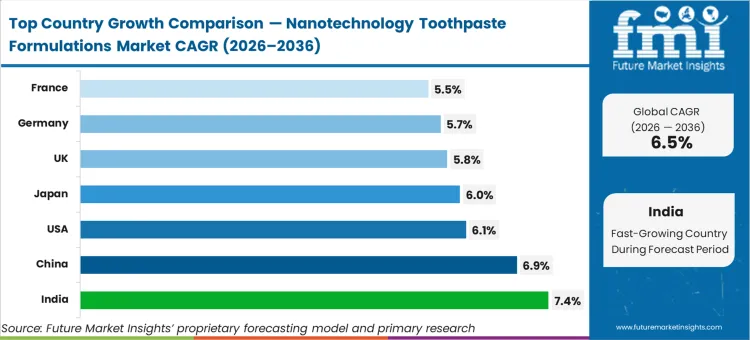
- Geography: India and China show the fastest growth at 7.4% and 6.9% CAGR, supported by rising oral care awareness, premiumization trends, and improving access to specialized toothpaste products.
- Analyst Opinion at FMI
- Sabyasachi Ghosh, Principal Consultant at Future Market Insights, opines, “Supplier preference is increasingly being shaped by ingredient credibility, claim support, and consumer-perceived efficacy, as brands compete to differentiate premium toothpaste formulations in a category where repeat purchase depends heavily on trust, visible results, and consistent oral comfort.”
- Strategic Implications and Executive Takeaways
- Build product positioning around clinically familiar nano-ingredients that are easier for consumers to understand and more credible in premium oral care messaging.
- Prioritize sensitivity relief applications where repeat purchase potential is stronger and consumer pain points are more immediate and measurable.
- Strengthen pharmacy and digital channel execution, since visibility, recommendation support, and easy replenishment materially influence conversion in premium toothpaste categories.
- Methodology
- As per FMI, sizing and splits were reconciled using brand-level product mapping, ingredient-based positioning analysis, and application-level demand allocation across core oral care use cases.
- Segment shares were validated by linking nano-ingredient adoption patterns with consumer benefit preferences such as sensitivity relief, whitening, and caries prevention.
- Pricing sensitivity was stress tested under ingredient mix and application mix shifts to confirm revenue response under realistic premium oral care purchasing scenarios.
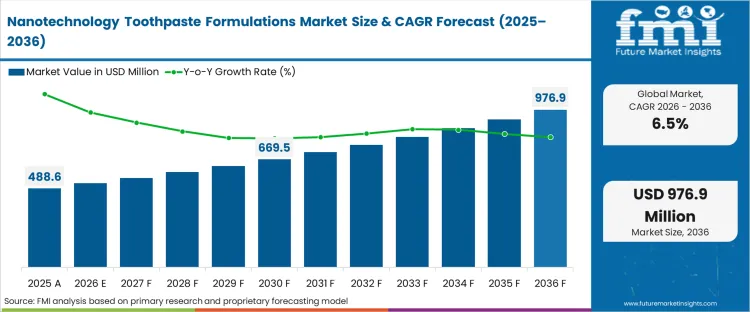
Procurement and sell-through are being shaped by brand credibility, formulation positioning, and channel mix discipline, with manufacturers giving weight to ingredient differentiation, shelf visibility, and repeat-purchase behavior. Retail pharmacy remains important for consumer trust and routine replenishment, while online and direct-to-consumer channels are gaining traction where product education and comparison-led purchase behavior influence conversion.
India (7.4% CAGR, supported by rising premium oral care uptake) and China (6.9% CAGR, driven by growing consumer awareness of advanced formulations) are expected to lead growth. Japan (6.0% CAGR) is expected to expand through demand for function-led oral care. The USA (6.1% CAGR) is expected to remain the largest market due to strong branded product penetration and higher spending on specialty oral care. Mature markets including the UK (5.8%), Germany (5.7%), and France (5.5%) are expected to contribute more through replacement purchases, constrained by category crowding and cautious switching from established toothpaste lines.
Nanotechnology Toothpaste Formulations Market Definition
The market includes toothpaste formulations that use nano-scale ingredients to enhance oral care performance in areas such as sensitivity relief, tooth whitening, and prevention of tooth decay. Toothpaste formulations include nano-hydroxyapatite, nano-silver, nano-calcium carbonate, and other nano ingredient systems intended to enhance the interaction of toothpaste with tooth surfaces and perceived performance of toothpaste during brushing. Toothpaste formulations are sold through pharmacy sales, internet sales, and dental clinic sales. Toothpaste formulations are bought by household consumers and professionally guided consumers who seek advanced toothpaste formulations, with purchase decisions based on ingredient familiarity, price, brand, and treatment benefit.
Nanotechnology Toothpaste Formulations Market Inclusions
The report provides global and regional market sizing in addition to a 10-year forecast from 2026 to 2036. Segment-level sizing is included in terms of nano-ingredient types, application, and sales channel. Country-level CAGR comparison is also included in key markets. In addition to that, replacement demand, premiumization trends, business priorities including sensitivity positioning, whitening claims, and channel mix are included in the report along with a look at the competitive positioning of major oral care suppliers, as per FMI analysis.
Nanotechnology Toothpaste Formulations Market Exclusions
The scope excludes conventional toothpaste products that do not use nano-enabled ingredients as a core formulation component. It also Healthcare Market, whitening strips, floss, and other oral care categories outside toothpaste-based delivery. Bulk raw material sales are excluded unless captured within finished toothpaste product value. Professional in-clinic dental procedures and service revenue are not included. The focus remains on nano-enabled toothpaste formulations aligned to the listed ingredient types, application areas, sales channels, and branded product suppliers.
Nanotechnology Toothpaste Formulations Market Research Methodology
- Primary Research: Interviews were conducted with brand managers of oral care brands, formulation teams, channel distributors, dental professionals, and supplier commercial teams.
- Desk Research: Public information was sourced from regulators, oral health publications, standards references, and primary company disclosures to benchmark ingredient positioning, product claims, and channel presence.
- Market-Sizing and Forecasting: A hybrid approach was adopted by leveraging toothpaste demand and premium segment penetration by geography, then reuniting the segments via nano ingredient type, application, and sales channel.
- Data Validation and Update Cycle: A check was performed by internal consistency screening of segment totals and country growth rates, along with variance analysis before finalizing.
Segmental Analysis
Nanotechnology Toothpaste Formulations Market Analysis by Nano-ingredient Type
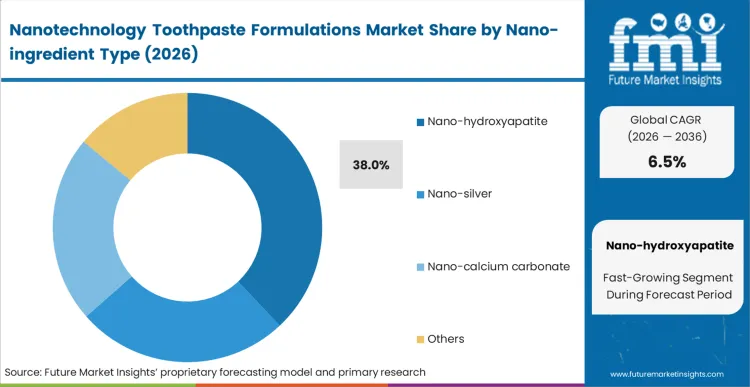
Based on FMI’s report, nano-hydroxyapatite is estimated to hold 38% share in 2026. This lead position is supported by its strong association with enamel-focused oral care, sensitivity management, and premium product differentiation. Its market strength is not only tied to ingredient recognition in advanced toothpaste formulations, but also to its fit with consumer demand for non-basic, benefit-led oral care products. Nano-silver holds 22% share, while nano-calcium carbonate accounts for 25%, reflecting their presence in whitening and polishing-oriented offerings, though with narrower positioning compared with nano-hydroxyapatite.
- Biomimetic Enamel Repair Positioning: Nano-hydroxyapatite closely resembles the mineral component of tooth enamel, which supports its strong positioning in formulations focused on remineralization, enamel repair, and early caries management rather than only cosmetic benefit. [2]
- Multi-benefit Premium Formulation Advantage: Nano-hydroxyapatite is used not only for remineralization and sensitivity relief, but also for whitening and surface improvement, which makes it more suitable for premium, benefit-led toothpaste positioning than narrower single-function nano-ingredients. [3]
- Sensitivity Management: Clinical and review evidence shows nano-hydroxyapatite toothpastes are effective in reducing dentin hypersensitivity, giving the ingredient a strong daily-use therapeutic role that supports broader consumer adoption beyond whitening-oriented niches.
Nanotechnology Toothpaste Formulations Market Analysis by Application
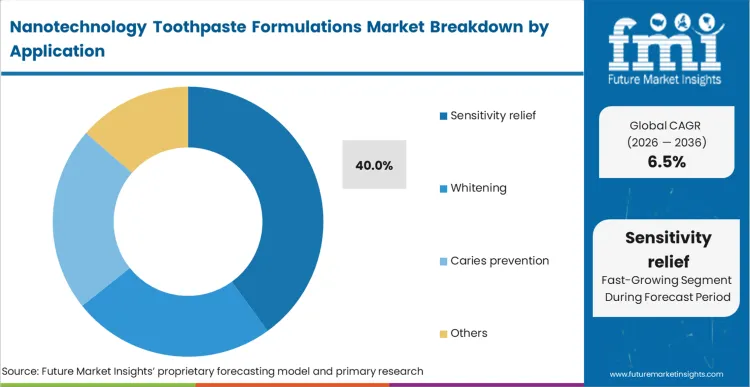
Sensitivity relief accounts for 40% share in 2026, based on FMI’s report, reflecting its position as the largest application in nano-enabled toothpaste formulations. This lead is supported by the fact that tooth sensitivity is a recurring and highly felt consumer problem, which makes efficacy-driven formulations easier to justify at premium price points. Whitening holds 30% share as cosmetic oral care remains important, while caries prevention contributes 20% share, supported by routine oral hygiene demand but facing broader competition from conventional toothpaste formats.
- High Everyday Symptom Burden: Dentin hypersensitivity is common in adult populations and is triggered by routine activities like consuming cold foods, drinks, or brushing, which makes sensitivity relief a frequent and highly felt oral-care need rather than an occasional concern. [4]
- Clear Daily-Use Value Communication: Review evidence indicates nano-hydroxyapatite has demonstrated meaningful desensitizing performance versus common comparators in multiple clinical investigations, giving brands a clearer efficacy-led message for repeat-use sensitivity products than for broader, less immediately perceived oral-care benefits. [5]
- Strong Clinical Fit for Nano-Enabled Formulations: Nano-hydroxyapatite toothpastes have shown effectiveness in relieving dentin hypersensitivity in clinical studies, supporting the use of nanotechnology specifically in sensitivity-focused products rather than only in cosmetic or general hygiene positioning.
Nanotechnology Toothpaste Formulations Market Drivers, Restraints, and Opportunities
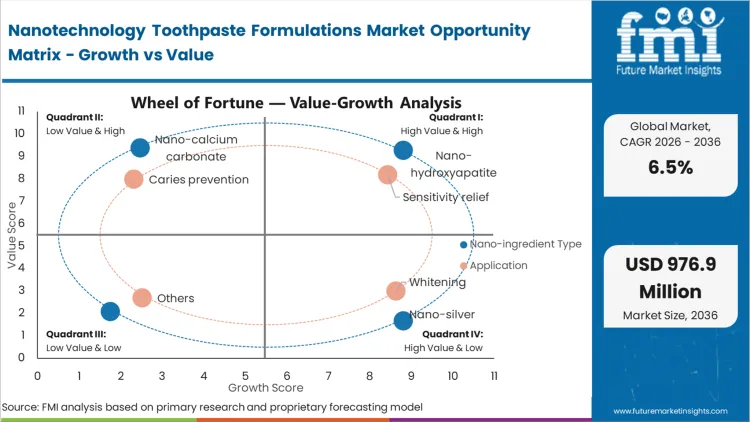
According to analysis by Future Market Insights, this market is expanding as a premium oral care market in which growth is being defined by differentiation through ingredients and consumer demand for specific product benefits in toothpaste formulations. Estimated market valuation in 2026 is being driven by the growing consumption of specialty products that have been defined by their specific benefits in sensitivity relief, whitening, and daily oral performance. However, this market is expanding in spite of factors such as consumer price sensitivity, lack of familiarity with nano-ingredients in personal care products, and high levels of competition from conventional toothpaste brands that enjoy wider mass market distribution. Nonetheless, this market is expanding in spite of these factors owing to factors such as premiumization, growing oral care awareness in developing markets, and improving consumer receptivity towards science-based personal care products. According to this report by Future Market Insights, this market is expanding in spite of factors such as consumer price sensitivity, lack of familiarity with nano-ingredients in personal care products, and high levels of competition from conventional toothpaste brands that enjoy wider mass market distribution.
- Efficacy-led Demand: Demand is being supported as consumers increasingly prefer toothpaste formulations that address specific oral discomforts and deliver more visible functional benefits.
- Trust and Pricing: Adoption can be slowed when premium price points and unfamiliar nano-ingredient claims create hesitation among mainstream buyers.
- Premium Oral Care: Demand is being supported as brands expand science-led, application-specific toothpaste portfolios across pharmacy and direct-to-consumer channels.
Regional Analysis
Based on the regional analysis, nanotechnology toothpaste formulations market is segmented into North America, Latin America, East Asia, South Asia & Pacific, Western Europe, Eastern Europe and Middle East & Africa across 40+ countries. Regional performance is interpreted through uptake of nano-active oral care ingredients, consumer preference across sensitivity, whitening, and caries-prevention use cases, and channel mix between retail pharmacy, online sales, and dental clinics, as per FMI. The full report also offers market attractiveness analysis based on regional trends.
.webp "Top Country Growth Comparison Nanotechnology Toothpaste Formulations Market Cagr (2026 2036)")
| Country | CAGR |
|---|---|
| USA | 6.1% |
| Germany | 5.7% |
| France | 5.5% |
| UK | 5.8% |
| Japan | 6.0% |
| China | 6.9% |
| India | 7.4% |
Source: Future Market Insights (FMI) analysis, based on proprietary forecasting model and primary research
North America Nanotechnology Toothpaste Formulations Market Analysis
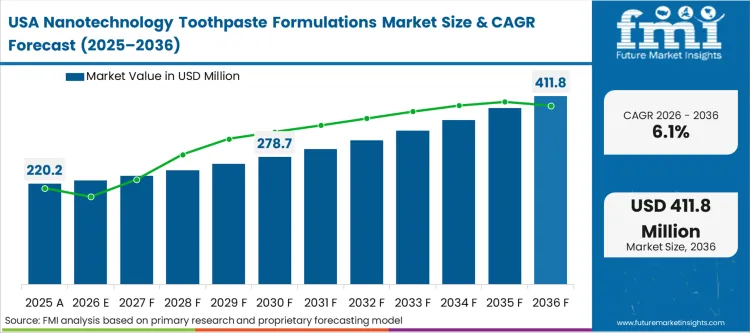
North America is influenced by premium oral care adoption and strong retail visibility of science-backed formulations, driven by nano-hydroxyapatite and sensitivity-related claims, supporting steady growth in the oral care category. Colgate-Palmolive has a strong footprint through wide pharmacy coverage and high recognition among consumers. GlaxoSmithKline also has a strong influence on sensitivity-related oral care formulations, and Procter & Gamble also has a presence through premium oral care portfolios, which benefit from mainstream access in oral care categories, according to FMI analysis. Retail pharmacy channels continue to lead, though online channels are also gaining traction in premium oral care formulations.
- USA: In the USA, there is expected to be steady growth in the development of toothpaste formulations involving nanotechnology at a CAGR of 6.1% up to 2036, driven by good levels of consumer acceptability of sensitivity relief toothpaste and increasing awareness of tooth enamel-focused active ingredients such as nano-hydroxyapatite. Pharmacy channel dominance supports well-established brands.
FMI’s report includes a detailed analysis of the growth in the North American region, along with a country-wise assessment that includes the USA, Canada and Mexico. Readers can also find regional trends, regulations, and market growth based on different segments and countries in the North America region.
East Asia Nanotechnology Toothpaste Formulations Market Analysis
East Asia is a dynamic oral care market in which ingredient-based positioning and innovation in everyday forms are key aspects of brand competition. Nano-hydroxyapatite, whitening-focused ingredients, and premium positioning are key aspects in the development of the market, especially in urban areas where oral care is high. Sunstar and Lion Corporation are significant in the Japanese market due to their presence in oral health. Colgate-Palmolive and other multinational brands are also active in the region, especially in areas where pharmacy and online infrastructure are growing. FMI is of the opinion that the acceptance of the product in this region is directly associated with the demonstration of functional benefits and brand positioning.
- China: China is ahead of this list in terms of CAGR, i.e., 6.9%. The drivers for this market growth in China are consumers increasingly choosing high-tech whitening and sensitivity product formulations in urban retail channels. Online and direct-to-consumer channels also contribute significantly as consumers become more active in comparing ingredient claims and as premium oral care products gain traction through digital promotion.
- Japan: Japan is expected to grow at a CAGR of 6.0% through 2036, driven by established oral care habits and steady demand for high-function toothpaste formulations that deliver daily use and benefits. Sensitivity relief and enamel health and support claims resonate well with consumers as they associate it with familiar brands and quality formulations.
FMI’s report includes a detailed insight into the growth of the market in the East Asia region and will also be able to learn about regional trends, regulations, and market growth based on different segments and countries in the East Asia region.
South Asia & Pacific Nanotechnology Toothpaste Formulations Market Analysis
South Asia & Pacific is proving to be a high growth market for premium oral care, driven by rising demand from urban centers and awareness of ingredient-based oral care. The most attractive application for oral care is sensitivity relief and whitening. Both retail pharmacies and online stores support category growth. Companies such as Himalaya and Dabur have benefited from brand awareness, especially within India. MNCs continue to promote premium oral care within modern trade and online stores. Analysts at FMI opine that growth within the South Asia & Pacific region is driven by a widening consumer base willing to spend on oral care.
- India: India is expected to grow at a CAGR of 7.4% till 2036, driven by the rising interest in premium oral care products that go beyond the core benefit of cavity prevention to offer sensitivity relief and whitening. Urban consumers in India are exhibiting a stronger acceptability of nano-based ingredient claims, especially when such products are offered as premium variants of well-known brands.
FMI’s report includes a detailed analysis of the growth in the South Asia & Pacific region, along with a country-wise assessment that includes India, ASEAN Countries, Australia & New Zealand and Rest of South Asia. Readers can also find regional trends, regulations, and market growth based on different segments and countries in the South Asia & Pacific region.
Western Europe Nanotechnology Toothpaste Formulations Market Analysis
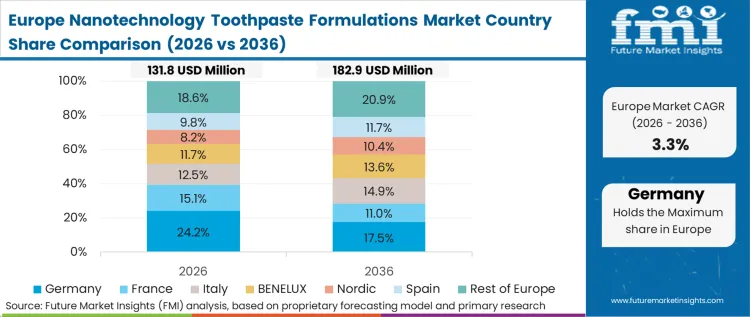
The Western Europe market is a developed market for oral care products. Differentiation of products is possible in this region only on the basis of clinical positioning and trust associated with the ingredients. Nano-hydroxyapatite, nano-silver, and nano-calcium carbonate have their own market pull for sensitivity, whitening, and caries prevention, respectively. Colgate-Palmolive, GlaxoSmithKline, and Unilever are the dominant brands in this region in terms of brand recognition and market access. FMI opines that this region is suitable for products that offer functional value.
- Germany: The German oral care market is expected to grow at a CAGR of 5.7% until 2036, driven by ongoing consumer demand for performance-based oral care with a clear sensitivity and enamel care proposition. Nano silver and nano calcium carbonate remain relevant in specialized applications, and sensitivity relief has been and will remain the strongest application.
- UK: The UK market is expected to grow at a CAGR of 5.8%, and category development will continue to be driven by whitening and sensitivity-related purchase drivers, both in pharmacies and online. Consumers are more willing to try premium oral care when they can easily understand the functional benefit and associate it with a brand they know.
- France: France is expected to grow at 5.5% CAGR from 2021 to 2036, driven by continued preference for oral care products that deliver daily usage benefits and specific benefit claims such as whitening, sensitivity, and caries. The balance of distribution remains relatively even, driven by trust and pharmacies, and the influence of digital for premium oral care.
FMI’s analysis of nanotechnology toothpaste formulations market in Western Europe consists of country-wise assessment that includes Germany, UK, France, Italy, Spain, BENELUX, Nordic Countries and Rest of Western Europe. Readers can know various regulations and latest trends in the regional market.
Competitive aligners for market players
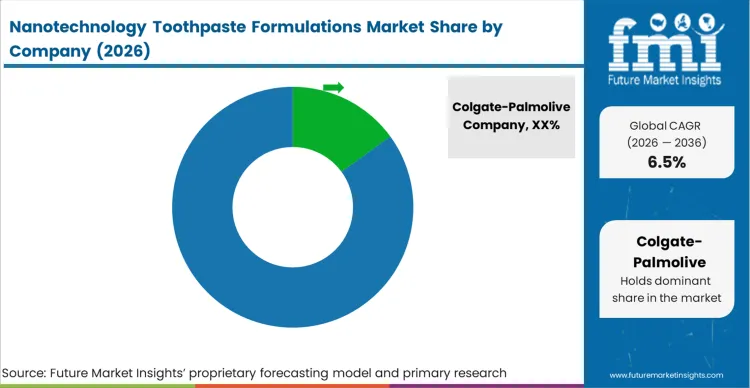
The market structure is still fragmented, but real-world competition is limited to a handful of oral care suppliers that can make compliant claims, deliver formula consistency for nano-actives, and achieve broad access in pharmacies. The provided data set shows that there is a scale leader at around 18.5%, and the rest of the demand is shared by multinationals and regional players. The key factor for competition is repeat purchase based on perceived effectiveness and safety assurance, not real-world price volatility. Positioning is based on the nano-ingredient blend, as nano-hydroxyapatite dominates the segmentation provided and can enable sensitivity-based positioning that consumers can assess within a few weeks of use, as per FMI.
Companies with structural advantages typically combine formulation capability, quality systems for particle control, and strong distribution coverage. Brands that can manage raw material qualification, batch consistency, and stability testing reduce complaint risk and protect pharmacy reorders. Multi-brand owners also benefit from portfolio breadth that lets them place distinct nano variants across sensitivity relief, whitening, and caries prevention without relying on one claim theme. Players with stronger retail pharmacy execution are better positioned because channel visibility, planogram placement, and promotional cadence influence category rotation. Firms that rely mainly on smaller online volumes face higher churn, since DTC buyers compare price, reviews, and claim language across many alternatives, based on FMI’s report.
This is further strengthened by the customer concentration, which adds more power to the buyers. The retail pharmacies continue to dominate as the primary channel in the supplied segmentation, and this is addressed by large retail pharmacies through regular reviews of product assortment, funded discount promotions, and private label measures that compress net pricing. Online channels further enhance choice and transparency for the buyers, and this limits the power of brands in maintaining premiums based on general claims. Dental clinics are more selective in their purchases and follow professional preferences, and this is likely to help brands maintain more stable pricing for products associated with sensitivity and enamel support; however, they still maintain alternate brands in order to avoid supply chain gaps.
Recent Developments
The report includes full coverage of key trends from competitive benchmarking. Some of the recent developments covered in the reports:
- In December 2025, Nudge, Florida-based oral care brand, advances fluoride free enamel care with its Nano Hydroxyapatite REMIN+ toothpaste, formulated around a high concentration 10% nano hydroxyapatite framework. Built by oral care experts with a passion over profits mindset, Nudge focuses on science backed formulation, transparency, and long term oral health. [6]
- In November 2025, MySmile introduces Nano-Hydroxyapatite Toothpaste, using NASA-developed tech to strengthen enamel, whiten gently, and relieve sensitivity, perfect for holiday smiles. [1]
Key players in Nanotechnology Toothpaste Formulations Market
- Colgate-Palmolive Company
- GlaxoSmithKline plc
- Unilever PLC
- Lion Corporation
- Sunstar Suisse S.A.
- The Procter & Gamble Company
- Church & Dwight Co., Inc.
- Amway Corporation
- Dabur India Ltd.
- Himalaya Wellness Company
Scope of the Report
| Metric | Value |
|---|---|
| Quantitative Units | USD 520.4 Mn (2026) to USD 980.6 Mn (2036), at a CAGR of 6.5% |
| Market Definition | The nanotechnology toothpaste formulations market covers global production and trade of toothpaste products that use nano-enabled ingredients to deliver targeted oral care performance, with demand shaped by consumer preference for sensitivity control, whitening, and enamel support claims, and by channel access through retail pharmacy, online or DTC, and dental clinics. |
| Nano-Ingredient Type Segmentation | Nano-hydroxyapatite, Nano-silver, Nano-calcium carbonate, Others |
| Application Coverage | Sensitivity relief, Whitening, Caries prevention, Others |
| Sales Channel Coverage | Retail pharmacy, Online or DTC, Dental clinics |
| Regions Covered | North America, Latin America, East Asia, South Asia & Pacific, Western Europe, Eastern Europe, and Middle East & Africa. |
| Countries Covered | United States, Canada, Mexico, Brazil, Argentina, Germany, France, United Kingdom, Italy, Spain, China, India, Japan, South Korea, Indonesia, Australia and 40+ countries |
| Key Companies Profiled | Colgate-Palmolive Company, GlaxoSmithKline plc, Unilever PLC, Lion Corporation, Sunstar Suisse S.A., The Procter & Gamble Company, Church & Dwight Co., Inc., Amway Corporation, Dabur India Ltd., Himalaya Wellness Company |
| Forecast Period | 2026 to 2036 |
| Approach | Hybrid top down and bottom up market modeling validated through primary interviews with oral care brand owners and channel stakeholders, supported by category sales triangulation and product claim mapping, as per FMI. |
Nanotechnology Toothpaste Formulations Market Analysis by Segments
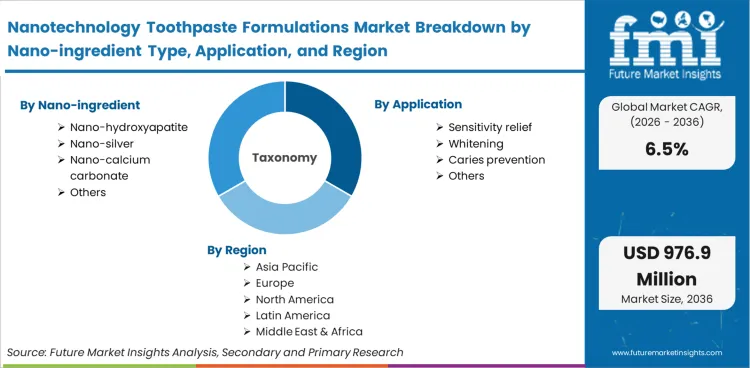
Nano-Ingredient Type:
- Nano-hydroxyapatite
- Nano-silver
- Nano-calcium carbonate
- Others
Application:
- Sensitivity relief
- Whitening
- Caries prevention
- Others
Sales Channel:
- Retail pharmacy
- Online or DTC
- Dental clinics
Region:
- North America
- USA
- Canada
- Mexico
- Latin America
- Brazil
- Argentina
- Rest of Latin America
- East Asia
- China
- Japan
- South Korea
- South Asia & Pacific
- India
- ASEAN Countries
- Australia & New Zealand
- Rest of South Asia
- Western Europe
- Germany
- UK
- France
- Italy
- Spain
- BENELUX
- Nordic Countries
- Rest of Western Europe
- Eastern Europe
- Russia
- Hungary
- Poland
- Rest of Eastern Europe
- Middle East & Africa
- Saudi Arabia
- Türkiye
- South Africa
- Other African Union
- Rest of Middle East & Africa
Bibliography
- [1] MySmile Oral Care Inc. (2025). NASA-Inspired Enamel Repair with MySmile Toothpaste!
- [2] PubMed Central (2022). Efficacy of nano-hydroxyapatite on caries prevention-a systematic review and meta-analysis.
- [3] PubMed Central (2021). Clinical efficacy of nanohydroxyapatite-containing toothpaste at relieving dentin hypersensitivity: an 8 weeks randomized control trial.
- [4] PubMed Central (2012). Epidemiology of dentin hypersensitivity
- [5] PubMed Central (2021). Hydroxyapatite in Oral Care Products-A Review
- [6] Nudge (2025). Nudge Establishes Leadership in 10% Nano Hydroxyapatite Toothpaste with Advanced REMIN+ Enamel Formula.
This bibliography is provided for reader reference and is not exhaustive. The full report contains the complete reference list and detailed citations.
Frequently Asked Questions
How large is the demand for Nanotechnology Toothpaste Formulations in the global market in 2026?
Demand for Nanotechnology Toothpaste Formulations in the global market is estimated to be valued at USD 520.4 Mn in 2026, as per FMI.
What will be the market size of Nanotechnology Toothpaste Formulations in the global market by 2036?
Market size for Nanotechnology Toothpaste Formulations is projected to reach USD 980.6 Mn by 2036.
What is the expected demand growth for Nanotechnology Toothpaste Formulations in the global market between 2026 and 2036?
Demand for Nanotechnology Toothpaste Formulations in the global market is expected to grow at a CAGR of 6.5% between 2026 and 2036.
Which nano-ingredient type is poised to lead global demand by 2026?
Nano-hydroxyapatite is expected to lead the nano-ingredient mix, capturing 38% share in 2026.
Which application is expected to account for the largest share in 2026?
Sensitivity relief is expected to hold the highest share at 40% in 2026.
How significant is retail pharmacy in the 2026 sales channel mix?
Retail pharmacy is projected to account for 45% share in 2026.
Preview the report firsthand - request a free sample
Get SampleGet the brochure for pricing and purchase details.
Get PDFTable of Content
- Executive Summary
- Global Market Outlook
- Demand-side Trends
- Supply-side Trends
- Technology Roadmap Analysis
- Analysis and Recommendations
- Market Overview
- Market Coverage / Taxonomy
- Market Definition / Scope / Limitations
- Research Methodology
- Chapter Orientation
- Analytical Lens and Working Hypotheses
- Market Structure, Signals, and Trend Drivers
- Benchmarking and Cross-market Comparability
- Market Sizing, Forecasting, and Opportunity Mapping
- Research Design and Evidence Framework
- Desk Research Programme (Secondary Evidence)
- Company Annual and Sustainability Reports
- Peer-reviewed Journals and Academic Literature
- Corporate Websites, Product Literature, and Technical Notes
- Earnings Decks and Investor Briefings
- Statutory Filings and Regulatory Disclosures
- Technical White Papers and Standards Notes
- Trade Journals, Industry Magazines, and Analyst Briefs
- Conference Proceedings, Webinars, and Seminar Materials
- Government Statistics Portals and Public Data Releases
- Press Releases and Reputable Media Coverage
- Specialist Newsletters and Curated Briefings
- Sector Databases and Reference Repositories
- FMI Internal Proprietary Databases and Historical Market Datasets
- Subscription Datasets and Paid Sources
- Social Channels, Communities, and Digital Listening Inputs
- Additional Desk Sources
- Expert Input and Fieldwork (Primary Evidence)
- Primary Modes
- Qualitative Interviews and Expert Elicitation
- Quantitative Surveys and Structured Data Capture
- Blended Approach
- Why Primary Evidence is Used
- Field Techniques
- Interviews
- Surveys
- Focus Groups
- Observational and In-context Research
- Social and Community Interactions
- Stakeholder Universe Engaged
- C-suite Leaders
- Board Members
- Presidents and Vice Presidents
- R&D and Innovation Heads
- Technical Specialists
- Domain Subject-matter Experts
- Scientists
- Physicians and Other Healthcare Professionals
- Governance, Ethics, and Data Stewardship
- Research Ethics
- Data Integrity and Handling
- Primary Modes
- Tooling, Models, and Reference Databases
- Desk Research Programme (Secondary Evidence)
- Data Engineering and Model Build
- Data Acquisition and Ingestion
- Cleaning, Normalisation, and Verification
- Synthesis, Triangulation, and Analysis
- Quality Assurance and Audit Trail
- Market Background
- Market Dynamics
- Drivers
- Restraints
- Opportunity
- Trends
- Scenario Forecast
- Demand in Optimistic Scenario
- Demand in Likely Scenario
- Demand in Conservative Scenario
- Opportunity Map Analysis
- Product Life Cycle Analysis
- Supply Chain Analysis
- Investment Feasibility Matrix
- Value Chain Analysis
- PESTLE and Porter’s Analysis
- Regulatory Landscape
- Regional Parent Market Outlook
- Production and Consumption Statistics
- Import and Export Statistics
- Market Dynamics
- Global Market Analysis 2021 to 2025 and Forecast, 2026 to 2036
- Historical Market Size Value (USD Million) Analysis, 2021 to 2025
- Current and Future Market Size Value (USD Million) Projections, 2026 to 2036
- Y-o-Y Growth Trend Analysis
- Absolute $ Opportunity Analysis
- Global Market Pricing Analysis 2021 to 2025 and Forecast 2026 to 2036
- Global Market Analysis 2021 to 2025 and Forecast 2026 to 2036, By Nano-ingredient Type
- Introduction / Key Findings
- Historical Market Size Value (USD Million) Analysis By Nano-ingredient Type , 2021 to 2025
- Current and Future Market Size Value (USD Million) Analysis and Forecast By Nano-ingredient Type , 2026 to 2036
- Nano-hydroxyapatite
- Nano-silver
- Nano-calcium carbonate
- Others
- Nano-hydroxyapatite
- Y-o-Y Growth Trend Analysis By Nano-ingredient Type , 2021 to 2025
- Absolute $ Opportunity Analysis By Nano-ingredient Type , 2026 to 2036
- Global Market Analysis 2021 to 2025 and Forecast 2026 to 2036, By Application
- Introduction / Key Findings
- Historical Market Size Value (USD Million) Analysis By Application, 2021 to 2025
- Current and Future Market Size Value (USD Million) Analysis and Forecast By Application, 2026 to 2036
- Sensitivity relief
- Whitening
- Caries prevention
- Others
- Sensitivity relief
- Y-o-Y Growth Trend Analysis By Application, 2021 to 2025
- Absolute $ Opportunity Analysis By Application, 2026 to 2036
- Global Market Analysis 2021 to 2025 and Forecast 2026 to 2036, By Region
- Introduction
- Historical Market Size Value (USD Million) Analysis By Region, 2021 to 2025
- Current Market Size Value (USD Million) Analysis and Forecast By Region, 2026 to 2036
- North America
- Latin America
- Western Europe
- Eastern Europe
- East Asia
- South Asia and Pacific
- Middle East & Africa
- Market Attractiveness Analysis By Region
- North America Market Analysis 2021 to 2025 and Forecast 2026 to 2036, By Country
- Historical Market Size Value (USD Million) Trend Analysis By Market Taxonomy, 2021 to 2025
- Market Size Value (USD Million) Forecast By Market Taxonomy, 2026 to 2036
- By Country
- USA
- Canada
- Mexico
- By Nano-ingredient Type
- By Application
- By Country
- Market Attractiveness Analysis
- By Country
- By Nano-ingredient Type
- By Application
- Key Takeaways
- Latin America Market Analysis 2021 to 2025 and Forecast 2026 to 2036, By Country
- Historical Market Size Value (USD Million) Trend Analysis By Market Taxonomy, 2021 to 2025
- Market Size Value (USD Million) Forecast By Market Taxonomy, 2026 to 2036
- By Country
- Brazil
- Chile
- Rest of Latin America
- By Nano-ingredient Type
- By Application
- By Country
- Market Attractiveness Analysis
- By Country
- By Nano-ingredient Type
- By Application
- Key Takeaways
- Western Europe Market Analysis 2021 to 2025 and Forecast 2026 to 2036, By Country
- Historical Market Size Value (USD Million) Trend Analysis By Market Taxonomy, 2021 to 2025
- Market Size Value (USD Million) Forecast By Market Taxonomy, 2026 to 2036
- By Country
- Germany
- UK
- Italy
- Spain
- France
- Nordic
- BENELUX
- Rest of Western Europe
- By Nano-ingredient Type
- By Application
- By Country
- Market Attractiveness Analysis
- By Country
- By Nano-ingredient Type
- By Application
- Key Takeaways
- Eastern Europe Market Analysis 2021 to 2025 and Forecast 2026 to 2036, By Country
- Historical Market Size Value (USD Million) Trend Analysis By Market Taxonomy, 2021 to 2025
- Market Size Value (USD Million) Forecast By Market Taxonomy, 2026 to 2036
- By Country
- Russia
- Poland
- Hungary
- Balkan & Baltic
- Rest of Eastern Europe
- By Nano-ingredient Type
- By Application
- By Country
- Market Attractiveness Analysis
- By Country
- By Nano-ingredient Type
- By Application
- Key Takeaways
- East Asia Market Analysis 2021 to 2025 and Forecast 2026 to 2036, By Country
- Historical Market Size Value (USD Million) Trend Analysis By Market Taxonomy, 2021 to 2025
- Market Size Value (USD Million) Forecast By Market Taxonomy, 2026 to 2036
- By Country
- China
- Japan
- South Korea
- By Nano-ingredient Type
- By Application
- By Country
- Market Attractiveness Analysis
- By Country
- By Nano-ingredient Type
- By Application
- Key Takeaways
- South Asia and Pacific Market Analysis 2021 to 2025 and Forecast 2026 to 2036, By Country
- Historical Market Size Value (USD Million) Trend Analysis By Market Taxonomy, 2021 to 2025
- Market Size Value (USD Million) Forecast By Market Taxonomy, 2026 to 2036
- By Country
- India
- ASEAN
- Australia & New Zealand
- Rest of South Asia and Pacific
- By Nano-ingredient Type
- By Application
- By Country
- Market Attractiveness Analysis
- By Country
- By Nano-ingredient Type
- By Application
- Key Takeaways
- Middle East & Africa Market Analysis 2021 to 2025 and Forecast 2026 to 2036, By Country
- Historical Market Size Value (USD Million) Trend Analysis By Market Taxonomy, 2021 to 2025
- Market Size Value (USD Million) Forecast By Market Taxonomy, 2026 to 2036
- By Country
- Kingdom of Saudi Arabia
- Other GCC Countries
- Turkiye
- South Africa
- Other African Union
- Rest of Middle East & Africa
- By Nano-ingredient Type
- By Application
- By Country
- Market Attractiveness Analysis
- By Country
- By Nano-ingredient Type
- By Application
- Key Takeaways
- Key Countries Market Analysis
- USA
- Pricing Analysis
- Market Share Analysis, 2025
- By Nano-ingredient Type
- By Application
- Canada
- Pricing Analysis
- Market Share Analysis, 2025
- By Nano-ingredient Type
- By Application
- Mexico
- Pricing Analysis
- Market Share Analysis, 2025
- By Nano-ingredient Type
- By Application
- Brazil
- Pricing Analysis
- Market Share Analysis, 2025
- By Nano-ingredient Type
- By Application
- Chile
- Pricing Analysis
- Market Share Analysis, 2025
- By Nano-ingredient Type
- By Application
- Germany
- Pricing Analysis
- Market Share Analysis, 2025
- By Nano-ingredient Type
- By Application
- UK
- Pricing Analysis
- Market Share Analysis, 2025
- By Nano-ingredient Type
- By Application
- Italy
- Pricing Analysis
- Market Share Analysis, 2025
- By Nano-ingredient Type
- By Application
- Spain
- Pricing Analysis
- Market Share Analysis, 2025
- By Nano-ingredient Type
- By Application
- France
- Pricing Analysis
- Market Share Analysis, 2025
- By Nano-ingredient Type
- By Application
- India
- Pricing Analysis
- Market Share Analysis, 2025
- By Nano-ingredient Type
- By Application
- ASEAN
- Pricing Analysis
- Market Share Analysis, 2025
- By Nano-ingredient Type
- By Application
- Australia & New Zealand
- Pricing Analysis
- Market Share Analysis, 2025
- By Nano-ingredient Type
- By Application
- China
- Pricing Analysis
- Market Share Analysis, 2025
- By Nano-ingredient Type
- By Application
- Japan
- Pricing Analysis
- Market Share Analysis, 2025
- By Nano-ingredient Type
- By Application
- South Korea
- Pricing Analysis
- Market Share Analysis, 2025
- By Nano-ingredient Type
- By Application
- Russia
- Pricing Analysis
- Market Share Analysis, 2025
- By Nano-ingredient Type
- By Application
- Poland
- Pricing Analysis
- Market Share Analysis, 2025
- By Nano-ingredient Type
- By Application
- Hungary
- Pricing Analysis
- Market Share Analysis, 2025
- By Nano-ingredient Type
- By Application
- Kingdom of Saudi Arabia
- Pricing Analysis
- Market Share Analysis, 2025
- By Nano-ingredient Type
- By Application
- Turkiye
- Pricing Analysis
- Market Share Analysis, 2025
- By Nano-ingredient Type
- By Application
- South Africa
- Pricing Analysis
- Market Share Analysis, 2025
- By Nano-ingredient Type
- By Application
- USA
- Market Structure Analysis
- Competition Dashboard
- Competition Benchmarking
- Market Share Analysis of Top Players
- By Regional
- By Nano-ingredient Type
- By Application
- Competition Analysis
- Competition Deep Dive
- Colgate-Palmolive Company
- Overview
- Product Portfolio
- Profitability by Market Segments (Product/Age /Sales Channel/Region)
- Sales Footprint
- Strategy Overview
- Marketing Strategy
- Product Strategy
- Channel Strategy
- GlaxoSmithKline plc
- Unilever PLC
- Lion Corporation
- Sunstar Suisse S.A.
- The Procter & Gamble Company
- Church & Dwight Co., Inc.
- Amway Corporation
- Dabur India Ltd.
- Himalaya Wellness Company
- Colgate-Palmolive Company
- Competition Deep Dive
- Assumptions & Acronyms Used


